bill essayli

Thomas Markle indicted on federal child pornography charges

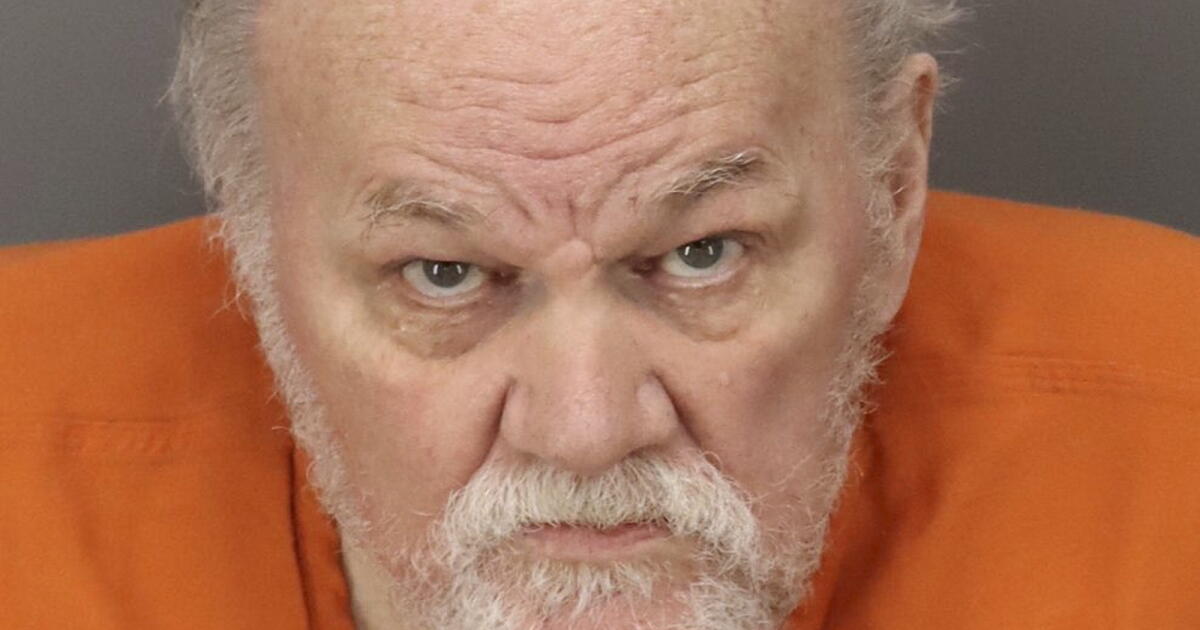
Thomas Markle Sr., the estranged father of the Duchess of Sussex, Meghan Markle, has been indicted on two counts of possession of child pornography.

On Tuesday, a federal grand jury indicted Markle Sr., alleging that he knowingly possessed child sexual abuse material that included 35mm film negatives of prepubescent minors and children who had not yet reached the age of 12.

The 82-year-old remains in custody in Florida and is expected to be arraigned in U.S. District Court in Los Angeles in the coming weeks, according to a news release issued by the U.S. attorney’s office for the Central District of California.

The indictment claims that Markle Sr. on Oct. 30 and Nov. 4 knowingly possessed the 35 mm negatives and that, in both instances, knew the images were child sexual abuse material and included at least one image of a prepubescent minor and a child younger than 12.

Markle Sr. was arrested in Florida on Nov. 6 and charged in the Central District of California with possessing child pornography. Federal prosecutors accused him of storing material including pictures of himself with children in various stages of undress in two storage units he had rented in the Los Angeles area since 2008.

Court documents filed earlier this month claim he kept child pornography at those facilities as well as at his home in the Philippines.

FBI special agents who raided the L.A.-area storage units said they found about 78 items, including slides, film negatives and books that contained child pornography. The affidavit describes two images that show an adult man with a nude prepubescent girl. A third image depicts a nude prepubescent girl in what appears to be a motel room in the Philippines. A witness who has known Markle Sr. since the 1970s identified him as the man in at least two photographs with a minor, according to the complaint.

If convicted, Markle Sr. would face a statutory maximum sentence of 20 years in federal prison on each count.

In October, Meghan’s half-brother, Thomas Markle Jr., claimed he’d found “hundreds, if not thousands” of child pornography images inside four large boxes at the Cebu, Philippines, home of his father and contacted authorities, according to the British tabloid the Sun.

And earlier this month, Markle Sr., allegedly cut off his ankle monitor following his arrest on child pornography charges.

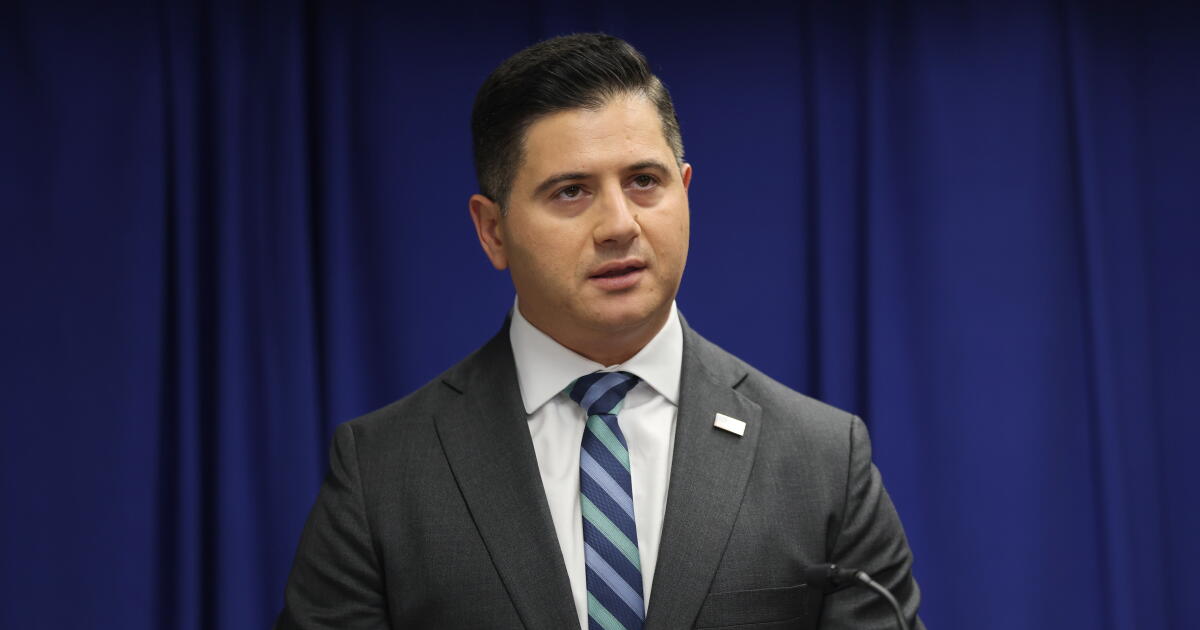
Markle Sr. was ordered to wear a location-monitoring device after a federal judge allowed him to remain out of custody pending his trial, according to Bill Essayli, first assistant U.S. attorney for the Central District of California. U.S. Magistrate Judge Lindsay Saxe Griffin subsequently ordered Markle Sr., at a hearing in Tampa, to be jailed without bond, representatives from Essayli’s office told The Times.

Source link

DOJ taps Essayli to help in federal probe of Mar-a-Lago raid

First Assistant U.S. Atty. Bill Essayli, a Trump loyalist whose tenure as the top federal prosecutor in Los Angeles is in doubt, has been tapped by the U.S. Justice Department to help in the ongoing federal probe of the 2022 raid on the president’s Mar-a-Lago residence and club, according to multiple reports.

Several news outlets reported Thursday that Essayli would continue overseeing the Los Angeles prosecutors’ office even as he heads to Florida for the separate probe, despite a court finding that he is unlawfully serving as a de facto head of the U.S. attorney’s office because he lacks Senate confirmation.

The Justice Department’s decision to tap Essayli — who has vigorously pursued President Trump’s agenda in L.A., targeting undocumented immigrants, protesters and alleged noncitizen voters — puts an attorney with a track record of driving ahead on dubious cases desired by the administration at the center of the Mar-a-Lago probe.

The U.S. attorney’s offices in Los Angeles and Florida did not immediately respond to a request for comment. Neither did the DOJ and the White House.

Essayli has previously defended his tenure at the top of the L.A. office, saying the matter is one that will be settled by the U.S. Supreme Court.

Several prosecutors working under Essayli in L.A. had not received any notification of Essayli’s selection for the Florida probe and said they learned of the news after being contacted by The Times on Thursday morning.

The Justice Department’s investigation into the Mar-a-Lago matter is part of a broader search for evidence suggesting former administration and law enforcement officials somehow illegally targeted Trump — including when agents and prosecutors searched his residence at the Florida private club and resort.

Documents found at the club formed the basis for a criminal case brought against Trump by special counsel Jack Smith, on charges of mishandling classified documents and obstructing federal efforts to retrieve the records.

The New York Times, citing anonymous sources, reported that Essayli “will focus narrowly on the question of whether agents and prosecutors broke the law four years ago when they searched Mar-a-Lago.”

The investigation is part of a sweeping “grand conspiracy” effort by Trump and his allies in the Justice Department to connect the various criminal investigations of Trump, determine they were all politically motivated and baseless, and punish those who’d steered the investigations.

So far, that effort has not produced results, and a previous U.S. attorney who had headed the Trump administration’s investigation, Jason Reding Quinones, stepped down after the midterms without disclosing a reason.

In addition to putting a staunch loyalist at the center of the Florida probe, Essayli’s selection also raises new questions about his tenure in L.A., already the subject of fierce debate.

Senior U.S. District Judge J. Michael Seabright ruled last year that Essayli was not lawfully serving as acting U.S. attorney, but allowed him to keep supervising prosecutions in his lesser capacities — including first assistant.

However, the U.S. 9th Circuit Court of Appeals subsequently ruled in a case challenging the leadership of the U.S. attorney’s office in Nevada that the Justice Department cannot keep an official who has not been confirmed by the Senate in charge of a U.S. attorney’s office simply by giving that person a different title and the full powers of the job.

That ruling prompted Seabright to reconsider Essayli’s case, and to rule in October that Essayli is acting improperly as a “de facto” U.S. attorney and must stop overseeing two criminal cases connected to the challenge. The ruling makes additional challenges likely, undermining Essayli’s authority and ability to prosecute cases.

The Trump administration has asked the U.S. Supreme Court to review the Nevada decision, which is stayed, arguing that federal law allows the attorney general to delegate a vacant office’s powers and install a new first assistant as its acting leader. The Supreme Court could decide by next month whether to take up the case.

On Wednesday, the Justice Department asked the U.S. 9th Circuit to halt Seabright’s decision pending the high court’s ruling as well. “The panel in this case should follow that judgment, both as a matter of law and equity,” the Justice Department wrote.

A former Republican member of the California Assembly from Riverside County, Essayli has used his position to pursue criminal charges against protesters, activists and immigrants while dropping cases involving administration allies and supporting lawsuits challenging transgender and environmental policies in California.

Recently, the U.S. attorney’s office in L.A. has taken aim at California officials over alleged voter fraud, seeking — and failing — to have thousands of ballots set aside before the Nov. 3 election. It is still pursuing individual cases against alleged noncitizen voters, and investigating how local elections offices in California handled its court-rejected demands that they set aside ballots.

Source link

Thomas Markle Sr. cut off his ankle monitor following child porn arrest

Meghan Markle‘s estranged father, Thomas Markle Sr., allegedly cut off his ankle monitor following his arrest on child pornography charges.

Four days ago, Markle Sr., 82, was ordered to wear a location monitoring device after a federal judge allowed him to remain out of custody pending his trial, according to Bill Essayli, first assistant U.S. attorney for the Central District of California. Markle Sr. was arrested in Florida and is charged in the Central District of California with possession of child pornography.

“He allegedly cut the bracelet off at 1:45 a.m. last night,” Essayli posted on X on Tuesday. “Release conditions are court orders, not suggestions. We are asking the court to revoke his release and detain him pending trial, and we will continue to prosecute this case to the fullest extent of the law.”

U.S. Magistrate Judge Lindsay Saxe Griffin has since ordered Markle Sr. to be jailed without bond at a hearing in Tampa, representatives from Essayli’s office told The Times.

Markle Sr. was arrested after federal authorities searched two storage units he allegedly rents in California. The storage units had been registered to Markle Sr. since 2008, with his most recent payments on both made in October via auto-pay.

Inside the storage units, agents say they found approximately 78 items, including slides, film negatives and books that contained suspected child pornography. The affidavit describes two images that show an adult man with a nude prepubescent girl. A third image depicts a nude prepubescent girl what appears to be a motel room in the Philippines. A witness who has known Markle Sr. since the 1970s identified him as the man in at least two photographs with a minor, according to the complaint.

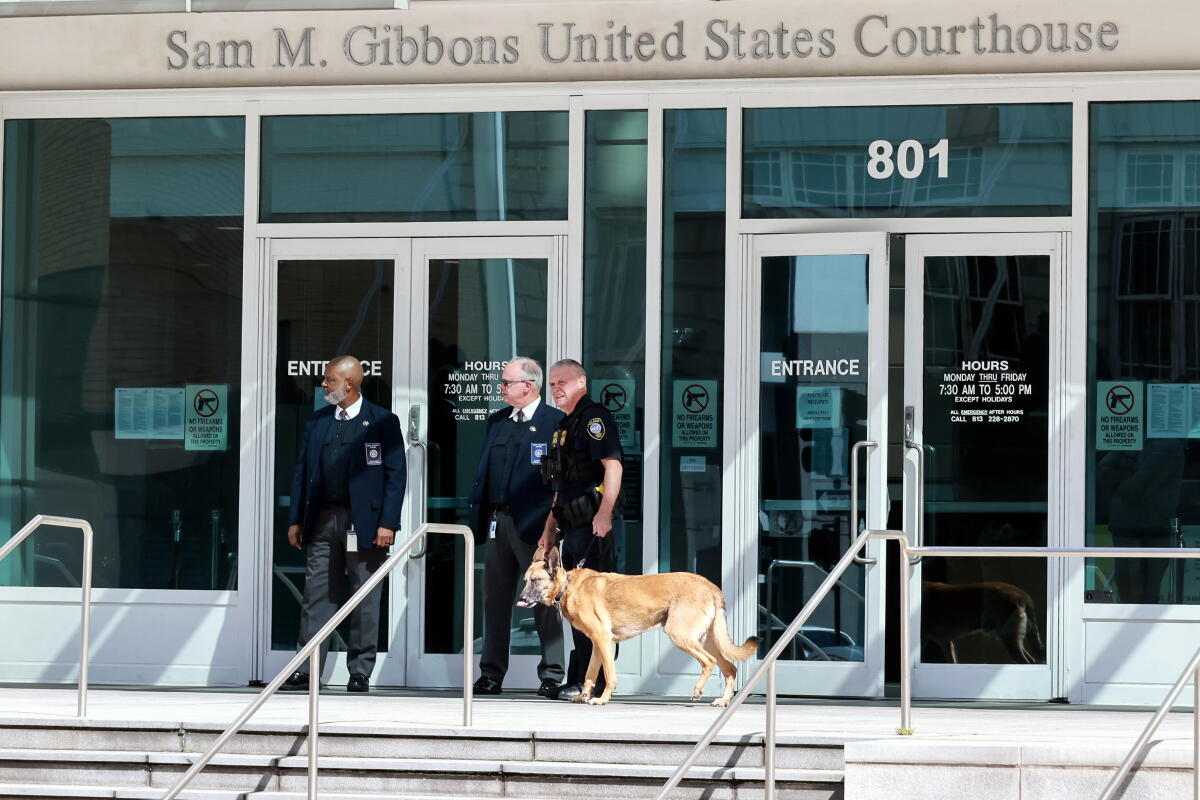
An external view of the Sean M. Gibbons U.S. Courthouse.

An external view of the Sean M. Gibbons U.S. Courthouse in Tampa, Fla. Meghan Markle’s father, Thomas Markle Sr., is facing charges of child pornography possession.

(Mike Carlson / Getty Images)

The affidavit further describes additional photographs that appear to show Markle Sr. with children in various stages of undress.

Last month, Meghan’s half-brother Thomas Markle Jr. claimed he’d found “hundreds, if not thousands” of child pornography images inside four large boxes at the Cebu, Philippines, home of his father, Markle Sr., and contacted authorities, according to the British tabloid the Sun.

Meghan’s team issued a statement to The Times following reports of the news, writing that she was “deeply distressed.”

“My thoughts are with any children who may have been harmed,” she said.

“In 2018, a letter was sent to the Metropolitan Police and Royalty and Specialist Protection. That letter was subsequently shared with me. It made troubling and disturbing allegations against my father and I was given assurances that these were being investigated,” she continued, adding, “I hope it can now be understood that, despite certain media publications’ distortion over the years, any distance from my father and my choice to not allow him to have contact with our children, was for one reason: to protect them.”

The Duchess of Sussex said that she trusted authorities were “doing the same for other families.”

“Although the breadth of what has now been uncovered is more sickening than one could ever imagine, my sincerest hope is that justice will be fully served and that the priority remains the safety and protection of innocent children,” she said.

Meghan’s relationship with her father, a former Hollywood lighting director, has been the subject of media scrutiny since 2018, when she and Prince Harry tied the knot. Markle Sr. did not attend the wedding.

Last month, Markle Sr. denied the accusations, calling them “bulls—” and “lies.” If convicted, he faces up to 20 years in prison.

Source link

California officials brace for unprecedented election interference by Trump administration

Top officials in California are bracing for unprecedented election interference from the Trump administration in coming days, including potential ballot seizures.

They are warning the public about such actions in striking messages casting President Trump and U.S. Department of Justice officials as threats to the vote and to American democracy. They have begged federal judges to reject warrant requests and hold the line against lawless probes. They have deployed armies of election lawyers and volunteer monitors, particularly to areas where congressional races could be close.

“California is dead serious about the security of [Tuesday’s] midterm elections. If Trump tries to meddle with California’s ballots, you can be sure as hell that we’ll prosecute those who help him,” Gov. Gavin Newsom said Monday. “Californians deserve a free and fair election, and that is exactly what we’ll deliver.”

Those efforts, echoing others from Democrats in Congress and liberal officials in other political battlegrounds, are like nothing seen before in the U.S., and in response to an equally extraordinary campaign by the Trump administration to intervene in state-run elections based on claims — espoused by Trump for years — that voting in places such as California has been corrupted by widespread fraud.

On Monday, Justice Department officials redoubled their effort to block about 20,000 California ballots from voters who they allege may be noncitizens by appealing to the U.S. Supreme Court, after lower courts rejected the request — and as another judge in a separate challenge barred them Monday from demanding California officials segregate the same ballots. The Supreme Court denied the request.

They and local partners also rolled out criminal charges against seven noncitizens accused of illegally voting or registering — bringing the total number of lawful permanent residents recently charged with election-related offenses in the state to 35.

Beyond California, the Trump administration is trying to preemptively negate any win by the Democrat in the Alaska Senate race, based on claims that the presence on ballots of a third candidate with the same name as incumbent Sen. Dan Sullivan (R-Alaska) is confusing voters.

The incumbent senator is identified as such on the ballot, and Alaska courts have already rejected similar challenges. A federal judge dismissed the administration’s suit Sunday.

The White House and the Justice Department have said they are simply trying to ensure American citizens’ votes aren’t diluted by illegitimate votes from noncitizens, and that Democrats aren’t able to steal the Alaska race by intentionally confusing voters.

But Democratic leaders have alleged that the lawsuits are part of a broader Trump administration effort to establish a “pretext” to challenge the outcome of Tuesday’s midterm elections if they don’t like the results.

On Saturday, Newsom wrote to federal district court judges across the state, urging them to deny any Trump administration requests for judicial warrants that would allow them “to seize ballots, election records, or certified voting technology while an election is underway and before the results are certified.”

Newsom wrote that he has “grave concerns” that federal agents will “quickly pivot” to making such requests in criminal courts given their mounting losses on other fronts.

The state’s “strict chain of custody, documentation, and retention laws related to ballots and ballot materials ensure any evidence of alleged wrongdoing tied to ballots or ballot materials is preserved and appropriately supervised by a court, so there is no legitimate law enforcement reason to seize ballots, ballot materials, and equipment needed to process and tabulate ballots,” Newsom wrote.

California Atty. Gen. Rob Bonta — whose office has been fighting the Trump administration in court — has also been increasingly vocal about his belief that Trump will take increasingly drastic steps to try to control the election results.

“He’s intent on pulling out all the stops, engaging in whatever type of lying, cheating, and stealing is necessary to get the outcome he wants. He starts with the outcome and he backs it out from there, and will do anything seemingly necessary to try to get to the outcome that he wants — instead of letting the facts, and the law, and the votes determine what the outcome is,” Bonta said in an interview on MS NOW that he posted Sunday.

Elections experts point to the administration’s many losses in court as evidence that its efforts are not working, and said most voters won’t experience any problems with casting their ballots.

They said they do have concerns about future efforts by the administration to intervene, including through dramatic steps such as ballot seizures, but whether it takes such steps may hinge on whether the balance of power in the House or Senate depends on the outcome of a small enough number of close races.

If the expected “blue wave” is large and races are not particularly close, it will be more difficult for the Trump administration to sway the outcome in its favor and less likely it will even try to do so — even if Trump publicly rejects the outcome as illegitimate.

In announcing the latest charges, First Assistant U.S. Atty. Bill Essayli, the top federal prosecutors in Los Angeles, and San Luis Obispo County Dist. Atty. Dan Dow said the fight is not partisan. Six of the charges were federal; the seventh was brought by Dow locally.

Dow, the county’s district attorney since 2014 who has denied previous claims that he harbors anti-Muslim and anti-immigrant sentiments, last week announced that he was investigating a subset of “63 suspected non-citizens registered to vote” in the county from the broader federal list of 20,000 names statewide. On Monday, he appeared alongside Essayli to announce the one person charged in his county — and said more such cases could be coming.

He said California’s system, which requires registering voters to attest to the fact that they are citizens, is an “honor system” that doesn’t work.

One of those charged federally was Moria Dahan, 35, an Israeli national living in West Hills. Dahan was charged with making false statements on her naturalization application to become a U.S. citizen. Prosecutors alleged she illegally registered to vote, voted in person in 2024, and later falsely stated on naturalization papers, under penalty of perjury, that she had never claimed to be a U.S. citizen or registered to vote in a U.S. election.

Tiffany Feder, Dahan’s attorney, described the issue as a mix-up, and said her client never intended to illegally participate in voting. She said Dahan “was targeted through a very extensive scheme to induce her to register and vote,” and like other green card holders with limited English skills, believed the forms she was filling out were official and required.

“The truth is that the moment we discovered this, at her interview, we promptly withdrew her application for naturalization,” Feder said.

California has more than 23.4 million registered voters — meaning the 20,000 flagged individuals would account for less than one-tenth of 1% of all voters in the state, and the 35 charged a tiny sliver of that. State officials and election experts have pointed to the small numbers of arrests, despite a sweeping probe to find such voters by Essayli and others, as proof such fraud is rare.

Essayli argued the exact opposite Monday — saying the charges were just a “sampling” from the broader list of 20,000 individuals, and part of an effort to force state officials to take that list seriously by moving forward with local law enforcement partners such as Dow instead of waiting on the courts.

“Our goal is not to charge all 20,000 people,” Essayli said. “Our goal is to get California to not count the votes of noncitizens.”

Source link

California, feds continue election war after courts rebuke challenge to 20,000 ballots

Soon after a federal judge in Los Angeles sharply rejected a Trump administration effort to block 20,000 California ballots from voters it alleged may be noncitizens, the U.S. Justice Department announced it will appeal — leaving attorneys on both sides preparing Thursday for yet another court battle.

That was despite the lower court judge calling the request an unlawful threat to eligible voters in Tuesday’s midterm election and to free and fair American elections moving forward, and the same appellate court having already rejected the same plan days prior.

“Every day, more ballots are processed by election officials. This ongoing emergency disenfranchises American citizens through dilution,” wrote First Assistant U.S. Atty. Bill Essayli, the lead prosecutor in L.A.

Early Thursday, Gov. Gavin Newsom swiped back at the Trump administration, writing, “A warning to Donald Trump: I’m deploying election lawyers to key battleground districts in California to protect every vote. And I just made it a FELONY to illegally seize ballots.”

With just days to go until polls close, the heated election war between California and the Trump administration is showing no signs of slowing down, despite multiple court orders rejecting the administration’s central effort to interfere in the midterms by accusing state and county officials of willfully turning a blind eye to voter fraud.

That’s in part because lawyers within the U.S. Justice Department have been unrelenting in their pursuit of such control, both through court orders and threats to state and county officials. It’s also because those same officials have refused to yield, denouncing the threats in recent letters back to the Justice Department as unconvincing and illegal.

“Be aware that we consider DOJ’s efforts to threaten California election officials with criminal sanctions for following federal and state law to be an effort to unlawfully intimidate both election officials and California voters, which can undermine voters’ faith in the election process,” Susan K. Blitch, counsel for Monterey County, wrote in one.

Several elections experts warned the administration is trying to sow confusion and suspicion around an election in which the Republican Party is poised to lose ground, in part so they can reject the outcome. But they also said the courts have consistently rebuffed the Trump administration, and will continue to do so through Nov. 3 and after — with the recent rulings in the case over the 20,000 flagged ballots a perfect example.

“The federal government lost in every way it could possibly lose. It lost on the law, and it lost on the facts, and it lost on the equities — [or] weighing the harms to the various parties,” said Rick Hasen, director of the Safeguarding Democracy Project at UCLA School of Law.

Appeal, rebuke, appeal

Last week, Trump administration attorneys decided that U.S. District Judge David O. Carter was not ruling quickly enough on their emergency request for a temporary restraining order to block California, Secretary of State Shirley Weber and Los Angeles County Registrar-Recorder/County Clerk Dean Logan from counting the 20,000 ballots it asserted were from “likely noncitizens” — so they appealed straight to the U.S. 9th Circuit Court of Appeals.

On Monday, a three-judge panel there — including two appointees of President Trump and one of President Biden — denied the appeal for a lack of jurisdiction, because Carter hadn’t been given a chance to weigh in. However, two of the judges — Mark J. Bennett, one of the Trump appointees, and Gabriel P. Sanchez, the Biden appointee — also wrote separately to make clear that they would have denied the administration’s request on the merits, too, for being likely unconstitutional and in violation of federal law.

On Wednesday, Carter, an appointee of President Clinton, issued his own ruling, in which he wrote that the administration’s allegations about noncitizen voters were “not credible” and that the intervention it sought would violate a host of federal laws, sow chaos in the ongoing midterm election, likely lead to the disenfranchisement of legitimate voters and foster future political meddling in elections.

“This request violates longstanding constitutional principles mandating that states have control over their elections,” Carter wrote. “If [the Trump administration’s] last-minute request for relief were granted, either party could create chaos for their own political purposes to disrupt the election process.”

Carter wrote that never in American history “has the federal government, on the eve of an election, sought to coerce a state and local government to abandon their own Constitutional elections procedures and bend to the will of the Executive Branch,” and that, in bringing its suit, the Trump administration was asking the court to “believe that it reigns as a sole sovereign.”

“But California and its people are sovereign, too,” Carter wrote.

The ruling — forceful, unequivocal and based on several of the same arguments made by Bennett and Sanchez — was cheered by state officials and voting rights groups. Elections experts said it squared directly with their understanding of the law, and was appropriate in the face of the Trump administration’s unprecedented, legally baseless effort to intervene in an ongoing state-run election.

Trump administration officials did not see it that way, and weren’t taking no for an answer. Justice Department lawyers promptly filed notice of appeal back to the 9th Circuit — where the case is likely, though not guaranteed, to land before the same three-judge panel that previously rejected the administration’s demands.

War of words

On Wednesday night, Newsom appeared on “Jimmy Kimmel Live!” and predicted Trump will take sweeping steps to “literally suppress the vote, to set the conditions where he will then express doubt in the electoral outcome, and suggest that it was rigged.” But he also said California is fighting back and prepared.

“Right now, I am focused on getting over 1,000 poll workers, folks out there to monitor the DOJ monitors that Trump’s gonna send to try to steal this election,” Newsom said. “We have been running tabletop exercises. We have 1,000 volunteers. We have 134 election law attorneys that we’re sending out.”

On Thursday, Essayli replied to the latter deployment, writing, “You’re going to protect every legal or illegal vote? What about California citizens whose votes are being diluted by ineligible voters. Do their constitutional rights matter.”

Trump, meanwhile, asserted with no evidence that “there are hundreds of thousands of bad ballots, bad votes, in California. Millions, in my opinion.” He said California has “very corrupt elections,” and that if it had honest ones, he “would have won it by a lot.”

The remarks were just the latest in a swirling and highly public war of words between state and federal officials.

In Carter’s courtroom Tuesday, Essayli claimed the federal government has maintained a collaborative “tone” since it first demanded the state set aside ballots, and said he was surprised at how “adversarial” state elections officials had been. But Essayli and other Justice Department officials have been engaged for weeks in an aggressive back and forth with California officials online — which is highly unusual for prosecutors actively litigating related cases.

When Newsom’s office recently wrote that “Trump’s DOJ is so desperate to invent ‘widespread voter fraud,’ it sent California counties lists of people who NEVER voted — and voters from the WRONG COUNTY. Absolute clown show!,” Essayli shot back, “Hey Fraud King,” with a crown emoji. “We’re not waiting for them to vote.”

Also unusual have been the threats Justice Department attorneys have been sending to county elections officials in California, including in a series of Oct. 23 letters in which they asserted varying numbers of “likely aliens” per county, set a 48-hour deadline for the counties to cooperate with federal authorities to prove those voters are citizens.

In one letter to Kristin Connelly, head of the Contra Costa County registrar’s office, U.S. Atty. Craig Missakian flagged 407 potential noncitizens in the county, and said he was writing “to make unmistakably clear the legal implications” of processing any ballots from those voters.

On Wednesday, Thomas L. Geiger, Contra Costa County counsel, responded with his own letter, questioning the accuracy of the noncitizen claims and saying it would be “legally unsound” for Connelly to “disregard both California and federal law” in order to comply with Missakian’s demands.

Other county attorneys hit a sharper tone in their own responses. Tony Lopresti, an attorney for Santa Clara County, wrote that his county “reserves its rights to pursue all legal remedies against DOJ for its unlawful intimidation of election officials and California voters.”
Source link

L.A. judge weighs feds’ request to block 20,000 California votes

A federal judge on Tuesday seemed skeptical of a Trump administration request to immediately block California officials from counting about 20,000 ballots from voters whose citizenship the administration questions, but said he would not issue a ruling until Wednesday.

U.S. District Judge David O. Carter questioned how the administration had derived its list of suspect voters, worried about disenfranchising eligible voters, said the demands would represent a “monumental change” to California elections and suggested federal prosecutors bringing the case had other means of holding illegal voters accountable.

But just one day after a federal appeals court rejected the same request, Carter said at the conclusion of a 3½-hour hearing in Los Angeles that he needed more time to rule — except on one related issue.

“This court believes it would be wise — that it would be wise — that any threats to state and county elected employees cease immediately,” he said — a clear reference to federal authorities threatening elections officials with criminal penalties if they count any of the flagged ballots.

After the hearing, First Assistant U.S. Atty. Bill Essayli, the top federal prosecutor in Los Angeles who argued on behalf of the Trump administration, said he had made it “abundantly clear that American voters are being disenfranchised in real time,” and that the administration will wait to see what Carter says Wednesday but was likely to appeal the matter back up to the appellate court.

He also denied threatening state officials, despite the Justice Department having sent formal letters to election officials statewide last week warning them of criminal punishments, and Essayli reiterated that position Tuesday.

Carter’s hearing came after Monday’s decision from the U.S. 9th Circuit Court of Appeals — the reverse of what’s normal — because Justice Department attorneys had tried to go over Carter’s head after he didn’t acquiesce to a deadline they’d set for him to rule on their request for a temporary restraining order against the state last week.

However, when the three-judge appellate panel — composed of two appointees of President Trump and one of President Biden — ruled 2-1 Monday that it had no jurisdiction to hear the case given Carter hadn’t yet had the chance, the case returned to Carter’s courtroom.

And there, Carter — an appointee of President Clinton — seemed loath to rush to judgment, despite the Trump administration’s claims of urgency. He said the administration’s method for arriving at its list of potential noncitizen voters was unclear and that he would like to develop the record further, including by bringing in an expert for the court.

“What are these systems? What are the algorithms? How was this derived?” he said.

He also seemed unmoved by the Justice Department’s argument that the ballots must be segregated immediately to prevent noncitizen votes from being counted, and more focused on whether noncitizens who illegally vote can be identified and held accountable while avoiding disenfranchising legitimate voters in the process.

For those who do vote illegally, “you’ve got a remedy, for goodness sakes,” he told Essayli. “Go out and indict.”

The Justice Department sued California, Secretary of State Shirley Weber and Los Angeles County Registrar-Recorder/County Clerk Dean Logan on Oct. 15, two days after Acting Deputy Atty. Gen. Trent McCotter gave Weber and Logan 48 hours to set aside the ballots for the 20,000 flagged voters, whom McCotter described as “likely noncitizens.”

During the hearing, Essayli argued on behalf of the Trump administration that its demands on California and L.A. County were not onerous, could be complied with easily and did not call for ballots to go uncounted. Essayli said the federal government was in court “on a very narrow request for an injunction to separate ballots of those suspected of being noncitizens” only until the state can prove their citizenship.

He argued that the “reliability and credibility” of the federal government process for flagging the 20,000 voters is unquestionable — while also telling Carter, “We’re never going to stand here and tell you that everything is 100%.” He said every vote counts, as some elections “are decided by a handful of votes,” and that the federal government is simply asking California not to break existing federal law barring noncitizens from voting.

“We’re not telling California what they have to do. We’re telling them what they can’t do, which is just count these ballots without doing more to ensure whether they’re citizens or not,” Essayli said.

Essayli — who has aggressively sparred with California officials on social media for weeks — also argued to the court that the federal government has maintained a collaborative “tone” since first asking the state to segregate the ballots, and that he was surprised at how “adversarial” state elections officials have been on the issue.

Attorneys for Weber and the state said the Trump administration’s demand on the state “distorts several legal doctrines beyond recognition” and is clearly illegal, particularly during an ongoing election. They said the administration has provided no evidence that the 20,000 voters aren’t citizens, and has used “data and methods known to be unreliable.”

Michael Cohen, a deputy attorney general for the state, said the Trump administration questions California law that allows voters to attest to their citizenship under penalty of perjury, while ignoring the fact that standard was set not by the state but by Congress.

Anne Bellows, another deputy attorney general, said California has an established framework for running elections, and the Trump administration is trying to “sweep it off the table and replace it with a new, unclear procedure in which the federal government can issue a list and require California to change the way a subset of its voters’ ballots are received, and whether or not they are tabulated,” which she said was illegal and a “recipe for disenfranchisement” of thousands of legitimate voters.

“The stakes here are enormous,” she said.

Attorneys for Logan said the Trump administration has made its demands “without any credible argument” as to how it is legal, that the “proposed remedy” it is demanding from the state is “vague and unworkable,” and that if it wants to question California’s existing processes, “the proper audience for that argument” is Congress — not the federal court.

Several attorneys for voting and civil rights groups also argued against the Trump administration during the hearing, including by arguing that its reliance on third-party data sets — including from Lexis Nexis — was not a trustworthy way of identifying whether voters are citizens.

The litigation is just one part of a much wider battle by the Trump administration to intervene in state-run elections nationwide, and particularly in California, including on the notion that state elections have insufficient guardrails to prevent noncitizens from voting. Elections experts say such fraud occurs, but is exceedingly rare.

While the 9th Circuit panel’s unsigned ruling Monday rejected the Trump administration’s appeal for lack of jurisdiction, both judges in the majority — Mark J. Bennett, a Trump appointee, and Gabriel P. Sanchez, the Biden appointee — wrote independently to make clear that they would have rejected the case on its merits too.

They said it ran afoul of federal law barring interventions in voting in the immediate lead-up to elections, and the U.S. Constitution, which reserves control of elections for the states and oversight for Congress, not the executive branch.

Judge Patrick J. Bumatay, the other Trump appointee on the panel, also wrote independently in dissent — arguing the federal government must “have the power to stop this potential attack on the integrity of our elections.”

Carter previously rejected an administration lawsuit demanding California’s unredacted voter rolls as “unprecedented and illegal” — a decision similar to those made by dozens of other federal judges in other states. Federal prosecutors recently charged 28 lawful permanent residents in California with election-related crimes, including illegally registering to vote. Some of those charged expressed confusion, said they had no recollection of registering or had never voted.

There are more than 23 million registered voters in California.

Last week, Justice Department officials sent letters to election officials in counties across California demanding they sequester any flagged ballots in their jurisdictions, and warning them that they could face criminal penalties if they don’t. State officials denounced the letters as a legally baseless intimidation tactic.

Federal judges also have slapped back executive orders in which President Trump demanded new nationwide voter ID and citizenship requirements, and blocked a Trump administration plan to empower the U.S. Postal Service to vet mail ballots for the first time.

Beyond the courts, Democrats and voting rights groups have been strategizing for months on how to prevent the Trump administration from interfering in the midterm elections, which will determine control of Congress. The Trump administration has said it is merely trying to enforce the law and ensure that noncitizens do not illegally vote and negate the ballots of U.S. citizen voters.

Source link