Benin

Armed men kidnap dozens in attacks on Nigerian villages | Armed Groups News

Police say three villages and a mosque were attacked, and worshippers kidnapped in central Niger State.

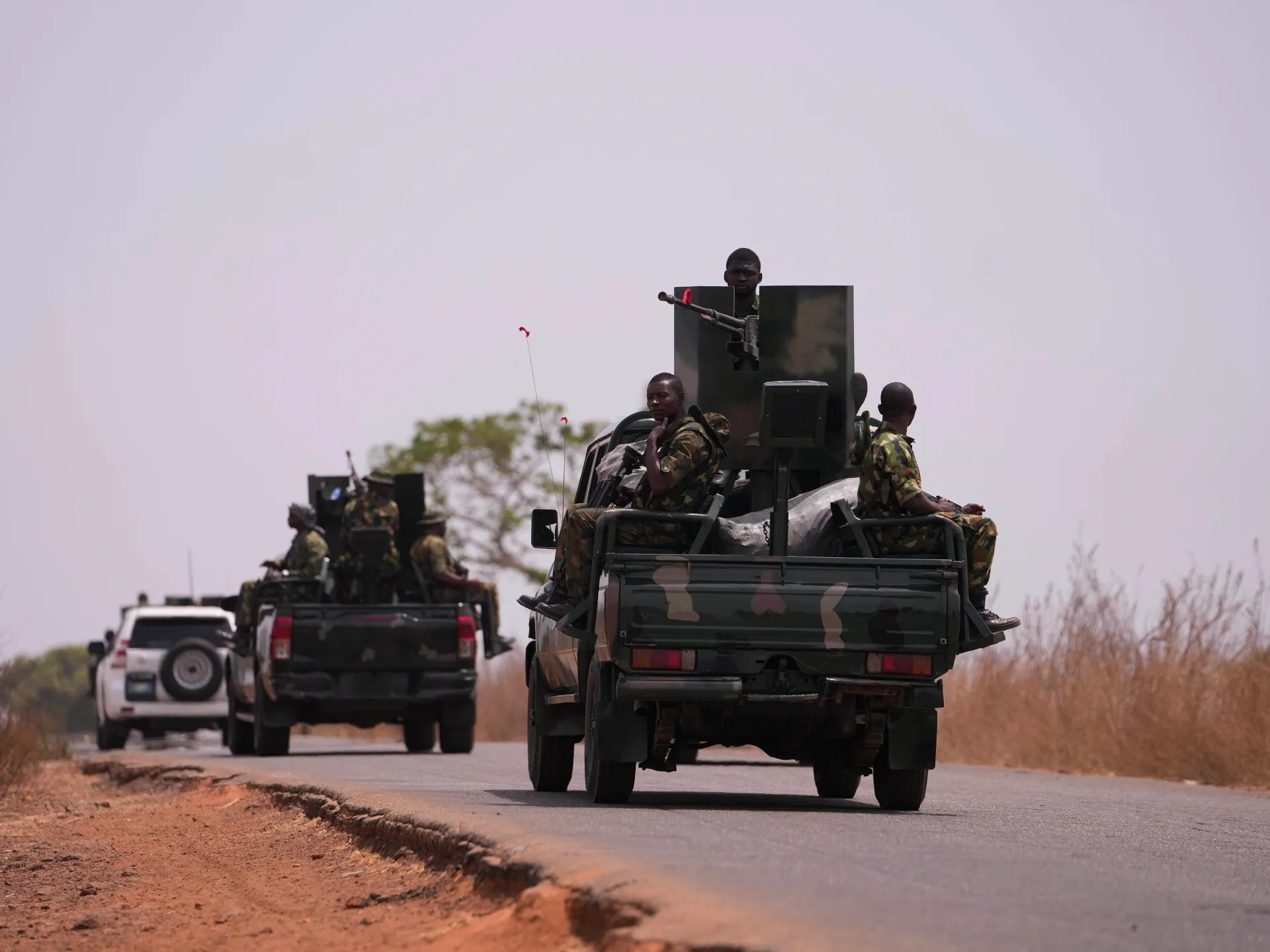
Armed men have kidnapped dozens of people during an attack on a mosque and surrounding villages in Nigeria’s central Niger State, survivors and police officials say.

The raiders stormed Kpenya Mosque in the Dekara district of Borgu Local Government Area at around 2pm (13:00 GMT) on Friday, after first attacking the villages of Gidan-Zana and Kpenya, police spokesperson Wasiu Abiodun said on Saturday.

Recommended Stories

list of 3 itemsend of list

Abiodun told the Reuters news agency that police were aware of the kidnappings but had not received reports of anyone being killed, and that a “joint security detachment has been deployed to the area for assessment and rescue operations”.

He said police could not yet confirm the number of people who were taken.

Local residents told Reuters that more than 60 worshippers were kidnapped, but the figure could not be independently verified.

Separately, residents told the AFP news agency that people were also killed, another claim that could not immediately be confirmed.

Jibril Ahmad, a survivor of the assault on Dekara, blamed members of the Lakurawa armed group.

“Soon after finishing the normal Friday prayer, the armed group of Lakurawa, in their hundreds, wielding guns, knives and machetes, began to attack us,” Ahmad told AFP, claiming that people were “slaughtered”.

During the attack, a third group, Mahmuda, intervened and clashed with the kidnappers, allowing some abductees to escape, he said.

Federal lawmaker Jafaru Mohammed told AFP that several nearby villages were also struck.

“Some members of the Mahmuda group were against the doctrine of the Lakurawa, and when they heard of what the Lakurawa were doing, they fought them,” Mohammed said.

The attack unfolded in a region near Nigeria’s western border with Benin that has seen growing activity from local armed groups and fighters from the neighbouring region, even as the country’s 17-year armed rebellion remains concentrated in the northeast.

The violence in Niger State continued into Saturday. Resident Abdullahi Ahmad said the group returned to the area to seize more people as a “bargaining chip” in advance of an expected troop deployment, and planted landmines on the road out of Dekara.

“A man and his family who were fleeing the town yesterday were killed when their car hit a landmine planted by the terrorists. Everyone is living in fear,” he said.

Mass abductions have been a hallmark tactic of the country’s armed groups and have evolved into a lucrative, multimillion-dollar industry involving networks of both ideological and nonideological gangs across Nigeria’s northwest and central regions.
Source link

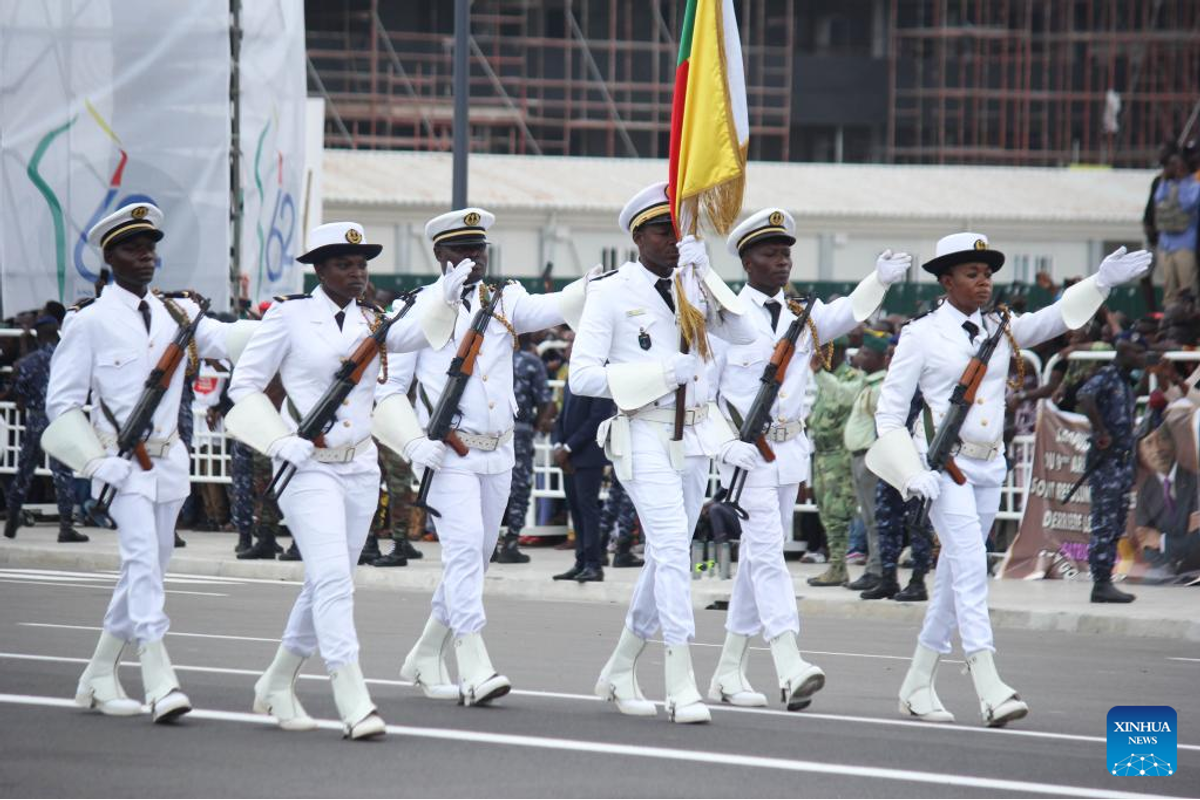
Saturday 1 August Independence Day in Benin

Located on the Gulf of Guinea, the hot and humid West African nation shares borders with Togo to the west, Nigeria to the east, and Burkina Faso and Niger to the north.

The region of modern day Benin first came to the attention of the Europeans as a source of slaves with the shores of the region earning the name ‘the Slave Coast’.

Local warlords made agreements with the Portuguese to supply slaves from captured prisoners. One important local kingdom at the time was the Dahomey, known for their military discipline, who grew to be the dominant power in the region. 

Dahomey means ‘on the belly of Dan’. Dan was the name of a rival king. Defeated by the Dahomey, they built their royal compound over his grave. 

With the abolition of the slave trade, the control of the Dahomey was weakened, allowing the French to take over the region at the end of the nineteenth century. In 1904, the colony of French Dahomey was incorporated within French West Africa.

In 1946 with the establishment of the Fourth French Republic, Dahomey became an overseas territory of France with its own parliament and representation in the French national assembly.

On December 4th 1958, it became the Republic of Dahomey (République du Dahomey), a self-governing autonomous republic within the French Community. 

On July 11th 1960 France agreed to Dahomey becoming fully independent. Dahomey gained its full independence on August 1st 1960, with Hubert Maga becoming Dahomey’s first president.

In 1975, the country changed its name to Benin, after the Bight of Benin, a large bay in the Gulf of Guinea.

‘If it dies, it’s on you’: Saving Nigeria’s Benin bronze casting | Arts and Culture

The Benin Bronzes are a broad term used for the carved ivory, wooden works, metal sculptures and plaques looted by British troops during the Punitive Expedition in 1897.

Scholars estimate that more than 5,000 artefacts were stolen, some of which were gifted to Queen Victoria, others sold in auctions, held in private galleries or donated to museums across Europe and elsewhere.

The call to return the art, which began in the 1930s, intensified in the recent decade, inspired by growing pressure, repatriation activism and the relentless effort of the Benin Dialogue Group, a multilateral stakeholders’ group.

As momentum built at the peak of the homecoming of these arts, Igun Street unexpectedly found itself in the global spotlight. Diplomats, state officials, museum curators and researchers began arriving in numbers local artisans say they had never witnessed before.

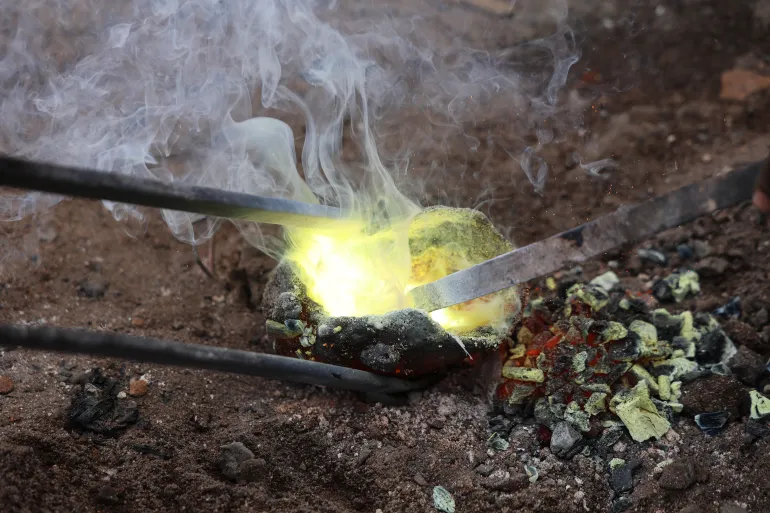
A crucible of molten bronze rests above charcoal embers before artisans pour the metal into clay moulds using long iron tongs.
A crucible of molten bronze rests above charcoal embers before artisans pour the metal into clay moulds using long iron tongs [Orji Sunday/Al Jazeera]

This noon, Double Chief’s voice brims with pride as he points to a recently completed sculpture resting on a wooden bench. The bronze figure, a man in a suit and tie, had received its final polish only that morning after months of work.

Yet for many bronze casters, the attention has done little to solve underlying concerns.

“We are struggling to keep the industry alive,” says Oriakhi Osazee, who sits on a wooden stool at the entrance of a store in Igun. A sculptor whose mediums are clay, fibre, brass and bronze, Osazee has been in the craft for more than 35 years. He speaks with depth and conviction, drawing from vivid dates and past events to reinforce his ideas.

Efforts to recruit apprentices have stalled, he says. Young people, on whom the future of the craft depends, are increasingly leaving in search of what he calls “quick money” in other professions, cities and countries.

When their ancestors began, he recalls, their craft extended beyond bronze casting. There were, among the Iguns, men who had a gift in ivory carving. Long before the global ban on ivory trade was made official, that layer of art, without heirs and hope of continuity, had died.

For Agbonmwenre Alex, the subject of heirship within the craft is a matter of personal pain.

Alex, who was taking a tour of his workshop, began learning the craft at the age of eight under the guidance of his father. He started with errands and light tasks before progressing to kneading clay pottery. Over time, he learned every stage of the casting process, from preparing moulds to the final polishing of finished works.

Today, he is the only one of his father’s seven sons who remains in the profession. But uncertainty now hangs over the next generation.

“I would like my sons to take after me,” Alex says. “Unfortunately, I started exposing them to this craft so late. They literally see this work as outdated, archaic, and dying. The zeal, the love for the job, is dead.”

I would like my sons to take after me. They see this work as outdates, archaic, and dying. The zeal, the love for the job, is dead.

by AGNONMWENRE ALEX, BRONZE CRAFTSMAN

His first son chose to study law. His second is pursuing a degree in healthcare. Despite repeated efforts to pique their interest, including offering workshop space, raw materials and financial support to start a business of their own, neither accepted.

“The number of youths is declining drastically. It [the craft] is at risk of going into extinction. Apprentices are so scarce,” says Osazee. “We used to have a lot of apprentices in the past.”

Source link