Belfast City Airport

Foreign Office air travel warning over ‘national emergency’ for EU destination

The advice is to check with your travel provider for the latest information

Families heading abroad on their summer holidays are urged to keep a close eye on travel updates. The Foreign Office has published fresh travel guidance for a popular sunny EU destination. The latest advice urges travellers to “check with your travel provider” for the latest information in light of a “national emergency”.

This comes as many flights were disrupted recently to the south of Italy, after eruptions from Mount Etna caused clouds of ash to be thrown into the air. The Foreign Office has since updated its guidance for Italy on Tuesday, August 11, with new information regarding ‘Volcanoes’ in the ‘Safety and security’ section. The latest guidance informs visitors: “There are several active volcanoes in southern Italy. National emergency planning is in place for the Phlegraean fields, an area that remains active experiencing regular tremors.”

People heading to the Mediterranean country are warned that “airspace can be affected during eruptions”. The Phlegraean fields (Campi Flegrei) is an area just west of Naples and so is close to Naples Airport.

‘Heightened activity’

The guidance includes a word of warning for another airport in the region. You may need to take action ahead of your trip: “If you are travelling to or from Catania, during a period of heightened activity, check with your travel provider or with Catania airport.”

State Pensioners to face major tax change

The Government body also advises: “Read what to do in the event of a volcanic eruption and follow the instructions of the local authorities.” The guidance includes a link to more information on the Civil Protection Department website of the Italian Government.

This information reminds visitors that Italy has “the greatest concentration of active volcanoes in Europe” along with Iceland. The guidance sets out that there is a “varying degree of hazard” for these volcanoes.

‘Wrong information’

People trying to find the latest guidance in the media are warned that “wrong information” can be sent out in times of crisis. The guidance urges: “For this reason it is important to follow the civil protection authorities’ instructions transmitted by radio, TV, in the daily press, on Internet and by the various toll-free numbers that will be set up.

“During eruptions, it is also important not heed the forbidden to enter signs at the areas involved by the eruption. It is dangerous to approach the crater area even if there is no eruptive activity as sudden explosive phenomena or gas emissions are always possible.”

You can read the full travel guidance for Italy on the Foreign Office website.
Source link

UK airport drop off fees up by a third – full list of most expensive

The cost to drop friends and family off at the airport this summer has increased by a third at most airports across the UK – with some short stays costing a whopping £10

Dropping off family and friends at the airport this summer will cost you even more as new research has found that fees have increased by a third over the last year.

It was found that 16 out of 20 airports analysed had increased or introduced so-called “kiss and fly” fees since last summer, according to the RAC.

Some airports are now charging as much as £10 just to stop outside the terminal for a few minutes.

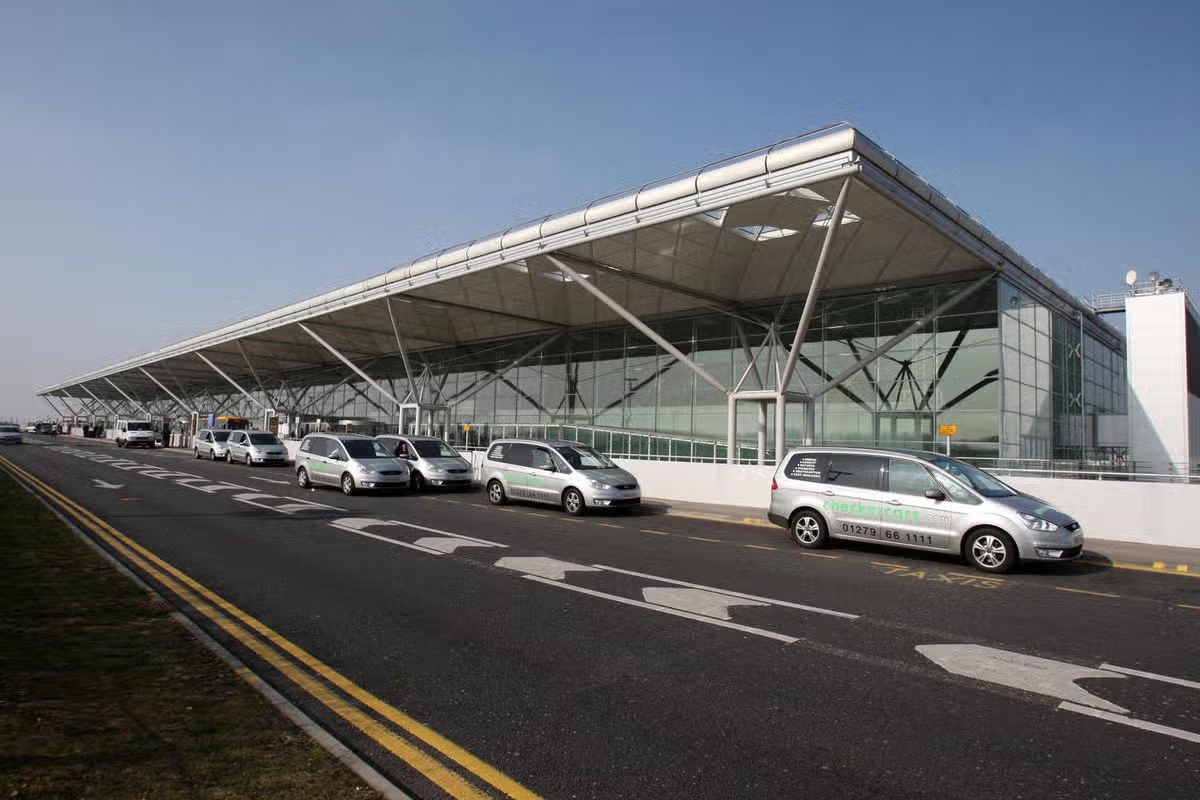
The most costly airports are still Gatwick and Stansted, with terminal drop-offs costing £10 at both.

The bigger shock comes as the only major airport that offered free terminal drop-offs, London City, now has one of the costliest fees charged on a per-minute basis.

Drivers dropping off relatives at London City are now charged £8 for five minutes, making it the highest charge per minute among airports included in the research.

The next most expensive drop off zones are outside of England’s capital.

One is in Scotland, as Edinburgh charges £8.50 for up to 10 minutes. Bristol also charges the same fees.

The RAC noted the average cost of airport drop-off fees has increased by around a third over the past year, despite many of the world’s busiest airports continuing to offer free terminal drop-offs.

The organisation highlighted that none of the busiest airports in the European Union charge drivers for dropping passengers off outside terminals.

In some of the world’s busiest hubs, including Dubai, these fees also do not exist.

Most UK airports do have alternative options that are free, however these are usually located in mid or long-stay car parks, with passengers needing to catch a shuttle bus to the terminal.

RAC senior policy officer Rod Dennis said: “It’s disappointing to see so many airports charging so much for what many regard as a simple act of kindness in dropping off family and friends.

“Having a captive audience should be no excuse for these farewell fees, especially when they’re completely at odds with how major airports around the world operate.

“Of course, airports need to manage the limited space they have carefully, but if free, convenient drop-off zones work at many other international airports, then why not here?”

Mr Dennis also warned drivers to take extra care when using airports with “park now, pay later” systems without barriers.

He said: “Those that drop off but miss the signage or forget to pay soon afterwards can face a parking charge notice as high as £100 – a fee that feels distinctly disproportionate to the contravention.”

There were only four airports in the study that had not increased their costs. Liverpool John Lennon, East Midlands, Belfast City and Southampton.

Most expensive airport drop-off charges:

  • £10: Gatwick and Stansted
  • £8.50: Bristol and Edinburgh
  • £8: Bournemouth, Leeds Bradford and London City
  • £7: Aberdeen, Birmingham, Glasgow, Heathrow, Luton and Southampton
  • £6: Liverpool John Lennon and Newcastle
  • £5.50: Manchester
  • £5: Belfast International and East Midlands
  • £4.50: Cardiff
  • £4: Belfast City

Source link

Every UK airport with 2000ml liquid limit ‘rule’ in place this summer

People should check their specific airport before travelling this summer

Airports in the UK have slightly different rules that could catch some travellers out this summer if they do not check them before packing. Certain airports have been upgraded to help relax a major security rule, while others have yet to make any changes.

The 100ml liquid-limit security rule means passengers can only bring liquids in containers of 100ml or less in hand luggage. The rule was put in place back in 2006 when police foiled a major terrorist plot, which prevented a group that planned to smuggle liquid explosives on board a flight leaving London that was bound for North America.

At the time, standard airport security X-ray machines were designed to detect metal weapons (such as guns and knives) and solid explosives, with no way to distinguish between a simple bottle of water and volatile liquids. For years, the rule has remained in place for the vast majority of airports.

But in 2022, the Government confirmed plans to relax the rules. As technology has advanced, some airports are relaxing the rules in 2026.

Certain UK airports featuring new 3D security scanners now allow passengers to carry liquids, gels, and aerosols in individual containers that can hold up to two litres (2000ml). These airports allow you to leave liquids in your hand luggage without needing clear plastic bags.

Content cannot be displayed without consent

As of July 15, 2026, the following airports have fully upgraded their systems to include new scanners that officially allow passengers to carry liquids in containers up to two litres in their hand luggage:

  • London Heathrow (All Terminals)
  • London Gatwick
  • Birmingham
  • Bristol
  • Edinburgh
  • Belfast International
  • Belfast City
  • Teesside International

Even at these hubs, reusable metal, insulated, or double-walled vacuum bottles must be empty when passing through security. You can refill them once you are inside the departure lounge.

Every other UK airport has yet to follow suit with the change, and still follows the commonly known limit of 100ml. But even with the same cap on liquids, certain airports have different ways of letting items through security.

For example. certain airports remain the same as last summer, where passengers need to use 100ml containers and place them in a clear, resealable plastic bag for scanning. These airports include:

  • London Stansted
  • London Luton
  • Glasgow International
  • East Midlands
  • Liverpool John Lennon
  • Cardiff

But, certain airports have relaxed the rules slightly. Although the strict limit on the amount of liquids is still in place, passengers can keep their liquids and electronics inside their bags for processing at these airports:

  • London City
  • Manchester
  • Newcastle
  • Leeds Bradford
  • Aberdeen
  • Southend

Why aren’t all airports changing at once?

The UK Government’s original goal was a blanket lifting of the 100ml rule, but issues arose, meaning the change had to be implemented gradually. To prevent massive security bottlenecks during the peak summer rush, the Department of Transport has largely frozen rule changes at airports that haven’t yet reached 100% compliance.

Major remaining hubs, such as Stansted, Luton, and Manchester, are continually updating their lanes behind the scenes. Gradual transitions to the “in-bag” rules are expected to resume late autumn/winter 2026 as travel volume drops.

People have been reminded to think before they start maxxing out their luggage limit, as their return journey could be what catches them out. Even if you fly out of a 2L-friendly airport like Heathrow, most international destinations still enforce the strict 100ml rule, so if you buy full-sized toiletries in the UK, you may have to check them into hold luggage on the way back or throw any leftovers away before coming home.

Source link

Packing innocent 35p item in bags or suitcases could see you stopped at airport

It might seem harmless at first glance, but it could lead to unnecessary delays

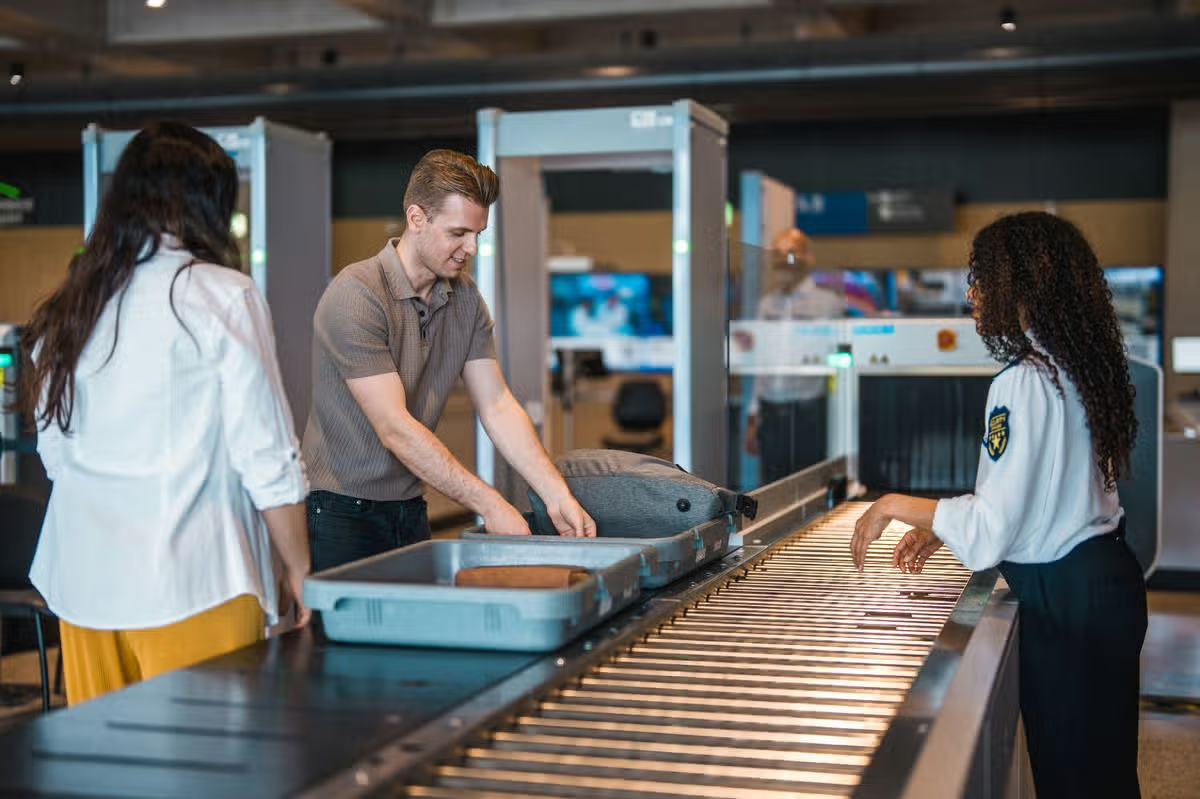
Packing for a holiday can feel like navigating a minefield, with a long list of rules on what can and can’t go in your luggage. While some banned items are obvious, others seem completely innocent at first glance – yet bringing them to the airport could still result in officials delaying your journey.

There is one everyday item that is allowed by all major airlines, including Ryanair, Jet2, TUI, easyJet and British Airways, but could still attract attention during security screening if officers are unable to identify it clearly on the scanner. To avoid unnecessary delays or having to unpack your luggage at the checkpoint, travellers are advised to pack toiletries in a way that makes them easy to inspect.

A simple bar of soap – buyable at Sainsbury’s for 35p, for example – might seem like one of the most harmless items you could take on holiday. However, it is not the soap itself that can cause concern – it is the way a solid item may appear when passing through security scanners.

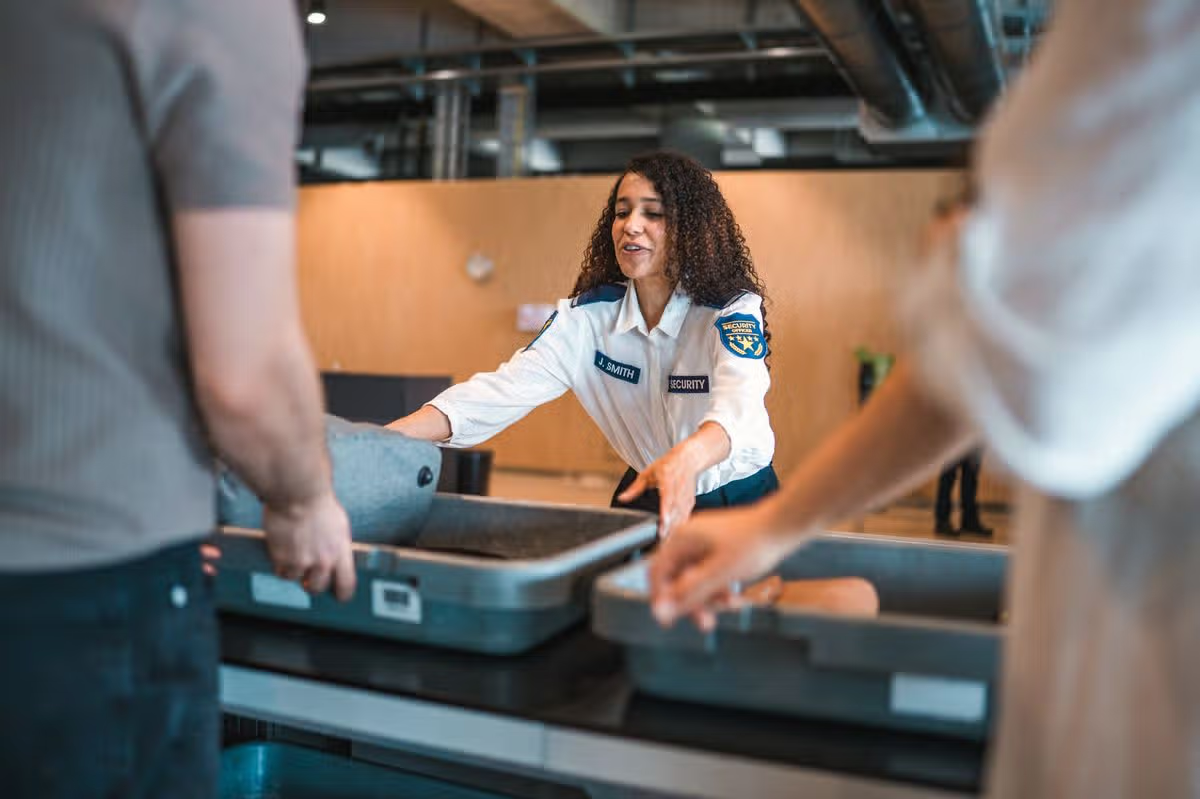
Airport security staff do not routinely search luggage simply because it contains a bar of soap. However, dense items can sometimes make X-ray images harder to interpret, particularly when they are packed alongside electronics, cables or other bulky belongings. If officers cannot clearly identify an item, they may carry out additional checks before allowing passengers through.

The government information website GOV.UK says: “Airport security staff will not let anything through that they consider dangerous – even if it’s normally allowed in hand luggage.” While soap clearly is not dangerous, if a bar of soap raises an alert on the scanner, they are legally required to stop the passenger and inspect it.

The US Transport Security Agency (TSA), for instance, says passengers are often asked to separate dense items because they can “clutter bags and obstruct clear images on the X-ray machine.” When a solid block of soap, cheese, or other dense organic material blocks the scanner’s view or mimics a threat signature, protocol requires a physical bag search or chemical swab testing to clear the item.

According to GOV.UK, solid bars of soap are permitted in both hand luggage and checked baggage. Security officers can still manually inspect any item they are unable to identify clearly during the screening process, regardless of whether it is allowed.

To reduce the chances of your bag being opened, experts recommend keeping dense items easy to access and, if requested, placing them in a separate tray during screening. Avoid storing them inside thick metal tins or rigid plastic cases alongside items such as power banks, charging cables and other electronics, as this can make X-ray images harder to interpret.

It’s also important not to confuse solid soap with liquid toiletries. While bars of soap are exempt from liquid restrictions, liquid soaps, shower gels and similar products carried in hand luggage must normally be in containers holding no more than 100ml, unless you’re travelling through an airport that has introduced next-generation security scanners permitting larger liquids.

The rules apply regardless of which airline you’re flying with, as baggage screening is carried out by the airport rather than carriers such as Ryanair, Jet2, TUI, easyJet or British Airways. A manual inspection is simply a precaution and does not mean you’ve broken any rules or packed a prohibited item.

Taking a few moments to think about how you pack everyday toiletries could help make your journey through security a little smoother. Although a 35p bar of soap is perfectly legal to travel with, storing it sensibly could help avoid unnecessary delays before your holiday even begins.

Source link

Which UK airports still have the 100ml restrictions in place – full list

We’ve all got used to packing tiny shampoos and shower gels into our hand luggage when we fly, but new technology means some major airports are scrapping the 100ml rule making going through security so much easier

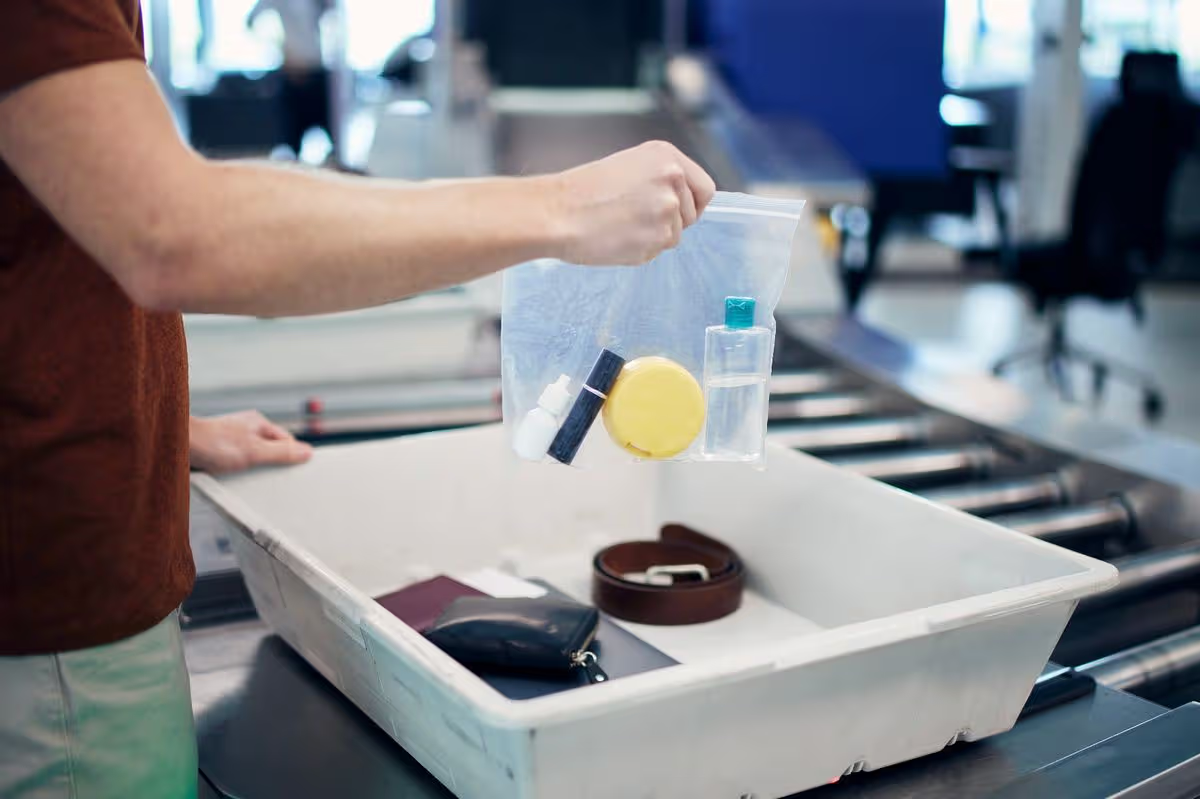
It’s hard to believe that the airline liquid rules have been in place for nearly two decades. Since a terror plot was foiled in 2006, air passengers in the UK have been limited to taking containers of under 100ml on planes, and made to keep them in a clear, resealable 20cm x 20cm plastic bag.

Over the years, technology has improved, meaning restrictions have slowly been eased. In many airports, you no longer need to use a clear plastic bag for your liquids and can simply leave them in your hand luggage. However, in the majority of airports, the 100ml rule still stands all these years later.

A small number of airports have now scrapped the 100ml rule – allowing Brits to fly out with liquids in containers of up to two litres in volume. This means most standard-sized bottles of water, creams, gels, sprays, and aerosols can be taken through as hand luggage.

Whatever the allowed liquid size at your departure airport, holidaymakers should make sure they avoid using metal or double-walled bottles, such as a Thermos flask, when they carry liquids on board, as the scanners cannot penetrate the insulated layers.

Another thing travellers should keep in mind is that the rules at their return airport might be different. The vast majority of European airports still enforce the 100ml rule. So while you may be able to take a big bottle of suncream in your hand luggage going out, you may need to put it in your checked luggage coming back.

The GOV.UK website has a list of items considered liquids. Many travellers still get caught out by the 100ml rule as they don’t realise items such as semi-liquid foods such as soup, jam, honey, or syrups need to be within the restricted size.

Nut butters and soft cheeses also come under the category of liquids. In the USA, the Transportation Security Administration (TSA) use a rule that: if you can spill it, spread it, spray it, pump it, or pour it, it counts as a liquid. While this isn’t an official rule in the UK, it’s a good way to determine whether an item you’re taking onboard is going to need to follow liquid size rules.

Liquid rules at airports can be updated with little notice, so always check your departure airport’s official website before you fly.

Full list of airports still enforcing the 100ml rule

  • Manchester Airport (MAN)
  • London Stansted (STN)
  • London Luton (LTN)
  • Glasgow Airport (GLA)
  • Glasgow Prestwick Airport (PIK)
  • Liverpool John Lennon Airport (LPL)
  • Newcastle International Airport (NCL)
  • Leeds Bradford Airport (LBA)
  • East Midlands Airport (EMA)
  • London City Airport (LCY)
  • Aberdeen International Airport (ABZ)
  • Jersey Airport (JER)
  • Cardiff International Airport (CWL)
  • Southampton Airport (SOU)
  • Inverness Airport (INV)
  • Cornwall Airport Newquay (NQY)

Full list of airports that have scrapped 100ml rule

  • London Heathrow (LHR)
  • London Gatwick (LGW)
  • Edinburgh Airport (EDI)
  • Birmingham Airport (BHX)
  • Bristol Airport (BRS)
  • Belfast International Airport (BFS)
  • George Best Belfast City Airport (BHD)
  • Bournemouth Airport (BOH)

Have a story you want to share? Email us at webtravel@reachplc.com

Source link