Beach Holidays

Britons could be fined £1,000 over little-known beach rule this weekend

As parts of the UK are set to get warmer again this weekend, Brits should be aware of little-known beach rules

England’s south-west coastline is famed for boasting an abundance of beautiful beaches to discover. From breathtaking coves that can hold their own against Greece’s white sand shores, to Blue Flag-awarded stretches, the UK’s magnificent coast is difficult to surpass.

Blue Flag beaches are acknowledged for their exceptional levels of cleanliness and dedication to safeguarding the natural environment, but this is no simple achievement. Keeping the coastline in immaculate condition can prove quite demanding, particularly during the busy summer months when parts of the UK welcome a great number of visitors to its shores.

While some regulations are relatively straightforward to observe, and anticipated of those visiting the beach, particularly regarding staying safe on the shore, other regulations are enforced more rigorously.

Standard beach etiquette involves noting which flags are flying and refraining from entering the water in hazardous conditions, as well as not disturbing local wildlife during your visit.

It can also involve being considerate of fellow beachgoers by keeping music at a reasonable volume and remembering to collect your litter, but some regulations are, in reality, legally enforceable and could get you into trouble if breached, reports Devon Live.

For those with dogs, the Public Spaces Protection Order (PSPO) enables numerous local councils to implement seasonal limitations on dogs on beaches during peak periods, but other laws may take you by surprise.

Understanding the laws can prevent a relaxing day at the seaside from becoming a stressful, and expensive, outing. One seemingly innocent activity is in fact prohibited on British beaches and could result in a penalty of up to £1,000.

With the warmer weather this weekend and holiday season rapidly approaching, ecology specialists at Arbtech are urging beachgoers to bear in mind that taking pebbles, seashells or sand from British beaches is actually against the law.

Many visitors to the seaside might be tempted to slip a pebble into their pocket as a keepsake after a glorious day by the sea, yet what most people don’t realise is that this is illegal under the Coast Protection Act 1949.

Stones, shells and even items such as driftwood all play a vital role in maintaining coastal ecosystems, and removing them risks causing serious damage to these environments.

Arbtech’s Andrew Ward commented: “One person taking a pebble or shell may not seem like much, but when thousands of visitors are doing the same, it can have drastic impacts on the coastal environment. Over time, we could start to see increased erosion, the loss of natural sea defences, and disruption to habitats that many species rely on.”

Local councils are responsible for enforcing this rule, particularly at popular tourist destinations where the problem has previously occurred.

Andrew added: “The law is clear and it’s not just there to spoil any fun. It’s a reminder that beaches are protected for a reason. We all have a role to play in preserving the environment so that it can continue to thrive for generations to come.”

While gathering seashells may bring back fond childhood memories and look charming on a windowsill, these natural treasures are essential for providing microhabitats to a wealth of local wildlife. Capturing a photo of the beach on your phone or camera is a far safer, and most likely more affordable, way to preserve the memory of the UK’s stunning coastline.

Source link

Jet2 passengers save money on one item during flight if they order early

Travellers can save money on the popular onboard drink if they place their order at the right time

Jet2 says passengers can save money onboard of they order their drinks early. Customers often love to make the most of the onboard refreshments when they’re jetting off on holiday.

The airline enables passengers to pre-order their in-flight meals, which typically include a hot dish, snacks, and a drink (Costa Coffee, Yorkshire Tea, hot chocolate or water). For those who enjoy a celebratory tipple, Jet2 also serves a selection of alcoholic drinks. According to the website, customers who order ahead could save money on one of the most popular alcoholic drinks.

Jet2 said: “To make your holiday extra special, you can pre-order champagne to enjoy on board. Plus, when you pre-order, you’ll save £5 on the onboard price!” Many passengers bring their own food and drink on board to save money, packing snacks such as sandwiches, salads, wraps, and pasta dishes.

However, there are some restrictions that people should be aware of. For instance, customers can’t bring hot food or drink onto planes for safety reasons, and they cannot bring their own alcohol onboard to drink during the flight. This means passengers cannot drink any duty-free alcohol onboard their flight.

Jet2’s website explains: “No, you can’t bring your own alcohol onboard to drink while on the plane. Only alcoholic drinks bought onboard can be consumed during your flight. And we reserve the right to serve alcoholic drinks at our absolute discretion.”

The airline’s current menu includes spirits, cocktails, wines, and beers, including Grey Goose Vodka, Aperol Spritz, and Heineken. There’s also a range of soft drinks, including Harrogate Spring Water and Robinsons Fruit Shoot.

Remember to drink responsibly (18+) and be Drinkaware. For advice and support on alcohol, visit the Drinkaware website here. Drinkaware warns that the risk of developing a range of health problems, including cancers of the mouth, throat and breast, increases the more you drink regularly.

To keep health risks from alcohol low, you should drink no more than 14 units a week, ensure you have several drink-free days, and avoid binge drinking. The NHS website offers information about alcohol support.

Passengers should be aware that being drunk on a plane is a criminal offence.

Gov.uk explains: “It is an offence under the Air Navigation Order to be drunk on an aircraft and airlines have the authority to prevent passengers they believe are intoxicated from boarding aircraft.”

Source link

‘Best hidden gem beach’ in UK named with golden sands for miles and no crowds

The little-known spot has been crowned the UK’s ‘best hidden gem beach’ and boasts over two miles of golden sand, ‘excellent’ azure water, unmatched views — and no crowds.

As temperatures continue to soar across the UK, thousands of Brits are gearing up to flock to the coast over the coming months. In an ideal world, that beach would boast a sandy shoreline, crystal-clear waters and not a crowd in sight. And while it might sound like a pipe dream, one UK beach apparently delivers all of that and more.

A little-known beach has claimed the top spot in new research compiled by outdoor specialists at Millets, who analysed average sunshine hours, typical temperatures and water quality at UK beaches with fewer than 500 reviews, in order to uncover the nation’s finest ‘hidden gem’ beaches.

For those looking to dodge the masses while also being treated to spectacular scenery, stunning landscapes and turquoise waters, there’s one UK beach that reigns supreme, reports the Express.

Warkworth Beach, Northumberland

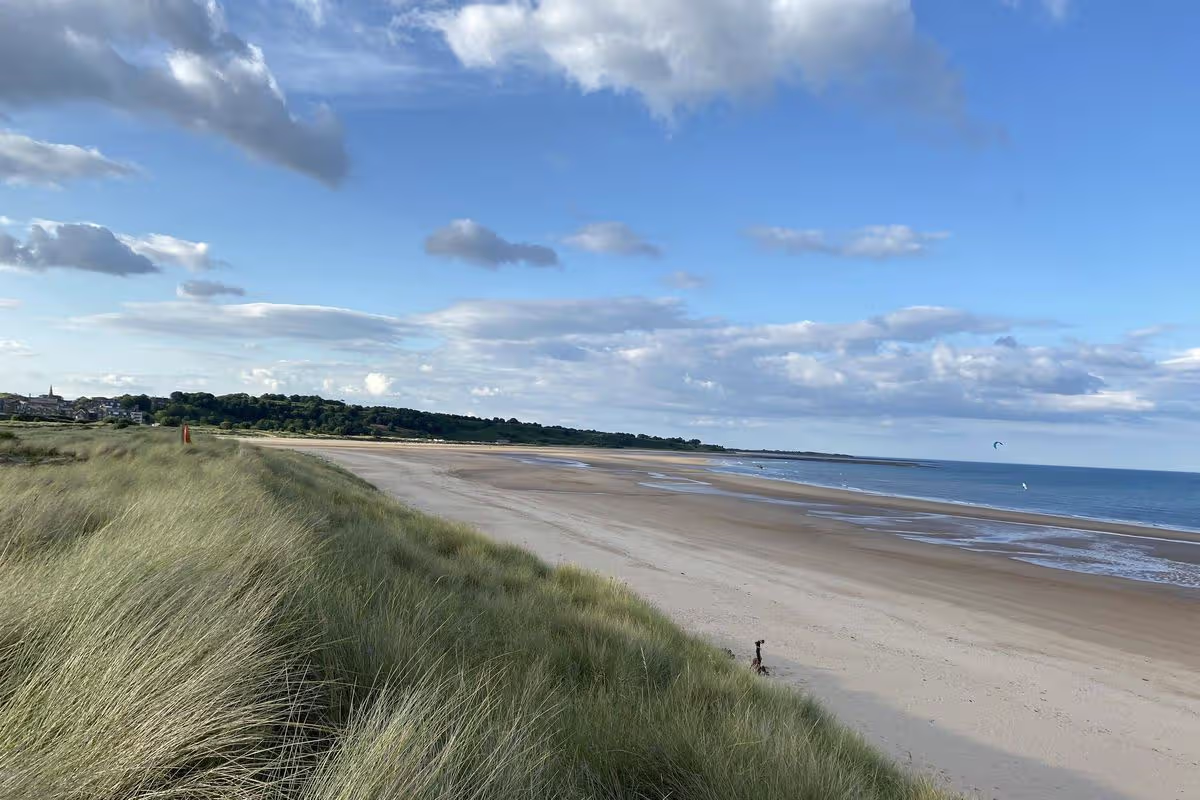
Warkworth Beach has been named the UK’s best ‘hidden gem’ beach. Tucked away in Northumberland, Warkworth Beach lies less than a mile from the picturesque medieval village of Warkworth, nestled between Birling Carrs and Amble Breakwater.

Visitors to the village often overlook the nearby breathtaking beach, but those who do make the trip are rewarded with a sweeping stretch of pristine golden sand that seems to stretch on endlessly. Warkworth Beach extends more than two miles and sits in the shadow of the magnificent Warkworth Castle.

The beach has been described as boasting ‘excellent’ water quality, and is celebrated for its ‘unspoilt’ scenery. Visitors can nip into nearby pubs and cafés, all just a short stroll from the beach’s free car park.

Whether you fancy sunbathing, playing games on the sand or simply taking a long, leisurely walk — particularly with your four-legged companion — amid stunning surroundings, Warkworth Beach consistently provides plenty of space and a welcome retreat from the hustle and bustle, all while offering unrivalled views.

One glowing visitor review on TripAdvisor reads: “Stunning Beach. This is a dog walker’s must. Beautiful views across the headland. A sandy beach, with some interesting rocky pools. A peaceful place most of the year. Reasonable parking, a bit of a steep walk to the dunes. If you tire of the beach, some great walks by the sand dunes and salt marshes.”

While another delighted visitor adds: “I agree with most of the other reviews here: seriously stunning beach, unspoilt, vast and with very few people. Gorgeous sand and beautiful views. Parking is free and, as well as toilets, the day we were there, there was also a food trailer in the car park offering what looked like brilliant dishes. If I lived here, I would be on this beach every day!”

Highcliffe Beach, Dorset

Taking second place is Highcliffe Beach, located in Dorset. The sand-and-shingle stretch sits close to the Hampshire border and is flanked by dramatic cliffs and Highcliffe Castle.

The beach provides paid parking, as well as a café boasting sea views, and is RNLI lifeguarded throughout July and August. Highcliffe Beach is held in high esteem, with visitors singing the praises of its coastal walking trails, as well as swimming and bodyboarding opportunities.

East Strand Beach, County Antrim

Rounding off the top three is East Strand Beach, which notches up an impressive score of 8.89/10. Located in Portrush, the beach is flanked by sweeping sand dunes and the world-famous Portrush golf club.

It’s a firm favourite for watersports all year round, including surfing, and has RNLI lifeguards on duty throughout the summer months. Visitors wax lyrical about the spectacular white sand, with one reviewer likening it to the Sahara: “A glorious stretch of sand so long and golden it could make the Sahara blush.”

Calum Jones, author and outdoor enthusiast at Millets, has shared his top tips on how to get the very best out of your summer beach trip this season, saying: “Summer is the perfect time to explore the stunning coastlines across the UK, from Achmelvich Beach in the Scottish Highlands to Broadstairs in Kent. There are breathtaking beaches to be found across the UK.

“When planning your summer beach trip, it is important to remember sun-protective clothing. The sea breeze can often make the air feel cooler, but UV rays can still be harmful. Apply a generous layer of suncream before you head out, and don’t forget a cap and sunglasses to shield yourself from the sun.

“You should also keep in mind that British weather can still be unpredictable. Bring a waterproof jacket to stay dry in case of sudden showers, choose supportive, waterproof footwear for any slippery sand or rocks, and layer your clothing so you can easily adjust to changing temperatures.

“Visitors should always leave beaches in the condition they found them. Make sure you take any rubbish, clothing or equipment home with you to keep UK beaches as clean as possible.”

UK’s best ‘hidden gem’ beaches

  1. Warkworth Beach, Northumberland
  2. Highcliffe Beach, Dorset
  3. East Strand, County Antrim
  4. Joss Bay, Kent
  5. Seacliff Beach, East Lothian
  6. Mossyard Beach, Dumfries and Galloway
  7. Flamborough South Landing, East Riding of Yorkshire
  8. Caister-on-Sea Beach, Norfolk
  9. Treyarnon Bay Beach, Cornwall
  10. Cayton Bay Beach, North Yorkshire and Beadnell Bay Beach, Northumberland

Source link

I’m a travel writer – my favourite beach is in the UK and it hasn’t got any crowds

Beaches in the UK are set to be busier than ever during the summer months, but there’s one hidden gem without any crowds that has unspoilt golden sand and pristine blue waters

Beaches can become overwhelmed with holidaymakers, particularly during the summer months, but there’s one hidden gem boasting golden sands that I return to time and again.

The sight of densely packed umbrellas, desperately searching for somewhere to settle down for the day, weaving through swimmers while drifting on a lilo and fighting over the last Cornetto at the ice cream stand, is hardly what you’d call a relaxing day in the sunshine. And with the UK basking in balmy temperatures, British beaches are anticipated to be more crowded than ever.

To be fair, you can hardly blame anyone for descending on their nearest stretch of coastline when the UK is blessed with glorious sunshine. After all, there’s nothing quite as refreshing as a dip in the rolling waves with a gentle sea breeze on your face.

Yet there are plenty of alternatives, well away from the heaving masses. So, for that perfect coastal day out, there’s one breathtaking shoreline in Wales that I cannot recommend highly enough.

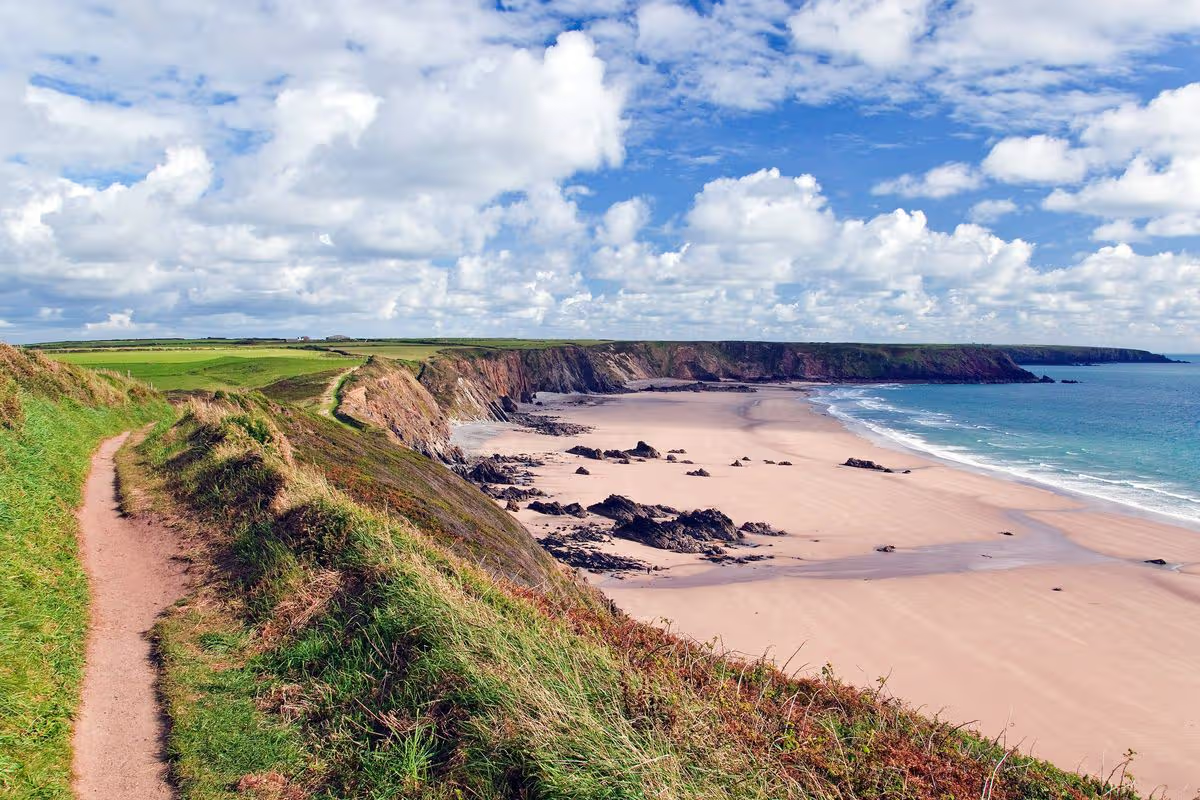
Tucked away on the south-western tip of the Pembrokeshire coast in West Wales lies the spectacular Marloes Sands Beach. Just a 30-minute drive from the town of Haverfordwest and sitting on the boundary of the Pembrokeshire Coast National Park, you’ll be welcomed by miles of unspoilt golden sand and inviting blue waters set against dramatic, rugged landscapes.

Framed by towering coastal cliffs with unique rock formations, it not only offers a stunning backdrop for a seaside outing but also keeps it somewhat under the radar. So for my family and me, who visit regularly, we’re treated to plenty of room and expanses of golden sand.

We’ve never had to battle for that coveted patch on the beach or fretted about accidentally splashing into someone in the crystal-clear waters — it truly is a haven away from the crowds. What’s more, dogs are permitted on the beach throughout the year, so they’re free to race about, plunge into the surf and dig for gold until their hearts’ content.

And that’s not all. Marloes Beach has even been graced by Hollywood, as scenes from the film ‘Snow White and the Huntsman’, starring Kristen Stewart and Charlize Theron, were filmed there in September 2011.

Yet with any hidden gem destinations, there can be drawbacks.

There are no amenities on the beach, so you’ll need to come prepared and bring your own provisions. The walk down can also be somewhat demanding.

I mean, I’ve always relished the 0.5-mile winding path down from the National Trust car park, passing through meadow fields, but understandably, when you’ve got children and picnic hampers in tow, it’s more of an ordeal. But after the trek down, armed with a sun umbrella and bodyboard, it’s absolutely worth it for a day on this pristine stretch of coastline.

What’s more, on your way back up, you can treat yourself to an ice cream from the van that’s occasionally parked close by, or just a short distance from the car park, there’s the café, Runwayskiln, serving up sweet treats and chilled drinks.

Just make sure to plan your visit and check the tide times beforehand. At high tide, sections of the beach can become cut off, so provided you plan ahead and keep track of the time, you’ll be basking in the sunshine in your own little slice of paradise.

Do you have a travel story to share? Email webtravel@reachplc.com

Source link

‘Hidden gem’ UK seaside town with sandy beaches is perfect for summer staycation

The UK seaside town, which is perfect for a staycation this summer, is renowned for its golden sandy beaches, striking sandstone cliffs, and the historic thatched-roof Old Village

As the UK continues to bask in a spell of scorching weather, droves of Britons are swapping their office chairs for deckchairs and heading off on a well-deserved coastal staycation.

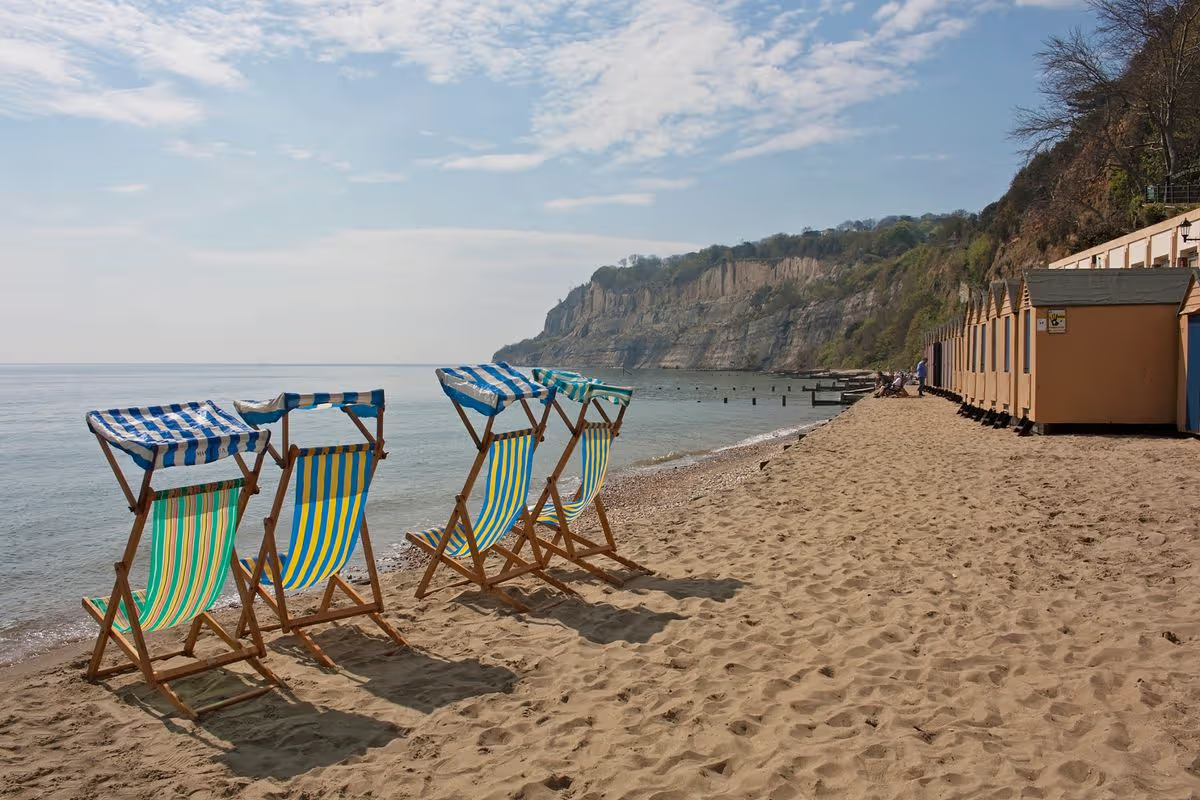
If you’re among them, you’ll want to pay attention, as one seaside gem has been hailed as nothing short of ‘like a fairytale’. Nestled on the southeast coast of the Isle of Wight, Shanklin is a picturesque, traditional seaside town renowned for its golden sandy beaches, striking sandstone cliffs, and the quaint thatched-roof Old Village, making it one of the island’s most beloved holiday hotspots. The town strikes a wonderful balance between coastal fun and rich heritage. Shanklin Beach and The Esplanade is a vast, family-friendly expanse of golden sand.

The Esplanade is brimming with seaside entertainment, classic fish and chip shops, water sports, and several crazy golf courses (including pirate and dinosaur themes).

The Cliff Lift is another must-see attraction. Those staying atop the sandstone cliffs can skip the gruelling descent to the beach by hopping aboard the historic Cliff Lift, which has been ferrying visitors down to the Esplanade since 1957.

The island’s oldest visitor attraction, meanwhile, is Shanklin Chine, which first opened its doors in 1817. This verdant, wooded coastal ravine boasts spectacular waterfalls, winding jungle-like pathways, and a breathtaking illuminated evening light display.

Situated directly above the Chine, the Old Village is renowned for its charming, centuries-old thatched cottages, welcoming tearooms, and independent craft boutiques.

Visitors might also explore Shanklin theatre, a lively year-round entertainment venue hosting over 150 performances annually, encompassing comedy and music through to drama and pantomimes.

Digital travel influencer Reiko, posting as @heyreiko on Instagram, recently used her platform to champion the town to her 39,100 followers.

Content cannot be displayed without consent

She posted footage of the breathtaking town, writing: “Why does no one talk about this fairytale town tucked away on the Isle of Wight?

“Shanklin… or as it feels when you’re here, somewhere between a dream and a postcard you swear you’ve stepped inside.”

She continued: “If you ever needed a sign to disappear for a while and find a little pocket of peace that feels unreal… this is it.”

Followers were loving the post, with it accumulating more than 4,900 likes.

One commenter described it as “so beautiful”, while another declared: “What a cool spot.”

A third who had visited previously added: “Stayed there while at the Isle of Wight festival – such a lovely little place and the beach is lush.”

Source link

Coastal town is UK’s ‘answer to the French Riviera’ with turquoise waters

This beautiful seaside town has become a popular staycation destination in recent years

The French Riviera is an enormously sought-after holiday destination, renowned for its breathtaking coastal scenery and magnificent cities. But you don’t necessarily have to travel abroad to find turquoise waters and sandy beaches, as one charming town right here in the UK has been likened to France’s most glamorous stretch of coastline.

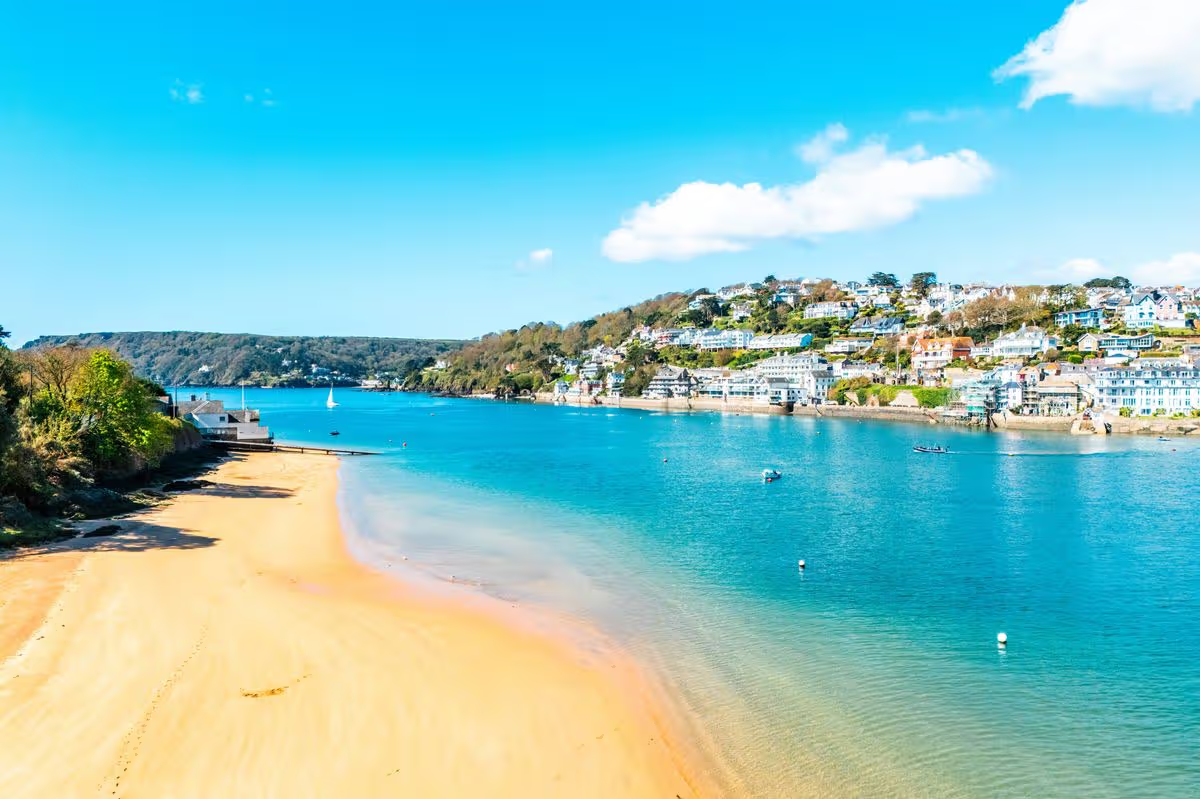
Salcombe in Devon has been hailed as a spectacular alternative to heading off to France by one lucky visitor. Taking to Instagram, UK travel content creator Hannah, who shares guides and reviews under @postcardsbyhannah, posted a video of the gorgeous seaside spot.

Questioning why Brits are always quick to moan about living in the UK when “it’s home to places like this,” she drew comparisons between the town and the stunning vistas of the French Riviera region, which takes in Nice, Cannes, Saint-Tropez, Antibes and Monaco.

She wrote: “Welcome to South Devon… Salcombe to be exact! Once a quiet fishing village, it’s now one of England’s most sought-after seaside escapes, where pastel-coloured cottages sprawl down the hillside towards bobbing sailboats on turquoise waters.”

Hannah went on to say that Salcombe boasts a relaxed and understated sense of luxury that feels almost effortless, with family-run boutiques, art galleries, ice cream parlours, and waterside pubs dishing up oysters freshly harvested straight from the estuary.

She continued: “Salcombe’s estuary is stunning, surrounded by rolling green hills and sandy coves reached only by foot or boat. Have a wander round town and visit Cranch’s Sweet Shop, one of the most iconic establishments in the town, selling sweets since the 1800s.”

Salcombe boasts numerous breathtaking beaches, including Salcombe North Sands, with its rockpools and panoramic views of the ruins of the nearby Salcombe Castle, and Salcombe South Sands Beach, regarded by many as one of the most pristine beaches in South Devon.

Another well-loved beach in the vicinity is Hope Cove Bay, where watersports enthusiasts can hire kayaks and paddleboards to venture out onto the water.

One visitor to Salcombe North Sands expressed their affection for the beach on TripAdvisor, writing: “Love this little place.

“Tide was in when we arrived but after a stroll around town and lunch at The Winking Prawn, it had started to go out revealing a beautiful sandy bay with low shallow water for paddling in. Dog friendly too!”

Content cannot be displayed without consent

Meanwhile, another visitor to South Sands penned: “A lovely day to spend the day as a couple or with the family. Beautiful beach, especially when the tide goes out. Spectacular scenery from the beach.

“A small kiosk sells sandwiches and salads along with wine and tin beer and of course tea and coffees and soft drinks. You need to bring your own chairs (no deck chairs) A great place to visit!”

Once you’ve soaked up the stunning beaches, why not pay a visit to Overbecks Garden — a Grade II registered garden dating back to the Edwardian Era, brimming with tender and exotic sub-tropical plants that are well worth exploring at a leisurely pace.

One visitor wrote: “Stunning gardens with absolutely fabulous views. Couldn’t believe the size of the tropical plants! Nice route around the garden.”

Source link

Jet2 clarifies luggage allowance rules that apply to all customers

There are several Jet2 rules to note when planning your trip

Jet2 has clarified its baggage allowances after an enquiry from a holidaymaker. The customer asked for help as they got ready for their summer getaway.

The person contacted the provider over social media on June 23. The traveller had booked their journey through Jet2holidays, and was due to jet off the following week.

They posed a question about their luggage entitlement. The customer wrote: “We have 3 x 22kg baggage allowance. Assume we are good to check in just two bags provided weight doesn’t exceed allowance?”

They went on to ask if they could check in one suitcase weighing 23kg and another at 25kg while remaining within their total allocation. Jet2 replied to set out the options available to the customer.

Combining your baggage allowance

The airline confirmed: “You can pool your luggage into two suitcases as opposed to three, as long as this doesn’t exceed your combined allowance of 66kg, and that no single article of luggage exceeds 32kg. I hope this helps.”

State Pensioners to face major tax change

According to Jet2’s official guidance: “Any baggage that exceeds your total weight allowance will be carried subject to availability and at our discretion. You’ll also need to pay an excess baggage fee, which is £12 per kg. Please note that no single item of baggage can weigh more than 32kg.”

You can add extra luggage when you book or through the Manage My Booking facility. Simply enter your booking reference, surname and departure date, then navigate to ‘Add Holiday Essentials’.

Query over 10kg allowance

Jet2 was also recently asked another question about its baggage weight rules after a passenger reported receiving contradictory information. The person had a booking for two adults and a six-month-old infant.

They explained: “Told we get two extra carry ons such as a buggy and travel cot that will be checked into the hold at the gate.”

They said they had two 22kg checked bags and that on a prior Jet2 holiday they had been told they qualified for “an extra 10kg for the baby”. According to Jet2’s official website guidance for bookings with children, passengers receive “an extra 10kg allowance for infants” plus “up to two items per child or infant free of charge”.

The passenger asked whether the additional 10kg could be combined with one of the 22kg cases, creating a 32kg allowance. They described receiving mixed messages on their last Jet2 journey. The customer recalled: “On the way out with you we were told it’s fine to have a 32kg case (22kg + the 10kg).

“On the way back we were told the 10kg should be a separate small checked case. Please can you clarify which it is and what the rules are because on our last holiday with you we were told different things.”

Setting the record straight, Jet2 responded to the passenger: “The additional 10kg is applied to one adult’s baggage, allowing for a total of one bag at 32kg and one bag at 22kg.”

Source link

UK is hotter than Ibiza – this English beach will transport you to the party island

Right now, the White Island is 30C, whereas parts of the UK could reach 40C this week. Now seems like the perfect time to head to the beach for a little cooling dip

As everyone who’s been to Ibiza likes to tell you, the Balearic island is more than just Pacha, 50 euro glasses of Prosecco, and ecstasy tabs. It’s also very pretty.

Ibiza’s coast is defined by turquoise waters, dramatic pine-forested cliffs and hidden sandy coves. The most visually stunning spots are scattered across the island, with top-rated options including the sunset views at Cala Comte, the lush nature of Cala Saladeta, and the iconic rock formations at Cala d’Hort.

Right now, the White Island is 30C, whereas parts of the UK could reach 40C this week.

In Cornwall, the thermometer is bopping around the mark, making a trip to the coast a tempting prospect. Happily, there is a beach that shares many of the qualities of those on the comparatively chilly Ibiza.

It sits beneath towering cliffs that shield it from the wind, with stunningly clear waters that prove ideal for swimming and snorkeling.

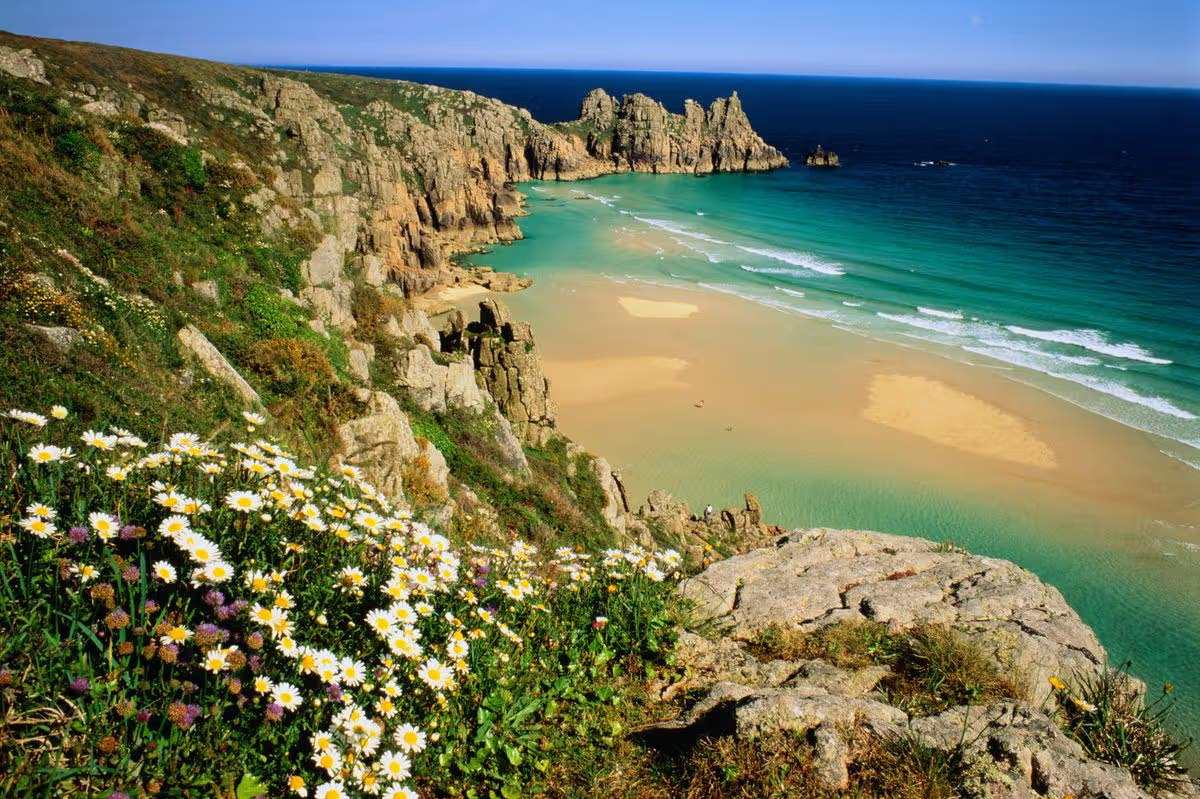
Porthcurno has pure white sand with gorgeous turquoise waters to match. It has the ability to transport you to paradise.

The sand is made up of seashells pounded to powder by the sea over millions of years, which is partly responsible for the beautiful colour of the water. Porthcurno’s south-facing direction, flanked by high headlands, provides natural shelter from the wind and weather, giving the beach its own near-microclimate. The towering cliffs on either side make it easy to find a sheltered spot even on the most blustery of days.

The renowned open-air Minack Theatre is carved into the cliffs above, meaning you can enjoy a Shakespeare play with a sea view.

The theatre was the vision of one woman who decided to carve a clifftop theatre at the bottom of her garden. It’s well worth the climb up the cliff path, if only for the view back down over the bay. You need to book tickets in advance for performances.

The best time to visit is mid to low tide. At low tide the beach widens dramatically, and you can walk to nearby Pedn Vounder. As the tide retreats from Pedn Vounder, a golden sandbar rises out of the turquoise sea creating a shallow lagoon pool. It’s visible for around two hours either side of low tide, according to Cornish Secrets Anywhere We Roam

In the late nineteenth century, Porthcurno became the British connection point of the world’s very first international telegraph cable, stretching all the way to India. In the inter-war period, the cable office briefly became the busiest telegraph station in the world, capable of transmitting up to two million words a day. The Porthcurno Telegraph Museum is right there and well worth a visit.

Driving is by far the easiest way to get to the beach, with public transport options sadly limited. It takes about 25 minutes from Penzance or 45 minutes from St Ives. The car park fills up quickly on peak days, so arrive early or late.

Dogs are banned from the beach between 15 May and 30 September, between 10am–6pm. RNLI lifeguards patrol from mid-May to the last weekend of September.

One visitor wrote on Tripadvisor the beach was “absolutely breathtaking. The most amazing beach beautiful white sand and turquoise sea. Breathtaking views and definitely one of the best beaches you will ever find.”

Another said: “Spent the day here, it’s just like being abroad, clear blue skies water, perfect sandy beach and so peaceful. No arcades, no boats, no noise, just gorgeous.”

Source link

Jet2, easyJet, Ryanair and TUI passengers issued ‘£125 fee’ luggage alert

Travellers are being urged not to get caught out and ways to avoid fees

Millions of people across the UK fly with well-known airlines, such as Jet2, easyJet, Ryanair and TUI, and with the peak summer travel season mere weeks away, travellers are being issued handy luggage guidance. With Brits continuing to prioritise travel in 2026, particularly short-haul trips, city breaks and budget airline holidays, the way people pack is evolving.

More travellers are opting for hand luggage only to save time and avoid extra fees. Yet many are still being caught out by oversized cabin bags or overweight suitcases, facing charges of up to £60 at the gate or £65 for exceeding hold luggage limits, which can add up to £125.

As a result, travellers are increasingly looking for smarter, more organised ways to maximise space while staying within airline restrictions. In response to this shift, Nick Gaskin, Sales and Marketing Director at IT Luggage has shared practical advice to help travellers pack more efficiently, whether they’re travelling light with cabin bags or checking in a full suitcase.

Nick Gaskin said: “Packing well isn’t about fitting more in; it’s about travelling smarter. With more people choosing flexible, shorter trips and hand-luggage-only options, organisation and preparation can make a huge difference to the overall travel experience. A few simple habits can save time, reduce stress and help travellers feel more in control from departure to arrival.”

As hand-luggage-only travel becomes increasingly common, making every inch of space count is key. Nick recommends creating a micro essentials kit.

He explains: “Treat your cabin bag as a safety net. Include essentials like underwear, key toiletries – remembering liquid limits – medication and a charger. That way, you’re covered for delays or lost luggage without relying on airport shops.”

He added: “Pack one complete spare outfit”. Rather than throwing in random extras, pack a full outfit using crease-resistant fabrics. This ensures you stay comfortable and presentable if plans change or bags are delayed.

The specialist also suggests carrying a boarding pass backup. “Technology fails more often than people expect”, Nick explains. “Keeping a screenshot or printed boarding pass avoids stress if airport Wi-Fi or apps stop working at a critical moment.”

Keep in-flight items within reach, Nick says. Store items like headphones, snacks and lip balm in a small pouch that fits under the seat, so you don’t need to access the overhead locker mid-flight.

For longer trips or checked bags, organisation is key to avoiding overpacking and keeping belongings in good condition, Nick says. “Pack by outfit, not by item. Grouping complete outfits together — including accessories — makes getting ready easier and prevents packing combinations that don’t work,” he added.

Weigh as you go with packing cubes. “Packing cubes aren’t just for organisation — they’re great for managing weight,” says Nick. “Weigh each cube as you pack it. It’s much easier to adjust before everything goes in the suitcase than deal with excess baggage at the airport.”

Nick also recommends positioning shoes strategically. Place shoes heel-to-toe around the edges of your suitcase and fill them with socks or smaller items to maximise space and help them keep their shape, he said.

Separate clean and worn clothes. A lightweight laundry bag keeps worn clothes contained, helping maintain freshness and making unpacking simpler when you return home, Nick adds.

Combine rolling and folding. He said: “Rolling softer items like T-shirts saves space, while structured garments such as jackets should be folded to reduce creasing. A mixed approach delivers the best results.”

Photograph your packed suitcase. “Taking a quick photo before you travel is a simple but effective step,” Nick adds. “It can support insurance claims if luggage is lost and acts as a reminder of what you’ve packed.”

Source link

Vibrant town named one of the best UK seaside towns for 2026 – not Brighton or Whitby

The quirky coastal destination has been named one of the best to visit in 2026 by Time Out, thanks to its vibrant shopfronts and historic harbour

Thanks to the arrival of the long-awaited King Charles III Coastal Path, the UK’s coastline can now be walked in its entirety, and many are setting their sights on its stunning seaside towns to experience it all this summer.

According to Time Out, this is one of the must-visit destinations in 2026, and with an abundance of attractions set against a stunning seaside setting, it’s not difficult to understand why.

Outshining the likes of its well-known neighbours such as Margate, Whitstable and Brighton, Folkestone has carved out a reputation as a rewarding coastal escape for a picture-perfect break. Situated on the southern fringe of the North Downs, tucked into a valley between two cliffs, lies the historic town, overflowing with offbeat character.

With greater incentive than ever to forgo the flights and discover the UK coastline, Folkstone makes an excellent starting point, coming in at number four on the list of seaside destinations.

Creative Quarter

At the centre of this town lies a thriving cultural hub, overseen by the arts charity Creative Folkestone. Its mission has led to the restoration of more than 90 buildings, now home to a wealth of independent studios, cafes and businesses all rooted in creativity, which permeates the entire town.

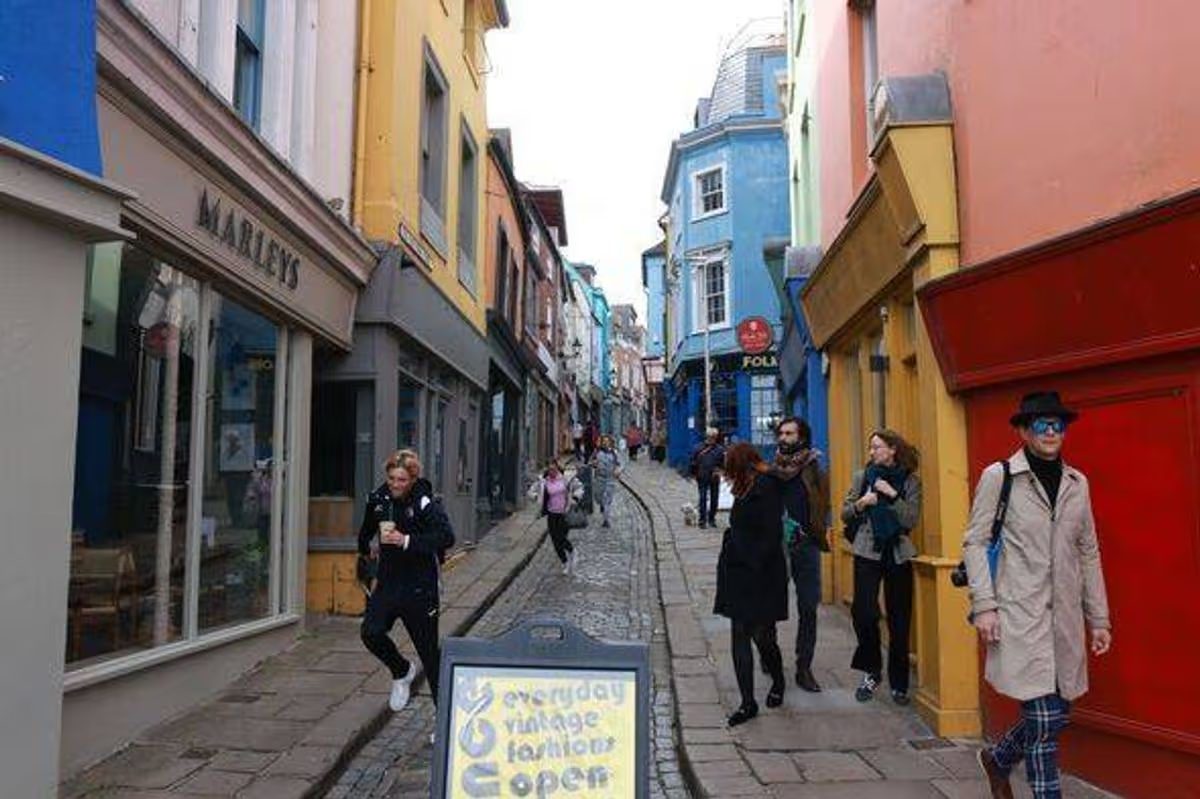
Awash with colour, it’s this quarter, comprising winding and meandering streets, that makes Folkestone stand out as a destination. The rainbow-hued painted shopfronts and flourishing independent businesses are what distinguish it and make it immediately identifiable from a single photograph.

On visiting for the first time, one guest wrote on TripAdvisor: “Today was my first visit to Folkestone, and we wanted to visit the Creative Quarter. Was not disappointed.

“Fabulous sunny day, helps, of course. Cobble streets and set on a hill. So might not be great for some. Wonderful galleries and fabulous eateries. Quirky shops and friendly people. I will visit again.”

Visitors could easily find themselves whiling away hours browsing in and out of shops, picking up unique souvenirs, books, homeware and artwork.

Harbour

Steeped in history and buzzing with events throughout the week, the Harbour Arm is a true centrepiece of Folkestone. Once serving as the railway terminal for the Folkestone-Boulogne Ferry and a departure point for troops heading to the Western Front, it has since been transformed into a stunning setting for drinks, food and live entertainment with family and friends.

The picturesque promenade, stretching out towards the sea, is home to more than 70 independent food, drink and retail vendors, meaning visitors are genuinely spoilt for choice. If there’s one thing that rings true about Folkestone, it’s the town’s wholehearted dedication to championing local businesses throughout every corner of its tourist offering.

One impressed visitor shared: “Folkestone Harbour Arm has been transformed into a remarkable destination – a vibrant blend of artistic flair, seaside heritage, and excellent food.

“We thoroughly enjoyed the wonderful walk to the lighthouse, passing a compact market area and plenty of great food stalls. The fresh sea air and creative atmosphere made it a joy.”

Beach

Folkestone boasts several sandy bays and pebble beaches, but one in particular has earned a reputation as a firm favourite with visitors, and tends to get packed out during the warmer summer months.

Nestled by the harbour is Sunny Sands, the go-to beach for many, thanks to its soft sands perfect for sandcastle building and sunbathing, plus its convenient location near the heart of the town.

According to visitors, while it suits everyone, it’s ” especially great for children”, owing to its well-maintained facilities and opportunities for water sports. What’s more, this is among the nearest beaches to London, less than an hour’s journey from the capital, making it a popular choice for Londoners craving a breath of seaside air.

Adding to its appeal is the parking available directly beside the beach at the Harbour Arm Car Park, though expect it to fill up rapidly during peak tourist season.

One visitor summed it up simply, saying: “Beautiful beach, lovely day out. fabulous views and scenery. Great for all ages. Lots to see and do. Very clean beach, worth a visit.”

Source link

Tourists slam seaside town’s ‘dangerous’ new beach rules for anyone aged 10-65

A new beach rule for a European hotspot has been introduced for anyone aged between 10 and 65, but one traveller has dubbed it the ‘most unusual beach rule of 2026’

A popular European destination that welcomes thousands of Brits each year is introducing a new beach rule for everyone aged 10 to 65.

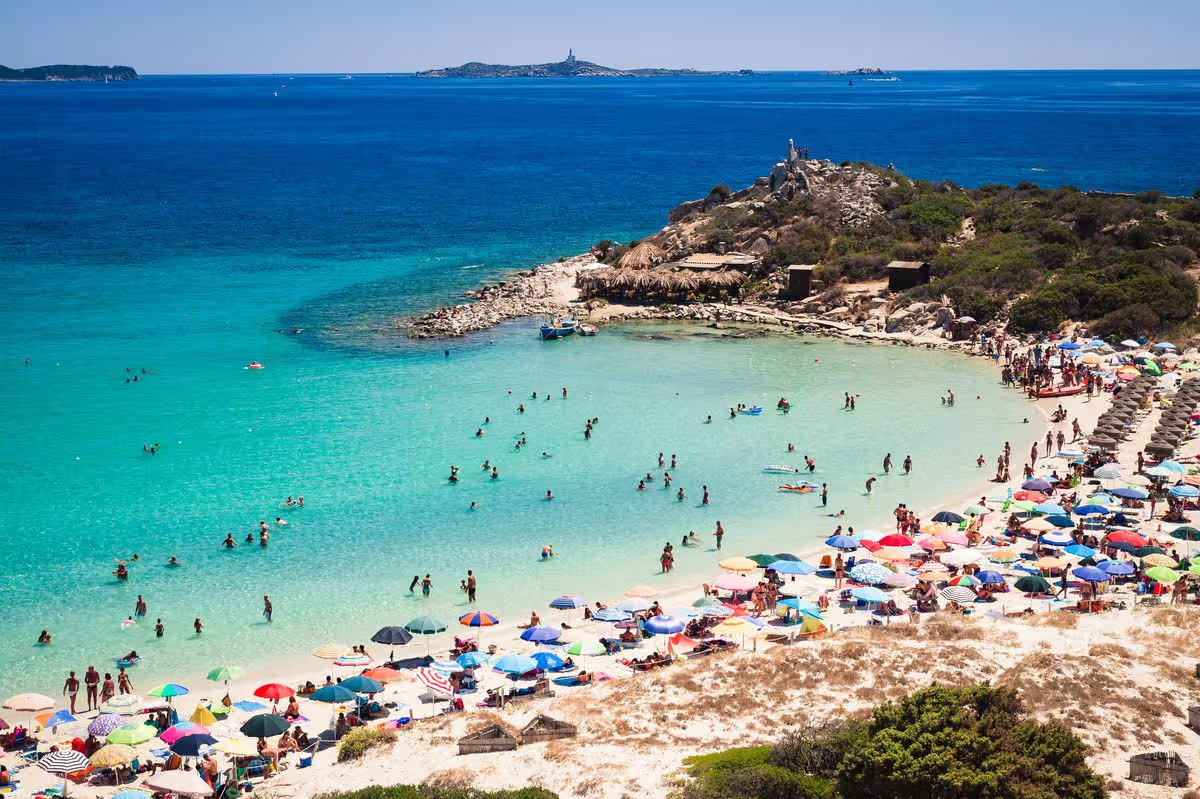
A day out at the beach, be it in the UK during the summer months or in Europe, is often accompanied by an umbrella to help provide shade from the balmy sun. However, holidaymakers of a certain age have been banned from using a parasol on a beach in Sardinia, Italy.

Under the new rule introduced earlier this month, Punta Molentis Beach, near the popular resort town of Villasimius in Sardinia, only allows families with children under 10 years old or people over 65 to put up an umbrella. It comes as the Italian beach limits the number of visitors to 150 at a time and puts in strict restrictions following wildfires in July last year.

In addition, visitors arriving at Punta Molentis Beach on foot will need to pay a fee of €10 (£8.60), while those arriving by boat will pay €5 (£4.31). Meanwhile, only 70 cars will be able to access the beach per day until 31 October, and reservations will be compulsory to visit, the Villasimius council website reported.

The town council also said in a message: “It’s therefore necessary to limit human impact and ensure protection of this heritage for future generations.”

The rules are in place throughout the summer season and aim to protect the beloved beach following last summer’s wildfires. Holidaymakers were forced to flee the wildfires by boat after they erupted in late July 2025, with around 100 hectares of Punta Molentis said to have been destroyed by the blaze, including cars in the beach car park.

However, not everyone is happy with the new rules. One person commented on X, formerly Twitter: “Banning shade in the Mediterranean summer heat sounds incredibly dangerous.”

A second said: “Guess I’m just gonna roast under the sun then, sounds like a fun time for my skin.” While a third added: “This might be the most unusual beach rule of 2026.”

One more wrote: “Banning basic sun protection for specific age groups under the guise of ‘saving space’ is a massive skin cancer risk waiting to happen.”

However, the council noted on its website that: “The ecosystem of Punta Molentis is one of the most valuable in our territory but also one of the most fragile.”

Meanwhile, in the Italian hotspot of Sorrento, people are banned from wearing swimwear away from beaches and pools. Anyone caught out could face fines of up to €500 (around 431), while Portofino, Positano and Capri have also enforced similar rules.

The rule is to avoid tourists walking around town or going to lunch in swimsuits or bikinis. But it doesn’t just apply to swimwear, as those caught walking around topless could also face a fine.

Do you have a travel story to share? Email webtravel@reachplc.com

Source link

Martin Lewis’ MSE says people can cut costs by booking a hotel but not using it

The money-saving experts shared a tip for people booking expensive holiday destinations

A savvy travel tip could help holidaymakers save money on trips to expensive destinations. MoneySavingExpert (MSE), founded by journalist and broadcaster Martin Lewis, often shares money-saving tips for the public. According to a previous blog post from the MSE team, some travellers could save money by booking a hotel they don’t need.

The experts explained that package holidays can sometimes offer better deals than scheduled flights for certain destinations. So travellers could save money by booking their flight as part of a package deal, then booking their preferred accommodation, assuming they’re not keen on the hotel included with the package.

MSE said: “Scheduled flights to some destinations, such as Orlando and Sri Lanka, can be silly money, yet packages there can sometimes come in much cheaper. If you only need the flight, check if there’s a cheaper package holiday, then grab it but DON’T stay in the hotel.”

The guidance added that Martin has previously had success with the trick, helping a friend book a holiday to Sri Lanka. MSE said the passenger paid £300 for the holiday to cover their flights, when the cheapest scheduled deal was over £1,000.”

In another blog post dedicated to cheap package holidays, MSE reiterates the advice. The experts explained: “If you’re going away specifically for seven, 10 or 14 days to a traditional holiday destination, package holidays are often best. They can sometimes be much cheaper than booking a scheduled flight… even if you DON’T want to use the hotel.

“For example, we found flights for a seven-day trip to Florida for £689 per person – a package holiday for the same dates was just £662 per person. It won’t always work, but it’s worth a try.”

When checking flight prices, passengers may wish to compare prices on sites such as Skyscanner. Booking on different days could help customers find the best deals.

Skyscanner says: “Flight pricing changes constantly based on demand, season and route. There’s no fixed ‘cheapest day’ to book but with the right tools, you can stay informed.

“Historically, Skyscanner pricing trends have shown that some airlines release deals late on Mondays, which may lead to lower fares early in the week. Prices tend to rise again as the week progresses and demand increases.”

Some holidaymakers wait until the last minute for deals. Skyscanner explains: “On quieter routes or off-peak travel days, prices may drop as the departure date approaches. But on popular routes or peak dates, fares often increase as the flight fills up.”

Source link

‘Hidden paradise’ in Portugal with gorgeous beaches, secret waterfalls and no crowds

A holidaymaker has shared her experience of visiting what she calls the real ‘paradise’ of Portugal many tourists ignore, where she discovered a hidden waterfall and gorgeous beaches

Despite the UK being forecast for another warm and sunny summer, the allure of jetting off abroad to unwind on a sun-drenched beach in a foreign country can prove hard to resist.

Just a two-hour flight from the UK, Portugal has long been a firm favourite among British holidaymakers, particularly given its reliably sunny and warm climate for much of the year. While cities such as Porto and the capital Lisbon remain among the most popular spots for tourists, one traveller now claims to have uncovered the ‘paradise of Portugal’ that many visitors don’t even know exists.

Taking to TikTok, a user going by the name ‘Solo Traveling Joy’ shared her experience of visiting the destination, revealing she had discovered a ‘hidden waterfall’ complete with a natural swimming pool, nestled among breathtaking scenery.

“Portugal is so underrated. And most people stick to Lisbon or Porto, but completely miss out on the Algarve,” she wrote in the caption of her post.

Content cannot be displayed without consent

The Algarve is Portugal’s spectacular southernmost region, stretching for over 200 kilometres along the coast. Whether you’re a nature enthusiast, a beach lover, or simply seeking somewhere to kick back and recharge, the Algarve is unlikely to leave you disappointed.

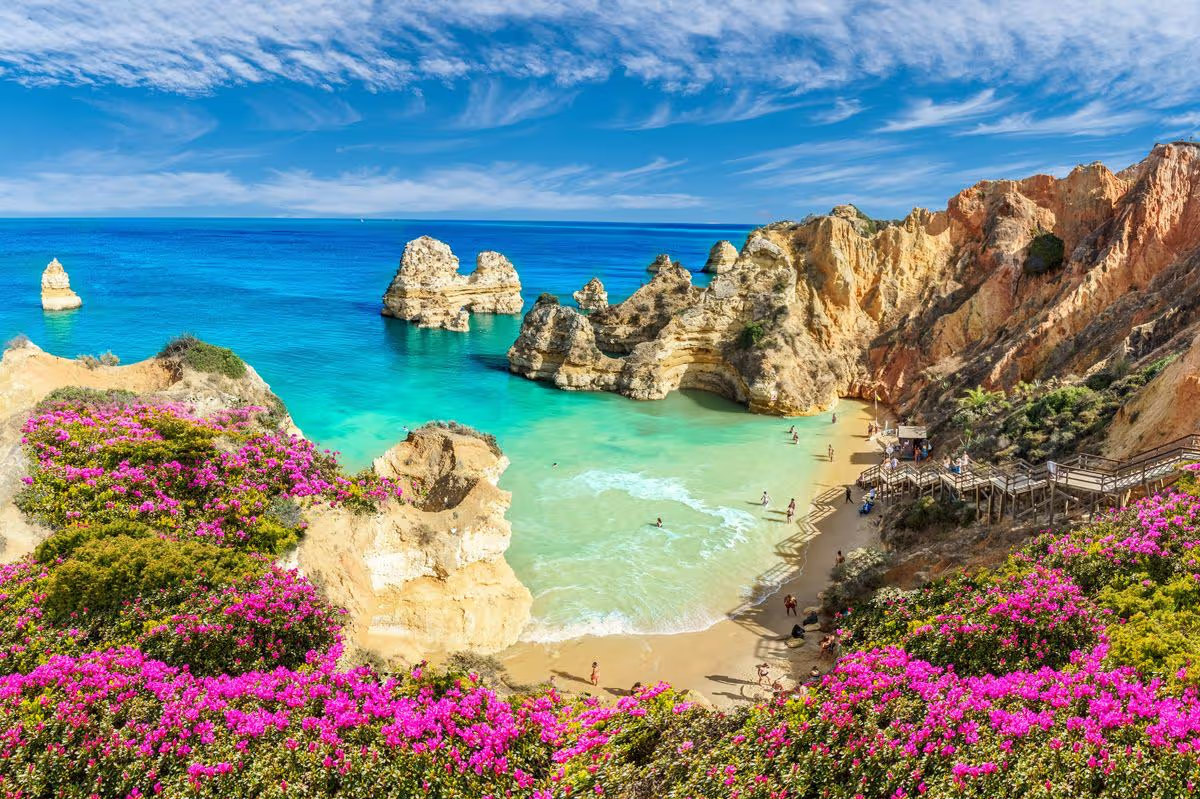
Celebrated for its year-round sunshine, striking ochre cliffs and sweeping golden beaches, it stands as a premier European hotspot for beach breaks, world-class golf and freshly caught seafood, according to Visit Portugal.

If you’re considering a stay in the Algarve, there’s no shortage of choices. The most sought-after destinations, however, are Lagos in the west and Tavira in the east, both widely regarded as the region’s finest spots. Lagos boasts striking golden cliffs and a lively town atmosphere, whereas Tavira delivers historic, untouched Portuguese character.

The secluded waterfall she featured in the clip is Queda do Vigario, situated near the rural village of Alte, which lies just off the A2 motorway linking Lisbon and the Algarve.

“This was one of my favourite natural swimming pools… peaceful, hidden, and 100% worth the detour,” the woman wrote in the caption accompanying her post.

“Go in the morning when no one is there!” she advised.

Viewers were swiftly captivated by the woman’s footage, with many rushing to the comment section to share their reactions.

“This looks like a hidden gem,” one person wrote, while another user said: “Wow, thanks for the tip.”

Another person said: “Adding this to my Portugal list! Amazing shots.” Someone else shared: “Been here today was lush.”

Source link

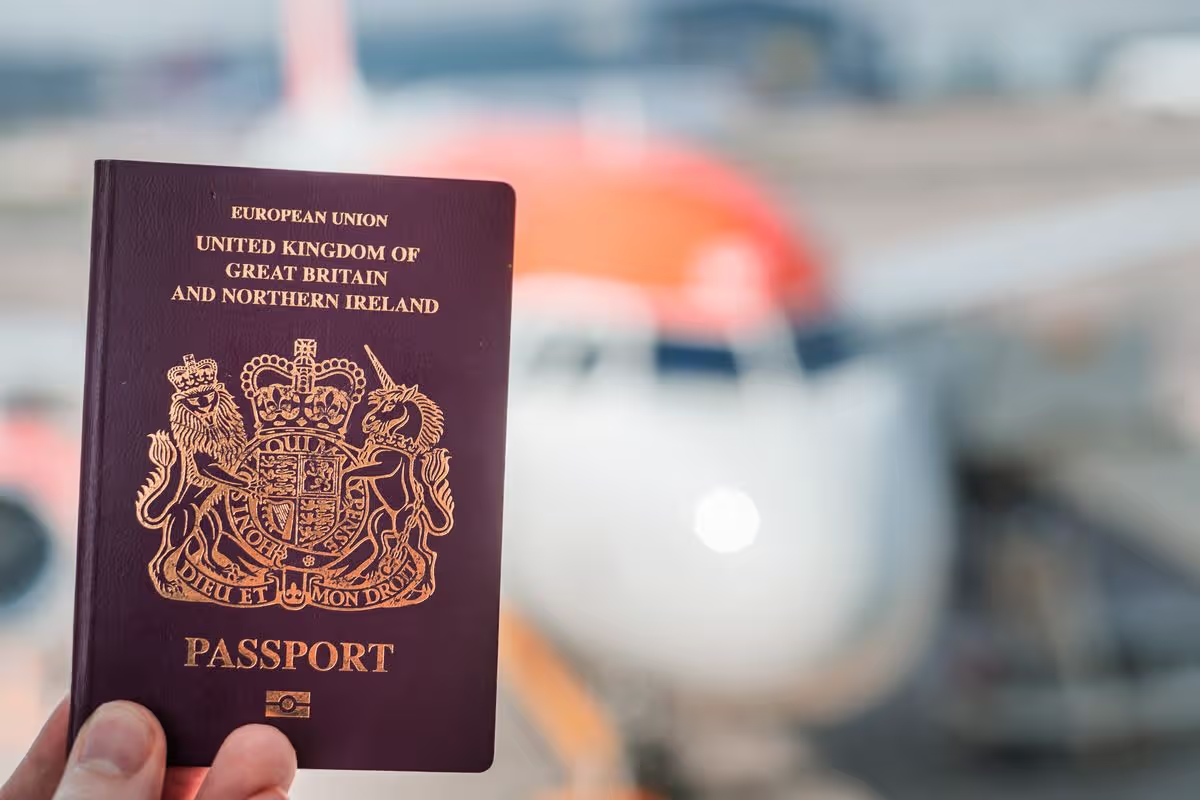
‘Blank page’ passport rule could see travellers denied boarding at the airport

Expiry dates aren’t the only passport detail holidaymakers need to check before flying – another overlooked rule could derail your travel plans

Preparing for a trip abroad can be stressful enough. From making sure you’ve packed everything you need to checking airport liquid restrictions and ensuring your passport is still valid, there is plenty for holidaymakers to think about before they travel.

However, some holidaymakers could face an unwelcome surprise at check-in even if their document have months to years left before it expires.

This relates to the number of blank pages remaining in a passport. While many people focus on expiry dates, some countries require visitors to have one, two or even more completely blank pages available for entry stamps or visa stickers.

Travel experts warn that passengers who fail to meet these requirements could be denied boarding by airlines or refused entry on arrival.

Airlines are often responsible for ensuring passengers meet a destination’s entry requirements and can face penalties for transporting travellers who do not qualify for entry.

According to travel guidance published by Schengen, some destinations require at least two blank passport pages for visas and border stamps. The guidance warns that airlines may refuse boarding if passengers do not have sufficient space remaining in their passport.

The requirement can catch out frequent travellers whose passports are filled with entry and exit stamps from previous trips. Experts say many people mistakenly assume a passport is suitable for travel provided it remains in date.

For travel to the Schengen Area, for instance, passport rules already require Brits to ensure their passport was issued within the previous 10 years and remains valid for at least three months after their planned departure date. Some guidance also notes that travellers may need at least two blank pages available for visas and stamps where applicable.

A recent travel warning highlighted that a lack of blank pages can become a particular issue for frequent flyers and those taking multi-country trips. Countries may require empty pages for visa stickers, while immigration officials also need room for entry and exit stamps.

Travel experts recommend checking passport validity, issue dates and the number of remaining blank pages well in advance of departure. Unlike an expired passport, extra pages cannot simply be added to a modern British passport, meaning travellers who are running out of space may need to renew the document before travelling.

According to guidance cited by travel experts, some countries require between two and four blank pages depending on the destination and visa requirements. Travellers planning complex itineraries involving multiple countries are therefore advised to check entry rules carefully before travelling.

Source link

Spain’s hidden paradise with crystal clear water and beaches that’s ‘better than Ibiza’

Holidaymakers are urged to ditch Ibiza and Marbella for Spain’s ‘real paradise’ – a stunning Mediterranean beach escape with crystal clear water, hidden coves and charming medieval villages

With summer now officially upon us, many people will be looking to escape the UK and soak up some sun abroad, even as temperatures across the country are forecast to reach as high as 30C over the coming weeks. Yet it appears that British holiday habits are shifting.

Research suggests that many Brits are turning their backs on Southern Europe, with popular hotspots in Spain, Turkey and Greece attracting fewer UK visitors than before. And while plenty of travellers may have concerns about overcrowding at well-trodden holiday destinations, there are a number of hidden gems just waiting to be uncovered.

One TikTok account has been singing the praises of what they’ve dubbed ‘Spain’s real paradise‘, urging holidaymakers to swap the likes of Ibiza and Marbella for this lesser-known treasure instead.

“Forget Ibiza. This is Spain’s real paradise,” read the on-screen text in the video, which offered a tantalising glimpse of a stunning coastal town with a beach as its backdrop.

Content cannot be displayed without consent

The clip went on to showcase a breathtaking sandy beach with crystal-clear waters that ‘looks straight out of the Caribbean’, along with secluded water coves just waiting to be explored.

For those fancying a break from the beach, there are also Medieval towns and castles to discover, as well as coastal walking trails that offer truly spectacular scenery.

They wrote in the caption: “Costa Brava is one of the most beautiful destinations in Spain, with crystal-clear waters, hidden beaches, charming medieval villages, scenic coastal walks, and stunning Mediterranean views.”

The Costa Brava, which translates as “Wild Coast,” is a rugged, striking stretch of shoreline in Catalonia, north-eastern Spain. Running from Blanes all the way to the French border, it’s celebrated for its dramatic cliffs, secluded coves, medieval villages, and its connection to surrealist artist Salvador Dalí.

“If you’re planning a Spain vacation, add Costa Brava to your travel bucket list,” the caption continued.

Given its size, you’ve got plenty of choice when it comes to picking a base that suits your holiday plans. If you fancy a quaint village with rocky coves and pristine waters, then Calella de Palafrugell might be just the ticket.

Celebrated for its beauty, Tossa de Mar features a remarkably preserved medieval walled old town perched above a golden beach. Meanwhile, Cadaqués offers a more bohemian vibe, having once been a retreat for artist Salvador Dalí. For those after a livelier break, Lloret de Mar serves as a buzzing hotspot for nightlife, water parks, and package getaways.

If Costa Brava is on the cards for your next escape, the shoulder months of May, June, and September are generally regarded as the ideal time to go. You’ll benefit from warm, swimmable conditions, pleasant sea temperatures, and fewer crowds, according to EasyJet.

The summer months of July and August represent the busiest period, drawing enormous crowds and heavy traffic, whereas the winter season from November through to March brings cold weather and sees many coastal eateries and hotels shut their doors until spring.

Source link