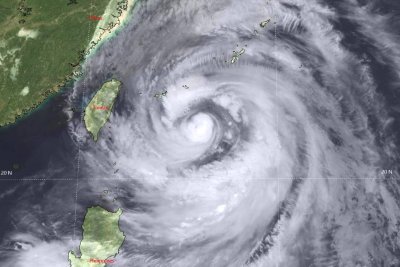
Bavi

Typhoon Bavi: China evacuates nearly two million people as powerful typhoon makes landfall

Though it has weakened to a severe tropical storm, it still presents a risk because of the huge volume of moisture within its rain bands.

The storm is expected to gradually diminish in its intensity as it moves north-west.

On Sunday morning, the centre of the typhoon reached Hangzhou City in Zhejiang province, Chinese state media reported.

Forecasters said the typhoon would move to eastern Anhui on Monday, and to the northern Yellow Sea from the Shandong Peninsula on Tuesday.

More than 1.7 million people were evacuated in Zhejiang and thousands more in neighbouring provinces, state media said. Schools, work and outdoor activities have been suspended in Zhejiang, while 400 flights and dozens of train services have been cancelled.

The city of Wenzhou, home to around 10 million people, is close to the path of the storm, with authorities evacuating hundreds of thousands of residents.

“We could hear roof tiles and tree branches falling,” Li Liangxing, a resident of the city told Reuters, adding “of course we were scared.”

Beijing had ordered the evacuation of 100,000 people to “avoid risk”, officials said.

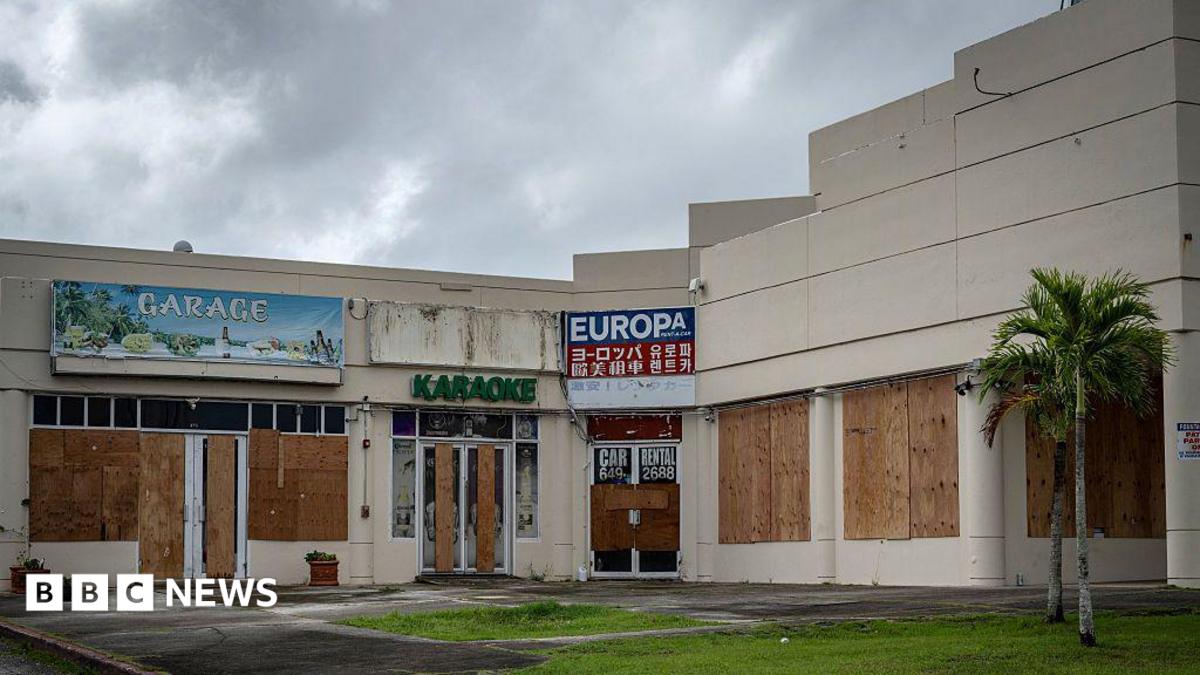
Bavi began as a super typhoon, battering Guam and the Northern Mariana Islands last Monday with wind speeds of 290km/h (180mph).

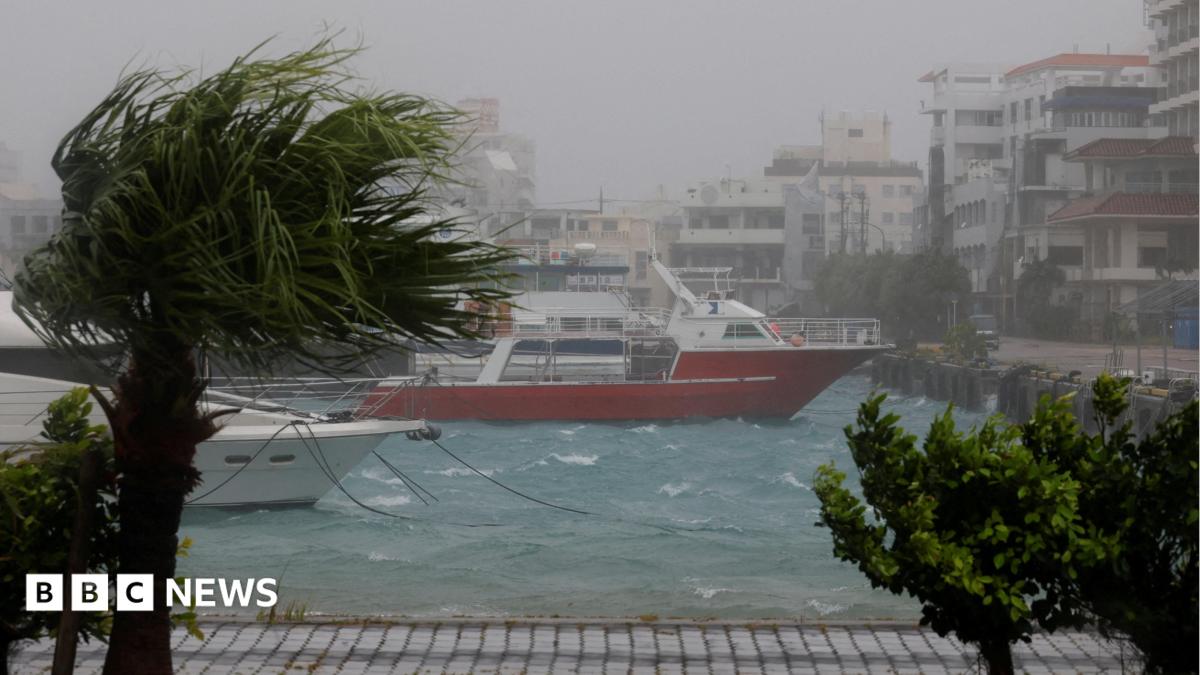
As it made its way through the Pacific, weakening to 144 km/h winds, it struck the Sakishima islands, part of Japan’s Ryukyu island chain between the country’s main islands and Taiwan. At least five people were injured and thousands were without power.

Taiwan itself did not receive a direct hit but thousands of people were forced to leave their homes and there was a danger of landslides after heavy rain. Neither country has reported any deaths.

Taiwanese authorities had warned that Bavi could bring up to 1m (39 inches) of rainfall.

Dozens of flights have been cancelled while schools have suspended classes across the region. Supermarket shelves have been wiped clean as residents stock up on supplies.

Parts of southern China are still reeling from the devastation brought by Typhoon Maysak earlier this week.

Maysak left at least 39 people dead and killed large numbers of livestock, resulting in massive agriculture loss. It also spurred two rare tornadoes in the central Hubei province.

Source link

China prepares as Typhoon Bavi leaves Taiwan | News

NewsFeed

Typhoon Bavi brought heavy rain and powerful winds to Japan’s southern islands while skirting Taiwan, where rough seas, fallen trees and localized damage were reported.

Despite the storm, residents in Keelung ventured out to markets as Bavi weakened while tracking toward China’s east coast, where landfall is expected on Sunday.

Source link

Typhoon Bavi moves off the Philippines toward Taiwan, Japan, China

Typhoon Bavi was moving off the Philippines on Friday after pouring rain caused landslides linked to at least 15 deaths, and now has its sights set on Japan, Taiwan and China. Photo courtesy Joint Typhoon Warning Center/Naval Meteorology and Oceanography Command/U.S. Navy

July 10 (UPI) — Typhoon Bavi weakened as it moved off the Philippines on Friday but was expected to bring heavy rain to Taiwan and parts of Japan before it makes landfall in China.

Bavi, which was called Inday in the Philippines, killed at least 15 people after heavy rains caused flash floods and landslides in several villages and cities, and affected tens of thousands of people there, The BBC and The Philippine Star reported.

The typhoon on Friday brought storm surge and rain to Okinawa, Japan, and was expected Saturday to pound the north and east sides of Taiwan, potentially bringing nearly 40 inches of rain in some areas.

Once past Taiwan, the storm could make two landfalls in China, part of which is still recovering after Typhoon Maysak earlier this week.

Maysak’s havoc is linked to at least 39 deaths, though searches were underway for people reported missing.

Hundreds of flights in Japan, including Okinawa and the Sakishima Islands, were canceled on Friday and Saturday as residents braced for Bavi’s pounding rain.

Forecasters in China warned of two potential landfalls as it moves toward the north, noting that Bavi’s size — at it’s widest point, the typhoon is as wide as France — means that both its remnants and outer rain bands are likely to affect a huge swath of people and property.

Source link

Super Typhoon Bavi makes landfall on US Pacific islands with huge wind gusts

Residents in the region have been moving to emergency shelters and making last-minute preparations before the arrival of the super typhoon.

In the Northern Mariana Islands, Rota – the southernmost inhabited island, about 50km north-east of Guam – is taking a direct hit, according to the NWS.

The mayor’s office has published an advisory urging residents to prepare for “destructive winds”, adding that “conditions are expected to deteriorate rapidly, making it unsafe to be outdoors”.

The NWS also warned that winds are not forecast to fall below typhoon force until early afternoon on Monday, and below tropical storm force until after midnight.

Guam, usually a sun-soaked tourist destination with a population of about 170,000, has opened five evacuation centres in its schools. These sites have a maximum capacity of around 1,700 and are primarily intended for vulnerable people.

The island’s civil defence office said at 13:00 local time on Sunday that one of the evacuation sites had already reached maximum capacity and that people were being redirected to another site.

Source link