battery

Video backs battery charges against Josh Jacobs but not domestic abuse

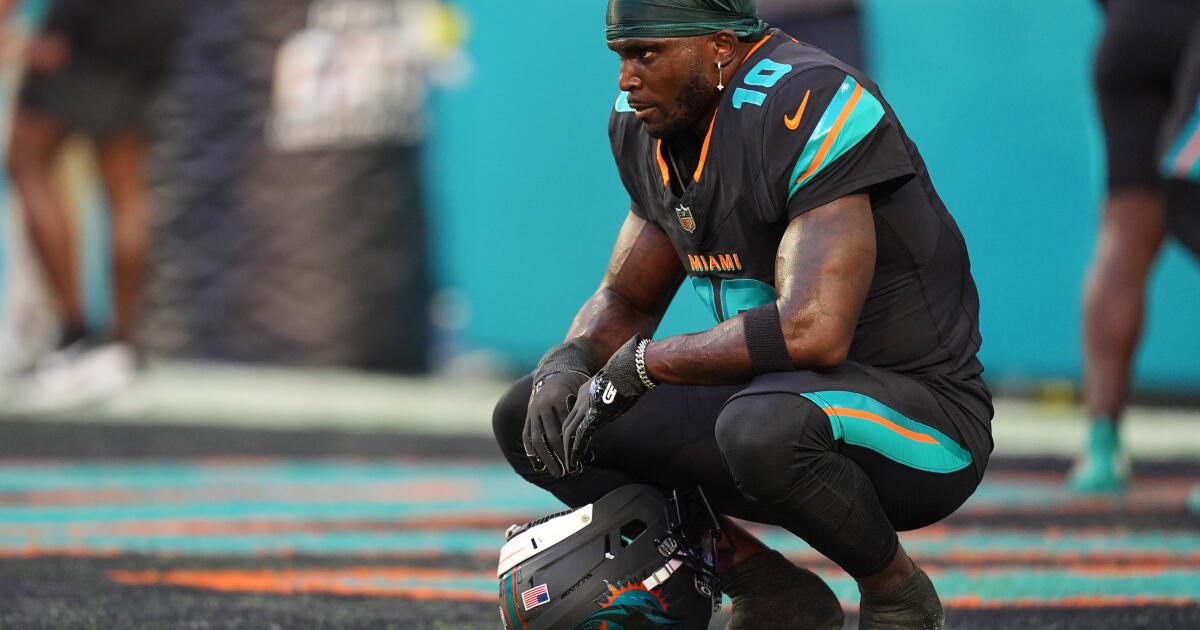
Three months after Josh Jacobs was arrested on five charges relating to domestic abuse, the Green Bay Packers star running back on Thursday was formally charged with misdemeanor battery and misdemeanor criminal damage to property.

The Brown County (Wis.) District Attorney’s Office released an incident report that asserts that video footage taken inside Jacobs’ garage corroborates the altercation the alleged victim described. However, a felony and four misdemeanor charges pertaining to domestic violence were dropped.

Jacobs’ legal team led by David Z. Chesnoff issued a statement: “The Brown County District Attorney has reviewed evidence and elected to file misdemeanor charges against Josh that do not include domestic violence. The allegations will be addressed in court, and not in the media. Mr. Jacobs respects the District Attorney’s office and the process it followed.”

The report states that on the morning of May 23, police were dispatched to Jacobs’ home near Green Bay because of a disturbance between Jacobs and a woman described as his girlfriend.

The woman told officers she had a lump on her head as a result of a physical struggle with Jacobs. She said she became upset after looking through Jacobs’ phone and seeing he had been talking to other women. Jacobs had her phone, and she told Jacobs he could look through it, but when she tried to take back her phone, he grabbed her arm and she ended up on the floor.

According to the report, the video shows that Jacobs followed her to the garage. When she attempted to exit, Jacobs grabbed her, threw her to the ground and she struck her head. The woman lay on the ground before standing and walking into the house.

The report stated that a responding officer observed redness on the woman’s face and neck and felt the bump on the back of her head.

Retrieving relevant video from the surveillance system in the garage “was complex and took several weeks,” according to the report. Surveillance footage “corroborates the relevant portions of [the alleged victim’s] statements” that occurred in the garage but “does not depict any portion of the incident that is alleged to have occurred inside the residence.”

The day of the incident, Jacobs was charged with felony strangulation and suffocation, and four misdemeanors pertaining to domestic abuse. However, he was released from jail the next day because the District Attorney’s office said it found insufficient evidence to pursue criminal charges.

Three months later, that changed, although neither of the Class A misdemeanors filed Thursday mentioned domestic abuse. Jacobs would be subject to a fine of not more than $10,000 and not more than nine months in jail if he is convicted.

“Our office sought to ensure a fair and complete review of available evidence, some of which only recently became available to our office due to significant, ongoing forensic efforts by law enforcement,” Brown County District Attorney David L. Lasee said in a statement. “A criminal complaint is nothing more than a written, formal accusation against a defendant alleging the commission of criminal offenses and does not raise any inference of guilt. Mr. Jacobs is presumed innocent of these charges.”

The Packers and the NFL both issued statements saying only that they are monitoring the developments and will cooperate with law enforcement.

Jacobs has been one of the top running backs in the NFL since he was drafted out of Alabama in the first round by the Raiders in 2019. He signed a four-year, $48 million contract with the Packers as a free agent after the 2023 season.

Jacobs, 28, has rushed for more than 1,000 yards in four of his seven NFL seasons and last year rushed for 929 yards despite missing two games with a knee injury.

Source link

Could magnesium become the new lithium for electric vehicles?

In the last few years, lithium has emerged as one of the most crucial metals for the global electric transition.


ADVERTISEMENT


ADVERTISEMENT

This is mainly due to its widespread usage in electric vehicles (EVs), through lithium-ion batteries. These provide high energy density, a lightweight structure and fast-charging capacity, along with a long cycle life, which supports modern driving range and performance.

As such, it has become key to achieving widespread, practical advancements in automotive electrification.

However, lithium continues to face vital long-term structural supply challenges, which has led to more EV producers considering other alternatives like manganese and magnesium.

Why magnesium?

Magnesium, another critical metal for electric vehicles and energy storage batteries, could potentially be a key alternative to lithium in EVs.

This is because it is cheaper, abundantly found across the world and also stores more energy. It is also considered to be safer than lithium, as it does not form the sharp spikes known as dendrites that cause lithium batteries to sometimes short or catch fire.

A magnesium battery can also hold more energy in a smaller space, which could have significant size and efficiency benefits for EV makers who want to make more compact vehicles.

It is also one of the most common elements found both in seawater and in the ground, which could help makers bypass potential supply constraints with lithium down the line.

Magnesium ions also carry double the charge of lithium ions, at a +2 charge, which can help support a higher volumetric capacity, enabling more compact, energy-dense power storage for both EVs and other devices.

China produces the overwhelming majority of the world’s magnesium, accounting for around 87% to 95% of the world’s primary magnesium in 2025, coming up to anywhere between 830,000 and 950,000 metric tons, according to Visual Capitalist’s Elements.

This is mainly from extensive dolomite reserves, with the largest magnesium reserves being in the Liaoning province.

The second top producer of magnesium is Israel, which extracts the metal mainly from the Dead Sea. Russia and Brazil are other major producers, with some key magnesium reserves being located in Satka and Brumado.

Manganese is also emerging as a support to lithium batteries, rather than fully replacing them. This is due to manganese batteries having a much lower energy density and not being easily rechargeable hundreds of times. They also provide lower voltage.

As such, they work well to support lithium systems in hybrid setups but fail under heavy power demands.

Why lithium supplies are fickle

One of the biggest challenges facing lithium supply is slow project timelines. This is because opening a new lithium mine takes an average of 16 to 18 years, from initial discovery to first production. This is mainly due to complex permitting rules, exploration rights and financing issues in many regions of the world.

Hard rock mining also produces significant waste and brine extraction consumes vast amounts of water in the arid regions lithium is usually found in. This leads to more scrutiny from local communities and environmental groups as well.

Similarly, due to lithium prices having crashed recently, following previous oversupply, mining investment and exploration budgets have now reduced somewhat. This significantly threatens the pipeline for future production and the global green transition.

The majority of lithium is also concentrated in Australia and South America’s “Lithium Triangle,” whereas China controls a significant portion of the refining capacity required to make battery-grade material.

Magnesium batteries?

Currently, most magnesium batteries still in the testing phase by entities like the University of Waterloo.

However, some major automakers are increasingly developing and experimenting with magnesium-rich or manganese-doped alternatives like Lithium Manganese-Rich or LMFP cells or long-term magnesium chemistry.

MG (SAIC Motor) has recently deployed new Lithium-Manganese-Oxide (LMO) semi-solid-state SolidCore battery tech in models like the MG4 EV Urban, which is scheduled to hit UK and European markets by the end of 2026.

General Motors and LG Energy Solution are currently aiming for a 2028 commerical launch for advanced lithium manganese-rich (LMR) battery cells. These use high manganese content to decrease costs and raise energy density for future electric trucks and SUVs.

Similarly, Toyota has also funded long-term dedicated research into replacing standard lithium chemistry with high-capacity magnesium alternatives. However, it is still unclear when commercial vehicles could be using this technology, as researchers are still awaiting further electrolyte stabilisation.

Great Wall Motor also uses semi-solid magnesium casting technology to reduce component weight, while Tesla integrated selective magnesium alloy components inot the Model 3 and Model Y.

Why magnesium batteries are not as widespread yet

While magnesium batteries are seeing more interest as potential alternatives to lithium now, significant challenges remain before they can be mass-adopted yet.

One of the biggest drawbacks of magnesium is slow ion movement, which means that magnesium particles move more slowly inside the battery materials.

This causes very slow charging times and weak power during fast acceleration, along with poor cold-weather performance. These factors could make it much harder for magnesium batteries to match fast-charging and high-power lithium EV batteries.

Finding a liquid, solid or electrolyte that lets magnesium move easily without breaking down is hard too, currently, as electrolytes that successfully move magnesium ions efficiently end up corroding the internal battery components.

Similarly, finding a cathode material that can withstand insertion and removal of magnesium ions without breaking down remains incredibly complex.

Source link

Southport killer charged with aggravated battery, weapons offenses

British teen Axel Rudakubana, who was convicted of murdering three young girls in a knife rampage at a Taylor Swift-themed dance workshop in Southport in summer 2024, has been charged with new assault and weapons offenses. File photo courtesy Merseyside Police

July 31 (UPI) — The British teen serving a 52-year sentence for the Southport killings of three young girls was charged Friday with additional crimes allegedly committed while in prison, including aggravated assault and weapons offenses.

Axel Rudakubana, 19, is accused of assaulting emergency workers in two separate attacks, one count of aggravated assault and possession of an offensive weapon between May and late October 2025

Police said all the alleged incidents took place at HMP Belmarsh in London.

Rudakubana is scheduled to go before Westminster Magistrates’ Court on September 11 to answer the charges.

He will appear via video-link from Broadmoor Hospital, a high-security psychiatric facility west of London to which he was transferred from prison last week.

Officials determined he was too dangerous for a regular penal institution following an independent clinical assessment, but the Justice Ministry stressed that would be returned to prison to complete his sentence once his mental state had improved and he was assessed as well enough to do so.

A psych evaluation after he carried out the July 2024 knife rampage that killed Bebe King, 6, Elsie Dot Stancombe, 7, and Alice da Silva Aguiar, 9, and seriously injured eight other children and two adults, found him fit to stand trial.

Following a trial in January 2025, Rudakubana was sentenced to a record 52 years in prison, minus time spent on remand.

The judge was unable to impose a so-called whole-life sentence normally applied for crimes of this seriousness, where the offender remains in prison until they die, as Rudakubana was 17 at the time of the attack.

He will become eligible for parole in 2076, just shy of his 70th birthday, but is unlikely to ever be released from prison.

The initial phase of an official inquiry into the killings concluded in April that Rudakubana could have been stopped but for the “catastrophic” and “irresponsible” failures of authorities and his parents.

Former Appeal Court judge Sir Adrian Fulford, said the attack woud likely have been prevented if Rudakubana’s parents had reported what they knew and law enforcement, child and mental health agencies responded appropriately to the risk he was known to present.

Source link

Troubled former NFL linebacker Daniel Adongo deported to Kenya by ICE

The Indianapolis Colts took a flyer on an impressive athlete from Kenya 13 years ago, but a story that began with an inspirational backdrop has taken an increasingly familiar turn: Daniel Adongo was deported from the United States last month, U.S. Immigration and Customs Enforcement confirmed.

According to ICE, Adongo, 37, overstayed his visa after his brief NFL career ended in 2015 and he remained in Indiana. The former linebacker and African rugby star was arrested several times over the past nine years for crimes including felony intimidation, battery and disorderly conduct. He also showed signs of mental illness, according to court records.

“This dangerous individual was clearly a threat to the community, which is now safer since he’s been removed,” ICE Chicago Assistant Field Office Director Douglas Thompson said in a statement. “Those who violate immigration law are held equally accountable, including former professional athletes.”

Adongo was released by the Colts after playing in two games in 2013 and three in 2015, mostly on special teams. The team cut ties with him after police were called to a home in Fishers, Ind., to check on a woman who lived with Adongo.

According to a police report, the woman’s friend contacted law enforcement. Adongo was not at the residence at the time, and the woman declined medical assistance. The Hamilton County prosecutor’s office reviewed the case and did not charge Adongo.

However, the 6-foot-5, 260-pound Adongo began exhibiting increasingly erratic behavior. In 2017, an Indiana judge found him mentally incompetent to stand trial in a criminal case in which he was charged with intimidation and criminal mischief and ordered him committed to a state psychiatric hospital for evaluation and observation, according to the Indianapolis Star.

The only crime Adongo has been convicted of is a criminal mischief misdemeanor in 2020 for which he was sentenced to 364 days in jail, according to ICE. Other charges for intimidation, battery and disorderly conduct were dismissed.

Judges twice found Adongo incompetent to stand trial, according to court filings, including one case in which an expert witness testified that Adongo was acutely psychotic and possibly suffered from chronic traumatic encephalopathy — brain trauma — from playing football and rugby.

Members of Adongo’s family described in court filings a dramatic personality change in him after his playing career ended and expressed concern that he struggled to access mental health treatment.

ICE held Adongo without bond for several months under the Laken Riley Act, a federal law signed Jan. 29, 2025, that requires the Department of Homeland Security (DHS) to detain undocumented immigrants without bond when arrested for specific crimes. He was deported one month ago.

Adongo was the first of two Kenyans to play in the NFL. The second was guard Rees Odhiambo, who played in 16 games from 2016 to 2018 for the Seattle Seahawks and Arizona Cardinals.

Source link

Belgian Grand Prix: Lando Norris to have 10-place grid penalty because of new battery

McLaren have fallen to the back of the top four teams in recent races as rivals have introduced upgrades, but the hope is that the aerodynamic package to be brought in across the Hungarian and Dutch Grands Prix on either side of Formula 1’s summer break will return them to competitiveness.

They decided that it was better to take the grid penalty in Belgium, where they expect to be no more competitive than at the last race in Britain but where passing is relatively straightforward, than compromise Hungary, where the car should perform better and overtaking is notoriously difficult.

Norris said: “I have to wait and see really how the overtaking is. We probably have a small straight-line speed advantage, comparing to people a little bit further back. So comparing to them we should have a good chance.

“To just overtake in general could be pretty difficult here. But the slipstream is pretty big, and there’s still a few straights, but there’s no straight-line mode (through some of the flat-out sections), and therefore the slipstream is pretty large, and you can gain a good amount from that.

“But we know it’s better than Zandvoort, and better than Hungary taking penalties. I hope it’s not the end of my weekend before it started, but I’m still confident we can have a good race.”

Norris’ grid penalty comes after a troubled start to the season for the team that won a drivers’ and constructors’ championship double last year, in both performance and reliability terms.

Technically, the part replaced in Belgium is known as the ‘power electronics’, which is a control computer within the battery module.

Norris failed to start the Chinese Grand Prix in March after a terminal issue with his power electronics unit, and a second example of that part had to be withdrawn after suffering problems in practice at the following race in Japan.

The Japan unit was repaired but suffered a terminal problem in practice in Monaco.

A McLaren statement said: “While the power electronics unit we installed in Japan, and have used in every session since Miami, has worked reliably, Mercedes-AMG High Performance Powertrains (HPP) has since introduced a series of reliability fixes to their new power electronics systems.

“However, in order to take advantage of these improvements, we must incur a 10-place grid penalty on Lando’s car in order to take a new unit.”

The statement added: “We now plan to use this fourth power electronics unit for the remainder of the season, in order to maximise reliability while minimising sporting penalties on Lando.”

McLaren will have a new rear wing design in Spa, which the team hopes will better suit the specific characteristics of the flowing high-speed track around the Ardennes forests.

This wing will have a conventional opening style in straight-line mode, rather than the somersaulting designs introduced this season by Ferrari and Red Bull.

Red Bull have had to revert to a conventional wing this weekend after Max Verstappen suffered high-speed crashes at the previous two races because of issues with the design.

Mercedes have had a series of engine-related reliability issues this year, not all to do with the battery.

Another has emerged with the engine used by championship leader Kimi Antonelli at the British Grand Prix.

That has had to go back to the HPP’s base in Brixworth for investigation and the Italian has a new engine as a result this weekend in Belgium. This is from within his allocation and therefore comes with no penalty.

Depending on the outcome of the investigations, Mercedes hope to be able to put Antonelli’s Silverstone unit back into the pool for use later in the year.

Source link

South Korea’s LG, Honda start Ohio storage battery output

Visitors look around an LG Energy Solution booth at the InterBattery 2021 at COEX in Seoul, South Korea. Photo by YONHAP / EPA

July 3 (Asia Today) — A U.S. battery joint venture between South Korea’s LG Energy Solution and Honda has begun mass-producing lithium-ion cells for energy storage systems at its Ohio plant, the company said.

L-H Battery Company began production Thursday at its factory in Jeffersonville, Fayette County.

The cells will be supplied through LG Energy Solution Vertech, the South Korean company’s North American energy-storage system integration subsidiary.

They are expected to be used in utility power grids as well as commercial, industrial and residential energy-storage systems across the United States.

The Ohio plant was originally built primarily to manufacture batteries for Honda electric vehicles.

The partners adjusted the factory’s production strategy as growth in the electric-vehicle market slowed and changes in the U.S. regulatory and policy environment increased uncertainty for automakers and battery manufacturers.

The joint venture decided to prioritize the faster-growing energy-storage market while maintaining the flexibility to produce cells for other applications.

It plans to consider manufacturing batteries for hybrid-electric vehicles at the plant as market conditions evolve.

Honda said in May that it would convert part of the joint venture’s electric-vehicle battery production lines to make batteries for hybrid vehicles.

The company also said it would use the Ohio battery facilities for other applications as it restructures its North American vehicle and battery production network.

Honda canceled plans in March to develop and launch three electric-vehicle models that had been scheduled for production in North America, citing changes in the business environment.

The start of storage-battery production marks a significant step in LG Energy Solution’s strategy to manufacture more energy-storage products within North America.

Demand is rising as utilities add renewable-energy capacity and seek batteries that can store electricity when supply exceeds consumption.

Artificial intelligence data centers are also increasing electricity demand and creating a need for additional power-generation, transmission and storage infrastructure.

Energy-storage systems can help stabilize power grids by storing electricity during periods of low demand and releasing it when demand rises.

LG Energy Solution has been converting or adapting electric-vehicle battery facilities to produce storage batteries as manufacturers respond to slower electric-vehicle growth.

The company plans to operate five energy-storage battery manufacturing sites in North America.

The network includes plants in Holland and Lansing, Mich., the NextStar Energy facility in Windsor, Ontario, the Ultium Cells factory in Spring Hill, Tenn., and the L-H Battery Company plant in Ohio.

LG Energy Solution said it aims to secure more than 50 gigawatt-hours of annual energy-storage battery production capacity in North America by the end of 2026.

The company said batteries manufactured in Ohio will support projects serving power grids, businesses and homes.

BloombergNEF has projected that the U.S. energy-storage market could expand to 485 gigawatt-hours in 2030 and 976 gigawatt-hours in 2035.

“Energy storage systems are an important future business for L-H Battery Company and will become a core business pillar along with the production of battery cells for hybrid-electric vehicles,” L-H Battery Company Chief Executive Officer Koo Ja-hoon said.

Chief Operating Officer Rick Riggle said the company has hired employees and begun production since the joint venture was established in 2023.

“This start of mass production is significant because it goes beyond simply operating a plant and establishes a stable production base for our North American business,” Riggle said.

LG Energy Solution and Honda formally established L-H Battery Company in 2023 to manufacture lithium-ion batteries in Ohio.

The joint venture was initially designed to support Honda’s expanding electric-vehicle production in North America.

The revised production strategy allows the companies to use the plant for energy storage and hybrid vehicles while retaining the ability to respond if electric-vehicle demand recovers.

— Reported by Asia Today; translated by UPI

© Asia Today. Unauthorized reproduction or redistribution prohibited.

Original Korean report: https://www.asiatoday.co.kr/kn/view.php?key=20260703010001209

Source link

Lithium producers warm to demand for battery storage as focus shifts from EVs (LIT:NYSEARCA)

Jun 25, 2026, 8:15 PM ETGlobal X Lithium & Battery Tech ETF (LIT), ALB Stock, , , , , , By: Carl Surran, SA News Editor
Lithium abstract concept

Olemedia/E+ via Getty Images

The lithium industry is growing more optimistic about a market recovery as accelerating demand for battery storage systems helps offset a slowdown in electric vehicles, leading producers said this week at a key industry conference, Reuters reported.

“The period of market overcorrection is over. Energy

Source link