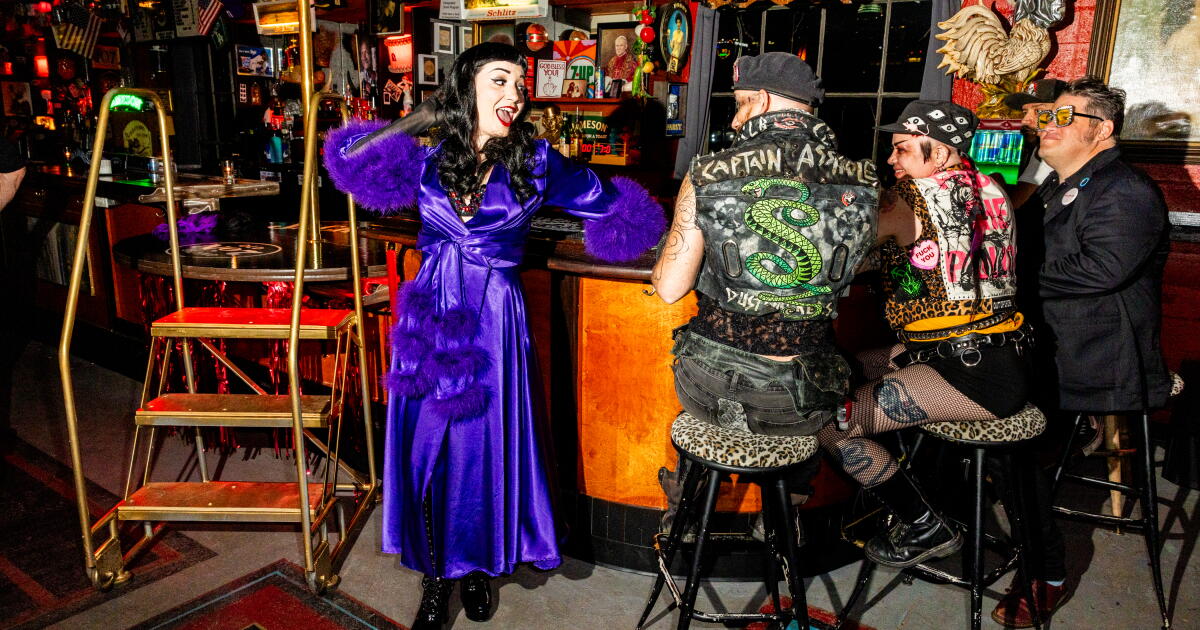
Dread is usually the first sensation Angelenos conjure when they hear “LAX.” It doesn’t have to be this way, L.A.
You might be preparing to check in toward a faraway destination, or doing what is often called the ultimate expression of love here: driving someone to or from one of the busiest airports in the world. Either way, if timed right, your journey can become a satisfying dip into the culinary scene surrounding our vice for the airborne, our awkward beauty, El Ay Ex.
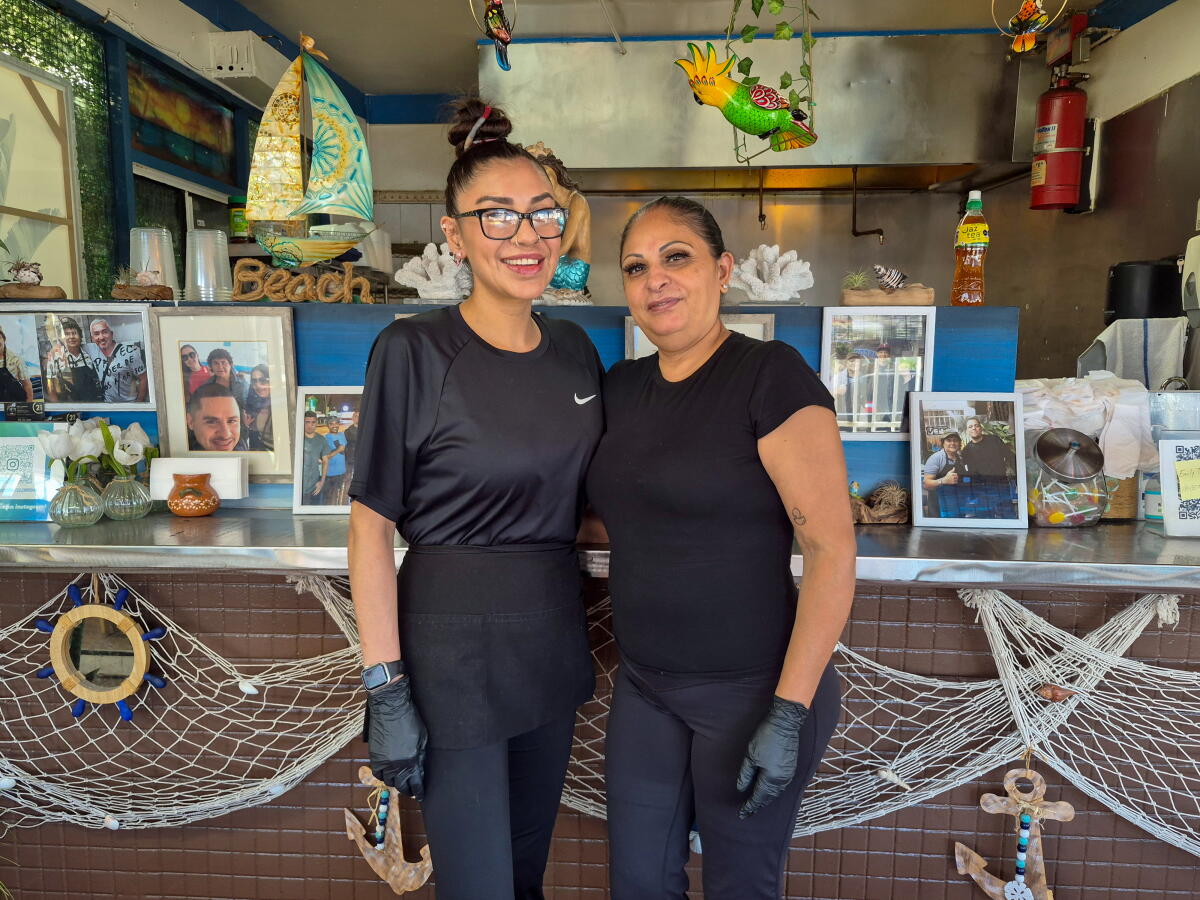
Mariscos El Chente staff members Denise Miranda and Maria Peñuelas.
(Daniel Hernandez / Los Angeles Times)
No, you don’t have to limit yourself to the touristy In-N-Out on Sepulveda Bouelvard. Skip Randy’s Donuts if you’ve done it before. For this guide, we’re zeroing in on local favorites in the quietly robust scene of dining and drinking within one mile of the airport’s perimeter. No hotel restaurants or lounges.
A tight proximity to the runways means you’re mostly surrounded by busy LAX workers and hardcore locals from the communities of Westchester, El Segundo, Lennox, Hawthorne and Inglewood. Sprinkle in people who’ve just landed from just about anywhere in the world, and the magic of the LAX cultural orbit comes alive. I’m no longer kidding or holding my secret: Because of the restaurants and bars, I actually love hanging out around the airport.
This makes me part of a low-key membrane of Angeleno who enjoys watching jetliners serenely glide their passengers through the sky, landing a kiss away from the gleaming Pacific, as we sip a nice lager or chomp into a mulita. I can trick my brain on any day into thinking I’m just about to take off myself.
A HUGE multi-million pound upgrade is set to transform two popular holiday parks in the UK.
The two holiday parks are Parkdean’s Skipsea Sands Holiday Park in East Yorkshire and Thorness Bay Holiday Park on the Isle of Wight.
Parkdean Resorts has announced a huge £70million investment project in its parksCredit: Parkdean ResortsTwo parks will get upgraded in 2027Credit: Parkdean Resorts
At Skipsea Sands Holiday Park, there will be number of new activities including an indoor adventure climbing experience, indoor adventure golf and off-road driving experiences for children aged four and over.
The play areas, both indoors and outdoors, will be expanded including the bounce park, sports court and a Bear Grylls themed escape room.
Sign up for the Travel newsletter
Thank you!
The park will also add a Scoops Ice Cream shop and Joe’s American Grill as well as have a new outdoor entertainment space with seating.
The £5million investment is set to be completed by Easter 2027.
Steve Richards, CEO at Parkdean Resorts, said: “We’re committed to investing £5million in Skipsea Sands Holiday Park, upgrading our accommodation and further enhancing the holiday experience for guests and owners in East Yorkshire.
“From exciting new activities that include adventure golf and high ropes to an enhanced food and drink offering, there will be even more for families and holidaymakers to enjoy.”
Then, as for Thorness Bay Holiday Park on the Isle of Wight, the £6millon transformation will include a new high ropes, indoor adventure golf and off-road driving experiences for children aged four and over as well.
Just like Skipsea, the indoor and outdoor play areas will be improved too, with a bounce park, sports court and a Bear Grylls themed escape room.
The park will also gain a new two-storey building that will be home to the Hat-Tricks sports bar with interactive darts, pool and shuffleboard.
Food and drinks spots will also be expanded at the park with a new Scoops Ice Cream parlour, a Joe’s American Grill and Thunderbird Strip Shack.
They will get expanded play areas as well as new attractionsCredit: Parkdean ResortsAttractions includes sports bars, Bear Grylls escape rooms and high ropes coursesCredit: Parkdean Resorts
And once again similar to Skipsea’s expansion, there will be new outdoor areas for entertainment and dining.
Steve Richards, CEO at Parkdean Resorts, said: “This investment reflects our continued commitment to supporting local jobs, tourism and economic growth in the communities where we operate.
“We look forward to welcoming guests to a new and improved Thorness Bay from Easter 2027.”
A number of other Parkdean Resorts parks have recently undergone upgrades including Highfield Grange Holiday Park in Essex and Vauxhall Holiday Park in Great Yarmouth.
Vauxhall Holiday Park revealed its £5million upgrade earlier this year, with a new sports bar, darts and indoor adventure golf.
The holiday park has also been upgraded to include more kids’ play zones as well as high rope courses.
The State Department has accused the official of paying bribes to Fijian citizens to advance Chinese interests.
Published On 8 Oct 20268 Oct 2026
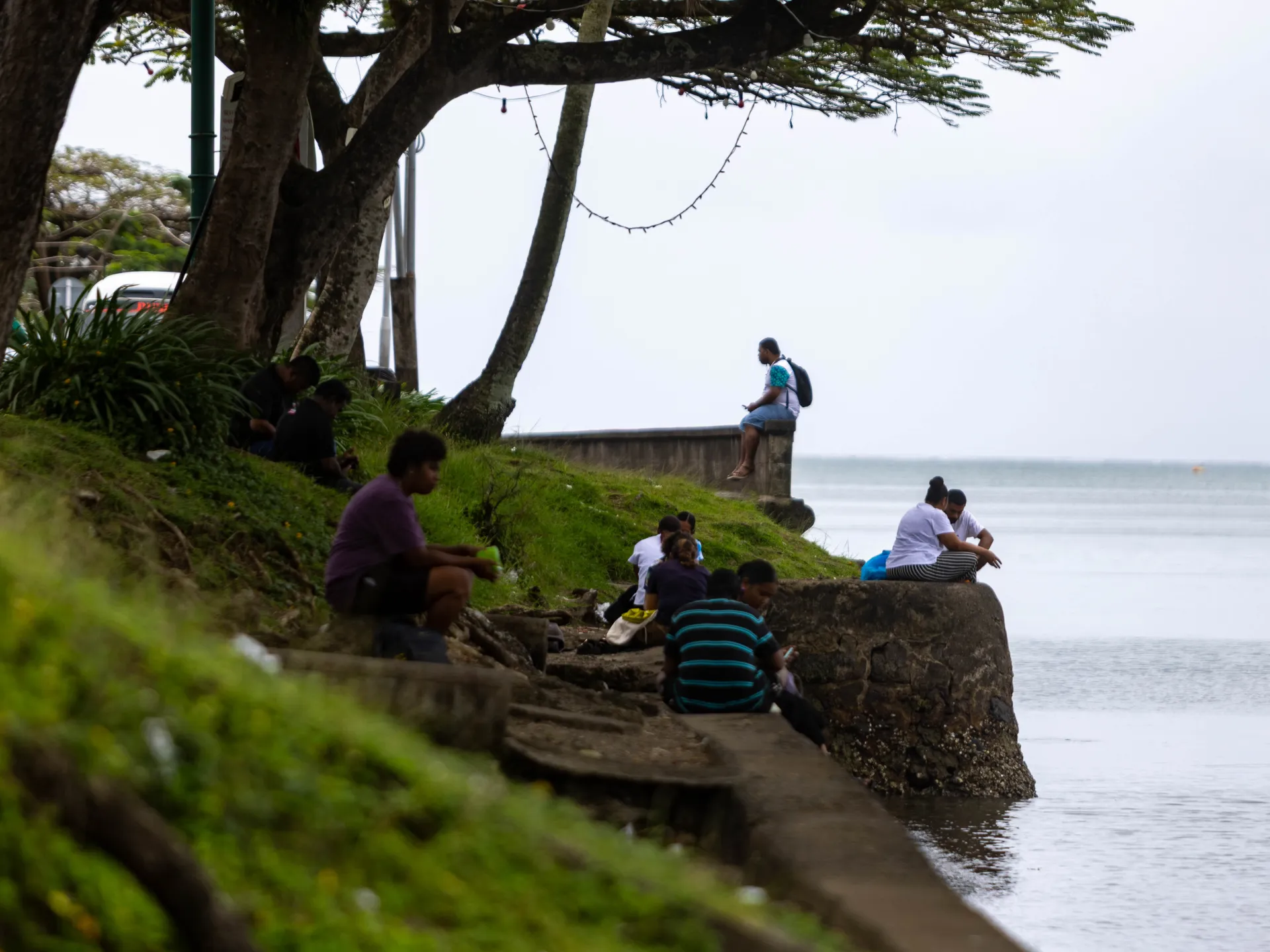
The US Department of State has publicly designated a Fiji-based man for his involvement in corruption on behalf of Chinese actors.
Zhao Fugang, the director of the Overseas Chinese Service Center, “abused his public position by paying bribes to Fijian citizens to advance China-based government, business, and criminal interests”, the State Department said in a press release on Wednesday.
Recommended Stories
list of 3 itemsend of list
“His actions constituted significant corruption and adversely affected U.S. interests in Fiji.”
The designation renders Zhao and his immediate family members “generally ineligible for entry into the United States”.
The US embassy in Suva, Fiji’s capital, said Zhao’s actions left the Pacific nation open to “malign foreign influence facilitated by Chinese government, business, and criminal actors”.
The embassy also said, “Public reporting shows an established trend of criminals operating across the Pacific with ties to China.”
Beijing says Overseas Chinese Service Centers help its nationals with administrative issues abroad, such as renewing driving licences. However, rights groups have alleged they are fronts for Beijing to push interests abroad, including the targeting of dissidents.
In February, the Trump administration sanctioned two leaders of Pacific island nations for alleged corruption tied to China. The US Department of State issued a notice alleging that Hokkons Baules, the president of Palau’s Senate, and Anderson Jibas, a former mayor in the Marshall Islands, had created openings for China to increase its influence in the region.
Along with its cosy caravans and lodges, there are some very exciting additions coming its way.
The park has announced it is undergoing a huge £4million upgrade with work starting this November.
Sign up for the Travel newsletter
Thank you!
One of the largest upgrades will be to its existing indoor swimming pool which will be expanded to become 18-metres long.
It will also add a new toddler splash area, designed specifically for little children – and for adults, there will be a new jacuzzi, steam room and sauna.
The pre-existing gym facilities will also be upgraded.
Its entertainment complex is set to be revamped too with new activities and facilities both indoors and outdoors.
Outside will be a new pirate-themed 9-hole adventure golf course, giant chess and lots of things to do like table tennis, curling – and it will install a padel court.
Inside will be a new soft play area with an upgraded games arcade including interactive darts.
The Hunter’s Bar and Restaurant is being refurbished, and will have a brand-new sports bar, as well as a transformed showbar where there will be entertainment for guests.
A new outdoor terrace will be a new spot that guests can enjoy throughout the year with open-air seating through the summer and covered for when the weather doesn’t play ball.
For those wanting sweet treats, there will also be a brand-new ice cream parlour.
When it comes to accommodation, holiday homes and pitches will be added to the site too.
Currently, guests can stay in basic caravans, to luxury lodges including The Hideout and The Hideaway which have outdoor decks and lots of inside space.
Work is due to start in November of this year with a Grand Opening event planned for Easter 2027.
For those who want to book a break that coincides with the new additions, three-night breaks on April 23 start from £219 – or £18.25pppn.
With this break, a family of four can stay in an Essential Clover Caravan which has two bedrooms (one double, one twin), kitchen and living area.
Simon Lane, CEO of Verdant Parks, said: “This is an incredibly exciting time for Verdant Parks, our employees, our owners and our holidaymakers.
“We’re committing our biggest investment to date to Thurston Manor Holiday Park and completely transforming what guests can see, do and experience when they visit.
“From the extended swimming pool and new toddler splash area to the new padel court, pirate-themed adventure golf and transformed entertainment offering, there will be something for everyone to enjoy.
“We’re delighted to reveal our plans for the next chapter of Thurston Manor and we can’t wait to share more details and sneak peeks as the transformation takes shape over the next six months.”
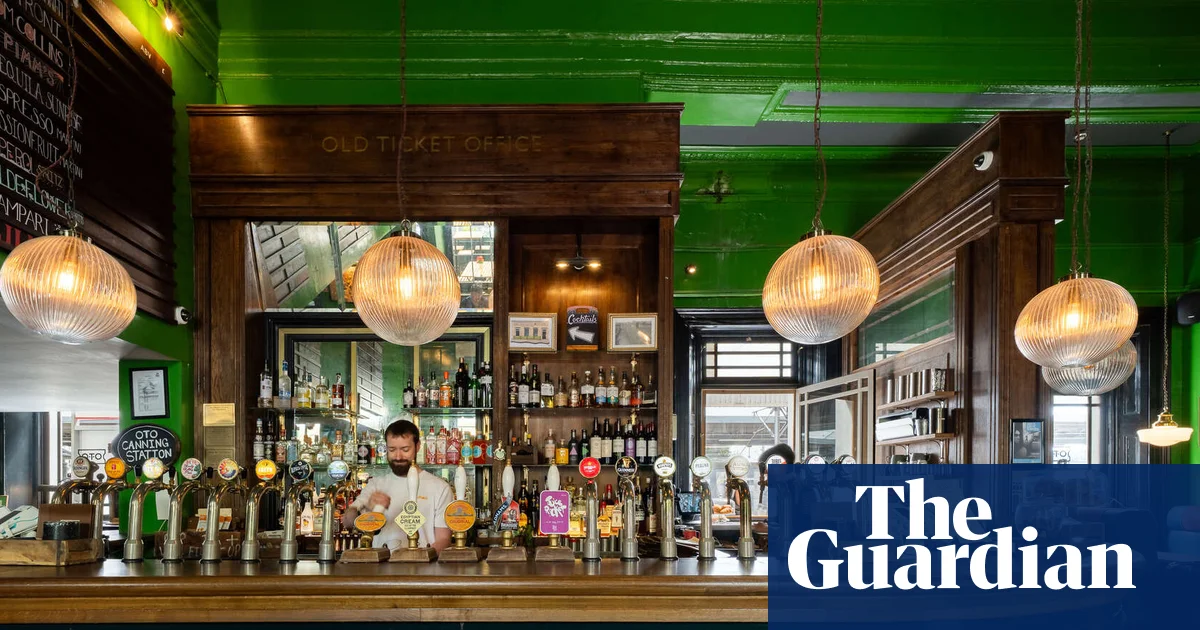
No prizes for guessing what this pub used to be… The Old Ticket Office has high ceilings, walls painted shades of locomotive green and booths resembling train carriages; there are outdoor tables on Station Square. A live train departures board theoretically prevents passengers lingering too long, and a canning machine means any draught beer is also available to take away (the hatch on platform 4 also does takeaway orders). There are five handpulls plus Young’s usual spritz menu and other drinks, plus light bites and pizzas. The pub is currently closed for roof repairs and expected to reopen by the end of October.
Kew Gardens is the only tube station with a pub attached. Photograph: Sunshine/Alamy
London’s various railway stations have many fine pubs (shout out to the Euston Tap), but Kew Gardens is the only tube station that still has a pub directly attached. When the station opened in 1869, the building was the timber steaming hall, and later become the buffet rooms before becoming a pub. It was bought by Fuller’s in 2012 and reopened the following year after refurbishment. It has high oak beams, picture windows looking on to the platform, an arched glass atrium and a pretty paved outdoor area. It serves two Fuller’s ales and a guest ale, among other drinks, has a full food menu and shows live sport.
Stalybridge station has one of the few remaining Victorian buffet bars. Photograph: Anthony Devlin/Getty Images
The pub on platform 4 at Stalybridge station, east of Manchester, is one of the few remaining Victorian buffet bars. Built in 1885, it features the original marble bar top, fireplace and fixed seating, plus lots of railway memorabilia. It serves up to 10 changing real ales, plus a cider or perry; bar snacks include hot pork scratchings, with more substantial food in autumn and winter, such as corned beef hash, pies and local black peas. There is a weekly quiz and folk singalong, regular live bands and food pop-ups in the beer garden, and periodic crisp butty pairing events and beer festivals. Camra awards it two stars for “a pub interior of very special national historic interest”. The buffet bar is now part of the Beerhouses group, which also runs the fantastic West Riding Reception Rooms at Dewsbury station, and the two pubs are on the TransPennine Real Ale Trail.
The Sheffield Tap is in a restored Edwardian first-class refreshment room.
For a great night out in Sheffield, visitors don’t even need to leave the train station. The Grade II-listed Sheffield Tap opened in 2009 in the Edwardian former first-class refreshment room. The original 1904 fixtures and fittings have been repaired where possible – including the mahogany bar top, Minton tiles and terrazzo floors – and replicated if not, as with the ornate barrel plaster ceiling. In 2013, the pub expanded into the adjacent tiled and mirrored former first-class dining room, and added a microbrewery. Today it serves 11 cask and 14 keg beers, plus hundreds of bottles and cans; food is limited to locally made pork pies and sausage rolls. The Sheffield Tap has Camra’s highest rating of three stars, for “a pub interior of outstanding national importance”. It is now operated by a small group that also runs the excellent York Tap and Harrogate Tap station pubs.
The Draughtsman Alehouse serves local real ale, gin and coffee
Delays are always welcome in Doncaster, for the chance to visit the lovely little alehouse on platform 3b. The former Victorian buffet bar had been empty for 18 years when the pub opened in 2017. It is a family business, named after engineering draughtsman grandfather Barry and run by son Russ with help from grandson Nick. The decor features original wall tiles, old photographs and draughtsman’s drawings of steam locomotives; Camra has designated it an “outstanding conversion and restoration”. The Draughtsman serves real ale from Yorkshire breweries, gin distilled in Harrogate and coffee roasted in Sheffield.
Carlisle station’s Grade I listed former waiting room is now home to Scott & Brassey. Photograph: Yasmin Platt/Lancaster Brewery
Those lamenting the loss of the 301 Miles From London pub at Carlisle station, which closed in 2023, had reason to celebrate in February, when Scott & Brassey opened on the same site. This Grade II-listed former first-class waiting room dates from 1848, and became the station buffet in the 1950s. Now it has had a slick makeover, but still retains the original wooden entrance lobby on platform 4, the hammerbeam roof and Tudor-style stone fireplaces. There is a mahogany bar, a feature wall full of clocks (no excuse for missing your train) and some platform-side seating. As well as eight handpumps, it serves a host of keg beer, wine, spirits and soft drinks.
The opulent, Grade I listed Centurion bar inside Newcastle station. Photograph: Graeme Peacock/Alamy
The Grade I-listed Centurion has a colourful history. It was designed by the architect John Dobson and opened in 1893 as a particularly luxurious first-class waiting lounge. By the 1960s, it had been turned into prison cells used by the British Transport Police. It then became a storage facility, but thankfully was restored and reopened as a pub in 2002. It has incredible tiling by Burmantofts Pottery said to be worth £3.8m. Columns, a marble fireplace and a high ceiling with a huge tiled skylight add to the air of opulence. The pub serves everything from real ale to cocktails, has an all-day food menu, shows sport on a gigantic screen and has live music every Friday.
The Head of Steam outside Huddersfield railway station. Photograph: Gary Calton/The Observer
Lucky passengers at Huddersfield have a choice of two great pubs, both accessible from platform 1, sitting on either side of the station’s grand neoclassical entrance (opened 1847). The independent King’s Head, in the former waiting room, has a mosaic floor, wood panelling and wood-burning stoves, and serves about a dozen cask ales. There is live music on Sunday afternoons. The Camerons brewery-owned Head of Steam, in the former ticket office, is now a four-room pub: a bar, a lounge, a family room and a buffet room. It serves up to 14 cask ales and Pieminister pies. Both pubs appear in Camra’s Good Beer Guide.
The Steamworks pub is in the former waiting room of Seaford station
This micropub opened in Seaford station’s former waiting room (built 1864) in 2017. Passengers can go straight from platform 2 (now the only platform!) into the pub, where there are Sussex real ales on rotation, ciders, sandwiches and other snacks, plus regular live music. After it proved a hit, the husband-and-wife owners opened a second Steamworks at nearby Glynde, where the station is even older (1846). They are just two of the micropubs that have opened in old station buildings in the past decade, including the Track & Sleeper in Knaresborough, North Yorkshire; the Little R’Alehouse in Wellingborough, Northamptonshire; the Waiting Room in Durham; and the Hexham Station Platform Bar in Northumberland.
Codsall station’s bar occupies the old waiting room, offices and stationmaster’s house
Codsall is a village on the Shrewsbury to Wolverhampton line. In 1997, the station’s Grade II-listed waiting room, offices and stationmaster’s house were converted into a pub. It has a bar, lounge, conservatory and snug with a fireplace, and steps leading up to a patio area overlooking the platforms. The pub serves three regular beers and two changing ones from Dudley’s Holden’s brewery, while food comprises cobs and pork pies. There are occasional pizza pop-ups and live music, and Cask Club Tuesdays with beer at bargain prices. It is a Camra outstanding conversions and restorations pub.
Flights operated by Iranian airlines to and from the UAE suspended as part of broader efforts to enforce US aviation sanctions on Iran.
Published On 25 Sep 202625 Sep 2026
The United Arab Emirates has halted flights operated by Iranian airlines, joining several other countries in adopting United States sanctions aimed at pressuring Tehran’s aviation sector.
On Thursday, a statement carried by the Emirati WAM news agency said, “The General Civil Aviation Authority announced the suspension of all flights operated by Iranian airlines to and from the UAE.”
Recommended Stories
list of 3 itemsend of list
It said the decision was “based on the US sanctions imposed on Iranian airlines preventing them from using airports around the world”.
The UAE has joined Oman, Iraq, Azerbaijan, Georgia and Turkmenistan in restricting or suspending access for Iranian airlines amid the new US sanctions threat.
Dubai, the UAE’s commercial hub, is a major destination for Iranian carriers, with multiple daily flights, a large Iranian community and close business links.
An Iran Airtour flight from Tehran to Dubai was cancelled shortly before its scheduled departure on Thursday morning, after tickets had already been issued, according to the AFP news agency.
The UAE, which was repeatedly hit by Iranian missiles and drones throughout the US-Israel war on Iran, suspended trade and financial exchanges with Iran last month.
On Wednesday, the UAE’s central bank blocked transactions involving Iran’s Bank Melli, claiming the financial institution had violated rules on money laundering, terrorism and arms proliferation.
The US Treasury announced sweeping sanctions on Iran’s aviation sector earlier this month, targeting 27 airlines and dozens of companies that support them. The measures aim to cut off Iran’s air links entirely, warning that any airport or company still servicing Iranian carriers risks being cut off from the US dollar system.
Iran’s Civil Aviation Organization spokesman Majid Akhavan said: “Diplomatic and aviation talks are under way to remove the restrictions and restore flights” to the UAE.
Akhavan added that Turkmenistan also turned back a flight from Tehran to Dushanbe on Thursday.
“Turkmenistan’s refusal to allow the Iranian aircraft to pass through its airspace meant the flight could not continue on its route and had to return,” Akhavan told the Iranian IRNA news agency.
Several smaller Iranian airlines continue flying to China and Armenia, both of which have resisted US pressure, while routes to Turkiye remain open for some carriers.