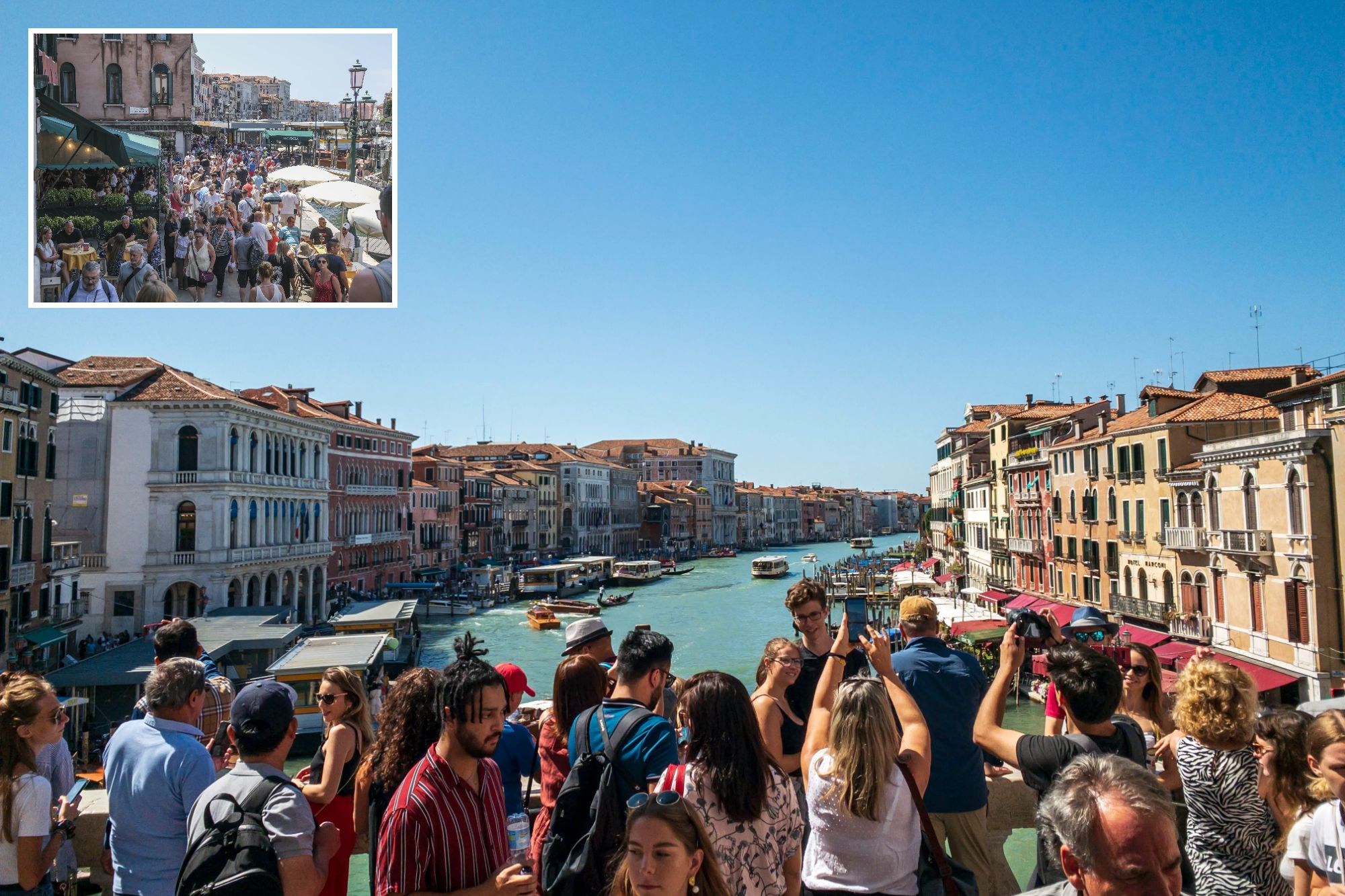
Popular European city may hike tourist entry fee to ‘barbarous’ level as it fights back against 80,000 visitors a day

ONE of Europe’s most popular destinations is set to hike its tourist entry fee in the fight against swarms of seasonal visitors.
The mayor of Italian jewel Venice is pushing to raise the city’s controversial entry fee to as much as €50 (£43).
The proposal has already triggered fierce backlash, with critics branding it “barbarous” and unconstitutional.
Simone Venturini told The Times that increasing the charge is essential if Venice is to manage the growing pressure of overtourism.
He said: “The higher the ticket price, the better for us.”
Venice introduced its controversial pay-to-enter scheme in 2024, charging visitors on peak days up to €10 to access the historic city.


Under the current system, day-trippers who book less than four days before their visit pay €10, while those who reserve more than four days in advance pay €5.
Visitors entering before 8.30am or after 4pm are exempt, as are residents, people born in Venice, students and workers.
Tourists staying overnight in hotels or rental accommodation also do not have to pay.
Tickets are purchased online and checked at key entry points, including the railway station.
Those caught without one can face fines of up to €300.
The city is also expanding the scheme, increasing the number of chargeable days from 54 to 60 this year.
Opponents argue the scheme has done little to reduce visitor numbers.
Official figures show average daily visitor numbers fell only slightly during the summer, from 16,676 in 2024 to 13,046 in 2025.
Venturini insists the goal is not to put a cap on tourism altogether.
He said: “We need to keep an eye on the total number of visitors to Venice, but we do not want to put a maximum limit on tourists, so instead we can aim to get them to spread out and avoid coming on those days when we face the prospect of 80,000 visitors.
“That means getting the Italian parliament to approve higher prices, let’s say €30 or €50.
“That will cover the cost of services for tourists, including removing the growing amount of rubbish, but we could also offer ticket holders discounts for museums.”
The idea of charging visitors even more has provoked strong opposition.
Critics argue that if Venice is serious about reducing overcrowding, it should instead focus on limiting the number of properties being rented out through Airbnb.
Former mayor Massimo Cacciari said: “There is no other Italian or European city that you have to buy a ticket to enter, as if it were a museum.
“This is barbarous, uncivil and in my opinion anti-constitutional.”
Constitutional expert Ludovico Mazzarolli also told Corriere della Sera that a €50 entry fee could conflict with the Italian Constitution’s principle of free movement within the country.
Venice is not the only city trying to manage surging visitor numbers.
In Rome, authorities have introduced a €2 charge to access the lower area around the famous Trevi Fountain.
Meanwhile, the island of Capri continues to grapple with huge summer crowds, welcoming as many as 50,000 visitors a day during July and August.
To keep its narrow streets moving, visitors are encouraged to keep right when walking uphill and left when heading down.
Tour groups are now capped at 40 people, while guides leading more than 20 tourists must use wireless earpieces instead of loudspeakers.