ban

Ex-U.N. chief Ban lauds S. Korea’s co-sponsorship of N. Korea human rights resolution

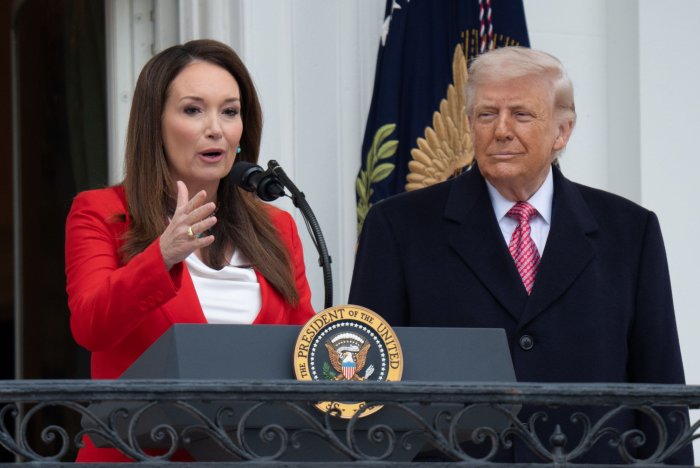
Former U.N. Secretary-General Ban Ki-moon speaks during an international conference on North Korean Human Rights and Responsibility to Protect, held in central Seoul on Friday. Photo by Yonhap

Former U.N. Secretary-General Ban Ki-moon on Tuesday lauded South Korea’s co-sponsorship of this year’s U.N. resolution condemning human rights violations in North Korea.

Ban made the remarks in his keynote speech to an international conference on North Korean human rights held in Seoul, after the U.N. General Assembly’s Third Committee adopted a resolution against North Korea’s human rights abuses last week in New York.

A total of 61 countries co-sponsored the annually adopted resolution, including South Korea under the liberal Lee government, which has been making overtures to resume dialogue with North Korea.

The move marks a departure from the former liberal Moon Jae-in administration, which withheld its support for the resolution from 2019 to 2021.

The resolution will be reviewed at the upcoming General Assembly plenary session next month for final adoption.

“It is noteworthy,” Ban said of the action. “(It) would be viewed as the new Korean government’s recognition that North Korean human rights issues constitute one of the universal values.”

Ban pointed to “a lack of coherence” in South Korea’s approach to North Korean human rights issues, depending on changes of government between the conservative and progressive blocs, as he delved into obstacles to addressing the issue.

Political deadlock between the two major parties has also left the North Korean Human Rights Foundation, an organization intended to promote research and activities on North Korean human rights and envisioned under the 2016 North Korea human rights law, still unlaunched, he said.

“North Korea’s human rights situation remains grim for long-suffering North Koreans, while Pyongyang’s spending continues to expand,” he noted, urging the international community not to overlook the issue.

Copyright (c) Yonhap News Agency prohibits its content from being redistributed or reprinted without consent, and forbids the content from being learned and used by artificial intelligence systems.

Source link

More airlines ban the use of popular travel item onboard flights due to major safety concerns

A NUMBER of airlines are set to join the masses in banning a popular item on flights.

A handful of Australian airline companies are set to ban power banks on their flights within the next few weeks.

Qantas and Virgin Australia are setting limits on power banks being brought onboard flightsCredit: Getty
Virgin Australia will introduce limits from December 1 and Qantas will from December 15Credit: Getty

Qantas and Virgin Australia will ban the useful charging item after one caught fire in an overhead locker onboard a Virgin Australia flight in July.

The new rules mean that passengers will be limited to what size the portable charger is and they must be easily accessible within a passenger’s luggage.

Passengers will also be limited in how many portable chargers they take onboard to just two.

Virgin Australia’s chief operations officer Chris Snook said: “Globally, more lithium battery-powered devices are now being carried by travellers, and while these items are generally safe when packed and handled appropriately, this move will minimise any potential risks associated with these devices.”

Read more on travel inspo

ALL IN

I found the best value all inclusive London hotel… just £55pp with free food & booze


HOL YES

I’m a travel editor & mum-of-3… my favourite family holidays from just £3pp a night

Changes in policy for Virgin Australia will come into force on December 1.

Passengers will be limited to a power bank capacity of 100 watt-hour – anything more than this and special approval will be needed.

As for other Australian airlines, the ban will take effect from December 15 for Qantas, QantasLink and Jetstar and the maximum capacity of a power bank allowed will be 160 watt-hour.

The ban will apply to all international and domestic flights.

In an announcement last week, the airlines confirmed that power banks will still be allowed on flights, they just need to be somewhere accessible – so ideally in you underseat bag in front of you or the pocket in the back of the seat.

Virgin Australia flights will also not allow power banks to be stored in the overhead compartment.

Power banks will also be banned from checked-in luggage.

If a passenger needs to charge their device during a flight, they can use the in-seat USB ports.

The Australian airlines are not the first to introduce limits on power banks, as a number of other airlines have already introduced rules such as Emirates and Singapore Airlines.

If you want to know whether your power bank is allowed on a flight you are due to catch, first have a look at your airline’s website to find out its capacity limits on power banks.

Then, to calculate the watt-hour of your power bank, multiply the battery capacity (mAh) by the voltage (V) of the internal lithium battery and divide by 1,000.

Australian airlines introducing new rules on power banks follows a statement made by the Federal Aviation Authority (FAA) in the US, back in September, after 50 incidents had been reported concerning power banks onboard flights.

The FAA said: “Lithium batteries stored in passenger overhead bins and or in carry-on baggage may be obscured, difficult to access, or not readily monitored by passengers or crewmembers.

“Because of this, detection of thermal runaway and firefighting measures may be delayed in flight, increasing the risk to safety.”

NO WEIGH

McDonald’s twice a day saw me reach 25st… I’ve lost 12st & now exes want me back


WASHOUT

I’m A Celeb in chaos as stars are EVACUATED from camp and filming delayed

The Sun’s Head of Travel on what the power bank rules mean for your flights

The Sun’s Head of Travel Lisa Minot explains: 

AS staying connected becomes ever-more important, a ban on the handy gadget that can keep our devices topped up could be seen as a pain.

But the catastrophic consequences of a fire on a plane are an obvious reason to make rules stricter.

After countless incidents – and with so many counterfeit and faulty goods out there – it makes sense they are cracking down.

But airlines do need to understand the need for us to be able to top up our devices in the air. With plans afoot to get rid of physical boarding passes in the coming years, making sure we’re able to use our devices will become even more essential.

Adapting plane interiors to include USB ports will alleviate the need to top up on the go.

And more needs to be done to highlight the new rules – and the dangers these devices can pose.

In other aviation news, Ryanair is set to axe all flights to European islands often compared to Hawaii.

Plus, UK airport gets new long-haul flights to one of the world’s best cities – the first in nearly 20 years.

It comes after a power bank caught fire on a Virgin Australia flight back in JulyCredit: AFP

Source link

Dylan Kitts: Jockey given nine-year ban in Hillsin racing corruption case

Jockey Dylan Kitts has been given a nine-year ban in a racing corruption case.

The rider and associate John Higgins conspired together to commit a corrupt practice by agreeing to stop a horse achieving its best possible position, it was found.

Kitts, 24, admitted to a disciplinary hearing he prevented his mount Hillsin from running on his merits when finishing third in a handicap hurdle at Worcester in July 2023.

Higgins, who has been banned from racing for 12 years, was deemed to be the mastemind behind the plan to stop Hillsin winning.

He is the father-in-law of Premier League footballer Ashley Barnes and is an associate of the horse’s owner Alan Clegg, who was not charged by the British Horseracing Authority (BHA).

Trainer Chris Honour was judged not to be part of the conspiracy but was found to have misled stewards and was fined £750.

Source link

Snapchat starts age checks in Australia ahead of teen social media ban | Social Media News

Snapchat has begun asking children and teenagers in Australia to verify their ages, including with software owned by the country’s banks, according to a company spokesperson.

The move on Monday comes as Australia prepares to enforce a world-first social media ban for children under the age of 16 starting on December 10.

Recommended Stories

list of 4 itemsend of list

The law, which threatens social media platforms with a fine of up to 49.5 million Australian dollars ($31.95m) for noncompliance, is one of the world’s toughest regulations targeting Big Tech.

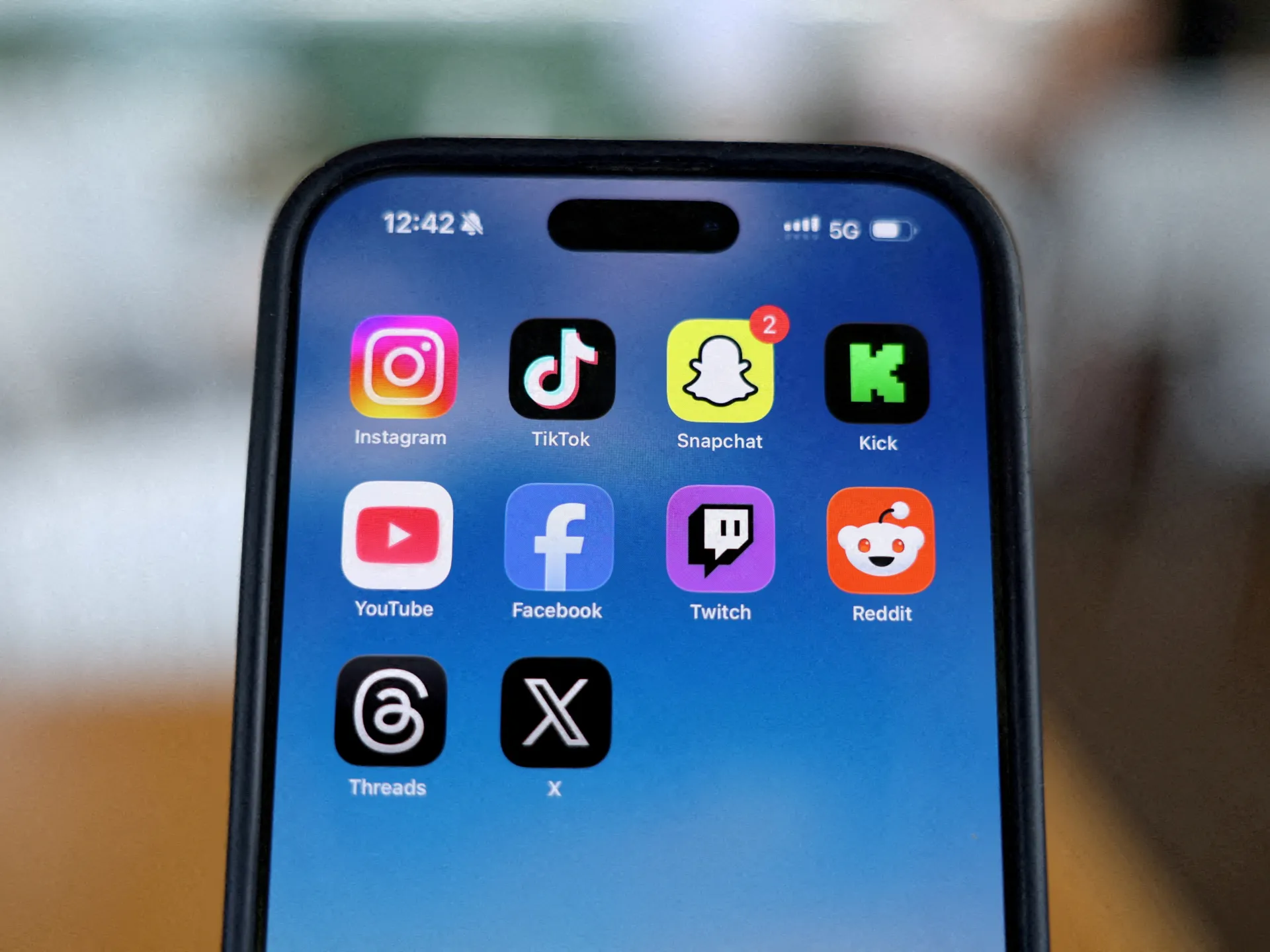
In addition to Snapchat, the ban currently applies to YouTube, X, Facebook, Instagram, TikTok, Reddit, Twitch and Kick.

In a statement on Saturday, Snapchat said users will be able to verify their age through the ConnectID application, which links to their bank accounts, or by using software owned by Singapore-headquartered age-assurance provider, k-ID.

ConnectID, which is owned and used by most major Australian banks, said it would send the tech platform a “yes/no” signal about whether the person was over 16 based on their account details, without making them upload sensitive information.

“The goal here is to protect young people online without creating new privacy risks,” said ConnectID managing director Andrew Black in a statement.

In the k-ID option, users can upload government-issued identification cards to verify their ages or submit photos, which the application will then use to estimate an age range.

‘Keep lines of communication open’

Snapchat has previously said it believes about 440,000 of its users in Australia are aged between 13 and 15.

Snapchat added that it “strongly disagreed” with the Australian government’s assessment that it should be included in the social media ban, claiming its service provides a “visual messaging app”.

“Disconnecting teens from their friends and family doesn’t make them safer – it may push them to less safe, less private messaging apps,” it warned.

Some other apps have been able to secure an exception from the ban, including Discord, WhatsApp, Lego Play and Pinterest. But Australian authorities have reserved the right to update the list of banned platforms as required.

A number of young people and advocates have expressed concerns about the potential consequences of the new ban, including 18-year-old journalist and founder of youth news service 6 News Australia Leo Puglisi, who told an Australian Senate inquiry that the ban will affect young people’s access to information.

UNICEF Australia has also expressed concerns about implementation, saying the changes proposed by the Australian government “won’t fix the problems young people face online”.

“Social media has a lot of good things, like education and staying in touch with friends,” UNICEF Australia said in a statement.

“We think it’s more important to make social media platforms safer and to listen to young people to make sure any changes actually help.”

Katrina Lines, the CEO of children’s therapy provider Act for Kids, said that parents should start having conversations with children as soon as possible about how they can stay connected as the ban comes into effect over the coming weeks.

“It’s important to keep the lines of communication open in the lead up to and even long after these changes take effect,” Lines said.

Act for Kids said it surveyed more than 300 Australian children aged 10 to 16, and found 41 percent would prefer to connect with family in real life compared to only 15 percent who preferred to spend time online. But Lines said families still need to work out how to improve in-person connections.

“One way of starting this conversation could be by asking them how they would like to stay connected to friends and family outside of social media,” she said.

Global concern

The Australian ban comes amid growing global concern over the effects of social media on children’s health and safety, and companies including TikTok, Snapchat, Google and Meta Platforms – the operator of Facebook, Instagram, and WhatsApp – are facing lawsuits in the United States for their role in fuelling a mental health crisis.

Regulators around the world are closely watching whether Australia’s sweeping restrictions can work.

Malaysia’s Communications Minister Fahmi Fadzil said on Sunday that the Malaysian government also plans to ban social media for users under the age of 16, starting from next year.

He said the government was reviewing the mechanisms used in Australia and other nations to impose age restrictions for social media use, citing a need to protect youths from online harms such as cyberbullying, financial scams and child sexual abuse.

“We hope by next year that social media platforms will comply with the government’s decision to bar those under the age of 16 from opening user accounts,” he told reporters, according to a video of his remarks posted online by local daily The Star.

In New Zealand, Prime Minister Christopher Luxon is also planning to introduce a similar bill to restrict children’s social media use, while Indonesia, too, has said it is preparing legislation to protect young people from “physical, mental, or moral perils”.

In Europe, France, Spain, Italy, Denmark and Greece are jointly testing a template for an age verification app, while the Dutch government has advised parents to forbid children under 15 from using social media apps like TikTok and Snapchat.

Source link

Malaysia says it will ban social media for under-16s from next year | Social Media News

Move comes as a growing number of countries are rolling out measures to limit children’s exposure to digital platforms.

Malaysia plans to ban social media for users under the age of 16 starting from next year, joining a growing list of countries choosing to limit access to digital platforms due to concerns about child safety.

Communications Minister Fahmi Fadzil said on Sunday the government was reviewing mechanisms used to impose age restrictions for social media use in Australia and other nations, citing a need to protect youths from online harms such as cyberbullying, financial scams and child sexual abuse.

Recommended Stories

list of 4 itemsend of list

“We hope by next year that social media platforms will comply with the government’s decision to bar those under the age of 16 from opening user accounts,” he told reporters, according to a video of his remarks posted online by local daily The Star.

The effects of social media on children’s health and safety have become a growing global concern, with companies including TikTok, Snapchat, Google and Meta Platforms – the operator of Facebook, Instagram and WhatsApp – facing lawsuits in the United States for their role in driving a mental health crisis.

In Australia, social media platforms are poised to deactivate accounts registered to users younger than 16 next month, under a sweeping ban for teenagers that is being closely watched by regulators around the world.

France, Spain, Italy, Denmark and Greece are also jointly testing a template for an age verification app.

Malaysia’s neighbour Indonesia said in January it planned to set a minimum age for social media users, but later issued a less stringent regulation requiring tech platforms to filter negative content and impose stronger age verification measures.

Malaysia has put social media companies under greater scrutiny in recent years in response to what it claims to be a rise in harmful content, including online gambling and posts related to race, religion and royalty.

Platforms and messaging services with more than eight million users in Malaysia are now required to obtain a license under a new regulation that came into effect in January.

Source link

Sacramento still bans sale of comic books to kids. Officials want to change that

On a recent day at Sacramento native Lecho Lopez’s comic shop in the city, his 5-year-old nephew read his first word aloud: “bad.” It was from a graphic novel.

There was irony in that being his first word, because Lopez credits comic books with many positive things in his life. That is why he supports repealing a city ordinance dating to 1949 that bars the distribution of many comic books to kids and teens. It is not enforced today.

“It’s a silly law,” said Lopez, who has a red-and-black tattoo of the Superman logo on his forearm, in an interview at his store, JLA Comics. “A lot of good things come out of comic books.”

A City Council committee unanimously voted last week to advance the repeal and designate the third week of September as “Sacramento Comic Book Week.” It now heads to the full council for a vote. The ban prohibits distributing comic books prominently featuring an account of crime that show images of illegal acts such as arson, murder or rape to anyone under 18.

In the mid-20th century, as comic books were on the rise, fears spread over their effect on children, with some arguing they could lead to illiteracy or inspire violent crime. The industry decided to regulate itself, and local governments — from Los Angeles County to Lafayette, La. — adopted bans to shield certain comics from young people. While some cities like Sacramento still have those laws on the books, they are rarely if ever enforced.

Now, proponents of repealing the Sacramento law say it is necessary to reflect the value of comics and help protect against a modern wave of book bans.

Local artist pushes for repeal

Comic book author Eben Burgoon, who started a petition to overturn Sacramento’s ban, said that comics “have this really valuable ability to speak truth to power.”

“These antiquated laws kind of set up this jeopardy where bad actors could work hard to make this medium imperiled,” he said at a hearing Tuesday held by the City Council’s Law and Legislation Committee.

Sacramento is a great place to devote a week to celebrating comics, Burgoon said. The city has a “wonderful” comic book community, he said, and hosts CrockerCon, a comics showcase at a local art museum, every year.

Sam Helmick, president of the American Library Assn., said “there is no good reason” to have a ban such as Sacramento’s on the books, saying it “flies in the face of modern 1st Amendment norms.”

The history behind comic book bans

The movement to censor comics decades ago was not an aberration in U.S. history, said Jeff Trexler, interim director of the Comic Book Legal Defense Fund, which fights to protect the free speech rights of people who read or make comics.

New York, for example, created a commission in the 1920s dedicated to reviewing films to determine whether they should be licensed for public viewing, based on whether they were “obscene” or “sacrilegious” and could “corrupt morals” or “incite crime,” according to the state archives.

“Every time there’s a new medium or a new way of distributing a medium, there is an outrage and an attempt to suppress it,” Trexler said.

The California Supreme Court ruled in 1959 that a Los Angeles County policy banning the sale of “crime” comic books to minors was unconstitutional because it was too broad. Sacramento’s ban probably doesn’t pass muster for the same reason, Trexler said.

There is not a lot of recent research on whether there is a link between comic books and violent behavior, said Christopher Ferguson, a professor of psychology at Stetson University in Florida. But, he said, similar research into television and video games has not shown a link to “clinically relevant changes in youth aggression or violent behavior.”

Comic-book lovers tout their benefits

Leafing through comics like EC Comics’ “Epitaphs from the Abyss” and DC’s and Marvel’s collaboration “Batman/Deadpool,” Lopez showed an Associated Press reporter images of characters smashing the windshield of a car, smacking someone across the face and attacking Batman using bows and arrows — the kinds of scenes that might be regulated if Sacramento’s ban were enforced.

But comics with plot lines that include violence can contain positive messages, said Benjamin Morse, a media studies lecturer at the University of Nevada, Las Vegas.

“Spider-Man is a very mature concept,” said Morse, who became an “X-Men” fan as a kid and worked at Marvel for 10 years. “It’s a kid who’s lost his parents, his uncle dies to violence, and he vows to basically be responsible.”

Lopez’s mother bought him his first comic book, “Ultimate Spider-Man #1,” when he was about 9 years old, he said. But it was “Kingdom Come,” a comic featuring DC’s Justice League, that changed his life at a young age, with its “hyperrealistic” art that looked like nothing he had ever seen before, he said.

He said his interest in comic books helped him avoid getting involved with gangs growing up. They also improved his reading skills as someone with dyslexia.

“The only thing that I was really able to read that helped me absorb the information was comic books, because you had a visual aid to help you explain what was going on in the book,” Lopez said.

And a comic book can offer so much more, Burgoon said at last week’s hearing.

“It makes imaginative thinkers,” he said. “It does not make widespread delinquency. It does not make societal harm.”

Austin writes for the Associated Press.

Source link

Paul Pogba returns from doping ban for Monaco debut in Ligue 1 | Football News

Ex-Juventus and France star midfielder made his return to football, suiting up for Monaco in first game in more than two years after drug ban.

Paul Pogba described his emotional Monaco debut as a moment of relief and gratitude on Saturday, after the French midfielder returned to the pitch for the first time in more than two years following a doping ban.

The former Juventus and Manchester United player, who joined the Ligue 1 side on a free transfer in June, had not played a competitive match since September 2023.

Recommended Stories

list of 3 itemsend of list

Pogba received a four-year ban in February 2024 after testing positive for the banned substance DHEA, which boosts testosterone levels. The suspension was cut to 18 months after an appeal at the Court of Arbitration for Sport.

The 32-year-old, who was nearing a return last month before suffering a right ankle injury, came on in the 85th minute of Monaco’s 4-1 defeat by Rennes at Roazhon Park and was met with a standing ovation.

“Seeing the crowd rise and applaud, I never imagined that would happen,” Pogba told reporters. “I’m relieved to be playing football again, the thing I love most in the world.

“But there’s still work to do to get back to full fitness and be able to play 90 minutes… If I don’t perform well at Monaco, I can forget about the French national team.

“I believe in myself and in my qualities, and since I knew I had done nothing wrong and it was not my fault, I never lost hope.”

Pogba, who has made 91 appearances for France, played a starring role in his nation’s 2018 FIFA World Cup victory. Knee and hamstring injuries, as well as knee surgery, prevented him from playing for France at the 2022 World Cup in Qatar.

Paul Pogba in action.
Pogba in action during the French Ligue 1 match between Rennes and Monaco [Lou Benoist/AFP]

Source link

Abortion is illegal again in North Dakota, state Supreme Court rules

Abortion is again illegal in North Dakota after the state’s Supreme Court on Friday couldn’t muster the required majority to uphold a judge’s ruling that struck down the state’s ban last year.

The law makes it a felony crime for anyone to perform an abortion, though it specifically protects patients from prosecution. Doctors could be prosecuted and penalized by as much as five years in prison and a $10,000 fine.

Three justices agreed that the ban is unconstitutionally vague. The other two justices said the law is not unconstitutional.

The North Dakota Constitution requires at least four of the five justices to agree for a law to be found unconstitutional, a high bar. Not enough members of the court joined together to affirm the lower court ruling.

In his opinion, Justice Jerod Tufte said the natural rights guaranteed by the state constitution in 1889 do not extend to abortion rights. He also said the law “provides adequate and fair warning to those attempting to comply.”

North Dakota Republican Atty. Gen. Drew Wrigley welcomed the ruling, saying, “The Supreme Court has upheld this important pro-life legislation, enacted by the people’s Legislature. The attorney general’s office has the solemn responsibility of defending the laws of North Dakota, and today those laws have been upheld.”

Republican state Sen. Janne Myrdal, who introduced the 2023 legislation that became the law banning abortion, said she was “thrilled and grateful that two justices that are highly respected saw the truth of the matter, that this is fully constitutional for the mother and for the unborn child and thereafter for that sake.”

The challengers called the decision “a devastating loss for pregnant North Dakotans.”

“As a majority of the Court found, this cruel and confusing ban is incomprehensible to physicians. The ban forces doctors to choose between providing care and going to prison,” Center for Reproductive Rights senior staff attorney Meetra Mehdizadeh said. “Abortion is healthcare, and North Dakotans deserve to be able to access this care without delay caused by confusion about what the law allows.”

The ruling means access to abortion in North Dakota will be outlawed. Even after a judge had struck down the ban last year, the only scenarios for a patient to obtain an abortion in North Dakota had been for life- or health-preserving reasons in a hospital.

The state’s only abortion provider relocated in 2022 from Fargo to nearby Moorhead, Minn.

Justice Daniel Crothers, one of the three judges to vote against the ban, wrote that the district court decision wasn’t wrong.

“The vagueness in the law relates to when an abortion can be performed to preserve the life and health of the mother,” Crothers wrote. “After striking this invalid provision, the remaining portions of the law would be inoperable.”

North Dakota’s newly confirmed ban prohibits the performance of an abortion and declares it a felony. The only exceptions are for rape or incest for an abortion in the first six weeks of pregnancy — before many women know they are pregnant — and to prevent the woman’s death or a “serious health risk” to her.

North Dakota joins 12 other states enforcing bans on abortion at all stages of pregnancy. Four others bar it at or around six weeks of gestational age.

Judge Bruce Romanick had struck down the ban the GOP-led Legislature passed in 2023, less than a year after the U.S. Supreme Court overturned Roe vs. Wade and opened the door to the state-level bans, largely turning the abortion battle to state courts and legislatures.

The Red River Women’s Clinic — the formerly sole abortion clinic in North Dakota — and several physicians challenged the law. The state appealed the 2024 ruling that overturned the ban.

The judge and the Supreme Court each denied requests by the state to keep the abortion ban in effect during the appeal. Those decisions allowed patients with pregnancy complications to seek care without fear of delay because of the law, Mehdizadeh previously said.

Dura writes for the Associated Press.

Source link

One of Europe’s prettiest cities to ban restaurants and bars having outdoor tables 

STRICT new rules are being rolled out in one of Europe’s prettiest cities next year.

Florence, which was named the best city in Europe by Travel + Leisure this year, is cracking down on outdoor dining in the popular tourist areas.

New outdoor dining rules will see a ban on tables in some of Florence’s most historical streetsCredit: Alamy
It includes the famous Ponte Vecchio bridgeCredit: Alamy

The new rules, the Times reports, will see outdoor seats banned across 50 streets in Florence.

This mainly affects the city centre, which is UNESCO protected.

Other famous sites affected will include the famous Ponte Vecchio bridge, which is currently undergoing a £1.7million makeover and is set to be finished by next year.

Also affected is the Piazzale degli Uffizi, which is popular with tourists visiting the Uffizi Galleries.

SPORT ON

I tried the brand new golf attraction in major UK city


SNOW WAY

I went to European city named an up-and-coming place to travel in 2026

Along with the bans, another 73 locations will see stricter regulations on outdoor seating areas.

This could mean while seating is allowed, umbrellas and plexiglass barriers could be banned.

Local restaurant owners have slammed the rules, saying it is an important part of their service especially in the summer months.

The owner of Ristorante Pizzeria Il David, which has 60 seats outside, said: “Our outdoor seating is fundamental.”

Another said: “True restaurateurs have begun to close.

“They are crushed by impossible costs and by city policies more concerned with the aesthetics of outdoor seating than with the survival of those who brought these spaces to life.”

But locals have said the new rules are needed as the narrow streets can’t cope with the outdoor terraces, many of which were introduced during Covid.

Some said it had made roads unliveable, and like an “obstacle course”.

It isn’t the only strict ban introduced over the years in Florence.

Back in 2021, tourist were banned from eating picnics on some of the city’s top attractions.

The fines – between €150-€500 (£135-£450) – were to stop people blocking the doors of locals as well as reduce littering from street food.

And last year, lock boxes and self-check in systems were banned by the Italian government.

Often used by short-term holiday rentals, the ban came after many were destroyed in protest across Florence, Milan and Rome.

HORROR TOWN

Our once proud town is besieged by masked machete yobs – even cops are targets


CRUEL ORDEAL

I was blinded & my pals were killed by dangerous trend in Brit holiday hotspot

It comes after fears of overtourism across Florence.

Cecilie Hollberg, director of the Galleria dell’Accademia, told local media: “Florence is very beautiful and I would like it to return to its citizens and not be crushed by tourism.”

Many restaurant added the outdoor seating during CovidCredit: Alamy

Source link

Lawsuit challenges TSA’s ban on transgender officers conducting pat-downs

A Virginia transportation security officer is accusing the U.S. Department of Homeland Security of sex discrimination over a policy that bars transgender officers from performing security screening pat-downs, according to a federal lawsuit.

The Transportation Security Administration, which operates under DHS, enacted the policy in February to comply with President Trump’s executive order declaring two unchangeable sexes: male and female.

According to internal documents explaining the policy change that the Associated Press obtained from four independent sources, including one current and two former TSA workers, “transgender officers will no longer engage in pat-down duties, which are conducted based on both the traveler’s and officer’s biological sex. In addition, transgender officers will no longer serve as a TSA-required witness when a traveler elects to have a pat-down conducted in a private screening area.”

Until February, TSA assigned work consistent with officers’ gender identity under a 2021 management directive. The agency told the AP it rescinded that directive to comply with Trump’s Jan. 20 executive order.

Although transgender officers “shall continue to be eligible to perform all other security screening functions consistent with their certifications,” and must attend all required training, they will not be allowed to demonstrate how to conduct pat-downs as part of their training or while training others, according to the internal documents.

A transgender officer at Dulles International Airport, Danielle Mittereder, alleges in her lawsuit filed Friday that the new policy — which also bars her from using TSA facility restrooms that align with her gender identity — violates civil rights law.

“Solely because she is transgender, TSA now prohibits Plaintiff from conducting core functions of her job, impedes her advancement to higher-level positions and specialized certifications, excludes her from TSA-controlled facilities, and subjects her identity to unwanted and undue scrutiny each workday,” the complaint says.

Mittereder declined to speak with the AP but her lawyer, Jonathan Puth, called TSA’s policy “terribly demeaning and 100% illegal.”

TSA spokesperson Russell Read declined to comment, citing pending litigation. But he said the new policy directs that “Male Transportation Security Officers will conduct pat-down procedures on male passengers and female Transportation Security Officers will conduct pat-down procedures on female passengers, based on operational needs.”

The legal battle comes amid mounting reports of workplace discrimination against transgender federal employees during Trump’s second administration. It is also happening at a time when TSA’s ranks are already stretched thin due to the ongoing government shutdown that has left thousands of agents working without pay.

Other transgender officers describe similar challenges to Mittereder.

Kai Regan worked for six years at Harry Reid International Airport in Las Vegas, but retired in July in large part because of the new policy. Regan, who is not involved in the Virginia case, transitioned from female to male in 2021 and said he had conducted pat-downs on men without issue until the policy change.

“It made me feel inadequate at my job, not because I can’t physically do it but because they put that on me,” said the 61-year-old, who worried that he would soon be fired for his gender identity, so he retired earlier than planned rather than “waiting for the bomb to drop.”

Skye Perryman, president and CEO of Democracy Forward — a legal organization that has repeatedly challenged the second Trump administration in court — called TSA’s policy “arbitrary and discriminatory,” adding: “There’s no evidence or data we’re aware of to suggest that a person can’t perform their duties satisfactorily as a TSA agent based on their gender identity.”

DHS pushed back on assertions by some legal experts that its policy is discriminatory.

“Does the AP want female travelers to be subjected to pat-downs by male TSA officers?” Homeland Security spokesperson Tricia McLaughlin asked in a written response to questions by the AP. “What a useless and fundamentally dangerous idea, to prioritize mental delusion over the comfort and safety of American travelers.”

Airport security expert and University of Illinois Urbana-Champaign professor Sheldon H. Jacobson, whose research contributed to the design of TSA PreCheck, said that the practice of matching the officer’s sex to the passenger’s is aimed at minimizing passenger discomfort during screening. Travelers can generally request another officer if they prefer, he added.

Deciding where transgender officers fit into this practice “creates a little bit of uncertainty,” Jacobson said. But because transgender officers likely make up a small percent of TSA’s workforce, he said the new policy is unlikely to cause major delays.

“It could be a bit of an inconvenience, but it would not inhibit the operation of the airport security checkpoint,” Jacobson said.

TSA’s policy for passengers is that they be screened based on physical appearance as judged by an officer, according to internal documents. If a passenger corrects an officer’s assumption, “the traveler should be patted down based on his/her declared sex.” For passengers who tell an officer “that they are neither a male nor female,” the policy says officers must advise “that pat-down screening must be conducted by an officer of the same sex,” and to contact a supervisor if concerns persist.

The documents also say that transgender officers “will not be adversely affected” in pay, promotions or awards, and that TSA “is committed to providing a work environment free from unlawful discrimination and retaliation.”

But the lawsuit argues otherwise, saying the policy impedes Mittereder’s career prospects because “all paths toward advancement require that she be able to perform pat-downs and train others to do so,” Puth said.

According to the lawsuit, Mittereder started in her role in June 2024 and never received complaints related to her job performance, including pat-down responsibilities. Supervisors awarded her the highest-available performance rating and “have praised her professionalism, skills, knowledge, and rapport with fellow officers and the public,” the lawsuit said.

“This is somebody who is really dedicated to her job and wants to make a career at TSA,” Puth said. “And while her gender identity was never an issue for her in the past, all of a sudden it’s something that has to be confronted every single day.”

Being unable to perform her full job duties has caused Mittereder to suffer fear, anxiety and depression, as well as embarrassment and humiliation by forcing her to disclose her gender identity to co-workers, the complaint says. It adds that the ban places additional burden on already-outnumbered female officers who have to pick up Mittereder’s pat-down duties.

American Federation of Government Employees National President Everett Kelley urged TSA leadership to reconsider the policy “for the good of its workforce and the flying public.”

“This policy does nothing to improve airport security,” Kelley said, “and in fact could lead to delays in the screening of airline passengers since it means there will be fewer officers available to perform pat-down searches.”

Savage writes for the Associated Press. AP writer Rio Yamat in Las Vegas contributed to this report.

Source link

Lawsuit challenges US ban on transgender TSA officers conducting pat-downs | Civil Rights News

A Virginia transportation security officer has accused the United States Department of Homeland Security (DHS) of sex discrimination over a policy that bars transgender officers from performing security screening pat-downs, according to a federal lawsuit.

The Transportation Security Administration (TSA), which operates under the DHS, enacted the policy in February to comply with President Donald Trump’s executive order declaring two unchangeable sexes: male and female.

Recommended Stories

list of 3 itemsend of list

The Associated Press (AP) news agency obtained internal documents explaining the policy change from four independent sources, including one current and two former TSA workers.

Those documents explain that “transgender officers will no longer engage in pat-down duties, which are conducted based on both the traveller’s and officer’s biological sex. In addition, transgender officers will no longer serve as a TSA-required witness when a traveller elects to have a pat-down conducted in a private screening area”.

Until February, the TSA assigned officers work consistent with their gender identity, based on a 2021 management directive. The agency told the AP that it rescinded this directive to comply with Trump’s January 20 executive order.

Although transgender officers “shall continue to be eligible to perform all other security screening functions consistent with their certifications” and must attend all required training, they will not be allowed to demonstrate how to conduct pat-downs as part of their training or while training others, according to the internal documents.

A transgender officer at Dulles international airport, Danielle Mittereder, alleged in her lawsuit filed on Friday that the new policy, which also bars her from using TSA facility restrooms that align with her gender identity, violates civil rights law.

“Solely because she is transgender, TSA now prohibits Plaintiff from conducting core functions of her job, impedes her advancement to higher-level positions and specialised certifications, excludes her from TSA-controlled facilities, and subjects her identity to unwanted and undue scrutiny each workday,” the complaint says.

Mittereder declined to speak with the AP, but her lawyer, Jonathan Puth, called the TSA policy “terribly demeaning and 100 percent illegal”.

TSA spokesperson Russell Read declined to comment, citing pending litigation. But he said the new policy directs that “male Transportation Security Officers will conduct pat-down procedures on male passengers, and female Transportation Security Officers will conduct pat-down procedures on female passengers, based on operational needs”.

The legal battle comes amid mounting reports of workplace discrimination against transgender federal employees during Trump’s second administration. It is also happening at a time when the TSA’s ranks are already stretched thin due to the ongoing government shutdown that has left thousands of agents working without pay.

Other transgender officers describe similar challenges to Mittereder.

Kai Regan worked for six years at Harry Reid international airport in Las Vegas before leaving in July, in large part because of the new policy.

Worried that he would be fired for his gender identity, he retired earlier than planned rather than “waiting for the bomb to drop”.

Regan, who is not involved in the Virginia case, transitioned from female to male in 2021. He said he had conducted pat-downs on men without issue until the policy change.

“It made me feel inadequate at my job, not because I can’t physically do it but because they put that on me,” said the 61-year-old.

Skye Perryman, president and CEO of Democracy Forward, a legal organisation that has repeatedly challenged the second Trump administration in court, called the TSA policy “arbitrary and discriminatory”.

“There’s no evidence or data we’re aware of to suggest that a person can’t perform their duties satisfactorily as a TSA agent based on their gender identity,” Perryman said.

The DHS pushed back on assertions by some legal experts that its policy is discriminatory.

“Does the AP want female travellers to be subjected to pat-downs by male TSA officers?” Homeland Security spokesperson Tricia McLaughlin asked in a written response to questions by the AP. “What a useless and fundamentally dangerous idea, to prioritise mental delusion over the comfort and safety of American travellers.”

Airport security expert and University of Illinois Urbana-Champaign professor Sheldon H Jacobson, whose research contributed to the design of TSA PreCheck, said that the practice of matching the officer’s sex to the passenger’s is aimed at minimising passenger discomfort during screening.

Travellers can generally request another officer if they prefer, he added.

Deciding where transgender officers fit into this practice “creates a little bit of uncertainty”, Jacobson said. But because transgender officers likely make up a small percent of the TSA’s workforce, he said the new policy is unlikely to cause major delays.

“It could be a bit of an inconvenience, but it would not inhibit the operation of the airport security checkpoint,” Jacobson said.

The TSA’s policy for passengers is that they be screened based on physical appearance as judged by an officer, according to internal documents. If a passenger corrects an officer’s assumption, “the traveller should be patted down based on his/her declared sex”.

For passengers who tell an officer “that they are neither a male nor female”, the policy says officers must advise “that pat-down screening must be conducted by an officer of the same sex” and contact a supervisor if concerns persist.

The documents also say that transgender officers “will not be adversely affected” in pay, promotions or awards, and that the TSA “is committed to providing a work environment free from unlawful discrimination and retaliation”.

But the lawsuit argues otherwise, saying the policy impedes Mittereder’s career prospects because “all paths toward advancement require that she be able to perform pat-downs and train others to do so”, Puth said.

According to the lawsuit, Mittereder started in her role in June 2024 and never received complaints related to her job performance, including pat-down responsibilities. Supervisors awarded her the highest-available performance rating, and “have praised her professionalism, skills, knowledge, and rapport with fellow officers and the public”, the lawsuit said.

“This is somebody who is really dedicated to her job and wants to make a career at TSA,” Puth said. “And while her gender identity was never an issue for her in the past, all of a sudden, it’s something that has to be confronted every single day.”

Being unable to perform her full job duties has caused Mittereder to suffer fear, anxiety and depression, as well as embarrassment and humiliation by forcing her to disclose her gender identity to co-workers, the complaint says.

It adds that the ban places an additional burden on already-outnumbered female officers who have to pick up Mittereder’s pat-down duties.

American Federation of Government Employees national president Everett Kelley urged the TSA leadership to reconsider the policy “for the good of its workforce and the flying public”.

“This policy does nothing to improve airport security,” Kelley said, “and in fact could lead to delays in the screening of airline passengers since it means there will be fewer officers available to perform pat-down searches”.

Source link

Four airlines now ban passengers from packing AirPods

Several airlines have started cracking down on passengers packing their everyday, popular devices in checked luggage, in a blow for AirPod and other earbud users

Airlines have started cracking down on passengers packing everyday, popular devices in checked luggage, following widespread bans on power banks.

Over the last few years, several airlines have banned passengers from taking power banks on flights due to concerns that they could catch fire. Vietnam Airlines, Vietjet Air, and, now, Emirates have all banned the use of power banks on flights, while Cathay Pacific issued a similar ban effective from April 7, 2025.

Now, some airlines have started cracking down on another popular electronic item over similar concerns of flammability. Taiwanese airlines EVA Air, UNI Air and Tigerair no longer allow Bluetooth earbuds, including Apple AirPods, to be placed in checked luggage.

Such audio tech contains lithium batteries, as power banks do. As the earbuds are constantly being charged when they’re in their case, the risk of them suddenly bursting into flames is increased.

Author avatarMilo Boyd

READ MORE: Everything Disneyland’s dress code bans including strict costume rules

The New Zealand Aviation Authority has also set out rules strictly prohibiting the packing of AirPods and other wireless earbuds in checked luggage on flights under its jurisdiction.

“Yes, you can take wireless earbuds and AirPods in your carry-on luggage. They must not go in check-in luggage under any circumstances,” the Kiwi aviation organisation explains.

“Each person is allowed a total of 20 spare batteries or power banks in their carry-on, unless an airline has approved the carriage of more batteries. The wireless earbuds/AirPods charger is considered one of the 20 spare batteries or power banks allowed in passengers’ carry-on.

“Some airlines, including Air New Zealand, specify in their conditions of carriage that you can only travel with your wireless ear buds / AirPods chargers in carry-on and not check-in luggage.”

It comes following a spate of incidents involving fires on planes thought to be caused by broken power banks. In turn, this has led some airlines to reevaluate how portable charges can be used on planes, as the lithium batteries contained inside can produce extreme heat if they short-circuit.

The first airline to introduce a ban on battery packs was Air Busan, after a power bank fire in January forced one of its aircraft out of service. Fortunately, no passengers were harmed, but the incident caused considerable damage.

The largest airline on the list of those banning the use of power banks is Emirates, the Middle East-based travel giant. Bosses announced that a ban on power banks will be enforced from October 1, 2025.

The UK Civil Aviation Authority (CAA), alongside other aviation regulators, advises that lithium batteries and power banks should be carried in hand luggage and switched off completely to minimise fire risks.

Their guidelines specify that the heat-generating element of a lithium battery-powered gadget should be “separated” from the battery – meaning the battery or heat-generating part should be taken out. The guidelines state: “Any battery that has been removed must be protected against short circuit (by placing in its original retail packaging or by otherwise insulating terminals, e.g. by taping over exposed terminals or placing each battery in a separate bag or protective pouch).”

Currently, no UK airlines have outright bans on Bluetooth earbuds being packed in hand luggage.

A spokesperson for Tigerair said: “Due to flight safety considerations, portable electronic devices such as earphone charging cases and portable electric fans with built-in lithium-ion batteries can only be carried in hand-held or carry-on formats on board the aircraft.”

UNI Air said: “Bluetooth earphones (including the charging case) are classified as Portable Electronic Devices (PED). For safety reasons, the airline said Bluetooth earphones and their charging cases are not permitted in checked baggage and must be carried in hand luggage instead.”

Full list of all 14 airlines banning power bank use aboard a plane

Operating in the UK:

Not serving UK airports:

  • Air Busan
  • Hong Kong Airlines
  • Thai AirAsia
  • Tigerair
  • Vietjet Air

Do you have a travel story to share? Email [email protected]

Source link

IOC inches toward ban on transgender athletes competing as women

The International Olympic Committee pumped the brakes on a report Monday that the body was poised to ban athletes born male from competing in women’s Olympic events, saying that “no decisions have been taken yet.”

A report in The Times of London stated that the ban on transgender women in female competition would be implemented early in 2026 “after a science-based review of evidence about permanent physical advantages of being born male.”

The IOC insisted the report was premature but did not refute that a new policy was forthcoming.

A spokesperson confirmed that medical and scientific director Dr. Jane Thornton updated IOC members last week at a meeting in Lausanne, Switzerland, on the initial findings of a working group studying the issue. However, the spokesperson said in a statement that “the working group is continuing its discussions on this topic and no decisions have been taken yet. Further information will be provided in due course.”

New IOC president Kirsty Coventry succeeded Thomas Bach in June and three months later formed the Protection of the Female Category working group made up of experts as well as representatives of international federation to study the issue.

The findings and a new policy could be announced as soon as the IOC session, scheduled in February ahead of the Milan-Cortina Winter Olympics.

Under Bach, the IOC declined to apply a universal rule on transgender participation in the Olympics, and transgender athletes remain eligible to participate. Each sport’s international federation is allowed to set its own rules.

However, Coventry said in her first news conference after becoming IOC president that she believes Olympic sports should do away with the current piecemeal approach to setting rules on transgender inclusion and instead implement a policy that applies to most or all sports.

“We understand that there will be differences depending on the sport,” she said. “But it was very clear from the members that we have to protect the female category, first and foremost to ensure fairness.

“We have to do it with a scientific approach and with the inclusion of the international federations who have done a lot of work in that area.”

President Trump signed an executive order early this year banning transgender athletes from competing in women’s sports in U.S. schools and said he intends to apply the policy at the Los Angeles Olympics in 2028. The order directs the Secretary of State to attempt to change IOC rules on transgender participation and also directs immigration officials to refuse admission to transgender women from other countries for the purposes of sports participation.

California Department of Education officials refused to comply with the order. However, Trump’s announcement prompted the U.S Olympic and Paralympic Committee to change their rules and ban transgender athletes from taking part in women’s sports.

The most recent Olympics controversy over gender eligibility occurred at the Paris Games last summer when boxer Imane Khelif of Algeria won the women’s welterweight gold medal a year after being disqualified from the World Championships for reportedly failing a gender eligibility test.

The IOC allowed Khelif and Taiwan’s Lin Yu-ting to compete in the women’s division because their passports identified them as female. Yu-ting had been banned by the suspended International Boxing Assn. (IBA).

In an attempt to identify athletes raised as female but who sometimes carry physical advantages of males — called Differences of Sexual Development (DSD) — international boxing this year introduced mandatory tests for athletes in the female category to detect a gene on the Y chromosome that triggers the development of male characteristics.

Other sports have created a range of thresholds to ban or allow transgender athletes to compete as women. World Athletics, the international governing body for track and field, bans transgender athletes who have undergone male puberty. World Rugby forbids transgender athletes from competing at the highest level. And World Aquatics allows transgender athletes who transitioned before the age of 12 to compete as women.

Very few transgender athletes have taken part in the Games. New Zealand weightlifter Laurel Hubbard became the first openly transgender athlete to compete in a different gender category in the 2021 Tokyo Olympics.

“I don’t think we need to redo all the work that’s been done — we can learn from the international federations and set up a task force that will look at this constantly and consistently,” Coventry said. “The overarching principle must be to protect the female category.”

Source link

IOC: No decision over ban on transgender women from all sports

New Zealand’s Laurel Hubbard became the first openly transgender women to compete at an Olympics after being selected for the women’s weightlifting team at Tokyo 2020.

Hubbard, who failed to record a successful lift in the women’s +87kg category, had competed in men’s events before coming out as transgender in 2013.

At Paris 2024 Algeria’s Imane Khelif won the women’s welterweight boxing gold medal, a year after being disqualified from the World Championships for reportedly failing a gender eligibility test.

The IOC cleared the 25-year-old to compete – along with Taiwan’s Lin Yu-ting, who was also banned by the suspended International Boxing Association (IBA).

The IOC said competitors were eligible for the women’s division if their passports said they were female.

Both fighters said they were women, had always competed in the women’s division, and there was no suggestion they were transgender.

Some reports took the IBA saying Khelif has XY chromosomes to speculate that the fighter might have differences of sexual development (DSD), like runner Caster Semenya. However, the BBC was not able to confirm whether this is or is not the case.

Source link

China suspends export ban on some rare earth metals to U.S.

President Donald Trump greets Chinese President Xi Jinping before a bilateral meeting at the Gimhae International Airport terminal, on Thursday, October 30, 2025, in Busan, South Korea. File Photo by Daniel Torok/The White House/UPI | License Photo

Nov. 9 (UPI) — China’s Commerce Ministry announced Sunday that it would suspend a ban on the export of some rare earth metals to the United States as trade tensions ease.

The affected metals include gallium and germanium, which are used to make advanced semiconductors for computing, as well as antimony, which is used to make explosives, and super-hard metals such as tungsten, which is used in armor-piercing ammunition. The fifth metal covered by the suspension of the ban is graphite.

China’s Commerce Ministry had announced the export ban in December 2024 ahead of the second administration of President Donald Trump, “in order to safeguard national security and interests and fulfill international obligations such as non-proliferation.”

It said in a statement Sunday that the ban on the five metals would be suspended until Nov. 27, 2026.

The move comes after Trump met with Chinese President Xi Jinping in South Korea last month ahead of the Asia-Pacific Economic Cooperation summit.

The suspension is part of a broader economic deal struck during that meeting, which both governments described as a step toward stabilizing bilateral trade relations after several years of heightened tensions.

According to a White House fact sheet, China agreed to effectively eliminate its export controls on rare earth elements and other critical minerals, while issuing “general licenses” that allow shipments of gallium, germanium, antimony, tungsten and graphite to continue flowing to U.S. manufacturers and their suppliers.

The White House said the agreement would help ensure American companies have reliable access to essential materials used in advanced technologies, while Beijing would benefit from renewed purchases of agricultural goods and other exports.

The deal also included Chinese commitments to halt the export of fentanyl precursors, ease restrictions on U.S. semiconductor firms, and expand purchases of U.S. farm products.

China’s statement on Sunday did not reference the broader trade framework or the general licenses described by the White House. Instead, it said only that the suspension of the 2024 export ban would last for one year — marking a discrepancy in American and Chinese framing of the deal.

China controls the vast majority of the world’s supply of each of the five rare earth metals, and analysts have warned that prolonged export restrictions could disrupt global manufacturing tied to them.

Source link

Irish football body overwhelmingly backs call for Israel’s ban from UEFA | Football News

The Football Association of Ireland has called for Israel’s immediate suspension over the Israeli FA’s violation of UEFA’s statutes in occupied Palestinian territory.

Members of Irish football’s governing body have approved a resolution instructing its board to submit a formal motion to UEFA requesting the immediate suspension of Israel from European competitions, the Football Association of Ireland (FAI) said.

The resolution passed by the FAI members on Saturday cites violations by Israel’s Football Association of two provisions of UEFA statutes: its failure to implement and enforce an effective antiracism policy and the playing by Israeli clubs in occupied Palestinian territory without the consent of the Palestinian Football Association.

The resolution was backed by 74 votes, with seven opposed and two abstentions, the FAI said in a statement.

UEFA considered holding a vote early last month on whether to suspend Israel from European competitions over its genocide in Gaza, but the voting did not take place after a US-brokered ceasefire took effect on October 10.

The Irish resolution follows calls in September from the heads of the Turkish and Norwegian football governing bodies for Israel to be suspended from international competition.

Those requests came after United Nations experts appealed to FIFA and UEFA to suspend Israel from international football, citing a UN Commission of Inquiry report that said Israel had committed genocide during the war in Gaza.

‘Israel is allowed to operate with total impunity’

In October, more than 30 legal experts called on UEFA to bar Israel and its clubs.

The letter highlighted the damage that Israel is inflicting on the sport in Gaza. At least 421 Palestinian footballers have been killed since Israel began its military offensive in October 2023, and the letter explained that Israel’s bombing campaign is “systematically destroying Gaza’s football infrastructure”.

FIFA President Gianni Infantino brushed aside the calls by indirectly addressing it as a “geopolitical issue” at the FIFA Council on October 2.

“We are committed to using the power of football to bring people together in a divided world,” Infantino said.

The apparently preferential treatment given to Israel’s football team was an extension of the “total impunity” the country has enjoyed amid the two-year war, according to Abdullah Al-Arian, associate professor of history at Georgetown University in Qatar.

“Sporting bodies often mirror the broader power politics that are at play [in the world] and so they’re only doing what we’ve seen happen across all walks of political life, in which Israel has not been held to account,” Al-Arian told Al Jazeera.

“It [Israel] has been allowed to operate with total impunity throughout this genocide and has enjoyed this impunity for many decades.”

In 2024, the Palestinian Football Association (PFA) presented arguments accusing the Israel Football Association (IFA) of violating FIFA statutes with its war on Gaza and the inclusion of clubs located in illegal settlements on Palestinian territory in its domestic football league.

The PFA wanted FIFA to adopt “appropriate sanctions” against Israel’s national side and club teams, including an international ban.

It called on FIFA to ban Israel, but the world body postponed its decision by delegating the matter to its disciplinary committee for review. Al-Arian termed that “a move to keep the bureaucratic machinery moving without making any real progress”.

“Ultimately, it’s a political decision being made at the highest levels of the organisation,” he said.

Source link

L.A. County to ban ‘predatory solicitation’ linked to sex abuse claims

L.A. County supervisors want to bar “predatory” salespeople who they say prey on vulnerable residents seeking benefits from the region’s social services offices.

The supervisors unanimously voted Tuesday to explore creating a “buffer zone” outside county offices, prohibiting certain types of “aggressive” solicitation toward people seeking food stamps and cash aid. County lawyers have two months to figure out what such a zone would look like.

The looming crackdown follows a Times investigation that found seven people who said recruiters outside a social services office in South Los Angeles paid them to sue the county over sex abuse. Two more later told The Times they, too, were solicited for sex abuse lawsuits outside a county social services office in Long Beach, though they initially believed they were being recruited to be extras in a movie.

“We are painfully aware of the ongoing allegations of fraud and the pay-to-sue tactics used to recruit clients and file lawsuits against the county,” said Supervisor Janice Hahn, who announced she would push for the buffer zone after the Times investigation. “There must be greater accountability both to protect survivors seeking justice and to ensure that fraudulent claims and predatory solicitation are stopped at their source.”

The county’s more than 40 social services offices act as one-stop shops for residents who need help applying for food, housing and cash assistance. Outside many of the larger offices in poorer areas, a bustling ecosystem thrives with vendors hawking goods and services to those in line.

The supervisors said Tuesday they were troubled by some of the offerings.

“Vendors asking for copies of people’s personal documents, trying to sell them products and even recruiting people into claims against the county — this behavior puts residents at real risk and undermines the trust in our public services,” said Supervisor Lindsey Horvath.

Supervisor Kathryn Barger said she wanted to see reforms that would protect both taxpayers and “vulnerable individuals who are being used as pawns to line the pockets of many of these attorneys.”

The motion passed 3 to 0. Supervisors Hilda Solis and Holly Mitchell, whose district includes the social services office where some of the lawsuit recruitment took place, were absent.

The Times spent two weeks outside the South L.A. office this fall and watched vendors seek out dozens of people with Medi-Cal, the state’s health insurance for low-income Californians. The vendors would pay them anywhere between $3 and $12 to undergo COVID and blood pressure tests, which they said would be billed to their state insurance. Some people said they routinely stopped by the location for quick cash.

Giveaways of free phones are also popular for those who are eligible through a government-subsidized program. Recipients have complained that the service on the phones was often short-lived, with some people returning to the kiosks within a few days after their number stopped working.

Leaders at the Department of Public Social Services, who oversee the offices, say they’re limited in what they can do outside their facilities. Many of the busiest locations are in Los Angeles or smaller cities, where the county has no authority. And regulating where vendors can go on public sidewalks has proved a reliable headache for local governments in the past.

Last year, the Los Angeles City Council eliminated the “no-vending zones” it had created in areas where it said street vendors would contribute to congestion. The ban was met with an outcry and a lawsuit from vendors who argued street vending had been decriminalized and the city could no longer outlaw the stands.

Eugene Volokh, a 1st Amendment professor and senior fellow at Stanford University’s Hoover Institution, said the county will have to be careful in defining what conduct is “predatory” and what is protected speech.

“The devil’s going to be in the details,” Volokh said. “Whenever you hear words like ‘predatory’ or ‘exploitative’ or ‘harassing’ or ‘bullying,’ you know you’re dealing with terms that are potentially very vague and often, by themselves, too vague to be legally usable terms.”

Source link

Australia adds Reddit, Kick to social media ban for children under 16 | Social Media News

Australia’s upcoming social media ban for children under 16 years old will include the online forum Reddit and livestreaming platform Kick in addition to seven other well-known sites, according to the country’s online safety commissioner.

The social media ban will go into effect on December 10 and will also restrict access to Facebook, Instagram, Snapchat, Threads, TikTok, X and YouTube, Communications Minister Anika Wells said on Wednesday.

Recommended Stories

list of 4 itemsend of list

“Online platforms use technology to target children with chilling control. We are merely asking that they use that same technology to keep children safe online,” Wells said.

“We have met with several of the social media platforms in the past month so that they understand there is no excuse for failure to implement this law,” Wells told reporters in Canberra.

“We want children to have a childhood, and we want parents to have peace of mind,” she said.

Social media platforms have had 12 months to prepare for the ban since Australia passed its landmark online safety legislation in November last year.

Initial discussions focused primarily around Facebook, Instagram, Snapchat, TikTok, X and YouTube, but the list was later expanded, and Wells said the list could continue to change.

While more than 140 Australian and international academics signed an open letter to Prime Minister Anthony Albanese last year opposing the age limit ban as a “blunt” instrument, Canberra’s move is being closely watched by countries that share concerns about the impacts of online platforms on children.

“Delaying children’s access to social media accounts gives them valuable time to learn and grow, free of the powerful, unseen forces of harmful and deceptive design features such as opaque algorithms and endless scroll,” eSafety Commissioner Julie Inman Grant said.

Inman Grant said she would work with academics to evaluate the impact of the ban, including whether children sleep or interact more or become more physically active as a result of the restrictions on using social media.

“We’ll also look for unintended consequences, and we’ll be gathering evidence” so others can learn from Australia’s ban, Inman Grant said.

Critics have questioned how the restrictions will be enforced because users cannot be “compelled” to submit government IDs for an age check, according to a government fact sheet.

Discussions are under way with platforms about how to comply with the new rules, the commissioner said, while failure to comply could lead to civil fines of up to 49.5 million Australian dollars (US$32.1m).

TikTok investigated over youth suicide

News that Australia would add more names to the list of banned platforms came as French authorities said they had opened an investigation into the social media platform TikTok and the risks of its algorithms pushing young people into suicide.

Paris prosecutor Laure Beccuau said the probe was in response to a parliamentary committee’s request to open a criminal inquiry into TikTok’s possible responsibility for endangering the lives of its young users.

Beccuau said a report by the committee had noted “insufficient moderation of TikTok, its ease of access by minors and its sophisticated algorithm, which could push vulnerable individuals towards suicide by quickly trapping them in a loop of dedicated content”.

TikTok did not immediately respond to a request for comment.

The Paris police cybercrime unit will look into the offence of providing a platform for “propaganda in favour of products, objects, or methods recommended as means of committing suicide”, which is punishable by three years in prison.

The unit will also look into the offence of enabling “illegal transactions by an organised gang”, punishable by 10 years in prison and a fine of 1 million euros ($1.2m).

With more than 1.5 billion users worldwide, TikTok, owned by China-based ByteDance, has come under fire from governments in Europe and the United States in recent years.

Concerns raised over the platform have included content encouraging suicide, self-harm or an unhealthy body image as well as its potential use for foreign political interference.

A TikTok spokesman told the French news agency AFP in September that the company “categorically rejects the deceptive presentation” by French MPs, saying it was being made a “scapegoat” for broader societal issues.

Source link

One of the world’s most popular holiday destinations to ban smoking

Aerial view of Filaidhoo island in Maldives, with white sandy beaches, palm trees, clear turquoise water, and a wooden pier extending into the ocean.

A BAN has been placed on tobacco on a popular island to stop people of a certain age from ever buying it.

Called a ‘generational ban’ it means that anyone born after January 1, 2007 is prohibited from buying or using tobacco.

The Maldives is attempting to stamp out smoking for good by implementing a generational banCredit: Alamy
The Maldives is hugely popular and full of luxury hotelsCredit: Alamy

The destination that’s implemented the new rules is the Maldives, and it’s the only place in the world to have done so.

The measure makes it the only country with a generation-wide tobacco prohibition in an effort to promote a ‘tobacco-free generation’.

The ministry said: “Under the new provision, individuals born on or after 1 January 2007 are prohibited from purchasing, using, or being sold tobacco products within the Maldives.

“The ban applies to all forms of tobacco, and retailers are required to verify age prior to sale.”

YULE DO

Travel expert reveals cheap UK holiday parks with Xmas breaks from £9pp a night


CHRIMBO WIN

Enter these travel comps before Xmas to win £2k holidays, ski trips & spa stays

The health ministry called the measure a “historic milestone in the nation’s efforts to protect public health”.

It added that the prohibition “reflects the government’s strong commitment to protecting young people from the harms of tobacco”.

The measure is not just for locals, it applies to any tourists visiting the islands.

So for Brits heading to the Maldives, you might find yourself being asked for ID in shops if buying tobacco.

Selling cigarettes to minors will carry a fine of 50,000 rufiyaa (£2,470) for the sellers.

Ahmed Afaal, vice chair of the archipelago’s tobacco control board, told the BBC that he didn’t expect bookings to reduce due to the ban.

Shop owners will face a huge fine if caught selling cigarettes to minorsCredit: Alamy

He said: “People don’t come to the Maldives because they’re able to smoke.

“They come for the beaches, they come for the sea, they come for the sun, and they come for the fresh air”.

And then added that the Maldives was projecting more than two million tourists in the next year making it one of the world’s most popular destinations.

The banning of tobacco is a new rule, but the Maldives also banned the import, possession and use of vapes last year.

Electronic cigarettes and vapes are completely banned no matter what age you are – and you aren’t allowed to bring them into the country.

You won’t be denied entry if caught bringing one into the country, but it will be confiscated at the border and a customs officer will provide you with a receipt which you must present when you depart the country to have your items returned to you.

Anyone caught vaping in the Maldives will face a 5,000-rufiyaa fine (£247).

These measures apply to all of coral islands in the Maldives, of which there are over a thousand.

A similar generational ban proposed in the UK is still going through the legislative process.

FESTIVE FEELS

John Lewis reveals tear-jerker Xmas ad set to nostalgic 90s house track


TRAFFIC CARNAGE

Major motorway shut with TWO-HOUR delays after crash between lorry & van

All Other Countries with Full Bans on Vaping…

Asia

  • India – Complete ban on production, sale, and import of e-cigarettes.
  • Thailand – Strict ban on import, export, sale, and possession; violators can face fines or jail time.
  • Singapore – Total ban on sale, use, and possession.
  • Nepal – Ban on sale and distribution.
  • Bhutan – Sale and distribution banned.
  • North Korea – No official data, but likely prohibited.

Middle East

The Maldives isn’t the only place putting a ban on smoking; another country is set to introduce new strict bans at beaches, restaurants and bars.

For anyone interested in heading to the Maldives, Assistant Travel Editor Sophie Swietochowski took a holiday there for cheaper than a week at Center Parcs.

A smoking ban for people of a certain age has been implemented in the MaldivesCredit: Alamy

Source link