U.S. adds BYD, Alibaba, Baidu to China military-linked list

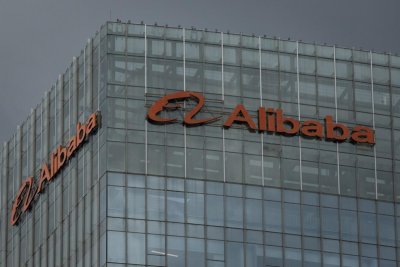
The Alibaba logo is displayed at a Alibaba office in Beijing, China, 09 June 2026. On 08 June, the Pentagon added Chinese companies Alibaba, BYD, and Baidu, among others, to a list of firms it said aid the Chinese military. Photo by JESSICA LEE / EPA
June 9 (Asia Today) — The U.S. Defense Department expanded its list of Chinese companies it says are linked to China’s military, adding about two dozen firms, including BYD, Alibaba, Baidu, WuXi AppTec and Unitree, according to U.S. media reports.
The annual list, known as the Section 1260H list of Chinese military companies, grew from last year as U.S. national security officials increased scrutiny of Beijing’s use of civilian technology to support military modernization.
The newly added companies span electric vehicles, e-commerce, cloud computing, artificial intelligence, biotechnology and robotics.
BYD is one of China’s leading electric vehicle makers. Alibaba operates e-commerce and cloud computing businesses, including in the United States. Baidu is active in internet search and artificial intelligence. WuXi AppTec is a major pharmaceutical and biotechnology services company, while Unitree is known for humanoid and quadruped robots.
The move shows the Trump administration is looking beyond semiconductors and AI chips as it assesses security risks tied to Chinese technology and industrial supply chains.
Chris McGuire, a fellow at the Council on Foreign Relations and former official at the State Department and National Security Council, said the action shows Washington is increasingly attentive to security risks from Chinese products in industries beyond semiconductors and AI.
China objected to the move.
A spokesperson for the Chinese Embassy in Washington said the Defense Department was overstretching the concept of national security and creating a discriminatory list targeting Chinese companies.
The updated list drew attention because it comes as Washington and Beijing have recently appeared to ease some trade tensions.
The United States had reportedly held back some measures against Chinese companies, including sanctions, high tariffs and cyber-related actions. An earlier version of the list expected in February was withdrawn ahead of a U.S.-China summit, according to U.S. media reports.
The summit, held in Beijing last month, focused heavily on trade issues.
Still, the Pentagon continues to view China as the United States’ main military competitor.
Craig Singleton, a senior fellow at the Foundation for Defense of Democracies, said the trade atmosphere may have improved after the summit, but Washington’s basic assessment has not changed.
He said U.S. officials still believe major Chinese civilian technology companies are connected to China’s military modernization.
Companies placed on the list are barred from doing business with the U.S. military. The designation does not automatically impose broad sanctions, but it can create reputational risk, reduce access to U.S. government-related business and increase scrutiny from investors and regulators.
The commercial effect can vary by company.
SZ DJI Technology, the Chinese drone maker placed on the list in 2022, has continued to maintain a strong position in the U.S. consumer drone market despite its designation.
The latest additions show that Washington’s concerns about China’s military-civil fusion strategy are expanding from advanced chips and AI models into broader technology and manufacturing ecosystems.
— Reported by Asia Today; translated by UPI
© Asia Today. Unauthorized reproduction or redistribution prohibited.
Original Korean report: https://www.asiatoday.co.kr/kn/view.php?key=20260609010002864