awarded

Nobel economics prize awarded to Robert Hall and Michael ⁠Woodford | Business and Economy News

The Swedish academy says the academics’ models are ‘now used by central banks and ​governments around the world’.

The ⁠2026 Nobel Prize in Economic Sciences has been awarded to US academics Robert Hall and Michael ⁠Woodford for their work on how monetary and fiscal policy can help stabilise fluctuations in the economy, according to the Royal Swedish Academy of Sciences.

The winners of the prestigious award, formally known ⁠as the Sveriges Riksbank Prize in Economic Sciences in Memory of Alfred Nobel and the final prize to be given out this year, were announced on Monday.

Recommended Stories

list of 4 itemsend of list

The two laureates developed new macroeconomic models that improve people’s ability to implement effective stabilisation policies, enabling fiscal and monetary policy measures that can reduce damaging swings in the economy.

“The laureates’ work has provided us ‌with a stable theoretical foundation for the models that are now used by central banks and governments around the world,” John Hassler, chair of the Committee for the Prize in Economic Sciences, said in a statement.

“With them, we are better equipped to deal with shocks in the economy, such as energy crises or sudden changes in how much households consume.”

During the oil crises in the 1970s, the existing Keynesian models used to determine when and how measures should be implemented to tackle recessions or other economic fluctuations stopped working. Hall and Woodford then developed new tools to understand what policy responses could be the most effective.

“Rather than basing the models on statistical links between macroeconomic variables, such as inflation, production and consumption, they chose to build them on a microeconomic foundation,” the academy said. “This encompasses an understanding of how the total mass of individual households and businesses affect the economy through their actions.”

The economics prize, first awarded ⁠in 1969, is not part of the five original awards ⁠created in the 1895 will of industrialist and dynamite inventor Alfred Nobel, but was instead established by Sweden’s central bank.

The majority of previous laureates have been from the United States. Only three women have ⁠ever won, most recently Claudia Goldin in 2023 for her work on how gender has affected pay and employment over time ⁠in the US.

Last year’s winners – Joel Mokyr, Philippe Aghion and Peter Howitt – won for ‌their work on “creative destruction” and how new technology and production methods can boost growth and living standards.

Like the other Nobel awards, the economics prize consists of a diploma, a gold medal, and a $1.2m cheque.

The Nobel prizes for medicine, physics, chemistry, literature and peace were announced last ‌week, with South African jurist Navi Pillay and Canadian writer Anne Carson among the winners.
Source link

CAS to hear Senegal appeal over AFCON title awarded to Morocco | Football

Court of Arbitration for Sport (CAS) hearing set to begin after Senegal stripped of Africa Cup of Nations title by CAF.

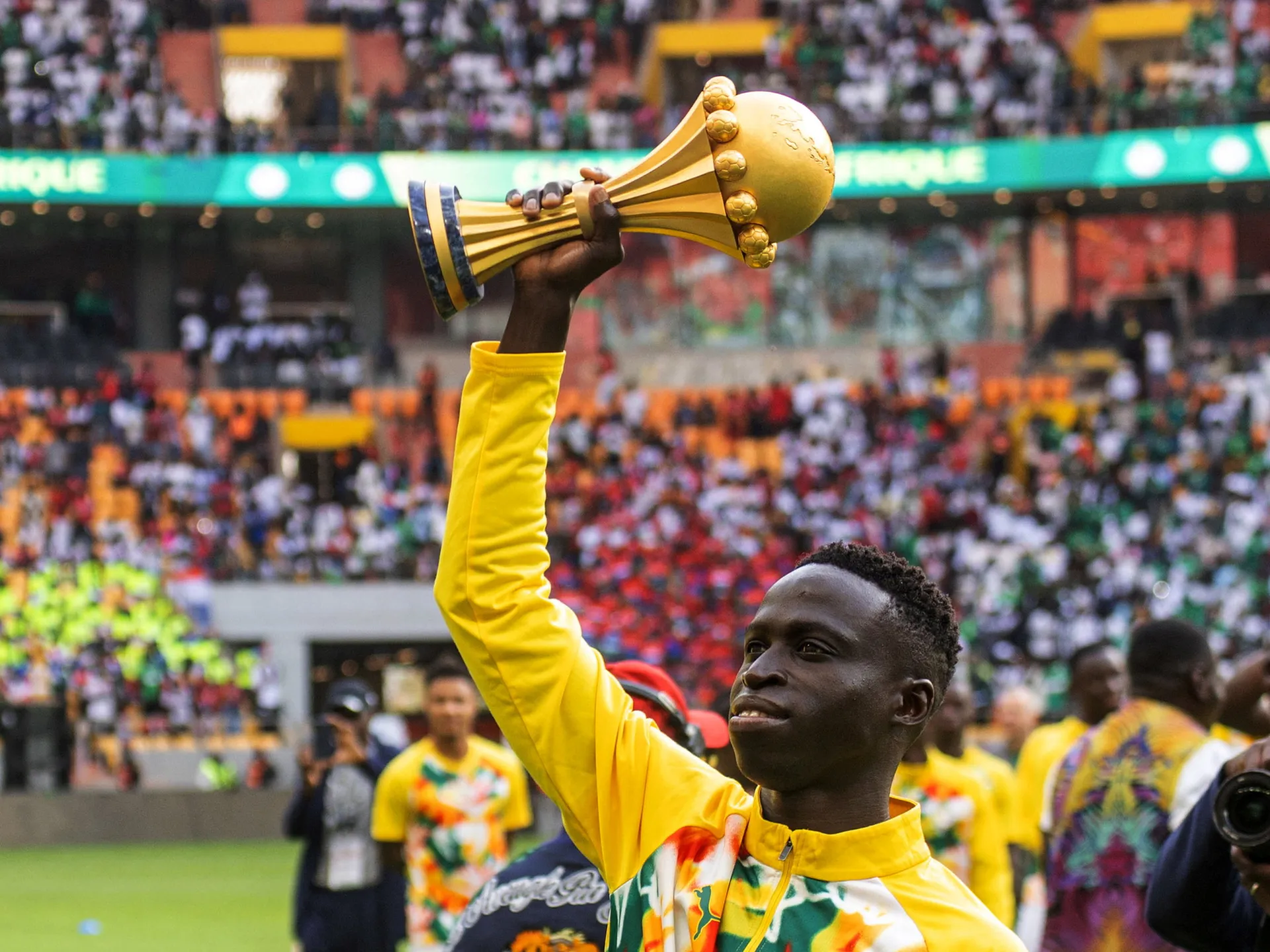
The long-running saga over the winner of this year’s Africa Cup of Nations (AFCON) title will move closer to resolution on Thursday when Senegal’s appeal, ⁠after being stripped of the title, is heard by the Court of Arbitration for Sport in Lausanne.

Senegal are contesting the Confederation of African Football’s decision to declare Morocco champions, despite Senegal beating the hosts 1-0 after extra time ⁠in January’s final in Rabat.

Recommended Stories

list of 4 itemsend of list

Senegal walked off the pitch for 14 minutes after a penalty was awarded against them late in regulation time, with several players returning to the dressing room in protest before they resumed play.

Morocco failed to convert the spot kick, sending the match into extra time, where Senegal scored the winner to secure victory.

However, they were stripped ‌of the title two months later after CAF’s Appeal Board ruled that Senegal had forfeited the match by walking off the pitch, overturning the result and awarding a 3-0 victory to Morocco.

Senegal quickly followed with an appeal to CAS, which was lodged on March 25 but is only being heard on Thursday. Senegal want to be reinstated as winners, and a panel will listen to arguments from Senegal, Morocco and CAF.

“After the hearing, the panel will start its deliberations. At this stage, CAS cannot state when a final decision will ⁠be rendered but it will not be on the date of the hearing,” CAS ⁠said in a statement.

Three-man CAS panel to hear Senegal and CAF arguments

The panel will be presided over by French civil rights expert Gerald Simon, with assistance from Italian international law professor Luigi Fumagalli and Hamburg-based lawyer and professor of law at the University of Zurich, Ulrich Haas.

They are ⁠likely to hear arguments from Senegal that the Laws of the Game determine the referee’s decisions on incidents of play are final and cannot be challenged after the ⁠fact.

Also important is an interpretation of the articles of the tournament regulations on ⁠which CAF’s Appeals Board ruled in Morocco’s favour, which state that “if, for any reason whatsoever, a team refuses to play or leaves the ground before the regular end of the match without the authorisation of the referee, it shall be considered the loser and shall be eliminated for ‌good from the current competition.”

Senegal’s lawyers are expected to argue that the articles must be interpreted strictly and that a temporary departure from the field cannot be equated with abandoning the match, while Morocco are expected to ‌argue ‌for an opposing interpretation, according to which a team that leaves the field without the referee’s authorisation must be considered the loser and definitively eliminated from the competition, even if its departure was not permanent.

The hearing takes place behind closed doors.

Qualification for AFCON 2027 has already begun, with Senegal drawing the opening game of Patrick Vieira’s tenure as coach with Mozambique on September 25, before winning 1-0 in Ethiopia on September 29.

Morocco have won both of their opening games, beating Gabon and Lesotho.

Source link