Aviation

Was the Iran war the final blow in the collapse of Spirit Airlines? | US-Israel war on Iran News

Spirit Airlines, a budget carrier in the United States, has begun winding down operations, cancelling all flights, after talks with the Trump administration to secure a $500m bailout failed. Experts say a spike in aviation fuel prices from the US-Israel war on Iran dealt the final blow to the struggling airline that pioneered the ultralow-cost carrier model.

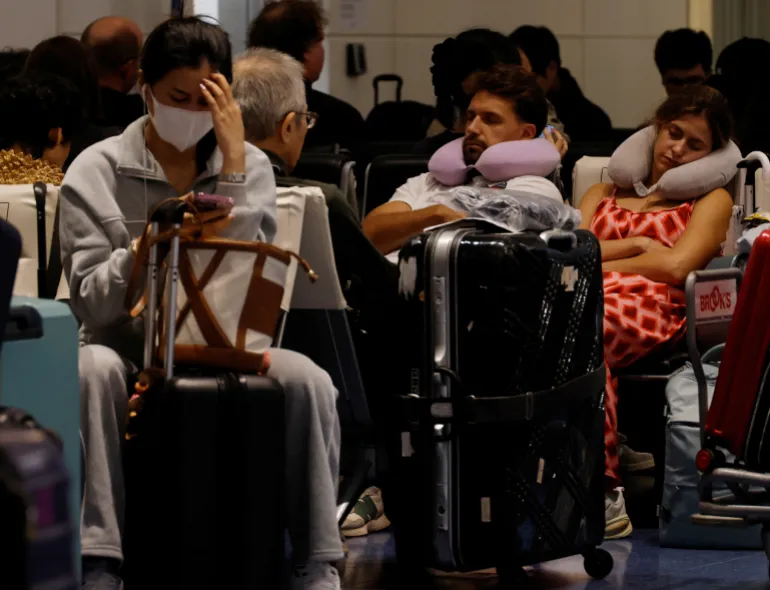
The airline’s shutdown after 34 years has left some 17,000 staff members unemployed, many passengers stranded, and raised doubts about the future of budget air travel.

Recommended Stories

list of 3 itemsend of list

How did Spirit Airlines reach this point? Did the US-Israel war on Iran deliver the final blow?

Here’s what we know:

What has Spirit Airlines said?

On Saturday, Spirit Aviation Holdings, the airline’s parent company, said the company had started to wind down operations.

“Spirit Aviation Holdings, Inc … today regretfully announced that the Company has started an orderly wind-down of operations, effective immediately. All Spirit flights have been cancelled, and Spirit Guests should not go to the airport,” the company said in a statement on Saturday.

The statement added that, despite its efforts, “the recent material increase in oil prices and other pressures on the business have significantly impacted Spirit’s financial outlook”.

Spirit Airlines, whose airfares were lower compared with other US airlines, had 4,119 domestic flights scheduled between May 1 and May 15, offering 809,638 seats, according to the latest data from Cirium, an aviation analytics firm.

The carrier’s parent firm started as a long-haul trucking company in 1964. It shifted to aviation around 1983. The carrier rebranded from Charter One Airlines to Spirit in 1992.

How did Spirit Airlines reach this point?

The airline had been struggling financially for years and had filed for bankruptcy twice – in November 2024 and then in August 2025 – due to continued losses, high debt, and intense competition from other airlines.

According to a May 2 report by the Reuters news agency, Spirit had recently reached a deal with its lenders that would have helped it emerge from its second bankruptcy by late spring or early summer.

But the war on Iran, which led to a significant increase in aviation turbine fuel (ATF) prices, added to Spirit’s financial struggles and complicated its bankruptcy exit.

Spirit’s restructuring plan assumed ATF costs of about $2.24 a gallon in 2026 and $2.14 in 2027, but prices had climbed to about $4.51 a gallon by the end of April, leaving the carrier unable to survive without new financing.

A Spirit board meeting ended without an agreement to rescue the company, a person close to the discussions told Reuters late on Friday.

US Transportation Secretary Sean Duffy told Reuters he tried to get many airlines to buy Spirit but found no takers. “What would someone buy?” Duffy asked. “If no one else wants to buy them, why would we buy them?”

US President Donald Trump also said he had tried to bail out the airline with a $500m financing package.

“If we can help them, we will, but we have to come first,” Trump told reporters. “If we could do it, we’d do it, but only if it’s a good deal.”

However, a creditor close to the deal told Reuters, “The Trump administration made an extraordinary effort to try and save Spirit, but you can’t breathe life into a corpse. Given that, the company should make its intentions clear for the sake of its customers and employees.”

Anita Mendiratta, special adviser to the UN Tourism secretary-general, noted that while war and geopolitical instability may not have caused Spirit’s collapse, they likely delivered the final blow.

“Surging fuel costs exposed the vulnerability of airlines operating on thin margins with little room for shock absorption,” she told Al Jazeera.

“Spirit’s weaknesses were already there – it had already gone through two bankruptcy filings in the two years prior; global instability simply accelerated the inevitable. In today’s aviation market, volatility is no longer an exception; it is the operating environment,” Mendiratta said.

Are other airlines also under pressure due to the Iran war?

The war on Iran has disrupted global oil and gas prices, with Brent crude rising above $111 a barrel on Friday. The high crude oil prices have also caused ATF prices to rise, affecting budget airlines badly.

Across the globe, airlines have been increasing prices to reflect the high ATF prices, and some have also reduced their flight operations.

German airline Lufthansa said last month it cancelled 20,000 flights in a bid to protect itself from the soaring ATF costs.

On Friday, leading Indian carrier Air India said it has increased fuel surcharges on all flights, adding that it will reduce 100 flights a day across its domestic and international routes.

Mendiratta noted that the aviation industry is on alert as airlines carrying high debt, facing fuel cost volatility, labour cost pressures, fleet constraints, and sustained pricing pressure remain exposed [to the war], especially those operating through a low-cost carrier model.

“What happens next is a defining test of aviation leadership. The rapid response from rival airlines to protect stranded passengers reflects an industry that understands its most valuable asset is not aircraft or market share, it is customer trust [both traveller and cargo],” she said.

“Just as importantly, how airlines support displaced employees, reassure markets, and reinforce operational stability will shape confidence in the sector’s long-term recovery,” she added.

Source link

Spirit Airlines begins ‘wind-down’, cancels all flights over fuel crisis | Aviation News

The collapse of the US-based budget carrier due to a doubling in jet fuel prices will cost thousands of jobs.

Low-cost US carrier Spirit Airlines has said that all of its flights have been cancelled as it started an “orderly wind-down of operations,” after a potential White House bailout fell through.

“Spirit Aviation Holdings, Inc., parent company of Spirit Airlines … today regretfully announced that the Company has started an orderly wind-down of operations, effective immediately. All Spirit flights have been cancelled, and Spirit Guests should not go to the airport,” the airline said in a statement in the early hours of Saturday.

Recommended Stories

list of 4 itemsend of list

Spirit had 4,119 domestic flights scheduled between May 1 and May 15, offering 809,638 seats, according to the latest data from Cirium.

The collapse of the carrier due to a doubling in jet fuel prices during the two-month-old Iran war will cost thousands of jobs. It is also a blow to US President Donald Trump, who had proposed $500m to save Spirit despite opposition from some of his closest advisers and many Republicans in Congress.

Spirit had reached a deal with its lenders that would have helped it emerge from its second bankruptcy by late spring or early summer. But those plans derailed after the US war on Iran triggered a spike in jet fuel prices, upending Spirit’s cost projections and complicating its bankruptcy exit.

A Spirit board meeting had ended without an agreement to rescue the company, a person close to the discussions told the Reuters news agency late on Friday.

“Unfortunately, despite the Company’s efforts, the recent material increase in oil prices and other pressures on the business have significantly impacted Spirit’s financial outlook,” Spirit said in a statement announcing its “orderly wind-down”.

Trump on Friday said the White House had given Spirit and its creditors a final rescue proposal, after talks hit an impasse over a $500m financing package that would have helped the airline keep operating through bankruptcy.

“If we can help them, we will, but we have to come first,” Trump told reporters. “If we could do it, we’d do it, but only if it’s a good deal.”

Spirit’s restructuring plan assumed jet fuel costs of about $2.24 a gallon in 2026 and $2.14 in 2027, but prices had climbed to about $4.51 a gallon by the end of April, leaving the carrier unable to survive without new financing.

Transportation Secretary Sean Duffy told Reuters he had tried to get many airlines to buy Spirit but found no takers. “What would someone buy?” Duffy asked. “If no one else wants to buy them, why would we buy them?”

A creditor close to the deal said, “The Trump administration made an extraordinary effort to try and save Spirit, but you can’t breathe life into a corpse. Given that, the company should make its intentions clear for the sake of its customers and employees.”

No US carrier of Spirit’s size – it accounted for 5 percent of US flights at one point – has liquidated in two decades. Spirit helped keep fares lower in markets where it competed against major carriers.

Its collapse shows how the Iran war’s fuel-price shock has exposed weaker airlines. Across the globe, airlines have been increasing prices to reflect the high cost of jet fuel and some airlines have also cut flights.

German airline Lufthansa last month said it cancelled 20,000 flights in a bid to protect itself from the soaring cost of oil.

On Friday, Indian carrier Air India also said it has increased fuel surcharges on all flights and said it will cut 100 flights a day across domestic and international routes.

Source link

Commercial flights from Tehran’s main airport resume amid cautious normalcy | US-Israel war on Iran News

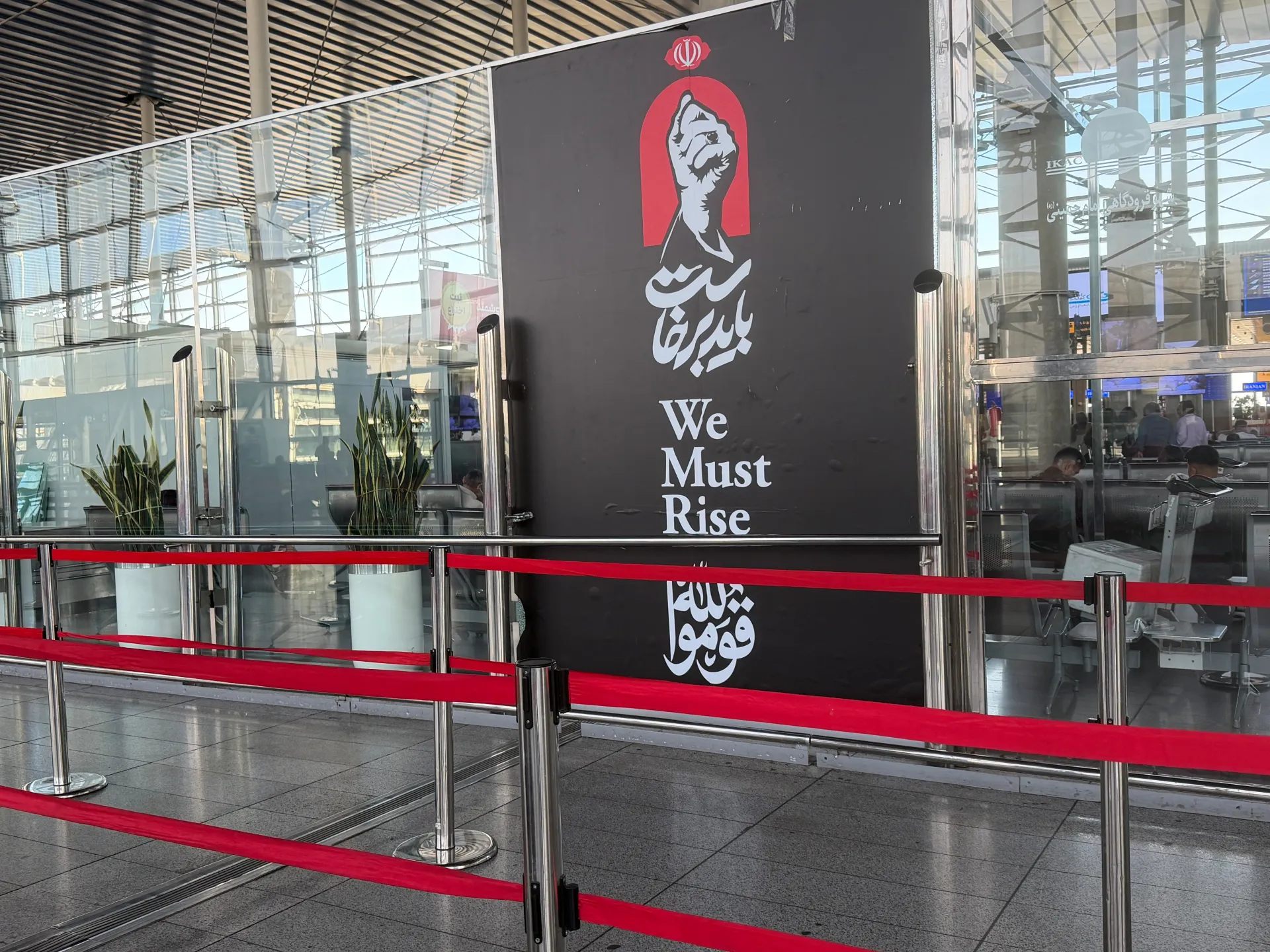
More commercial flights have been departing from Iran’s largest airport following its reopening last week.

Iranian authorities announced the resumption of flights at Imam Khomeini international airport after approximately 58 days of suspension since the launch of the US-Israel war on Iran. Flight information boards also went offline after the closure of Iran’s airspace.

Recommended Stories

list of 4 itemsend of list

For weeks, the suspension of flights stranded many travellers, disrupted businesses, and separated families.

Air traffic gradually resumed from April 25 with flights to 15 destinations operated by eight domestic airlines, covering regional and international destinations such as Medina, Istanbul, Muscat, China and Russia. Yet the number of flights is a fraction of what it was before the war.

Maryam, a passenger who planned to go to Toronto to see her daughters, told Al Jazeera: “After a lot of stress and problems, now I’ve found a ticket with an Iranian airline — flying first to Armenia with a long layover, and then on to Canada.”

Before the war, the airport was bustling with travellers and would witness 150 flights on a typical day. Now, terminals that were packed, then empty, are slowly filling up again as flights resume.

Ramin Kashef Azar, CEO of Imam Khomeini Airport City, told Al Jazeera that the return of foreign carriers, many of which have operated in the country for years, “will depend on political stability and their own risk assessments.” According to the Iranian Civil Aviation Organization, 20 aircraft have been destroyed and are no longer operational. However, the airport infrastructure has not been damaged and is approximately 95 percent ready.

These developments come after Iran’s gradual reopening of its airspace from April 19, in four phases. It encompasses transit flights followed by domestic flights, culminating in the full resumption of operations at international airports, as stated by the Iranian aviation regulator.

Foreign companies are apprehensive about returning to operate at Iranian airports amid the uncertainty surrounding the political and negotiating landscape between Tehran and Washington.

Targeting of airports

Iran’s civil aviation sector has suffered damage as a result of the war. More than 3,300 people have been killed in Iran, and thousands have been injured, in addition to widespread destruction of civilian infrastructure.

Another airport that was subject to US-Israel attacks several times was Mehrabad airport, also in Tehran. The airport mainly handles domestic flights. Located in the west of the capital, it was the official airport for international and domestic flights before the construction of Imam Khomeini airport in 2009.

In addition to Mehrabad, airports in Kashan, Tabriz, Ahvaz, Mashhad, Khoy and Urmia were also targeted. Several civilian aircraft have been damaged.

It is not the first time Mehrabad Airport has been attacked. In June 2025, it was reported that Israel targeted Mehrabad airport during the 12-day war. Iranian authorities, however, said the airport and its runways escaped damage.

The impact of the war goes beyond airports. It has affected other businesses, causing revenue losses, layoffs and operational disruptions.

Babak, a tour guide, said he and many of his colleagues lost their jobs “because there were no incoming or outgoing tours, as flights were suspended and the war was ongoing”.

Nowruz, the Persian New Year, which comes with a peak aviation season for Iranian airports, also witnessed flight suspensions and caused major disruption. According to Bijan, a travel agent, this affected tours, charter flights, and hotel bookings. He added that they are processing refunds and had to cut staffing from 20 to just two.

Airports are coming back to life, and passengers are returning, hinting at a fragile normalcy after weeks of silence. Each departure signals renewed connection with the world, even as uncertainty on the ground endures.

Source link

First US-Venezuela flight lands in Caracas after seven-year suspension | Aviation News

American Airlines has resumed flights as Donald Trump moves to rebuild ties following the abduction of Nicolas Maduro.

The first direct commercial flight between the United States and Venezuela has landed in Caracas, ending a seven-year suspension imposed by the US Department of Homeland Security over security concerns.

Flight AA3599, operated by Envoy Air, a regional subsidiary of American Airlines, departed Miami at 10:11am ET (14:11 GMT) on Thursday, five minutes ahead of schedule, according to airport data.

It arrived in the Venezuelan capital roughly three hours later and was due to return to Florida later in the day. Earlier, the airline said that a second daily flight between Miami and Caracas would start on May 21.

The return of nonstop flights comes months after a dramatic shift in US-Venezuela relations, following Washington’s January operation that led to the abduction of former President Nicolas Maduro, and marks the first direct air link between the two countries since diplomatic ties were severed in 2019. For years, travellers had used indirect routes through other Latin American hubs.

Translation: “For nearly seven years, there were no direct commercial flights between the United States and Venezuela. Under President Trump, we are changing that today. Flights between Miami and Caracas have resumed,” The US State Department posted on X. 

Coffee and arepas in the aeroplane

At Miami International Airport, American Airlines marked the occasion with a small ceremony, decorating the departure gate with Venezuelan flags and balloon displays in the country’s yellow, blue and red colours.

Passengers were served coffee and arepas, a traditional Venezuelan dish, on board the flight.

Thursday’s service was operated by an Embraer E175 regional jet with a capacity for about 75 passengers.

US Transportation Secretary Sean P Duffy said the flight signalled more than the return of an air route.

“Today is about more than just another flight, it’s a critical milestone in strengthening the United States relationship with Venezuela and unleashing economic opportunity in both countries,” Duffy added.

He added that the resumption followed extensive work by the department and praised American Airlines for restoring a route he described as vital, saying more flights are expected in the coming months.

A passengers walks down the jet bridge to board American Airlines Flight AA3599, the first direct commercial flight
A passenger walks down the jet bridge to board American Airlines Flight AA3599, the first direct commercial flight between the United States and Venezuela in seven years [Rebecca Blackwell/AP]

High ticket prices

Despite the celebratory mood, high ticket prices remain a key barrier, alongside strict US visa requirements that have left many potential travellers without the documentation needed to fly.

Recent searches on the airline’s website show return fares for early May starting at more than $1,200, before dropping to just more than $1,000 later in the month, suggesting prices may ease as services expand.

By comparison, flights via Bogota typically range from $390 to $900 round-trip, with Avianca among the main carriers.

American Airlines was the last US carrier operating in Venezuela before suspending flights in 2019, while Delta and United had already withdrawn in 2017 amid a deepening political crisis that drove millions to leave the country.

“Parents will be able to reconnect with children, grandparents with grandchildren, and families with the place they once called home,” Miami-Dade County Mayor Daniella Levine Cava said before the departure. “Miami-Dade is home to the largest Venezuelan community in the United States.”

Passengers line up to check in for a U.S.-bound commercial flight at Simon Bolivar International Airport in Maiquetia,
Passengers line up to check in for a US-bound commercial flight at Simon Bolivar International Airport in Maiquetia, Venezuela [Ariana Cubillos/AP]

Source link

‘Existential threat’ warning from European airport boss ahead of summer

Since the Straight of Hormuz was closed during the Iran War, the price of jet fuel has doubled. As a consequence, many airlines have cancelled flights. Regional airports are feeling the most strain

Europe’s smaller airports face an “existential threat”, according to the boss of the Airports Council of Europe.

Olivier Jankovec, the director general of ACI Europe, has warned that some of the continent’s smaller airports may not survive if jet fuel shortages triggered by the Middle East crisis lead to widespread route cancellations.

Since the Straight of Hormuz was closed during the Iran War, the price of jet fuel has doubled. As a consequence, many airlines have cancelled flights.

Regional airports are most exposed to airlines cutting capacity and raising fares, as demand on their routes is generally more price-sensitive than with bigger airports. This comes in the wake of the coronavirus pandemic, which has left some regional airports 30% below 2019 levels, according to Mr Jankovec.

“The current levels of jet fuel prices and the prospect of a new cost of living crisis mean that many regional airports across our continent are likely to face both a supply and demand shock. For them, this is nothing short of an existential threat,” the aviation boss told the Guardian.

READ MORE: Brits may be banned from sitting outside in the sun next month under new Spanish lawREAD MORE: Major Ryanair luggage, boarding pass and check-in rule changes

Conversely, the biggest airports in Europe have a different problem.

Heathrow, the UK’s busiest airport, delivered a stark warning about its capacity on Wednesday, as conflict in the Middle East triggered a surge in demand for connecting flights.

“Heathrow is full”, declared its chief financial officer, Sally Ding. Her comments came alongside the publication of first-quarter figures showing 18.9 million passengers passed through the airport in the opening three months of the year. That represents a 3.7% increase year-on-year.

Airspace closures stemming from the conflict in Iran led to a rise in transfer passengers. This pattern is expected to persist as geopolitical uncertainty continues, impacting one of the UK airport’s chief international competitors for worldwide connections, Dubai.

Heathrow’s trading update noted it had “temporarily absorbed demand from elsewhere”. It also warned “passenger numbers for the rest of the year are likely to be impacted whilst there is significant uncertainty in the Middle East”, as reported by City AM.

Yet as the long-running domestic saga surrounding planning permission for a third runway continues, Ding warned that Heathrow’s operating capacity meant “fewer choices and higher fares for passengers and missed opportunities for the UK economy”.

Heathrow’s £50bn proposal to increase capacity has been mired in political wrangling for years. Its blueprint for a new, 3.5-kilometre runway would elevate passenger capacity to 150m annually from 84m. With it, the airport could accommodate 756,000 flights per year, up from 480,000 currently.

“Our plan is privately financed, rigorously assessed and focused on value. With the right regulatory framework and government policy in place, we are ready to invest, grow and keep the UK connected to the world,” a statement from Heathrow said on Wednesday.

The project involves redesigning part of the M25, London’s ring road which passes close to Heathrow, by diverting it into a tunnel. For the first time in Heathrow’s history, the government examined a competing expansion proposal from another firm.

The more economical bid – costing £25bn, and put forward by the Arora Group, which runs hotels and is involved in property asset management as well as construction – would have avoided the M25 altogether. It was turned down last autumn by Transport Secretary Heidi Alexander. She selected Heathrow’s proposal, but it has faced further delays following a government decision to reassess its overarching strategy in its Airports National Policy Statement, now anticipated this summer.

Source link

Cabin crew explain real reason window blinds must stay open when planes land and take off

Passengers have been following these instructions for years, but a cabin crew member has now explained the important aircraft safety reason for keeping window blinds open during landings take offs

Have you ever wondered why cabin crew insist we keep the window blinds up when planes are taking off and landing? If you have, you’re certainly not alone – even frequent flyers are only now learning the reason behind this rule.

The explanation came to light following a video posted by traveller Quinn Kuntz. In footage filmed from her seat, she asked: “Can someone explain why European flights require the window shade to be open for landing? They are so strict about it.” Quinn concluded by pondering whether the rule applies “everywhere”, adding: “I just wanna know why.”

In response, cabin crew member Amelia Richardson was swift to provide a thorough explanation.

“Cabin crew here – lights off in hours of darkness – your eyes are adjusted to darkness in case of evacuation,” she began. “Window blinds open – danger can be seen outside and emergency crews can see in. Tray tables and bags under seats – saves critical seconds in an evacuation.”

Amelia went on with further instructions: “Emergency exits remaining clear – again saves critical seconds, emergency exits are a lifeline in an evacuation. Just remember an aircraft must be evacuated within 90 seconds. Listen to cabin crew, follow the rules. Everyone’s happy.”

A second person added: “Safety. There are no wing or rear view mirrors on a plane. It is so the passengers and crew can alert the pilot of anything untoward.”

A third concurred, writing: “In case the passengers notice something the pilot can’t or doesn’t see. Just an extra precaution.”

Meanwhile, a fourth TikTok user explained the rule has been implemented across the globe.

“Simple: if there a fire or emergency, flight crew needs to see what’s happening so they can better choose which side to evacuate passengers,” they said. “This is an international regulation. It’s worldwide they do this!”

Indeed, pilot school, BAA Training confirms this is correct in guidance on its website.

Content cannot be displayed without consent

“The first reason is your safety,” BAA advises.

“If anything happens during a take-off or landing, your eyes will already be used to the day or night light outside, thus you will be able to react more quickly.”

The firm goes on to state: “Another reason for keeping the blinds open is visibility of aircraft outside. If any problems occur with the engine or wings, the crew can see it out of those tiny round windows in a cabin.”

“If the aircraft needs to be evacuated, passengers and the whole crew is able to see which side of the aircraft is safer for evacuation.”

Source link

What the Iran War fuel crisis actually means for your holiday prices

Sparked by the Iran war and the effective closure of the Strait of Hormuz, oil is no longer flowing out of the Middle East as it did earlier this year, which is having a major impact on the aviation industry

Holidaymakers face soaring flight prices and more expensive package breaks even if they’ve already booked because of the looming shortage of jet fuel.

Sparked by the Iran War and the effective closure of the Strait of Hormuz, oil is no longer flowing out of the Middle East as it did earlier this year. Supplies of jet fuel built up by European countries have been severely depleted.

In general, some European countries hold several months’ worth of jet fuel inventory at a time, according to an IEA report released last week. “Every passing day that the Strait of Hormuz remains shut, Europe is edging closer to supply shortages,” said Amaar Khan, head of European jet fuel pricing at Argus Media. “The Strait accounts for around 40% of Europe’s jet fuel imports, but no jet fuel has passed the Strait since the war broke out.”

There are four main ways that the jet fuel shortage could impact British holidaymakers: rising flight prices, extra fees, cancelled flights and package break surcharges. We’ve explained each one below.

READ MORE: easyJet Spain and Portugal flights fuel supply ‘four weeks’ updateREAD MORE: ‘Jet fuel shortage’ update as Government ‘monitoring fuel supplies and pricing’

Rising flight prices

Jet fuel — a refined kerosene-based oil product — is airlines’ biggest cost, making up about 30% of overall expenses, according to the International Air Transport Association. And jet fuel prices have roughly doubled since the war began. Shortages could start next.

Already, a number of airlines have started bumping up the cost of tickets.

Just last week, it emerged that Virgin Atlantic had increased some flight costs with an extra £50 fuel surcharge on economy-class tickets, while premium economy fares are climbing by £180 and business class by £360.

Air France and KLM fares are also going up. They are likely to cost an additional €50, bringing the fuel surcharge to €100 (£86.98) on top of the standard fare. Meanwhile, flights to the United States, Canada and Mexico could increase by €70 (£60.89), and an economy round trip could cost an extra €10 (£8.70).

If you’ve already got your flights booked, you don’t need to worry. You are not going to be asked retrospectively to pay extra on your air fare. Once you have paid, the airline will not come after you for any more cash – unless the government hikes aviation fees, which they don’t appear poised to do.

Extra fees

Many passengers will have booked their flights months in advance, before the US and Israel attacked Iran and fuel prices started rising. Because airlines can’t bump up fares that’re already booked but for which they’re now making less money, they have started looking for other ways to make a bit of extra cash.

American Airlines has said it would hike checked baggage fees by $10 (£7.40) each for the first and second checked bags and by $150 (£111) for the third checked bag on domestic and short-haul international flights. Southwest Airlines has said it will hike checked baggage fees by $10 for the first and second bags, raising costs to $45 (£33) for the first bag and $55 (£40) for the second.

As passengers often add extra luggage just before they fly, these rises could impact passengers who booked flights before the invasion.

No major European airlines have made similar changes.

Cancelled flights

Last week, International Energy Agency Director Fatih Birol said Europe has “maybe six weeks” of remaining jet fuel supplies and said the global economy faces its “largest energy crisis.”

Many major airlines have already cancelled flights because of the fuel price rises and falling demand, and more are likely to do so.

Swedish flag carrier SAS has said it would cancel 1,000 flights in April because of high oil and jet fuel prices, after cancelling a “couple hundred” flights in March. United Airlines said that five per cent of flights would be cancelled in the second and third quarters of 2026, while Dutch airline KLM has cancelled 160 flights for the coming month.

Other airlines, such as BA, have suspended whole routes to parts of the Middle East due to the conflict, while Virgin Atlantic announced earlier this month that it would be permanently scrapping its London flight to Riyadh from April.

Under UK law, if your flight is cancelled more than 14 days before it is due to depart, you are not entitled to compensation. However, your airline does have to offer you a full refund or help you find an alternative flight.

In the latter case, it’s up to you whether to fly as soon as possible after the cancelled flight, or at a later date that suits you. Although most airlines will book you onto another of their flights to the same destination, if an alternative airline is flying there significantly sooner or other suitable modes of transport are available, then you may have the right to be booked onto that alternative transport instead. You can discuss this with your airline.

Given that airfares may be significantly higher than when you booked, opting for an alternative flight rather than taking a refund may work out in your favour.

Extra package break costs

A largely overlooked clause in package holiday terms and conditions could result in the price of a package holiday increasing by hundreds of pounds – even after you’ve already made your booking and payment.

An article by Which? drew attention to the obscure clause found within Package Travel Regulations. It reveals that UK holiday companies can impose an additional charge of up to 8% on a package holiday price, without being required to provide a free cancellation option, under three specific circumstances.

These circumstances include: a destination introducing additional taxes or other charges, a significant shift in currency exchange rates, or a rise in the price of fuel or power. Given the ongoing Middle East conflict, fuel costs have been rising noticeably, which means there’s potential for package holiday operators to invoke this rule for Brits who’ve already booked their holidays should these expenses continue climbing.

Source link

How US operation to rescue air officer from Iran unfolded | US-Israel war on Iran News

United States President Donald Trump has announced that the US military has rescued a missing American fighter jet crew member in Iran.

The Air Force officer went missing in a remote part of Iran after the downing of his F-15 jet on Friday. Its two crew members ejected from the plane. The pilot was quickly rescued by US forces, but a search had to be launched for the F-15’s weapons systems officer.

In a Truth Social post on Sunday, Trump wrote that the US had rescued the second “seriously wounded, and really brave” airman from “deep inside the mountains of Iran”. It was reported that a firefight between US and Iranian forces took place in Kohgiluyeh and Boyer-Ahmad province before the rescue. Iran has not confirmed this, however.

Here is how the complicated rescue mission unfolded:

What has Trump said about the rescue?

While the identity of the rescued airman has not been made public, Trump referred to him as “a highly respected Colonel”.

He added that the type of rescue mission that recovered him “is seldom attempted because of the danger to ‘man and equipment’”.

Trump said two raids had taken place, and the pilot was rescued in “broad daylight” during the second raid. It is unclear when precisely the pilot was rescued. The US president wrote that the rescue was “unusual, spending seven hours over Iran”.

In his post, Trump said he would talk more about the rescue mission during a news conference with the US military in the Oval Office of the White House on Monday at 1pm (17:00 GMT).

Trump wrote on Truth Social: “This brave Warrior was behind enemy lines in the treacherous mountains of Iran, being hunted down by our enemies, who were getting closer and closer by the hour, but was never truly alone because his Commander in Chief, Secretary of War, Chairman of the Joint Chiefs of Staff, and fellow Warfighters were monitoring his location 24 hours a day, and diligently planning for his rescue.”

Trump added that he had ordered dozens of aircraft carrying “lethal weapons” to be sent to retrieve the airman, who had managed to evade Iranian forces for two days.

The Iranian state media said to show fragments of a downed U.S. jet in this picture said to be taken in central Iran and released on April 3, 2026. IRIB/Handout via REUTERS THIS IMAGE HAS BEEN SUPPLIED BY A THIRD PARTY. IRAN OUT. NO COMMERCIAL OR EDITORIAL SALES IN IRAN. NO USE BBC PERSIAN. NO USE VOA PERSIAN. NO USE MANOTO. NO USE IRAN INTERNATIONAL. NO USE RADIO FARDA. REFILE - CORRECTING FROM "JETS" TO "JET" VERIFICATION: -Reuters was not able to confirm the location or date when the photos were taken. -The red stripe seen on the tail fin of the plane in the photos is consistent with the tail section of a F-15E Strike Eagle seen in file photos.
Iranian state media released on April 3, 2026, images of what they said were fragments of a downed US fighter jet found in central Iran [Handout/IRIB via Reuters]

How did the search unfold?

On Friday morning, the US confirmed that an F-15E Strike Eagle had been shot down over southern Iran. The F-15 is a tactical fighter jet used by the US Air Force that first flew in 1972. Modern variants of the jet cost more than $90m each.

State media outlets in Iran showed photos of what they said was wreckage from the F-15 and what appeared to be an ejection seat with an attached parachute.

Trump suggested that the US knew the location of the plane’s second airman and was tracking him as the rescue mission unfolded.

Iran was also racing to locate the airman. Tehran called on the public to hand over the soldier to the authorities in what appeared to be an effort to secure an American prisoner of war.

Iran’s Islamic Revolutionary Guard Corps claimed on Sunday that Iranian forces had also destroyed two C-130 aircraft and two Black Hawk helicopters during the operation to rescue the US airman in southern Isfahan province.


INTERACTIVE - F-15


What do we know about the two C-130 planes that Iran says it destroyed?

The C-130 Hercules and the newer C-130J Super Hercules variant were developed by the US weapons manufacturer Lockheed Martin. They are military transport aircraft primarily used for tactical airlifts, troop transport and medical evacuations.

The Wall Street Journal reported that each C-130 costs more than $100m.

The newspaper said in a report on Sunday that the US blew up the C-130 jets on the ground during the rescue operation, quoting an unnamed person familiar with the matter. This unnamed official did not explain how the jets were downed during the rescue operation but told the outlet that it was necessary to destroy them to ensure they did not fall into enemy hands.

Has the US lost other military assets or personnel?

Yes. This conflict has killed 13 US service members and wounded more than 300, the US military’s Central Command said, but no US soldiers have been taken prisoner by Iran.

Since the start of the war on February 28, the US has lost three F-15 fighter jets in what it said was a friendly fire incident over Kuwait. A US military refuelling aircraft also went down over Iraq last month, killing all six crew members.

According to the US military, the last US fighter jet to be shot down by enemy fire before the F-15 on Friday was an A-10 Thunderbolt II during the 2003 US invasion of Iraq.

At least one Black Hawk helicopter was hit during the initial rescue operation, US officials said, but it managed to stay airborne.

An A-10 Warthog aircraft was also hit near the Strait of Hormuz a short time after the F-15E on Friday, but its pilot was able to eject before the plane crashed and was subsequently rescued. Iranian media reported this aircraft was hit by Iran’s defence systems.

Iran has not yet confirmed that a firefight took place before the F-15 airman’s rescue. Al Jazeera’s Tohid Asadi, reporting from Tehran, said a firefight appeared to have occurred in Kohgiluyeh and Boyer-Ahmad province and nine people were reported to have been killed in “strikes” there although it was unclear if this was related to the US rescue mission.

Source link