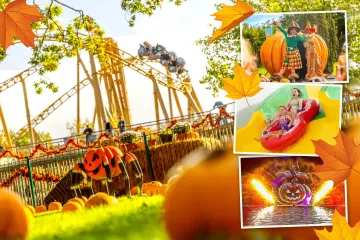
It will be the last time to see The Masked Singer Live, which ends later this year.
And they will also include firework displays as well.
October half term breaks start from £49 based on four people, or from £13pp.
Breaks start from £10 eachCredit: ButlinsThere will even be fireworks shows as wellCredit: Butlins
Mike Godolphin, Entertainment Director at Butlin’s said: “With autumn well and truly upon us, our teams are busy transforming all three resorts for Spooktober.
“As the Home of Entertainment, next month is one of our favourite moments in the Butlin’s calendar, and we want families to feel the Halloween atmosphere from the moment they arrive on their holiday.
“There’s a brilliant energy across the resorts during this time of the year and we can’t wait to welcome the tens of thousands of guests visiting us this October.”
Autumn can be a great time to escape to the coast, after the crowds and heat of summer have disappeared. We’d love to hear about your favourite seaside resorts in the UK and Europe for an off-season break – places that don’t shut up shop at the end of September, where’s there’s still lots to enjoy year-round and where you may get some late sunshine.
The best tip of the week, chosen by Tom Hall of Lonely Planetwins a £200 voucher to stay at a Coolstays property – the company has more than 3,000 worldwide. The best tips will appear in the Guardian Travel section and website.
Keep your tip to about 100 words
If you have a relevant photo, do send it in – but it’s your words we will be judgingfor the competition.
We’re sorry, but for legal reasons you must be a UK resident to enter this competition.
The competition closes on Monday 5 October at 10am BST
Your responses, which can be anonymous, are secure as the form is encrypted and only the Guardian has access to your contributions. We will only use the data you provide us for the purpose of the feature and we will delete any personal data when we no longer require it for this purpose. For alternative ways to get in touch securely please see our tips guide.
If you’re having trouble using the form click here. Read terms of service here and privacy policy here.
OUR Spotlight On column gives you the lowdown on what to see and do in your favourite holiday hotspots – as well as lesser known gems.
This week we shine a light on a Florida favourite perfect for an autumn or winter break – Boca Raton.
Most Brits won’t have heard of Boca RatonCredit: SuppliedBut the beautifully laid-back beaches make it a secret paradiseCredit: Alamy
Close to the bright lights of Miami, it offers a more relaxed experience in a stunning coastal setting.
As the Head of Travel at the Sun, I recently visited Florida’s secret paradise, with with pristine beaches, surprisingly lush parks and Japanese gardens and a laid back vibe.
Sign up for the Travel newsletter
Thank you!
But with the new Brightline that speeds holidaymakers from Orlando to Miami on Eurostar-style trains stopping off in Boca, it’s easier than ever for us Brits to discover the delights of this upscale city that offers all the best of Miami without the crowds and frenetic city pace.
With jetlag waking me early, I took a stroll on the beachfront near Spanish River Park where the sun breaks over the water painting the sky in vibrant amber and violet tones.
Settling onto the sands, I had the beach almost to myself as pelicans flew low over the gentle surf and watched as the sun rose high.
So here are some of my other tips on exploring the lesser known US city.
MUST SEE / DO
A beloved local institution, Gumbo Limbo Nature Center invites visitors to explore Boca Raton’s coastal ecosystem through nature trails, butterfly gardens and marine conservation exhibits.
It is famous for its sea turtle rehabilitation facility, where visitors can see rescued loggerhead and green sea turtles getting nursed back to health.
Visit during turtle nesting season from March through October, when the centre hosts guided night-time turtle walks and seasonal hatchling releases.
HIDDEN GEM
The Morikami Museum and Japanese Gardens offer a serene escape that feels worlds away from the buzz of the coastline.
It is easy to get to thanks to a new Eurostar-like fast trainCredit: AlamyIf you want a quieter place to explore in Florida, this is the placeCredit: Alamy
Spanning 16 acres, the gardens celebrate centuries of Japanese design through tranquil ponds, bonsai collections and carefully curated pathways.
BEST VIEW
Set between the Atlantic Ocean and the Intracoastal Waterway, the Blue Flag designated Spanish River Park offers spectacular sunrise views over the beach and equally beautiful sunset scenes along its shaded walking trails and waterfront areas.
RATED RESTAURANT
Mizner Park, an open-air shopping and dining complex, is all pink-stucco Mediterranean Revival architecture and towering palm trees.
Here, Tryst blends classic French bistro charm with an inventive American menu under Chef Daniel Dore, featuring dishes from steak frites to a vegan mushroom lasagna topped with oat milk béchamel.
For more relaxed, value dining, Tomasso’s Pizza and Subs is a neighbourhood institution, serving up New York-style slices and massive sandwiches for decades.
A couple of slices or hot sub is from £7.33.
BEST BAR
American Social in Mizner Park is a fun sports bar bringing Modern American cuisine with a twist.
It is the perfect place not only if you want to catch a game, but also for an intimate dinner or a night with friends.
Beer lovers should head to Biergarten Boca Raton.
Tucked into Royal Palm Place, this indoor/outdoor spot stocks more than 24 beers on taps and has dozens of craft bottles as well.
With live music and generous happy hour deals, it’s a relaxed place to kick back.
HOTEL PICK
Fresh from a £5.4million renovation, the Boca Raton Marriott at Boca Center is close to Mizner Park in the city centre and an ideal base for discovering the area.
There’s a gorgeous outdoor pool with plenty of shade from towering palms and you can pick up a cocktail or two at the outdoor Drift bar.
End the day at Sonrisa, with its bold Caribbean-American flavours.
Rooms feature floor-to-ceiling windows to make the most of the views and a calm, neutral palette with splashes of marine blue.
As close to the sea as you can get without setting sail, this newly renovated cottage is moored up between a little shingle beach and the village of Moelfre, with its lifeboat station, pub, fish and chip shop, cafe and parlour serving locally made ice-cream. A former fisher’s cottage, it’s decorated in nautical blues and whites, their cool tones warmed by antique chests and an inglenook fireplace once used for smoking herring. An unusual circular garden spins out towards the sea; hop over its low stone wall and you’re right on the Anglesey Coastal Path, soaking up cinematic views of Puffin Island, and Eryri beyond. Sleeps eight, two nights from £746, boltholesandhideaways.co.uk
Heronden Lodge
Eastry, Kent
Photograph: Nathan Shepherd
This doll’s house-like, red-brick cottage sits sheltered by trees in a quiet corner of the Kent countryside, 10 minutes’ drive from Sandwich and 20 from Deal. Newly spruced up, it’s restfully low-key, with buttermilk walls and wooden floors. Upstairs are two bedrooms (one a king, the other a twin) and a bathroom with a tub: perfect for dunking mud-splattered children after days at the beach or trailing along footpaths. Downstairs, there’s a simple country kitchen, a double-windowed dining room and a sitting room with an open fireplace. Walks lead straight into the surrounding farmland and to the village pub, 20 minutes’ away. There are also two farm shops within 10 minutes’ drive. Sleeps four, two nights from £472, keeperscottages.co.uk
Ty Bach
Beulah, Powys
Photograph: Kayleigh Doyle
Mid Wales is at its moody best in the autumn, the hillsides glowing auburn beneath squally skies. If your walking boots are calling, this recently launched holiday cottage just north of Llanwrtyd Wells is a good base for exploring the trails of the Cambrian Mountains or the Bannau Brycheiniog (Brecon Beacons). The smaller of two cottages on a site that was once a busy village school, it had been empty for more than three decades when the current owners took it on. It took them eight years to restore it, and now it’s a vision of flagstone-floored, putty-walled, slate-roofed comfort, cosied up with a plush raspberry sofa and copper kitchen appliances. This is a place for being rather than doing. Add-ons range from gourmet grazing boards to massage treatments. Sleeps four, two nights from £260, tosholidayhomes.co.uk
Basecamp North Lakes
Troutbeck, Lake District
Photograph: Ruth Burgess
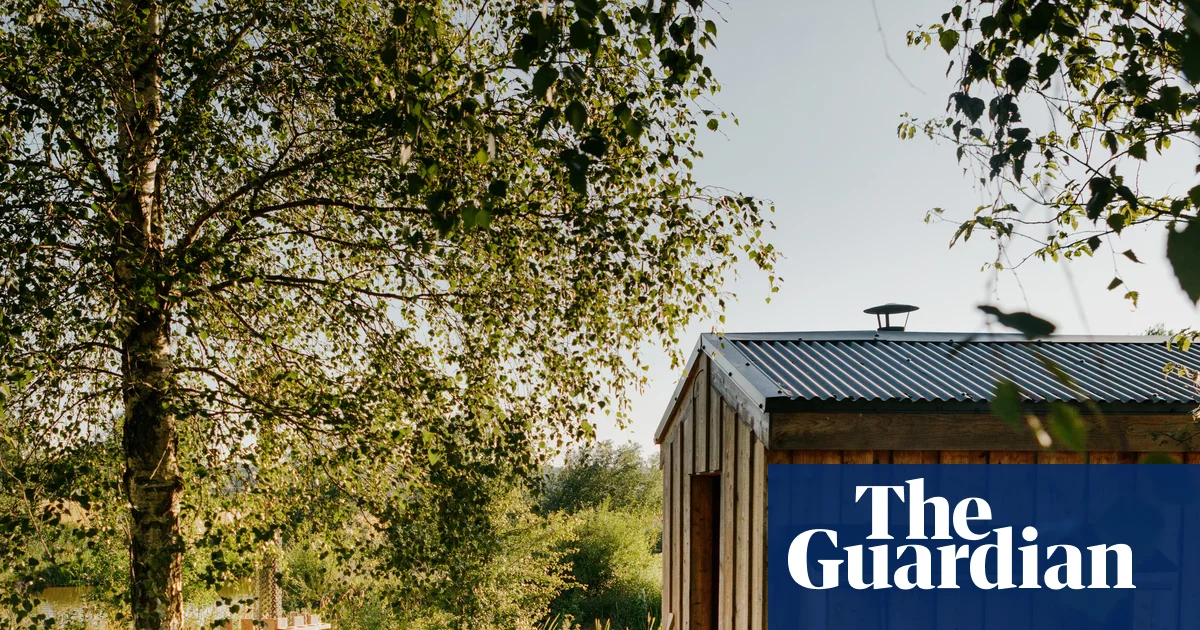
A few miles west of Penrith, this farm shop, cafe, community garden and wetland restoration site juggles more plates than a Barcelona tapas bar on a Saturday night. It’s also home to a charitable enterprise, Alpacaly Ever After, which rescues llamas and alpacas and offers meets, walks and even camping experiences with them, accessible to all. This summer it added one more item to the menu, launching seven smart new cabins beside the site’s lake. Kitted out with glossy green-tiled shower rooms, galley kitchens, wood-burning stoves and private outdoor baths, they each have one bedroom but can sleep two more on a sofa bed in the lounge. Sleeps four, two nights from £300, basecampnorthlakes.co.uk
Peatlands Retreat
Ballybogey, County Antrim
Photograph: Gareth Andrews
Sitting in the countryside between Ballymoney and Portrush, the two restful shepherds’ huts here come with en suite shower rooms and king-size beds. You’re within easy reach of Old Bushmills Distillery, the Giant’s Causeway, Dunluce Castle and a string of some of the most stunning sandy beaches in the UK, but many guests don’t venture beyond the site’s gardens, meadow and woodland, staying to spot resident hares and light wood-burning stoves. The owners also run an artisan micro-bakery on site; Saturday sourdough workshops can be booked (£90pp), bakery breakfasts can be delivered to your door (£16pp) and twice a week there’s a hyper-local pizza-to-hut delivery service (£15 each). Sleeps two, two nights from £320 (discounts for solo stays), peatlandscausewaycoast.com
Pippin Cottage
Bude, Cornwall
Run by a former Vogue producer, her chef partner and their farming family, Pippin is one of three cottages set on a working orchard outside Bude. Mixing heirloom pieces with Studio Ore taps and Hay lighting, it’s a lesson in understated, soulful style. Works by local artists cheer the walls (many are for sale) and in the kitchen you’ll find apple juice pressed straight from the orchard’s trees. This autumn, the site has opened a new custom-built sauna and cold plunge, and guests can book add-on wellness experiences such as yoga and sauna sessions that end with hot cocoa around a fire pit. Sleeps four, two nights from £256, cannorchard.com
Montagu Cottage
Drumlanrig, Dumfries and Galloway
Photograph: Alix McIntosh Photography
Built in the 19th-century as the laundry for the Queensberry estate, Montagu Cottage has been scrubbed up for modern-day guests. A peppermint cream colour scheme cosies up its lofty living area and three bedrooms, there’s a clawfoot bath for post-hike soaks and a double-aspect wood burner blazes in the cottage’s heart. Drumlanrig Castle is easily reached on foot (guests get free access to the gardens and adventure playground until the end of October); spectacular woodland and valley walks lead out from the door; and you’re close to the village of Thornhill for pubs, bakeries, shops, cafes and, if you time it right, a live gig or film screening at the Old School. Sleeps six, three nights from £750, drumlanrigcastle.co.uk
Molly’s Cabin
Sutton Bonington, Nottinghamshire
Tucked into the field-woven gap between Nottingham and Leicester, beneath the approach to East Midlands airport, Bonington Farm’s four distinctive holiday cottages include a blackened timber cabin with sociable, dorm-style bedrooms, a circular grain store, a pretty brick farmhouse and a corrugated former hay barn. The latter, Molly’s Cabin, is a gallery-walled, salvage-speckled hideaway that’s about to undergo a gentle refurb. Single-night Sunday stays include a private movie night in the farm’s cute grain silo cinema. Or, stay for the whole weekend and go leaf-crunching along the trails of The Outwoods, a 110-acre woodland around 20 minutes’ drive away. Sleeps two, one nightfrom £200, boningtonfarm.com
Fjord
Ullapool, the Highlands
Photograph: Lukas Rambousek
A minimalist counterpoint to the rugged maximalist scenery beyond, Fjord is one half of Corylus Retreats, the twin self-catering apartments opened just outside Ullapool in May. Conceived and run by the team behind nearby Ecotone Cabins, it was designed sustainably with stripped-back timber walls, and floor-to-ceiling windows maximise natural light and have views of neighbouring Loch Broom. On clement days, the pretty harbour and restaurants of Ullapool are easily reached, and there are craggy hikes around Assynt, Coigach and the Summer Isles. If it rains, hunker down inside, enjoying the luxury of underfloor heating or curling up on the covered deck to watch scudding clouds. Sleeps four, three nights from £661, premiercottages.co.uk
Hafod Gwyllt
Cwmystwyth, Ceredigion
Photograph: Lou Archell
Its name translates as “wild summer dwelling” but this renovated cottage deep in the Cambrian mountains is equally good for an autumn escape. On the Hafod Estate, deep in the Ystwyth valley, it has no neighbours besides ponies, and has easy access to hiking and wild swimming. Newly available as a holiday rental, it’s stylishly understated inside, with whitewashed walls, slate and wood floors and a collection of ruffled lampshades, tapestry blankets and old pine dressers in soothingly subdued shades. Outside, there’s a wood-fired hot tub with rugged mountain views and the owners can arrange dark skies photography sessions or visits to local potters. Sleeps four, three nights from £690, sandandstoneescapes.com
Cae’n y Bwlch
Talsarnau, Eryri (Snowdonia)
Photograph: Polly Lovegrove
Getting away from it all is a given at this newly launched cottage in a secluded mountain setting north-east of Harlech. Owned by a ceramicist and an artist, its slate floors and limewashed walls are warmed by glowing fires and a colourful collection of antique dressers, jaunty art, textiles and carved wooden love spoons. While you could drive down the hillside for a windswept walk along the beach at Black Rock Sands, or to explore the legacy of Clough Williams-Ellis at Portmeirion and Plas Brondanw, it would also be tempting to arrive fully supplied and squirrel yourselves away, soaking up the views or hiking straight out into the rugged wilds of Eryri national park. Sleeps six, three nights from £509, underthethatch.co.uk
Riders Lodge
Ballycastle, County Antrim
Stay Lagom is a small estate set around a Georgian rectory on the fringes of Ballycastle. With bike hire on site and a new programme of add-on wellness experiences (think yoga and seaside saunas), it’s popular with visitors coming to hike, surf or cycle the Causeway Coast. Hotel-style bedrooms and boutique dorms can be booked and there are two self-catering cottages, including Riders Lodge, where a sofa-bed stretches capacity to six. Popular with families and small groups of friends, it’s a sociable space with surfboards and bikes suspended on the walls, its own courtyard hot tub and a stash of board games for evenings around the wood burner. Sleeps six, two nights from £524, staylagom.com
Hoolet Bothy
Beauly, the Highlands
If Mrs Tiggy-Winkle retrained as an architect, she might come up with something like Hoolet Bothy. A remote, off-grid farm cottage in the hills above Beauly, 12 miles west of Inverness, it’s the epitome of cosy, with timber-panelled walls, a log-burning stove, a double bed tucked into the eaves and a wood-fired Rayburn for cooking and supplying hot water to a small cast iron bath. Guests have access to a fridge and a charging point down at the farm, three minutes’ walk away, and a cool box is supplied for essentials, but there’s no electricity on site so hunker down for days of walking among deer-speckled hills and red kite-dotted skies, and evenings spent storytelling by candlelight. Sleeps two, three nights from £477, airbnb.co.uk
Labour in Vain Cottage
West Bexington, Dorset
Photograph: National Trust
Set back from the 18-mile swoosh of shingle along Chesil Beach, this semi-detached rental (there’s another next door for holidaying apart together) has been newly renovated by the National Trust. Its name, like the lane beside it, is thought to refer to a year of crop failures in the middle ages – but there won’t be much labouring, in vain or otherwise, while staying here. Hike a stretch of the South West Coast Path, go swimming or fossil-hunting, watch the skies for migratory brent geese and head into nearby Bridport for shops, cafes and pubs. As well as a snug ground-floor lounge, the attic has been converted into a games room with a TV, telescope and space to spread out jigsaws or toys. Sleeps four, two nights from £561, nationaltrust.org.uk
Thornfalcon Winery
Taunton, Somerset
Photograph: Felicity Millward
One of two wooden cabins on a working vineyard (there’s also a more spacious barn conversion suitable for families), the Vine Hut blends rustic timber walls with apple green paintwork and a red gingham sofa to give a cheery, gingerbread cottage feel. It comes with its own outdoor copper bathtub and firepit, plus access to the neighbouring swimming lake and Finnish sauna (pictured). Earlier this year the owners of Thornfalcon renovated a barn on site and have launched a wine school there, plus a series of monthly supper clubs, pairing the vineyard’s wines and juices with seasonal menus; October’s is a culinary caper through the hedgerows, fields and waves via pheasant, hake, mussels, squash, radicchio, puntarelle and quince (from £65pp). Sleeps two, two nights from £340, thornfalcon.com
Prices are for October-November and were correct at time of publication
From the chequerboard restaurant chairs to the disco ball-glittered bar and leopard print-cushioned bedrooms, this 41-bedroom hotel has more than a hint of Alice’s Adventures in Wonderland about it. The 2026 winner of Visit England’s gold award for best small hotel, the Tempus recently opened eight wooden cabins overlooking the estate’s lake, and runs stargazing breaks in partnership with nearby Kielder Observatory. This month sees the launch of wellness experiences, combining gentle yoga and sound baths, while foraging workshops celebrate the estate’s wild bounty. Alnwick, Bamburgh and kipper-smoking Craster are close by. Doubles from £121 B&B, thetempus.co.uk
The Old Bridge Inn
Aviemore, the Cairngorms
Photograph: Rupert Shanks
You can walk, cycle, swim or kayak straight from the door of this pub and bunkhouse on the banks of the River Spey in outdoorsy Aviemore. This mellow gastropub serves smoked haddock chowder and Caribbean lamb curry pies along with Cairngorm Brewery’s ales – and you’re likely to catch some live folk music too. Fresh from a recent revamp, its seven vintage-inspired bedrooms are decorated in autumnal shades of gold, green, rust and teal. Ranging from simple dorms to en suite doubles and family rooms, they come with access to a shared kitchen and dining room for DIY dinners and breakfasts. Family rooms for up to fivefrom £80 room-only, oldbridgeinn.co.uk
The Black Horse
Amberley, Sussex
Photograph: Dave Watts
Food is the big draw at this new pub with rooms in the South Downs. Run by farm-to-fork restaurateurs the Gladwin brothers, the 12-bedroom inn is their first venture outside London, and their first with accommodation. One thing they are deeply familiar with is local producers – not least their own family. Beef comes from their farm, wines from their vineyard, Nutbourne, and some of the pub’s artwork has been painted by family matriarch Bridget. Stay over and you can wake to breakfasts of homemade brioche with just-laid eggs, farmhouse sausages or trout gravadlax. Stroll around the village, with its castle hotel and pottery, or hike over to Arundel then catch a train back to Amberley. Doubles from £125 B&B, blackhorse-pub.com
The Abergwaun
Fishguard, Pembrokeshire
Pembrokeshire is home to spectacular beaches, but if an autumn storm blows in, it’s great to have galleries, cafes, pubs and cinemas where you can take cover. That’s where Fishguard comes in. This small harbour town has quietly blossomed over the last couple of years. The latest opening is the Abergwaun, a bistro with rooms launched in July by the folk behind the nearby Red Onion cafe. Feast on locally line-caught seabass with kelp beurre blanc, then drift off to sleep in one of five smart, latte-coloured bedrooms. The next day, take in a pottery workshop at Tŷ Clai, hike along the Pembrokeshire coast path for a Sunday roast at the Sailor’s Safety, or catch a gig at Ffwrn. Doubles from £140 B&B, theabergwaun.co.uk
The Lister Arms
Malham, Yorkshire Dales
Photograph: Jo Ritchie/The Guardian
Malham is one of the Yorkshire Dales’ great hiking hubs, with Malham Tarn, the amphitheatrical cliffs of Malham Cove, and Janet’s Foss and Gordale Scar waterfalls within easy reach – and staying in the village became a little easier this summer with the opening of Lister Farmhouse. Its 13 bedrooms pair smart taupe, olive and blueberry fabrics with warm wood and leather. Part of the expanded Lister Arms, which includes rooms at the inn itself and at a nearby barn conversion, the new farmhouse bedrooms are two minutes’ walk away, beside sister pub the Buck Inn. For breakfast, stroll across a packhorse bridge to the pub. Doubles from £135 B&B, listerarms.co.uk
The Great Decoy
Hurstbourne Tarrant, Hampshire
Photograph: Dave Watts
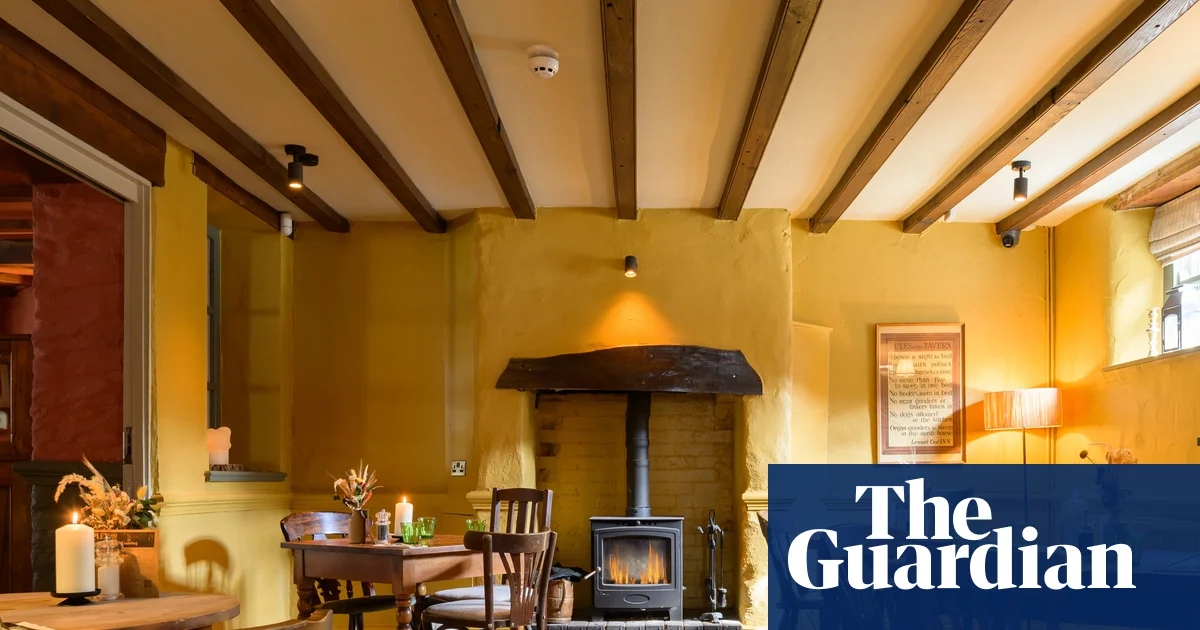
Formerly the George & Dragon, when this Test valley pub with rooms opened in June, its name was changed to the Great Decoy in a nod to the area’s second world war history, when the surrounding countryside was used as part of a network of decoy sites to draw enemy bombers away from strategic targets. These days, a tempting mix of pub bangers (venison steak frites, wood-fired pizzas), plump-pillowed bedrooms and affordable rates is luring a more peaceful crowd. The pub is a low-beamed, candlelit haven and its eight bedrooms mix antiques with bright modern art and jauntily striped, scalloped headboards. Doubles from £90 B&B, thegreatdecoy.co.uk
The Riverside Inn
Ross-on-Wye, Herefordshire
It was in Ross-on-Wye in the late 18th century that the artist and writer Rev William Gilpin set the blueprint for British tourism. Popularising the picturesque, he encouraged travellers to explore the local landscape for pleasure, helping to establish the idea of the British scenic escape (albeit infamously suggesting that “a mallet judiciously used” might improve the ruined charm of Tintern Abbey). More than two centuries later, five elegant new bedrooms have just opened at the Riverside Inn, giving modern-day visitors a suitably comfortable base from which to explore the area’s antiques and salvage shops, and stroll the leafy riverside pathways around Symonds Yat. Named after Charlie Mackesy characters, the rooms are decorated with finds from Baileys Home Store and other local businesses. Doubles from £180 B&B, riversideinn-wyestreet.com
The William Cecil
Stamford, Lincolnshire
On the edge of the Burghley estate, along one of Stamford’s cute-as-a-bonnet Georgian streets, this treasured hotel underwent a major renovation two years ago. Named after Lord William Cecil, chief advisor to Elizabeth I, the 18th-century building is home to 26 bedrooms decorated in Bridgerton-meets-Babington chic, all chalky pink and sage green stripes, ginghams, velvets and chintz. The latest addition is Wild Floral, a botanical-inspired room launched this summer in collaboration with Lincolnshire designer Sophie Allport. Head out to explore the copper-flecked parkland of Burghley House, then return for pheasant kiev and blackberry tart at Milly’s, the in-house bistro. Doubles from £155 B&B, thewilliamcecil.co.uk
Corsham House
Corsham, Wiltshire
Photograph: Dave Watts
It was no surprise that Corsham was chosen as a backdrop for the recent TV dramatisation of Jilly Cooper’s Rivals – the market town is a primetime destination. Wild peacocks roam its Georgian streets, a “secret” garden unwinds behind stately Corsham Court – home to one of Wiltshire’s finest private art collections – and independent shops and cafes rule. In the centre of it all is Corsham House, a new brasserie and bottle shop with rooms that opened in July. Once a bank, it’s now profiting from the town’s “Bath in miniature” credentials, serving its signature Corsham chips with chicken salt alongside fat rump cap steaks, and putting guests up in 11 small but daintily designed bedrooms painted in shades of rose, damson and beech. Doubles from £111 room-only, corshamhouse.com
The Copley Arms
Hessenford, Cornwall
Just off the A387, between Plymouth and Looe, this riverside pub with rooms is worth detouring off the beaten Cornish track for. Recently taken over by the couple behind Lydford’s award-winning Castle Inn, its 17th-century core has been elegantly refurbished. Fill up on fish tacos or the catch of the day, then head upstairs, or into the cottage just behind the inn, to slumber in one of eight earthily coloured, softly lit bedrooms (the cottage rooms are the quietest). The following morning, wake to a full Cornish before hiking a loop through the woods of the Seaton Valley or strolling a section of the South West coast path over to Looe. Doubles from £100 B&B (two nights for £160 from Sept-April), copleyarms.co.uk
The Swallow Falls Inn
Betws-y-Coed, Eryri (Snowdonia)
Photograph: Tinman Photography
Just across the road from its namesake waterfall, this former coaching inn reopened last year after a major overhaul, offering visitors a comfortable and affordable base for exploring Eryri national park. Its 38 bedrooms are painted in warm, muted shades and bookended by floral wallpapers, tongue-and-groove panelling and bright, metro-tiled bathrooms. Family rooms come with sturdy wooden bunk beds and, downstairs, you can order lasagne or sausage and mash in a space framed by fringed lampshades, floral curtains and mossy green paintwork. From the inn, you can follow a riverside trail into the village of Betws-y-Coed or soak up the autumn colours on one of the waymarked paths in the nearby Gwydir forest park. Doubles from £76 B&B, inncollectiongroup.com
The Crown
Bildeston, Suffolk
Photograph: Lucy Toms
Estate-to-plate dining is the cornerstone of this sunshine-hued Tudor inn between Bury St Edmunds and Ipswich. One of several Suffolk pubs and hotels owned by the Nedging Hall estate, who completed a sympathetic makeover this spring, it has 13 smartly understated new bedrooms. It’s fully plugged into the estate’s homegrown supply chain; the owners also operate a butchery, kitchen garden and East Anglia’s oldest brewery, Mauldons (for which they grow malt barley). Head out on a gentle three-mile loop walk to neighbouring Chelsworth, then take a seat by the dining room’s open fire to feast on treacle-cured pork ribeye with garlic croquettes, and deliciously wibbly Basque cheesecake. Doubles from £195 B&B, thebildestoncrown.com
The Customs House
Bowling, West Dunbartonshire
Photograph: Iain Masterton/Alamy
A hop, skip and jump (or 30-minute train ride) north-west of Glasgow, this stylish new hotel sits at the western end of the Forth and Clyde canal. Well-placed for towpath walks and cycles, it’s a grand reimagining of what was built in 1790 as the customs house for Bowling harbour. There are seven tweed-hued bedrooms in the main building, each with a view of the water and each named after a different cargo, and a floating lodge suite was added this summer, along with a sauna and cold plunge. When the restaurant opens in a neighbouring building next year, it will operate as a full-service hotel but, for now, staff are only on site during the day; evening arrivals are self check-in and continental breakfasts self-serve. Doubles from £120 B&B, thecustomshousebowling.co.uk
Le Strange Arms
Old Hunstanton, Norfolk
Photograph: Matt Keal Photography
Close to the RSPB reserve at Snettisham and the nature reserve at Holme Dunes, this stretch of north Norfolk coastline is a prime destination for spotting waders and waterfowl as they stop to rest on their way south, and is similarly restorative for humans. Follow a day of beach walks and sky-gazing with dinner at newly renovated gastropub the Ancient Mariner – menu highlights include Barsham’s beer-battered fish and chips, and cheeseboards ripe with local favourites Norfolk Dapple and Binham Blue – before walking across to sister hotel Le Strange Arms to sleep. Its more affordable standard rooms have yet to be updated, but recently renovated self-catering lodges and apartments put a modish mustard and navy spin on seaside chic. Doubles from £91 room-only, lestrangearms.co.uk
Wild Duck
Ewen, the Cotswolds
Photograph: Chris Terry
Open fires? A scene-stealing, carved wood bar? Plates of buttery chicken and chips? Double Diamond ale on tap? If you were Pinterest-boarding the fantasy Cotswolds pub after a yomp through the fields (or along the river – the Thames Path starts 10 minutes’ drive away), it would be something like the Wild Duck. Just south of Cirencester, this 16th-century gardeners’ cottage turned coaching inn has been stylishly overhauled by local hospitality luminaries Sam and Georgie Pearman. Reopened in March, it now has five bedrooms above the pub and 14 others in a new wing, each decorated with heritage wallpapers, Edward Bulmer paints, antique finds and custom-designed rugs. Doubles from £150 B&B, countrycreatures.com
Prices are for October-November and were correct at time of publication
JANE Austen knew what she was doing when she wrote her books in atmospheric locations.
And with a new movie based on her novel Sense & Sensibility coming out this weekend, the locations in the film are the perfect destination for a staycation.
The new Sense & Sensibility film used Dartmoor for several scenes – and having been hundreds of times I know the National Park very wellCredit: Cyann FieldingThe new film featuring Daisy Edgar-Jones is believed to have filmed in Princetown and TavistockCredit: YouTubeThey even shot a scene at Ditsworthy Warren House – which was also used in War HorseCredit: YouTubeThe National Park is around nine times the size of the City of ParisCredit: YouTube
I have visited Dartmoor National Park more times than I can count, including the spots used in the film – and I stand by that it is the best staycation spot in England.
The National Park spans 368 square miles and to put that into perspective, its around nine times the size of the City of Paris.
Sign up for the Travel newsletter
Thank you!
In fact, Dartmoor is so huge you could spend a whole week exploring it and you could still come back again and see new things.
But you won’t see skyscrapers and massive roads here – instead, rolling hills meet meandering rivers with winding country roads running alongside them.
The new Sense & Sensibility film starring Daisy Edgar-Jones as Elinor Dashwood and Esmé Creed-Miles as Marianne Dashwood, used the rugged and windswept landscapes of Dartmoor extensively to film scenes of the movie.
One location used was Gutter Tor – a large granite rock pile that makes for the ideal walk.
There is a small car park not too far away and after exploring the tor, head to Ditsworthy Warren House, just south of the tor, which was also used in film and it already featured in Steven Spielberg‘s film War Horse.
As a child and still now as an adult, I love searching for letterboxes on Dartmoor – a traditional hobby box with a rubber stamp inside and a visitor book.
Across the moors there are loads of places to explore, including Dartmeet where you can waddle through the riverCredit: Alamy
Obviously some are harder to find than others and while I haven’t found one at Gutter Tor, there are three officials ones in the area.
It is a great activity for kids, like the ultimate hide and seek.
You will usually find them in the crevices of the granite rocks, or even under some that are light enough to move.
Another spot the new blockbuster used as a filming spot was Princetown, which is one of the National Park’s villages.
The small village is home to the famous Dartmoor Prison, made entirely out of granite.
Many myths and folklore about Dartmoor originate at this prison and are usually about escaped prisoners.
I’d really recommend heading to the Dartmoor Prison Museum to learn more about the 200-year-old building.
And if you want to hear more about the folklore, book onto a Heart of Dartmoor Guided Walk, based in Princetown.
Gutter Tor is another spot used for filming – if heading on a walk to the Tor, make sure to look out for a letterboxCredit: AlamyThey aren’t regular letterboxes, but instead ones with a stamp in to say you were herein the guestbook.Credit: Alamy
For half a day (£40pp) or a full-day (£70pp) visitors head off on walks across open moorland and tracks with a guide who will share local folklore, history and hidden features.
Pop into Dartmoor Brewery’s shop as well and pick up some of their famous Jail Ales which have won numerous awards over the past few years.
The ales all come from the brewerynext door, which is England‘s highest brewery at 446.5 metres above sea level.
If you want to sit and enjoy a pint in a pub, then pop into the Plume of Feathers or the Prince of Wales.
The final Dartmoor filming spot was Tavistock – a historic market town on the edge of the National Park.
Known as the original home of the cream tea, it is well worth spending a day exploring.
The World Heritage status town is home to loads of independent shops, a famous pannier market and an award-winning farmers market.
The town has a heap of restaurants, pubs and cafes as well and if you want to extend your stay then book into the Cornish Arms for a night, costing from £124 per night.
Across the moors there are loads of award-winning pubs tooCredit: AlamyAnd you might see the famous Dartmoor poniesCredit: Alamy
Dartmoor has more to explore than just these filming spots though…
One of the most popular spots to visit – with good reason – is Haytor.
The towering tor at the edge of the moors provides the ideal walk for those who enjoy being outside but don’t want anything too rigorous.
By Haytor is also The Moorland Hotel, with stunning gardens and a large restaurant serving delicious comfort food.
Staying here is the perfect base to explore the National Park and what makes it even better is that it costs from just £80 per night – so £40 per person per night, with breakfast included.
And across the moors you will find more than 70 pubs in total, many of which have won awards for either their drinks or food.
For example, head to The Chagford Inn, which is recognised as a leading West Country gastropub and focuses on farm-to-table menus.
Tavistock was also used for filmingCredit: AlamyThe bustling town has lots of coffee shops as well as top restaurantsCredit: Alamy
Also in Chagford, drop into the Three Crowns which is the Gold Winner for Pub of the Year at the Visit Devon Tourism Awards and a Devon Life Food and Drink Awards finalist.
Another fun family spot – that is free to visit – is Dartmeet.
Here you can go for a dip in the river, head over a traditional clapper bridge and venture across giant stepping stones that span the river.
If all of this wasn’t enough, Dartmoor is actually the only place in England you can wild camp for free.
So, get your tent out and you’ll have free accommodation too.
I love Loch Lomond in autumn. I’d start with a walk around Balmaha village and a stretch of the West Highland Way, pretending I’m there for the scenery rather than earning the right to eat something massive afterwards. Autumn is when it looks best: orange hills, cold air, dramatic clouds and the constant Scottish gamble of whether you’ll get sunshine, sideways rain, or both within 10 minutes. I finish, if I’m not driving, with a wee dram to properly round things off. Pete
Cornwall’s wild autumn seas
The coastal path from Godrevy. Photograph: Peter Lane/Alamy
The rough beauty of Cornwall’s sea views appeals to me. A great autumn day involves walking along the staggered cliff edges between Godrevy and Portreath. The isolated nature of the coastal paths makes me feel as if the sea is singing just for me, while below the waves go wild, waiting to be admired. On this walk, you will be rewarded with the most breathtaking views, lone benches and burnt orange sunsets. Oliwia
A hydro-powered house in Northumberland
Cragside was a technological marvel of the 19th century, with hydroelectric power and hydraulic gadgets. Photograph: Jonathan Ayres/Alamy
When I first visited the National Trust’s Cragside in Northumberland, a staff member at the entrance made the bold claim that it was “the best place in England”. In autumn you can really see their point. The estate’s 1,000 acres are covered with a huge variety of trees that transform the landscape into a mixture of reds, oranges and deep greens, contrasting perfectly with the often misty Northumberland weather. It’s a perfect autumn day trip for woodland walks, possibly stopping for a picnic at one of the many lakes or gardens, and visiting the extraordinary hydro-powered Victorian house with its pioneering gadgets. Everly
Profile
Readers’ tips: send a tip for a chance to win a £200 voucher for a Coolstays break
Show
Guardian Travel readers’ tips
Every week we ask our readers for recommendations from their travels. A selection of tips will be featured online and may appear in print. To enter the latest competition visit the readers’ tips homepage
–
– back sections make it manageable without losing the drama. Bonita Philp
Deep in the forest in the Scottish Borders
Lichen on fir trees in the Glentress Forest. Photograph: Tom Richardson Scotland/Alamy
Glentress Forest in the Scottish Borders is hard to beat on a crisp autumn day. Start with a walk or mountain-bike ride through the forest, when the trails are surrounded by copper, red and gold, and climb high enough for brilliant views across the Tweed valley. Afterwards, warm up with coffee and something sweet at the cafe before heading into nearby Peebles for a wander along the river and around its independent shops. It feels properly remote despite being less than an hour from Edinburgh. And, whether you’re cycling or walking, autumn is when the forest is at its most spectacular. Remi Lapeyre
Birmingham’s secret oasis
Winterbourne Gardens. Photograph: Michael Kemp/Alamy
Winterbourne House and Garden at Birmingham University is a wonderful little oasis in Edgbaston, just outside the city centre. A beautiful Arts and Crafts style house, set in stunning gardens, it is a lovely place for a wander and is especially beautiful on a sunny day in early autumn when everything is golden. See herons at the reservoir, talk to friendly robins by the walled garden and browse the bookshop. Have coffee there and then head into nearby Harborne for lunch or dinner. Rachel
Rivers and ruins in a Lancashire valley
The River Roddlesworth near Darwen. Photograph: Walker/Alamy
Rocky Brook is the name given by locals to the River Roddlesworth, which flows through a wonderful wooded valley at the edge of the West Pennine Moors. The woodland, planted by Liverpool Corporation Waterworks, provides plenty of autumn colour. A network of paths allows exploration of the woods and the ruins of Hollinshead Hall and well house. There’s a public car park, cafe and pub (the Royal Arms) at Ryal Fold, and for those who walk north-west through the woods there’s also the Hare & Hounds at Abbey Village. Four buses a day run from Blackburn to the Royal. Graham Dean
Sessile oaks in Padley Gorge. Photograph: Septemberlegs/Getty Images
The Longshaw estate in the Peak District is perfect for an autumn stroll. Both Oaks Wood and Bolehill Quarry have a huge variety of fungi in their hidden depths. The twisted oak trees in Padley Gorge look at their most spectacular on early autumn misty mornings. It’s easy to explore pathways on the estate with the friendly free social walk every Wednesday. Finish a wonderful day with a treat in the cafe. Katharine
A lime tree avenue in Nottinghamshire
Clumber Park’s avenue of trees is one of the longest in Europe. Photograph: Eye35 Pix/Alamy
Clumber Park is a must-visit at this time of year. The National Trust property features peaceful woodlands with golden leaf carpets, crisp lakeside views and an ornamental bridge. You’ll want to keep your camera handy as you enter a double tree avenue of 1,296 limes stretching three miles (one of the longest in Europe), which provides a gorgeous golden canopy. The walled kitchen garden is a favourite with its massive apple collection and seasonal displays. The apple juice I’ve tried here is some of the best I’ve tasted. Asma
A Roman autumn at Hadrian’s Wall
Late autumn at Steel Rigg. Photograph: Donaleen Shiell/Alamy
My perfect autumn day is walking Hadrian’s Wall from Steel Rigg, when the moorland turns copper and gold and every climb rewards you with another enormous Northumberland view. Pack a flask, sturdy boots and something waterproof – the weather changes its mind even faster than I do. You only pay for parking, and shorter out- and
Winning tip: Steaming through north Wales
The Llangollen Railway. Photograph: Paul Weston/Alamy
My perfect autumn day out is a trip on the Llangollen Railway in north Wales. There’s something magical about travelling through the Dee valley on a steam train when the leaves have turned orange and gold. We start in Llangollen, grab something warm to drink, then climb aboard for the journey alongside the River Dee, watching the autumn scenery through the window. Afterwards, we wander around Llangollen, exploring the little shops. It’s simple, nostalgic and feels like autumn properly arriving – especially when you hear the steam train whistle through the valley. Chelsea
THE weather might be about to turn in the UK but in Europe there’s still time to enjoy the sunshine.
So for affordable yet full-of-activity stays, we’ve rounded up 10 best Eurocamp resorts from Croatia to Italy where temperatures are still about 20C in autumn – and stays can be as cheap as £6 per night.
There are plenty of Eurpcamps where temperatures will still be over 20C in autumnCredit: Jaume DevesaEurocamp in Tuscany has six swimming pools and waterslidesCredit: Paul-N. Dubuisson
hu Park Albatros Village, Tuscany, Italy
Tuscany still has temperatures of up to 22C during the autumn, so families can make great use of its six swimming pools, waterslides.
Make sure to try out its treetop adventure course and mini golf too.
Sign up for the Travel newsletter
Thank you!
The new entertainment complex overlooks the beach – it also has a restaurant, pizzeria, ice cream kiosk and there’s a free kids’ club for ages 4-17.
Seven nights from September 28 staying in a Comfort three bedroom holiday home that sleeps up to six guests starts from £236.20 per party – or £35.62pppn.
Holacamp Albufeira has a stretching sandy beach five minutes awayCredit: Unknown
Holacamp Albufeira is perfect for those wanting to blend beach and camping.
As the stretching sandy beach is five-minute drive away and with highs of 22C you can enjoy it well into autumn.
On-site are three swimming pools to splash about in, along with space to sunbathe and don’t forget to try out some watersports or a friendly game of padel.
Alannia Costa Blanca has a beautiful palm-tree lined swimming poolCredit: Jaume Devesa
Just a few hours away in on the Costa Blanca, this Eurocamp has enormous palm-tree lined swimming pools.
There’s also a splash zone for little kids and a spa with sauna and steam room.
When it comes to activities try out tennis, archery, padel tennis, mini golf and there’s a soft play area for the little ones too.
Seven nights from September 28 staying in a Premium two bedroom holiday home that sleeps up to five guests starts from £642.17 per party – or £18.34pppn.
Camping Fabulous Village, Rome, Italy
This Eurocamp is a 30-minute drive outside of central RomeCredit: Paul-N. Dubuisson
When in Rome, head to Camping Fabulous Village – kids will love the swimming pools.
Make sure to head to the on-site restaurant for classic Italian dishes.
The park is a 30-minute drive from Rome too so it’s easy to go sightseeing and book excursions to Ostia Antica, Tivoli, Pompeii and Naples through the parc.
Seven nights from September 28 staying in a Classic two bedroom holiday home that sleeps up to six guests starts from £200.85 per party – or £6.78pppn.
Saint-Aygulf Plage, Riviera, France
For a huge waterplay tower and lots of sports, head to Saint-Aygulf PlageCredit: Eurocamp
Along the French Riviera is this impressive Eurocamp with views across the water. It also has a lagoon-style pool.
The towering waterplay area with tipping buckets and slides actually looks over the Mediterranean Sea.
There are plenty of sporting activities to try out like basketball, volleyball, archery and football – not to mention there’s direct access to the beach where guests can try kayaking and high-octane jet skiing.
Seven nights from September 28 staying in a Comfort two bedroom holiday home that sleeps up to four guests starts from £274.10 per party – or £9.78pppn.
Camping Village Simuni, Dalmatia, Croatia
On the Dalmatian Coast this Eurocamp is by six beaches – one has a huge inflatableCredit: Paul-N. Dubuisson
The Dalmatian Coast can bask in temperatures between 22C and 25C between September and October.
So it’s easy to take advantage of the fact that Camping Village Simuni has access to six beaches – one even has an inflatable obstacle course.
It has four restaurants including Pescaria which serves fresh seafood and Mali Raj where traditional Croatian dishes are cooked right in front of you.
Seven nights from September 28 staying in a Classic three bedroom holiday home that sleeps up to six guests starts from £350 per party – or £8.33pppn.
La Masseria, Puglia, Italy
On the Puglia coastline, La Masseria has an outdoor pool, paddling pool and two JacuzzisCredit: Eurocamp
This Eurocamp is on the Puglia coast – it has a huge swimming complex with an impressive an outdoor pool, paddling pool.
There are also two Jacuzzis, diving boards and the private beach is minutes away on foot.
There are three restaurants on-site and adults can try out wine tours and tastings at the on-parc vineyard.
Seven nights from September 28 staying in a Comfort three bedroom holiday home that sleeps up to six guests starts from £229.30 per party – or £5.45pppn.
El Garrofer, Costa Dorada, Spain
The centre of Barcelona is only a 40-minute drive away from El GarroferCredit: Paul-N. Dubuisson
Described as having an “air of quiet” this resort is much quieter than other Eurocamp sitse.
But it still has swimming pools, waterslides, kids’ clubs and plenty of sport activities to try out.
If you want to see the sights of Barcelona, the city is only a 40-minute drive away so it’s perfect distance for a daytrip.
Seven nights from September 28 staying in a Comfort three bedroom holiday home that sleeps up to five guests starts from £449.95 per party – or £12.85pppn.
Les Dunes, Roussillon, France
Les Dunes has plenty of waterslides and activities throughout autumn for kidsCredit: Paul-N. Dubuisson
This Eurocamp has all you need from a holiday – swimming pools, watersides, restaurants, snack bars all just metres from the beach.
If you visit during September, the parc will be hosting new activities for babies and toddlers.
During October, there will be ‘Day of the Dead’ themed activities like mask-making, games and mini-discos.
Seven nights from September 28 staying in a Classic two bedroom holiday home that sleeps up to four guests starts from £223.23 per party – or £7.97pppn.
Bella Italia, Lake Garda, Italy
If you fancy a visit to Lake Garda had to Eurocamp Bella ItaliaCredit: Paul-N. Dubuisson
On the very tip of Lake Garda is the Bella Italia Eurocamp which has access to the lakeside beach where guests can try out parasailing, para-flying and banana-boat riding.
The resort has four swimming pools with features like waterslides and mushroom fountains.
Not to mention it’s a 10-minute drive away from family-friendly theme park, Gardaland.
Seven nights from September 28, staying in a Classic two bedroom holiday home that sleeps up to six guests starts from £318.07 per party – or £7.57pppn.