Assembly

Assembly Votes to Ban Handguns Deemed Unsafe

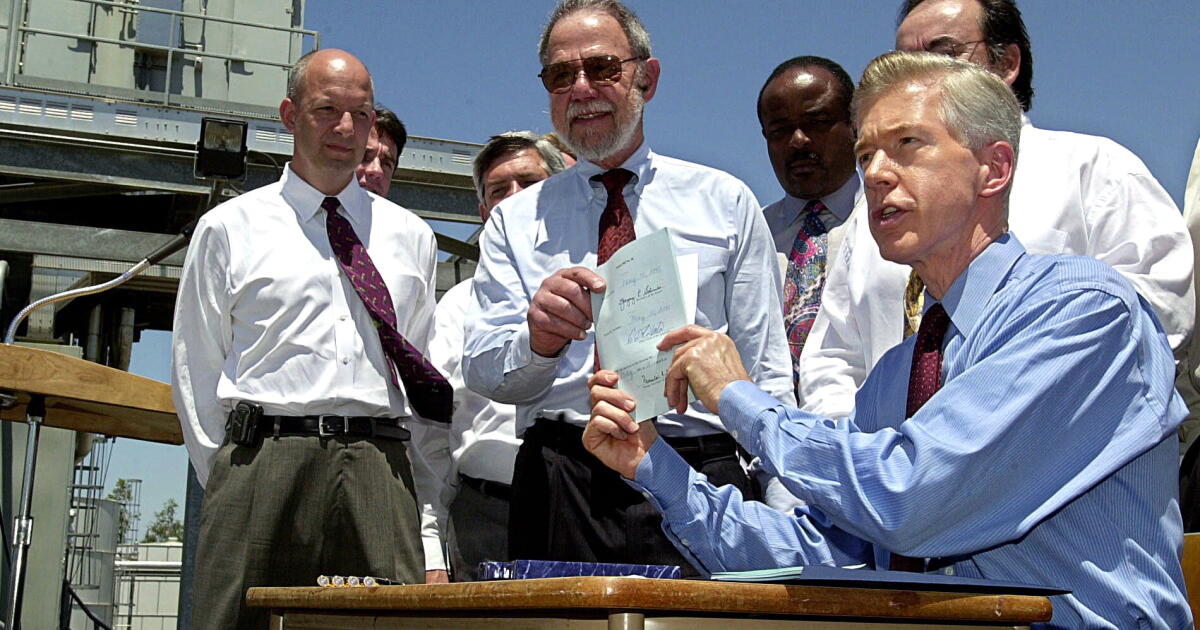
Compelled into action by recent shootings, the state Assembly on Thursday narrowly approved legislation to ban the manufacture and sale of unsafe handguns in California.

For the first time, handguns made in, sold in or imported into the state would have to meet certain consumer safety standards to ensure that they don’t misfire.

The bill, similar to one vetoed last year by Republican Gov. Pete Wilson, is expected to win swift approval in the Senate and be signed into law by Democratic Gov. Gray Davis.

California would then be the second state in the nation, after Massachusetts, to impose consumer safety measures on gun manufacturers.

“Now, we can say to the people of the state that we’ve kept our promise to get rid of cheap and unsafe handguns. These so-called Saturday night specials are the weapons of choice on the streets of Los Angeles,” said Assembly Speaker Antonio Villaraigosa after the vote.

Supporters credited last-minute arm-twisting by the Los Angeles Democrat, along with a strong declaration of support Thursday from Davis, for helping Sen. Richard Polanco (D-Los Angeles), the bill’s author, push the measure through the 80-member lower house on a 43-26 vote. All 43 votes in favor came from Democrats.

Support for the measure was also spurred by a series of violent eruptions, from the Columbine High School shootings in Colorado last spring to last week’s assault on the North Valley Jewish Community Center in Granada Hills. Thursday’s vote came on the heels of other major anti-gun action by the Legislature, including a ban on assault weapons signed into law last month by Davis.

Before Thursday’s Assembly move, Davis described the handgun bill “as a reasonable measure which simply holds guns to a reasonable safety standard. I don’t think that’s asking too much of weapons. We ask it of automobiles and many other products in society. I am going to do my level best to help it pass and sign it into law.”

Opponents, including the National Rifle Assn., said the California measure is ill conceived and will create a massive black market in used guns that fail to meet the new safety protections.

Lawmakers in the past attempted to outlaw handguns based on size or the content of their metal frames. By contrast, Polanco’s bill turns gun safety into a consumer protection issue, requiring gun makers to certify that the concealable weapons they sell are not “unsafe.” The goal of reducing the availability of cheap handguns remains unchanged, although Polanco said that no guns will be confiscated under his bill.

Under the measure, the state attorney general’s office would be required to certify independent laboratories to test the weapons. Three sample guns would be subjected to two tests at the labs.

As outlined by supporters, the first would be a firing test, in which each weapon could misfire no more than six times in 600 rounds. In addition, each gun would have to fire its first 20 rounds without a misfire.

Many low-quality models would fail such tests, gun control advocates say, keeping tens of thousands of guns off the streets.

Next, the lab would be required to drop the same three guns onto a concrete slab from a height of one meter. Each gun would be dropped six times in six different ways. Any gun to go off in any of the drops would fail.

Loopholes Criticized

The measure would exempt guns sold, loaned or otherwise transferred between private parties or through police agencies; curios or relics; and those on consignment with a pawnbroker.

Some county sheriffs, primarily from rural areas, voiced concerns, especially about those loopholes.

For example, Yuba County Sheriff Virginia R. Black was quoted in a Democratic legislative analysis of the measure as saying, “This bill exempts law enforcement agencies from the requirements of the bill, allowing us to provide officers with firearms defined by statute as unsafe. If the firearms are ‘unsafe’ then they should be ‘unsafe’ for anybody–regardless of occupation.”

For hours before the bill was taken up on the Assembly floor, Polanco, vote card in hand, prowled the chamber attempting to cement support, especially from wavering moderate Democrats.

Once the hourlong debate started, perhaps the most charged moment came when first-term Green Party member Audie Bock of Oakland assailed the measure as doing nothing to get rid of guns.

“The emperor has no clothes, colleagues. I’ve never met a Republican who liked a reasonable gun bill. And I’ve never met a Democrat who didn’t like a stupid gun bill,” she said.

“It’s common knowledge around here that in order to get reelected you have to write a gun bill,” she said, contending that members sometimes seek the help of the NRA in drafting legislation.

“Then you go back to the district and say, ‘I defeated the NRA.’ . . . It’s sheer political grandstanding.”

Majority Leader Kevin Shelley of San Francisco scolded Bock, even as he said many Democrats want tougher laws than Polanco’s bill envisions.

“Member Bock, I represent San Francisco. . . . I too would love to see guns banned. I can say that. I can even vote that way and win reelection.”

However, he said, most of his colleagues couldn’t take that political stand. “We’re not there yet, so we vote on measures now that we can support and then we move society along.”

Republicans voiced strong objections to the measure. Assemblyman Jim Battin (R-Palm Desert) called Polanco’s proposal “a boon” for manufacturers because it will be harder to sell older guns, resulting in a boost in new gun sales.

Assemblyman Rod Wright (D-Los Angeles), his voice straining with emotion, declared that the measure “masquerades as a Saturday night special ban.”

“This is a fraud,” he said.

Change of Role for Davis

The governor’s role in pushing the gun legislation represents a change in practice for Davis since taking office. Except during the special session he convened on education earlier in the year, his office has refrained from taking public positions on pending bills.

Davis has acknowledged that his office “fell behind the curve” in its legislative activity because of the challenges of starting a new administration.

He promised to put his muscle behind many more bills in the few weeks that remain in this year’s lawmaking session, particularly those regarding health care reform.

“We are definitely becoming more active,” he told reporters Thursday. “And we will weigh in on many important issues between now and the end of the year.”

Davis also announced Thursday that he has signed an executive order prohibiting state agencies from selling their used firearms and risking the chance that they will be used in future crimes. In the future, state agencies will be required to destroy their weapons or trade them in toward the purchase of new guns.

Since 1992, Davis said, 15 separate state agencies have sold about 6,000 used firearms.

The used gun issue was first raised last fall when the state Department of Corrections reconsidered its policy of selling or trading in old firearms, including assault rifles.

In June, Davis ordered the department to stop selling its used weapons. On Thursday, he extended that ban to all other state agencies.

The governor said the issue was heightened recently when it was reported that the gunman who allegedly shot five people last week at a Jewish community center in Granada Hills and killed a mail carrier in Chatsworth had a weapon formerly owned by a police force in Washington state.

“I’m here to tell you today that is not going to happen in California,” Davis said.

The governor later tempered his remarks by saying it is possible that guns traded in to weapons manufacturers might still end up on the streets.

He said that is less likely than with weapons sold directly from law enforcement to gun dealers. But he also offered to toughen his executive order–so that all weapons from state agencies would be destroyed–if problems continue.

The governor also said he would consider future legislation that might require similar policies for all local government firearms. At this point, however, Davis said most agencies have already restricted the sale of their used guns.

*

Times researcher Patti Williams contributed to this report.

(BEGIN TEXT OF INFOBOX / INFOGRAPHIC)

Highlights of Gun Safety Bill

The highlights of Sen. Richard Polanco’s (D-Los Angeles) SB 15 include:

* Making it a misdemeanor, effective Jan. 1, 2001, to manufacture, sell or import an “unsafe handgun.”

* Requiring pistols and revolvers to meet certain consumer safety standards, including passing firing and drop tests to ensure they won’t misfire.

* Mandating that the testing be conducted by an independent laboratory certified by the state Department of Justice.

* Exempting certain firearms, including those sold between private parties, through police agencies, or as curios or relics, from the provisions of the measure.

* Requiring that on Jan. 1, 2002, the Department of Justice publish a list of all “unsafe handguns” capable of being concealed.

Source link

The Bolt of Lightning From Beyond That Has Wilson Quaking : Primary: Religious Right has fielded and funded candidates against the governor’s in 13 Assembly races. If turnout is low, watch out.

Sherry Bebitch Jeffe, a contributing editor to Opinion, is a senior associate of the Center for Politics and Policy at the Claremont Graduate School

When Vice President Dan Quayle tarred Murphy Brown as a symbol of the “poverty of values” that he claims helped fuel the Los Angeles riots, it was more than another bizarre turn in an already screwball political ride. His attack on “lawless social anarchy” resonates with the rhetoric of the Religious Right. That is no accident. This group assumes great importance as the Bush-Quayle campaign faces the tricky dynamics of a three-way race in the fall.

Quayle’s scolding also exposed a common theme in GOP legislative primaries throughout California, particularly in Orange and San Diego counties. How Republican voters respond could define the soul of the state GOP, the political future of Gov. Pete Wilson and the direction of public policy and spending.

Four years ago, the Religious Right mobilized around the politics of evangelists like Pat Robertson. Now the Robertson crowd has joined with other pro-life groups in stealth campaigns to capture low-visibility local offices.

This strategy has quietly surfaced in California. In GOP primaries in 13 legislative districts, a statewide coalition of Christian fundamentalists is fielding and financing right-wing candidates against moderates backed by Wilson loyalists. Among the more prominent contests:

— Conservative fundamentalist Barbara Alby, of Sacramento’s Capitol Christian Center, is challenging incumbent B.T. Collins (R-Carmichael), the governor’s hand-picked candidate, for the 5th Assembly District nomination.

— In Pasadena, Bill Hoge, running for the GOP nomination in the 44th A.D., enjoys the backing of several fundamentalist Christian groups. Former La Canada-Flintridge Mayor Barbara Pieper, a pro-abortion rights Republican with long-time ties to Wilson, is the moderate candidate.

— Redondo Beach Mayor Brad Parton is the Right’s man in the South Bay’s 53rd Assembly District. Campaign literature from opponent Dan Walker, a Torrance City Council member, blasts Parton for his “attempts to impose his fundamentalist religious views on others.”

On economic issues, there’s little difference among GOP contenders. Most are fiscal conservatives who oppose new taxes and support pro-business agendas. The split comes over social issues. Couched in terms of “traditional family values,” the Right’s agenda is relentlessly anti-gay, anti-choice and anti-Wilson.

Since Wilson took office last year, he’s made it clear he wants to remake the California Legislature into an instrument of his moderate political will. To do that, he has to break the grip of conservatives in the GOP Assembly caucus. That’s what the 1992 primaries were supposed to accomplish. But caucus hard-liners, whose goal is to dump Wilson allies from leadership posts, have joined with the Religious Right to take on Wilsonistas.

The most intense battles are being fought in the governor’s back yard–San Diego. A string of right-wing victories there could be fatal to Wilson’s policy agenda and to his political viability.

For a while, the governor’s people worked to keep this unhappy political prospect suppressed. But when Wilson learned how well organized the conservatives were, he dropped his neutrality and endorsed four GOP moderates running for the Assembly in the San Diego area. Since all four districts lean Republican, the GOP nominee should have the advantage in the general election.

In the 75th, right-wing candidate Connie Youngkin, head of San Diego’s Operation Rescue, trumpets herself as a “Pro-Family Tax Fighter.” She has downplayed her anti-abortion rights activism in the face of attacks from Wilson’s candidate, Poway Mayor Jan Goldsmith.

The nomination battle in the 77th pits political consultant Steve Baldwin, and his army of Christian activists, against former Chula Vista Mayor Greg Cox. Baldwin, who helped engineer Religious Right victories in 1990 races for local offices, opposes abortion and gun control. Wilson-endorsed Cox does not.

In the 78th, former Assemblyman Jeff Marston, a pro-choice moderate, faces Dan Van Tieghem, executive director of the Christian Coalition of California. And in the 76th, Wilson likes former Del Mar Mayor Ronnie Delaney against anti-abortion conservative Dick Daleke.

Conservatives Youngkin, Baldwin and Van Tieghem have all been targeted by the California Abortion Rights Action League as “Enemies of Choice.” Their nominations could assume added importance if the U.S. Supreme Court, as expected, tosses the abortion-rights issue to the state legislatures. These religious conservatives would also likely wield long budget knives, first and most deeply, at health and social welfare programs.

What’s all this got to do with California’s primary?

Religious fundamentalists have boosted their voting numbers by “in-pew” registration drives. Add to this the fact that conservatives tend to be better organized, more motivated and more ideologically committed than middle-of-the-road voters. They turn out.

And with so many competitive races, turnout will likely determine many a political race.

If turnout is low, the extremes of both parties–liberal Democrats and conservative Republicans–will benefit, which means that the Legislature will likely remain factionalized and frozen.

The U.S. Senate races might be affected as well, particularly the tight contests for the six-year seat. On the GOP ballot, a low turnout could help conservative commentator Bruce Herschensohn. But if moderate Republican women come out to support pro-choice candidates running for the Legislature and Congress, pro-choice Rep. Tom Campbell might benefit.

In any case, despite the whining of press and pundits, the California primary is not irrelevant. The stakes are high this year. They include the definition of this state’s goals and priorities. And the selection of leaders capable–or incapable–of moving toward them.

California voters won’t be conned to the polls just to protest or confirm presidential nominees. But they can’t stay home, if they care at all about the future of their communities and state.

Here, too, turnout will tell the tale.

Source link

Nat’l Assembly begins procedure for potential probe on election ballot shortage

A plenary session of the National Assembly is held in Seoul on Thursday. Photo by Yonhap

The National Assembly on Thursday launched formal procedures for a potential parliamentary investigation into ballot shortages reported during last week’s local elections, with requests for the probe submitted by both the ruling and opposition parties being reported to a plenary session.

The head of the Proceedings Division of the National Assembly Secretariat said that the requests for a parliamentary probe were submitted separately by the ruling Democratic Party (DP) and the main opposition People Power Party (PPP), with all lawmakers from each party sponsoring their respective requests.

The move marks the first step toward establishing a special parliamentary committee to examine allegations of mismanagement by the National Election Commission during the voting process.

The establishment of the committee is expected to undergo negotiations, as proposals from the DP and the PPP differed over the scope of the probe and the number of seats to be allotted to each party on the committee.

The PPP has argued that a separate special counsel probe should be launched alongside the parliamentary investigation, while the DP has maintained that such a move should be considered after the parliamentary probe.

In a meeting chaired by National Assembly Speaker Cho Jeong-sik, the rival parties shared a consensus on holding a plenary session as early as next week to adopt a plan for the parliamentary probe, according to officials.

Separately, the PPP’s new floor leader Jeong Jeom-sig met with Hong Ik-pyo, presidential secretary for political affairs, and stressed the need for a special counsel probe into the incident.

Hong said the presidential office would be open to the idea of a special counsel investigation if the rival parties reach an agreement, according to PPP spokesperson Choi Soo-jin.

Ballot shortages were reported at more than a dozen polling stations in Seoul during last Wednesday’s local elections, temporarily disrupting voting and prompting protests by people alleging election fraud.

Copyright (c) Yonhap News Agency prohibits its content from being redistributed or reprinted without consent, and forbids the content from being learned and used by artificial intelligence systems.

Source link

Venezuela: National Assembly Pushes Reform to Open Electricity to Private Sector

Private and mixed companies will be allowed to participate in electricity generation, transmission, distribution, and commercialization. (AFP)

Caracas, June 4, 2026 (venezuelanalysis.com) – The Venezuelan National Assembly preliminarily approved on Tuesday a reform to the country’s Organic Law of the National Electricity System and Service, proposing a structural overhaul of the National Electricity System (SEN).

One of the most significant changes is the incorporation of the private sector in electricity generation, transmission, distribution, and commercialization activities, breaking with two decades of state monopoly through the National Electric Corporation (Corpoelec).

According to the draft text seen by Venezuelanalysis, private corporations and joint ventures will be able to operate in the electric grid in what is termed a “diversification of actors in the service chain.” The mixed ventures, where the state can hold majority or minority stakes, will be approved directly by the government and not by the National Assembly.

“In recent decades, the electric system has showcased structural and financial limitations […] as a result of the productive reality and the negative impact of unilateral coercive measures,” the proposed law reads. “Faced with this reality, the Venezuelan state must assume an institutional and judicial reengineering.”

The bill establishes concessions with a maximum duration of 25 years, renewable for a further 15 years under specific conditions. Once a concession expires, all infrastructure, assets, substations, and data will automatically revert to the state in good condition and without compensation.

The proposed legislation announces the creation of a new tariff scheme “based on real costs and a reasonable return for investors.” Electricity, like most public services, has been heavily subsidized in recent decades in the Caribbean nation. The bill additionally introduces obligations for electricity distributors to compensate users for damages caused by blackouts or other failures.

The reform likewise establishes the possibility for the executive branch to grant tax exemptions to projects linked to renewable energy, rural electrification, or strategic investments in the electricity sector.

The 42-article legislation will now be subject to discussions and amendments before a second and decisive vote. 

If approved, it would repeal the Organic Law for the Reorganization of the Electricity Sector, enacted by former President Hugo Chávez on July 31, 2007, which merged the country’s seven existing electricity companies through the creation of the National Electric Corporation. The legislation also defined all stages of electricity generation and distribution as “strategic for the nation.”

During Tuesday’s parliamentary session, United Socialist Party (PSUV) lawmaker Orlando Miranda argued that the electricity reform represented a “mixed and private capital strategy under a rigorous regime of concessions and public supervision.” 

He noted that government plans to reinforce the grid with thermoelectric plants in the past 15 years were hampered by US economic sanctions. Miranda went on to add that increased tariffs are being studied to reflect the “real costs” of the system.

For his part, opposition legislator Ezio Angelini (Un Nuevo Tiempo) demanded that the reform address corruption, which he identified as a key factor behind Venezuela’s recurring power outages.

Angelini stated that in 2019 Venezuela generated around 20,000 megawatts (MW) while consuming approximately 12,000. Today, he claimed, the country produces close to 12,000 MW, roughly 40 percent of installed capacity, while demand has risen to 14,000. On May 11, Interior Minister Diosdado Cabello stated that electricity demand had surpassed 15,500 MW due to increased oil production.

Zulia state, considered the cradle of Venezuela’s oil industry, and other western regions have experienced daily blackouts lasting between eight and twelve hours in recent weeks. Supply instability also affects other services such as water pumping and cooking gas distribution.

Frequent power outages have also gripped oil fields in the Orinoco Belt, as crude extraction relies on electric motors that are vulnerable to tension fluctuations. According to Bloomberg, the Venezuelan government is urging international energy companies to generate their own electricity for oil and natural gas projects in an effort to shield the grid from the additional load.

Delegations from Siemens and General Electric visited the country in April and held talks with the Venezuelan government headed by Acting President Delcy Rodríguez. However, the two corporate giants are reportedly “hesitant” to take part in major projects due to doubts over Caracas’ financial capabilities.

Additionally, in mid-May, US Chargé d’Affaires in Venezuela John Barrett held a meeting with Electricity Minister Rolando Alcalá to discuss plans to “restore a reliable energy supply through US investment and collaboration.”

Electricity generation in Venezuela depends heavily on the 10 MW-capacity Guri hydroelectric complex in Bolívar state, making the system particularly vulnerable to climatic factors such as the high temperatures affecting the country. Venezuela suffered nationwide blackouts in 2019, with authorities blaming US-led cyberattacks.

The electricity reform follows legislative overhauls to the hydrocarbon and mining sectors that likewise curtailed the state’s role and responsibilities while granting private corporations expanded control over operations and sales, slashed royalties and taxes, and the ability to bring disputes to international arbitration bodies.

Edited by Ricardo Vaz in Caracas.


Source link

Rylan Clark floored when asked about cheating on ex-husband during new ITV show The Assembly

Rylan Clark is the latest celebrity to be grilled on ITV’s The Assembly, where autistic and neurodivergent interviewers pose no-holds-barred questions

Rylan Clark was left stunned when probed about his ex-husband on ITV’s The Assembly. The Radio 2 star, 37, is the latest celebrity to be grilled on the experimental programme, where autistic and neurodivergent interviewers pose no-holds-barred questions to a host of famous faces.

Rylan knew he would be asked some difficult questions on the show, but when one interviewer brought up the topic of him cheating on his ex, Dan Neal, who he split with in 2021 after six years of marriage – he was floored.

Caught completely off-guard, Rylan was asked: “When you told your husband you cheated on him, he divorced you. Is honesty always the best policy?”

“Oh, wow”, Rylan replied, taking a deep breath. “Yeah, I think it is. I’m okay admitting I’m in the wrong, because actually I don’t deal well with guilt and I don’t deal well with secrets.”

After his split with Dan, the TV star took a lengthy sabbatical from all his television work and admitted he’d grappled with suicidal thoughts. Telling the interviewer he had been “really ill”, he shared: “It made me so ill, like so ill. It sounds a terrible thing to say, but I’m glad it happened.”

In another curveball, the former X Factor icon then admitted he didn’t “regret anything” as he shed more light on their break-up. Lifting the lid on life post-divorce, he said: “Do you know, I never think of him.

“So, this is like, my whole body just went [tense]. I miss feeling like I’ve got it all. I thought I had life done – I’ve got the job, I’ve got the family, I’ve got the marriage, I’ve got the car, I’ve got the house.

“I thought I had it sussed. I didn’t have anything sussed. I didn’t know what was a real relationship, and I can look back now and know that I don’t regret anything.

“I don’t regret anything, so I’ll leave that up to your imagination.”

Speaking to a make-up artist during a break from filming for the programme, Rylan, who went public with new partner Kennedy Bates in January, said he was pleased he took part in The Assembly, even though it was uncomfortable.

He said: “I’m so glad I did this. But yeah, [the] Dan questions, I was like [surprised] – I don’t even say his name. When my marriage ended, you know that term when someone says, ‘To pull the rug from under you?’

“That’s the only way I can describe it. It’s like someone went like that and I fell over, and I couldn’t get back up. [It was] like I broke both my arms and legs.”

Admitting he didn’t think he was going to “get out of it”, he concluded: “I went back to live with my mum because I didn’t want to be in my house, because there were too many memories of things in there.”

Like this story? For more of the latest showbiz news and gossip, follow Mirror Celebs on TikTok, Snapchat, Instagram, Twitter, Facebook, YouTube and Threads.


Source link

Venezuelan National Assembly Picks New Attorney General, Ombudswoman

The new officials were backed by a large majority of the legislature. (Archive)

Mérida, April 14, 2026 (venezuelanalysis.com) – The Venezuelan National Assembly (AN) appointed Larry Devoe as the new Attorney General and Eglée González Lobato as the Ombudswoman during an ordinary session on Thursday, April 9.

The appointments were the result of a parliamentary selection process in the wake of the resignations of Tarek William Saab and Alfredo Ruiz, who previously held the positions, in February. The new officials will assume their roles immediately.

The National Assembly finalized the appointments following the review of a list of 71 candidates for Attorney General and 61 for Ombudsman. According to official reports, the selection focused on technical and academic backgrounds, while multiple deputies spoke of the need to select “consensus” candidates.

Devoe is a lawyer who has held various legal and diplomatic positions within the Venezuelan government, having served as the Executive Secretary of the National Human Rights Council. In recent years, he represented Venezuela before the United Nations (UN) and the Organization of American States (OAS) on human rights matters.

Devoe had taken over the Attorney General post on an interim basis following Saab’s resignation. Saab had served as the country’s top prosecutor since 2017. Following his appointment and swearing-in, Devoe used his official channels to vow that his office would be committed to “defending human rights” and “protecting our people.”

For her part, new Ombudswoman González is also an attorney and a university professor specializing in Administrative Law at the Central University of Venezuela (UCV).

She served as the Director of the UCV’s Democracy and Elections Chair and has worked as an institutional and electoral analyst. The parliamentary nominations committee highlighted González’s academic background and experience in human rights as primary factors for her selection to replace Ruiz.

Devoe and González were ratified on the posts with the approval of 275 of 285 National Assembly deputies, receiving the endorsement of the ruling Socialist Party (PSUV) and allies, as well as part of the opposition.

González, who has been identified as representing a sector of the moderate opposition, was proposed by David Uzcátegui from the Fuerza Vecinal party. Devoe’s candidacy was put forward by the PSUV.

Addressing the chamber, National Assembly President Jorge Rodríguez emphasized the importance of reaching political agreements and “respecting differences.”

The right-wing Libertad faction opposed the appointments, with legislator Henri Falcón stating that the appointees did not meet “autonomy and democratic plurality” criteria.

“In the past, the institutions have been used as politically partial spaces and ideological trenches,” stressed Falcón, a former presidential candidate.

The renewal of the Attorney General and Ombudsman’s Office coincides with the processing of thousands of amnesty requests currently under review by judicial authorities. According to the National Assembly, the Amnesty Law approved in February has benefited more than 8,000 beneficiaries in less than two months.

“The economy is the most important thing”

Parliamentary leader Jorge Rodríguez stressed the importance of “dialogue” among different political factions and working to “strengthen” state institutions in a recent interview with Spanish daily El País.

“We are rapidly pushing for changes so that people feel the country’s democratic institutions are functioning properly,” he stated.

When asked about the possibility of holding elections, Rodríguez argued that the country’s economy is “the most important thing right now.”

Since January, the Venezuelan legislature has fast-tracked a number of important new laws with support from the acting Delcy Rodríguez administration, including pro-business reforms to the country’s hydrocarbon and mining frameworks.

“The Venezuelan economy needs to gain enough momentum so that the population feels this entire process was worth it,” he added, in reference to the January 3 US bombings and kidnapping of President Nicolás Maduro which Rodríguez described as a “traumatic event.”

The Venezuelan official went on to argue that “there is much work to be done” ahead of an eventual electoral process, including the selection of an electoral authority that all political organizations can “trust.”

Edited by Ricardo Vaz in Caracas.

Source link