LAS VEGAS — The door opened for Arthur Kaluma to show his worth for the Lakers in the NBA Summer League on Saturday night.
He did so in a big way.
Kaluma had 34 points and five rebounds during the Lakers’ 91-70 win over the Dallas Mavericks at the Thomas & Mack Center.
He was 11 for 16 from the field and six for 10 from three-point range.
With Lakers rookie guard Cameron Carr unable to play because of a right thumb contusion, Kaluma took over the scoring role. Carr, the 24th pick in the NBA draft, is averaging 17 points per game.
“Cam doesn’t play tonight, so he gets a little bit more minutes, gets a couple more touches,” said Lakers Summer League coach Ty Abbott about Kaluma. “But he’s done a really good job of making the most of it when he doesn’t have actions run for him. So the way that he’s been able to stay ready, find windows for himself has kept him in a rhythm. So, on a night like tonight, when we can run some actions for him, he knocks them down and just plays out of his mind. It was great.”
Kaluma said he was “a little nervous” but his three-point shooting said otherwise.
“When [teammate] Jon Elmore came down and he pitched it back to me for a three … I just knew when it came off my hand it was cash,” Kaluma said. “So I said, ‘Yeah, I’m hot.’ It went on from there.”
Late in the fourth quarter, Kaluma lined up a three-pointer, setting his feet and scoring from 29 feet out. He flashed three fingers and smiled. His teammates on the bench stood and cheered, as did the fans.
“We have such a great group of guys this year at Summer League and going through this it’s hard to get that camaraderie with a group,” Kaluma said. “But I feel like everybody wants to see everybody succeed and I felt that tonight. I’m not going to lie to you. They tell me to shoot the ball. I passed up a couple of shots and they were mad at me the other day.”
Kaluma played for the South Bay Lakers in the G League last season. He averaged 14.6 points per game, 4.9 rebounds and shot 55% from the field, 37% from three-point range.
“The G can get grimey, you know what I’m saying? It’s a time where everybody is trying to fight for a position and there is a certain hunger that you have to have in order to be successful in the G,” Kaluma said. “And I feel like that drive that I had my first year in it pushed me into this summer to really get better and work on my game and come here and have the opportunity to perform.”
Kaluma wasn’t alone in helping the Lakers improve to 2-0 in Summer League play.
Adou Thiero ran the court, took a lob pass from Chris Mañon and threw down a two-handed dunk. He had another solid outing with 15 points and four rebounds. He shot just four for 12 from the field, but was a plus-15.
But the night belonged to Kaluma.
“I pride myself on the defensive end,” he said. “I know I got hot offensively, but the shot was just falling today, you know what I’m saying? My game is three-and-D. I lock-up on defense and I know I can hit open shots. I just got hot today and I’m not going to try to let it get to my head.”
LONDON — A local boy sleeps in his own bed, plays in front of a king and queen and makes a Cinderella run to the Wimbledon semifinals. Sounds like a Hollywood script that might never see the silver screen.
But it’s no fairy tale — it’s Arthur Fery’s out-of-nowhere performance over the last 10 days.
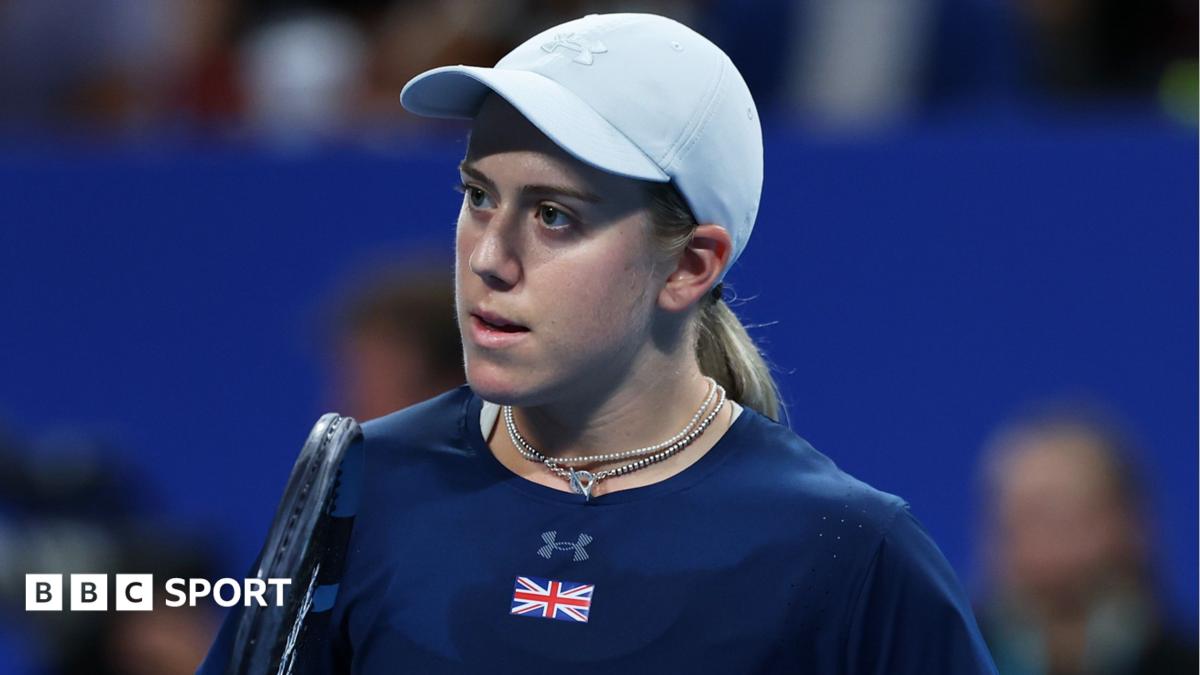
Fery, a virtually unknown British wild card with a triple-digit ranking, has become the emotional heartbeat of Wimbledon while legitimately diverting some national attention from England’s World Cup quest.
The royal treatment at his matches across the All England Club has come in more ways than one.
Fery, who grew up five minutes from Wimbledon and is staying at home during the tournament, first played before grass-court king Roger Federer, Wimbledon’s eight-time singles champion, during Monday’s fourth-round victory. Two days later, he beat No. 9 seed and French Open runner-up Flavio Cobolli of Italy in the quarterfinals 6-4, 7-6 (4), 6-0 in front of Queen Camilla.
Ranked 114th, Fery had never reached the semifinals of an ATP Tour event, let alone a major, before his brief chat with the queen following the match.
“She just said, ‘Congratulations, keep going,’” 23-year-old Fery told reporters later. “I told her it was my birthday on Sunday, so it would be great to play the Wimbledon final on my birthday.”
That’s still a match away. To get there, Fery will have to get past one of the hottest players on tour: No. 2 seed Alexander Zverev, who is fresh off his first Grand Slam title at the French Open. Looming on the other side of the draw is a highly anticipated showdown between defending champion Jannik Sinner against 24-time major winner Novak Djokovic.
If Fery can continue his magical run to the end, he would become the first British wild card to win a Wimbledon title.
Arthur Fery reacts after defeating Flavio Cobolli in the Wimbledon quarterfinals on Wednesday.
(Maja Smiejkowska / Associated Press)
Born in France, Fery’s family moved to Wimbledon when he was an infant. His mother played professional tennis. He was a top British junior but chose to sharpen his game for three years in the U.S. collegiate system at Stanford, as many of his compatriots have done.
“I came out with a lot of hunger coming out of that, and I was ready to attack the pro circuit,” Fery said.
After struggling with bone bruising in his arm that limited him to playing mostly on the lower-tier Challenger circuit in recent years, Fery is finally healthy and playing consistently.
His path to the last four in London has been a masterclass in clutch come-from-behind performances. The Brit has stared down near-certain elimination in multiple matches, repeatedly breaking his opponents’ momentum with Houdini-like on-court acts.
At 5-foot-9, Fery possesses a skill set perfectly suited for low-bounding grass.
His compact strokes, low center of gravity, and elite movement allow him to hug the baseline, take time away from opponents, and confidently execute delicate volleys at the net, according to ESPN analyst Chris Eubanks.
“He defends well,” said Eubanks, a 2023 Wimbledon quarterfinalist. “He can scrap. He can claw. He can dig his way back into points. And when he ventures forward, he’s very, very comfortable at the net. This is a picture-perfect example of someone whose game is built for the surface.”
Still, it’s hard to fathom the multitude of milestones for Fery, who briefly reached the No. 1 ranking in college and earned 2023 Pac-12 Singles Player of the Year honors before leaving early to pursue a pro career.
He arrived at Wimbledon with just one main-draw victory at a major, a losing record as a professional, and only one previous ATP quarterfinal, at Queen’s Club last month. He’s now 11-8, won his first two five-set matches, and is the first British wild card to reach the Wimbledon men’s semifinals in the Open Era. The only other men’s wild-card semifinalist was Goran Ivanisevic, who won the title as a wild card in 2001.
Fery, who started the season ranked No. 185 and will climb to at least No. 36 after the tournament, said there were a “lot of first times” as he reflected on his unprecedented run. “First five-setter, longest match that I’ve ever played, first time breaking into the top 100, first second week in a slam, all at home, five minutes from where I grew up. It’s a great story for me,” he said.
The gap with his fellow semifinalists is understandably massive.
Entering Wimbledon, Djokovic, Sinner and Zverev’s combined records include 29 Grand Slam titles, 2,088 match wins and 155 tour-level titles. Fery was 6-8 in tour-level matches with zero titles.
But he has singlehandedly lifted the tournament for locals. With top hopes Jack Draper and Emma Raducanu withdrawing before the tournament and the rest of Britain’s singles prospects falling one by one — 18 men and women were eliminated by the third round — Fery became the nation’s last knight standing.
If his first name inevitably evokes Arthurian legend, Fery’s march through the draw gave Britain reason to believe again. No sword, no Round Table, just world-class shot-making, a lion’s heart and a Centre Court crowd thrilled to rally behind him.
“This is really quite something to see on home soil,” said Russell Fuller, the BBC’s tennis correspondent, who compared it with Raducanu’s stunning U.S. Open win in 2021 as a qualifier.
Fery earned every bit of it.
In the first round against Damir Dzumhur, Fery dropped the opening set and trailed by a break in the second before surging back. Against Zizou Bergs in the third round, he faced a 4-1 deficit with a double break in the fourth set, and again fell behind 4-1 in the fifth, before somehow surviving.
Then, stepping onto Centre Court for the first time against former top-10 stalwart Grigor Dimitrov of Bulgaria in the fourth round, Fery clawed out of a 2-sets-to-1 hole and a break down in the fourth set to clinch the victory in a fifth-set tiebreak.
“He carries himself with humility, but he’s a fierce competitor, and he’s got a ton of belief in himself,” said Stanford men’s coach and former top-60 player Paul Goldstein, who flew to England Tuesday to see his former charge compete against Cobolli.
While Fery attempts to outmaneuver Zverev on Friday, the other semifinal features a 2025 Wimbledon semifinal rematch between seven-time Wimbledon winner Djokovic and top-ranked Sinner, who defeated the Serb in straight sets on his way to the title. It’s also their second Grand Slam semifinal meeting in 2026. At January’s Australian Open on hard courts, Djokovic bested 24-year-old Sinner in five sets before falling to now-injured Carlos Alcaraz in the Melbourne final.
Arthur Fery hits a return during his Wimbledon quarterfinal win over Flavio Cobolli on Wednesday.
(Clive Brunskill / Getty Images)
Djokovic, 39, enters the match after surviving a grueling five-set, 5-hour-plus quarterfinal slugfest against No. 3 Félix Auger-Aliassime that concluded just minutes before Wimbledon’s 11 p.m. curfew. But the seventh-seeded Serb has a way of defying Father Time and he has had two days to recover on a surface where points are shorter and generally less taxing on the body.
Italy’s Sinner, who defeated Alcaraz in last year’s Wimbledon final, has been efficient if not at the level that saw him capture five consecutive titles before crashing out in the second round at the French Open. After a first-round scare here, the four-time Grand Slam champion has dominated opponents behind his improving serve, winning 80% of his first-serve points. He hasn’t dropped a set since the opening round. Sinner leads the head-to-head with Djokovic 6-5.
According to Eubanks, Djokovic must disrupt Sinner’s movement to break his rhythm, and take his chances.
“He’s got to play similar to how he played in Australia, where it was just all-out aggression,” Eubanks said.
For Sinner, he added: “His serve can be a neutralizing force for what Novak is going to try to do.”
On the other side of the ledger, Fery’s poise under pressure and deft use of the home crowd will be paramount to continue his surprise run against Germany’s Zverev, whom he called a “step up again” from his last five matches. Zverev, 29, is seeking his fifth major final and first at Wimbledon.
“I’m ready for it,” Fery said. “I have nothing to lose. I’m just going to go out there and … put my game on the court, do what I’ve done, believe in myself. We’ll see where that takes me.”
Home has never been closer to Centre Court. Nor has Arthur Fery ever been closer to tennis history.
Fery achieved his latest, most impressive win to date in a style at complete odds with the journey that had taken him there.
He dropped the opening set in his first two matches and then required match tie-breaks to overcome Zizou Bergs and Grigor Dimitrov in five-set thrillers.
Having twice been a set and a break down against Bergs in the third round – including going 4-1 down in the fifth set – he also had to take three medical timeouts after suffering a nosebleed.
Making his first appearance on Centre Court, he twice went a break down in a must-win fourth set against Dimitrov, before the 35-year-old Bulgarian’s own nerves appeared and Fery capitalised.
But, at two hours and 14 minutes, his match against Cobolli was his shortest of the tournament so far.
Fery has spent 16 hours and 20 minutes on court in total – his match against Bergs lasted four hours and 39 minutes alone – yet he showed no sign of fatigue against his Italian opponent.
Roared on throughout by a partisan crowd, Fery demonstrated unshakeable composure as he picked apart the below-par Cobolli, who lost June’s French Open final to Alexander Zverev in five sets and made the last eight at Wimbledon last year.
“What I’ve been so impressed with is Fery’s belief,” added former British number one Tim Henman.
“When you go out on Centre Court for the first time and you are a British player, you have the hopes and expectations of a lot of people on your shoulders.
“He has good tennis IQ, he is a phenomenal mover. The way he has handled the occasion is impeccable. When opportunities have been earned, he has taken them.
“For him to produce a performance like that against a Grand Slam finalist, given that the first two sets were so tight and such high quality, it was absolutely sensational.
“It will just go even further to enhance his inner belief that he can keep winning in this tournament.”
He’s grown up watching matches on Centre Court and his game is inspired by the legendary Andre Agassi – learn all about British wildcard Arthur Fery ahead of his quarter-final match against Flavio Cobolli at Wimbledon 2026.
British wildcard Arthur Fery beat Zizou Bergs in a five-set thriller to reach the Wimbledon fourth round and keep home singles hopes alive – despite suffering three nosebleeds during the match.
Wildcard Fery recovered twice from falling a set and a break down to come through 2-6 7-5 2-6 7-6 (7-3) 7-6 (10-5) in front of a packed crowd on court 18.
After fighting back to beat Bosnia’s Damir Dzumhur and Finland’s Otto Virtanen in his first two matches, it seemed as though Fery had finally run out of steam against Belgium’s Bergs.
But the 23-year-old held his nerve and then rallied to become the first British wildcard to reach the Wimbledon fourth round since 1993.
“No words for it, honestly,” Fery said after throwing himself to the floor in celebration.
“I don’t know what is going on right now. It will take time to digest it.”
Fery will face Italy’s Matteo Berrettini or Grigor Dimitrov next.
Novak Djokovic beats Arthur Rinderknech in four sets to go level with Roger Federer for most men’s singles wins at SW19, as the seventh seed progresses into the fourth round.
Arthur Fery grew up just a short walk away from Wimbledon but there is much more to his story than simply the confines of SW19.
The British men’s number three was born near Paris to his French parents before the family moved to Wimbledon when he was still in nappies.
After coming through the Lawn Tennis Association system, the 23-year-old then moved to Stanford University in California to study for a degree in science, technology and society – and sharpen his game in a tennis scholarship.
Now Fery is back on his doorstep and enjoying the biggest success of his career.
The world number 114 is left carrying British hopes at the All England Club this year after becoming the sole home player to reach the third round of the singles.
“I grew up coming to the tournament, watching the players and that definitely contributed to my development,” Fery told BBC Sport.
“I was trying to imitate players – like you do when you’re a kid. Now I’m here winning matches. It’s awesome.”
Fery’s mother, Olivia, is a French former Fed Cup player, who used to work for the LTA as a business development manager, while father Loic is an asset manager who owns Ligue 1 football club Lorient.
Many summer holidays were spent at the family’s second home near La Rochelle on the west coast of France, while he also spent time with other relatives near Nice – an area packed with courts and academies – to hone his tennis talent.
Fery briefly represented France when he was about 10 before starting to play for Britain shortly after.
After that, he says, there was “no question” that he would go on to represent Britain in the professional ranks.
“By that point, there was really no decision to make. I was living here, I was training at the National Tennis Centre. I was in the system here,” he said.
“I feel completely British now. Maybe 10 years ago if you’d asked me the question, it would be a bit different. Now I feel very British at heart.”
Fery may not be well-known outside of British tennis circles but sport is a huge part of his family life – his mother, Olivia, was a professional player, while father Loic owns Ligue 1 football club Lorient.
As a teenager, Fery opted to go on a scholarship to Stanford University in California and also played collegiate tennis.
He lost just two games in his opening-round win over compatriot Toby Samuel at Queen’s, before recording what he described as the “best result” of his career against veteran Frenchman Mannarino.
He and Cerundolo both made nervous starts, with numerous break point opportunities, but Fery broke to serve for the set at 5-4.
However, Cerundolo won the next three games and dominated the tie-break, with the only point Fery won in it coming from a double fault from his opponent.
Cerundolo broke to start the second set but took a painful hit at the net when Fery accidentally sent a volley straight into his throat.
The Argentine fell to the floor, with Fery hopping over the net to check on him – and the pair shared a wry smile as on the next point, Cerundolo came close to hitting Fery with a passing winner.
But from that moment on, Cerundolo’s serve disappeared, and Fery restored parity before breaking to serve for the set.
A lovely serve and volley from Fery to force the deciding set established the tone, and a horrible double fault from Cerundolo handed the Briton the early initiative.
Cerundolo’s experience showed, though, as he put enough pressure on his opponents’ forehand to first break back and then secure victory on Fery’s serve.
World number one Jannik Sinner remains on course for a record fifth consecutive Masters 1,000 title after reaching the Madrid Open final with a straight-set win over Arthur Fils.
The Italian won his 22nd successive match to reach Sunday’s final, where he will face either second seed Alexander Zverev or unseeded Belgian Alexander Blockx.
Sinner, 24, has won the opening three ATP 1,000 events of the season – in Indian Wells, Miami and Monte Carlo – and also triumphed in Paris late last year.
The four-time Grand Slam winner broke twice to take the first set 6-2 against 21st seed Fils, who won the clay-court Barcelona Open two weeks ago.
Fils, 21, was 3-2 up in the second set having saved two break points, but Sinner finally broke to move 5-4 ahead and served out the match to progress 6-2 6-4.
Zverev and Blockx play their semi-final later on Friday.