Arizona

Former U.S. Sen. Jon Kyl of Arizona, a ‘workhorse’ who shaped water policy, dies at 84

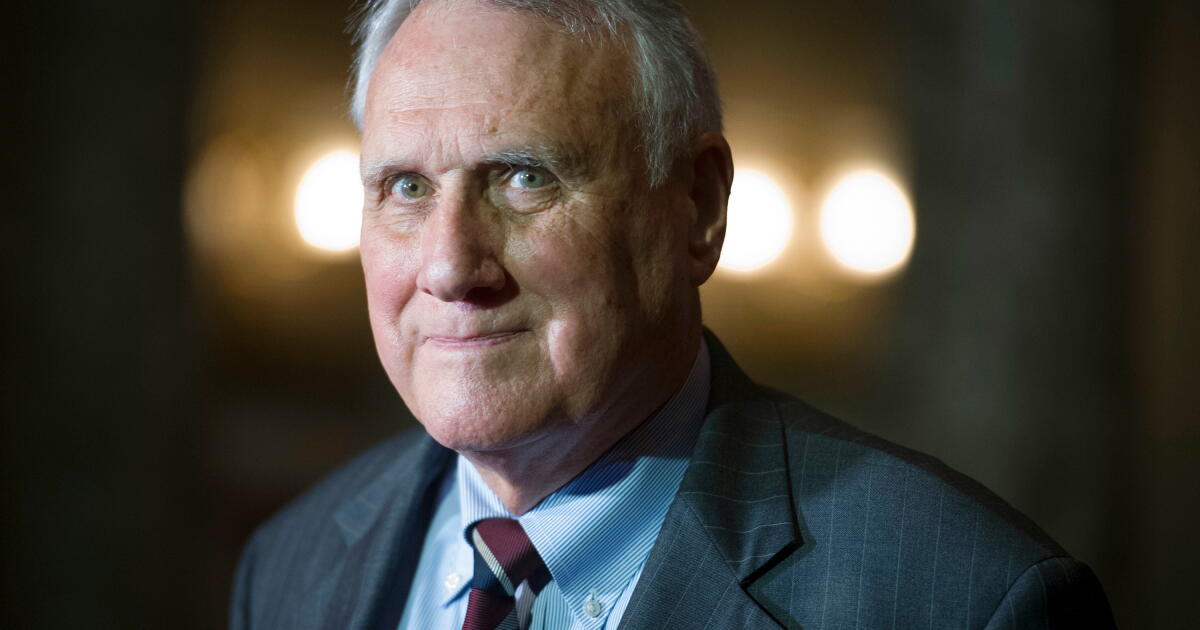
Former U.S. Sen. Jon Kyl, a longtime Republican lawmaker from Arizona who shaped landmark water policies in the U.S. West and guided the confirmation of Supreme Court Justice Brett Kavanaugh, has died. He was 84.

Kyl died Wednesday night from a neurological disorder, said Gordon James, a communications professional who is a longtime friend of the Kyl family. Kyl had withdrawn from public life in December 2025 after announcing he had been diagnosed with dementia.

Kyl spent almost three decades in Congress, serving in both chambers, and watched his party undergo a drastic transformation, with his career spanning Ronald Reagan’s presidency to President Trump’s first term.

Former Republican Arizona Gov. Doug Ducey, who considered Kyl a mentor, described the former senator in a February 2025 interview with the Associated Press as a true statesman and a “workhorse” among Washington, D.C.’s “showhorses.”

“If you saw him on the plane, he was sitting in the aisle, in coach, and he was reading,” Ducey said. “And he was reading potential bills or Senate business.”

Kyl returns briefly to Senate to fill McCain seat

Kyl rose to a leadership position during his last full term in the Senate, when his Republican colleagues selected him as minority whip. After retiring from politics in 2013 and becoming a lobbyist, Kyl returned to Congress briefly in 2018, when Ducey appointed him to fill the vacancy left by the late U.S. Sen. John McCain.

His appointment drew high praise from Trump, who said he was looking forward to working with “the extraordinary senator.” Kyl stayed for less than four months before rejoining lobbying firm Covington and Burling.

“At the federal level, and I regret to say that this is the case, but probably a lot of my better achievements were in preventing bad things from happening (rather) than forcing good things to happen,” Kyl said in a 2012 conversation with former U.S. Supreme Court Justice Sandra Day O’Connor.

Lawyer with expertise in water gets elected

Kyl was born in Oakland, Nebraska, on April 25, 1942, and grew up in a rural farming district in Iowa that his father represented in the U.S. House. At 18, he headed southwest to attend the University of Arizona, where he met his wife, Caryll, and earned a law degree.

Before being elected for the first of his four terms in the House in 1987, Kyl was a key participant in shaping Arizona’s 1980 groundwater code as a lawyer representing a large water utility. The first-of-its-kind code created a regulatory framework for managing groundwater in the drought-stricken state, largely centering on the state’s population centers, including Phoenix and Tucson.

In 2004, Kyl authored legislation that provided one of the largest tribal water rights settlements, which, after a decades-long battle, gave the Gila River Indian Community enough water to fill nearly 313,500 Olympic-sized swimming pools annually. Republican U.S. Sen. Mitch McConnell of Kentucky, who later served as majority leader, called Kyl’s work ethic “legendary” in a 2012 floor speech and said Kyl had labored mostly behind the scenes for 15 years to advance the settlement.

“It was one of the hardest things I’ve ever done, but I was in a position to be the catalyst,” Kyl told the Phoenix New Times in a 2006 interview. “There wasn’t anybody else who could do that water deal. And it had to be done.”

Arizona State University’s Kyl Center for Water Policy takes its name from him. Its director, Sarah Porter, said Kyl was generous with his time and an effective member of the state’s congressional delegation who took a practical approach to water policy. “He’s always sort of cared about the public good and been able to think about, ‘What will this mean for the generations to come?’” Porter said, adding that Kyl remained “quite a dynamo” until recent years, as his wife battled health problems.

‘Giant’ in the Senate kept Republican caucus together

Ducey said Kyl was a “giant” in the Senate, further describing him as serious, engaging, forthright and thoughtful. His biggest impacts, Ducey said, came from the way he kept the Republican caucus together in opposition to Obamacare and his staunch support of Israel.

Kyl also backed legislation to authorize construction of a fence stretching hundreds of miles along the U.S.-Mexico border. He later joined with Democrats to support a bill that would provide a path to citizenship and temporary guest-worker status for those in the U.S. without authorization. The proposal ultimately failed.

As a lobbyist, Kyl helped guide the confirmation of Trump-picked U.S. Supreme Court Justice Brett Kavanaugh. When Kyl returned to the halls of Congress in 2018, he was known as Kavanaugh’s chief Sherpa — an informal but widely known term for a nominee’s guide to the political tundra in the Senate.

In a statement disclosing his dementia diagnosis, Kyl harkened back to the words of Reagan, when the former president revealed his own Alzheimer’s diagnosis and said he was starting a journey that would lead him to the end of his life.

Kyl said he shared Reagan’s confidence for Arizona and the nation’s future, and that despite his diagnosis, he was a “very fortunate man.”

Billeaud writes for the Associated Press. Former Associated Press writer Sejal Govindarao contributed to this report.
Source link

Election integrity is on the November ballot in key states

Free and fair elections are foundational to our representative democracy. A government intended to reflect and honor the will of the people works only if the people can express their will. That’s why we have elections.

But don’t take the word of your friendly political columnist.

John Lewis, the late Georgia congressman and hero of the civil rights movement, said voting is precious and “the most powerful non-violent tool we have in a democratic society.” Former President Reagan called the right to vote “the crown jewel of American liberties.”

Alas, we have a president who believes his most precious right, apart from lining his silken pockets, is nursing his over-ripened ego. Donald Trump can’t stand the fact he lost the 2020 election — which he most emphatically did — and so he’s built a carapace of lies: about illegal ballots, rigged election machinery, rampant voting by noncitizens, and so on.

Worse than his deceit — which has deeply undermined faith in our elections and the dedicated people who run them — is Trump’s brazen efforts to rig the system by disenfranchising millions of voters, all so he can keep Democrats from winning office.

Reagan, no less than Lewis, probably is turning cartwheels in his grave.

But there’s a chance to push back. In November, voters in 26 states will elect a secretary of state, choosing the officials who will oversee the 2028 presidential race throughout most of the country. What could possibly go wrong?

Let’s hope we don’t find out.

The secretary of state used to be one of those ministerial posts that few outside government knew or much cared about; from a political standpoint, the office and its occupant seemed dull and dry as Melba toast. That changed after 2000, when Republican Katherine Harris placed her weighty thumb on the scale and helped deliver Florida’s 25 electoral votes, and the White House, to George W. Bush.

What really politicized the office of secretary of state, though, was Trump’s obsessive compulsion with his 2020 defeat.

Spurred by his incessant lies about supposed fraud, allies and opportunists set out to hijack the country’s election machinery and do Trump’s dirty work from the inside. In 2022, a group calling itself the America First SOS Coalition endorsed a slate of cranks and quacks who ran for secretary of state in 14 states, including the presidential battlegrounds of Arizona, Georgia, Michigan, Nevada and Wisconsin.

FILE - Tina Peters, former Mesa County, Colo.

FILE – Tina Peters, former Mesa County, Colo., clerk, listens during her trial, March 3, 2023, in Grand Junction, Colo. (Scott Crabtree/The Grand Junction Daily Sentinel via AP, Pool, File)

(Scott Crabtree / Associated Press)

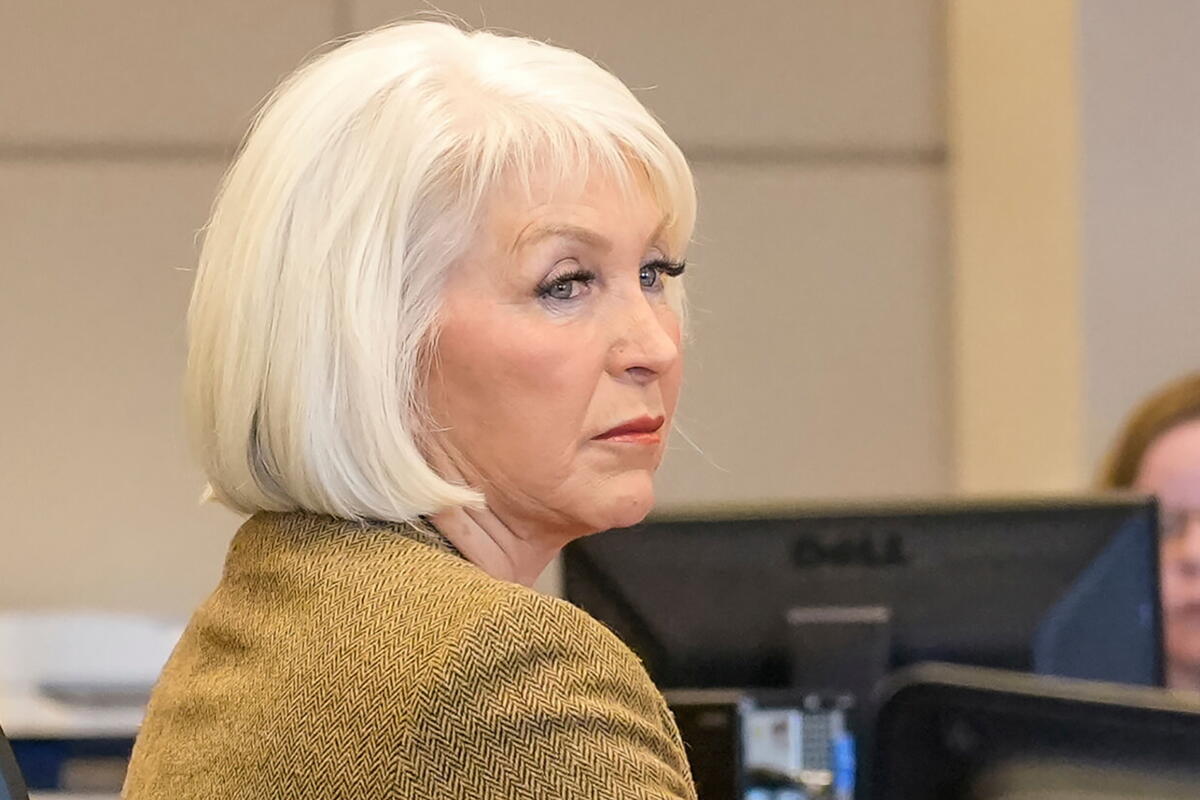
Thankfully, all of them lost, save for one candidate in Indiana. Among those defeated was Tina Peters, the former county elections chief in Mesa County, Colo., who went on to infamy, and prison, for orchestrating a security breach aimed at “proving” 2020 votes were stolen from Trump. (Never mind that he won the county by nearly 30 percentage points.)

The SOS Coalition apparently is defunct; its website address now leads to an online gambling portal.

But more than two dozen election deniers ran for secretary of state this year, according to States United Democracy Center, a nonpartisan group that works to promote fair and secure elections nationwide. Six of those candidates won their primaries and made it to November’s ballot, including in three states — Arizona, Nevada and Wisconsin — that promise to be key once more to picking the next president.

The stakes in those races are considerable, said Peverill Squire, a University of Missouri expert on state elections. “Who’s going to be administering [election] rules? How they’re going to interpret those rules?” he said, offering examples of the office’s import. “Whether they’re going to try to make it more difficult to vote, or easier to vote. Whether they’re going to try to engage in activities that will further raise doubts in some people’s minds about how fairly the election has been conducted.”

Former Nevada Assemblyman Jim Marchant

Nevada Republican Jim Marchant is among the election deniers running for secretary of state in November. He lost four years ago after promoting Donald Trump’s false claims he beat Joe Biden.

(Ricardo Torres-Cortez / Associated Press)

The contest in Nevada is a rerun of 2022, when Democrat Cisco Aguilar narrowly defeated Republican Jim Marchant. Undeterred, Marchant continues to spout gibberish about sabotaged voting machines and other far-fetched claims of election chicanery. Among the remedies he’s floated, according to the Nevada Independent, is using technology to measure voters’ heartbeat as a way to verify their identity.

Um…

Meanwhile, in Arizona, incumbent Democrat Adrian Fontes faces Republican state Rep. Alexander Kolodin, an attorney who was sanctioned by the State Bar for pursuing baseless claims of 2020 election fraud. One of his Trump-inspired lawsuits was swiftly rejected by a federal judge who noted its conspicuous lack of “relevant or reliable evidence” — thus raising doubts not just about Kolodin’s discernment but also his capacity to cover even the basics.

In Wisconsin, where elections are overseen by a six-member, bipartisan commission, Republican Jay Schroeder is running on a pledge to dismantle that fair-minded system, calling it a “failed experiment.” Had he been secretary of state in 2020, Schroeder told NBC News, he would not have certified Joe Biden’s victory in the state.

That’s all you need to know, Wisconsin.

Great amounts of time, energy and resources are being devoted this election to races for Congress and for statehouses across the country, which makes sense.

Control of both the House and Senate are in play on Nov. 3. There are more than a dozen gubernatorial contests with at least some degree of competition, including close races in Ohio, Georgia and Wisconsin.

But with so much riding on the outcome, it’s also worth paying heed to those down-ballot races for secretary of state.

You can’t keep elections on the straight and narrow if the people running them are crooked.

Source link

Orange Lutheran defeats Arizona’s top team for second win

Orange Lutheran High does not have an easy game on its schedule. MaxPreps ranked the school’s schedule as the toughest in the nation, as it faces off against five opponents in the website’s preseason national top 25 rankings.

The first three weeks have been a true gauntlet.

It started with an away game in Florida against Miami Central High, the seventh-best team in the state, according to MaxPreps. Orange Lutheran only lost by one point.

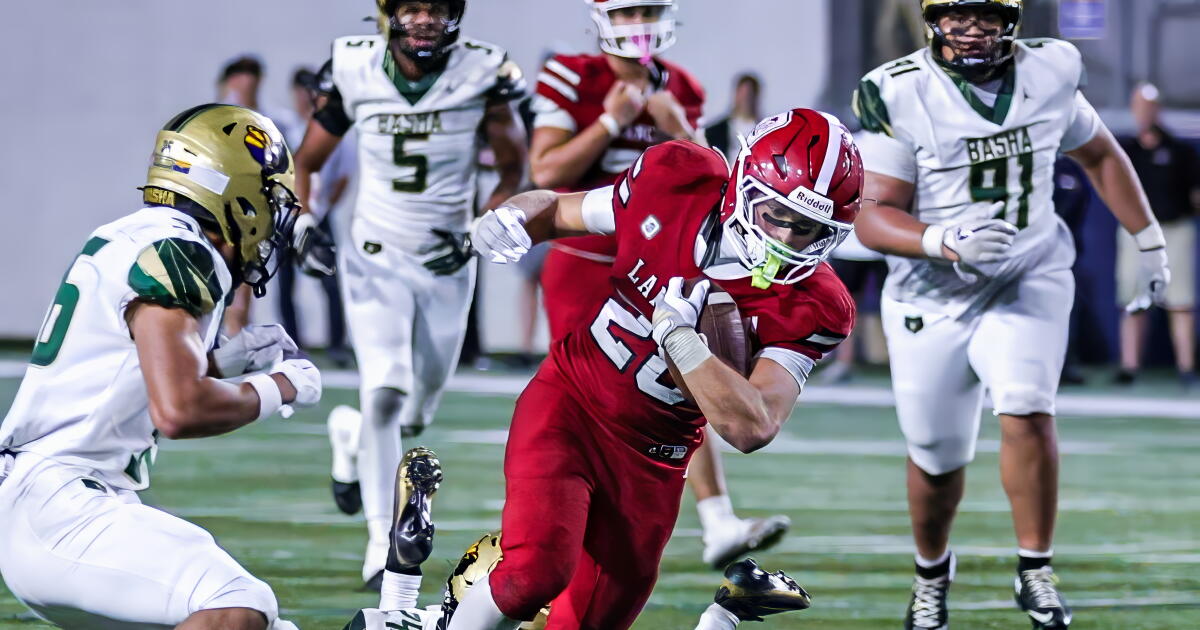
After beating the 15th-best team in California, San Diego Cathedral, last week 38-24, the Lancers faced its biggest test yet: Chandler (Ariz.) Basha, the No. 1 team in Arizona, and ranked 12th nationally. Orange Lutheran is the eighth-ranked team in California and 61st nationally.

A 30-24 loss to Basha last season still hung in the air around Orange Coast College on Friday night, and it looked like Orange Lutheran would be in for another one after Basha senior quarterback and Princeton commit Jake Rogers threw a 62-yard touchdown pass to senior wide receiver Jaden Baldwin on the third play of their first drive.

However, because they didn’t make this season about themselves, Orange Lutheran has a prime directive to make things as hard as possible on opponents. A 23-17 win Friday suggested they followed through on that goal.

After the first quarter, Basha was not able to do anything effective on offense.

Every possession in the third quarter was a three-and-out, with one resulting in a punt out of the end zone. Basha had a bad snap, giving Orange Lutheran two points.

Beyond that, twin brothers and juniors Anhor The Great Johnson and King Rich Johnson swarmed everything that Basha tried to do.

It started with a 75-yard pick-six from King Rich on a snaking sideline return that gave Orange Lutheran a lead they never conceded.

Anhor The Great had so many pass breakups that counting would’ve been a fool’s errand.

Defensive line bat downs and sacks haunted Rogers, who finished the game with 192 yards passing and two touchdowns with two interceptions as well as a less than 50% completion on passes and two interceptions.

Senior lineman Lucas Rhoa got to watch this all unfold from the sidelines, and he was truly in awe after the game.

“One of the best defensive games I’ve seen,” he said. “Really, two big plays and three other points [is all Basha got]. We couldn’t do it without them, because we only put up 23 points.”

The only score given up in the second half was a 30-yard pass from Rogers to senior running back Noah Roberts. It gave the Bears life for the first time since the half. It was also Roberts only big play on a night where he averaged less than two yards per carry.

It was senior night for Orange Lutheran, with emotions flowing around Orange Coast College stadium all night, but it was a sophomore running back who had the most explosive performance.

Ryan Christianson finished with 151 yards rushing and one touchdown on 31 rushes. He was buoyed by Rhoa and a strong offensive line performance.

“Our running back is amazing, he did amazing things,” he said. “I’m proud of the way we played tonight, but there’s so much more we could clean up. So many points were left on the board. If we clean it up we’re going to be very good.”

First year head coach Ray Fenton inherited this insane schedule, but he probably would’ve booked the same battles. Many of his players will be playing Division I football on Saturdays, so why not test them now?

Plus, Orange Lutheran plays in the Trinity League. With highly ranked schools such as St. John Bosco, Mater Dei and Santa Margarita on the schedule, playing weak schools in nonleague games does nothing but harm Orange Lutheran’s talented roster.

“We can’t hide from our league, it’s like the SEC of high school football,” Fenton said.

Source link

Arizona group home provider at center of pay-to-play scandal escapes penalties for boy’s death

The staff caring for Jakob Blodgett said he already had been sneaking candy and refused to take his insulin. An employee at the Arizona group home where the 9-year-old boy was being cared for texted a supervisor about the boy’s elevated blood-glucose reading.

The response? Give him water.

After two missed doses of the long-lasting insulin he needed, he was taken to the hospital. He was diagnosed with brain swelling, put on a ventilator and died in 2022 of complications from Type 1 diabetes.

There were no penalties imposed for Blodgett’s death, and Arizona’s largest group home provider now stands at the center of a political controversy swirling as Democratic Gov. Katie Hobbs seeks reelection. Records show Sunshine Residential Homes made political donations beneficial to Hobbs and months later received a rate increase from the state for providing beds for children.

The Arizona attorney general, a fellow Democrat, found no evidence of bribery. But Republican legislators are pushing back with their own questions, and the state auditor general’s office is conducting a separate investigation.

The boy’s death and the pay-to-play allegations highlight questions about Arizona’s congregate-care capacity for children, training for workers who care for them and oversight of providers and other contractors who hold leverage over the state simply due to their size and influence.

Alleged political favors become campaign fodder

Hobbs maintains she wasn’t involved in the decision to increase rates for Sunshine Residential Homes. But Republican challenger, U.S. Rep. Andy Biggs, has made the scandal a centerpiece of his campaign to unseat her.

“That was all handled by the department,” Hobbs said, “and they made the decision based on what was in the best interest of the department and the kids in their care.”

The allegations were first reported by The Arizona Republic and prompted an investigation by Democratic Attorney General Kris Mayes. However, Mayes’ office said it couldn’t find evidence to support bribery charges against Hobbs and concluded that Sunshine’s rate increases were the result of its “outsized leverage” as the state’s largest group home provider, not because of politics.

The company had threatened to reduce its bed capacity if it didn’t get an increase, saying it would instead use beds to house unaccompanied immigrant children for the federal government, officials said. Child welfare officials have said a reduction in Sunshine’s beds would significantly affect the state’s ability to place children in homes and would likely lead to siblings in foster care being split up and sent to different homes.

In all, Sunshine made $550,000 in contributions, including $100,000 to Hobbs’ inaugural fund in December 2022 and $150,000 to a legal defense fund for Hobbs between November 2023 and May 2024, according to records.

A separate investigation by the state auditor general’s office and Maricopa County Attorney Rachel Mitchell, a Republican, is continuing.

The Maricopa County Sheriff’s Office also has interviewed several Sunshine employees as part of an ongoing criminal investigation into Blodgett’s death. No one has been charged.

Blodgett isn’t the only diabetic child to die after a stay at an Arizona group home. In July 2024, a 15-year-old boy staying at a group home in Mesa operated by another company died of diabetic ketoacidosis after staff said the boy refused to take insulin, according to records.

Text messages outline concerns over a diabetic coma

Blodgett was staying at a foster home in metro Phoenix where only the house manager was trained in managing his diabetes.

Staff members said the boy was refusing to take his medicine. The manager advised an employee via text to tell the boy that the manager would be called if he refused to take his medicine.

“We don’t want him to go into a diabetic coma,” the manager texted.

The employee texted back about whether the child should get insulin. The manager didn’t respond.

The next day, the employee texted the boy’s blood glucose reading to the manager and asked what to do. The manager said to give Blodgett water but didn’t give any instructions about insulin, according to lawyers for the state and Blodgett’s family. The day after missing his second dose, Blodgett was taken to a hospital.

Violation nets no penalties

Two weeks before approving a 30% rate increase in May 2023, the Arizona Department of Child Safety issued a licensing violation against Sunshine over Blodgett’s case. The agency declined to specify to The Associated Press which policy was violated.

Robert Pastor, an attorney representing the family in a wrongful death lawsuit, said the violation was for not giving Blodgett the insulin as prescribed. The lawyer said Sunshine’s staff missed the signs of ketoacidosis, a serious complication caused by a lack of insulin, and waited too long to take Blodgett to the hospital. He also disputed claims that the boy had refused medication.

The state didn’t fine Sunshine or suspend or revoke its license as a result of the violation, according to court records. The agency said it detailed the steps Sunshine had to take to come into compliance, but declined to reveal to the AP what those steps were.

Pastor agreed with the attorney general’s conclusion that Sunshine has a lot of leverage over the state due to reliance on the company’s beds.

“That leverage gave Sunshine an increased rate increase,” Pastor said. “We also know that that leverage that Sunshine has over DCS means that when they kill a child, there will be no consequences. There will be no accountability.”

In a statement, Sunshine spokesperson Tommy McKone said the wrongful death lawsuit remains active, but declined to comment on the licensing violation and the company’s policy on responding to children who refuse medications.

“Sunshine Residential followed all policies and procedures for the required care, throughout his stay at our homes, under state law,” McKone said.

In court records, lawyers for Sunshine said the state indicated Blodgett’s medical needs were minimal and didn’t inform the group home provider that Blodgett’s diabetes management was complex.

Boy was hospitalized before heading to group home

Blodgett went into foster care in December 2022 after his father was jailed on a drug charge. His blood glucose levels were high when he was brought to a welcome center operated by the Department of Child Safety, which sought medical help for Blodgett from a children’s hospital where he was treated over several days.

Once discharged, Blodgett went to a Sunshine home.

While he went two days without getting the long-lasting insulin he needed before going to bed, the staff did give him another type of insulin — fast-acting insulin after eating meals — over both days. After the boy missed a long-lasting dose, the house manager contacted the same hospital to talk about how to improve his blood glucose levels.

In a deposition, the house manager testified there was nothing the staff could do if the child refused his medication. Pastor said the claim that the boy refused insulin is a false narrative aimed at blaming the child.

More workers should have been trained

Myriam Villarreal, an official in the Department of Child Safety’s operation that licenses group homes, testified in an April 2025 deposition that Blodgett’s condition wasn’t caught in time because group home workers weren’t trained in spotting the signs of ketoacidosis.

Pressed on why the company didn’t face any penalties, Villarreal testified that the state asked for policy modifications from the company. And she said training should have been provided to the staff members who directly cared for the boy, not just the house manager.

“We didn’t look that every single staff (member) had the appropriate training,” Villarreal testified.

Billeaud writes for the Associated Press.

Source link

Trump administration starts building border wall project in Arizona over tribe’s objections

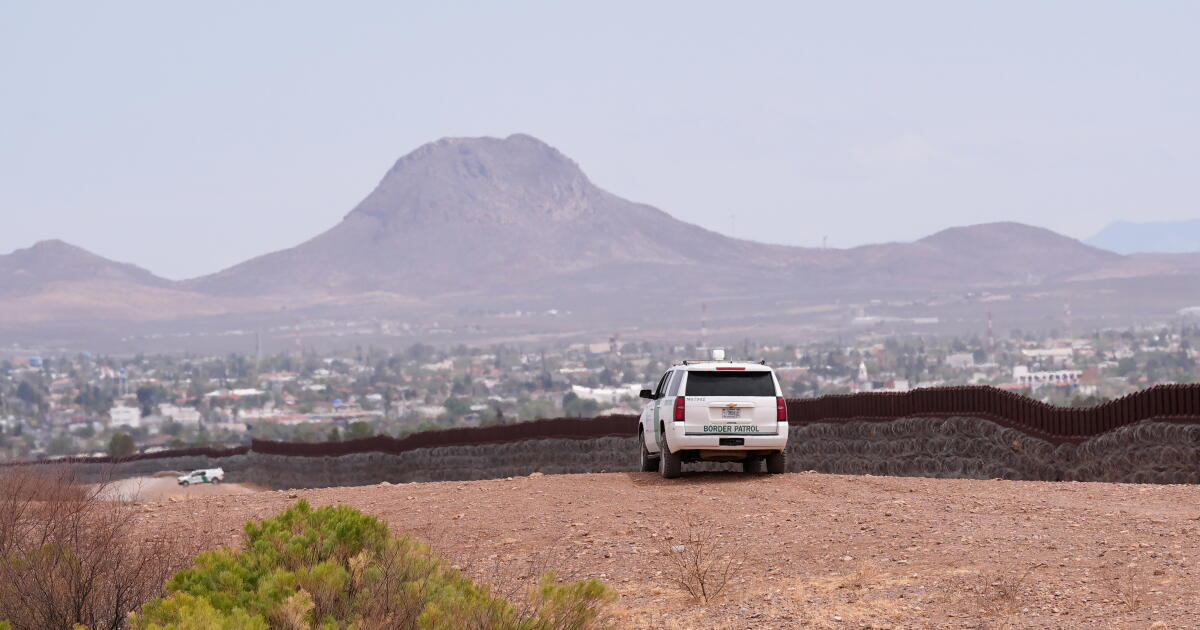
The Trump administration has begun work on a project to build a stretch of border wall in southern Arizona along part of a Native American tribe’s reservation, pushing ahead with one of its signature projects despite protests from the tribe.

U.S. Customs and Border Protection says the area is a dangerous smuggling route and that building the wall will close a longstanding security gap. But members of the Tohono O’odham Nation, whose membership spans both sides of the U.S.-Mexico border, have accused the administration of trespassing and say the construction will damage land sacred to the tribe.

The wall segment is part of a $46 billion effort by the Trump administration to fill the border with 30-foot steel bollard walls, vehicle barriers, and technology designed to stop undocumented immigration and smuggling.

But as building efforts have ramped up, the administration has run into opposition from landowners, environmental groups, and Native American tribes who say construction is violating property rights and desecrating sacred Indigenous sites.

The Tohono O’odham Nation said in a statement Tuesday that about 20 Customs and Border Protection officers, working with contractors, went onto the tribe’s land early that morning to begin construction.

Drone videos published by nation officials show roughly 14 vehicles and an industrial drill at one of the sites.

A federal judge permitted the government to move forward with construction earlier this month, but the tribe says the contractors are violating tribal codes and trespassing to access the border wall site.

The Tohono O’odham Nation, which has 37,000 members including thousands who live in Mexico, sued the federal government in June in an attempt to block construction of the border wall. The tribe argued that the wall would cause “significant devastation” on the reservation, including the destruction of mountain peaks sacred to the tribe, and would alter boundaries of their nation.

U.S. District Judge Richard Leon in Washington, an appointee of former President George W. Bush, ruled in favor of the government, noting that the border wall would be built on a 60-foot wide buffer zone of federally owned land called the Roosevelt Reservation.

“Defendants have not yet articulated plans to construct outside the Roosevelt Reservation,” the judge wrote in his opinion.

The Tohono O’odham Nation said that even if construction were contained to the Roosevelt Reservation, driving onto tribal land to access the area still constitutes trespassing.

“The contractors, who are on the Nation illegally, were accompanied by agents as they worked on three separate locations near the border with drill trucks to conduct soil sampling and other activities,” tribal officials said in a statement.

The CBP agents were masked, armed, and set up a vehicle blockade to stop tribal police from removing the contractors, according to Tohono O’odham officials. The nation had set up “No Trespassing” signs before Tuesday.

So far, no physical confrontations between police or members of the Tohono O’odham Nation have been reported.

CBP defended the need for the wall in a statement Tuesday, saying the desert spanning the Tohono O’odham Nation is a corridor for drug smuggling.

“The project will close one of the most dangerous smuggling and trafficking corridors on the Southwest border: remote desert that has facilitated decades of drug loads, migrant deaths, and cartel activity,” said CBP Commissioner Rodney Scott.

Tribal officials said they’re exploring further legal actions in an effort to remove contractors.

SLSCO Ltd., the Texas-based construction company building the section in Arizona, has secured over $390 million in funding from the Department of Homeland Security to build the border wall since 2023.

Schuettler writes for the Associated Press.

Source link

Padres minor league coach seized by ICE en route home to Arizona

The San Diego Padres minor league catching coordinator is in the custody of the U.S. Immigration and Customs Enforcement and will remain so “pending removal proceedings,” a spokesperson for the Department of Homeland Security said Tuesday in a statement.

Oswaldo Pirela, a former Texas Rangers minor league player, was detained Sunday morning at El Paso International Airport.

Pirela, 34, was flying to Phoenix, where he lives with his wife and two daughters. The Padres’ triple-A affiliate is the El Paso Chihuahuas, and Pirela was with the team during its home game Saturday night against the Salt Lake City Bees, an Angels affiliate.

The Department of Homeland Security spokesperson said Pirela came to the United States from his native Venezuela in September 2014 and that his permission to remain expired Feb. 10, 2018.

Homeland Security said Pirela was not carrying his work permit at the time he was detained. Pirela’s brother Juan Pirela presented Phoenix multimedia news organization Arizona’s Family with Oswaldo’s work permit, which indicated it was issued in 2024 and is valid until 2029.

“It’s very hard. He’s authorized to work in the United States,” Juan Pirela said. “So, the same department, Homeland Security, issues a work permit but then somehow it’s not enough.”

The Homeland Security statement addressed the issue: “To be clear, work authorization or a pending application do NOT confer legal status in the United States.”

“In violation of our nation’s laws, [Pirela] overstayed his welcome. When approached by law enforcement officers, he was not in possession of legal documentation granting him status in the country. He will remain in ICE custody pending removal proceedings and will receive due process.

As a roving catching instructor, Pirela is based out of the Padres’ spring-training complex in Peoria, Ariz., and travels to the organization’s minor league affiliates in San Antonio, Fort Wayne, Ind., and Lake Elsinore in addition to El Paso. He spent the 2024 season as bench coach for the Class-A Lake Elsinore Storm and became the organization’s catching coordinator in 2025.

“We recently became aware of the detainment of minor league catching coordinator Oswaldo Pirela in El Paso, Texas,” the Padres club said in a statement. “We are working to gather additional information and will not have any further comment at this time.”

Pirela was signed by the Rangers at age 17 out of Barquisimeto, Venezuela, and played catcher, first base and the outfield from 2009 to 2011 for the team’s Dominican Republic Summer League affiliate.

Source link