Apps

EasyJet 26 day strike action plan affecting 5 key airports in UK holiday hotspot

More than 3 million Brits travel there every year

UK travellers should be prepared for the risk of strike action over the next few weeks in a popular holiday hotspot. Millions of UK holidaymakers will be travelling abroad in the weeks ahead.

And France is one spot that will be popular with Brits. More than 17 million UK people travel there every year, according to the UK Foreign Office.

Now the new threat of industrial action has broken out – and it runs throughout the remainder of the summer holiday period. EasyJet cabin crew in France could walk out in strike action expected to run until September 2. Flight attendants there have complained about rota arrangements and working conditions.

French media report that three unions representing cabin crew at EasyJet France have issued strike notice covering the period from 7 August to 2 September. They have complained of a “continuing deterioration” in working conditions, according to a joint statement released this week.

What should you do if your flight is cancelled? For those planning to travel with the airline in the coming weeks, passengers whose flights are disrupted by cancellations or delays will be given 48 hours’ notice. Simply head to the ‘Booking’ tab in the EasyJet app to access the relevant information.

Should your flight be cancelled, you can request either a refund or a ticket change directly from the airline. If the replacement departure is scheduled for the following day, EasyJet may foot the bill for a hotel and a taxi to the airport.

The airports facing strike action include Lyon, Nice, Paris Orly, Bordeaux and Paris Charles de Gaulle. A spokesperson for ⁠easyJet said the company was disappointed and had made an offer of changes to tackle their concerns. ⁠They said: “Given we have planned negotiations in September, we call on the unions to call off this ⁠counterproductive action at this important time of the year for our customers”.

French news site RTL reports that workers are denouncing what they describe as “a vicious circle that has been going on for a year now”, with the SNPNC-FO, UNAC-CFE-CGC and UNPNC-CFDT trade unions condemning “the chronic instability of timetables, last-minute changes, imposed ‘trippings’ (a series of flights over several days, ed.), particularly gruelling rotas and a total lack of protective measures”.

“The notice period has been deliberately left open to cover the entire period,” the trade unions stress, adding that “key dates” for industrial action will be confirmed “48 hours in advance”.

The unions have accused management, whom they claim to have been warning “for nearly a year”, of failing to provide “concrete and binding” solutions to their concerns. Luckily for travellers, a previous strike call at EasyJet on Easter Monday in April had only a minimal impact on air traffic.

Local media say that as France’s second-largest airline by passenger numbers after Air France, British carrier EasyJet predominantly operates short- and medium-haul routes. The airline employs several thousand staff in France, a considerable proportion of whom work as cabin crew.

Gaël Leloup, a union representative for the Union of Civil Aviation Cabin Crew (UNAC), told RTL that “scheduling instability” has gradually become “the company’s normal way of operating”: “It’s normal to change people’s schedules once, twice, three or four times in the same day. And dozens of times a month, too. You might be moved from morning to evening shifts, or sent to another base in Europe for three or four days.”

The union representatives say they are fully aware of the disruption this strike action will cause to passengers’ travel plans, with another hectic weekend of holiday traffic on the horizon. “The sad thing is that it’s our passengers who will bear the brunt of it,” laments Gaël Leloup.

But with talks between staff and management having ground to a halt, workers feel they have been left with little choice: “After a year of discussions and still no solution, we have no option but to take major industrial action.”

For its part, EasyJet’s management said this week it is urging trade unions to withdraw the strike notice. The trade unions say they remain “open to negotiation” to call off the strike notice, provided that management “puts forward clear, concrete and binding solutions”.

Source link

Post Office issues ‘unlicensed’ warning and five things to avoid

It affects many across the UK this summer

The Post Office has issued a new alert to people across the UK. It said there had been a “staggering increase of 900% in travel scams over the past 18 months”. It said this was largely driven by advances in AI and its specialists are now warning tourists of five common scams many are falling for.

Regulators have warned that £11 million was lost to holiday fraud in 2024 alone , with opportunistic scammers taking advantage of rising last‐minute bookings and a surge in travel deals. Almost a third (30%) of adults have fallen victim to a travel scam or know someone who has, the Post Office said. To help holidaymakers protect themselves, Post Office is sharing practical tips for identifying and avoiding holiday scams.

Post Office tips to avoid scams on holiday

Unlicensed or fake tour guides

In busy, tourist hotspots, unlicensed guides will walk alongside you, offering an informal tour before demanding payment. To avoid this, always book tickets for attractions and tours through official sites, at museum kiosks or through accredited providers.

‘Are you lost?’

Being lost in a place you have never been to is normal. Locals who may initially seem friendly might offer directions or even take you to where you need to be. This usually ends in an aggressive payment demand. If you need assistance, seek help from inside a shop or cafe, consult a map or use your phone’s GPS for directions.

Friendship bracelets

Popular in major European cities, scammers place a “friendship bracelet” around your wrist under the guise of a free gift, then refuse to remove it without payment. Avoid engaging and keep walking if you are approached.

AI travel agents

Scammers are now using AI voice‐cloning technology to impersonate a travel agent or loved ones to get money. Warning signs include unnatural pauses in conversation, high‐pressure tactics, requests for immediate payment or changes to banking details. Always verify credentials through official websites, confirmed phone numbers, or multiple channels before acting.

Closed attractions

Fraudsters might claim a landmark is closed due to an event or maintenance, then divert travellers to a shop or unofficial tour where they receive a commission. Always check operating hours on the attraction’s official website, app or posted signage before altering your plans.

Adam Edinburgh, head of Post Office travel and new products, said: “The way scams work has changed from classic street cons with digital deception, from fake booking pages to AI‐cloned voices. Awareness is your first defence: pause before you pay, verify through official channels and be sceptical of unsolicited ‘help’.

“If something still goes wrong, having travel insurance protects you against theft, fraud and trip disruption, covering lost money, passports and valuables if you’re pickpocketed or scammed. If fake accommodation or missing documents leave you stranded, 24/7 assistance can help with replacements and new travel plans.”

Source link

I ditched my iPhone camera for DJI Osmo Pocket 4P and got a buttery smooth video upgrade

Video content looks seamless as DJI’s new Osmo Pocket 4P delivers footage as smooth as a Hollywood film set

For years, content creators have had to switch between a lightweight pocket gimbal for wide travel shots or lug around heavy cameras and lenses to get natural background blur and cinematic portraits. Now there’s a much more agile alternative.

DJI has just done the unthinkable, bundling a dual-lens cinematic camera system into a lightweight, nimble gimbal. As it launches the Osmo Pocket 4p, it makes both wide-angle and portrait filming accessible in one device so users can forget any extra lenses or multiple cameras.

It is wider and weighs more than its older sibling, but it packs in a lot more features. Having tested it myself, I’m sure these tiny setbacks are qualities the average user will quickly forget about. Well, I certainly did.

READ MORE:

I was wowed by its lightweight, insanely sharp camera quality and stabilisation. I didn’t have to worry about jerkiness of my content, how quickly I was moving or speed, immediately it was easier to use than the Osmo Mobile Gimbal I’ve had since 2018, a similar model can be bought here at Argos.

The 4P features are hugely beneficial to travel content creators, daily vloggers, and even mobile creators like myself. I’ve been testing it for the last two weeks – filming product reviews, scenery captures on evening walks and pieces to camera. The biggest test was in my dad’s old VW Beetle, which I purposefully did to trial the stabilisation, fluidity, and excess surrounding noise cancellation.

DJI Osmo Pocket 4P

Content Image

The Osmo Pocket 4P is a content-altering gadget for vloggers, TikTokers and even mobile news teams. The multi-purpose bundles a dual camera and gimbal in one pocketable device.

  • Exceptionally smooth content that glides on screen
  • 3-Axis gimbal
  • Dual camera system
  • Easy to navigate settings and switching formats
  • Light and nimble
  • The quality of the footage is noticeable straight away
  • The travel pouch is too small to fit all accessories on the go
  • Heavier than the Osmo Pocket 4

Where to buy the DJI Osmo Pocket 4P

The DJI Osmo Pocket 4P starts at £529 for the standard combo, which includes the camera, foldable light, carry pouch, handle, and cables. For the added perk of the DJI Mini Mic 2 Transmitter, Osmo Frame Tap, Mini Tripod and carrying bag, there’s the Vlog Combo for £605 – this is out of stock on DJI but is available currently at Currys.

Other retailers which stock both bundles include Amazon , Joybuy and photography shops Clifton Cameras , Park Cameras, and Camera World. Vlogging bundles are notorious for selling out – especially if they tick all camera, sound, stability, and light boxes in one buy (just look at the Canon G7X). I wouldn’t be surprised if DJI’s Pocket 4Ps are all snapped up quickly, too.

If that price is too steep, I’d buy the accessories separately. Both the light and Mini Mic 2 noticeably boosted the quality of the videos I filmed – the standout was the mic. Alternatively, and a big rival to the Osmo Pocket 4P, there is the Insta360 Luna Ultra which costs £649.

Impressive tech: Stable and fluid at the same time

I know, it being stable and fluid at the same time sounds contradictory, but the thing I was most impressed with is the stability of the gimbal, yet it’s easy to move, and the content looks seamless. This is mainly thanks to DJI’s 3-axis stabilisation and intelligent subject tracking.

It’s also effortless to do, I didn’t need to go into settings or spend ages tapping an area in focus on the screen. It did it all for me. The Active Tracking 8.0 is another handy upgrade, which keeps subjects on quick-moving scenery footage in focus and boosts the quality of content when filming solo pieces-to-camera.

Gestures are fluid, and tapping the screen keeps a desired subject in frame at all times as the camera subtly tracks it. This is what I used when filming myself in the car at 60mph; I didn’t fall out of frame once. Even while moving between 40 and 60 Mph in an old retro car (on a windy country road), the videos stayed smooth and with no jerky movements.

Of course, all of this is captured in high-end 4K with up to 240 FRPS. Photos can be taken in 4K Live too, and users can capture crystal clear detail with the 37MP camera.

A simple flick of the screen turns the device on and initiates instant filming. The same notion can be used from landscape to portrait, too. Content creators on Instagram and TikTok may be more fussed for portrait filming, again, a super easy flick of the screen back will adjust the layout – just cancel the off timer countdown.

More typically found in high-end cinema cameras, these professional filmmaking capabilities can effortlessly handle high-contrast scenes like city nightscapes, sunsets, and backlit portraits,” as DJI explained in their launch.

However, there were times when I had to re-centre the gimbal by double-clicking the left button. This is easy to do, but it happened more than I was expecting.

Transferring content and battery boost

One of the most important things is that transferring content works really well. No one wants to be waiting hours for a video for a TikTok clip to transfer; the same applies to work clips, a YouTube Vlog, or family footage. I did this on the go; it took a matter of seconds to connect my phone to the DJI device and download the footage. All you need is the DJI app.

This was all made easier with the comfort of having a strong battery. With all the gadgets and mic attachments, there was no need for added charging. One time this was noticeable, I filmed in the car from 100% for 30 minutes nonstop, and it dropped to 60%.

Buy the DJI Osmo Pocket 4P here.

Source link

I have new dream life abroad after selling my possessions – but miss one thing in UK

Beth used Vinted to sell all her unwanted items – and thinks other UK households could also be sitting on thousands of pounds

A Brit woman sold her unwanted things to start a new life abroad. But while she loves it, she misses one unusual thing about British life in particular.

Beth Hackman made £3,000 selling her unwanted clothes on Vinted to fund her dream move to Australia. She sold more than 600 items, including unwanted clothes, shoes and accessories on the app.

The 25 year old used the funds to pay for a flight, visa and accommodation in Sydney in March this year. Now she has started a new life as a physiotherapist.

But despite loving her new life, she does miss one aspect of life on the UK high street you perhaps wouldn’t expect. She said: “I’m loving Australia because of the work-life balance. I’m working fewer hours here than in the UK and making the same salary equivalent. I miss my family so much because I’m so close with them but I message and call them every day. Other than that I miss a Tesco meal deal.”

She decided to sell most of her clothes after realising she had far too many things. Beth listed everything from gym wear and occasion dresses to her brother’s prom suit and even a pair of Alexander McQueen trainers, which sold for £200.

“I’d just accumulated too much and hated how much was generally fast fashion,” Beth, from Windsor, Berkshire, said. “Moving to Australia has been a dream for around three years.

“I actually got to the point just before I went travelling that I sold all of my shoes so I just had my gym and running trainers or a random pair of heels left. I’d say I’ve sold at least 600 items and that much was just sat in my wardrobe.”

She believes many households are sitting on hundreds, if not thousands, of pounds worth of unwanted possessions without realising it. Beth said: “I would 100% encourage people to declutter if they’re saving for a major life goal. People don’t realise how much they could make.

“I think we’re all over consumers. Some of my friends have obscene amounts of clothes. Also, I feel better buying things second hand and also recycling my own clothes on Vinted. I wear a dress once and then sell it rather than let it sit in my wardrobe.”

Beth believes many people miss out on making easy money simply because they don’t present their listings properly. She also believes detailed descriptions and quick postage make a huge difference, helping her build positive reviews that encouraged more buyers.

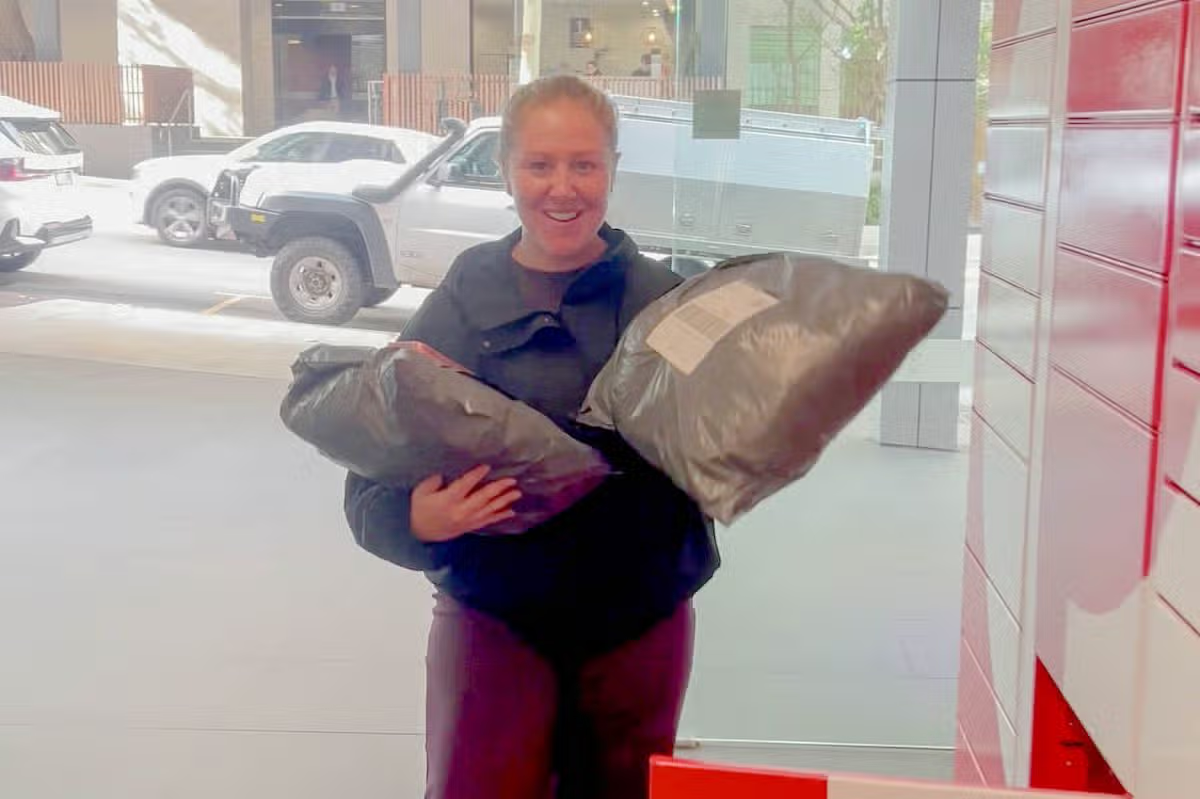
Beth said: “Taking good photos with a clean background is key. I also used a mannequin sometimes. Good descriptions are important. I had a postage locker on my way to work so always posted things quickly so got lots of good reviews.

“I think people initially put things up for way too much. People on Vinted want a bargain and won’t pay normal resell prices. I will always negotiate. I’d rather it be sold and out of my house and lose out on 50p than be set on prices. Although some people do take the p***.

“Photos and descriptions really matter to me as a buyer and I wouldn’t buy from someone who looks like they don’t put effort in so I make sure my posts looks better.” Beth first downloaded Vinted around five years ago, but not with the intention of making money.

Instead, she used the resale platform as a savvy shopping tool, searching for designer pieces to see how they looked on real people before buying them new. She said: “I started to use it as a platform to double check a product.

“If I wanted a dress from House of CB, I’d search it on Vinted to see how it looked on real bodies and to compare sizes. I like to think I’m clever for this. It’s basically picture reviews.”

Source link

New Sky alert as emails sent out to customers about ‘security’ and steps to take

Customers are being sent emails that explain everything they need to be aware of

Sky is sending emails out to customers with a message about ‘security’. In the UK, Sky serves more than 25 million people, about 36% of all households. Sky Broadband boasts nearly 5.8 million active users and employs around 20,000 people across the UK.

In a new email delivered to its customers, the connectivity company reminded people about the importance of watching out for scammers. It said: “At Sky, we’re committed to helping you keep your account secure. So, we wanted to give you some tips on how to stay vigilant.”

Urging customers to stay safe and explaining what steps to take, Sky added: “Sometimes, scammers pretend to be trusted brands so that they can try to trick you into sharing your personal information or even placing an order they may ask you to send on to them when it arrives.

“If you’re unsure about a call, text or any other message, end the conversation. Head to the My Sky app or sky.com to see if anything looks wrong — be sure to check your account details and your recent orders.”

For customers who receive calls, texts and WhatsApp messages, Sky advises “stay vigilant”. It says: “Fraudsters can sound convincing, especially if they rush you, pressure you, or offer a deal that seems too good to be true.”

Remembering the following information “will help you stay in control”

  • Sky will never ask for the password you use to sign into the My Sky app or sky.com
  • Ask you to place an order on our website while on the phone with you.
  • Tell you to share your screen on any device.
  • Ask you to read out your full payment card details (unless you contacted us first).
  • Pressure you into making decisions.

Sky says it always sends texts “from Sky”, adding: “Be cautious of other senders claiming to be us.” The company also says it will always give you the option to hang up and contact the customer service team if you’re unsure.

It added: “Use our verified Sky UK WhatsApp Business account — look for the blue tick. Remember, if anyone contacts you unexpectedly, sounds urgent, or asks for details, stop and take a moment.”

In terms of deliveries, Sky urges customers to be aware that if someone asks to return items they weren’t expecting to receive, or pressures them to return something using a QR code or courier. It says: “If you ever need to return Sky equipment, always use Sky’s official returns process.”

For more info, head to sky.com/returns. To find out more about how to protect yourself from scams, visit: sky.com/scamsafe.

What to do if you think you’re a victim of a scam

If you believe you’ve fallen victim to a scam, reach out to your bank right away if you shared any money or personal information. After that, make sure to report the incident to Action Fraud, the UK’s national reporting centre. You can do this by calling 0300 123 2040 or by visiting the Action Fraud website. It’s important to act quickly to protect yourself.

Source link

BBC confirms major Ludwig update as David Mitchell makes epic comeback

The BBC has confirmed that David Mitchell’s comedy-drama Ludwig will return for a third series, even before its eagerly awaited second season premieres

The BBC has announced that David Mitchell’s popular comedy-drama Ludwig will be back for a third series.

Even before its highly anticipated second season launches later this year. The detective programme, which is ideal for fans of Death In Paradise, has become the broadcaster’s most successful scripted show since 2024, leading executives to commission another run for both BBC One and BBC iPlayer.

Made by Big Talk Studios, in partnership with That Mitchell and Webb Company, the series is also a co-production with Germany’s ZDF. The programme’s first series proved an enormous ratings triumph, becoming the BBC’s most successful comedy debut since at least 2018, reports the Express.

Its initial run drew 9.5 million viewers within its first 28 days, while the opening episode has steadily grown its audience, achieving an impressive 11.8 million viewers in total.

Created and penned by Mark Brotherhood, the six-part mystery features David Mitchell as the unconventional puzzle-enthusiast detective Ludwig, with Anna Maxwell Martin portraying Lucy Betts-Taylor, the wife of the missing James Betts-Taylor. Both performers are confirmed to return to their roles when the series comes back.

Expressing his delight at the third series commission, actor David Mitchell told the BBC: “I am delighted that Ludwig will be returning to solve more of Mark Brotherhood’s brilliant mysteries. I can’t wait to get started and have renewed the subscription on my denouement-learning app.”

Meanwhile, Kenton Allen, Executive Producer and CEO of Big Talk Studios, said: “Ludwig has become one of those rare shows that genuinely cuts through – critically, commercially and internationally. We’re hugely grateful to the BBC, ZDF and ITV Studios for the confidence they’ve shown in greenlighting a third season ahead of the launch of series two.”

He went on to say: “What Mark Brotherhood has created is brilliantly original, hugely entertaining and deceptively distinctive in the way it blends smart comedy with a richly satisfying detective engine. At the heart of that success is the remarkable partnership between David Mitchell and Anna Maxwell Martin, brought to life by an exceptional creative team.

“In a crowded global market, for audiences to have embraced Ludwig on this scale feels incredibly special. There’s clearly nothing puzzling about that.”

Jon Petrie, BBC Director of Comedy Commissioning, added: “Ludwig is exactly the kind of smart, distinctive, audience-pleasing show we love at BBC Comedy. Sharp writing, a compelling story, big laughs and, naturally, a generous helping of puzzles. The team at Big Talk have crafted something truly distinctive and much-loved, and we’re excited to see what mysteries Ludwig tackles next.”

Ludwig is produced by Big Talk Studios in collaboration with That Mitchell and Webb Company for the BBC. The third series, comprising six hour-long episodes, will once again be penned by creator Mark Brotherhood, with Chris Foggin returning to helm the show as lead director.

Ludwig series one is currently available to stream on BBC iPlayer.

Source link

Martin Lewis explains how to use your card abroad and avoid extra charges

Martin Lewis has shared his top holiday money saving tip, explaining whether you should pay in local currency or pounds on your card abroad – and how it could save you money on extra charges

Martin Lewis has finally settled the age-old holiday debate, revealing whether it’s better to pay in pounds or local currency when using your bank card overseas. Sharing his expert insight with BBC viewers, he cut through the confusion, offering clear guidance on the smartest way to spend abroad without losing out.

Martin advised: “When you go abroad and you pay on plastic [card] and the overseas cash machine or shop asks you: ‘Do you want to pay in Pounds or Euros?’ What do you do?

“Well, the correct answer is you should always pay in euros or whatever the local currency is. That means it’s your plastic that’s doing the exchange rate conversion, not the overseas shop or ATM.”

He stressed that this rule applies no matter where in the world you are. Social media users were quick to chip in with their own tips and experiences. One user suggested: “Just get Revolut or Monzo.”

Another declared: “I use Starling Bank it has no fees abroad and recommends paying in the local currency instead of Pounds. Something I saw online about dynamic exchange rate and it can cost you more otherwise.”

A third added: “Revolut has always been the best on doing this, can exchange right in the app as well, and when withdrawing it’ll just take it straight from that, half the time the only fee is the cash fee by the machine you use.”

Meanwhile, a recent holidaymaker shared their own experience: “Just back from Spain and not a single ATM did free cash withdrawals either, thankfully that’s all I was charged with my Chase account.”

One shrewd traveller commented: “I just get Euros before I go anywhere save all the hassle, and if I’m really stuck for cash go into an actual bank on holiday and withdraw money on my card.”

This handy tip comes on the heels of advice from a money-saving guru who stressed the importance of securing travel insurance ‘ASAB’.

During an appearance on This Morning, the financial whizz revealed: “My travel insurance rule is get it ASAB (as soon as you book). People do get a little confused about this, so let’s break it down.”

He continued to explain: “If you’re getting a single trip policy, so that is a policy to cover just one holiday, then what you do is as soon as you book, you go on one of the travel insurer’s website, you tell it your holiday dates and you buy the policy then.”

Martin Lewis made clear that if your holiday falls in August but you booked back in January, getting your insurance sorted in January is equally crucial.

“That means you have the travel insurance in place to covers that holiday,” he said, adding: “You don’t need to [cover yourself] for extra dates [in case there’s a delay at the airport] because you have your return date.

“If something delays you, so you weren’t back, that would still be covered because that delay is all part of the travel insurance.”

Source link

Latest Ryanair, Jet2, easyJet and TUI boarding pass rules Brits need to know for summer

What you need to know about boarding pass policies for the UK’s biggest airlines, including the carriers that have gone completely paperless and the destinations that require a printed pass

Getting your hands on your boarding pass was once a straightforward affair. You’d turn up at the airport, check in at the desk, and a member of staff would hand you a printed copy.

These days, however, with increasing numbers of passengers choosing to check in online and airlines offering digital boarding passes, the whole process can feel rather bewildering.

If you haven’t got the airline’s app, do you need to download it? And if you choose to use a digital boarding pass, what happens should your phone go missing or your battery gives out?

Here’s what some of the UK’s biggest airlines have to say about boarding passes and what’s expected of you when you travel with them, reports the Liverpool Echo.

Ryanair

Ryanair has confirmed it has “moved to 100% Digital Boarding Passes (DBP)”. This means you’ll receive your boarding pass via the Ryanair app once you’ve checked in — which can be done either through the website or the app itself.

All travellers will be required to download the Ryanair app and check in online, with reminder notifications sent 48 and then 24 hours before departure. Any passenger who fails to check in online will face an airport check-in fee of €/£55 for most flights, or €/£30 for flights departing from Spain.

Once you’ve checked in, your boarding pass should appear automatically within the Ryanair app. Should you lose your phone or your battery runs flat after checking in, Ryanair confirms it will print a replacement boarding pass free of charge.

Travellers departing from certain airports in Morocco are still required to have a printed boarding pass. Ryanair explain: “Passengers flying from Morocco must check in online as normal and then present their DBP at the airport to collect a printed boarding pass, with the exception of those flying from Marrakech, Fez, Agadir, Tangier, Nador or Oujda, where you can now use your digital boarding pass on the Ryanair app.”

Jet2

Jet2 provides a paperless option for its flights and package holidays. By downloading the Jet2 app, passengers can access documents such as boarding passes all in one place.

Jet2 advise that “you can save boarding passes for up to eight passengers on one device.” It added: “When using multiple boarding passes per device, please make sure your group stays together at the bag drop, security, gate and when boarding the plane.”

For those who prefer the peace of mind that comes with a printed boarding pass, Jet2 explains you can: “Log in to Manage My Booking, then select ‘Get boarding pass’. From here, you can either get a PDF boarding pass sent to you or save it to your device. No need to print – just show the pass on your screen when you get to the airport.”

TUI

TUI explains: “if you’re flying with TUI Airways (flight numbers starting with TOM or BY), you have a choice. TUI Airways accepts both digital and paper boarding passes.”

It clarifies that passengers who would rather have a printed boarding pass should be sure to use A4 paper, ensure their copy is legible with no tears or damage, and that the barcode is clearly visible, as it will need to be scanned at the airport.

It’s important to bear in mind that not all TUI package holidays involve TUI Airways flights. If you’ve arranged a package holiday but the flight is operated by an airline such as Ryanair or easyJet, you’ll need to verify the regulations for the particular airline you’re travelling with.

EasyJet

There is a list of airports that don’t accept mobile boarding passes on easyJet’s website, including Antalya and Izmir. The majority of these are located in Egypt, Turkey, and Tunisia. If you’re travelling to one of these airports you should check in online and print a boarding pass.

That said, for most easyJet flights, the airline suggests downloading its app to keep all your trip details in one place. It says: “For more convenience and to access your boarding passes offline, you can download mobile boarding passes directly to your Apple or Google wallet.”

For those who prefer a paper boarding pass, these remain perfectly acceptable, with easyJet’s website stating: “The best way to store your boarding passes is to use the free easyJet mobile App or you can choose to print them out. You cannot use a PDF scan of your boarding pass on your mobile device as the airport security team will be unable to scan them.

“If you lose your boarding pass don’t worry, you can simply print them again. If printing, make sure the entire boarding pass is clearly printed.”

Have a story you want to share? Email us at webtravel@reachplc.com

Source link

Little-known app could help Brits skip huge queues in Portugal this summer

Many Brits heading to the EU are dreading their journey through the airport due to the new European Entry/Exit System (EES), but many don’t realise there’s an app available to cut waiting times at certain destinations

Peak holiday season is upon us, and the launch of the European Entry/Exit System (EES) is reportedly causing queues at destinations such as Spain, Greece, and France.

Local media in Spain has warned that Brits could face six-hour queues, and there have been reports of passengers missing flights, with airports blaming “additional processing requirements”. All non-EU visitors to the European Union, including Brits, are now required to have biometric information such as facial images and fingerprints taken on arrival, and must also use the machines on departure to help the EU flag overstays.

One of the reasons why Brits often face longer queues at the airport is that, while EU passport holders have their own lanes, Brits have to queue alongside other non-EU nationalities. But for those going to Portugal or Sweden this summer, there is a way to speed up the process.

An official (but not very well-known) app could potentially get you through the airport quicker. At the moment, the Travel to Europe app is only available for visitors to two EU countries, but it could be rolled out to other destinations in the future, according to its developers.

Brits heading to these countries can download the app on the App Store or Google Play – making sure you download the right app and not a third-party one.

Create a new journey by selecting the country you’re arriving in or departing from, this can be done up to 72 hours before your travels begin. You can then add a border crossing point and your estimated time of arrival.

Travellers can then scan the personal details page and chip of their passport, take a selfie to confirm their identity, and answer a few questions about their plans. Normally, these steps would be done at the EES kiosks, so by doing them on the app at home, you can save time at the airport.

Families travelling together can also add other passengers before submitting their journey. Once registered, you’ll get confirmation that your journey has been accepted. Then you simply need to follow the signs at the airport to make your way through security. The app developers are careful to point out that using the app doesn’t guarantee border entry, and that anyone passing through the airport can still be flagged for additional checks.

But for the majority of holidaymakers, this could cut down on the time they spend queuing and waiting to enjoy the Portuguese sunshine.

Reviews of the app have been mixed so far. One user said: “Pointless to have an app that supports only one country – I understand it is optional for Member States to incorporate the app into their systems, but it doesn’t mean this couldn’t have been arranged better.” But there were success stories, with one user saying: “I went to Stockholm…. long queues for UK passports. I had already used the app, and used the pre-registered lane. Two people in front of me. The whole process took about three minutes. Very impressed!!”

Around 2.4 million British tourists visit Portugal every year, making up the majority of the country’s tourism, although this is a fraction of the 19 million British visitors Spain saw in 2025. Overall, foreign tourists contribute €5.2 billion a year to the country’s economy (about £4.5 billion), with Brits as the biggest spenders followed by Germans.

Have a story you want to share? Email us at webtravel@reachplc.com

Source link

Ryanair, easyJet and Wizz Air ‘genius’ hack to get better seat for free

Travel expert said he has been doing this for ‘literally years’

A travel expert has revealed a “genius” hack that holidaymakers can use to dodge paying for seats on Ryanair and other airlines.

Rob Adcock regularly posts travel videos to his 141,000 Instagram followers, and in a recent clip he shared a tip he has been using for “literally years” to cut costs when flying. In the video, Rob asked: “Does everyone do this Ryanair seat hack or am I an actual genius? [Get] a better seat and it will not cost you a single penny.”

Rob recommends checking in “as normal” and selecting the free, randomly-allocated seat option, rather than forking out to choose where you sit. He continued: “Check-in closes online two hours before the flight departs so just before that go back into the app, click manage booking, then go to add or change seats. Then it’s going to show you a map of all the empty seats that are on the flight. Remember those seats.”

You should then close the app without paying for anything extra or changing your seat. Rob added: “Then when you get on the plane go and find those seats that you saw that were empty – ideally a full row or extra leg room – and just brazenly sit in it, safe in the knowledge that that seat is empty.”

Rob revealed he has been pulling off this trick for “literally years”, adding: “The flight attendant has never once asked me for my seat number. Just be careful of the front five or back five rows on the plane. Sometimes they check people for weight distribution so stay away from those.”

Content cannot be displayed without consent

Although the video focused on Ryanair, he noted in the post’s caption that the trick can be applied to other airlines too, writing: “Best case? Extra leg room. Empty row. Window seat. No stranger falling asleep on your shoulder.

“Worst case? You go back to your original seat and carry on with your life. This obviously won’t magically create business class on a full flight… but for budget airlines like Ryanair, EasyJet and Wizz Air, it’s honestly elite behaviour.”

Both Ryanair and Wizz Air were contacted for a response but had yet to reply at the time of publication. An easyJet spokesperson, however, commented: “We allocate seats for free and also provide the customers with the option to choose a specific seat when booking for a small fee.

“While we require customers to sit in their allocated seats for safety reasons, should customers like to move after take-off, our crew will be happy to help.”

Source link

Jet2, easyJet, Ryanair and TUI passengers issued ‘£125 fee’ luggage alert

Travellers are being urged not to get caught out and ways to avoid fees

Millions of people across the UK fly with well-known airlines, such as Jet2, easyJet, Ryanair and TUI, and with the peak summer travel season mere weeks away, travellers are being issued handy luggage guidance. With Brits continuing to prioritise travel in 2026, particularly short-haul trips, city breaks and budget airline holidays, the way people pack is evolving.

More travellers are opting for hand luggage only to save time and avoid extra fees. Yet many are still being caught out by oversized cabin bags or overweight suitcases, facing charges of up to £60 at the gate or £65 for exceeding hold luggage limits, which can add up to £125.

As a result, travellers are increasingly looking for smarter, more organised ways to maximise space while staying within airline restrictions. In response to this shift, Nick Gaskin, Sales and Marketing Director at IT Luggage has shared practical advice to help travellers pack more efficiently, whether they’re travelling light with cabin bags or checking in a full suitcase.

Nick Gaskin said: “Packing well isn’t about fitting more in; it’s about travelling smarter. With more people choosing flexible, shorter trips and hand-luggage-only options, organisation and preparation can make a huge difference to the overall travel experience. A few simple habits can save time, reduce stress and help travellers feel more in control from departure to arrival.”

As hand-luggage-only travel becomes increasingly common, making every inch of space count is key. Nick recommends creating a micro essentials kit.

He explains: “Treat your cabin bag as a safety net. Include essentials like underwear, key toiletries – remembering liquid limits – medication and a charger. That way, you’re covered for delays or lost luggage without relying on airport shops.”

He added: “Pack one complete spare outfit”. Rather than throwing in random extras, pack a full outfit using crease-resistant fabrics. This ensures you stay comfortable and presentable if plans change or bags are delayed.

The specialist also suggests carrying a boarding pass backup. “Technology fails more often than people expect”, Nick explains. “Keeping a screenshot or printed boarding pass avoids stress if airport Wi-Fi or apps stop working at a critical moment.”

Keep in-flight items within reach, Nick says. Store items like headphones, snacks and lip balm in a small pouch that fits under the seat, so you don’t need to access the overhead locker mid-flight.

For longer trips or checked bags, organisation is key to avoiding overpacking and keeping belongings in good condition, Nick says. “Pack by outfit, not by item. Grouping complete outfits together — including accessories — makes getting ready easier and prevents packing combinations that don’t work,” he added.

Weigh as you go with packing cubes. “Packing cubes aren’t just for organisation — they’re great for managing weight,” says Nick. “Weigh each cube as you pack it. It’s much easier to adjust before everything goes in the suitcase than deal with excess baggage at the airport.”

Nick also recommends positioning shoes strategically. Place shoes heel-to-toe around the edges of your suitcase and fill them with socks or smaller items to maximise space and help them keep their shape, he said.

Separate clean and worn clothes. A lightweight laundry bag keeps worn clothes contained, helping maintain freshness and making unpacking simpler when you return home, Nick adds.

Combine rolling and folding. He said: “Rolling softer items like T-shirts saves space, while structured garments such as jackets should be folded to reduce creasing. A mixed approach delivers the best results.”

Photograph your packed suitcase. “Taking a quick photo before you travel is a simple but effective step,” Nick adds. “It can support insurance claims if luggage is lost and acts as a reminder of what you’ve packed.”

Source link

‘I’m a travel expert – here’s how to nail car hire this summer’

Car hire is at its peak over summer, with people using them to travel around the UK and beyond. And getting it right is easy with a bit of knowhow, says travel expert Jamie Holt

Hiring a car is not particularly sexy nor glamorous – but it’s a task completed by Brits in their hundreds of thousands every summer. “We’re seeing families prioritise flexibility and convenience more than ever, whether that’s for a summer holiday abroad or a UK staycation,” says Jamie Holt, SIXT’s Head of Operations and Resident Travel Expert. “Whether it’s a week in Cornwall, a weekend in the Lake District, or driving straight from the airport to a resort abroad, people want the journey itself to feel easy and enjoyable.” Here he shares his top tips for getting it right.

Don’t leave it too late

Jamie says: “Summer is always busy, and family-friendly vehicles – SUVs, estates and 7-seaters- get booked up first, particularly during school holidays. Booking early gives you more choice, better value and the right vehicle for your trip. It’s also worth being realistic about space: once you add luggage, pushchairs and everything else, a slightly larger car makes the whole journey more comfortable.”

Embrace flexibility

Jamie says: “My biggest tip is to embrace the flexibility a car gives you – stop at a beach on the way down, visit smaller villages that are harder to reach by train, and avoid the pressure of fixed schedules. Make sure you plan for busy roads during peak weekends: setting off slightly earlier or later than the main rush makes a real difference. Keeping snacks, entertainment and chargers easily accessible helps too. We’re seeing more families turn short UK breaks into proper road trip experiences.”

Understand local rules when abroad

Jamie says: “Book in advance, especially in popular destinations where availability drops quickly in summer. Make sure you understand the local driving rules before you travel – speed limits, road signs and right-of-way rules can vary significantly. Check what’s included in your rental: unlimited kilometres, protection options and 24/7 breakdown assistance make a big difference abroad. And always take five minutes to familiarise yourself with the vehicle, the navigation system and local road apps before you set off.”

Book the right car for you

Jamie says: “Comfort and practicality should come first. People focus on price, but choosing the right vehicle completely changes the experience. At SIXT, we specialise in premium vehicles, so customers can expect a comfortable drive from the moment they collect the car. For summer, whether you’re heading on a UK road trip or hiring abroad, SUVs and larger family vehicles are popular because they offer the room and comfort that longer journeys demand. Think beyond getting from A to B; the journey should feel like part of the holiday.”

Take five minutes before setting off

Jamie says: “It makes a real difference, especially when driving somewhere unfamiliar or abroad. Before anything else, do a full walk-around of the car and take photos and videos – it only takes a moment and gives you peace of mind for the journey ahead. Check the navigation system, phone connectivity, charging points and child seat fittings before leaving the branch. Test how luggage fits in the boot rather than assuming it will all squeeze in later. Travel days can already feel hectic during summer, so a little preparation upfront helps everything run more smoothly.”

Plan, plan, plan

Jamie says: “Extra planning goes a long way during peak season. Whether you’re collecting from an airport, heading off on a staycation or navigating busy roads, giving yourself extra time helps. Keep an eye on live traffic updates and avoid the busiest routes where you can. If you’re travelling with children, build regular breaks into the journey. Hiring a car through SIXT already takes a lot off your plate – with flexible booking, 24/7 support and out-of-hours returns, families can focus on enjoying the trip.”

Hire straight from the airport

Jamie says: “Hiring straight from the airport removes unnecessary stress. After a flight, the last thing you want is to navigate train connections or wait for taxis with lots of luggage. Having a car ready means you continue your journey comfortably and on your own schedule – especially useful in destinations abroad where public transport is limited. We also see strong demand for same-day and short-notice bookings during summer, so flexibility is built in for when plans change.”

Look beyond the headline price

Jamie says: “Features like unlimited kilometres, vehicle protection and 24/7 breakdown assistance make a huge difference, particularly for families driving long distances or abroad. Adding an extra driver for longer trips is also worth considering – sharing the driving makes the experience more relaxed, especially with children. And for UK staycations, you can often book and collect from city centres and local branches, not just airports.”

Think about the journey as part of the holiday…

…”not just the transport,” says Jamie. “The smoother the travel day, the better the trip starts for everyone. Booking early not only gives you the widest choice of vehicle categories – it’s also where you’ll find the best rates, with SIXT’s prepay option offering great value and transparent pricing with no hidden fees. At SIXT, we’re making it easier than ever to hit the road – browse the premium fleet at sixt.co.uk or download the SIXT app to book from our nationwide network including city centres such as London, Manchester, and airports including Heathrow, Gatwick, Edinburgh and many more. SIXT gives people the freedom to travel on their own schedule, make spontaneous stops, and avoid the stress of crowded stations or peak-time public transport.”

Source link

Ryanair rule change could see you charged extra at airport

Ryanair recently changed one of its rules

A Ryanair rule change could see some holidaymakers charged around £55 extra at the airport. The budget airline is well known for its no-frills approach, regularly slapping on extra fees for things like luggage and choosing your seat in advance.

Currently, passengers travelling on standard tickets are only allowed one small personal item as hand luggage without incurring any additional costs. Should that item be larger than the permitted dimensions, it will need to go into the aircraft hold, at an extra charge.

While plenty of travellers are well aware of this policy, there is another Ryanair requirement that could leave you out of pocket. Anyone flying with Ryanair must check in online. Passengers can then store their boarding pass on a mobile phone or tablet.

In November 2025, Ryanair has moved to “100% digital boarding passes via its app, eliminating paper passes to reduce costs, improve service, streamline rebooking, and save 300 tonnes of paper annually”. Online check-in opens 60 days before departure for those who have bought allocated seats, or 24 hours beforehand for passengers happy to accept a free seat assignment.

Regardless of seating preferences, the online check-in window shuts two hours before the scheduled departure time. Once online check-in has been completed, boarding passes are issued, and passengers are required to save a digital copy. Failing to check in online will land you with an airport check-in fee of £55, or the euro equivalent.

To sidestep this charge, make sure you have a valid boarding pass in hand before setting off for the airport, reports Chronicle Live. For those travelling without a smartphone or tablet, Ryanair will issue a free boarding pass, so long as online check-in has been completed before arriving at the airport.

Ryanair said it will send passengers a reminder to check in online shortly before their scheduled departure.

Source link

easyJet slashes flight prices – but you’ll need to act fast

The budget airline is offering a range of discounted flights from UK airports

Brits planning a holiday abroad have the next few days to book discounted flights. Budget airline easyJet is currently offering up to 15 per cent off certain trips.

The reduction applies to selected flights between June 1 and September 30. However, the deal only runs until June 3. On the easyJet website, it said: “For the next five days easyJet is offering customers up to 15 per cent off selected flights to and from the UK, giving Brits the opportunity to secure great value fares for their summer holidays. The promo applies to flights between 1 June 2026 and 30 September 2026, covering the peak summer season and school holidays.

“With flights available to a wide range of popular beach and city destinations across easyJet’s unrivalled European network ensuring there are options for all the family.” Going into more detail, it said: “Customers can book discounted fares between 8am on Friday 29 May until 8am on Wednesday 3 June 2026 via easyJet.com or the easyJet mobile app.”

The offer includes flights from airports across the UK, with thousands of seats available at reduced prices with fares starting from £19.99. Examples of some of the routes on offer include:

  • London Gatwick to Paris and Reus from £31.99
  • London Luton to Lyon from £22.99
  • London Southend to Geneva and Pisa from £19.99
  • Bristol to Malaga and Palma from £25.99
  • Manchester to Amsterdam, Barcelona, Berlin, Bordeaux, Paris, Copenhagen, Geneva, Hamburg, La Rochelle, Nice, Oslo, Prague, Rennes, and Zurich from £31.99
  • Liverpool to Amsterdam from £25.99, Barcelona, Split, Malaga, Palma, Naples and Nice from £25.99, Faro from £26.49

On top of this, easyJet holidays is also offering thousands of packages to popular city and beach destinations in Europe and North Africa this summer. “Customers can save £50 per person on beach holidays departing before 31 July 2027 when using code BEACH50, and £20 per person on city breaks departing before 31 August 2026 when using code CITIES20,” easyJet said.

Kevin Doyle, easyJet’s UK country manager, commented: “We know customers are always looking for great value when booking their summer holiday and with thousands of discounted seats available across our network, now is a great time to book a trip and enjoy Europe’s most popular destinations for less.

“To ensure people feel confident to book, we’ve launched our Book with Confidence Promise which guarantees that the cost of flights and package holidays will stay fixed after booking and we will not add fuel surcharges, protecting customers from increased fuel cost.

“We are operating as normal, not making cancellations and are looking forward to taking millions of people on their well-deserved holidays this summer.” For more information, visit teh easyJet website here.

Source link

People could be kicked off cruise ship for wearing 1 luxury item

As technology becomes more and more advanced and accessible to people, cruise ships have to put rules in place to make sure passengers are safe, and their privacy is protected

People are being warned that they could be fined or kicked off a cruise ship they’re a passenger on for wearing 1 luxury item when onboard. Several cruise companies have introduced a number of new rules in 2026 to ensure the safety of passengers travelling on board.

As technology continues to advance and people snap up the latest gadgets, cruise operators are keeping their policies up to date to safeguard holidaymakers and protect their privacy while travelling at sea. Whether you’re sailing with Disney, Virgin, P&O or Fred. Olsen., each cruise liner has their own set of rules that could land passengers in trouble.

Don and Heidi, a couple who have clocked up 100 cruises between them, regularly share updates and handy tips on TikTok, and have been keeping a close watch on shifting cruise policies over recent months.

With the rise of people wearing smart glasses, such as the very popular Meta Glasses, cruise ships have been forced to take steps to protect their passenger’s privacy when they’re traveling on cruise liners.

Don said: “Cruise lines are instituting new policies and in 2026, these behaviours will get you fined, banned, or removed from the ship entirely.

Content cannot be displayed without consent

“One, recording other passengers without their consent using technology like Meta Glasses is a serious violation of privacy policies and fellow cruisers are reporting it.”

One of the cruise companies who has banned the items is Royal Caribbean who quietly updated its prohibited items list to tighten onboard safety and cybersecurity.

Recently, Royal Caribbean updated the verbiage on its prohibited items list to read: “‘Smart’ glasses from any of several manufacturers that can record video and audio are not allowed to be used in certain areas onboard the ship, including, but not limited to, public restrooms, Youth Program areas, medical areas, as well as the casino.”

Royal Carrabian’s app confirmed that if a guest fails to abide by the policy, the chief security officer and captain are authorized to confiscate the smart glasses.

Don continued: “Two, flying a drone from the ship is banned on nearly every cruise line. Get caught launching one and you’ll be escorted off at the next port.

“Three, fights on cruise ships are all over the news and lines are done looking the other way. Passengers involved in physical altercations are now being banned from certain cruise lines for life.

“Four, getting caught with prohibited items in checked luggage and you get escorted to a security meeting. Try to bring something more serious on board and you could be handed over to authorities at the next port.

“Five, this isn’t optional. It’s international maritime law. Skip the muster drill and crew will track you down to complete it. Refuse entirely and you’ll be removed from the ship before a set sail.

“Six, lighting up on your balcony, in your cabin, or anywhere else outside the designated smoking areas can get you fined and repeat violations can get you escorted off the ship.

“This includes vaping. Don’t forget to share this one with your cruise mates for your next sailing.”

Source link

UK holidaymakers in Turkey warned about security risks and entry requirements

Here’s everything UK holidaymakers need to know before heading there this summer, from entry requirements to taxi use and dress code

Turkey remains a firm favourite amongst British holidaymakers, with thousands of people flying out to the country each year. Anyone planning a trip there this year is strongly advised to familiarise themselves with all current travel guidance and any warnings in place.

The UK Foreign, Commonwealth and Development Office (FCDO) provides a wealth of information on its website, covering countries across the globe. It’s an invaluable resource for anyone with holidays booked or considering travelling abroad, reports Chronicle Live..

If you’re heading to Turkey, there are several important things to be aware of. We’ve outlined the key travel warnings and advice below.

The Foreign Office states: “If you choose to travel, research your destinations and get appropriate travel insurance. Insurance should cover your itinerary, planned activities and expenses in an emergency.” It also cautions: “Your travel insurance could be invalidated if you travel against advice from the Foreign, Commonwealth and Development Office (FCDO).”

Warning over Turkey- Syria border

The FCDO advises against all travel to within 10km of the border with Syria due to ongoing fighting and an increased risk of terrorism. The FCDO states: “Fighting in Syria continues in areas close to the Turkish border and there is a heightened risk of terrorism in the region. Due to the ongoing conflict in Syria, roads in Hatay Province leading towards the border may be closed at short notice.”

Entry requirements

To enter Turkey, your passport must have an ‘expiry date’ at least 150 days beyond the date you arrive and at least one blank page. If you’re entering at a land border, ensure officials stamp and date your passport at the border crossing.

The FCDO says: “Check with your travel provider that your passport and other travel documents meet requirements. Renew your passport if you need to. You will be denied entry if you do not have a valid travel document or try to use a passport that has been reported lost or stolen.” You can visit Turkey without a visa for up to 90 days within any 180-day period, for business or tourism purposes.

Political situation

The Foreign Office states: “Regular demonstrations and protests are currently taking place in Istanbul and other cities across Turkey. Demonstrations may become violent. The police response has included use of tear gas and water cannons.

“Events in Israel and Palestine have led to heightened tensions in the region and in locations across Turkey. Demonstrations continue to occur outside diplomatic missions connected to the conflict in major cities, particularly Israeli diplomatic missions in Ankara and Istanbul. Avoid all demonstrations and leave the area if one develops. Local transport routes may be disrupted.”

Drink and food spiking

The FCDO warns: “Be wary of strangers approaching you to change money, or to take you to a restaurant or nightclub. If strangers offer you food and drink these could be spiked. Buy your own drinks and always keep sight of them.”

Holidaymakers are being cautioned that there have previously been instances of severe illness caused by alcoholic beverages containing methanol in popular tourist destinations across the globe. The FCDO says: “In Turkey, including Ankara and Istanbul, people have died or suffered serious illness after drinking illegally produced local spirits and counterfeit bottles of branded alcohol.

“Even small amounts of methanol can kill. It is not possible to identify methanol in alcoholic drinks by taste or smell. See Travel Aware Drink Spiking and methanol poisoning for information about how to reduce the risks. Seek urgent medical attention if you or someone you are travelling with show the signs of methanol poisoning after drinking.”

Taxis The website says: “Accepting lifts from drivers of unofficial taxis is highly risky. Find a registered taxi, note the registration number before entering and ensure the fare is metered. App-based taxis and pre-booked taxis are also widely available.”

Carry your ID

It is illegal not to carry some form of photographic ID in Turkey. Always carry your passport or residence permit. In some busy areas, especially Istanbul, the authorities may stop people for ID checks. There are also several police checkpoints on main roads across Turkey. Cooperate with officials conducting checks.

Dress code

Holidaymakers are also given guidance on appropriate attire. The FCDO advises people to “dress modestly if you’re visiting a mosque or a religious shrine to avoid causing offence”.

Stray dogs

The Foreign Office says: “Most towns and cities have stray dogs. Packs congregate in parks and wastelands and can be aggressive. Take care and do not approach stray dogs. If you’re bitten, get medical advice immediately. Rabies and other animal borne diseases are present in Turkey.”

Rules over sale of antiquities

Purchasing or exporting antiquities is prohibited. You could face a fine and a prison sentence of 5 to 12 years. Certain historical items found at local markets and in antique shops may be sold within Turkey but are forbidden from being exported. Always verify the status of antique items before making a purchase.

Source link

Millions of Brits swapping out holidays abroad for UK staycations in 2026

Nearly half of Brits say the cost of living has put them off going abroad in 2026, with many choosing to holiday at home instead.

More than 25 million adults are giving foreign holidays a miss this year – with many choosing staycations to sidestep the stress of airports, travel disruption and worries over fuel shortages.

A survey of 2,000 Brits revealed that almost half (48%) have no plans to travel abroad in 2026, with the cost of living (33%) cited as the most common reason. Others are opting to explore Great Britain, saying they want to see more of the country, support the local economy, and avoid the risk of getting stuck abroad.

Over a third (34%) said concerns over fuel shortages have impacted their holiday plans this year. But despite this, 22% are perfectly happy that they haven’t booked an overseas trip, with 19% saying it isn’t worthwhile in the current climate.

Instead, 46% say there are plenty of fantastic destinations right on their doorstep. The Lake District, Devon and Cornwall rank amongst the most sought-after spots for a getaway in the coming months.

Research commissioned by National Rail found that 36% of staycationers plan to travel on holiday by train.

For many, it’s about more than simply getting from A to B. Picturesque views, the chance to spend time doing things they enjoy – such as reading – and the feeling that the holiday starts the moment the journey begins are all cited as key reasons train travel appeals to so many.

What’s more, the research suggests rail journeys can help people discover new places, with travellers saying they feel inspired to visit locations they pass through on the train.

Rail industry data showed a 10% increase in ticket sales between April and mid-May for summer travel to Britain’s most popular coastal destinations.

Sarah Apps for National Rail, said: “We’re seeing a real shift in how people are thinking about their summer holidays this year – with more looking to discover just how rewarding a Great British break can be.

“From breathtaking coastlines to vibrant cities and a peaceful countryside, there’s an incredible variety of destinations easily accessible by train.

“It’s great to see so many embracing the chance to discover places that feel a world away, without having to travel too far from home.”

The research also found that 35% see staycations as a better way to connect with friends and family, compared to just 9% who said the same about holidays abroad. A third believe staycations are ideal for creating nostalgic memories, while 22% say nothing beats a classic British summer.

Sarah Apps added: “Staycations can feel like a real home away from home, while giving people more time to connect with the people who matter most.

“Whether it’s discovering somewhere new or rediscovering an old favourite, it’s about making the most of the experience from start to finish.

“Travelling by train means your holiday can begin the moment you step on board – giving you time back to spend exactly as you choose. On the train you can relax with a good book, watch your favourite show, or chat and play games with family and friends.”

Source link