Apollo

Comedian insists ‘we need something’ after Live at the Apollo axed in BBC cuts

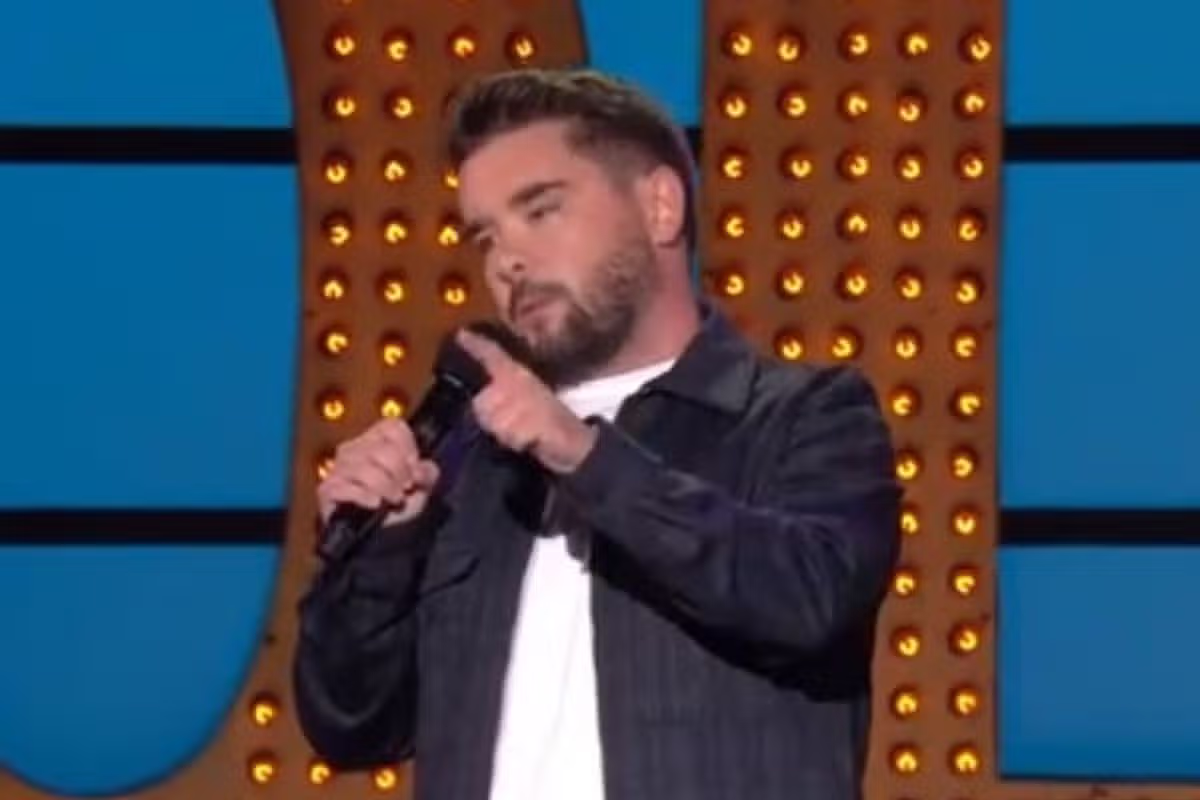
Adam Rowe joined BBC Breakfast presenters Emma Vardy and Roger Johnson on the famous red sofa to discuss his thoughts on the cancellation of Live at the Apollo.

A comedian has shared his thoughts on the axe of BBC’s Live at the Apollo, arguing that comedy audiences still “need something”.

34-year-old stand-up comic Adam Rowe appeared on Sunday’s instalment of BBC Breakfast to discuss his career highlights at the Apollo.

Talking to news presenters Emma Vardy and Roger Johnson, Adam said he wasn’t “surprised” the BBC decided to let the show go.

However, he did mention that it would still be good to have a programme that showcases talent live on stage. He said: “It was a massive platform.

“I think it should still be there; I think there should be a home for British stand-up.” He later added: “We need something. We need something like ‘you can watch the best of British stand-up here’ and if it’s not going to be Live at the Apollo, it’s going to have to be an independent that does it online. Maybe YouTube or something.”

The star also added that Live at the Apollo introduced a whole “generation” into the world of stand-up comedy, adding: “It’s not going to be there now.”

After more than two decades, it was recently announced that Live at the Apollo has become the latest casualty of the broadcaster’s cost-cutting plans. The stand-up series, filmed at London’s iconic Hammersmith Apollo, will not return after its next run, the BBC has confirmed.

The decision forms part of wider savings measures as the corporation looks to reduce spending by hundreds of millions of pounds in the coming years. Describing the move as a “difficult decision”, BBC bosses paid tribute to the programme’s legacy, highlighting its role in introducing audiences to both established comedy stars and rising performers in a prime-time slot.

Since launching in 2004, Live at the Apollo has become one of the broadcaster’s most enduring entertainment shows. It has also provided a platform for countless stand-up comics and helped many of them rise to mainstream success.

Before the curtain falls, one final series will be recorded at the Hammersmith Apollo later this year, giving the long-running format a final send-off.

Despite the bad news, Live at the Apollo is not the only show to be affected by the changes. The BBC has also confirmed that Blankety Blank and Celebrity Mastermind have been dropped as part of the same round of cuts.

Part of an official statement from the BBC reads as follows: “We are incredibly proud of all three of these much-loved shows and would like to thank everyone involved, both in front of and behind the camera, for bringing them to screen and making them such a success over many years.”

BBC Breakfast airs daily from 6am on BBC One.

Source link

Apollo hijacks easyJet takeover with £5.7bn bid, trumping Castlelake

Published on

EasyJet said on Friday it had agreed in principle to Apollo Global Management’s cash offer of £7.15 a share, worth about £5.7 billion (€6.6bn), which the board judged a “superior outcome” for shareholders than the £6.90 a share tabled by US private equity firm Castlelake.


ADVERTISEMENT


ADVERTISEMENT

Having accepted Castlelake’s proposal only last Sunday, the Luton-based airline said it was “no longer minded to recommend” it.

Investors welcomed the auction as easyJet shares climbed around 15% to roughly £6.75 on Friday morning, their highest level since early 2022, though they remain below Apollo’s offer price.

The bid represents an 81% premium to the £3.94 at which easyJet closed on 28 May, the last trading day before Castlelake’s interest became public, a valuation that reflects how badly the airline had been beaten down.

The conflict between the US and Iran sent jet fuel prices soaring and disrupted travel plans, with easyJet’s shares losing more than a third of their value before the takeover interest emerged.

The damage showed in the accounts.

In May the airline reported a headline loss after tax of £377 million (€442mn) for the six months to the end of March, 27% deeper than a year earlier, even as revenue grew 12% to £3.95 billion (€4.6bn).

It warned that the second half of the financial year would also be hit by higher fuel costs and reduced visibility over bookings, though CEO Kenton Jarvis said easyJet was “well placed” to weather the turbulence.

Industry-wide, the International Air Transport Association warned last month that global airline profits are on course to halve this year.

The Brussels problem

The obstacle now facing both bidders sits in EU law, which requires airlines flying within the bloc to be majority-owned and effectively controlled by EU member states or qualifying European nationals.

Castlelake had proposed to satisfy the rule by partnering with two Irish aviation executives, Peter Bellew and Mark Breen, who would have held a controlling stake through an EU-based company.

Concern over such regulatory hurdles helps explain why easyJet’s shares have lagged the bid prices on offer. Apollo, for its part, says it will take “all necessary steps” to win merger clearance and any approvals relating to the EU’s Foreign Subsidies Regulation.

Apollo has also promised to retain the easyJet name by extending the existing licence with easyGroup, the vehicle of founder Sir Stelios Haji-Ioannou, who with his family owns roughly 15% of the airline and collects a royalty on its revenue.

That pledge may prove decisive in winning over the carrier’s most influential shareholder as neither offer is yet firm.

Under British takeover rules, Castlelake must decide by 3 August whether to bid or withdraw, with Apollo facing a deadline of 7 August.

Should a deal succeed, easyJet would leave the London Stock Exchange, joining the latest wave of British companies bought by foreign capital this year.

Additional sources • AFP

Source link