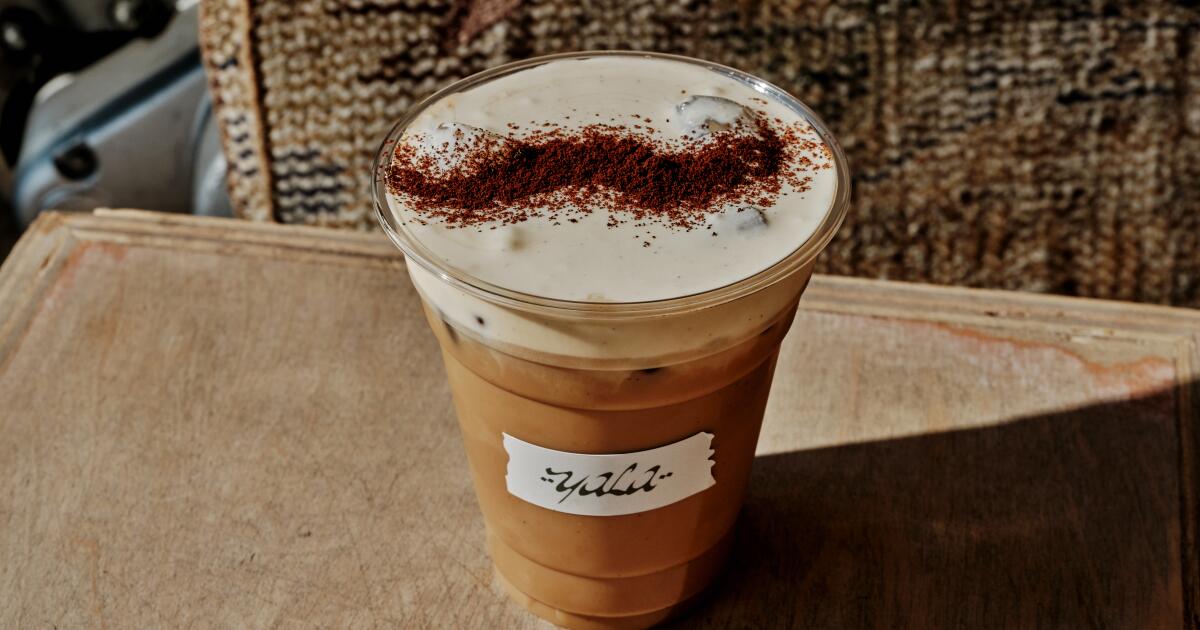
“You can’t open a coffee shop in L.A. without having a cream top, fortunately or unfortunately,” said Ryan Solomon, director of wholesale at the Little Marionette, on bringing the cafe from Sydney to L.A. in 2024.
A whipped topping typically made from condensed milk or heavy cream, fans of embellished beverages can’t get enough of the now-standard flourish that local coffee shops add to iced coffee and matcha drinks. The trend evolved from the Austrian Einspänner coffee drinks that first overtook Seoul’s coffee scene in 2016 before landing in L.A. not long afterward.
The verdict on cream tops is split among cafe owners, with some claiming that the rich, luscious topping can overpower the flavors of carefully curated coffee drinks. Last year, prominent L.A. cafes Maru Coffee and Mandarin Coffee Stand limited the add-on on their menus, with Mandarin Coffee Stand owner Sherry Gao saying that the trend went “a little bit out of control.”
About This Guide
Our journalists independently visited every spot recommended in this guide. We do not accept free meals or experiences. What should we check out next? Send ideas to guides@latimes.com.
But for Arian Behboodi and Jared Sielski, co-owners of Lynx Coffee in Sherman Oaks, the pros outweigh the cons.
“We appreciate the cream top drinkers, and we appreciate the coffee fanatics, and we really do try to have a little bit of both,” Behboodi said.
Now, local cafe menus are evolving beyond neutral cream top flavors and offering whipped toppings that pull inspiration from all parts of the world, such as an iced honey latte garnished with a Vegemite cream top at a Palms coffee shop and a cajeta cream top that recalls the gooey Mexican caramel sauce at a new cafe in Hermosa Beach.
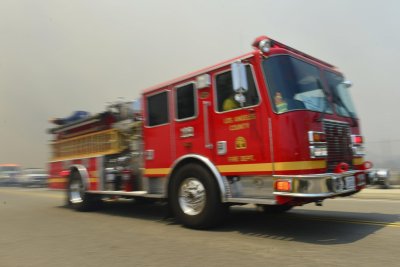
One man was critically injured in a fire in Los Angeles Friday after illegal fireworks went off, setting two vehicles on fire in a motel parking lot. File Photo by Stuart Palley/EPA
July 5 (UPI) — One man was critically injured in a fire in Los Angeles Friday after illegal fireworks went off, setting two vehicles on fire in a motel parking lot.
The 22-room Crescent Inn motel in the Wilmington neighborhood of Los Angeles was completely evacuated from the incident. Los Angeles Fire Department Assistant Chief Carlos Calvillo said first responders discovered a wounded man near the burning BMW when they arrived on the scene.
“This is a good example of messing with illegal fireworks, fireworks in general, extremely dangerous,” he said. “This person’s body was severely traumatized from this incident.”
Emergency responders were called to a report of two vehicles on fire at about 8:30 p.m. PDT Friday. The Los Angeles Police Department also responded to the scene.
A single family home next to the motel was also evacuated. Twelve people, including two children, were displaced by the fire.
The cause of the fireworks going off has not been determined. Fire officials say they believe the man was smoking in the BMW.
The Autry’s current exhibition,“Life, Liberty, and Los Angeles” is an excellent show that takes a deep regional dive pegged to its 250th American anniversary programming. Of all the pieces, See Lee’s meticulously stitched “Hmong Story Cloth” (circa 1980) is a poignant chronicle of making the journey to an unknown future in the United States. Utilizing the traditional paj ntaub embroidery format, the textile documents Lee’s family fleeing war-torn Laos and resettling in Long Beach during the 1970s. The narrative unfolds in sequential sections depicting military violence at a chaotic crossing of the Mekong River; lower panels remember Thai refugee camps, a rescue airplane and a Greyhound bus. This visual testimony shares striking cross-currents with Latin American arpilleras and paños Chicanos, linking disparate diasporic traditions through the shared language of quietly political, deeply personal needlework — in this case, preserving a crucial chapter of Southeast Asian migration to Southern California.
Like many outdoors lovers, I love a last-minute camping trip.
There’s a special kind of magic when the stars align, you snag a reservation and realize you’ll soon be sleeping under the stars in a place you’ve never been.
But given the popularity of California’s campgrounds, is it really possible to book a campsite on short notice? In this edition of The Wild, our weekly outdoors newsletter, I will explain not only how you can but also where you will be more likely to find open spots (even, if lucky, on a holiday weekend).
You are reading The Wild newsletter
Sign up to get expert tips on the best of Southern California’s beaches, trails, parks, deserts, forests and mountains in your inbox every Thursday
By continuing, you agree to our Terms of Service, which include arbitration and a class action waiver. You agree that we and our third-party vendors may collect and use your information, including through cookies, pixels and similar technologies, for the purposes set forth in our Privacy Policy such as personalizing your experience and ads.
L.A. sits within a quick drive to both the San Gabriel and Santa Monica mountains, two expansive ranges that offer multipleopportunities.
But first, I want to share what I learned in my conversation with Mike Lee, owner of Campsite Tonight, a website and app that monitors campgrounds throughout California for cancellations so its users can book sites.
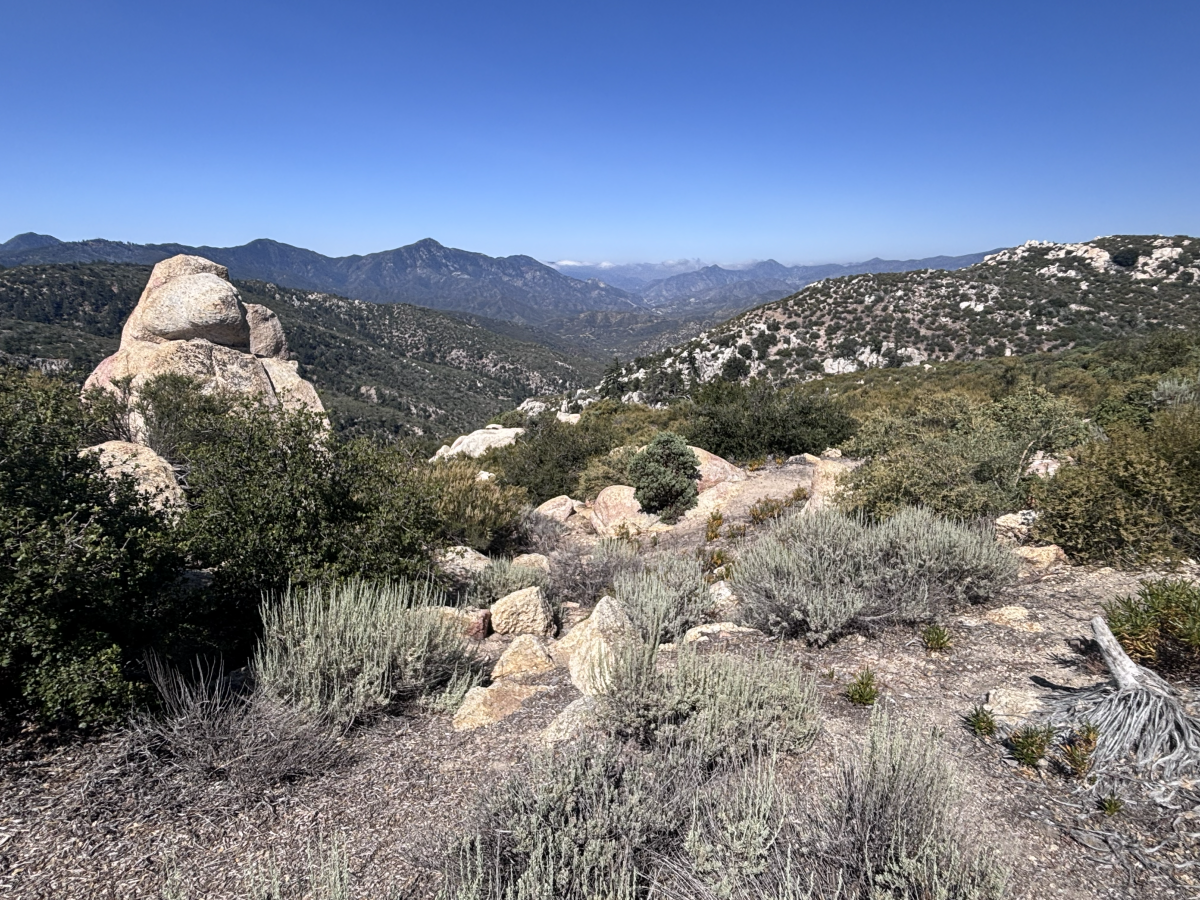
One of the expansive views of the San Gabriel Mountains that can be found at Chilao Campground.
(Jaclyn Cosgrove / Los Angeles Times)
I’ve long been a skeptic of using private websites to book a campsite on public lands. But given Lee is an avid camper, dad and Californian running the site on his own, I wanted to hear him out.
Lee was motivated to take over Campsite Tonight a few years ago after finding himself frequently frustrated with how challenging it was to book campsites at state and national parks in California at times when his busy family could take a vacation.
Campsite Tonight frequently scans several websites throughout California and several other states (including Utah for those dreaming of a trip to Zion National Park). His site checks the popular campgrounds every 12 seconds for cancellations while less popular campgrounds are scanned often but less frequently.
He also offers data for popular campsites too, so users can learn more about when to look. For example, at Yosemite’s Upper Pines Campground, Lee includes that 11 a.m. Pacific is the peak hour when cancellations appear (and about 31% of reservations there are booked within seven days of arrival).
A tent in the evening light at Upper Pines Campground in Yosemite National Park.
(William Hale Irwin / For The Times)
Lee’s app offers limited-but-still-useful features to free users, including some ability to search for open sites, and is $29.99 a month or $59.99 a year for advanced features, including the option to more rapidly book a campsite at a national park by essentially linking your Campsite account with your Recreation.gov account.
Running the website has “taught me, as I’ve looked at the data more and more, that last-minute camping is actually pretty achievable,” Lee said while sitting inside a tent in a campground near Yosemite. “The biggest thing is being flexible. Before, if I didn’t book it in advance or if I didn’t get [a site when I wanted], I would never look again. Now I look more.”
Lee said he’s noticed fewer cancellations on long weekends, although there will still be families that can’t make their trips. After we initially spoke, Lee built a page specifically to scan for campsites available over Fourth of July weekend. I was surprised by just how much remained open.
Leo Carrillo State Beach.
(Mike Cilantro / For The Times)
Scanning the page on Tuesday, I noticed a spot at Leo Carrillo State Park. Although it was for Wednesday night, I was tempted. Multiple campsites remained open in Los Padres National Forest, even over the weekend. A random campground in Sequoia National Forest made me look at just how far of a drive it would be from my apartment. And I noticed there was even a spot free at a Big Sur campground on Sunday evening. “No, you can’t, er, you shouldn’t drive that far for one night of camping,” I told myself. (Should I, though?)
That said, there are several first-come, first-served campgrounds near L.A., especially in Angeles National Forest, for those who’d like to stay closer to home or can’t find something online.
Here is a quick guide to what I recommend trying to snag. Given it’s a holiday weekend, it will still be more challenging, but if you can leave early Friday, I don’t think it’ll be impossible to camp at one of these spots.
For those looking for simple car camping (beginner)
A campsite at Chilao Campground with a large campfire ring.
(Jaclyn Cosgrove / Los Angeles Times)
Each of these campgrounds are in Angeles National Forest, offer piped water and vault toilets, and have sites with picnic tables, parking spots and campfire rings.
Chilao Campground: A large campground with 84 sites spread over two loops, Little Pines and Manzanita. Its landscape features large boulders, sweeping views and pine trees (especially the eponymous loop). Piped water is available, although it is at times turned off, so please check the campground website before heading out. The Chilao Visitor Center, open on the weekends, is nearby.
A campsite in Chilao Campground shaded by several pine trees.
(Jaclyn Cosgrove / Los Angeles Times)
Crystal Lake: A 120-site campground north of Azusa. It sits at 5,539-feet elevation and features great views of nearby peaks, including Mt. Islip and Windy Gap. Visitors can fish in Crystal Lake when it’s deep enough and find a hot meal at Crystal Lake Cafe and General Store.
Monte Cristo: A campground with 19 individual drive-in sites, including some with large shady sycamore trees. A small seasonal creek runs through the middle of the campground and has small pools in spring and early summer. (Note: Because of its proximity to L.A., this one can fill up quickly.)
For adventurers willing to plan just a bit, even last minute (intermediate)
Oak Flat Campground.
(Jaclyn Cosgrove / Los Angeles Times)
These sites offer their own escape, but because they lack potable water (unless otherwise noted) and are farther away from L.A., they require more planning than those on the “beginner” list. Each site has picnic tables and campfire rings. The campgrounds below are in Angeles National Forest unless otherwise noted.
Horse Flats: A shaded 26-site campground that offers easy access to nearby trails, including Mt. Hillyer and the Silver Moccasin Trail.
Oak Flat: A campground north of Castaic just off the 5 Freeway with 20 sites situated around a nice small meadow shaded by several oak trees.
Musch Trail Camp: This small-but-charming backpacking campground in Topanga State Park features flush toilets and sinks and requires only a one-mile hike in, a trek that’s on the easier end of moderate.
Sawmill: A rustic eight-site campground whose main challenge, outside of its lack of water, is just reaching it, as campers must take a steep gravel road off Pine Canyon Road (see website for information on road closure).
For experienced trekkers looking for quick escapes (expert)
One of a handful of sites at the Valley Forge Trail Camp in Angeles National Forest.
(Jaclyn Cosgrove / Los Angeles Times)
These backpacking sites offer backcountry adventures for those with the time and the right gear.
Glenn Camp: A 10-site forested haven next to the West Fork of the San Gabriel River that’s reached via a seven-mile paved road that can be hiked or biked; no restrooms available, so campers will need to follow Leave No Trace principles.
Valley Forge: Reachable via 2.4-mile hike along the Gabrielino Trail from Red Box Picnic Area, this six(ish)-site campground has picnic tables, campfire rings, vault toilets and is a sylvan refuge of mighty pines next to the pristine West Fork of the San Gabriel River.
Cooper Canyon: A backcountry campground shaded by towering old pine trees with about five sites, offering vault toilets, campfire rings, klamath stoves, large picnic tables and bear-proof boxes. Because of the Angeles Crest Highway closure, you will need to reach the site either by walking the closed road or Pacific Crest Trail.
Regardless of where and when you go, I hope you have a wonderful time enjoying our public lands. Please remember to practice the Leave No Trace principles and, in short, leave it cleaner than you found it!
3 things to do
A volunteer waters plants in the nursery at North East Trees in Ascot Hills Park in El Sereno.
(William Hallstrom)
1. Restore native plants in Ascot Hills North East Trees, a climate resiliency nonprofit, needs volunteers from 9 a.m. to noon Saturday at its native plant nursery in Ascot Hills Park (4371 Multnomah St.). Participants will get hands-on experience working with native plants as they help water and restore habitat. Learn more at the group’s Instagram page.
2. Sketch plankton in Playa del Rey Nature Nexus Institute, an environmental equity nonprofit, will host two beach ecology sketching events: an online option Tuesday from 6:30 to 8 p.m. and then an in-person event on July 12 in Playa del Rey. Learn more at the group’s Instagram page.
3. Check out the birds in Calabasas Two National Park Service volunteers will host an easy bird walk from 8:30 to 10 a.m. Saturday at King Gillette Ranch in Calabasas. Participants will walk less than a mile at an easy pace, stopping often to observe the birds. Children are welcome. Register at eventbrite.com.
The must-read
A visitor walks on the Redwood Canopy Trail at Trees of Mystery in Klamath.
(Andrew Cullen / For The Times)
If you’re sitting there, daydreaming over your next adventure, consider this California wildlife factoid: Our state is home to 139,000 acres of protected public lands where nearly half of the world’s remaining old-growth redwood forests live. The allure of walking beneath these giants is what drew writer Edwin Goei to head to Humboldt County. Goei maps out a guide for The Times of how an Angeleno can make the long-but-worthy trip there (including how to snag an $80 round-trip flight). “I learned that Humboldt County — including the cities of Eureka, Arcata and Ferndale — is full of treasures beyond its abundance of the Earth’s tallest trees,” Goei wrote.
Excuse me while I go research flights there.
Happy adventuring,
P.S.
You have until Monday to snag a free California State Parks Historian Passport. In honor of both Juneteenth and the 250th anniversary of the signing of the Declaration of Independence, the state is offering the pass — which typically costs $50 — to anyone who registers for it through ReserveCalifornia.com, but just for a few more days. The pass will be good through the rest of 2026 and will allow unlimited entry for up to four people to state historic parks and museums that charge a per-person admission fee or a vehicle day-use fee. I was amazed that it took less than 10 seconds once I was logged into my ReserveCalifornia account to secure my pass. Enjoy!
For more insider tips on Southern California’s beaches, trails and parks, check out past editions of The Wild. And to view this newsletter in your browser, click here.
Summer has just begun, but there’s a certain magic in the air in Los Angeles right now. On the heels of Juneteenth and Pride Month, the city is fully immersed in World Cup, which continues through July 19, with some of the matches being played at Inglewood’s SoFi Stadium. There are plenty of places to eat and drink near the stadium if you’re heading there for a game and plenty of watch parties at local restaurants and bars for those looking to cheer alongside other soccer fans.
If you’re staying close to home this summer, keep your taste buds entertained with Food’s guide to the 50 essential dining experiences that define living here, from an East L.A. taco truck crawl to pastries in Chinatown and Iranian cafes in Westwood’s Persian Square. There are also plenty of new bars to explore, including rooftop destinations with sparkling views of the city.
When summer hits the San Fernando Valley, finding ways to cool off is a must, which is why my kids grew up swimming at the Verdugo Aquatic Facility in Burbank.
(When it closed for upgrades, the kids on our street were so bereft that they set up a lemonade stand, hoping it would help expedite the pool’s reopening.)
The pool is open year-round, but it’s especially popular in the summer, when it offers recreational swimming, swim lessons starting at 6 months old, a junior lifeguard program, lap swimming and other sports.
There’s a fun activity pool for kids ages 4 and under, with waterslides, dumping water buckets, a play area and a shallow wading pool with a beach-style entry. Chaise longues, picnic tables with umbrellas, and multiple lifeguards give the public pool a resort feel.
On a recent Friday, the main Olympic-sized pool was busy with families, but there were still plenty of lanes open for lap swimming. I tried a Monday evening Aquatic NoodleFit class, where you use a pool noodle for low-impact resistance training while standing in the center of the pool. The instructor, Karen Eldridge, was warm and welcoming and gave clear instructions, even working up a sweat herself as we followed her moves on the pool deck. The workout was challenging and fun, but not overwhelming for students of all levels, body types and ages, thanks to the water’s support.
During the week, the activity pool is usually not crowded, but on weekends, staff closely monitor capacity as it can get busy. Burbank residents get priority and can buy presale wristbands online at BurbankParks.com from Monday to Friday between 9 and 10 a.m. If you can’t get into the activity pool, don’t worry. The recreational pool is a fun and easy backup option.
Size: 50 by 18 meters Temperature: 80 to 82 Swim lanes: 7 Depth: 2.5 feet to 8 feet and a 12-foot diving well Admission: Lap swimming, $5 to $9. Monthly membership, $41 to $96. Activity pool, $4. Water fitness classes are subscription-based and range from $99 to $110, depending on the class. (My Aquatic NoodleFit class costs $109 as a nonresident for an 11-class series). Parking: Free. Hours: Lap swimming, 5:30 a.m. to 8:30 a.m. Monday through Thursday; 5:30 p.m. to 7:30 p.m. Friday; 7 a.m. to 7 p.m. Saturday and Sunday. Recreational swimming, 11:45 a.m. to 3 p.m. daily. Extras: Activity pool, snack bar, vending machines.
Visit Medellín, and everyone will tell you to try one dish: bandeja paisa.
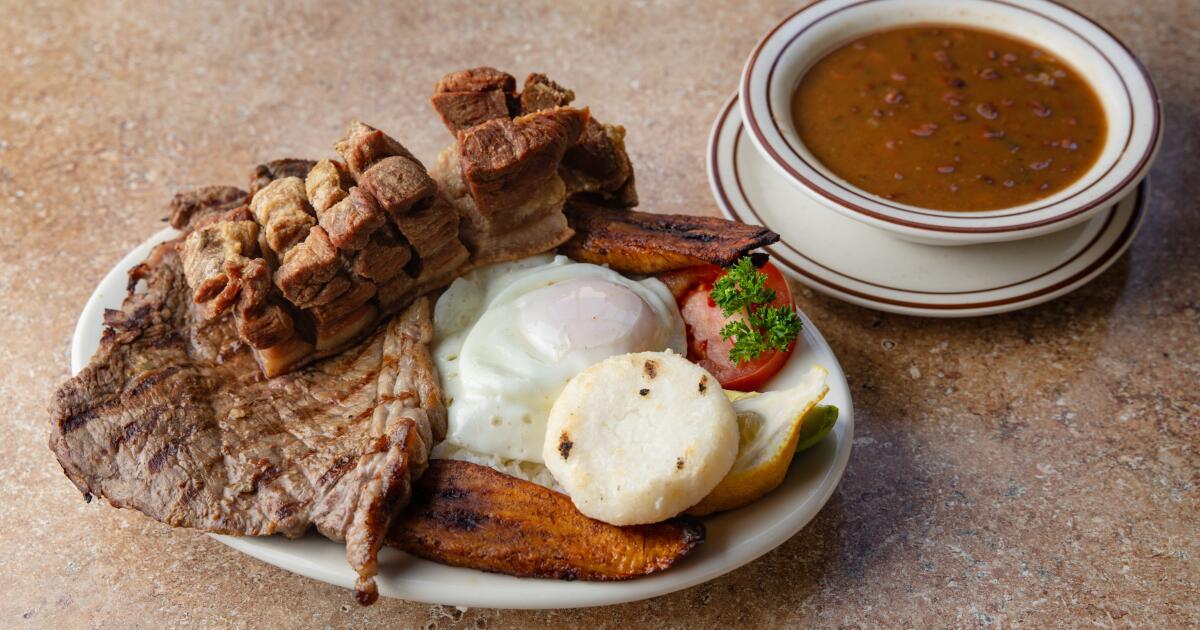
Translated as a “countryside tray,” you’ll find the loaded meat platter at any restaurant in Colombia’s second-largest city. The spread is loaded with savory red beans; white rice; ground beef or grilled steak; a long, curved strip of crispy chicharrón; chorizo; morcilla (blood sausage); a fried egg; golden lobes of sweet plantain; a mini arepa; and a slice of avocado.
Though its origins lie in the mountainous, coffee-growing region of Antioquia, known as the home of the paisas (derived from the Spanish word for countryman), the dish is widely celebrated and eaten across the country. It’s a hearty lunch meal meant for one person, a combination of flavors and textures that transport you straight to Medellín, known for its rich coffee landscape, blooming flowers and eternal spring weather.
“The bandeja paisa is the seal of the Colombians,” said Gloria Hernandez, owner of Nene’s Colombian Food in Lawndale.
The dish is believed to have started as a filling, nourishing meal for campesinos (field workers), providing strength to get through a day working in the fields. “There’s a gathering of various dishes to make a bandeja paisa,” said Cesar Gutierrez, owner of Arepa’s Colombianas in Redondo Beach.
Over 40,000 Colombians live in L.A., according to the Los Angeles Almanac. Three-thousand miles from home, the city is host to several Colombian restaurants, food trucks and even a rooftop night market in downtown L.A.
From a longstanding restaurant in Larchmont to a favorite for modern Colombian cuisine in Long Beach, here are seven places where you can devour a bandeja paisa.
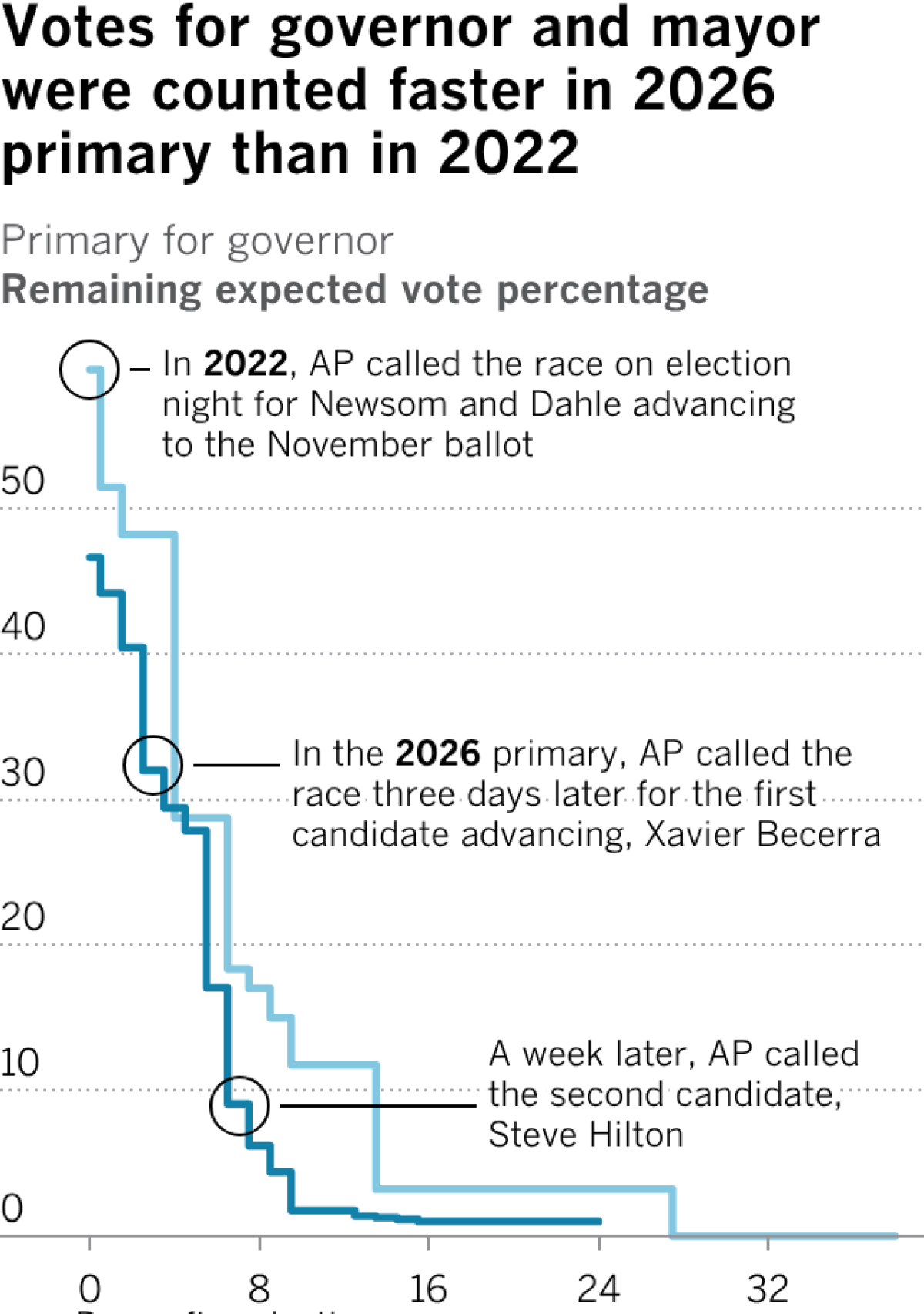
Twenty-four days after the polls closed on election day, Los Angeles County officials have certified the results from the 2,227,461 ballots cast. Despite questions raised about the pace of the vote count, a Times analysis found ballots this June were tallied faster than in previous cycles.
California is known to have a slow vote count, partially because of the state’s grace period for mail-in ballots. This year, counties were required to report most of the ballots by June 15, with some exceptions, including for mail-in ballots received within seven days of election day and ballots requiring additional verification such as signature curing. The process has spurred baseless claims of fraud from President Trump and others, leading the U.S. Supreme Court to take up a case on whether mail-in ballots must be received by election day to count.
The state has reported 9.4 million processed ballots. Officials estimate about 5 ballots remain to be counted and 17,650 are waiting to cure a missing or mismatched signature.
Compared with the last time both governor and Los Angeles mayor were on the ballot, county election officials counted more ballots, and tallied them faster than in 2022, The Times found.
In Los Angeles County, turnout jumped from 28% of eligible voters in the 2022 primary to 38% this June, according to the county registrar. Meanwhile, the share of vote-by-mail ballots dropped about 3 percentage points to 82%, indicating a rise in in-person voting.
Statewide, early results show 41% of registered voters turned up for the June election, up from 33% in 2022, according to the secretary of state. County elections officials must report their final results by July 3, giving state officials a week to certify all election results.
The Los Angeles Times reports election results from the county clerk as well as from the Associated Press. The AP provides ballot counts, a calculation of the expected vote and race calls for statewide and national races.
The expected vote percentage, or EEVP, is an estimate of the total number of votes that will eventually be certified. That number can be adjusted based on new information over time.
“Before counting begins in California, our estimates are primarily informed by turnout in past similar elections plus pre-election data on ballot returns, with projections based on what percentage of ballots had already been received at the same point in past elections,” AP director of election analytics Emily Swanson said in an email.
In the gubernatorial and mayoral races, more than half of the votes were counted by the end of election day, EEVP data show.
Swanson’s team also observed a faster vote count this year than in the 2022 and 2024 primaries.
In January 2024, L.A. County consolidated its election operations into a new ballot processing center in the City of Industry. Dean Logan, head of the L.A. County registrar-recorder/county clerk’s office, told The Times earlier this month that the facility, which is open to observers, is designed for transparency, security and efficiency.
“It doesn’t take long to count. The counting process is very fast,” Logan said ahead of election day. “What extends the time period is those options that are provided under California law for voters — to allow everyone the opportunity to vote up until election day, and then allowing us the time to process those with the same level of security and integrity that we did the ballots that were received two weeks before the election.”
Despite the faster count, the Associated Press took longer to call winners, suggesting these races were more competitive. The AP makes such declarations by determining whether there is an opportunity for a trailing candidate to catch up to the race leader. It has been calling races for nearly 180 years.
Both the gubernatorial and Los Angeles mayoral race saw a 30% increase in votes from 2022. The governor’s race received more than 9.2 million votes compared with 7 million in 2022. The Los Angeles mayor’s race received more than 850,000 votes, an increase from nearly 650,000 in 2022.
The vote counting process for California, Washington, Oregon, Nevada and Alaska may change for the November midterm election, depending on which way the U.S. Supreme Court rules.
Data and graphics assistant editor Sean Greene contributed to this report.
Growing up in suburban Detroit, there was deep-dish square pizza and there was round pizza. The round style was the kind of pizza you’d find at your local bowling alley, roller rink, arcade or neighborhood sports bar. It was thin, super crispy and you could pick it up and eat it with just a napkin.
I wasn’t aware that any of my hometown pizzas were considered trendy until 2016 when Detroit-style pies exploded in NYC and then, during the pandemic, in Los Angeles. But much like the square pizza, the thin, crispy, round pies have an identity as well: Tavern-style pizza has many names (party cut, bar pie, etc.) but it’s the slightly lesser known, thin-crust style of pizza born in the Midwest. And lately, it’s been having a moment in Los Angeles.
“It was the kind of pizza they served you at whatever bar you were at,” says fellow Michigan native Aaron Lindell of Echo Park’s Quarter Sheets. “I wasn’t aware then that it was its own style,” he says.
What makes it a Midwest-style tavern pie exactly? Essentially it’s a lower-moisture, higher-fat dough resulting in a thin, crackery, flaky pizza crust. Typically bar pies go lighter on tomato sauce and caramelize the mozzarella significantly, resulting in a molten matrix of cheese and sauce that takes me back to my childhood with each bite.
Despite its prevalence in Michigan and other parts of the Midwest, tavern-style is most commonly associated with the Chicagoland area, thanks to places like Vito & Nick’s. Lindell developed his own recipe for bar pie in 2023 that combines Midwest tavern style with those of the northeast to bump up business on slower nights. Now, the nights that Quarter Sheets has bar pies on the menu are some of the busiest of the week.
However, Lindell was far from the first to offer a take on tavern-style pizzas here in L.A. Eagle Rock’s Casa Bianca Pizza Pie opened in 1955 with the intention to bring Chicago thin-crust to Los Angeles. Fresh Brothers Pizza opened in 2008 in Manhattan Beach specializing in tavern-style pies and wings and the chain quickly expanded to 20 locations in the SoCal area. In 2013, Rance’s Chicago Pizza opened in Costa Mesa offering both Chicago deep dish and tavern-style (and eventually expanded to Long Beach in 2017). Midwest icon Gino’s East of Chicago even opened in Sherman Oaks in 2019, also offering their take.
And since the pandemic, newer spots have been doing their own versions much like Quarter Sheets.
Here are nine places to try tavern-style pizza around L.A. right now.
In a move that suggests a sharp battle to come with the administration of President-elect Donald Trump and upends conventional wisdom about who will emerge as the next generation of statewide elected officials, Gov. Jerry Brown picked House Democratic Caucus Chairman Xavier Becerra (D-Los Angeles) on Thursday to be California’s next attorney general.
If confirmed by both houses of the Legislature, he will succeed Kamala Harris, who was elected to the U.S. Senate in November.
Becerra, 58, has served 12 terms in Congress. Just days before the appointment, he had announced a bid to become the ranking Democrat on the powerful House Ways and Means Committee.
“It’s a phenomenal opportunity,” Becerra said. “It means I get to be home a lot more.”
Few statewide offices are as powerful, or prominent, as that of attorney general. The role has often been referred to as the state’s top lawyer and its top law enforcement officer, a nod to the breadth of responsibilities vested in the office and its leadership of the California Department of Justice.
Attorneys general not only must pursue cases of criminal and civil wrongdoing, they oversee criminal forensic work for most counties and make the final choice about defending state laws — even crafting the language that summarizes ballot measures for voters.
Becerra was beaming during an interview in his House office Thursday morning shortly after Brown offered him the job.
“I’m still processing,” Becerra said with a laugh. “I didn’t expect it.”
Becerra would be the state’s first Latino attorney general. The son of Mexican immigrants, he was the first member of his family to attend college, earning a law degree from Stanford Law School and a bachelor’s degree in economics from Stanford University. Elected to a two-year term in the state Assembly and then to the House in 1992, he rose through the ranks to become the highest-ranking Latino in Congress.
Becerra worked in the civil division of the state attorney general’s office, writing advisory opinions for former Gov. George Deukmejian, a Republican, and defending the state’s constitutional officers from 1987 to 1990 before entering the Assembly. He said he had always wanted to return to the office.
“It was a great place to be,” he said.
Brown’s pick was so sudden that Becerra has not yet had time to reactivate his state law license, though he would not be the first attorney general to have to do so. Inactive status allows attorneys to hold on to their licenses when they are not actively practicing law.
Becerra would also be the first attorney general appointed by a governor since Thomas Lynch, who was chosen by former Gov. Pat Brown in 1964. Few political appointments are likely to be as personal to the current governor as this one, given his own four-year stint as attorney general starting in 2006 and the fact that his father used the office as a steppingstone to governor more than five decades ago.
“Xavier has been an outstanding public servant — in the state Legislature, the U.S. Congress and as a deputy attorney general,” Brown said in a statement. “I’m confident he will be a champion for all Californians and help our state aggressively combat climate change.”
The choice sent political shock waves through California, in large part because Becerra was not on any of the widely circulated lists of potential picks. Brown had offered no details on whom he would pick or when.
Many suspected that he might choose a caretaker, perhaps even a career staffer who would simply carry out the office’s functions through the 2018 election. Virtually no Democrats who heard the news on Thursday believed that Becerra would be that kind of officeholder.
“He has the smarts, political experience and ambitions to run and win reelection,” said state Sen. Steve Glazer (D-Orinda), a former top political adviser to Brown.
If Becerra serves less than two years of Harris’ existing term, he could be eligible to run for up to two additional terms — eight years — as attorney general. Harris has said she plans to hold the position until she is sworn in to the Senate on Jan. 3, and at that point Brown could officially nominate Becerra.
Becerra said Thursday he’s thinking about the confirmation process at this point and not whether he’ll run for a full term as attorney general or another office in 2018. He must be confirmed by the state Senate and Assembly, both controlled by Democrats. Becerra said he hasn’t been told when a confirmation vote might happen.
Holding such a prominent statewide post would raise Becerra’s profile as the Golden State’s foil to Trump, potentially setting him up to run for governor or U.S. Senate in the future. The attorney general, by virtue of the office’s broad power, will likely be a key player alongside Brown in pushing back against Trump’s proposed efforts on issues important to California, including immigration and climate change. In Texas, a state that has its own experience fighting the federal government, attorneys general have been a major force in the battle over states’ rights.
“He has great tenacity and he respects the rights of all Californians — much-needed qualities for an attorney general given the troubling times ahead,” Assembly Speaker Anthony Rendon (D-Paramount) said Thursday.
Several congressional colleagues echoed that sentiment.
“Many of the values that we stand by in California will be under attack in the next few years, and Chairman Becerra is the fighter I want in our corner,” Rep. Tony Cardenas (D-Los Angeles) said in a statement.
Becerra said that with Trump headed to the White House, he’s prepared to protect California’s progressive policies on immigration, the Affordable Care Act, energy and criminal justice. As California politicians embrace their roles in guarding the state against Trump’s policies, Becerra threw down his own gauntlet Thursday.
“If you want to take on a forward-leaning state that is prepared to defend its rights and interests, then come at us,” Becerra said.
A vocal advocate for Hillary Clinton’s presidential bid, Becerra was briefly floated as a potential pick for vice president or a Cabinet position. With Clinton’s loss Nov. 8 and no upward mobility available in House leadership, Becerra’s future political career was unclear.
He’d reached the time limit on serving as caucus chairman, the fourth highest-ranking House Democratic leadership position, and with House Minority Leader Nancy Pelosi (D-San Francisco) and the other two Democrats above him in leadership staying put, there was no path up the ladder headed into the next Congress.
Becerra serves on the powerful House Ways and Means Committee, and made a play as recently as Tuesday to be the committee’s ranking Democrat. He was quickly endorsed by the current ranking member, Rep. Sandy Levin (D-Mich.), who said in a statement Thursday that he respects that Becerra “feels a special responsibility during these difficult times to look after vital legal interests in his home state.”
Democrats across California reacted Thursday with effusive praise for Becerra. Lt. Gov. Gavin Newsom called him “a thoughtful and effective leader, with a keen legal mind and a passion for giving a voice to the voiceless.”
In particular, some pointed out the importance of elevating a Latino politician to statewide office, alongside both Latino leaders of the Legislature and Secretary of State Alex Padilla.
“It’s good for the state’s future,” said Bill Lockyer, who served as attorney general from 1999 to 2007.
The announcement also meant early guessing as to who would replace Becerra in representing downtown Los Angeles and communities to the west and north in Congress. Becerra won reelection in November in the solidly Democratic district. A special election to fill the seat would probably take place in late spring of 2017, though the law gives Brown wide discretion on the precise schedule.
John A. Pérez, the former Assembly speaker and current University of California regent, announced his bid less than an hour after Brown’s announcement, and more contenders may follow.
Walk into the Grammy Museum in downtown L.A., and you’ll see Clive Davis’ legacy everywhere.
The museum’s intimate performance space is named for the late record executive, and his visage greets guests at the front door. (Davis was the first million-dollar donor to the nascent Recording Academy archive and exhibition space.) His sprawling roster of acts — Bruce Springsteen, Miles Davis, Whitney Houston,Alicia Keys, Earth, Wind & Fire — defined an entire art form and business model as preserved in the Grammy Museum. Davis’ pre-Grammy gala was the most coveted invitation in music every awards season.
Davis’ death at 94 is “devastating,” said Michael Sticka, chief executive and president of the Grammy Museum. “Clive was always a north star of music and talent and artistry. We’re all lucky to have his legacy to look up to.”
Davis’ death marks the end of perhaps the most important and enduring career in the record industry. Sticka spoke to The Times about Davis’ remarkable longevity, creative vision and how a career like his will likely never be possible again.
Clive was a giant of the record business. How did his career shape the modern record industry?
His career was iconic. He really had a unique ability to not just bring an artist to their fullest potential artistically, but commercially. From attending Monterey Pop and first seeing Janis Joplin to Whitney Houston and Alicia Keys, I don’t think anybody had that ear in them the way that he did.
With Clive, what you got was not just hearing commercial viability, but an understanding of what was going on in the zeitgeist. That’s what propelled his career and legacy beyond most record executives.
His name’s on the building at Grammy Museum’s theater. What did he mean to the institution — not just for fundraising but as a living connection to music history?
He didn’t just donate to the museum. He donated his time, his historical knowledge of music, his firsthand perspective. He always kept tabs on what was happening in music. I always say the Clive Davis Theater is the toughest ticket in town for its intimacy and the level of programming we do. But he did an annual program at the museum where people could come hear stories directly from him. Once he decided he was in, he was all in.
His gala was the place to be every Grammy season too.
I don’t think anybody could gather a roomful of luminaries like that from entertainment, tech and politics in the way that Clive did. We were lucky to be a part of that. Even with the stature he had, he was still a physical presence there, he was approachable. He was always looked at as this living legend, but his legacy was continuously being built.
That’s true over the arc of his career, which saw him lead Columbia, Arista, J Records and more. He had a lot of resurrections as well as successes.
He had this ability to resurrect. Look at Santana and “Supernatural,” he was a producer on that album that was inducted into the Grammy Hall of Fame just last year. So many of us would just give up, but he just had this resolve to continue, and thank God he did.
The record industry is so different now than when he began his career. Artists find audiences on social media rather than being discovered by label executives. Is a career like his — a famous executive driven by their own taste and individual savvy — even possible today?
That’s true, artists break on social media before they’re even on record executives’ radars now. I don’t know if we’ll see that kind of career arc again. Clive had a rare combination of gravitas and being recognized so publicly. The man and his legacy are not going to be replicated.
Beyond the name on the theater, how do you hope the Grammy Museum will honor him with its programming in time to come?
I don’t know yet. We weren’t really prepared for this. We’re gonna have to sit down and think how to pay tribute to such a legacy. I think that the impact the Clive Davis Theater has, bringing in 120 artists a year — I couldn’t think of a more apropos name on the door.
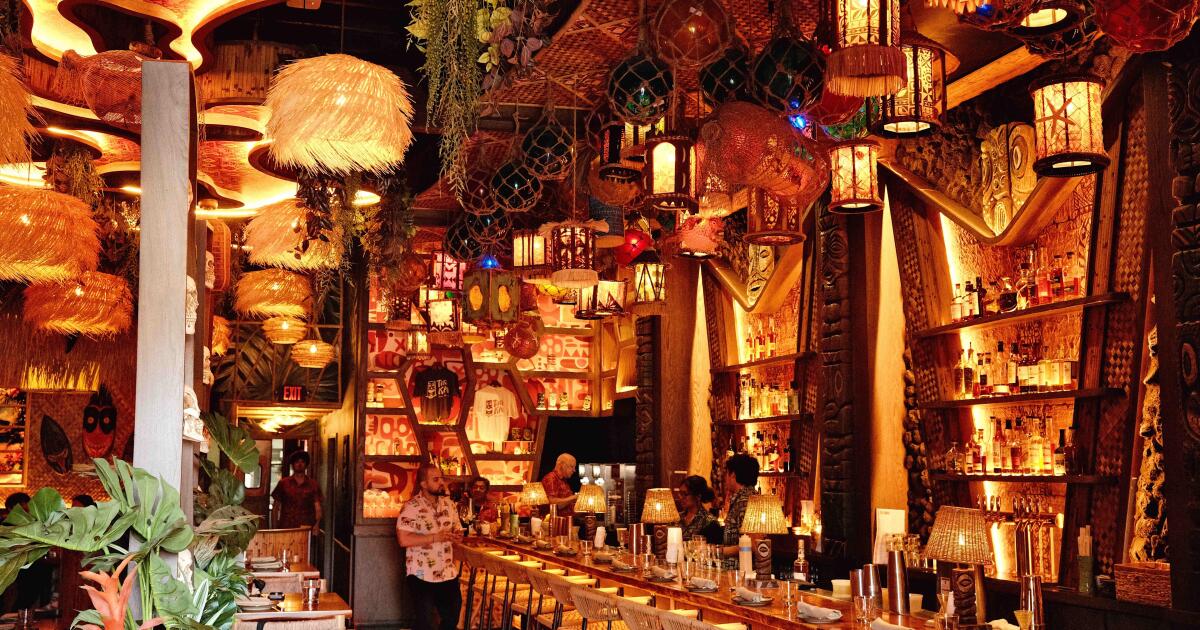
L.A. bars offer something for everyone. Want to sip amaro cocktails in a moody Echo Park bar? We’ve got the spot for you. Or maybe you prefer a beachside tiki haunt with frozen Dole Whip and crab rangoons. What about a sprawling West Hollywood rooftop overlooking the hills, or a destination for locally produced sake in Sawtelle Japantown? Much like the drinks that flow from these newly established institutions, the options are endless.
A neighborhood favorite dive relaunched in its former Echo Park location, while a new gastropub brings Korean bar culture to Highland Park. In West Hollywood, a karaoke lounge elevates the art with luxurious surroundings, and just next door, a lesbian-owned LGBTQ+ club debuted just in time for Pride Month. Tapas seemingly is taking the city by storm, with two Spanish cafes on opposite sides of the city offering pintxos and bocaditos alongside vermouth and Tempranillo wines.
About This Guide
Our journalists independently visited every spot recommended in this guide. We do not accept free meals or experiences. What should we check out next? Send ideas to guides@latimes.com.
Nonalcoholic options are more thoughtful than ever, presenting those of us who aren’t drinkers with smart and layered concoctions that prove just as complex as their boozy counterparts. In Los Feliz, a veteran bar team launched a cocktail destination that puts the focus on L.A.’s seasonal produce, and in Beverly Hills, a three-Michelin-starred chef is behind a stylish new restaurant and lounge in a luxury retail shop. Here are 23 of L.A.’s best new bars to visit this summer and beyond. — Danielle Dorsey
Nathan Ngoy sent off for hauling down Mehdi Taremi, whose first-half strike was called offside, in a close Group G match.
Published On 21 Jun 202621 Jun 2026
Belgium were held to a scoreless draw by Iran in a frustrating encounter that saw the Red Devils reduced to 10 men and facing the possibility of group-stage elimination for a second consecutive World Cup.
A star-studded, though ageing, lineup, including Kevin De Bruyne and Romelu Lukaku, was fortunate to leave Los Angeles with a point on Sunday.
Recommended Stories
list of 4 itemsend of list
Belgium controlled possession yet ceded the game’s best chances to a resolute Iranian defence.
Iran’s Mehdi Taremi had the ball in the net from a well-worked first-half free kick that was overturned for offside by VAR, while Nathan Ngoy was sent off after the break for hauling down the striker following a badly mishit back-pass.
The result means all three games in Group G so far have ended in draws. Stuck on two points, Belgium at least have the comfort of playing the tournament’s lowest-ranked team, New Zealand, in their final group game.
Iran will also need at least a point against Egypt next Friday. Having been frustrated by visa issues while travelling from their base camp in Mexico to play games in the United States, Team Melli will hope to focus on the football as travel restrictions are reportedly easing for their crucial trip to Seattle.
For the second Iran game running, protesters from Los Angeles’s large Iranian-American community gathered at the stadium to chant against the country’s current regime.
Inside the stadium, Iran’s anthem again drew a chorus of boos and whistles, a reception at odds with the response to the players themselves, who were loudly cheered throughout the game.
Having switched to a back five, Iran sat deep in the first half, allowing Belgium to dominate possession and play hundreds of passes around their penalty area without creating any clear-cut opportunities.
Target man Lukaku, back in the starting lineup after making an impact from the bench in Belgium’s 1-1 draw with Egypt, managed a solitary headed effort in the 36th minute, which sailed over the bar.
Iran had the first half’s two best chances, entirely against the run of play. Hossein Kanani’s low shot after a long throw was well saved by an outstretched Thibaut Courtois.
And Iran’s star striker Taremi had the ball in the net midway through the half after a cleverly worked free kick, but it was ruled offside.
The former Inter Milan man spun away from Belgium’s wall, swivelled and buried the ball, before VAR overruled the effort, to the dismay of a vocally pro-Iran crowd.
After the break, Belgium continued to huff and puff, while Taremi again nearly scored at the other end. Courtois did well to save after Kanani had flicked on a long throw to the Iran forward.
Belgium coach Rudi Garcia made a triple substitution around the hour mark, and his side immediately came close – Maxim De Cuyper’s point-blank effort from De Bruyne’s cut-back was well saved.
Substitute Hans Vanaken blasted a shot from a rebound well over the bar moments later, as the Red Devils finally began to knock on Iran’s door in earnest.
But disaster struck for Belgium as Ngoy was sent off. The centre-back had badly under-hit a pass back to Courtois and raised his arm into Taremi as the striker raced through on goal.
The game settled into a nervous, scrappy stalemate, though De Cuyper again came close with a low effort from just outside the box.
The Los Angeles County Fire Department has been fighting a major fire at a warehouse used for cold-storage of food since Wednesday, with Mayor Karen Bass on Saturday declaring a local emergency because of smoke spreading across the city. File Photo by Stuart Palley/EPA
June 20 (UPI) — Los Angeles Mayor Karen Bass on Saturday issued a declaration of local emergency as the city continues to fight a major fire at a cold-storage warehouse in the city’s Boyle Heights neighborhood.
The fire erupted on June 17 and has since caused smoke to blanket the surrounding area as the warehouse continues to smolder, leading the city to open 24-hour-per-day smoke relief centers for resident who cannot shelter-in-place.
The fire, which was described by Los Angeles Fire Department Chief Jamie Moore as “a very unique challenge,” started around 2:30 p.m. on Wednesday at the 500,000-square-foot building, ABC7 and The Los Angeles Times reported.
Fire officials said that hazardous materials, including ammonia, have been removed from the building, but foam insulation inside of the building’s walls, among other things, continues to burn.
“While the LAFD continues making progress, this is a major, multi-jurisdictional incident,” Bass said in a statement announcing the declaration.
“The City and County have opened spaces for families seeking relief from the smoke, and we will continue working around the clock and doing everything possible to put this fire out completely,” Bass said.
The ammonia at the warehouse has been pumped out and transported elsewhere, Lineage Logistics, which operates the facility, said in a statement.
The company also said that it believes the fire started when a neighboring business tested a solar array on Wednesday.
Aside from the insulation, city officials said that they also concerned about the rooftop solar array and lithium-ion batteries at the warehouse catching fire, as well as eventually clearing out roughly 85 million pounds of decaying — if not also burnt — food products, most of which is meat.
The LAFD has worked since Wednesday to ventilate the building so that firefighters can more safely enter the building to suppress the fire, department spokesperson Lyndsey Lantz said in a series of updates posted on its website this week.
which carried with it warnings for residents in the surrounding area to avoid smoke inhalation.
Although much of the smoke from ventilating the building had started to clear by mid-day on Friday, an anticipated change in the wind on Friday after, which caused the fire to also flare up, made smoke more visible than it had been since Thursday.
“LAFD crews continue to work diligently on the warehouse fire in Boyle Heights,” Lantz said in an update at 10:00 a.m. on Saturday.
“The smell of smoke has reached most of the city, and we encourage everyone to limit exposure as much as possible.”
President Donald Trump presents a Medal of Honor to Tom Ripley on behalf of his father, John W. Ripley, during a Medal of Honor award ceremony in the East Room of the White House on Thursday. Photo by Aaron Schwartz/UPI | License Photo
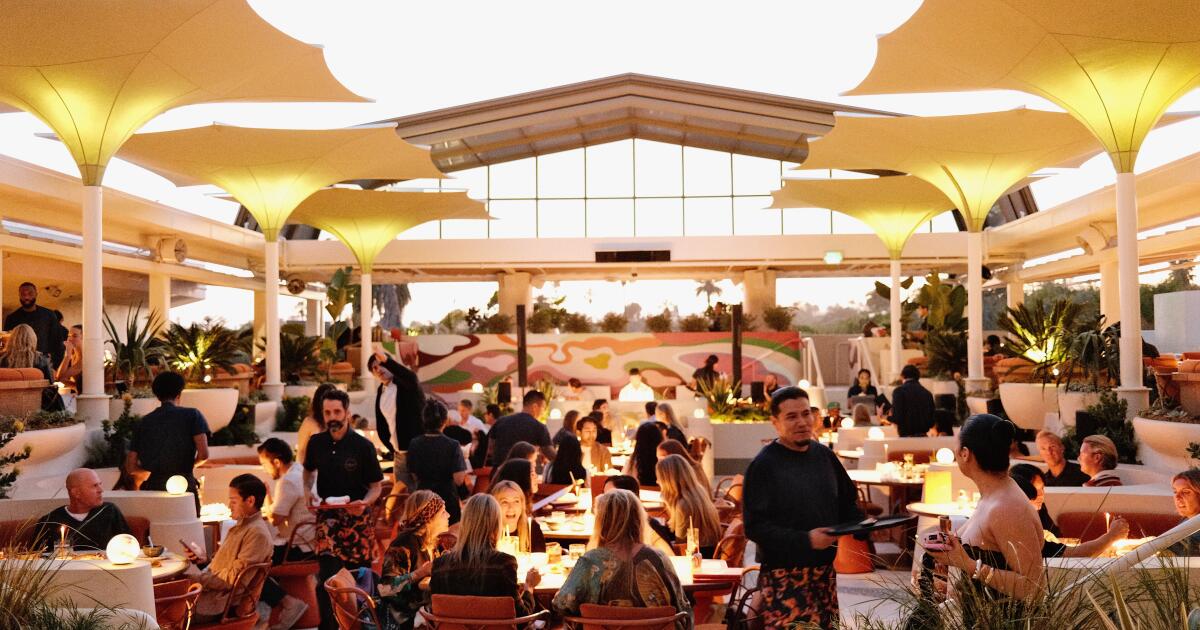
When it’s sunny outside, there’s nothing better than relaxing on a spacious rooftop overlooking the downtown skyline, Hollywood Hills or the Pacific Coast.
Recently, a spate of alfresco terraces have opened across Los Angeles, giving us new views of neighborhoods we rarely glimpse from on high, like Old Pasadena and the San Gabriel Mountains, Beverly Hills mansions and the Long Beach harbor with the historic Queen Mary glinting under the sun.
With globe-trotting menus, nightly DJs and sippable cocktails that beg one more round, these seven new L.A. rooftops are all vying for a spot in your summer rotation.
Los Angeles is the best food city in the United States. When considering breadth and scope, quality of ingredients and cooking, diversity and innovation, and sheer volume, it just can’t be beat. There’s no beginning and no end to its wonders.
But it’s more than that. Although our city can feel chronically fractured, our foods and restaurants may be the only possible glue that binds us. So we asked our Food writers, what are the local dining experiences that define living in our city?
This is our answer. The following are not the definitive “best” restaurants or meals in L.A. — we have a proper critics’ list for that each year. Instead, these experiences are the foundation for understanding what it means to love L.A. through its foods.
Tell us if you disagree, or if there’s anything you think we missed. Whether you’re a hard-boiled native or a first-time visitor with a big appetite, we’re confident that any combination of these 50 dining experiences will make your heart sing with love for L.A.’s invincible food scene. — Daniel Hernandez
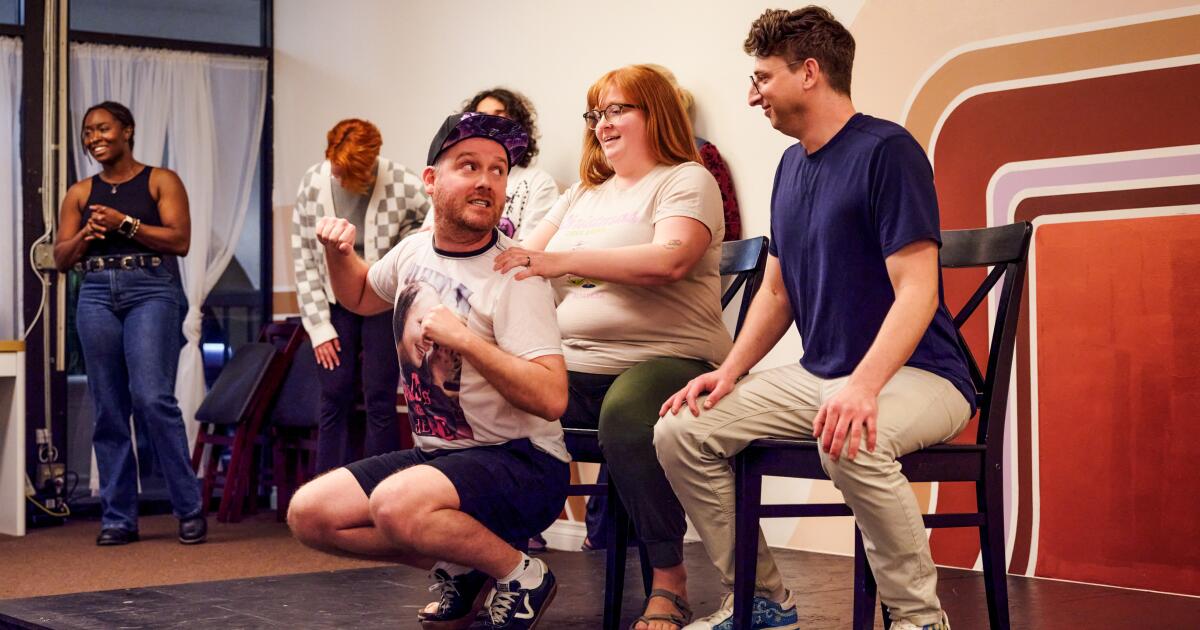
Buckle in because the training wheels are OFF for this improv drop-in. So Much Improv, created and led by comic Joe Fahey, focuses on getting in your reps by doing back-to-back improvised scenes. Classes are held at Kingsley Studios, which can be difficult to spot. The two-level complex is located right in front of a liquor store, and the studio is on the second floor behind gated doors. The studio looks like a cute living room, with a couch against one wall and plants across another.
The class size tends to be small (my class included five people), but that allows more time to improvise per person. The class is mostly regulars, so there is already a good rapport between Fahey and the students. That means he can give more specific feedback. After completing other beginner courses, this one felt the scariest, but I leaned in. After a few reps, I felt more confident in my ability to improvise and develop tactics to work with my scene partner. By implementing his feedback, I was able to fine-tune my improv skills.
This class is perfect for those who want more practice. The type of reps can differ each class, but the week I went centered on UCB auditions (it was that time of year). Since the class is small, you get a more catered experience.
Best for: Back-to-back practice on intermediate or advanced drills Cost: $20 Time commitment: Two hours Parking: Street parking Pro tip: Bring water because you will be talking a lot, and something caffeinated to beat the late-night crash for this evening class that requires your full attention.
Los Angeles, United States – Draped with a US flag, Alex Saldivar could hardly contain his broad smile as he exited the stadium after the United States beat Paraguay 4-1.
Not only did his team win their World Cup opener, they did so on home soil – and the 23-year-old got to witness it.
Recommended Stories
list of 3 itemsend of list
“This is a dream come true, a serious dream come true. I don’t know what to say,” Saldivar said, as he swayed from side to side, alternating his standing foot.
His excitement sums up the historic day for US football.
Tens of thousands of fans had descended on SoFi Stadium, putting on an eccentric display of oversized hats and US flag-themed outfits.
White and red striped dungarees, blue and white hair, star-spangled trousers, painted faces and Uncle Sam suits – supporters represented their country’s colours in every possible way.
Ryan Schellhous, who came to Los Angeles from San Jose in northern California, was dressed literally from head to toe in US flag colours, including a mask that only showed his eyes.
He told Al Jazeera it was great to have the World Cup in the US.
“There’s a lot of excitement for soccer in America right now, and this is great,” Schellhous said, adding that he expected Team USA to go deep in the tournament if players perform to the best of their ability.
USA fans ahead of the World Cup game against Paraguay in Los Angeles, on June 12, 2026 [Al Jazeera/Ali Harb]
For many fans, the World Cup is offering a rare opportunity to experience football at its best. And they are cherishing the moment.
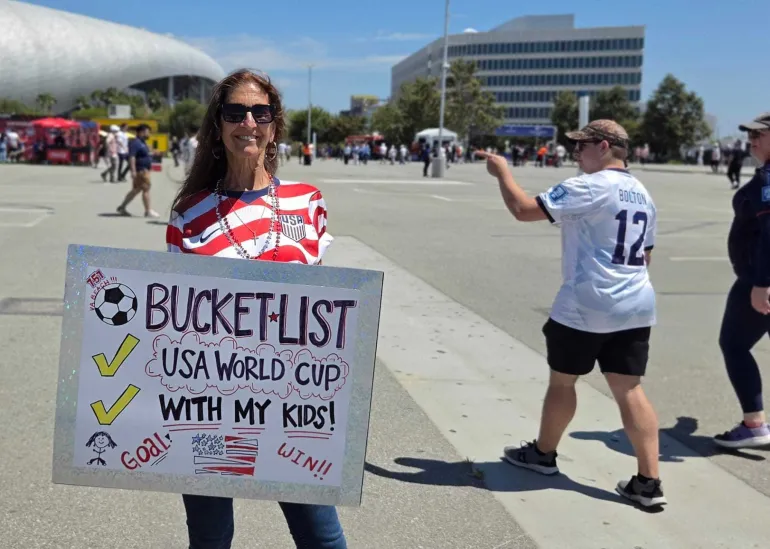
Michele Churchill, who travelled from Virginia with her three children to attend the opening match, called it a “bucket list” event.
Churchill also had a bold prediction for the US team’s fortunes at the tournament.
“They’re going to win. They’re going to take the cup,” she told Al Jazeera.
Law enforcement
Fans started streaming into the stadium four hours before the game. One was dressed in a Gulf-style thobe with a US flag as a headscarf. Another was in an outfit resembling George Washington, the first president of the US.
Despite concerns about logistics and organisation, everything went largely smoothly with armies of staff and volunteers ensuring safety and orderliness.
An alphabet soup of law enforcement agencies was present.
The Transportation Security Administration staffed entrances to oversee the airport-style security checkpoints. Agents from the Drug Enforcement Administration, Bureau of Alcohol, Tobacco, Firearms and Explosives, and Department of Homeland Security were also at the scene.
On the local level, heavily armed agents from the Los Angeles County Sheriff’s Department were also deployed around the stadium, as were Inglewood Police officers.
Many agents were accompanied by police dogs. Before crowds started to arrive, some had their canine companions pose for a photo next to the oversized World Cup ball outside the stadium.
Reports that President Donald Trump may attend the first game ultimately did not materialise to the apparent relief of many fans in mostly liberal Los Angeles.
Inside the stadium, it was celebrities – the likes of Tom Cruise and David Beckham – who got the cheers from the crowd.
USA fans are seen outside Los Angeles Stadium ahead of the Paraguay match at the World Cup 2026 [Al Jazeera/Ali Harb]
Stadium atmosphere
It took a while for the stadium to fill out.
About an hour from kickoff, during the first part of the opening ceremony, which featured several rappers, including Future and Rema, the venue was still almost half-empty and the crowd was quiet.
But coinciding with Katy Perry taking the stage before the first whistle, the stadium started to come to life, and chants of “USA, USA” grew louder.
It was really forward Christian Pulisic who electrified the crowd with his first-half display, running straight at his markers and producing dangerous crosses or shots.
The once faint chants turned into deafening roars when the US scored their first, courtesy of a Paraguayan own goal in the seventh minute.
The distinct screams of goal celebrations would ring out three more times for Team USA at the stadium, with Folarin Balogun finding the net twice and Giovanni Reyna scoring a gorgeous curler from the edge of the box to wrap up the game.
A stadium announcer said more than 70,000 people were in attendance.
“We have a full house,” he said to the cheers of the crowd.
But the announcement did not pass the eye test.
Many seats throughout the stadium remained empty, especially in the most expensive sections overlooking the middle of the field.
It is possible that organisers FIFA did sell every seat but resellers struggled to offload some tickets.
The bottom line – ticket prices and Trump’s travel policies may be dampening the buzz around the World Cup, but the tournament is still delivering what football promises: happiness, excitement and a sense of togetherness.
President Bush returns from Africa, where he justifiably touted the success of his AIDS relief initiative, to face a battle with Congress over that laudable program. Bush wants to nearly double funding, to $30 billion over the next five years, for the President’s Emergency Plan for AIDS Relief; the House wants to spend $50 billion and expand the program to fight malaria and tuberculosis. But that $20-billion dispute probably won’t generate as much heat as the provision in the bill, written by the late Rep. Tom Lantos (D-Burlingame), killing the requirement that one-third of all funds spent on AIDS prevention go to programs that promote abstinence until marriage. The State Department and some House Republicans oppose the bill, which is now spearheaded by Rep. Howard L. Berman (D-Valley Village) and is slated to be considered by a House committee next week.
The religious right has begun whipping up the hysteria, calling the Lantos bill the “Pro-Aborts Emergency Plan for Abstinence Reduction.” In fact, the bill would do nothing to alter the long-standing ban on U.S. funding for abortion. What it would do is increase the availability of contraception for poor African women — and that is desperately overdue.
Religious groups are fixated on the need to stop HIV transmission through premarital and extramarital sex, but what’s killing African women by the millions is https:///unprotected sex with their husbands. Yet the United States spends more on promoting abstinence and fidelity programs ($198 million in fiscal 2007) than on promoting condom use ($147 million in 2007). Roughly 10 million African girls under the age of 18 are married each year, many to older men who seek HIV-free brides. To those wedded to HIV-positive men, marriage often means a death sentence. They have little power to control their husbands’ condom use or extramarital behavior; they are more likely than young men to contract HIV; and those who know they’re infected and do not want to bear children often have no access to contraception.
By providing life-saving drugs to HIV-positive pregnant women, the president’s program claims to have prevented 157,000 infants from becoming infected. This is a huge accomplishment. What the U.S. funding hasn’t done is reduce unwanted pregnancies. In a clinic in Uganda where pregnant HIV-positive women were receiving anti-retroviral treatment, 93% reported that their pregnancies were unintended. It’s no surprise that many HIV-positive women do not wish to bear children whom they might infect with the virus or leave orphaned. It’s cruel to deny contraception to such poor and sick women should they desire it. And as a public health matter, it’s far cheaper to prevent unwanted pregnancies than to prevent mother-child HIV transmission. Yet U.S. funding for family planning has flat-lined.
Although some U.S. religious conservatives find contraception objectionable, most Americans do not. Congress should take note and expand funding for family-planning programs to help the HIV-positive girls and women.
David Hockney, the innovative and prolific British artist who arrived in Los Angeles in 1964, soon celebrating its sun-drenched life and landscapes in colorful, wildly popular paintings, has died.
He was 88.
Calling himself “an English Los Angeleno,” Hockney immortalized the city’s sparkling swimming pools, palm trees and beautiful young men, then went on to experiment with intricate photo collages, portrait suites, painted and filmed images of Yorkshire landscapes, iPad drawings and more.
Since his Pop Art paintings in the early ‘60s at London’s Royal College of Art, Hockney was rarely out of the limelight and, more important, rarely out of fresh ideas for how to draw, paint, film, print, photograph or otherwise express his creativity. The David Hockney Foundation owns more than 8,000 of his works, including about 200 sketchbooks, more than 230 self-portraits, opera designs and portraits of family and friends.
Hockney loved Hollywood — the people and the place — and liked to say he was brought up in England and Hollywood because of the time he spent at the movies. His peroxide blonde hair reportedly was inspired when he was a student and saw Clairol TV ads claiming “blondes have more fun.” But it was his interest in everything from Elvis Presley to the Hubble Space Telescope and his sense of humor that set him apart. Time Magazine art critic Robert Hughes once called him “the Cole Porter of modern art.”
He was open about being gay, even when homosexuality was outlawed in Britain. His early love affair with artist Peter Schlesinger, a younger man he met when teaching a summer drawing class at UCLA in 1966, inspired Hockney’s monumental 1972 painting “Portrait of an Artist (Pool with Two Figures),” a centerpiece of Jack Hazan’s 1974 film “A Bigger Splash.” The painting’s 2018 auction at Christie’s drew a record $90 million for a living artist.
He was a dedicated reader and student of art, paying homage in his work to Picasso and Cubism as well as to Monet, Matisse, Van Gogh and Cezanne. A lover of opera, he often had it playing loudly in the studio and enjoyed taking visitors on curated car trips through the Hollywood Hills or Malibu while listening to Wagner. He designed sets for major companies in Los Angeles, Chicago, New York, London and elsewhere over the years, and some of his set models were later shown in museums.
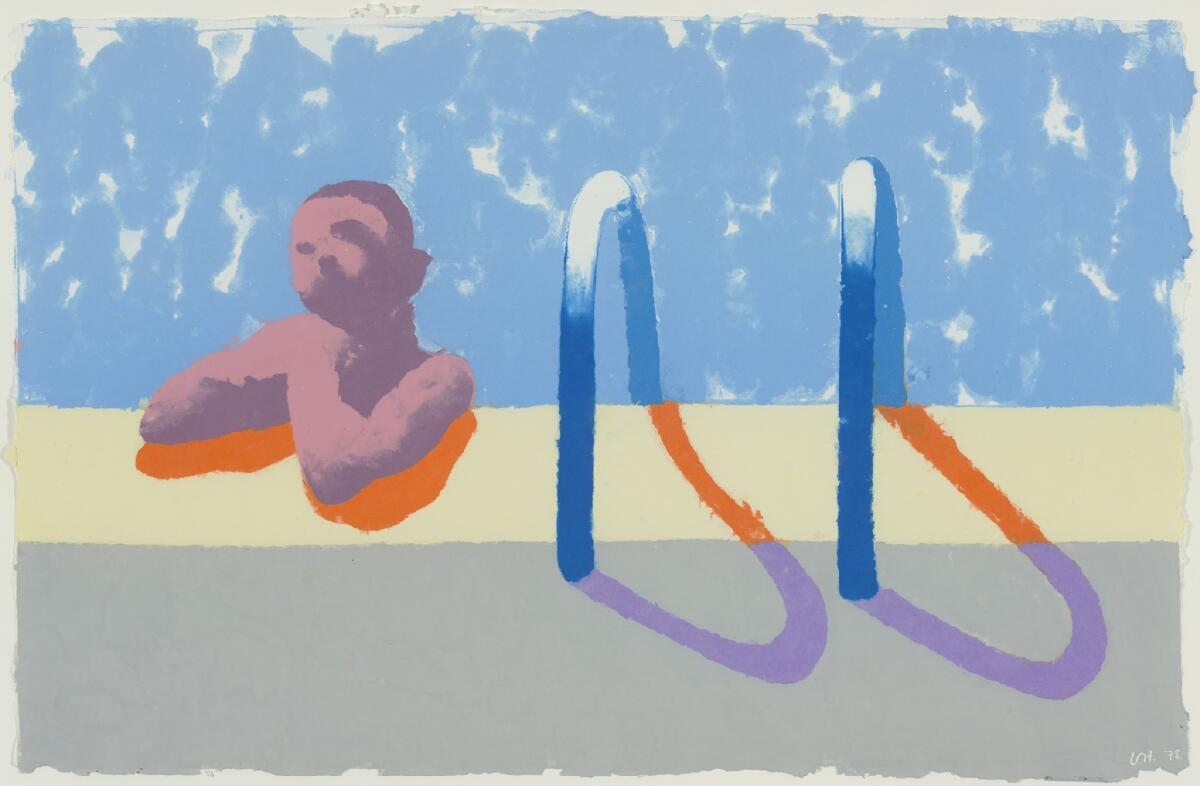
David Hockney’s work “Gregory in the Pool (Paper Pool 4)” is part of his solo exhibition “David Hockney: Perspective Should Be Reversed” at the Palm Springs Art Museum in Palm Springs. (Courtesy of the Palm Springs Art Museum)
(Courtesy of the Palm Springs Art Museum)
His solo shows drew enormous crowds to the Los Angeles County Museum of Art as early as 1988. In 2017 a major retrospective of his work, keyed to his 80th birthday, was presented at New York’s Metropolitan Museum of Art, Paris’ Centre Pompidou and London’s Tate Modern. Chronicling Hockney’s arrival as an important artist in the “ravishing” Met retrospective, the New Yorker writer Andrea K. Scott called it “a revelation.” It was, she wrote, “a retort to all the eye-rollers,” including herself, who dismissed his work “as, at best, a guilty pleasure.”
In 2012 he received the coveted Order of Merit, which Queen Elizabeth II presented to him at Buckingham Palace.
David Hockney was born the fourth of five children to a working-class family in Bradford, Yorkshire, on July 9, 1937. He has said he started “making marks on paper” at 8 and received private painting lessons before moving on to Bradford School of Art in 1953. The first painting he sold was a portrait of his father in 1955. He attended the Royal College of Art in London from 1959 until his graduation in 1962 and received the school’s Gold Medal.
After college he did not slack off, noted his biographer Christopher Simon Sykes. In his 2014 book, “Hockney: The Biography,” Sykes pointed out that the artist’s first flat had a chest of drawers near the bed on which he had painted, in large capital letters, the words “get up and work immediately.”
David Hockney in 2017.
(Catherine Opie, Courtesy of Regen Projects, Los Angeles and Lehmann Maupin, New York, Hong Kong and Seoul.)
Hockney lived by that command for the rest of his life, turning out canvas after canvas, photo after photo. In the ‘80s came his extraordinary multi-image photographic collages of friends including writer Christopher Isherwood and artist Don Bachardy and such landmarks as the Brooklyn Bridge, Grand Canyon and Pearblossom Highway.
“The Polaroids started oddly enough when I’d just finished a long period of work in the theater, which is of course playing with perspective and illusion,” he once told The Times. “People say, ‘You are a painter, and photography is a sideline.’ But nothing is a sideline for me.”
That included his continuing fascination with technology. The artist’s long career swept in artworks made not only on cameras and canvases, but on such things as fax machines and photocopiers. Hockney liked to experiment, whether it was with state-of-the-art printing devices or centuries old painting techniques. He went several times to a show of portraits by Jean Auguste Dominique Ingres at London’s National Gallery in 1999 and was greatly taken with the photographic’ quality of Ingres’ 19th century drawings. Certain that Ingres had used something optical to achieve that quality, Hockney bought himself a camera lucida, a small device that works like a prism. He then applied Ingres’ methods–as Hockney imagined them–to his own portraits of friends and family, and in 2001, he published “Secret Knowledge,” exploring his theories on early artistic uses of optical devices.
His death was confirmed by the Associated Press and New York Times.
I wanted to know more the moment I read “Sister Elsie Peak” on an old map.
I discovered the name while researching trails around Mt. Lukens, the highest peak in Los Angeles proper. Looking at the peak’s location on a historical map of L.A. County’s mountains, I noticed that it was previously named for a woman I’d never heard of.
Few of Southern California’s mountain peaks are named after women, so Sister Elsie Peak stuck with me. Who was she? And why was her mountain renamed to instead honor local leader Theodore Lukens?
In this edition of The Wild, our weekly outdoors newsletter, I will take you with me on my arduous journey to find the origins of the first known name for Mt. Lukens. Over the past week, I enlisted help from multiple librarians, map experts and one gracious historian (who you’ll meet later). We all scoured newspaper archives and history books, catching the fever of curiosity that seems to consume anyone who tries to find out who Sister Elsie was.
You are reading The Wild newsletter
Sign up to get expert tips on the best of Southern California’s beaches, trails, parks, deserts, forests and mountains in your inbox every Thursday
By continuing, you agree to our Terms of Service, which include arbitration and a class action waiver. You agree that we and our third-party vendors may collect and use your information, including through cookies, pixels and similar technologies, for the purposes set forth in our Privacy Policy such as personalizing your experience and ads.
What we collectively found was this: Sister Elsie was most likely not a real person, and her legend was most widely shared in the early 20th century by a local landowner who was known to embellish, including claiming that Josephine Peak near Mt. Lukens was named after his daughter. (It wasn’t.)
There appears to be no record anywhere — in newspapers, in history books, in Catholic Church records — as to the existence of a Sister Elsie or, as you’ll learn more about below, an alleged orphanage, ranch or school that she ran in the Tujunga area for Indigenous children or the broader Indigenous community.
In that same vein, I want to call something out before we begin: Stories about the relationships between colonizers and Indigenous peoples often get romanticized (see: Thanksgiving), with storytellers and early historians intentionally leaving out any details of forced assimilation or the American genocide. I cannot report anything concrete about how Sister Elsie actually treated Indigenous people in large part because I don’t believe she was real.
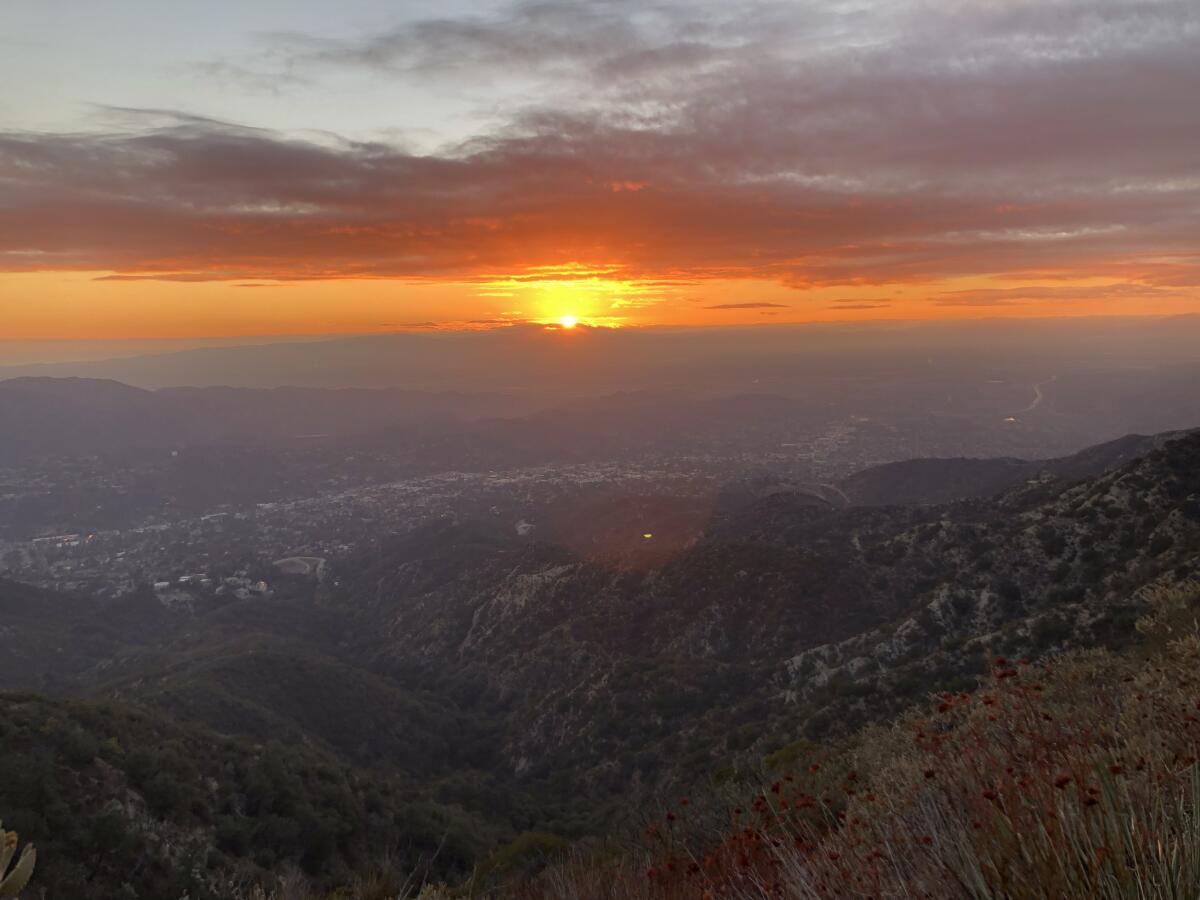
The sunset as viewed from a trail near Mt. Lukens in the San Gabriel Mountains.
(Jaclyn Cosgrove / Los Angeles Times)
OK, I’ve held you in suspense long enough. Let’s jump into everything under the actual sun that I could find about Sister Elsie Peak.
To begin my reporting, I contacted Times editorial library director Cary Schneider, who is always eager to help me with prospective stories (i.e. highly specific internet rabbit holes I’ve fallen down).
Cary found what might be the earliest mention in a local newspaper: A story in the Monrovia Daily News on April 23, 1910, in which a writer mentions a new trail leading to Sister Elsie Peak, but tragically gives no details of its namesake.
Next, we jump 20 years into the future when The Times and the Pasadena Star-News covered the dedication of Sister Elsie’s Well in Tujunga. Both publications described the well in their stories on April 28, 1930, as named after “the Catholic nun” who ran a school for Indigenous children “in the days of the Spanish missions.” The Times called her a “pioneer nun and teacher.”
Multiple radio towers and other infrastructure sit at the top of Mt. Lukens, as seen on a 2022 hike there.
(Jaclyn Cosgrove / Los Angeles Times)
The dedication occurred on the land of Philip Begue, a crucial character to understand in the Sister Elsie legend, as he’s believed to have either spread or made up the story, according to a local historian. Begue’s family bought land around Tujunga and La Crescenta in 1882, and later, Begue was an early pioneer and one of the first forest rangers in what would later become Angeles National Forest.
Throughout the late 1920s and 1930s, Begue seemed set on sharing the story of Sister Elsie. In 1934, he told the Pasadena Star-News that the sister “ministered to the sick and needy” Indigenous people.
A Times story on Sept. 29, 1935, announced a barbecue fundraiser for a local Catholic institution at the “old Basque rancho” owned by Begue. “The ranch on Honolulu avenue was famous in early days when Los Angeles was a pueblo and Sister Elsie had a children’s home where the ranch now stands.” The Begue family planned to cook “hundreds of pounds of meat for the affair.”
Times columnist Harry Carr offered in his column, the Lancer, a completely different take. Carr wrote on April 3, 1935, that Sister Elsie Peak was named “for a nun who lost her life trying to walk from San Fernando to San Gabriel.” No, he doesn’t provide a source for where he learned that information. Trust me: I too shook my fist at the sky.
The last rays of sun blanket across Mt. Lukens, as seen from Dunsmore Canyon in Deukmejian Wilderness Park near Glendale.
(Jaclyn Cosgrove / Los Angeles Times)
I would be remiss to mention that the oldest reference to a “Sister Elsie” in The Times’ archives appears to be an 1889 story about — buckle up — a psychic medium in Azusa. For a brief and beautiful moment, Cary and I hoped Sister Elsie Peak would turn out to be named after Elsie Wheeler, a spiritualist medium whose own story relates to an astrological tool. Alas, the peak was named before she was born (which doesn’t work unless she was a really good psychic). That said, a peak named after a mythical nun and a clairvoyant feels arguably appropriate for the highest point in L.A.
Cary also discovered one of my favorite facts about the Sister Elsie legend — that it was turned into a play titled “Sister Elsie in Tujunga.” It was written by Frances Muir Pomeroy, superintendent of summer school at Our Lady of Lourdes Catholic Church. It was said to be about “the experiences of Sister Elsie when she conducted an orphanage here many years ago,” according to a 1938 Times story.
There are other references to Sister Elsie in The Times’ archives over the next several decades, but nothing that gives concrete evidence that she actually existed.
Cary advised me to contact the Los Angeles Public Library. Librarian Kelly C. Wallace, who specializes in California history, quickly got back to me.
Knowing that Cary had already scoured The Times’ archives, Wallace sifted through the agency’s Los Angeles Area Historical Newspapers database, which contains the Los Angeles Daily Star (1870-1879), the Los Angeles Evening Post-Record (1896-1936) and the Los Angeles Star (1851-1871), along with community newspapers such as the Eagle Rock Sentinel and the Highland Park Herald. She found little there.
The trail through Stone Canyon to reach Mt. Lukens.
(Mary Forgione / Los Angeles Times)
This is especially puzzling if Sister Elsie did exist because, before the advent of television, newspapers reported seemingly everything that we now post on social media — detailed trip reports, the attendees of parties, birth announcements, and even basic road repairs.
Wallace did discover a few interesting tidbits in books, but curiously nothing before 1930.
The earliest reference that Wallace found was in the 1938 book “History of La Crescenta-La Canada Valleys” by Grace J. Oberbeck. She spoke to Begue, who spun quite the yarn:
“On El Rancho de las Hermanas, the ranch of the sisters, a group of nuns who had an orphanage not far distant, kept a herd of cows which was looked after by” local Indigenous people “who supplied milk to the school whenever needed. Sister Elsie was the much loved nun in charge of” the Indigenous dairy workers, “and her name was given to the well. Almost directly north from here towers a high peak of the Sierra Madre range and this bears the name of Sister Elsie Peak.”
Legendary outdoors writer and historian John W. Robinson, Wallace found, told the Sister Elsie story in his 1977 book “The San Gabriels,” but followed it up with a correction in his 1983 tome, “The San Gabriels II”: “The derivation of Mt. Lukens’ original name, Sister Elsie Peak, is clouded in uncertainty. Exhaustive research into Catholic Church records fails to find any evidence of a nun named Sister Elsie nor an orphanage named El Rancho de Dos Hermanas.”
You’re telling me, John!
Wallace also found an entirely different story about Sister Elsie on page 47 of “The San Fernando Valley” by Jackson Mayers, published in 1976.
“Sister Elsie, a Sister of Charity, came to Tujunga from Los Angeles between 1850 and 1875 to work with” Indigenous people “at a school and orphanage. Near Haines Canyon was Sister Elsie’s well; Sister Elsie’s Peak was named, it is said, because when troubled she would gain strength by raising her eyes to that eminence, one whose top she was to be buried. Others held that two nuns on their way from Mission San Fernando to Mission San Gabriel lost their way in Tujunga and died atop the peak.”
There is tragically no footnote on the page, so I have no idea who Mayers’ source was.
I hoped that finding out when Sister Elsie Peak was named would help, but that also proved to be a dead end.
Local historian Mike Lawler, former president of the Historical Society of the Crescenta Valley, told Realtor Sharon Hales in a 2016 interview that cartographer George M. Wheeler and his team named the mountaintop Sister Elsie Peak during their survey of California in the late 1800s.
“We don’t know why he named it Sister Elsie Peak,” Lawler said. “The reasons why he named everything are lost to history. They were destroyed in the 1906 San Francisco earthquake.”
This led me to contact the staff at the David Rumsey Map Center at Stanford University Library, as its collections are vast, and I hoped maybe they’d somehow find half a charred page of notes with Sister Elsie’s biography scrawled in quill pen.
Instead, Kristina Larsen, the center’s associate curator, came up short, finding only that a misspelling, “Sister Else Pk” was on the 1881 land classification map from Wheeler.
Evan Thornberry, the center’s head and curator, unearthed “Vignettes of California Catholicism,” a 1988 book by Monsignor Francis J. Weber, longtime archivist for the Archdiocese of Los Angeles at the San Fernando Mission.
Weber conducted an exhaustive search for the existence of Sister Elsie and found no proof of any existence of Sister Elsie or a Catholic orphanage in the Tujunga area at the time.
Weber offered my favorite suggestion for why no one can find any hint of Sister Elsie’s existence: “Maybe the good Sister was kidnapped by Martians!”
If so, I hope someone there takes better care to protect knowledge regarding the names of that planet’s mountains.
You’d think I’d give up here, right?
Instead, I contacted historian Kristine Gunnell, who wrote “Daughters of Charity: Women, Religious Mission and Hospital Care in Los Angeles, 1856-1927” (Vincentian Studies Institute).
I hoped Gunnell would have an answer, as Sister Elsie was said to be in the Sisters of Charity, an American version of the Daughters of Charity, a group that was founded in France in the 1600s with an aim of serving low-income and sick people.
The Daughters group eventually inspired American Catholic women to serve in a similar way, first forming the Sisters of Charity until the groups essentially merged. In the 1850s, as more people moved to the American West, a bishop in the L.A. area requested that Daughters of Charity come to L.A., Gunnell said.
But, there’s no Sister Elsie referenced in Gunnell’s book.
Gunnell said after hearing from me, she contacted a history professor from DePaul University who is compiling a database about all the Daughters of Charity who served in California. He found no one referred to as “Sister Elsie” between 1850 and 1900.
A 1931 news story references that Sister Elsie treated Indigenous children diagnosed with typhoid fever.
Tujunga “was only a day’s wagon ride from Los Angeles, and if these Tongva were Catholic or had Catholic connections, the sisters may have considered their request,” Gunnell wrote to me. “I was hoping that I’d be able to find a record of the typhoid outbreak in Tujunga in the 1860s or 1870s and cross reference it with the Daughters’ records. It’s a good story, and the sisters likely would’ve reported it if it’s true. However, I can’t isolate a specific outbreak.”
Later, Gunnell and I hopped on a Zoom call to commiserate.
With all of our research before us, we reached the same conclusion: A Catholic sister could have feasibly traveled to Tujunga at the request of a bishop to help Indigenous people, but currently there is no record of a woman known as Sister Elsie who did so. There’s no record of much of anything told in the Sister Elsie story. It seems, instead, to have been an urban legend of its time.
At least for now.
Hikers in Elysian Park.
(Dania Maxwell / Los Angeles Times)
3 things to do
1. Reach for the rainbow in L.A. One Down Dog, an L.A. yoga and fitness studio, will host a Pride hike from 10:30 a.m. to noon Saturday in Elysian Park. Guests will hike a loop trail through the park. For more details, register at eventbrite.com.
2. Marvel at mollusks in Malibu The Wishtoyo Chumash Foundation will host a tidepooling event from 8 a.m. to 1 p.m. June 19 near the Wishtoyo Chumash Village (33904 Pacific Coast Highway) in Malibu. Guests will learn about Wishtoyo Village, which is typically not open to the public. All experience levels welcome. Learn more at the foundation’s Instagram page.
3. Learn along the L.A. River in Downey The California Native Plant Society and Friends of the L.A. River will host a guided bike ride along the L.A. River. Naturalist Cris Sarabia will teach participants about local ecology during the ride. Binoculars will be provided. Guests should bring safety gear and water. Learn more at the group’s Instagram page. Register at folar.org.
The must-read
Burn damage to the Torrey pine grove at Santa Rosa Island.
(Kayla Bartkowski / Los Angeles Times)
The length of time that it will take for Santa Rosa Island to recover after a blaze scorched about one-third of the island remains unclear, Times staff writer Grace Toohey wrote after a recent visit to the island. The fire, which grew to 18,379 acres, is now fully contained. Firefighters faced vicious winds and, at times, 30-foot flames. “They held the line, and we have them to thank for saving housing, saving the island, saving the history of the Santa Rosa Island,” said Ethan McKinley, superintendent of Channel Islands National Park. The island has long been a respite for hikers and backpackers, including Times staff writer Lila Seidman, who shared her experiences on the island and her grief that came in the wake of the blaze. “Now fear clouds the memories: Does the rugged, magical place of my mind’s eye still exist?” Seidman wrote.
Happy adventuring,
P.S.
I have a flurry of good California animal news to share. First, three mule deer were the first animals to walk over California’s first wildlife crossing over State Route 97 in Siskiyou County. Second, scientists have feared that the population of endangered steelhead trout in the Santa Monica Mountains were killed in massive debris flows after the Palisades fire. However, researchers recently spotted the fish — and their babies — in Topanga Creek. And finally, the California Department of Fish and Wildlife shared earlier this week that five orphaned black bear cubs that were rehabilitated and released into northern California in November successfully hibernated through the winter and returned to the landscape this spring healthy and active, according to recent data reviewed by the agency’s scientists.
For more insider tips on Southern California’s beaches, trails and parks, check out past editions of The Wild. And to view this newsletter in your browser, click here.
The first film by Canadian filmmaker David Cronenberg to be shot partly in the U.S. is, perhaps not surprisingly, a freaky satire of Hollywood. Its take on fame has only grown more accurate in the years since its premiere in 2014. Julianne Moore, Mia Wasikowska and Robert Pattinson star in a demented tale of family, celebrity, ambition, ego and limousines. Funny and perverse, the film captures the uncanny cocktail of mean-spirited malignancy, self-obsessed delusion and just plain obliviousness that runs rampant around town. Presented by the screening series Mezzanine and the local literary magazine the Big One, the evening will be introduced by the film’s screenwriter, Bruce Wagner, a longtime chronicler of Los Angeles.
“Maps to the Stars” is playing June 14 at Brain Dead Studios. Tickets here.