ancient

England’s oldest ancient woodland used as film location for two major film franchises

Against its otherworldly scenes of ancient woodland, rustic bridges, snowdrops, and spiralling rivers, is a landscape that has attracted worldwide attention and featured in mega movies

You don’t need a ticket to Hollywood to immerse yourself in movie magic, but simply a visit to a UK ancient woodland.

Situated between the Rivers Wye and Severn in Gloucestershire and on the Welsh border, is the enchanting Forest of Dean, one of England’s largest ancient woodlands. It’s made up of around 27,000 acres of towering forest, with a fairytale-like atmosphere, and was once a medieval royal hunting ground.

Rich in heritage, the woodland previously served as a vital timber supply for Tudor warships, before transforming into industrial terrain for coal mines, ironworks and tramways. It became England’s first National Forest Park in 1938, and today it’s a renowned area of spectacular beauty, set against a serene backdrop, that attracts hundreds of visitors for a day out or weekend escape.

There are scenic views of the River Wye from Symonds Yat Rock, the Clearwell Caves that are 100ft beneath the forest, winding cycling and walking trails, and an array of activities on offer.

Forest Ranger for Forest Holidays, Gerry O’Brien, exclusively told the Mirror: “The Forest of Dean was used where Harry and Hermione were camping in Harry Potter and the Deathly Hallows: Part 1.”

In the movie, Hermione also recalls memories of a holiday to the Forest of Dean with her parents. Symonds Yat and Coppett Hill, near Goodrich, were also featured in Harry Potter and the Deathly Hallows: Part 1, along with the forest pool where Harry retrieved Gryffindor’s sword.

Sharing an insight into the area, Gerry said: “If you’re looking down from Symonds Yat Rock, with the River Wye below you, you can look out over Copper Hill and on the other side, it’s the woodland where Harry Potter was filmed.”

But there’s another notable credit that the Forest of Dean holds. The Ranger at Forest of Dean added: “If you go to Symonds Yat East, it’s a little hamlet by the river, it’s beautiful and really picturesque. But you walk right past the house that was used in the Netflix series, Sex Education.

“It’s the red house, so all of that was filmed in and along the Wye Valley. There are a lot of hidden gems around the Forest of Dean. They’ve done alot of movies and TV work around the forest.”

Living amongst the Hollywood fame, the Forest of Dean has a diverse wildlife of free-roaming fallow deer, Pine martens, beavers, foxes and badgers, and is a favourite among birdwatchers. It’s also home to England’s largest wild boar population, earning it the nickname “wild boar capital of the UK”; yet visitors will be relieved to hear that they typically forage at dawn and dusk.

Thanks to its remarkable terrain, the ancient woodland has become a popular spot for those looking to explore nature, with its collection of winding footpaths and trails, tranquil lakes and ponds, nestled among the woodland. To experience this enchanting part of the world, many opt for a stay at Forest Holidays in the Forest of Dean, which offers a collection of lodges, cabins and treehouses, some with outdoor hot tubs to soak under the towering trees. Meanwhile the likes of Sykes Holiday Cottages and Holidaycottages.co.uk both also offer various stays in the region.

For something extra enchanting, the beautiful Puzzlewood woodland is a must-visit. Nestled in the heart of the Forest of Dean, it offers 14 acres of twisting, moss-covered trees, rustic wooden bridges, and snowdrops decorating the rugged ground, and is often tipped as being one of the region’s most beautiful spots.

This otherworldly feel has meant it’s also enjoyed some Hollywood spotlight, serving as a location for the likes of Star Wars: The Force Awakens, The Secret Garden, The Huntsman: Winter’s War, Doctor Who, Merlin, Netflix’s Our Planet and BBC’s Atlantis.

It was even named in Big 7 Travel’s ’50 Most Beautiful Places in the UK’ list for 2025 and again this year. Noting its characteristics that are used so widely as a film location, Big 7 Travel said: “Gnarled wooden trees, ancient wooden bridges and mossy mounds all create the perfect atmosphere for a fantasy novel setting.”

But that’s not all. Puzzlewood is also believed to have been an inspiration for Middle Earth in The Lord of the Rings series, including Mirkwood and the Old Forest. The magical woodland is also said to have influenced JK Rowling, for the Forbidden Forest featured in the Harry Potter franchise.

Do you have a travel story to share? Email webtravel@reachplc.com

Source link

Sun-soaked Turkish Aegean coast with beach clubs, sublime seafood and two wonders of the ancient world

©News Group Newspapers Limited in England No. 679215 Registered office: 1 London Bridge Street, London, SE1 9GF. “The Sun”, “Sun”, “Sun Online” are registered trademarks or trade names of News Group Newspapers Limited. This service is provided on News Group Newspapers’ Limited’s Standard Terms and Conditions in accordance with our Privacy & Cookie Policy. To inquire about a licence to reproduce material, visit our Syndication site. View our online Press Pack. For other inquiries, Contact Us. To see all content on The Sun, please use the Site Map. The Sun website is regulated by the Independent Press Standards Organisation (IPSO)

Our journalists strive for accuracy but on occasion we make mistakes. For further details of our complaints policy and to make a complaint please click this link: thesun.co.uk/editorial-complaints/

Source link

I stepped into ancient Egypt surrounded by £100million worth of artefacts

THERE aren’t many moments in your life where you are surrounded by heaps of gold and mummified cats – but in a new experience, Egypt has been brought to the UK.

Ancient Egypt is probably something we all learnt about in school focusing on the Pyramids and Tutankhamun.

The Ramses & the Pharaohs’ Gold exhibition in London is home to over 180 Ancient Egyptian artifactsCredit: Supplied
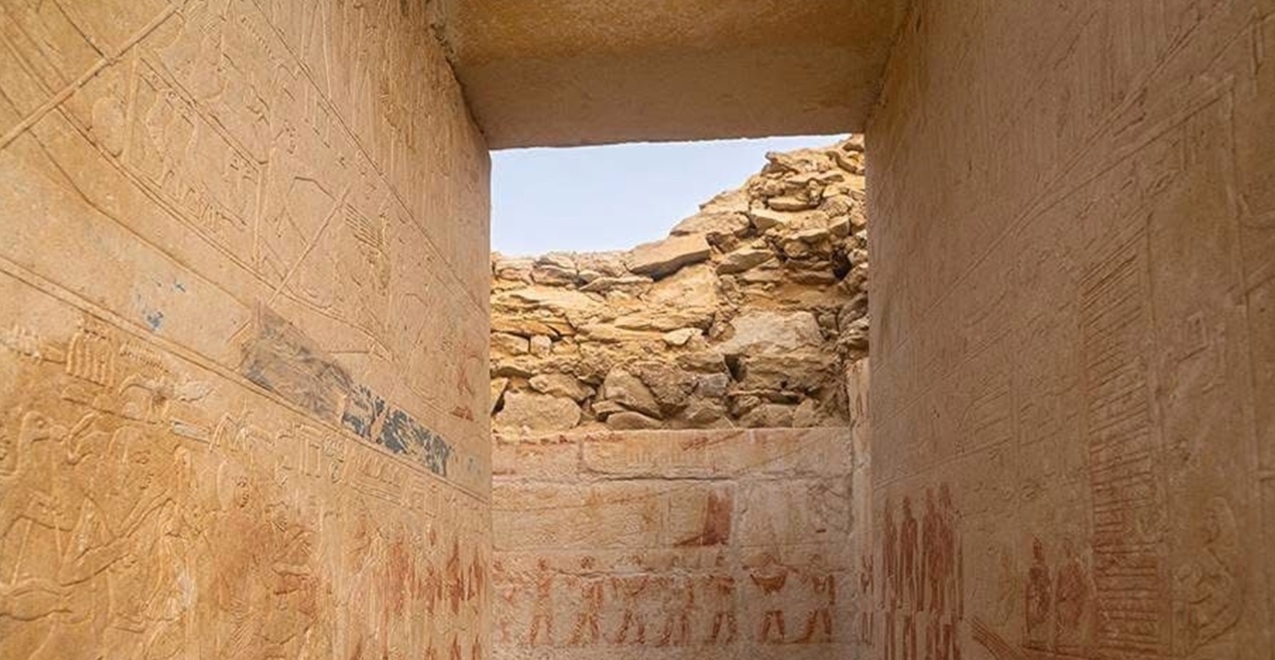
And it feels like stepping back in time to an ancient tombCredit: Supplied

Follow The Sun’s award-winning travel team on Instagram and Tiktok for top holiday tips and inspiration.

But The Ramses & the Pharaohs’ Gold exhibition at NEON at Battersea Power Station in London allows visitors to explore the life and death of the Pharaoh Ramses II (also known as Ramses the Great).

While you might not know who he is, he was the third pharaoh of the 19th Dynasty but is often thought to be one of the most powerful rulers of the Egyptian Empire.

Upon entering the experience, a short film presentation sprawled across giant screens revealing details of Ramses the Great and how he reigned for 67 years.

Read more on travel inspo

CHEAP BREAKS

UK’s best 100 cheap stays – our pick of the top hotels, holiday parks and pubs


TAKING OFF

I’ve visited 50 countries & this much-loathed budget airline is the world’s best

He built more monuments and statues than any other pharaoh including Abu Simbel, a 20-metre-tall statue of himself carved into a sandstone cliff.

He lived to about 90 years old, which was pretty impressive for someone of the Bronze Age.

But perhaps even more surprising is that he had over 200 wives and more than 100 children…

As the video ended, a set of doors swung open to reveal a statue at the entrance of the exhibition – I was about to step into ancient Egypt myself.

The room was dark with statues and objects subtly lit, allowing them to glimmer.

For the first half of the exhibition, I wove through stone statues, monoliths and intricate ornaments.

In fact, across the whole experience there are more than 180 Egyptian artifacts estimated to be worth over £100million and for many of them, it is their first time out of Egypt.

Though, one issue I found was that it is rather like seeing the Crown Jewels at points, where long lines of people steadily move past exhibits to get a glimpse of the artifacts.

At the mid-point, there is a clever 3D projection that recreates the Battle of Kadesh – where Ramses II used propaganda to achieve victory.

The second part of the experience turns to the Gold of the Pharaohs where it really does feel like you are entering the depths of a tomb, with the walls becoming sandy stone and the lighting lowering to feel like a dimly lit cave.

It includes the coffin of Ramses IICredit: Supplied

Throughout this part, I explored more artifacts from the era and since Ramses’ own tomb was looted, many of the gold items on display come from the Royal Tombs of Tanis.

My favourite part was definitely seeing the delicately mummified animals including several cats, a lion cub and even crocodiles.

Intricate jewellery glimmers and silver coffins stand tall, all before you reach the showstopper of the experience – Ramses II’s coffin.

Even though his gold was stolen, his wooden sarcophagus which protected his mummy for thousands of years, is considered to be one of the most significant artifacts in Egyptian history.

While Ramses II himself is not at the exhibition (to see his body you’ll have to head to the National Museum of Egyptian Civilization (NMEC) in Cairo) a large screen recreates what he would have looked like at different stages of his life and shows his body as it was discovered.

Fun fact – in 1976, Ramses II’s mummy was actually issued a modern Egyptian passport to travel to Paris, France, for fungal treatment and this meant his passport photo was of course, his deceased self with his occupation listed as ‘King (deceased)’.

There are even mummified animals including several cats, a lion cub and even crocodilesCredit: Supplied

Leaving the experience, you’ll enter a large shop where you can pick up souvenirs, such as your own Egyptian papyrus with your name written on it in hieroglyphs by a robot, for £10.

If you have worked up an appetite, there is also a cafe, as well as a VR Experience you’ll also find that at the end of the experience.

Popping on a headset, I flew through the temples of Abu Simbel and the tomb of Queen Nefertari.

In total, it lasts about 10 minutes and you sit on a golden-egg motion chain.

Though, it is definitely not one for those who easily get motion sick…

The exhibition is running until the end of August and tickets cost from around £24.55 per adult and £19.55 per child.

The VR experience costs an additional £14 per person.

The exhibition is recommended for children aged five and older, though I would say children under the age of 10 may get bored as there is a lot of reading involved in the exhibit and little interaction.

At the end you can pay extra to do a VR experience that allows you to travel through Ancient EgyptCredit: Supplied

Also, as someone who knows a bit about Ancient Egypt already, at times the historical descriptions are complicated as they have a lot of information to take in.

The VR experience is great for children though and recommended for those aged eight-years-old and above.

If going as just adults, I would definitely recommend the audio guide which is narrated by celebrity historian Dan Snow.

It costs £5 per person.

In other attraction news, London’s ‘best family attraction’ is about to get even better – with huge new outdoor play area and cafe next month.

Plus, one of the UK’s most popular free attractions reveals £350million expansion – its biggest in 200 years.

The exhibition and experience is running until the end of AugustCredit: Supplied


Source link

‘I visited ancient castle and now I know why ticket price was so cheap’

A woman was left laughing at herself after visiting a Spanish castle for just €3 (£2.61) – only to discover the surprising reason behind the tourist attraction’s low entrance fee

While some holidaymakers are content spending a week basking in the sunshine, others would rather immerse themselves in a destination’s history and culture. However, one woman found herself chuckling at her own expense after mistaking a well-known Spanish landmark for an “ancient castle” – only to find out it’s considerably more modern than it appears.

Content creator Alisatata, known as @iam_alisatata on social media, revealed how she paid just €3 (approximately £2.69) to visit Castillo de Colomares following her move to Spain. She was instantly struck by the elaborate design of the structure, located in the coastal town of Benalmádena – but her wonder soon turned to astonishment when she uncovered the reality behind it.

Despite its impressive, historic look, the building was in fact constructed between 1987 and 1994, meaning it’s nowhere near as ancient as she’d believed.

Posting the moment on TikTok, she said: “Admiring this ancient castle and wondering how the ticket was so cheap… then realising it was actually built in 1994.”

The striking structure isn’t a castle in the conventional sense, but rather a monument dedicated to Christopher Columbus and his expeditions.

Covering roughly 1,500 square metres, it’s thought to be the world’s largest monument honouring the explorer – and it even houses what is claimed to be the smallest church on Earth.

Content cannot be displayed without consent

Her video rapidly grabbed viewers’ attention, with many highlighting the mix-up.

One person said: “Most ancient castles have no decorations or details; they were built for defence in times of war, not to be beautiful.”

Another added: “That’s still pretty cool,” while a third wrote: “It’s not actually a medieval castle – it’s a monument dedicated to Christopher Columbus.”

Despite the confusion, visitors reckon the attraction is still well worth checking out.

Reviewing Castillo de Colomares online, one person described it as an “absolutely beautiful monument” with “amazing carving work,” adding the views alone justify the modest entrance fee.

Another visitor said it provided a “lovely break from the beach,” noting that while the site is fairly compact, there’s loads to absorb as you wander around.

A third reviewer called it an “architectural curiosity” overlooking the Costa del Sol, praising its blend of styles – from Gothic to Mudejar – and its scenic location.

While it might not be the ancient fortress she originally envisaged, it appears the distinctive landmark still made a memorable impact.

Source link

Ancient UK market town full of independent shops is gateway to spectacular drive

It’s the perfect place if you like a combination of adventures and chilling out, taking in the gorgeous scenery.

A historic market town in the UK is definitely worth a visit this spring, as there’s so much to see and do there. It’s ideal for adventure seekers, and those who just want to walk around, eat good food and chill out.

Tregaron is one of Wales’s oldest market towns. It’s home to independent retailers, coffee shops, and the elegant Y Talbot, a grade II-listed hotel, pub, and restaurant, positioned right in the town square’s centre.

From here, you can embark on an exhilarating road trip along a former drover’s track that showcases hairpin turns through wild terrain.

The Abergwesyn Pass is a 20-mile single-track route stretching from Llanwrtyd Wells to Tregaron. Along this isolated road, you’ll encounter a notorious stretch called “The Devil’s Staircase”, reports Wales Online.

This appropriately named portion of the Abergwesyn Pass features hairpin curves and sharp climbs that aren’t suited to anxious motorists.

For adventurous drivers, you’ll love tackling one of Wales’ most isolated countryside regions, encountering sheep, gnarled trees and rocky formations along the way. It’s extremely steep, reaching a maximum gradient of 20.1%, and cuts through thick woodland towards miles of expansive, barren valleys, providing a descent that will push your brakes to their absolute limits.

Drive carefully and enjoy the scenery as you meander through the wilderness of the Cambrian Mountains, where you could potentially encounter nobody throughout your entire journey. You can also tackle this route by bicycle if your legs are ready for the test.

As well as the Abergwesyn Pass, Soar y Mynydd, Wales’ most isolated chapel, is worth the detour. This modest, whitewashed church was constructed in 1822 to minister to an extremely dispersed community of farmers.

Wandering through this tranquil location, you could easily assume the chapel has been deserted for years. Actually, visiting preachers travel from across Wales to hold services in Welsh.

It’s a serene spot for a picnic, as there’s often nobody else there.

Llyn Brianne Reservoir also deserves a stop to witness an enormous dam. You might be surprised to learn that this striking stone-built dam is Britain’s tallest, rising 91 metres (300 ft) above the River Tywi.

Containing an incredible 64 million cubic metres of water at almost 300 metres (990 ft) above sea level is a remarkable engineering achievement. Building work began in October 1968, with the dam constructed from crushed rock, larger stone, and clay sourced from the surrounding area.

After dark, it becomes a stargazing hotspot in the Cambrian Mountains, making it an excellent location for astrophotography.

Further south, beyond Llyn Brianne reservoir, lies the amazing RSPB Gwenffrwd-Dinas reserve. The reserve encompasses vital habitats of oak woodland, wet alder woodland, and scrubland, all defined by heavy rainfall and swift-flowing rivers.

These conditions are ideal for woodland birds, whilst also offering the perfect environment for significant lichens and bryophytes. Whether you begin or finish the route at Tregaron, you should make time to discover this small Welsh-speaking town. Here, you’ll discover a livestock market, the Tregaron Red Kite Centre and Museum, and locally sourced food and cask ales in a beautifully converted 16th-century Welsh inn.

Y Talbot is an independently owned hotel and Michelin Guide-listed restaurant with 2 AA Rosettes. This charming boutique hotel radiates a ‘cosy country inn’ atmosphere with its slate floors and inglenooks.

The location is said to be the final resting place of a circus elephant which perished in 1848 and lies beneath what is currently Y Talbot’s beer garden.

The establishment, run by head chef Dafydd, who trained under Marco Pierre White, showcases regional ingredients, including lamb, beef, and cheeses sourced from the Teifi Valley, fish from Milford Haven, and shellfish from Cardigan Bay.

Close by, you’ll also discover a neglected Welsh abbey where princes lie buried. Strata Florida Abbey near Tregaron is a remarkable location in Wales where history, royalty, and spirituality meet.

Established in 1201 by white-robed Cistercian monks, this hallowed ground was formerly among medieval Wales’s most vital religious and cultural hubs.

It also serves as the burial site of numerous Welsh princes, including the renowned Llywelyn the Great, who famously convened a council here to guarantee his son Dafydd’s position as the legitimate successor to the Welsh throne.

The Abbey was established as a major institution serving the indigenous population of Wales and Western Christianity through its affiliation with the pan-European Cistercian Order of Monasteries.

The carved west doorway into the Abbey remains standing in isolation and provides an eternal vista down the nave towards where the high altar formerly stood.

You can still see some of the decorated tiles that would have adorned the church floors, along with elaborate carvings throughout the site.

Source link