America

After judge rules Voice of America be revived, what’s next?

In a strongly worded decision this week, a federal judge ordered that the Voice of America — an international broadcaster with the mission to provide news for countries around the world that was largely shut down for the last year by the Trump administration — come roaring back to life.

Whether or not that actually happens is uncertain.

The government filed notice Thursday to appeal U.S. District Judge Royce C. Lamberth’s order two days earlier to put hundreds of VOA employees who have been on paid leave the last year back to work. Lamberth had ruled on March 7 that Kari Lake, President Trump’s choice to oversee the bureaucratic parent U.S. Agency for Global Media, didn’t have the authority to reduce VOA to a skeleton.

The Voice of America was established as a news source in World War II, beaming reports to many countries that had no tradition of a free press. Before Trump took office again last year, Voice of America was operating in 49 different languages, heard by an estimated 362 million people.

Trump’s team contended that government-run news sources, which also include Radio Free Europe/Radio Liberty, were an example of bloated government and that it wanted news reporting more favorable to the current administration. With a greatly reduced staff, VOA currently operates in Iran, Afghanistan, China, North Korea and in countries with a large population of Kurds.

Lamberth, in his decision, said Lake had “repeatedly thumbed her nose” at laws mandating VOA’s operation.

Time to turn the page at VOA?

VOA director Michael Abramowitz said legislators in both parties understand the need for a strong operation and have set aside enough funding for the job to be done. “It is time for all parties to come together and work to rebuild and strengthen the agency,” he said.

Don’t expect that to happen soon. “President Trump was elected to eliminate waste, fraud and abuse across the administration, including the Voice of America — and efforts to improve efficiency at USAGM have been a tremendous success,” said White House spokeswoman Anna Kelly. “This will not be the final say on the matter.”

Patsy Widakuswara, VOA’s White House bureau chief and a plaintiff in the lawsuit to bring it back, said that “restoring the physical infrastructure is going to take a lot of money and some time, but it can be done. What is more difficult is recovering from the trauma that our newsroom has gone through.”

It’s an open question whether the administration wants a real news organization or a mouthpiece, said David Ensor, a former Voice of America director between 2010 and 2014. “We don’t know — maybe no one does at the moment — what the future holds,” he said.

The administration’s efforts over the last year to bolster friendly outlets and fight coverage that displeases Trump offer a clue, even though Congress has required that Voice of America be an objective and unbiased news source. This week it was announced that Christopher Wallace, an executive at the far-right network Newsmax who had previously spent 15 years at Fox News Channel, will be the new deputy director at VOA. Abramowitz didn’t know he was getting a new deputy until it was announced.

Widakuswara wouldn’t comment on what Wallace’s appointment might mean. “I’m not going to pass judgment before seeing his work,” she said.

While Lamberth ordered more than a thousand employees on leave to go back to work, it’s not clear how many of them moved on to other jobs or retired in the last year. The judge also said he did not have the authority to bring back hundreds of independent contractors who were terminated.

One employee who left is Steve Herman, a former White House bureau chief and national correspondent at VOA and now executive director of the Jordan Center for Journalism Advocacy and Innovation at the University of Mississippi. Despite the court decisions, he questions whether the Trump administration would oversee a return to what the organization used to be.

“I’m a bit of a pessimist,” Herman said. “I think it’s going to be very difficult.”

An administration loath to admit defeat

Besides fighting to shut it down, Trump is loath to admit defeat. The White House recently nominated Sarah Rogers, the undersecretary of State for public diplomacy, to run the U.S. Agency for Global Media, putting it more firmly within the administration’s control. Her nomination requires Senate approval.

“Is Marco Rubio’s State Department going to allow objective journalism in 49 languages?” Herman asked. “I don’t think so. I would want that to happen, but that’s a fairy tale.”

In the budget bill passed in February, Congress set aside $200 million for Voice of America’s operation. While that represents about a 25% cut in the agency’s previous appropriation, it sent a bipartisan message of support, said Kate Neeper, VOA’s director of strategy and performance evaluation. Besides being a plaintiff with Widakuswara in the lawsuit to restore the agency, she has helped some of her colleagues deal with some of their own problems over the past year, including immigration issues.

“There is a lot of enthusiasm for going back to work,” she said. “People are eager to show up on Monday.”

The hunger for information from Voice of America in Iran when he was director was a clear example of what the organization meant, Ensor said. Surveys showed that between a quarter and a third of Iran’s households tuned in to VOA once a week, primarily on satellite television. Occasionally the government would crack down and confiscate satellite dishes, but Iranians could usually quickly find replacements, he said.

“I believe in Voice of America as a news organization and as a voice of America,” Ensor said. “It was important, and it can be again.”

Bauder writes for the Associated Press.

Source link

Inside Democratic Socialists of America’s decision on whether to endorse for L.A. mayor

The same day she announced her surprise bid for mayor, Los Angeles City Councilmember Nithya Raman called a member of the local Democratic Socialists of America chapter.

She wanted to meet with the group’s leadership to explain her late-breaking decision to challenge Mayor Karen Bass, her longtime ally, which took just about everyone in the city by surprise.

Two days later, Raman gathered at her Silver Lake home with leaders of DSA-LA, which has endorsed her two runs for City Council but has been at odds with her on some issues.

Leslie Chang, a co-chair of the 5,000-member chapter, recalled Raman saying, “‘The media is going to paint me as a DSA candidate, and I have a relationship with you, and I’m interested in maintaining that relationship. So let’s talk.’”

DSA-LA, which had declined to endorse in the mayor’s race, will decide on Saturday whether to reopen its endorsement process.

Some members believe that a mayoral endorsement would take valuable phone-banking and door-knocking resources away from the slate of six local candidates they have already endorsed.

If the process moves forward, the question would then be whether to back Raman or Rae Huang, a housing activist viewed by some members as more aligned with socialist principles, while others see her as less electable. The group could also decide not to endorse either candidate.

A woman poses for a portrait in front of Los Angeles City Hall.

Leslie Chang, co-chair for the Los Angeles chapter of the Democratic Socialists of America, at a rally at Molina Grand Park in Los Angeles on March 18.

(Gina Ferazzi / Los Angeles Times)

Going to bat for a mayoral candidate would be the highest-profile drive the local organization has run in a city where its influence has expanded since it knocked on doors for Raman’s first council campaign in 2020. In addition to Raman, three other DSA-backed politicians now occupy seats on the 15-member City Council.

In New York, DSA member Zohran Mamdani was recently elected mayor on a platform of rent freezes and free city buses.

“It would be a major coup for DSA to have one of their candidates be elected mayor [of Los Angeles],” said Sara Sadhwani, a politics professor at Pomona College.

The Rev. Rae Huang

The Rev. Rae Huang, who is running for mayor of Los Angeles, joined the Fair Games Coalition to announce the launch of the Overpaid CEO Tax Initiative in front of the Tesla Diner in West Hollywood on Jan. 14.

(Genaro Molina / Los Angeles Times)

As a city council member, Raman has delivered several major wins celebrated by DSA members, including strengthening renter protections and passing the first reform to the city’s rent stabilization ordinance in decades.

But she has sometimes been out of step with the group, approving budgets that increased police spending and seeking to revise Measure ULA, also known as the city’s “mansion tax,” to offer a 15-year exemption to developers of multifamily and commercial projects.

Raman’s most visible split with DSA occurred over the Oct. 7, 2023, Hamas attack that killed more than 1,200 Israelis.

DSA released a statement saying “this was not unprovoked.” Raman called the statement “unacceptably devoid of empathy for communities in Israel.”

In early 2024, DSA censured Raman for seeking and accepting an endorsement from Democrats for Israel-Los Angeles, a liberal Zionist group, chiding her for “accepting support from [DSA’s] enemies.”

“Why are people wary of endorsing Nithya for mayor? A lot of people who were in leadership at the time are hesitant because of that situation,” said Noah Suarez-Sikes, a member of DSA-LA’s steering committee.

In a statement to The Times, Raman called herself an “independent leader.”

“While I share the DSA’s emphasis on uplifting the working class and those who have been left behind by the political establishment, I don’t always agree with my allies on how to accomplish our goals,” she said.

Some DSA members see Huang, who has little citywide name recognition or political experience, as more connected to the group’s platform than Raman. Huang has called for “Fast and Free Buses” as well as for more public input on the city budget.

Huang highlighted her support for keeping the “mansion tax” as is, also telling The Times that she would reduce the Police Department budget and the number of officers.

Raman has said she believes the Los Angeles Police Department should maintain its current staffing of around 8,700 sworn officers.

Konstantine Anthony, a DSA member and Burbank City Council member who gathered signatures to reopen the endorsement window, is supporting Huang.

“She is the exact candidate DSA across the country should be running for every seat,” he said.

Keshav Kundassery, a DSA member since 2019, supports Raman.

While he called Huang’s campaign for mayor “inspiring,” Kundassery said he does not think that she can get enough support.

“DSA should be in the business of running campaigns to win,” he said.

DSA-LA has already endorsed in four city council races, backing incumbents Hugo Soto-Martínez and Eunisses Hernandez; Faizah Malik, who is running against incumbent Traci Park on the Westside; and Estuardo Mazariegos for an open South L.A. seat.

The group is also backing Marissa Roy, who is challenging City Atty. Hydee Feldstein Soto, and Rocío Rivas, an incumbent L.A. Unified school board member.

“Any consideration we make now we will make understanding the balance of resources of our six candidates and a potential seventh,” said Chang, the DSA-LA co-chair.

Times staff writer David Zahniser contributed to this report.

Source link

Contributor: The U.S. desperately needs functional counterterrorism

On Monday came the latest evidence of dysfunction within the Trump administration’s counterterrorism apparatus, when Joe Kent, the director of the National Counterterrorism Center, resigned, citing his opposition to the war in Iran. But the disarray is not new.

In July 2025, Sebastian Gorka, the senior director for counterterrorism on President Trump’s National Security Council, announced that he was “on the cusp of releasing the unclassified new presidential U.S. counterterrorism policy.” Yet eight months later, while America wages war on a notorious state sponsor of terrorism, the strategy has yet to be released.

Meanwhile, the Department of Homeland Security has not published a National Terrorism Advisory since September and has failed to issue the annual Homeland Threat Assessment report since Trump returned to office. This remains the case, even as counterterrorism experts have warned about the possibility of Iranian-backed sleeper cells being activated because of the current conflict with Iran.

Without a strategy that clearly lays out American priorities and responses, America’s counterterrorism defenses are divided, disorganized and under-resourced. It is this malfunction that left Trump answering a question about whether Americans should expect more violence in the homeland with an effective shoulder shrug: “I guess.”

The homegrown backlash to the Iran conflict began on March 1, when a naturalized U.S. citizen opened fire at a bar in Austin, Texas. The gunman, who was wearing clothing pointing to his support of Iran, killed three before being killed by police gunfire. On March 7, two Islamic State-inspired teens hurled improvised explosive devices at a group of far-right protesters outside the New York City mayor’s mansion. March 12 then saw two attacks. First, a shooting erupted at Old Dominion University, as a former U.S. National Guardsman who had been prosecuted for Islamic State-related plotting killed an ROTC instructor. Then, a U.S. citizen with family ties to Lebanon drove his vehicle into Temple Israel in West Bloomfield, Mich., before dying in an exchange of gunfire with synagogue security officers.

In three of the four attacks, further violence was stopped by heroic takedowns on scene. Perhaps most notably, the Old Dominion attacker was neutralized by students, who stabbed the gunman to death. The heroic stories, while worth uplifting, underscore a bleaker truth: amid war abroad, Americans have been forced to take counterterrorism into their own hands in their own communities, left to fend for themselves against AR-15s, improvised explosive devices and weaponized vehicles.

The diversity of the attacks and the perpetrators makes matters worse. The attackers include a U.S. National Guard veteran who served several years in prison on terrorism charges, two teenagers who traveled to a different state with violent intentions, a man with an apparently long history of mental illness, and a U.S. citizen who lost family members in the latest Israeli-Hezbollah hostilities. Their targets also point to a complex and unpredictable terrorism environment.

Absent more predictable trends, law enforcement will be spread thin, asked to protect an impossible array of locations across the country against an impossible diversity of threats. In this environment, an effective national counterterrorism strategy would likely point to stopping terrorism further upstream, interrupting radicalization and violent mobilization at an earlier stage. Yet the Trump administration has effectively eviscerated its prevention infrastructure, largely dismantling the Department of Homeland Security’s Center for Prevention Programs and Partnerships.

Notably, too, none of the attacks to date seem to be coordinated or directed by the Iranian regime, with the war instead inspiring Western lone actors to attack their own communities. Yet Iran has long engaged in assassination plots in the United States, often by enlisting third-party criminal groups, and may yet seek to activate such a program. As journalists Peter Beck and Seamus Hughes warn: “Iran’s past calculus was low-grade operations in the United States, enough to keep the FBI busy but not large enough to trigger serious military consequences. With the latter now already a reality, the Islamic Republic has less to lose by orchestrating bolder attacks.”

The Trump administration has repeatedly invoked Iran’s history of support for terrorist proxies to justify the conflict: On March 2, for instance, Trump explained that one of the operation’s objectives was “ensuring that the Iranian regime cannot continue to arm, fund and direct terrorist armies outside of their borders.” Indeed, should it follow its historical model, Iran will likely continue to make external operations and inspired violence a significant part of its response, adding sleeper cell activation and sponsored individuals to the ranks of homegrown violent extremists who have so far plagued America’s homeland since hostilities broke out. But without a more defined strategy, America will likely struggle to mount an effective response.

If, as the old saying goes, “all politics is local,” then the modern-day corollary in an era of smartphones is, “all conflict is global.” Whenever there is a war in the Middle East, as kicked off in Gaza following the Hamas terror attacks in southern Israel on Oct. 7, 2023, it exacerbates the terrorism threat landscape around the world, including in the West. When images and videos of the errant U.S. missile attack on a girls’ school flood the internet, it raises the temperature, making attacks by lone actors and other violent extremists with only tangential connections to the conflict more likely.

The breadth of the violence, however, was not guaranteed or pre-ordained. As a Shiite-majority nation, Iran has long held fractious and even hostile relationships with Sunni jihadist actors. The extent of the violence indicates a broader anti-American sentiment prevailing across diaspora communities, likely precipitated by the decades-long war on terror, greatly aggravated by Israeli abuses in Gaza since Oct. 7, 2023, and punctuated by the killings of schoolchildren. The Iran war, in other words, seems to be superseding earlier grievances and instead uniting disparate extremist forces against the United States.

In this environment, the Trump administration needs to stop being so cavalier about counterterrorism. Devoid of an actual strategy and without a director of the National Counterterrorism Center, the United States is even more vulnerable to an attack on the homeland than it would be with those in place. Writing on X, Robert A. Pape, a longtime scholar of terrorism, posted: “After tracking terrorism for 25 years, this is a flashing red light — as bright as I’ve seen prior to a serious attack.”

Only a serious approach to countering terrorism will keep the United States safe, and this is the moment for the Trump administration to demonstrate that it recognizes the stakes. In counterterrorism, inattention can be deadly.

Jacob Ware is a terrorism researcher and the co-author of “God, Guns, and Sedition: Far-Right Terrorism in America.” Colin P. Clarke is the executive director of the Soufan Center. His research focuses on terrorism, counterterrorism and armed conflict.

Source link

Trump’s war rhetoric is coarse. It’s also heard differently, depending on the audience

In one of his latest missives on social media, President Trump complained that he wasn’t getting enough credit for “totally destroying the terrorist regime of Iran, militarily, economically, and otherwise.”

“We have unparalleled firepower, unlimited ammunition, and plenty of time,” he wrote of a war that has crippled the global supply of oil, sharply increased gas prices, cost U.S. taxpayers billions, left thousands dead and wounded, and so far defied Trump’s own “short term” timetable.

“Watch what happens to these deranged scumbags today,” Trump added. “They’ve been killing innocent people all over the world for 47 years, and now I, as the 47th President of the United States of America, am killing them. What a great honor it is to do so!”

Again and again in recent days, Trump and other top officials in his administration — notably Secretary of Defense Pete Hegseth — have projected confidence and power in Iran in a coarse and triumphant tone that is unprecedented for U.S. wartime presidents and their Cabinet members, according to experts in presidential rhetoric and propaganda.

They have consistently described the war in terms of how hard the U.S. is hitting Iran, rather than why it must do so. They’ve talked of destroying the Iranian navy and air force, wiping out its leadership and making the U.S. “more respected” globally than it has ever been, including by showing no mercy.

“This was never meant to be a fair fight, and it is not a fair fight. We are punching them while they’re down, which is exactly how it should be,” Hegseth said.

Missing is the solemnity of past wartime leaders facing dead U.S. soldiers, a recalcitrant enemy and a precarious tactical position, replaced by a message of U.S. mercilessness — of contempt for Iran rather than concern for its civilians or a focus on the American ideals that U.S. presidents have long tried to rally the world around, especially in times of war.

“At a time when people can see the effects of the war when they fill up their gas tank, and when there have been American casualties, the triumphalist tone is just not something a president normally does,” said Robert C. Rowland, a professor of rhetoric at the University of Kansas and author of the book “The Rhetoric of Donald Trump: Nationalist Populism and American Democracy.”

“Many presidents wouldn’t have that tone for personal moral reasons,” Rowland said, “but they also know that it can backfire when things don’t go well.”

James J. Kimble, a communication professor and propaganda historian at Seton Hall University, said U.S. presidents have “by and large” struck a respectful tone in wartime, though there are some exceptions. President Truman, justifying dropping atomic bombs on Japan, wrote that “when you have to deal with a beast, you have to treat him as a beast,” while the U.S. produced World War II posters designed to “demonize and dehumanize the German enemy,” he noted.

Still, Trump’s messaging — including his “expressing glee at the death of foreign combatants” — has been “much coarser,” Kimble said.

“It’s moving beyond the idea of defeating the enemy on the field of battle, and more into a kind of defeat as humiliation — intentional humiliation,” he said. “It’s schoolyard bullying, along with the physical violence.”

Asked about Trump’s rhetoric, Anna Kelly, a White House spokeswoman, said Trump “will always be proud to recognize the incredible accomplishments of our brave service members.”

“Under the decisive leadership of President Trump, America’s heroic war fighters are meeting or surpassing all of their goals under Operation Epic Fury,” she said. “The legacy media wants us to apologize for highlighting the United States military’s incredible success, but the White House will continue showcasing the many examples of Iran’s ballistic missiles, production facilities, and dreams of owning a nuclear weapon being destroyed in real time.”

Trump has built his political career around blunt rhetoric, and his messaging on Iran has drawn applause from his supporters. Polling has shown the public is heavily divided on the war — drawing far less public support than past wars, but broad support from Republicans.

White House Press Secretary Karoline Leavitt has accused the media of ignoring “clear” objectives that the president and others have set for the war effort, including wiping out Iran’s missile systems, preventing it from developing a nuclear weapon and stopping what Trump had a “feeling” was a coming attack on the U.S.

However, Trump and Hegseth have themselves strayed from that framework with their brash rhetoric, and their focus on the killing of Supreme Leader Ayatollah Ali Khamenei and other Iranian leaders.

Trump has dismissed reports that the U.S. bombed an Iranian school full of children by suggesting that Iran may actually have been responsible, despite reported findings by U.S. intelligence that it was an American attack.

Hegseth has added to concerns about careless U.S. bombing by expressing disdain for wartime rules designed to limit civilian casualties, calling them “stupid rules of engagement.”

“Our war fighters have maximum authorities granted personally by the president and yours truly,” Hegseth said. “Our rules of engagement are bold, precise and designed to unleash American power, not shackle it.”

The White House has also pushed out a wave of wartime propaganda on social media, often striking the same irreverent, bullish tone, experts noted.

One video interspersed movie clips of superheroes and soldiers with real footage of Iranian targets getting blown up, under the words, “JUSTICE THE AMERICAN WAY.” The clip drew condemnation, including from the actor Ben Stiller, who objected to the inclusion of footage from his film “Tropic Thunder,” saying, “War is not a movie.”

Hegseth’s bravado has also been caricatured on “Saturday Night Live,” which opened two weeks in a row with a satirical portrayal of him as angry, dimwitted and hyped up on the violence of war.

All of it has come against a backdrop of Islamophobic remarks from members of Congress on X, with Rep. Andy Ogles (R-Tenn.) writing that “Muslims don’t belong in American society” and Sen. Tommy Tuberville (R-Ala.) posting a picture of the 9/11 terrorist attack next to an image of New York City Mayor Zohran Mamdani, who is Muslim, and writing “the enemy is inside the gates.”

Certainly Iranian leaders have expressed similar contempt for the U.S. for years. Khamenei, killed at the start of the war, was known for stoking anti-American sentiment, speaking to crowds amid chants of “death to America.”

However, U.S. presidents have traditionally spoken with more reserve. They have slammed U.S. enemies, but often by drawing a contrast between them, the U.S. and the values the U.S. purports to defend globally. They have expressed confidence in past U.S. missions, but been wary of taking a celebratory or triumphant tone — especially at the start of a war, amid intense fighting, as American troops are still dying.

Not so with Trump, who on Wednesday said, “You never like to say too early you won. We won. We won … . In the first hour, it was over.”

He also said, “Over the past 11 days, our military has virtually destroyed Iran,” and “they don’t have anything.”

On Thursday, six U.S. service members were killed when a refueling aircraft crashed in Iraq. On Friday, the U.S. military announced it was sending 2,500 Marines and an additional U.S. warship to the conflict.

Kimble said there are several ways to view Trump’s war rhetoric. One is “through the lens of PSYOPS, or psychological operations” — or intentional messaging aimed at discouraging the enemy, akin to the U.S. dropping leaflets in World War II telling foreign combatants that they must surrender or die. In that view, Trump is speaking directly to the Iranians, trying to get them to “perceive victory as impossible.”

Another is to view Trump and Hegseth as projecting a tough image for their MAGA base, their Democratic rivals and any other nations they might be preparing to challenge, such as Cuba.

Rowland said Trump “always has to be the big dog in the room,” and his war messaging should be viewed in that context.

“A lot of the rhetoric is performative cruelty,” Rowland said. “It’s more about him coming across as dominant than it is about making a case that the war has been good for the U.S. and the region and the West and the world.”

Source link

California national parks set attendance record, despite controversy

Despite morale-sapping staff layoffs, bizarre executive orders and a 43-day federal government shutdown last fall, the grandeur and serenity of national parks in California remain irresistible to outdoors lovers looking to unwind.

The nine national parks in the Golden State — including Yosemite, Death Valley and Joshua Tree — attracted nearly 12 million recreational visits in 2025, according to statistics from the National Park Service.

That’s up more than 800,000 visits from 2024 and up more than 300,000 from the previous record set in 2019, according to the data, which stretches back to 1979.

Nationally, visits were high, at 323 million, but down a couple of percentage points from the record set in 2024, according to a park service press release.

“America’s national parks continue to be places where people come to experience our country’s history, landscapes and shared heritage,” said Jessica Bowron, acting director of the NPS.

“We are committed to keeping parks open, accessible and well-managed so visitors can safely enjoy these extraordinary places today and for generations to come,” Bowron added.

President Trump’s critics beg to differ.

Since Trump resumed office in January 2025, his administration has slashed the NPS workforce by nearly a quarter, buying out or laying off hundreds of rangers, maintenance workers, scientists and administrative staff across the country.

And last year, as part of his war on “woke,” Trump instructed the park service to scrub all signs and presentations of language he would deem negative, unpatriotic or smacking of “improper partisan ideology.”

He also ordered administrators to remove any content that “inappropriately disparages Americans” living or dead, and replace it with language that celebrates the nation’s greatness.

That gets tricky at places such as Manzanar National Historic Site in the high desert of eastern California — one of 10 camps where the U.S. government imprisoned more than 120,000 Japanese American civilians during World War II.

It’s also hard to dance around disparaging details at Fort Sumter National Monument, where Confederates fired the first shots of the Civil War; Ford’s Theater National Historic Site in Washington, D.C., where Abraham Lincoln was assassinated; and Martin Luther King Jr. National Historic Park, which commemorates the assassination of the country’s best known civil rights leader.

“This administration is actively erasing the history, science and culture that our national parks protect,” said Emily Douce, deputy vice president for government affairs for the nonprofit National Parks Conservation Assn.

Douce argued that morale among staff at the parks — a string of 63 federally protected natural wonders often described as “America’s best idea” — has never been lower.

But the fact that employees still showed up, including without pay during last year’s federal government shutdown, demonstrates their commitment to keeping the beloved parks flourishing.

“The enduring popularity of America’s national parks is not surprising,” Douce added. “What’s shocking is this administration’s relentless attacks on these places and their caretakers, which threatens their future.”

The White House did not immediately respond to a request for comment.

The National Park Service is routinely ranked among the most admired branches of the large and sprawling federal government. Even Americans who have never watched a minute of C-SPAN, or get a little lost in the alphabet soup of other agencies, will probably never forget standing in Yosemite Valley and admiring a towering waterfall.

There were 4.3 million visits to Yosemite in 2025, 2.9 million to Joshua Tree and 1.3 million to Death Valley, according to the data.

The 323 million visits to America’s national parks in 2025 are more than twice the attendance — 135 million — at professional football, baseball, basketball and hockey games combined.

Of course, it’s a lot cheaper to get into a park. U.S. residents pay between $20 and $35 per vehicle for a day pass, or $80 for an annual pass. The Trump administration recently raised the annual fee to $250 for foreign visitors.

National Park Service officials did not respond to emails requesting comment on California’s 2025 attendance.

Source link

Advocates push for major probe as US boat strikes in Latin America kill 157 | Donald Trump News

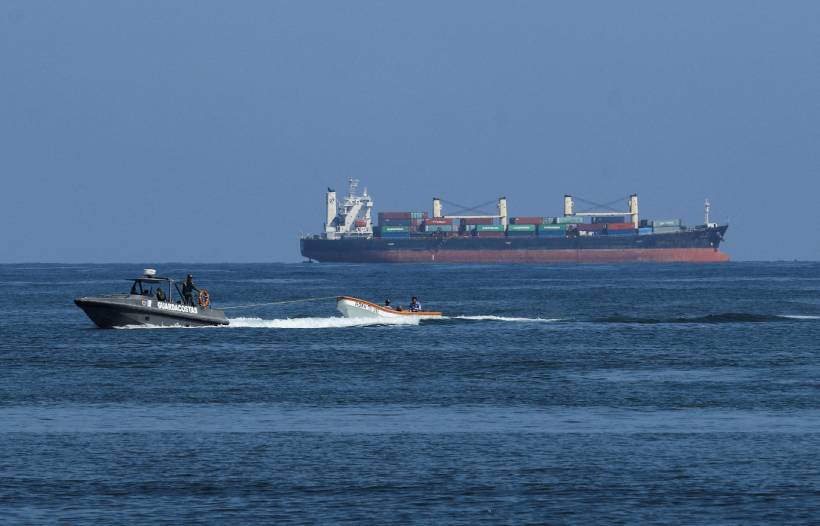
Washington, DC – In September, the United States began launching dozens of deadly military strikes against alleged drug-smuggling boats in the Caribbean Sea and eastern Pacific.

Nearly half a year later, remarkably little is known about the strikes. The identities of the nearly 157 people killed have not been released. Any purported evidence against them has not been made public.

Recommended Stories

list of 3 itemsend of list

But a group of United Nations and international law experts are hoping to change that on Friday, when they testify at the Inter-American Commission on Human Rights (IACHR).

The international hearing will be the first of its kind since the strikes began on September 2, and rights advocates hope it can help lead to accountability as individual legal cases related to the strikes proceed.

Steven Watt, a senior staff lawyer with the American Civil Liberties Union’s human rights programme, said the goal of the hearing will be threefold.

“Our ask will be to conduct a fact-finding investigation into what’s going on,” Watt said.

The second aim, he continued, would be “to assert or to arrive at a conclusion that there is no armed conflict here”, in what would be a rebuke to US President Donald Trump’s previous claims.

Finally, Watt said, he hopes the proceedings will yield long-sought transparency from the Trump administration on “whether or not they have a legal justification for these boat strikes”.

“We don’t think there are any,” Watt added.

‘We don’t know the names’

The experts set to testify at Friday’s hearing said the IACHR has a unique mandate to uncover the truth behind the US strikes.

The commission, based in Guatemala City, Guatemala, is an independent investigative body within the Organization of American States, of which the US was a founding member in 1948.

While the Trump administration has claimed it has a right to carry out the deadly attacks as part of a wider military offensive against so-called “narco-terrorists”, rights groups have decried the campaign as a series of extrajudicial killings.

They argue that Trump’s deadly tactics deny those targeted of anything that approaches due process.

Legal experts have also dismissed Trump’s claims that suspects in drug-related crimes are equivalent to “unlawful combatants” in an “armed conflict”.

Few details have emerged from the air strikes. Several families have come forward, however, to informally identify the dead as their loved ones.

Victims are said to include 26-year-old Chad Joseph and 41-year-old Rishi Samaroo, who were sailing home to Trinidad and Tobago when they were killed in October, according to relatives.

A complaint filed against the US government said both men travelled often between the islands and Venezuela, where Joseph found work as a farmer and fisherman, and Samaroo laboured on a farm.

The family of Colombian national Alejandro Carranza, 42, have also said he was killed in September when the US military attacked his fishing boat off the country’s coast.

The US has yet to confirm the victims’ identities, and only two survivors have ever been rescued in the 45 reported strikes.

A clearer picture of what happened will be a significant step towards accountability, according to experts like Watt.

“[The IACHR] is uniquely positioned to identify who all these persons are,” Watt said. “We just know the numbers from the United States. We don’t know the names or the backgrounds of these people.”

The IACHR has launched a range of human rights investigations in recent decades, including probes into the 2014 mass kidnapping of 43 students in Iguala, Mexico, and a series of murders in Colombia from 1988 to 1991 dubbed the Massacre of Trujillo.

The commission has also examined US policies, including extrajudicial detentions at Guantanamo Bay, Cuba, during its so-called “global war on terror”.

The IACHR has the power to seek resolutions to human rights complaints or refer them for litigation before the Inter-American Court of Human Rights.

Just last week, the court ordered Peru to pay reparations to the family of a woman who died during a government-led forced sterilisation campaign in the 1990s.

The Carranza family has filed its own complaint to the IACHR, and the families of Joseph and Samaroo have also lodged a lawsuit against the US in a federal court in Massachusetts.

Angelo Guisado, a senior staff lawyer at the Center for Constitutional Rights (CCR), said a fuller accounting of the US actions is needed to prevent future abuses. He is among the experts testifying on Friday.

“You can’t normalise assassinating fishermen off the coast of South America,” Guisado told Al Jazeera. “That’s just sadistic and an abomination to the rules-based order that we’ve created.”

“So we hope that the commission can do some investigation.”

A war against ‘narco-terrorists’?

One of Guisado’s goals for Friday’s hearing will be to unpack the Trump administration’s argument that the attacks are necessary from a national security standpoint.

Even before the US strikes began, the Trump administration began framing the Latin American drug trade as an existential threat to the US.

As part of that re-framing, the administration borrowed messaging from its “global war on terror”, taking the unorthodox approach of labelling several cartels “foreign terrorist organisations”.

Speaking last week at a meeting of Latin American leaders, White House security adviser Stephen Miller maintained there is no “criminal justice solution” to drug cartels.

Instead, he affirmed that the US would use “hard power, military power, lethal force, to protect and defend the American homeland”, even if that meant carrying out deadly operations throughout the Western Hemisphere.

Guisado, however, noted that the administration has admitted that the targeted boats were largely carrying cocaine, not the highly addictive fentanyl responsible for the majority of US drug overdoses.

He explained that the administration has done little to prove its claims that drug traffickers are part of a coordinated effort to destabilise the US.

Such hyperbolic language, Guisado added, could be used as a smokescreen to conceal illegal actions.

“When you invoke national security interest, it seems as if scrutiny and any legitimate analysis or condemnation gets pushed to one side in favour of an ersatz martial law,” Guisado said.

“The idea that you could just proclaim anyone a narcoterrorist and do whatever you want with them is just so repugnant to our system of fairness, justice and law.”

Watt, meanwhile, said he hopes the IACHR will draw a clear “line in the sand”, separating drug crimes from what is conventionally considered an armed conflict.

He also would like to see the IACHR clearly outline the US’s human rights obligations.

“But even if there was an armed conflict — of which there isn’t — the laws of war would prohibit the type of conduct that the United States is engaging in here,” Watt explained.

“It would be an extrajudicial killing. It would be a war crime.”
Transparency or accountability

Friday’s hearing will only be an initial step towards accountability, and critics question how effective the IACHR will ultimately be.
The US has regularly shrugged off human rights probes at international forums, and it is not party to entities like the International Criminal Court in The Hague, raising barriers to the pursuit of justice.

Despite being a member of the OAS, the US has also not ratified the American Convention on Human Rights, one of the organisation’s founding documents.

It is, therefore, unclear how binding any IACHR decisions could be, although Watt argued that it is “longstanding jurisprudence of the commission that the declaration imposes obligations on non-ratifying member states”.

Still, legal experts said Friday’s hearing may yield clarity on the Trump administration’s legal argument for the boat strikes.

The IACHR has said US government representatives are set to appear at the hearing.

To date, the US Department of Justice has not released the Office of Legal Counsel’s official reasoning for the boat strikes, considered the foundational legal document for the military actions.

A separate memorandum from that office addressed the US abduction of Venezuelan President Nicolas Maduro on January 3, which it framed as a drug enforcement action.

That memo touched on the boat strikes, but it only served to raise further questions about Trump’s rationale.

“This will be an opportunity for the United States to put its case before the commission,” Watt said.

“But of course, it depends on US cooperation,” he continued. “They’re going down there, but it’ll be interesting to see what they actually say”.

Source link