The beautiful spot is perfect for pensioners seeking a relaxed lifestyle
14:27, 12 Oct 2026Updated 14:35, 12 Oct 2026
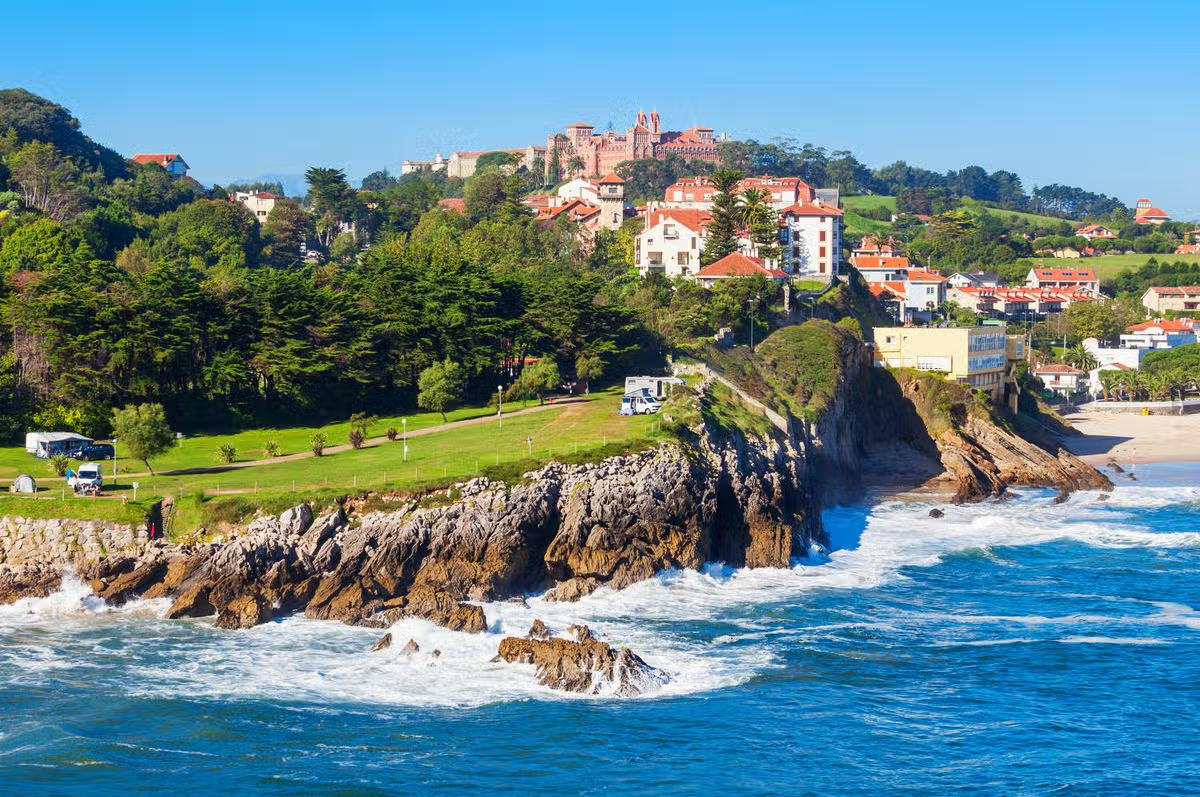
Best town to retire in Spain as expats praise ‘affordable living’
New analysis from World Atlas has named the best Spanish towns to relocate to. They are all stunning, overlooked locations, ideal for retirees seeking a peaceful and authentic way of life away from well-known resorts such as Benidorm or the Costa del Sol.
The research highlighted seven picturesque towns with fewer than 50,000 inhabitants across Spain that feature “walkable, historic centres with accessible recreation, including coastal paths, mountain trails, canoeing rivers, and reservoirs a short drive from the front door”. On Reddit, expats praised the “affordable living” and the “amazing regional food” of some of these picture-perfect locations.
Trujillo, in Extremadura, was named the best small town to retire in, with the lowest housing prices of around €717 (£605) per month. Locals praised the town’s authenticity on social media, with one saying that “life is more or less affordable, with no uncontrolled tourism problems, and food is amazing”.
Trujillo was followed by Arcos de la Frontera, in Cádiz, which has an estimated population of 31,046. Experts at World Atlas noted: “For retirees who want a classic Spanish white town with water sports on the doorstep rather than just mountain views, Arcos is a rare combination.”
Baiona, in Galicia, was also named one of the best places to relocate to. The charming town in northern Spain has a population of 12,380. World Atlas stated: “Baiona offers a version of coastal Galicia that pairs history with a genuine beach-town feel, at a price most Mediterranean resort towns can’t match.”
Other places included the picturesque town of Sitges, just half an hour down the coast from Barcelona, and Cangas de Onís, best known as the historic gateway to the Picos de Europa National Park.
After a roasting hot summer during which a trip to the beach to escape the heat was top of everyone’s agenda, Rosaleen Fenton made an autumnal visit to one of the country’s most popular seaside towns
08:41, 30 Sep 2026Updated 08:54, 30 Sep 2026
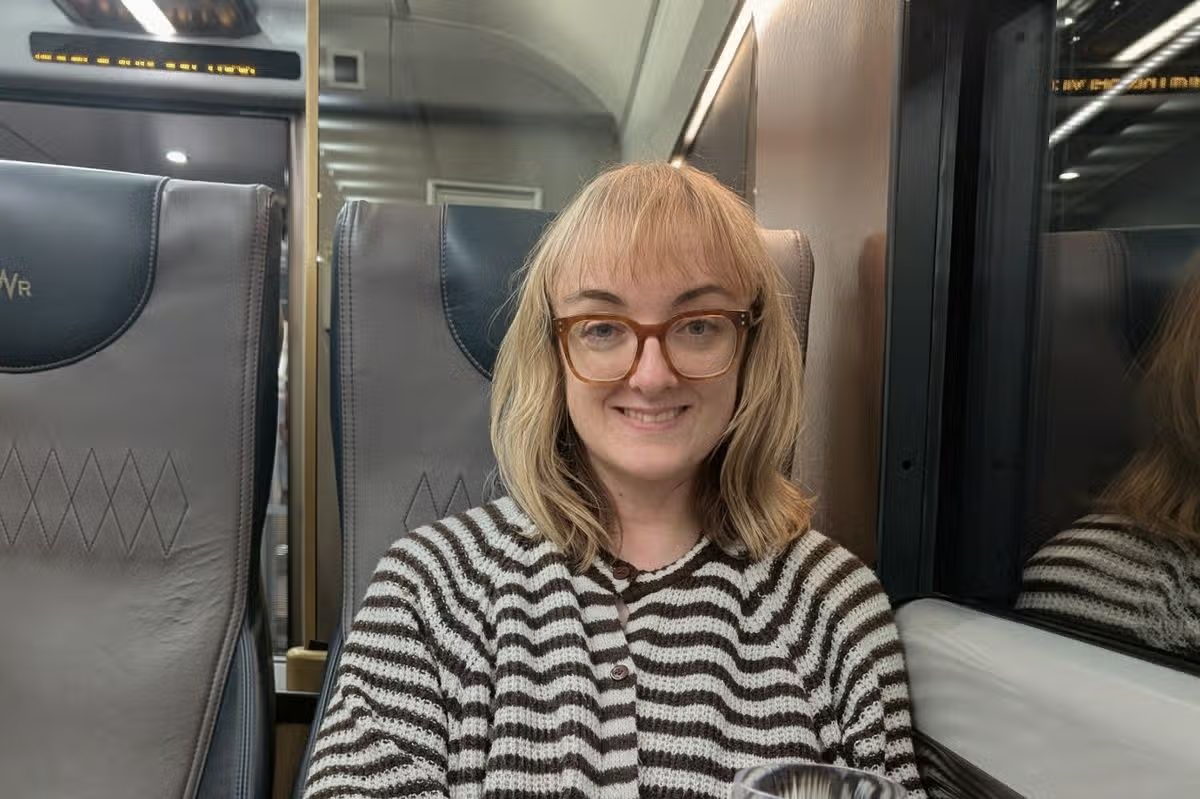
Rosaleen whizzed down to St Ives on a GWR train
A summer trip to Cornwall can often feel like a battle against the crowds. With thousands of visitors packing into its narrow lanes, navigating St Ives during peak season can make you feel like you are trapped in an endless queue – albeit one with access to delicious Cornish pasties roughly every five feet.
But as the schools reopen their doors, the town quietens down and begins to feel like a place reclaimed by its residents. I had been told September is the best time to visit, so I gave it a go, my mum and I hopping on a Great Western Railway (GWR) train from London Paddington, hoping for a glorious, slightly calmer seaside weekend.
Our journey took on a mythical feeling as we headed further west. GWR has recently revived its Line to Legend Land storybook, a century-old set of promotional travel pamphlets and books that encourage passengers to explore the scenic regions by train. It is packed with South West folklore and retellings, and now a new tale by former Children’s Laureate Sir Michael Morpurgo.
Do you have a travel story to share? Email webtravel@reachplc.com
The railway has installed five life-sized statues of these legendary figures across the network. Stepping onto the platform at St Ives, you were greeted by the famous mermaid of Zennor – which celebrates the legend of a local chorister lured beneath the waves. Reading about a coastline teeming with mythical creatures while watching Carbis Bay slide past your window felt like the perfect way to leave a busy working week behind.
Our home for the weekend was Tregenna Castle Resort, perched high on a hill and offering one of the most breathtaking views in the West Country – and not one I tire of looking at.
These stone walls have seen a lot of history. Built in 1774 as a grand private home, it was later purchased by GWR as an exclusive hotel. Today, the 72-acre estate is a dream for holidaymakers. Situated amidst lush ground, it boasts indoor and outdoor pools, woodland walks, a nine-hole golf course, and courts for tennis, badminton and pickleball.
Then there is the food, which deserves its own spotlight. We dined at the Godrevy View Restaurant, named after the distant lighthouse said to have inspired Virginia Woolf. The ever-changing menu is far superior to standard hotel fare. We begin with a beautifully arranged, nicely seasoned tomato salad served with Thai basil whipped ricotta, watermelon, ponzu and chervil (£11). For main, an 8oz fillet steak is generous, served alongside fondant potatoes, carrot puree, asparagus and baby beets.
On Sunday, we enjoyed roast beef, cooked to perfection, with all the trimmings, including Yorkshire puddings hiding a decadent treat within – a small dollop of braised beef swimming in rich jus. My daily routine quickly settled into gluttony – a delicious fry-up for breakfast, a rich chocolate brownie for dessert – an extremely pleasant way to start and finish every day.
While the town, which has a stand-out independent shopping scene and was named the UK’s prettiest seaside town just this week, is calmer in September than the summer holiday months, the streets still felt substantially fuller than you’d expect from a place of 11,000 people. A great energy, but the bustling made me yearn to return to the sublime peace of Tregenna Castle, just 15-minutes away.
With our visit coming just days after Prime Minister Andy Burnham said he was in favour of a ‘tourist tax’ for Cornwall, the topic of overtourism was top of my mind. It’s fair to say business owners in the area remain divided on the topic, but for me, the benefits are easy to see. St Ives records more than 220,000 overnight stays annually, meaning it could bring in over £1,000,000 a year – a lifeline for a town where social issues are pressing, despite its well-to-do reputation. There’s a foodbank here, and a lot of young people who can’t survive in a property market where 15% of homes are second ones.
Chatting with locals, many said they no longer live in St Ives itself, preferring nearby Penzance, where they have room to breathe, cheaper homes, and not every shop sells clotted cream fudge.
Yet as a visitor, I can see why those in the industry are wary of scaring anyone off. It’s clear how holidaymakers pour vital cash into the local economy through independent shops, galleries and restaurants. Last year Jon Hyatt, who chairs Visit Cornwall, said he was “against any charge that might put visitors off”.
It’d be a terrible shame if they were, given how much there is to enjoy, from frolicking in the waves of Porthmeor Beach and peering off the side of Smeaton’s Pier, to touring the Barbara Hepworth Museum and Sculpture Garden.
Unsure of what to take on next, my travel companion tried using an AI bot to plan a fun day out for us. Unsurprisingly, technology failed us with the app repeatedly instructing us to catch a bus route that hasn’t existed for over two years. Abandoning our future robot overlords, we turned to a friendly member of hotel staff instead, who pointed us straight toward Tate St Ives – a far superior mode of recommendation.
Opened in 1992 on a cliff overlooking Porthmeor Beach, the displays change regularly. We caught an exhibition by Halima Cassell, whose intricate geometric sculptures play beautifully with light and shadow. Outside, it feels as if her artwork was continuing, a rainbow appearing over the beach, ending atop the RNLI flag.
Afterward, we walked a stretch of the South West Coast Path and enjoyed the brutally beautiful landscape, with the rhythm of the waves calming our frazzled nerves. As a special treat, we returned to London on GWR’s overnight Night Riviera Sleeper service.
I slept blissfully after a trip to the glorious buffet bar, where you can enjoy a free hot chocolate, before heading to slumber in a carriage. Getting onto the top bunk is no trouble, with a smart fold-away ladder showing how cleverly designed this small cabin is.
We arrived back in London just after 5am, though passengers can stay on board until closer to 7am. Breakfast is delivered (for me, a bacon roll) alongside piping hot coffee – which gives me the strength to start my day back in London, where I mourn the glorious coastline I left behind.
Book it
Tregenna Castle Resort, Treloyan Avnue, St Ives. Rooms and luxury self-catering lodges available. Visit tregenna-castle.co.uk
GWR operates regular services from London Paddington. To travel in a sleeper cabin on the Night Riviera, you need to purchase a regular train ticket, plus a supplement for the cabin. For the best deals, book up to three months in advance. Book at GWR.com.
Timed entry tickets to Tate St Ives on Porthmeor Beach cost £14 (£1.50 extra with a voluntary donation), though locals can get unlimited all-year entry for £10. Book in advance at tate.org.uk/visit/tate-st-ives.
Sykes Holiday Cottages has crowned some of the UK’s best holiday cottages in its latest awards including best for young families, with the best views and pet-friendly properties
This article contains affiliate links, we will receive a commission on any sales we generate from it. Learn more
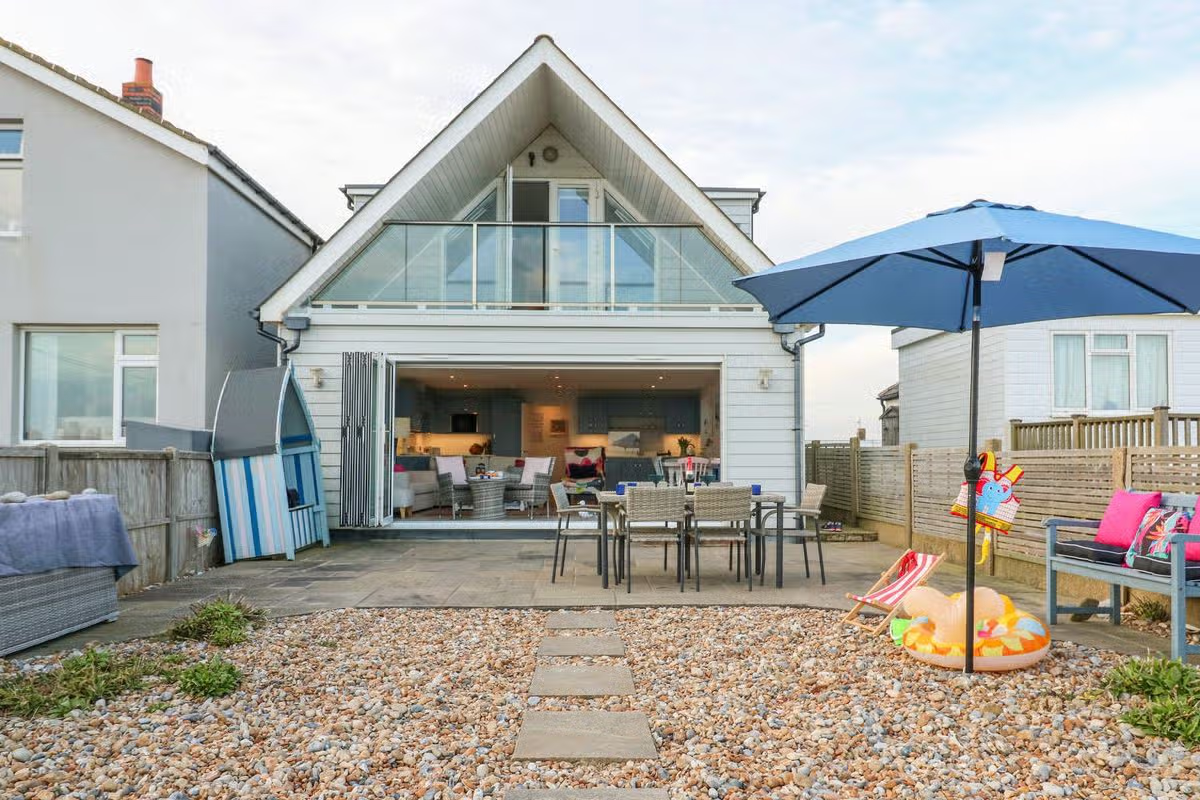
The UK is filled with beautiful holiday homes whether you’re after a cosy cottage for a romantic break, or a castle-turned-holiday-rental for a weekend away with a huge group of friends and family. The sheer amount of offer can sometimes make it a little trickier to unearth the hidden gems.
Luckily, Sykes Holiday Cottages have helped to narrow it down as they have unveiled the winners of their 2026 Sykes Gem Awards. I was a judge as part of a wider panel, with scores based on a number of factors including guest reviews, the quality of a property, amenities on offer, and even overall popularity.
This year’s winners have included a Grade II-listed lighthouse, a stay in the grounds of the historic Culzean Castle, a cosy glamping hut in the heart of Herefordshire, and a romantic bolthole on the Isle of Lewis.
You can check out the full list of winners here, but below are 12 properties which won gold that we think you’ll definitely want on your radar for your next UK holiday…
It’s not just Sykes Holiday Cottages that’s been serving up a dose of staycation inspiration. Earlier this year, HolidayCottages gave us plenty of UK holiday ideas when it unveiled its 2026 Showcase Awards with categories including winners for Most Iconic Design, Extraordinary Stays and the best in UK and Ireland.
Have you got a holiday story to share? Email us at webtravel@reachplc.com