Albion

Wolves v West Bromwich Albion: Why the Black Country derby means so much

Wolverhampton Wanderers v West Bromwich Albion. The Black Country derby. A fixture that goes back to the very dawn of English footballing time itself.

Now it’s back as a league fixture for the first time in more than five years, and in front of fans at Molineux since 2012.

It was first contested as a league game in December 1888 – the very first season of the Football League – when Wolves won 2-1. However, Albion had already won their first two meetings, in 1886 and 1887, both in the FA Cup.

Since then, there have been so many derby memories, both magic and tragic at opposite ends of the emotional scale.

And, since the explosion of televised football, so many of those moments captured on video to be relived – or mentally erased depending on your allegiance – over and over again.

It’s a fixture that the Black Country never stops talking about, the first the fans look for when the sides are in the same division.

And the pre-match banter begins earlier with every staging – and every look back at all those derby highlights from the past 40 years.

Steve Bull’s first derby goal in 1989, a toothlessly grinning Iwan Roberts’ Hawthorns hat-trick in 1996, George Ndah’s double on the back of an inspired Keith Andrews performance in 2001 and two-goal Steven Fletcher’s matchwinning efforts in May 2011 to help keep Mick McCarthy’s side in the Premier League.

For Albion, there was Darren Bradley’s 35-yard screamer in 1993, Bob Taylor’s late Hawthorns clincher in 1995, Jordao’s Molineux matchwinner in December 2001, the season when Albion pipped Wolves for promotion by three points, and Carlos Vela’s injury-time equaliser in Roy Hodgson’s first game in charge in 2011.

And then there was that famous 5-1.
Source link

Brighton & Hove Albion news: Albion celebrate 125th anniversary

The contemporary Brighton are different.

They began their second European campaign in the Norwegian city of Tromso last month, knowing the Conference League offers the chance of that elusive first trophy.

They play in a magnificent stadium, a short train journey from the city centre, with its new corporate areas, and, generally, inclusive family atmosphere. Their recruitment model, buying players in and selling them on for vast profits, is envied. The new Brighton just beat Manchester United at Old Trafford for the fifth time in six visits. Four games into their 10th consecutive Premier League campaign, they sit fifth.

The contemporary Brighton exist the way they do largely because of the vision and investment of Tony Bloom.

Born in Brighton, Bloom is a lifelong fan. His connection to the club is through his grandfather Harry, a former vice-chairman, and uncle Ray, a director.

Bloom, 56, is an entrepreneur. He made his money in finance and gambling, largely through the use of data. He became chairman in 2009, and masterminded the rise from League One and move into the American Express Stadium. Last season, Brighton‘s average attendance was more than 31,000.

In their 125-year history, Brighton have never had it so good.

“Anyone walking into Brighton today compared to even 15 years ago would not think it was the same football club,” sporting director Mike Cave told BBC Sport.

“The club has been on an unbelievable journey. We’ve got staff members and many fans who have done that journey. For those of us who weren’t here 15 years ago, our responsibility is to ensure what’s to come – and I think there’s lots – is better than what’s happened in the recent or long-distance past.”

As for Bloom himself, he has reflected on Brighton‘s 125th birthday in the programme for the Arsenal game.

“Since 1901, this football club has been part of the fabric of our city and the broader county of Sussex,” he said.

“It has connected generations of families and communities. Grandparents have brought their children and grandchildren to matches. Lifelong friendships have been forged on terraces, in stands and on away trips.

“Through good times and bad, Brighton & Hove Albion has provided so many of us with some of the most memorable moments of our lives.

“This club is in my blood. Some of my earliest and most cherished memories are wrapped up in the sights and sounds of the Goldstone.

“When I had the privilege of becoming owner and chairman, it was like being entrusted with something precious to safeguard and help develop for the future.

“Many of you reading these words will remember those difficult years. The loss of the Goldstone. The long journeys to Gillingham. The challenges of the Withdean era.

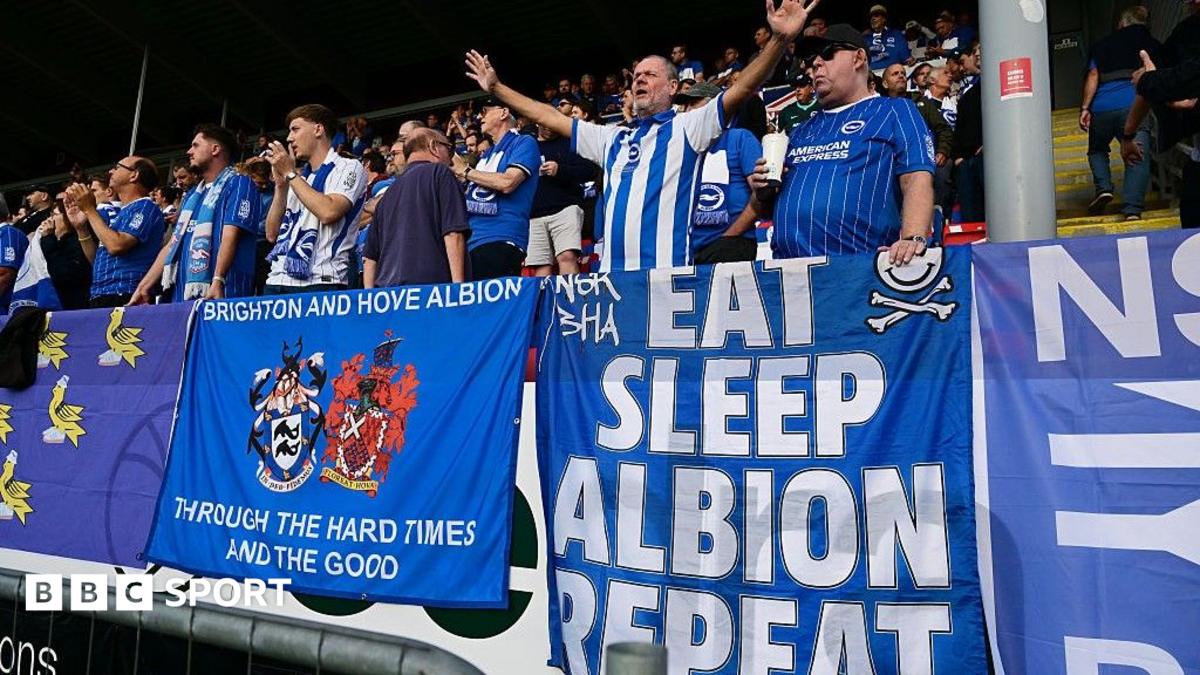
“What got this football club through was the determination of its fans. The bucket collections. The protests. The refusal to accept the Albion should disappear. This anniversary belongs as much to those supporters as anyone. Quite simply, without them, we would not be here today.”

Whether they beat Arsenal or not, Brighton stands tall, for those who fought to preserve something they felt was special, and a man who had a vision – and finance – to build something better.

Source link