EasyJet has announced 13 new routes, including new city breaks for UK tourists
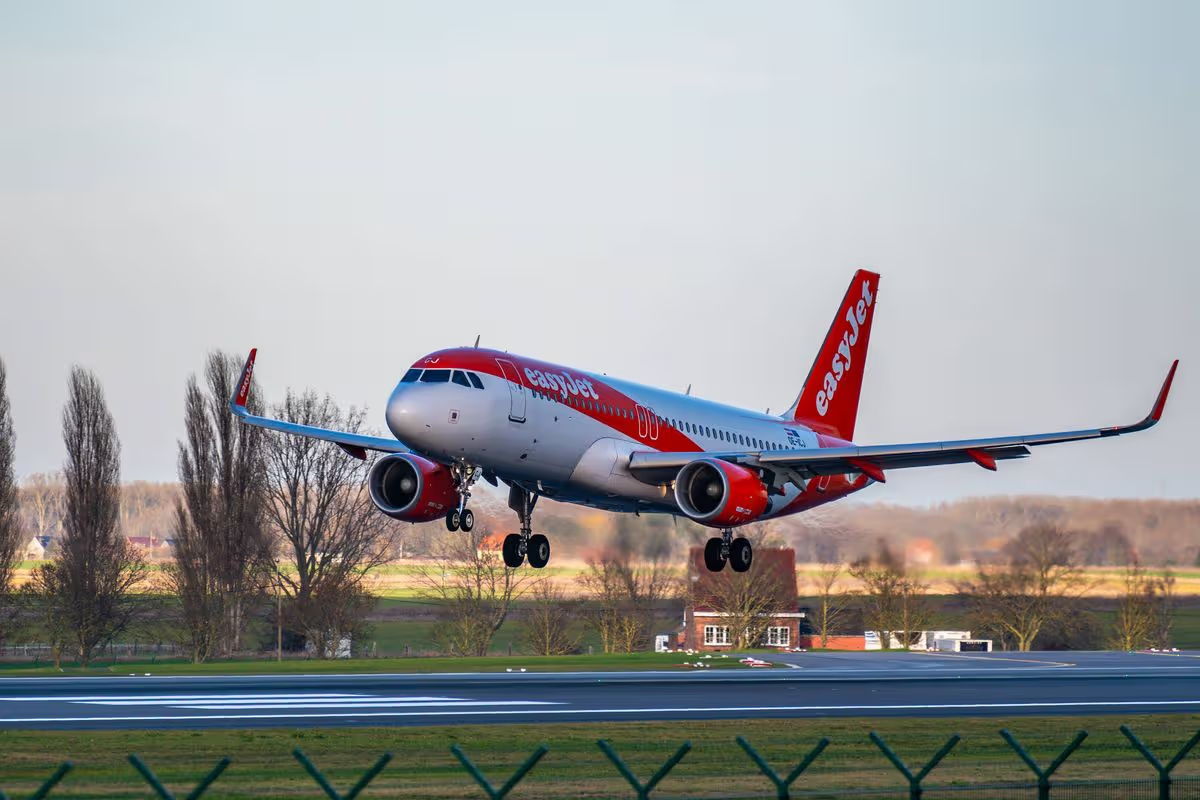
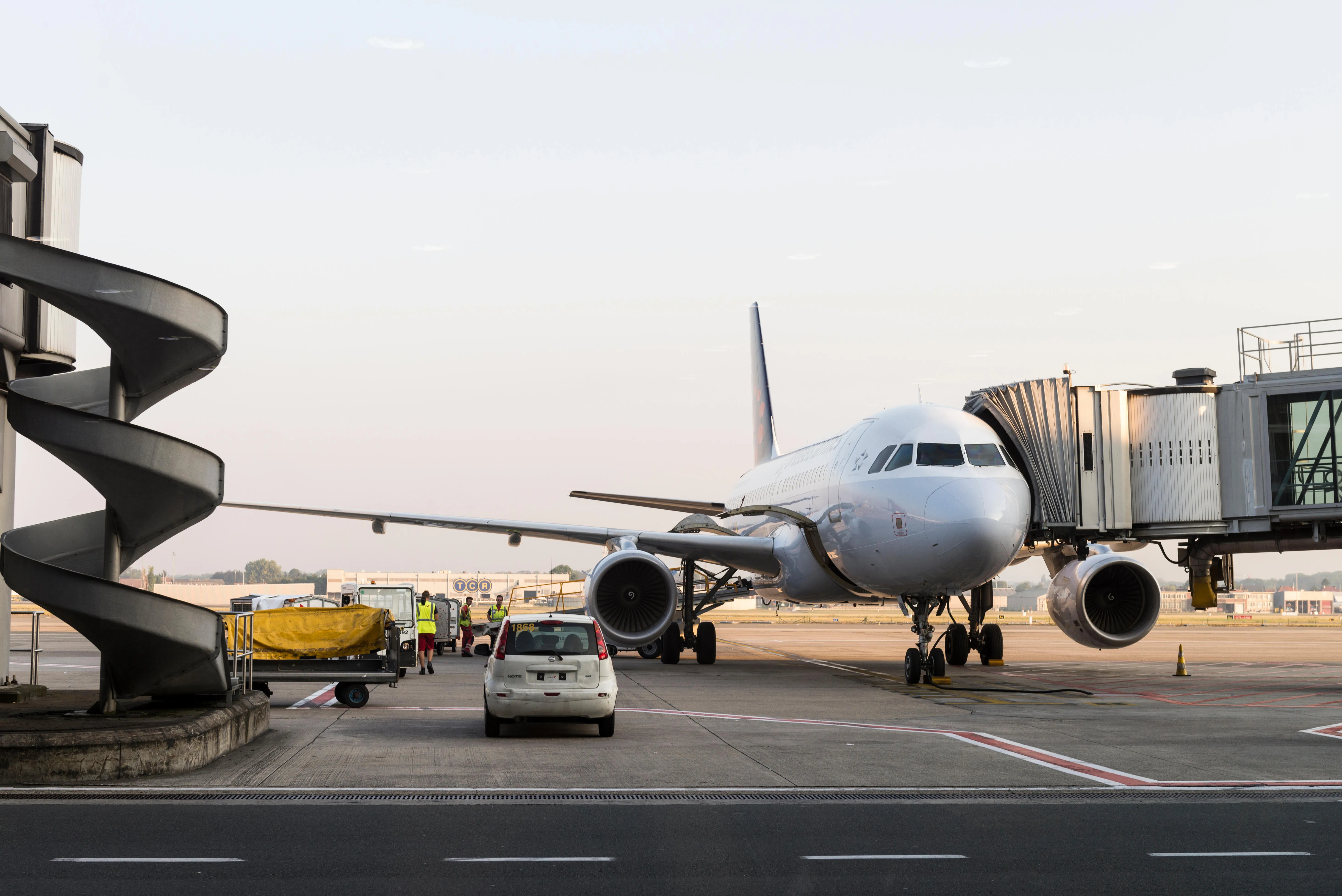
EasyJet has issued an update today, June 25, on new routes for UK travellers(Image: Michael Mulkens via Getty Images)
EasyJet has today revealed 13 brand-new UK routes set to launch this winter. Among them are flights and package holidays to a never-before-served destination in Germany.
This festive season, EasyJet will launch flights and packages to Nuremberg. Services will be departing from Manchester from 2 November on Mondays and Fridays, London Gatwick from 19 November on Thursdays and Sundays and London Luton from 23 November on Mondays, Wednesdays, and Fridays.
Nuremberg is home to one of Europe’s oldest and most celebrated Christmas markets. The iconic Christkindlesmarkt, which dates back to the 16th century, draws visitors from across the globe to soak up the festive atmosphere of one of Germany’s most beloved seasonal destinations.
EasyJet will also be expanding its offering from its London airports, with fresh routes launching to Morocco, France and Egypt. Flights from London Luton to Rabat get under way on 5 November, followed by London Southend to Lyon from 3 December, running on Thursdays and Sundays.
Completing the new additions, flights from London Southend to Sharm El Sheikh will kick off on 4 January, departing on Mondays and Fridays. The airline is also expanding its connections to Hungary, with fresh flights and package holidays to Budapest taking off from three UK airports.
Services from Bristol and Belfast International will commence on 17 November, operating on Tuesdays and Saturdays, while flights from Liverpool will get under way on 19 November, running twice weekly on Thursdays and Sundays – perfect for a festive weekend getaway.
In Scotland, a brand new service from Edinburgh to Tromsø in Norway will launch on 30 November, operating twice weekly on Mondays and Thursdays and providing passengers with the only direct route to the ‘Gateway to the Arctic’. Meanwhile, in time for the festive period, flights from Glasgow to Krakow in Poland will commence on 13 November, with departures twice weekly on Mondays and Fridays.
EasyJet will enhance its Manchester network with a fresh service to Vienna in Austria, launching on 19 November with departures up to twice a week on Mondays and Fridays. Additionally, EasyJet is introducing its first international route from the Isle of Man, with a new weekly service to Geneva starting on 19 December, operating on Saturdays. The route will offer the only direct link between the Isle of Man and Switzerland.
The new routes take the airline’s total number of winter services introduced over the past fortnight to 26. Last week’s announcement featured a new direct service from Manchester to Sphinx Airport, alongside the carrier’s first ever international route from Cornwall Airport Newquay to Geneva. The airline says that package holidays can be booked through EasyJet holidays on all new routes with the exception of Luton to Rabat. All packages include flights and hotel, plus 23kg luggage and transfers on beach destinations such as Sharm El Sheikh, they say.
Holidaymakers can reserve their winter getaway with a deposit of £60 per person and until 1 July 2026, can save money on new bookings using the code FOOTBALL26.
Kevin Doyle, EasyJet’s UK Country Manager, said: “We’re thrilled to be announcing a further 13 new routes this winter, bringing the number of new routes on sale over the past two weeks to a total of 26. A real statement of our commitment to giving customers across the UK more choice from their local airport.. From winter sun escapes to magical Christmas market breaks, there’s never been a better time to book a flight or package holiday with EasyJet. We look forward to welcoming even more customers on board for their winter holidays.”
EasyJet and EasyJet Holidays say they have introduced their Book with Confidence Promise to reassure customers on their travel plans. The airline says that the pledge guarantees that flight and package prices will not increase in price once booked and confirms that EasyJet intends to operate a full schedule across its network, despite competitors cutting routes, as EasyJet prepares to fly over 50 million passengers this summer.
NO ONE wants to start their holiday with delays, but with hotter weather and new travel rules, it’s becoming all the more common.
New research from AirAdvisor has found the top airports around Europe where you are most likely to be delayed this summer.
Sign up for the Travel newsletter
Thank you!
Airports on the Greek Islands are some of the worse when it comes to delaysCredit: Alamy
The study looked at flights between June and September 2025, to see where flights either to or from the UK were likely to be delayed for over an hour.
The top of the list was Milan Bergamo, an airport which sits just outside of Milan in Italy which had 11.96 per cent of its flights delayed by one hour or more.
Also in Italy, Pisa came fourth on the list which had 10.58 per cent of its flights affected by delays last summer.
For anyone heading to the Greek islands this summer, some of these destinations experience hold-ups too.
The pretty island of Kefalonia is third on the list where 11.79 per cent of flights being delayed by an hour or more last year.
Also in the top 20 is Corfu, Zante, Paphos in Cyprus, Kos, Rhodes and Mykonos.
Anton Radchenko, CEO of AirAdvisor explained why the airports at Greek islands are badly affected.
He explained: “They tend to be much smaller than hubs in major metropolitan centres and are incredibly popular with holidaymakers from across the world.
“During the summer period, they frequently operate at maximum capacity, so that means that when a mass disruption event occurs, there are implications for other services.”
He continued: “Similarly, the sheer volume of flights between popular Spanish holiday hubs in Palma and Reus can result in full days of travel chaos when multiple services are delayed.”
Flights at these 20 airports are sometimes delayed by over an hourCredit: Alamy Last summer, 9.33 per cent of flights in and out of Palma Mallorca to the UK were delayedCredit: Alamy
Anton Radchenko added that these delays often result in a “domino effect” where flights across a single day are then pushed back, especially during peak times.
Spain is a popular getaway destination for Brits as it’s just a few hours from the UK.
But there are some airports here that have experienced issues too.
Of course, last summer EES checks at passport control hadn’t been enforced yet.
But these have had a big impact in some airports around Europe – so there could be even more delays at certain destinations.
If you are delayed for more than three hours or have a flight cancelled then under the UK261 regulation you could be eligible for compensation.
For more information on this, check out the rules on AirAdvisor.
Here are the top 20 European airports where you’re most likely to be delayed this summer…
According to AirAdvisor these airports this is the percentage of flights delayed by 60 minutes or more either heading too or from the UK between June and September 2025…
New study showed UK passengers ‘unaware’ of problem as concerns raised at people deserting hotspots
15:02, 22 Jun 2026Updated 15:02, 22 Jun 2026
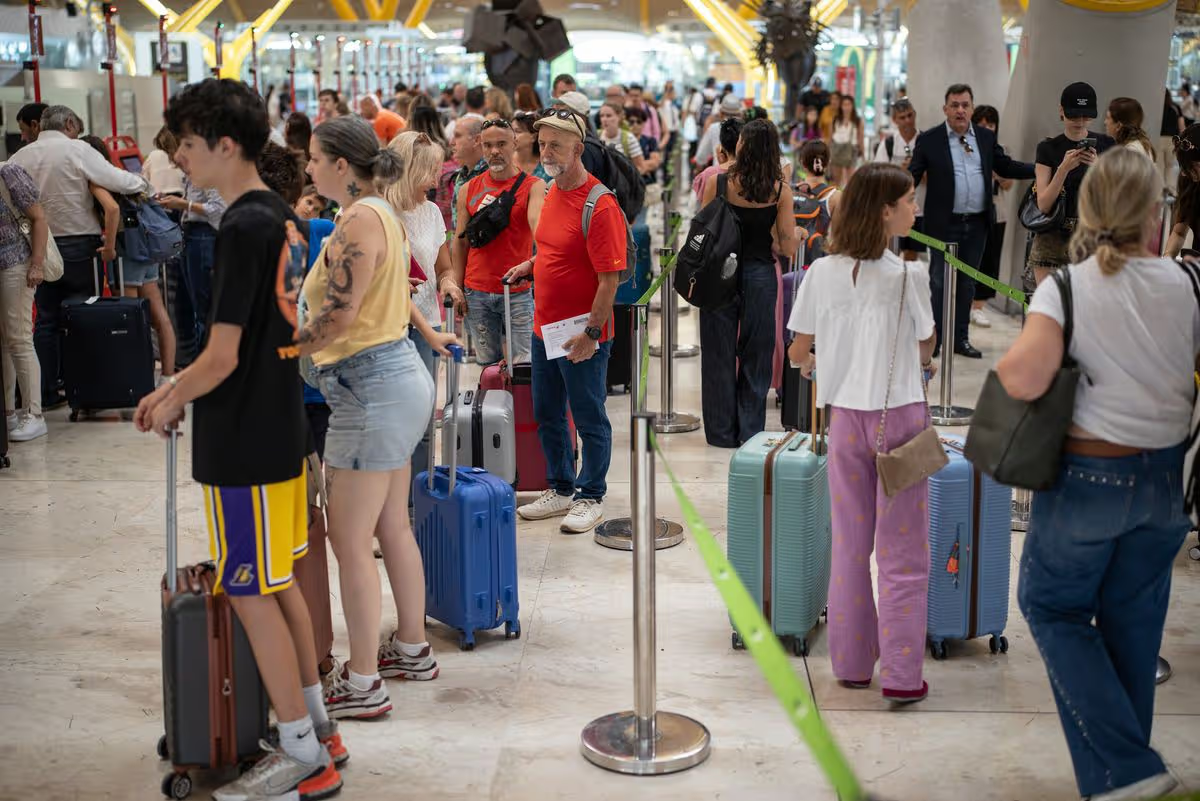
Adolfo Suarez Madrid-Barajas Airport. Passengers are being warned of big delays this summer(Image: Getty Images)
Spanish media are reporting six-hour queues could hit this summer at airports. The Majorca Daily Bulletin said the International Air Transport Association (IATA) has said the European Union’s new digital border system is going to come under major strain.
The Entry/Exit System (EES) has been fully operational across the Schengen Area since April 10. Two months in, it is producing long lines, missed flights, and growing alarm across the travel industry. Airports Council International Europe said that waits of up to three and a half hours have already been recorded during peak periods. The six-hour figure is IATA’s projection for the busiest summer months.
Budget airlines from the UK Ryanair, easyJet, and Jet2 have all warned of missed departures, disrupted schedules, and rising operational costs. Ryanair passengers who need to use its airport check-in or bag-drop services will be required to finish the process 20 minutes earlier.
The airline announced it will close the services an hour before the scheduled departure of a flight – compared with 40 minutes currently – to give passengers more time to get through security and passport checks. This will reduce the “very small number of passengers” who miss their flight while stuck in queues, the carrier added.
Ryanair’s website says passengers who fail to check in on time “may be denied boarding without refund”. The new policy will be in place from November 10. Passengers will still able to check in online until two hours before departure.
Jet2 check-in desks open exactly 3 hours before scheduled departure and will not open any earlier, even with the new EES (EU Entry/Exit System) checks. It is advised not to arrive at the airport earlier than this, as early arrivals may be asked to wait to prevent congestion
The airline said: “There may be longer wait times than usual when you arrive in destination and before your flight back to the UK. We’re really sorry for any inconvenience this may cause but unfortunately this is outside of our control.”
The UK boss of budget airline Wizz Air has warned British holidaymakers to arrive at European airports three hours before their flight home departs due to lengthy queues caused by new border checks.
Wizz Air’s UK managing director Yvonne Moynihan said: “When you land in the destination airport, there might be queues, so you should bring a portable charger or water,” she said.
Because EES information has to be verified when people leave, she also highlighted the risk of queues before flights back to the UK. “Because there is another passport check…that’s where we see that people have, again, experienced longer waiting times than anticipated,” she said.
She said usual advice is to get to the airport two hours ahead of your flight – “but in these circumstances, we are advising three hours”.
easyJet said: “Airports across Europe may experience longer waiting times at passport control due to the new European Entry/Exit System (EES). This could mean you need to have your biometrics taken at border checks, including the scanning of facial images and fingerprints.”
Research from the World Travel & Tourism Council (WTTC) warned up to 41 million visitor arrivals and $45.4 billion in spending could be lost if delays of three hours or more become routine. The findings come from a May 2026 survey of 2,512 travelers in the UK, US, Canada, and Australia. About one-third said regular three-to-four-hour waits would make them much less likely to visit the Schengen Area, or stop them from visiting altogether. British travellers are the most sensitive, with 39% saying that they would be much less likely to travel. The figure is 33% for Americans and Canadians and 27% for Australians.
Awareness is another problem. More than half of those surveyed (55%) had heard little or nothing about EES, and 49% do not know what the border will require of them. In one incident, more than 100 passengers reportedly missed a flight from Milan to Manchester after getting stuck in passport queues. Ryanair, easyJet, and Jet2 have all warned of missed departures, disrupted schedules, and rising operational costs.
AIRPORT terminals – love them or hate them, you’ll find yourself killing time in one before your next holiday.
According to a study by YouGov in 2023, the average Brit spends as much as £20 before a flight, with common items being perfumes, alcohol and food gifts.
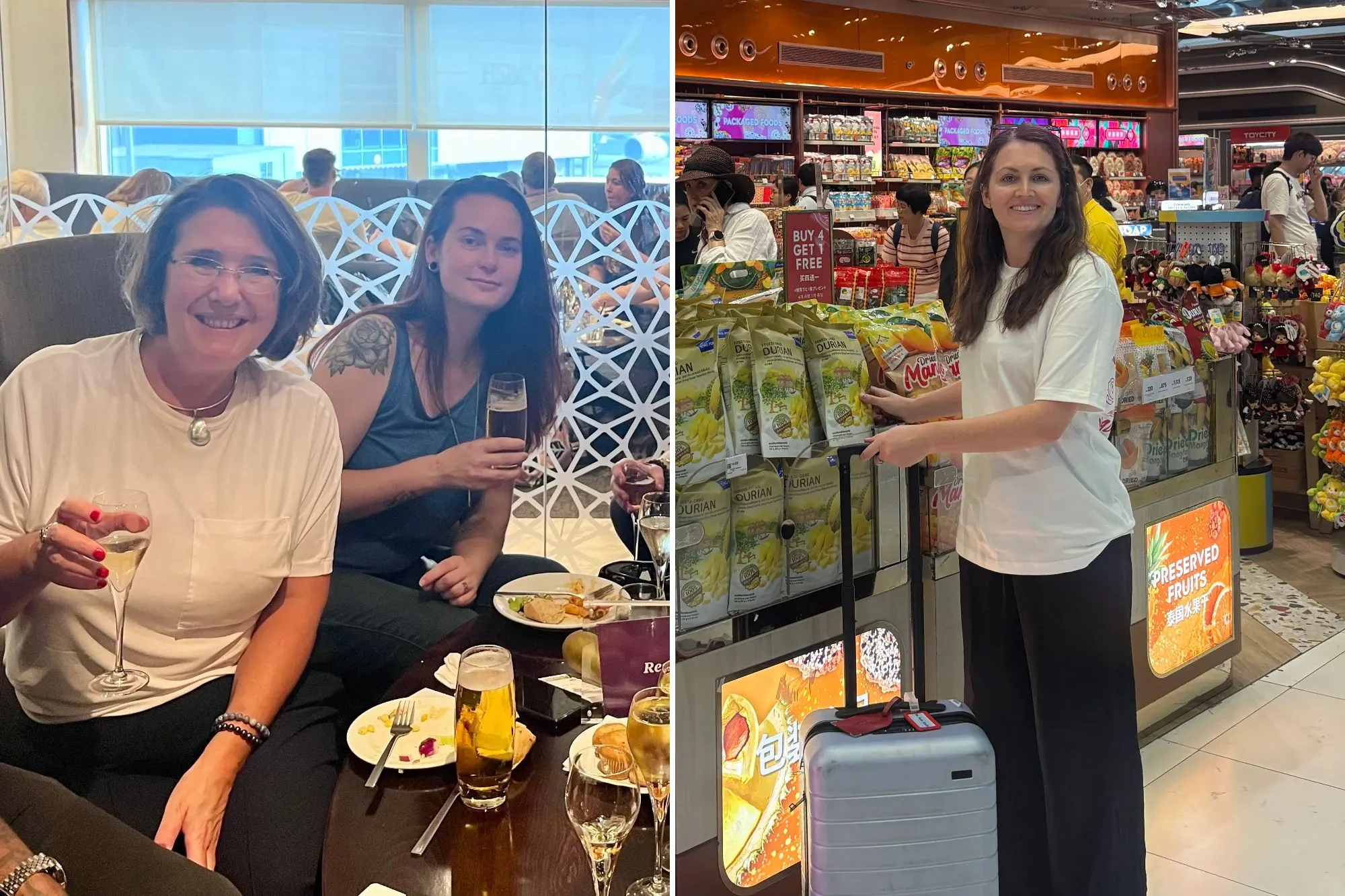
Our favourite (and worst) ways to waste time at the airport revealedCredit: AlamyThe Sun’s Head of Travel, Lisa Minot (left), with her family, at the only part of the airport she enjoys – the bar
Yet while some people enjoy a perusal of the aisles, others are more reluctant to.
While bargains can be found at Duty Free, you’ll find your cup of coffee or morning breakfast a lot more expensive than outside the airport – making your holiday more expensive before you even get on the plane.
The discussion of enjoying the airport terminal has divided even the Sun Travel team.
Here we share our biggest bugbears, best ways to spend a few hours at the airport, the freebies you can bag while there and the handful of duty-free items that are actually worth buying.
Lisa Minot, Head of Travel
As per usual, I am late. Airport security is a nightmare. Endless lines of stressed passengers are corralled into a hot, suffocating pen, awaiting the conveyor belts of doom.
I roll my eyes as my perfectly acceptable hand luggage is sent down the reject lane – and I stand fuming, knowing there’s nothing wrong with it. After another ten minutes and a ‘random check’, I am finally free to enter departures.
I am hot, bothered and hating life. So what could possibly be worse?
The winding ‘hell-no brick road’ through the World of Duty Free with its cloying perfume sprays, overpriced make-up and endless rows of ‘designer’ sunglasses.
Travellers slow to a snail’s pace as the brightly-coloured displays tempt them. And as I try to accelerate through the dawdlers, I get a full-on spray of aftershave in the face as the sales staff accost yet another unlucky victim.
Round and round we go. Past overpriced beauty brands I’ve never heard of – and will never be able to justify the price. Past rows of Union Jack tat and extortionate Fortnum and Mason biscuits.
Rounding another corner, there’s yet more retail hell – overpriced sweets and costume jewellery you know will probably disintegrate before you’ve settled into your airplane seat.
Finally, after what feels like an eternity, I’m spat out into the departure lounge. Except more retail hell awaits.
No, I don’t want a pair of overpriced shoes. I don’t need a ‘just in case’ shawl or a tech gadget promising to ‘transform’ my flight. I just want to sit down.
It’s bad enough I’m stuck in this soulless cavern, but the endless assault on my wallet is exhausting.
If I have forgotten something, God forbid, I’d much rather buy it at my destination. At least there it might have some meaning.
The lone sanctuary in the chaos. The one place where I can enjoy a cheeky albeit overpriced drink.
And as I finally sink into a chair to do a spot of people watching, the rage fades.
It might be twice the price of my local, but I’m jetting off… and this is my little slice of airport heaven.
BEST FREE ITEMS AT AIRPORTS
We’ve rounded up some of the best free items at airports, in you’re the type of person who likes to get there early…
Grab a ‘free suncream’ at the airport
Before you travel, get the Recycle at Boots app and find five empty health or beauty items that can’t go in your kerbside recycling collection, like electric toothbrush heads or toothpaste tubes.
Take a quick snap of them and upload them to the app. Once they’ve been added, you can bag them up and drop them in the collection point at your nearest participating Boots, before scanning the QR code on the side of the box for a voucher to claim £5 worth of Advantage Card points when you spend £10.
If you store up your points until you get through airport security, you can spend them on suncream at Boots airside.
I got a bottle of Soltan at Stansted for £6.05, so you’ll need more points than you get in one recycling transaction, but there’s nothing to stop you doing it several times and getting lots of points on your card, ready to spend at the airport.
Local drop-off prices or free
Residents who live near Stansted Airport can pay a reduced charge at the express set down at the terminal of either 50p or £1 for up to 15 minutes, depending on whether they live within five miles or 10 miles.
There are similar schemes at other regional airports like Edinburgh and Manchester, which means that if you live near an airport or have family and friends who do, you might be able to avoid paying for airport parking.
If you want to eat something a bit more substantial before your flight, it’s often the case that chains likePizza Expressexclude their airport branches from popular deals and discounts.
Free glossy magazines
Did you know that many airports have free magazine stands?
They can often be found in the corridors when you are travelling to your gate, or even after you have gone through the gate agent and are waiting to board.
They vary depending on which ones they have so you can’t always be fussy.
On a recent flight, we’ve managed to pick up Wallpaper* magazine, as well as Escapism, Condé Nast Traveller and Stylist.
Kids eat free
Certain large airports like Heathrow operate a kids-eat-free policy at some of their restaurants during the school holidays.
So if an adult chooses an item from the main menu, your kids can eat for free.
Restaurants that have previously taken part at Heathrow include Giraffe, Wild Olive and The Grove.
Let the kids run wild in soft play
Plenty of UK airports have soft play areas and games zones in their terminals so kids can burn off some energy before boarding.
While some of them are pretty basic, some at airports like Heathrow are good enough that you’d pay a few quid for entry into the outside world.
There are only a handful of real bargains to be found at Airport Duty FreeCredit: GettyThe Sun’s Deputy Travel Editor Kara Godfrey enjoying a spot of duty-free airport shopping
Deputy Travel Editor, Kara Godfrey
‘We don’t need to be so early to the airport, Kara,’ my friends often moan at me when I turn up three hours early for a flight to Spain.
They, however, are wrong – the beauty of a holiday starts at the airport.
In fact, it’s one of the most exciting bits of my trip, especially when travelling through some of our London airports, which, dare I say it, are some of the finest in Europe.
There is something to be said for being stuck within the walls of a terminal where there is nothing else to do but explore the shops – you can’t go back through security, and you can’t go to your gate.
If it’s an early morning flight, I embrace my overpriced Pret coffee, often chased by a just as expensive cheese turnover to keep me going.
I’ll check the time for my gate to be revealed (often at least 1hr30, with how early I arrive), and that’s when the fun starts.
I peruse Waterstones, picking up a new book that I forgot to pack myself but will inevitably never read, opting to pass out as soon as I get on the plane.
There’s the swimsuit I also forgot to pack that I must pick up from Accesorize, before being tempted into some new earrings, where I shall return from the trip with just one of them.
And I’ve been burnt before by inedible economy meals, so my trip to Boots is a must, picking up the same Meal Deal as always – Elderflower and Mint CBD drink, Korean Fried Chicken Rice Bowl and a Big Bag of Hula Hoops.
All of that, and I still have time to perhaps try some of the designer beauty products I can only dream of affording, but will happily smear samples on my wrists and neck.
How people hate the airport experience is beyond me – I simply say you aren’t doing it right.
I will never be that person you see frantically running through the airport, face frazzled as they barely make their flight.
For I, with my coffee, book and earrings to join me, settle in with another hour to kill while calmly waiting to board.
Who needs spa treatments when you have an airport terminal to peruse?
Our anonymous flight attendant blogger reveals which items you should never buy at airports and how you can find the best bargains before your flights.
The worst offender for thisis chocolate– no matter which airport you’re in, you’ll be ripped off for it.
And the worst thing is, it’s not even good chocolate – it’s run-of-the-mill, ordinary stuff that you can find in shops everywhere.
It’s also often in novelty-sized bars or massive tubs that are both far too big and cost an absolute fortune.
It’s such a false economy, and I don’t understand why no one’s figured that out yet.
Perfume is generally the same – you can find the bottles for the same price online.
That’s not to say therearen’t bargainsto be found if you know where to look.
Avoid the stuff that’s in the centre ofthe duty-free shop, and instead look at the shelves until you find the discounts or clearance sections.
They don’t always exist, but a lot of airports have them, often hidden on a small shelf that’s not immediately noticeable.
That’s where your bargains can be found.
The only other item I would say is worth buying at the airport is local booze, if you want to bring something back as a gift or souvenir.
The best places for that, in my opinion, are South Africa and South America, where you can get their local drinks for great prices at the airport – meaning you don’t have to buy it then carry it for the rest of your holiday.
One code can mean it takes longer to get through security. Here’s the code many travellers dread seeing on their boarding pass and what it means for their flight if they get it
11:40, 12 Jun 2026Updated 11:42, 12 Jun 2026
Getting through security may take longer(Image: Getty)
Navigating the airport can be an exhausting ordeal. In an ideal world, we’d sail through the security queue to give ourselves time to browse the perfumed duty free outlets or enjoy a relaxed coffee, but there are many bottlenecks where you can find yourself delayed.
One indication that your journey through the airport might not run as smoothly as you’d hope can be identified once your boarding pass has been printed. Check-in personnel will often add codes to your ticket alerting airport staff to watch for particular things, and there’s one code travellers really won’t want to encounter if they’re jetting off to the World Cup.
Those flying to or from the United States may notice SSSS on their boarding pass, which stands for Secondary Security Screening Selection or Secondary Security Screening Selectee. Essentially, this code indicates you’ve been chosen for extra inspection, and this can be for a wide range of reasons.
Certain airlines won’t print SSSS, but may have their own method of flagging that a passenger requires additional screening. For instance, Southwest Airlines reportedly uses a chequerboard pattern which appears on boarding passes.
Citizens of particular countries, such as those with sanctions or political tensions with the USA, may be more likely to encounter SSSS on their boarding pass. But the Transportation Security Administration (TSA) remains tight-lipped about the precise criteria that could see your name flagged in this manner, reports the Express.
The ACLU (American Civil Liberties Union) has previously claimed that “TSA maintains a “Selectee List” (sometimes called the “Automatic Selectee List”) of people who are automatically and intentionally selected for enhanced screening every time they fly.”
However, there are other factors that could see passengers flagged for additional screening, including making one-way bookings and purchasing tickets with cash. Travellers who have previously passed through high-risk countries, regularly visit ‘unusual’ destinations, or display other flight patterns deemed suspicious may also find themselves subjected to extra screening.
Having a name similar to someone on a Department of Homeland Security watch list could be yet another reason you end up with additional security checks, and could even result in you being denied boarding. Passengers who are repeatedly flagged for extra screening can apply for the DHS Traveler Redress Inquiry Program (DHS TRIP), and if approved they’ll receive a Redress Control Number to use when booking flights, which should make their travels considerably smoother.
If you do spot SSSS or a similar code on your boarding pass, there’s no need to panic. More often than not, it simply means you’ll require some additional time to clear security.
Typically this involves an enhanced pat-down, a manual inspection of carry-on bags, and possibly the use of a handheld metal detector as you pass through the security lane. Travellers should make sure they adhere to their airline’s advice on when to arrive at the airport, as this will guarantee they have sufficient time to clear any additional security checks.
In the USA, the TSA advises arriving a minimum of two hours before domestic flights and three hours ahead of international departures.
Have a story you want to share? Email us at webtravel@reachplc.com
IT’S THE end of an era as after 90 years, Coventry Airport is closing its runway for good today.
What originally opened back in 1936 as Baginton Aerodrome – and later served as a World War II RAF fighter base – has officially grounded all flights, leaving fans of the airport saddened.
Sign up for the Travel newsletter
Thank you!
Coventry Airport is closing for good todayCredit: Alamy
One fan of the airport commented online: “This was the best airport to fly from.”
Plans for the site have already been revealed, with it being transformed into a multi-billion-pound energy plant – though, several fans of the airport are not happy about the decision.
One person said on Facebook: “Such a shame an airport that has been there before World War II to be got rid of – just because someone wants to sell it for greed!”
Another added: “Sad to see the airport closing down; the airshows there were great and I had some happy times at the airport.”
Over the years the airport has seen its fair share of celebs including royalty Princess Anne and rock heroes Status Quo.
Airshows at the airport have hosted flying legends too such as the Red Arrows and Concorde.
Sun Travel takes a look back at the airport’s history.
1930s
The airport first opened back in the 1930sCredit: Getty
The airport officially opened in 1936, with a single grass runway.
In the late 1930s, the airport then looked to expand with Armstrong Whitworth Aircraft opening a factory next to the airfield.
This factory then later contributed to the industrial war effort.
1940s
During the war years, the British Royal Air Force used the airport as a base and fighter station.
Squadrons at the base included the Polish Fighter Squadron flying Hawker Hurricanes, the Royal Canadian Air Force and the Royal Australian Air Force.
However, the airport did become damaged in 1940 due to heavy bombing during the Coventry Blitz air raids by the German Luftwaffe.
Through the rest of the war, the airport was used to test bomber planes.
Commercial flights later started in the 1950sCredit: Getty
1950s
Commercial flights first took off from Coventry Airport in the 1950s with services from the Midlands to the Channel Islands.
1960s
During the 1960s, the airport began glider flights.
British United Airways also began flying from the airport – which was later merged with Caledonian Airways to form British Caledonian, which was then eventually absorbed into British Airways in 1988.
Aviation Traders Carvairs and Handley Page Dart Heralds also flew from the airport in the 60s.
1970s
Flights from the airport used to go to European destinations such as Italy and SpainCredit: Getty
Several open days were held at the airport in the 70s with historic aircraft being shown including a Bücker Jungmeister and a Messerschmitt 108.
Next to the airfield, The Midland Air Museum opened in 1978 with just five aircraft.
Despite the airport redevelopment, the museum will remain open with regular events and restorations.
Today the museum is home to more than 45 aircraft, including a Cold War nuclear bomber and Soviet helicopters.
Visitors heading to the museum can head on cockpit tours, watch aircraft be restored and enjoy a drink and light bites in the tea room.
1980s
The Pope even visit the airport in 1982Credit: GettyThe Pope toured the airfield, where there was a crowd of 350,000 peopleCredit: Getty
Coventry Airport was one of the first airports to gain a papal visit, with Pope John Paul II flying to the airport in a gold and blue helicopter in 1982.
He then toured the airfield, where he was greeted by a crowd of 350,000 people.
A company called Hards Travel also launched flights to Spain, France and Italy in the 1980s.
1990s
During the 90s, the airport became a 24-hour freight hub for Parcelforce.
More airshows were also hosted at the airport, with many locals able to take helicopter rides over the Warwickshire countryside.
2000s
Wizz Air launched flights from the airport in 2007Credit: Alamy
In the early 2000s, TUI AG launched low-cost airline Thomsonfly at the airport, basing its Boeing 737 planes there with flights to Europe.
Later, Wizz Air began flights from the airport in 2007 to Polish cities including Gdansk and Katowice.
However, these were short lived with the last passenger flight taking off in 2008.
By 2009, the airport had entered administration – though this too was short lived, with billionaire Sir Peter Rigby purchasing the airport in 2010.
Rigby reopened the airport with flight training schools, business jets, cargo and the West Midlands Air Ambulance.
Today
The airport will now be turned into a multi-billion-pound energy plantCredit: Alamy
Between 2021 and 2022, the local government approved plans to build the West Midlands Gigafactory, also known as Greenpower Park.
And in December 2025, the Civil Aviation Authority announced the airport’s official closure.
In May of this year, all flights were stopped with the flight schools and private jet owners told to move out of the airport.
In a final hurrah, Take That touch down at the airport for a concert in Coventry on June 5 as the last ever commercial flight at the airport.
People with hidden disabilities tend to use this as a way of making others aware
Hundreds of airports and airlines do recognise the lanyards(Image: Getty)
Travel can be made easier for some people living with an invisible disability or health condition by wearing a ‘Sunflower Lanyard’. Hundreds of airports around the world recognise it and what it may mean for some passengers – but not every airport is the same.
The Sunflower Lanyard isn’t recognised everywhere. Although many airlines and airports around the world support it, some international airports and locations ask you to use their own specific hidden disability programs or badges to get access to special fast-track lanes, priority boarding, or customised assistance.
Employees at participating venues are trained to recognise the lanyard and offer specific help, such as using simpler language, giving you extra time to process information, or guiding you to a quieter space. But, not every part of the world will instantly recognise or understand the lanyard.
On the Hidden Disabilities Sunflower website, it says: “It’s a misconception that people living with a disability don’t want to, or can’t travel. They do and they can. Globally, one billion people live with some sort of disability, and while some experience a disability that is visible, for many it is not visible.”
The system is designed for any condition that isn’t immediately obvious to others, including conditions like neurodivergence, mental health, sensory impairments, and chronic conditions, to name a few. The lanyard does not reveal your specific medical condition or disability.
What parts of the world accept and follow the Sunflower system?
According to the Hidden Disabilities Sunflower website, hundreds of airports and airlines do recognise the lanyards. As of April 2026, the number was around 325 – but checking the specific airport’s accessibility page can give more details such as finding out if staff can provide free Sunflower lanyards and where to collect them.
Because the lanyard operates on an “opt-in” basis for businesses, an airport will not recognise it unless its staff have been explicitly trained to do so. Holiday hotspot Spain made headlines because its airport authority (Aena) rolled out its own alternative system.
Most other non-participating airports simply do not recognise the lanyard at all, instead of replacing it with a local version. Outside of a few specific exceptions (such as Singapore Changi, Tokyo Haneda, and select major airports in India), the scheme is not widely adopted or understood by security staff across Asia and Africa.
What isthesystem
The Hidden Disabilities Sunflower lanyard system is an initiative that allows people to discreetly let others know that they have a non-visible disability and may need additional support, time, or help. Wearing the bright green lanyard that features yellow sunflowers indicates to trained staff that you have a hidden condition.
Anyone who feels they have a non-visible disability can use the lanyard. You do not need to show medical records or a doctor’s letter to get or wear one.
The system is designed for any condition that isn’t immediately obvious to others, including conditions like neurodivergence, mental health, sensory impairments, and chronic conditions, to name a few. For more information, click here.
It seems sensible in theory, but thousands of budget travellers won’t benefit
Wizz Air issued the advice to passengers ahead of summer holiday season(Image: Bloomberg via Getty Images)
Earlier this month, budget airline Wizz Air told all travellers to get to the airport three hours ahead of their flight due to new border control checks that have been brought in. Managing director Yvonne Moynihan warns that holidaymakers have missed their return or connecting flights due to lengthy airport queues since the rollout of the Entry Exit System (EES).
Problems were flagged when the travel system was launched in April, but as more people pass through airports this summer for the first time since regulations changed, travellers may face hold-ups. Taking to TikTok, travel specialist Kate Donnelly (@Thedonnellyedit) argues that the latest guidance from the airline is “useless” for most people jetting off this summer.
She said: “We know when you’re travelling short haul that the general advice is to get to the airport two hours before your flight. Wizz Air is advising people to arrive three hours before their departure to beat queues and reduce the risk of missing their flight due to the EES system.
“So, while this advice appears sensible, the reality is that most check-in desks only open two hours before departure, in some cases two and a half hours,” Kate argues that only certain travellers would actually gain from turning up at the airport three hours before take-off.
Details available directly on Wizz Air’s website (as of June 7) state: “Airport check-in and baggage drop-off start two hours and close 40 minutes before departure. It’s worth noting that at some airports, the check-in desk may open or close earlier.”
Content cannot be displayed without consent
Nearly all airports listed with an earlier-than-standard check-in time are international. London Luton Airport was the only UK airport with differing rules, with check-in desks that open “180 minutes (three hours) before the scheduled time of departure” for all travellers, reports the Express.
Kate also suggested that passengers travelling with hand luggage only could be among those who stand to gain the most from arriving early. Without any luggage to weigh and drop off, the whole process becomes considerably faster, and passengers “would be allowed to get straight through security and into duty-free”.
The airport itself remains one of the most significant factors that could cause delays, even for those who arrive earliest. Kate claims: “A lot of airports have more than one border control, meaning that you are still going to have to wait until the announcement is made for your gate so that you know which border control you need to go to.”
What is the general advice on when to arrive at the airport?
To avoid any issues, it is best to double-check with your specific airline about the earliest time check-in opens. Arriving as early as possible can give extra time for delays, but being ready too soon could result in pointless delays just by waiting around.
Kate said: “If you are travelling to the Schengen area this summer, two hours before your departure is enough time, based on the fact that the airport processes have not changed. Unless [airlines] decide to start opening up check-in desks earlier and announcing gates sooner, you might as well stick with the two-hour rule.”
The Schengen area is an extensive, border-free travel zone encompassing 29 European countries. It features numerous popular summer holiday destinations such as Spain, Turkey and Greece – which means many British holidaymakers will encounter EES checks.
Hold-ups are likely to come from first-time EES users who are required to scan their passport, have a photo taken, and submit a 4-fingerprint scan (children under 12 are exempt from fingerprints). This establishes a digital record valid for three years, and during new trips within that timeframe, travellers just need to scan their passport and provide one biometric identifier (photo or fingerprint).
According to local media, this has also affected Brussels Charleroi Airport, with 30 flights cancelled so far.
This mainly means Ryanair passengers, who are the primary carrier at Belgium‘s second biggest airport.
Ryanair slammed the strike, which has affected 20,000 passengers.
The airline’s boss Michael O’Leary said: “While we respect the right to strike, it is unacceptable that airlines were given zero notice of today’s Belgian ATC strike.
“As a result, airlines were forced to cancel flights at short notice, unfairly impacting thousands of passengers travelling to/from Belgium – many of whom are now stranded at Charleroi and Zaventem Airports.”
But Wizz Air passengers are also being hit, with flights being forced to divert and land at other airports.
Ryanair has slammed the strikeCredit: EPA
Brussels Charleroi said in a statement: ” A new work stoppage will bring operations to a standstill starting at 2:15pm at Charleroi Airport.
“As a result, all flights scheduled to depart or arrive from 2:15 p.m. onward are canceled.
“Passengers with a flight scheduled after 2:15pm departing from or arriving at Charleroi Airport are advised to contact their airline for refunds or rebooking.
“Passengers with flights scheduled after 9:00pm are advised to check their flight status on their airline’s website.”
Similar restrictions are affecting other airports in Belgium too, including Antwerp, Liege, Ostend-Bruges.
The strikes are due to a disagreement over a new digital control tower being introduced.
Edinburgh Airport has said operations have no returned to normal (Image: undefined via Getty Images)
Flights were delayed at two major UK airport because of jet fuel supply issues on Sunday evening. Passengers on ten flights flying out of Glasgow and Edinburgh airport faced delays.
The two Scottish airports have now said their operations are returning to normal after issues with the supply of jet fuel on Sunday evening.
The situation around the Strait of Hormuz, where shipping has been severely constrained since the outbreak of the Iran war, has led to a reduction in the global supply of jet fuel. However the issues at the two Scottish airports are understood to be linked to a shortage in drivers for fuel lorries rather than the global market.
A spokesperson for Edinburgh Airport said 10 flights were delayed on Sunday, but deliveries had resumed on Monday.
A spokesperson for Glasgow Airport said: “A short‑term staffing issue has affected one of the fuel suppliers used by airlines at the airport, with work underway to return stock levels to normal. There have been no related flight cancellations, and the airport remains fully operational.”
The spokesperson said fuel stocks are now returning to normal and there was no widespread disruption despite delays to some flights. Jet fuel is purchased by airlines, while the airports provide storage and infrastructure.
The low-cost airline is reducing the number of flights at 19 airports across Europe, including in the UK, and passengers have been warned to check their itineraries and alternative routes
Ryanair has cut flights from 19 airports (Image: NurPhoto, NurPhoto via Getty Images)
Ryanair has slashed flights at 19 airports across Europe, including in the UK, ahead of its summer timetable.
The decision comes as the budget carrier attempts to streamline its operations and tackle seasonal overcapacity, according to Travel and Tour World.
Travellers departing from or arriving at the airports facing reductions must verify their schedules to confirm their booking remains valid.
Full list of airports facing cuts:
United Kingdom
London Stansted
Manchester
Ireland
Germany
Berlin Brandenburg
Cologne Bonn
Hamburg
Italy
Portugal
Belgium
France
Poland
Hungary
Romania
Bulgaria
Spain
The budget carrier has implemented the reductions to optimise its strategic network, ease economic pressures and manage rising costs.
The widespread cancellations form part of the airline’s efforts to safeguard profitability as the fuel crisis continues to fuel inflation worries.
The cuts come after Brits heading to Europe were caught in hours-long airport queues, with some passengers reportedly missing flights as new border checks continue to cause disruption across the EU.
The delays come following the rollout of the EU’s Entry/Exit System (EES), which officially launched on October 12, 2025. Under the new system, non-EU travellers including Brits are required to register fingerprints and have their photograph taken when entering or leaving the Schengen area.
The travel industry is on edge after Homeland Security Secretary Markwayne Mullin reiterated his threat to withdraw U.S. Customs and Border Protection officers from airports in so-called sanctuary cities in a move that could jeopardize international flights.
The U.S. Travel Assn. said that Mullin confirmed he is considering withdrawing the officers in a meeting where the trade group was pressing its concerns about other proposals the Trump administration is considering that could hamper travel. The travel association and major airlines quickly condemned the idea, and even Transportation Secretary Sean Duffy said it doesn’t make sense to him.
“U.S. Travel believes such a move would have devastating consequences for the travel industry and communities that depend on international visitation,” the industry group said Friday in a statement.
Details of the meeting were first reported by the Atlantic.
Duffy said at a congressional hearing this week that he wasn’t familiar with Mullin’s remarks, and he’d like to learn more about the context and maybe ask Mullin a question about what he meant. But Duffy said it would be a bad idea to start restricting travel based on political views. After all, he acknowledged, at some point Democrats will be in charge and “you will all switch spots at one point — hopefully not too soon, Mr. Chairman.”
“We have people from around the world and around the country that need to be able to fly into all different kinds of places. We shouldn’t shut down air travel in a state that doesn’t agree with our politics,” Duffy said.
So it’s not clear how much support this idea has within the administration, though President Trump has previously threatened to withhold funding from sanctuary cities.
There is no strict definition for sanctuary policies or sanctuary cities, but the terms generally refer to jurisdictions that limit cooperation with U.S. Immigration and Customs Enforcement. And courts have rejected the idea of pulling funding from them in the past.
In Trump’s first term in office, in 2017, courts struck down his effort to cut funding to the cities.
It’s not clear exactly which cities and airports Mullin might target, but the Justice Department last year published a list of three dozen states, cities and counties that it considers to be sanctuary jurisdictions. They include California, Los Angeles, San Francisco and San Diego County.
The Airlines for America trade group was quick to say the idea would hurt the economy and disrupt travel.
“Reducing CBP staffing at major airports would have a devastating effect on the airline and tourism industries, causing a significant operational disruption to carriers, travelers and the flow of international cargo.”
Airports in Japan, China, India, the UAE, Singapore and Thailand have all been impacted, with major airlines cancelling 366 flights and delaying a further 2,949 services.
Airlines are seeing increased operational costs(Image: Getty)
Hundreds of flights have been axed this weekend as severe weather, airspace chaos and growing operational strain cause widespread disruption.
Airports across Japan, China, India, the UAE, Singapore and Thailand have all been hit, with airlines scrapping 366 flights and delaying a further 2,949 services, according to aviation tracking data reported by Travel and Tour World.
Major carriers affected include China Eastern Airlines, IndiGo, AirAsia and Etihad Airways, with the disruption centred on major transit hubs such as Tokyo Haneda Airport, Shenzhen Bao’an International Airport, Kempegowda International Airport, Singapore Changi Airport and Zayed International Airport.
Industry experts say the chaos is being fuelled by a mix of heavy storms battering parts of Asia, congestion at key airports and the ongoing impact of Middle East airspace restrictions, which have forced airlines to reroute planes and shoulder significantly higher fuel bills.
The broader aviation sector is also grappling with the fallout from geopolitical tensions linked to the conflict involving Iran, which has resulted in airspace closures and extended flight times on major Europe-Asia routes.
It has been reported this week that a number of carriers have already started cutting back international schedules due to spiralling operating costs. Air India has confirmed temporary reductions to several long-haul services between June and August, attributing the move to fuel pressures and operational challenges stemming from diversions around restricted airspace.
Despite the turbulence affecting much of the region, Singapore Airlines has revealed plans to boost capacity on certain routes as passengers increasingly opt for direct Asia-Europe flights that bypass Middle Eastern stopovers.
Australian government travel guidance has also cautioned travellers to anticipate continued disruption related to the conflict, including cancellations, delays and fuel supply problems impacting global aviation networks.
Passengers flying through major Asian hubs this week have been advised to verify flight status updates before departing for the airport, with airlines cautioning that additional schedule alterations remain likely should weather patterns and geopolitical disruption persist.