airport

Overnight trains to UK’s third busiest airport are officially rolled out

TRAINS will run through the night to one of the UK’s busiest airports from today.

Commuters will be able to catch eight new timetabled services that offer more reliable journeys.

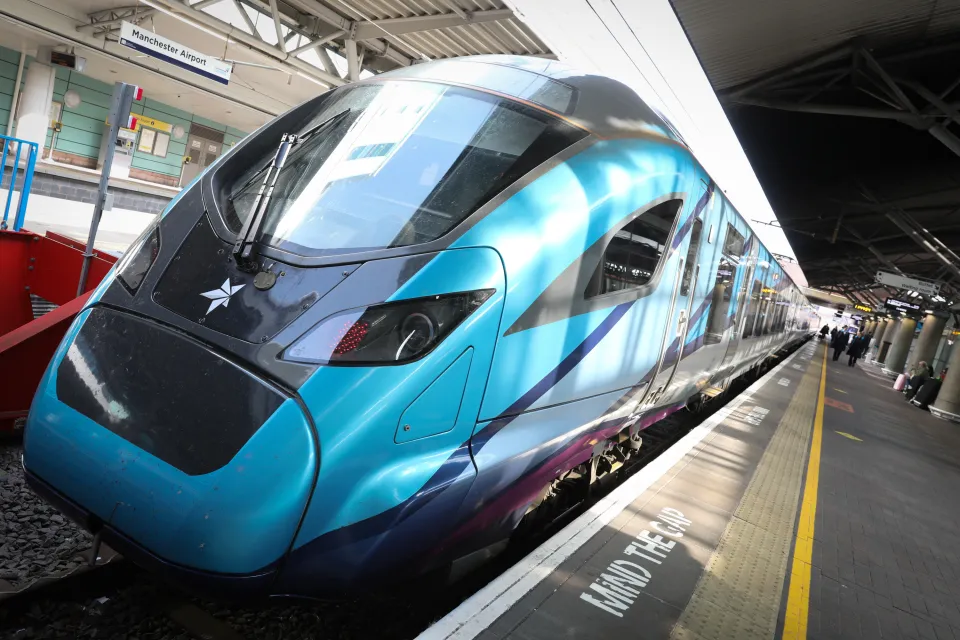
A Class 397 train at Manchester Airport Station.
Eight new overnight services will run between Manchester Piccadilly and Airport Credit: tpexpress.co.uk
NINTCHDBPICT001080687557
The new schedule hopes to improve Manchester’s busy nighttime economy Credit: aboutmanchester.co.uk

All-night rail services between Manchester Piccadilly and Manchester Airport will run from today, in a major new boost to the city’s nighttime economy.

TransPennine Express has scheduled trains to run hourly through the night, every day of the week, with eight new overnight services included.

Greater Manchester residents have shared their excitement, with one saying it is “good to see these services reinstated after all these years,” and others calling it “unbelievable.”

The new schedule hopes to improve airport access, as well as offering better commuting services for hospitality workers and passengers travelling in the early hours of the morning.

BAG IT

Passengers are ditching overweight luggage at airports – how to NEVER get caught out


OPEN UP

Historic attraction reopens after year-long closure with new £2.4m plans

Trains from Manchester Piccadilly to Manchester Airport are generally faster than driving, with the journey taking between 15 and 20 minutes, and a drive taking up to 30 minutes.

This schedule adds to the already simplified train travel system in Manchester, which only sells anytime or off-peak tickets, making services more affordable.

Andy Burnham, Mayor of Greater Manchester, said: “We’re proud of our thriving night-time economy, and we’re looking to back it with transport that matches how people live and work.

“These all-night trains will help people get to where they need to be – whether that’s catching an early flight, getting home after a late shift, or travelling into town to enjoy everything our night-time economy has to offer.

Nicola Buckley, people director at TransPennine Express, echoed Burnham:  “These all‑night services are about supporting the people and businesses that keep Greater Manchester going 24 hours a day.

“By improving overnight connections to Manchester Airport, we’re making rail a more practical option for workers and passengers alike, while helping to strengthen the region’s night‑time economy.”

Source link

Your rights to refuse going through airport body scanners explained

Although it seems non-optional, passengers always have a choice to go with an alternative

Passing through security is an essential part of travelling through an airport. However, passengers always have the right to decline certain types of searches.

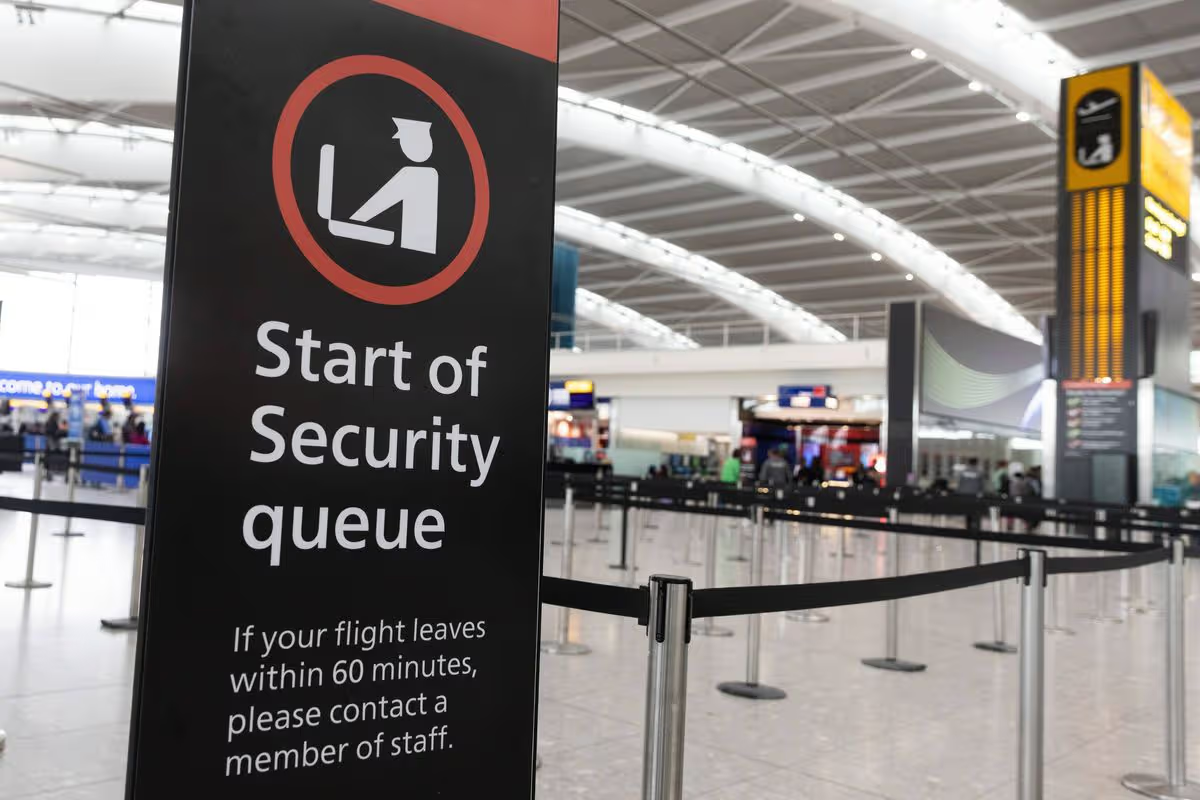
Usually, after checking in for a flight, travellers go through the airport and must pass through security before entering the main terminal and boarding any aircraft. The procedure can be time-consuming, particularly during busy summer holidays, but it typically involves sending hand luggage through a scanner and passing through a security checkpoint yourself.

However, under UK Department for Transport (DfT) regulations, you always have the right to decline a body scan. You don’t actually need to provide a valid legal or medical reason for refusing this and can simply state that you prefer not to go through the scanner for personal reasons.

Some travellers decline to be scanned if they have medical equipment, such as a pacemaker or an implantable cardioverter defibrillator (ICD). You can also request a manual search of hearing aids, reports the Express.

Regarding medical supplies in hand luggage, the GOV.UK website states: “You should bring a letter from your doctor stating why they should not be scanned. However, it is up to the airport to decide if they need to be scanned or not.”

Pregnant mothers who may feel uneasy about being scanned are assured by the UK government that scanners (which use non-ionising millimetre-wave technology, not X-rays) are safe. However, this doesn’t mean you can bypass security checks entirely, as passengers will still be required to go through an alternative screening procedure.

If you decline for non-medical reasons, the rules require passengers to undergo an enhanced manual search in private. This means being escorted to a separate room away from the main security queue for a procedure that some describe as more thorough than a routine pat-down.

At least two security officers will be present, and it may require loosening or taking off certain items of clothing to confirm that nothing is hidden. The procedure can also add 20 to 45 minutes to your time at security, depending on how many staff are available, so factor in potential flight delays and make sure there’s enough time to get to the gate before your plane leaves.

What do airport scans show? How long are they kept for?

The GOV.UK website states that adults and children can be asked to have a body scan. It said: “You’ll have the scan in the security area, with a member of airport staff present. It will take just a few seconds.

“Your image will show if you have a colostomy, implant or prosthesis. Security staff have been trained to handle sensitive issues around surgery and treat passengers respectfully.

“After the scan, only you and a security officer will see a mannequin-style diagram on a small screen. No bodily features or skin will be seen. Your scan will be permanently deleted after it’s been assessed by a security officer.”

You can ask for a security officer of the same sex to analyse the screen for your scan. They will not be able to identify you from the scanned image and you will not meet the security officer.

A statement on GOV.UK reads: “If you’re wearing headgear for religious or cultural reasons, you can ask for it to be checked using a hand-held scanner so you do not have to remove it.”
Source link

British Airways cancels flights from Heathrow and Gatwick as hundreds stranded at airport

Hundreds of passengers were left stuck at major UK airports as airlines included British Airways cancelled departing flights alongside hundreds of other delays

Hundreds of passengers have been left stranded at major UK airports after several flights have been cancelled.

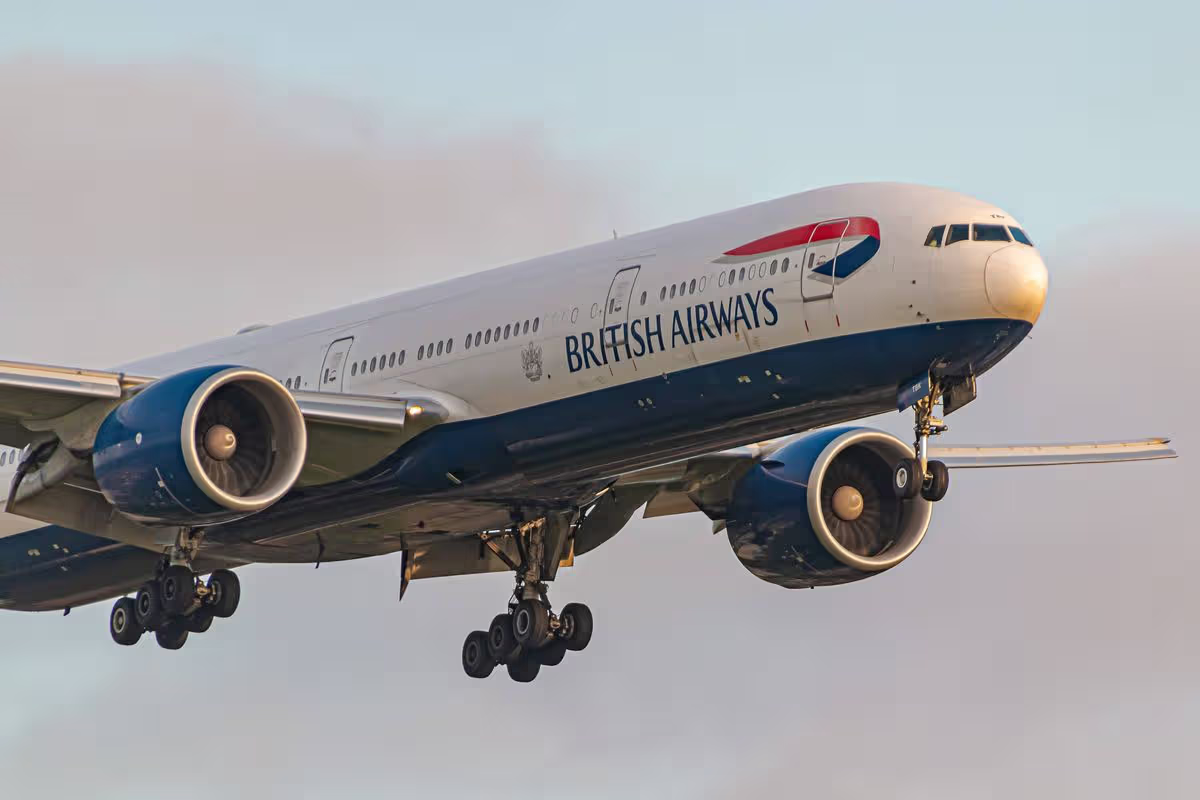
British Airways were one of many airlines who cancelled flights on Friday, May 15, leaving travelers stuck at several airports across the nation.

The significant wave of disruption saw a total of 465 flight delays and 25 cancellations on the one day.

Flights from British Airways, American Airlines, Norse Atlantic Airways, Delta Air Lines and United Airlines were among those impacted.

London Heathrow was the most significantly impacted, with 233 flights delayed.

A total of 22 flights were also cancelled from the busy travel hub, with 17 of these being British Airways flights.

At Gatwick, cancellations were kept to a minimum with only one British Airways journey called off.

Despite this, 142 flights from the London airport departed later than scheduled.

In Scotland another British Airways flight did not go ahead, with a further 58 delays logged from Edinburgh airport.

Glasgow also saw a cancellation from British Airways.

The disturbance comes as the travel industry is suffering at the hands of the Middle East conflict due to hiking fuel costs as the Strait of Hormuz remains blocked.

Data shows that airlines have dramatically ramped up flight cancellations for May as jet fuel costs continue to soar.

In total, Cirium recorded 296 departures from UK airports scrapped this month as of Tuesday; a sharp rise from 120 cancellations just six days earlier.

Last week, British Airways’ parent company IAG warned its profits will be hit as it expects to spend about two billion euro (£1.72 billion) more than planned on fuel this year.

Chief executive Luis Gallego said IAG does not believe there will be “any interruption for the summer” in terms of jet fuel supplies.

Source link