The women’s floor discipline was among those taking place in Rotterdam, with USA athlete Claire Pease winning the title with a dominant score of 13.866. Algeria’s Kaylia Nemour won the gold in the balance beam final, while Artur Davtyan, Zou Jingyuan, and Tang Chia-Hung took home the final men’s titles.
During the coverage, Matt announced that his fellow commentators, Christine Still and Craig Heap, would be leaving the team after many years on air. Ahead of the men’s finals getting underway, Matt said: “I just want to take a moment to say a heartfelt and a massive thank you to two very special people, who are sitting either side of me right now.
“And for those of you who’ve enjoyed our gymnastics coverage on the BBC over the years, you will be very familiar with the wonderful voices of Christine Still and Craig Heap. Now, Christine was one of the first female commentators that BBC Sport has ever had, when she started back in 1993.
“And here we are, Christine, 33 years on. Craig, you joined the team just before Rio in 2016, and, along the way, we have witnessed some incredible moments together.”
An emotional montage of some of Christine and Craig’s memorable moments was then played, before the camera panned to the stars in the commentary box. “Wonderful pictures and wonderful storytelling,” Matt said.
Ensure our latest TV stories always appear at the top of your Google Search by making us a Preferred Source. Click here to activate or add us as Preferred Source in your Google search settings
He went on: “I can’t believe I’m saying this, but this could be the last time that we all sit together and enjoy the gymnastics. Christine, we have worked together for 20 years. You’ve been like a mum to me, you really have, as we’ve travelled all over the world together. And may I say, I’ve loved every single second.”
Matt then turned to Craig, saying, “We’ve been friends for many, many years. I’ve loved your company, mate. Honestly, I’m so gonna miss you both, I really am.”
“We’ll miss you as well, Matt. I’ve been so lucky,” Christine replied, before Craig added: “All good things have to come to an end, I guess… I’m going to miss you all… I’ll stop right there before I start crying.”
BBC viewers were left feeling emotional after watching Matt’s tribute. “Gonna be so weird not hearing Christine Still and Craig Heap commentating on gymnastics on the BBC anymore,” one person wrote on X.
Another added: “Omg Craig and Christine are leaving.” A third said, “I’m actually in tears. End of an era.”
Someone else commented: “I am gutted. Gutted the trio are no longer together.” A fifth viewer similarly shared: “That is so sad. I watch the gymnastics in the Olympic Games and not hearing their voices will be different… They will be missed.”
Coverage of the Gymnastics World Championships is available to stream on BBC iPlayer
Big Brother has been hit with thousands of complaints to Ofcom after what viewers said were ‘disturbing’ scenes. The regulator has once again updated its weekly stats of those received between the dates of October 13 and October 19.
The number of complaints range from just dozens up to thousands. It means that one of the most recent instalments of ITV’s reality series has attracted the most ire from fans throughout the entire run of the current series.
That was following the episode which aired on ITV2 on October 19. This attracted a staggering 7,138 complaints. This is an extraordinary amount even compared to the episode which gained the second most complaints over the last week, which was October 18 which received 658.
Ofcom have confirmed that complaints on October 19 related to Omar’s behaviour towards Rhianna. Meanwhile those on October 18 were over alleged bullying behaviour by Philip.
Scenes involving Omar and Rihanna on Monday this week caused a big stir among viewers. The couple seemed to cool things off with their relationship while Rihanna at one point claimed Omar was ‘acting weird’.
Later Omar told Rihanna to stop talking about him with others. Afterwards, he had his own conversation with Lynx about Rihanna,.
Before bed, he invited Rihanna for a chat, claiming he ‘could not sleep on it’. In the store room Rihanna told him: “From eviction night, up until now I feel like you’ve been acting weird with me.”
She was eventually called to the Diary Room to check if she was OK. She said: “I’m not that good but I’ll be fine. Obviously me and Omar have not been good over the last few days and sometimes I don’t like the way he speaks to me.”
Ensure our latest Big Brother stories always appear at the top of your Google Search by making us a Preferred Source. Click here to activateor add us as Preferred Source in your Google search settings.
Fans were not pleased with what they saw. A thread on Big Brother UK subreddit saw several admit that they made a complaint to Ofcom.
One person said: “I’ve just put my complaint in. That was so disturbing and scary to watch.” Another added: “I’ve never made an ofcom complaint before but it feels so important to do something… if there’s any chance this can pressure BB production into removing Omar. . . So so dark.”
Women’s Aid released a statement following the backlash and said: “We’re seeing coercive and controlling behaviours being given a platform in popular media like Big Brother. We’ve been contacted by many viewers who have expressed concern. Not only does Big Brother risk minimising survivors’ experiences, it also risks presenting abuse as a form of entertainment.
“Producers should understand their responsibility to keep contestants emotionally and physically safe. The women in these programmes are real people and need real support. We continue to urge television companies such as ITV to engage with experts like Women’s Aid to understand the nature of abuse and how they can do better to protect contestants.”
A spokesperson for Big Brother said: “All Housemates receive Respect and Inclusion training and an extensive briefing from the Big Brother Senior team to prepare them for living in the House and to set out Big Brother’s expectations for appropriate behaviour and language.
“Housemates are monitored 24 hours a day and any instances of inappropriate behaviour are responded to appropriately. Welfare and safeguarding are prioritised throughout the production, with a dedicated welfare team available to support Housemates before, during and after their time in the House.”
Big Brother also received 206 complaints over the most recent live eviction show, about the alleged bullying of Rob by Rochelle and Philip. 110 complaints were also made for the episode aired on October 13 over a range of issues including comments made by Rochelle about Yasmin’s weight, Omar’s behaviour towards Yasmin and Rhianna, and Lynx’s behaviour towards Rob.
Big Brother continues tonight at 9pm on ITV2 and ITVX.
The U.S. military has successfully demonstrated a new lower-cost receiver that could form part of a future over-the-horizon (OTH) radar. The testing also raises the question of whether the High Frequency Active Auroral Research Program (HAARP) research site in Alaska, which the U.S. Air Force transferred away more than a decade ago, could be repurposed for operational use in this role. A new radar of this kind would help the United States plug critical gaps in surveillance coverage over the ever-more strategic Arctic region. Canada is notably already pursuing a multi-billion-dollar OTH radar project in cooperation with Australia for this exact purpose.
The U.S. military put out a press release yesterday regarding the testing of the newly developed receiver array, which occurred between September 7 and September 11. This was the culmination of a series of “Arctic air domain awareness” experiments conducted cooperatively by U.S. and Canadian authorities over the past three years.
An aerial view of the HAARP site in Alaska, taken on September 7, 2026. USAF
The final round of experimentation last month “examined whether an existing high-frequency transmitter [HAARP], paired with a newly developed, low-cost [16-element high-frequency] receiver array, could detect aircraft beyond the coverage of current long-range radar sites,” according to the release. “The effort focused on improving awareness across a region where vast distances, harsh weather and limited infrastructure present challenges for air surveillance.”
“Researchers used the University of Alaska Fairbanks’ High Frequency Active Auroral Research Program [HAARP] facility and a receiver array in Cold Bay developed by MITRE to collect data on participating aircraft over the Gulf of Alaska and Bering Sea,” the release added. “MITRE also supported the effort throughout the three-year experiment series and designed and executed the field experiment in partnership with government, scientific, and operational participants.”
A view of the MITRE-developed array in Cold Bay, Alaska, which was part of the testing in September. USAF
The remote HAARP site was built in the 1990s as part of a joint U.S. Air Force and U.S. Navy effort. The Defense Advanced Research Projects Agency (DARPA) was also involved. The central component of the 33-acre facility is an array of 180 crossed-dipole antennas, which can transmit up to 3.6 megawatts of radio frequency energy, according to the Air Force.
In 2014, the U.S. Air Force announced that it would shutter the HAARP site and dismantle it. However, the following year, the decision was instead made to transfer it to the University of Alaska Fairbanks, which has continued to operate it as a civilian research facility.
“During an experimental air domain awareness initiative, HAARP served as a high-power illuminator, transmitting signals toward the ionosphere to support the detection of airborne targets over Alaska’s maritime approaches,” according to the captions of several pictures that accompanied the release yesterday. “The experiment evaluated bistatic over-the-horizon detection methods to explore potential improvements in long-range surveillance and air domain awareness across Alaska’s maritime approaches.”
Another view of crossed-dipole antennas at the HAARP site. USAF
The most common types of OTH radars are so-called ‘skywave’ or ‘backscatter’ designs. They usually consist of two large and geographically separated arrays of antennas. The ‘illuminator’ array pumps out signals that are bounced off the ionosphere, the ionized layer of Earth’s upper atmosphere, at a specific angle so that they return to the ‘receiver’ array. Objects of interest (in the air and/or on the surface depending on the specific configuration) are detected in the process. AsTWZ has previously written:
“Commonly, radars are limited by line of sight due to the curvature of the Earth in relation to the altitude they are operating at. OTHRs overcome this critical limitation, but with some major drawbacks.”
…
“While they offer much lower fidelity than many of their line-of-sight counterparts in most cases, they make up for it in huge range, hundreds of miles to thousands of miles (1,500 miles is common, for instance, for powerful military sky wave/backscatter OTHR systems) and a large coverage area. The sky wave type of OTHRs achieve this by bouncing their radio waves off the ionosphere to a coverage area where they hit targets and return the same way to the receiving station. The angle at which the radio waves hit the ionosphere dictates the range, and that angle is limited to a specific envelope or the waves won’t properly bounce back toward Earth. As such, placing the radar in the right place in relation to the targeted surveillance area or areas, to begin with, is key.”
In the testing last month, Air Force E-3 Sentry Airborne Warning and Control System (AWACS) radar planes, HC-130J Combat King II rescue aircraft, and KC-135 aerial refueling tankers “served as cooperative targets, providing known positions against which researchers could compare the experimental data,” according to the official release. “The team successfully completed testing, meeting or exceeding its test execution objectives. Initial results show the system was successfully able to achieve full skywave (beyond line of sight) detections of aircraft and correlation to truth flights. Thorough data analysis is ongoing.”
An Alaska-based E-3 Sentry receives fuel from a KC-135 tanker during an exercise in 2022. USAFAn HC-130J Combat King II seen landing at Joint Base Elmendorf-Richardson in Alaska in August. USAF/Alejandro Pena
The release also says that the tests “explored how existing infrastructure and emerging technology could complement current surveillance capabilities.” This raises the possibility that the HAARP site, specifically, might be utilized as part of a new OTH radar. Whether or not this is actually under consideration is still unclear, and TWZ has reached out for more information.
Today, NORAD relies heavily on a network of ground-based radars called the North Warning System (NWS) to provide aerial surveillance coverage in the High North. The radars that make up the NWS are also all pointed northward, and none of them provide the kind of wide-area long-range coverage that an OTH design would offer.
A map showing NWS radar sites in Canada and their coverage arcs. Nasittuq Corporation
The NWS reflects a long-standing focus on monitoring for aerial threats heading across the North Pole toward North America, especially possible nuclear strikes from Russia (and the Soviet Union before it). However, new avenues for geostrategic competition in the Arctic with Russia, as well as China, over natural resources, from oil and natural gas to fish and other sealife, as well as trade routes have emerged in recent years amid receding ice and other impacts of global climate change. This, in turn, has only prompted growing demand for surveillance coverage.
“We need a layered sensing grid, from [the] seafloor to the space layer. And we have no choice. It has to be layered and deep, a defense in depth, from a sensing point of view,” Royal Canadian Air Force (RCAF) Maj. Gen. Chris McKenna, head of 1 Canadian Air Division and the Canadian NORAD Region, also said during a panel discussion at the Air & Space Forces Association’s (AFA) annual Warfare Symposium in 2025, at which TWZ was in attendance. “And I will say I suffer from an insufficiency of ISR [intelligence, surveillance, and reconnaissance] in the Arctic on a daily basis. And I am fighting for information.”
McKenna was responding at the time to a direct question about gaps in so-called “domain awareness” in and around the Arctic and how to address them.
“I think there’s an importance here of not just air domain, but also space domain, and having a sufficiency of ISR in the Arctic to actually build you the [domain awareness] picture,” he added. “I haven’t really touched on over-the-horizon radar, but I certainly can get into it. I think that’s a really important capability given the austerity of the Arctic and the need for it to cue other things.”
For its part, Canada is now building its own new Arctic Over The Horizon Radar (A-OTHR), at an estimated cost of more than $4 billion. In an announcement last year that caught many off guard, the Canadian government announced that it would be leveraging technology originally developed for Australia’s Jindalee Operational Radar Network (JORN) to support this development. It is also important to note here that relations between Canadian authorities and the Trump administration have been and continue to be heavily strained over a variety of issues, which has prompted broad concerns about future defense and security cooperation.
An element of Australia’s Jindalee Operational Radar Network (JORN). Australian Department of Defense
Back in the United States, OTH radar plans are also now tied in with the broader Golden Dome air and missile defense initiative. Golden Dome is seeking to establish new layers of defense around the U.S. homeland against a wide array of threat types, and puts major emphasis on new space-based sensor and interceptor capabilities. Expanded defensive architectures within the Earth’s atmosphere are also part of this plan.
“Adversaries are developing and building advanced nuclear and conventional delivery capabilities,” U.S. Army Lt. Gen. Joseph Jarrard, Vice Commander of the U.S. element of NORAD and Deputy Commander of U.S. Northern Command (NORTHCOM), warned at the annual Space & Missile Defense (SMD) Symposium in August. This includes “cruise, hypersonic, and ballistic missiles, as well as fractional orbital bombardment systems, or FOBS, to threaten not only Alaska and Hawaii, but the entire continent of the United States.”
Chinese hypersonic and other developments, in particular, enable new modes of attack that “can approach North America from the south, rather than the traditional northerly vector for which our legacy early warning radars were designed,” Jarrard continued. “The Chinese have also been building a conventionally-armed ICBM [intercontinental ballistic missile] equipped with hypersonic glide vehicles that can range [sic] targets throughout Alaska, providing Chinese leaders strike options against our homeland below the nuclear threshold.”
“Russia’s advanced missiles, like the nuclear-armed Avangard hypersonic glide vehicle, are designed to circumvent the ground-based radars used by NORAD and NORTHCOM to detect and characterize an inbound threat, and challenge the ability to provide threat warning and attack assessment,” he added.
New OTH radars positioned in Alaska and elsewhere in the Pacific will not be able to address all of these threat developments alone. At the same time, the recent testing leveraging the HAARP site is another step toward meeting demands for sorely needed expanded long-range radar coverage in the Arctic.
A decorated Air Force service member of 15 years died after a rappelling accident that took place during a salute to the military Saturday before the Navy-University of Texas at San Antonio game at the Alamodome.
U.S. Air Force Tech. Sgt. Ian Patterson was a Tactical Air Control Party instructor assigned to the 6th Combat Training Squadron, Detachment 2, Joint Base San Antonio, according to a news release by Nellis Air Force Base Public Affairs.
“This tragedy is felt deeply across the 57th Wing,” U.S. Air Force Brig. Gen. Scott C. Mills, 57th Wing commander, said in the release.
“Tech. Sgt. Patterson and his service mattered immensely to our wing, and to the family, friends, and teammates who had the privilege of knowing and serving alongside him. Our team is now focused on standing beside Ian’s family, loved ones, and fellow Airmen as we navigate this profound loss together.”
Patterson received several medals for his service and achievements, according to the Nellis Air Force Base Public Affairs, including the Air and Space Commendation Medal with three oak leaf clusters. In 2022, he was named the Air Force Special Warfare Enlisted Instructor of the Year at the Headquarters Air Force level.
Details surrounding the accident are under investigation, according to the news release.
Video on social media appears to show Patterson rappelling from the arena’s rafters on a rope, and plummeting fast to the ground. He was treated on the field for several minutes and then taken away on a gurney.
Patterson later died at a local hospital, according to Nellis Air Force Base Public Affairs.
The football game between the two American Conference teams proceeded after a brief delay. The decision to play was made after a meeting that included conference commissioner Tim Pernetti, representatives from Navy and UTSA, Alamodome management and local authorities, according to a statement released by the American Conference.
“At the time of those discussions, Nellis Air Force Base Public Affairs had not publicly confirmed the service member’s condition,” the statement reads. “… In accordance with conference bylaws and with the support of both participating member institutions, the conference made the decision to continue the game. Respect for the family’s privacy and adherence to the military’s notification process guided the decision to mitigate speculation about the service member’s medical status and avoid additional distress for his family.”
The conference added that it extends “our deepest condolences to his family, friends, teammates and members of the 57th Wing who had the privilege of serving with him. We honor his service and join the military community in mourning his loss.”
UTSA president Taylor Eighmy also released a statement expressing “profound sadness.”
“In moments like these, words can offer only so much comfort,” Eighmy wrote. “But I hope the service member’s family, his fellow airmen and all those grieving know that they are in our thoughts and prayers. We stand together in sadness, united by our compassion for one another and our heartfelt support for all those whose lives have been touched by this tragedy.”
The UTSA vice president for intercollegiate athletics, Lisa Campos, said in a statement: “Moments like these remind us that we are all part of something much greater than a game. They remind us of the importance of standing together, supporting one another and finding strength in the bonds that unite us, especially in times of profound sadness. Today, our hearts are with this service member’s family, his fellow airmen and everyone impacted by this heartbreaking tragedy.”
Tesla has unveiled an electric sports car that can drive upside down and use rocket-like thrusters to jump and turn mid-air. Developed with Elon Musk’s SpaceX, it can reportedly accelerate to 97km/h in under a second. First promised in 2017, the car is now expected in 2028.
Army Lt. Gen. Frank Lozano, the service’s Portfolio Acquisition Executive for Fires, highlighted this growing trend yesterday during a panel discussion at the Association of the U.S. Army’s (AUSA) main annual convention, at which TWZ has been in attendance.
Secretary Hegseth, second from the left, seen in front of a launcher for the Patriot surface-to-air missile system during a tour of Redstone Arsenal in Alabama earlier this year. Army Lt. Gen. Frank Lozano is seen at far right. DoW/USN Petty Officer 1st Class Alexander Kubitza
To provide some immediate context, with the exception of Patriot, the main ground-based air defense systems in Army inventory today are fielded with just one type of interceptor. In the case of Patriot, the service’s procurement of new interceptors had also been increasingly limited to just one type, the PAC-3 Missile Segment Enhancement (MSE). Production of the preceding PAC-3 Cost Reduction Initiative (CRI) missile ended in 2023. Just earlier this year, the Army placed its first order in decades for new PAC-2 Guidance Enhanced Missile-Tactical (GEM-T) missiles, an older interceptor design for Patriot that has remained in production primarily for U.S. allies and partners.
A graphic showing different interceptor load options for existing trailer-based Patriot launchers. Lockheed Martin
Separately, the Army is in the process of fielding Enduring Shield, a new middle-tier air defense system designed to handle multiple interceptor types. However, the service is currently only acquiring AIM-9X Sidewinders to load into them. We will come back to this later on.
An Enduring Shield launcher. USAF Pfc. Sang Woo Choi
“We have the capabilities we need to have to fight and win, but it’s our job to ensure that victory is achievable in the future inside of any dynamic environment scenario fight we might find ourselves in,” Lt. Gen. Lozano said yesterday. “So, it’s incumbent upon Mr. Ingraham [Assistant Secretary of the Army for Acquisition, Logistics and Technology Brent Ingraham] and I to continue to be creative and looking at, well, should we buy GEM-Ts because they’re being produced?”
“GEM-Ts are a really good missile in the battlespace within they operate. I mean, they’re being employed today by air defense brigades around the world,” he continued. “So if we have the opportunity, it’s probably something we should take advantage of, and we’re looking at doing that.
“We’ve had a lot of discussions about even more interceptors. From a PAC-3 MSE perspective, our goal has always been to get to 2,000 [per year],” he added. “Why we’re running programs like LCI [Low Cost Interceptor], and NGSRI [Next-Generation Short-Range Interceptor], and NGCM [Next-Generation C-UAS Missile], and Second Interceptor, is because I think the easy button answer is just buy more of a great missile. We’re going to buy more [PAC-3 MSEs], but when we start talking about overall missile output, we start looking at numbers like is it 4,000, is it 6,000, is it 8,000, we’re looking at a diverse set of capabilities.”
The LCI program is seeking a lower-cost and lower-tier interceptor for Patriot with a unit price of no more than $1 million. PAC-3 MSE’s average unit cost has been around $4 million in recent years.
A PAC-3 MSE interceptor seen being launched. US military A Patriot launcher fires a newer PAC-3-series missile during a test. DoD
NGSRI is the Army’s program to find a replacement for the venerable Stinger. The new missiles have to be compatible with existing vehicle-based and man-portable launchers.
A US Army soldier fires a Stinger from a man-portable launcher during training. US Army
The Army is working to field a new counter-drone interceptor through NGCM. Those missiles will be integrated into launchers the service has now for the Coyote interceptor.
Raytheon Missiles & Defense proves counter-UAS effectiveness against enemy drones
The Second Interceptor effort is for Enduring Shield, which is also known as the Indirect Fire Protection Capability Increment 2 (IFPC Inc 2). The main goal there is to provide increased capability against incoming cruise missiles compared to the AIM-9X.
There is also the Army’s Future Interceptor effort, which also came up separately at the panel yesterday, and is also for Patriot. Unlike LCI, the aim here is to acquire a new interceptor with improved capabilities against hypersonic missiles and other upper-tier threats.
Historically, Army programs like these would eventually result in the selection of a single winning missile design. Lozano’s remarks yesterday point to the service increasingly taking a very different approach.
On “second interceptor, obviously, we just moved into phase two of that program. We’ve got Lockheed Martin competing with Boeing, who was teamed with Anduril,” Lozano said. “But we wanted to turn up the heat on that program. I constantly get frustrated when a funding profile emerges over the FYDP [the Future Years Defense Program], and then magically we lay in a five-year program.”
At left, a model of the Boeing/Anduril offering for the Second Interceptor effort. At right, a rendering of Lockheed Martin’s proposed Second Interceptor. Jamie Hunter/Lockheed Martin
“I’m like, no, I actually need that capability now,” he continued. “So, have we thought maybe what if we ran a 24-month program or a 36-month program, right? And so, in that vein, what we have decided to do is, while those two companies continue to compete, we’re going to create a shoot-off opportunity in [the] fourth quarter [of Fiscal Year 20]27, and I want to run an in-parallel, what I call an in-stride competition.”
“We just held an industry day, and we basically just said, hey, if there’s any other company who didn’t make the first cut in the phase one, but, oh, by the way, who continued to invest in the IFPC Second Interceptor capability, we’d love for you to come out to the range,” he added. “We’ll give you range time, we’ll present targets, and we’ll allow you to recompete with an opportunity to get back into the program folder.”
The Army is doing the exact same thing with NGSRI, where Lockheed Martin and Raytheon have been competing face-to-face. That program is also now planning to hold a new shoot-off that will be open to other vendors in the fourth quarter of Fiscal Year 2027.
A picture showing a test of Lockheed Martin’s NGSRI entrant, called QuadStar. Lockheed MartinRaytheon, which is also the prime contractor for Stinger, has previously released this image in relation to work on its NGSRI design. Raytheon
To reiterate, on top of all this, the Army is also now pursuing at least two new interceptor options for Patriot.
“We have to address the threat, and we need to address the threat in a complementary way, meaning we need to fight on a cost curve that’s affordable for the U.S. Army to maintain and sustain that warfighting capability abroad,” Lozano stressed yesterday.
This gets to the crux of the matter. It is not at all a new observation that just having a stockpile of any particular munition on day one of a conflict is not enough, especially if the fight becomes drawn out. There needs to be sufficient depth to those stocks at the start and the ability to readily replenish them in line with expenditures. The war with Iran, compounded by other crises in the Middle East and the ongoing conflict in Ukraine, has made clear that these core truths apply to all armed forces, even the U.S. military.
Lower-cost munitions are part of the solution, but they also need to be producible at scale on reasonable timelines. The lead time for higher-end munitions today is often measured in months, if not years. Furthermore, being locked into a single vendor has been shown to not just be undesirable, but a potential national security risk in an actual conflict. Lozano’s remarks yesterday, and how the Army is now pursuing new anti-air interceptors, reflect larger trends, not just in the acquisition of larger volumes of munitions overall, but also from a broader array of total suppliers.
The @DeptofWar has reached new framework agreements with a slate of disruptive new entrants to aggressively expand the United States military’s lethal cruise missile and hypersonic missile strike capabilities.
With regard to the LCI program, specifically, Lozano highlighted an additional aspect of all of this yesterday.
LCI has “a unique twist to it because we’re looking for companies who have all-up rounds, but I’m also asking for companies to come in at the component level,” he explained. “We typically don’t do that, right? There’s a lot of risk in managing components and generating all-up round systems. But we’re also looking for weapon system integrators, because I want to be able to create two or three teams who can compete with the all-up round guys to see if we can generate some momentum behind the fact that we need to thicken our inventory with low-cost, affordable munitions.”
The U.S. Navy is now pursuing a roughly similar approach with its Naval Modular Missile (NMM) program. NMM envisions an entirely new family of sea-launched surface-to-air missiles that offer very different capabilities, but that all feature certain common components, as you can read more about here.
A graphic laying out the Navy’s vision for the different members of the NMM family, and shared components between them. USN
It is also important to note here that the underlying aim is not to eliminate more exquisite munitions, or the capabilities that they offer, but to create a more affordable, complementary mix of options.
“What I would say is we’re solely focused on delivering on the programs we are executing now,” Lozano said in closing at the end of the panel yesterday. “We have to deliver, and if we deliver on that wide variety of capability, then we can increase and ramp that capacity. And that would be my wish list, that we have enough resources and we achieve programmatic success in the way that we’re planning to, so we can deliver in mass.”
All signs point to the diversity in munitions that Lozano is talking about here being particularly pronounced in future Army air defense capabilities full of systems firing multiple types of interceptors.
BBC sitcom Daddy Issues will come to an end after the third series has aired but not before a star-studded lineup of guest stars has joined the cast for its final outing
22:21, 14 Oct 2026Updated 22:58, 14 Oct 2026
Daddy Issues will come to an end after the third and final series has aired(Image: BBC/Fudge Park Productions/James Stack)
Daddy Issues will come to an end after the third and final series has aired, the broadcaster has confirmed. The BBC Three sitcom stars Aimee Lou Wood as Gemma and David Morrissey as Malcolm, following a pregnant party girl who moves into a flat share with her recently-divorced father.
But the programme, which is Danielle Ward and co-written with David Reed has confirmed a string of guest stars for its final outing. Men Behaving Badly star Neil Morrissey will be amongst those joining the cast, taking on the role of as Malcolm’s new friend Ellis.
Ensure our latest headlines always appear at the top of your Google Search by making us a Preferred Source. Click here to activate or add us as your Preferred Source in your Google search settings.
Shobna Gulati, best known as Sunita Alahan in Coronation Street and Anita in dinnerladies, will play new neighbour Odette whilst former Peep Show star Sophie Winkleman will play campsite owner Mary.
Sarah Hadland, best known for her role as Stevie Sutton in Miranda and for her Strictly Come Dancing stint, will be back as Rita, joining fellow returning cast members David Fynn as Derek, Taj Atwal as Cherry and Celebrity Traitors star Sharon Rooney as Catherine.
The new run of six episodes will focus on Gemma’s newfound set of calamities as she tries to settle into her new promotion at the salon whilst daughter Sadie thrives at nursery. Chaos ensues when the flat she still shares with her dad floods, and a new romance leaves her stuck in a web of lies.
Over the last few years, actress Aimee, who the BAFTA Television Award for Best Female Comedy Performance after making her screen debut in Netflix hit Sex Education, has enjoyed global success with US comedy drama The White Lotus.
Through her role as Chelsea, she earned Emmy and Golden Globe nominations. Aimee has also hosted an episode of Saturday Night Live UK, starred as Sally Bowles in the West End production of Cabaret and is due to appear in a string of Hollywood films including The Beatles, Anxious People, and The Idiots.
Speaking about the series coming back, Aimee shared nothing but excitement as she expressed her joy at being part of the comedy series.
She said: “I’m so happy to be back with David and the brilliant Daddy Issues cast for one final time. Gemma and Malcolm are one of the funniest and sweetest comedy double acts on TV, and I’ve loved being a part of it.”
Meanwhile, David Morrissey added: “I love doing Daddy Issues so much, such a great cast and crew! So I’m delighted to be coming back to have more adventures with Gemma, Malcolm and the gang!”
The woman’s young daughter was rescued from a large fire inside the apartment caused by the attack.
Published On 14 Oct 202614 Oct 2026
An Israeli air strike on an apartment block in Gaza has killed a woman and wounded two other people, hospital officials said.
Reem Asaad Awad, 33, was killed in the attack early on Wednesday in the Al-Rimal neighbourhood of Gaza City, the Turkish state news agency Anadolu reported, quoting a source at Al Shifa hospital.
Recommended Stories
list of 3 itemsend of list
The source said the strike caused extensive destruction to the targeted apartment and nearby buildings.
The daughter of the woman who was killed was rescued from a large fire that broke out after the attack.
Israel says it is investigating the strike and claims it targeted a member of Hamas, without providing evidence.
Reporting from Gaza City, Al Jazeera’s Ibrahim al-Khalili said the strike happened at 4am (01:00 GMT).
Israel has killed 1,501 Palestinians in Gaza since it agreed a “ceasefire” with the Palestinian group Hamas last October. The truce was part of a wider United States-backed proposal to end Israel’s genocidal war against Palestinians in Gaza.
Talks aimed at advancing to the second phase of the US plan, which includes the withdrawal of Israeli forces and the disarmament of Hamas, have stalled.
The agreement states that 600 trucks of humanitarian aid are to be allowed into Gaza each day, but Israeli authorities have continued to impose severe restrictions on supplies entering the enclave, and reconstruction of the war-shattered territory has not begun.
SAUDI Arabia has been targeted by missile attacks over the weekend – some of which hit the King Khalid International Airport in Riyadh.
It has led to a change in FCDO advice – so what happens if you have a holiday booked, or a flight stopover?
King Khalid International Airport was targeted in a missile attack over the weekendCredit: APAs a result, the FCDO for Brits advises against all travel to Saudi ArabiaCredit: REUTERS
What is happening in Saudi Arabia?
Over the weekend, Houthi forces in Yemen launched an attack on in Saudi Arabia’s capital city, Riyadh.
The FCDO advises against all travel to parts of Saudi Arabia.
It read: “Following a serious incident at King Khalid International Airport on 10 October 2026 at approximately 1500 (local time), we advise British nationals to stay away from King Khalid International Airport until the airport is secure and to monitor the advice of the Saudi authorities.”
It adds that it advises against:
all but essential travel to all airports within Saudi Arabia except for Medina International Airport
all travel to within 10km of the border with Yemen
all but essential travel to Aseer province, Riyadh province, Najran province, Jizan province and the cities of Taif, Jeddah and Dammam
It continued to say: “There is a heightened threat against airports, military bases, ports and energy infrastructure across Saudi Arabia, including Abha, Jizan, Najran, Riyadh, Taif, Jeddah and Yanbu, as well as Saudi shipping vessels in the Red Sea.”
“Further attacks against airports are very likely. Follow Saudi Civil Defence alerts.”
Riyadh is frequently used as a stopover destination for BritsCredit: Getty
Are flights still going to Saudi Arabia?
King Khalid International Airport closed on Saturday following the missile strikes and remains closed with flight disruption across the region.
While the Saudi Arabia air space remains open, there is a high risk of short-notice airport closures, diversions and airspace disruption.
Reuters has reported that certain airlines have suspended flights to Riyadh.
Lufthansa Group has suspended flights to Riyadh until October 16.
Air France-KLM has halted services to the Saudi capital until the end of the month.
Emirates which flies Brits to Riyadh via Dubai has been affected by cancellations.
What if I’m currently in Saudi Arabia?
The FCDO advice reads that any British national in the Middle East should prepare for flight cancellations and possible airspace closures.
The advice also states:
follow advice from the local authorities and sign up to FCDO Travel Advice email alerts
refrain from capturing or sharing images of conflict-related incidents
monitor local and international media for the latest information, including updates relating to airports and airspace which could close at short notice
stay away from areas around oil infrastructure and military facilities. Exercise caution at transport hubs
keep your travel plans under review and ensure your travel documents are up to date
before you travel, check that your route does not include travelling through areas or airports where FCDO advises against all but essential travel and, if it does, consider whether your travel is essential
if travelling by air, check that your reservation is confirmed and the status of your flight before travelling to the airport. Remain alert at airports and follow instructions from local authorities
if you are advised to take shelter, stay indoors or find the nearest safe building or designated shelter. An interior stairwell or a room with as few external walls or windows as possible may provide additional protection. The greatest risk is from falling debris caused by intercepts, and you are safest inside a secure structure
Saudi Civil Defence may issue early warning alerts to people in affected areas
Head here to read the latest guidance on ‘how to prepare for a crisis’ and what to include in emergency supplies.
What if I have a holiday booked and can I cancel my trip?
Before you cancel a flight or holiday booking, speak to your travel provider first – especially if it’s a stopover flight as it may be rerouted.
In places where the FCDO advises against all but essential travel, you may be able to cancel a package holiday and get a full refund.
DONNA Air was all smiles as she enjoyed a night out with former Tottenham Hotspur vice-chairman and property tycoon multi-millionaire Paul Kemsley last month.
The former Byker Grove actress, 47, was recently spotted leaving the Chateau Marmont in Los Angeles with the multi-millionaire Brit, 59.
Donna Air was recently spotted enjoying a night out with property magnate Paul KemsleyCredit: BackGridPaul pictured with ex-wife Dorit Kemsley, who he separated from in 2024Credit: Getty
Onlookers claimed the pair “seemed really cosy” while he was heard telling a fan not to interrupt as he was “on a f***ing date.”
After moving to the States last year to pursue new film and TV roles, Donna will no doubt by impressed by Paul’s impressive network of contacts and ability to open doors.
But The Sun can reveal that she may be in for a shock – as he is at the centre of one of Hollywood’s most toxic divorce battles ever.
Sources told how the property magnate’s split from Real Housewives of Beverly Hills star Dorit, who filed for divorce last April, has become “so brutal it makes the War of the Roses script look tame”.
Real Housewives of Beverly Hills star Dorit filed for divorce last yearCredit: GettyDonna pictured with her ex, James MiddletonCredit: PA:Press Association
And one warned: “I hope Donna knows what she’s getting into, because this divorce will be explosive. Dorit wants to destroy Paul and she will use every tool in her Gucci handbag to get what she wants.
“If I was Donna, I wouldn’t want to get caught up in it.”
Entrepreneur Paul – who is known as PK – and glamorous ex-wife Dorit have been locked in a poisonous battle since May 2024 when they decided to separate, and he moved out of their $6m mansion in Encino, California into a five star luxury hotel.
And the set of Real Housewives, which both have appeared on since 2016 as cast members, became the fighting ring in which the pair slugged it out, trading a series of vicious blows.
After the split with Dorit, Paul moved out of their $6m mansion in Encino, California into a five star luxury hotelCredit: Instagram/doritkemsleySources have said they are currently in the midst of a court battle ‘so brutal it makes the War of the Roses script look tame’Credit: Bravo
In perhaps the nastiest, in November 2024, Dorit branded her husband “a full-blown alcoholic” and told cameras he had “always” been a drinker.
She added: “Over the years, it’s gotten progressively worse, and little fights will turn into blow-ups. We would be in the gutter after a fight, screaming at one another. I don’t want that toxic energy around small children.”
Months after the episodes aired, in November, PK was pictured kissing Shana Wall outside Cipriani restaurant in Los Angeles and seemingly sounded the death knell for his nine-year marriage.
One day later, Dorit filed for divorce citing irreconcilable differences and requested sole legal and physical custody of their two children, son Jagger, 12, and daughter Phoenix, nine. PK countered with a request for shared custody.
Dorit branded her husband ‘a full-blown alcoholic’ and told cameras he had ‘always’ been a drinkerCredit: doritkemsley/InstagramDonna Air pictured with James Middleton and Pippa MiddletonCredit: Getty Images – Getty
And the fight was to grow even nastier as time went on.
Just two months ago, Dorit claimed in court that her ex-husband was trying to force their kids into homelessness by refusing to maintain an informal agreement to pay the mortgage on their marital home in LA.
Court documents stated they were $6m behind on the payments – despite him earning “at least $2,000,000 a year”. It was also noted that he “has other income streams outside of the United States.”
PK then hit back that his ex-wife had blown $995,270 on “wardrobe related expenses” during a 14-month span between December 2024 and March 2026 – as the family faced the potential foreclosure of their home.
The filing included $69,000 in charges from Louis Vuitton, $69,000 from Chanel, $38,000 from Hermes, and $22,000 from Saint Honore that she racked up between October 30 last year and Jan 6.
The source continued: “Dorit’s shopping is out of control. Fame doesn’t suit some people and she became a bit of a diva after she joined the show. But it wasn’t that which caused her and Paul to break-up.
“The trouble started when they had a burglary, which she found very traumatic, and she was upset with him being away when it happened. She accused him of being absent when she needed him the most.”
In the terrifying ordeal, in 2021, three masked intruders broke to the couple’s home while she was sleeping and held her at gunpoint, threatening her life while her two young children were asleep in their own rooms.
She later recalled hearing them say: “Just kill her” as she prayed for her kids to stay asleep. The crooks ran off with over $1million in luxury handbags, watches, and jewelry.
Paul is also known as PKCredit: Getty
The source continued: “She was badly traumatised, and they started drifting apart and being very mean to each other. She thought he was having affairs because he would often go missing, not answering his phone.
“He was spending a lot of time in London and she was thinking about hiring a private investigator, that’s for sure.
“Meanwhile for him, one of the worst blows came when she told the world he was an alcoholic after they had separated. That had an awful effect on him. To do that felt unforgivable.
“Now, she is demanding huge maintenance payments from PK, but he will argue that she earns more than him now and so she basically owes him. It’s definitely going to be explosive.”
Against such a poisonous backdrop, the source also warned that PK’s friendship with Donna, who has dated James Middleton and has daughter Freya with Damien Aspinall, will not go down well.
They went on: “Paul might not look like Robert Redford, but he is very generous – he showers women with gifts and fun nights. And he’s very charismatic and has a great sense of humour.
Donna Air was seen with Paul earlier this monthCredit: GettyDonna previously seen soaking up the sun in LACredit: Instagram/@donnaair
“He and Donna have been friends for ages and have become much closer of late.
“She always says she loves a man with a sense of humour and she finds Paul hilarious.
“He always says he put all his energy into turning Dorit into a TV star – he completely changed her style and the way she looked. If you look at the before and after pictures of her, there’s huge difference.
“To get Dorit the job on Housewives, he set up a dinner party with the show’s bosses, invited his most exciting friends and entrepreneurs, brought in a chef and spent thousands entertaining them all to land her the gig – and it worked.
“Paul saw the potential in her and he turned her into the star she is today.
“Over the years he has lost a lot of money and made a lot of money, but he’s always on the up. He always finds a way to get the deal done. He’s like a cat with nine lives – he always falls on his feet.
“But Dorit is out for revenge and his night out with Donna will only make her angrier and more bitter.
“Recently she has been saying: ‘I will show the world the real Paul Kemsley’ and she is certainly angry enough to really attack him. “This could be the most toxic divorce in Hollywood history.
“So far it’s making the War of the Roses script look tame.”
A spokesman for Donna last night said the couple were not dating and claimed Paul’s comment about a date was made “in jest”.
A BBC Radio 4 star was pulled off air mid-show yesterday after he appeared to be struggling.
The Today programme host could barely get his words out as he read out the headlines.
Justin has been been presenting the flagship show for 17 yearsCredit: BBCListeners were worried for poor Justin as they begged someone to get him some lemsipCredit: PA
Justin Webb, who co-hosts the flagship show alongside Anna Foster, left fans very worried as he sounded strained on-air.
The sick star was heard clearing his throat on multiple occasions and Anna was forced to take the lead to give him some reprieve.
Sign up for the Showbiz newsletter
Thank you!
Justin managed to introduce Simon King’s weather forecast and ask a BBC News journalist questions on Open AI’s breach of Australian government websites.
But it all became a bit too much for Justin, 65, and he was later sent to the Conservative party conference to give his voice a break.
Anna Foster co-hosts the Today programme alongside JustinCredit: Neil SherwoodThe 65-year-old was sent to the Conservative conference to give his voice a breakCredit: Getty
Anna said: “It is 20 to seven now. Jonny Dymond is here, good morning.
“Important to say, if you’ve heard Justin’s voice this morning, he’s at the Conservative Party conference in Birmingham.
“He’s struggling a bit with his throat, so we’re saving him. We’re saving him for that. And Johnny, you’re here with me to continue with everything.”
Jonny, the Beeb’s royal correspondent, added: “Poor man has the conference lurgi that sweeps around these places every year.”
Fans flocked to X after hearing poor Justin’s hoarse voice.
“Crikey that sounds painful – a lorry load of Lemsip please for Justin Webb,” wrote one fan.
Another listener said: “Chip in a tenner to get him a pack of Lemsip.”
A third joked: “Justin Webb bravely presenting the Today programme despite apparently having swallowed a badger.”
“Is he ok?” added a fourth listener.
Justin has been the main presenter on BBCRadio 4 for 17 years.
Before his lengthy stint on the programme he was BBCNorth America Editor and served as their chief radio correspondent based in Washington D.C.
The United Kingdom could be heading toward its most significant expansion of ground-based air defense in generations, under a plan announced by the Conservative Party. For now, however, with the Conservatives in opposition, the proposed £10 billion (about $13.3 billion) “Britannia Shield” exists only as a policy commitment rather than an approved government program. At the same time, it highlights the seriousness of U.K. military deficiencies in this area, as the threat from the air continues to grow.
The proposal will move into the U.K. Ministry of Defense acquisition system if the party returns to government following the next general election and then follows through on the funding and procurement decisions required to turn the pledge into an operational capability. The party has proposed spreading the investment over a decade, with an initial capability intended to emerge during the first term of a future Conservative government and the wider network established after that.
Britannia Shield comes with the character of the air threat facing Europe having changed dramatically over the last decade. Russia’s war in Ukraine has demonstrated the scale at which relatively inexpensive drones can be employed alongside cruise and ballistic missiles, while recent fighting in the Middle East has clearly shown the costs involved in maintaining a sophisticated, layered air defense system under sustained attack. At the same time, the threat is no longer confined to weapons fielded by major state militaries. Small, widely available drone technologies can be weaponized with relative ease by non-state actors, providing a cheap and potentially highly scalable means of attack.
Operating in the Red Sea in 2024, the Type 45 destroyer HMS Diamond uses its Sea Viper missile system to shoot down a missile fired by the Iranian-backed Houthis from Yemen. Crown Copyright
For Britain, which has traditionally relied heavily on fighter aircraft, naval air defense, and the protection provided by geography and NATO, it is increasingly doubtful whether those capabilities provide enough coverage for the infrastructure that would be most important to keep functioning during a major conflict.
While a party press release refers to it directly, Conservative leader Kemi Badenoch has made efforts to distinguish Britannia Shield from a British version of Israel’s Iron Dome.
Iron Dome has become one of the best-known elements of Israel’s layered air defense network, having been developed primarily to deal with short-range rockets, artillery, and mortar rounds threatening populated areas. The system has evolved, however, and newer configurations can also engage threats including cruise missiles and drones. Importantly, Israel’s Iron Dome systems protect a country a twelfth of the size of United Kingdom and deal with only a portion of the potential threats in critical areas.
Iron Dome
Mention should also be made of the U.S. Golden Dome missile defense initiative, which envisions integrating sensors, interceptors, and other defensive capabilities as part of an enormous architecture with a greater emphasis on protecting the U.S. against a range of aerial and missile threats, up to and including intercontinental ballistic missiles.
Talking to the BBC, Badenoch argued that Britain does not face the same kind of persistent rocket and missile threat as Israel and therefore does not require an equivalent level of coverage. Instead, the Conservative proposal is intended to combine improved radar, command and control, interceptor missiles, and counter-drone capabilities into an integrated network designed around the threats Britain is considered most likely to face.
Britain already has some of the components that such a system could leverage. Royal Navy Type 45 destroyers — when they are available — provide a highly capable long-range air-defense layer through Sea Viper missiles, while the Army’s Sky Sabre system uses CAMM missiles for shorter-range engagements. The RAF provides combat aircraft and airborne surveillance capabilities, and Britain is integrated into NATO’s wider air and missile defense architecture. The problem is that these capabilities were not designed to provide a dense, permanent defensive umbrella over critical infrastructure, and the ground-based component in particular remains relatively limited when compared with the scale of the potential target set. There is also the reality that these assets are required to defend locales far from the British Isles themselves.
A British Army Sky Sabre battery. Crown Copyright
The government’s own 2025 Strategic Defense Review acknowledged that changing threat environment, allocating up to £1 billion in new funding for homeland air and missile defense and calling for improvements to the United Kingdom’s wider integrated air and missile defense architecture. Britannia Shield would therefore be a much larger political commitment to expanding and integrating capabilities that already exist, while adding new layers intended to deal with the growing drone and missile threat.
The £10 billion figure provides little idea of the scope of capabilities. The scale of the proposed system will determine whether that additional money represents a major expansion or simply the beginning of a much larger requirement.
Gen. Sir Richard Barrons has previously estimated that an entry-level system of the kind outlined could cost around £80 billion over a decade, illustrating how quickly the cost can rise once the requirement expands from protecting selected sites to providing something approaching comprehensive national coverage.
2/ Estimates suggest north of £80bn for the full cost of a perfect system, so we almost certainly need to think differently than a “dome” solution. A layered air defence will include a number of elements, including the ability to deter and strike back at an adversary.
Badenoch’s description of the threat instead points toward a system in which Britain would identify the infrastructure and military facilities most important to national resilience and then build increasingly dense layers of protection around them. That would include major airbases, ports, energy infrastructure, communications facilities, and other critical nodes, rather than attempting to create a continuous defensive bubble over the entire country.
RAF No. 617 Squadron F-35B jets at RAF Marham in England. Crown Copyright
Such a system would also have to account for the fact that the location of the launch platform can be as critical as the weapon itself. Badenoch described a scenario in which an adversary could operate in the English Channel to launch drones or missiles against targets in Britain. The resulting reduction in warning time would place greater demands on sensors and command systems, but it would also mean that the defensive problem could begin well before an incoming weapon reached British airspace. Maritime surveillance, intelligence collection, fighter aircraft, and naval forces could all potentially contribute to detecting or disrupting a launch platform before it had the opportunity to fire.
A Russian Kilo class submarine, its accompanying tugboat (center), and the RFA fast fleet tanker Tidesurge (background), as seen from a Merlin helicopter from 814 Naval Air Squadron. The helicopter and RFA tanker shadowed the submarine and tugboat as they sailed westward from the North Sea, through the Strait of Dover and into the English Channel in 2025. Crown Copyright
That broader approach is particularly important because the economics of countering drones are fundamentally different from those associated with conventional air defense targets. A system that responds to inexpensive drones by firing a sophisticated interceptor costing hundreds of thousands or millions of dollars would rapidly become unsustainable during a large attack. Any serious British architecture would therefore need several layers, with electronic warfare, guns, low-cost interceptors, and other counter-drone systems, potentially including directed-energy weapons, dealing with the lower end of the threat wherever possible. Meanwhile, more expensive surface-to-air missiles would be preserved for cruise missiles, aircraft and other targets that cannot be economically engaged by cheaper means.
A British Army Wolfhound armored vehicle, seen here with a mounted portable Laser Directed Energy Weapon (LDEW). This was the first high-powered laser energy weapon to be successfully fired from a British Army combat vehicle. Crown Copyright
The recent situation at RAF Fairford adds another dimension to that problem. The United States recently withdrew a dozen B-1 bombers from the Gloucestershire base amid reported concerns about a possible Iran-backed attack, after U.S. officials said commanders had received new information about a potential plot. British authorities maintained that the base was safe, while British sources reportedly questioned whether Iran could reproduce the kind of complex operation carried out by Ukraine against Russian airfields in 2025. The episode nevertheless demonstrated the degree to which even a major military installation can become a concern when an adversary is believed to be looking for unconventional ways to reach it.
A B-1B Lancer assigned to the 9th Expeditionary Bomb Squadron parks on the flightline at RAF Fairford, United Kingdom, in 2023. U.S. Air Force Photo by Senior Airman Ryan Hayman
That brings Operation Spiderweb into the discussion, although there is no public evidence that Iran is preparing a comparable operation against Britain. Ukraine’s June 2025 attack was prepared over roughly 18 months and involved small drones being moved deep into Russia inside containers carried by trucks before being launched remotely against military airfields. The operation illustrated that once relatively cheap drones have been positioned close to their targets, the defender may have little opportunity to intercept them through traditional long-range air defense means. This is exactly a scenario we have been warning of for many years.
Today, Ukrainian intelligence reportedly launched 117 attack drones from trucks that had been placed near Russian air bases. I tasked several collects this morning via @umbraspace and my first images have already started processing. What a remarkable success in a well-executed… pic.twitter.com/LzXulw8jnK
For Britannia Shield, that means protecting an airbase such as RAF Fairford cannot simply be a matter of installing missile batteries. Physical security, counter-intelligence, surveillance of access routes, low-level drone detection, electronic warfare and the ability to identify suspicious activity before an attack begins would all become part of the same defensive problem. Hardened infrastructure would also be essential, helping to protect aircraft, fuel, munitions, command facilities and other critical assets from attacks that penetrate the outer layers of the defense. The distinction is increasingly important as military aircraft themselves become more valuable and as relatively inexpensive unmanned systems demonstrate their ability to threaten aircraft on the ground without ever having to penetrate the surrounding air defense network.
The new British proposal also becomes more complicated because its intended coverage extends beyond the British mainland. Badenoch has specifically referred to defending installations in Cyprus and the Falkland Islands, which introduces a very different set of operational and logistical requirements. A network supporting critical infrastructure in Britain can draw on dense communications infrastructure, nearby industrial support and the wider NATO system, whereas a defensive capability at RAF Akrotiri or in the Falklands requires its own radar coverage, launchers, personnel, ammunition stocks, and sustainment arrangements. Extending the same architecture across those locations would therefore consume considerably more resources.
A RAF 1435 Flight Typhoon FGR4 pair flying over West Falkland island during a routine training flight. Crown Copyright
A similar problem exists with ammunition stocks. Ukraine has repeatedly demonstrated that sophisticated air defenses can come under sustained pressure during large missile and drone attacks, while Western countries have struggled to replenish some categories of precision-guided weapons at anything approaching wartime consumption rates. A British system that looks impressive on paper but has only a small stockpile of interceptors would provide much less meaningful protection during a prolonged campaign, particularly if an adversary deliberately attempted to exhaust the defenses through repeated attacks using inexpensive drones.
Ukraine also offers lessons for how Britain could organize such a network. Mobile air defense teams, distributed sensors, acoustic detection systems, and digital applications that connect air defense operators with military units and civilian spotters have all become increasingly important in Ukraine, where defenders have had to detect and respond to large numbers of drones and missiles across a wide area. There are echoes here of the distributed air defense networks developed during World War II, when observers, radar operators, fighter controllers, and anti-aircraft units were linked together to provide early warning and direct defensive responses. As in 1940, Britain would need an air defense network that is distributed, mobile, and adaptable to new threats.
A RAF Regiment light anti-aircraft gun team man their Bofors 40mm gun in a rain-sodden emplacement in southeast England, to help defend London from flying bombs in World War II. Crown Copyright
The most revealing details of Britannia Shield are yet to be provided. The number of defended sites, the types and numbers of radars, the number of launchers, the size of interceptor stocks, and the proportion of the budget devoted to counter-drone capabilities all remain unclear for now. The same applies to the money required for training, maintenance, software, communications, and replenishment across the life of the system.
There is also a straightforward political limitation to the proposal. The Conservatives have pledged to invest in Britannia Shield as part of a broader plan to increase defense spending, but that money is not currently sitting in a government procurement account waiting to be spent and defense budgets are increasingly stretched by other big-ticket programs. The Conservatives would first have to return to government, establish the program as a formal requirement, and then make the associated spending and procurement decisions. Even if those steps were taken quickly, the most capable elements of the system would take years to design, procure, integrate, and deploy.
A rendering of of the new Dreadnought class of ballistic submarines for the Royal Navy, representing the largest British defense investment of recent years. Crown Copyright
Whether £10 billion would ultimately be sufficient depends on the mission the future government assigns to the system. If Britannia Shield were expected to provide nationwide protection against sustained attacks involving ballistic missiles, cruise missiles, and large numbers of drones, the budget would fall far short, particularly once interceptor stocks and long-term sustainment are included. If it is designed as a layered network protecting a defined group of critical infrastructure sites and military bases, integrated with the RAF, Royal Navy, Army, and NATO systems already in place, the proposal becomes more realistic, but it wouldn’t address higher-end threats, like longer-range ballistic missiles.
That limitation is particularly significant when considering Russia, which remains the most serious military threat to the United Kingdom and its European allies. From what we know so far, Britannia Shield is heavily focused on drones and shorter-range missile threats, but Russia possesses a much broader strike arsenal that includes ballistic missiles, cruise missiles, and hypersonic weapons. A British air defense program that concentrates primarily on the lower and middle tiers of the threat therefore leaves a significant gap at the upper end of the spectrum.
Russian Yars intercontinental ballistic missiles travel through central Moscow during a rehearsal for the Victory Day parade in 2025. Photo by Alexander NEMENOV / AFP
The United Kingdom is also not considering this problem in isolation. Across Europe, governments are increasingly pursuing multinational efforts to strengthen air and missile defenses, as the return of large-scale state-on-state warfare and the experience of the war in Ukraine have made the vulnerability of European infrastructure and military forces much more tangible. Nearly three decades after the end of the Cold War, ballistic and cruise missile defense has once again become a central European security requirement. Britannia Shield would therefore need to be considered not only as a national counter-drone and air-defense program, but as part of a much broader European effort to rebuild layered air and missile defenses against the full range of modern threats.
The experience of Ukraine and the Middle East suggests that Britain is unlikely to solve this problem simply by buying more surface-to-air missiles. Increasingly, air warfare relies on complex networks that find the attacker, identify the weapon, choose the appropriate response, and undertake this all at a cost that can be sustained throughout a conflict. That network also has to extend beyond the airspace itself, because the threat may involve a launch platform approaching the coast, a drone operator operating near a military installation, or small drones already hidden inside the defender’s security perimeter.
Last line of defense: British Army riflemen testing a Mossberg 590M Counter SUAS shotgun (foreground) and handheld Counter-Unmanned Aerial System effectors against drones. Crown Copyright
With their proposed reorientation of Britain’s air defense priorities, the Conservatives have put a financial value and a recognizable name around a capability gap that has become increasingly difficult to ignore. If they return to government, there will be many tougher questions to address, including which sites should receive protection, how many layers are required, how much ammunition must be held in reserve, and how the system can be sustained on a wartime footing.
The recent concerns surrounding RAF Fairford, together with the lessons of Operation Spiderweb, underline why that question is becoming more complicated. The next serious attack on a British military installation may not arrive as a large formation of aircraft or a visible wave of missiles crossing the Channel. It could involve a mixture of long-range weapons, cheap drones, electronic warfare, and hybrid warfare activity taking place much closer to the target. A future Britannia Shield would have to be designed around that reality, and would come with a price tag to match.
The US coastguard says it has dispatched air and surface crews to search for the plane near Nantucket.
Published On 3 Oct 20263 Oct 2026
An air ambulance has gone missing while carrying six people on a flight from Bermuda to Boston.
The US Federal Aviation Administration told the coastguard early on Saturday that it had lost contact with the plane, a Gulfstream jet, a coastguard spokesperson told the Reuters news agency by email.
Recommended Stories
list of 3 itemsend of list
The coastguard said it dispatched air and surface crews to search for the plane near Nantucket, an island community south of mainland Massachusetts.
The National Transportation Safety Board said it was gathering information about the situation on Saturday morning but had no further update to share.
The Canadian-registered air ambulance jet had four crew members and two passengers on board when it departed Bermuda’s LF Wade International airport overnight for the flight to Massachusetts, according to a statement from the Bermuda airport’s operator, Skyport.
Canada’s Minister of Transport Steven MacKinnon said in a social media post that four Canadians were on the plane.
“We are closely monitoring the situation and are working with the relevant authorities as search and rescue efforts continue,” MacKinnon wrote.
The aircraft, registered to Latitude Air Ambulance, departed Bermuda at 12:41am local time (03:41 GMT), according to data from flight tracking website FlightAware.
The plane was flying at 24,000 feet (7,300 metres) for much of the flight before descending 13,000ft (3,960 metres) in about two minutes shortly before flight controllers lost contact, data showed.
Last communication
Air traffic control audio posted by LiveATC.net offered a glimpse of the flight’s final communications before it went missing.
“Roger, you said you’re coming in blind. Is that what you said?” a controller can be heard asking the pilot.
The pilot’s transmission could not be heard in the recording. The controller later confirmed the pilot was declaring an emergency just before losing contact with the plane.
The Bermuda government is in contact with US authorities and families of the passengers, Bermuda Premier David Burt wrote in a statement posted on Instagram.
“We are praying that all six people will be found safe,” he wrote.
Latitude Air Ambulance is based in Ontario, Canada, and provides medical evacuation services. The company did not immediately respond to a request for comment.
No warning given before Israeli deadly strike hit Rimal area, one of Gaza City’s most densely populated neighborhoods.
Published On 3 Oct 20263 Oct 2026
An Israeli air attack on a residential apartment in western Gaza City has killed at least five people and severely wounded at least six others, according to medical staff at al-Shifa Hospital.
The strike hit the al-Asala building in the Remal neighbourhood early on Saturday without prior warning, according to Al Jazeera’s Hani al-Shaer, reporting from Khan Younis.
Recommended Stories
list of 3 itemsend of list
Remal is one of Gaza City’s most crowded residential areas, home to thousands of displaced people sheltering in makeshift camps across the neighbourhood.
Al-Shaer said the attack came in the middle of the night, when residents were asleep.
“We heard fighter jets getting louder, then three strikes followed, hitting the apartment and killing those inside,” he said.
The strike penetrated the targeted apartment and tore through the floors below, causing further destruction throughout the multi-storey building.
Fires burned for at least an hour before Palestinian Civil Defence crews managed to put them out.
Al-Shaer described the scene as “horrific”, with people buried under the rubble as they slept.
Civil defence crews were still searching the site for missing people and bodies, he said, as Israeli drones continued flying over the area and fighter jets were heard flying low across the Strip.
Al-Shifa Hospital said the dead included four women, among them an elderly Christian woman and her daughter.
The six wounded were taken to al-Shifa Hospital for treatment.
For aerospace aficionados, it’s like we have entered into an alternate dream reality. The idea that we are seriously talking about the possibility of bringing back the SR-71 Blackbird to flight status is hard to comprehend, but amazingly this is where we are at. The biggest question I am getting about all this is why? We touched on the likely primary answer to that in our original reporting — high-speed is back in tactical vogue, and the Blackbird can sustain it in a realm of great interest, between Mach 3 and 4, and do it over and over again. It can also carry very large things and even launch them off its back at those extreme speeds. But those are not the only potential reasons for taking on such a gargantuan, high-profile, and costly technical challenge. Learning from the journey itself could be just as valuable as the actual flight test data a revived SR-71 produces.
Let me explain.
(NASA)
The Blackbird was as close to alien tech as it gets over 60 years ago, and even today, we have nothing like it in known operation. Yet it has been dormant for nearly three decades. Much of the expertise that built, supported, and operated it is sadly gone. But the exercises of reverse engineering and leveraging breakthroughs in additive manufacturing and rapid prototyping, as well as injecting new material sciences, avionics, propulsion and other technologies where applicable, and above all else, building the digital toolkit to make it all happen as fast and efficiently as it can be done, are all of extreme learning value.
I would not be surprised if a ‘digital twin’ is being created right now of the SR-71 using NASA’s SR-71 tail number 844 — the jet in question that has mysteriously disappeared from its display pad. Once such a model exists, breakthroughs in digital engineering can be brought to bear to see how fast the program can be accelerated, both in terms of development and flight testing. This could include not only getting the SR-71 back in the air, but improving its performance and reliability, possibly substantially, using all the new technologies we have today. It’s even possible a clone of sorts leveraging all these advances could be built using digital engineering tools.
The SR-71 served as an integral part of NASA’s flight test fleet at Dryden Flight Research Center, located on the premises of Edwards AFB. (NASA)
This is not necessarily an unprecedented concept. Just look at similar exploratory engineering programs like the X-55. But when it comes to partially reverse-engineering an airframe you have no support for, and few, if any, spare parts, America’s highly-secretive foreign materiel exploitation (FME) community could potentially lend a hand.
Operating in the shadows, they have been able to not only get totally foreign aircraft divorced from American supply chains pieced back together and flying, but they sustained them for years in total secrecy. They also did this long before the advent of rapid prototyping and digital engineering assets that we have today. Imagine what they can do now. They could be a top source for NASA to pull in to help in its far less sensitive but uniquely similar endeavor. This is just one example of many of how government and industry could come together to support and benefit from the SR-71 resurrection program.
Now, about those supply chains. During its heyday, the SR-71’s logistical tail was one of the most exotic ever created. It supported the Blackbird, as well as its progenitor, the A-12, for the better part of half a century. Reestablishing this supply chain would be a highly challenging, but rewarding exercise that could have major impacts across the aerospace industry, as well as others. So, how can we use all the capabilities we have now to jump-start the sustainment of the highest-performing air vehicle from an era of slide rules and drafting tables?
NASA SR-71 on the ramp in the evening. (NASA)
The idea of putting aircraft out of production back into production is not a foreign one to the U.S. military, either. NASA’s SR-71 program could serve as a pathfinder for better evaluating such proposals and their costs, while pushing the envelope forward on exactly how it can be done efficiently. The same can be said for simply keeping aging aircraft (or any vehicle or system for that matter) operating longer and for cheaper, by applying cutting-edge technologies and practices. NASA can create the playbook for doing so, and that playbook could end up being more valuable than the flight testing a reborn SR-71 does.
I think it’s fairly clear that we have lost something when it comes to aerospace engineering as of late. With all our advances and incredible tools even legendary Skunk Works founder Kelly Johnson could have only dreamed of, it seems like we have to relearn even simple lessons from decades ago, and oftentimes that can be a very expensive, time consuming, and even deadly process. In some ways, it seems like we have gone backward, or at least stalled out in certain engineering areas. The simple things become hard and hard things have become simpler. How did they do so much protractors and pencils way back then? Getting a Blackbird flying again can help explore and possibly answer this and other questions, and help mitigate these deficiencies going forward, as well.
NASA Blackbird tail 844 refueling behind the specialized, JP-7-filled KC-135Qs that supported the program. (NASA)
Even if NASA’s dormant SR-71 never ends up getting back in the air, even attempting such a challenge could be considered a success. Doing so could identify core areas across multiple disciplines that could be improved and areas of existing technology that could be better exploited for a whole array of tasks. It can also develop and refine new technologies in the process. All this sits at the core of NASA’s mission, and there is no vehicle on Earth that could drive people and organizations to give it their all for such a comeback dream as the Blackbird. It’s even possible that we could see corporations or even individuals help foot the bill for it.
And yes, all these benefits need to be weighed against cost. Surely there is a limit to how much the government can invest in such a program. Now corporations and individuals, that’s a different story.
So, yes, the main goal of this effort will likely be high-speed flight testing, but so much can be learned in the journey to get there that it must be quantified in the ‘business case’ for reviving the Blackbird.
IF YOU are due to head to or from Italy today you might want to check your flight as strikes across the country have seen huge cancellations.
Strike action is set to take place across Italy today between 1pm and 5pm with ENAV – the company that runs Italian air traffic control – walking out at all 33 Italian airports.
A number of major Italian airports including Milan are set to be impactedCredit: Alamy
The main airports expected to be affected include Rome, Naples, Milan and Venice.
Flights cancelled today already include:
Sign up for the Travel newsletter
Thank you!
10:15am British Airways flight to Milan from London Heathrow
3:25pm British Airways flight to London Heathrow from Milan
11:50am British Airways flight to Venice from London Heathrow
5:20pm British Airways flight to London Heathrow from Venice
1:25pm British Airways flight to Milan from London City
2:25pm British Airways flight to London City from Florence
5:50pm British Airways flight to London City from Milan
3:50pm Ryanair flight to Bologna from London Luton
Currently, flights to Italy from London Heathrow and London Gatwick state they are scheduled as planned, though this may change.
ITA Airways has already warned that 29 per cent of its scheduled flights are cancelled today.
Passengers are being advised to check their flight status with their airline and airport before travelling.
If you are due to fly this morning between 7am and 10am or this evening between 6pm and 9pm then your flight is guaranteed to go ahead as normal, under Italian law.
If you are able to move your flight, then it might be worth doing this to avoid disruption.
Airlines are advising passengers to check their flight status ahead of travelling to the airportCredit: Alamy
Unfortunately though, if your flight is delayed or cancelled you won’t get any compensation as a strike is deemed to be outside of the airline’s control.
But airlines do have a duty of care so should provide you with food and water and if necessary, accommodation overnight.
There is also set to be a strike on October 16 in Italy, lasting 24 hours – but this time it will be easyJet flight crew walking out.
Nearly half a million people are displaced in Rakhine as a result of the conflict between the military and rebel groups.
Published On 28 Sep 202628 Sep 2026
An air strike carried out by Myanmar’s military has killed at least 33 people in territory controlled by rebel factions.
The attack near a market in the north of the Rakhine state in the west of the country on Monday also wounded 36 people, rescue and rebel group officials reported. The strikes are the latest in a series of assaults against pro-democracy and ethnic armed groups by the military government, which took power in a coup in 2021, sparking armed opposition.
Recommended Stories
list of 4 itemsend of list
The Arakan army said a fighter jet dropped two bombs near a local market in the town of Kyauktaw at noon local time (0530 GMT), killing 33 people, including vendors, shoppers, and pedestrians. It said the death toll “may continue to increase”.
Wai Hun Aung, a senior rescue official in Rakhine, confirmed the details to the Associated Press news agency. He said the market was the region’s main wholesale centre, drawing traders and shoppers from across the state.
“This is one of the most severe airstrikes in Rakhine,” he said. Photos and videos posted on social media showed buildings on fire, damaged vehicles and parts of a nearby bridge destroyed.
Myanmar’s military did not immediately comment, but it has previously said it strikes only legitimate military targets and accused resistance groups of “terrorism”.
Smoke billows from fires in a residential area following a Myanmar military air attack on a market and adjacent bridge in Kyauktaw, Rakhine state, September 28, 2026 [AFP]
Myanmar has been gripped by conflict since the elected government led by Aung San Suu Kyi was ousted in the 2021 coup. A nationwide resistance movement has since evolved into a civil war between the military government and an array of armed ethnic and pro-democracy groups.
President Min Aung Hlaing, Myanmar’s former military government chief, was elected by a military-backed Parliament in April, formalising his grip on power after five years of army rule.
The Arakan army is a well-trained and well-armed military group seeking autonomy for Rakhine’s ethnic minority. It launched an offensive in November 2023 and has since captured strategically important military headquarters and 14 of the state’s 17 townships.
The military has imposed severe restrictions on trade routes to Rakhine since the fighting there intensified, worsening food shortages.
In December, a military airstrike on a hospital in Rakhine’s Mrauk U township killed at least 33 people and wounded 70 others.
Nearly half a million people are displaced in Rakhine as a result of the conflict, according to United Nations data. The UN added in August that the human rights situation in Myanmar has plummeted “to a new low”, citing “brutal abuse” against the Rohingya minority and the devastating impact of illicit economic activity, including illegal mining for rare earth minerals.
Rebel groups and Myanmar’s military are now both using drones in the protracted conflict, which has killed more than 100,000 people, according to the Armed Conflict Location and Event Data (ACLED) project.









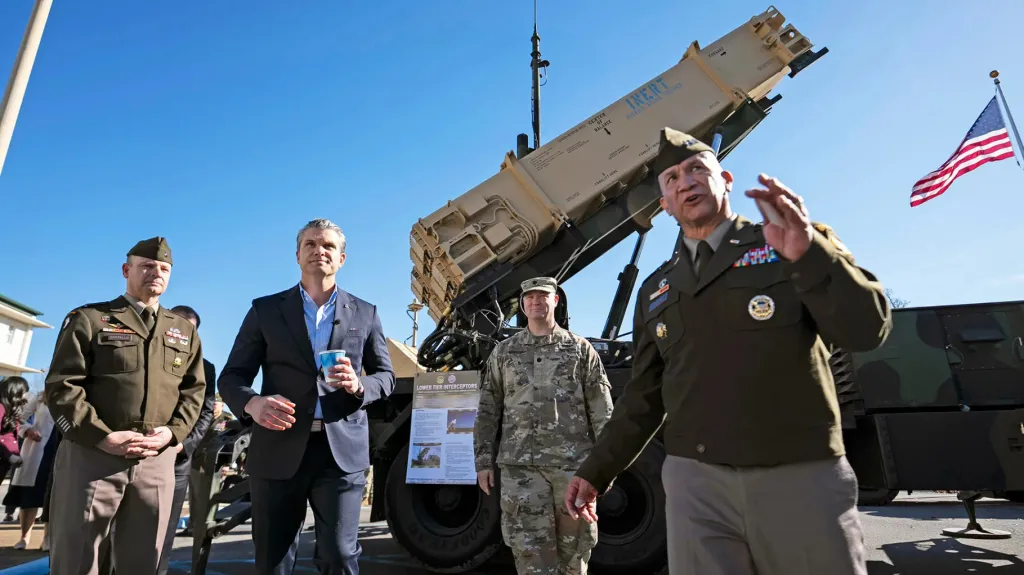













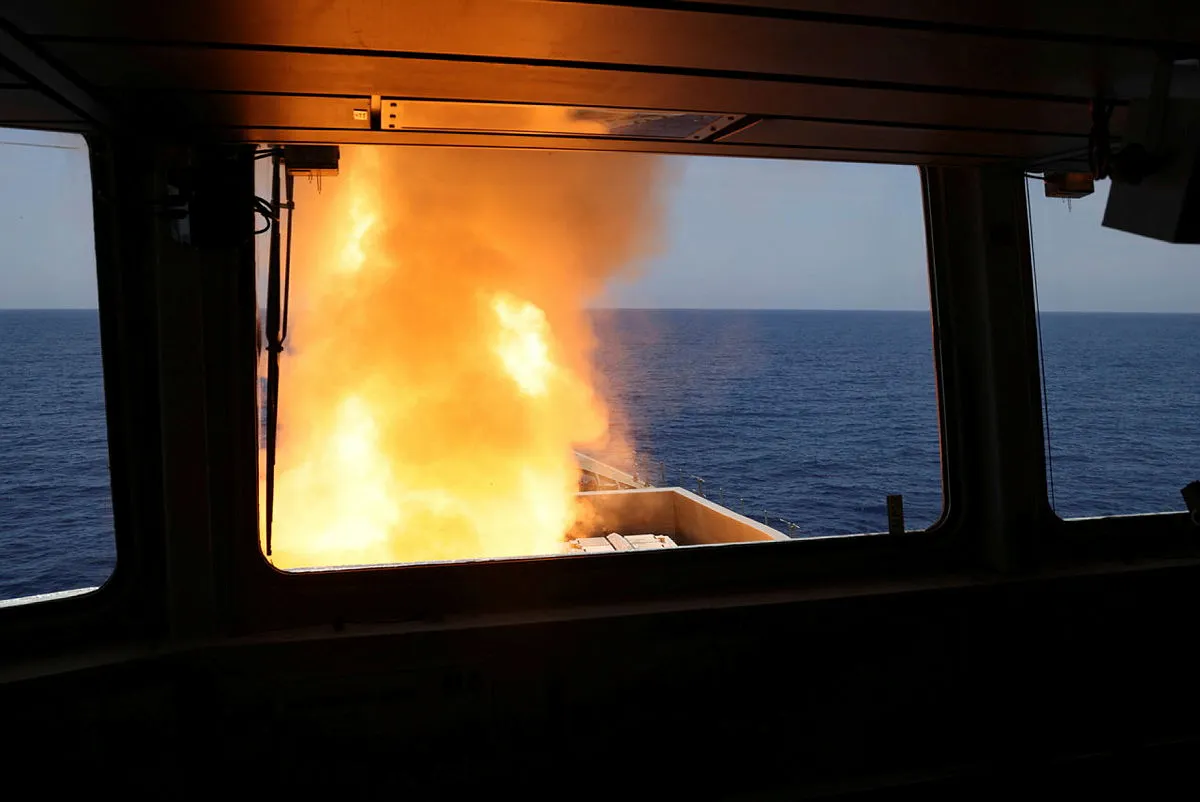


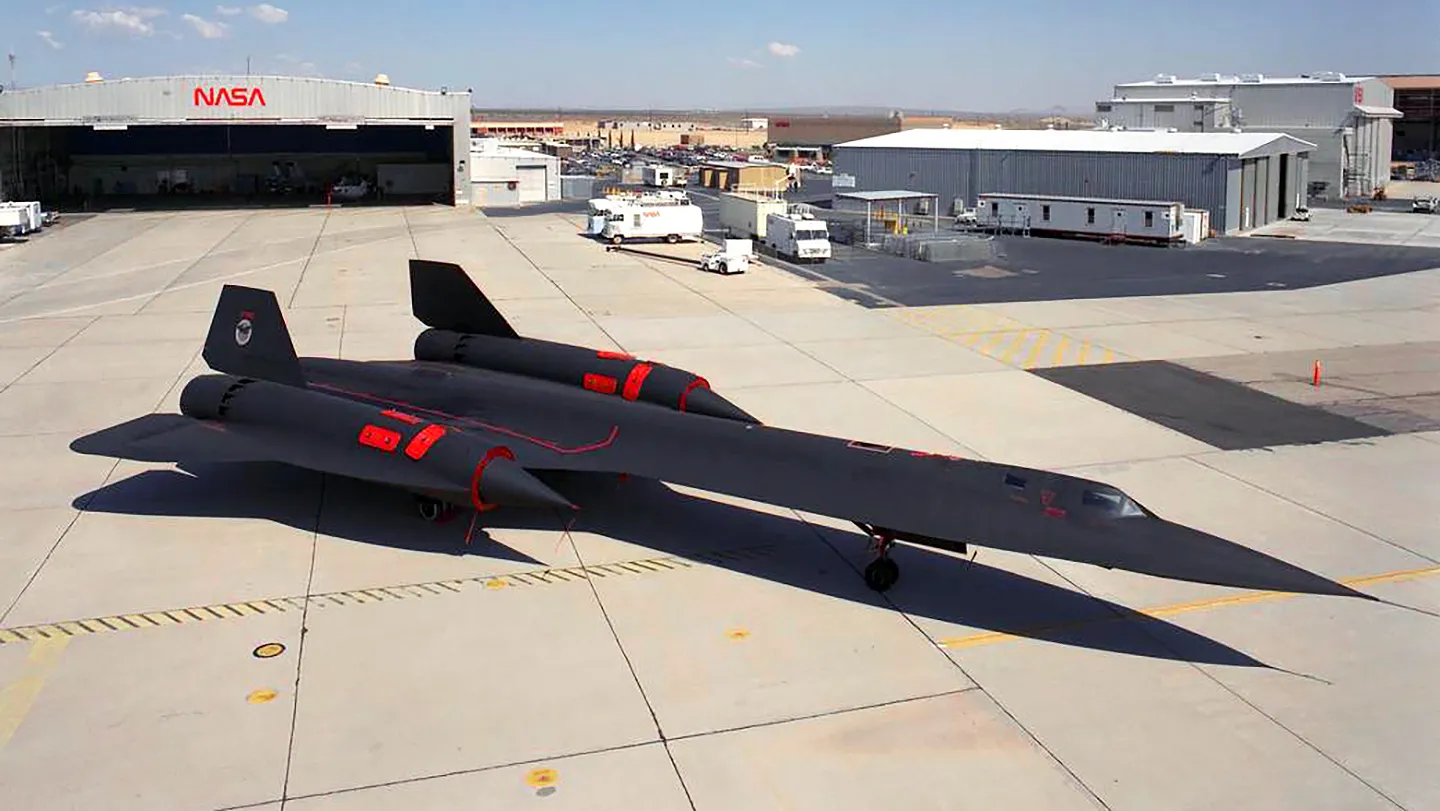





![Smoke billows from fires in a residential area following a Myanmar military air attack on a market and adjacent bridge in Kyauktaw, Rakhine state, September 28, 2026 [AFP]](https://i0.wp.com/www.aljazeera.com/wp-content/uploads/2026/09/afp_6abaab2c736e-1790618412.jpg?w=640&ssl=1)