agreement

U.S. and Iran reach agreement to end war, Trump says

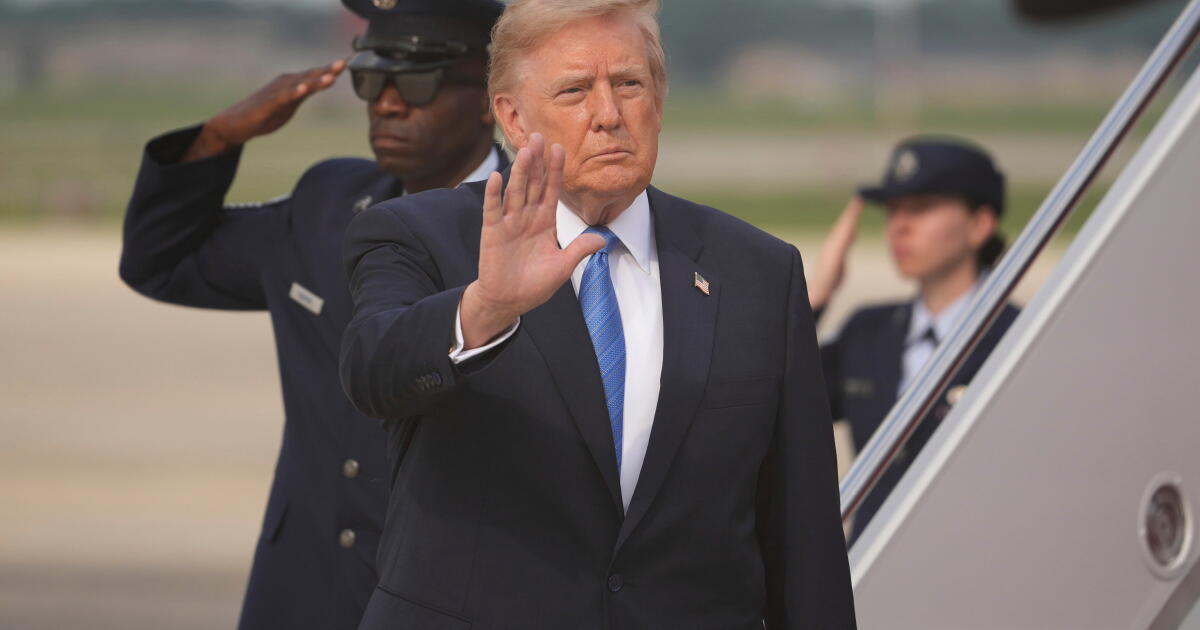
President Trump said Sunday that the United States and Iran have reached a framework agreement to end the war in the Middle East, a breakthrough in months of negotiations aimed at ending the conflict.

The deal, described by diplomats as a memorandum of understanding, commits Tehran to forgo the development or acquisition of nuclear weapons in exchange for helping reopen the Strait of Hormuz, and the paced release of its assets frozen overseas, upon the signing of the deal Friday in Switzerland.

Trump said he has also authorized “the immediate removal of the United States Naval blockade” on Iranian imports.

“Ships of the World, start your engines. Let the oil flow!” Trump wrote in a social media post Sunday evening. It was the president’s 80th birthday.

The full details of the agreement have not been released. Many details — including how Tehran would give up, destroy or dilute its fissile material, or whether Iran would continue treating the international strait as its sovereign waters — will continue to be negotiated in the coming days.

Pakistani Prime Minister Shehbaz Sharif said Sunday that mediators are planning to hold a series of meetings this week to “lay the foundation for the technical talks and the official signing ceremony.”

“We would like to thank the United States of America and the Islamic Republic of Iran for their commitment to finding a diplomatic solution to the conflict,” Sharif wrote in a post on X.

The Associated Press reported that negotiations on outstanding issues like Iran’s nuclear program would continue over the next 60 days, according to two senior Pakistani officials who spoke on condition of anonymity.

Vice President JD Vance told Fox News that the White House is “still figuring out the logistics” on whether he or Trump will attend the signing ceremony.

“What we know is that we have a lot of work to do, but a very big win for the American people tonight,” Vance said.”We are just going to keep on working at it, keep on driving energy prices down, keep on ensuring that region of the world is less than a basket case and finally, and most importantly, celebrate, that we can say with confidence Iran will never have a nuclear weapon.”

Iran’s deputy foreign minister, Kazem Gharibabadi, confirmed the agreement on state television but said Iran would not start implementing it until it was signed on Friday. He said the deal followed over 14 hours of talks in Tehran with a representative from Qatar, another mediator.

Iranian state TV showed a banner asserting: “US was forced to sign an agreement to end the war.”

Iran’s commitment to refrain from pursuing nuclear weapons would simply repeat a vow Iran has made several times before, including in its signing of the Nuclear Non-Proliferation Treaty and its nuclear deal brokered with international powers under the Obama administration over 10 years ago.

Iran has 972 pounds of uranium that is enriched up to 60% purity, a short, technical step from weapons-grade levels of 90%, according to the International Atomic Energy Agency. Under the 2015 international agreement with Iran abandoned by the first Trump administration, Iran’s uranium enrichment was capped at less than 4%, monitored by IAEA inspectors.

The vagueness of the new agreement, the demand for further negotiations to flesh out its details, and the pacing of sanctions relief for Iran are all likely to draw criticism of the president, who launched his political career in 2015 by attacking President Obama’s newly signed nuclear deal as a historically bad agreement.

That deal, known as the Joint Comprehensive Plan of Action, followed two years of painstaking negotiations that were predicated on a similar, yet more detailed framework, called the JCPOA.

Defense Secretary Pete Hegseth said in a Sunday morning interview on CBS’ “Face the Nation” that the the difference between the JCPOA and how the Trump administration is handling negotiations is the “threat of military force.”

“The huge difference is we did this from a position of strength,” Hegseth said. “That military might will stay as long as necessary.”

And, as in 2015, Israeli leadership across the political aisle remains deeply skeptical of the agreement, pronouncing they will not be bound by a deal to which they are not a party.

In a phone interview with the New York Times on Sunday afternoon, Trump called Benjamin Netanyahu, the prime minister of Israel, a “very difficult guy.”

“To be honest with you, he should be very thankful to us for doing this. Because if Iran had a nuclear weapon, Israel wouldn’t be around for two hours,” Trump said.

Since the U.S.-Israeli attacks on Iran that started the war Feb. 28, there have been 3,468 confirmed deaths in Iran, according to independent monitors. In addition, 13 U.S. service members have been killed, and the Israeli war with Hezbollah has killed 2,679 in Lebanon as well as 23 Israelis, including eight civilians.

Source link

DGA’s board throws support behind tentative contract with major studios

The Directors Guild of America’s national board on Friday unanimously recommended its membership vote in favor of a four-year contract with the major studios that would increase wages, boost contributions to its health plan and establish guardrails surrounding AI technology.

“We entered this negotiation with three main priorities: secure our Health Plan, protect jobs, and ensure that our members remain secure as AI continues to impact our industry,” DGA President Christopher Nolan said in a statement. “We succeeded in these areas and gained in many others.”

Under the proposed contract, major studios would increase their contributions to the DGA’s health plan by 24.4% over four years, the largest since the plan was founded. In return, the DGA would recommend changes to its plan’s trustees including “modest” increases to the eligibility threshold and annual premiums, the DGA said on Friday.

The contract also increases minimum salaries for most jobs by 2.5% in the first year and up 3% for each of the following years in the agreement. Directors of network non-prime time strip dramatic programs will see their minimum salaries increase 2.5% for each year under the agreement.

The union, which represents more than 19,500 directors and members of directorial teams in areas such as film, commercials and news, said the agreement helps the union’s push for a federal production incentive. Hollywood creatives believe such a benefit could prevent U.S. entertainment jobs from moving overseas where production costs can be significantly lower. The proposed agreement secures a commitment that most senior management at the major studios represented by the Alliance of Motion Picture and Television Producers “would engage in meaningful advocacy for a federal production incentive above and beyond the ongoing lobbying efforts of the Motion Picture Association,” according to the DGA.

The contract also adds more guardrails to AI technology, including treating footage created by artificial intelligence as the same as footage shot by a camera, meaning it will still be under the director’s control, according to the DGA. Major studios will also be required to notify the DGA if an employer decides to license a director’s work to train a generative AI system to create new work, the union said. The agreement also establishes an employer-funded program to enhance directors’ AI skills.

“With these gains, a four-year Agreement was both appropriate and necessary to provide stability and potential for growth at a moment when the industry has been experiencing contraction,” Nolan said in a note to members on Friday.

DGA and AMPTP reached the tentative contract earlier this week. At that time, AMPTP said “we appreciate the hard work and commitment of our guild partners in achieving a fair deal that helps advance a stable and successful entertainment industry.”

DGA members will have until June 25 at 5 p.m. to vote on the plan. If approved, the contract would go into effect July 1 and run through June 30, 2030.

Source link

SAG-AFTRA members approve deal with major studios

SAG-AFTRA members overwhelmingly approved a four-year TV and film deal with major studios including Netflix, Disney and Warner Bros. Discovery on Thursday night, increasing minimum wages and addressing concerns about the use of AI performers.

The deal, which was expected to be approved, received the support of 91% of SAG-AFTRA members who voted on the agreement, which starts July 1 and ends June 30, 2030. The union represents 160,000 performers, including actors, stunt performers and influencers.

“This agreement builds on the foundation members fought to establish and carries that work into the next chapter of our industry,” said SAG-AFTRA President Sean Astin in a statement. “It delivers meaningful gains in compensation, strengthens protections around artificial intelligence and digital identity, reinforces the long-term security of members’ benefit plans and recognizes the realities of how performers work today.”

Under the new deal, the length of the agreement between SAG-AFTRA and major studios represented by the Alliance of Motion Picture and Television Producers expands from three years to four years.

It also boosts minimum wage by 3% annually, increases contributions to the health plan by 1% and expands the bonus to the union’s Success Bonus Distribution Fund based on residuals that performers get for popular streaming programs.

The contract also addresses concerns about the growing use of artificial intelligence in TV and film and its impact on actor jobs. Last year, many actors spoke out about Tilly Norwood, a computer-generated “actor” and whether synthetic characters like her could threaten their livelihoods. Some performers have also advocated for getting paid if their likenesses are used to create such characters made through AI systems.

Not all members were in favor of the contract, saying it did not go far enough in protecting performers against AI.

“It normalizes the use of AI replicas and synthetic performers rather than drawing a firm line protecting human performers and their jobs,” said Chuck Slavin, a background actor and performer.

Slavin, a former New England local board member, ran against Astin for SAG-AFTRA president last year.

Producers agreed to “a principle strongly favoring human performances” and that producers would only use a synthetic if it “brings significant additional value to the motion picture.” If a producer decided to use a synthetic in a role that could be done by a human, they would need to notify the union and bargain in good faith.

Additionally, the contract merges the pension plans of the Screen Actors Guild and the American Federation of Television and Radio Artists, which were previously separate but combined in 2012 to form SAG-AFTRA.

Their health plans were consolidated in 2017, but the pensions have remained separate . That was a major sticking point with members, some of whom couldn’t qualify for benefits as their contributions were split between two plans. Studios agreed to boost their overall contributions to the combined plan by 1%.

SAG-AFTRA’s deal comes after the Writers Guild of America members also approved an agreement with the AMPTP in April.

The groups were able to agree on contracts this year, without striking as they did in 2023.

“SAG-AFTRA’s leadership brought a genuine commitment to partnership, and together with the WGA agreement, these deals demonstrate what is possible when the industry works toward practical solutions that support its long-term stability,” AMPTP said in a statement.

The Directors Guild of America began negotiations with AMPTP last month, with its contract expiring on June 30.

Staff writer Cerys Davies contributed to this report.

Source link

Ex-national security advisor John Bolton will plead guilty in classified information case: AP source

Former Trump administration national security advisor John Bolton has agreed to plead guilty to a single count of retaining classified information under a deal with the Justice Department that could allow him to avoid prison time, a person familiar with the matter said Thursday.

The deal would resolve a criminal case filed in October that charged Bolton with 18 counts of either retaining or disseminating classified information, including diary-like notes from his time in government that officials say he shared with his family members as he was preparing a memoir about his time in office.

Under the agreement, Bolton would also face a $2.25-million fine, said the person, who insisted on anonymity to discuss a deal that had not been made public. Any prison sentence would be capped at five years, but the agreement allows for him to avoid time behind bars, though the punishment will ultimately be up to a judge.

The case against Bolton, filed weeks after prosecutors secured indictments against former FBI Director James Comey and New York Atty. Gen. Letitia James, unfolded against the backdrop of concerns that the Justice Department was using its law enforcement powers to pursue perceived adversaries of President Trump. The investigation burst into public view last August when FBI agents served search warrants at his Maryland home and Washington office, but it had been well underway by the time Trump returned to the White House in January 2025.

Bolton is a longtime fixture in Republican foreign policy circles who became known for his hawkish views on U.S. power. He served for more than a year in Trump’s first administration before being fired in 2019 and publishing a critical book that portrayed the Republican president as deeply misinformed, an unflattering portrait of his leadership and decision-making.

Trump’s administration fought unsuccessfully to block the publication of “The Room Where it Happened” on the grounds that the book risked disclosing classified information. The plea deal that Bolton will enter covers the notes he shared with relatives as opposed to information published in the tell-all book.

A rearraignment, which typically signals a plea agreement, is scheduled for June 26 in federal court in Greenbelt, Md.

The Justice Department declined to comment.

The indictment’s 18 counts carried a threat of a substantial prison sentence in the event of conviction.

Court documents alleged that he shared with two family members “diary-like” entries with information classified as high as top secret that he had learned from meetings with other U.S. government officials, from intelligence briefings or talks with foreign leaders. After sending one document, Bolton wrote in a message to his relatives, “None of which we talk about!!!” In response, one of his relatives wrote, “Shhhhh,” prosecutors said.

The indictment said that among the material shared was information about foreign adversaries that in some cases revealed details about sources and methods used by the U.S. government to collect intelligence. One document related to a foreign adversary’s plans for a missile launch, while another detailed U.S. government plans for covert action and included intelligence blaming an adversary for an attack, court papers say.

In a statement released after his indictment, Bolton described the charges as part of an “intensive effort” by Trump to intimidate his opponents, to ensure that he alone determines what is said about his conduct.”

Bolton also served in the Department of Justice during President Reagan’s administration and was a State Department point person on arms control during George W. Bush’s presidency.

Bolton was nominated by Bush to serve as U.S. ambassador to the United Nations, but the strong supporter of the Iraq war was unable to win Senate confirmation. He resigned after serving 17 months through a recess appointment that allowed him to hold the job on a temporary basis without Senate approval.

In 2018, Bolton was appointed to serve as Trump’s third national security advisor. His brief tenure was characterized by disputes with the president over North Korea, Iran and Ukraine.

Those rifts ultimately led to Bolton’s departure, with Trump announcing on social media in September 2019 that he had accepted Bolton’s resignation.

Bolton subsequently criticized Trump’s approach to foreign policy and government in his book, alleging that Trump directly tied providing military aid to Ukraine to that country’s willingness to conduct investigations into Joe Biden, who was soon to be Trump’s Democratic rival in the 2020 presidential election, and members of the Biden family.

Trump responded by slamming Bolton as a “washed-up guy” and a “crazy” warmonger who would have led the country into “World War Six.”

Tucker writes for the Associated Press. AP writer Alanna Durkin Richer contributed to this report.

Source link

Lebanon’s latest truce: What is different from the April agreement? | Israel attacks Lebanon News

Israel and the Lebanese government have agreed to implement a new US-mediated ceasefire, the Trump administration has said, despite Israel’s defence minister insisting the military will continue operations in Lebanon.

Furthermore, while Lebanese President Joseph Aoun said on Thursday that the ceasefire would come into force within 24 hours of approval by all concerned parties, Hezbollah leader Naim Qassem has dismissed the deal, labelling it a “surrender and defeat”.

Recommended Stories

list of 4 itemsend of list

The Trump administration announcement comes just weeks after a previous agreement to cease hostilities was supposedly reached on April 16. Since then, however, more than 600 people have been killed in Israeli strikes across Lebanon while Israel has expanded its military presence in the south of the country, now occupying about one-fifth of the country.

The renewed diplomatic push also comes as Washington pursues parallel shuttle negotiations with Iran. Tehran, a close ally of Hezbollah, has made a ceasefire in Lebanon a condition for any broader agreement to end the war with the US and has repeatedly called for Israel to withdraw from southern Lebanon.

Iran’s position was underlined when Quds Force commander Esmail Qaani said the baseline demand in Lebanon is for Israeli forces to withdraw to the positions they held before the start of the US-Israel war on Iran at the end of February – a demand that is not explicitly reflected in the agreement.

Iran and Hezbollah’s responses to the US announcement, coupled with Israel’s insistence that military operations will continue, have cast serious doubt on its viability. Critics of Israel’s war on Lebanon also point to the April truce, which they say has completely failed to halt Israeli attacks or Israel’s occupation of the south of the country.

What has been announced?

According to the Trump administration, Israel and Lebanon have agreed to implement a ceasefire contingent on a “complete cessation” of Hezbollah fire and the evacuation of its fighters from the area south of the Litani River.

The agreement also calls for the creation of “pilot zones” where Lebanese Armed Forces would take exclusive control “to the exclusion of all non-state actors”. The stated aim is to move towards a wider political and security agreement, including the dismantling of non-state armed groups and preventing their re-emergence.

But Hezbollah was not party to the talks and has already rejected the agreement. Lebanon was represented by government diplomats, even though the Lebanese army is not a party to this conflict.

According to the wording of the agreement, the parties are due to reconvene during the week of June 22 to continue diplomatic and security talks, with the US facilitating communications in the meantime. It remains unclear if that stage of the agreement will ever be reached.

INTERACTIVE - Israel south lebanon bint jbeil map-1777363494
[Al Jazeera]

What was agreed in April?

The April agreement used different language, saying Israel and Lebanon would implement a “cessation of hostilities” from April 16, and never actually used the word ceasefire.

It also included a clause allowing Israel to “take all necessary measures in self-defence, at any time, against planned, imminent or ongoing attacks”.

That clause does not appear in the new text, which could be interpreted as a small concession. That was until Israel Katz said Israel would continue its military operations in Lebanon regardless.

The latest agreement also repeats Israel’s longstanding demand that Hezbollah withdraw from south of the Litani River.

Meanwhile, there is one major glaring omission. While the text focuses heavily on Hezbollah’s withdrawal from parts of southern Lebanon, it does not mention Israel’s withdrawal from southern Lebanon.

Lebanese journalist and analyst Souhayb Jawhar told Al Jazeera the agreement is defined as much by what it leaves out as by what it includes.

The text, he said, focuses on Hezbollah’s obligations and those of the Lebanese state: removing armed elements from south of the Litani and creating zones where the Lebanese army holds exclusive control.

“This point alone explains much of the scepticism within Hezbollah and its political environment,” Jawhar told Al Jazeera. “From the party’s perspective, any agreement should include a clear ceasefire, an Israeli withdrawal, and a framework for addressing outstanding issues, rather than becoming a document focused primarily on restructuring Lebanon’s internal security landscape.”

INTERACTIVE - LEBANON YELLOW LINE_MAY31_2026_3-1780440840

What else is different this time?

Other points of contention regarding the new agreement are the “pilot zones”, which appear to go beyond stopping the fighting and instead test a new security model in southern Lebanon – one that could eventually be expanded elsewhere, analysts say.

“This is why many observers see these zones as the beginning of a gradual transition from a security environment in which Hezbollah played the dominant role to one in which the Lebanese state and its armed forces become the sole security authority,” Jawhar said.

He added that the fate of the agreement may depend less on Lebanon-Israel talks than on the US-Iran track. If Washington and Tehran reach a wider understanding, the ceasefire in Lebanon will have a stronger chance of holding because both sides will have an interest in stabilising the Lebanese front.

“If those negotiations stall or collapse, Lebanon could quickly return to being one of the main arenas of pressure and confrontation between the two sides,” Jawhar added.

What is the situation in Lebanon now?

Southern Lebanon remained under heavy military pressure on Thursday, with Israeli strikes on Kafra and al-Mansouri in the southwest of the country. In the Bekaa Valley, one person was killed and four others wounded in an Israeli strike on Sohmor, according to Lebanon’s state-run National News Agency (NNA).

A separate strike hit Tell al-Aqareb, while further raids targeted Haddatha, Tibnin, Haris, and Harin. The NNA also reported more Israeli strikes across southern Lebanon as drones flew at low altitude over Beirut. In Maaroub, one person was killed and another wounded when Israeli forces targeted a motorcycle.

Israeli warplanes also struck towns and villages across the south, including Zawtar al-Sharqiya, Zawtar al-Gharbiya, Shoukin, Barachit, Srifa, Zibdin, Haris and Deir Zahrani. Jets and drones have also been flying over the south for much of the morning, including a drone seen at extremely low altitude over Tyre.

Lebanon’s Civil Defence authorities have warned people not to return south, citing the continued danger to civilian life in towns and villages across southern Lebanon.

More than 3,000 people have been killed, and more than one million have been forced from their homes since Israel renewed its assault on Lebanon in early March.

Source link

Trump acknowledges calling Netanyahu ‘crazy’ and says Israel is complicating peace talks with Iran

President Trump acknowledged criticizing Israeli Prime Minister Benjamin Netanyahu as “crazy” in a phone call that involved expletives, saying he was “a little bit perturbed” that Israel’s fighting with Hezbollah militants in Lebanon was holding back peace talks with Iran.

But even as the president conceded the tensions in an interview released Wednesday, he insisted that his relationship with Netanyahu was solid and that they connected, in part, because they are both “wartime” leaders.

“We’ve worked very well together. I like Bibi a lot. And I work very well with him,” Trump told the New York Post’s “Pod Force One.”

In an interview on the American business-news channel CNBC, Netanyahu responded that he and Trump sometimes have “tactical disagreements” but have “common goals” and “agree on the main things.”

“He respects me. I respect him. We always find a way to work out our differences,” the prime minister said.

The president’s comments about the Monday call offered a sign of the growing pressure he faces to resolve the Iran war as higher energy prices and economic uncertainty threaten Republican prospects in the midterm elections and hamper global commerce.

Talks have dragged on for weeks as mediators seek to extend a fragile ceasefire into a more enduring truce. The negotiations are further strained by Israel’s broadening war with the Iranian-backed militia group in Lebanon. The conflicts have become increasingly intertwined as Iran insists that any potential truce in the war there must also quell the fighting in Lebanon.

Trump does not commit to timeline for ending Iran war

Trump remained noncommittal about a timeline for settling the Iran conflict, saying the Strait of Hormuz might stay blocked through the Labor Day holiday on Sept. 7. He has insisted that Iran stop any efforts that could lead to a nuclear weapon and that the strait be reopened for shipments of oil and natural gas.

“I don’t know. I mean, I think it could be [closed through Labor Day], but I think it’s unlikely. I think that we’ll have it. I think this will resolve itself fairly quickly,” Trump said.

Iran’s Supreme Leader Mojtaba Khamenei, who succeeded his late father, is “involved” in peace talks, Trump added.

“They have a lot of respect for him,” the president said in the interview.

Trump said that Khamenei is not doing well due to wounds sustained in an airstrike, but “they say he’s giving approval because that’s the way it has been for a long, long time.” Khamenei’s father was killed in an airstrike when the U.S. and Israel attacked Iran at the end of February.

Meanwhile in the Persian Gulf region, Kuwait briefly shut its main airport Wednesday after Iranian drones hit a passenger terminal building, killing one person and wounding dozens. It was the latest in the back-and-forth attacks by Tehran and Washington that have tested the ceasefire.

The strike again brought home the risks to residents and travelers in Gulf countries that had considered themselves relative safe havens before the war, now in its fourth month.

Path to a lasting ceasefire in Lebanon is obscured by new strikes

The path toward a lasting ceasefire between Israel and Hezbollah remained unclear as hostilities continued in Lebanon.

An Israeli strike Wednesday hit a car on a busy highway just south of Beirut, hours before the second day of talks between Lebanon and Israel in Washington were set to take place.

The strike in Khaldeh came without warning, and it was not immediately clear if the person targeted was killed.

Israel and Lebanon on Monday reached a U.S.-brokered agreement in which Israel would not strike Beirut’s southern suburbs and Hezbollah would end its attacks on northern Israel.

The agreement was made hours after Israel announced that it was going to launch strikes across the sprawling urban neighborhoods near the Lebanese capital in what would have been the most intense strikes since a nominal ceasefire went into effect on April 17.

The State Department said progress was made during the first day of talks on Tuesday. Lebanon hopes to widen the scope of the ceasefire so it becomes comprehensive across the country. Israel wants to disarm Hezbollah immediately before the Israeli military ends its operations in Lebanon and withdraws its troops from dozens of villages and towns.

Not long after the strike on Khaldeh, the Israeli military said it intercepted what it called a hostile aircraft coming from southern Lebanon, but it did not immediately blame Hezbollah. Hezbollah has not claimed a cross-border attack since the agreement.

Israeli military warning rattles coastal city

Israeli strikes over southern Lebanon continued, especially in and around the battered cities of Tyre and Nabatiyeh. Two overnight strikes near Tyre, a coastal city, killed four Syrians and two Palestinians.

Israel warned the Christian neighborhoods in Tyre that Hezbollah members were among them. Many Lebanese Shiite Muslims fled to those areas in recent days because they were spared from the aerial bombardment along the Mediterranean coast.

After the warning, the Lebanese army deployed to the Christian district of Tyre in an effort to prevent Israeli attacks there and to show that Hezbollah has no armed presence in the area.

Israel launched an invasion of southern Lebanon days after the latest war was sparked on March 2, when Iran-backed Hezbollah fired rockets toward northern Israel in solidarity with Iran. Israeli troops have pushed deeper into Lebanon over the past week, as Hezbollah continues to claim rocket and drone attacks.

The latest round of fighting between Israel and Hezbollah has killed 3,468 people in Lebanon and displaced 1.2 million people. According to Netanyahu’s office, at least 27 Israeli soldiers and a defense contractor have been killed in or near southern Lebanon. Two civilians have also been killed in northern Israel.

Strike on village kills most of a family

Many residents of southern Lebanon remained in villages near the hostilities or returned to areas where strikes occurred after evacuation warnings.

The Al-Abdallah family returned to their home in Marwanieyh, which they left because they thought the village was unsafe following earlier strikes. A day later, two rockets hit the home, bringing down the three-story building and killing six family members, said the brother of Hassan Al-Abdallah, who was killed.

Ahmed Al-Abdallah, 13, was thrown away from the building by the force of the blasts and was the only member of his family to survive. His uncle, Eissa Al-Abdallah, said the boy has two broken legs and shrapnel wounds all over his body.

“What good is talking now? They are gone, and nothing will bring them back,” the uncle told the Associated Press in a phone call Tuesday. “This land costs blood.”

Chehayeb, Boak and El Deeb write for the Associated Press. Boak reported from Washington.

Source link

FACTBOX – Iranian, US versions of potential agreement proposals – Middle East Monitor

Both the US and Iran have recently signaled progress on efforts to reach a deal to end their conflict, though their accounts of its terms differ on some issues across respective media narratives, Anadolu reports.

US President Donald Trump on Saturday said an agreement with Iran to end the war was “largely negotiated” and awaited finalization.

On Sunday morning, Iran’s semi-official Tasnim news agency also published a report on the details of a potential agreement. However, certain aspects of what has been agreed seem to diverge.

Here is a comparison of the US and Iranian versions of the deal by key issues.

Strait of Hormuz

Citing a US official, Axios said the deal that Washington and Tehran are close to signing would extend a ceasefire by 60 days, during which the Strait of Hormuz would be reopened.

During the 60-day period, the Strait of Hormuz would be opened without any tolls, and Iran would remove the mines it has placed there to ensure unrestricted maritime passage.

In return, Washington would lift its blockade on Iranian ports, added the report.

The New York Times also said it was informed by three senior Iranian officials that Tehran had agreed to a memorandum of understanding to halt fighting and reopen the Strait of Hormuz.

US Secretary of State Marco Rubio also said on Sunday that the agreement could, if successful, result in a “completely open” Strait of Hormuz, with no tolls or restrictions on passage.

“They don’t own it. It’s an international waterway,” Rubio told reporters of the strait, in remarks that came during his visit to India.

A report by Iran’s semi-official news agency Tasnim, however, said that the Strait of Hormuz will not fully return to its pre-war status if the agreement is reached.

Instead, the number of ships allowed to pass would be restored to pre-war levels within 30 days, the outlet added.

Tehran also demands an end to the US blockade on its ports, arguing that no changes will be made in the strait if the blockade remains in place.

For its part, the US argues that the quicker Iran removes the mines and allows shipping to resume, the sooner the blockade will be lifted.

READ: Iran ready to reassure world it is not pursuing nuclear weapons, president says

Sanctions relief and release of frozen Iranian assets

Iran was seeking the immediate unfreezing of funds and a permanent lifting of sanctions, but the US position indicates these measures would only be granted after Iran made concrete concessions, according to the Axios report.

As part of the proposed 60-day agreement, the US is offering temporary sanctions waivers that would allow Iran to sell its oil freely. These waivers are explicitly linked to Iran reopening the Strait of Hormuz, removing mines, and ending restrictions on maritime traffic. Once these steps are taken, Washington would also lift its naval blockade on Iranian ports.

Tehran, however, says no agreement will be reached unless at least a portion of the frozen Iranian assets is released immediately. Iranian media confirmed the discussion of temporary oil sanctions waivers in the latest US proposal but insisted on broader and more permanent sanctions relief.

Nuclear file

The Axios report said the draft deal includes commitments from Iran not to pursue nuclear weapons, along with provisions to negotiate a suspension of uranium enrichment and the removal of its stockpile of highly enriched uranium.

The Iranian media reports, however, indicate that Tehran has not yet accepted anything on its nuclear program.

A potential deal would involve a 60-day negotiation window on Iran’s nuclear program, according to Tasnim.

Extent of ceasefire

Both US and Iranian media reports suggest that the cessation of hostilities would mean a halt to fighting on all fronts, including Lebanon.

This was also highlighted by Iranian Foreign Ministry spokesman Esmaeil Baqaei on Saturday, when he said Tehran was prioritizing an end to hostilities across all fronts, including Lebanon.

Context

Regional tensions have escalated since the US and Israel launched strikes against Iran in February. Tehran retaliated with strikes targeting Israel, as well as US allies in the Gulf, along with the closure of the Strait of Hormuz.

A ceasefire took effect on April 8 through Pakistani mediation and was later extended by Trump indefinitely. Washington and Tehran also held rare direct talks in the Pakistani capital Islamabad on April 11-12, but have failed to reach an agreement.

Trump’s Saturday remarks came after Pakistani army chief Asim Munir’s visit to Tehran. The visit was the second of its kind in recent weeks, as Munir is directly involved in Islamabad’s mediation efforts.

READ: Trump says Iran talks ‘constructive’ but blockade will remain until final deal is reached

Source link

FACTBOX – Iranian, US versions of potential agreement proposals – Middle East Monitor

Both the US and Iran have recently signaled progress on efforts to reach a deal to end their conflict, though their accounts of its terms differ on some issues across respective media narratives, Anadolu reports.

US President Donald Trump on Saturday said an agreement with Iran to end the war was “largely negotiated” and awaited finalization.

On Sunday morning, Iran’s semi-official Tasnim news agency also published a report on the details of a potential agreement. However, certain aspects of what has been agreed seem to diverge.

Here is a comparison of the US and Iranian versions of the deal by key issues.

Strait of Hormuz

Citing a US official, Axios said the deal that Washington and Tehran are close to signing would extend a ceasefire by 60 days, during which the Strait of Hormuz would be reopened.

During the 60-day period, the Strait of Hormuz would be opened without any tolls, and Iran would remove the mines it has placed there to ensure unrestricted maritime passage.

In return, Washington would lift its blockade on Iranian ports, added the report.

The New York Times also said it was informed by three senior Iranian officials that Tehran had agreed to a memorandum of understanding to halt fighting and reopen the Strait of Hormuz.

US Secretary of State Marco Rubio also said on Sunday that the agreement could, if successful, result in a “completely open” Strait of Hormuz, with no tolls or restrictions on passage.

“They don’t own it. It’s an international waterway,” Rubio told reporters of the strait, in remarks that came during his visit to India.

A report by Iran’s semi-official news agency Tasnim, however, said that the Strait of Hormuz will not fully return to its pre-war status if the agreement is reached.

Instead, the number of ships allowed to pass would be restored to pre-war levels within 30 days, the outlet added.

Tehran also demands an end to the US blockade on its ports, arguing that no changes will be made in the strait if the blockade remains in place.

For its part, the US argues that the quicker Iran removes the mines and allows shipping to resume, the sooner the blockade will be lifted.

READ: Iran ready to reassure world it is not pursuing nuclear weapons, president says

Sanctions relief and release of frozen Iranian assets

Iran was seeking the immediate unfreezing of funds and a permanent lifting of sanctions, but the US position indicates these measures would only be granted after Iran made concrete concessions, according to the Axios report.

As part of the proposed 60-day agreement, the US is offering temporary sanctions waivers that would allow Iran to sell its oil freely. These waivers are explicitly linked to Iran reopening the Strait of Hormuz, removing mines, and ending restrictions on maritime traffic. Once these steps are taken, Washington would also lift its naval blockade on Iranian ports.

Tehran, however, says no agreement will be reached unless at least a portion of the frozen Iranian assets is released immediately. Iranian media confirmed the discussion of temporary oil sanctions waivers in the latest US proposal but insisted on broader and more permanent sanctions relief.

Nuclear file

The Axios report said the draft deal includes commitments from Iran not to pursue nuclear weapons, along with provisions to negotiate a suspension of uranium enrichment and the removal of its stockpile of highly enriched uranium.

The Iranian media reports, however, indicate that Tehran has not yet accepted anything on its nuclear program.

A potential deal would involve a 60-day negotiation window on Iran’s nuclear program, according to Tasnim.

Extent of ceasefire

Both US and Iranian media reports suggest that the cessation of hostilities would mean a halt to fighting on all fronts, including Lebanon.

This was also highlighted by Iranian Foreign Ministry spokesman Esmaeil Baqaei on Saturday, when he said Tehran was prioritizing an end to hostilities across all fronts, including Lebanon.

Context

Regional tensions have escalated since the US and Israel launched strikes against Iran in February. Tehran retaliated with strikes targeting Israel, as well as US allies in the Gulf, along with the closure of the Strait of Hormuz.

A ceasefire took effect on April 8 through Pakistani mediation and was later extended by Trump indefinitely. Washington and Tehran also held rare direct talks in the Pakistani capital Islamabad on April 11-12, but have failed to reach an agreement.

Trump’s Saturday remarks came after Pakistani army chief Asim Munir’s visit to Tehran. The visit was the second of its kind in recent weeks, as Munir is directly involved in Islamabad’s mediation efforts.

READ: Trump says Iran talks ‘constructive’ but blockade will remain until final deal is reached

Source link

FACTBOX – Iranian, US versions of potential agreement proposals – Middle East Monitor

Both the US and Iran have recently signaled progress on efforts to reach a deal to end their conflict, though their accounts of its terms differ on some issues across respective media narratives, Anadolu reports.

US President Donald Trump on Saturday said an agreement with Iran to end the war was “largely negotiated” and awaited finalization.

On Sunday morning, Iran’s semi-official Tasnim news agency also published a report on the details of a potential agreement. However, certain aspects of what has been agreed seem to diverge.

Here is a comparison of the US and Iranian versions of the deal by key issues.

Strait of Hormuz

Citing a US official, Axios said the deal that Washington and Tehran are close to signing would extend a ceasefire by 60 days, during which the Strait of Hormuz would be reopened.

During the 60-day period, the Strait of Hormuz would be opened without any tolls, and Iran would remove the mines it has placed there to ensure unrestricted maritime passage.

In return, Washington would lift its blockade on Iranian ports, added the report.

The New York Times also said it was informed by three senior Iranian officials that Tehran had agreed to a memorandum of understanding to halt fighting and reopen the Strait of Hormuz.

US Secretary of State Marco Rubio also said on Sunday that the agreement could, if successful, result in a “completely open” Strait of Hormuz, with no tolls or restrictions on passage.

“They don’t own it. It’s an international waterway,” Rubio told reporters of the strait, in remarks that came during his visit to India.

A report by Iran’s semi-official news agency Tasnim, however, said that the Strait of Hormuz will not fully return to its pre-war status if the agreement is reached.

Instead, the number of ships allowed to pass would be restored to pre-war levels within 30 days, the outlet added.

Tehran also demands an end to the US blockade on its ports, arguing that no changes will be made in the strait if the blockade remains in place.

For its part, the US argues that the quicker Iran removes the mines and allows shipping to resume, the sooner the blockade will be lifted.

READ: Iran ready to reassure world it is not pursuing nuclear weapons, president says

Sanctions relief and release of frozen Iranian assets

Iran was seeking the immediate unfreezing of funds and a permanent lifting of sanctions, but the US position indicates these measures would only be granted after Iran made concrete concessions, according to the Axios report.

As part of the proposed 60-day agreement, the US is offering temporary sanctions waivers that would allow Iran to sell its oil freely. These waivers are explicitly linked to Iran reopening the Strait of Hormuz, removing mines, and ending restrictions on maritime traffic. Once these steps are taken, Washington would also lift its naval blockade on Iranian ports.

Tehran, however, says no agreement will be reached unless at least a portion of the frozen Iranian assets is released immediately. Iranian media confirmed the discussion of temporary oil sanctions waivers in the latest US proposal but insisted on broader and more permanent sanctions relief.

Nuclear file

The Axios report said the draft deal includes commitments from Iran not to pursue nuclear weapons, along with provisions to negotiate a suspension of uranium enrichment and the removal of its stockpile of highly enriched uranium.

The Iranian media reports, however, indicate that Tehran has not yet accepted anything on its nuclear program.

A potential deal would involve a 60-day negotiation window on Iran’s nuclear program, according to Tasnim.

Extent of ceasefire

Both US and Iranian media reports suggest that the cessation of hostilities would mean a halt to fighting on all fronts, including Lebanon.

This was also highlighted by Iranian Foreign Ministry spokesman Esmaeil Baqaei on Saturday, when he said Tehran was prioritizing an end to hostilities across all fronts, including Lebanon.

Context

Regional tensions have escalated since the US and Israel launched strikes against Iran in February. Tehran retaliated with strikes targeting Israel, as well as US allies in the Gulf, along with the closure of the Strait of Hormuz.

A ceasefire took effect on April 8 through Pakistani mediation and was later extended by Trump indefinitely. Washington and Tehran also held rare direct talks in the Pakistani capital Islamabad on April 11-12, but have failed to reach an agreement.

Trump’s Saturday remarks came after Pakistani army chief Asim Munir’s visit to Tehran. The visit was the second of its kind in recent weeks, as Munir is directly involved in Islamabad’s mediation efforts.

READ: Trump says Iran talks ‘constructive’ but blockade will remain until final deal is reached

Source link

FACTBOX – Iranian, US versions of potential agreement proposals – Middle East Monitor

Both the US and Iran have recently signaled progress on efforts to reach a deal to end their conflict, though their accounts of its terms differ on some issues across respective media narratives, Anadolu reports.

US President Donald Trump on Saturday said an agreement with Iran to end the war was “largely negotiated” and awaited finalization.

On Sunday morning, Iran’s semi-official Tasnim news agency also published a report on the details of a potential agreement. However, certain aspects of what has been agreed seem to diverge.

Here is a comparison of the US and Iranian versions of the deal by key issues.

Strait of Hormuz

Citing a US official, Axios said the deal that Washington and Tehran are close to signing would extend a ceasefire by 60 days, during which the Strait of Hormuz would be reopened.

During the 60-day period, the Strait of Hormuz would be opened without any tolls, and Iran would remove the mines it has placed there to ensure unrestricted maritime passage.

In return, Washington would lift its blockade on Iranian ports, added the report.

The New York Times also said it was informed by three senior Iranian officials that Tehran had agreed to a memorandum of understanding to halt fighting and reopen the Strait of Hormuz.

US Secretary of State Marco Rubio also said on Sunday that the agreement could, if successful, result in a “completely open” Strait of Hormuz, with no tolls or restrictions on passage.

“They don’t own it. It’s an international waterway,” Rubio told reporters of the strait, in remarks that came during his visit to India.

A report by Iran’s semi-official news agency Tasnim, however, said that the Strait of Hormuz will not fully return to its pre-war status if the agreement is reached.

Instead, the number of ships allowed to pass would be restored to pre-war levels within 30 days, the outlet added.

Tehran also demands an end to the US blockade on its ports, arguing that no changes will be made in the strait if the blockade remains in place.

For its part, the US argues that the quicker Iran removes the mines and allows shipping to resume, the sooner the blockade will be lifted.

READ: Iran ready to reassure world it is not pursuing nuclear weapons, president says

Sanctions relief and release of frozen Iranian assets

Iran was seeking the immediate unfreezing of funds and a permanent lifting of sanctions, but the US position indicates these measures would only be granted after Iran made concrete concessions, according to the Axios report.

As part of the proposed 60-day agreement, the US is offering temporary sanctions waivers that would allow Iran to sell its oil freely. These waivers are explicitly linked to Iran reopening the Strait of Hormuz, removing mines, and ending restrictions on maritime traffic. Once these steps are taken, Washington would also lift its naval blockade on Iranian ports.

Tehran, however, says no agreement will be reached unless at least a portion of the frozen Iranian assets is released immediately. Iranian media confirmed the discussion of temporary oil sanctions waivers in the latest US proposal but insisted on broader and more permanent sanctions relief.

Nuclear file

The Axios report said the draft deal includes commitments from Iran not to pursue nuclear weapons, along with provisions to negotiate a suspension of uranium enrichment and the removal of its stockpile of highly enriched uranium.

The Iranian media reports, however, indicate that Tehran has not yet accepted anything on its nuclear program.

A potential deal would involve a 60-day negotiation window on Iran’s nuclear program, according to Tasnim.

Extent of ceasefire

Both US and Iranian media reports suggest that the cessation of hostilities would mean a halt to fighting on all fronts, including Lebanon.

This was also highlighted by Iranian Foreign Ministry spokesman Esmaeil Baqaei on Saturday, when he said Tehran was prioritizing an end to hostilities across all fronts, including Lebanon.

Context

Regional tensions have escalated since the US and Israel launched strikes against Iran in February. Tehran retaliated with strikes targeting Israel, as well as US allies in the Gulf, along with the closure of the Strait of Hormuz.

A ceasefire took effect on April 8 through Pakistani mediation and was later extended by Trump indefinitely. Washington and Tehran also held rare direct talks in the Pakistani capital Islamabad on April 11-12, but have failed to reach an agreement.

Trump’s Saturday remarks came after Pakistani army chief Asim Munir’s visit to Tehran. The visit was the second of its kind in recent weeks, as Munir is directly involved in Islamabad’s mediation efforts.

READ: Trump says Iran talks ‘constructive’ but blockade will remain until final deal is reached

Source link

FACTBOX – Iranian, US versions of potential agreement proposals – Middle East Monitor

Both the US and Iran have recently signaled progress on efforts to reach a deal to end their conflict, though their accounts of its terms differ on some issues across respective media narratives, Anadolu reports.

US President Donald Trump on Saturday said an agreement with Iran to end the war was “largely negotiated” and awaited finalization.

On Sunday morning, Iran’s semi-official Tasnim news agency also published a report on the details of a potential agreement. However, certain aspects of what has been agreed seem to diverge.

Here is a comparison of the US and Iranian versions of the deal by key issues.

Strait of Hormuz

Citing a US official, Axios said the deal that Washington and Tehran are close to signing would extend a ceasefire by 60 days, during which the Strait of Hormuz would be reopened.

During the 60-day period, the Strait of Hormuz would be opened without any tolls, and Iran would remove the mines it has placed there to ensure unrestricted maritime passage.

In return, Washington would lift its blockade on Iranian ports, added the report.

The New York Times also said it was informed by three senior Iranian officials that Tehran had agreed to a memorandum of understanding to halt fighting and reopen the Strait of Hormuz.

US Secretary of State Marco Rubio also said on Sunday that the agreement could, if successful, result in a “completely open” Strait of Hormuz, with no tolls or restrictions on passage.

“They don’t own it. It’s an international waterway,” Rubio told reporters of the strait, in remarks that came during his visit to India.

A report by Iran’s semi-official news agency Tasnim, however, said that the Strait of Hormuz will not fully return to its pre-war status if the agreement is reached.

Instead, the number of ships allowed to pass would be restored to pre-war levels within 30 days, the outlet added.

Tehran also demands an end to the US blockade on its ports, arguing that no changes will be made in the strait if the blockade remains in place.

For its part, the US argues that the quicker Iran removes the mines and allows shipping to resume, the sooner the blockade will be lifted.

READ: Iran ready to reassure world it is not pursuing nuclear weapons, president says

Sanctions relief and release of frozen Iranian assets

Iran was seeking the immediate unfreezing of funds and a permanent lifting of sanctions, but the US position indicates these measures would only be granted after Iran made concrete concessions, according to the Axios report.

As part of the proposed 60-day agreement, the US is offering temporary sanctions waivers that would allow Iran to sell its oil freely. These waivers are explicitly linked to Iran reopening the Strait of Hormuz, removing mines, and ending restrictions on maritime traffic. Once these steps are taken, Washington would also lift its naval blockade on Iranian ports.

Tehran, however, says no agreement will be reached unless at least a portion of the frozen Iranian assets is released immediately. Iranian media confirmed the discussion of temporary oil sanctions waivers in the latest US proposal but insisted on broader and more permanent sanctions relief.

Nuclear file

The Axios report said the draft deal includes commitments from Iran not to pursue nuclear weapons, along with provisions to negotiate a suspension of uranium enrichment and the removal of its stockpile of highly enriched uranium.

The Iranian media reports, however, indicate that Tehran has not yet accepted anything on its nuclear program.

A potential deal would involve a 60-day negotiation window on Iran’s nuclear program, according to Tasnim.

Extent of ceasefire

Both US and Iranian media reports suggest that the cessation of hostilities would mean a halt to fighting on all fronts, including Lebanon.

This was also highlighted by Iranian Foreign Ministry spokesman Esmaeil Baqaei on Saturday, when he said Tehran was prioritizing an end to hostilities across all fronts, including Lebanon.

Context

Regional tensions have escalated since the US and Israel launched strikes against Iran in February. Tehran retaliated with strikes targeting Israel, as well as US allies in the Gulf, along with the closure of the Strait of Hormuz.

A ceasefire took effect on April 8 through Pakistani mediation and was later extended by Trump indefinitely. Washington and Tehran also held rare direct talks in the Pakistani capital Islamabad on April 11-12, but have failed to reach an agreement.

Trump’s Saturday remarks came after Pakistani army chief Asim Munir’s visit to Tehran. The visit was the second of its kind in recent weeks, as Munir is directly involved in Islamabad’s mediation efforts.

READ: Trump says Iran talks ‘constructive’ but blockade will remain until final deal is reached

Source link

FACTBOX – Iranian, US versions of potential agreement proposals – Middle East Monitor

Both the US and Iran have recently signaled progress on efforts to reach a deal to end their conflict, though their accounts of its terms differ on some issues across respective media narratives, Anadolu reports.

US President Donald Trump on Saturday said an agreement with Iran to end the war was “largely negotiated” and awaited finalization.

On Sunday morning, Iran’s semi-official Tasnim news agency also published a report on the details of a potential agreement. However, certain aspects of what has been agreed seem to diverge.

Here is a comparison of the US and Iranian versions of the deal by key issues.

Strait of Hormuz

Citing a US official, Axios said the deal that Washington and Tehran are close to signing would extend a ceasefire by 60 days, during which the Strait of Hormuz would be reopened.

During the 60-day period, the Strait of Hormuz would be opened without any tolls, and Iran would remove the mines it has placed there to ensure unrestricted maritime passage.

In return, Washington would lift its blockade on Iranian ports, added the report.

The New York Times also said it was informed by three senior Iranian officials that Tehran had agreed to a memorandum of understanding to halt fighting and reopen the Strait of Hormuz.

US Secretary of State Marco Rubio also said on Sunday that the agreement could, if successful, result in a “completely open” Strait of Hormuz, with no tolls or restrictions on passage.

“They don’t own it. It’s an international waterway,” Rubio told reporters of the strait, in remarks that came during his visit to India.

A report by Iran’s semi-official news agency Tasnim, however, said that the Strait of Hormuz will not fully return to its pre-war status if the agreement is reached.

Instead, the number of ships allowed to pass would be restored to pre-war levels within 30 days, the outlet added.

Tehran also demands an end to the US blockade on its ports, arguing that no changes will be made in the strait if the blockade remains in place.

For its part, the US argues that the quicker Iran removes the mines and allows shipping to resume, the sooner the blockade will be lifted.

READ: Iran ready to reassure world it is not pursuing nuclear weapons, president says

Sanctions relief and release of frozen Iranian assets

Iran was seeking the immediate unfreezing of funds and a permanent lifting of sanctions, but the US position indicates these measures would only be granted after Iran made concrete concessions, according to the Axios report.

As part of the proposed 60-day agreement, the US is offering temporary sanctions waivers that would allow Iran to sell its oil freely. These waivers are explicitly linked to Iran reopening the Strait of Hormuz, removing mines, and ending restrictions on maritime traffic. Once these steps are taken, Washington would also lift its naval blockade on Iranian ports.

Tehran, however, says no agreement will be reached unless at least a portion of the frozen Iranian assets is released immediately. Iranian media confirmed the discussion of temporary oil sanctions waivers in the latest US proposal but insisted on broader and more permanent sanctions relief.

Nuclear file

The Axios report said the draft deal includes commitments from Iran not to pursue nuclear weapons, along with provisions to negotiate a suspension of uranium enrichment and the removal of its stockpile of highly enriched uranium.

The Iranian media reports, however, indicate that Tehran has not yet accepted anything on its nuclear program.

A potential deal would involve a 60-day negotiation window on Iran’s nuclear program, according to Tasnim.

Extent of ceasefire

Both US and Iranian media reports suggest that the cessation of hostilities would mean a halt to fighting on all fronts, including Lebanon.

This was also highlighted by Iranian Foreign Ministry spokesman Esmaeil Baqaei on Saturday, when he said Tehran was prioritizing an end to hostilities across all fronts, including Lebanon.

Context

Regional tensions have escalated since the US and Israel launched strikes against Iran in February. Tehran retaliated with strikes targeting Israel, as well as US allies in the Gulf, along with the closure of the Strait of Hormuz.

A ceasefire took effect on April 8 through Pakistani mediation and was later extended by Trump indefinitely. Washington and Tehran also held rare direct talks in the Pakistani capital Islamabad on April 11-12, but have failed to reach an agreement.

Trump’s Saturday remarks came after Pakistani army chief Asim Munir’s visit to Tehran. The visit was the second of its kind in recent weeks, as Munir is directly involved in Islamabad’s mediation efforts.

READ: Trump says Iran talks ‘constructive’ but blockade will remain until final deal is reached

Source link

FACTBOX – Iranian, US versions of potential agreement proposals – Middle East Monitor

Both the US and Iran have recently signaled progress on efforts to reach a deal to end their conflict, though their accounts of its terms differ on some issues across respective media narratives, Anadolu reports.

US President Donald Trump on Saturday said an agreement with Iran to end the war was “largely negotiated” and awaited finalization.

On Sunday morning, Iran’s semi-official Tasnim news agency also published a report on the details of a potential agreement. However, certain aspects of what has been agreed seem to diverge.

Here is a comparison of the US and Iranian versions of the deal by key issues.

Strait of Hormuz

Citing a US official, Axios said the deal that Washington and Tehran are close to signing would extend a ceasefire by 60 days, during which the Strait of Hormuz would be reopened.

During the 60-day period, the Strait of Hormuz would be opened without any tolls, and Iran would remove the mines it has placed there to ensure unrestricted maritime passage.

In return, Washington would lift its blockade on Iranian ports, added the report.

The New York Times also said it was informed by three senior Iranian officials that Tehran had agreed to a memorandum of understanding to halt fighting and reopen the Strait of Hormuz.

US Secretary of State Marco Rubio also said on Sunday that the agreement could, if successful, result in a “completely open” Strait of Hormuz, with no tolls or restrictions on passage.

“They don’t own it. It’s an international waterway,” Rubio told reporters of the strait, in remarks that came during his visit to India.

A report by Iran’s semi-official news agency Tasnim, however, said that the Strait of Hormuz will not fully return to its pre-war status if the agreement is reached.

Instead, the number of ships allowed to pass would be restored to pre-war levels within 30 days, the outlet added.

Tehran also demands an end to the US blockade on its ports, arguing that no changes will be made in the strait if the blockade remains in place.

For its part, the US argues that the quicker Iran removes the mines and allows shipping to resume, the sooner the blockade will be lifted.

READ: Iran ready to reassure world it is not pursuing nuclear weapons, president says

Sanctions relief and release of frozen Iranian assets

Iran was seeking the immediate unfreezing of funds and a permanent lifting of sanctions, but the US position indicates these measures would only be granted after Iran made concrete concessions, according to the Axios report.

As part of the proposed 60-day agreement, the US is offering temporary sanctions waivers that would allow Iran to sell its oil freely. These waivers are explicitly linked to Iran reopening the Strait of Hormuz, removing mines, and ending restrictions on maritime traffic. Once these steps are taken, Washington would also lift its naval blockade on Iranian ports.

Tehran, however, says no agreement will be reached unless at least a portion of the frozen Iranian assets is released immediately. Iranian media confirmed the discussion of temporary oil sanctions waivers in the latest US proposal but insisted on broader and more permanent sanctions relief.

Nuclear file

The Axios report said the draft deal includes commitments from Iran not to pursue nuclear weapons, along with provisions to negotiate a suspension of uranium enrichment and the removal of its stockpile of highly enriched uranium.

The Iranian media reports, however, indicate that Tehran has not yet accepted anything on its nuclear program.

A potential deal would involve a 60-day negotiation window on Iran’s nuclear program, according to Tasnim.

Extent of ceasefire

Both US and Iranian media reports suggest that the cessation of hostilities would mean a halt to fighting on all fronts, including Lebanon.

This was also highlighted by Iranian Foreign Ministry spokesman Esmaeil Baqaei on Saturday, when he said Tehran was prioritizing an end to hostilities across all fronts, including Lebanon.

Context

Regional tensions have escalated since the US and Israel launched strikes against Iran in February. Tehran retaliated with strikes targeting Israel, as well as US allies in the Gulf, along with the closure of the Strait of Hormuz.

A ceasefire took effect on April 8 through Pakistani mediation and was later extended by Trump indefinitely. Washington and Tehran also held rare direct talks in the Pakistani capital Islamabad on April 11-12, but have failed to reach an agreement.

Trump’s Saturday remarks came after Pakistani army chief Asim Munir’s visit to Tehran. The visit was the second of its kind in recent weeks, as Munir is directly involved in Islamabad’s mediation efforts.

READ: Trump says Iran talks ‘constructive’ but blockade will remain until final deal is reached

Source link

FACTBOX – Iranian, US versions of potential agreement proposals – Middle East Monitor

Both the US and Iran have recently signaled progress on efforts to reach a deal to end their conflict, though their accounts of its terms differ on some issues across respective media narratives, Anadolu reports.

US President Donald Trump on Saturday said an agreement with Iran to end the war was “largely negotiated” and awaited finalization.

On Sunday morning, Iran’s semi-official Tasnim news agency also published a report on the details of a potential agreement. However, certain aspects of what has been agreed seem to diverge.

Here is a comparison of the US and Iranian versions of the deal by key issues.

Strait of Hormuz

Citing a US official, Axios said the deal that Washington and Tehran are close to signing would extend a ceasefire by 60 days, during which the Strait of Hormuz would be reopened.

During the 60-day period, the Strait of Hormuz would be opened without any tolls, and Iran would remove the mines it has placed there to ensure unrestricted maritime passage.

In return, Washington would lift its blockade on Iranian ports, added the report.

The New York Times also said it was informed by three senior Iranian officials that Tehran had agreed to a memorandum of understanding to halt fighting and reopen the Strait of Hormuz.

US Secretary of State Marco Rubio also said on Sunday that the agreement could, if successful, result in a “completely open” Strait of Hormuz, with no tolls or restrictions on passage.

“They don’t own it. It’s an international waterway,” Rubio told reporters of the strait, in remarks that came during his visit to India.

A report by Iran’s semi-official news agency Tasnim, however, said that the Strait of Hormuz will not fully return to its pre-war status if the agreement is reached.

Instead, the number of ships allowed to pass would be restored to pre-war levels within 30 days, the outlet added.

Tehran also demands an end to the US blockade on its ports, arguing that no changes will be made in the strait if the blockade remains in place.

For its part, the US argues that the quicker Iran removes the mines and allows shipping to resume, the sooner the blockade will be lifted.

READ: Iran ready to reassure world it is not pursuing nuclear weapons, president says

Sanctions relief and release of frozen Iranian assets

Iran was seeking the immediate unfreezing of funds and a permanent lifting of sanctions, but the US position indicates these measures would only be granted after Iran made concrete concessions, according to the Axios report.

As part of the proposed 60-day agreement, the US is offering temporary sanctions waivers that would allow Iran to sell its oil freely. These waivers are explicitly linked to Iran reopening the Strait of Hormuz, removing mines, and ending restrictions on maritime traffic. Once these steps are taken, Washington would also lift its naval blockade on Iranian ports.

Tehran, however, says no agreement will be reached unless at least a portion of the frozen Iranian assets is released immediately. Iranian media confirmed the discussion of temporary oil sanctions waivers in the latest US proposal but insisted on broader and more permanent sanctions relief.

Nuclear file

The Axios report said the draft deal includes commitments from Iran not to pursue nuclear weapons, along with provisions to negotiate a suspension of uranium enrichment and the removal of its stockpile of highly enriched uranium.

The Iranian media reports, however, indicate that Tehran has not yet accepted anything on its nuclear program.

A potential deal would involve a 60-day negotiation window on Iran’s nuclear program, according to Tasnim.

Extent of ceasefire

Both US and Iranian media reports suggest that the cessation of hostilities would mean a halt to fighting on all fronts, including Lebanon.

This was also highlighted by Iranian Foreign Ministry spokesman Esmaeil Baqaei on Saturday, when he said Tehran was prioritizing an end to hostilities across all fronts, including Lebanon.

Context

Regional tensions have escalated since the US and Israel launched strikes against Iran in February. Tehran retaliated with strikes targeting Israel, as well as US allies in the Gulf, along with the closure of the Strait of Hormuz.

A ceasefire took effect on April 8 through Pakistani mediation and was later extended by Trump indefinitely. Washington and Tehran also held rare direct talks in the Pakistani capital Islamabad on April 11-12, but have failed to reach an agreement.

Trump’s Saturday remarks came after Pakistani army chief Asim Munir’s visit to Tehran. The visit was the second of its kind in recent weeks, as Munir is directly involved in Islamabad’s mediation efforts.

READ: Trump says Iran talks ‘constructive’ but blockade will remain until final deal is reached

Source link

‘Deep suspicion’ of US lingers as Iran ponders agreement to end war | US-Israel war on Iran News

Tehran, Iran – “The fundamental principle is distrust towards America” – this is how senior lawmaker Abbas Moghtadaei described the situation to state television on Tuesday afternoon.

It came after an Iranian delegation, led by Parliament Speaker Mohammad Bagher Ghalibaf, returned to Tehran from Qatar amid efforts to reach an understanding with the United States on ending the nearly three-month-long war on the country.

Hours earlier, the Ministry of Foreign Affairs accused Washington of committing a “blatant violation” of the shaky ceasefire reached on April 8 by attacking the southern province of Hormozgan on Monday night. It added that the strikes validated the “deep suspicion” Iran harboured towards the US.

The Islamic Revolutionary Guard Corps (IRGC) said Iranian armed forces fired back and shot down a US-made RQ-4 drone, using a domestically-made air defence system called Arash-e Kamangir – named after a hero in Persian mythology. State television aired footage of the remains of a downed drone.

The US military said it was hitting missile launch sites and Iranian boats attempting to lay sea mines in a “defensive” move, but IRGC commanders said they have the right to retaliate.

On Tuesday afternoon, a tanker reported an external explosion and fuel leak some 60 nautical miles (about 111 kilometres) east of Oman’s capital city Muscat, according to British maritime intelligence. Iranian officials did not comment on the incident.

The escalation comes as the two sides try to hammer out the final details of a Memorandum of Understanding (MoM) that could potentially facilitate increased transit through the Strait of Hormuz, which has largely frozen since the US and Israel launched a wave of strikes on Iran on February 28.

The deal would also grant Iran access to some of its own overseas funds that have been frozen due to US sanctions and offer a pathway for a future agreement over the country’s nuclear programme.

Nicole Grajewski, an assistant professor at Sciences Po’s Center for International Research, said many in the Iranian leadership appear concerned that an agreement could simply provide operational pause, intelligence access or political cover before the US and Israel launch another round of large-scale attacks on the country.

“For the deal to be politically sellable internally, Tehran likely needs to frame it not as capitulation under military pressure but as a managed stabilisation that preserved core sovereign red lines,” she told Al Jazeera.

“That probably means maintaining some form of enrichment capability for now, avoiding immediate surrender of the stockpile, securing meaningful sanctions or asset relief, and preserving regional deterrence structures, at least formally outside the agreement.”

‘Negotiating with the enemy is pure loss’

From relatively moderate Iranian politicians in the government to the most hardline military-security factions, all have pledged that the Islamic Republic will not accede to a deal that amounts to “surrender”.

President Masoud Pezeshkian told state television earlier this week that he wants to assure the international community “we are not after nuclear weapons, we are not after insecurity in the region”.

But Majid Mousavi, the influential aerospace commander of the IRGC, wrote in a post on X, in reference to former Supreme Leader Ayatollah Ali Khamenei: “As our martyred imam said, negotiating with the enemy is pure loss.”

Mousavi said he would follow the orders of the country’s new supreme leader, Khamenei’s son Mojtaba, who said in a message to mark the Muslim festival of Eid al-Adha on Tuesday, that “nations and territories of the region will no longer be the shield of American bases”. He also predicted that Israel would no longer exist in 15 years’ time, as foreshadowed by his slain father.

Ali Abdollahi, the commander of the Khatam al-Anbiya Central Headquarters and a leading figure in the war, made a first public appearance on Monday to urge the Iranian armed forces to make the “defeat” of the enemy a priority.

“The Americans talk too much and keep changing their story in a moment. We’ve said many times that we will show on the battlefield what we are capable of,” he told state television on the sidelines of a ceremony in Tehran to commemorate Iranian leaders killed during the war.

In his first public message as the secretary of the Supreme National Security Council, released on Monday, Mohammad Bagher Zolghadr, who is also a top IRGC general, pledged, “there will be no retreat”.

IRGC commander Ahmad Vahidi has also expressed readiness to resume military confrontations with the US if necessary.

Alex Vatanka, senior fellow at the Middle East Institute, said decision-makers in Tehran are not just concerned about a ‘bad deal’ but also one that could force Iran to give up key leverage in the event of future disputes.

“Hardliners are especially alarmed by any discussion involving Hormuz, sanctions sequencing or nuclear concessions because they increasingly view coercive leverage, especially maritime pressure, as Iran’s main post-war bargaining asset,” he told Al Jazeera. That is why the debate inside Tehran has shifted from ‘should we negotiate?’ to ‘what exactly are we giving up?” he told Al Jazeera.

For a deal to succeed, the Iranian leadership will need to believe that some sanctions relief will be tangible and fast, he added.

Iran will also seek to preserve enough of a deterrence mechanism and symbolic dignity to avoid looking defeated, and ensure that the agreement prevents another war from breaking out in the future.

But as it stands – and there is scant information on it – Vatanka said the emerging memorandum “looks less like a historic peace settlement and more like a ceasefire-management mechanism designed to buy time, reduce immediate war risks, reopen parts of Hormuz, and defer the hardest nuclear questions into later rounds”. This would mean lingering suspicion and uncertainty would persist.

Concern for assassination

Iranian state media pundits have also claimed that senior Iranian figures would be vulnerable to assassination if military operations resume.

“If the US, at any point during the current agreement talks, gains access to our supreme leader, it will strike without any consideration for its other interests or consideration for intermediaries like Pakistan and Qatar,” Nima Akbarkhani, an IRGC-linked pundit, said on state television on Tuesday.

Ali Samadzadeh, another state-linked analyst, claimed the emerging US-Iranian agreement could even be a “honeypot” scheme to draw out leaders.

According to US media outlets, Khamenei, who has not been seen or heard from in public since the start of the war, except for written messages attributed to him, is hiding in an undisclosed secure location where even many government officials have no access to him. US officials have said this has slowed the process of talks.

Sciences Po’s Grajewski said over the next few days, the key issue for the Islamic Republic will be securing internal approval. Hardline factions will also scrutinise any concessions made to the US, even those made as part of a crisis-management memorandum that leaves more difficult issues to be faced at a later date.

“So, the realistic outcome in the near term is probably an unstable interim arrangement rather than a comprehensive settlement,” she said.

“Whether it evolves into something more durable depends almost entirely on whether the follow-on nuclear negotiations produce concrete mechanisms both sides can live with.”

Source link

FACTBOX – Iranian, US versions of potential agreement proposals – Middle East Monitor

Both the US and Iran have recently signaled progress on efforts to reach a deal to end their conflict, though their accounts of its terms differ on some issues across respective media narratives, Anadolu reports.

US President Donald Trump on Saturday said an agreement with Iran to end the war was “largely negotiated” and awaited finalization.

On Sunday morning, Iran’s semi-official Tasnim news agency also published a report on the details of a potential agreement. However, certain aspects of what has been agreed seem to diverge.

Here is a comparison of the US and Iranian versions of the deal by key issues.

Strait of Hormuz

Citing a US official, Axios said the deal that Washington and Tehran are close to signing would extend a ceasefire by 60 days, during which the Strait of Hormuz would be reopened.

During the 60-day period, the Strait of Hormuz would be opened without any tolls, and Iran would remove the mines it has placed there to ensure unrestricted maritime passage.

In return, Washington would lift its blockade on Iranian ports, added the report.

The New York Times also said it was informed by three senior Iranian officials that Tehran had agreed to a memorandum of understanding to halt fighting and reopen the Strait of Hormuz.

US Secretary of State Marco Rubio also said on Sunday that the agreement could, if successful, result in a “completely open” Strait of Hormuz, with no tolls or restrictions on passage.

“They don’t own it. It’s an international waterway,” Rubio told reporters of the strait, in remarks that came during his visit to India.

A report by Iran’s semi-official news agency Tasnim, however, said that the Strait of Hormuz will not fully return to its pre-war status if the agreement is reached.

Instead, the number of ships allowed to pass would be restored to pre-war levels within 30 days, the outlet added.

Tehran also demands an end to the US blockade on its ports, arguing that no changes will be made in the strait if the blockade remains in place.

For its part, the US argues that the quicker Iran removes the mines and allows shipping to resume, the sooner the blockade will be lifted.

READ: Iran ready to reassure world it is not pursuing nuclear weapons, president says

Sanctions relief and release of frozen Iranian assets

Iran was seeking the immediate unfreezing of funds and a permanent lifting of sanctions, but the US position indicates these measures would only be granted after Iran made concrete concessions, according to the Axios report.

As part of the proposed 60-day agreement, the US is offering temporary sanctions waivers that would allow Iran to sell its oil freely. These waivers are explicitly linked to Iran reopening the Strait of Hormuz, removing mines, and ending restrictions on maritime traffic. Once these steps are taken, Washington would also lift its naval blockade on Iranian ports.

Tehran, however, says no agreement will be reached unless at least a portion of the frozen Iranian assets is released immediately. Iranian media confirmed the discussion of temporary oil sanctions waivers in the latest US proposal but insisted on broader and more permanent sanctions relief.

Nuclear file

The Axios report said the draft deal includes commitments from Iran not to pursue nuclear weapons, along with provisions to negotiate a suspension of uranium enrichment and the removal of its stockpile of highly enriched uranium.

The Iranian media reports, however, indicate that Tehran has not yet accepted anything on its nuclear program.

A potential deal would involve a 60-day negotiation window on Iran’s nuclear program, according to Tasnim.

Extent of ceasefire

Both US and Iranian media reports suggest that the cessation of hostilities would mean a halt to fighting on all fronts, including Lebanon.

This was also highlighted by Iranian Foreign Ministry spokesman Esmaeil Baqaei on Saturday, when he said Tehran was prioritizing an end to hostilities across all fronts, including Lebanon.

Context

Regional tensions have escalated since the US and Israel launched strikes against Iran in February. Tehran retaliated with strikes targeting Israel, as well as US allies in the Gulf, along with the closure of the Strait of Hormuz.

A ceasefire took effect on April 8 through Pakistani mediation and was later extended by Trump indefinitely. Washington and Tehran also held rare direct talks in the Pakistani capital Islamabad on April 11-12, but have failed to reach an agreement.

Trump’s Saturday remarks came after Pakistani army chief Asim Munir’s visit to Tehran. The visit was the second of its kind in recent weeks, as Munir is directly involved in Islamabad’s mediation efforts.

READ: Trump says Iran talks ‘constructive’ but blockade will remain until final deal is reached

Source link

FACTBOX – Iranian, US versions of potential agreement proposals – Middle East Monitor

Both the US and Iran have recently signaled progress on efforts to reach a deal to end their conflict, though their accounts of its terms differ on some issues across respective media narratives, Anadolu reports.

US President Donald Trump on Saturday said an agreement with Iran to end the war was “largely negotiated” and awaited finalization.

On Sunday morning, Iran’s semi-official Tasnim news agency also published a report on the details of a potential agreement. However, certain aspects of what has been agreed seem to diverge.

Here is a comparison of the US and Iranian versions of the deal by key issues.

Strait of Hormuz

Citing a US official, Axios said the deal that Washington and Tehran are close to signing would extend a ceasefire by 60 days, during which the Strait of Hormuz would be reopened.

During the 60-day period, the Strait of Hormuz would be opened without any tolls, and Iran would remove the mines it has placed there to ensure unrestricted maritime passage.

In return, Washington would lift its blockade on Iranian ports, added the report.

The New York Times also said it was informed by three senior Iranian officials that Tehran had agreed to a memorandum of understanding to halt fighting and reopen the Strait of Hormuz.

US Secretary of State Marco Rubio also said on Sunday that the agreement could, if successful, result in a “completely open” Strait of Hormuz, with no tolls or restrictions on passage.

“They don’t own it. It’s an international waterway,” Rubio told reporters of the strait, in remarks that came during his visit to India.

A report by Iran’s semi-official news agency Tasnim, however, said that the Strait of Hormuz will not fully return to its pre-war status if the agreement is reached.

Instead, the number of ships allowed to pass would be restored to pre-war levels within 30 days, the outlet added.

Tehran also demands an end to the US blockade on its ports, arguing that no changes will be made in the strait if the blockade remains in place.

For its part, the US argues that the quicker Iran removes the mines and allows shipping to resume, the sooner the blockade will be lifted.

READ: Iran ready to reassure world it is not pursuing nuclear weapons, president says

Sanctions relief and release of frozen Iranian assets

Iran was seeking the immediate unfreezing of funds and a permanent lifting of sanctions, but the US position indicates these measures would only be granted after Iran made concrete concessions, according to the Axios report.

As part of the proposed 60-day agreement, the US is offering temporary sanctions waivers that would allow Iran to sell its oil freely. These waivers are explicitly linked to Iran reopening the Strait of Hormuz, removing mines, and ending restrictions on maritime traffic. Once these steps are taken, Washington would also lift its naval blockade on Iranian ports.

Tehran, however, says no agreement will be reached unless at least a portion of the frozen Iranian assets is released immediately. Iranian media confirmed the discussion of temporary oil sanctions waivers in the latest US proposal but insisted on broader and more permanent sanctions relief.

Nuclear file

The Axios report said the draft deal includes commitments from Iran not to pursue nuclear weapons, along with provisions to negotiate a suspension of uranium enrichment and the removal of its stockpile of highly enriched uranium.

The Iranian media reports, however, indicate that Tehran has not yet accepted anything on its nuclear program.

A potential deal would involve a 60-day negotiation window on Iran’s nuclear program, according to Tasnim.

Extent of ceasefire

Both US and Iranian media reports suggest that the cessation of hostilities would mean a halt to fighting on all fronts, including Lebanon.

This was also highlighted by Iranian Foreign Ministry spokesman Esmaeil Baqaei on Saturday, when he said Tehran was prioritizing an end to hostilities across all fronts, including Lebanon.

Context

Regional tensions have escalated since the US and Israel launched strikes against Iran in February. Tehran retaliated with strikes targeting Israel, as well as US allies in the Gulf, along with the closure of the Strait of Hormuz.

A ceasefire took effect on April 8 through Pakistani mediation and was later extended by Trump indefinitely. Washington and Tehran also held rare direct talks in the Pakistani capital Islamabad on April 11-12, but have failed to reach an agreement.

Trump’s Saturday remarks came after Pakistani army chief Asim Munir’s visit to Tehran. The visit was the second of its kind in recent weeks, as Munir is directly involved in Islamabad’s mediation efforts.

READ: Trump says Iran talks ‘constructive’ but blockade will remain until final deal is reached

Source link

FACTBOX – Iranian, US versions of potential agreement proposals – Middle East Monitor

Both the US and Iran have recently signaled progress on efforts to reach a deal to end their conflict, though their accounts of its terms differ on some issues across respective media narratives, Anadolu reports.

US President Donald Trump on Saturday said an agreement with Iran to end the war was “largely negotiated” and awaited finalization.

On Sunday morning, Iran’s semi-official Tasnim news agency also published a report on the details of a potential agreement. However, certain aspects of what has been agreed seem to diverge.

Here is a comparison of the US and Iranian versions of the deal by key issues.

Strait of Hormuz

Citing a US official, Axios said the deal that Washington and Tehran are close to signing would extend a ceasefire by 60 days, during which the Strait of Hormuz would be reopened.

During the 60-day period, the Strait of Hormuz would be opened without any tolls, and Iran would remove the mines it has placed there to ensure unrestricted maritime passage.

In return, Washington would lift its blockade on Iranian ports, added the report.

The New York Times also said it was informed by three senior Iranian officials that Tehran had agreed to a memorandum of understanding to halt fighting and reopen the Strait of Hormuz.

US Secretary of State Marco Rubio also said on Sunday that the agreement could, if successful, result in a “completely open” Strait of Hormuz, with no tolls or restrictions on passage.

“They don’t own it. It’s an international waterway,” Rubio told reporters of the strait, in remarks that came during his visit to India.

A report by Iran’s semi-official news agency Tasnim, however, said that the Strait of Hormuz will not fully return to its pre-war status if the agreement is reached.

Instead, the number of ships allowed to pass would be restored to pre-war levels within 30 days, the outlet added.

Tehran also demands an end to the US blockade on its ports, arguing that no changes will be made in the strait if the blockade remains in place.

For its part, the US argues that the quicker Iran removes the mines and allows shipping to resume, the sooner the blockade will be lifted.

READ: Iran ready to reassure world it is not pursuing nuclear weapons, president says

Sanctions relief and release of frozen Iranian assets

Iran was seeking the immediate unfreezing of funds and a permanent lifting of sanctions, but the US position indicates these measures would only be granted after Iran made concrete concessions, according to the Axios report.

As part of the proposed 60-day agreement, the US is offering temporary sanctions waivers that would allow Iran to sell its oil freely. These waivers are explicitly linked to Iran reopening the Strait of Hormuz, removing mines, and ending restrictions on maritime traffic. Once these steps are taken, Washington would also lift its naval blockade on Iranian ports.

Tehran, however, says no agreement will be reached unless at least a portion of the frozen Iranian assets is released immediately. Iranian media confirmed the discussion of temporary oil sanctions waivers in the latest US proposal but insisted on broader and more permanent sanctions relief.

Nuclear file

The Axios report said the draft deal includes commitments from Iran not to pursue nuclear weapons, along with provisions to negotiate a suspension of uranium enrichment and the removal of its stockpile of highly enriched uranium.

The Iranian media reports, however, indicate that Tehran has not yet accepted anything on its nuclear program.

A potential deal would involve a 60-day negotiation window on Iran’s nuclear program, according to Tasnim.

Extent of ceasefire

Both US and Iranian media reports suggest that the cessation of hostilities would mean a halt to fighting on all fronts, including Lebanon.

This was also highlighted by Iranian Foreign Ministry spokesman Esmaeil Baqaei on Saturday, when he said Tehran was prioritizing an end to hostilities across all fronts, including Lebanon.

Context

Regional tensions have escalated since the US and Israel launched strikes against Iran in February. Tehran retaliated with strikes targeting Israel, as well as US allies in the Gulf, along with the closure of the Strait of Hormuz.

A ceasefire took effect on April 8 through Pakistani mediation and was later extended by Trump indefinitely. Washington and Tehran also held rare direct talks in the Pakistani capital Islamabad on April 11-12, but have failed to reach an agreement.

Trump’s Saturday remarks came after Pakistani army chief Asim Munir’s visit to Tehran. The visit was the second of its kind in recent weeks, as Munir is directly involved in Islamabad’s mediation efforts.

READ: Trump says Iran talks ‘constructive’ but blockade will remain until final deal is reached

Source link

FACTBOX – Iranian, US versions of potential agreement proposals – Middle East Monitor

Both the US and Iran have recently signaled progress on efforts to reach a deal to end their conflict, though their accounts of its terms differ on some issues across respective media narratives, Anadolu reports.

US President Donald Trump on Saturday said an agreement with Iran to end the war was “largely negotiated” and awaited finalization.

On Sunday morning, Iran’s semi-official Tasnim news agency also published a report on the details of a potential agreement. However, certain aspects of what has been agreed seem to diverge.

Here is a comparison of the US and Iranian versions of the deal by key issues.

Strait of Hormuz

Citing a US official, Axios said the deal that Washington and Tehran are close to signing would extend a ceasefire by 60 days, during which the Strait of Hormuz would be reopened.

During the 60-day period, the Strait of Hormuz would be opened without any tolls, and Iran would remove the mines it has placed there to ensure unrestricted maritime passage.

In return, Washington would lift its blockade on Iranian ports, added the report.

The New York Times also said it was informed by three senior Iranian officials that Tehran had agreed to a memorandum of understanding to halt fighting and reopen the Strait of Hormuz.

US Secretary of State Marco Rubio also said on Sunday that the agreement could, if successful, result in a “completely open” Strait of Hormuz, with no tolls or restrictions on passage.

“They don’t own it. It’s an international waterway,” Rubio told reporters of the strait, in remarks that came during his visit to India.

A report by Iran’s semi-official news agency Tasnim, however, said that the Strait of Hormuz will not fully return to its pre-war status if the agreement is reached.

Instead, the number of ships allowed to pass would be restored to pre-war levels within 30 days, the outlet added.

Tehran also demands an end to the US blockade on its ports, arguing that no changes will be made in the strait if the blockade remains in place.

For its part, the US argues that the quicker Iran removes the mines and allows shipping to resume, the sooner the blockade will be lifted.

READ: Iran ready to reassure world it is not pursuing nuclear weapons, president says

Sanctions relief and release of frozen Iranian assets

Iran was seeking the immediate unfreezing of funds and a permanent lifting of sanctions, but the US position indicates these measures would only be granted after Iran made concrete concessions, according to the Axios report.

As part of the proposed 60-day agreement, the US is offering temporary sanctions waivers that would allow Iran to sell its oil freely. These waivers are explicitly linked to Iran reopening the Strait of Hormuz, removing mines, and ending restrictions on maritime traffic. Once these steps are taken, Washington would also lift its naval blockade on Iranian ports.

Tehran, however, says no agreement will be reached unless at least a portion of the frozen Iranian assets is released immediately. Iranian media confirmed the discussion of temporary oil sanctions waivers in the latest US proposal but insisted on broader and more permanent sanctions relief.

Nuclear file

The Axios report said the draft deal includes commitments from Iran not to pursue nuclear weapons, along with provisions to negotiate a suspension of uranium enrichment and the removal of its stockpile of highly enriched uranium.

The Iranian media reports, however, indicate that Tehran has not yet accepted anything on its nuclear program.

A potential deal would involve a 60-day negotiation window on Iran’s nuclear program, according to Tasnim.

Extent of ceasefire

Both US and Iranian media reports suggest that the cessation of hostilities would mean a halt to fighting on all fronts, including Lebanon.

This was also highlighted by Iranian Foreign Ministry spokesman Esmaeil Baqaei on Saturday, when he said Tehran was prioritizing an end to hostilities across all fronts, including Lebanon.

Context

Regional tensions have escalated since the US and Israel launched strikes against Iran in February. Tehran retaliated with strikes targeting Israel, as well as US allies in the Gulf, along with the closure of the Strait of Hormuz.

A ceasefire took effect on April 8 through Pakistani mediation and was later extended by Trump indefinitely. Washington and Tehran also held rare direct talks in the Pakistani capital Islamabad on April 11-12, but have failed to reach an agreement.

Trump’s Saturday remarks came after Pakistani army chief Asim Munir’s visit to Tehran. The visit was the second of its kind in recent weeks, as Munir is directly involved in Islamabad’s mediation efforts.

READ: Trump says Iran talks ‘constructive’ but blockade will remain until final deal is reached

Source link

FACTBOX – Iranian, US versions of potential agreement proposals – Middle East Monitor

Both the US and Iran have recently signaled progress on efforts to reach a deal to end their conflict, though their accounts of its terms differ on some issues across respective media narratives, Anadolu reports.

US President Donald Trump on Saturday said an agreement with Iran to end the war was “largely negotiated” and awaited finalization.

On Sunday morning, Iran’s semi-official Tasnim news agency also published a report on the details of a potential agreement. However, certain aspects of what has been agreed seem to diverge.

Here is a comparison of the US and Iranian versions of the deal by key issues.

Strait of Hormuz

Citing a US official, Axios said the deal that Washington and Tehran are close to signing would extend a ceasefire by 60 days, during which the Strait of Hormuz would be reopened.

During the 60-day period, the Strait of Hormuz would be opened without any tolls, and Iran would remove the mines it has placed there to ensure unrestricted maritime passage.

In return, Washington would lift its blockade on Iranian ports, added the report.

The New York Times also said it was informed by three senior Iranian officials that Tehran had agreed to a memorandum of understanding to halt fighting and reopen the Strait of Hormuz.

US Secretary of State Marco Rubio also said on Sunday that the agreement could, if successful, result in a “completely open” Strait of Hormuz, with no tolls or restrictions on passage.

“They don’t own it. It’s an international waterway,” Rubio told reporters of the strait, in remarks that came during his visit to India.

A report by Iran’s semi-official news agency Tasnim, however, said that the Strait of Hormuz will not fully return to its pre-war status if the agreement is reached.

Instead, the number of ships allowed to pass would be restored to pre-war levels within 30 days, the outlet added.

Tehran also demands an end to the US blockade on its ports, arguing that no changes will be made in the strait if the blockade remains in place.

For its part, the US argues that the quicker Iran removes the mines and allows shipping to resume, the sooner the blockade will be lifted.

READ: Iran ready to reassure world it is not pursuing nuclear weapons, president says

Sanctions relief and release of frozen Iranian assets

Iran was seeking the immediate unfreezing of funds and a permanent lifting of sanctions, but the US position indicates these measures would only be granted after Iran made concrete concessions, according to the Axios report.

As part of the proposed 60-day agreement, the US is offering temporary sanctions waivers that would allow Iran to sell its oil freely. These waivers are explicitly linked to Iran reopening the Strait of Hormuz, removing mines, and ending restrictions on maritime traffic. Once these steps are taken, Washington would also lift its naval blockade on Iranian ports.

Tehran, however, says no agreement will be reached unless at least a portion of the frozen Iranian assets is released immediately. Iranian media confirmed the discussion of temporary oil sanctions waivers in the latest US proposal but insisted on broader and more permanent sanctions relief.

Nuclear file

The Axios report said the draft deal includes commitments from Iran not to pursue nuclear weapons, along with provisions to negotiate a suspension of uranium enrichment and the removal of its stockpile of highly enriched uranium.

The Iranian media reports, however, indicate that Tehran has not yet accepted anything on its nuclear program.

A potential deal would involve a 60-day negotiation window on Iran’s nuclear program, according to Tasnim.

Extent of ceasefire

Both US and Iranian media reports suggest that the cessation of hostilities would mean a halt to fighting on all fronts, including Lebanon.

This was also highlighted by Iranian Foreign Ministry spokesman Esmaeil Baqaei on Saturday, when he said Tehran was prioritizing an end to hostilities across all fronts, including Lebanon.

Context

Regional tensions have escalated since the US and Israel launched strikes against Iran in February. Tehran retaliated with strikes targeting Israel, as well as US allies in the Gulf, along with the closure of the Strait of Hormuz.

A ceasefire took effect on April 8 through Pakistani mediation and was later extended by Trump indefinitely. Washington and Tehran also held rare direct talks in the Pakistani capital Islamabad on April 11-12, but have failed to reach an agreement.

Trump’s Saturday remarks came after Pakistani army chief Asim Munir’s visit to Tehran. The visit was the second of its kind in recent weeks, as Munir is directly involved in Islamabad’s mediation efforts.

READ: Trump says Iran talks ‘constructive’ but blockade will remain until final deal is reached

Source link

FACTBOX – Iranian, US versions of potential agreement proposals – Middle East Monitor

Both the US and Iran have recently signaled progress on efforts to reach a deal to end their conflict, though their accounts of its terms differ on some issues across respective media narratives, Anadolu reports.

US President Donald Trump on Saturday said an agreement with Iran to end the war was “largely negotiated” and awaited finalization.

On Sunday morning, Iran’s semi-official Tasnim news agency also published a report on the details of a potential agreement. However, certain aspects of what has been agreed seem to diverge.

Here is a comparison of the US and Iranian versions of the deal by key issues.

Strait of Hormuz

Citing a US official, Axios said the deal that Washington and Tehran are close to signing would extend a ceasefire by 60 days, during which the Strait of Hormuz would be reopened.

During the 60-day period, the Strait of Hormuz would be opened without any tolls, and Iran would remove the mines it has placed there to ensure unrestricted maritime passage.

In return, Washington would lift its blockade on Iranian ports, added the report.

The New York Times also said it was informed by three senior Iranian officials that Tehran had agreed to a memorandum of understanding to halt fighting and reopen the Strait of Hormuz.

US Secretary of State Marco Rubio also said on Sunday that the agreement could, if successful, result in a “completely open” Strait of Hormuz, with no tolls or restrictions on passage.

“They don’t own it. It’s an international waterway,” Rubio told reporters of the strait, in remarks that came during his visit to India.

A report by Iran’s semi-official news agency Tasnim, however, said that the Strait of Hormuz will not fully return to its pre-war status if the agreement is reached.

Instead, the number of ships allowed to pass would be restored to pre-war levels within 30 days, the outlet added.

Tehran also demands an end to the US blockade on its ports, arguing that no changes will be made in the strait if the blockade remains in place.

For its part, the US argues that the quicker Iran removes the mines and allows shipping to resume, the sooner the blockade will be lifted.

READ: Iran ready to reassure world it is not pursuing nuclear weapons, president says

Sanctions relief and release of frozen Iranian assets

Iran was seeking the immediate unfreezing of funds and a permanent lifting of sanctions, but the US position indicates these measures would only be granted after Iran made concrete concessions, according to the Axios report.

As part of the proposed 60-day agreement, the US is offering temporary sanctions waivers that would allow Iran to sell its oil freely. These waivers are explicitly linked to Iran reopening the Strait of Hormuz, removing mines, and ending restrictions on maritime traffic. Once these steps are taken, Washington would also lift its naval blockade on Iranian ports.

Tehran, however, says no agreement will be reached unless at least a portion of the frozen Iranian assets is released immediately. Iranian media confirmed the discussion of temporary oil sanctions waivers in the latest US proposal but insisted on broader and more permanent sanctions relief.

Nuclear file

The Axios report said the draft deal includes commitments from Iran not to pursue nuclear weapons, along with provisions to negotiate a suspension of uranium enrichment and the removal of its stockpile of highly enriched uranium.

The Iranian media reports, however, indicate that Tehran has not yet accepted anything on its nuclear program.

A potential deal would involve a 60-day negotiation window on Iran’s nuclear program, according to Tasnim.

Extent of ceasefire

Both US and Iranian media reports suggest that the cessation of hostilities would mean a halt to fighting on all fronts, including Lebanon.

This was also highlighted by Iranian Foreign Ministry spokesman Esmaeil Baqaei on Saturday, when he said Tehran was prioritizing an end to hostilities across all fronts, including Lebanon.

Context

Regional tensions have escalated since the US and Israel launched strikes against Iran in February. Tehran retaliated with strikes targeting Israel, as well as US allies in the Gulf, along with the closure of the Strait of Hormuz.

A ceasefire took effect on April 8 through Pakistani mediation and was later extended by Trump indefinitely. Washington and Tehran also held rare direct talks in the Pakistani capital Islamabad on April 11-12, but have failed to reach an agreement.

Trump’s Saturday remarks came after Pakistani army chief Asim Munir’s visit to Tehran. The visit was the second of its kind in recent weeks, as Munir is directly involved in Islamabad’s mediation efforts.

READ: Trump says Iran talks ‘constructive’ but blockade will remain until final deal is reached

Source link

Rubio tamps down expectations on Strait of Hormuz agreement

May 25 (UPI) — Secretary of State Marco Rubio tamped down expectations Monday for progress toward reopening the Strait of Hormuz after signaling a day earlier that he might have “good news” within hours.

Speaking to reporters at India’s Palam Air Base in New Delhi on Monday, the United States’ top diplomat said an agreement was “still a work in progress.”

“We thought we might have some news last night, maybe today,” he said, adding the holdup is that it takes time to hear back from the Iranians.

“I’m very confident — we should all be very confident — that we’re either going to have a good agreement or we’re going to have to deal with it another way. We’d prefer to have a good agreement.”

The United States is seeking to have Iran restore shipping traffic through the Strait of Hormuz before negotiations enter a subsequent phase focused on Iran’s nuclear program.

Rubio said what is on the table for opening the strait is “pretty solid,” but there is “a very real, significant time limit” to negotiations on the nuclear issue.

“Hopefully, we can pull it off,” he said.

Rubio is in India until Tuesday to discuss energy security, trade and defense cooperation with senior Indian officials. Meanwhile, U.S.-Iran negotiations have been ongoing through Pakistani and Qatari mediators.

After reporters that negotiations were edging toward completion, an Iranian Foreign Ministry spokesperson later Monday said that talks were focused on ending the war, with no discussions yet on its nuclear enrichment program, the semi-official Tasnim news agency reported.

The spokesperson also voiced skepticism over U.S. reliability, stating there is no guarantee Washington will hold up its end of the agreement once one is reached.

Speaking alongside Indian External Affairs Minister Subrahmanyam Jaishankar at a joint press conference on Sunday, Rubio said that he believed more news about the agreement would come from President Donald Trump.

“But I do think perhaps there is the possibility that over the next few hours the world will get some good news, at least with regards to the straits,” he said.

The on-again, off-again negotiations have been conducted amid a fragile cease-fire called in April in the war that began in late February.

Trump has sought a new agreement to prevent Iran from securing a nuclear weapon since 2018, when during his first administration he unilaterally withdrew the United States from a landmark Obama-era multinational nuclear accord called the Joint Comprehensive Plan of Action.

Calling it “defective at its core,” Trump has criticized several aspects of the JCPOA, including its sunset provisions easing restrictions on Iran’s nuclear program.

Critics have rebutted his accusations, saying that not all aspects of the JCPOA were to expire and that the expiring provisions afforded time were intended to afford time for further diplomacy.

Source link