Africa

Ebola, hantavirus: Is the world prepared for the next pandemic? | Health News

The World Health Organization (WHO) has declared that an Ebola outbreak in Uganda and the Democratic Republic of the Congo (DRC) is a “public health emergency of international concern”, setting off alarm bells around the world.

The WHO’s announcement on Sunday came as several countries are battling to contain a hantavirus outbreak linked to a cruise ship trip to South America.

Recommended Stories

list of 3 itemsend of list

While the cause and treatment for the two viruses differ, news of their outbreaks has caused world leaders and health agencies to question what this means for international travel and cross-border coordination in containing them. These questions are particularly pertinent following the COVID-19 pandemic, which resulted in global lockdowns due to the lack of preparedness for the spread of the coronavirus.

But as the WHO faces a funding crisis, is the world better prepared now if another pandemic occurs – or could it be even less so?

Here’s what we know:

Why is the WHO facing a funding crisis?

Every time a health emergency occurs anywhere in the world, the first response of the WHO is to determine the danger the disease poses and then implement a plan to respond to it.

But since 2025, the United Nations health agency has been struggling financially due to a lack of funding from donors.

WHO Director-General Tedros Adhanom Ghebreyesus warned in May 2025 that global health would be at serious risk without enough donor support and that the agency was facing “the greatest disruption to global health financing in memory”.

The crisis deepened after the United States, which had previously covered nearly one-fifth of the WHO’s budget, officially withdrew from the organisation in January this year. US President Donald Trump announced the decision in January 2025, alleging the WHO had mishandled the COVID-19 pandemic and other international health crises.

As a result, the programme budget for the agency’s 2026-27 projects has been set at more than $6.2bn, a 9 percent decrease from the previous year.

In response, the WHO revised its financial plans and scaled back spending by cutting back some of its critical programmes, which has significantly curtailed pandemic preparedness, health experts told Al Jazeera.

“Funding cuts to the WHO have directly weakened disease surveillance efforts, which in turn affect the readiness and preparedness to deliver an effective response to epidemics and pandemics,” Kaja Abbas, associate professor of infectious disease epidemiology and dynamics at the London School of Hygiene & Tropical Medicine and Nagasaki University, said.

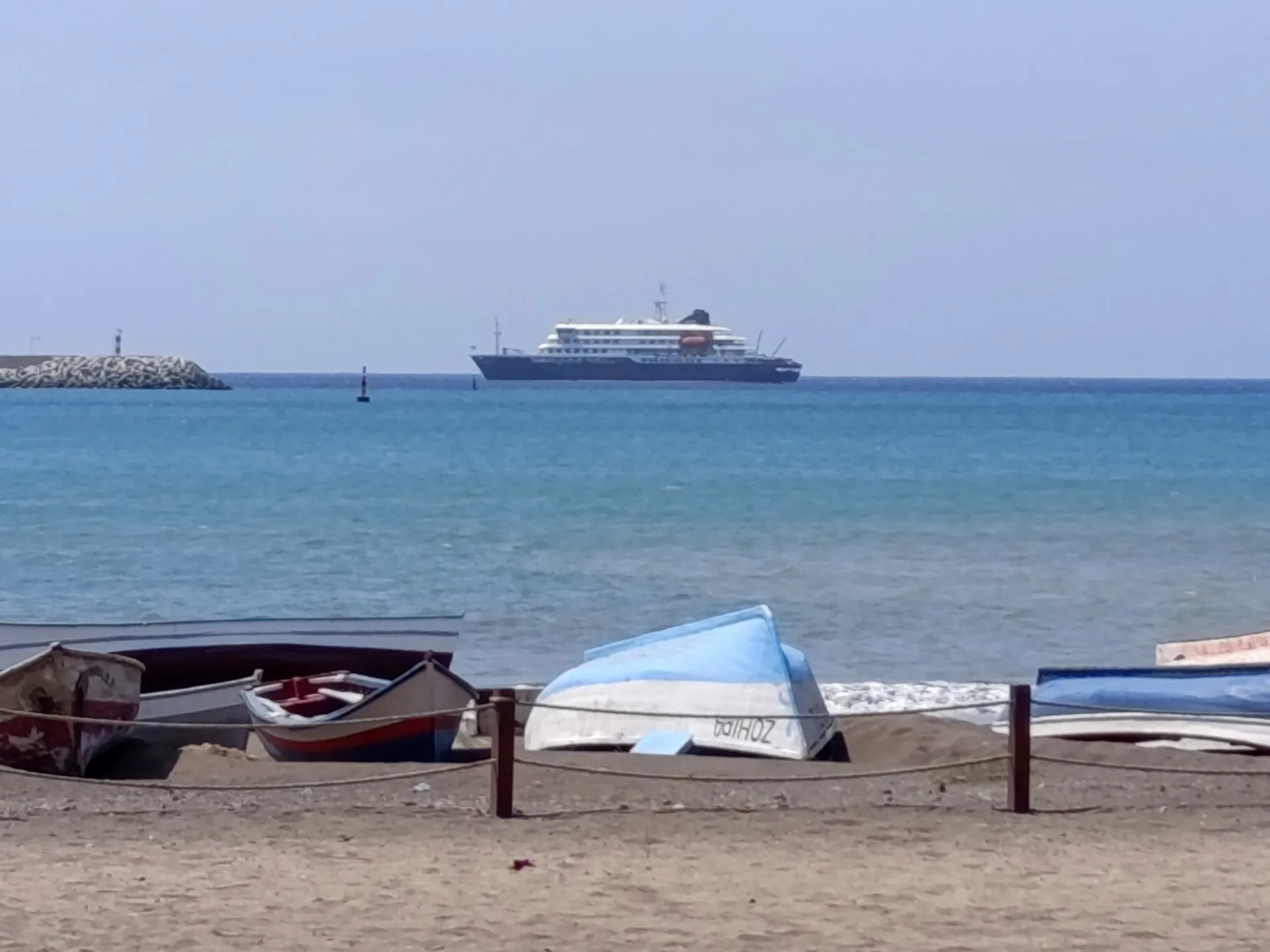
Following the recent hantavirus outbreak, passengers and crew members from more than 20 countries on the affected cruise ship, MV Hondius, required coordinated monitoring, contact tracing, medical evacuation, and public health guidance across borders.

Under the International Health Regulations (IHR), the WHO helps to facilitate communication and response efforts among countries, deploys experts, supports laboratory testing and organises emergency responses in case of an outbreak.

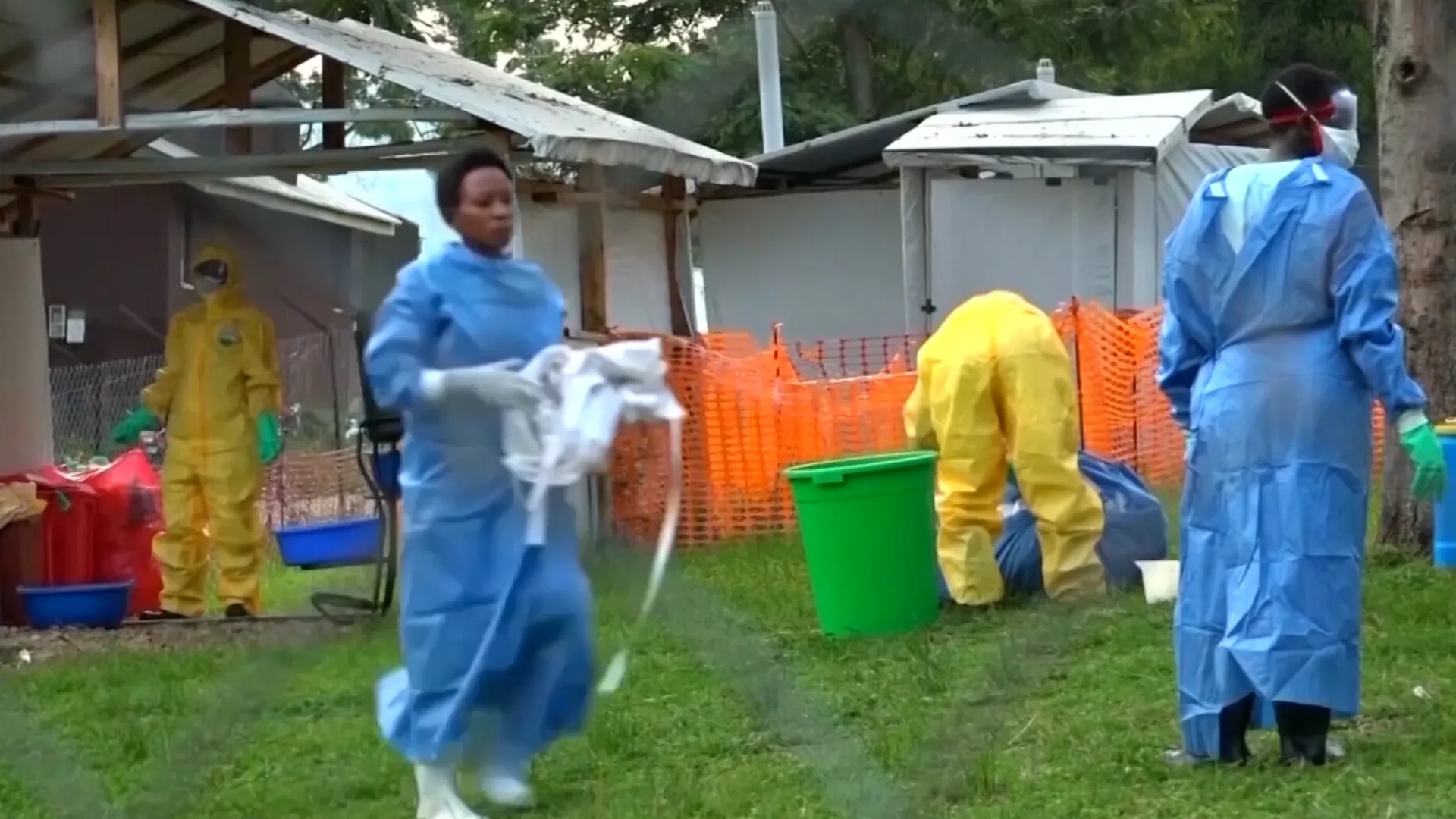
Following the Ebola outbreak in the DRC and Uganda, the WHO has deployed experts, personal protective equipment (PPE), laboratory support and emergency funding while coordinating regional preparedness efforts.

But these sorts of efforts are at risk with the current funding crisis, Krutika Kuppalli, an infectious diseases physician in Dallas, in the US state of Texas, with expertise in emerging pathogens, global health and outbreak response, told Al Jazeera.

As infectious diseases do not respect borders, rapid international coordination is essential, she added.

“Weakening WHO through funding cuts risks delaying outbreak detection, slowing response times, and reducing the world’s ability to contain emerging threats before they spread globally.”

In a statement to Al Jazeera, the International Pandemic Preparedness Secretariat (IPPS), an independent entity which helps world leaders prepare and respond to pandemics, highlighted that preparedness relies on consistent funding.

“Sustained investment and strong multilateral coordination are essential to maintain the systems, partnerships, and scientific capabilities needed before the next pandemic threat emerges,” IPPS said.

What else is hampering a global response to another pandemic?

Besides funding issues, the WHO has been struggling to get world leaders to agree on a pandemic treaty for 2026 amid a pathogen-sharing dispute.

In May 2025, it adopted a Pandemic Agreement, which sets out what it describes as a “comprehensive approach to pandemic prevention, preparedness and response that improves both global health security and global health equity”.

But UN member nations have not been able to reach a consensus on the Pathogen Access and ⁠Benefit-Sharing (PABS) aspect of the agreement – or “annex” – due to differences over ensuring every country receives equitable access to vaccines and treatment after data on disease samples have been shared.

Talks on PABS mainly focus on setting up a system to ensure countries can quickly share pathogens that could cause pandemics while receiving fair access to vaccines, tests and treatments that result from their use.

Following talks on PABS in May this year, the WHO chief urged countries to keep working with urgency and said the next pandemic was “a matter ⁠of when, not if”.

“The PABS annex is the last piece of the puzzle not only for the Pandemic Agreement,” he added.

Kuppalli told Al Jazeera that getting agreement on this is crucial, as international cooperation is essential during emerging outbreaks.

“Countries must rapidly share pathogen samples, genomic sequencing data, and epidemiologic information so diagnostics, vaccines, and therapeutics can be developed quickly,” she said.

“Delays or political disputes over information sharing can cost valuable time in the early stages of an outbreak, when containment is most possible,” she warned.

Why is antivaccine sentiment growing?

During the COVID-19 pandemic, when the US and a handful of other countries began rolling out coronavirus vaccines, many people resisted the vaccines, fearing adverse reactions as social media was flooded with misinformation about their safety and purpose.

According to a July 2025 report in The BMJ (formerly the British Medical Journal), antivaccine sentiment among the leadership of US health agencies has also been on the rise. Robert F Kennedy Jr, US health secretary, is among those leaders who often promotes unverified claims about the dangers of vaccines and also opposed the COVID vaccine.

In the report for the BMJ, authors Anna Kirkland and Scott Greer argued that if health agencies are led by such people, it will “likely mean that vaccination information campaigns are reduced, vaccine hesitancy increases, insurance coverage for vaccinations is limited, and public sector capacity to vaccinate is reduced”.

“Research money will be wasted on investigating already debunked links between autism and vaccination, while vaccination infrastructure, such as vaccination programmes run by local governments, will be eroded,” they added.

This is a major issue because public trust is critical during outbreaks, Kuppalli said.

“If large portions of the population reject vaccines or public health guidance, it becomes much harder to control transmission, protect healthcare systems, and reduce deaths,” she said.

“Equally concerning are funding cuts to vaccine research and development. Pandemic preparedness depends on investing in vaccines before a crisis occurs, not after,” she added.

Last August, the US Department of Health and Human Services (HHS) cancelled about $500 million in contracts and grants dedicated to mRNA vaccine development. These cuts affected 22 research initiatives and clinical trials focused on emerging pathogens, pandemic flu, respiratory syncytial virus (RSV), and COVID-19 boosters, according to Harvard University’s TH Chan School of Public Health.

Kuppalli said the development of mRNA vaccines targeting H5N1 avian influenza is an important effort in preparing for the possibility of a pandemic.

“Reductions in funding for these types of programmes risk slowing scientific progress, limiting manufacturing readiness, and leaving the world less prepared when the next outbreak emerges,” she said.

Is the world economically prepared for a pandemic?

Amid antivaccine movements and funding cuts, the current state of the world economy is also making it challenging for world leaders to prepare a pandemic response.

The US-Israel war on Iran has resulted in a sharp rise in oil and gas prices, which has in turn upended the world economy. High fuel costs have disrupted supply chains and international travel, resulting in a spike in the cost of medicines. In the United Kingdom, for example, pharmacies are charging 20 to 30 percent more for over-the-counter medicines. In India, chemists are reporting price rises of common painkillers of as much as 96 percent.

“Wars and economic pressures also strain supply chains, divert government resources, displace populations and weaken already fragile health systems. These all increase the risk of outbreaks spreading unchecked,” Kuppalli warned.

“Emerging infectious diseases are becoming more frequent and more complex, yet many countries are reducing investments in preparedness rather than strengthening them. The result is a growing mismatch between the scale of the threat and the resources available to respond,” she said.

IPPS told Al Jazeera that pandemics and disease outbreaks have devastating economic consequences. “In 2020 alone, the global economy contracted by around 3 percent of GDP, representing trillions of dollars in lost output, alongside widespread job losses and trade disruption.”

“Sustained investment in pandemic preparedness and response (PPR) can help prevent such losses by ensuring that vaccines, therapeutics, and diagnostics are ready to deploy rapidly when new threats emerge,” IPPS said.

Investing in research and development during peacetime ensures that when the next pandemic threat arises, the world has products and systems in place to respond quickly, protect lives, and avoid the economic losses experienced during COVID-19, it added.

“Sustained and diversified funding for pandemic preparedness is not just a health priority; it is also an economic safeguard.”

Has there been any progress at all since COVID-19?

“The pandemic taught all of us many lessons, especially that global threats demand a global response,” Ghebreyesus said in February, six years after the COVID-19 pandemic hit. “Solidarity is the best immunity,” he added.

Besides adopting a Pandemic Agreement last May, in 2022, the WHO launched a fund in collaboration with the World Bank. As of February this year, the fund has “provided grant funding” totalling more than $1.2bn, the WHO says. It has “helped catalyse an additional $11bn that has so far supported 67 projects in 98 countries across six regions, to expand surveillance, lab networks, workforce training and multi sectoral coordination”, it adds.

In 2023, the WHO also set up the Global Health Emergency Corps “in response to the gaps and challenges identified during the COVID-19 response”. The Corps mainly supports countries experiencing public health emergencies “by assessing emergency workforce capacities, rapidly deploying surge support, and creating a network of emergency leaders from multiple countries to share best practices and coordinate responses”.

As a result of all this, Kuppalli said, there are reasons to be hopeful.

“One of the clearest lessons from recent outbreaks is that the global scientific and public health community can collaborate remarkably quickly when faced with an urgent threat,” she said.

She noted how during COVID-19, scientists around the world rapidly shared genomic sequences, clinical data and research findings in real time.

“The development of highly effective COVID-19 vaccines in less than a year was a historic scientific achievement and demonstrated what is possible when there is political will, funding, international cooperation, and regulatory flexibility,” she said.

“In addition, advances in vaccine platforms, particularly mRNA technology, mean we now have the capability to design and begin producing candidate vaccines much faster than in the past,” she explained.

“While many challenges remain, including funding, misinformation, and geopolitical tensions, the scientific progress made over the last several years has unquestionably improved our ability to detect emerging threats and develop medical countermeasures more rapidly than ever before,” she added.
Source link

Will the latest Ebola outbreak in DR Congo and Uganda spread further? | Health News

The World Health Organization declares the epidemic a global health emergency.

It’s a global health crisis – not a pandemic.

But the World Health Organization is warning that the Ebola outbreak in the Democratic Republic of the Congo and neighbouring Uganda could be much larger than what has been detected so far.

The global health body is advising countries to activate national disaster mechanisms and introduce cross-border and internal screening.

Presenter: James Bays

Guests:

Ariel Kestens – Head of the Kinshasa delegation, International Federation of Red Cross and Red Crescent Societies

Dr Margaret Harris – Lecturer at the United Nations Institute for Training and Research

Dr Ahmed Ogwell Ouma – Former deputy director-general of the Africa Centres for Disease Control and Prevention

Source link

DRC struggling to contain Ebola outbreak as cases spread | News

NewsFeed

The Democratic Republic of Congo has faced repeated Ebola outbreaks, but insecurity in the eastern part of the country is making this most recent outbreak difficult to control.

Neighbouring countries have already reported some cases, and the World Health Organization has said the outbreak’s real impact is yet to be seen.
The Democratic Republic of Congo has faced repeated Ebola outbreaks, but insecurity in the eastern part of the country is making this most recent outbreak difficult to control.

Neighbouring countries have already reported some cases, and the World Health Organization has said the outbreak’s real impact is yet to be seen.
Al Jazeera’s Hamza Mohamed explains.

Source link

WHO declares Ebola outbreak in DRC a global health emergency | World Health Organization News

An Ebola outbreak caused by the rare Bundibugyo strain has killed dozens in Democratic Republic of the Congo and is spreading into Uganda, raising fears of regional transmission. Health officials say instability and shared borders are complicating containment efforts as the World Health Organization declares a global health emergency.

Source link

Abu-Bilal al-Minuki: ISIL’s shadow commander in West Africa | ISIL/ISIS News

The presidents of Nigeria and the United States have announced the killing of Abu-Bilal al-Minuki, described as the second-in-command of ISIL (ISIS).

Donald Trump first made the announcement in a social media post on Friday, without disclosing when or where the joint Nigerian-US military operation happened.

On Saturday, Nigerian President Bola Tinubu said in a statement that al-Minuki, also known as Abu-Mainok, was killed “along with several of his lieutenants” during a strike on his compound in the Lake Chad Basin.

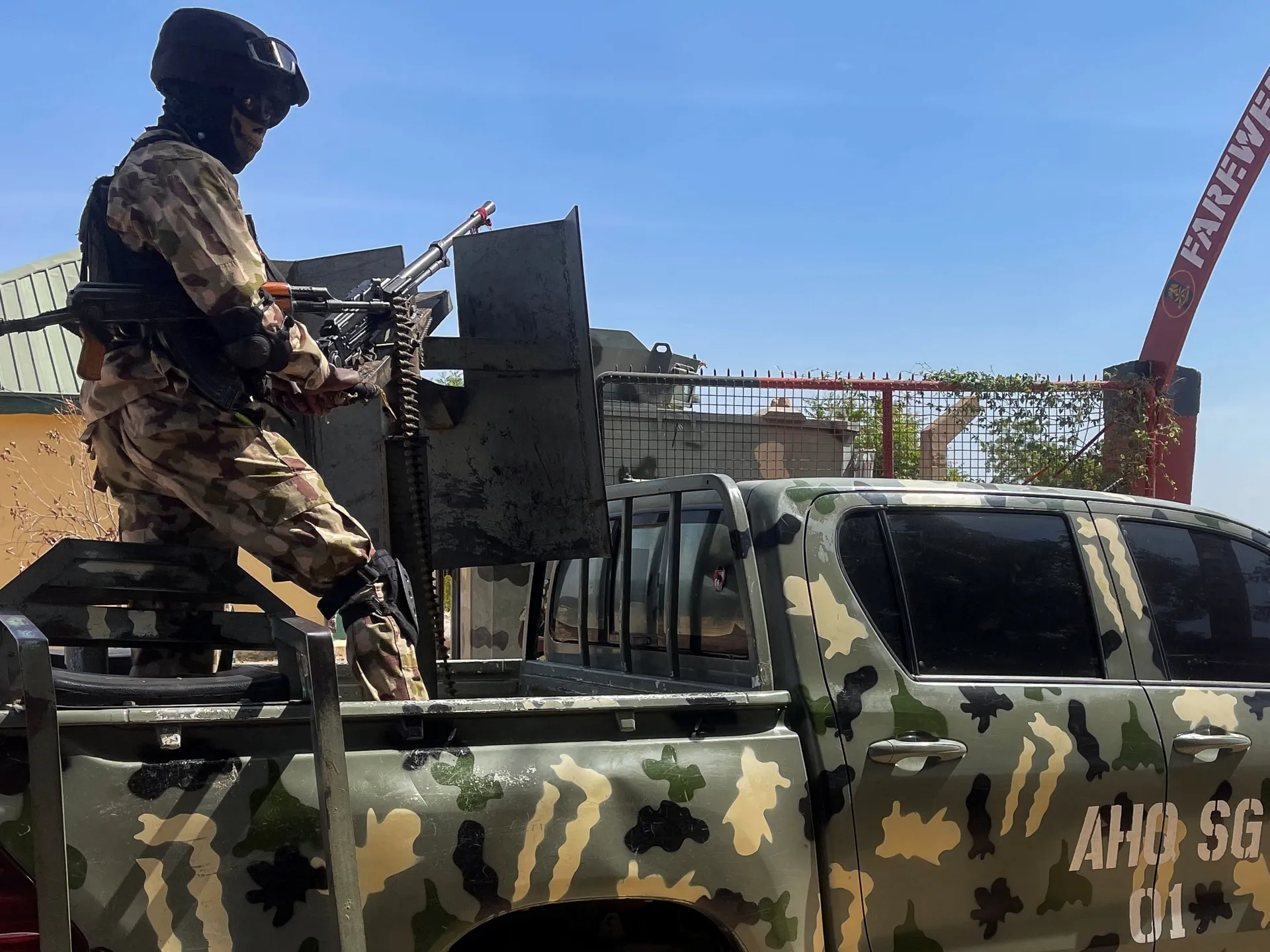
The Nigerian army described it as “a meticulously planned and highly complex precision air-land operation” carried out on Saturday between midnight and 4am (23:00 to 03:00 GMT) in Metele, in Borno state in northeast Nigeria.

Borno has been the epicentre of a long-running campaign by the Boko Haram armed group and its splinter faction, the Islamic State West Africa Province (ISWAP), which is linked to ISIL.

Who was al-Minuki?

Little is publicly known about al-Minuki, who had been under US sanctions since 2023.

Before pledging allegiance to ISIL in 2015, al-Minuki was a prominent Boko Haram leader, according to the Nigerian army.

An army statement described him as a “key” operational and strategic figure who provided guidance to ISIL entities outside Nigeria on media operations, economic warfare and weapons manufacturing.

“His death removes a critical node through which ISIS coordinated and directed operations across different regions of the world,” the army said.

It added that al-Minuki oversaw ISIL-linked operations across the Sahel and West Africa, including attacks against “ethnic and religious minority communities”. In 2018, he was linked to the kidnapping of more than 100 schoolgirls in Dapchi, in northeastern Nigeria’s Yobe state.

Emerging power

Al-Minuki is believed to have risen through the ranks of ISWAP following the disappearance of veteran commander Mamman Nur in 2018.

His reported ability to operate discreetly and avoid public attention helped him maintain influence over operations, while evading detection by regional and international security forces.

Cheta Nwanze, chief executive of the Lagos-based advisory group, SBM Intelligence, said al-Minuki had previously been declared killed in 2024 after a military operation in Kaduna state.

“That earlier announcement did not produce a lasting degradation of ISWAP’s capabilities,” he told Al Jazeera, warning that eliminating a single commander may have a limited impact.

Nwanze said the group will be able to recover as long as a growing “ransom economy” in Nigeria – which raised some $1.66m between July 2024 and June 2025, according to an SBM intelligence report – “remains intact”.

“The ultimate tool for control is the man on the ground with a gun, and the ultimate backing for that man is a functional social contract, which sadly Nigeria does not have,” he said. “Until the economic logic that feeds these groups is disrupted, the cycle will continue.”

Experts say leaders such as al-Minuki have been central to coordination between local fighters and ISIL’s broader network, but are not irreplaceable due to the group’s decentralised command structure.

“The killing of al-Minuki will disrupt ISWAP operationally in the short term,” Alex Vines, the Africa programme director at the European Council on Foreign Relations, told Al Jazeera.

“ISWAP has proven resilient to leadership losses, suggesting this killing will not be strategically decisive on its own.”

‘Inclusive governance reforms’

ISWAP has recently intensified attacks along the Nigeria-Cameroon border, targeting military outposts and humanitarian convoys.

These operations are seen as part of a deliberate effort to consolidate territory and demonstrate the group’s continued relevance despite ongoing pressure, including after Trump accused Nigeria of not doing enough to protect Christians in the country’s north from attacks.

The Nigerian government has rejected the claim, insisting that Muslims are also being targeted by armed groups. In recent months, dozens of US troops have been deployed to Nigeria to help in the fight against armed groups by providing intelligence sharing and technical support.

Tinubu said Nigeria “appreciates” the partnership with the US “in advancing our shared security objectives,” adding that he looked forward “to more decisive strikes against all terrorist enclaves across the nation”.

Vines said al-Minuki’s killing was “a tactical win” for the Tinubu administration, but ISWAP remains a “serious security concern”.

As for the US, eliminating al-Minuki is likely to be framed as a victory against ISIL’s Africa network. It will also reinforce Nigeria’s importance “as a key security partner and a reminder that bilateral relations are much better than a year ago”, Vines told Al Jazeera.

Nwanze said the joint nature of the strike signalled a deepening of US‑Nigeria security cooperation, but the collaboration “will face limits”.

“Washington’s willingness to engage is likely contingent on narrow counter‑terrorism objectives, not on a wholesale commitment to rebuilding Nigeria’s fractured security architecture,” he added.

Mubarak Aliyu, a political and security risk analyst, called the elimination of al-Minuki “a remarkable operational success”. He stressed, however, that “broader, inclusive governance reforms remain fundamental to solving the long-term security challenges in the wider region”.

Source link

Zimbabwe’s diaspora reshapes real estate and farming investment trends | Features

Harare, Zimbabwe – Zimbabwe’s real estate and farming sectors are seeing a surge in diaspora-driven investment, with two young content creators quietly emerging as unexpected influencers shaping the trend.

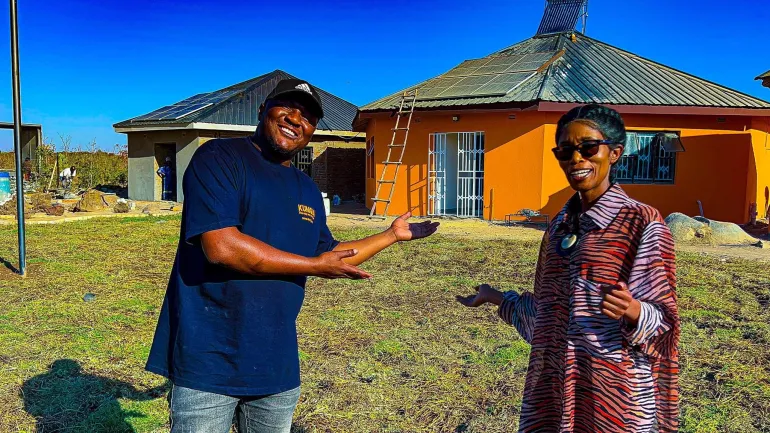
Kundai Chitima, 31, and Kelvin Birioti, 20, each running their own social media channel, have built followings that seem to influence a growing number of Zimbabweans abroad considering return or investment.

On YouTube and Instagram, they share short videos and posts highlighting opportunities in Zimbabwe. Their popular content ranges from property tours and agricultural tips to market trend analysis.

For some in the diaspora, decisions about returning or investing increasingly appear to be shaped less by official narratives and more by social media content offering on-the-ground perspectives of life in Zimbabwe.

One of those influenced is Catherine Mutisi, who spent 17 years living in the United Kingdom working as an accountant. During that time, she had already begun investing in Zimbabwe, building two houses, buying a small plot and starting a business.

She said her thinking shifted after coming across Birioti’s content during construction.

“Gradually, my mind and plans shifted from just visiting Zimbabwe towards wanting to permanently relocate,” she said.

Mutisi said earlier narratives about Zimbabwe had made her cautious, but online content presented a different perspective.

“Previously, I was just building my houses for my family to get some money. But after watching the videos, my eyes opened,” she told Al Jazeera.

Her experience is not isolated. Both Chitima and Birioti say they hear similar accounts from the Zimbabwean diaspora reassessing their long-term plans.

UK-based Zimbabwean Nyashadzashe Nguwo, an Africa market entry and global expansion adviser, said many people like Mutisi are relocating to Zimbabwe due to what he described as a combination of emotional and lifestyle-driven factors.

“There’s a strong desire among many in the diaspora to reconnect with their roots and contribute meaningfully to national development. For some, the lower cost of living and the opportunity to build something impactful at home outweigh concerns about economic instability,” Nguwo told Al Jazeera.

Two influencers

After growing up in Chinhoyi, a town in northern Zimbabwe about 120km (75 miles) northwest of the capital, Harare, Birioti sought a new start and enrolled at Zimbabwe Ezekiel Guti University (ZEGU) in Bindura. He dropped out, however, due to financial challenges and decided to move to Harare.

There, he met Chitima and began learning content creation. From the outset, he said he avoided entertainment-style content, instead focusing on what he saw as an information gap.

“I saw a gap: the diaspora community was being scammed.”

He built his platform about real estate, rural development and farming projects, often working with diaspora Zimbabweans who granted access to their properties for documentation.

Kundai Chitima worked as a teacher in South Africa before returning to Zimbabwe in 2015 [Al Jazeera]

On the other hand, Chitima worked as a teacher in South Africa before returning to Zimbabwe in 2015.

He said workplace inequality influenced his choice: “We were earning lower than my South African colleagues. I thought of my dignity and made a decision to return home.”

Chitima returned to Zimbabwe with limited resources and a pregnant wife, entering a very different economic environment from the one he had left.

Before his time in South Africa, he had worked as a civil servant. After returning, he gradually moved into content creation, beginning in 2015 and later training younger creators who went on to build large audiences.

Today, he reflects on his platform as both educational and protective for diaspora audiences.

“I receive calls from people crying … they have been scammed.”

He says his content aims to replace uncertainty with grounded information about the realities and opportunities in Zimbabwe.

Economic pressure and unemployment

While no official figures are publicly available on the exact number of Zimbabweans leaving the country or their reasons for doing so, reports from the International Organization for Migration and independent migration studies indicate consistent migration.

The Zimbabwe National Statistics Agency (Zimstat) reported a 21.8 percent unemployment rate in the third quarter of 2024, based on strict International Labour Organization definitions.

Between 76 percent and 80 percent of workers are in the informal sector, relying on subsistence or unregulated employment. Youth unemployment is particularly acute: a 2025 World Bank report estimates it at 76.8 percent.

For many young people, stable employment is increasingly difficult to secure.

Susan Sibanda, 26, describes moving between short-term and informal work.

“I have been switching from one casual job to the next,” Sibanda said.

Her experience reflects a wider labour market where formal employment continues to shrink. In recent years, several big retailers, including Choppies, Truworths, OK Zimbabwe, and N Richards, have downsized or closed operations.

Emigration pressures remain strong

Against that backdrop, migration still features heavily in the decisions of young Zimbabweans.

Sibanda said she now considers that “leaving Zimbabwe is in my best interest”.

Economist Tashinga Kajiva said the story of emigration from Zimbabwe has largely remained high, driven by a combination of push and pull factors that encourage people to seek what they see as greener pastures.

“Zimbabwe’s economy is marked by complex and, some would say, difficult dynamics. For ordinary citizens, disposable income remains low while the cost of living continues to rise. The marginal propensity to save among working-class citizens is also low, as many are living hand to mouth,” he told Al Jazeera.

Zimbabwe’s diaspora is concentrated in South Africa, the United Kingdom, Australia, Canada, New Zealand and the United States, according to government figures.

Keeping ties alive from abroad

The economic link between Zimbabwe and its diaspora remains strong.

According to real estate agents, diaspora buyers now account for a significant share

They state that up to 50 percent of high-end residential properties sold were purchased by Zimbabweans living abroad in recent years. In some regions, land prices have risen by 20–30 percent year-on-year, a surge partly attributed to diaspora buyers.

Diaspora investment is also noticeable in agriculture. Reports from the Zimbabwe Farmers Union indicate that about 10-15 percent of new farm leases over the past two to three years involve diaspora investors, with activity concentrated in Mashonaland Central and Matabeleland regions.

Remittances reached $1.7bn in 2023 and continue to rise. In 2025, Zimbabweans abroad sent $2.45bn home, with the UK and South Africa the largest sources, according to government data. A significant portion of these funds is reportedly invested in real estate, agriculture, and small businesses.

This reflects both practical necessity and emotional attachment to home, as well as a preference for investing in familiar environments, according to economists.

Still, return seems to generate mixed reactions.

Some diaspora Zimbabweans appear cautious, citing political developments and recent protests abroad over governance concerns.

For them, financial ties to Zimbabwe are still strong, but physical return remains uncertain.

With social media reshaping perceptions of life in Zimbabwe, many in the diaspora remain caught between investment opportunities and the country’s economic realities.

As content creators like Chitima and Birioti reshape how some see opportunity in Zimbabwe, domestic economic pressures appear to be pushing others away, leaving the country’s relationship with its diaspora open-ended and still evolving.

“For many Zimbabweans living abroad, investing back home is not just about profit – it’s about staying connected to their roots and shaping the future of their communities,” said Chitima.

Source link

‘The world is sounding an alarm’: Why big tech is the new colonist | Features

Istanbul, Turkiye – When investigations by Al Jazeera and other media outlets in 2024 revealed that Israeli-linked artificial intelligence (AI) systems such as Lavender and Gospel had helped generate thousands of military targets in Gaza, critics warned that warfare was entering a new era – one driven not only by soldiers and bombs, but by algorithms, data, and surveillance technology.

Then, in September 2024, thousands of pagers and walkie-talkies used by members of Hezbollah exploded in coordinated attacks in Lebanon, widely attributed to Israeli intelligence operations that had turned ordinary communication devices into weapons.

And, last year, reporting by Al Jazeera also raised concerns about the use of cloud and data infrastructure linked to major US technology companies in Israeli surveillance operations involving Palestinians.

For a growing number of scholars, economists and political thinkers, such developments reflect more than just the changing nature of conflict. They show how power in the modern world is increasingly exercised not just through military force, but through technology, finance and control over information.

That argument has revived broader debates around decolonisation – a term historically associated with the dismantling of European empires after World War II, when countries across Asia, Africa and the Middle East gained formal independence.

But many proponents of what is termed “decolonial theory” – a school of thought arguing that colonial-era systems of power and hierarchy still shape modern politics, economics and knowledge – argue that colonial power structures never fully disappeared. Instead, they evolved, embedding themselves in global financial systems, technology platforms, media networks and even the production of knowledge itself.

Dependence of Global South countries on Western technology, digital infrastructure and global markets can create new forms of political and economic vulnerability, particularly across the Global South.

“A generation may have grown up believing they had never experienced colonialism or exploitation,” Esra Albayrak, board chair of the NUN Foundation for Education and Culture and daughter of Turkish President Recep Tayyip Erdogan, told Al Jazeera during the World Decolonization Forum in Istanbul on May 11-12.

“Yet, mentally, they may still be living under colonial influence.”

The war in Gaza marked a turning point, Albayrak says, shining a spotlight on how international principles are not applied equally. Global institutions have so far failed to stop what many countries and rights groups have described as genocide against Palestinians.

“The world is sounding an alarm, and we can no longer afford to remain indifferent to it,” she said.

A techno-feudal era

Albayrak argues that a handful of technology companies are emerging as new, invisible centres of power, shaping how information is produced, circulated and consumed in the digital age.

She describes the digital sphere as the realm of what she calls “future colonialism”, warning that AI systems trained largely on Western-centric data risk reinforcing existing global inequalities.

“When AI systems are run by those tech companies and trained on Western sources, they risk carrying the hierarchies of the past into tomorrow’s digital world, as they now have personalised data, suppressing identity,” Albayrak said.

By this, she means that most major AI models are still trained largely on English-language and Western-produced data – a pattern critics say risks sidelining non-Western languages, cultures and perspectives.

On social media platforms, algorithms tend to amplify some conflicts while rendering others nearly invisible, effectively shaping what billions of users see, discuss and remember online.

Walter D Mignolo, professor at Duke University, argues that while what we historically see as “formal colonialism” may have largely ended, systems of Western dominance continue through economics, culture, technology and knowledge production.

“Coloniality is not over. It is all over the world,” Mignolo said, arguing that modern ideas of development and progress often have the effect of pressuring societies to conform to Western norms.

Rather than simply resisting those systems, he said, societies must find a way to “re-exist” by rebuilding intellectual and cultural autonomy outside dominant global frameworks.

Colonisers in the financial age

The March 2026 Global Debt Report by the Organisation for Economic Co-operation and Development (OECD) reveals that 44 countries face severe debt burdens, often aggravated by global conflicts, forcing some governments to spend more on interest payments than on health or education.

This is not a new phenomenon, as developing countries have been labouring under the weight of foreign debt for decades.

But British political economist and author Ann Pettifor told Al Jazeera that modern forms of domination are now increasingly embedded not in empires or nation-states, but in financial systems operating beyond democratic oversight.

Pettifor points to the growing influence of “shadow” banking networks – financial institutions operating largely outside traditional banking regulations – and giant asset managers such as BlackRock, which manages $13 trillion in assets.

Much of the global financial architecture now functions largely outside the regulatory control of governments, she says, including that of Western states themselves.

“This is not a state colonising other states,” Pettifor said. “This is the financial system colonising the whole world, including my country and the US.”

She argues that elected governments increasingly struggle to control key economic realities – from energy prices to commodity markets – because those systems are dictated by global financial actors operating far beyond public accountability.

In Nigeria, for example, Pettifor says, efforts to expand domestic refining capacity continue to face pressure from international financial institutions and global energy markets to keep fuel prices tied to global markets and maintain reliance on imported refined oil products, despite its vast oil reserves.

Coordinated cooperation between developing nations may be necessary to challenge the dominance of Western-centred financial systems, Pettifor says, pointing to growing efforts across parts of West Africa to expand regional refining capacity and reduce dependence on imported fuel. Yet such ambitions can also leave critical sectors dependent on the decisions and influence of a small number of powerful private actors.

Global financial markets, algorithm-driven platforms, and foreign-controlled digital infrastructure increasingly define everyday life – from fuel and food prices to the information people consume online and the technologies governments and societies depend on, observers say.

A ‘mastery complex’

As wars become increasingly influenced by AI, digital infrastructure and financial dependency, debates around colonisation are focusing less on territorial control and more on who influences energy prices, lending systems, access to technology and the flow of information across borders, observers say.

Albayrak draws a parallel between today’s debates around technology and global power and Rudyard Kipling’s 1899 poem “The White Man’s Burden”, published as the US took control of the Philippines following the Spanish-American War. The poem framed colonial expansion as a moral obligation to “civilise” other societies rather than an exercise of domination.

Albayrak said such traces of “mastery complex” still survive today, though in different forms – not necessarily through military occupation, but through technological, financial and informational influence.

But what the world really needs, she argues, is a global order built not on hierarchy, but on shared responsibility.

“The burden should belong to humanity collectively.”

Source link

Could South Africa’s Ramaphosa be impeached over ‘cash-in-sofa’ scandal? | Corruption

South Africa’s President Cyril Ramaphosa has refused to resign over a “cash-in-sofa scandal” that continues to haunt his presidency.

Ramaphosa, who addressed the nation on Monday to declare his intention to remain in his post, is set to face a multi-party impeachment committee, which will investigate allegations that he covered up a 2020 break-in at his private ranch and the theft of more than $500,000, concealing the incident from police and tax authorities.

The committee’s findings could spell his impeachment; however, parliament has not provided a timeframe for the investigation, which has yet to commence.

Analysts say the scandal, which has been dubbed “Farmgate”, has been particularly damaging for a president who rode to power in 2018 on an anticorruption mandate, after the much-criticised presidency of Jacob Zuma. Now, eight years later, the case of the cash found stuffed in a sofa at his game ranch could be what takes Ramaphosa down.

Can the South African president survive? Here is what we know.

ramaphosa
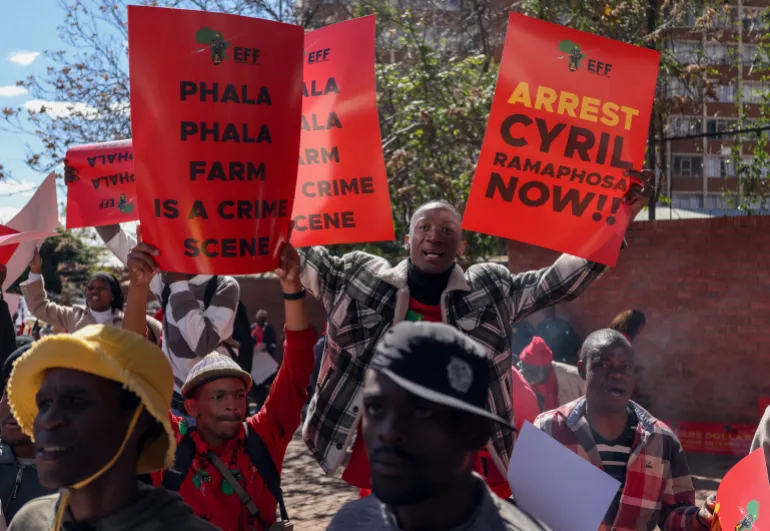
Supporters of the Economic Freedom Fighters (EFF) carry placards outside South Africa’s Constitutional Court, after the court ruled on whether the parliament failed to hold President Cyril Ramaphosa to account over the ‘Farmgate’ scandal, involving allegations that foreign currency was hidden at his Phala Phala game farm, in Johannesburg, South Africa, on May 8, 2026 [Siphiwe Sibeko/Reuters]

What’s the scandal all about?

In February 2020, burglars allegedly broke into Ramaphosa’s luxury private ranch, Phala Phala, in Limpopo province, South Africa, and stole $580,000. The cash was said to have been hidden inside furniture at the farm – hence the “Farmgate” label.

Ramaphosa has been accused of covering up the theft and keeping private efforts to trace the burglars a secret to avoid an investigation into where the money had come from – and why it was hidden in a sofa.

Corruption allegations surfaced when a former head of South Africa’s state security agency walked into a police station in 2022 and accused the president of money laundering in relation to the stolen cash.

Later that year, an independent parliamentary committee found that Ramaphosa “may have committed” serious violations and misconduct. In particular, the panel found he had failed to properly report a theft to police as required under anticorruption laws and “acted in a manner inconsistent with his office”.

At the time, the African National Congress (ANC) had a strong majority in parliament – with 230 seats out of 400. It was therefore able to reject the report and refused to open impeachment proceedings.

But the left-wing Economic Freedom Fighters (EFF) challenged this at the Constitutional Court in Cape Town, which, last week, overturned the government’s rejection of the 2022 parliamentary report and referred it to a multi-party impeachment committee for a full investigation.

ramaphosa
South Africa’s President Cyril Ramaphosa addresses the nation, after a court last week revived proceedings against him over a scandal in which thieves stole bundles of foreign cash from a sofa on his ranch, in Johannesburg, South Africa, May 11, 2026 [Siphiwe Sibeko/Reuters]

What has Ramaphosa said?

Ramaphosa has always denied allegations of corruption and maintains that the stolen cash came from selling buffalo.

Since the constitutional court’s ruling last week, Ramaphosa has been facing renewed calls for his resignation, mostly from opposition leaders. In a televised address on Monday, the president refused to step down.

“While there have been calls in some circles that I should resign, nothing in the Constitutional Court judgement compels me to resign my office,” he said.

“Since a criminal complaint was laid against me in June 2022, I have consistently maintained that I have not stolen public money, committed any crime, nor violated my oath of office,” Ramaphosa said in his address, adding that he has cooperated in all investigations.

The president rejected the 2022 report from the independent panel again, saying: “The complaints against me are based on hearsay allegations. No evidence, let alone sufficient evidence, has been presented to prove that I committed any violation, let alone a serious violation of the Constitution or law, or serious misconduct as set out in the Constitution.”

If the committee does find enough evidence against him, it could direct him to be impeached.

It is unclear how long this will take, however. Ramaphosa has pledged to seek a judicial review of the report’s contents, which, in turn, could delay the investigation of the impeachment committee.

ramaphosa
Judges take their seats at South Africa’s Constitutional Court before the ruling on whether the parliament failed to hold President Cyril Ramaphosa to account over the ‘Farmgate’ scandal, involving allegations that foreign currency was hidden at his Phala Phala game farm, in Johannesburg, South Africa, May 8, 2026 [Siphiwe Sibeko/Reuters]

What is the process for impeachment?

If a president is found to have violated the constitution or the law, or is unable to perform the duties of office, South Africa’s National Assembly has the constitutional authority to remove him or her.

Beyond the parliamentary investigation that will now begin into the Farmgate scandal, and which can trigger a vote on impeachment, as well, any member of parliament may introduce a motion seeking the president’s removal. The speaker of the National Assembly would then refer the motion to an independent panel of legal experts to determine whether sufficient evidence exists to proceed.

If this panel decides there is a case against the president, lawmakers must vote on whether to begin impeachment proceedings. After this, a specially constituted impeachment committee is established to carry out a detailed investigation into the allegations. This is separate from the investigation beginning now and could take several months.

Once that committee recommends the removal of the president, parliament holds a final vote to impeach the president. Under Section 89 of the constitution, a two-thirds majority is required – meaning at least 267 lawmakers must vote in favour of removal in the 400-seat National Assembly.

ramaphosa
Supporters of the Economic Freedom Fighters (EFF) carry placards outside South Africa’s Constitutional Court, on the day the court ruled that parliament failed to hold President Cyril Ramaphosa to account over the ‘Farmgate’ scandal, in Johannesburg, South Africa, May 8, 2026 [Siphiwe Sibeko/Reuters]

Are there other ways to remove Ramaphosa?

Yes, the South African president can be removed from his job via a no-confidence vote in parliament.

Any member of the assembly can propose the no-confidence motion, and it only requires a simple majority of more than 50 percent.

Ramaphosa would need support from coalition partners to survive a no-confidence vote, however. This has already been proposed by at least two opposition parties in parliament.

Another way could be if his ANC party turns against him, as it did with the last president, Zuma, who came in for years of corruption allegations and was finally forced to resign in 2018.

FILE - South African President Cyril Ramaphosa raises his hand as he is sworn is as a member of Parliament ahead of an expected vote by lawmakers to decide if he is reelected as leader of the country in Cape Town, South Africa, June 14, 2024. (AP Photo/Jerome Delay, file)
South African President Cyril Ramaphosa raises his hand as he is sworn in as a member of parliament before an expected vote by lawmakers to decide if he is re-elected as leader of the country, in Cape Town, South Africa, June 14, 2024 [Jerome Delay/AP]

How strong is Ramaphosa’s position?

Ramaphosa is not only the president of South Africa, but also the leader of its most popular party, the ANC. Nelson Mandela was the ANC’s first Black president after apartheid ended in 1994.

In 2024, the ANC stunningly lost its majority in parliament for the first time following more than three decades in power. Today, the ANC holds 159 of 400 seats in the national assembly, or about 40 percent of seats – and Ramaphosa is governing in a coalition with the Democratic Alliance, which has 87 seats, along with other smaller parties.

But Chris Ogunmodede, an independent analyst of African politics, security, and international affairs, based in Lagos, Nigeria, said Ramaphosa would likely survive any impeachment attempts, “simply because of the arithmetic”.

“His numbers in the parliament virtually guarantee that impeachment will not happen,” Ogunmodede told Al Jazeera.

“It hasn’t been easy, but there is a government that seems to be functional and is showing some signs of reinvigoration,” Ogunmodede added. “There’s a lot of uncertainty on the part of the other coalition parties that suggests that they would much rather be on the side of caution and go with the devil they know, and preserve the government by keeping Ramaphosa in power.”

Despite this, the cash-in-sofa scandal has been damaging, he said.

And, under Ramaphosa, the ANC’s popularity has continued to slide. The party’s national vote share fell from 57.5 percent in the 2019 election to 40.2 percent in the 2024 election, marking its worst performance since the end of apartheid.

The South African economy has shown some signs of improvement, however, and given the Ramaphosa government “something to show for the time that it’s been in power”, said Ogunmodede.

Yet the South African government still faces long-term structural concerns about the economy, the country’s institutions, corruption, crime and other issues, the analyst added.

On the back of underlying anti-incumbency, Ogunmodede said the top court’s ruling on the cash-in-sofa scandal “has resurrected many concerns that South Africans have had about the president and his party, and the political institutions of the country more broadly”.

Source link

Africa’s richest man plans new Mombasa oil refinery: Why this matters | Business and Economy News

After successfully launching Nigeria’s only operational oil refinery in 2024, billionaire businessman Aliko Dangote has set his sights on East Africa as the next location for another mega refinery project, according to recent reports.

It comes as African countries are actively seeking ways to make energy more secure, following huge global disruptions amid the US and Israel’s war on Iran and Tehran’s subsequent closure of the Strait of Hormuz, through which about 20 percent of the world’s oil and natural gas is shipped.

Recommended Stories

list of 3 itemsend of list

Dangote, Africa’s richest man, appeared to be one of the winners from this fallout when his newly operational refinery, located in Nigeria’s commercial Lagos State, began selling large volumes of crude oil across the continent as the war on Iran escalated in March and global oil prices soared.

At present, West, South and East Africa rely primarily on importing refined petroleum products from the Middle East, meaning they are highly vulnerable to disruptions there.

Neighbours of Nigeria – Cameroon, Togo, Ghana and even Tanzania, further to the east – are among the countries that have turned to Nigeria as supplies from the Middle East dry up.

By the end of March, the refinery, which has the capacity to produce 650,000 barrels per day (bpd), reported it was also receiving orders from beyond the continent, especially for severely scarce jet fuel as hundreds of flights were cancelled across regions.

Supply from Dangote’s refinery has cushioned the impact of the war in terms of fuel supply for Nigeria and neighbouring countries, analysts say.

Nigeria is Africa’s largest oil producer, and the $19bn project in Lagos is currently the world’s largest single-train refinery, meaning it employs a single processing line rather than multiple units. But it hit full production capacity in February 2026, the same month the war with Iran started.

Nigeria has no functional state-owned refinery, so Dangote’s refinery is now positioning the country to be a net exporter of jet fuel and diesel.

Here’s why more refining capacity in Africa matters for the continent:

Dangote
Petroleum trucks line up at the gantry inside the Dangote Industries oil refinery and fertiliser plant site in the Ibeju Lekki district of Lagos, Nigeria, March 2, 2026 [Sodiq Adelakun/Reuters]

What is Dangote’s plan for an East Africa refinery?

In April, Kenya’s President William Ruto announced that East African countries were in talks to build a joint oil refinery at Tanzania’s Tanga port, which would have a similar capacity to Dangote’s Lagos operation.

“We do not want to be held hostage any more by the Strait of Hormuz,” Ruto said at a Nairobi business event in April, which Dangote was present at.

“We do not want to be held hostage by wars that are started by other people. We have our resources here, and we are saying we are going to use our African resources to industrialise our region.”

In an interview with the Financial Times on Sunday, however, Dangote said he would prefer to build the new operation in Kenya rather than Tanzania.

“I’m leaning more towards Mombasa because Mombasa has a much larger, deeper port,” the billionaire told the UK newspaper.

“Kenyans consume more. It’s a bigger economy,” he said, adding that “the ball is in the hands of President Ruto … Whatever President Ruto says is what I’ll do.”

He has projected construction costs of between $15bn and $17bn.

But venturing into East Africa, which has a very different commercial landscape from West Africa, could prove a challenge, analyst Dumebi Oluwole of Lagos-based intelligence firm Stears told Al Jazeera.

“Dangote has proven it [his operation] can build at scale,” she said. “The East African test will be whether it can also navigate the political and logistical landscape of a fragmented, multi-country market.”

Why aren’t African countries already producing more oil?

Despite having sizeable crude reserves, African countries only refine about 44 percent of the total oil consumed themselves, with imports making up the rest, according to a 2022 African Union report.

The top producers of refined oil are Algeria, Egypt and South Africa. There are about 21 refineries in North Africa.

Southern Africa has another seven, while West Africa has 14. However, most refineries in the two regions are either not operating or are producing below the capacity they are equipped to.

East Africa’s only existing refinery is in Mombasa, but it stopped operating in 2013 due to a combination of slow government policies and exiting investors, who deemed it commercially unviable as a result.

There is currently no refining capacity at all in East Africa, despite the region having about 4.7 billion barrels of crude reserves, according to the African Union, mainly in Uganda, South Sudan, Kenya and the Democratic Republic of the Congo.

Kenya imported 40 million barrels of petroleum in 2025. It regularly buys oil from the UAE, Saudi Arabia, India and Oman, all of which have been hampered by Iran’s closure of the Strait of Hormuz.

Nigeria itself is Africa’s biggest net crude producer with a 1.5 million to 1.6 million bpd capacity. The country has not refined meaningfully since 2019.

What difference will local refineries make for African countries?

Exporting most of its crude to then import refined products is expensive and puts Africa on the back foot, analyst Oluwole said.

More oil refined on the continent would mean lower petrol pump prices, lower transport costs, and more energy available for people and businesses, in theory. It would also mean greater access to by-products like fertilisers for farmers, for example, or petrochemicals for manufacturers.

“Dangote has demonstrated that a viable, scalable, intra-African energy supply option is possible – that proof of concept matters enormously,” said Oluwole.

“It reflects a growing continental conviction that Africa can provide for itself, and that this is no longer wishful thinking,” she added.

In Nigeria’s case, Dangote’s refinery is yet to ease pressures, though. Local airlines, for example, have complained about having to pay high prices for jet fuel even with improved local supplies. Analysts say that could be because Nigeria’s government removed fuel subsidies in 2023. Bureaucracy within the state oil company also forced Dangote’s refinery to import crude.

Still, the refinery is contributing to “a more transparent and competitive market”, Oluwole said, adding that results should eventually show.

Other countries are stepping up. Last week, Angola’s $470m Cabinda refinery began supplying domestic as well as foreign markets. The project is owned primarily by the United Kingdom’s Gemcorp Capital and has a capacity of 30,000bpd, with plans to double by the end of 2026.

Dangote’s planned refinery in Kenya, if completed, could also help to reduce East Africa’s reliance on the Middle East.

A separate, government-funded refinery project in Uganda’s Hoima region is also in the works. Authorities expect the project to be able to refine 60,000bpd when it starts operations in 2029. It will be fed by the joint Uganda-Tanzania East African Crude Oil Pipeline (EACOP), an ongoing project which will transport crude from Uganda’s Lake Albert to Tanzania’s Tanga Port.

Uganda also plans to produce diesel, jet fuel, kerosene and Liquefied Petroleum Gas (LPG).

With big plans in place, Oluwole says it’s now left to African governments to create enabling business environments for the private sector.

“Dangote has opened the door,” she said. “The question now is whether African institutions and governments will walk through it.”

Source link

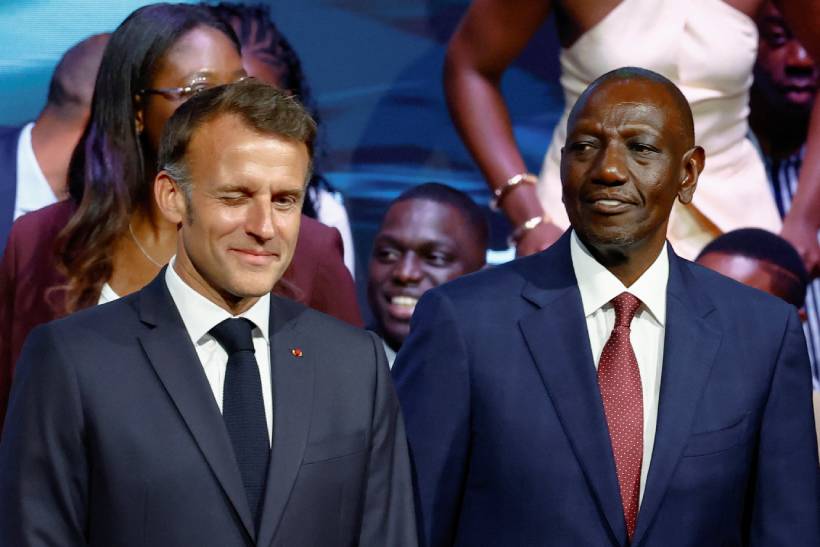
Macron and Ruto Strengthen Ties at Nairobi Africa-France Summit

The 2026 Africa France summit in Nairobi marks a significant diplomatic moment in the evolving relationship between Europe and Africa. For the first time, the summit is being held in an African country with no colonial history under France, signaling an intentional shift in symbolism and geopolitical messaging. It is also taking place against a backdrop of deteriorating French influence in parts of West Africa, where countries such as Mali, Burkina Faso, and Niger have sharply reduced engagement with Paris.

The summit reflects a broader attempt to redefine France’s role in Africa under President Emmanuel Macron and to reposition France within a more competitive global environment. At the same time, it highlights Kenya’s growing ambition under President William Ruto to present itself as a continental diplomatic hub and an economic gateway between Africa and global powers.

The convergence of these ambitions has produced a summit agenda focused on innovation, entrepreneurship, climate finance, artificial intelligence, and security cooperation. However, beneath this forward looking framing lies a more complex continuity of historical relationships, economic interests, and strategic recalibration between Africa and Europe.

Macron’s Repositioning of French Africa Policy

The summit reflects the long term evolution of Macron’s Africa strategy, which has sought to move away from traditional post colonial frameworks toward a more diversified and economically oriented engagement model. This approach emphasizes partnerships in innovation, private sector development, and strategic cooperation beyond France’s former colonial sphere.

A central feature of this policy has been an attempt to reduce France’s reliance on its traditional West African alliances while expanding diplomatic and economic ties across the broader African continent. This includes engagement with non Francophone countries and regional institutions, reflecting a recognition that France’s historical influence in West Africa is increasingly contested.

The emphasis on entrepreneurship and innovation, particularly through small business development and technology partnerships, reflects a shift toward a neoliberal development model. This model prioritizes private sector growth, investment facilitation, and startup ecosystems as drivers of economic transformation.

The Nairobi summit continues this trajectory by framing Africa France relations around innovation and growth rather than historical legacy or development aid dependency.

Kenya’s Strategic Diplomatic Positioning

For Kenya, the summit represents an opportunity to consolidate its position as a leading diplomatic and economic actor in Africa. By hosting a major international summit outside the traditional Francophone sphere, Kenya is signaling its ambition to transcend linguistic and colonial regional divisions and present itself as a neutral platform for continental and global engagement.

Under Ruto’s leadership, Kenya has increasingly adopted a development narrative centered on entrepreneurship and economic empowerment. This aligns with the broader summit theme of innovation driven growth and private sector expansion. Kenya’s domestic economic discourse, often framed around the concept of a “hustler economy,” mirrors the emphasis on small business development and market based solutions promoted in France’s external engagement strategy.

The convergence of these narratives allows both countries to present their partnership as forward looking and economically dynamic, rather than historically constrained.

Shared Policy Frameworks and Economic Priorities

A key reason the Nairobi summit bears the imprint of both Macron and Ruto is the overlap in their policy priorities. Both leaders emphasize climate finance, technological innovation, security cooperation, and private sector led development as central pillars of modern governance and international partnership.

This shared framework is particularly visible in discussions around artificial intelligence, climate initiatives, and industrial development. These sectors are presented as areas of mutual benefit, offering opportunities for investment, technological transfer, and economic growth.

However, this alignment is also strategic. It allows both sides to redefine their relationship in terms of future oriented sectors rather than historically sensitive areas such as colonial legacy or aid dependency. By focusing on emerging industries, both France and Kenya seek to establish a partnership narrative that is less politically contentious and more economically aspirational.

Historical Continuities Behind the New Partnership

Despite its modern framing, the France Kenya relationship is rooted in long standing historical interactions dating back to the post independence period. France’s early engagement with Kenya and the wider East African region was partly motivated by its broader strategy to balance British influence in Africa while expanding its own role within European and global institutions.

Kenya, in turn, has historically sought to diversify its international partnerships beyond the Commonwealth framework. Engagement with European economic structures in the early post independence period reflected a desire for greater autonomy in trade and development policy.

The current summit therefore reflects not a break from history, but a continuation of evolving pragmatic cooperation shaped by shifting global power dynamics.

Tensions Beneath Strategic Alignment

Despite the apparent convergence of interests, significant structural tensions remain between France and Kenya in areas such as climate policy, global security, and technological labor markets.

On climate change, both countries acknowledge the urgency of environmental action, but differ in priorities and implementation strategies. Kenya, highly vulnerable to droughts and environmental stress, seeks substantial climate finance and structural adaptation support. France and the broader European Union, however, often balance climate commitments with domestic energy and industrial policy considerations.

Similarly, in the field of artificial intelligence, cooperation masks underlying asymmetries. Much of the data processing and content moderation work that supports global AI systems is conducted in lower wage labor markets, including Kenya. This raises questions about value distribution and economic equity within the emerging digital economy.

In global security, divisions are also evident. Diverging responses to international conflicts, including voting patterns in global institutions, highlight differences in geopolitical alignment between African states and Western partners.

The Geopolitical Logic of the Summit

The Nairobi summit reflects a broader shift in international relations, where traditional post colonial hierarchies are being replaced by more transactional and issue based partnerships. Europe’s search for reliable global partners amid geopolitical uncertainty, combined with Africa’s growing strategic autonomy, is reshaping diplomatic engagement.

For France, Africa represents both an economic opportunity and a strategic necessity in an increasingly multipolar world. For Kenya, engagement with France offers access to investment, technology, and diplomatic visibility within global governance structures.

The summit therefore functions as both a symbolic and practical platform for redefining bilateral relations in a rapidly changing global order.

Analysis

The Nairobi Africa France summit illustrates the transformation of international partnerships from historically anchored relationships into forward looking economic and strategic arrangements. While the rhetoric emphasizes innovation, climate action, and entrepreneurship, the underlying dynamics remain shaped by long standing patterns of influence, economic asymmetry, and geopolitical repositioning.

The convergence between Macron’s and Ruto’s priorities reflects a pragmatic alignment rather than a fully equal partnership. Both sides benefit from framing cooperation in terms of emerging sectors such as artificial intelligence and green development, which carry fewer historical burdens and greater political flexibility.

However, the sustainability of this model depends on whether it can deliver inclusive economic outcomes rather than concentrating benefits among narrow elite and corporate actors. Without broader distribution of gains, the partnership risks reproducing familiar inequalities under a modern technological and developmental narrative.

Ultimately, the summit represents a transitional moment in Africa Europe relations, where historical legacies, contemporary economic interests, and future oriented strategic ambitions intersect in a rapidly evolving global system.

With information from Reuters.

Source link

Somalis rally against government-ordered evictions in Mogadishu | Protests

NewsFeed

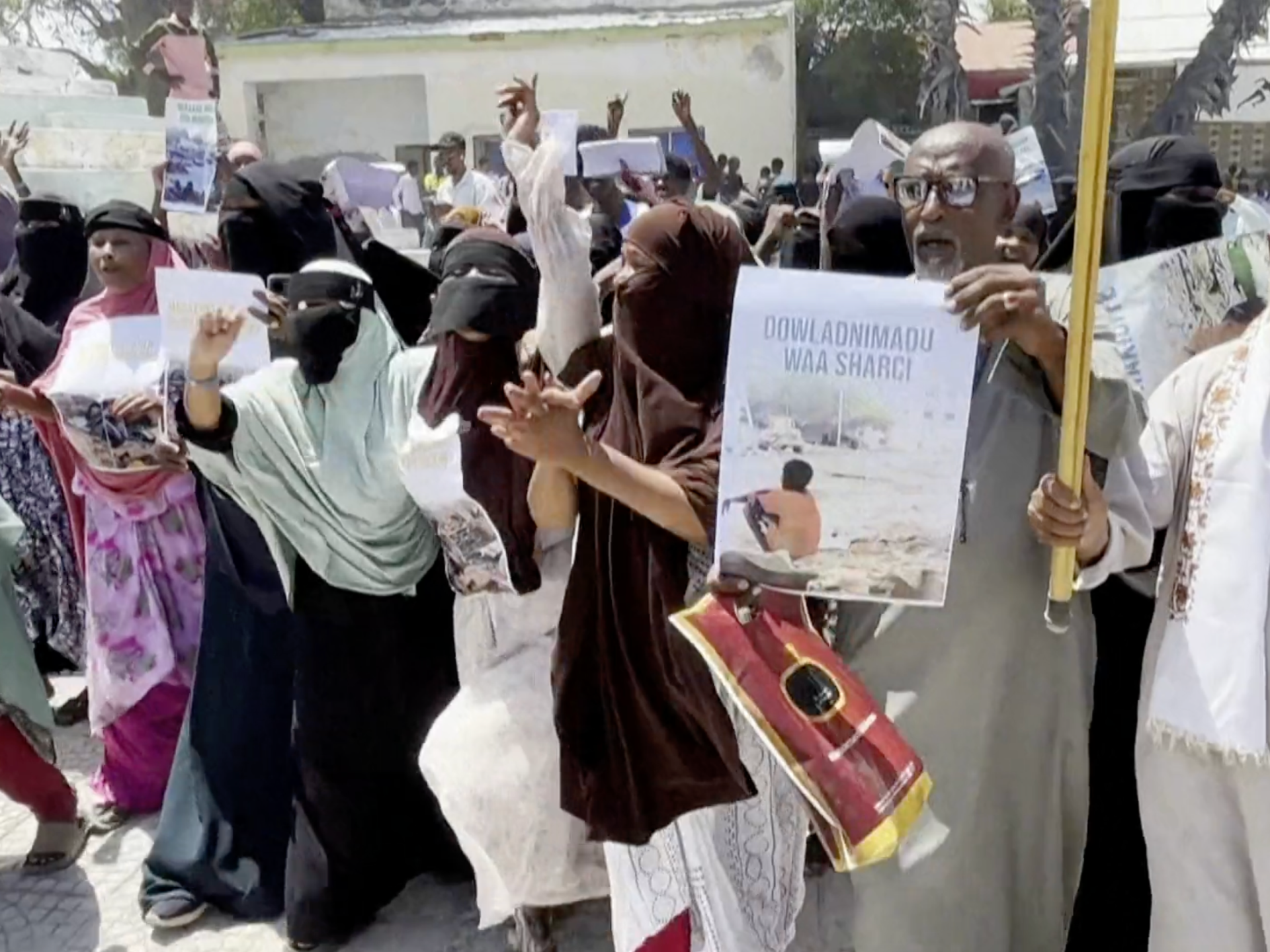
Demonstrators rallied across the Somali capital in support of families displaced by a wave of government-led home demolitions. Opposition figures, who organised the protests, say security forces shot and killed one person while trying to disperse the crowds.

Source link

Macron tours East Africa amid push to redefine France’s role in Africa | Emmanuel Macron News

Paris seeks to repair economic and security ties while countering rising anti-French sentiment across Africa.

French President Emmanuel Macron has started a tour of East Africa as Paris seeks to rebuild its influence on the continent after a series of setbacks, especially in its former West African colonies.

Macron began the three-country tour in Egypt on Saturday, which will also take him to Kenya and Ethiopia.

He will cohost a summit in English-speaking Kenya on Monday and Tuesday as France seeks to redefine its role in Africa, moving away from its postcolonial role towards closer cooperation.

The summit will bring together African leaders and business executives, with several agreements between French and Kenyan companies set to be signed during the visit to boost economic and commercial cooperation.

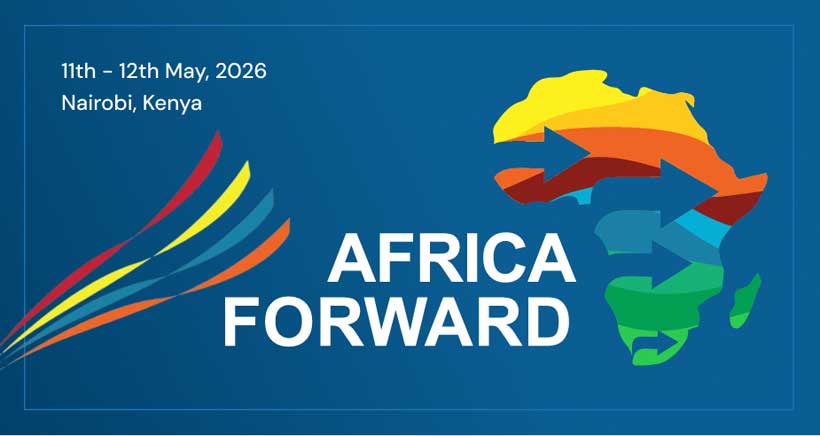
The “Africa Forward” summit will be the first in an Anglophone country attended by Macron since he took office in 2017.

The French president will wrap up his tour in Addis Ababa on Wednesday, where he will hold meetings with Ethiopian officials and take part in talks at the African Union headquarters on peace and security in Africa.

The tour is widely seen as a bid by Paris to repair economic and security ties and counter rising anti-French sentiment across parts of Africa.

Africa’s changing balance

France colonised large parts of West and Central Africa, and maintained excessive political and economic influence long after independence.

France, once widely accused of supporting unpopular leaders for strategic gain, is no longer the dominant foreign power it once was in Francophone Africa.

Across the continent, there is a growing push for more equal, win-win partnerships, tighter control over natural resources and broader alliances beyond traditional Western partners.

Sahel turning point

Anti-French sentiment has generally grown alongside political instability, military coups and rising competition from other international powers.

The sharpest rupture has come in the Sahel region, where Mali, Burkina Faso and Niger have seen coups followed by rapidly deteriorating relations with France.

French forces were subsequently expelled after years of military operations against armed groups that many local governments and segments of the public viewed as ineffective.

In the vacuum, the region’s military rulers have turned to new security partners, particularly Russia, highlighting France’s declining influence in the region.

Russian influence, including through the Wagner Group and its successor networks, expanded in part by exploiting anti-French sentiment.

Can Macron succeed in reshaping France’s Africa policy?

Macron is seeking to reshape France’s Africa policy, replacing traditional influence with what he calls partnerships.

He is also pushing for deeper cultural and educational cooperation focused on entrepreneurship, climate and youth engagement.

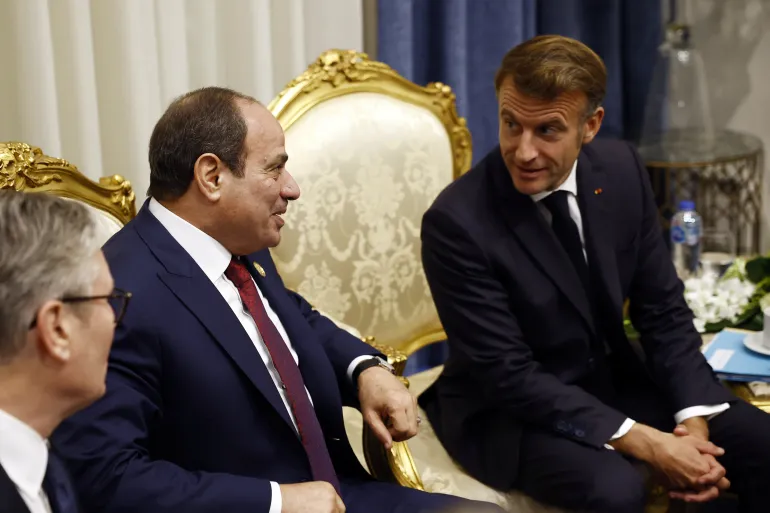
Emmanuel Macron began his three-country tour with a visit to Egypt
Emmanuel Macron began his three-country tour with a visit to Egypt [EPA]

Such efforts are seen as France’s attempt to reinvent its postcolonial relationship with African states and compete with powers like China and Russia.

Paris is, in fact, trying to shift its Africa policy; questions over its influence on the continent, however, persist.

Source link

Niger suspends nine French media bodies: Watchdog slams ‘abusive’ decision | Censorship News

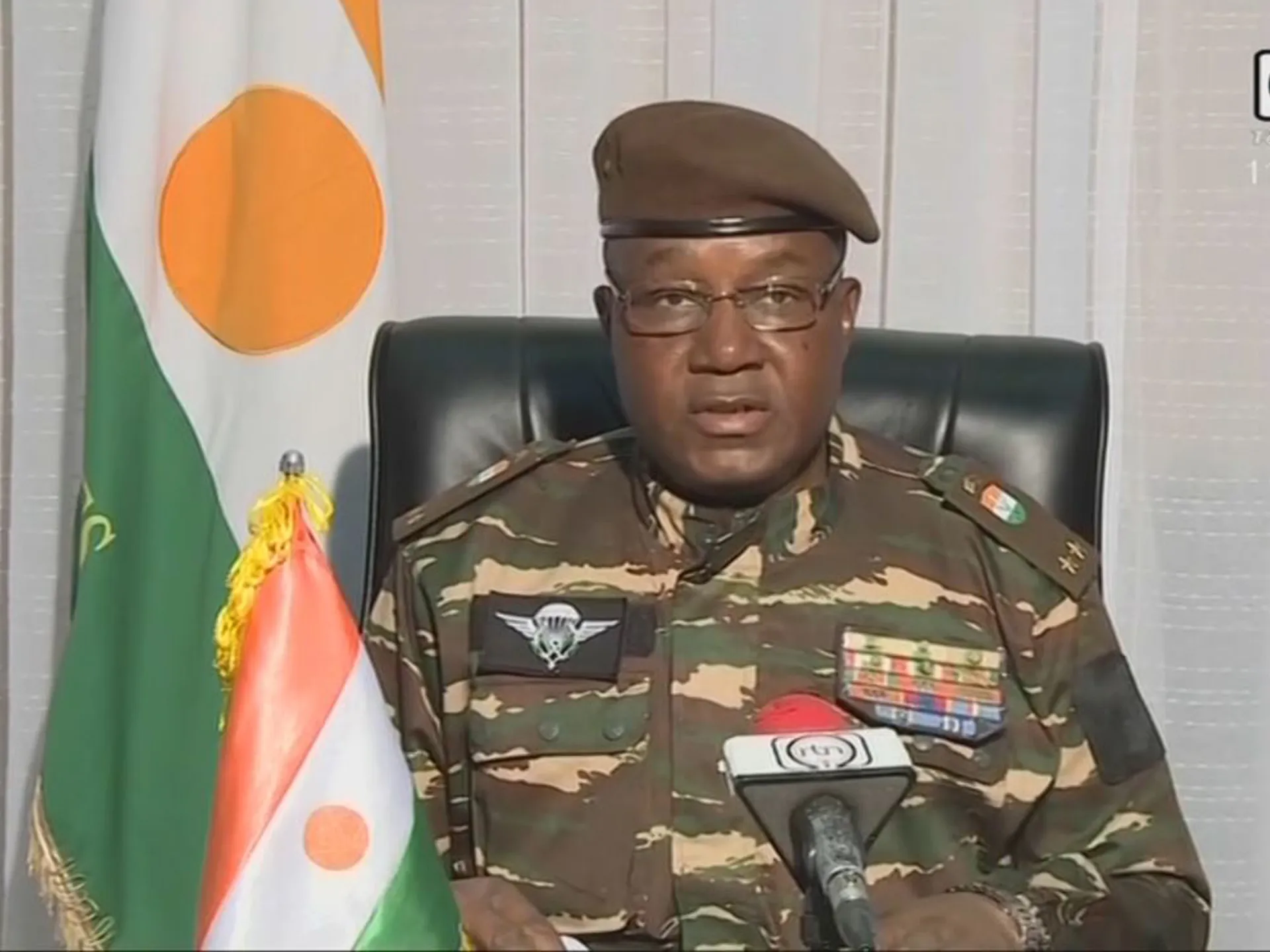
Niger’s military government has banned many local and foreign reporters since seizing power in 2023.

Media watchdog Reporters Without Borders (RSF) has condemned Niger’s suspension of nine French media publications as the military government continues to crack down on journalists.

Niger announced the suspension on Friday, citing “repeated dissemination of content likely to seriously jeopardise public order, national unity, social cohesion, and the stability of the institutions of the Republic”.

Recommended Stories

list of 3 itemsend of list

The suspended organisations are France 24, RFI (Radio France Internationale), France Afrique Media, LSI Africa, AFP (Agence France-Presse), TV5 Monde, TF1 Info, Jeune Afrique and Mediapart, according to a TV statement from the National Communication Observatory (ONC).

It added that the decision was “immediate” and it included “satellite packages, cable networks, digital platforms, websites and mobile applications”.

RSF described the decision as “abusive”.

“RSF condemns a coordinated strategy to repress press freedom within the AES [Alliance of Sahel States] and calls for the immediate reversal of this abusive decision,” said a statement posted on X, referring to Niger and allies Mali and Burkina Faso, all ruled by military governments.

Niger’s military seized power in July 2023, toppling the democratically elected government of President Mohamed Bazoum and detaining him.

The government has since targeted local and foreign media outlets, particularly those critical of its policies, by issuing bans or suspensions.

RFI and France 24 were suspended a few days after the coup, and the BBC from Britain was suspended in December 2024.

The targeting of French and other foreign media comes as Niger’s military government has largely severed ties with its former colonial power, France, and turned away from Western allies.

In late 2023, Niger asked leaders in Paris to withdraw thousands of troops involved in missions against armed groups operating in Niger, neighbouring Mali and Burkina Faso.

The three AES states have since secured defence partnerships with other countries, notably Russia.

All three have regularly denounced France’s “imperialism”, saying they want to assert their “sovereignty”. French media and other foreign outlets have similarly been suspended or banned by the governments in Bamako and Ouagadougou.

Local journalists have also been affected. Two Nigerien journalists, Gazali Abdou, a correspondent for German broadcaster Deutsche Welle, and Hassane Zada, a regional newspaper editor, were released this week after being detained for months.

In 2024, leaders in the capital Niamey strengthened a law that criminalises the digital dissemination of “data likely to disturb public order”.

The United Nations said in November that 13 journalists were arrested in Niger and urged the government to release them. Local media organisations say six journalists are detained for allegedly “undermining national defence” and for “conspiracy against the authority of the state”.

According to AFP, Niger suspended nearly 3,000 local and foreign NGOs in 2025, accusing them of lacking transparency and supporting “terrorists” and armed groups.

Niger dropped 37 places in this year’s RSF World Press Freedom Index and now ranks 120th out of 180 countries. RSF and Amnesty International have repeatedly voiced concerns about the “decline” in press freedom in Niger.

Source link

Passenger from Hantavirus-hit ship speaks to Al Jazeera from isolation | Newsfeed

NewsFeed

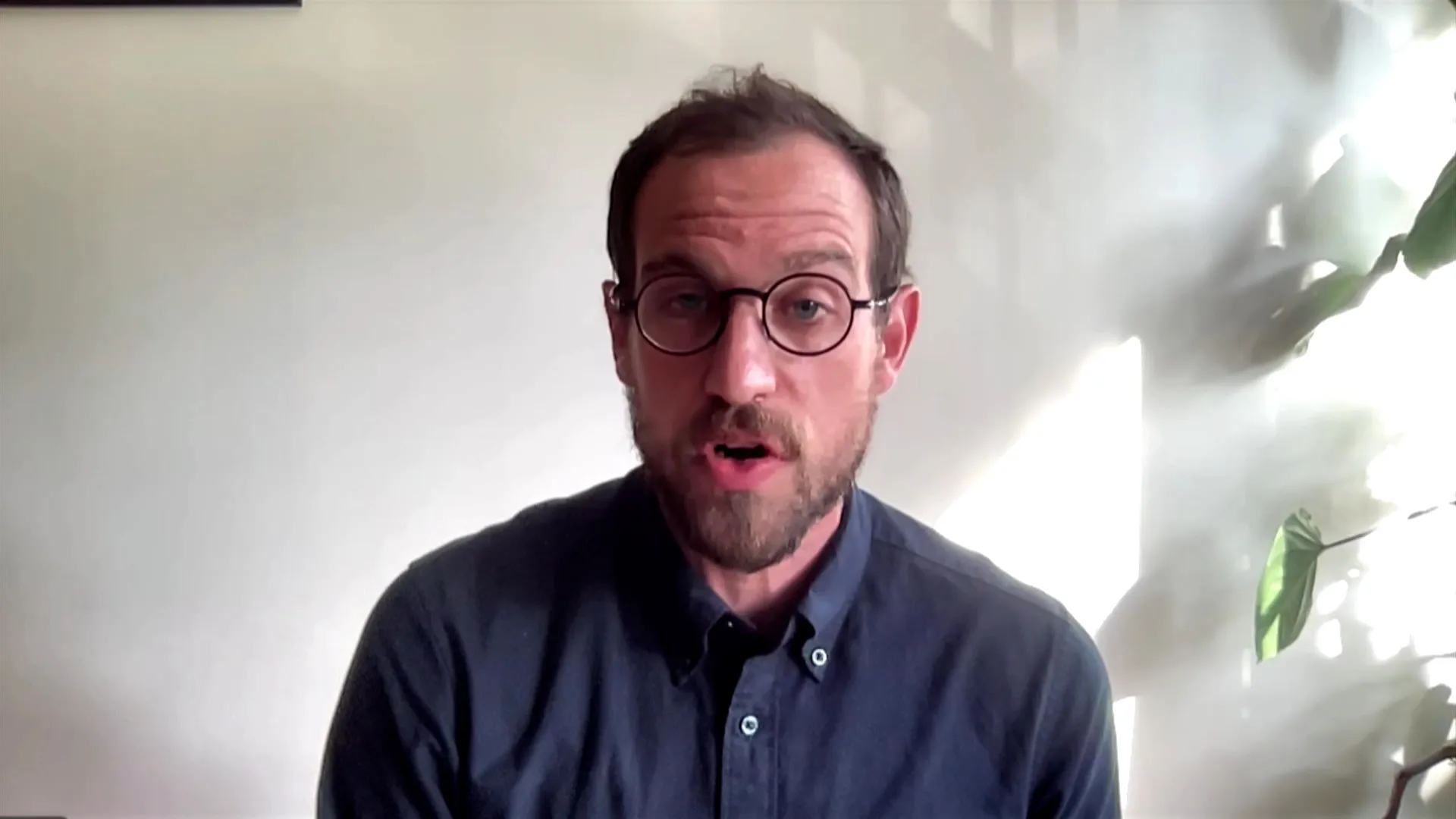
A passenger from the cruise ship hit with a Hantavirus outbreak has spoken to Al Jazeera from isolation about what took place on board. Three passengers died from respiratory illness on the MV Hondius as it travelled from Argentina to West Africa.

Source link

Aid cuts, drought and conflict leave Somalis desperate | Drought News

Maryam watched her goats starve and her crops fail. She buried two of her children before she finally gave up hope and sought help from international aid agencies in southern Somalia.

She left her village with her remaining six children, making the long journey along the Jubba River to one of a clutch of makeshift settlements on the outskirts of Kismayo, the capital of Somalia’s Jubbaland state.

Three consecutive seasons of failed rains have doubled Somalia’s malnutrition rate. Maryam, 46, is among more than 300,000 Somalis forced to leave their homes since January alone.

Several international organisations have stopped operations in the Kismayo camp for internally displaced people (IDPs), largely due to aid cuts ordered by United States President Donald Trump last year.

“We are hungry. We need care and help,” said Maryam.

Haunted by the memory of her dead children’s swollen bellies, she says she will not return to her village, which is under the control of the al-Qaeda-linked armed group al-Shabab. Fighters there have started seizing the limited food supplies available.

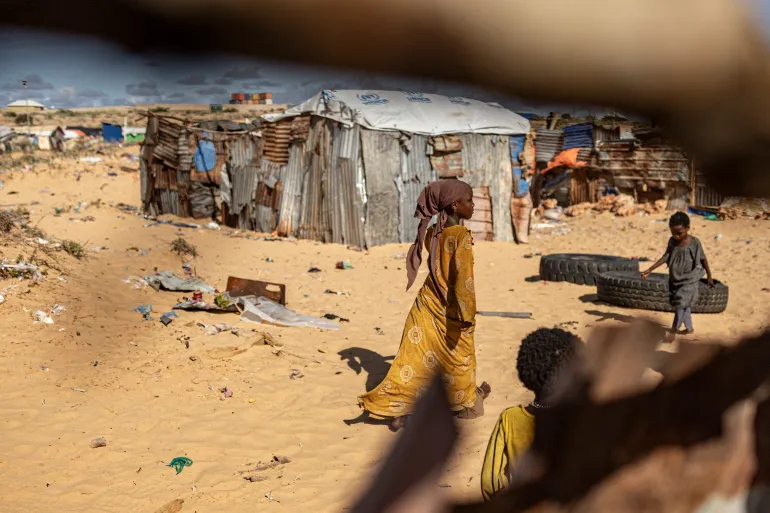
Somali internally displaced children
Children play near their makeshift shelters at an IDP camp in Ceel Cad, Kismayo town [Simon Maina/AFP]

But the camp is hardly better. In March alone, five children died of malnutrition, its manager says.

Since the early 1990s, Somalia has endured near-constant civil war, armed rebellions, floods and droughts. The war-torn country ranks among the world’s most vulnerable to climate change, which scientists say is leading to more frequent and more intense episodes of extreme weather such as droughts and floods.

Africa, which contributes the least to global warming, bears the brunt.

The recent cuts in foreign aid have not helped. They have had “a huge impact on our work”, said Mohamud Mohamed Hassan, Somalia director for NGO Save the Children.

More than 200 health centres and 400 schools have closed since last year.

Farmers, whose herds and crops have been decimated, describe one of the worst droughts ever recorded in a country where a third of the population already lacked regular meals. Even if the forthcoming rainy season is normal, it will take months for affected populations to recover.

“We cannot afford to actually address all the needs of these people,” said Ali Adan Ali, a Jubbaland official managing the displaced.

At a mobile health clinic supported by Save the Children, the only one still operating for multiple camps in the area around Kismayo, a woman named Khadija tried to feed a high-calorie solution to her severely malnourished one-year-old daughter.

She came to the camp after last year’s drought killed her livestock, but here also “we have nothing to eat”, the 45-year-old said.

A newly displaced Somali woman holds her severely malnourished baby in a stabilization centre for children suffering severe accute malnutrition in Kismayo,
A displaced woman holds her malnourished baby in a stabilisation centre for children suffering severe acute malnutrition in Kismayo [Simon Maina/AFP]

A hospital in Kismayo is the only facility in the region capable of treating the most severe cases of malnutrition. But it is turning patients away due to a lack of space and staff.

Every bed is occupied by starving babies, some on ventilators with intravenous drips in their fragile arms. Cases have tripled since last year, and things are only getting worse.

The US-Israel war on Iran has increased fuel prices, affecting food and water supplies.

Those in the camp seek work in construction or cleaning jobs in Kismayo or sell firewood, but the options are limited.

Meanwhile, the United Nations Office for the Coordination of Humanitarian Affairs (OCHA) has had to steadily reduce its Somalia programme from $2.6bn in 2023 to $852m this year, especially since Washington slashed its donations. So far, only 13 percent of this year’s target has been raised.

“It’s a toxic cocktail of factors … Things are really, really desperate,” Tom Fletcher, head of OCHA, told the AFP news agency in an interview last week.

“Often we’re having to choose which lives to save and which lives not to save.”

Source link

‘Africa Forward Summit’ Envisions Sustainable, Balanced Partnerships

For decades, France and all of Europe have been key partners, providing diverse development support for Africa. But the time has indeed changed. With the heightening of geopolitical threats and tensions, France struggles to sustain its presence in Africa, targeting to increase its business profile by leveraging the Anglophone community of potential investors in the forthcoming investment conference in Nairobi, the capital of Kenya, located in East Africa. The France-backed and organized conference marks a distinctive commitment to expanding financing across the continent.

According to authentic reports, Kenya and France will co-host the ‘Africa Forward Summit’ in Nairobi on May 11–12, under the theme ‘Africa-France Partnerships for Innovation and Growth,’ marking the first time this summit is held in an English-speaking African country. President Emmanuel Macron and President William Ruto will lead the summit, focusing on economic partnerships, digital innovation, green industrialization, and global financial reform.

Details of the summit are listed as follows:

Significance: The move signals a shift in France’s Africa strategy beyond Francophone regions. It highlights Kenya’s role as a major diplomatic and regional hub.

Key Topics: Discussions will cover sustainable finance, energy transition, health, agriculture, and AI, aiming for an action-oriented approach to economic growth.

Attendees: Over 30 heads of state and 2,000 CEOs/business leaders from France and Africa are expected to attend.

Structure: The event includes high-level state meetings, a business forum to explore investment, and a sports segment.

Objective: To strengthen the Africa-France partnership and reform global financial architecture to ensure better access to capital and signify a new, balanced economic relationship between the two regions.

French corporate executives are also stepping up their engagement in Africa’s innovation economy, eyeing the wide investment landscape through a new ‘Global Gateway Strategy’ with the EU allocating €300 billion ($340 billion), signaling a deepening of financial ties with Africa. Ready-made funds are a contributing capital to support early- and growth-stage startups, which reflects a broader shift in how European investors view long-term business with Africa today. 

While France indicates a long-term potential driven by demographics, digital adoption, and expanding urban markets, African entrepreneurs are increasingly positioning themselves to take advantage, teaming up for development priorities, innovation expertise, financial support, and France’s investment strengths. What is important here is that the May conference would offer insights into the growing appetite for Link-Up Africa and signal the involvement of French financial institutions and the expected roles in supporting economic diversification across Africa’s emerging markets.

Malawian President Lazarus Chakwera has acknowledged the drastic changes, proposing a shift from an aid-driven relationship, at least, to win-win investments that are more purposeful, describing it as a new level kind of partnership. “We are saying economic integration on the continent should be prioritized as much as we have bilateral agreements with external nations outside the continent,” Chakwera said. “We need also to find mutual ways of facilitating the implementation of development projects, progressive ways of trading, and attractive policy approaches with the involvement of European investors in economic sectors in Africa.” 

President William Ruto and French President Emmanuel Macron both acknowledged the strategic pathway with a focus on unlocking Africa’s development potential, driving sustainable industrialization, and targeting economic growth across Africa. Harnessing the untapped resources and utilizing the huge human resources is France’s priority in consolidating the existing bilateral engagement and collaboration.

In a statement, President Ruto underlined the summit reflects a shared commitment to strengthening bilateral ties and deepening multilateral cooperation to advance global goals. Ruto further described the summit as part of the renewal of relations between France and Africa, emphasizing genuine partnerships and shared progress. The agenda will focus on key areas including reform of the international financial architecture, energy transition, green industrialization, the blue economy and connectivity, artificial intelligence, sustainable agriculture, and health. It will spotlight the role of young entrepreneurs, civil society, and international organizations in shaping solutions to pressing global and regional challenges.

In addition, the European Union countries are increasingly strong economic partners for many African countries. It therefore behooves African leaders and business people to necessarily explore available possibilities and windows that have been opened. The EU has unveiled a €300 billion ($340 billion) alternative to China’s Belt and Road Initiative—an investment program the bloc claims will create links, not dependencies.

In an official document, it said the European Commission is broadly examining the following:

– Support AfCFTA implementation and the green transition;

– Improve the trade and investment climate between the EU and Africa;

– Reinforce high-level public-private dialogue;

– Enhance long-term dialogue structures between EU and Africa business associations;

– Unlock new business and investment opportunities, including in the areas of manufacturing and agro-processing as well as regional and continental value chain development.

It is further included in the joint communication of the European Commission (EC) entitled “Toward a Comprehensive Strategy with Africa,” which sets forth what the EU plans with Africa. The Joint EU-Africa Strategy takes into cognizance the most common interests, such as climate change, global security, and the achievement of the United Nations Sustainable Development Goals (SDGs).

Just as China, India, and the United States do, so also France and other European countries are exploring emerging opportunities offered by the African Continental Free Trade Area (AfCFTA), which provides unique and valuable access to an integrated African market of 1.4 billion people. In practical reality, it aims at creating a continental market for goods and services, with free movement of business people and investments in Africa.

Analysts, however, say deepening economic partnership and investment ties between Europe and Africa could rapidly change the landscape in Africa. But challenges significantly remain, particularly the official state bureaucracy combined with infrastructure and security in the continent. France has currently broadened its scope, moving more toward Anglophone African countries and courting them with trade and investment. According to source EU data 2024, aggregate trade was €355 billion between Europe and Africa.

According to Isabelle Herbert-Collet, a customer insights and market expert, a new approach must factor in what she referred to as “local exchange” in the new relationship. “It’s not only about investment; it is about imagining the right products and services and simply facilitating the intercultural exchange,” she said.

Looking ahead, France intends to capitalize on Africa’s most transformative economic sectors and make strategic moves by collaborating, as mutual partnership remains dynamic and adaptable. Despite growing geopolitical tensions, France’s approach and its long-standing ties still offer an alternative partnership model that many African leaders find very appealing. 

The challenge for the future will be to ensure these ties evolve in ways that serve Africa’s development needs while navigating the increasing complexity of global politics. As Africa is indiscriminately open for business, on May 11-12, African and French heads of state and government meet together to chart a new path for innovation, growth, and mutual cooperation. Kenya will hold this investment summit for France to position Africa as a key partner in innovation and economic development while strengthening bilateral ties with France and advancing further Africa’s collective agenda on the international stage.

Source link

Al-Qaeda-linked fighters storm Mali prison, block food supplies to Bamako | Conflict News

Fighters attack ‘Africa’s Alcatraz’, which detains high-value prisoners, and disrupt crucial supply chains to the capital.

In a new wave of attacks in Mali, an al-Qaeda-linked group has stormed a main prison housing fighters from the armed group and set fire to trucks with food supplies heading to the capital Bamako.

Fighters from the Jama’at Nusrat al-Islam wal-Muslimin (JNIM) group stormed the Kenieroba Central Prison, a recently built complex dubbed “Africa’s Alcatraz”, located about 60km (37 miles) southwest of Bamako, Al Jazeera’s Nicolas Haque reported on Wednesday.

Recommended Stories

list of 4 itemsend of list

The detention centre houses 2,500 prisoners, including at least 72 inmates considered “high value” by the Malian state, Haque said, adding that Malian armed forces were repelling the attack.

Among the prisoners are JNIM fighters and a number of people arrested following large-scale attacks last month by the group’s fighters and Tuareg separatists, the Azawad Liberation Front (FLA).

The fighters attacked several military bases across multiple cities, including areas where senior government officials live, and took control of the northern city of Kidal in a coordinated offensive on April 25 and April 26, which struck at the heart of the West African country’s military government.

One of those attacks killed Malian Defence Minister Sadio Camara and his family in their home in Kati, a garrison town near the capital. On Monday, the leader of the country’s military government, Assimi Goita, took on the role of defence minister. At least 23 others were also killed in the attacks.

Since then, “there has been a wave of arrests of former and current military officers, members of civil society, lawyers, members of the political opposition – all accused of colluding with al-Qaeda fighters,” said Haque, who has been reporting for years on and in Mali. He added that fighters linked to the armed group were also arrested.

Security sources told AFP news agency that opposition figures Mountaga Tall, Youssouf Daba Diawara, and Moussa Djire are among those “abducted”.

According to family members and security sources who spoke to the agency, Tall, a lawyer, was taken on May 2 in Bamako by hooded men on charges of plotting with opposition figures in the Senegalese capital, Dakar, to overthrow the military government. Since his arrest, Tall has been questioned at least once for “attempted destabilisation”.

The security sources said Diawara and Djire were suspected of links with, respectively, the influential imam Mahmoud Dicko and Oumar Mariko, two opposition figures in exile. At least two other civilians who are close to Mariko were also arrested following the attacks, a judicial source told AFP, without giving further details.

The military prosecutor’s office said on May 1 that it had “solid evidence” of the “complicity” of certain military personnel, accusing them of helping with the “planning, coordination and execution” of the attacks.

In a report published on Tuesday, the Office of the United Nations High Commissioner for Human Rights (OHCHR) said there have also been “gravely concerning reports of extrajudicial killings and abductions, allegedly carried out by members of the security forces” following the attacks.

The violence has set off fighting across Mali’s vast desert north, raising the prospect of significant gains by armed groups that have shown an increasing willingness to strike neighbouring countries.

JNIM has called on Malians to rise up against the government and transition to Islamic law. The group has also pledged to besiege Bamako, and on Friday, it had reportedly set up checkpoints around the city of four million.

Haque said the blockade has the potential to cause a humanitarian disaster.

“These are al-Qaeda fighters that have pointed 12.7mm machine guns on their motorbikes, stopping any outgoing or incoming traffic,” the correspondent said. “We have seen on social media these fighters stopping food trucks trying to enter the area. This blockade is not just affecting people living in Bamako; it’s affecting people throughout Mali.”

On May 3, the mayor of Diafarabe village, in the Mopti region, called on the authorities to act before people started dying of hunger, as the village had run out of food.

Source link

Spain agrees to let hantavirus-hit cruise ship dock in Canary Islands | Health News

Spain has granted permission for a luxury cruise ship hit by a deadly hantavirus outbreak and anchored off the coast of Cape Verde to sail to the Canary Islands.

Spain’s Ministry of Health said in a statement late on Tuesday that the World Health Organization (WHO) had explained that Cape Verde in West Africa was unable to receive the 147 crew and passengers of the MV Hondius.

Recommended Stories

list of 3 itemsend of list

“The Canary Islands are the closest location with the necessary capabilities,” it said. “Spain has a moral and legal obligation to assist these people, among whom are also several Spanish citizens.”

The ministry said it would receive a medical flight carrying the ship’s doctor, a Dutch national, who it said was gravely ill, following a formal request from the Dutch government.

A Dutch couple and a German national have died of the rare disease, which is usually spread from infected rodents through urine, droppings and saliva, on board the ship in early April. A British national, who was evacuated from the ship, is in intensive care in South Africa, officials said.

Two crew members require urgent medical care, ⁠according to the Dutch-flagged ship’s operator, Oceanwide Expeditions. Another person on board with a suspected case has only reported a mild fever.

Medical evacuations

The Spanish Health Ministry said the MV Hondius will journey on to the Canary Islands once those who need evacuation are taken off the ship.

The Dutch government said earlier on Tuesday that it was preparing to receive the evacuated passengers. Oceanwide Expeditions said the journey to the Canary Islands will take three days of sailing and that the MV Hondius will dock in either Gran Canaria or Tenerife.

When the rest of the crew and passengers arrive in the Canary Islands, they will be examined, treated and repatriated to their respective countries, Spain’s Health Ministry said, in coordination with the European Centre for Disease Prevention and Control and the WHO.

All necessary safety measures would be taken, the ministry said, with medical care and transportation provided in special facilities and vehicles to avoid contact with the local population and protect health workers.

According to the WHO, the cruise ship, which set sail from Ushuaia, Argentina, on April 1 for Cape Verde, had 88 passengers and 59 crew members from 23 countries on board.

A WHO official said on Tuesday that she suspected some rare human-to-human transmission had occurred between close contacts on board the ship.

“We do believe that there may ⁠be some human-to-human transmission that’s happening among the really close contacts, the husband and wife, people who have shared cabins,” Maria Van Kerkhove, the director of epidemic and pandemic preparedness and prevention at the WHO, told reporters in Geneva.

Van Kerkhove also sent a direct message to the people on board.

“We just want you to know we are working with the ship’s operators,” she said. “We are working with the countries where you are from. We hear you. We know that you are scared.”

Andes strain

Human-to-human transmission is not common, and the WHO reiterated that ⁠the risk to the wider public was low, adding that it had been told that “there are no rats on board” the ship.

A limited spread among close contacts has been observed in some previous outbreaks of the Andes strain of the virus, which spreads in South America, including Argentina.

Van Kerkhove said the typical incubation period for hantavirus was between one and six weeks, leading the WHO to believe that the Dutch couple, who had been travelling in Argentina before boarding the cruise, “were infected off the ship”.

Other cases may also have been infected while on bird-watching trips to islands where birds and rodents live, the WHO said.

Such trips are part of the cruise.

The Hondius is carrying mostly British, American and Spanish passengers on the luxury cruise, which set off from the southern tip of Argentina in late March.

The cruise visited the Antarctic Peninsula, South Georgia and Tristan da Cunha, some of the remotest islands ‌on the planet.

The voyage was marketed as an Antarctic nature expedition, with berth prices ranging from 14,000 to 22,000 euros ($16,000 to $25,000).

The first stricken passenger, the Dutch man, died on April 11. His body remained on board until April 24, when it “was disembarked on St Helena, with his wife accompanying the repatriation”, Oceanwide Expeditions said.

His wife had gastrointestinal symptoms when she was disembarked, and deteriorated during a flight to Johannesburg. She died upon arrival at the emergency department on ‌April ‌26, the WHO said, adding that contact tracing was under way for passengers on the flight.

South African authorities have confirmed that the British patient, who is being treated in a Johannesburg hospital, tested positive for the hantavirus.

Source link

Zambia blasts the U.S. over a $2-billion health deal in exchange for critical minerals

Zambia is accusing the United States of tying a $2-billion deal for critical health assistance to access to the southern African nation’s rich mineral assets, and calling the outgoing U.S. ambassador’s allegations of corruption “mischievous” and “undiplomatic.”

The comments by Zambia’s foreign affairs minister, Mulambo Haimbe, on Monday brought into the open simmering tensions over President Trump’s “America First” strategy, which is reshaping aid to Africa into transactional agreements.

Some African leaders and health experts have criticized the new U.S. stance and its demands for sensitive health data in exchange for badly needed support for health systems strained by the Trump administration’s dismantling of foreign aid. Some say they would not receive access to health innovations like vaccines in return.

The U.S. is also seeking to challenge China, a dominant player in Zambia and much of Africa, whose minerals are critical to the green energy transition, including inputs for solar panels, electric vehicle batteries and energy storage systems.

Zambia says talks stalled over data-sharing demands

In a statement, Haimbe described the accusations of Zambian graft and negotiation inertia by outgoing U.S. ambassador Michael Gonzales as “mischievous” and “deeply regrettable, undiplomatic and inconsistent with the spirit of mutual respect.”

Haimbe also accused the U.S. of tying access to critical minerals to the conclusion of the health deal, which Gonzales earlier dismissed as “alarmist allegations” that he called “disgusting” and “absolutely and patently false.”

Negotiations have continued for months to conclude the deal, one of dozens the Trump administration is pursuing in some of the world’s most aid-dependent countries.

Gonzales in late April said Zambian leaders had “abdicated their responsibilities, letting the United States pay for healthcare while officials diverted government funds to their own pockets.” He said Zambian authorities had “ignored” U.S. overtures to conclude a new deal.

But Haimbe said negotiations had stalled over “unacceptable” data-sharing demands “in violation of our citizens’ right to privacy” and “the insistence on preferential treatment of U.S companies over Zambia’s critical minerals.”

Zambia “takes the view, first and foremost, that Zambians must have a say on how her critical minerals are used, and second that no one strategic partner is to be treated preferentially to others,” he said.

The U.S. Embassy did not immediately respond to a request for comment.

U.S. says its approach aims to reduce donor dependency

The U.S. approach replaces decades of engagement anchored in the now-dismantled United States Agency for International Development and the President’s Emergency Plan for AIDS Relief, or PEPFAR.

In their place, U.S. officials are negotiating country-by-country agreements that recast aid as a transaction, tying funding to conditions including commercial provisions, domestic financing commitments, disease surveillance, pathogen sharing and even religion.

Since late last year, the U.S. has signed agreements with about 30 countries, many in Africa. Washington says the approach is meant to reduce donor dependency, promote local ownership and safeguard American interests, including against an aggressive China that dominates trade in Africa but contributes less aid.

There has been pushback.

Ghana last week said it had rejected a proposed deal over provisions granting broad access to sensitive health data without safeguards. Zimbabwe walked away from a $367-million package over similar concerns. In Kenya, a $2.5- billion agreement signed in December has been put on hold after a court challenge arguing it violates data protection laws.

In Lesotho, draft U.S. proposals sought 25 years of access to health data and biological samples before local officials secured a shorter five-year deal.

Health experts say data would largely flow one way

Critics say the data-sharing demands tilt toward U.S. interests and warn the information-sharing would largely go in just one direction: toward Washington.

The new agreements aim to ensure the flow of disease surveillance data and biological samples, but through bilateral channels, after the U.S withdrew from the World Health Organization in January, said Asia Russell, executive director of advocacy group Health GAP.

Countries currently report disease outbreaks primarily through the WHO, which coordinates responses and is negotiating new frameworks on pathogen-sharing and equitable access to vaccines.

The U.S., now outside those talks, is pursuing direct access instead.

“[The U.S. wants] to understand what’s actually happening,” said Jen Kates, a senior vice president at the Washington-based nonprofit KFF. “But they are trying to do it in a very different way.”

Health advocates say this risks creating a parallel global health system. In Zimbabwe, a government spokesperson in February said the government terminated negotiations because the U.S. was not offering a “corresponding guarantee of access to any medical innovations — such as vaccines, diagnostics or treatments — that might result from that shared data.”

“That raises serious concerns about who benefits,” said Atilla Kisla of the Southern Africa Litigation Center.

Advocates point to the harsh experience of the COVID-19 pandemic, when African countries contributed data and samples but were largely last in line for vaccines.

Experts warn against health as a ‘bargaining chip’

The agreements with the U.S. are drawing criticism for closed-door negotiations and limited public scrutiny.

“Secrecy is at the center of this. That puts accountability for results at risk,” said Health GAP’s Russell. “It’s impossible to evaluate these deals properly without seeing the full terms. Part of what made PEPFAR successful was transparency. Now that’s been taken away.”

The deals also come with tighter financial conditions. Many include reduced funding compared to previous levels of U.S. assistance, while requiring countries to increase domestic health spending, with aid at risk if targets are not met.

“These are going to be very heavy lifts,” said KFF’s Kates. “Countries are already under strain.”

Critics say some agreements also advance U.S. commercial and political interests, blurring the line between aid and transactional diplomacy.

“When health becomes a bargaining chip, everyone becomes less safe,” Russell warned.

Mutsaka and Imray write for the Associated Press. Keketso Phakela in Maseru, Lesotho, contributed to this report.

Source link