IF you’re looking to escape the heat, there is a huge new indoor attraction that is the first of its kind in Europe.
Slick City in Nottingham opened earlier this year, with everything from slides to coasters.
Sign up for the Travel newsletter
Thank you!
The attraction is the first Slick City in EuropeCredit: Slick CitySlick City in Nottingham opened back in MarchCredit: Slick City
For example, you could head on Royal Flush, where you’ll head down a sheer drop before being whizzed around a massive bowl – just like the motion of a flushing toilet.
Then there is Fast Lane, which is ideal for competitive families as it is a four-lane slide.
On Hyperloop, you’ll head through a number of twists and turns.
The attraction is the first Slick City in Europe and is also home to the world’s first UV AirGlider – a gravity-powered aerial coaster that creates the feeling of flying.
In between trying out the slides, visitors can test out the interactive games as well.
There’s a freestyle air court and sports court too, which has a cushioned, bouncy base ideal for parkour tricks.
Little ones aren’t left out either, as they can enjoy a soft play area.
While the kids are playing, parents can grab a bite to eat and a drink at the onsite cafe.
Though, Slick City isn’t just for kids – big kids (adults) can also have fun at one of the adults-only nights on the first Friday of every month.
The neon-lit attraction is for ages four and older and if you just want to watch you don’t have to pay entry.
There’s also the world’s first UV AirGlider – a gravity-powered aerial coaster that creates the feeling of flyingCredit: Slick CityThere’s a soft play for little ones as wellCredit: Slick City
There are a number of different ticket types available including ones for shorter 90 minute sessions and ones for longer two hour sessions.
Tickets cost £19.95 and £24.95 per person, respectively.
If you want to go on the AirGlider you’ll have to pay extra though – it’s £4 for one ride or £10 for three rides.
When at the attraction you also have to wear CitySocks, which cost £3 a pair – but you can keep and re-use them.
One recent visitor commented: “The slides are insane and it’s just so much fun.”
Another added: “Unique experience, such a great idea.
Weekly insights and analysis on the latest developments in military technology, strategy, and foreign policy.
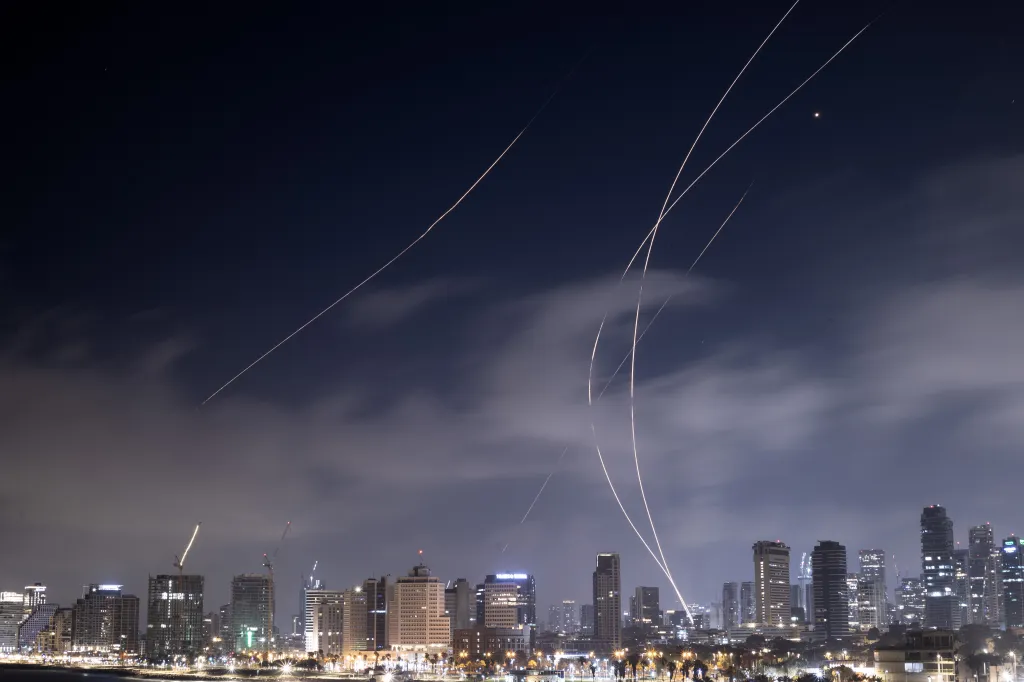
In what is reportedly the biggest air raid on the Russian capital in two years, multiple Ukrainian drones and cruise missiles hit several locations across Moscow early today. With heavy bombardment occurring during daylight hours, residents of the city have captured and shared dozens of videos showing dramatic impacts and interception attempts. The attack may signal a new phase of Ukraine’s long-range air war against Russian interests.
Most remarkable, perhaps, are the scenes from a key oil refinery in the Kapotno area, in the southeast of Moscow. Videos from the attacks here show multiple fireballs and plumes of black smoke rising from the refinery, which is run by a subsidiary of the state-owned Gazprom. At one point, we can see the disc-shaped roof of one of the storage tanks being thrown into the air, before cartwheeling down. This incredible detonation appears to have been caused by an errant Russian missile, not a Ukrainian weapon.
New footage confirms that an errant Russian surface to air missile was responsible for the tank roof toss at the Moscow Oil Refinery this morning. pic.twitter.com/H5kdsuO2pY
❗️Epic moment of the oil tank lid being ripped off after a kamikaze drone strike on the 🇷🇺Moscow oil depot pic.twitter.com/ei8TEL1fIs
— 🪖MilitaryNewsUA🇺🇦 (@front_ukrainian) June 18, 2026
Footage of a Ukrainian attack drone hitting a storage tank at the Moscow Oil Refinery this morning, sending the tank lid perfectly soaring hundreds of feet. pic.twitter.com/2GIHEGk52M
The refinery appears to have been at least one of the primary targets of the raid, continuing Kyiv’s long-running campaign directed against Russian energy infrastructure. It is notable that at least some of the videos reveal efforts to protect the refinery in the form of anti-drone netting, which seems to have little to no effect against heavier weapons. More substantial cage-type protection for refineries is something we have seen come out of Ukraine’s offensive against Russian oil infrastructure earlier in the war and subsequently appeared during the conflict in the Middle East earlier this year, to help defend against Iranian drone attacks.
This footage shows the „birdcage“ nets Russians have placed around their refineries as protection, but due to weight of the drones, their warheads and, therefore, explosive yield their value is virtually zero. pic.twitter.com/FixIH9zmCK
This particular refinery is one of the most critical in Moscow, supplying up to 40 percent of the capital’s petrol and about 50 percent of its diesel fuel. The strike was the second in two days on the facility. The previous one was described by Ukrainian President Volodymyr Zelensky as “a just response to Russian strikes.” Reportedly, the strike on Tuesday had already halted operations at the refinery.
Last night, our long-range sanctions once again reached the Moscow region – for the second time this week, the Moscow oil refinery was hit. Targets were also struck in the Rostov region and in temporarily occupied territories of Ukraine. This is a fully justified response to… pic.twitter.com/NhFl4FlT9L
— Volodymyr Zelenskyy / Володимир Зеленський (@ZelenskyyUa) June 18, 2026
Russia’s Gazprom-owned Kapotnya Oil Refinery (Moscow Refinery), bellowing with smoke this morning after a wave of attacks from Ukrainian drones.
The widespread destruction of the refinery in Moscow but also the results of Russian air defense missiles have caused fires at multiple spots across the Kapotnya district of the Russian capital. Even wildfire units have been called in. pic.twitter.com/Cs2tIYIeMM
In the wake of today’s Ukrainian attacks, Zelensky framed this as a response to Russia’s striking of a historic Kyiv monastery earlier this week.
On Monday, five people were killed in Kyiv, and the Dormition Cathedral in the Pechersk Lavra monastery complex, a UNESCO World Heritage Site and one of Ukraine’s most significant religious and cultural sites, was badly damaged.
🔥 USF Struck the Moscow Oil Refinery for the Second Time
— 🇺🇦 Unmanned Systems Forces (@usf_army) June 18, 2026
The Russian media outlet RIA Novosti said the overnight attack on energy facilities in Moscow was the biggest in two years.
According to reports, the Ukrainian strikes caught many of the city’s residents off guard, leading to panicked messages on social media.
The Russian Ministry of Defense claims that its air defenses intercepted and destroyed 555 Ukrainian drones over multiple regions overnight. The number actually shot down could not be independently confirmed.
The mayor of Moscow, Sergei Sobyanin, said: “Air defense forces are continuing to repel a large-scale attack,” but admitted that several drones had reached the oil refinery and that the Sadovod shopping center, also in the south-eastern part of the city, was damaged. Sobyanin claimed that about 180 drones heading for the capital had been downed.
Elsewhere in the city, air traffic was disrupted at Vnukovo, Sheremetyevo, and Zhukovsky airports. Sheremetyevo seems to have been especially affected, with reports of evacuations and people seeking refuge in the parking area. Meanwhile, traffic was halted on Moscow’s ring road near the refinery, according to the interior ministry. A high-rise building in Zhukovsky district, not far from the refinery, also seems to have been struck.
Andrei Vorobyov, the governor of the Moscow region, said that a high-rise residential building, an industrial facility, and a number of private houses had been damaged in the wider area around the capital. One video shows an attack drone smashing into a construction crane on its way to its target. Vorobyov said that 16 people had been injured in the attack.
Moscow really needs to do something about all these cranes. They’re seriously interfering with Ukrainian drone traffic😡 pic.twitter.com/FffGLVLycO
— Special Kherson Cat 🐈🇺🇦 (@bayraktar_1love) June 18, 2026
Clearly, a significant number of drones and cruise missiles did manage to get through, or otherwise efforts to intercept them caused damage through falling debris, as seen in the video below, or stray air defense missiles.
Footage of a Ukrainian FP-1 drone being intercepted while flying towards Moscow Refinery. Despite the hit, it still left a considerable explosion when it went down. pic.twitter.com/VNjOaN8FQE
Among them appear to be examples of the Bars, part of a growing family of so-called “drone-missiles,” which combine the features of cruise missiles and uncrewed aerial vehicles (UAVs). Previously, these had been considered as medium-range strike systems, with a maximum range of around 500 miles. Their presence over Moscow would indicate that their range is greater, perhaps evidence that they have been further adapted or reworked.
Bars missiles. (Ukraine Government)
As far as Russian air defenses are concerned, videos from Moscow painted a desperate picture, including at least one likely missile interceptor from a Pantsir short-range air defense system streaking past a Ukrainian drone before making a sharp turn in the opposite direction. In the past, we have seen examples of the Pantsir installed on top of buildings in Moscow, and last month footage appeared showing the counter-drone-optimized SMD-E variant being lifted onto the top of a skyscraper by helicopter.
❗️Impressive footage of the double strike by 🇺🇦Ukrainian FP-1 kamikaze drones on the 🇷🇺Moscow Oil Refinery and a lazily flying Pantsir-S1 SAM missile in the background. pic.twitter.com/sqiDEaPMBS
— 🪖MilitaryNewsUA🇺🇦 (@front_ukrainian) June 18, 2026
Additional footage shows soldiers or security forces using rifle-caliber weapons and man-portable air defense systems (MANPADS) in an effort to bring down drones at very short range.
Fucking chaos.
Several dickheads with rifles and MANPADS trying to shoot down incoming Ukrainian sanctions.
— 𝔗𝔥𝔢 𝕯𝔢𝔞𝔡 𝕯𝔦𝔰𝔱𝔯𝔦𝔠𝔱△ 🇬🇪🇺🇦🇺🇲🇬🇷 (@TheDeadDistrict) June 18, 2026
One video apparently even shows an individual taking aim at a Ukrainian drone using a 9mm Makarov pistol.
For Russian President Vladimir Putin, the very public nature of the attacks on Moscow is especially embarrassing.
The Russian leader had previously warned of impending “systemic strikes” on Ukraine, but Kyiv’s continued ability to hit back at scale, and to target the Russian capital in particular, is now combined with the biting effects of fuel shortages across the country.
In an unusual move, Russia, which is the world’s third-biggest oil producer, is to import fuel by sea this month as it confronts shortages caused by relentless Ukrainian drone attacks on its refineries.
Andrey Gurulyov, a retired lieutenant general and deputy of the state duma (the lower house of the Russian Federal Assembly), called for Russia to “strike the enemy mercilessly” in response to the attack. “We need to strengthen our air defense system, but most importantly, we need to hit the enemy,” he told the RTVI news outlet. “Hit the enemy mercilessly, without overthinking it.”
Just before the latest Ukrainian air attack, President Zelensky said he had held “an important coordination call” with U.S. President Donald Trump and French President Emmanuel Macron that may “bring about significant change.”
Yesterday, Zelensky said he had won key pledges of further support from world leaders attending the G7 Summit in France. “These last few days were very important for Ukraine because it is the reunification of the G7 around Ukraine,” Macron told reporters as he and Trump left the Palace of Versailles near Paris.
In the meantime, with little progress being made by either side on the battlefield, the conflict has increasingly settled into tit-for-tat air assaults on key infrastructure and cities.
Kyiv was this week hit by a major barrage of ballistic missiles and drones, and these, together with the heavy attacks on the Russian capital in the last couple of days, signal a further escalation of the air war between Moscow and Kyiv. Beyond that, this latest barrage on Moscow signals what could be a new, far more aggressive phase of Ukrainian long-range strike operations targeting the economic heart of Russia and its seat of power.
Weekly insights and analysis on the latest developments in military technology, strategy, and foreign policy.
Recently published imagery confirms that the A-10C attack jet is now operating in the Middle East with its new refueling probe fitted, something that has been achieved remarkably fast. As we reported at the time, the Warthog’s probe-type aerial refueling capability was first demonstrated in early April, and the adaptation comes as the jet cruises into the twilight of its career after it got a small reprieve from final retirement.
The U.S. Air Force has released images showing an A-10C using its Probe Refueling Adapter to take on fuel from an HC-130J Combat King II earlier this month, somewhere in the U.S. Central Command (CENTCOM) area of responsibility. The Warthogs in question belong to the 107th Fighter Squadron from Selfridge Air National Guard Base, Michigan, which deployed to the Middle East in early April.
A U.S. Air Force A-10C Thunderbolt II aircraft approaches an HC-130J Combat King II aircraft for aerial refueling in the U.S. Central Command area of responsibility, May 9, 2026. U.S. Air Force photoTwo A-10Cs approach an HC-130J Combat King II for aerial refueling in the U.S. Central Command area of responsibility, May 9, 2026. U.S. Air Force photo
As we discussed in the past, the Probe Refueling Adapter could be of significant importance to the A-10 and the wider Air Force, during a future fight in the Pacific. Clearly, however, it is equally applicable to ongoing operations in the CENTCOM theater.
Indeed, the Air Force previously confirmed that the Probe Refueling Adapter effort was in response to an urgent combatant command requirement.
Adding the Probe Refueling Adapter is also relatively straightforward, since it makes use of the existing air refueling receptacle on the nose of the A-10. In turn, this means that the A-10 loses its regular nose-mounted receptacle.
An A-10C receives fuel from a KC-135 via its nose-mounted receptacle over an undisclosed location within the U.S. Central Command area of responsibility. U.S. Air Force photo by Airman 1st Class Travis Knauss
As of April, the non-probe-equipped A-10 was only able to refuel from the KC-135, since the KC-10 had been retired, and the KC-46 was not yet certified to refuel the Warthog. This last issue is due to a long-running “stiff boom” problem, which runs the risk of damaging the receiving aircraft. The addition of the probe also means that the A-10s can now refuel from KC-46s too, which have a built in hose and drogue system, as well as a boom.
However, the A-10 can now take on fuel from Air Force HC-130s and MC-130s, or even Marine Corps KC-130s, as well as KC-130Js from other operators. Initial tests of the Probe Refueling Adapter involved an HC-130J from the 418th Flight Test Squadron.
These refuelers can operate from shorter runways and can offload fuel at very low altitudes, something the KC-135 is not able to do. Pairing the A-10 with these kinds of tankers, which can routinely operate from shorter fields and do so with far more flexibility, provides expanded aerial refueling flexibility for mission planners.
A U.S. Air Force loadmaster watches an A-10C approach his HC-130J before conducting aerial refueling in the U.S. Central Command area of responsibility, May 9, 2026. U.S. Air Force photo
Working with the HC-130 and MC-130 is especially relevant for the A-10, bearing in mind its combat search and rescue ‘Sandy’ mission. This involves the jets providing escort and close air support for special operations helicopters working to retrieve personnel from highly contested territory. A-10s have flown this very mission over Iran. Already, HC-130s and MC-130s provide fuel to rotary-wing aircraft during these kinds of operations, and a probe-equipped A-10 would provide extended endurance and range in such scenarios.
The Probe Refueling Adapter also comes with a degree of flexibility. The Air Force describes it as “a field-configurable solution designed for installation by operational flight line personnel.”
“Units can install or remove the adapter in a matter of hours, allowing aircraft to be reconfigured between boom and probe refueling capability based on mission requirements,” the service says.
A U.S. Air Force pilot watches an A-10C approach his HC-130J before conducting aerial refueling in the U.S. Central Command area of responsibility, May 9, 2026. U.S. Air Force photoA head-on view of a probe-equipped A-10C in the U.S. Central Command area of responsibility, May 9, 2026. U.S. Air Force photo
The Angry Kitten had previously been test flown on the A-10, but had not been seen in an operational context. The store is also used operationally by Air Force F-16s and HC-130s and Navy F/A-18E/Fs. Angry Kitten was originally developed to replicate hostile electronic warfare threats during testing and training, as part of a cooperative effort between the Air Force and the Navy, but was so effective that it was adapted to operational use.
Using advanced Digital Radio Frequency Memory (DRFM) technology, Angry Kitten detects and ‘captures’ radio frequency (RF) signals. Those signals are then manipulated and retransmitted. For example, RF signals from an enemy air defense radar can be recorded and sent back in a way that creates false or otherwise confusing tracks. The same data can also be used for broader intelligence-gathering purposes. You can read more about the capabilities of the pod here.
Close-up of the Angry Kitten pod under the left wing of a U.S. Air Force A-10C in the U.S. Central Command area of responsibility. U.S. Air Force photo
As well as the Angry Kitten pod, the A-10C seen in the accompanying imagery carries a Litening targeting pod and a pair of 500-pound-series Joint Direct Attack Munitions (JDAM).
Returning to the Probe Refueling Adapter, the A-10 is now putting it through its paces in an operational context in the Middle East.
But as we have discussed in the past, equipping A-10s and other combat jets with probes makes a good deal of sense for Pacific contingencies, too. They could also be operated alongside smaller tactical tankers, which could also play a very important role in that kind of conflict.
Close-up of a U.S. Air Force A-10C as it refuels from an HC-130J Combat King II aircraft in the U.S. Central Command area of responsibility, May 9, 2026. U.S. Air Force photo
Simply put, the receptacle and boom mode of aerial refueling is optimized for plugging in at higher altitudes, for maximum efficiency and safety. However, in the Pacific, combat operations are likely to require fighters to take off with heavy loads from short runways, potentially battle-damaged ones, then immediately hook up to a tanker. Lower-level refueling using a probe is much more appropriate here and, indeed, is entirely in line with the Air Force’s Agile Combat Employment (ACE) strategy. This envisages fighters hopping from one austere forward airfield to another, keeping them close to the action, but farther away from the enemy’s strikes. Such airfields can also be accessed by standard C-130 transports, which can also help support tactical jets with spares, weapons, crews, etc.
There is also the fact that higher-level aerial refueling puts the tanker and receiver at higher risk of detection and engagement by the enemy. Aerial refueling assets, in particular, will be among the highest-priority targets for China in any confrontation in the Pacific. Indeed, there is a whole Chinese development thread focused on air defenses to engage aircraft like these, and other critical force-multipliers. Having refueling operations and tankers operate at a lower altitude puts them below the radar horizon, providing another layer of survivability, especially when working from islands closer to major target areas.
Three U.S. Air Force A-10Cs fly in formation after aerial refueling from an HC-130J in the U.S. Central Command area of responsibility, May 9, 2026. U.S. Air Force photo
If the Probe Refueling Adapter concept could be extended to fighters like the F-16 and F-15, and potentially even future versions of the F-35A, these aircraft could rely more heavily on C-130 tankers, which are, at least in some cases, better suited to the ACE concept. Meanwhile, the larger KC-46s and KC-135s could operate somewhat further from the battlespace, including dragging tactical aircraft to and from the theater of operations, as well as supporting bombers and transports.
Now that the Probe Refueling Adapter is being proven in a combat theater, its success there could help keep the A-10 relevant throughout the last few years of its service, and perhaps even longer.
Weekly insights and analysis on the latest developments in military technology, strategy, and foreign policy.
Special operations MH-47 Chinooks offloading fuel to other aircraft in the air is one possible future scenario that U.S. Army Special Operations Command (SOCOM) is eyeing as it begins to work out what the future Block III iteration of the twin-rotor helicopter might look like. While hypothetical at this stage, a Chinook capable of operating as an aerial refueling tanker could help address the command’s lack of organic tanker capacity and support its future air assault strategies.
A MH-47G Chinook, attached to the “Night Stalkers” of U.S. Army 160th Special Operations Aviation Regiment, flies over Diego Garcia, October 14, 2025. U.S. Navy photo illustration by Mass Communication Specialist 1st Class Samantha Jetzer
At this stage, however, SOCOM is beginning to draft possible requirements for the next iteration of special operations MH-47G — the Block III — expected to come online starting around 2032.
“Currently, we’re in Block II,” explained Sean Godfrey, product manager for the MH-47 at Army Special Operations Aviation Command. “We do not currently have what the Block III looks like, but that aircraft’s not going anywhere. It’s going to have to get upgraded over time.”
A slide from a SOCOM event at the annual SOF Week conference shows a pathway to the Block III MH-47G. Jamie Hunter
“Those next big things that we have to figure out would be how to get more out of the system,” Godfrey continued. “That would have to be enabling the aircraft to go further into more environments.” Another area of interest is increasing options for putting modular equipment on and off the aircraft, he added.
“That increased modularity to be able to rapidly take things on and off the aircraft to reconfigure it very quickly, to meet our mission requirements, is something that we’re always looking at,” added Dr. Steve Smith, SOCOM’s program executive officer for Rotary Wing.
“Anything that we do going forward, we’re going to try to make it as modular as possible. We want to go plug things in when we need them, unplug them, and take them off the aircraft when we don’t need them.”
Even with an aircraft offering the performance and capacity of the MH-47, preserving the allowable combat load is always at a premium. Increased modularity might include removing certain protection systems for operations in more-permissive environments, to give operators additional load. The same could be said for navigational systems, as well.
Two U.S. Army MH-47G Chinooks conduct helicopter air-to-air refueling operations with a U.S. Air Force HC-130J Combat King II, assigned to the 26th Expeditionary Rescue Squadron, over an undisclosed location in the U.S. Central Command area of responsibility, December 27, 2022. U.S. Air Force photo by Staff Sgt. Gerald R. Willis
Smith continued: “There might be cases where I want to fill that aircraft with as much fuel as possible, and maybe that MH-47 becomes a flying FARP, and I put it somewhere, and we refuel other aircraft off of them.”
A FARP, or Forward Arming and Refueling Point, is essential for operating from austere forward bases along (or beyond) the battle lines.
This is already a key mission for the MH-47, with the 160th using these aircraft in “Fat Cow” configuration. Filled with extra tanks, the Chinook then serves as a gas station on the ground for other rotary-wing aircraft. This was a tactic famously used in the Bin Laden raid.
A U.S. Army Soldier assigned to the 160th Special Operations Aviation Regiment loads rockets into a MH-60 Black Hawk during a forward arming and refueling point exercise at Marine Corps Outlying Field Atlantic, May 6, 2025. U.S. Army Soldiers and aircraft from the 160th SOAR utilized MCAS Cherry Point’s training area to conduct a FARP. This training is essential for enhancing the unit’s operational readiness and ensuring efficient support for rapid deployment, as Cherry Point provides the facilities and resources to simulate real world scenarios (U.S. Marine Corps photo by Cpl. Matthew Williams) Cpl. Matthew Williams
At a FARP, aircraft can quickly receive fuel and weapons, even without shutting down their engines. As a result, they can accelerate the fight by dramatically increasing sortie rates, or FARPs can extend the combat range of an aircraft. When it comes to just adding fuel, refueling in mid-air is an even more efficient way of doing this.
“Maybe, maybe we can do in-air refueling off of an MH-47,” Smith mused.
U.S. soldiers assigned to Echo Company, 5-159th General Support Aviation Battalion (GSAB), refuel a CH-47 Chinook helicopter during a Forward Arming and Refueling Point (FARP) training at Felker Army Airfield on Joint Base Langley-Eustis, Virginia, April 25, 2024. U.S. Air Force photo by Zulema Sotelo
While he admitted that he was “just throwing stuff up against a wall,” at this point, Smith also acknowledged that having more modular systems could make that possible.
“Aerial refueling is an amazing capability,” Smith continued. “It allows us to do a lot of things, but that affects your allowable combat load, right? So, is there a way to do something modular for aerial refueling, so that the system could come on and off quickly, so that would allow us to get maybe something in country, rapidly reconfigured, and then do something else.”
An MH-47G Chinook, attached to the 3rd Battalion, 160th Special Operations Aviation Regiment (3/160th SOAR), flies near the flight deck of the aircraft carrier USS Harry S. Truman (CVN 75). U.S. Navy Photo by Mass Communication Specialist Seaman T’ara Tripp
According to Smith, SOCOM is already looking at the possibility of porting mission equipment from its forthcoming MV-75A Cheyenne II tiltrotors onto the MH-47 Block III, and potentially even the Block II or Block III MH-60 fleets. However, he admitted that, at this stage, there is no funding appropriated for this, or even a formal requirement.
When it comes to making Block III a reality for the MH-47, this would likely follow the same procedure that is currently used to produce special operations Chinooks.
For the MH-47G Block II, specifically, Godfrey explained that the procedure starts with selecting a legacy aircraft, some of which are now more than 60 years old. SOCOM then removes all the mission equipment and software equipment, Godfrey continued, and flies the aircraft to Delaware. Here, the aircraft is essentially torn apart, and the parts to be used are recapitalized and returned to the Boeing production line. After a multi-year process, the Chinook re-emerges as a black-painted MH-47 and then goes to have all its mission equipment fitted. Then it is delivered to the unit.
U.S. Army soldiers enter an MH-47G Chinook helicopter assigned to the 3rd Battalion, 160th Special Operations Aviation Regiment at Hunter Army Airfield, Georgia, before it takes off during Weapons School Integration (WSINT) at Nellis Air Force Base, Nevada, December 2, 2020. U.S. Air Force photo by Airman 1st Class Dwane R. Young
Once in SOCOM service, Smith explains that “We’re constantly trying to figure out the best ways to increase range, increase payload, increase speed, reduce weight, all while somehow holding flight-hour costs low. And all these things aren’t rolling in the same direction.”
The MH-47’s need for range is an enduring one and is reflected in its regular use of in-flight refueling itself, using the probe-and-drogue method, as also employed by SOCOM MH-60s. Already, the MH-47 features massive sponson fuel tanks compared to the standard Chinook, making them the longest-range assets of the 160th.
But whether or not some kind of palletized or modular aerial refueling capacity comes to the Chinook remains to be seen.
Expanding the “Fat Cow” role and taking the MH-47 tanker to the air would be very enticing for SOCOM. It would give them their own air-to-air refueling assets, rather than relying totally on the Air Force MC-130/HC-130 fleets. As it is, providing fuel at FARPs can be a very high-risk mission for SOCOM, considering they are often working in contested territory. If the same aircraft could be adapted to refuel MH-60s and MH-47s in the air, they would not have to land in some scenarios, and the Army wouldn’t need to call upon external refueling assets, which might not be available or cannot be risked.
It is also worth noting that questions have also emerged about how the Army will ensure there is adequate tanker capacity to support its aerial-refueling-capable MV-75s. As delivered, all Cheyenne IIs will have the capacity to have a probe fitted, the Army has confirmed, even those in non-SOCOM units, although the exact mix of how many ‘big Army’ MV-75s will get the probe and how many won’t is yet to be determined. Bell, the MV-75’s prime contractor, and the Army have both suggested that tanker drones like the U.S. Navy’s forthcoming MQ-25 Stingray could help extend the Cheyenne II’s reach. An adapted MH-47 could provide another answer, although one with drastically different performance.
A rendering of a special operations configured MV-75 with an in-flight refueling probe. Jamie Hunter
Recent operations in South America and in the Middle East have underscored the need for long-range missions by Special Operations Aviation Command. The prospect of a potential conflict with China across the vast expanses of the Pacific means that longer-range platforms, of all kinds, are an increasing area of interest, and the 160th’s heavy-lifting, far-flying Chinooks are no exception.