administration

House passes a bill to protect Haitian immigrants, in slap back to the Trump administration

In a rare bipartisan moment, the House passed legislation Thursday that would extend temporary protections for Haitian immigrants, a long-shot effort fighting back against President Trump’s attempts to end the program.

The bill, pushed forward by House Democrats with a group of Republicans over the objections of the GOP leadership, would require a three-year extension of temporary protected status for Haitians by the Trump administration. That would allow hundreds of thousands of qualifying immigrants to remain in the United States without fear of deportation.

The vote was 224-204, drawing applause in the chamber. But it faces uncertainty in the Senate, and the Republican president would almost certainly seek to veto it.

“I know firsthand how important our Haitian neighbors are to our communities, to our civic life, to our culture, to our workforce, to our economy,” said Democratic Rep. Ayanna Pressley of Massachusetts, who is co-chair of the House Haiti Caucus and represents one of the largest Haitian communities in the country.

During the debate, she recounted the number of Haitian immigrants working in healthcare, housing construction and other industries. Haitians with temporary legal status “are not the problem, quite the contrary, they are part of the solution,” she said.

Pressley has said deporting Haitians back to the troubled Caribbean country would be a “death sentence,” given the effects of natural disasters and gang violence. “Congress can do the right thing,” she said.

Ten Republicans, many from districts with large numbers of Haitian residents, joined all Democrats and one independent in voting for passage.

Congress tries to act before the Supreme Court does

The effort to help 350,000 Haitians living lawfully in the United States comes as the administration is working to end the temporary legal status for several groups, exposing them to deportation.

In less than two weeks, the Supreme Court is prepared to consider a fast-track case that would end the protected status for Haitian and Syrian immigrants in a challenge widely seen as threatening the broader program. The administration filed emergency appeals after lower courts stopped the immediate end of the program.

It is part of the administration’s efforts to strip certain immigrant groups of legal status as the White House works to fulfill Trump’s campaign promise of conducting the largest mass deportation operation in history. Some 1.3 million people fleeing countries around the world have been granted temporary protected status in the U.S.

The protections for Haiti, first approved after a devastating 2010 earthquake, have been extended multiple times. The State Department warns Americans not to travel to Haiti “due to kidnapping, crime, terrorist activity, civil unrest.”

Guerline Jozef, executive director of the Haitian Bridge Alliance, an advocacy organization, fought back tears as she described the fear of deportations coursing through the community.

“We are asking, where will you be? On the right side of history?” she said at a news conference outside the Capitol. “Or continuing to cause trauma to people who are asking for nothing other than safety and protection?”

Trump has described migrants from poorer countries in vulgar terms, and he has falsely accused Haitian migrants in Ohio of eating their neighbors’ cats and dogs.

The conservative majority court has allowed the end of temporary legal status for a total of 600,000 people from Venezuela while lawsuits play out, leaving them to face potential deportation.

Lawmakers debate whether to help Haitians or stick with Trump

Rep. Laura Gillen (D-N.Y.) whose district includes Long Island’s Haitian community, said she promised constituents she would work to protect their status. She introduced the legislation with Republican Rep. Mike Lawler of New York as soon as she took office last year.

“It’s cruel to expect Haitians to be forced to return to these deadly, dangerous conditions,” she said at a news conference. “Human lives are at risk.”

Lawler said there are differences of opinion on immigration policy, but that Haitian immigrants have become vital to his community and forcing them out would be unjust and unwise.

“They are small business owners, they are nurses, they are caregivers, they participate in our economy and take care of American citizens,” he said. “Congress has a responsibility to act.”

But Rep. Jim Jordan (R-Ohio) decried the number of immigrants, including Haitians, who have entered the U.S., and cited Democratic efforts to halt funding for enforcement and deportation efforts.

“Make temporary permanent,” he said, “that’s their plan.”

Rep. Brandon Gill (R-Texas) said the program was “backdoor amnesty” for foreigners.

To Rep. Tom McClintock (R-Calif.), the temporary status first granted under the Obama administration has become “an open-ended invitation” for immigrants to enter the country, including some illegally, and remain.

“The Trump administration has heeded the cries of the American people,” he said.

Using a discharge petition to force votes

The vote was the latest effort by House Democrats to maneuver past the Republican majority using a discharge petition — once a rare tool, but now used increasingly to form bipartisan coalitions.

The discharge petition process forces the bill to the House floor for consideration, powering past House Speaker Mike Johnson (R-La.) and GOP leaders. It was used to help pass legislation that required the Justice Department to release the files of the sex trafficking investigation of Jeffrey Epstein.

Republicans hold a slim majority in the House and are typically able to swat back such efforts from Democrats. But Democrats and Republicans have formed bipartisan alliances to reach the majority needed on the discharge petitions.

Pressley’s effort to discharge the bill won support from four Republicans on the initial petition, and several more once it came to the floor vote.

Mascaro writes for the Associated Press.

Source link

A vaccine standoff and other key moments from RFK Jr.’s first congressional hearing in months

Health Secretary Robert F. Kennedy Jr. on Thursday faced federal lawmakers for the first time since September as he sought to defend a more than 12% proposed cut to his department’s budget and dodge arrows from angry Democrats along the way.

In his testimony before the House Ways and Means Committee, kicking off an expected sprint of seven budget hearings he’ll attend across congressional committees and subcommittees over the next week, Kennedy emphasized the administration’s work to reform dietary guidelines and crack down on waste, fraud and abuse.

Republicans on the committee praised Kennedy as a “breath of fresh air” and asked him to promote his department’s recent actions. Democrats, who have been furious over Kennedy’s sweeping overhaul of the U.S. Department of Health and Human Services, largely had a different agenda.

They needled Kennedy on what they viewed as the Trump administration’s hypocrisy on fraud, demanded to know why he was cutting budgets for various programs and slammed his efforts to pull back vaccine recommendations and messaging, which they said have caused unnecessary deaths.

Kennedy fired back, often raising his voice as he accused the Democrats of misrepresenting his work and past statements.

Here are three standout moments from Thursday’s hearing:

A standoff over measles

One heated exchange early in the hearing came between Kennedy and Rep. Linda Sanchez. The California Democrat decried recent measles outbreaks across the U.S. and asked Kennedy to answer for the fact that under his leadership, the Centers for Disease Control and Prevention pulled back public health messaging supporting vaccination.

“As a mother, this horrifies me,” Sanchez said. “Did President Trump approve your decision to end CDC’s pro-vaccine public messaging campaign?”

Kennedy repeatedly refused to answer, saying first he wanted to respond to the “misstatements that you’ve made” and later praising the Trump administration’s record on preventing measles, although protections against the disease have eroded in some parts of the country as vaccination rates have dropped.

“That’s not answering my question,” Sanchez said as the two talked over each other.

But Sanchez also got Kennedy, a longtime anti-vaccine activist before he entered politics, to acknowledge that a 6-year-old who died of measles last year in West Texas could have potentially been saved with vaccination.

“Do you agree with the majority of doctors that the measles vaccine could have saved that child’s life in Texas?” she asked.

“It’s possible, certainly,” Kennedy said.

RFK Jr. denies talking about Black children being ‘re-parented’

A fight erupted between Kennedy and Rep. Terri Sewell, a Democrat from Alabama, when Kennedy vehemently denied making remarks he’d said in 2024.

The comments dated back to when Kennedy was a presidential candidate. On the “High Level Conversations” podcast last July, he said, “Psychiatric drugs — which every Black kid is now just standard put on Adderall, SSRIs, benzos, which are known to induce violence, and those kids are going to have a chance to go somewhere and get re-parented to live in a community where there’ll be no cellphones, no screens, you’ll actually have to talk to people.”

“Have you ever re-parented, or parented, I should say, a Black child?” Sewell asked, as her staff held up a poster featuring an abbreviated version of the quote.

“I don’t even know what that phrase means,” Kennedy said. “I’m not going to answer something I didn’t say.”

“You’re making stuff up,” he later claimed.

A recording of the podcast shows he made the comments during a conversation about free rehabilitation facilities he was proposing opening at the time in rural areas around the country.

Health and Human Services spokesperson Emily Hilliard said Kennedy before joining the administration was referring to spaces where young people facing alienation, mental health challenges and despair could get re-parented, which she said was a psychotherapy term for “developing the emotional regulation, discipline, boundaries, and self-worth that may not have been established in childhood.”

For Kennedy and his former party, civility is the exception

Kennedy spent most of his life as a Democrat, the scion of one of the nation’s most famous political families. Both Republicans and Democrats during the hearing began their remarks by expressing their admiration of Kennedy’s relatives, among them former President John F. Kennedy.

But again and again throughout Thursday’s hearing, the fraying of bonds between Kennedy and his former party was on full display as spiteful comments were passed back and forth.

The Health secretary grew defensive and visibly agitated. He repeatedly criticized Democratic lawmakers for not giving him a word in edgewise.

“They’ve all shut me up,” Kennedy said at one point. “They give a little speech that they can go and market, you know, for fundraising, and they don’t allow me to answer the question.”

On a few rare occasions, the exchanges were civil. One representative, Gwen Moore of Wisconsin, used humor to make that happen.

“I promise to give you easy, comfortable questions if you don’t yell at me and hurt my feelings,” she told Kennedy. He promised he wouldn’t.

Swenson writes for the Associated Press.

Source link

From dropping bombs to pressuring banks: U.S. pivots to economic warfare on Iran

If the U.S. and Iran aren’t able to soon come to a deal to end the war or extend the ceasefire that expires next week, the Trump administration is setting the stage to shift its war campaign toward a more economic-focused effort aimed at choking Tehran into submission rather than relying on bombs alone.

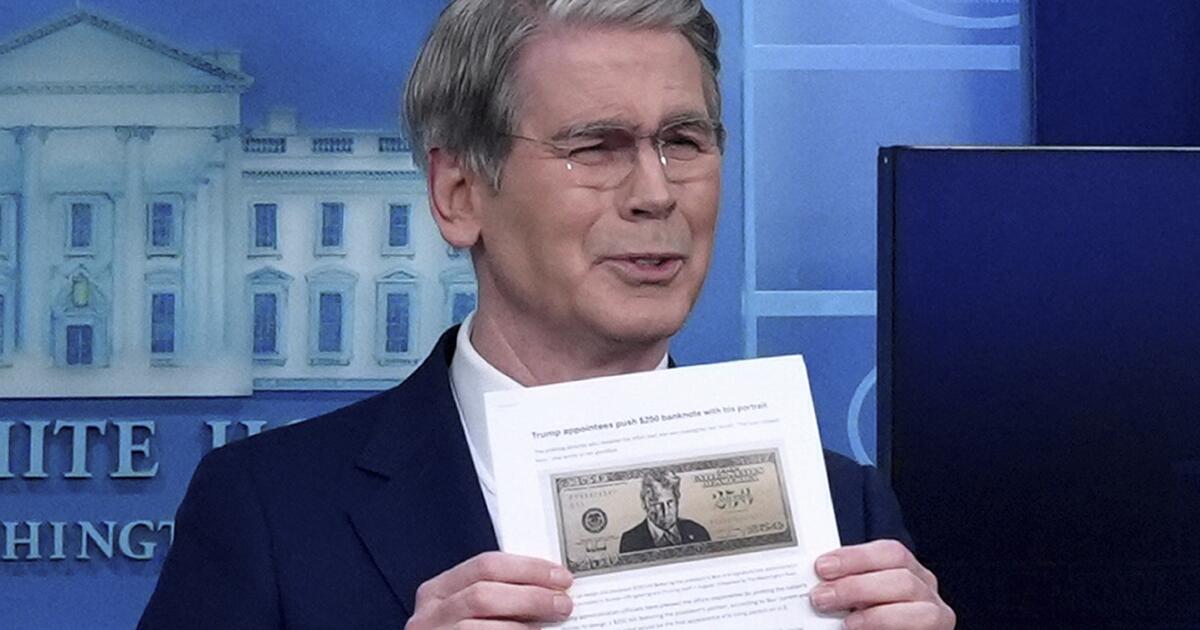
Treasury Secretary Scott Bessent told reporters at a White House briefing Wednesday that the U.S. plans to ramp up economic pain on Iran, and said the new moves will be the “financial equivalent” of a bombing campaign.

The threat of secondary economic sanctions on countries doing business with people, firms, and ships under Iranian control — including allies like the United Arab Emirates and competitors like China — represents an escalation of sanctions that the U.S. is already employing.

Bessent said the administration has “told companies, we have told countries that if you are buying Iranian oil, that if Iranian money is sitting in your banks, we are now willing to apply secondary sanctions, which is a very stern measure. And the Iranians should know that this is going to be the financial equivalent of what we saw in the kinetic activities.”

Treasury Department warns China, Hong Kong, the UAE and Oman

The warning comes the day after the Treasury Department sent a letter to financial institutions in China, Hong Kong, the UAE, and Oman, threatening to levy secondary sanctions for doing business with Iran, and accusing those countries of allowing Iranian illicit activities to flow through their financial institutions.

It’s part of an economic playbook that President Trump still can use to pressure Iran to accept U.S. proposals to limit its nuclear ambitions, a person familiar with the administration’s thinking told the Associated Press. The person spoke on the condition of anonymity because they were not authorized to discuss private discussions on the record.

Privately, the argument being made to Trump is that the Iranians think they can weather the storm — but if they cannot pay their loyalists, that could pressure Iran to the table.

And some in the administration believe there are still more economic targets that can be hit that would put the economic hurt on Iran, including bonyads, the charitable trusts that account for a significant percentage of the Iranian economy.

Bessent told reporters that two Chinese banks have received warnings about handling Iranian money. Trump is preparing to visit Beijing next month for talks with Chinese President Xi Jinping.

Bessent also said that Iran’s Gulf neighbors are now willing to look at freezing Iranian money in their banks because of Iran’s aggression during the war.

Daniel Pickard, a sanctions attorney, said imposing secondary sanctions could result in “diplomatic and economic blowback” from allies that could hurt efforts to build coalitions against Tehran.

“A lot of our trading partners have been outspoken in regard to their opposition to the conflict in Iran,” Pickard said. “Most economic sanctions professionals would agree that when you get more people on the team, the chances of your economic sanctions being effective are greater.”

On Wednesday, the U.S. imposed sanctions on an oil smuggling network connected to the deceased senior Iranian security official Ali Shamkhani, who was a close advisor to the former Supreme Leader of Iran. Sanctions include dozens of individuals, companies, and vessels involved in secretly transporting and selling Iranian and Russian oil through front companies, many of which are in the UAE.

“Treasury will continue to cut off Iran’s illicit smuggling and terror proxy networks,” Bessent said in a statement. “Financial institutions should be on notice that Treasury will leverage all tools and authorities, including secondary sanctions, against those that continue to support Tehran’s terrorist activities.

The administration believes the momentum has shifted

Trump administration officials have also signaled growing confidence that the ceasefire and a blockade of shipments from Iranian ports in the Strait of Hormuz have shifted momentum in Trump’s favor.

Iran has endured tens of billions of dollars in damage during the bombardment to the country’s infrastructure — including setbacks to its oil industry, the heart of its fragile and long-isolated economy — that could take years to repair.

Vice President JD Vance on Tuesday said Trump “doesn’t want to make, like, a small deal. He wants to make the grand bargain.”

“That’s the trade that he’s offering,” Vance said. “If you guys commit to not having a nuclear weapon, we are going to make Iran thrive.”

The president’s deputy chief of staff, Stephen Miller, offered a more caustic assessment of the moment, suggesting that Trump had “played the checkmate move” on Iran by implementing the blockage in the strait.

“If Iran chooses the path of a deal that’s great for the world, that’s great for everybody. If Iran chooses the path of economic strangulation by blockade, then the world will pass Iran by,” Miller said in a Fox News appearance Tuesday evening. “New energy routes will be established. New supply chains will be established. Other nations throughout the region — throughout the world, and especially America — will power the world and Iran will become a footnote.”

Some Republicans are skeptical that more sanctions will work

Some Republicans believe that any tactic to exert more pressure on Tehran is worth trying.

“I would support anything,” said Sen. Thom Tillis (R-N.C.). “If the administration came up with the ideas, I would support all of the above. More pressure, the better.”

Others were skeptical, noting that Tehran was already facing a litany of economic penalties that had little impact on its behavior.

“I’m not sure if it’s sanctions that’ll do it. I think we’re putting some pretty heavy sanctions on right now,” said Sen. Mike Rounds (R-S.D.), a member of the Banking and Armed Services Committees. “I personally am just not optimistic that we actually can fix this thing without a regime change.”

Trita Parsi, executive vice president of the Quincy Institute, a think tank that has been critical of Trump’s decision to launch the war, says that Trump had been “politically cornered and strategically constrained” before he announced the ceasefire. But now, Parsi argues, Trump may have altered the difficult dynamic and created a situation where “Iran now appears to need an agreement more than the United States does.”

“The window now open offers Tehran a chance to convert battlefield leverage into lasting strategic gain,” Parsi wrote in a new analysis. “To let it close would mean forfeiting not just incremental progress, but the possibility of reshaping its economic and geopolitical position. By contrast, the United States, having already secured a tenuous exit ramp through the ceasefire, has less at stake in the short term.”

Hussein, Madhani, Weissert and Kim write for the Associated Press.

Source link

Jury finds Ticketmaster and Live Nation operated illegal monopoly

Beverly Hills-based Live Nation and its Ticketmaster subsidiary faced a bruising courtroom loss Wednesday after a federal jury found that the company operated a monopoly over concert venues.

The verdict by a Manhattan, N.Y., jury came after a five-week trial and caps a closely watched case that could have far reaching effects across the music industry, potentially leading to the breakup of the companies.

Ticketmaster is the world’s largest ticket seller for live events, while Live Nation is a dominant force in the concert business.

The civil case began when the federal government alleged that Live Nation used its clout to engage in a variety of anticompetitive practices, including preventing venues from using multiple ticket sellers.

“It is time to hold them accountable,” Jeffrey Kessler, an attorney for the states, said in a closing argument. He called Live Nation a “monopolistic bully” that drove up prices for ticket buyers.

Jurors agreed. They found that Ticketmaster had overcharged consumers by $1.72 for each ticket. The judge will assess damages later.

Live Nation, which owns and operates hundreds of venues, countered that it did not violate U.S. antitrust laws, arguing that artists, sports teams and venues decide prices and ticketing practices.

“Success is not against the antitrust laws in the United States,” Live Nation attorney David Marriott said in his summation.

Live Nation said in a statement that the “jury’s verdict is not the last word on this matter,” noting the court had yet to rule on a motion it had filed to challenge its liability in the case.

The trial revealed some embarrassing internal communications, including emails from a Live Nation executive who called customers “so stupid” and said the company was “robbing them blind, baby.” The executive, Benjamin Baker, testified that the messages were “very immature and unacceptable.”

The original lawsuit, led by a cadre of interested parties including the federal government, 39 states and the District of Columbia, dates to 2024. It alleged that Live Nation and Ticketmaster monopolized various aspects of the live music industry, such as concert promotion, venue operations, artist management and ticketing services.

Live Nation manages more than 400 artists and controls more than 265 venues in North America, while Ticketmaster simultaneously controls around 80% of the primary ticket marketplace and also is increasing its involvement in the resale market, according to the lawsuit.

Last month, Live Nation secured an unexpected tentative settlement with the Department of Justice in which the company agreed to several structural changes to its business, including adjustments to ticketing deals with venues, capping service fees and paying a $280-million fine.

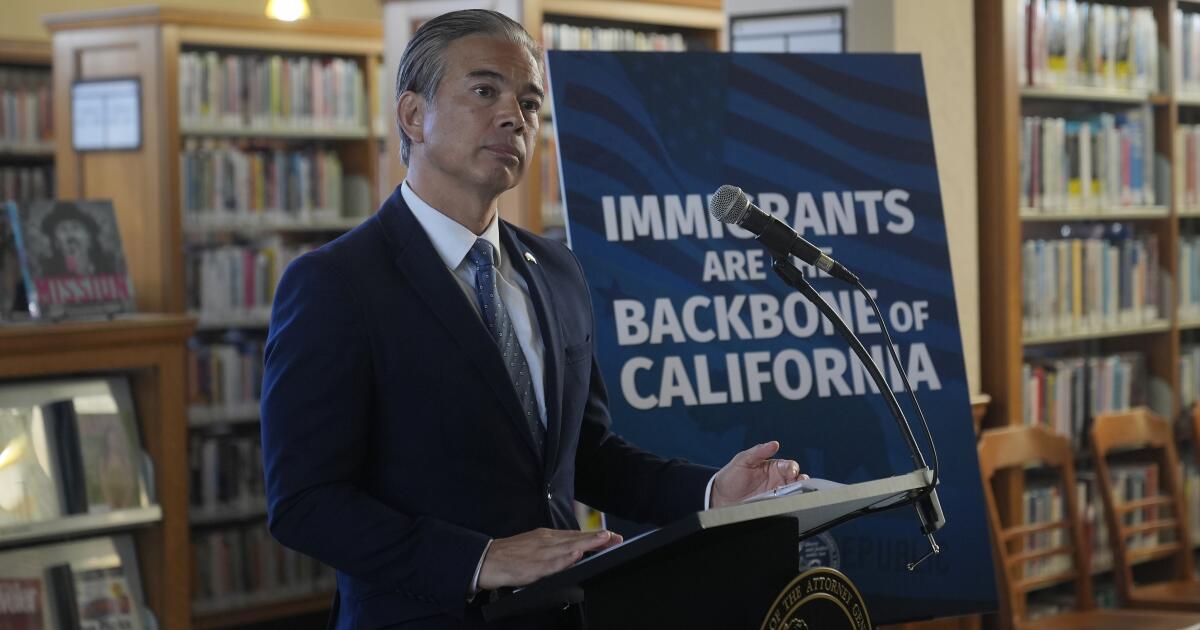
However, more than 30 states, including California, decided to proceed with the trial. California Atty. Gen. Rob Bonta praised these state-led efforts to protect consumers, even amid dwindling antitrust enforcement from the Trump administration, he said in a statement.

“This is a historic and resounding victory for artists, fans, and the venues that support them,” Bonta said. “We are incredibly proud of today’s outcome … this verdict shows just how far states can go to protect our residents from big corporations that are using their power to illegally raise prices and rip-off Americans.”

Though a verdict has been reached, remedies for how Live Nation will be held accountable for its actions are still being decided by the judge.

One possibility is that the companies could be split up, an outcome favored by critics.

National Independent Venue Assn. Executive Director Stephen Parker said Ticketmaster and Live Nation need to be separate for the industry to see change.

“Live Nation and Ticketmaster must be broken up now. Ticketmaster should not be permitted to participate in the ticket resale market. Live Nation should not be able to promote more than 50% of artists’ tours,” Parker said in a statement. “And the damages paid to the states should be remitted to the independent venues, promoters, festivals, and fans that have suffered under Live Nation’s monopolistic reign over the last 15 years.”

Serona Elton, attorney and interim vice dean at the University of Miami’s Frost School of Music, said that the separation of Live Nation and Ticket master seems to be “on the table,” but she said it’s too early to assess the verdict’s fallout on the music industry.

Elton said fans might notice small changes in pricing, but there are factors other than Live Nation that are contributing to high ticket prices, such as the secondary ticket market as well as supply and demand challenges.

The verdict, Elton said, “sends a message of support to music companies and professionals working in the live space who have felt like they have suffered financial consequences because of Live Nation’s behavior.”

The ruling is a small but necessary step toward achieving a balanced and competitive ticketing industry, said Hal Singer, a managing director of economic consulting firm Econ One, who specializes in antitrust and consumer protection issues.

Forcing a Ticketmaster sale probably is the only remedy that will bring real change, Singer said.

“We’re not out of the woods quite yet,” Singer said. “We’ve kind of tilted the probability.… It could change the competitive balance. But that requires that a meaningful remedy follows the liability. You need both.”

Fans and some artists have long groused about Ticketmaster, which was founded in 1976 and merged with Live Nation in 2010.

Dustin Brighton, director of government relations for the Coalition for Ticket Fairness, agreed that although the verdict is a landmark moment for fans, “it’s not the end of the road.”

“As the court considers remedies, the focus must be on restoring competition, increasing transparency, and ensuring fans have real choice,” Brighton said in a statement.

Times staff writer August Brown and the Associated Press contributed to this report.

Source link

Venezuela: Trump Administration Issues Banking Licenses as Rodríguez Eyes ‘Long-Term’ US Energy Ties

Rodríguez hosted US Energy Assistant Secretary Kyle Haustveit at Miraflores Palace. (Presidential Press)

Caracas, April 15, 2026 (venezuelanalysis.com) – The US Treasury Department’s Office of Foreign Assets Control (OFAC) issued two new general licenses on Tuesday facilitating transactions with Venezuelan state institutions.

 for Venezuela on Tuesday: a commercial license (No. 56) and a financial license (No. 57), signaling a partial easing of restrictions while maintaining key controls.

General License 56 (GL56) authorizes US entities to negotiate and sign “contingent contracts” for future commercial operations in Venezuela. This allows firms to move forward with agreements, investments, or projects, though their final execution remains subject to separate OFAC approval.

The waiver maintains important restrictions, including a ban on payments in gold or cryptocurrencies, as well as prohibitions on transactions involving China, Russia, Iran, North Korea, and Cuba. It likewise forbids transactions involving Venezuelan debt and does not unblock currently frozen Venezuelan assets.

For its part, General License 57 (GL57) permits a broad range of financial operations with the Venezuelan Central Bank (BCV), as well as Venezuela’s public banks: Banco de Venezuela, Banco Digital de los Trabajadores, Banco del Tesoro, and entities in which these institutions hold a 50 percent or greater stake.

The allowed transactions include opening and managing accounts, conducting US dollar transfers, issuing loans, and providing banking services. The BCV was sanctioned in April 2019, effectively isolating Venezuela from international financial circuits and increasing costs for basic transactions.

The latest sanctions waivers are expected to facilitate financial flows to the Venezuelan economy, including the transfer of Venezuelan oil revenues that are currently controlled by the Trump administration. US authorities have returned a confirmed US $500 million out of an initial deal estimated at $2 billion, while US and Venezuelan officials have confirmed the purchase of US-manufactured medicines and hospital equipment using Venezuelan funds.

Analyst Hermes Pérez warned that reincorporation into the SWIFT system and establishment of US-based accounts could take several months due to security and technological requirements. Other economists argued that GL57 could allow the Central Bank to stabilize the Venezuelan foreign exchange system.

For several years, a parallel exchange rate between the US dollar and the Venezuelan bolívar has coexisted with the official one set by the Central Bank, often with a gap above 50 percent that fueled distortions in retail activities and currency speculation.

Since the January 3 military strikes and kidnapping of Venezuelan President Nicolás Maduro, the Trump administration has issued several licenses to expand US influence in the Caribbean nation, particularly in key economic sectors such as hydrocarbons and mining.

In parallel, Venezuelan authorities have promoted several pro-business reforms, while multiple Trump officials and corporate executives have come the South American country and held meetings with the acting government led by Delcy Rodríguez.

The latest waivers coincided with the visit to Caracas of a US Department of Energy delegation led by Assistant Secretary Kyle Haustveit. Rodríguez hosted the official on Wednesday in a work meeting at the presidential palace.

During a short, televised intervention, Rodríguez argued that OFAC licenses do not provide sufficient “legal certainty” and reiterated calls for Trump to lift unilateral coercive measures against the country.

“An investor requires greater legal certainty. A license does not provide long-term legal guarantees because it is subject to temporality,” she argued. Rodríguez claimed Washington and Caracas have “enough maturity” to establish “long-term” energy cooperation ties.

“We are working very hard on changes that can attract investment, and which can build an energy cooperation agenda with the United States,” she said.

Rodríguez additionally disclosed recent meetings with representatives from ExxonMobil and ConocoPhillips, stating that authorities have “taken into account recommendations” from oil majors in recent legislative overhauls. Both ExxonMobil and ConocoPhillips refused to accept hydrocarbon reforms under former President Hugo Chávez in the 2000s, later securing multi-billion-dollar arbitration awards against the Caracas as compensation for the nationalization of their assets.

Haustveit and the Energy Department delegation were also present on Monday during the signing of agreements with Chevron that granted the Texas-based conglomerate an increased stake in the Petroindependencia joint venture and awarded an additional extra-heavy crude bloc for exploration to the Petropiar mixed company. Chevron owns minority stakes in both joint enterprises with Venezuelan state oil company PDVSA.

Shell, Eni and Repsol are among the other energy giants to have recently advanced in deals with the Venezuelan government under the improved conditions of the new Hydrocarbon Law.

US Chargé d’Affaires in Venezuela Laura Dogu was also present at the Chevron deal-signing ceremony and the meeting with Haustveit’s delegation. However, the White House announced Wednesday that her post will be taken over by veteran diplomat John Barrett.

Barrett, who previously served as chargé d’affaires at the US Embassy in Guatemala since January 21, 2026, was recently accused by Guatemalan President Bernardo Arévalo of interference during judicial elections for the Constitutional Court held in March.

Edited by Ricardo Vaz in Caracas.

Source link