ACLU

Detainees at ICE facility in Texas report frequent beatings and abuses, say rights advocates

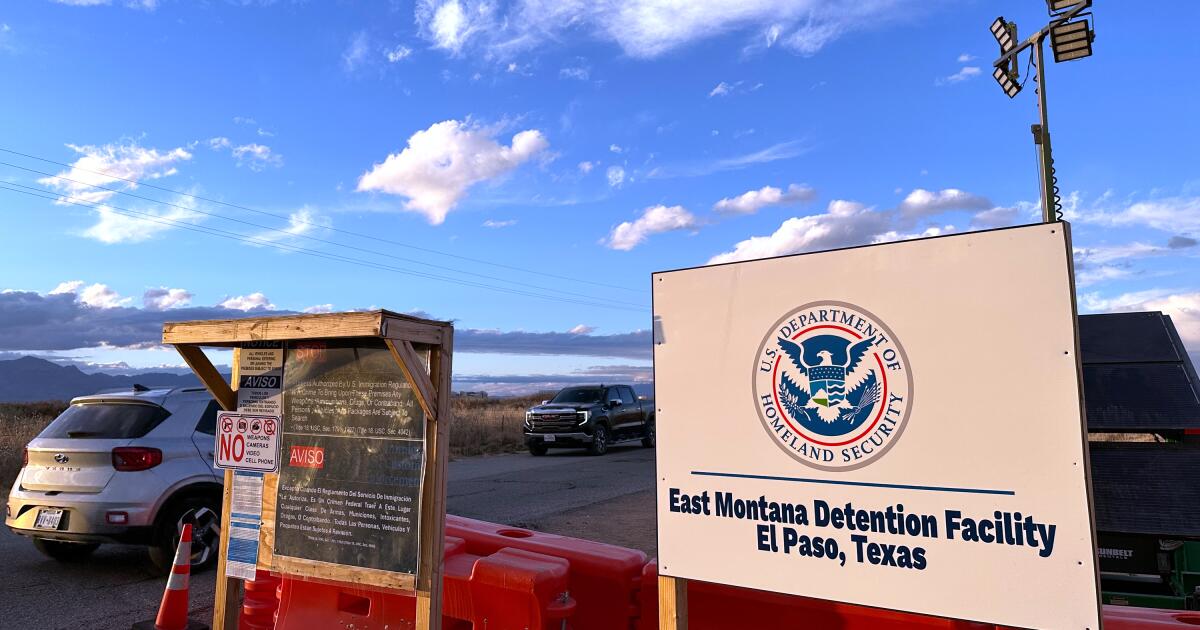
Dozens of people held at a sprawling Immigration and Customs Enforcement facility in Texas say they were either beaten by guards or witnessed others being beaten, according to a new report issued by legal and human rights advocates.

The 84-page report issued jointly Wednesday by Human Rights Watch and the American Civil Liberties Union also says men and women held at Camp East Montana, located at the U.S. Army’s Fort Bliss in El Paso, recounted being denied necessary medical care, forced to live in filthy conditions and fed inedible meals. Detainees also said they were prevented from contacting their lawyers or family members.

Of the 71 detainees contacted over a five month period, 64 — about 90% of those interviewed — said they had either personally been assaulted by the staff or had seen others physically abused, according to the report.

“ICE’s Camp East Montana is a human rights disaster,” said Angélica César, a fellow at Human Rights Watch and the ACLU who was a lead researcher for the report. “The U.S. government should shut it down, conduct independent investigations into all abuses and deaths in custody, and put an end to mass deportations and mandatory immigration detention.”

The Department of Homeland Security, which includes ICE, did not immediately respond to a request for comment.

The new accounts of violence and substandard living conditions inside Camp East Montana are consistent with earlier reports by The Associated Press and others. At least three detainees held at the facility since it opened in August have died, including a 55-year-old Cuban migrant who was handcuffed and stopped breathing earlier this year after being held down by guards.

A local medical examiner later ruled that death a homicide and a federal report issued last month said evidence in the case was “missing or destroyed.” That report by the Government Accountability Office found mismanagement by the Department of Homeland Security had created unsafe conditions that contributed to detainee deaths and suffering even as millions of wasted tax dollars enriched contractors.

In March, ICE replaced Acquisition Logistics, LLC, the prime contractor that had been awarded a deal last year worth up to $1.3 billion to build and manage the camp. The Virginia company had no prior experience running an ICE detention facility, had never won a federal contract worth more than $16 million and lacked a functioning website.

The change came as an internal ICE review documented 49 deficiencies, which it defines as violations of detention standards or policies, in areas including the use of force and restraints, security and medical care.

Despite the change in contractors, interviews conducted by Human Rights Watch and the ACLU as recently as last month found serious problems at the camp have persisted.

Detainees recounted degrading and inhumane living conditions that included bathrooms covered in feces, flooded housing units and no access to soap or other basic hygiene supplies, according to the report. They also reported being held indoors for weeks without meaningful access to recreation, sunlight or fresh air.

People also described receiving spoiled food and inconsistent meal schedules, with delays of up to 12 hours between meals.

The report recounts detainees saying that guards beat detainees in response to hunger strikes, requests for medical attention and complaints regarding detention conditions. Several people said that guards imposed collective punishment, striking or assaulting multiple people after accusing one detainee of violating rules, according to the report.

Researchers found that staff pressured and coerced those held there into abandoning immigration claims and accepting removal to third countries if they could not be sent back to their own country. The detainees said they were threatened with violence, criminal prosecution, and indefinite detention if they refused deportation.

In some cases, the report concluded, the circumstances of ICE detention could amount to enforced disappearances, a potential violation of international human rights law.

Human Rights Watch and the ACLU called on the Trump administration to close Camp East Montana and to allow independent investigations into deaths in custody, excessive force, medical neglect and enforced disappearances.

“The abuses documented at Fort Bliss are the predictable outcome of the Trump administration’s mass deportation agenda, its brutal expansion of immigration detention, and the erosion of federal oversight mechanisms,” said César, the lead researcher. “People at Camp East Montana are human beings who deserve to be treated with dignity and protected from harm.”

Biesecker writes for the Associated Press.

Source link

Airports’ four-letter code you won’t want to see on your boarding pass

One code can mean it takes longer to get through security. Here’s the code many travellers dread seeing on their boarding pass and what it means for their flight if they get it

Navigating the airport can be an exhausting ordeal. In an ideal world, we’d sail through the security queue to give ourselves time to browse the perfumed duty free outlets or enjoy a relaxed coffee, but there are many bottlenecks where you can find yourself delayed.

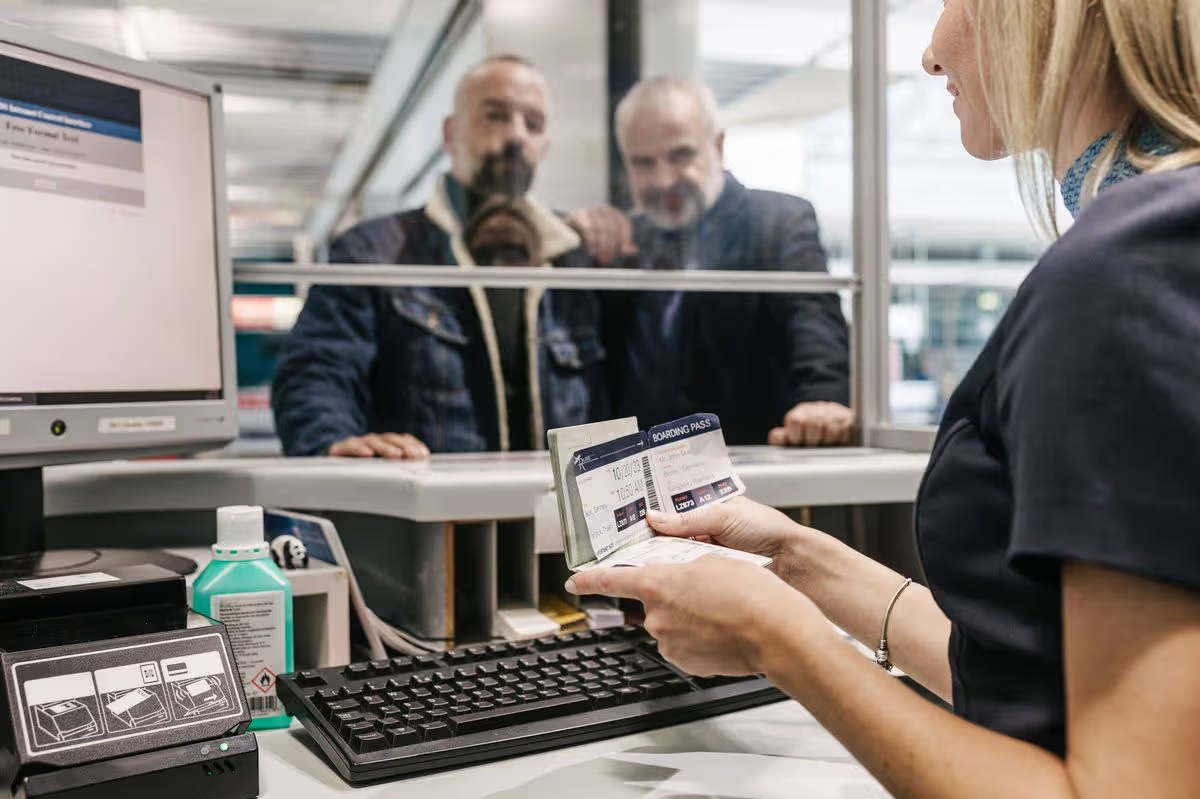
One indication that your journey through the airport might not run as smoothly as you’d hope can be identified once your boarding pass has been printed. Check-in personnel will often add codes to your ticket alerting airport staff to watch for particular things, and there’s one code travellers really won’t want to encounter if they’re jetting off to the World Cup.

Those flying to or from the United States may notice SSSS on their boarding pass, which stands for Secondary Security Screening Selection or Secondary Security Screening Selectee. Essentially, this code indicates you’ve been chosen for extra inspection, and this can be for a wide range of reasons.

Certain airlines won’t print SSSS, but may have their own method of flagging that a passenger requires additional screening. For instance, Southwest Airlines reportedly uses a chequerboard pattern which appears on boarding passes.

Citizens of particular countries, such as those with sanctions or political tensions with the USA, may be more likely to encounter SSSS on their boarding pass. But the Transportation Security Administration (TSA) remains tight-lipped about the precise criteria that could see your name flagged in this manner, reports the Express.

The ACLU (American Civil Liberties Union) has previously claimed that “TSA maintains a “Selectee List” (sometimes called the “Automatic Selectee List”) of people who are automatically and intentionally selected for enhanced screening every time they fly.”

However, there are other factors that could see passengers flagged for additional screening, including making one-way bookings and purchasing tickets with cash. Travellers who have previously passed through high-risk countries, regularly visit ‘unusual’ destinations, or display other flight patterns deemed suspicious may also find themselves subjected to extra screening.

Having a name similar to someone on a Department of Homeland Security watch list could be yet another reason you end up with additional security checks, and could even result in you being denied boarding. Passengers who are repeatedly flagged for extra screening can apply for the DHS Traveler Redress Inquiry Program (DHS TRIP), and if approved they’ll receive a Redress Control Number to use when booking flights, which should make their travels considerably smoother.

If you do spot SSSS or a similar code on your boarding pass, there’s no need to panic. More often than not, it simply means you’ll require some additional time to clear security.

Typically this involves an enhanced pat-down, a manual inspection of carry-on bags, and possibly the use of a handheld metal detector as you pass through the security lane. Travellers should make sure they adhere to their airline’s advice on when to arrive at the airport, as this will guarantee they have sufficient time to clear any additional security checks.

In the USA, the TSA advises arriving a minimum of two hours before domestic flights and three hours ahead of international departures.

Have a story you want to share? Email us at webtravel@reachplc.com

Source link