A Nuclear Strike On Iran? It Sounds Absurd Because It Is. Let’s Talk About It
On Sunday evening, commentator Tucker Carlson made a chilling claim: U.S. President Donald Trump may soon use nuclear weapons against Iran’s Pickaxe Mountain facility. Carlson’s comments were posted on X just two days ahead of the Nov. 3 U.S. midterm elections, which Trump has frequently used as a timeframe for when he would conduct a new wave of airstrikes on Iran if he so decides. However, earlier on Monday, Trump downplayed that deadline, answering “no” when asked by reporters whether he was considering attacking after the election is over.
Regardless, Carlson’s claim runs counter to the president’s previous stance on the nuclear weapons issue. Trump has publicly eschewed their use, and while he has discussed attacking Pickaxe Mountain, he’s made it clear it would be by a conventional weapon if he made the call.
Monday afternoon, the White House dismissed Carlson’s asssertion.
“President Trump has a wide range of options available regarding Iran, and he will do what is right to keep the American people safe,” a White House official told us. “Tucker Carlson lost his way long ago due to a debilitating case of Trump Derangement Syndrome, and he has no insight into military planning or the Commander-in-Chief’s thinking.”
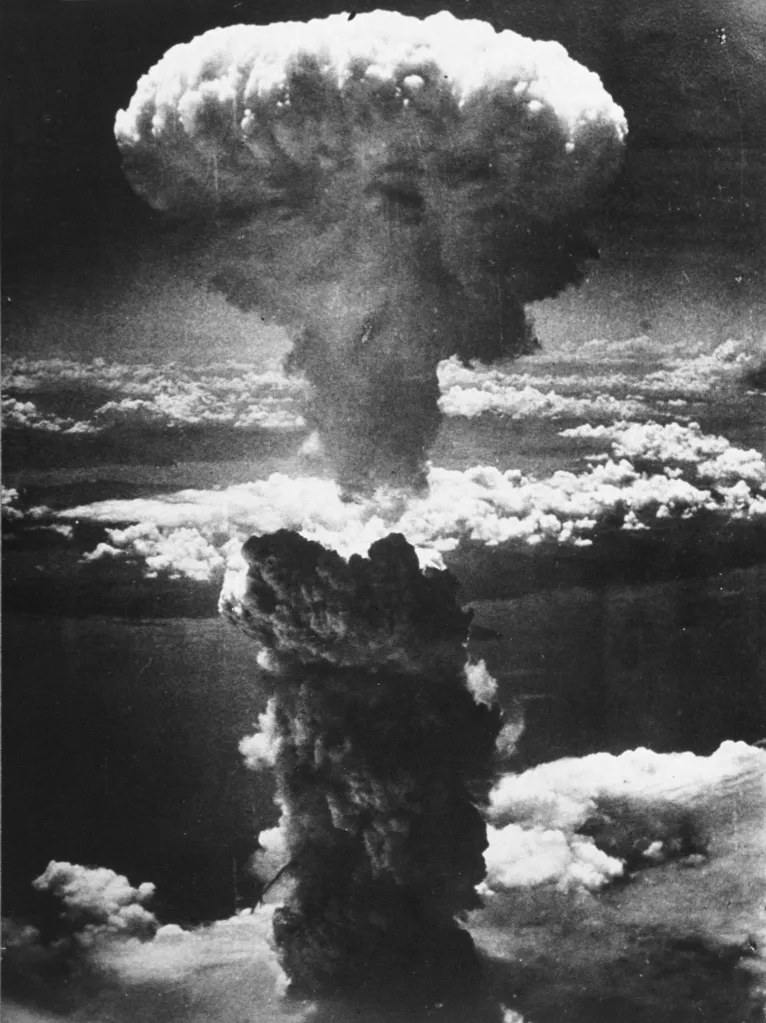
We don’t know the source of Carlson’s information or if it is in any way accurate. Carlson has experienced a major rift with Trump and has said plenty of shocking things in recent years, especially in regard to Trump’s second term and the war with Iran. Still, he is a very connected figure in right-wing media. Regardless, as TWZ editor-in-chief Tyler Rogoway noted on X, even conjecture that has gone viral about the potential use of a nuclear weapon for the first time since the U.S. bombed Nagasaki on Aug. 9, 1945, merits discussion. It would have such profound and irrevocable repercussions that it should not be ignored. We addressed the same concerns in regard to Russia and Ukraine in 2022.

“If a nuclear weapon were used on [Pickaxe Mountain] in Iran by the US or Israel or an empty field in Ukraine by Russia etc, it doesn’t matter, it would open up Pandora’s box and would make the U.S. and the world dramatically less safe,” Rogoway stated. “This isn’t even a question of how big of a disaster the use, in any manner, of a nuclear weapon would be. It would represent the largest foreign policy error ever by the United States if we were involved. We can only hope this claim isn’t accurate in any way.”
“…And I have no idea if this claim has merit, but this is important nonetheless,” he added in his X thread. “It is massively viral on my X feed. It has to be addressed.”
Pickaxe Mountain, a very hardened Iranian facility also known as Kuh-e Kolang Gaz La, is located in central Iran. As we have noted previously, it is deeply buried and would be a very difficult target to effectively destroy. In the past, Iran has openly discussed plans to produce centrifuges to support its nuclear enrichment efforts at the newer facility located there. It is also estimated to be large enough to house an actual enrichment plant, as well as other nuclear infrastructure, but exactly what is inside remains unconfirmed. Our previous reporting provides deeper insights into Pickaxe Mountain and Iran’s possible intentions for it.

What Carlson said
“Under pressure from Israeli prime minister Benjamin Netanyahu, the Trump administration may be within days of launching a nuclear strike on Iran,” Carlson stated on X. “The target would be Pickax Mountain in central Iran, where Israeli intelligence claims the Iranian government has restarted its nuclear enrichment program. No conventional weapon in the American arsenal can penetrate 300 feet of solid granite to destroy the tunnels where enrichment is supposedly taking place.”
“The only military option is a nuclear strike. Netanyahu has been pushing hard for one,” the commentator added. “‘Bibi calls Trump about it every day,’ says an informed observer. Netanyahu is cornered and desperate. After last week’s election results, he can’t form a government unless Trump intervenes directly in Israeli politics and brokers a deal with other parties that gives Netanyahu 61 seats in the Knesset. Otherwise, he is out as prime minister and on his way to ignominy, investigations and possibly jail. Netanyahu must stay close to Trump. He needs this war.”
What Trump has said about using nuclear weapons
“We don’t need it. Why do I need it?” Trump responded in April when asked if he would use nuclear weapons against Iran. “Why would a stupid question like that be asked? Why would I use a nuclear weapon where we’ve totally in a very conventional way decimated them without it.”
“A nuclear weapon should never be allowed to be used by anybody,” he added.

WATCH: Trump says he won’t use nuclear weapons in Iran
The American leader reiterated that stance in August.
“They’re totally defeated militarily, so I defeat them, and now I should use a nuclear weapon on top of them? What a stupid question,” Trump responded on Aug. 31 when again asked by a reporter if he would use nuclear weapons against Iran.
Still, Trump sparked concerns about whether he would use nuclear weapons when he threatened to obliterate Iran in April in a social media post.
“A whole civilization will die tonight, never to be brought back again,” Trump stated on his Truth Social site. “I don’t want that to happen, but it probably will.”
Several experts we spoke with downplayed the chances that Trump would order a nuclear strike on Pickaxe Mountain, but they did not completely rule it out.
“Is it likely? No,” Daryl G. Kimball, Executive Director of the Arms Control Association (ACA) and publisher and contributor for the organization’s monthly journal, Arms Control Today, said when we asked if he thought Trump would order a nuclear strike. “Is it possible that an unstable desperate president who has sole authority to authorize nuclear weapons use, would do so, yes. Given the situation, it is crucial that responsible U.S. voices and international leaders speak out against a massive U.S. strike on Iran of any kind.”
“That is highly unlikely,” Hans Kristensen — director, Nuclear Information Project, Federation of American Scientists, explained to us. He also writes the bi-monthly Nuclear Notebook and the world nuclear forces overview in the SIPRI Yearbook. “There is nothing at all in Iran that justifies breaking the 81-year absence of nuclear weapons use. It would be a violation of the international Laws of War, have devastating consequences for U.S. foreign policy and the efforts to prevent proliferation and the use of nuclear weapons. It would be the kind of act where one would hope the people in the nuclear chain of command would refuse to carry out the president’s order.”
“I honestly don’t know that anyone knows that Trump will or won’t do, including Trump,” Stephen I. Schwartz, nonresident senior fellow at the Bulletin of the Atomic Scientists, told us. “… for many years, often without prompting, he has spoken with a mix of wariness and awe about the tremendous power of nuclear weapons. But he has also publicly and repeatedly threatened to utterly annihilate North Korea, Afghanistan, and Iran. So, really, who knows?”
What weapon could the U.S. use if Trump ordered a nuclear strike?
As we have reported in the past, the B61-11 is the only air-delivered nuclear weapon in the U.S. stockpile today that is specifically designed to address this target set.
“The B61-11 is based on the earlier B61-7, but is substantially different in form and function. It has a heavily reinforced outer shell, possibly with a depleted uranium penetrating nose section, and a rocket booster at the rear to help it penetrate down into underground facilities. Sources differ on the maximum yield of the B61-11, but it is said to either be between 340 and 360 kilotons (identical to that of the B61-7) or to be closer to 400 kilotons. There are also reportedly fewer than 100 of these bombs in the stockpile.”
The first B61-11 versions entered service in the 1960s. We have written extensively about the entire family of these weapons.

Given the yield of the B61-11, “one could probably do the job” of rendering Pickaxe Mountain unusable, Kristensen told us. “The collateral damage from 400 kilotons would be considerable; even if some very deep structures potentially survived, the damage to the overall infrastructure — plus the residual radiation in the soil — would probably make the site unusable. Other potential options include more conventional penetrator attacks to take out access points and accessible infrastructure, or potentially cyber attacks to sabotage or disable equipment and functions.”
“I think there are many non-nuclear options the United States and/or Israel could utilize to prevent Iran from restarting its nuclear weapons program (if, indeed, Iran has made a decision to do that),” argued Schwartz. “That would include using guided conventional bombs to target any entrances to the facility, impeding efforts of personnel to gain access and also complicating/preventing the movement of any materials out of the mountain.”
“Using an ICBM [intercontinental ballistic missile] would not be a good option,” he added. “For one thing, any ICBM would have to fly over Russia to reach Iran, which would be risky in more ways than one, even if Putin somehow agreed to allow that to happen. For another, ICBM warheads are not designed to penetrate the earth, at least not to any significant depth, so the force of the explosion would largely be ‘wasted’ on the surface, with everything that implies about lethal radioactive fallout. (Using an SLBM [submarine-launched ballistic missile] from a Trident submarine stationed closer to Iran would avoid the overflight risks but would also still be perceived as a threat by Russia and perhaps China after launch, even if we notify them in advance. But W76 and W76-1 warheads are not earth-penetrators, and I doubt we would want to use a 455-kiloton W88, our largest ballistic missile warhead, also not a deep earth-penetrator.)”

Israel has a nuclear weapons program that it does not publicly acknowledge and can deliver warheads via its Jericho ballistic missiles, some tactical jets and maybe even submarines.
It’s possible a special operations forces teams could attempt to raid the facility, access its interior and place a nuclear device inside it, although such a mission would be immensely challenging and extremely risky. We have also talked about the possibility of irradiating the facilities from the inside without using a nuclear warhead, but instead planting and detonating a kind of dirty bomb.
What are the alternatives to nuclear weapons?
As we noted earlier in this story, Trump has brought up the issue of conventional weapons to attack Pickaxe Mountain. In July, he said it was ripe for a “nice big fat shot right in the front door.”
At the time, we discussed how difficult it would be to effectively destroy or render inoperable a hardened, deeply buried facility like Pickaxe.
For years, experts have talked about the likelihood that the main caverns under the mountain are beyond the reach of even the largest known conventional bunker buster bomb in U.S. inventory, the 30,000-pound-class GBU-57/B Massive Ordnance Penetrator (MOP). The MOP was developed, at least in part, specifically to hold underground facilities in Iran at risk. Construction at Pickaxe Mountain, especially in the past five years, is a clear response to U.S. threats.
MOPs were the centerpiece during the June 2025 Operation Midnight Hammer strikes, with 12 being dropped on Fordow and another two on Natanz. To get at the actual targets at Fordow, six MOPs were dropped on two specific ventilation shafts, with each successive bomb burrowing deeper down into the complex below. This underscores the challenges that would be involved in attempting a similar operation against Pickaxe Mountain. It is unclear how many MOPs the U.S. has left or whether there are enough to have the same kind of effects on Pickaxe Mountain as they had on Fordow and Natanz. We also don’t even know if any features of the installation, like the ventilation shafts, even exist there to be exploited.

GBU-57 MOP test
CBS News reported last month that the White House and Pentagon “have prepared plans to use a Massive Ordnance Air Blast bomb [MOAB] to hit military sites in Iran,” including Pickaxe Mountain, “if ordered by President Trump.” However, the 22,000-pound-class MOAB, also designated the GBU-43/B, is not a deep-penetrating munition, it’s a fuel-air bomb, and it was not immediately clear from that story how the weapon might be employed. The bomb is also only known to be currently cleared for employment via C-130-type aircraft. It has only been used in combat once, in Afghanistan in 2017, where the skies above were entirely permissive.

MOAB’s use case would be limited against sites like Pickaxe Mountain. While its unique overpressure effects could harm any personnel exposed inside tunnel systems that are open to the outside world, it is unlikely to destroy or even heavily damage the hardened facilities themselves. It could cause damage to external support infrastructure and act as a psychological weapon in its own right, but it is not a bunker buster in any way.
As mentioned earlier, although for a nuclear weapon insertion mission, a much more dangerous option for American forces would be sending U.S. troops directly into Iran to secure and destroy the facility.
“Special Operations Forces [SOF] could render the site off-limits, at least for a time, but that would be a much riskier operation,” Schwartz noted.
We addressed the SOF option earlier this year in an interview with former U.S. Central Command commander Joseph Votel, who discussed the enormous challenges of putting boots on the ground so deep into Iranian territory. We have frequently discussed the complexities, and pros and cons of a commando raid on an underground nuclear facility.
In a 2024 raid on a Syrian underground missile site, Israeli special operations forces used explosives they brought with them in order to blow up the underground facility, including sophisticated machinery, from inside.
Still doing this deep in Iran could require a relatively large force and an operation that could last days and would include occupying and defending a key area within the country as teams try to access the caverns. It depends on just how accessible and defended Pickaxe Mountain is.
The fallout dangers of using a nuclear weapon against Iran
The B61-11 “would dig up and disperse into the atmosphere large amounts of radioactive material,” Kristensen told us.
He pointed to the results he derived from the NUKEMAP nuclear weapons explosion effects simulation site to offer a sense of what could happen.
“A surface burst would, depending on wind conditions, spread debris nearly 300 km downwind,” he explained. “Perhaps further, because the simulation calculates a surface bust, while the B61-11 would penetrate a few meters into the rock and therefore increase the fallout issue.”

If highly enriched uranium was stored underground, it would be hard to determine what would happen to it in such an attack, Kristensen added.
“It depends on how the attack is carried out,” Kristensen noted. “It could potentially be entombed or some of it could be lifted up into the atmosphere.”
“U.S. politicians and some civilian military leaders have, since the first Gulf War, periodically and misleadingly claimed that earth-penetrating nuclear weapons can safely and reliably destroy deeply-buried and hardened underground targets with no significant consequences above ground,” Schwartz proffered. “Nothing could be further from the truth, for the simple reason that earth-penetrating nuclear weapons have to, you know, penetrate the earth. That leaves a hole out of which radioactive dirt and gases will spew following any nuclear explosion (as happened more than once at the Nevada Test Site during the Cold War, when nuclear test shafts thought to be properly and fully stemmed or sealed failed, releasing vast and dangerous amounts of radioactive debris, contaminating both the test site and areas downwind.”)
“The larger the explosion, the larger the venting,” Schwartz added. “Depending on which way the winds are blowing, downwind of Pickaxe Mountain could include Iraq, Kuwait, Saudi Arabia, Qatar, the United Arab Emirates, Oman, Turkey, Azerbaijan, Georgia, Russia, Turkmenistan, Kazakhstan, Uzbekistan, Afghanistan, and Pakistan.”
What about the geopolitical fallout?
In his X post, Carlson offered a blunt assessment of the geopolitical ramifications of a U.S. nuclear strike on Iran.
“An American nuclear attack on Iran would set a new precedent,” he stated. “The Russians have already told at least two other governments that an American nuclear strike on Iran would free them to use nuclear weapons against Ukraine. Pakistan and India would be tempted to do the same against each other, as would North Korea against Seoul. After the first nuclear strike, World War Three is inevitable.”
As we have frequently reported, Putin has rattled the nuclear saber against the West as well as in Ukraine since the early days of his full-on invasion of that country.
“The United States has, Republican and Democratic administrations alike, worked hard to ensure that the achievement of no nuclear weapons use since 1945 is continued,” Kristensen told us. “If the Trump regime were to break that taboo, especially in a situation where there is no imminent or executed Iranian nuclear threat to the United States or its allies, it would turn the United States into the nuclear pariah. It would threaten political relations with allies that have also worked to prevent the use of nuclear weapons. And, yes, if the United States were to break the taboo, other nuclear armed states would feel less inhibited — Putin included.”
“If Trump decides to attack Iran with nuclear weapons in a purely preventive war of choice (with Iran presenting no imminent or probably even short-term threat, making such an attack illegal under international law), it will almost certainly unleash both global condemnation (apart from Israel) and a new wave of nuclear proliferation that will be extremely difficult if not impossible to stop,” said Schwartz. “That would be highly counterproductive for the United States and its allies. And while I am not an economist, it’s not hard to imagine there will be severe and negative global economic repercussions as well.”
The sentiments expressed by the nuclear experts echo what Rogoway stated on X.
“The potential game trees for many potential hotspots around the globe post use would be so terrifying it’s hard to comprehend,” he wrote. “All the softer levers the U.S. once had to deter such a thing, which has been effective for the better part of a century would vanish. Proliferation would explode. The U.S. would likely no longer be a superpower beyond it’s military capabilities and likely short-term wealth. [Every] ounce of moral highground would evaporate. The entire world would be on the brink by default.”
He also stated that this would quickly destroy key alliances.
We have no direct information about whether Trump is even contemplating the use a nuclear weapons against Iran or not. However, a discussion of the wide-ranging ramifications of such an unprecedented act is a worthwhile exercise, especially in these uncertain times, and even more so if this possibility has actually been floated within the administration.
Contact the author: howard@twz.com