UN rights chief condemns Nicaragua’s decision to abolish elections | Elections News
UN rights chief condemns worsening repression in Nicaragua, urging the restoration of freedoms and the rule of law.
Published On 22 Jul 2026
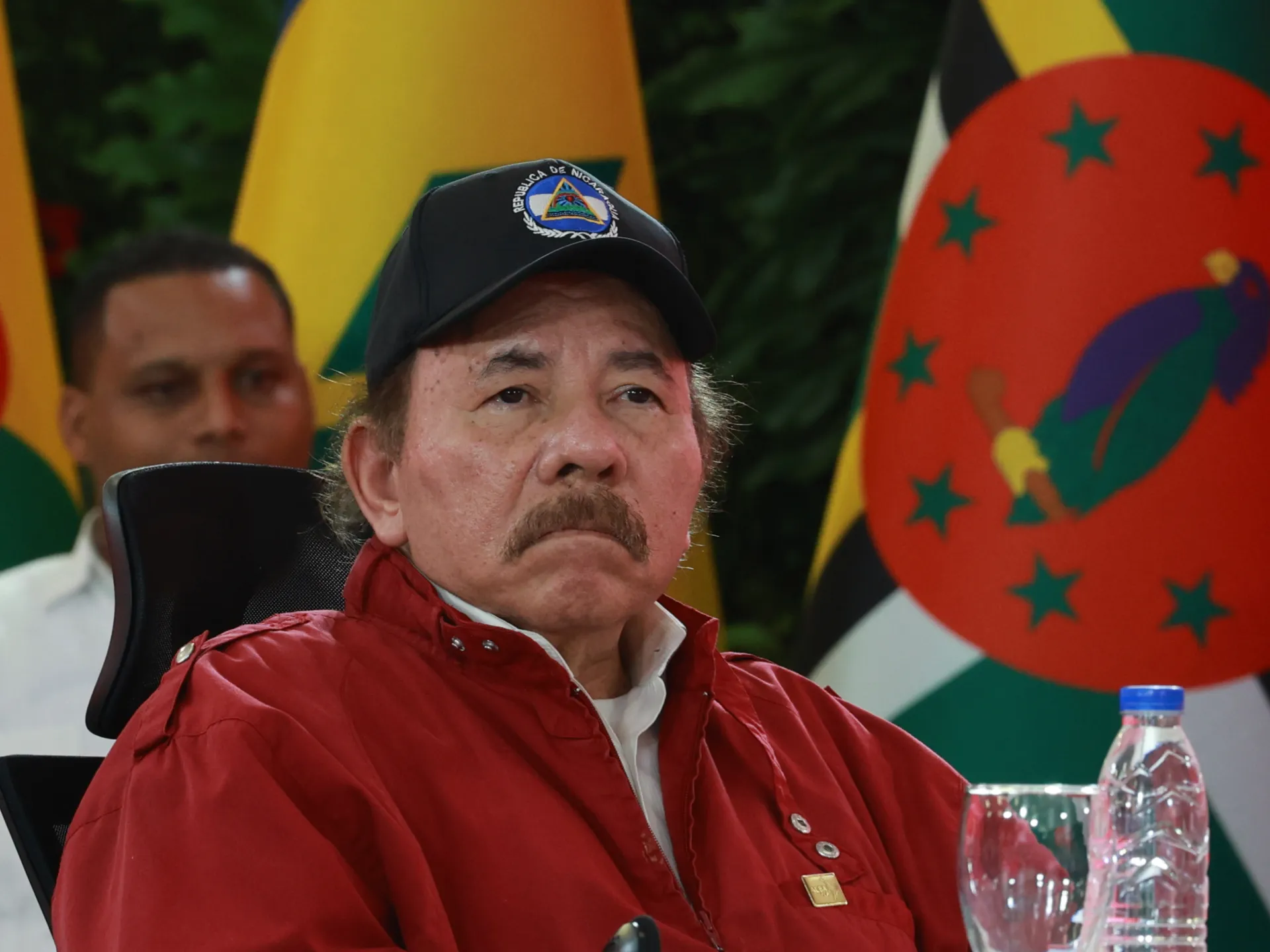
The United Nations human rights chief has condemned Nicaragua’s escalating crackdown on civil and political rights, days after President Daniel Ortega announced a plan to block elections and shut out the opposition.
UN High Commissioner for Human Rights Volker Turk said on Wednesday that the “latest developments further deepen the severe restrictions on fundamental freedoms, the dismantling of civic space, and the steady erosion of the rule of law” in the Central American country.
Recommended Stories
list of 3 itemsend of list
Ortega, a former leftist fighter who has ruled Nicaragua for almost two decades alongside his wife, Vice President Rosario Murillo, said on Sunday that “there won’t be elections” in the country, a move that would remove any prospect of a challenge to the couple’s rule.
General elections were due in November, but constitutional reforms passed 18 months ago extended the presidential term from 5 to 6 years, pushing the vote back to 2027.
Turk said power in Nicaragua was increasingly being concentrated “under the co-presidency”, with the ruling Sandinista party already holding full control over parliament, all municipalities and the regional councils on the North and South Caribbean Coast.
He called on the authorities to “reopen civic space, and restore the rule of law”, warning that “independent expression of thought or opinion is systematically suppressed”, urging that “people of all political viewpoints must be allowed to vote and run for office, in line with the State’s international human rights obligations”.
The statement also cited the government’s abrupt revocation of several lawyers’ credentials earlier this month, which it said had no legal justification, and noted that at least 46 people remain arbitrarily detained on political grounds.
Turk further raised concern over the treatment of religious groups, pointing to the unclear whereabouts of Bishop Abelardo Mata Guevara, 80, who was detained on June 29, and urged Managua to release all those held arbitrarily “with humanity and dignity”.
Since a deadly crackdown on protests in 2018 – in which more than 300 people were killed, according to UN figures – Ortega and Murillo have tightened their grip on Nicaraguan society.