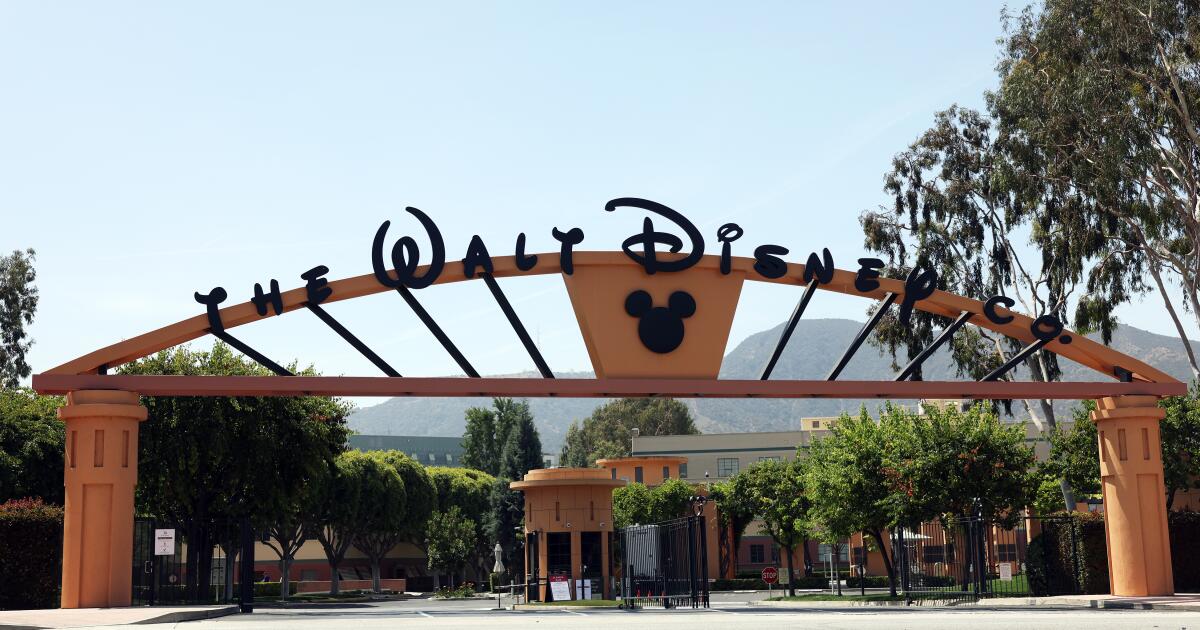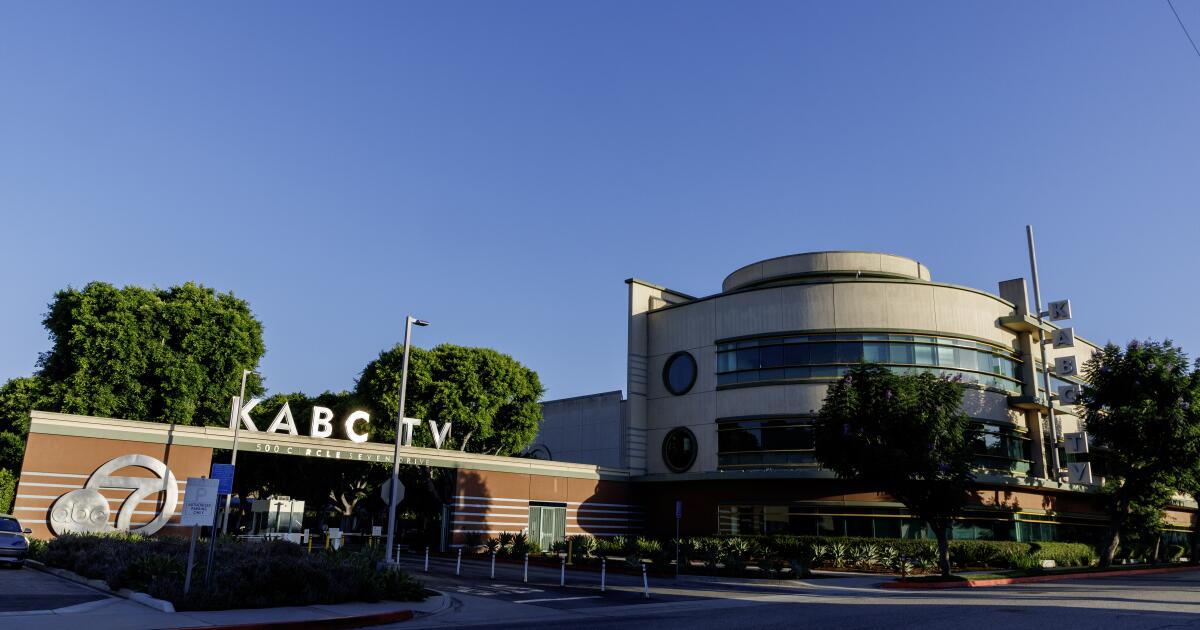
Disney digs in for a fight with FCC amid ABC stations license threat
The Federal Communications Commission has demanded for months that ABC prove its stations deserve to stay on the air — a proceeding with no precedent in the last half-century. This week, the network delivered a sharp retort, accusing the agency of waging a campaign of political retribution.
“The retaliation against ABC is a signal to every media company in the country: accommodate the Administration’s view of what news coverage should look like or pay the price,” Disney’s attorneys wrote in the 109-page filing.
ABC has enlisted prominent elected officials, community organizations and seasoned litigators for the 1st Amendment showdown that could ultimately reach the U.S. Supreme Court.
The Burbank entertainment giant’s combative stance comes after the FCC, led by Chairman Brendan Carr, took the rare step this spring of demanding that Disney defend the broadcast licenses of its eight ABC stations — including KABC-TV Channel 7 in Los Angeles — years before the permits were set to expire.
The government’s move represents a significant threat to Disney because the loss of licenses would hobble the ABC network by forcing its largest stations off the air. Other ABC stations at risk include those in San Francisco, Fresno, Houston, Philadelphia and New York.
The FCC is expected to make a determination next month. It could require ABC to defend the stations in a hearing or before the commission.
The FCC, in a statement, defended its inquiry and hinted that it may go further.
“For decades, Americans of all stripes have been subsidizing broadcast media to the tune of many billions of dollars by giving TV stations free use of a valuable, public resource — the airwaves,” an FCC spokesperson said in a statement.
“Broadcasters are required by law to operate in the public interest — not in the narrow or partisan interests of a political party,” the spokesperson said. “The FCC is going to hold broadcasters accountable to the full extent of the law, regardless of any disinformation campaign that some of them may choose to run.”
ABC accused the FCC of overreach.
“The FCC has spent the last 18 months searching for some pretext for revoking the stations’ licenses,” ABC wrote in the filing. “The Commission has found none, because the stations easily meet the standard for license renewal.”
Disney‘s attorneys cited the unusual nature of the proceedings, linking the FCC’s action to Trump’s dislike of certain ABC network programs. The FCC launched its review in late April — one day after the president lashed out at ABC after late-night comedian Jimmy Kimmel made a joke about Trump’s health and First Lady Melania Trump.
Until this spring, the FCC had not called for an early license review in more than 50 years.
“For the first time in history, the Federal Communications Commission has ordered an entire group of local television stations … to undergo simultaneous license renewal proceedings well before their current licenses expire,” Disney’s attorneys wrote.
The network asked the FCC to dismiss its review.
“This is as clearcut an example of retaliation as one could imagine,” ABC said in the filing. Damage has been done even if the FCC stops short of revoking the licenses, the network said.
“The mere investigation and the threat of finding a violation are sufficient: ‘the value of a sword of Damocles is that it hangs — not that it drops,’” ABC wrote.
The FCC has previously said the review grew out of an inquiry it launched early last year to scrutinize Disney’s internal diversity, equity and inclusion programs to see if they violated federal anti-discrimination laws — part of an expansive Trump-led campaign against DEI initiated as soon as he returned to the White House.
This year, the FCC opened a separate inquiry over whether ABC’s “The View” should keep an exemption granted to news programs so they are not obligated to provide equal airtime for opponents of various political candidates. The FCC had given “The View” the exemption in 2002.
Carr also has criticized ABC for not televising Trump’s live prime-time speech earlier this month to vent his grievances over past elections. Carr told reporters ABC’s decision could factor into the station license review.
By calling for the early review, the FCC allowed petitioners and ordinary residents to chime in on the stations’ operations and ABC network programming.
By Wednesday night’s deadline, the FCC had received more than 153,000 public comments. An estimated 96% of respondents wrote to support their local ABC station, the company said, including L.A. County Sheriff Robert Luna, L.A. Police Chief Jim McDonnell and Riverside County Sheriff Chad Bianco.
In his letter, Luna said KABC — which has operated in Los Angeles for more than 75 years — provides residents with “timely and accurate information that has … undoubtedly saved lives.”
Lawmakers, including House Minority Leader Hakeem Jeffries (D-N.Y.), former Speaker Nancy Pelosi (D-San Francisco) and Reps. Ted Lieu (D-Torrance), Laura Friedman (D-Glendale), Maxine Waters (D-Los Angeles) and Ro Khanna (D-Fremont), have called on the FCC to drop the review, saying the agency has politicized its regulatory powers.
Disney has hired prominent attorneys Beth Wilkinson, Jennifer Tatel and Paul Clement, a former U.S. solicitor general with experience arguing before the Supreme Court. Disney’s chief legal officer, Horacio Gutierrez, is leading the team.
Several conservative groups have questioned whether ABC was fit to hold its licenses.
“ABC’s rights are important, but they are not preeminent,” Center for American Rights President Daniel Suhr wrote in his 66-page petition to the FCC to deny ABC’s local licenses, adding that the commission must instead focus on “the right of viewers of ABC stations.”
“Disney’s lawyers can wish upon a star, but they cannot make this record disappear,” Suhr said in a statement Thursday. “Disney does not own the public airwaves, and an FCC license is not a corporate entitlement. The FCC should reject Disney’s effort to avoid meaningful scrutiny, require full answers, and designate these applications for a hearing.”
The FCC doesn’t license networks, only the local stations that carry network programming.
In one public comment, an ABC critic named Lawrence Caswell agreed with Suhr’s contention: “ABC is just a grossly biased propaganda arm of the Democratic Party.”
Jeffrey C. Illes, a Chicago-area viewer who identified himself as a Republican, wrote in support of Disney’s WLS-TV station.
“I rely on their broadcast for accurate, timely, and trusted local news, breaking weather updates, and essential public safety information,” Illes wrote. “ABC 7 Chicago is a vital institution in our community.”
Stations typically file for a license renewal once every eight years. The commission then determines whether the station has “served the public interest” and has not run afoul of the “rules and regulations of the Commission.”
The commission’s lone Democrat, Anna M. Gomez, blasted the station license inquiry.
“The FCC has no authority to police the ideological balance of the airwaves, and no matter what this Commission does next, the record now makes clear that this was never a genuine search for the public interest,” Gomez said in a Thursday statement.
There are three commissioners: Gomez and two Republicans — Carr and Olivia Trusty, who joined the panel last year.
Congress restricts the FCC from any regulatory moves that trample on free speech rights for broadcasters.
A coalition of progressive groups, including the American Civil Liberties Union, urged Disney Chief Executive Josh D’Amaro to continue to defend 1st Amendment freedoms in the company’s battle with the FCC.
“When you’re standing up for yourself, you are standing up for all of us,” the group wrote. “All of our rights are in danger when the FCC is allowed to censor comedians, journalists, and critics.”