100m

Sandro Tonali: Spurs agree deal worth up to £100m for Newcastle man

De Zerbi could not have been clearer.

The Spurs manager had just kept his side up on the final day, following a 1-0 win against Everton, but this was not a time for celebration.

He was already looking ahead to the summer to ensure the club were never in this situation again.

“My target is to start the pre-season with the team I have in my dream,” he said in his final news conference last season.

That dream is quickly becoming a reality for the Italian following an aggressive start to the window from Spurs.

Defenders Andy Robertson and Marcos Senesi have arrived on free transfers and the club could end up spending a combined £237m on centre-back Jan Paul van Hecke and midfielders Fernandes and Tonali.

Spurs may have finished in 17th in back-to-back seasons, but the club are feeling the benefit of strong off-the-field revenues as they look to bounce back.

Newcastle, by contrast, have effectively needed to trade to reinvest.

The sight of Alexander Isak, Anthony Gordon and Tonali all leaving the club in the space of less than a year is sobering.

So the spotlight will very much now be on incomings.

After missing out on forward Victor Munoz, who joined Liverpool, Newcastle need reinforcements.

The club have only signed 20-year-old goalkeeper Ewen Jaouen, who will likely start the season as a deputy, having never played top-flight football before.

There is little margin for error with pre-season right around the corner.

More to follow.

Source link

Beyond the beach: Spain pushes offbeat regions as tourist numbers nudge 100m | Spain

Spain is redoubling its efforts to push its tourist appeal beyond the familiar “sun and sand and coast” model as it prepares for another record-breaking year in which the number of foreign visitors could reach 100 million for the first time, the country’s tourism minister has said.

Speaking to the Guardian, Jordi Hereu rejected suggestions that Spain was now saturated with tourists but said it had become clear that the “old formulas no longer work”, especially amid growing concerns about overtourism and the effects of the climate emergency.

Hereu, the minister of industry and tourism, said the steady growth in tourist numbers – which could be further boosted this summer by uncertainty over Middle Eastern destinations after the US and Israel’s war on Iran – could be managed sustainably and responsibly.

Last year, the number of foreign tourists rose by 3.2% to 96.8 million, while the value of their spending grew by 6.8% to hit €134bn (£116bn). Figures from the first quarter of this year show tourist numbers up by 3.4% and revenue up by 6.7%.

People visit the windmills in Mota del Cuervo, Cuenca province, Castilla-La Mancha, made famous by Miguel de Cervantes in Don Quixote. Photograph: Maria Galan/Alamy

“With that growth, we could reach 100 million,” Hereu said. “But I’d like to point out that that doesn’t worry us or obsess us … [We favour] what I call calm growth – in other words, growth that can be easily managed. And this year, despite what’s happening and the demand diversion effect, I think that in general, for the moment, our forecast is for moderate growth.”

While tourism has long been a pillar of the Spanish economy, making up more than 12% of its GDP, its rapid and unchecked growth in many parts of the country over recent years has triggered protests and a furious backlash. Overtourism, not least the proliferation of tourist flats, has changed the face of entire neighbourhoods and cities, priced locals out of the housing market and increased pressure on public services and natural resources.

Asked if the current rates of tourism were sustainable, Hereu said: “Yes, if we do our homework, and no if we don’t do anything.” The minister, a former mayor of Barcelona, praised his successor in that role, Jaume Collboni, a fellow socialist, for pushing ahead with a decision to ban tourist flats in the Catalan capital by 2028, but he said Spain’s highly decentralised nature made it hard for the central government to drive local change. He also contrasted the different approaches of leftwing and rightwing administrations.

People demonstrate against high rental rates in Barcelona in November 2024. Photograph: Bloomberg/Getty

“I think there are places in Spain that are now seeing the effects of not regulating anything,” he said. “But I also want to be very clear, because this is also influenced by political stripes. The left is more in favour of regulating tourism than the right, because the right holds the view that we should allow freedom because the market will self-regulate, which isn’t true, and in many places it’s clear that it isn’t self-regulating.”

Hereu said that while he believed anti-tourism feeling was “very much a minority thing” in Spain, it was becoming increasingly clear that a new approach was needed and that local and regional authorities needed to properly limit, regulate and tax their tourist offerings.

graphic for Spanish tourism rates

“What I do believe is that in some places there’s a demand for better tourism in the sense of a better model,” he said. “But the culture I see throughout Spain is a culture of a country that knows how to welcome people. Our key principle is that we’re in favour of transforming the model to keep ahead and that we’re working humbly to transform that model because the old formulas no longer work.”

Although he defended traditional beach tourism, which still makes up 37% of all visits, and said Spain had to be open to “all sectors” of the market, he noted that people were now seeking experiences beyond their sun loungers.

“It’s very interesting to see in the qualitative surveys that people who come basically because ‘hey, I’m here to relax, sun and beach, etc,’ also start asking for add-ons – like ‘beach plus’,” Hereu said. “I think this is also a good trend, because what we need is to add value.”

The minister said Spain’s socialist-led coalition government was committed to the socially, economically and environmentally sustainable principles set out in its 2030 tourism strategy.

“One is decentralising destinations over time and we’re also working towards deseasonalisation,” he said. “The third, very clear principle is the diversification of our offering away from all those decades of sun and sand and coast, which is where the [Spanish tourist industry] was born, and which is still the dominant offering.”

People eat outside in Plaza Mayor in Villanueva de los Infantes, Castilla-La Mancha. Photograph: Maria Galan/Alamy

Although Spain has been pushing the summery charms of its eastern and southern coasts for decades, Hereu argues that the key to sustainable tourism lies in making it less seasonal, less beach-fixated and more geographically and culturally diverse.

The country’s current advertising campaign, called Think You Know Spain? Think Again, swerves sun-kissed costas to focus instead on images of churches, paradores, orange groves, folk festivals, food, wine, lakes, green spaces, handicrafts and brown bears. It even features rain.

“You don’t see any coastal beaches; instead, it’s inland Spain and the green Spain of the north,” he said. “So, it’s about decentralising and discovering other realities. And what’s happening? Low and mid season are growing much more than high season, and the inland, green Spain is growing much more than the majority segment.”

Spain’s reliance on tourism was laid bare during the Covid pandemic. In 2020, international visitor numbers dropped by 77% to just 18.9 million. That led the government to invest €3.4bn of EU next generation funds in a plan to modernise and transform the sector.

A brown bear in Somiedo natural park in the Cantabrian mountains in Asturias. Photograph: Lucas Vallecillos/Alamy

According to Hereu, that investment has allowed less visited areas of Spain – such as Castilla-La Mancha, Castilla y León, Extremadura, Galicia, Asturias, Cantabria, the Basque Country and Navarre – to develop their tourist markets.

“There’s a lot of potential there, and that’s where we need growth to happen,” he said. “Because, for example, on the Mediterranean coast, especially now, in the high season, there are limits.”

Jordi Hereu, Spain’s industry and tourism minister. Photograph: David Lopez Villalta

The minister believes that diversifying and decentralising the tourist industry can help Spain tackle depopulation by ensuring that young people don’t have to leave their home towns in search of work elsewhere. Lengthening the season would also help to provide more stable employment, he added.

“Before it was June, July, August and, at most, September,” he said. “But now people open in April, May or June, and we have more stability. October is also very important now, and the truth is, in some cases chains tell me they’re open almost all year round. This also gives us more job stability, and it’s obvious that salaries also have to increase, right? You have to attract people to the sector and retain them. And that’s good news because it also brings social stability and a redistribution of profits.”

The spring festival of the Bando de la Huerta in Murcia, which is held annually on the first Tuesday after Easter. Photograph: Europa Press/Getty

Hereu said the government was also seeking to help the industry adapt to the effects of the climate emergency, which are becoming ever more evident in Spain in the form of droughts, heatwaves, forest fires, floods and rising sea levels. He said renewable energy, efficient water use and good waste management could all help mitigate the consequences of the crisis.

It was now abundantly clear, he added, that sticking to the old model would be a mistake. “We’d have the opposite of what we have now – we’d be growing the number of tourists rather than the spending value,” he said. “And 1781961576 we are growing more in value than in number.”

Source link

Trump administration offers $100m in aid to Cuba in exchange for reform | Donald Trump News

Amid an oil blockade against the island, the US blames Cuba’s communist leadership for ‘standing in the way’ of aid.

The United States has offered $100m in humanitarian assistance to Cuba on the condition that the island’s communist government agrees to “meaningful reforms”.

The sum was made public in a statement from the US State Department on Wednesday, though the administration of President Donald Trump underscored it had made the offer privately in the past.

Recommended Stories

list of 3 itemsend of list

But the $100m comes with strings: namely, that Cuba’s government commits to Trump-approved changes.

“Today, the Department of State is publicly restating the United States’ generous offer to provide an additional $100 million in direct humanitarian assistance to the Cuban people,” the statement said.

“The decision rests with the Cuban regime to accept our offer of assistance or deny critical living-saving aid and ultimately be accountable to the Cuban people for standing in the way of critical assistance.”

The statement marks the latest chapter in an ongoing pressure campaign designed to destabilise Cuba’s communist leadership.

Since Cold War tensions in the 1960s, the US has placed a comprehensive trade embargo on the Caribbean island, in part as a reaction to the Cuban Revolution.

It has become the longest-running trade embargo in modern history, and the US has justified its continuation by pointing to systematic repression under Cuba’s communist government.

But critics have denounced the trade embargo as worsening humanitarian conditions on the island.

The crisis reached a tipping point in January, after Trump abducted Venezuelan President Nicolas Maduro, a close ally of Cuba.

In the following weeks, Trump cut off Venezuelan funds and oil supplies to Cuba. He then threatened economic penalties against any country that supplied Cuba with fuel, implementing a de facto oil blockade on the island.

Since then, only one Russian oil tanker has reached Cuba in late March. That month alone, the island suffered two island-wide blackouts.

Cuba relies heavily on foreign imports of oil to power its ageing energy grid. Only 40 percent of its oil supply is produced domestically, according to the International Energy Agency.

The United Nations warned earlier this year that Cuba faces the possibility of humanitarian “collapse”, with public transportation grinding to a halt, food prices soaring and public services like hospitals struggling to keep the lights on.

Trump, meanwhile, has repeatedly threatened to shift his focus to Cuba after the US-Israeli war on Iran ends, saying the island is “next” on his list of countries where he would like to see regime change.

“As we achieve a historic transformation in Venezuela, we’re also looking forward to the great change that will soon be coming to Cuba,” Trump told Latin American leaders at a summit in March.

“Cuba’s in its last moments of life as it was. It’ll have a great new life, but it’s in its last moments of life the way it is.”

Earlier this month, the US president issued a fresh wave of sanctions against the Cuban government, accusing the island of posing “an unusual and extraordinary threat to US national security and foreign policy”.

Media reports have also indicated that the Trump administration has stepped up its surveillance flights around Cuba, possibly in preparation for a surge of military assets to the Caribbean.

In Wednesday’s statement, the State Department blamed the communist system for having “only served to enrich the elites and condemn the Cuban people to poverty”.

It did not mention the US role in the humanitarian crisis on the island but instead described Cuba’s government as a hurdle to delivering much-needed aid.

“The regime refuses to allow the United States to provide this assistance to the Cuban people, who are in desperate need of assistance due to the failures of Cuba’s corrupt regime,” the State Department wrote.

It added that, should Cuba accept its terms, the $100m would be distributed through the Catholic Church and “other reliable independent humanitarian organizations”, rather than through the island’s government.

Source link

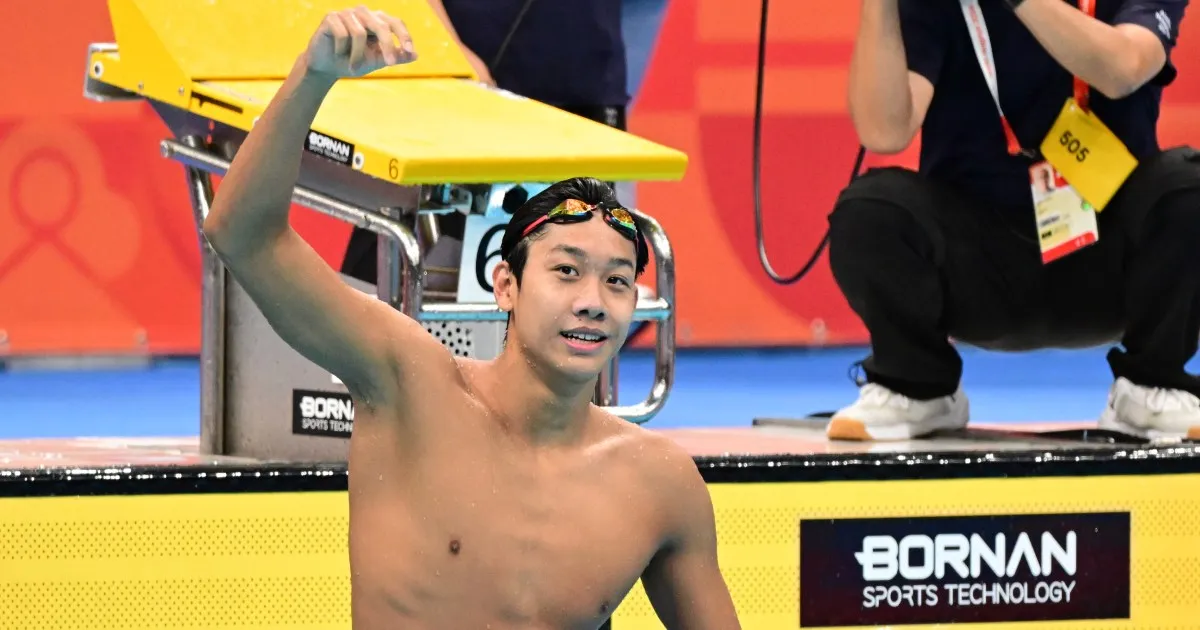
GB’s William Ellard breaks S14 100m freestyle world record

Paralympic champion William Ellard set a new world record time to take gold in the S14 mixed class 100m freestyle final at the Aquatics GB Swimming Championships in London.

Ellard finished in 50.41 seconds to shave 0.49 seconds off the previous record held by Brazil’s Arthur Xavier Ribeiro.

The 20-year-old, who won gold in the S14 200m freestyle and mixed 4x100m freestyle relay at the 2024 Paralympics, has subsequently booked his place at the European Championships in Paris this summer.

“It was the aim,” Ellard said when asked if he was targeting the world record.

“It would be nice to go 49 [seconds] one day but it hurt for the last 15 metres, I just had to put my head down.”

Earlier, Angharad Evans broke the British 200m breaststroke record, finishing in a time of 2:19.70.

Source link