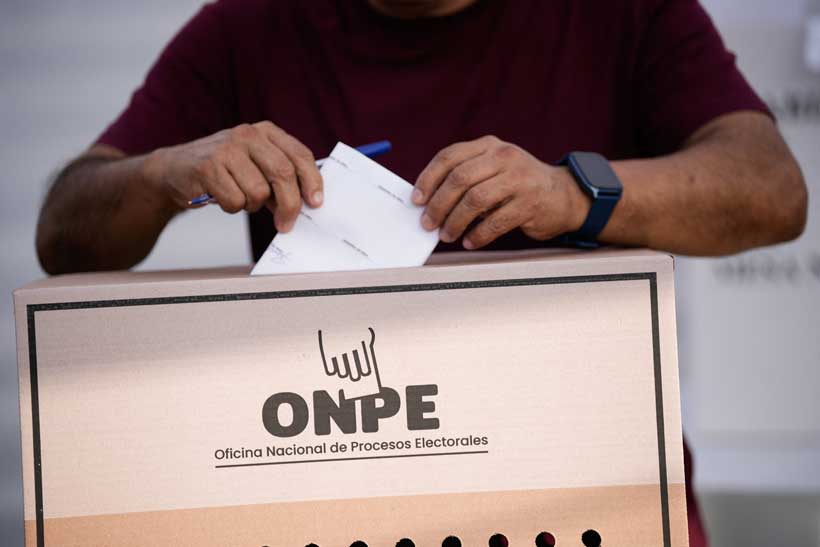
Peru held a presidential election on Sunday, where voters cast ballots for a new president and Congress members from a pool of over 30 candidates. This election comes after years of political instability that have lowered public trust in government institutions. With no clear frontrunner and all major candidates polling below the 50% needed for an outright win, a runoff on June 7 appears likely, posing further uncertainty for the country.
Voting began at 7 a.m. local time with about 27 million eligible voters. Some voters reported issues at polling stations, such as long lines and delayed openings, causing frustration. Voter Margarita Sandoval expressed her discontent, saying, “These elections are a disaster. “
The candidates represent a wide ideological range, including seasoned politicians, a far-right businessman, and a comedian. Notable candidates include conservative Keiko Fujimori, who is making her fourth attempt for the presidency and is known for her promises of order and economic stability amid rising crime. Despite her experience, she remains a controversial figure. Other emerging candidates include Ricardo Belmont from the center-left, who recently gained popularity, and comedian Carlos Alvarez, who is focused on a strict crime-fighting message.
Public safety is the primary issue driving the campaign, as crime rates have increased due to drug trafficking and illegal mining. Most candidates propose enhancing military involvement in domestic security. Furthermore, the election has geopolitical implications, notably due to Peru’s growing ties with China, which are causing concern in the United States. Post-election, the new president will face a fragmented Congress, complicating legislative efforts and increasing the likelihood of impeachment disputes. Polls closed at 5 p.m., with preliminary results expected shortly thereafter.
With information from Reuters