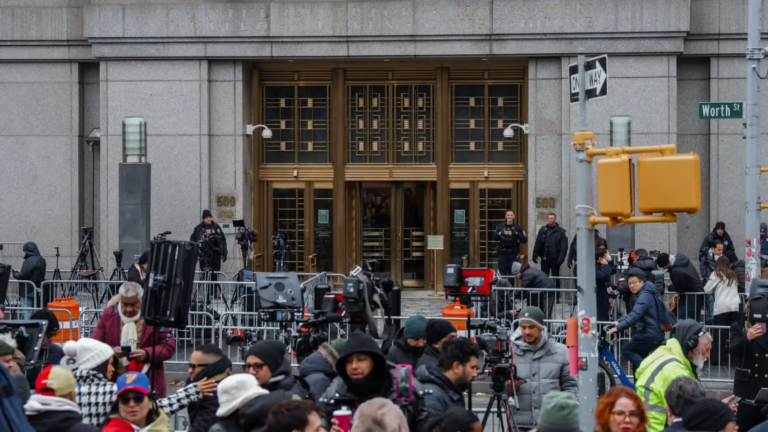
As has been widely reported, Nicolás Maduro has moved to dismiss the criminal charges of narco-terrorism conspiracy, cocaine importation conspiracy, and weapons-related offenses brought against him in the Southern District of New York, because the Bolivarian Republic of Venezuela has not been able to pay the fees of the high-profile lawyer Maduro has chosen: Barry J. Pollack. At this point, Maduro is not asking the federal court in Manhattan to declare him innocent. What he is asking for right now is something narrower, but still potentially powerful: he wants the court to dismiss the criminal charges against him because, according to his lawyers, the United States is blocking the money he says is needed to pay the lawyer he chose to defend him.
That sounds technical, but not necessarily complicated. In a criminal case in the US, a defendant has a constitutional right to a fair chance to defend himself. Part of that right, in many circumstances, includes the right to be represented by counsel of his own choosing, so long as that lawyer is qualified and there is no conflict. Maduro says the government, through OFAC sanctions, first allowed his lawyer, Pollack, to be paid by the Venezuelan state and then quickly reversed itself, leaving him unable to fund the defense he wants. Maduro’s motion to dismiss the charges says that this kind of interference violates the Sixth Amendment and due process (protected by the Constitution of the United States).
The criminal case itself is serious and very concrete. It alleges that for years senior Venezuelan officials worked with major criminal and armed organizations to move large quantities of cocaine toward the United States. The indictment also names Cilia Flores de Maduro, Diosdado Cabello Rondón, Ramón Rodríguez Chacín, Nicolás Ernesto Maduro Guerra, and Héctor Rusthenford Guerrero Flores (the main leader of Tren de Aragua).
The present legal dispute is over whether the United States can prosecute Maduro while at the same time prevent the funding arrangement on which his chosen defense depends. That is why Maduro’s motion relies so heavily on the case of United States v. Stein, the Second Circuit case decided in 2006, cited as 435 F.Supp.2d 330 (S.D.N.Y. 2006), which affirmed dismissal after government pressure effectively cut off payment of legal fees by a third party. That precedent does not mean Maduro automatically wins, but it is not a frivolous citation either. It is the strongest case he has at this point.
An unusual case
Barry Pollack, Maduro’s lawyer, is not just any lawyer. He is a well-known white collar and national security defense attorney, and he represented Julian Assange and negotiated the plea agreement that secured Assange’s release. Maduro is not complaining about the quality of available appointed counsel (public defenders) in the abstract. He is claiming a right to keep the specific lawyer he retained.
Still, Maduro’s argument has an obvious weakness. The money he wants to use is not his own personal money. It is money that the current Venezuelan authorities, i.e., Delcy Eloina Rodriguez et al., say they are willing to use for his defense, and Maduro’s defense says Venezuelan law and practice require that support.
But that underlying proposition is not something the New York court necessarily has to decide in any definitive way. The judge may conclude that even if there is a dispute under Venezuelan public law about whether the Republic should pay to defend a former ruler accused of running a criminal enterprise, that is not the immediate federal constitutional question before him. The immediate question is narrower: has the United States, by its own OFAC sanctions, interfered with Maduro’s ability to have the lawyer of his choice?
Can the Executive Branch of the United States selectively block a payment source in a way that undermines the fairness of the criminal process?
That distinction is crucial. A Venezuelan lawyer, taxpayer, legislator, or court might frame the issue one way: can public money legally be used to defend a former head of state accused of crimes that, if true, look personal, corrupt, and far outside any legitimate official duty? Things could be different for acts like war crimes or crimes against humanity carried out through the use of state power, such as directing the armed forces. Those types of conduct are often treated as acts performed in an official capacity for purposes of attribution to the State, even though they can also give rise to individual criminal responsibility. Maduro is not currently being prosecuted for those.
A US federal judge, however, may frame the question entirely differently: once the United States has brought this defendant into an American courtroom, can the Executive Branch of the United States selectively block a payment source in a way that undermines the fairness of the criminal process?
Public law systems generally do not treat the treasury as an open-ended insurance policy for any conduct by any officeholder. A serious argument can be made that the state should defend officials for acts tied to the exercise of public office, but not for allegedly private criminal enterprises carried out under cover of office. If the accusation is that an official used the state as a shell for drug trafficking, bribery, or cartel protection, then the argument for mandatory public funding becomes much weaker. That does not make the issue easy. It just means it is not nearly as obvious as Maduro’s motion to dismiss suggests.
There is another layer too. The legitimacy of Maduro’s political authority matters in the background, even if it may not control this problem. The Carter Center said the 2024 Venezuelan presidential election did not meet international standards and could not be verified or corroborated. Reuters reported the same at the time. There are strong public grounds to reject the idea that Maduro’s continued hold on power after the 2024 election reflected a democratic mandate.
But even that does not end the question. US courts often care less about democratic theory than about practical recognition and real-world control. And here the geopolitical situation moved quickly. Washington recognized Delcy Rodríguez’s government in March 2026 and then lifted personal sanctions on her on April 1, 2026. That change is relevant because it undercuts any simplistic claim that all Venezuelan state funds remain equally untouchable in all contexts.
The cleanest way out for the government would be to authorize payment from a clearly identified, untainted funding source subject to tight conditions and reporting.
That is part of why Judge Alvin Hellerstein pressed the government at the March 26 hearing. Public reports show that he did not dismiss the indictment on the spot. In fact, he signaled the opposite. But he also questioned the coherence of the government’s position and wanted more explanation for why a government now being courted for commercial engagement by the Trump afdministration could not fund a criminal defense. The judge was not ready to throw the case out, but was also not fully satisfied with the prosecution’s answer.
OFAC’s public conduct cuts both ways. Sanctions law often does restrict dealings with blocked governments and blocked persons. However, OFAC publicly issued a series of Venezuela related general licenses in February 2026, including General License 47 on diluents, updated General Licenses 30B, 46A, and 48 on port and airport operations, Venezuelan origin oil, and oil and gas support, and then General Licenses 49 and 50 on contingent investments and certain oil and gas sector operations. Maduro’s lawyers use that sequence to say, in essence: if the Treasury Department can authorize business, investment, and energy transactions involving Venezuela, why can it not authorize payment for criminal defense fees that implicate an express constitutional concern?
The prosecutors, of course, have their own answer. Public reporting says they argued Maduro and Flores could use personal funds, but not Venezuelan state funds, because those public funds are tied to the sanctions framework and, in their view, to illicit proceeds or national security concerns. That position is not irrational. If the government believes the Venezuelan state under Maduro was itself part of the alleged criminal machinery, then letting that same state bankroll the defense may look, from the prosecution’s perspective, like forcing the United States to tolerate the use of tainted sovereign resources to resist prosecution in an American court.
Even so, the government’s position has vulnerabilities. The strongest is not political but doctrinal. The U.S. Supreme Court has treated wrongful denial of counsel of choice as a structural problem, not just an ordinary trial error. And Stein remains a serious Second Circuit precedent where government interference with third party fee payments led to dismissal. Maduro’s legal team is therefore not asking for some exotic new rule. It is trying to fit this unusual case into an existing line of Sixth Amendment and Due Process law.
Maduro’s case involves sanctions, foreign policy, blocked sovereign funds, and a defendant accused of using state power as part of the criminal conduct itself. A judge could reasonably decide that the Stein precedent is relevant but not controlling. A judge could also decide that the proper remedy, if there is a constitutional problem, is not dismissal now but some narrower effort to clarify what funding sources are actually available, whether untainted personal or third-party funds exist, and whether appointed counsel would eliminate any immediate prejudice. That appears to be why Judge Hellerstein has so far resisted the defense’s request for instant dismissal.
This is where the “indigent defendant” point needs to be stated carefully. If Maduro truly had no usable money at all, the court could appoint a public defender under the Criminal Justice Act. That would solve one problem, but not necessarily the one Maduro wants to litigate. His claim is not merely that he wants a lawyer. It is that the government unlawfully blocked the lawyer he picked. Those are related but different ideas. In constitutional terms, appointed counsel is not always a complete answer to an alleged denial of retained counsel of choice. At the March 26, 2026 hearing, judge Hellerstein offered Maduro’s lawyer an easy off-ramp: should Pollack quit the case, the judge would simply appoint a public defender and carry on with the proceeding. Pollack, naturally, did not take that off-ramp. And here, again, what Maduro and Delcy are saying is that they (or rather, Venezuelan taxpayers) indeed have the funds, but are being improperly prevented from using such funds.
A process under the American rule of law
So where does that leave matters? In practical terms, somewhere in the middle. Maduro has not shown, at least not yet in public, that dismissal is proper. But the government also has not made the issue disappear by pointing to the possibility of appointed counsel (a public defender). The more OFAC authorizes broad commercial re-engagement with Venezuela while continuing to refuse this narrow defense related authorization, the more uncomfortable the constitutional optics become. I do not believe that Venezuela should pay for Maduro’s legal defense; the problem, however, is that Venezuela wants to pay.
The cleanest way out for the government would be to authorize payment from a clearly identified, untainted funding source subject to tight conditions and reporting. That would preserve the prosecution, avoid turning this pretrial funding dispute into the central drama of the case, and reduce the risk that any eventual conviction is shadowed by a serious Sixth Amendment (Due Process) fight. If the government refuses to do that, it keeps feeding the argument that it wants to control not only the prosecution but also the defense.
The larger irony is hard to miss. Maduro now invokes constitutional protections that his own regime routinely denied to political prisoners, dissidents, and disappeared persons. But American courts are not supposed to ration constitutional rights according to moral sympathy. If the United States has chosen to bring him before a federal court, it must be prepared to give him the process the Constitution requires. The real question is not whether Maduro deserves indulgence.
At least for now, Judge Hellerstein seems unwilling to end the case on that basis alone. But he also seems unwilling to accept a lazy answer. And that may be the most important point of all. This is no longer just a sanctions issue or a Venezuela issue. It is a rule of law issue inside an American courtroom.