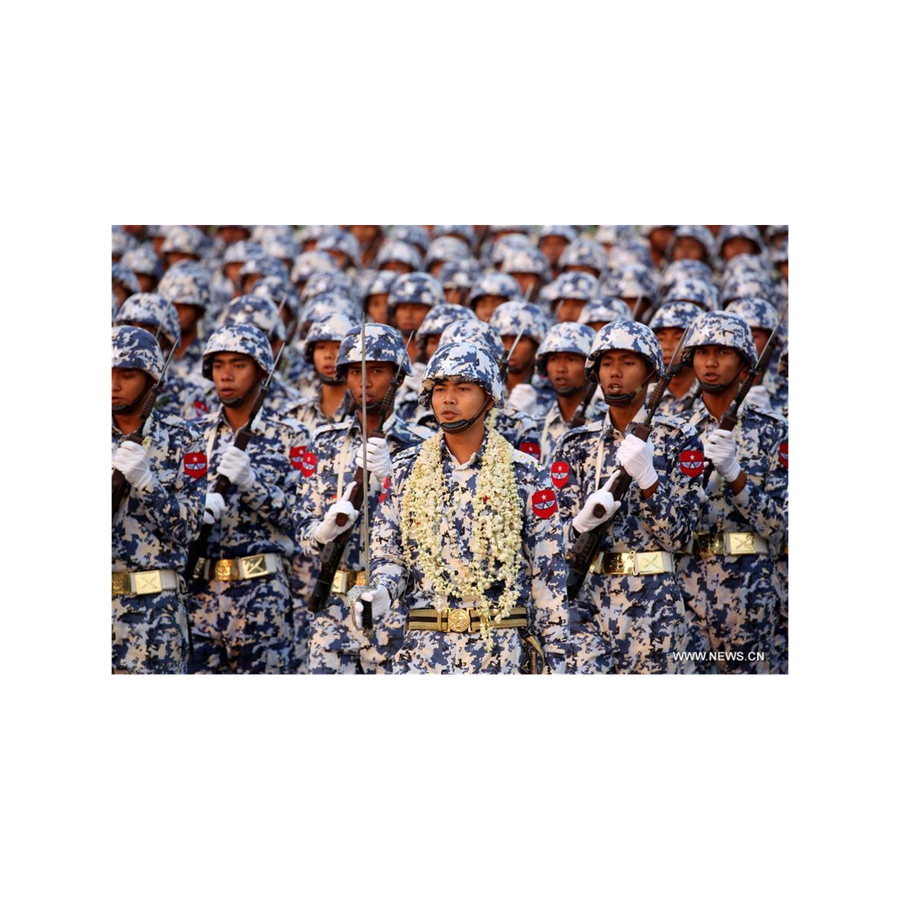
This article examines the historical origins and cultural significance of Armed Forces Day in Myanmar. It describes how the nation, originally under British colonial rule, briefly aligned with Japanese forces during World War II in a failed pursuit of sovereignty. The text highlights the pivotal role of Aung San, who eventually led a military rebellion against Japan on March 27, 1945, to aid the Allied cause. Formerly known as Resistance Day, the holiday is now characterized by significant military parades held in the capital city of Naypyidaw. The source also places this event within a broader global news context, mentioning various international conflicts and contemporary environmental issues.