Explore new cultures, find the best travel deals, and make informed decisions with our trusted travel news. Let your wanderlust thrive as you stay connected with the ever-changing world of travel.
GETTING paid to travel the world is the ultimate dream job – and one Brit who gets to do just that has revealed her top bargain sun spots to escape to on a budget.
Having visited more than 20 TUI hotels and resorts, Lucy Langtry has travelled all over the world for the past four years for the company as a public relations manager.
Lucy has worked at TUI for four years and in that time travelled all over the worldCredit: Lucy Langtry
And as a result she knows the best sunny spots with cheap deals.
She said: “Morocco, Egypt and Tunisia have impressed me most for overall value.”
Sign up for the Travel newsletter
Thank you!
Though, for a closer-to-home great value destination she recommends visiting the Albanian Alps, where “the scenery felt pristine and there were hardly any crowds”.
One particular spot she recommends is the village of Theth, where temperatures reach up to 20C in October.
She said: “There were hardly any crowds – it felt like discovering a part of Europe that not everyone had caught on to yet.”
The small mountain village in Northern Albania is surrounded by rugged and dramatic peaks.
In the village you will find traditional stone houses as well as amazing hiking routes that include waterfalls.
TUI has loads of accommodation options in the capital, Tirana, which makes a great base for exploring both the north and south of the country.
You could head to the Albanian Alps with small, quaint villagesCredit: AlamyOr Morocco, which is great value for money according to LucyCredit: Lucy Langtry
And packages could cost you as little as £173 per person for three nights in October, including flights and accommodation.
If you want to head slightly further afield, then Lucy recommends travelling to Morocco – where temperatures reach up to 20C in December.
She said: “Morocco is such a strong one for value, especially TUI BLUE Tikida Gardens [in Marrakech] which feels like a little oasis.
“It is so calm and relaxing, with that proper switch-off feel that makes you forget you are only a short flight from home, and you can spend your days exploring the colourful souks right on your doorstep.”
A three night stay at TUI BLUE Tikida Gardens costs from £335 per person in December including flights and accommodation.
But there are other packages available if you want to spend less, including three nights at the Moroccan House Marrakech in December from £216 per person.
Egypt is another top spotCredit: Lucy LangtryFor example, you could head to Hurghada which reaches temperatures of 35C in SeptemberCredit: Lucy Langtry
Or in Egypt, Lucy recommends visiting TUI BLUE Crystal Bay in Hurghada, Egypt, where temperatures reach 35C in September.
“Egypt has become the destination I recommend more than anywhere else, and TUI BLUE Crystal Bay captures everything I love about it.
“The hotel has a beautiful setting on the Red Sea, lovely pools, incredible service and a relaxed atmosphere that makes you feel like you are on holiday as soon as you arrive.
“It is the sort of hotel where you can spend the morning relaxing beside the water, have a long lunch and then head out into the desert for a completely different experience,” she said.
You could stay at the hotel in December for six nights including flights for £810 per person.
Or for a cheaper option you could head to Palm Inn Hotel also in Hurghada for seven nights in September, with flights and accommodation included, from £400 per person.
She added that while in Hurghada you can head on a TUI Musement excursion into the desert and watch the sunset from the top of a mountain.
She revealed: “It felt like another world. One moment you are enjoying a beautiful beach and a lovely hotel, then you are surrounded by this incredible desert landscape watching the whole sky change colour.”
You could head to Egypt for as little as £400pp in SeptemberCredit: Lucy LangtryAccording to Lucy there is also a island off Hurghada that feels like the MaldivesCredit: Lucy Langtry
Off Hurghada, you can also travel to Mahya Island, on a TUI Musement experience, where you will see clear water that “rivals photographs of the Maldives”.
For a hidden gem, she suggests heading to Jaz Elite Amara in Marsa Alam.
She said: “Marsa Alam is one of my favourite places in Egypt because it still feels less discovered than some of the better known resorts.
“The Red Sea is unbelievably clear and the marine life is incredible.”
Off the island you can head snorkelling with dugongs, also known as sea cows, as well as turtles.
She added: “It is perfect for anyone who wants a quieter side of the Red Sea, with incredible snorkelling right on their doorstep.”
Egypt also has great snorkellingCredit: Lucy LangtryTunisia has som great spots for family holidaysCredit: Alamy
Her final recommendation is Holiday Village AQI Skanes Resort in Tunisia costing from £436 for a six-night break in October, which Lucy commented is great for families.
She said: “The kids’ club was amazing. There was so much for children to do and the team brought such brilliant energy.
“You could see how excited the children were to go back each day, which I imagine is music to any parent’s ears.”
She added that the whole resort felt designed to make family holidays easy, with activities, entertainment and spaces where different ages could have fun.
She continued: “Tunisia itself really surprised me too.
“The beaches were beautiful, the people were incredibly friendly and the overall experience offered fantastic value.
“It is somewhere I would happily recommend to families who want plenty to do without spending a fortune.”
Held at Abingdon Airfield, the firework display is the biggest in the country and will take place on November 14.
It’s an incredible wraparound display with 270 degrees of fireworks across the airfield’s horizon with flashing lasers and lights all to music.
Sign up for the Travel newsletter
Thank you!
There’s also an earlier kids singalong fireworks show especially for youngsters – both fireworks displays are followed by the lighting of roaring bonfire.
Throughout the event, families can enjoy the rides at the largest fairground in the south of England.
There are over 100 rides and attractions like the waltzers, ghost houses, mirror houses and bouncy castles – each ride costs £2.
There will also be enormous monster truck rides doing donuts and epic fireball explosions too.
Music and live entertainment will be held throughout the evening including Kerin & Perry which are an act where ‘comedy meets dance nostalgia’.
When it comes to food and drink, there’s a food village with plenty of snacks to pick up, sweet treats, drinks and craft bars.
One visitor who went last year said: “It was an absolutely amazing event! Fireworks were out of this world, the fairground had a huge choice of rides and prizes for all games, food – delicious and not overpriced.”
Another added: “The fireworks are on another level! Each year tops the last; bigger, brighter, and more breathtaking every time. Easily the best we’ve ever seen.”
Another simply said they were “The best fireworks we have seen to date!”
One change for this year is there is less capacity in order to make the event more exclusive and comfortable – but it does mean fewer tickets are on offer.
So if you want to get yourself some, head to their website, here.
Adult tickets start from £20, tickets for children (3-15) start from £15 – those under three go free.
These will be the final tickets available for the 2026 events and there will also be tickets to the Golden Experience available.
Tickets will be available for both Lapland Ascot and Lapland Manchester – which has more availability of the two.
Sign up for the Travel newsletter
Thank you!
Fans can also nab tickets to The Golden Experience – a VIP experience with a personal guide, private check in, a meal in Pumpernickel’s secret pantry in the Eleven Village, priority seating and access, honorary elf hats, Golden Explorers pin badge, onsite currency, a signed Lapland storybook and a 2026 bauble.
ABTA has confirmed the closure of a UK travel company that offered trips to the likes of New York, Las Vegas and Greece, with issued advice for customers with existing bookings
The UK travel agent has gone bust after almost 20 years(Image: Getty Images/Stock Image)
A UK travel firm that provided worldwide holidays has shut down after nearly two decades in business.
Barnes Worldwide Travel Ltd was an independent travel agent in Liverpool that offered holidays to destinations around the world, ranging from New York and Las Vegas, to Egypt, Greece and Cyprus. It was established in 2007, but on Wednesday, 9 September, ABTA confirmed that the company has ceased trading.
ABTA said: “We are sorry to inform you that Barnes Worldwide Travel Ltd has ceased trading on 9 September 2026. If you’ve booked travel arrangements with Barnes Worldwide Travel Ltd, you should follow the specific advice set out below.”
Holidays already booked through Barnes Worldwide Travel Ltd should remain unaffected as the firm is a travel agent, rather than an operator. ABTA explained: “If you booked through Barnes Worldwide Travel Ltd, the tour operator or other principal travel business with whom they booked your holiday will be named on your paperwork. If you booked a flight-inclusive holiday, the tour operator or other principal travel business will be named on your ATOL Certificate under, ‘Who is protecting your trip’.
They further advised: “To ensure your holiday continues as planned, you will need to contact the credit control department of your tour operator or other principal travel business with whom you have a contract. Your booking should continue as normal, and they will be your direct point of contact. Please ensure that you have your documentation with you, as they may require information from this to assist you.” Barnes Worldwide Travel Ltd’s website has since gone offline. But it’s not the only UK travel firm to go under this year.
Golf Villa Rentals Ltd, based in Seaford, East Sussex, stopped trading on August 18, 2026. The firm specialised in golf package holidays worldwide, providing accommodation in villas and apartments for both small and large groups.
An ABTA spokesperson said: “We are sorry to inform you that Golf Villa Rentals Ltd has ceased trading with effect from 18 August 2026. The company sold package holidays which included accommodation and travel (excluding flight) and/or other services.”
Frasers Travel, a family-run business based in Scotland, was also confirmed to have gone bust after more than 40 years of operation. In a statement posted on its Facebook page last month, it read: “We regret to inform you that Frasers Travel Ltd has today ceased trading. We would like to thank all our past clients for their loyalty and support. If you have an existing booking can you please email details to info@mclenancorporate.com.”
In addition, TS Travel Realisations Ltd and Yourtravelshop.com Ltd were both confirmed as ATOL failures this month, a classification that can arise when a company stops trading or becomes insolvent. Travel Bespoke Ltd and Trav Expert Limited also shut their doors in May, while back in January, Asiara UK Ltd, Simply Florida Travel Ltd, and Regen Central Ltd were all confirmed by ATOL as no longer protected by their schemes.
Do you have a travel story to share? Email webtravel@reachplc.com
Travelzoo members can unlock super cheap holidays in the UK. Europe and beyondCredit: Getty
Sign up to Travelzoo for £1 (30 day trial)
Travelzoo is a money-saving club where members can bag super cheap holiday deals both abroad and in the UK.
We’ve found UK breaks from £89pp, Portugal holidays from £127pp, and even an incredible 11-night River Nile cruise and hotel package for £549pp.
Sign up for the Travel newsletter
Thank you!
Plus there’s extra benefits for members like free airport lounge access if your flight is delayed, so you can enjoy free food and drink and have somewhere comfy to sit.
Here’s some of the best bargains members can grab, which include a luxurious Italian island stay and an all inclusive break to the Canaries.
Bag a two night stay in Amsterdam for £137ppCredit: Getty
Tick off an Amsterdam city break with this two night stay in the Dutch capital.
The deal includes return flights plus a stay at the Chasse Boutique Hotel, which puts you within walking distance of the sprawling Vondelpark, Amsterdam‘s largest park.
You’re also close to Foodhallen, where you can grab lunch from 20 different street food stalls including gourmet hot dogs and tasty dim sum.
A 10-minute bike ride will take you to Jordaan, a pretty, narrow street neighbourhood packed with boutique shops and canalside cafes.
Sign up to Travelzoo for £1 (30 day trial)
11 Night Nile cruise & beach stay – £549pp
Stop off at the Avenue Of The Sphinxes on your Nile cruiseCredit: Getty
If you tot up your flights, cruise, hotel, plus food and drink for this stay, it works out to less than £50pp per night – which is incredible value for a River Nile break.
This package combines an all inclusive four night stay at the Royal Lagoons Resort with a seven night MS Royal Adventure Cruise, with all of your transfers and meals included.
The Royal Lagoons Resort & Aqua Park is a spectacular hotel in Hurghada with four pools, its own waterpark, a spa and a private beach.
And the scenic Nile cruise itself has stops at places like Luxor, home to the Avenue of Sphinxes, and Edfu, a collection of temples covered in hieroglyphics.
Sign up to Travelzoo for £1 (30 day trial)
Porto – £127pp
Book a stay in Porto for three nights for £127pp with this Travelzoo dealCredit: Getty
Enjoy three nights in a swanky hotel plus return flights to Porto for £127pp with this bargain city break deal.
Swap the grey UK weather for Porto‘s sun-drenched cobbled streets, where riverside wine bars offer glasses of Vino Verde for as little as €3.
The package includes a stay at the HF Tuela Porto, which is close to the pretty Palacio de Cristal gardens, where you’ll find manicured gardens, fountains and wandering peacocks.
Plus the flexibility of Travelzoo deals means you can travel as soon as next weekend, or book ahead for next year.
Sign up to Travelzoo for £1 (30 day trial)
Italian island escape – £499pp
Visit the island of Ischia for its pretty pastel buildings and bubbling hot springsCredit: Getty
If you fancy visiting an Italian island with postcard-perfect, colourful towns, lush landscaped and even bubbling hot springs, look no further than Ischia.
This deal includes flights. transfers, and a five night, half board stay at the Hotel La Pergola & Villa Flavio Thermal Resort.
You’ll receive a cheeky welcome drink on arrival, before checking into the traditional, coral-coloured hotel and taking a dip in its hot spring baths.
You even get a half-day tour in Lacco Amen, an elegant coastal town, plus a Limoncello tasting session.
Sign up to Travelzoo for £1 (30 day trial)
Scandinavian tour – £499pp
Soak up the colourful houses of Copenhagen on this Scandinavian three country breakCredit: Getty
Visit Sweden, Norway and Denmark on this combined Scandinavian sightseeing trip.
You’ll start by flying to Copenhagen, where you’ll spend two nights at the stylish Copenhagen Island hotel, where you can head out to explore the pastel-coloured houses that line the waterfront.
Next you’ll hop on an overnight cruise from Copenhagen to Oslo, before spending two nights at the Scandic Helsfyr hotel.
Spend your days here taking in the views of the city from the rooftop of the striking Oslo Opera House, or tour the medieval Akershus Fortress for a dose of history.
Then you’ll hop on a short flight from Oslo to Stockholm, where you’ll stay at the boujee Hotel Gio, BW Signature Collection hotel, a 10-minute walk from the royal Haga Park and the massive Brunnsviken Lake.
After enjoying a Stockholm archipelago cruise tour with a hot drink, you’ll be headed back to the UK having ticked off three countries.
Sign up to Travelzoo for £1 (30 day trial)
Tenerife – £499pp
This £1 travel club unlocks SERIOUSLY cheap holiday deals abroad from £137Credit: Travelzoo
This deal bags you flights plus an all inclusive seven night stay in Puerto de la Cruz, with airport transfers included.
Stay in the four-star Fergus Puerto de la Cruz, a hotel surrounded by suptropical gardens that feels like an island oasis.
The hotel sits on a hilltop overlooking the coastal town, plus there’s three outdoor pools to pick from with fantastic volcanic views.
Your all inclusive break includes a huge buffest restaurant with live show cooking stations, plus plenty of bars to grab a drink, including the lounge bar which comes alive in the evenings with live entertainment.
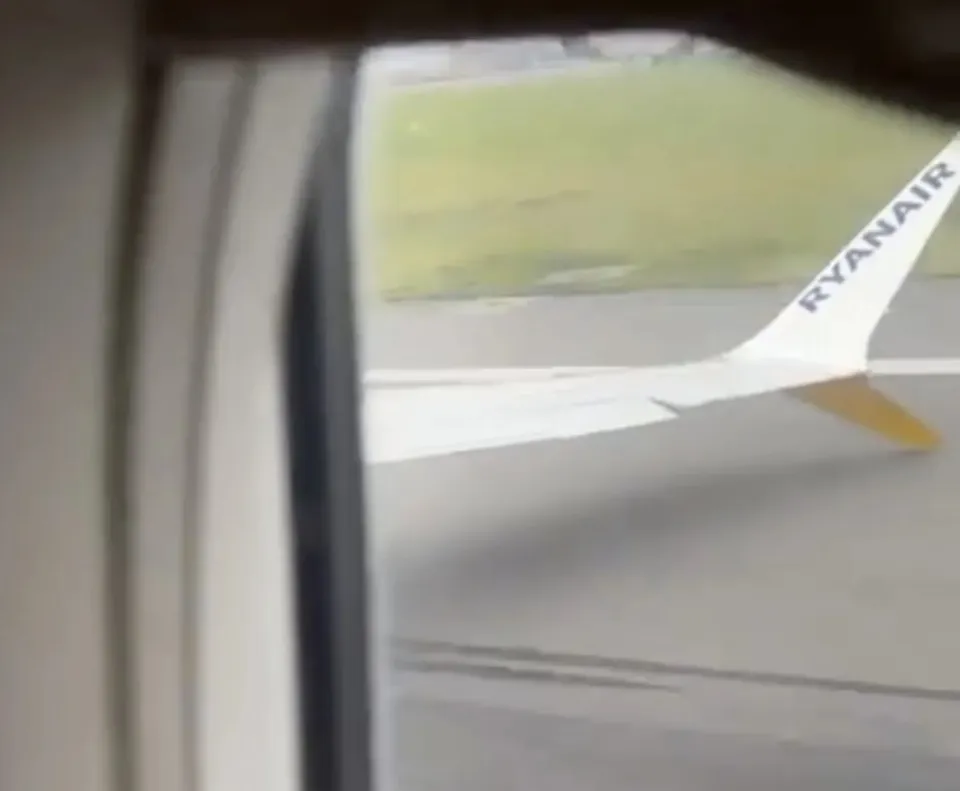
THIS is the scary moment a Ryanair plane’s wingtip hit the ground as it came into land at Dublin Airport.
A passenger filmed the moment the plane lurched to the right and suffered a “minor wingtip impact” during a rough landing yesterday morning.
The jet’s wingtip came ever so close to scraping along the groundCredit: Social Media CollectThe plane performed a go-around after the aborted landing (stock image)Credit: Alamy
The Boeing 737 Max, which took off from Bologna just after 8am came in to land at Dublin at 10.45am.
As it touched down on the runway, the plane tumbled onto its right-hand side.
Sign up for the Travel newsletter
Thank you!
Shocked passengers watched as the wing tips of the plane brushed against the runway.
Recognising the danger of the dodgy landing, the Ryanair pilots immediately brought the engines up to full power to perform a go-around.
This is where a plane aborts its landing attempt and flies in a loop around the airport to try again.
The two pilots were able to guide the plane safely onto the ground about 15 minutes later.
In a statement, Ryanair described the incident as a “minor wingtip impact”.
A spokesperson told us yesterday: “On landing in Dublin this evening (10 Sept) Ryanair flight FR9457 from Bologna suffered a minor wing tip impact.
“The aircraft landed safely and all passengers offloaded normally.
“Our engineers are now repairing this wing tip and the aircraft is expected back into service tomorrow morning (11 Sept).”
It comes as Ryanair boss Michael O’Leary came under fire for “shameful” comments he made describing other airlines as “high-fare rapists”.
TheRyanairchief landed himself in hot water ahead of his budget airline’s annual general meeting inDublin yesterday.
The billionaire businessman, 65, claimed rising air travel prices at other airlines would see passengers switch to Ryanair, before doubling down on his claims.
In response, Labour’s Laura Harmon urged the notorious motormouth to engage with organisations like the Rape Crisis Centre, and to apologise for his “shocking” language.
The senator fumed: “Michael O’Leary must apologise for the comments he made in advance of Ryanair’s annual general meeting in Dublin.
“The casual use of the word ‘rapist’ to describe the prices of his competitors is deeply shocking and could be traumatising for any survivor of sexual abuse.
“We should have a zero-tolerance approach to sexual violence. In recent years, due to the tireless work of activists and the bravery of survivors of sexual violence who have shared their stories, Ireland has taken a strong stance in support of survivors.
“It is shameful to see O’Leary diminish the real experience of these survivors in such a way.”
Harmon continued: “Every week brings shocking new statistics and stories about the levels of domestic and sexual violence against women in our country.
“Reports conducted by organisations like the National Women’s Council of Ireland often detail the systemic challenges victims of domestic violence are faced with when they look for help – through the courts and the legal system, and through first responders like the Gardai.
“Having O’Leary make such ignorant comments only adds to this. I would urge him to come out and apologise today, and commit to informing himself about the real trauma of sexual violence.”
Fianna Fail’s Lorraine Clifford-Lee also condemned O’Leary’s comments as “a new low” for the Ryanair CEO.
Last August, the smoky aroma of grilled sardines drifting over the beach in Portimão woke me up from my sunbathing on the beach. Attracted by the aroma of barbecued fish, we found ourselves in the old port where, for €12, I was served two delicious sandwiches on rustic bread of sardines in garlic and olive oil, with a small cold beer. I sat down, ate and chatted with locals on benches at simple communal tables. The important thing seemed to be to enjoy food together. The next morning, a reenactment of the fishing boats arriving loaded with fish, as they once were, was a real spectacle – complete with guitar playing, drum-banging and excited seagulls whirling and wailing above in the hope of a feast. Later, concerts and dancing animated the town as the party for the sardine festival went on well into the night. Cooking demos and dishes including sardine-based soup and salads, added to the enjoyment. I never imagined such pleasure could be had from the simple sardine. Joe
My wife and I visited the Faroe Islands a few years ago, where we took part in heimablídni, a concept where traditional Faroese food is served in a home. We found it to be one of the best ways to experience the Faroes and a unique experience to share a meal with a local family. Homecooked dishes showcase ingredients from the surrounding sea and mountains. We were served smoked salmon from the host’s own smoker, lamb, potatoes and traditional specialities, all accompanied with great conversation about Faroese life and traditions. Sitting around a family table makes the experience feel personal and authentic. Mike
A vegan feast in Sicily
Chickpea fritters in Palermo. Photograph: Randolph Images/Alamy
As a vegan who loves trying local cuisine, the combination of warm hospitality and a high proportion of locals with a lactose intolerance makes Sicily the ideal foodie getaway. Having hiked to the top of Monte Pellegrino in 35C heat, we popped into a small nondescript street-food shop (the only place that was open) and were delighted to find panelle – delicious crispy chickpea-flour fritters served in sesame bread. We ate them overlooking Palermo harbour. That evening, we tried Haiku, a vegan restaurant with reimagined classics based on dishes such as carbonara and tiramisu. It was so good we kept ordering more and more courses until we could barely move. Esther
Profile
Readers’ tips: send a tip for a chance to win a £200 voucher for a Coolstays break
Show
Guardian Travel readers’ tips
Every week we ask our readers for recommendations from their travels. A selection of tips will be featured online and may appear in print. To enter the latest competition visit the readers’ tips homepage
–
Strong spirits and small plates in Greece
Tsipouro and meze in Volos. Photograph: Wirestock/Alamy
The city of Volos is famous for its Tsipouradika – tavernas that serve tsipouro, a strong spirit made from pomace, the stems, skins and seeds that are left over from wine making. It comes plain or infused with botanicals and anise, and is served with ice and water. Each glass you order arrives with a different small plate or meze. It could be grilled peppers, sundried octopus, a spicy cheese spread or smoked mackerel. You take pot luck as to what the patron fancies dishing up that day. Barbara
The perfect snack to pair with Lithuanian beer
Every bar in Vilnius has its own version of kepta duona. Photograph: Ana del Castillo/Getty Images
In Vilnius, we came across the ultimate food pairing for the fantastic beers available there in the form of kepta duona – deep-fried rye bread with garlic and cheese. Every bar has a slightly different version – raw, roast or confit garlic with cream, melted or simply grated cheese. A heavenly snack that could easily become your main meal. Natalie
Vegan delights in the patisseries of Paris
Land & Monkeys patisserie. Photograph: Hemis/Alamy
Being an unfortunate combination of a foodie and a vegan, I was prepared for a weekend of staring longingly into patisserie windows when heading to Paris earlier this summer. I was not prepared for the unbridled joy awaiting me at the Land & Monkeys boulangeries/patisseries scattered across the capital. It began with an outrageously creamy raspberry petit gateaux from its Montmartre branch, followed by the unbelievable fluff and flake of a croissant aux champignons in the Marais the next day. A parting madeleine for the Eurostar on our last day was the pièce de résistance. Elinor
Tortellini with gorgonzola cheese and caramelised pears. Photograph: Caitlin McGraw
It was in Bologna, Italy’s self-proclaimed food capital, where I sampled the city’s signature dish of tortellini. We stumbled across Rosarose Bistrot, enticed by tables with red-checked cloths set in the middle of a cobblestone road. I enjoyed shells stuffed with tangy gorgonzola cheese and chunks of caramelised pears, a fruit I would usually avoid, but I placed trust in the regional delicacy. The fruit’s sweetness blended harmoniously with the strong cheese flavour; crispy and soft fried bread known as crescentine, was used to soak up the remaining sauce. It was only right to mark this culinary experience with a small tortellini keyring from a nearby gift shop, filled with various merchandise emblazoned with the pasta shell. Caitlin
Catalonia’s ultimate slow-food festival
Catalan snails being cooked on a wood fire. Photograph: Nito 100/Getty Images/iStockphoto
Last year, I discovered the ultimate slow-food festival – the Snail Feast of Lleida (L’Aplec del Caragol), 100 miles west of Barcelona. Over a long weekend, there was music, dancing, cooking and feasting, all in celebration of the tiny mollusc. Entrance to the festival is free, and visitors can enjoy traditional snail dishes in tents, local restaurants or simply in the town squares. I had two helpings of snails a la gormanda, cooked in a sauce of spicy paprika and herbs. Since attending the festival, I have been treading carefully in my garden in case I harm what I discovered are delicate and delicious creatures. Helen
Heavenly cakes in Slovenia
Bled cake is like a custard slice, but much better. Photograph: Varvara Kurakina/Alamy
Having travelled by train from Bristol down through the Netherlands, Germany, Switzerland and Italy, we reached our penultimate stop, Lake Bled. We’d been awed by the beautiful Swiss alpine scenery, but Bled took it up a notch. After a day of cycling from Bled to Lake Bohinj and back, we refuelled on the local delicacy, Bled cake, a sumptuously smooth set custard encased in the lightest of mille-feuille pastry and topped with whipped cream. Imagine an English custard slice, only a million times better. It was so welcome after a day in the Slovenian mountain air, we made it a holiday habit. A Bled cake a day until we had to come home! Sara
Winning tip: delicious seafood soup in Spain
Sopa de pescado y marisco. Photograph: Gary Conner/Getty Images
Few meals linger in the memory like a proper Asturian sopa de pescado y marisco(seafood soup). After kayaking 10 miles down the Sella River, my reward in the town of Arriondas wasn’t a humble bowl of soup – it was a whole pan! Every flavour shone through in a broth packed with white fish, prawns and sweet crab claws, so extraordinarily rich it almost brought me to tears. I devoured it all, skipping the rest of the courses without regret. Years later in Gijón, history repeated itself. Even my soup-sceptical husband declared it the best he had ever tasted. In Asturias, fish soup isn’t a starter. It’s an obsession in a pot. Oksana
As a kid growing up in rural Oklahoma, I feared what lurked beneath the lake water.
I’d listen as my family spun yarns about the massive catfish they’d discovered while noodling. I was terrified that, despite their docile nature that not a single adult told me about, an alligator gar would eat me while I bobbed in the lake. Old timers would recount finding a water moccasin in their boat. And I’ve still never recovered from the concept of a “breeding ball,” which a friend’s cousin’s cousin claimed to have run into while water skiing.
Despite the fact that nothing bad ever happened to me in a lake, my fear stayed with me into adulthood. I’ve met several Californians who hold fears similar to mine, but rather than lakes, their outsized anxieties lie within the ocean. It not only keeps them from swimming at our local beaches but also from venturing beyond the shallow shoreline.
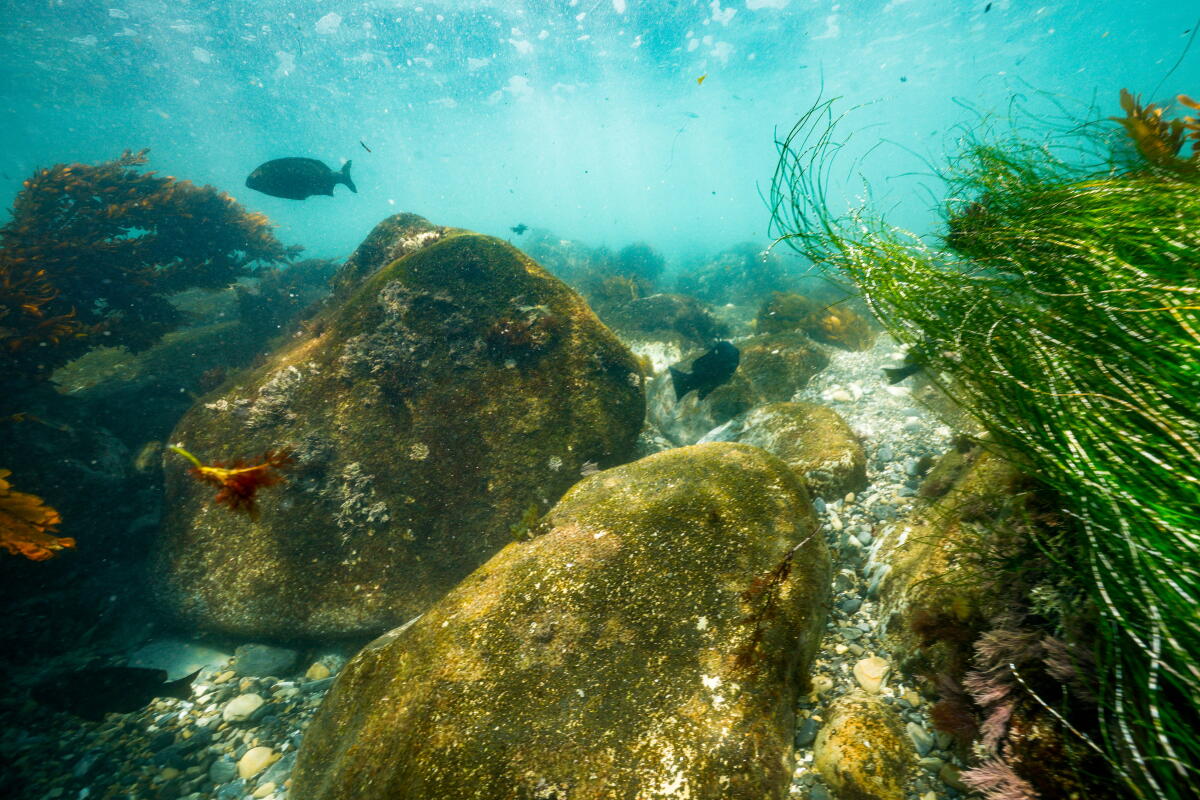
An underwater view near Terranea Resort on the Palos Verdes Peninsula.
(Allen J. Schaben / Los Angeles Times)
In this week’s edition of The Wild, our weekly outdoors newsletter, I will discuss how to safely tackle those fears and start exploring with a snorkeling kit. Get ready to learn about the incredibly diverse and colorful world that lives beneath our local waters — you’re about to feel like Ariel exploring a whole new world! Let’s dive in.
You are reading The Wild newsletter
Sign up to get expert tips on the best of Southern California’s beaches, trails, parks, deserts, forests and mountains in your inbox every Thursday.
By continuing, you agree to our Terms of Service, which include arbitration and a class action waiver. You agree that we and our third-party vendors may collect and use your information, including through cookies, pixels and similar technologies, for the purposes set forth in our Privacy Policy such as personalizing your experience and ads.
I spoke to Ralph Buck, who founded Barnacle Busters, an L.A.-based LGBTQ scuba club, with two others almost 40 years ago. Buck’s passion for helping others learn how to safely explore the ocean was so infectious that by the time we ended our call, I was seriously considering whether I should get my scuba certification (which is a story for another day).
Here’s what Buck advised regarding snorkeling.
The Wild writer Jaclyn Cosgrove snorkels among what appear to be grunion or topsmelt near the coastline of the Palos Verdes Peninsula.
(Allen J. Schaben / Los Angeles Times)
1. Get the right gear
Generally you will need the following gear to get started:
A wetsuit (with booties, as a bonus, to protect your feet): Generally, 7 mm is a great thickness for Southern California, although our water is warmer because of our El Niño season (and climate change).
A life jacket or flotation device: This is considered optional, as the wetsuit will help you float, but there’s absolutely no shame in being extra safe! (And if you don’t have a wetsuit, please do wear a life jacket.)
Fins: It might be too strong to suggest they’re “optional,” but they can be awkward for those new to snorkeling and not necessary if you’re in calm enough waters or an overall strong swimmer.
Camera: Very, very optional. While out at Santa Cruz Island two weeks ago, I took some terrible underwater photos with my iPhone and wished I’d just left it on the shore.
Weight belt: If you want to dive, you might need a weight belt to help you go under. That said, this is a more advanced tool, and it’s good to just focus on the basics as you get more comfortable in the water.
One thing new snorkelers might not realize is the level of buoyancy that a wetsuit gives you. Both times I’ve been in the past month, I wore a 7-mm suit and loved how easy it was to float above the eel grass at Santa Cruz Island and the kelp on the coast of Palos Verdes. I love a sport that includes just lying around.
Kelp, sea grass and various algae grow beneath the water at Terranea Beach Cove in Rancho Palos Verdes.
(Allen J. Schaben / Los Angeles Times)
2. Plan for getting your wetsuit on
For anyone on the shore of Prisoners Harbor two weeks ago, they got the pleasure of watching me groan (and curse) as I maneuvered into a thick wetsuit without anything but my swimsuit on. I told my friend I knew what sausage felt like as it’s shoved into its casing.
Zach Cantrell, owner of Ventura Dive and Sport, gave me a tip I will be eternally grateful for: Bring a plastic bag or something else that will help you slide into your wetsuit, as it helps reduce the friction between your body and the wetsuit. I brought one with me when my colleague, Allen J. Schaben, and I went out last week, and getting my wetsuit on was a breeze. No human sausage vibes (or cursing).
Buck suggested other options might be pantyhose or a long-sleeved unitard. Anything to help you slide into your wetsuit!
3. Before going out, practice in a pool
“I would suggest before hitting the open water, go hop in a pool and maybe find an experienced snorkeler to go with you simply because there are some subtle little pieces to the puzzle, which are” easy to miss for a new snorkeler, Buck said.
That includes the direction to point your snorkel. If it’s pointing too far forward, you will likely find yourself breathing straight saltwater as the waves hit you. But if you point it straight up or tilt it a bit backward, it’ll help your breathing apparatus stay clear.
A variety of marine life living around the rocky bottom of Terranea Beach Cove in Rancho Palos Verdes.
(Allen J. Schaben / Los Angeles Times)
4. Never snorkel alone
You look out at the ocean and see calm waters. You hear the siren’s call. You are alone. Resist.
Despite looking like a fairly chill activity, snorkeling still comes with significant risks that will be exacerbated if swimming alone. While out with my colleague off the coast of Rancho Palos Verdes, he pointed out a massive rock that I thought I could maneuver around. I timed my movements wrong and whacked right into it. I was fine, but also glad someone had my back if I wasn’t.
5. Assess the day’s conditions
Check the weather. If it is a particularly windy day, it’s likely not a good day for snorkeling, not only for safety reasons but also visibility.
Before entering, scan the shore to assess the movement of the water.
Learn how to spot rip currents. Rip currents “most commonly form at low spots or breaks in sandbars and near structures such as groins, jetties, and piers,” according to the National Oceanic and Atmospheric Administration.
“If you’re a beginner, and the waves are higher than knee high, I would just go to brunch,” Buck said. “If the surf’s too big, your visibility is going to suck anyway.”
I do love any excuse to have waffles.
The Wild writer Jaclyn Cosgrove carefully enters the water at Terranea Cove Beach in Rancho Palos Verdes.
(Allen J. Schaben / Los Angeles Times)
6. Choose an area that’s easy to enter and exit
This includes sandy beaches, where you can easily wade into the water without losing your balance. At Prisoners Harbor, I fell over several times because the shore is covered in various fist-sized rocks. (I need to work on my balance.) Snorkeling off the Palos Verdes Peninsula, I took my time, watched the waves and slowly moved into the water as the waves allowed. I found that, when there are rocks around, walking into the water like I’m navigating a balance beam is a good approach.
Also, in terms of looking for the best spots to snorkel, look for kelp forests and rock reefs. And because you’re newer, I would stick to spotsknown for snorkeling.
7. Plan for fog
Buck said before the COVID-19 pandemic, the Barnacle Busters, like most diver clubs, would recommend a simple solution to fog in your goggles: Spit. They still recommend using your spit in bodies of water where your germs won’t immediately affect other swimmers like in the ocean.
You can also buy an anti-fogging agent for your goggles. If you take your goggles off at any point as you snorkel, you’ll need to reapply either spit or anti-fog spray.
While I was out snorkeling, I was amazed at how well spit worked. (And if you want to understand the science behind why this works, check out this blog post from Scuba.com.)
A garibaldi, California’s state fish, at Casino Point Dive Park on Catalina Island in 2016.
(Allen J. Schaben / Los Angeles Times)
8. Check in with yourself and your partner
You should check in with your partner every 30 seconds. That might feel like it’s way too frequent, but you’ll be amazed at how far apart you can float from your friend in that time frame. It can be as simple as making sure you see them and they see you.
9. Keep an eye out for hazards
When entering the water, you’ll want to do the “stingray shuffle” to ensure you alert any nearby rays of your presence. Around L.A. County, you’ll also want to watch out for sea urchins because their spines can prick your skin, which will require treatment if you bump into them.
As our county lifeguards point out, L.A. beaches aren’t typically places you’ll find the most dangerous jellyfish. “Jellyfish in Southern California are usually smaller in scale and have a more mild sting than other species found around the world,” according to the agency’s website.
(And don’t worry. Electric eels don’t live in the ocean.)
I asked Buck how often he and his fellow divers check for hazards like sharks.
He told me that outside of rocks, high surf and going out too deep for one’s skill level, he and his diving partners don’t think too much about hazards in our local waters.
Purple sea urchins grow on a rock near the shore of Prisoners Harbor on Santa Cruz Island in the Channel Islands National Park.
(Jaclyn Cosgrove / Los Angeles Times)
“Well, we don’t consider sharks to be a hazard at all. My husband and I blame Steven Spielberg for the irrational fear of sharks,” Buck said, referencing Spielberg’s 1975 film “Jaws” and the adverse effects the film had on white sharks.
Buck said he and his husband rarely see sharks. He does give some weight to the argument that divers in wetsuits can resemble seals and sea lions when floating on the surface.
“But in areas where you’ll probably be snorkeling, you’ll probably be snorkeling on shallow rocky reefs or shallow kelp. It’s not even a consideration for us,” he said.
Lastly, if you or your partner start to shiver, get out.
The Wild writer Jaclyn Cosgrove snorkels at Terranea Cove Beach in Rancho Palos Verdes.
(Allen J. Schaben / Los Angeles Times)
10. Don’t touch anything
Practice Leave No Trace in the ocean too. “That’s our philosophy for diving too,” Buck said. “Look, but don’t touch.”
And never feed the marine life.
11. Have fun!
Since learning to snorkel, I’ve already found two friends who also enjoy it, and I plan to ping them to go out soon. If you don’t have anyone in your circle who snorkels yet, consider joining a local club.
In a world that feels hard right now, I felt like I had a two-hour vacation as I floated above the bright green sea grass and golden yellow kelp, watching garibaldi and what appeared to be grunion or topsmelt bob and dive around me. I came out refreshed and grateful to live here.
3 things to do
The hike to Eaton Canyon Falls in the San Gabriel Mountains before the 2025 Eaton fire.
(Myung J. Chun / Los Angeles Times)
1. Learn about Eaton Canyon’s future in Arcadia L.A. County Parks and Recreation will host From Ashes to Action: Reimagining Eaton Canyon from 5 to 7 p.m. Wednesday at the L.A. County Arboretum’s Ayres Hall (301 N. Baldwin Ave. in Arcadia). Attendees will learn about design concepts for the next Eaton Canyon nature center along with the latest work completed in the natural area. The event is free, but registration is required. Register at arboretum.org.
2. Service sage in San Pedro Cabrillo Marine Aquarium (3720 Stephen M. White Drive) needs volunteers from 9 to 10:30 a.m. Saturday to work on its native plant garden. Participants will learn about plants as they work. All ages welcome. Learn more at cma.recreation.parks.lacity.gov.
3. Launch into Latino Conservation Week in L.A. The Audubon Center at Debs Park will kick off Latino Conservation Week from noon to 6 p.m. Sunday at Metabolic Studio (1745 N. Spring St.). Activities include a bachata class, panel discussion and guided nature hike. Learn more at act.aubudon.org.
The must-read
Burn damage to the Torrey pine grove at Santa Rosa Island, as seen from a ferry on June 8.
(Kayla Bartkowski / Los Angeles Times)
Last week, the National Park Service announced that up to 80% of the rare Torrey pines on Santa Rosa Island in the Channel Islands National Park could die after being harmed by a wildfire in May. Times staff writer Corinne Purtill wrote that initially park officials were hopeful that because the fire, which charred through 40% of the 18,000-acre island, burned at low intensity through the grove, the trees could recover. Research found the fire hurt the mature trees’ exposed root systems. However, I am holding onto hope — for a few reasons. “Park staff have also collected more than 14,000 seeds released from the pine cones. Viable seeds will be planted and raised in a nursery until the seedlings can be planted in the grove,” Purtill wrote.
Another reason is that volunteers are already actively working to save these trees. You can help with that. The California Institute of Environmental Studies needs volunteers to help with recovery as well as with Channel Islands Restoration. You can also donate to the Channel Islands Park Foundation’s Santa Rosa fire resilience fund.
Now more than ever, it’s on us to protect our public lands.
Happy adventuring,
P.S.
While out kayaking off the coast of Santa Cruz Island last month, I yanked a plastic wrapper out of the ocean. I frequently pick up plastic snack wrappers and corners of wrappers that people have accidentally dropped on the trail. And not infrequently have I found thick plastic bags — those said to be reusable — floating in shallow water near the beach. In recent years, California lawmakers have passed laws to address our state’s plastic consumption, including the Plastic Pollution Prevention and Packaging Producer Responsibility Act, or Senate Bill 54. Starting in 2027, the state will receive $500 million every year for 10 years to address plastic pollution, and state leaders want to hear from you how to best spend that money. You can submit your thoughts through Sept. 30 using this form or send your message using the email listed on the form’s webpage. Times staff writer Susanne Rust recently wrote about how there’s a secretive multimillion-dollar campaign to crush California’s landmark plastics law. If the battle over single-use plastic in California is something you’re passionate about, consider subscribing to Boiling Point, where my Times colleagues explore what’s happening to our climate-changed world. They’ll definitely keep you posted!
For more insider tips on Southern California’s beaches, trails and parks, check out past editions of The Wild. And to view this newsletter in your browser, click here.
It’s an exciting time for Southern California coaster fans. Universal Studios Hollywood is on the verge of officially openingFast & Furious: Hollywood Drift, and Knott’s Berry Farm this summer unveiled the refurbished Montezooma: The Forbidden Fortress. Now Six Flags’ Magic Mountain is getting in on the coaster action.
Coming in 2027 to the Valencia park will be Thrill Glider, a first of its kind thrill ride designed by coaster manufacturer Vekoma exclusively for Magic Mountain.
Magic Mountain in a release describes Thrill Glider as introducing a new coaster category, one that combines a motorbike-like seating arrangement with suspended coaster technologies. Riders will board what the park is referring to “hoverbikes,” essentially bike vehicles designed to simulate a flying sensation by being suspended from the track. Riders will be seated in a prone, face-forward position that will hang from the track above.
Concept art for Thrill Glider, which will boast bike-like vehicles and a sci-fi backstory.
(Six Flags Magic Mountain)
The ride will feature 20 different coaster elements and is slated to last 80 seconds. Speeds will reach 50 mph, and the coaster will boast five inversions that will take guests upside down. The various inversions will include a barrel roll, a zero-g roll and an overbanked stall turn, hinting at a heavily twisted track that will create drifts and swinging. There will be at least 12 moments, Six Flags promises, in which riders will experience airtime lifts.
“It is the latest milestone in Six Flags Magic Mountain’s renaissance and a reflection of the park’s enduring role as an industry innovator,” said Brian Oerding, park president of Six Flags Magic Mountain in a release.
The ride will come with a heavy sci-fi-inspired narrative. The story: The ride is a new technology from a fictional inventor, Rebecca Silva, who will introduce guests in the waiting area to what is described as a “Futurist Pavilion.” Throughout the queue, riders will encounter “holographic presentations and scientific exhibits,” culminating in the discovery of a new energy source, detailed by illuminated blue energy lines, that will power the ride.
The goal, says Six Flags, is to provide an optimistic view of the future, albeit with many sudden dives and weightless moments. The ride will feature multiple launches, reach a height of 107 feet and traverse 3,380 feet of track, which is more than a half mile.
Concept art of Magic Mountain’s new Thrill Glider, which will reach a top height of 104 feet.
(Six Flags Magic Mountain)
A specific opening window has not been detailed, but the ride is currently under construction. It will be located on the former site of the Golden Bear Theatre and will overlook the recently refurbished kiddie area, Looney Tunes Land.
Thrill Glider is arriving at a moment when Six Flags has been garnering national attention. Magic Mountain’s X2 remains shut down while state safety officials continue an investigation involving the attraction.
The ride, first opened in 2002 as X, has been the subject of controversy and at least one high-profile lawsuit stemming from a 22-year-old man’s death. Six Flags bills the ride as “a right of passage for the ultimate daredevil” that goes up to 76 mph. A CNN report recently took a look at other, more recent injuries allegedly stemming from the attraction.
TO ESCAPE the chaos of summer and enjoy the delights of quieter hotels, lots of us like to book holidays between September and November.
Those three months have lots of names like the ‘magic period’ or ‘shoulder season‘ and taking a break then can save you some serious cash.
Two coastlines in Spain came up trumps for cheap autumn holidaysCredit: AlamyThe beautiful Albanian coastline also came in as being very affordable for BritsCredit: Alamy
Whether you want a quick trip to Spain or a holiday to African resorts for winter sun, there are some great deals out there, and lastminute.com have helped us find some of the best.
They told us: “Once the peak summer period has passed, travellers can often find significantly better value on flights and holidays, while still enjoying warm weather and everything a destination has to offer, proving that it is better to leave it until the last minute.”
Sign up for the Travel newsletter
Thank you!
The cheapest spot is Costa Dorada in Spain where on average holidays cost £79pppn.
The Costa Dorada is a region along the Mediterranean coastline and includes popular spots like Tarragona and Salou.
What’s even better is that you can definitely still spend time on the beaches too as in October there are average daytime temperatures of around 22C.
It’s also home to the enormous PortAventura World which is one of Europe’s biggest theme parks – and is home to Europe’s tallest and fastest accelerator coaster Red Force in Ferrari Land.
It’s a beach front spot with rooms that have views of the coast along with a restaurant, bar, swimmingpool, sun terrace and spa.
A four-night stay for two with return flights to London Luton in October starts from £248pp – or £62pppn.
If you want to add half-board to have breakfast and dinner included it’s an extra £26pp.
Hotel Best Negresco in Spain costs as little as £62per night with lastminute.comCredit: Unknown
The second cheapest destination for autumn is Sousse in Tunisia.
The coastal resort city is known for having bright blue waters and plenty of beach clubs.
Visitors can explore the Medina of Sousse – a historic walled quarter that is an open-air market where you can pick up ceramics, leather bags, shoes and jewellery.
With lastminute.com you can book to stay at the Hotel Royal Jinene Beach & Spa from £66pn – and it includes return flights and half board.
The hotel has an indoor pool, outdoor pool with a big slide, bar, restaurant and coffee house as well as activities like tennis and mini golf.
There’s also a spa and live music nights and a short walk away is the sandy Plage El Menchia.
A four-night stay for two people with half board and return flights to London Southend in October is £264pp – or £66pppn.
It’s back to Spain for the third cheapest destination in autumn which is the Costa Brava where on average a holiday is £87pppn – although there are cheaper deals to be found.
The coastal region in northeastern Spain has lots of beaches with cliff backdrops and coves.
Sousse in Tunisia is the second most affordable spot according to lastminute.comCredit: TripAdvisor Hotel Tahití Playa & Suites 4Sup in the Costa Brava is a few steps away from the beachCredit: lastminute
The Costa Brava has 300 days of sunshine every year and is mild throughout September and October.
Sarandë is known as the the ‘city’ of the Riviera.
It’s surrounded by the blue waters of the Ionian Sea with seafood restaurants and cheap beer, with pints as little as £1.30.
Here, you can book a stay in the four-star Bougainville Bay Hotel which is considered a gallery itself full of sculptures, paintings and mosaics.
The hotel is next to the sea and you can enjoy the views from its beautiful infinity pool.
Bougainville Bay Hotel has an infinity pool looking over the Albanian coastlineCredit: Lastminute Stay at the Yocca Hotel Residence in Tunisia – it has an outdoor pool and pretty gardenCredit: Lastminute
It also has four bars, two restaurants and four swimming pools.
In October, temperatures in the daytime sit around 21C – although they do drop in the evening.
A four-night stay for two including breakfast in October at the Bougainville Bay Hotel including return flights to London Stansted is £229pp – or £57.25pppn.
Coming in fifth position for being one of the cheapest spots for a holiday in autumn is Hammamet.
The coastal resort town in northeastern Tunisia boasts golden beaches and there’s plenty of historical sites to explore if you fancy a wander.
Hammamet is a great spot for anyone wanting a dose of sunshine and heat as in October temperatures can be as high as 26C.
For Brits it’s ideal as it’s as little as three and a half hours away from the UK.
The Yocca Hotel Residence is slightly outside of the city with spacious rooms some of which have balconies, swimming pool, garden, terrace and restaurant.
A six-night stay for two at the Yocca Hotel Residence including return flights from London Gatwick is £308pp – or £51.34pppn.
Instead I mean vibrant sets and costumes that bring the audience to the African savannah, but with an artistic touch.
Director Julie Taymor fuses the actors directly into the beautiful animal puppets, rather than hiding them in clunky mascot-like costumes.
Each is like a piece of art bringing the safari animals that feature in The Lion King to life.
Some critics have labelled the puppets as “dated” compared to newer productions such as War Horse or My Neighbour Totoro.
I disagree – everything in the show’s design remains timeless, from the costumes to the sets.
You can expect tear jerker moments tooCredit: PA:Press AssociationThere is even a life-sized elephant puppet that ambles across the showCredit: Getty
As living artwork parades down the aisles on either side of the theatre, I felt transported to the Pride Lands.
The most mesmerising part had to be when – spoiler alert – the life-sized elephant puppet ambled across the stage, with the same methodic but gentle stomps you’d expect of the magnificent beast in the wild.
It isn’t just the animals that are impressive – across the show much flora and fauna sets scenes and creates a depth to the stage.
Even one of the smallest characters (by size, not personality) – Zazu – was brilliant, where the puppeteer and actor was able to create comedy with a single head tilt, squawk or wing flap.
A memorable moment in the film is the stampede that takes Mufasa’s life.
And it is just as poignant on stage – my heart raced as the staging created a terrifying scene of hundreds of wildebeest stamping towards the audience.
Scenes at Pride Rock are equally as impressive, with the giant rock emerging magically from the floorboards.
Singing, dancing and acting – all simply phenomenal.
And just like the film, there are multiple tear- jerker moments which will leave you wishing you didn’t wear mascara to theperformancee.
George Asprey who plays Scar is one of the West End’s longest running actors having played the role for 17 years, as is his co-star, Shaun Escoffery who plays Mufasa.
There’s lots to do in the surrounding areaCredit: AlamyFor example, you could take the short walk to Covent Garden just around the cornerCredit: Getty
In a previous interview, George told Sun Travel: “Allow yourself to just open up to the set and the costumes.
“It is difficult to take everything in, in one sitting, and when you come again, you’ll pick up the different nuances. Maybe in the scenery, for example.”
And in terms of where to sit, the age-old question – do you need to fork out for the posh seats? Not at this show, apparently.
George said: “I’ve had friends right at the front of the stalls and I have had friends right at the bottom end of the upper circle, and I think the one thing about the Lyceum is that all of the viewing is extraordinary.
“I really don’t think there’s a vantage point in the upper circle where you won’t see everything still.
“I think it’s a decent price for a reason and I don’t think it’s not worth it – I wouldn’t avoid coming if you can only afford a certain seat, because you still get a wonderful experience.”
The Lion King is performed eight times a week, with evening performances on Tuesdays through to Saturday at 7:30pm and then the matinee performances take place on Wednesdays, Saturdays and Sundays at 2:30pm.
No performances take place on Mondays.
The show lasts two-and-a-half hours with an interval included.
Click below to sign up to Sun Club and bag your discounted tickets.
Q&A What you need to know
Is there a minimum age requirement for attending the show?
The Lion King is recommended for ages six-ears-old and above, with children under the age of three-years-old not permitted.
All those under the age of 16 must be accompanied by an adult.
Do you agree with the age rating?
To get the most of the experience, I would recommend taking children aged eight and above. However, it’s gripping enough for kids aged 6 up to handle the full-length show, although some may find Mufasa’s death upsetting.
How much is the programme and is any merch available?
The souvenir programme costs £10 and merch is available including hoodies and plush toys.
Any extras?
There are four bars in the theatre including The Ballroom Bar which opens 90 minutes before the show starts. There is also a cloakroom charging £1/£2 depending on the item. And if you want to elevate your experience, you can get VIP lounge access before the show for £75pp.
Is there a best seat in the house?
Anywhere – due to the design of the theatre, every seat has a great view.
Where’s the closest affordable hotel?
The Z Hotel Strand is less than a five-minute walk away and costs from £65 per night.
Where is the closest place to get a pint?
Head to The Lyceum Tavern just around the corner, where a pint will set you back around £5.60.
Where is the closest place to have a meal?
Being on the Strand, there are plenty of places to grab a bite to eat including Frankie & Benny’s and Vasiniko for pizza, Ole & Steen for cafe bites and numerous watering holes for pub grub.
I want to make a day of it. What else is nearby?
Thanks to being in central London, there is a load on your doorstep. Just across the road is a Charlie and The Chocolate Factory-themed afternoon tea and around the corner is Covent Garden where you can stop by The London Transport Museum or watch street performers.
18+ Subscription to Sun Club required. Online access required. Save an additional 10 per cent off tickets. Offer ends at 23:59pm on Thursday, December 31, 2026. Sun Club new customer offer: £1.99 per month or £12 for the first year, then £19.99 thereafter unless you cancel at least seven days before your next billing date. Full T&Cs apply, see thesun.co.uk/club.
Holidaymakers will face a nightly levy on hotel and Airbnb-style stays across large parts of England in a move welcomed by many mayors but described as risking “irreparable harm” to the tourism industry.
Regions across England will be able to charge an uncapped “tourist tax” on overnight stays to potentially generate tens of millions of pounds that would then be spent in those areas.
The move will bring England into line with many European nations and the US, where holidaymakers have for years been paying overnight visitor levies.
However, tourism and hospitality bosses warned it would have a “hugely damaging” impact on an industry already under pressure from a rise in tax and employment costs.
UKHospitality, the industry’s trade body, said a 5% overnight levy across England could result in 33,000 job losses and a £2bn hit to the economy, with regions more reliant on tourism, such as the Lake District, being worst affected.
The owner of Premier Inn, Britain’s biggest hotel chain, said it would be “hugely damaging” and urged ministers to “avoid inflicting what could be irreparable harm on this large and vital sector of the economy”.
The proposal for an overnight levy was backed by Keir Starmer’s government in November and is similar to a scheme running in Scotland.
Angela Rayner, the housing secretary, outlined the details behind the levy to England’s regional mayors in a meeting at No 10 North in Manchester on Thursday.
Under the proposal, which is expected to be introduced as a bill in parliament within months, mayors will be given the power to decide what is best for their area, but ministers do not expect the levy to become overly expensive.
Allen Simpson, the chief executive of UKHospitality, said the plans would put jobs at risk in some communities, and that the new tourism tax in Edinburgh was “already having damaging effects”. He told BBC Radio 4’s Today programme holidays in the UK were “already more expensive” than they appeared because of higher VAT.
“What we’re talking about here is an open-ended power for mayors to set tourism taxes at any level they want,” said Simpson. “And remember that if you go to Paris, if you go to Rome, if you go to Berlin, you’re paying a small tourism tax, but it’s capped.”
He added: “It will be the case that you’ll have holiday parks which can’t open in the shoulder seasons, and of course people who go on holiday will just have that little bit less money in their pocket.”
The overnight visitor levy was outlined in the king’s speech in May, but legislation was not brought forward before Starmer stood down as prime minister. Andy Burnham is likely to pitch the policy as part of his wider devolution agenda. No 10 has previously said local leaders would be “able to set out plans for how revenues will be invested by March 2028”.
As mayor of Greater Manchester, Burnham introduced the city visitor charge in April 2023 – a £1 per room per night fee – to pay for measures aimed at attracting more tourists. Last year other mayors, including Sadiq Khan in London, wrote a letter to the culture secretary, Lisa Nandy, and the then chancellor, Rachel Reeves, urging the government to introduce a visitor levy.
Sources from the London mayor’s office said a plan to make the payment a percentage rather than a flat fee was welcome. No decisions had been made on the design of the scheme or how revenues would be allocated, they said, but any levy would not be more than 5% of accommodation costs. “This will really help us support London’s growth and our offer to visitors,” they said.
Edinburgh became the first city in Scotland to introduce a tourist tax, at 5% in July, after the Scottish parliament passed a law last year granting councils the power to implement their own visitor levies. In Wales, councils will have the power to charge £1.30 a person a night in tax for most accommodation from April 2027.
But UKHospitality, which represents thousands of restaurants, hotels and pubs, has said a levy of 5% would be one of the highest tourist tax rates in Europe and hit households continuing to struggle with the cost of living. It has written to Burnham urging him instead to consider plans for a “holiday bonus”, under which central government revenues would be devolved to local authorities based on the number of visitors they attract.
Tourist taxes are common in Europe and the rest of the world, and are used in cities such as New York, Barcelona and Venice to fund local services.
London Gatwick Airport is set to be hit with further travel disruption this month as two sets of strikes are planned for a total of nine days that ‘will inevitably disrupt services’
More travel chaos is set to unfold at London Gatwick Airport this month(Image: Getty Images)
Travellers passing through Gatwick Airport could face further travel chaos as more than 200 workers are set to strike this month, threatening flight delays.
The UK’s second-largest airport, which handles more than 40 million passengers every year, was hit with air traffic control mayhem this week, with hundreds of flights cancelled and grounded. Yet there could be significantly more disruption at London Gatwick Airport later this month, as 220 workers are set to walk out in a dispute over pay.
The strikes are set to take place by Unite union members, who provide assisted travel at Gatwick, and are employed by the specialist firm Wilson James. There have been pay negotiations between the airport workers and Wilson James since May, but with rejected deals, the “industrial action will inevitably disrupt services throughout Gatwick”, Unite regional officer Ben Davis said.
Unite members involved in the dispute are set to walk out between Thursday, 17 September and Monday, 21 September, and from Wednesday, 23 September to Saturday, 26 September. As they provide special assistance for disabled and elderly passengers, delays are expected in boarding and disembarking for passengers who depend on their services, which could result in delays across short and long-haul flights to and from Gatwick, the union warned.
Unite previously rejected a 3.4 per cent two-year pay rise, in addition to a 0.6 per cent bonus and 0.5 per cent uplift in pensions. The union said it was “not enough to address years of low pay at the firm”, where some of the lowest-paid members earn £14.71 per hour, while struggling with the high cost of living within reach of Gatwick.
The union also noted that workloads have increased at Gatwick, with this year’s busiest summer since 2019. Unite regional officer Ben Davis said: “Unite has been trying to negotiate a better pay deal for our members for months, however Wilson James has failed to put forward an offer that is acceptable to workers.
“Industrial action will inevitably disrupt services throughout Gatwick but this is a direct result of Wilson James refusal to make a fair offer to our members. Strikes can be avoided but that requires the company making a significantly improved offer.”
Unite general secretary Sharon Graham further commented: “Wilson James is a highly profitable company which can more than afford to put forward a pay deal that reflects the hard work our members do.
“These workers are vital in the smooth running of the airport, doing a key role in assisting passengers on and off flights. Their jobs have become even more difficult as Gatwick has become busier.”
A London Gatwick spokesperson said: “We are working with our assisted travel provider, Wilson James, to avoid any impacts and we expect to operate a normal flight schedule for our airlines and passengers on these dates. Of course, we hope Wilson James and their union can reach a resolution before then.”
The impending strikes come as Gatwick Airport faced severe disruption following air traffic control issues on Tuesday, 8 September, with hundreds of flights delayed or cancelled. The control provider, NATS, said there had been a technical glitch, and bosses admitted it had taken “longer than hoped” to resolve.
As a result of the air traffic control chaos, more than 1,700 flights were impacted on Tuesday, with 30.10 per cent of those cancelled or unable to fly, according to Cirium, the aviation analytics company. Meanwhile, 417 flights were cancelled or did not fly on Wednesday, 9 September, with cancellations continuing today (Thursday, 10 September).
Do you have a travel story to share? Email webtravel@reachplc.com
THE best holiday parks and resorts around the UK have been announced from luxury resorts to lakeside lodges with incredible views.
Which? has found the top stays by looking at price, accommodation, cleanliness, food and drink to value for money – so who is taking the top spot?
Some of the best holiday parks have lakeside lodges – like Keswick Reach Lodge RetreatCredit: TripAdvisorOthers like Hoburne Cotswold Reach have outdoor poolsCredit: TripAdvisor
In Hopton-on-Sea, guests can choose to stay in cosy bungalows, hotel rooms, or go all out with a stay in the Penthouse which has views over the Resort and out towards the sea.
At Five Lakes in Essex, there’s a choice of The Village, which is set within the grounds of the holiday park, hotel rooms and suites.
The holiday park came at the top of the table for recommended resorts with an average price of £87pppn.
It received five-stars for customer service, along with facilities, food and drink.
Second on Which?’s list is Hoburne Holidays which has seven resorts across the country in Dorset, Hampshire, the New Forest, Devon, the Cotswolds and Somerset.
Hoburne Park in Dorset was the very first to open in 1912 which is right by the coast and has cosy caravans and lodges.
Potters Resorts came in first place with its two resorts in Norfolk and EssexCredit: Potters Resorts Hopton on Sea
A few minutes away is the soft sandy Avon beach and further along is Mudeford Quay and Hengistbury Head.
When it comes to activities, there is a heated indoor pool, seasonal outdoor pool, adventure golf, games area, paddle boats, crafts as well as steam room sauna and a gym.
Another popular resort is in Gloucestershire, called Cotswolds Reach it has lovely lodges to settle down in – and a heated outdoor pool.
The average price starts from £63pppn and it received a customer score of 81 per cent.
Its highest star rating was in food and drink, followed by value for money, facilities, activities and entertainment, cleanliness and quality of accommodation – for which it got four-stars.
Darwin Escapes came third on the list – and some of its holiday parks have incredible lakeside lodges with mountain views.
Keswick Reach Lodge Retreat is a great spot for anyone wanting to see more of the Lake District.
There’s an on-site restaurant, spa, relaxation suite which you can book to have for yourself, a gym, and a corner shop.
Some of the self-catered, countryside-retreat style lodges have wooden beam ceilings and a woodburner with a deck to enjoy in the summer, even hot tubs.
Darwin Escapes had an average price of £50pppn with a customer score of 80 per cent – a family of four can book a lodge at Keswick Reach Lodge Retreat in November from £195 or £12.18pppn.
Dylan Coastal Resort in Wales looks over the Taf EstuaryCredit: LandalSome lodges at the Dylan Coastal Resort even have hut tubsCredit: Landal
Landal Green Parks in fourth place was also recommended by Which? and one of its most impressive holiday parks is Dylan Coastal Resort in South Wales.
The holiday lodges sit high up on a hilltop looking out over the Taf Estuary which make for very impressive views.
The lodges range from 1-4 person to six- person stays – and some with hot tubs too.
Below the holiday lodges is Milk Wood House, which is home to facilities including an infinity pool, outdoor spa area, and lots of therapy treatments.
It’s also where guests will find the bar and restaurant which can be enjoyed on one of the three terraces.
Nearby, guests can try out watersports and bouldering at Wild Lakes, explore the National Botanical Garde, n and the beautiful fishing village of Tenby.
It came fourth on the table with an average price of £58pppn and a customer score of 80 per cent.
Other well-known brands like Away Resorts were also mentioned – it came in seventh on the list with a customer score of 75 per cent.
In the last five places on the table were Center Parcs, Haven Holiday Parks, Parkdean, Butlins and Pontins.
These are the full list of the best UK holiday parks from Which?
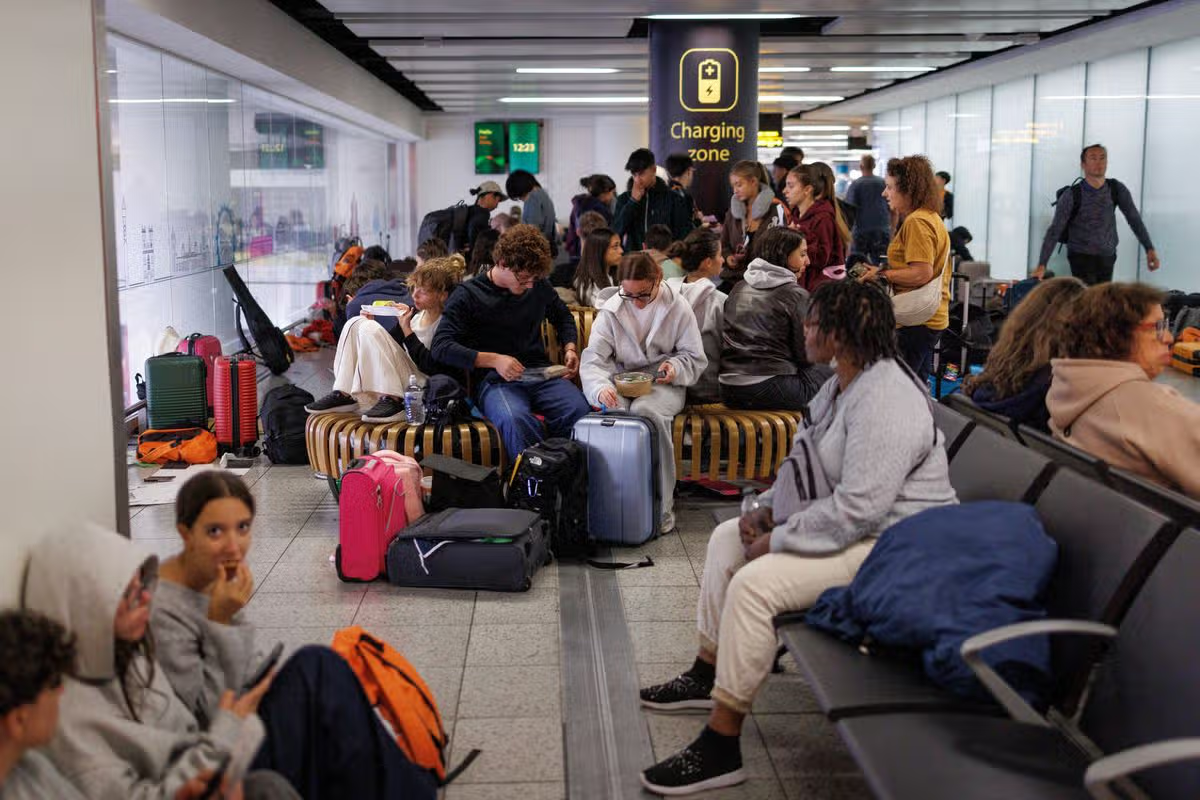
TRAVEL chaos caused by a major tech outage across all UK airports earlier this week has left thousands stranded – with many left out of pocket when booking back up flights and hotels.
An Air Traffic Control failure in the UK on Tuesday saw thousands of flights cancelled, resulting in travel chaos across the globe.
An Air Traffic Control issue in the UK left thousands of travellers stranded this weekCredit: EPA
Many have since been asking if they can claim compensation back, with flights both delayed and cancelled for days.
However, as the NATS issue was classed as an “extraordinary circumstance” travellers are not entitled to cash compensation.
Sign up for the Travel newsletter
Thank you!
The maximum compensation you can get is for long-haul flights which are delayed four hours or more, which would be £520.
This is only for when the problems are the caused by the airline, directly, however.
Lisa Minot, Head of Travel said: “Airlines are only required to give you compensation if the delay or cancellation is the airline’s fault, as in a technical failure on a plane or issues with crew.
“In this situation, where ATC is the reason for the chaos, there is unfortunately no compensation due.”
Yet, airlines do have a duty of care, so you can recoup some of your costs.
When affected by flight delays, airlines must provide travellers with food and drink as well as accommodation.
‘Care’ you should receive includes food and drink, two phone calls, accommodation and transport between the airport and where you are staying.
Usually, an airline will provide you with a voucher to get food or drink, however if a voucher isn’t provided, make sure you keep your receipts to claim back expenses incurred.
As the issue was outside of airlines’ control, it is class as an “extraordinary circumstance” meaning passengers cannot claim cash compensationCredit: EPA
While an airline might automatically book your accommodation when your flight is delayed or cancelled, sometimes you might be asked to book it yourself via its website or a dedicated app.
Although, it is advised to always ask airport staff before booking a hotel yourself.
If you pay for your own hotel, you must make sure to keep all your receipts so you can claim back your costs.
Airlines will cover a hotel with a reasonable price though, so don’t go booking a five-star stay.
Then head to your airline’s website and find their expenses claims page and fill out the form with the relevant details.
The CAA also recommends asking for an itemised receipt to show what you purchased and how much was spent on each thing.
Lisa added: “Check your insurance policy to see if you have any redress if you have incurred additional costs like missing a concert or unable to pick up car hire. You may be able to claim for that.
“Generally for delays, if an airline looks after you or provides you with food and drink or hotels, you cannot claim for the same costs against your travel insurance.”
YOU don’t need a fancy First Class plane ticket to enjoy a luxurious airport lounge with a free buffet.
In fact, there’s a far easier way you could be chilling in a classy airport lounge on your next trip, without forking out thousands. Click here to find out how.
This travel hack costs less than £5 a month and will get you into glamorous airport loungesCredit: Getty
Save 20% on Priority Pass across 1,900+ airport lounges
We’ve all been there – sitting in a hard plastic chair at the airport gate with a packet of crisps and a bottle of water that cost you an arm and a leg.
Or worse, stressing out that your family meal is taking too long to arrive and you might need to leg it to the boarding gate.
Sign up for the Travel newsletter
Thank you!
Instead, with a Priority Pass you could be snuggling into a cosy sleep pod, kicking back on a comfy sofa or tucking into a complimentary meal.
The best part? Sun readers can bag 20% off a Priority Pass right now by clicking here.
Priority Pass members get access to over 1,900 airport lounges across the world. The lounges cover over 85% of the world’s top 100 airports, so you’re basically travelling like a First Class passenger on the cheap (before you reach the plane and turn right).
There’s complimentary food and drink across ALL lounges, which will already save you on having to fork out for an expensive airport meal.
Plus there’s comfy sofas, charging points and free Wi-Fi, making that wait before your flight all the more comfortable.
Some lounges even have showers, sleep pods, desks and quiet spaces – so if you want to squeeze in a nap after your early wake-up, no problem.
A standard membership usually costs £69 per year, but you can now bag 20% off and pay only £55 for the whole year.
This gives you access to nearly 2,000 airports across the world, for a £24 fee each visit.
All Priority Pass member benefits
Priority Pass members get access to the following:
Complimentary food and drinks
Sleep pods to rest at certain airport locations
Be Relax spa treatments (at select lounges)
Bring along a guest (£24 Guest visit fee)
Discounts on more airport dining and spa treatments
The option to re-book selected lounges for a supplementary fee
Free membership to the WithU Fitness app (worth £79.99 per year)
All of the airport lounges offer complimentary food and drinkCredit: Getty
Save 20% on Priority Pass across 1,900+ airport lounges
Members also get extra perks like access to Be Relax spa treatments, including massages, manicures and more at participating airports.
Plus if you want to stretch or get a workout in before or after your journey, members also get access to a fitness app worth £79.99 completely for free.
The WithU Fitness app creates you a personalised training program which can be used in the gym or at home.
It’s also full of audio workouts where you are coached by professional trainers.
Priority Pass lets you into more than 1,900 lounges globallyCredit: Getty
Priority Pass plan options
Standard Plan is on a pay-as-you-go basis – all lounge visits are charged £24 at the time of usage to your payment card.
£69 £55 for first year (20% discount) / £4.60 per month
Standard Plus includes 10 free visits during your membership year, visits after this will be charged £24 to your payment card.
£229 £206 for first year (10% discount) / £17.17 per month
The Prestige Plan is unlimited free member lounge visits. Under all three plans members can take accompanied guests into the lounges for the visit fee stated which is charged to your payment card.
£419 per year / £34.92 per month
Save 20% on Priority Pass across 1,900+ airport lounges
A technical glitch on September 8 triggered chaos at major air transport hubs across the countryCredit: GettyIt lead to the cancellation of more than 2,000 flights arriving or departing the UKCredit: Getty
With the weekend fast approaching, families are wondering: “Will my holiday still go ahead, and who is footing the bill?”
Here is everything you need to know about the current travel situation, why flights have still been grounded, and what aviation bosses are saying.
Aviation analytics company Cirium confirmed that cancellations are slowing down, with schedules expected to return to normal later today (September 10).
BA said it was “sorry” to its customers, but stressed the meltdown was “out of our control”.
Taking a swipe at air traffic bosses, a BA spokesperson said: “Our customers and colleagues are tired of dealing with these issues, time after time. This needs to be addressed as a matter of urgency.”
Meanwhile, Heathrow has assured passengers that it is working with airlines to ensure the majority of flights operate normally.
If your flight was cancelled or delayed due to the outage, you’re unlikely to see a payout.
The Civil Aviation Authority (CAA) has said that the National Air Traffic Services (NATS) meltdown is considered an “extraordinary circumstance”.
Under passenger rights rules, this means airlines do not legally have to pay out compensation for delays or cancellations caused by the incident.
But airlines are still legally required to “look after” passengers, meaning they must provide food, drink, and overnight accommodation if you’re severely delayed or rebooked onto a flight the next day.
Who is to blame?
NATS chief executive Martin Rolfe is facing mounting pressure to resign over the fiasco, with Ryanair boss Michael O’Leary branding Rolfe’s position as “untenable”.
Despite the backlash, Downing Street has said it still has confidence in Rolfe, who stated he takes “full responsibility” for the outage.
Transport Secretary Heidi Alexander confirmed the outage was due to a technical issue at NATS’ Swanwick site, ruling out a cyberattack.
She told MPs she did not believe the issue was “unavoidable” and ordered the CAA to conduct an independent, six-month review into what went wrong.
People have even reported getting the ‘best’ seats using this free method
People can take advantage of this ‘free’ booking trick to make sure they get their chosen seats ‘for free’(Image: Getty Images)
Ryanair passengers flying abroad to escape the UK weather might want to consider a ‘trick’ to help them be assigned ‘better’ seats without paying extra. The trick, as explained by ITV This Morning’s money-saving specialist Jordon Cox, does involve a little bit of luck, but it could pay off by saving customers up to £38 per person.
On Ryanair, the cost of choosing a specific seat varies based on the route, travel dates, and when you buy. Based on the airline’s published fees table, passengers can expect to pay between £3 and £30 when booking in advance, with fees as high as £38 per seat when booking at the airport desk.
Customers can avoid any cost entirely by accepting a random seat allocation from the airline. However, you leave it up to chance what part of the plane your seats will be in.
These random seats are picked and assigned at the exact moment you complete your online check-in, which is open up to 24 hours before the flight’s scheduled departure time. The airline’s automated system selects the seats, and customers have no say in where they end up if they choose this route.
Ryanair’s algorithm is notorious for assigning middle seats first to these free-allocation passengers, as reported by The Telegraph, and is said to hold back window and aisle seats. Many people will argue that middle seats are not the best place on a plane because they offer the least space when both seats on either side are occupied.
Content cannot be displayed without consent
ITV This Morning’s money-saving specialist Jordon Cox claims online that travellers might be able to take advantage of a workaround to avoid being put in a middle seat. In a post on Instagram, he suggests that one method ‘tricks the system’ into giving you the exact seat you want at no extra cost.
He said: “On the day that you’re checking in (I recommend about five to six hours before your flight), go into seat selection and see what seats are still available. A lot of these will be middle seats.
“Go to a separate tab and make a new booking for the flight you’re on. Put in some bogus names, then select each person a ‘seat’ in the places you DON’T want to sit. Because you’ve selected all those seats, and they’re in ‘someone else’s’ basket – for a short time, you can’t be sat there.
“That’s your cue to go back to your actual booking, and check-in with ‘random’ seat selection. You’ll be placed in one of the remaining seats – hopefully the only ones left are the aisle and the window.”
Reddit users claim that the sweet spot for securing the ‘best seats’ is not long before your flight takes off. By this time, the early check-in passengers have already been forced into specific parts of the plane, reducing the pool of available seats for those still unassigned.
In certain circumstances, Ryanair will likely randomly offer passengers an extra-legroom seat for free, but only under very specific conditions. However, because Ryanair never leaves a flight intentionally unbalanced and cannot leave critical seats empty, they will release them into the free pool at the absolute last minute.
If the only empty spots left on the aircraft are the premium legroom seats (like the emergency exit rows), the algorithm is forced to give them to you for free because it has nowhere else to put you and safety laws state that the emergency exit rows (Rows 1, 16, and 17) cannot be completely empty during takeoff and landing.
RAIN has arrived and it seems summer is truly over, but that doesn’t mean you can’t get out in nature – especially if its indoors.
Around the UK are lots of attractions with indoor conservatories and glasshouses full of plants – and we’ve highlighted some of the best to explore this autumn.
The country’s largest indoor rainforest is in the Eden Project and it’s as warm as 35CCredit: Alamy Stock Photo
The Eden Project, Cornwall
Go big or go home, right? The Eden Project has two biomes one of which is home to the world’s largest indoor rainforest.
The Rainforest Biome can be as hot as 35C so make sure to wear layers if you visit this autumn and winter.
Sign up for the Travel newsletter
Thank you!
Inside are beautiful waterfalls, a canopy walkway, wobbly bridges, free-roaming partridges and over 1,000 varieties of plants.
The Mediterranean Biome is slightly cooler but can still get up to 25C with pretty flowers and plants from the Mediterranean, California and even Western Australia.
Make sure to follow the path to the olive trees, stop by the perfume garden for some scented plants and spot the sculptures hidden amongst the greenery.
You can book during events throughout the year too.
Across September 26-27 will be the Celebration of Stories Weekend where children’s authors will read stories from their books, along with workshops and family activities.
From November 20-January 2 will be its Christmas event. General tickets for adults start from £35.50 and tickets for children (5-15) start from £12.50.
Kew Gardens, London
Kew Gardens has some incredible plant displays that are insideCredit: Alamy
Kew Gardens is known for its incredible landscape gardens and lakes – but there’s plenty of it that’s indoors too.
One of its most impressive attractions that’s inside is Palm House which is an indoor rainforest full of endangered plants – some of which are even extinct in the wild.
The Princess of Wales Conservatory at Kew Gardens has 10 different zones with different climates including topical ones – so you can warm up inside.
Discover Venus flytraps, succulents and tropical orchids inside.
Other indoor attractions include Davies Alpine House where plants that thrive in cool, dry and windy conditions live.
There’s also Temperate House which is the world’s largest Victorian glasshouse with around 10,000 different plants from around the world.
If you want to find out more on Kew Gardens, check out Travel Reporter Cyann Fielding’s full guide on it, here.
General admission tickets start from £17 for adults – an offer for £10 tickets starts later this month. Tickets for children (between 4-15) start from £2.
The National Botanic Garden of Wales, Carmarthenshire
The National Botanic Garden of Wales is the biggest of its kind in the worldCredit: Tim Graham
In the heart of Carmarthenshire is the National Botanic Garden of Waleswhich has a claim to fame as being the largest single-span great glasshouse in the world.
It was even designed by Foster + Partners which are behind buildings like The Gherkin.
Inside the raindrop-shaped glasshouse are endangered plants from Mediterranean climate regions like the Canary Islands, Chile and South Africa.
Along with its various species of plants are rocky terraces and sandstone cliffs.
There are places for snacks too at the Caffi Botanica which serves up snacks, sandwiches, hot meals – some ingredients are even grown in the conservatory itself.
Tickets start from £16.49 for adults and £8.44 for children (between 2-17).
The Winter Garden, Sheffield
The Winter Garden in Sheffield is completely free to exploreCredit: Alamy Stock Photo
The Winter Garden in Sheffield is one of the largest temperate glasshouses to be built in the UK in the last 100 years.
The building is so big that it could actually fit 5,000 regular-sized greenhouses inside of it.
It’s full of greenery with over 2,500 plants from around the world inside of it and paths for a relaxing stroll inside.
There’s everything from tall trees to bamboo, bedding plants which change seasonally and flowers.
It might not be a place that you can spend a day in – but it’s attached to connected to the Millennium Gallery and the Peace Gardens which you can explore too.
It’s completely free to walk through The Winter Garden and it’s open Monday to Saturday between 8am-8pm, on Sunday it’s open from 10am to 5pm.
David Welch Winter Gardens, Aberdeen
These indoor gardens are found within Duthie Park in AberdeenCredit: Alamy Stock Photo
David Welch Winter Gardens is found inside Duthie Park in the Ferryhill area of Aberdeen.
The glasshouse was added to the park in the 1900s and is now one of the most visited indoor plant collections in Scotland.
Inside is Europe’s largest indoor plant collection where you can explore the enormous Temperate House.
There’s also the Corridor of Perfumes which is a fragrant zone within the glasshouse, Fern House, Victorian Corridor, Japanese Garden, Tropical House and Arid House.
If its not too cold outside, take a stroll around Duthie Park which has a bandstand, fountains and a boating pond too.
Entry to the David Welch Winter Gardens at Duthie Park is completely free.
The Barbican Conservatory, London
The Barbican Conservatory will close next year so try and pop in nowCredit: Alamy
This one might be slightly harder to visit – but it’s still worth mentioning as the Barbican Conservatory is the second biggest of its kind in London (behind the Princess of Wales Conservatory at Kew Gardens).
The conservatory is part of the Barbican Centre in central London and is full with over 1,500 species of tropical and subtropical plants, trees and even fish.
There’s very much limited time to visit though as the Barbican Conservatory will close to the public and undergo a major restoration in January 2027.
But if you want to see inside before its closure, tickets are released one month in advance online with a number day tickets released from 9.30am on the day that the conservatory opens – entry is completely free.
If you want to find out when new tickets are available, you can join the waiting list.
And if you want to take a rare piece of the Barbican Conservatory home with you, check out the plant adoption event happening later this year.
There’s a cross on the roof, stained glass in the windows and a choir loft upstairs, but this whitewashed three-level building near Sunset Boulevard in Silver Lake is no longer a house of worship.
It’s the Hotel Lucile, a 25-room boutique lodging that opens Sept. 14 with a restaurant and bar in the high-ceilinged sanctuary where churchgoers once gathered. This opening follows more than a decade of controversy and transformation, including a community debate, bankruptcy and the arrival of a new hotelier in 2020.
The new hotelier is Los Angeles-based Casetta Group, which specializes in adapting older structures and has six properties in California and New Mexico, including the Surfrider Hotel in Malibu and Casa Cody in Palm Springs.
When guests arrive at Hotel Lucile, they will find many reminders that the building was constructed as Bethany Presbyterian Church in 1931. But those guests will also see plenty of updates, including 25 guest rooms in the space that once held a church school; a small pool (about 15 feet square); and a rotating display of more than 100 contemporary artworks (many for sale). The organ loft is now a meeting space. The choir loft is retooled as a zone for coffee and drinks. The rooftop is a lounge with downtown views.
1.Bathroom inside a suite.2.Desk inside a premium king room.3.Sitting area inside a suite.(Myung J. Chun / Los Angeles Times)
“The building has lived several lives,” Hotel Lucile general manager Anthony Gutierrez said in an email. “It has always been a place for people to gather.”
The establishment fell idle as developer Dana Hollister took over the lease and sought city permits to convert it into a hotel with alcohol and dancing. Despite opposition from many neighboring homeowners and businesses alarmed by possible traffic impacts, those permits were approved in 2014.
But Hollister declared bankruptcy in 2018 and sold her interest in the property in 2020. That’s when the Casetta Group took over Hollister’s long-term lease from the Presbytery of the Pacific, which owns the property.
This church-to-commerce transition isn’t entirely unique. Across the city and the country, declining attendance has idled many religious buildings, often leading to conversions. In DTLA, the restaurant and event space known as Redbird + Vibiana was previously St. Vibiana’s Cathedral, deconsecrated by the Catholic Church after suffering damages in the 1994 Northridge earthquake. In Beachwood Canyon, the Monastery of the Angels was built as a private mansion and rebuilt by the Catholic Church in 1948 as a monastery. In early 2026, Homeboy Industries bought it from the church and began remaking it into Home of the Angels, a “recovery campus” for people impacted by trauma, substance use disorders and involvement in the justice system.
More church conversions may follow, thanks to California law SB4, passed in 2023 to allow faith-based groups and nonprofit colleges to avoid some local restrictions when converting buildings into affordable housing.
Meanwhile, the Hotel Lucile begins a new chapter, retaining interior arches, masonry, woodwork details and a rooftop cross that the hotel will keep alight at night. (The old church bell, however, will remain silent.)
Because the hotel has no on-site parking, it will rely upon valets and street parking (already tight in the neighborhood) to accommodate the cars of overnight guests and restaurant diners.
The rates begin at $441 nightly, plus a $50 amenity fee. To start, management is offering a “locals rate” of 15% off for guests who can show a California state ID.
“We did preserve as much as we could of the original beams and stained glass,” said Laney Langenstein, who oversees strategy and marketing for Casetta. Though guest rooms have minibars (curated by Erewhon and other partners), Langenstein noted that hotel staffers will also push a martini cart that will “go through the hallways and see if anybody thinks it’s cocktail hour.”
The dinner-only restaurant, Sous Sous, will draw upon cooking traditions of southern France and the American South, seating up to about 120, with occasional live music on the room’s stage. A hotel cafe will be open to guests for breakfast and lunch.
The new look of the hotel was produced by Casetta Hotels and design firm Electric Bowery. Children are permitted at the hotel, but not encouraged by the layout. (Of 25 rooms, 24 have a single king bed and one has two queens. Most rooms have showers, not tubs. There is one suite, which has its own courtyard patio and fountain.)
With an eye to potential expansion later, hotel management has also bought up one of the three immediately neighboring properties.
Meanwhile, now that the hotel is about to open, feelings among neighbors are mixed.
A booth at Sous Sous restaurant.
“When they tried to get a permit for the hotel, we all went to speak against it. But they got the permit,” said Jin Chang, longtime owner of nearby Big Mac’s Liquor on Sunset. Now, Chang said, he’s neutral about the hotel opening and relieved that his mini-mall has its own parking lot.
“What’s the definition of progress?” asked VJ Kesh, a longtime neighborhood resident. “Is this hotel a reflection of Silver Lake? Hell, yes. So I’m in favor.”
Throughout his 40 years in Los Angeles, one piece of advice on where to live still rings true for Jimmy Smits, known for starring in “L.A. Law,” “NYPD Blue” and “Sons of Anarchy.” Long ago, producer Steven Bochco, who helped launch Smits’ TV career, encouraged the native New Yorker to stick around.
“He said, ‘I think you’re going to be working at Fox or around here for a while,’” Smits recalls. “‘Don’t be a schmuck. Stay near, so you can get to work on time. Get the s— house in the best ZIP Code you can.’”
In Sunday Funday, L.A. people give us a play-by-play of their ideal Sunday around town. Find ideas and inspiration on where to go, what to eat and how to enjoy life on the weekends.
And so, from West Los Angeles to Santa Monica to Brentwood, Smits and his wife, actor Wanda De Jesus, have made the Westside their home base.
“Even when I lived in Brooklyn, we were near water,” Smits says. “It’s not Coney Island, but it’s the Santa Monica Pier. We have this New York-L.A. thing.”
When he’s not working, Smits prioritizes relaxation and his spiritual life. Most Saturday evenings, there’s a Mass to attend. All physical activities are done near water.
Beyond acting, the Emmy and Golden Globe winner is an advocate for education and the arts. This year is the 30th anniversary of the National Hispanic Foundation for the Arts, which he co-founded to support emerging talent in the performing arts.
Here’s a look at his ideal Sunday, with a bit of a New York-L.A. state of mind.
This interview was edited for length and clarity.
6:30 a.m.: First, the news
I still love reading the newspaper, tactile-wise. I keep the entertainment sections for weeks at a time for both the L.A. Times and New York Times. I recently had to go digital with the New York Times because my wife was like, “we can’t have all these newspapers around here!”
8 a.m.: People watching over breakfast
We’re not real foodies. Food is more like fuel for me. I love to experiment with different types of cuisines, but going to restaurants is more about the atmosphere. For breakfast, we’ll go to the Brentwood Farmers Market off San Vicente or the Coast Beach Café at Shutters on the Beach. You can people watch there. Or, they have an enclosure in the back that’s more chill. You can feel the ocean breeze on the water. If I’m really hungry, I’ll have the brioche French toast with some scrambled eggs and turkey bacon. But most of the time, it’s a pressed juice, English breakfast tea with warm milk and honey and a blueberry muffin.
9:30 a.m.: Beachside workouts
Part of the day will always have some kind of physical thing, and it’ll always relate to the water. Biking, brisk walking or wogging on the beach is ideal. If we’re biking, we’ll go up to where Will Rogers State Park is. It’s much quieter around there. We’ll start there and go towards the Santa Monica Pier and do laps back and forth. We’ll make stops along the way, at the Annenberg Community Beach House in Santa Monica or the bluffs at Palisades Park in Santa Monica, where they have a rose garden, [the California Incline roadway] and a lot of ways to get physical activity.
11:30 a.m.: What’s for lunch? Pasta
For lunch, it’s Divino, which is an Italian place in Brentwood. I’d order a light pasta and salad.
1 p.m.: Head to the playhouse for a matinee
My main go-to theaters are the Geffen Playhouse, which is close to us on the Westside; the Center Theatre Group, with the Ahmanson Theatre or the Mark Taper Forum, the Pasadena Playhouse or the Latino Theater Company Center at the Los Angeles Theatre Center, which specializes in Latino and multicultural productions. I get my New York theater fix by going to see plays at one of those places.
4 p.m.: Family time
At some point in the day, there would always be an East Coast call that winds up lasting way too long. With FaceTime, wherever we’re at, we can talk with the family, who are mostly in New York.
6 p.m.: Longtime faves for dinner
One of our favorite restaurants is Carlitos Gardel Argentine Steakhouse on Melrose Avenue, which has been around since the ‘90s. Italy plays big in Argentinian food, so you can get wonderful pastas there. I’ll usually have the entraña, which is a wood-grilled skirt steak, and the gnocchi is off the hook. The place reminds me of my college buddy-celebrity chef Michael Lomonaco, and his [former] restaurant Porter House in New York, where we’d go after the theater.
If not there, we’ll go to the restaurant we’ve been going to since I first got here. One of my first jobs was at then-MGM, which is now Sony, in Culver City. In ’86, I was working on “L.A. Law” and had a lunch break. I just wanted to walk around and found a Cuban restaurant called Versailles. I thought it was the closest I was going to get to the way Mom cooked. I developed a great relationship with the owners, the Garcia family. They have great Cuban food. I’ll have their arroz con pollo, which is chicken and rice.
8:30 p.m.: TV catch-up time
After dinner, we’d go home and get ready for the week. Depending on whether we go to a matinee or evening play, we would DVR stuff, like whatever sports that were on during the day that I missed. We’d definitely watch “60 Minutes,” “John Oliver” and pop in a movie or watch a stand-up comedy show. If we’re shooting something, I have to study for the next day. If not, we just relax, watch TV and go to bed between 10 p.m. and 11 p.m.
Comparing the Lucas Museum of Narrative Art to a spaceship has become an internet cliche, but the otherworldly campus really does feel like it exists in a galaxy far, far away. Nestled in Exposition Park beside the Natural History Museum and down the block from the soon-to-open Samuel Oschin Air and Space Center (with its actual spaceship), the Lucas Museum’s Ma Yansong-designed building sticks out like a green thumb.
There are 11 acres of lush public park space to explore, dotted with “Star Wars”-themed statues and a hanging garden, as well as benches and an amphitheater for outdoor events. A waterfall tucked on the north end of the building acts as a cooling mechanism for the 300,000-square-foot structure, but also serves as a gathering spot for jovial seagulls.
If you get peckish, there are two options: A cafe on the ground floor with typical sandwich and salad fare as well as a Starbucks; and a fifth-floor restaurant called Skywalker Grill with a full bar, curved cherry wood walls and lovely views of downtown L.A. (Nab a reservation or you’ll likely never get in.)
There are 100,000 square feet of gallery space, with the art spread mostly across the fourth floor — and in a fifth-floor murals gallery where you’ll find a selection of Banksys hidden in a back corner. More than 30 discrete galleries have something for almost everyone and are curated by broad themes including motherhood, community, romance, sports, science fiction and comics.
And, yes, there is a “Star Wars” exhibit, but it’s just a small part of the overall scene. If you come explicitly for that, your day will be filled with unexpected discovery.