Explore new cultures, find the best travel deals, and make informed decisions with our trusted travel news. Let your wanderlust thrive as you stay connected with the ever-changing world of travel.
I decided that, just this once, I was rooting for evil to win — mainly because I liked their energy more.
The wereboar growled next to Black Pudding, a hulking vicious monster, both focused on ripping Puck and Cordelia to shreds. Oberon, an Archfey god, stood alongside them, concerned. But only one thing would decide the fate of everyone on stage: the D20, a 20-sided die.
For 45 minutes on Saturday morning, a rambunctious audience of elves, fairies, gnomes, wizards and more was transported to another land, far away from any concern for modern life, as they watched the “Dungeons & Shakespeare” live show at the Renaissance Pleasure Faire at the Santa Fe Dam Recreational Area in Irwindale.
Lynx the Sword Swallower prepares the audience for his show.
Before Saturday, I’d never attended a renaissance fair, a reenactment of the English Renaissance in the form of an immersive festival (i.e. why the Irwindale fair is based in the 16th century village of Port Deptford). Although I was not entirely new to fanciful make-’em-ups. My family had been members of the Society for Creative Anachronism, a medieval-era living history organization. We frequently dressed up to visit our local kingdom. Once, a wizard gave me a cape. Another time, I won a plague-themed frog toss.
I’d long forgotten what a blissful escape those weekends had been for a young queer kid living in rural America — until Saturday, when I looked around the fair and realized it was a diverse crowd in every sense of the word.
At the “Dungeons & Shakespeare” show, host Willy Nilly encouraged us to lean into the welcoming atmosphere we found among our fellow outcasts.
“Let’s stop worrying about whether we seem weird and make our stories amazing,” the actor, who grew up in conservative Midland, Texas, told the crowd.
And with that same energy, my wife and I trodded further into the fair in hot pursuit of merriment and wonder.
I should note: The Irwindale fair is packed full of opportunities to spend a day. It can, at times, feel overwhelming (and dusty). Here’s what we learned that will set you up for success, should you fancy a trip back in time.
Guests make their way out of the Renaissance Pleasure Faire at sunset.
1. Thou must plan thy morrow
Translation: You must plan your day.
The best way to have the perfect day?
It depends!
Before your visit, I would recommend loosely plotting out your day using the fair’s map. First, you’ll want to discern which performances you’d like to see. Each weekend’s entertainment schedule is released the prior Wednesday, although it can change due to “weather, illness or Her Majesty’s whim,” as the fair website notes.
There are 12 stages and performance areas, each with their own programming. And it’s a real range.
For example, you’ll find MooNie the Magnif’Cent, a fair staple who mixes clowning, stunts and comedy, all without speaking. Supernova the Strongwoman will dazzle the crowd with risky tricks and demolition. And Dora Viellette teaches her audience about an array of music, from medieval to folk favorites, as she plays the hurdy-gurdy (which is very fun to say aloud).
I’d recommend attending the performance you want to see the most early in the day, as the fair seems to get more crowded as the day progresses.
Similarly, if you’d like to focus the day on playing games and experiencing human-powered carnival rides, I’d recommend doing that first. We originally wanted to practice our archery skills, but because we’d waited until after noon, the line was long every time we checked. That said, I did quickly get to throw 10 javelin for $10 later in the day, and I noticed the lines for the “big swing” — aptly named — and the dragon swing were both short. Additionally, it looked like a fairly quick wait to learn from the teachers at St. Jude’s School of Fencing and the Sword Master’s Challenge, where a worker told my wife, “You look like you’d like to hit someone!” (Trust, it wasn’t me, despite my perpetually high anxiety.)
There are also additional paid activities, like having tea with the queen or imbibing via a pub crawl. And then there are the jousting competitions (more on those below).
Her majesty the queen is seen with her court.
2. The Queen doth nay require fanciful garb
Translation: Costumes are not required but very fun.
About five minutes into the fair, I realized I could entertain myself for probably the entire day by simply people watching. Entertainers and guests’ costumes alike were incredible.
Woodland fairies carrying giant daffodils or wearing hats covered in mushrooms. Knights in real armor. Every version of Merlin the wizard, spanning an expansive gender spectrum. Gnomes in tall red hats. And at least one pickle pope blessing people with herbs. You might say they were kind of a big dill. (Hold your applause.)
There are multiple themed weekends, too, including the first weekend when guests were encouraged to strut out in their best pirate garb.
1
2
3
4
1. Stephanie Divinski looks down at her shoulder puppet.2.Trilainna Stanton, also known as Prince Rain, of San Diego.3.Partners Reese Pei, left, and Mariner Song are pictured.4.Meisha Mock, left, and Aimey Beer both wear wolf masks created by Meisha.
3. Parley with the guildfolk
Translation: Talk to the townspeople.
Around the fair, you have the opportunity to interact with several guilds and performance tropes. “The most fun you’ll get at the fair is from talking to people,” my friend Matthew, who has several years of renaissance fair experience, told me. “As someone who volunteers with a guild, we aren’t just there to sit around and look pretty. Come talk to us.”
I loved watching the fae creatures of the Fantastikals frolic around, getting into mischief. I kept an eye out for Danse Macabre, whose members dance away the threat of the plague to the fair. But I was most starstruck when I met her majesty Queen Elizabeth I. (Note: The actors do not break character, even to tell a journalist their given name outside of their fair life.)
As I waited in line, I observed the diligently trained actors of the Queen’s Court. The lord high treasurer bent down and handed a gold coin to a toddler doddling around as his family waited to meet the queen. He tried to eat it, but was bested by his mother.
1
2
3
1.The Fantastikals, representing nature and the elements, provide a sense of wonder and mischief.2.Royal guard member Maria DeSilva, left, stands by Anna of Austria, the queen of Spain, and her sister Elisabeth of Austria as they read their Bibles together.3.A maid of honor to the queen passes the time with canvas work.
“You must be quicker if you are to be successful,” Sir Thomas Heneage, the court’s gentleman usher, told him.
I asked the queen what a newbie like me should know about visiting her village.
“I would tell them that at the fair, there is all the world to be had,” she said. “And no matter what you find that will set your heart alight, you will find it here.”
(I also asked her if it was as fun as it looked to be carried around in a basket by the Yeomen of the Guard, and after a good laugh, she affirmed, “It is truly a highlight of our day.”)
The crowd cheers as the jousters charge one another during the final bout of the day.
4. Hark! What a clatter!
Translation: Prepare for shouting
But it’s the fun kind!
When the fair opens at 10 a.m., guests shout, “Open wide the gates!”
“Huzzah!” is commonly shouted out in celebration, like when you tip someone, or when your trusty javelin strikes the target (mine did not).
And “God save the queen!” is exclaimed during the parades and just about any time the queen is around.
5. By hook and crook, ready thyself for a joust
Translation: It’s essential to attend a joust.
A jousters charges toward his opponent during the final bout of the day.
Attending a joust is one of the quintessential renaissance festival experiences.
At the L.A. fair, there are generally three joust performances per day: the Deptford tournament joust, the queen’s joust and the “joust to the death.”
It’s best to arrive 45 minutes early to get a seat, as the performance space fills to capacity. You will be turned away if it is full.
And it’s competitive. Immediately after sitting down, my seatmate informed me that we were rooting for green and blue, and the other team was our mortal enemies. I hooted and hollered accordingly.
6. There is much fine belly-timber
Translation: There is so much good food.
OK, here’s a confession: I eat a vegan diet. But, I can still appreciate the wide range of food options available — including the iconic turkey leg.
After securing our marinated tofu nachos and poke bowl, my wife and I sat down among other guests. Our tablemates had purchased a litany of fried options, including scotch eggs from the Quail Inn, which also serves bacon-wrapped jalapeño peppers, cheese fritters and “whole, partially deboned quail.”
I personally regret not heading over to Scoops on Tap, where I could have ordered vegan lemon blueberry swirl and mint chip ice cream. Their spirit-infused offerings include buttery beer, mocha stout crush and drumstick stout (which is not turkey-flavored, but rather a vanilla base).
7. Pray thee pay full mind to the merchants
Translation: Take time to learn about the artisans.
Drabbits, hand-crafted and one-of-a-kind shoulder puppets, at the Imagination Adoptorium booth.
Throughout the fair, you can easily find unique and colorful birthday gifts, like dragon eggs or a buy-your-own-fairy house, that would make your nieces, nephews and little cousins quickly proclaim you their favorite relative.
Beyond that, you can speak to artisans who’ve been honing their craft, in some cases, for decades. I asked glass artist Stuart Abelman, who has regular glass-blowing demonstrations during the fair, how his artistry fits into the renaissance fair.
“They’ve been blowing glass for 5,000 years,” Abelman, whose studio is based in Van Nuys, said. “Through the Renaissance, there were incredible glass blowers at Murano, Italy, incredible glass blowers. The queen drank [out of] beautiful glassware. They were the best.”
An assortment of masks are seen in the Mischief Masks booth.
8. Fret not if the winds of fate blow you elsewhere
Translation: Don’t worry if you can’t attend this specific fair.
California has several renaissance fairs and similarly themed events throughout the year. And, for the most adventurous, there are other fairs across the country and world, including the Texas Renaissance Festival, said to be the largest in the U.S.
I spoke to Deptford’s lord mayor, Sir Barnubus Bliss, about what’s most important to him about folks experiencing the fair closest to L.A.
The Original Renaissance Pleasure Faire
When: Saturdays and Sundays through May 17 Where: Santa Fe Dam Recreation Area, 15501 Arrow Highway, Irwindale. Note: The fair’s organizers advise you to not put the address in your GPS. It’s recommended that you take the 210, exit off Irwindale Ave (#38) and follow the signs to the fair. Upon arrival, you will pay the $15 entrance fee to the park, and then be directed to a large parking area. Tickets: $53 for adults and children 13 or older, $28 for children 5 to 12, and free for kids 4 and younger. Although you can buy tickets at the fair, it’s logistically easier to buy them online at renfair.com.
“Every time someone comes through those doors, I always wish them a ‘Welcome home,’” he said, “because it is my understanding that no matter where you are from, no matter what your life has been, when you come within these gates, when you are within our walls, you are at home, no matter where you were beforehand.”
Nik Frey, far left, and his partner Joanna Dominguez, far right, sword fight with Bexleigh Kilker, 9, and Bexleigh’s dad Kevin, as they all wait out traffic after opening day at the Renaissance Pleasure Faire.
And I felt that as I watched adults gallivant around with childlike glee. As my wife and I left the fair, I did not find myself immediately reaching for my phone. I wanted to stay, just a while longer, in a world where seemingly everyone is welcome to be just as they are.
When Halle Bailey moved from Georgia to Los Angeles as a wide-eyed preteen nearly 15 years ago, the city felt like a wonderland of possibility.
“Being from the South, when you first come to L.A., you’re like, ‘Hollywood. Wow. This is where all the celebrities are,’” says the Grammy-nominated singer and actress. At any moment, she thought she might cross paths with Halle Berry — the similarly named actress she’s often mistaken for — on the Hollywood Walk of Fame.
In Sunday Funday, L.A. people give us a play-by-play of their ideal Sunday around town. Find ideas and inspiration on where to go, what to eat and how to enjoy life on the weekends.
But after living in the city for a while, Bailey, now 26, says she realized L.A. is made up of all sorts of different pockets — ones “where people are really Hollywood, bougie” and others “where people are chill, like hippies,” she says. Her favorite neighborhoods are Silver Lake, Venice and “places where people are just like, yeah, one love,” she says, laughing.
These days, Bailey is one of the celebrities people would be thrilled to see strolling down Hollywood Boulevard. She’s built a career that bridges music, TV and film: By 13, she and her sister Chloe Bailey — together known as Chloe x Halle — had signed to Beyoncé’s label; she’s earned six Grammy nominations (including one for her debut solo album released last fall); and she played young Nettie in “The Color Purple” and starred as Ariel in Disney’s live-action “The Little Mermaid,” a blockbuster role she’s recently been reflecting on.
Bailey’s next venture? Starring in her first romantic comedy, Universal’s “You, Me & Tuscany,” which hits theaters April 10. She plays Anna, a young woman who impulsively crashes at a empty Italian villa by pretending to be the owner’s fiancée.
“It felt good to play a young woman who was grown, but still discovering herself,” she says. “I felt like I was playing the essence of the Halle who is finding herself now.”
On her perfect Sunday in L.A., Bailey would have a day of fun with her 2-year-old son, Halo. Here’s what they’d do.
This interview has been lightly edited and condensed for length and clarity.
7:30 a.m.: Wake up and jump into mommy duties
I love mornings. I leave my curtains open while I sleep because I like when the sun wakes me up. We all doomscroll, which is kind of bad to say, but the first thing I check is my phone. Then I have mommy duties right at 8 a.m. Sometimes before [Halo] wakes up, I get a chance to do some things for myself like go outside and sit in the sun for some meditation or stretching. I don’t get to do it every day, but I try. Or I’ll make some tea or a smoothie and just have a moment of gratitude for waking up that day.
8:30 a.m.: Crank up the music
Once Halo is up, we do breakfast right away. I don’t know why I’m super into boiled eggs right now [laughs]. But I love a boiled egg in the morning with either avocado or hash browns. My baby loves hash browns too. I try to make a balanced breakfast and then from there it’s kind of party time.
We’ve been blasting the new Jill Scott album and it’s really cool how the music you play in your house can just change the mood, the vibe and bring good energy into the space that you’re in. And on a Sunday, I don’t know if it’s just because of the way I was raised, but automatically I think, “OK, I need to straighten up for the week. I need to get the house reset.” So maybe I’m cleaning up the kitchen or organizing toys, or making sure the bathroom is straight, or washing clothes while the music is blasting and we’re dancing around, having fun.
12 p.m.: Solo time while the baby naps
I’ll take a lunch break. If I’m in the cooking mood, I love making comfort food like chicken and rice with cabbage and mac and cheese. Something that is just warm and comfy. If I’m not doing that, I’m ordering Wing Stop or Chipotle. I would chill outside for a while until my son’s nap time, which is around 12:30 p.m. He’ll sleep until like 3:30 p.m., so then I have two hours to myself and sometimes I do nothing. Sometimes I just need to sit down and I’ll be on my phone on TikTok or I’ll watch a show. I recently binged the new “Love is Blind” season. I also started watching “Real Housewives” again, but, like, the beginning seasons. I really love the show “My Strange Addiction.” It’s just so hilarious to me. Those are some guilt-free shows that I turn on and my brain can turn off.
I might even go into the studio if I’m hearing a melody in my head or pick up my guitar. Sometimes I might take a nap too, and that feels really good on a Sunday.
4 p.m.: Go on an easy sunset hike
If I feel up for leaving the house, we’ll go for a walk, to the park or maybe even a sunset hike. I’ve always been a nature girl and I feel like it just grounds me, and I’m able to center myself, especially for the start of a new week. There’s a lot of really beautiful hikes in California, but I’ve found ones that are easy and safe to take a baby on so I’m not stressing if he’s running ahead of me or behind me. On a Sunday, you just want to rest, so you’re not trying to do a full-blown workout. Sometimes we’ll get halfway through and then we’ll turn back and go home [laughs].
Near Studio City, there’s a really good one called Fryman [Canyon]. It’s hard in the beginning, but as you get higher it gets easier and you see the view, and you’re just like, “I can do this.” We recently went to Point Dume, which I had never been to, but I saw the view on TikTok. It’s a really beautiful beach hike in Malibu and I love it there. The hike up is super easy, but there’s a field of flowers that you walk through to get to the viewpoint where everyone takes pictures overlooking the beach.
6:30 p.m.: Bath time
I love a bubble bath. If my son is with me that night, we do a whole fun toys in the bath type of vibe. But if it’s a solo night, it’s like candles, lavender bubbles, lights are dim, jazz music is playing in the background, like Billie Holiday, and that is the ultimate reset.
7:30 p.m.: Dinner and a show
If I have a sitter, I might go out to dinner. I like Lucia, which is a Caribbean restaurant in Hollywood. I think the first time I went, they had a really good oxtail mac and cheese. When I went back the menu had changed and I ordered the jerk chicken, which was also good. Also, I’ve been loving the Blue Note recently. I saw Esperanza Spalding there last year.
10 p.m.: Watch something low–stakes before bed
Sometimes I try to force myself to turn off all screens, all phones and go to bed because I need the sleep. It’s either that or I’m up watching something. I just really like watching things that make me feel like I can laugh and I don’t have to think about it. I get really emotionally invested in shows. If I try to watch “The Pitt” at the end of the day, it feels so emotionally exhausting. During the day is OK, but at nighttime, I just need to laugh.
In summer, it’s too hot. And in rain, the muddy dirt roads threaten to swallow your car.
But if you can hit Carrizo Plain National Monument on a spring day when the hills and grasslands are green and a few wildflowers remain in the meadows — well, you’re winning. And you’ll be seeing a lonely, raw corner of California that few people ever find.
The monument is about 38 miles long and 17 miles wide — hard to miss, you’d think. But it lies along the San Andreas fault in the usually dry hills between Bakersfield and Santa Maria, far from Interstate 5 or U.S. 101, about 170 driving miles northwest of Los Angeles.
Signs warn motorists what’s ahead in Carrizo Plain National Monument in San Luis Obispo County.
(Christopher Reynolds/Los Angeles Times)
Within the monument, most of the roads are gravel or dirt, and there is no drinkable water, no food, no gas and spotty cellphone coverage. The education center and two semi-primitive campgrounds feature vault toilets.
It’s almost perfect, in other words, for repelling crowds. Yet it’s pretty good as the centerpiece of an overnight road trip probing small towns and back roads of the western San Joaquin Valley and eastern San Luis Obispo County.
If you happen to arrive Friday, Carrizo staffers and volunteers will be celebrating the 25th anniversary of the monument, which was created from former ranch land under President Clinton. (Free tours and refreshments will be offered at the event, which takes place from 10 a.m. to 1 p.m. at the Guy L. Goodwin Education Center.) But next week might be greener, because rain on the plain is probable Saturday and Sunday.
For many visitors, Carrizo’s big draw is wildflowers. The grasslands and hillsides act as a vast, uncluttered canvas for their colors, which typically bloom in March and last through April. But every year is different, especially in this era of climate change. This year, after unusually heavy rains in February, Carrizo Plain erupted in a dramatic bloom in March, attracting several hundred visitors per day.
In Carrizo Plain National Monument on a spring day, the hills and grasslands were green and a few wildflowers remained in the meadows.
(Christopher Reynolds/Los Angeles Times)
By the time my wife and I arrived in the first days of April, the flowers were past their peak, but the hills were still green and many meadows popped with yellow, purple and blue. If I’m reading my wildflowers handbook right, these were tidy tips, Goldfields, Owl’s Clover, thistle sage, Valley Larkspur, coreopsis, phacelia and hillside daisies.
Meanwhile, the 3,000-acre Soda Lake, which lies dusty, crusty, dry and white in summer, still had some water in it. Imagine the salty lake beds of Mono Lake, the Salton Sea or Death Valley’s Badwater, but surrounded by green hills. It was startling — the opposite of an oasis in the desert.
To get there, we drove north on I-5 into the San Joaquin Valley, then veered west by way of State Routes 166, 33 and 58, pausing for gas at Maricopa (population: 984).
Within the monument, we rambled along Soda Lake Road, admiring windmills, an old ranch house now reserved for bats, and a few hills dotted with lazy cows. (The monument is run by the Bureau of Land Management, which allows grazing.)
Looking a little bit more closely, you realize that the monument is all but torn in two by the San Andreas fault. On Elkhorn Road, you remember that those mountains to the east (the Temblor Range) are slowly lurching to the southeast. Meanwhile the Caliente Range — those mountains just to the west — are lurching the opposite way. The “offset” is growing by about 1.5 inches per year — at least, until the next big quake.
A lone visitor stands at the edge of Soda Lake in Carrizo Plain National Monument.
(Christopher Reynolds/Los Angeles Times)
Slowly rolling through this scene, we spotted two critters scurrying along the roadside — fist-size creatures hopping on their back legs. These were probably giant kangaroo rats, a native species whose numbers have been growing since their listing as an endangered species in 1987.
We didn’t spot any blunt-nosed leopard lizards or San Joaquin Valley kit foxes (which eat giant kangaroo rats) but those species, too, are endangered and native to the area. Pronghorn antelope and Tule elk are out there, too, the experts say, along with California condors soaring overhead. We just saw crows, loitering on fence posts.
The Goodwin Education Center, the monument’s main gathering spot, is open Thursdays through Sundays, December through May. We looked at maps, got advice on where to go next and ate our sack lunches at a picnic table, marveling at those green slopes.
A San Joaquin kit fox is displayed at the Goodwin Education Center within Carrizo Plain National Monument.
(Christopher Reynolds/Los Angeles Times)
In this long valley, scientists have found signs of Native campsites up to 10,000 years old — a hint of how much wetter this area once was. Not far from the education center is a short hike to Painted Rock, a protected site that includes Native pictographs on a horseshoe-shaped sandstone formation. The red, black and white images go back 100-4,000 years. (We didn’t see them. From March through May, visitors can see the pictographs only on Saturday guided tours. From July 16 through February, visitors can book self-guided tours.)
After lunch we nosed around nearby Soda Lake, exited the north end of the monument, joined State Route 58 and headed west over a series of whoop-de-doos — those rises and falls in the road that will help you defy gravity, if you take them fast enough.
One of them, I realize now, was the San Andreas fault itself.
Through all of this, we saw no more than 15 or 20 people, cars included. Continuing from State Route 58, we joined State Route 41, watched oak trees and vineyards pop up and multiply, continued into Paso Robles and spent the night.
On the return trip we lingered for an hour or two in Santa Margarita (population: 1,149), checking out the Porch Cafe, the Barn (antiques) and the Giddy Up vintage goods and gift shop, which operates in a blue Quonset structure known as the Rainbow Hut.
Holli Rae owns and runs the Giddy Up vintage goods and gift shop on El Camino Real in Santa Margarita.
(Christopher Reynolds/Los Angeles Times)
“It’s just a sweet little town. So quiet,” said Holli Rae, a filmmaker and former Angeleno who opened the Giddy Up about two years ago. She moved north, she said, for “the nature, the animals, the deer, the birds. The creatures!”
Thanks to U.S. 101, we were home and grateful within three and a half hours.
Soon, we knew, summer will come and fry the Carrizo Plain until everything green is brown. Beginning June 1, in fact, the Goodwin Education Center will close for six months.
For a few more weeks, Angelenos, your window of opportunity is open.
If you go
Where to explore: Check out the Carrizo Plain National Monument website or call the visitor center at (661) 391-6191. The recorded information line is (661) 391-6193. Also check the weather; most roads in the monument are dirt or gravel and can become impassable in rain.
Where to sleep: Adelaide Inn, 1215 Ysabel Ave., Paso Robles; (805) 238-2770. This hotel, located near 24th Street and U.S. 101, includes a pool and children’s play area. Rates start at about $100.
River Lodge, 1955 Theatre Drive, Paso Robles; (805) 221-7377. This hotel, born as a motel in 1947, was reborn as a boutique property in 2024. It has 28 rooms, a patio restaurant (Ciao Papi) and an adult-only pool. It stands alongside U.S. 101, about 3 miles south of downtown Paso. Midweek rates often start at $149, often doubling on weekends.
Melody Ranch Motel, 939 Spring St., Paso Robles; (805) 238-3911. This is a throwback 1950s motel with a swimming pool, open May through September. From the start, it has had 19 rooms and a prime spot on Spring Street, the main artery of Paso Robles. Rates start at about $100. Most reservations are taken by phone, in person or through Expedia.
Where to eat: Joe’s Place, 205 Spring St., Paso Robles; (805) 238-5637. Since 1995, this breakfast-and-lunch spot has been a local favorite for casual family meals.
The Porch Cafe, 22322 El Camino Real, Santa Margarita; (805) 438-3376. This all-day cafe (with beer and wine) stands along the main drag in sleepy little Santa Margarita.
GETTING into Europe for your holiday is now different and there are things you must know.
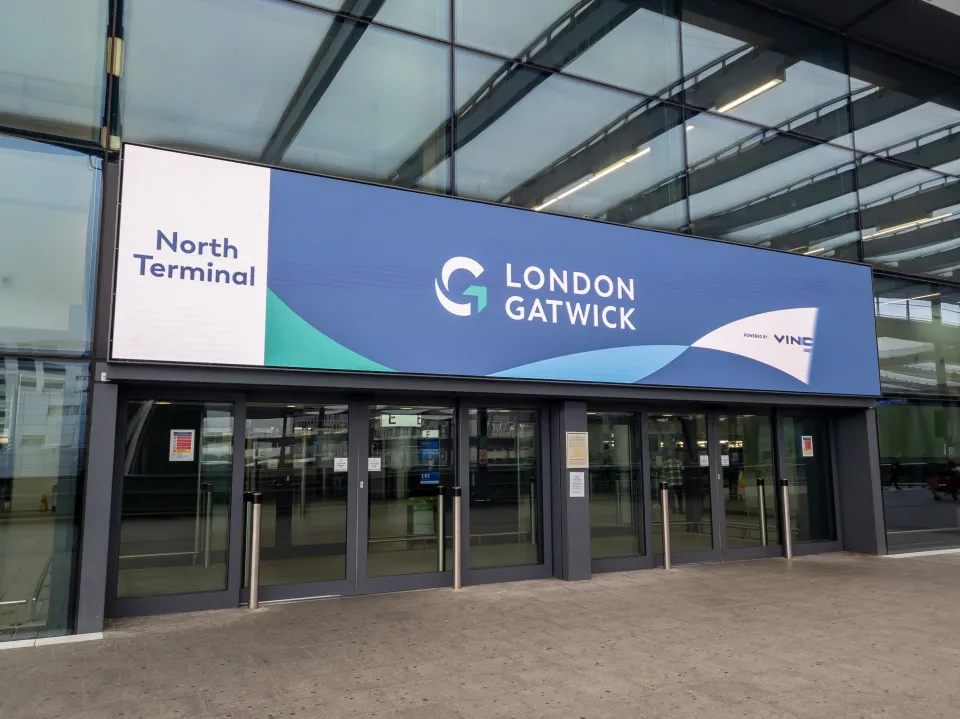
The EU’s Entry/Exit System (EES) started a phased rollout on October 12, 2025 in 29 European countries and is fully operational from today – April 10, 2026.

Sign up for the Travel newsletter
Thank you!
The new Entry/Exit System to Europe is fully operational from todayCredit: Alamy
What is EES?
EES is a new automated IT system that has been introduced across airports, ferry terminals and Eurostar stations across the Schengen area.
The system tracks short stays in Europe – up to a maximum of 90 days in any 180-day period.
Why has it been introduced?
EES has been introduced to replace the need for passport stamps.
Instead, going forward, visitors will automatically be checked-in when they enter and exit an EU country.
The aim of the system is to tighten border control, prevent illegal immigration and prevent identity fraud.
Is it also designed to make border crossings more efficient in the long run?
What travel does it impact?
No matter how you are travelling, whether that be by train, plane or sea, Brits (as well as all non-EU nationals) visiting Europe will have to follow the new rules.
If you are going on holiday to any of the following 29 countries, you will be required to follow EES.
Austria
Belgium
Bulgaria
Croatia
Czech Republic
Denmark
Estonia
Finland
France
Germany
Greece
Hungary
Iceland
Italy
Latvia
Liechtenstein
Lithuania
Luxembourg
Malta
Netherlands
Norway
Poland
Portugal
Romania
Slovakia
Slovenia
Spain
Sweden
Switzerland
How will it work?
All non-EU nationals – which includes Brits – are required to register their details on their first visit to a Schengen area country.
This will be done by using specific EES machines which will be at airports, ferry terminals and the Eurostar terminals.
The machines will log your fingerprints, facial images and scan your passport as well.
From today, every traveller has to register with EES.
Once you have registered (such as taking fingerprints and a photo), it is valid for three years.
It impacts all Brits heading to EuropeCredit: Alamy
Each time you travel within those three years, you must complete a shorter and faster check in, which, for example, usually involves scanning your fingerprints already on the system every time you enter or exit the Schengen Area.
If your passport expires before the three year mark, you will need to re-register with your new passport.
You will also have to re-register when the three years expires.
Will it cost me anything?
EES does not cost anything and is free for all travellers.
It is not a paid visa.
Will it make my journey time longer?
There have already been some reports of delays due to travellers registering for EES, including long queues and lengthy wait times.
Travel Reporter Alice Penwill spent three hours getting through the arrivals hall at Lanzarote Airport last month.
And delays have been reported at other airports like Brussels, Lisbon and Prague.
Some airports have put preparations in place to avoid travel chaos.
For example, Spanish operator, Aena, has said that is adapting security and border control for Brits at Ibiza, Menorca, Malaga and Palma, Majorca airports.
You must register, which includes scanning your fingerprintsCredit: Reuters
Tips to help with EES
The FCDO has recently updated its advice for countries impacted by EES.
On the website it states: “EES may take each passenger extra time to complete so be prepared to wait longer than usual at the border.
“EES is replacing the previous system of manually stamping passports when visitors arrive in the Schengen area for short stays. You may be asked to input biometric details every time you enter or exit.
“If you enter the Schengen area through the Port of Dover, Eurotunnel at Folkestone or Eurostar at St Pancras International, any information will be taken at the border before you leave the UK.
“Your digital EES record is valid for 3 years.”
While you might not be able to beat the long queues, Sun Travel has a few tips to make the process less stressful.
For example, book a seat at the front of the plane – this will help you get off the plane and to border control before the rest of passengers on your flight.
Where possible, booking the first flight of the day may help as they are generally fewer flights scheduled at this time and could mean less disruption.
If you have a connecting flight, try and go to a bigger airport when connecting as they are likely to be better equipped for the introduction of EES.
If travelling with children, think about the entertainment you can take with you, like an iPad.
This could help to keep them occupied and calm in long queues.
If you are disabled, make sure to let the airline know in advance as after landing, staff should escort you straight through to the front of the border control queues.
And last but not least, if you are going to be waiting in line for a while you want to make sure you are comfortable – so ditch the uncomfortable shoes, head to the toilet on the plane before you land and make sure you have some water with you.
The Foreign Office has updated its travel advice for 29 countries as new rules come into force for UK holidaymakers this week including the likes of France, Greece and Italy
10:55, 10 Apr 2026Updated 10:57, 10 Apr 2026
New rules come into force today (Image: Education Images/Universal Images Group via Getty Images)
The Foreign Office is updating its travel advice for 29 countries as new border rules come into force for Brits from today (April 10).
The European Union (EU) has introduced a new Entry/Exit System (EES), meaning Brits must now use the digital border system when travelling to the Schengen zone. This replaces the previous system of manual passport stamps, and instead you’ll be asked to register biometric information including fingerprints and a facial photograph when you first arrive at the airport border into the Schengen zone.
It’s worth noting this process is free, and in most cases you won’t need to do anything before reaching the border.
The new system inclues: Austria, Belgium, Bulgaria, Croatia, Czechia, Denmark, Estonia, Finland, France, Germany, Greece, Hungary, Iceland, Italy, Latvia, Liechtenstein, Lithuania, Luxembourg, Malta, Netherlands, Norway, Poland, Portugal, Romania, Slovakia, Slovenia, Spain, Sweden, and Switzerland. The EES system does not apply to travel for the Republic of Ireland or Cyprus, as they fall outside the Schengen zone.
As a result, the Foreign Office has updated its travel advice to explain: “The European Union’s (EU) new Entry/Exit System (EES) is now being implemented across the Schengen area.
“This means that when you travel into the Schengen area for short stays, you may need to register your biometric details, such as fingerprints and a photo. You do not need to take any action before you arrive at the border, and there is no cost for EES registration.
“On your first visit into a Schengen country, you may be asked to register your details at a special booth before proceeding to the immigration desk. Follow directions from your travel operator or the staff at your port of entry. You may also need to provide either your fingerprint or photo when you leave the Schengen area. Children aged 11 or younger will not have their fingerprints scanned but can be required to have their photo taken.
“EES may take each passenger extra time to complete so be prepared to wait longer than usual at the border.
“EES is replacing the previous system of manually stamping passports when visitors arrive in the Schengen area for short stays. You may be asked to input biometric details every time you enter or exit.
“If you enter the Schengen area through the Port of Dover, Eurotunnel at Folkestone or Eurostar at St Pancras International, any information will be taken at the border before you leave the UK.
“Your digital EES record is valid for 3 years.”
The Foreign Office has also urged Brits to check details for their destination including looking at rules laid out on that nation’s embassy website, in case there are any extra requirements that they may need to be aware of.
New EU rules for Brits kick off today – what it means for your holiday plans – The Mirror
Need to know
The European Union’s (EU) new Entry/Exit System (EES) is now fully operational, meaning that Brits travelling into major European holiday hotspots will need to go through a new digital border
The EU’s new Entry-Exit System (EES) has been fully rolled out(Image: Getty Images)
Five things to know about the new EU rules
As of Friday, 10 April, the European Union’s (EU) new Entry/Exit System (EES) has been fully rolled out, and Brits will be required to go through the digital border system when travelling to the Schengen area.
Countries in the Schengen area include: Austria, Belgium, Bulgaria, Croatia, Czechia, Denmark, Estonia, Finland, France, Germany, Greece, Hungary, Iceland, Italy, Latvia, Liechtenstein, Lithuania, Luxembourg, Malta, Netherlands, Norway, Poland, Portugal, Romania, Slovakia, Slovenia, Spain, Sweden, and Switzerland. The EES system is not required for travel into the Republic of Ireland and Cyprus, as they are not within the Schengen area.
With the new system in place, Brits will need to “create a digital record” and register their biometric details, such as fingerprints and a photograph, on their first visit to the Schengen area at the airport border upon arrival. This will be free of charge, and holidaymakers do not need to do anything before arriving at the border.
The new EES registration has replaced the former system of manual passport stamps when arriving in the EU. The government noted that the EES may take “each passenger a few extra minutes to complete”, but once done, the EES record is valid for three years. During this time, when entering the Schengen area again, Brits will only need to provide a fingerprint or photo at the border on entrance and exit.
Brits have been warned to expect delays and allow for extra time at the airport following the full introduction of the EU system, which was first rolled out on 12 October 2025. Luke Petherbridge, director of public affairs at ABTA, said: “What we have said to customers is that, because of the checks, you might need to prepare for delays with extra water and snacks.”
Emirates has issued a new alert to travellers(Image: Matthieu Douhaire via Getty Images)
Emirates has issued an update to passengers and prospective travellers following news that Iran and the US have reached agreement on a conditional two-week ceasefire. Pakistan’s Prime Minister Shehbaz Sharif, who has been facilitating talks, announced early on Wednesday (April 8) that the ceasefire took effect immediately.
The Dubai-based carrier Emirates stated in a post on X, formerly Twitter, on Friday morning that it is currently “operating a reduced flight schedule to over 100 destinations.” The statement continued, noting that those looking to make fresh bookings can check the most up-to-date flight schedules on the Emirates website.
Emirates added: “To provide further peace of mind, customers who make new bookings will also be offered one complimentary date change within the ticket’s validity.” Regarding those with pre-existing bookings, the airline said: “If your travel plans have been affected, we’ll do our best to rebook you on the next available Emirates flight.
“This applies to most disrupted tickets, including journeys connecting beyond Dubai.” Passengers booked to fly between February 28 and May 31 have several options available.
Content cannot be displayed without consent
These travellers can request a refund by filling out a form on the Emirates website, with the funds expected to be returned to your account within 21 days. Alternatively, you can rebook onto a different flight to your planned destination up until June 15, 2026. Emirates continued: “If your original travel date is within 72 hours, rebook by visiting [the Emirates website] or “Manage Your Booking” on the Emirates App. If your booking is for later, please contact us for assistance at [the Emirates website].”
Prior to travel, passengers are encouraged to keep checking their flight status – even following check-in. The post adds: “You can also review the latest operational updates on [the Emirates website]. Make sure your details are up to date to receive notifications and check your email for changes or cancellations to your flights before travelling to the airport.
“We continue to monitor the situation, and we will develop our operational schedule accordingly. Thank you for your understanding and patience.”
At the time of publication, Emirates said it is operating flights to Dubai from the following UK airports:
Recently travelling from Madrid to San Sebastián, we spent three days in picturesque Briñas in La Rioja, staying at the beautiful Finca Torre de Briñas (doubles from €189 B&B). The neighbouring town, Haro, reached via a 40-minute walk by the Ebro River, hosts several of the largest wine producers in the region (CVNE and Muga are recommended). You can stop in and sample them, before heading into the town centre, which has several tapas spots to fuel the walk back to the hotel. Bliss. Tom Dickson
Forests and badlands in Murcia
Aleppo pine forests in Sierra Espuña massif. Photograph: Juan Vilata/Alamy
Less than an hour’s drive – yet a world away – from the bustling Murcia coast sits the brooding Sierra Espuña mountain range, a green respite from the summer heat and the site of a rewilding project started more than a century ago. After a morning’s hike through the shady pines, we drove up a switchback mountain road to check out the 16th-century Pozos de la Nieve, and descended steps into a silent, cavernous interior. Come summer, stored ice was hauled by horse and cart from here down to wealthy city folk. Our return route passed the Barrancos de Gebas, a lunar “badlands” landscape formed from a seabed more than 10m years ago. There were few other visitors and it felt like our secret. Cathy Robinson
Terraced vineyards in Galicia’s gorges
The Sil river bends its way through the Ribeira Sacra. Photograph: Pedre/Getty Images
Forest fires in the Picos mountains led us on a detour via the Ribeira Sacra, a wine region in inland Galicia. The area is characterised by the deep canyons of the Sil and Miño rivers, and the steep-sided banks are lined with terraced vineyards, the grapes benefiting from the delicate ecosystem the gorges create. We swam in waterfalls, drank wine and walked among the narrow terraces. A highlight was the walk at the top of the Miradoiro de Souto Chao (the Grape Pickers’ Viewpoint). The views were stunning: tranquil, natural and barely a tourist in sight. Ruth Chapman
A fairytale town in Navarre
The medieval settlement of Gallipienzo. Photograph: Vicenfoto/Getty Images
A medieval settlement rising above the sparse landscape of Navarre province, Gallipienzo is the stuff of fairytales. Before beginning our ascent on the winding road to the old town, we took a dip in the Aragón River, much needed after sightseeing in scorching Pamplona. Arriving at Hotel Heredad Beragu (doubles from €109 B&B), we were given a warm welcome by Patxi and Ramón, who have turned an old farmstead into a chic getaway. After a sunset walk, soaking up views of the surrounding countryside framed by ramshackle doorways, we headed back to the hotel for a locally sourced dinner, rather smug to have discovered this gateway to the past. Anna
The city of Bilbao is deservedly popular. But take a 25-minute train ride along the Nervión River to the coast and you will arrive in Portugalete. Head straight to the Crepería Miramar for great coffee and a perfect tortilla. The cafe sits on the estuary in the shadow of the wonderful Vizcaya Bridge. Built in 1893, it is the world’s oldest transporter bridge, a Unesco world heritage site, and the perfect combination of beauty and function. For €1 take a trip on the transporter over to Getxo and walk around the bay to the lovely fishing village of Algorta. A perfect day. Michael Quinn
Exploring the Alpujarras, near Granada
Pitres in the Sierra Nevada. Photograph: Juergen Feuerer/Chromorange/Alamy
Last month, I was delighted to find the almond blossom out while walking the Ruta Medieval in the Alpujarran municipality of La Taha. This year, after the disastrous storms in the south, no hike has been without hazards – landslides and fallen trees – so an app such as Wikiloc is essential to find detours. If you don’t have a car, a bus stops at Pitres, the start of the waymarked trail along ancient cobbled paths, through whitewashed, flat-roofed Moorish villages that hang on the side of the gorge created by the River Trevélez. There are various options after Ferreirola. A strenuous climb through Atalbéitar to Pórtugos, or a gentler one to Busquístar. Both have a bus back to Pitres or onwards to Órgiva (of Chris Stewart, Driving Over Lemons, fame) or even Granada. Laura
Profile
Readers’ tips: send a tip for a chance to win a £200 voucher for a Coolstays break
Show
Guardian Travel readers’ tips
Every week we ask our readers for recommendations from their travels. A selection of tips will be featured online and may appear in print. To enter the latest competition visit the readers’ tips homepage
–
Medieval gems in Léon
The castle of Ponferrada. Photograph: Ivan Marc Sanchez/Alamy
We arrived in Ponferrada on foot as part of our Camino de Santiago walk, so we could see the town looming up ahead of us well in advance. As well as an attractive centre with old buildings, restaurants, and bars serving the famous Bierzo wine, the most famous thing about Ponferrada is its huge Disney-like castle, thought to have been built by the Knights Templar, which not only hosts mock-medieval pageants but also contains a stunning collection of manuscripts and maps. After our journey from the lovely mountain village of El Acebo, we still found the energy to do the extra couple of miles uphill in the sun to visit the tiny romanesque church of Santo Tomás de las Ollas, which for me was worth a dozen castles. Barbara Forbes
A spectacular slow rail trip from Santander
The coastal village of Llanes. Photograph: StockPhotoAstur/Getty Images
We got off the ferry at Santander and took a train on the narrow-gauge railway heading west. The slow and spectacular former Feve (now operated by Renfe) line runs along the northern Spanish coast towards Oviedo and Ferrol. We stopped off at coastal villages Llanes and San Vicente, and found great value places to stay, good local wine and excellent restaurants. Viveiro was another excellent stop where restaurants served cloudy white wine in ceramic jugs to accompany the wonderful seafood. Lonely and dramatic beaches complete the idyll. We had a lot of time so were able to absorb all this wonderful coast could offer before heading down towards Vigo and Porto by train. Alan White
A stunning find near Girona
Plaça de Les Voltes in Peratallada. Photograph: Jordi Carrio/Alamy
The stunning medieval town of Peratallada made a peaceful base for exploring the Empordà region in September. Against cloudless, azure skies, its caramel-coloured walls and arches dripped with red campsis and bougainvillea. It’s an excellent day trip from Girona (20 miles away) and towns on the Costa Brava, but it’s worth more of your time. Climb the Torre de las Horas bell tower (free; visitor numbers restricted) for great views, and work your way around the welcoming shops, cafes and restaurants. Particular favourites were Restaurant La Roca and DO Candelaria. Kay Julier
Winning tip: Hanging in Cuenca
Vertiginously perched houses in Cuenca. Photograph: Getty Images/iStockphoto
In the Castilla-La Mancha mountains east of Madrid, I visited the Unesco world heritage city of Cuenca. Sitting proudly upon its plateau and ensnared by the Júcar and Huécar rivers, this city offers spectacular vistas. To take advantage of the views and the otherworldly karst rock giants, hike the 4-mile circular route through pine forest, finishing with a sunset over the medieval city. Add to that a free abstract art museum vertiginously perched within the Casas Colgadas, and a beautifully-lit labyrinth of streets after dusk, and Cuenca is a perfect town to visit off the beaten track. James Mulligan
Moving a town down the road requires a huge amount of money and incredible engineering expertise, but not losing the community in the process might be even more complex
The moving of the church was watched by huge crowds(Image: TT NEWS AGENCY/AFP via Getty Ima)
One sunny day last August, a 713-tonne, 113-year-old church was lifted off the ground and placed onto a specialised 224-wheel transporter to begin its journey five kilometres down the road.
The Gothic revival Kiruna Church is a beloved building, once named the most beautiful in Sweden. It would’ve stood where it did to the west of the Arctic town for many decades more, had the ground not threatened to swallow it up.
A great cheer went up as the church arrived at its new home, traffic lights, lamp posts and even a bridge having been demolished to make way for the timber structure. Among the spectators was Sweden’s King Carl XVI Gustaf and children who clambered onto roofs for a better look. The widely publicised event made headlines across the world and the typically capable Swedish engineering team earned many metaphorical slaps on the back.
“They smashed us in the head,” says Kjell Törmä, a local journalist and lifelong resident. The 67-year-old has chronicled the town’s move since 2004, when mining company Luossavaara Kiirunavaara Aktiebolag, (LKAB) first told the population what its digging had done.
A century of going down into the 2km iron ore deposit had caused fissures to spread from the mine to the town centre, roughly 2km away.
It was decided that the town must be moved, or else its foundations would collapse. At first, 4,700 residents would be moved to the safer east of the town – their homes bought and then demolished by LKAB, which is legally required to fund the estimated £737m relocation effort. Twenty buildings, including the church and iconic town hall, would be driven to safety.
“Almost everyone in Kiruna accepts this change, but many of us don’t like it. It is tragic in many ways. We have to accept it or accept that we will lose our jobs,” Kjell told the Mirror.
“In my family, my mother and father worked for LKAB for 75 years together, one of my brothers worked there for 20 years. I have done a lot of jobs for the mine as a freelancer. Almost every family depends on LKAB.”
As reluctantly accepting of the town’s move as locals may have been before, what came after the church relocation has caused far more disquiet. Eight days later, once the world’s press had left the town, 6,000 more locals were told their homes would be demolished.
“The mining company is the enemy. A lot of people are taking the money and leaving,” former Kiruna resident Hannes told me on the night train to the town.
The young dad was returning north, having swapped his hometown for Malmo in the far south several years ago. “I find it depressing to go back now,” he said, in between marshalling his sociable toddler as she made her way down the carriage.
Hannes’ parents have also left and soon, so will his cousin Kjell. “When they told us we had to move, I was in shock and sad for a week. Then my wife and I decided we would turn a page in our lives,” Kjell explained.
As technically remarkable as the great shift east is, and as deep as LKAB’s pockets seem to be when it comes to paying over the odds to homeowners, moving a town is complex.
Kjell is losing a home he’s spent 35 years building. Each day, he can hear machines working away in the distance.
“Many people who have moved from Kiruna and come back say it’s not my town anymore. I have always answered, ‘no it’s not the town for us elders, but for the kids. They grew up with this, it will be their town.’ But, a lot of memories are disappearing all the time.”
Exploring the old and new sides of town, their distinct personalities are immediately obvious. When city planner Per Olof Hallman drew up the blueprint a century ago, he selected the best location in terms of climate, placing the traditional Swedish timber home on a south-facing slope, close to the mines and with a favourable aspect and microclimate. Streets followed the terrain to avoid wind tunnelling and to maintain beautiful views for the residents.
In the new town, tall modern blocks of flats have been built in a dip, which blocks the view south and, according to a University of Gothenburg study, can be 10C colder than the old town.
The slightly ramshackle feeling of a community that has grown organically over the years is replaced with something a little more familiar.
“It looks like anywhere else in Sweden now,” Hannes says.
This is not to say that the move has not been attempted with great care, attention or love by those in charge. Indeed, Kjell says LKAB have managed it “very well” on the whole.
But it is undeniably difficult to transport a place that isn’t just physical buildings, but memories.
Göran Cars, the current urban planner for the Kiruna municipality, acknowledges the challenge. “I was stupid coming up here, because I assumed that the way to maintain identity and preserve history was to move physical buildings,” he told Dezeen.
“We are moving the church. When I speak to people they say: ‘Yes I know that, but what about a grave? How about the birches?’ I didn’t understand that. They are small trees! But they are 100 years old – as old as the church. I get the question time and time again: ‘What about the birches?’ So now we are moving the birches.”
The complexity of the challenge is sobering. This is, after all, Sweden, where the structures of local democracy are strong, the engineering sector is world-leading, and the concerns of nomadic reindeer herding Sami are increasingly heard. It’s also a project backed by one of the world’s biggest iron ore mines.
These are advantages other places won’t enjoy. And there will be many more such places.
The United Nations’ Intergovernmental Panel on Climate Change report warns that the predicted 1.5 centigrade increase in global temperatures will lead to an average sea-level rise of between 26 and 77 centimetres by the end of the century. With 2C of warming – which looks increasingly likely – the Greenland ice shelf could melt, triggering a rise of up to seven metres.
The world’s largest cities Miami and Mumbai are under threat and the Maldives will likely be uninhabitable by 2100. Not just 10,500 as in Kiruna’s case, but millions of people will have to move.
LKAB and Kiruna Council were approached for comment.
Over the last year, activists have organized droves of people across the United States to protest and petition Congress over concerns that the Trump administration will sell off our most beloved outdoor spaces.
We’ve worried about general threats to public lands, such as whether the 700,000-acre Angeles National Forest or the 150,000-acre Santa Monica Mountains National Recreation Area will remain pristine protected landscapes. We’ve also seen specific examples of what activists have cautioned could happen: a large mining operation that could open just outside Joshua Tree National Park and a large housing development proposed at the border of Yosemite National Park.
And although that attention is more than warranted, for those of us living around Los Angeles, it’s crucial that we not miss a similar, quieter battle being fought locally by nonprofits and public agencies. Here in L.A., our wildlands are often protected parcel by parcel.
A bear meanders through the Rubio Canyon Preserve.
(Johanna Turner)
It’s a time-consuming, expensive and rewarding job that the Arroyos & Foothills Conservancy has been performing for, as of Friday, when the group celebrates its anniversary, 25 years.
I spoke with conservancy leaders about their vision to create an expansive corridor for wildlife moving among our mountain ranges. This would help combat climate change locally, make hillsides more fire resistant and ensure biodiversity among our local animals.
You are reading The Wild newsletter
Sign up to get expert tips on the best of Southern California’s beaches, trails, parks, deserts, forests and mountains in your inbox every Thursday
By continuing, you agree to our Terms of Service, which include arbitration and a class action waiver. You agree that we and our third-party vendors may collect and use your information, including through cookies, pixels and similar technologies, for the purposes set forth in our Privacy Policy such as personalizing your experience and ads.
The Arroyos & Foothills Conservancy started with four neighbors — Altadena residents Nancy Steele, Astrid Ellersieck, Diane Walters and Lori Paul — who organized against a housing development that ultimately was constructed.
“They were unsuccessful in preventing the project, but they realized that working together, they could be powerful,” said Barbara Goto, the conservancy’s director of operations.
The group first launched the Altadena Foothills Conservancy with the hyperlocal focus of protecting the neighboring hillsides and canyons from development. Over the next seven years, the organization’s vision expanded to include the foothills of the San Gabriel Mountains, and it started operating under its current name.
The organization has saved more than 140 acres from development since its founding. To identify ideal properties, they’ve used wildlife cameras, mapping software and other available data.
A Pacific tree frog (Pseudacris cadaverina) male, calling with extended throat, at Rubio Canyon.
(Althea Edwards)
The process to purchase those properties is often long and arduous. Conservancy staff must persuade a property owner to sell at fair-market price — a stipulation when the conservancy uses state funding to buy property. The owner must also be patient enough to wait for the conservancy to cobble together grants to buy the land.
After buying the land, the conservancy establishes a “friends” group — like Friends of Rubio — comprised of volunteers who yank invasive plants, reestablish trails (if applicable) and rebuild or restore passageways to make the property as appealing to animals as possible.
And it works.
The 41-acre Rubio Canyon Preserve, which sits about four miles northwest of Eaton Canyon, is regularly frequented by bears, mountain lions and deer passing to and from Angeles National Forest and the foothill landscape.
Two gray foxes appear to play together in Millard Canyon.
(Denis Callet)
At the conservancy’s Rosemont Preserve, volunteers have essentially removed all invasive castor bean, arundo (which clogs streams) and tree tobacco, which crowd out native plants and harm the landscape. It’s no surprise that the conservancy has documented 10 different mountain lions over the last nine years there (even though the preserve is surrounded on multiple sides by neighborhoods).
When the conservancy staff invited me to visit one of their preserves, I was eager and skeptical. I grew up in rural America, where my family’s 300-acre goat ranch was considered small. I’ve met ranchers who own essentially entire counties of land, especially around the Oklahoma-Texas Panhandle.
I had a bias going into this story. I assumed you needed big swaths of property to really make a difference. I realized how wrong I was when I visited the conservancy’s Cottonwood Canyon in Pasadena.
It is only 11 acres, but it is one of the most significant properties the conservancy has acquired. But that wasn’t immediately obvious.
A coyote trudges through the Rosemont Preserve.
(Denis Callet)
As John Howell, the conservancy’s chief executive, and Tim Martinez, the organization’s land manager, led me through the preserve, shaded by massive oak trees, they explained that a local educator had reached out to let the organization know that the property, which had been owned by the same family since 1885, would be up for sale.
The organization soon realized a few key details about the land. For one, it has a small-but-mighty spring that flows year-round into the Arroyo Seco. It is one of only two known year-round water sources for wildlife in the region, they said, a significant resource given how drought can dry up much of the nearby rivers and creeks.
But Cottonwood’s importance grew much larger when a staffer at the California Department of Fish and Wildlife pointed out during a visit to the property, Goto said, that the land could serve as a vital piece in a wildlife corridor puzzle. The land sits between the Hahamongna Watershed Park in La Cañada Flintridge to its east and the San Rafael Hills and Verdugo Mountains to its west.
“They’re like, ‘These are natural open spaces that need to be connected — these natural open spaces are large enough to support wildlife populations,’” Goto said. “So that is when our mission changed.”
A lesser goldfinch sings a little tune at Sycamore Canyon Preserve.
(TJ Hastings)
The organization has since pushed for the creation of the Hahamongna to Tujunga Wildlife Corridor, a 20-mile stretch that would link the San Gabriel Mountains at Hahamongna Watershed Park to the San Gabriels at Big Tujunga Wash for wildlife passage through the San Rafael Hills and the Verdugo Mountains. (For a great visual, visit arroyosfoothills.org.)
This type of effort helps ensure that, for example, mountain lions don’t end up like the famous Griffith Park mountain lion P-22, surrounded by roadways and unable to safely look for a mate, or worse.
“P-41 was the resident cougar in the Verdugos and was there for 10 years with Nikita, and they sired two sets of two cubs,” Howell said. “And [with] the first set, one died on the 134 [Freeway] and the second one died on the 210 [Freeway]. And the second set were found emaciated under a car in Burbank, and they had to be saved.”
A mountain lion crosses through Millard Canyon.
(Johanna Turner)
One challenge the conservancy faces in building out the Hahamongna to Tujunga Wildlife Corridor, Goto said, is how state funding is allocated. It is coincidentally similar to my own bias going into this piece.
Goto said that, as incredible as California’s “30×30” goal is — to conserve 30% of California’s lands and coastal waters by 2030 — “it makes it very difficult to get funding for small parcels.”
Much of the money to buy public lands comes from bond measures, and although L.A. County arguably has one of the biggest voting blocks that passed those measures, a substantial amount of bond money goes to buy property in Northern California, where large plots are more ample, Goto said.
“It’s when we’re working on these wildlife corridors that don’t necessarily have water and are much smaller, that’s where it really gets difficult,” Goto said.
And sometimes all that’s needed is a parcel of land.
A curious deer at Cottonwood Canyon Preserve.
(Arroyos & Foothills Conservancy)
3 things to do
The L.A. River bike trail near Griffith Park.
(Los Angeles Times)
1. Mosey on down the river in Elysian Valley, a.k.a. Frogtown L.A. Climate Week has organized an L.A. River Crawl from noon to 5 p.m. Saturday in Frogtown. Several local organizations and businesses will be open along the route, offering live music, poetry, food pop-ups and family-friendly activities about climate change and ecology. To learn more, visit laclimateweek.com.
2. Gaze at the stars in San Diego San Diego County Parks will host the Festival of the Night Sky and Nocturnal Creatures from 5 to 10 p.m. Saturday at the Los Peñasquitos Ranch House (12122 Canyonside Park Drive) in San Diego. This free all-ages event will include birdwatching, stargazing via telescopes and a night hike where participants will try to spot scorpions, crickets and bats. Visitors are encouraged to bring binoculars, flashlights, jackets, drinks and snacks. Learn more at the agency’s Instagram page.
3. Journal with genuine curiosity in L.A. The L.A. City Department of Recreation and Parks will host a guided walk with nature journaling from 9 to 11 a.m. Sunday at Griffith Park. A guide will take hikers on a short walk before the group pauses to capture what they’ve noticed in journals. Some materials will be provided, but guests are encouraged to bring what supplies they have. Register at eventbrite.com.
The must-read
A professional guide with Times reporter Jack Dolan, right, set off near Donner Pass trailhead on a route taken by a backcountry ski group struck by an avalanche north of Tahoe on Feb. 17.
(Danny Kern / For The Times)
After hearing news of the deadliest avalanche in California history, many of us wondered how such a thing could happen given our access to weather data even in the most remote places. Times staff writer Jack Dolan retraced the steps of a guided backcountry ski trip where 13 people, including nine who died, were buried in snow during an intense blizzard. “Deep in a wooded ravine, bathed in warm sunlight, we knelt behind the makeshift memorial of flowers and looked up the slope that sent tons of snow barreling down,” Dolan wrote. “All we could see was a slight rise and a healthy forest of full-grown pine trees.”
There are no right words to say to capture the magnitude of heartache around this tragedy. The search for answers is one step in a long grieving process.
Happy adventuring,
P.S.
Valentine continues her quest for love, folks! The wolf who made history earlier this year when she entered Los Angeles County in search of a mate has made history for a second time. “The 3-year-old female with black fur entered Inyo County around 7 a.m. Sunday about 20 miles south of Mt. Whitney,” Times staff writer Lila Seidman wrote. “She became the first documented wolf to set paws in the Eastern Sierra county in more than a century, according to state wildlife officials.” It’s only been two months, meaning Valentine and her future mate could still qualify for a canine version of “90 Day Fiancé”!
For more insider tips on Southern California’s beaches, trails and parks, check out past editions of The Wild. And to view this newsletter in your browser, click here.
A FERRY company has plunged into liquidation after 18 months of trying to save the business.
The service provides a vital link between Hythe and Southampton Town Quay.
Sign up for the Travel newsletter
Thank you!
The Hythe and Southampton Ferry Company will cease its operations in SouthamptonCredit: Alamy
The Hythe Ferry, operated by the Hythe and Southampton Ferry Company, has been inactive since August 2024, when damage was found on its boat’s pontoon and supporting structure.
The business has now gone into voluntary liquidation after it failed to secure necessary investment to survive.
A company spokesperson said: “This is a deeply disappointing outcome and not one that has been reached lightly.”
The service has been operational since 1874 and has passed through multiple ownerships.
The firm is currently owned by cross-Solent operator Red Funnel, which runs services to the Isle of Wight.
It had previously been put up for sale in the hope of attracting a buyer.
Despite applying for funding and grants from investors, the company was not able to secure the necessary money to stay afloat after 18 months of trying.
After taking legal advice, it was decided that Hythe and Southampton Ferry Company would go into voluntary liquidation.
Staff have also been caught up in the fallout, with all employees now informed of the closure.
The company says workers will be supported throughout the process as the shutdown unfolds.
Specialist firm Leonard Curtis has been brought in to handle the liquidation, guiding the business through its final chapter.
Their role will include managing assets and supporting those affected.
And you won’t have to spend much either – you could hop on the first Ryanair flight on June 3 and return on June 6 for just £41.37 return.
Ryanair used to fly to the destination between 2001 and 2008, however the route was scrapped when the airline started to serve Bologna instead.
The comeback of the route has also been possible due to the municipal tax being removed, which was added to flights.
If visiting the city of Forli you will see traces of the Romanesque and Renaissance times, with ancient churches and piazzas that date back over 2,000 years.
One of the piazzas is Aurelio Saffi, which sits in the heart of the city and stretches 128 metres long, making it one of the largest squares in Italy.
Off the square, the historic centre is made up of four main streets – Mazzini, Garibaldi, Diaz and Della Repubblica.
Nearby, make sure to visit the Abbey of San Mercuriale, which has a 72-metre bell tower dating back to the 12th century that inspired the reconstruction of St Mark’s Campanile in Venice.
For those who love being outdoors, check out Parco Urbano Franco Agosto – a 64-acre park by the old city walls with free-roaming rabbits, ponds and sports facilities.
Aurelio Saffi sits in the heart of the city and stretches 128 metres long, making it one of the largest squares in ItalyCredit: Getty
Our favourite Loveholidays breaks
*If you click on a link in this box, we will earn affiliate revenue.
Belpoint Beach Hotel, Antalya, Turkey
This hotel is surrounded by the forests of the Toros Mountains, giving your outdoor swim a pretty impressive backdrop. With a pool decorated with colourful parasols and a waterslide, this pretty resort also has plenty to do indoors, including a sauna and a Turkish bath to unwind in.
The huge resort has 363 rooms, each with a balcony or terrace overlooking the sea or gardens. All-inclusive food includes three daily meals in the main buffet restaurant, as well as drinks and snacks such as pizza, hot dogs and burgers at the pizzeria snack bar. If you fancy getting out and exploring, the town centre is a 10 minute drive away.
Terramar Calella puts you right in the thick of the action, with the sea on one side and the buzzing promenade on the other. Here, days start with sea swims and end with sunset drinks. Platja Gran Calella is the area’s largest beach, and here it’s right on your doorstep.
This Corfu resort was built for families, buzzing with entertainment and activities. With four adult pools, three kids pools, a mini waterpark and a beach on your doorstep, there’s plenty of spots for you to stretch out on a sun lounger and for the kids to splash around. And as the day winds down to a close, the party starts with mini discos, Greek dancing, lively quiz nights and karaoke.
Forli is also well-known for its Romagnan cuisine with restaurants serving Piadina – a traditional bread often filled with local soft cheese and cured meats.
And the city is home to lots of bars as well, with some such as Volume Bar, offering a glass of wine for £3.05 and pints of beer for £3.48.
There are many other places to explore in the surrounding area as well.
Just 23 minutes from Forli is Bertinoro, which is a medieval citadel known as the ‘City of Hospitality’.
It is a great place to visit for panoramic views, stretching as far as the Adriatic Sea on clear days.
The city of Bologna is 29 minutes on the train, or an hour’s drive from Forli.
Bologna is known as Italy‘s capital of food and features a historic centre with 600 archways.
Or you could head to Rimini – which sits on the Adriatic coast with nine miles of beaches – is about 50 minutes away.
Travelodge confirmed it has changed its pet policy and upped the flat fee it charges pet owners for bringing their animals to its hotels
Travelodge allows pets in its hotels for a flat fee(Image: Getty Images/iStockphoto)
Budget hotel chain Travelodge has made a major change to its pet policy ahead of the peak May half-term and summer travel season.
Travelodge currently allow pets in all of their hotels in both standard and SuperRooms, and up to two domesticated animals, either cats or dogs, can currently stay with their owners in each room.
Previously, this was charged at £20 per pet per stay, regardless of how many nights the owners stayed, to allow for an additional deep clean of each room at the end of a break. However, this has now been increased to £25 per stay, meaning people who want to travel with their pooch or feline will end up paying more.
A spokesperson for Travelodge confirmed the change, telling the Mirror: “We are proud to be the only UK budget hotel chain to welcome pets at every one of our 600+ hotels, 365 days a year.
“Having held our pet supplement at the same price for over a decade, we have introduced a £5 increase across the majority of our hotels to reflect rising operational costs and ensure we can continue to offer a great quality stay for guests travelling with their animals.
“Unlike many other hotels, our flat fee of £25 per pet covers the entire duration of a pet’s stay, ensuring Travelodge remains a highly competitive and value-for-money option for pet owners. Customers will see the new price on the website when they make a pet booking.”
Travelodge customers who are travelling with pets can add them to their booking as an extra at the payment stage. While pets are allowed to stay in rooms, they’re generally barred from bar and restaurant areas. Its website also confirms: “Assistance dogs are welcome at all Travelodge hotels, free of charge.”
Recently, there has been a lively debate around dogs in public places, as a major European airline announced plans to allow dogs in the cabin. The plans will mean owners travelling on an Italian airline will be able to book a seat for their pup, rather than locking them in crates into the hold. A poll showed that 95% of Mirror readers agreed that dogs should be allowed to sit alongside their owners in the cabin.
A recent poll also showed that six out of ten dog owners choose their holidays based on their pet’s preference. The survey, which involved data from over 2,000 pet owners, showed that top destinations in the UK for dog-friendly travel included Devon and Cornwall.
An impressive 78% of dog owners who took their pet on holiday chose destinations based on whether there were nice places nearby for walkies, while 30% said they’d never return to a staycation spot if it failed to meet their pet’s needs. Around a third of pet owners also plan their routes and travels around doggy-friendly rest stops.
Have a story you want to share? Email us at webtravel@reachplc.com
BRITS visiting Europe will be hit with new travel rules from tomorrow, but there are still some exceptions.
A total of 29 countries are set to implement the EU’s Entry/Exit System (EES) from Friday, April 10.
Sign up for the Travel newsletter
Thank you!
The new Entry/Exit System is set to be implemented tomorrow, however some areas are reporting issuesCredit: ReutersBritish passport holders traveling to Europe will face new entry rules from Friday, April 10Credit: Getty
The EES will replace passport stamping for all non-EU citizens this week,after an initial rollout in October 2025.
This new entry system will use machines across airports, ferry terminals, and the Eurostar to log fingerprints and facial images and scan passports.
These machines will be in place at destination airporta when arriving into the EU and before departure for rail and ferry trips from the Port of Dover, Folkestone, and St Pancras International.
All “third-country nationals”, including Brits, will be required to register their details on these machines during their first visit to a Schengen area country, as well as in Iceland, Lichtenstein, Norway, and Switzerland.
Meanwhile, manual passport stamping will continue to be used in Ireland and Cyprus.
Initially scheduled to become fully operational across all Schengen area border crossing points from Friday, the new process doesn’t appear to be ready in some countries.
Reports suggest that some crossing points are not prepared to start processing non-EU nationals via the new EES machines.
Technical issues in France are having a knock-on effect for the system’s rollout at the Eurostar, as well as at the Eurotunnel Le Shuttle and on cross-channel services between the Port of Dover and Calais.
French authorities confirmed travellers using these services will not be asked to provide fingerprints or facial images as thetechnologyis not yet in place.
Only lorry drivers and coach and foot passengers will be required to register with EES at the Port of Dover.
Chaos is also anticipated for air passengers, with some airports preparing to open Brit-only border control queues in the hope of easing wait times.
The Spanish operator, Aena, said it would adapt security and border control for Brits at Ibiza, Menorca, Malaga and Palma, Majorca airports.
Digital EES records will be valid for three years, with non-EU nationals who return during this time only required to provide a fingerprint or photo at the border, when entering or exiting.
29 countries implementing the Entry/Exit System
Austria
Belgium
Bulgaria
Croatia
Czech Republic
Denmark
Estonia
Finland
France
Germany
Greece
Hungary
Iceland
Italy
Latvia
Liechtenstein
Lithuania
Luxembourg
Malta
Netherlands
Norway
Poland
Portugal
Romania
Slovakia
Slovenia
Spain
Sweden
Switzerland
The introduction of EES will be fully rolled out tomorrow, with 29 countries included on the listCredit: Reuters
Aerial footage has captured Manchester’s latest development taking shapeCredit: YouTube/Prolific NorthThe state-of-the-art development is set to open in 2028Credit: YouTube/Prolific NorthIt will be the ‘biggest paid-for attraction in the UK’Credit: Supplied
Chief Commercial Officer Jonathan Lingham said: “For the first time, you can see the design translating into reality.
“The central hub is a defining part of the scheme, and it’s now clearly visible on site as the project begins to take shape.”
Once complete, Therme Manchester will be one of the largest urban wellbeing resorts in the world and the “biggest paid-for attraction in the UK”.
It is currently scheduled to open at the end of 2028, boasting several state-of-the-art facilities.
Inside, visitors can expect a heated waterpark with lots of spa and wellness facilities.
The complex will have an outdoor beach as well.
This will be the first Therme site in the UK with separate locations in Germany andRomania.
ThermeManchesterwas first announced back in 2020 and was due to open in 2024, before being delayed.
When construction started in September, Therme UK CEO Prof. David Russell said: “Today marks the official beginning of a once-in-a-generation project for Manchester and the North West.
“Therme Manchester will be a place for everyone – a unique destination where wellbeing, sustainability, art and culture come together.”
Therme Manchester will boast several modern facilitiesCredit: suppliedThe development was announced back in 2020Credit: supplied
ONE of Newcastle’s most legendary bars closed its doors to customers earlier this year, signalling the end of an era for a part of the city’s much celebrated nightlife.
Anyone who’s been for a night out in the Toon in the last 20 years or so will have likely ventured down the dark staircase of Mushroom, before sticking to its practically adhesive floor.
Sign up for the Travel newsletter
Thank you!
Newcastle is one of the best cities for a night outCredit: GettyMuchroom Bar closed its doors in January after decades of service to the cityCredit: Mushroom Bar
Mushroom was a prime spot for people to enjoy a dance and some cheap drinks before moving on to one of the many clubs elsewhere in the city.
And a visit was never complete without drinking a pint of its famous sickly sweet Skittles.
The handful of recipes available online for this sugary concoction aren’t completely in agreement about its ingredients.
But it’s generally accepted that it contained at least two shots of vodka, some blue curaçao, then either a shot of peach schnapps or Taboo (a fruity 14.9 per cent vodka-based drink), all chucked in a pint glass with orange and lemonade filling it to the brim.
Whether or not Mushroom actually invented the drink remains up for debate, with other bars joining it on the Skittles bandwagon, but it was always known as “the home of Skittles” leaving no question about its spiritual residence, with the venue selling little else to its punters on a night out.
Earlier this year, it finally closed its doors after 23 years with a 14-hour long farewell party, reportedly attended by as many as 5,000 people, with local DJs performing throughout the night.
Nevertheless, Newcastle’s nightlife is much more than just one bar – here are 10 reasons why it’s still the best city in the country for an evening out.
One of the country’s cheapest pints
According to figures released at the end of last year, a pint in Newcastle is cheaper than most big cities in the UK.
Manchester, Liverpool, Edinburgh, Belfast, Bath, Bristol and of course London were all among those whose average pint prices exceeded Newcastle’s fairly reasonable £5.28, according to financial information provider Finder.
That price is below the national average of £5.50, making a night out in Newcastle more affordable than many others.
Home of the Diamond Strip
Collingwood Street was bestowed its ‘Diamond Strip’ nickname because of its high concentration of luxury bars and nightclubs, all close to one another.
Popular with stag and hen dos, and with celebrities, the likes of Tup Tup Palace, Tokyo, Soho Rooms, ChachaBuchi, Mimo, Manhatta, Vampire Rabbit and others are all within a stone’s throw of each other, making a high-end bar crawl very easy to accomplish.
Fans of reality series Geordie Shore will definitely recognise some of these establishments from the show, and may well end up in an episode if they time their visit right.
Ouseburn Valley
Newcastle isn’t just a place for crazy nights out, cheap trebles and drinking shots with celebs. It also has more than its fair share of relaxing pubs, perfect for whiling away an evening with a couple of pints.
Undoubtedly the best place to do that is the Ouseburn Valley, with historic boozers like the Cumberland Arms, the Tyne Bar and the Ship making for a fantastic pub crawl away from the craziness of the city centre.
The jewel in the crown of the Ouseburn is the Free Trade, which offers one of the best views of the Tyne you’ll find anywhere in the city, be it from its wonderful beer garden, or the stools next to its giant windows.
Collingwood Street is considered the ‘Diamond Strip’Credit: Alamy
For more in the UK – here are our favourite hotels in the country from Manchester to Cambridge…
*If you click on a link in this box, we will earn affiliate revenue.
Margate House, Kent
This stylish boutique hotel is in a seaside townhouse, a short walk from Margate’s coolest bars and restaurants. Decked out with plush velvet sofas, candles flickering and striking independent art, inside feels like a warm welcome home. Rooms are stunning, especially the ones that give you a glimpse of the sea.
The Alan looks extremely grand, being built into a beautiful Grade II listed building. Spread across six floors, with 137 rooms, each one looks like a fancy design magazine. From the concrete coffee tables to the pink plastered walls, the industrial-inspired designs perfectly replicate the history of the city.
This historic hotel has welcomed the likes of Charles Dickens and Lillie Langtry through its doors. Rooms have richly-patterned carpets with super soft bed linen and premium toiletries in the bathroom. Go for a superior room for extra goodies including bathrobes and snack boxes.
This Cambridge hotel is in the ideal spot, within walking distance to bars, shops and hotspots like the university colleges and Parker’s Piece. The inside couldn’t be prettier, with huge stained glass windows, grand chandeliers, and rooms with enormous clawfoot bath tubs.
Khai Khai is a popular restaurant with celebs like Harrison Ford and Gordon RamsayCredit: Alamy
Breweries, breweries, breweries
Beer enthusiasts can spread themselves beyond the Ouseburn Valley into the many breweries and tap rooms that have opened across Newcastle, with the city offering a wide selection of options for those into the craft beer scene.
Donzoko Brewery and Tap Room is a unique little brewery near the Ouseburn, serving a range of lagers and ales as well as bar snacks.
Other well-regarded breweries include the Anarchy Brew Co and the Wylam Brewery, which is housed in the impressive Palace of Arts building in Exhibition Park and regularly hosts gigs, live comedy and food-related events, like battle of the burger and slice wars.
Gordon Ramsay’s Favourite Curry
Kicking off the night with something good to eat is simple in Newcastle, with a fantastic array of restaurants spread throughout the city, catering to all tastes.
However, one of its best-loved eateries is Khai Khai, which has served everyone from local royalty like Alan Shearer to Hollywood A-listers like Harrison Ford.
Meanwhile, globally renowned chef Gordon Ramsay once described his meal there as “one of the best curries in my entire life, that took me back to being in Mumbai and Rajasthan.”
Even the city’s Primark has a GreggsCredit: Unknown
24 Hour Greggs
When it comes to food at the end of the evening, Newcastle has got revellers well covered as well, with one of the city’s most famous exports open all hours.
The first ever branch of Greggs was opened in nearby Gosforth in 1951 and now two of the city’s 21 branches have 24-hour licences, meaning party-goers can treat themselves to a steak bake or sausage roll instead of the classic kebab after their night out.
The city also has some unique versions of the beloved bakery, including one in its branch of Primark.
Music Venues and Strong Local Music Scene
For live music enthusiasts there’s a fantastic local music scene to explore, with venues big and small hosting everyone from local up-and-comers to global superstars.
Smaller venues like the Head of Steam opposite the train station showcase the next generation of musical talent, while the Cluny in the Ouseburn Valley regularly hosts established names.
Elsewhere, the City Hall and Utilita Arena are your go-to spots for bigger names, while Newcastle United’s football stadium St James’ Park has been known to host blockbuster gigs as well.
With a scene that has produced the likes of Sam Fender in recent years, going to the smaller venues might be worth your while if you want to catch the next wave of talent before it hits the big time.
Global superstars like Kylian Mbappe, Lamine Yamal and Ousmane Dembele have all turned up for big games at St James’ in the last two years, providing wonderful nights of entertainment for sports fans.
Head to Toon fans’ favourite pub The Strawberry before kick-off to get a taste of authentic Geordie atmosphere before taking in the game among 50 thousand supporters – an experience truly like no other.
Ouseburn Valley has historic boozers like the Cumberland ArmsCredit: Alamy
Friendly locals
A night out is rarely good because of where you are – it’s much more about who you’re with. Luckily, in Newcastle, both location and company are well covered.
Geordies are regularly named among the most welcoming people in online polls and surveys, while travel publications like Big 7 Travel have also praised the Toon’s locals in recent years, naming it the country’s friendliest city in 2024.
In fact, train company Lumo once revealed that the Geordie accent is the most likely to put a smile on someone’s face, beating other popular regional accents like Yorkshire, Scouse, Cockney and Glaswegian to top spot.
Set off from Newcastle, wake up in Amsterdam
One of the best nights out in Newcastle doesn’t actually take place in the city at all. However, it does start there.
Overnight ferries run from the toon to Amsterdam, and there’s little else to do on board other than make the most of its bar and nightclub.
Make friends with your shipmates, bond over a bottle or two, then head to your cabin before waking up in another of Europe’s greatest party destinations to continue the celebrations.
Rules around travel to Europe are changing – make sure you’re prepared by following a travel expert’s tips.
Arrive early and have documents ready to avoid queues, especially if you’re travelling with a big family(Image: Getty)
Nobody wants to face those dreaded airport queues; there’s nothing to ruin the start of a holiday than being stuck in a long queue, stressing about whether you’ll make your flight, surrounded by equally frustrated travellers.
From April 10, new biometric checks will become mandatory for all non-EU travellers entering the Schengen Area which will include Brits. Traditional passport stamping is now replaced by fingerprint scans and facial recognition. While it is meant to be a quick process, major international hubs are already reporting long queues of up to four hours for the service, especially at airports that host multiple airlines.
With that in mind, Jane Bolton, a travel expert at Erna Low, has shared four simple but essential tips to help passengers avoid unnecessary delays and start their trip without delays.
Arrive earlier than you think you need to
“Airport wait times can vary, but with the new EES checks, queues of up to four hours are expected at peak times,” Jane explains. “In the past, travellers were advised to arrive two hours before a domestic flight and three hours for an international flight. Now, it’s worth allowing more time than usual.”
To be extra prepared, Jane would recommend arriving three to four hours before the flight to account for additional biometric checks slowing down border processing – especially if you’re flying during busier holiday periods.
Consider fast-track options where possible
But spending so much time in airports isn’t exactly everyone’s idea of fun. In that case, fast-track security could be worth the investment. “As long queues are expected, passengers should opt for alternative time-saving methods where possible,” Jane says. “Purchasing fast-track tickets for security is a great method for reducing the time needed prior to a flight.” Typically costing between £3 and £12, these passes can help you bypass long security lines, a price she says is “a relatively small investment for peace of mind.”
Plan carefully if you’re travelling with family
Under the new system, families might even face additional challenges – children under 12 are exempt from fingerprinting and facial recognition, but they must be linked to a registered adult. “For families or large parties travelling, allowing extra time at the airport is essential,” Jane explains. “This process will take longer than average, so plan ahead and keep all documents ready.”
Double-check your passport before you go
Since Brexit, Jane says, one of the most common mistakes travellers make is assuming their passport is valid everywhere, at any point. “Your passport must have been issued less than 10 years before your travel date and be valid for at least three months after departure,” Jane says. She stresses that, while most would know their passport is expired, some wouldn’t think to check one thing that also matters: the issue date. She explains: “For example, a passport issued in March 2015 and expiring in December 2025 won’t be valid for EU travel after March 2025.” Failing to check this could mean being turned away at the airport before your trip even begins.
Travel Health Pro has issued a reminder to holidaymakers
Brits are urged to do one thing before going on holiday abroad(Image: Getty)
Brits planning overseas holidays are being urged to complete one crucial task before jetting off. According to experts, this applies to “all” travellers.
Adhering to this advice, which addresses any possible health and security concerns, will help you “stay safe”. Travel Health Pro said: “Most travellers have a safe, enjoyable trip without any problems, but basic precautions should be taken to help maintain personal safety.
“The Foreign, Commonwealth and Development Office (FCDO) recommend all travellers from the United Kingdom (UK) prepare well and research their destinations before they go.” It continued: “FCDO travel advice provides country-specific safety and security advice, along with information about local laws and customs.
“Researching destinations before departure (ideally before booking a trip) and following FCDO advice helps you stay safe.” Should the FCDO deem the risk of travel to be “unacceptably high”, they will formally advise British nationals against “all but essential travel” or “all travel” to a specific country or region.
This information can be accessed by searching for a specific country via the FCDO country page. Additionally, you can also receive FCDO email alerts regarding particular countries by registering through a link on the FCDO country page for your chosen destination.
It’s crucial to note that your travel insurance could be rendered void should you travel against FCDO guidance. Travel Health Pro also provided the following general advice for those heading abroad.
Take care
It encouraged people to “take care” with important documents, insurance details, contact numbers and belongings.
Dress and behave appropriately
Avoid obvious displays of wealth, dress suitably and behave appropriately, it said. “For example, public displays of affection are unacceptable in some regions and alcohol is banned in certain countries,” the website said.
Alcohol
It continued: “Some accidents and injuries can be prevented by careful behaviour. Alcohol may be a factor, as it can affect judgment and lower inhibitions. Ideally, if you drink alcohol, only do so in moderation.”
Further to this, you should not drink alcohol in countries where it is prohibited.
Drugs
Possessing or smuggling illegal drugs, even in tiny amounts, are serious crimes in many countries. This includes cannabis.
Travel Health Pro said: “UK residents caught carrying illegal drugs while visiting or passing through a country will face that country’s laws. These can be much stricter than UK laws, as some countries have a zero-tolerance policy to drug offences.
“Punishment could include arrest and detention, with a long prison sentence if charged and convicted. Many international airports, train stations and ports have excellent technology and security for detecting illegal items, which may be used to scan the baggage of transiting passengers.”
LGBTQ+ travellers
It added: “FCDO advise that attitudes towards lesbian, gay, bisexual and transgender (LGBT+) travellers worldwide can be very different to those in the UK. They advise LGBT+ travellers to find out about local laws and social attitudes towards same-sex relationships, gender expression and identity before you visit a country.”
To check specific advice on your destination, visit the FCDO country pages here.
If you’re planning to take a hot beverage on your next flight, make sure you know your airline’s policy around food and drink. Some airlines are pickier than others about what you can bring into the cabin
14:47, 09 Apr 2026Updated 16:59, 09 Apr 2026
This article contains affiliate links, we will receive a commission on any sales we generate from it. Learn more
A strong coffee is essential for those early morning flights(Image: Getty Images)
When you’re rushing to the airport for a budget airline flight at some ungodly hour, you’ll no doubt be dreaming of your first cup of coffee of the day. Once through security, many of us make a beeline for the nearest café to get us through to our destination.
However, when it comes to boarding your flight, not all airlines are happy for you to bring your venti cup onboard. While some airlines are fine with hot drinks as long as the lid is well-secured, others will make you bin your freshly-roasted drinks and you may end up waiting for the trolley to come round to get your caffeine fix.
It’s important to check the rules with your airline – otherwise you may end up wasting money on a coffee you then need to chuck before you get on your flight.
Here’s what some of the UK’s most popular airlines say about bringing hot drinks onboard in their policies.
EasyJet
If you’ve booked a flight with easyJet you can bring your own food and drink, although the airline does of course sell its own range onboard. When it comes to your morning cuppa or coffee, the easyJet website states: “You can bring hot drinks on board if you’ve bought them at the airport and they have a lid on.”
When you buy your takeaway drink, make sure you keep hold of the lid, or even better buy a reusable cup with a tight seal such as the Byron 2.0 SNAPSEAL™ Travel Mug and get it filled with your favourite drink at the airport before you board.
Jet2
Unfortunately for Jet2 passengers, the airline doesn’t allow you to bring a cup of coffee onboard, even if bought at the airport. Its website states: “No, you can’t bring hot food or hot drinks onboard our planes for safety reasons. However, we offer a great selection of meal deals and hot and cold sandwiches that can be pre-purchased in Manage My Booking.”
The Jet2 website also has a link to its online menu, which shows it sells a range of Costa coffees including cappuccinos, lattes, Americanos, and decaf options. Its menu also includes Yorkshire Tea and Cadbury’s hot chocolate.
Ryanair
While Ryanair does allow passengers to bring their own cold food and drink onboard, its general terms and conditions of carriage clearly state: “You must not take hot drinks on the plane, or drink your own alcohol when on the plane.”
Ryanair has an app that allows passengers to order food and drink before the trolley comes round and in-between drink service. You can therefore order a coffee or tea as soon as you’re in the air and the crew will deliver it when safe to do so. While its hot drink selection is quite limited at just coffee, tea, hot chocolate, or cappuccino, the airline does offer some meal deals that include a sandwich and panini, snack, and either hot or cold drink which can work out cheaper.
TUI
TUI don’t specify whether you can bring your cup of coffee onboard. Under an FAQ saying “Can I take my own food for the flight?” the airline has responded: “Yes. However, we can’t provide heating facilities on board – although for infants, we are able to warm bottles of milk in hot water.
“Therefore, we would advise low-risk food such as pre-made sandwiches and snacks that can be eaten cold.”
It’s likely to be at the discretion of flight attendants whether they let you bring your coffee cup onboard, so you may be better off waiting for the trolley. TUI’s inflight café menu for short-haul flights includes cappuccinos, Americanos, and decaf options for coffee, as well as teas including herbal tea, and Cadbury’s hot chocolate.
British Airways
British Airways (BA) also don’t explicitly ban hot drinks from being brought onboard. It simply states that food and drink needs to pass security checks and adhere to customs regulations, so again, it’s likely to be at the crew’s discretion.
BA offer the High Life Café aboard most short-haul routes meaning travellers get a better choice of hot drinks than most airlines. From a flat white to a pumpkin spice latte, you’ll find the kind of coffees you usually order in high street chains. It also offers a wide range of Birchall teas and hot chocolate.
Have a story you want to share? Email us at webtravel@reachplc.com
Pooh Corner café in Hartfield, East Sussex, is only a short drive from London and takes inspiration from the classic Winnie the Pooh tales – with themed food, décor and afternoon tea
Alice Sjoberg Social News Reporter
14:28, 09 Apr 2026
The café has been praised for it’s ‘adorable’ interior and delicious food (stock image)(Image: Debra Angel via Getty Images)
People are astonished as they discover the ‘cutest’ café in the countryside, merely an hour from London, which draws inspiration from a beloved classic childhood book character.
The café in question is Pooh Corner, situated in Hartfield, near the Ashdown forest in East Sussex, recognised as the inspiration for ‘the real’ Hundred Acre Woods in the timeless tales. A.A. Milne penned all of his Winnie the Pooh books there, inspired by his woodland adventures with his son, Christopher Robin, and he passed away at Cotchford Farm in 1956.
Every year, visitors from across the world travel to the forest in question, eager to walk in the footsteps of the globally renowned bear. And now they can also enjoy a Pooh-themed meal in ‘the cutest’ local café.
On TikTok, one user named ‘inherauraaa’ from London documented their visit to the charming café, which is just a brief drive from London.
“The cosiest tiny café in the countryside for brunch located just outside of London. The food are all affordable and all Winnie the Pooh inspired,” they penned in the post’s caption.
Content cannot be displayed without consent
In the clip, the Londoner showcased footage from the café, from the Winnie the Pooh-themed sign outside, to the memorabilia and decorations inside that enhanced the charm.
As they visited during spring, the outdoor space was flourishing with various flowers and plants, where a sign featuring Pooh bear instructed them to wait to be seated. Even the crockery and cups were Winnie the Pooh themed, as they showcased their food order of scones with honey and clotted cream, along with hot chocolates topped with whipped cream. The tea was also served in a Winnie the Pooh teapot.
“Tiny outdoor and indoor seating area, also a big walk into the field just behind the café (didn’t have time for this sadly) and a gift shop indoors with small rooms of displays and collections. Just a 1hr drive out of London, worth a visit,” the user added.
The Pooh Corner café, though compact, boasts over 1,600 reviews on TripAdvisor, with an impressive average score of 4.6 out of 5. Visitors rave about the delightful teddy toast, scones, and afternoon tea on offer, alongside a wide selection of teas and coffees.
Reviewers also draw attention to the quaint and charming atmosphere and the wallet-friendly prices, while also praising the warm and welcoming staff.
The comment section of the video quickly filled up with people eager to find out exactly where the café was located, tagging friends and loved ones with plans to visit, as they set about arranging their own trips.
WHEN you think of Oxford Street in London, your first thoughts might be massive crowds – but this is set to all change.
New plans are being made to completely revamp the UK’s busiest high street, with inspirations being drawn from another famous road in Spain; La Rambla.
Sign up for the Travel newsletter
Thank you!
Oxford Street will soon become pedestrianisedCredit: AlamyUnder the new plans, cars will be banned from this summerCredit: Mayor of LondonAnd the new pedestrianised destination is inspired by La Rambla in SpainCredit: Alamy
Currently, Oxford Street welcomes around 500,000 visitors a day to over 300 shops which include Selfridges and the recently-opened Ikea.
But Oxford Street’s £150milllion revamp will see it pedestrianised between Oxford Circus and Marble Arch, meaning more space for people to walk by replacing the roads with paths.
The man behind the massive Oxford Street project, Scott Parsons, admitted the street currently feels like a “hostile environment” and that he even used to walk out of his way to avoid Oxford Street.
He added that he wants to ditch the “dip in, dip out” vibe of the famous road, and instead make it a destination for visitors to “stroll and linger”.
Both Mr Parsons and Seb Dance, London’s deputy mayor, said they were inspired by La Rambla in Barcelona, to see the “the benefits of pedestrianised streets for cities and the challenges of large-scale regeneration projects,” according to The Times.
In comparison, stretching just under three-quarters of a mile long, La Rambla is Barcelona‘s most iconic pedestrian area and welcomes around 150,000 people a day.
Along La Rambla, visitors can stop off at a number of destinations too including the Mercat de la Boqueria food market, the historic Liceu Theatreopera house and Miro’s Mosaic.
But over the recent years there have been a growing number of complaints that the spot has become a tourist trap as well.
In a bid to avoid this worsening, a £48million revamp is underway of La Rambla and is expected to be completed by February 2027.
To avoid the issues faced on La Rambla, the development of Oxford Street will need to make sure it doesn’t become full of kiosks that block the paths.
Not only that, but there will also need to be sufficient crowd management, while allowing restaurants and cafes stay open in the evenings to stop the street from becoming empty.
Locals are worried though, that the pedestrianisation will push the traffic out into the surrounding areas such as Soho and Mayfair.
Even Transport for London (TfL) is having to divert its bus routes for the pedestrianisation.
However, Parsons asserted that the current plan will “put Oxford Street back on the map… not just the map of London, but for the UK high street as a global icon”.
In addition, Sadiq Khan previously mentioned that the street will be returned to its “former glory” and rivals the likes of Champs-Elysees in Paris and Times Square in New York as well.
The first phase of the £150million project will be to ban cars on Oxford Street this summer between Oxford Circus and Marble Arch.
Oxford Street currently attracts 500,000 visitors a dayCredit: AlamyIn comparison, La Rambla attracts 150,000 visitors a dayCredit: Alamy
This will then be followed by banning buses, taxis and cyclists later in the year.
Temporary “public realm schemes” will also be put in place to “beautify” the street, before later being replaced by permanent schemes.
Once complete Oxford Street is set to “host world-class events, from sport to culture and fashion, as well as exciting new retail and leisure experiences”, according to Sadiq Khan.
And in the future, the pedestrianised zone could be expanded to Tottenham Court Road.
Around 63 per cent of Londoners agree with decision to make Oxford Street pedestrianised.
Sadiq Khan previously commented: “We want to rejuvenate Oxford Street; establish it as a global leader for shopping, leisure and outdoor events with a world-class, accessible, pedestrianised avenue.
He added that it will help to attract more international visitors, as well as create a “beautiful public space where people can shop, eat and connect”.
In other London news, the city’s ‘best family attraction’ is about to get even better – with huge new outdoor play area and cafe next month.
THE crisis in Iran has had a knock-on effect around the world from the rising cost of fuel, an increase in energy bills, and where to go on your next holiday.
But when it comes to the price of summer breaks this year, the good news is that they’ve barely moved – and in some cases, the cost of holidays have even dropped by hundreds of pounds.
Sign up for the Travel newsletter
Thank you!
Three destinations in Italy, including the Amalfi Coast, have seen price dropsCredit: Getty Holidays to the Dominican Republic have dropped by £130pp on averageCredit: Alamy
Follow The Sun’s award-winning travel team onInstagramandTiktokfor top holiday tips and inspiration.
On average holidays are up £23, but TravelSupermarket has also revealed that surprisingly, hundreds of popular destinations have actually seen prices fall.
TravelSupermarket has found that some holidays at certain destinations are actually cheaper than when the Iran conflict began.
Here are the top five destinations with the biggest price drops in the summer holidays based on a seven-night holiday between April and September, 2026.
At the very top with the biggest price drop is the Neapolitan Riviera in Italy.

Here, holidays are sitting at an average price of £905 per person, which has a price drop of £232.
It’s where you’ll find beautiful and colourful towns perched on clifftops – with spectacular views of Mount Vesuvius in some cases.
Specifically, it’s where you can explore the clifftops of Sorrento, the island of Capri and Ischia in the Bay of Naples.
Other places in Italy make it into the top five too – the Amalfi Coast and the Italian Lakes.
The Amalfi Coast is a popular destination with millions of tourists who flock there every summer for its great weather and tasty food.
Now, holidays on average there have dropped by £126 per person, with the average price of a break being £1,073.
At the Italian Lakes, which is where you’ll find the beautiful Lake Garda, Como, Maggiore and Orta – prices have dropped on average by £122pp.
Now, the average cost of a holiday here per person during the summer is £714.
For more on holidays, here are our favourite TUI breaks…
*If you click on a link in this box, we will earn affiliate revenue
Globales Montemar, Ibiza
This hotel sits on a quieter side of Ibiza, so you can soak up the island’s natural beauty away from the party crowds. This family-friendly option has a large pool that curves around the resort, surrounded by plenty of sunbeds, plus a kids zone. Here you’re just a 10-minute stroll from a horseshoe-shaped bay with clear waters.
This resort is set up like a small village, with low-rise buildings set among palm trees and six different swimming pools. Entertainment spans from DJ nights to bingo and live sports screenings, plus sports on offer include water polo, rifle shooting and shuffleboard.
This hotel sits on Majorca’s Cala Gran Beach, a beautiful cove just a short drive away from the coastal town centre, with its trinket shops and relaxed bars. The hotel itself has all the activities and entertainment you’d expect, including bingo and live music – as well as some unique extras like mini golf and archery. Week-long breaks start from £478pp.
The Riu Baobab is the only TUI hotel in the country, sat on the Pointe Sarane coastline. There are the four huge pools overlooking the beach, swim up pool bars and a copious amount of sunloungers to choose from. The sushi at the Asian Dorayaki and the pasta dishes at Veneto are the highlight meals of this standout hotel. Week-long breaks start from £883pp.
If you’re looking for a long-haul destination, check out the Dominican Republic.
TravelSupermarket worked out that the average holiday here is now £1,364pp – a drop of £130pp.
It has cracking weather, white sand beaches, beautiful resorts and lively towns like Punta Cana on the eastern side of the island.
The Dominican Republic is also the cheapest in the Caribbean – the average price of coffee is £1.53 and a meal at an inexpensive restaurant can start from £4.90, according to Wise.
In comparison, a meal in Barbados is around £14.50 and a coffee is around £3.32.
The Canary Island of La Palma is incredible affordable this summerCredit: Getty
Spain
If quick and easy holidays are more your bag for 2026, then check out La Palma.
It’s not the most well-known of the Canary Islands and is much quieter too.
It doesn’t have the enormous resorts, so if a calmer, nature-inspired holiday is on the cards, it’s a great option.
The main town is Santa Cruz La Palma which has bright coloured buildings, cobbled streets and wooden balconies that look over the black-sand beach.
Holidays here have dropped by £120 and can be on average as cheap as £474pp.
Chris Webber, Head of Holidays and Deals at TravelSupermarket, said: “Despite the current uncertainty, summer holiday prices haven’t moved dramatically — up by just £23 on average across all destinations.
“For holidaymakers sitting on the fence, that’s a signal worth paying attention to. Prices won’t stay like this indefinitely, and with so many destinations actually seeing prices fall — places like Majorca, Corfu and Turkey — now could be a smart time to book ahead of any increases.
“Holiday companies are keen to get bookings moving, and that’s likely filtering through into some very competitive pricing right now.”
These are the 20 holiday destinations that have fallen in price, according to TravelSupermarket…
Here are the 20 destinations that have fallen in price – and the average amount less per person…