Explore new cultures, find the best travel deals, and make informed decisions with our trusted travel news. Let your wanderlust thrive as you stay connected with the ever-changing world of travel.
A pilot has explained the real reason passengers need to switch their phones to airplane mode during flights, and it’s not just a formality
Travellers told what happens if you ignore a safety procedure(Image: Getty)
Flying remains one of the safest ways to travel, largely due to meticulously crafted safety protocols. Whilst some procedures might appear mundane or superfluous, each serves a vital purpose in safeguarding passengers and crew alike.
However, a pilot (@PerchPoint) has taken to TikTok to clarify whether one specific procedure genuinely needs following. Whether through absent-mindedness or simply not knowing better, switching your phone to aeroplane mode matters – and it’s not “a conspiracy theory,” the pilot cautions.
But what actually occurs if you don’t bother? In the video, the pilot explained: “This is just a friendly PSA, that the airplane mode button is not a conspiracy.
“If you forget to put your phone on airplane mode, no, it’s not the end of the world, the plane will not fall out of the sky, and it won’t even mess with the systems on board.”
However, does this mean passengers can disregard the procedure? “If you have an aircraft with 70, 80, or 150 people on board and even three or four people’s phones start to try and make a connection to a radio tower for an incoming phone call, it sends out radio waves.
Content cannot be displayed without consent
“There’s a potential that those radio waves can interfere with the headsets that the pilots are using.”
He proceeded to describe his own encounter with this interference whilst attempting to land safely, noting there was an irritating noise in the headset that “sounded like a mosquito.”
The pilot explained: “No, it’s not the end of the world, but it’s pretty annoying when you’re trying to copy down instructions and it sounds like a wasp or something flying around you. So if you’re ever curious why you need to put on airplane mode, that’s why.”
According to Travel and Leisure, it goes beyond mere irritation. Pilots frequently operate with restricted visibility, meaning they depend heavily on information relayed from ground control, particularly during takeoff and landing – the phases when most aviation incidents take place.
Consequently, it’s vital that they remain focused and their communication isn’t compromised.
Rule or courtesy?
Per Federal Aviation Administration (FAA) regulations, all passengers must enable airplane mode during flight to avoid potential signal interference.
It’s also a straightforward gesture of consideration that contributes to a seamless journey for all passengers, according to Booking.com.
“When smartphones and devices were first introduced, it was found that cell phones that aren’t in flight mode can overload the networks on the ground, especially during takeoff and landing, as phones try to connect to multiple towers at once.
“How much phones affect aviation technology hasn’t been studied in-depth, but pilots say they can hear background noise and interference from phones while flying, especially when they’re landing, and mobile phones begin to make contact with towers again.
“So, while your phone may work at times during flight, do you really want to distract your pilot while they’re speaking with air traffic control to execute a safe landing?”
Why are flight crew permitted to use devices?
According to Lovely Planet, pilots and flight attendants are seen with devices right in the cockpit, which gives them access to digital charts and documents.
However, unlike passenger devices, this equipment has undergone rigorous testing to guarantee it won’t disrupt the aircraft’s systems.
This little town in Yorkshire is ideal for fans of Emily Bronte’s gothic story thanks to its wild and rugged surroundings, and nearby attractions that might just be haunted…
Whitby has long been known as a dark and brooding place(Image: Getty Images)
Sometimes, when a storm hits the UK, rain batters the pavements and wind whips the trees, it’s easy to feel swept up in the kind of awe-inspiring conditions that helped Emily Brontë to write her classic novel, Wuthering Heights.
There is a little town in Yorkshire, 100miles from Cathy and Heathcliff’s home, but steeped in as much Gothic drama, where every day feels like you’ve tumbled into such dark Victorian melodrama.
As I stepped aboard my coach bound for Whitby, I imagined a sleepy seaside town, much like those down south that slowly emerge as you drive along the road towards the sea. What I got was very different.
Just getting to Whitby was a beautiful journey. The town is nestled between the rugged expanse of the moors and the wild thrashing of the North Sea. In days gone by, travellers would only be able to access it if they hiked for miles along the hills and valleys of the North York Moors or braved the violent waves of the sea. Now, we have cars and trains, but both still take you over the moors.
As my coach sped through the twists and turns of the roads across the moors, I was like a child, with my face pressed against the window. There wasn’t a soul for miles, just acres and acres of heather. Once in Whitby, when you hear the waves crash against the sea defences and feel the wind whistle past your ears, it’s easy to see how someone might think a faint voice calling for Heathcliff was coming over their shoulder.
The town itself is split into two halves. The newer section was built following the Second World War, but much of the town is older and filled with Georgian terraces. Even older is Whitby Abbey, whose ruins stand proudly at the top of a cliff and have inspired many a tale, including Bram Stoker’s Dracula.
If you walk along the coast from the nearby villages of Saltmoore and Sandsend, the gothic ruins stay within your sightline. Lucky hikers will get to see the sea fog – which locals used to believe was the fiery breath of a dragon – come in to cover the abbey. You’ll feel like you’re trekking the same paths Heathcliff did as he searched for Catherine’s ghost, not least because Emerald Fennell’s new film was shot about two hours away, in the Yorkshire Dales.
The most remarkable sight comes when you walk back towards Whitby, as when the fog clears, the Abbey can be seen looming through a gap between the cliffs. It’s terrifying and awe-inspiring all at once. I felt drawn towards the ruins, much as Cathy is drawn to Heathcliff or as an entranced Lucy is drawn to Dracula. How could anyone resist such a terrible sight?
Indeed, not Whitby residents of years gone by. Whitby Storyteller, Rose Rylands, who tells of the myths of the moors. When Rose spoke about the ghostly figures said to appear on the hilltops, goosebumps pebbled my skin, as if I was walking with them myself.
The tale of Bram’s inspiration in Whitby was similarly haunting. During a holiday, the author stayed on the West Cliff, offering views of the Abbey, which he felt suited the Gothic atmosphere of his story. One day, he turned to the local library to research a shipwreck, only to discover the name ‘Dracula’ in the records. Its meaning in the Wallachian language, Bram learned, is ‘devil’.
When Rose told us these tales, the winter’s night pressing against the hostel windows, my heart started to beat faster. I began to wonder if I, too, would soon be hallucinating the ghost of lost love calling to me.
Of course, Heathcliff’s hallucinations of Cathy’s ghost all happen at night, and there really is nowhere better to see the stars than the North York Moors. The national park is a designated International Dark Sky Reserve, one of only 25 in the world, protected from light pollution and able to provide clear horizons, clouds permitting. As someone who grew up in London and finds it hard to sleep without the orange glow of streetlights coming in through the curtains, just standing in complete darkness is a wonder. When the stars are visible, there are no words.
We went to Castle Howard, a stately home that has served as a filming location for Brideshead Revisited and Bridgerton, to see the stars. Except for the enormous house, there is nothing around for miles, leaving the sky unpolluted by light. Inside, the house is equally beautiful.
The entrance hall is a vast space whose domed ceiling has been painted with the most gorgeous fresco of cherubs – it’s similar to Michelangelo’s painting The Creation of Adam, which decorates the Sistine Chapel. The whole place feels like an art gallery, really. I couldn’t wrap my head around the fact that people actually live there, but they do. The family is very involved in ensuring the house and its heritage remain standing strong.
Flouncing around the house, through the rooms, and then eventually into the cold and dark night definitely made me feel like I was Cathy after she had married Edgar Linton. Castle Howard has all the opulence of Thrushcross Grange, and it was easy to slip into the role of the new wife enjoying her surroundings. Heading out to see the stars, with the house behind me, had my heart racing, as though I could really see Heathcliff across the moors at Wuthering Heights.
If you want to really live in the kind of luxury that the Earnshaws did (without the madness and rooms where the wallpaper is modelled after Margot Robbie’s skin), the Saltmoore Hotel and Spa is the place to go. Just slightly removed from the touristy bustle of Whitby, the hotel is extremely peaceful. My room was a huge and managed to fit in a double bed, a giant shower (with underfloor heating) and two incredibly comfortable armchairs where you can sit and you listen out for ghosts at the window.
Additionally, the staff couldn’t be more helpful. They even lend you wellies for a walk along the beach. Fingers crossed the next time I go, I’ll be better prepared. And best believe, I will be back. For costume drama fans, there really is nowhere better to be.
Ensure our latest lifestyle and travel stories always appear at the top of your Google Search by making us a Preferred Source. Click here to activate or add us as your Preferred Source in your Google search settings.
With the highest chance of clear blue skies and balmy temperature during the Easter holidays, this beautiful island is a haven with golden sand beaches and azure waters
This article contains affiliate links, we will receive a commission on any sales we generate from it. Learn more
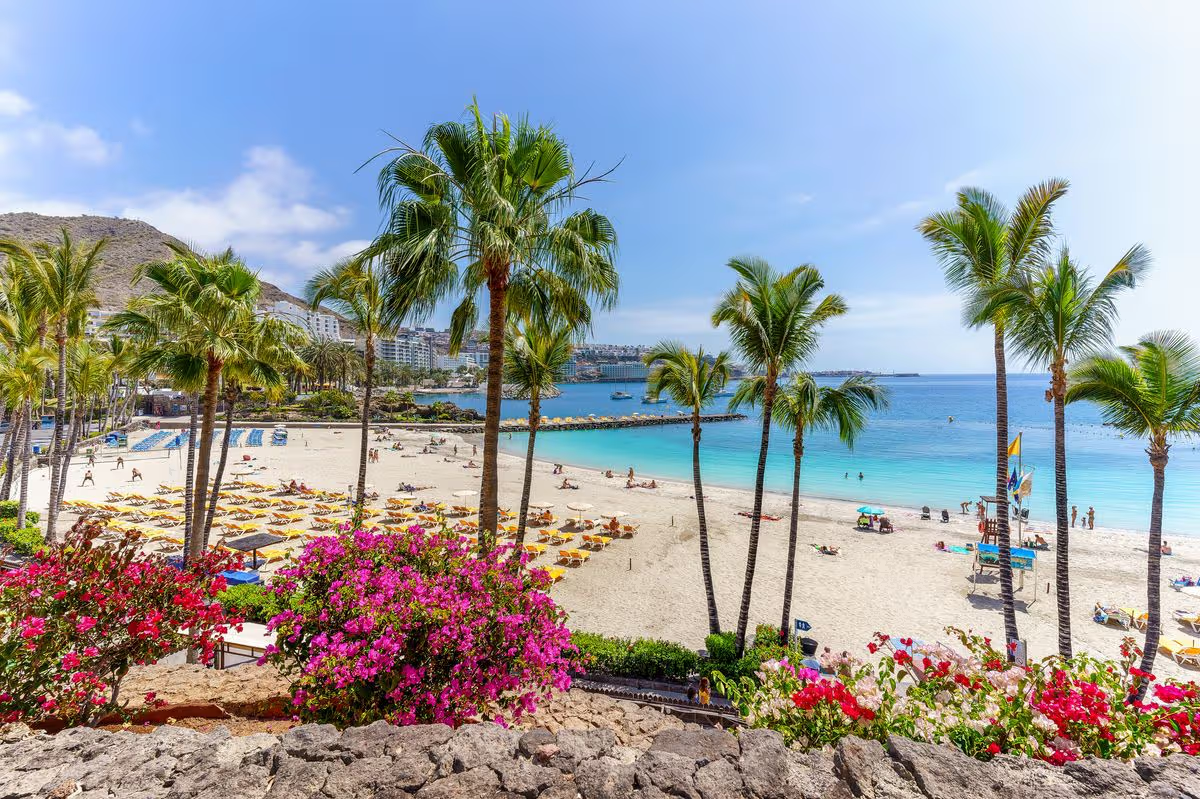
This sunny island could be the ideal Easter escape you’ve been looking for(Image: Getty Images)
A sunny island offering balmy rays of 22C and golden sand beaches could be the ideal destination to jet off to this Easter.
With February half term almost over, thoughts will start turning to the Easter holidays, particularly when a vitamin D fix is in order. One destination that offers ‘near guaranteed sunshine’, alongside its expansive sand beaches, dramatic volcanic landscapes and crystal-clear turquoise waters, is Gran Canaria in the Canary Islands.
In a bid to help travellers book their Easter escape, easyJet collected data to reveal the destinations with the highest chance of blistering rays and clear skies in April. From their research, they found that Gran Canaria would offer a balmy 22C in April and just a mere 5 to 15 per cent chance of rain per day, coming in third place behind Egypt and Cape Verde in the easyJet index.
The beautiful island, off northwestern Africa, is a haven for radiant weather with an average of nine hours of sunshine a day – perfect for days spent by the hotel pool or on the beach! What’s more, one-way direct flights to the sun-soaked island in April start from just £25.99 with easyJet, making an Easter escape even more appealing.
Among its fun-packed waterparks to keep the kids entertained, and desert-style sand dunes for days of exploring, easyJet revealed that the average price of a package holiday to Gran Canaria starts from around £429. There’s also a catalogue of sprawling resorts nestled along the picturesque shores, making it even easier to choose your preferred accommodation.
As the third-largest island of the Canary Islands, Gran Canaria has often been dubbed a ‘miniature continent’ due to its diverse landscapes, with around 60km of pristine sand beaches stretching along its 236km coastline. One of the most popular beaches is Playa de Maspalomas, with its heaps of golden sand dunes.
While it’s a scenic spot that’s certainly worth visiting to marvel at this phenomenon, you can also spend time on the beach with nearby bars and restaurants. One traveller shared on TripAdvisor: “Stunning, unique, and a magical natural place, and with a sea and climate all year round. Spectacular with pleasant places where you can bathe and be relaxed, its coasts, its dunes, beaches and its wonderful people and delicious food, all in general, a visit where I will return safely, always.”
Other notable beaches include Playa de Las Canteras, Playa de Amadores and Playa de Mogan, which has been hailed as a “total hidden gem off the beaten track”. The beautiful beach has often been dubbed a ‘Little Venice’, due to its charming canals connecting the marina to the town, with waterfront restaurants, cafés, and shops also in the area.
Aside from the sprawling beaches, there’s plenty more to explore in Gran Canaria. Including the huge waterpark, Aqualand Maspalomas and Lago Taurito, as well as the Palmitos Park, a garden and zoo, for the kids to enjoy when they’re not splashing around in the sea or building sand castles.
For those looking to delve into local culture, the historic old town of Vegueta (Las Palmas) is worth exploring, with its majestic Santa Ana Cathedral and Casa de Colón. Additionally, there is the traditional town of Teror and the municipality, Arucas, which is famed for its neo-Gothic Church and ancient rum distillery.
Stuart Wright, Customer Director at easyJet holidays, said: “After making it through the dark winter months, we know many of our customers are relying on April’s Easter break to catch up on some much-needed vitamin D.
“For those chasing warmer weather at this time of year, nearby destinations across Europe and North Africa can be brilliant options and are well worth considering. We know how important it is for customers to feel confident when booking a sunny Easter getaway. easyJet holidays offers great-value packages across a wide range of beach destinations, which is why we’ve launched our new sun-reliability index to give customers extra reassurance when choosing where to go, helping set them up for a brilliant holiday experience.”
Do you have a travel story to share? Email webtravel@reachplc.com
Ensure our latest lifestyle and travel stories always appear at the top of your Google Search by making us a Preferred Source. Click here to activate or add us as your Preferred Source in your Google search settings.
One train journey takes a staggering 167 hours to complete, with the railway spanning eight time zones to make it the longest in the world
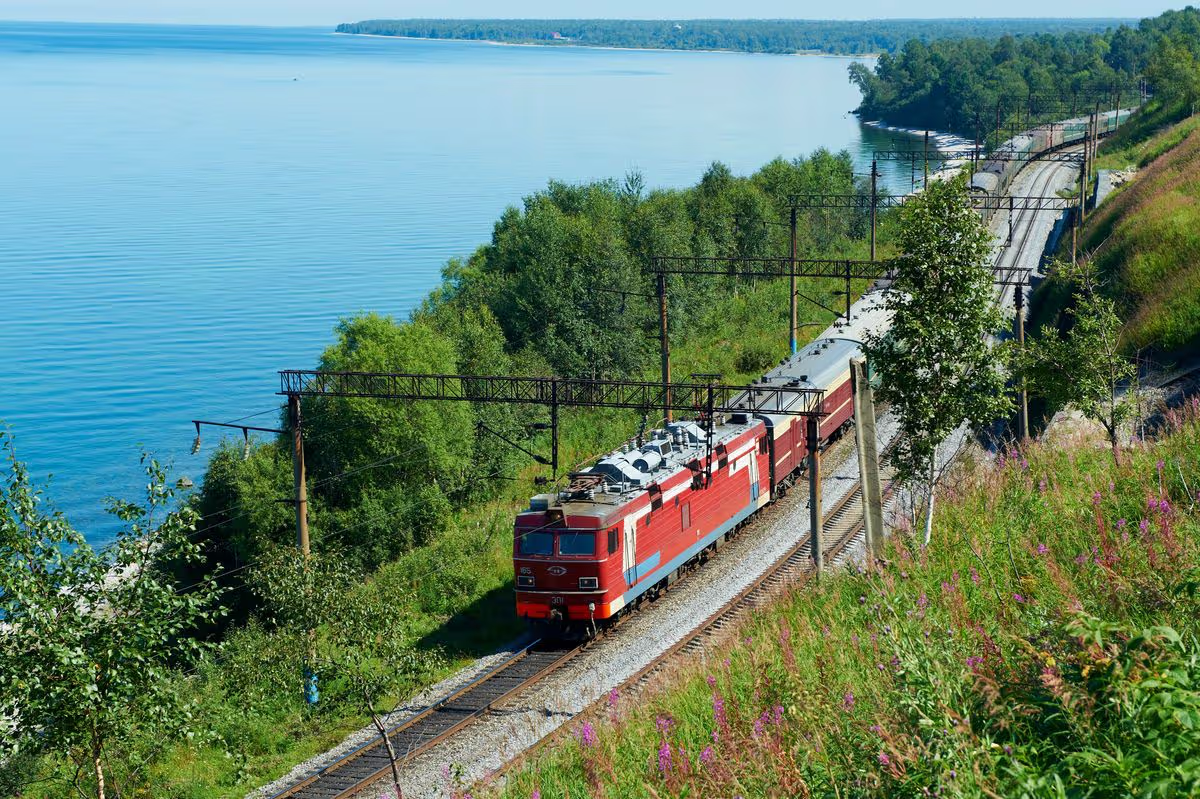
The train journey is the longest, direct railway in the world(Image: Bruno Morandi/Getty)
The longest direct train journey in the world stretches a staggering 5,771 miles and takes almost a week to complete. Passengers on board the train undertake a mammoth journey through eight time zones.
The Trans-Siberian Railroad claims the title of the longest single rail system in the world. It connects east and west Russia, running from Moscow to Vladivostok.
To travel the length of the railway, it takes approximately 167 hours and requires no passenger changes. Heading east from Moscow, the train crosses the country to the Pacific Ocean.
There are even non-stop train options, so all passengers remain on board throughout the seven days. If you prefer to get off and explore the local surroundings, passengers can opt for the stopping service.
However, this takes between 14 and 20 days to complete. The Trans-Siberian railway runs through cities such as Moscow, Yaroslavl, Chelyabinsk, Omsk, Novosibirsk, Krasnoyarsk, Irkutsk, Ulan-Ude, Chita, Khabarovsk, and Vladivostok.
There’s also the Trans-Manchurian line, which runs through northern China to Beijing, and the Trans-Mongolian, which heads to Beijing but passes through Ulan Bator.
A famous train on the Trans-Siberian railway is Rossiya (the Russia), which has second-class sleepers, third-class open-plan sleeper bunks, and a restaurant car.
Passengers can pay for four tickets to ensure sole occupancy of a four-berth compartment, even if they’re the only ones travelling. The bunks convert to seats during the day, with toilets and washrooms at the ends of the corridors.
Many tourists who travelled the route chose not to start or end their journey in Russia. Tourists once began in London and made their way to Moscow before boarding the Trans-Siberian Railroad.
Once in Vladivostok, tourists could then head to Korea, Japan, or China without taking a plane. National Geographic also ran tours along the route, offering tourists the chance to travel on “one of the world’s most legendary railways.”
They described the journey: “Set out on an epic train journey across one-third of the world, travelling from Vladivostok, Russia to the heart of Moscow along the legendary Trans-Siberian Railway.
“From the Mongolian steppe to Lake Baikal’s remote shores to the snow-capped Ural Mountains, trace the history of tsars, exiles, and Mongols in the comfort of our luxury train, the Golden Eagle Trans-Siberian Express. Encounter remote cultures and the unique architecture of Siberia’s wooden cottages and Moscow’s onion domes.”
Tours like these have been halted, yet the train is reportedly still being used by Russians. The UK Government warn against all travel to Russia.
Official advice from the Foreign, Commonwealth & Development Office says: “FCDO advises against all travel to Russia due to the risks and threats from its continuing invasion of Ukraine, including security incidents, such as drone attacks, and Russian air defence activity, lack of flights to return to the UK and limited ability for the UK government to provide support.”
The town is the wettest place on Earth, with an average of 11,873mm of rainfall each year – 22 times more than London and 11 times more than Glasgow
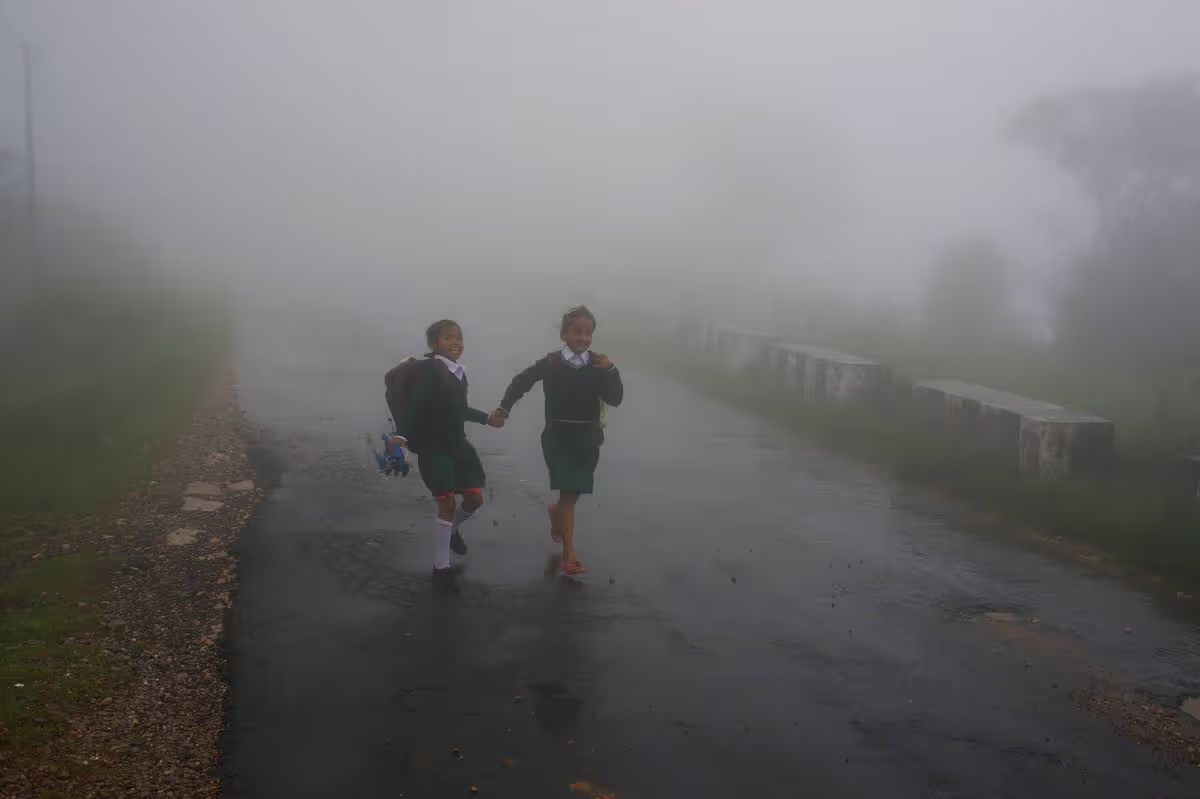
The rain can be dangerously hard in Mawsynram (Image: Subhendu Sarkar, LightRocket via Getty Images)
The wettest spot on the planet receives 22 times more rain than London and frequently experiences downpours so severe that venturing outdoors becomes hazardous.
In the UK, it has been a truly miserable winter. Cornwall and County Down recorded their wettest January on record, while Northern Ireland saw its wettest January is 149 years. Across the UK, 26 stations set new monthly records for the highest January rainfall. Daily records also fell. Plymouth recorded its wettest January day in 104 years. And February has been no better so far. As of February 9, southern England had seen 72% of its monthly average.
There is a place in India that makes all of this look pathetic.
Mawsynram is tucked within the verdant forests of the Khasi Hills in India’s far eastern reaches, perched above Bangladesh. It boasts stunning scenery, but remains perpetually drenched. The town sees approximately 11,873mm of annual rainfall, nearly 11 times the 1,109mm that drenches notoriously wet Glasgow and a staggering 22 times London’s yearly 585mm.
Jyotiprasad Oza has spent his entire life in the town, earning his living by guiding inquisitive tourists through the area with TourHQ. Visitors travel from across the globe to witness existence in Earth’s soggiest location, with travellers routinely journeying from America and Britain.
“We get about 10,000 tourists a year. During rainy time people like to visit because it’s very heavy rainfall, especially June to September,” Jyotiprasad explained to the Mirror just as storm clouds – rather unsurprisingly – started gathering overhead.
Mawsynram’s rainfall differs markedly from precipitation elsewhere. Once it begins, it can persist relentlessly for days. Locals often rush indoors when the deluge begins, only to discover the torrent hasn’t ceased for an entire week. Yet it’s not merely duration that sets it apart.
During one extraordinary June day last decade, a staggering 1,003mm of rain drenched the town – double London’s entire annual precipitation. The consequences of such torrential downpours on Mawsynram can be utterly catastrophic.
“During the time of heavy rainfall, it is impossible to go outside. We can’t do our daily walk. We are not supposed to go outside during the rainy time. Sometimes children can’t go to school during the rain. It is quite dangerous,” Jyotiprasad explained.
When the monsoon arrives, landslides and flooding pose severe risks to residents’ safety, whilst power cuts become routine and fresh water systems struggle to cope. But beyond these immediate perils, the unrelenting dampness leaves many locals yearning for drier climes.
“We prefer to move to where it gets less rain,” Jyotiprasad said, noting that hardly anyone chooses to relocate to the region.
Multiple factors contribute to the town’s extraordinary precipitation levels. Perched 1,400m above sea level, Mawsynram experiences a highland climate intensified by humid, tropical air masses that sweep up from the Bay of Bengal throughout the monsoon season, whilst the positioning of the Khasi Hills creates a natural barrier that blocks airflow from the bay.
Locals in Mawsynram have devised ingenious methods to prevent the relentless downpours from completely upending their daily lives. Numerous homes are constructed with soundproofing to block out the thunderous drumming of rainfall.
On days when a heavy waterproof jacket and wellington boots simply aren’t sufficient, traditional full-body umbrellas known as Knups offer popular protection from the deluge. These substantial shell-shaped contraptions are fashioned from bamboo and banana leaves.
The rainfall isn’t the sole attraction drawing people to Mawsynram. The stunning scenery, vantage points and cascading waterfalls throughout the region prove enormously popular with those who appreciate the natural world.
A particular magnet for visitors are the Nohkalikai Waterfalls, ranked as the fourth tallest globally.
The UK’s largest wildlife crossing will be completed by 2027
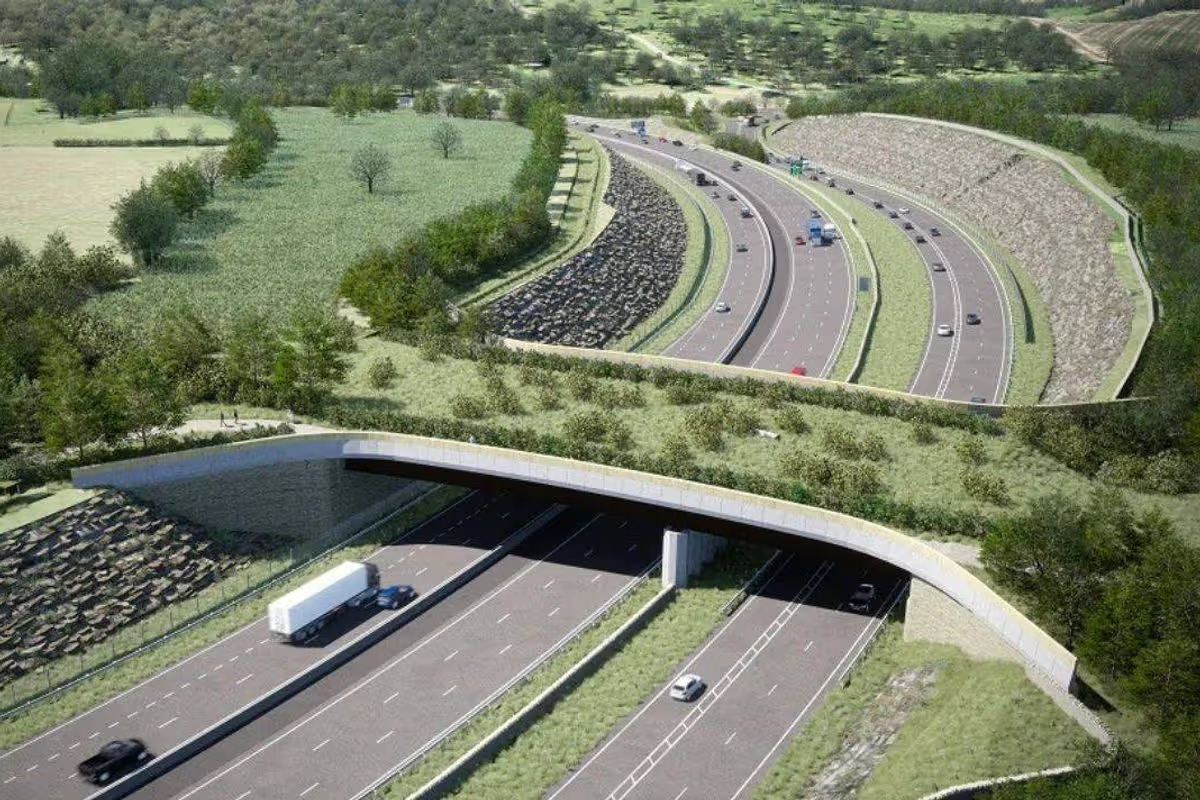
The £460million bridge that will help deer, badgers and barn owls in the UK cross safely(Image: National Highways)
A groundbreaking wildlife bridge is under construction in Gloucestershire, with completion expected for 2027. The Gloucestershire Way bridge, set to be the UK’s largest wildlife crossing, is part of the A417 Missing Link project, an initiative designed to build new roads while preserving the Cotswolds ‘ natural beauty and wildlife.
The wildlife bridge is a pivotal component of the A417 project, with an estimated cost of £460million. The wildlife corridor, which crosses the new A417 dual carriageway between Gloucester and Cirencester, will measure 37 metres in length, featuring a 27-metre stretch of grassland and a hedgerow.
The bridge will also accommodate walkers, cyclists and horse riders.
Hedgerows on either side will facilitate bats and barn owls in using the bridge as a commuting route, whilst grassland and additional trees will ensure deer, badgers and reptiles can cross safely.
Gavin Jones, Kier’s project director for the scheme, commented: “The green bridge is the centrepiece of the scheme, linking up habitats and the landscape on one side of the road to the other.
“The focus is the ecology, the animals that are going to use it, but not forgetting the people – it’s going to be a footpath as well. We’re on budget, ahead of programme, and [have] a good safety record. I couldn’t be prouder of the team.”
Nicola Bell, National Highways’ executive director of major projects, said: “Our work goes beyond just operating and maintaining our roads and by collaborating more closely with Natural England, we can ensure that our infrastructure projects deliver better outcomes for both people and nature.”
Marian Spain, Natural England’s chief executive, said: “Projects like the A417 showcase the positive outcomes for people and nature that can be achieved by working closely together.”
She continued: “This memorandum is an important step in embedding this open, early, constructive communications between Natural England and National Highways to deliver our shared objectives of sustainable development.”
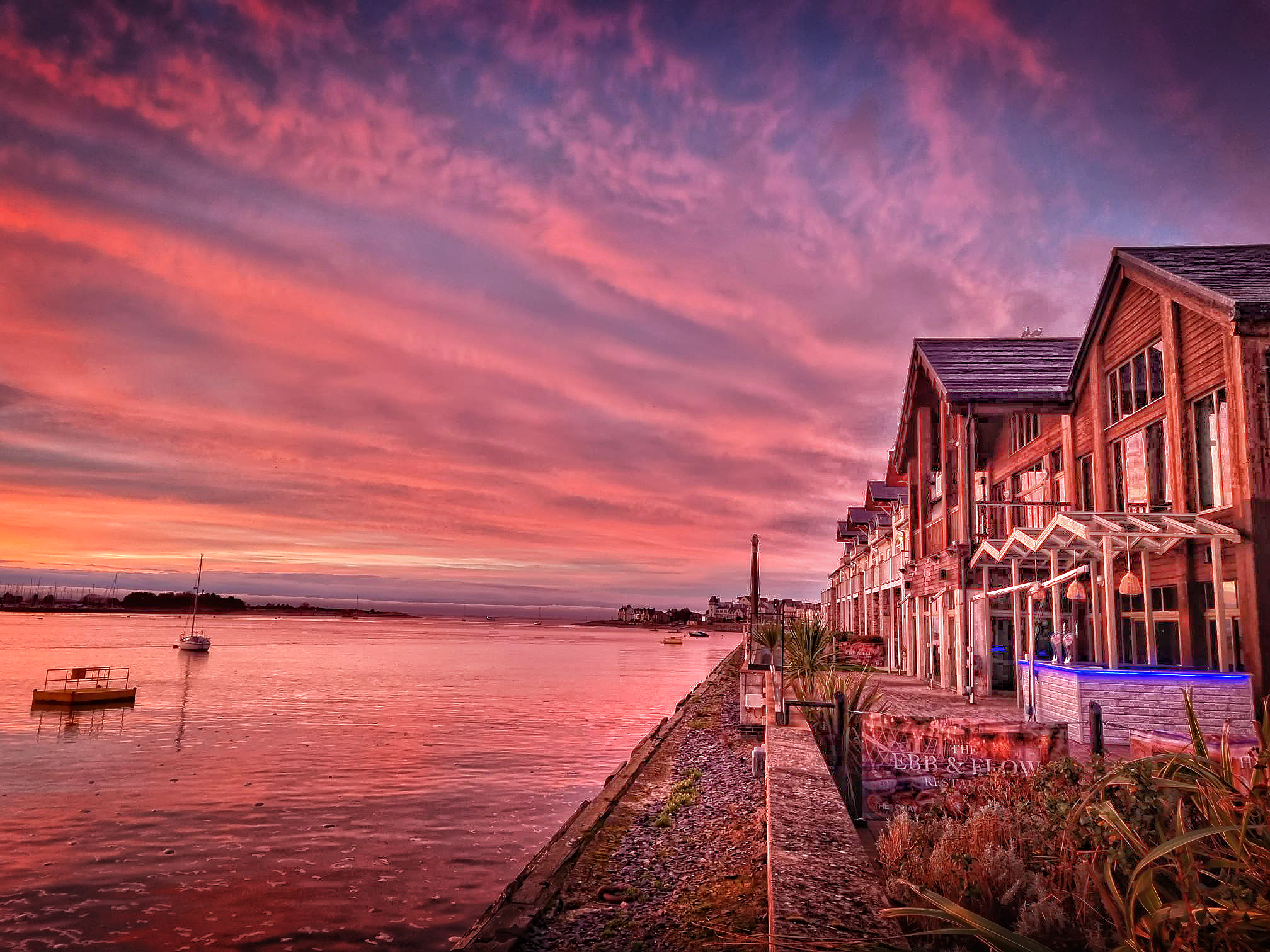
Enjoy its serene waterside setting with views of Conwy Castle, and a terrace bar where you can soak up the sunset.
There’s also a luxury spa, ideal for a laid-back break away from the hustle and bustle of the daily grind.
Guests looking to unwind should head to the spa, where they can enjoy a thermal area, a spacious swimmingpool, a vitality pool, heated loungers and foot baths.
If you’ve got cash to splash, the treatments here are fantastic, designed with skincare brand Oskia.
The hotel is also near the seaside, where you can treat yourself to fresh cockles and fish and chips.
The luxury spa features heated loungers on the poolsideCredit: Supplied by The Quay Hotel, ConwyFor a relaxing break, away from the hustle and bustle, The Quay Hotel’s spa is perfectCredit: Supplied by The Quay Hotel, Conwy
What is there to eat and drink there?
The restaurant, connected to the bar, offers stunning views of the surrounding scenery and a relaxed atmosphere.
Dishes include a 24-hour slow-cooked beef that melts in the mouth, as well as salted caramel cheesecake.
Swing by the bar afterwards and cosy down on one of the comfy sofas – the house red is excellent.
Is the hotel family friendly?
While the Quay Hotel welcomes children of all ages, it would suit older children best.
The spa pool is open to children but only at certain times.
Is there access for guests with disabilities?
Fully accessible rooms are available, and the spa is all on one level with rails to assist in the swimming and hydrotherapy pools.
The restaurant offers stunning views of the surrounding scenery and a relaxed atmosphereCredit: Supplied by The Quay Hotel, Conwy
Holiday expert Rob has shared the four ‘best’ places to visit in March, saying the destinations offer the same level of sunshine as your usual July to August getaways but at lower prices
He has shared his favourite holiday spots for March (Image: Getty Images/Universal Images Group)
It’s no secret that jetting off during the summer months can set you back nearly twice as much, prompting savvy holidaymakers to shift their breaks earlier in the calendar. Lending a hand, travel guru Rob has revealed his top four destinations to visit this March, promising sunshine levels that rival your typical peak season getaways.
In an Instagram clip, Rob, who goes by @rob.onthebeach online, explained: “I’ve seen loads of people asking me recently, where’s hot in March? But the better question is, where’s hot and cheap this March? Because March might just be the perfect month for a holiday. We’re coming out of winter at home, the mornings are brighter, but it’s still freezing and wet. And in March, holiday demand is still relatively low, which means some destinations really fly under the radar on heat and price.”
To compile his recommendations, he examined multiple countries based on their March climate, booking patterns and current prices.
Kicking off his rundown, he revealed: “In fourth place, I’ve picked Fuerteventura, because March is one of my favourite months for the Canaries, and Fuerteventura is probably my favourite island.”
“You’re getting heat in the 20s, loads of sunshine, and it’s warm enough all day without feeling sticky like it can do in summer. Plus it’s quieter, calmer, and everything just feels easier.”
Moving along, he spotlighted Paphos, declaring: “March in Cyprus is criminally underrated”. He remarked: “It’s not roasting, but it’s still really warm. Sun on your face, lunches outside, pool days when the sun’s out, and it’s way less touristy than summer.”
Content cannot be displayed without consent
Egypt claimed his runner-up spot thanks to its pleasant climate, with him adding: “High 20s to low 30s most days. Wall-to-wall sunshine, and seawater that’s perfect for swimming in, snorkelling in, or just floating in doing absolutely nothing.”
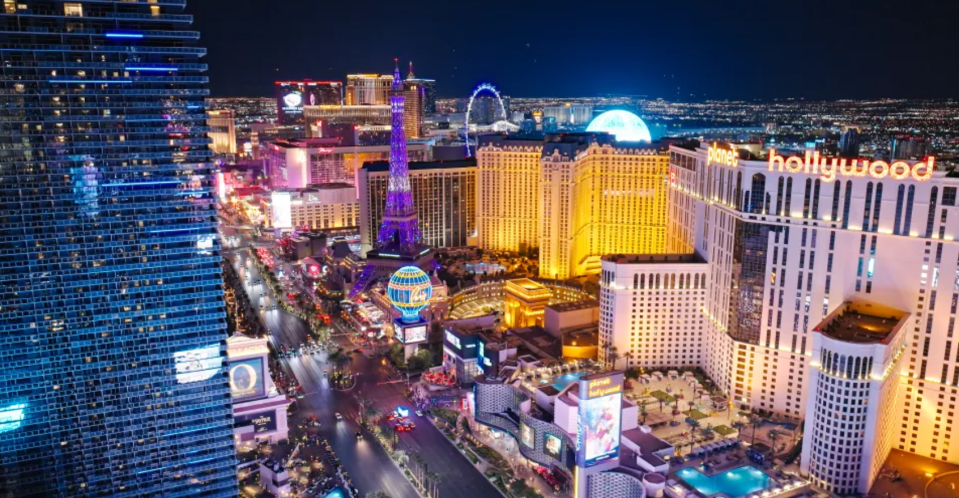
Topping his list, he crowned Las Vegas as the ultimate March getaway destination.
He explained: “I know it’s a bit of a wild card, but hear me out. March in Vegas is bang on. Hot days, cooler evenings, loads and loads and loads to do. And prices that are way softer than people expect.
“Now if you don’t believe me still, check out this deal I found. For four nights in March at the Strat Hotel with flights from Heathrow, it’s coming in at only £563 per person.
“For maybe the US’s best ever city break with sunshine, entertainment, pools, food, shows. This is seriously strong value in March.
“It’s warm, it’s unrivaled when it comes to fun, and it’s way more holiday than you’d expect to get at this price.”
A travel influencer sparked controversy after branding a popular city the ‘worst in Italy’ and claiming it was filthy. She was so unimpressed, she willingly lost money on her hotel booking so she could check out earlier
Jess Flaherty Senior News Reporter
15:59, 20 Feb 2026
The travel enthusiast branded the popular Italian city “filthy” and even claimed it stinks (stock image)(Image: Alexander Spatari via Getty Images)
A travel influencer has labelled a city the “worst” in Italy, claiming she was so disappointed during her visit that she left early and deliberately lost out on money by cutting her stay short.
Celebrated for its exceptional, world-class cuisine, elaborate architectural heritage, artworld masterpieces, prestigious fashion brands, rich historical tapestry and cultural significance, plus much more. Despite Italy’s abundant offerings, one woman has denounced one of its most popular cities, describing it as “filthy”.
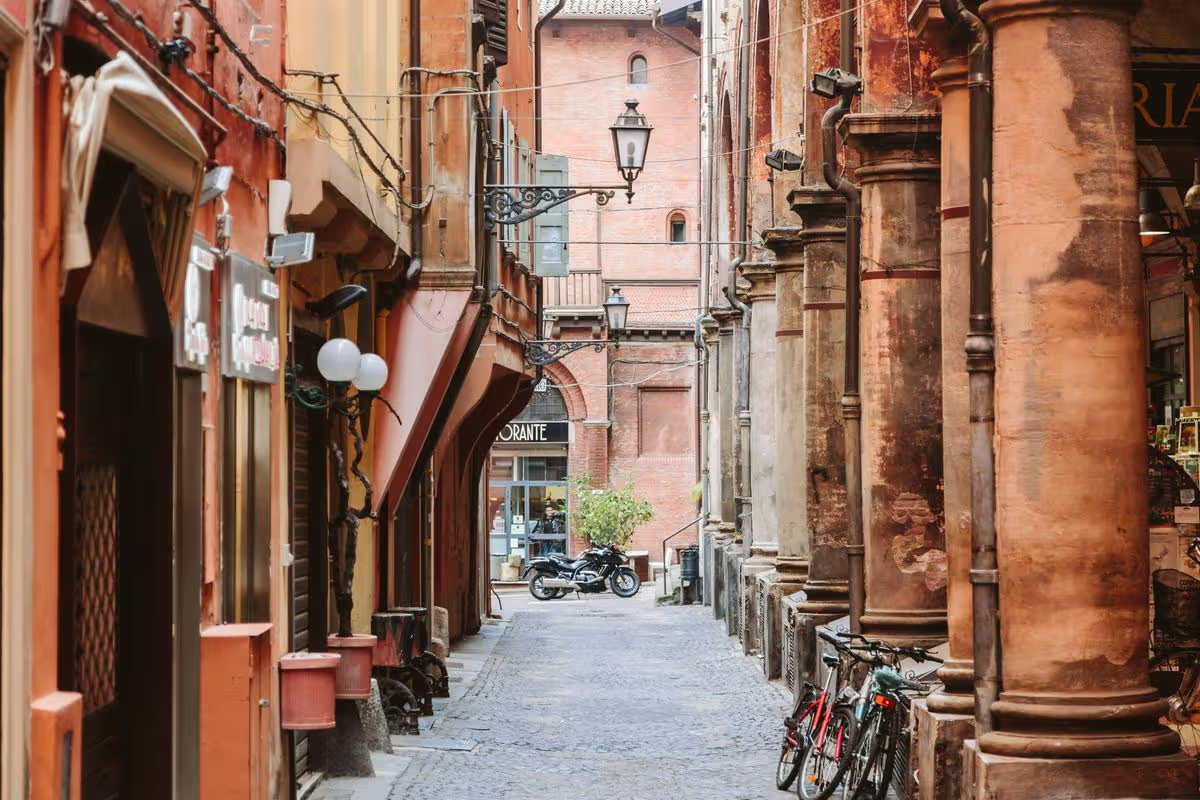
Karo, who shares content online as @karosolotravel, turned to TikTok to voice her opinions about Bologna, a city celebrated for its extensive collection of UNESCO-designated medieval porticoes set among characterful red-roofed historic buildings.
It’s equally renowned and cherished for its indulgent pasta specialities, such as tortellini and tagliatelle al ragù, yet Karo remained underwhelmed.
Throughout the clips she recorded, she captured some graffiti daubed on metal waste bins and stone columns, along with a discarded cigarette end on the ground.
She additionally filmed a rough sleeper covered by a sleeping bag and blankets positioned outside a shop entrance. Karo also featured footage of multiple Bologna streets, which appeared deserted but otherwise pristine and devoid of any litter or vandalism.
During one segment, she directed the camera towards herself and filmed while she walked about with a tissue pressed against her nose, claiming the area smelt offensive. In the caption beneath her video, she wrote: “The worst Italian city I’ve ever been to. It smells of urine everywhere, it’s filthy, and you can tell it hasn’t been cleaned in years.
Content cannot be displayed without consent
“Why aren’t the city authorities cleaning the streets and buildings? Those orange buildings are black. And that awful stench.”
Karo went on: “I came here to eat pasta bolognese, but I felt like vomiting and barely ate a thing! Why do people on TikTok recommend Bologna? It’s disgusting! I fled Bologna for Rimini, gave up on my hotel, and lost my money.”
However, other TikTok users were quick to dispute her assessment of the historic city. One commented: “I spent five days in Bologna last April. Walked everywhere including St Luca. TOTALLY DISAGREE. I LOVED BOLOGNA”.
Another said: “Bologna is beautiful!” while a third quipped: “Complaining that the 2000 year old buildings look like they are 2000 years old”.
A fourth person wrote: “One of the most beautiful cities I visited!!”
Meanwhile, someone claiming to be a resident shared: “Bologna became much much worse since it became a heavily touristy city. Mass tourism is destroying my city!”
Another user countered: “I respect your opinion but in my view, [it] does not represent the reality at all. I guess [you] didn’t match with the place. Bologna is an amazing city with unique character.
“I did not find it dirty at all and it was nice and tidy. In my view, I did find Bologna more authentic in comparison to other Italian cities.”
WANTING to go on holiday but don’t want to spend much money? Well, British Airways has just launched a sale.
British Airways is offering up to 25 per cent off flights to Europe and beyond, including popular destinations such as Malta, Marrakech, Madeira and Faro.
Sign up for the Travel newsletter
Thank you!
British Airways has launched a sale on return flights to EuropeCredit: GettyFor example, you could travel to Majorca for £84 returnCredit: Getty
The sale on return flights operated by Gatwick-based subsidiary airline, BA Euroflyer, is running from February 19 to 24 and is available on travel between March 1 and July 31.
Passengers will also get a complimentary drink and snack onboard, as well as hand luggage allowance.
For example, you could head off to Faro in Portugal from London Gatwick from £104 return.
The city is the capital of southern Portugal‘s Algarve region and is known for its historical buildings including the 13th century Faro Cathedral.
Visitors can also head to the Municipal Museum, which is inside a 16th-century convent and boasts a collection of prehistoric displays and medieval artefacts.
Or perhaps you want to go further afield? Well, you could travel to Marrakech in Morocco from £118 return.
Dubbed the ‘Red City’, Marrakech features a large medina – which is the old walled city that was built centuries ago.
In the medina, visitors can explore a network of narrow, winding alleyways with hidden treasure shops selling everything from brass lamps to freshly made flatbreads.
Elsewhere in the city, you can head to Ville Nouvelle, where you will find the modern part of the city with art galleries, boutiques and cafés.
Want to spend less than that? Travel to Majorca, Spain, for £84 return.
This Spanish island is loved for its blue waters, sandy beaches and secret coves.
You can spend time exploring charming villages, but there are also a number of world-famous beaches to venture to.
Make sure to try some of the local food, which consists of Mediterranean dishes with pork, lamb, fresh vegetables and olive oil.
And it isn’t just flights you can save on…
Or you could head to the ‘Red City’ of Marrakech, in MoroccoCredit: Getty
Currently, you can get £200 off a £5,000 holiday, which includes flights and a hotel.
Or £100 off a £2,500 holiday, which includes flights, hotel and car reservations.
There is also a £50 discount on £1,250 holidays and £25 off of £625 holidays.
Many of the destinations are top winter sun spots with sprawling beachesCredit: Getty
For example, you could head to Majorca for seven nights and stay at the five-star Hotel De Mar Gran Melia costing from £1,229 per person between May 1 and 31.
If you don’t fancy spending quite that much, then head to Morocco for seven nights, staying in the four-and-a-half-star Movenpick Hotel Mansour Eddahbi Marrakech from £879 per person between May 1 and 31.
THERE are hundreds of cities across Europe – but this one in Spain has been named the best place to visit this year.
European Best Destinations has announced the ‘best places to travel in Europe 2026’.
Sign up for the Travel newsletter
Thank you!
Madrid has been voted the best destination to travel to in 2026Credit: AlamyA popular activity is taking a rowboat across the lake in El Retiro ParkCredit: Alamy Stock Photo
This ranking was made from the votes of travellers from 154 countries, highlighting the most “captivating places”.
Madridclaimed top spot with the publications said it’s “one of Europe’s most compelling capitals — where culture, lifestyle, gastronomy and quality of life converge with rare intensity”.
Kara revealed some of her favourite spots too, she said: “At Pez, the only thing on the menu is huge sloppy pieces of tortilla chased with a cana (small beer) or tinto de verano for €2.50.
“My favourite rooftop bar is El Cielo de Montera, which felt more like a swanky rooftop members club.
“The pool is reserved for hotel guests, but its the best place for an Aperol Spritz and views of the city (costs €10 but it gets taken off bill).”
One highly-rated drinking spot is the Sky Bar terrace at the top of the Hotel Riu Plaza Espana.
It has 360-degree views of the city which visitors can enjoy with classy cocktails.
Or check out Calle 365 Discoteca, a stylish nightspot with dancing, delicious food trucks, cocktails and beers from just £2.50.
For live music head to Sala Equi which is a former adult-movie theatre turned bar and music venue.
Madrid is the birthplace of tablao flamenco and there are often high-quality performances with tablaos (flamenco venues) in the city centre.
In the summertime Madrid has lively plazas, and long, grand, tree-lined boulevards full of shops.
Madrid’s largest public park is El Retiro Park it has over 15,000 trees and is described as a ‘green oasis in the heart of the city’.
If you fancy getting on the water, visitors can hire a €4 rowing boat to take in King Alfonso XII’s monument from the lake.
Other top spots include the Prado Museum which contains some of Europe’s finest art collections.
There’s free entry between 6pm and 8pm Monday to Saturday.
Madrid is also one of Europe‘s most walkable cities so it’s easy for exploring, but it’s also very easy to use the Metro.
The city has over 3,000 hours of sunshine each year – mild temperatures start in spring at around 18C.
In the height of summer, the city can reach highs of 32C.
In March, Brits can fly from London Stansted to Madrid with Ryanair from £15.
Here are the ‘best places to travel in Europe 2026’…
A seasoned cruise ship worker has shared the four things that crew members really hate about passengers
These habits irritate the crew(Image: Getty)
Cruising should be an enjoyable and tranquil getaway, but certain passenger behaviours can seriously spoil the atmosphere for everyone involved. Lucy Southerton, a veteran crew member with nine years under her belt working aboard cruise ships, has revealed some of the biggest gripes shared amongst her colleagues.
Boasting a loyal following of more than 65,000 subscribers on her YouTube channel Cruising as Crew, Southerton provides insider perspectives and practical guidance for cruise aficionados. In a recent upload, she explored the irritations encountered by crew members, from dishevelled cabins to inappropriate advances.
Here are four behaviours passengers ought to steer clear of to guarantee a more pleasant voyage for all, reports the Express.
1. Dishevelled Cabins
According to Southerton, crew members, especially those in housekeeping and stewarding roles, become exasperated by passengers leaving their cabins in complete chaos.
She stressed that their role involves cleaning and sanitising the accommodation, not picking up after guests.
“It’s crazy to think they’re only on board for five days because of the amount of stuff that’s everywhere,” Southerton remarked. She appealed to passengers to show consideration and respect for crew members’ duties whilst occupying their cabins.
2. Inappropriate Advances Towards Crew
Southerton warned passengers against making unwanted romantic or flirtatious overtures to crew members, describing it as a form of sexual harassment.
She shared accounts from male cabin crew who felt uneasy and irritated when travellers overstepped the mark. “It’s hard when they take it another way and they think that they have a chance with you just because you’re a sexy crew member,” Southerton explained.
3. Lack of Manners
Among the most frequent complaints from cabin crew is passengers’ failure to display basic courtesy. Southerton emphasised the significance of simple pleasantries like saying “please” and “thank you.”
She recalled occasions where travellers would bark orders without a shred of politeness, underlining the necessity for respectful conduct, particularly whilst on holiday.
4. Bragging
Finally, she voiced her frustration with passengers who show off, particularly those who parade their wealth in front of less privileged individuals.
She encouraged passengers to be conscious of their surroundings and avoid boasting, especially to crew members grafting hard to provide for their families.
“Brag to people who are on a similar level to you,” Southerton advised, emphasising the need for consideration and compassion.
By remaining mindful of these behaviours, passengers can help create a more enjoyable and considerate atmosphere aboard cruise ships, encouraging positive exchanges between travellers and crew members alike.
BUTLIN’S is already a cheap holiday, but what if we told you that holidays to its resorts are about to get a lot better?
Butlin’s is making one of its popular all-inclusive packages better value for money.
Sign up for the Travel newsletter
Thank you!
Butlin’s is making its drinks package even betterCredit: Alamy
The all-inclusive drinks package now includes seven new drinks including spirits and cocktails.
Partnering with Coca Cola, there will be three new cocktails including the ‘Birthday Bonanza’ which features vodka, amaretto and Coca-Cola to celebrate Butlin’s’ 90th birthday.
In addition to the new cocktails, guests will also now be able to order Gordon’s Mediterranean Orange Gin, Captain Morgan Dark Rum and Disaronno.
And there will be another non-alcoholic and low alcohol option as well – Madri Excepcional 0.0%.
Per adult, the drinks package starts at £25.95 per day and includes the above as well as soft drinks, wine, draught beers and cider and Proud to Serve Costa Coffee.
Travel writer, Helen Wright, who has tried the drinks package, said: “To add the all-inclusive drinks package onto the booking, it was an extra £41.45 for us and £51.95 for Gen and the boys per day. An overall £124.35 and £155.85 respectively.
“When you check in, you are given a wristband and a QR code to use when you want to order drinks during your stay.
“But with the amount of activities and entertainment, I was unsure whether I would get through £42 worth of drinks in one day.
“It was almost 1pm and with them occupied for 15 mins, Gen and I could enjoy our first cocktail of the weekend along with some adult conversation.
“Alcohol is served from 11am at the resort. A glass of house wine is £4.90 and a pint is £5.95.
“I’m more of a cocktail girl, so I decided to get into the holiday spirit with a margarita, usually £7.75, but free with my wristband.
“Doing a quick tally, it wasn’t even lunchtime yet, and I’d spent over a third of my initial £30 a day outlay already.
“Only the adults wear the band, so it does mean that kids can’t go up and order their own drinks.
The package will now include over 60 drinks including spirits and cocktailsCredit: BUTLIN’S
“However, it was easy to get drinks, and despite the resort being very busy in high season, none of the bars were too crowded or had a long wait.
“There is no question, if you like a beer or cocktail in the sun or you plan on drinking at lunch and dinner, with a few extras like coffee and a lemonade in between, £30 a day is well worth the money.
Alex Meyer, head of marketing at Butlin’s, said: “We’re all about offering incredible value for money, and with the latest additions to the All Inclusive drinks range the package is even better value for guests.
“Now with over 60 drinks to choose from, including our new cocktails and spirits, our All Inclusive drinks package continues to be unrivalled compared to other UK holiday resorts’ offerings.
“As we celebrate our 90th birthday, guests can raise a glass to the landmark occasion with our brand-new Birthday Bonanza cocktail.
“The new creation is set to rival our guest favourite cocktail, Butlin’s On The Beach, which has been the most popular cocktail since the drinks package launched in 2024.”
If looking to head off on a break to Butlin’s, you could book a Showtime Term-Time Midweek break with the drinks package for £399.
In September 2025, Butlin’s holiday resort also revealed it’s latest expansion plans with hundreds more lodges.
In the summer months, temperatures regularly hit above 40C, trapping people inside their air-conditioned homes or hotel rooms. But a new system is allowing people to spend time outside in comfort
14:31, 20 Feb 2026Updated 15:20, 20 Feb 2026
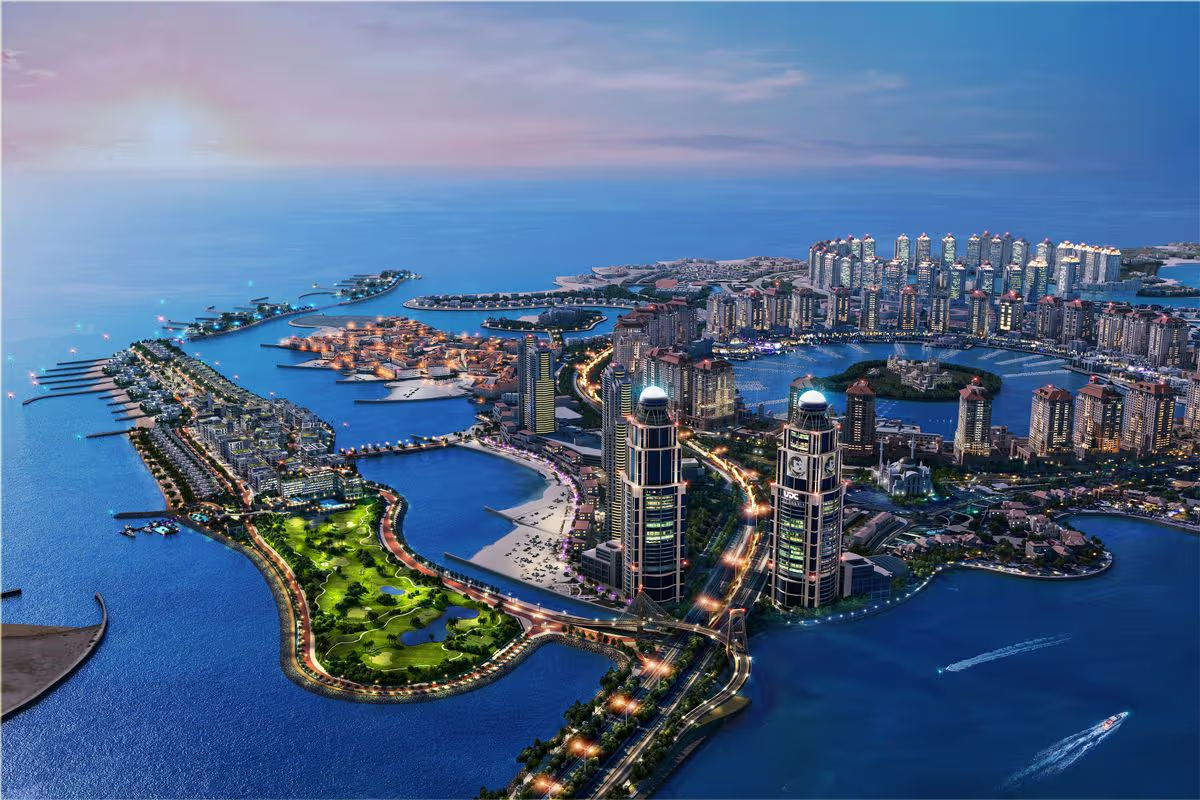
The island is part of a man-made archipelago (Image: Press image – gewanisland.com)
While the prospect of a heatwave might sound appealing to Brits right now, many countries are facing rising temperatures accelerated by global heating that are making day-to-day life increasingly complicated.
In countries such as Qatar, the summer months often see temperatures in the mid-40s and above, and according to a BBC documentary, the extreme heat has hit 50C at some points in recent years. For locals and tourists who are lucky enough not to have to work outside, this often means an indoor lifestyle, travelling in air-conditioned cars, and spending days in cooled offices and malls.
But on one of Doha’s man-made islands, visitors can stroll around outside year-round thanks to an artificial ‘forest’ that cools the air. Gewan Island is part of an artificial archipelago that stretches out into the Persian Gulf, connected to the mainland with a series of multi-lane motorway bridges.
In the centre of the island is the crystal walkway, a 450-meter-long promenade with the sort of high-end shops, restaurants, and apartment buildings you’d expect in Doha. Underneath visitors’ feet lie thousands of crystals arranged into artworks that portray polar landscapes and oceans, ironically, also places affected by climate change.
But it’s the manmade ‘forest’ that really grabs visitors’ attention. Giant tree-shaped sculptures have been erected all along the promenade, capped with hexagonal designs decked in more crystals. The tops of these trees have solar panels, which reportedly help to power the area and its outdoor air conditioning.
Along the trunks of the trees, small holes blast out ice-cold air, with the shape of the sculpture designed to trap the cold air underneath. Ten tons of crystals were used in the construction process, and the area is finished off with mini fountains that spray cold water.
Temperatures under the ‘forest’ can be kept at around 21-23C, no doubt a welcome relief during the hottest days of the year. Nearby is Pearl Island, another artificial spot that consists of vast luxury residences, boutiques, and even its own manmade beaches, where tourists stay in sprawling 5-star hotels.
While outdoor air-conditioning might sound bizarre to people from outside the country, it’s not even Doha’s first attraction to crank up the cold air outside.
An article on Time Out Doha lists 10 spots with outdoor air conditioning, which include parks, outdoor walking and jogging tracks, and outdoor dining areas. Oxygen Park, a green spot in the city, has outdoor walkways with air conditioning for chilled walks, and the outdoor mall 21 High Street has vented floors that keep the temperature at 20 °C for shoppers visiting its luxury shops and high-end jewellery stores.
Have a story you want to share? Email us at webtravel@reachplc.com
Ensure our latest stories always appear at the top of your Google Search by making us a Preferred Source. Click here to activate or add us as your Preferred Source in your Google search settings.
Travel expert Simon Calder warns that dual British citizens with expired UK passports could face £589 certificate fees as new electronic travel authorisation rules come into force from February 25
14:11, 20 Feb 2026Updated 14:11, 20 Feb 2026
Mr Calder issued the advice for Brits heading to the airport(Image: Getty Images)
An ETA serves as digital travel permission – it’s neither a visa nor a tax and doesn’t guarantee UK entry – rather, it authorises someone to journey to Britain. However, Mr Calder highlighted another aspect that could trip people up.
Speaking to the Independent, he warned that British citizens holding out-of-date passports might encounter problems. He explained: “There’s growing confusion and concern about electronic borders. The first change that’s going to be happening is on the 25th of February.
Content cannot be displayed without consent
“It’s going to be mandatory for everyone who is not a British or Irish citizen and who wants to travel to the UK to register for the electronic travel authorisation. This is the online permit that increasingly many countries are demanding.
“That is clear, except that it also means that dual citizens who have the right to live in the UK have to enter on a British passport or have a certificate of entitlement to live in the UK. British passports cost £94.50. That certificate of entitlement is £589. And there is concern that a lot of people who are British citizens but don’t have a valid passport for all sorts of reasons-they’ve never needed one, they had one but it lapsed, they’ve got a perfectly good passport from somewhere else-they are going to have to have either that passport or the certificate of entitlement if they want to come to the UK.
“Again, this does not apply to anybody with the immense wisdom and good fortune to have an Irish passport, because that is the passport with superpowers that will get you in and out of the UK and indeed the European Union without any problems at all.”
According to the 2021 Census, approximately 1.26 million usual residents across England and Wales held multiple passports. The Home Office has cautioned that airlines will be verifying passengers have the correct documentation.
The right of abode that Mr Calder references permits you to live or work in the UK without any immigration restrictions whatsoever. If you possess the right of abode, you do not require a visa or ETA to enter the UK.
There’s no cap on how long you can remain in the country. Concerns have also emerged regarding Europe’s new biometric border system currently being introduced.
Several airports have allegedly experienced delays stretching up to six hours, prompting warnings of potential travel ‘chaos’.
The European Commission indicated it might be feasible to suspend the new system during busy periods until September. Mr Calder explained: “The European Union’s entry-exit system started to be rolled out in October. By the 9th of April, it is supposed to be in a position where everybody is able to enter or exit through those Schengen area frontiers, just being fingerprinted on the first occasion and having a facial biometric taken. After that, it’s going to be the facial biometric all the way.
“Now, the airports and the airlines are saying it’s a terrible thing, it’s not working properly. We’ve already seen two-hour queues; they’re warning of four-hour queues in the summer. They want it to be suspended. No sense that it will be or not at the moment. Europe says it is going well, but don’t be surprised if it is.
“The only advice I can offer, because this is simply something that’s done to you-you don’t need to prepare for it-is when you’re coming back from the Schengen area, I would turn up at the airport really early just to make sure you make your plane, because it applies on the way out as well as on the way in to the Schengen area.”
This town has been named among “Spain’s most secret destinations” by European Best Destinations, with colourful houses, fresh seafood and vibrant festivals
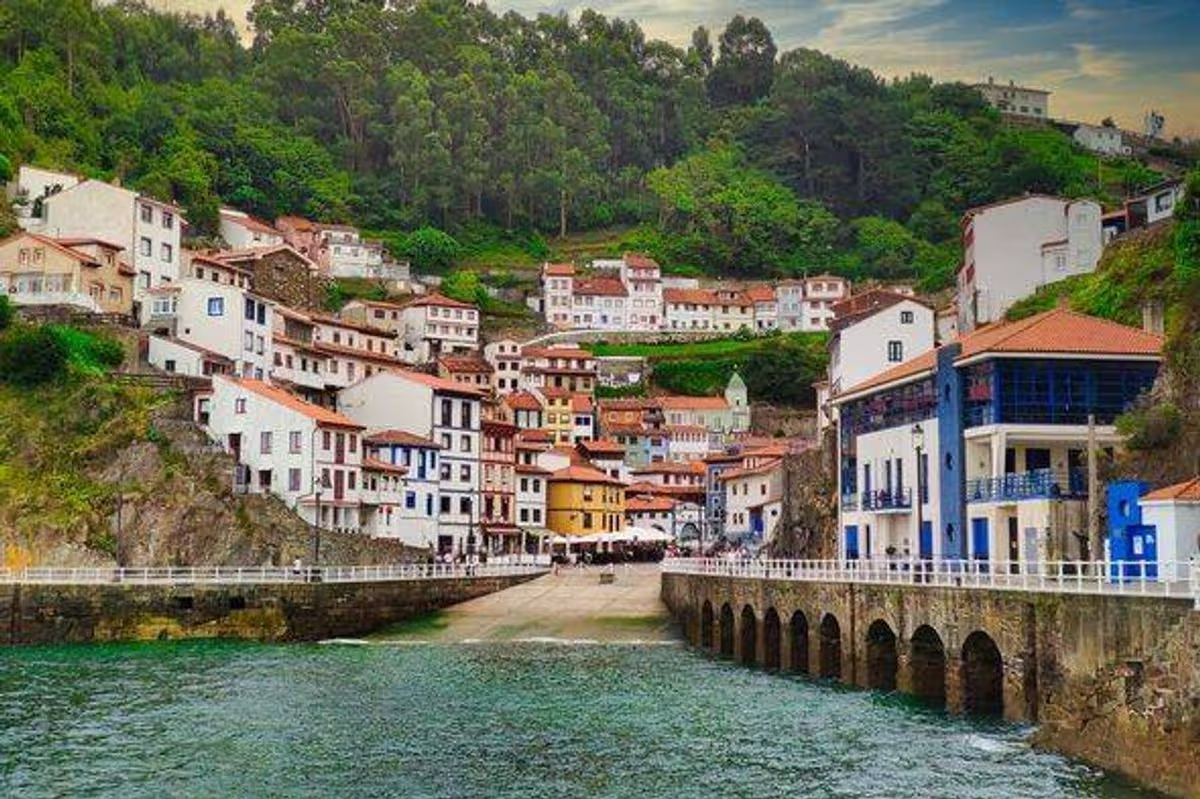
One of Spain’s ‘most secret destinations’ is a fishing village with colourful homes(Image: Getty)
Tucked away between verdant rolling hills and the Cantabrian Sea lies a hidden gem of a village that European Best Destinations has crowned amongst “Spain’s most secret destinations”. Cudillero, situated in the Asturias region, is celebrated for its enchanting winding alleyways, vibrant houses down the slopes, and thriving fishing harbour.
Fishing has long been the lifeblood of the village’s economy, and today you can still observe fishermen carrying out their age-old routines along the waterside. Tourists can meander along the harbour, observe the fishing vessels gently rocking in the water, and savour fresh seafood and traditional northern specialities in the village’s eateries.
Asturian gastronomy, originating from the Asturias region in northern Spain, is celebrated for its robust and richly flavoured fare that frequently showcases fresh seafood, substantial stews, and locally procured produce, reports the Express.
Arguably its most iconic offering, the Fabada Asturiana, is a sumptuous and soul-warming bean casserole prepared with large white beans (fabes), chorizo, morcilla (blood sausage), and pork.
Another comforting treat worth sampling during the chillier seasons is the Caldereta de Pescado, an Asturian seafood casserole that highlights the region’s maritime treasures.
It comprises an assortment of fish and seafood including hake, monkfish, prawns, and clams, simmered in a richly flavoured stock with tomatoes, onions, and garlic.
The Empanada Asturiana, a savoury pastry filled with tuna, chorizo, or other ingredients is a beloved snack in Asturias and often taken on picnic trips and to family events by locals.
Visitors to this corner of Spain simply must sample the traditional Asturian Cider, known locally as Sidra Asturiana, which is customarily poured from a considerable height to oxygenate it and amplify its taste.
Cudillero is a village that invites discovery, boasting a historic quarter resembling a labyrinth of narrow, twisting lanes flanked by quintessential Asturian dwellings, many decorated with vibrant balconies with pots brimming with flowers.
Perched atop the village on a clifftop commanding views of the ocean sits the Church of Santa María, providing sweeping vistas across the vegetation-clad surrounding landscape.
Nature lovers will find Cudillero offers abundant opportunities for adventure, with neighbouring walking routes winding through dramatic coastal terrain and lush woodland.
Beyond its scenic splendour and seafaring character, Cudillero is also celebrated for its lively festivals held year-round, including L’Amuravela, which occurs every June 29th and commences with a local resident delivering, in rhyme and “pixueto” dialect, a sermon wittily recapping the year’s events whilst seeking divine protection for the 12 months ahead.
Ensure our latest headlines always appear at the top of your Google Search by making us a Preferred Source. Click here to activate or add us as your Preferred Source in your Google search settings.
WE all know Americans do things a lot bigger than in the UK – from fast food to drink sizes – and it goes for play areas too.
One in the US the size of a football pitch has caught the eye of Brits who say they’d love to see one open in the UK.
Sign up for the Travel newsletter
Thank you!
The Fun Station Cedar Falls is the state of Iowa’s largest indoor adventure park.Credit: Google mapsThe play area has seven climbing wallsCredit: Google maps
Called The Fun Station Cedar Falls, the enormous play area stretches across 70,000 square feet and is the state of Iowa‘s largest indoor adventure park.
It has over 20 attractions from zip lines to trampolines, an obstacle course, laser tag, racing slides, bowling alleys and fairground rides.
There’s a multi-level play maze, seven climbing walls as high as 22ft, a high-ropes course at 55ft, an arcade with 35 video arcade games where players can win prizes.
There’s food on-site too from a salad bar, to a cafe and fizzy drink station.
Catherine said: “Laser tag, crazy golf, two climbing poles, go-karts and even arcade machines all included in the price.
“The main issue is keeping an eye on all your children as they head off in opposite directions to make the most of everything on offer.
“While the youngest was taking a spin on the carousel, my middle son was clambering up the two 10m climbing poles, one in the shape of an oak tree and the other a beanstalk, in the centre of the hub.”
The Riverside Hub is what one parent is calling an alternativeCredit: facbook
There are also Fun Stations in the UK – but these are owned by a different company.
It’s packed with immersive and action-packed video and VR games, along with carnival games where visitors can win top prizes like iPads and headphones.
Some destinations even have dodgems, mini bowling, laser tag, escape rooms and mini golf.
Epic train journey starts in London then passes through Paris, leading travellers to a beach in Spain with golden sand and a lively atmosphere
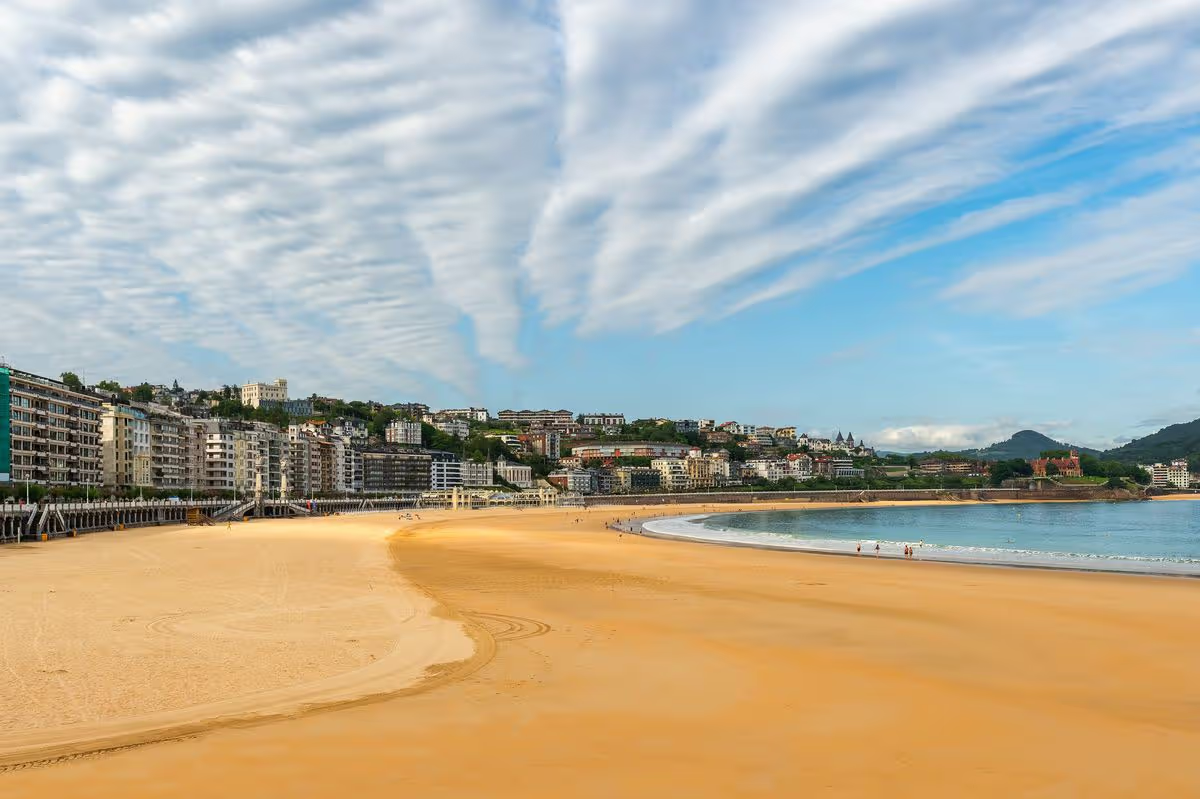
San Sebastian in Spain boasts golden beaches reachable by train from the UK(Image: Jose Miguel Sanchez via Getty Images)
A stunning nine-hour rail journey that begins with the Eurostar in London and concludes on a breathtaking beach in Spain is sure to leave you mesmerised. The thrilling train adventure sets off from St Pancras station in London, whisking you away to the picturesque La Zurriola beach, nestled in the city of San Sebastián (Donostia) in Spain.
This charming beach is famed for its idyllic surroundings, golden shores, and superb surfing conditions, making it a favourite spot for both locals and holidaymakers. To reach this scenic beach in San Sebastián from London by rail, you’ll need to first board the Eurostar train from London St Pancras International to Paris Gare du Nord.
This leg of the journey takes roughly two hours and 15 minutes. From Paris, passengers can then jump onto a TGV train bound for Hendaye, which will take around five to six hours, reports the Express.
Upon reaching San Sebastián’s train station, you can opt for a bus or taxi ride to La Zurriola beach.
The beach is situated in the Gros district, which is within strolling distance from the train station, but it might be more practical to take a brief bus or taxi trip, particularly if you’re laden with luggage.
One visitor reviewed the seaside location on TripAdvisor, writing: “Visiting San Sebastián was truly unforgettable, especially with the breath-taking view of the Atlantic Ocean.
“The coastline is stunning, just a short walk from downtown, where you can surf, swim, or simply relax and soak in the soothing sounds of waves crashing on the shore.”
The beach boasts a vibrant ambience with a bustling promenade peppered with bars, eateries, and shops, creating a lively hub of activity.
The official tourism website for the region, San Sebastián Turismoa, described the area on their website: “The promenade running round the beach from Sagüés to the Kursaal ‘cubes’ continues on its way round Monte Urgull and along the Paseo Nuevo to end at the Peine del Viento sculpture on the Concha Bay.
“This spectacular city walk covers around six kilometres and offers spectacular sea views and delightful resting spots along the way.
“From the Zurriola, you can also make your way up to Monte Ulía, a green area only a moment’s walk from the city centre. A former look-out point for whales, Monte Ulía is the city’s best hillwalking option and follows part of the coastal route on the Way of Saint James.”
La Zurriola is renowned for being a top-notch surfing location in Europe. The beach regularly experiences powerful swells from the Bay of Biscay, drawing in surfers ranging from novices to seasoned pros.
Surf schools and hire shops are on hand to accommodate visitors keen to ride the waves or pick up the sport.
Beyond surfing, La Zurriola offers the chance to partake in other water sports such as bodyboarding and paddleboarding. The beach also occasionally plays host to beach volleyball tournaments and other leisure activities.
The most affordable ticket from St Pancras for 29 April currently stands at roughly £67 on Trainline.
Ensure our latest headlines always appear at the top of your Google Search by making us a Preferred Source. Click here to activate or add us as your Preferred Source in your Google search settings.
New Entry/Exit system and ETIAS requirements coming to Europe in 2026 mean British passport holders need to prepare for biometric checks and travel authorisation.
New requirements mean delays(Image: Getty)
As winter fades away, millions of Britons are probably mapping out their summer getaways. Some might already have flights secured, and if that’s you, it’s crucial to familiarise yourself with the new regulations taking effect.
Whether you’re jetting off to Europe or across the Atlantic, fresh legislation is being implemented that could result in substantial hold-ups at airports and railway terminals. Updated requirements covering visas, biometric information and passport checks mean that international travel is growing increasingly complex.
That said, provided you understand what’s needed, your journey should remain hassle-free.
For those bound for Europe, the new entry/exit system may trigger bottlenecks. The introduction of this began in October 2025, and by April 2026, it’s anticipated to operate throughout all Schengen zones.
It demands biometric information – fingerprints and a facial photograph – at the airport, reports the Express.
This may create hold-ups at border crossings, so it’s vital to factor these in and avoid leaving your travel arrangements too tight.
Also anticipated in 2026 is the European Travel Information and Authorisation System (ETIAS). This will oblige non- European Union nationals to secure ETIAS approval if they intend to visit Europe for up to 90 days.
The application will set you back £17.46 but comes free for those under 18 and over 70, and remains valid for three years or until your passport runs out.
Whilst this won’t launch until the final quarter of 2026, specialists are encouraging travellers to get ready and stay informed about the upcoming transformation.
Those planning a journey to the US will be required to use the Mobile Passport Control App. The application was created to cut down queuing times at airports and do away with paper documentation.
Upon arrival in the US, passengers must download the app, set up a profile and respond to a number of questions about themselves.
After completing your submission, you’ll be given a QR code to present at passport control.
Nicole Kerr, CEO at ground transportation platform Mozio, said: “UK searches for ‘summer holiday deals’ have increased by 123% in the past three months, as Brits look to secure their travel plans ahead of peak season.
“While a holiday is meant to be a relaxing and stress-free experience, experts have warned that changes to the travel industry could cause delays and confusion.”
CUSTOMERS who visited a bar in Las Vegas were astounded that they were charged up to $180 for four beverages.
No one expected the cost to be so astronomically high, with additional hidden fees only making it higher.
Sign up for the Travel newsletter
Thank you!
The price of drinks at the Dolby Theater on the Las Vegas strip has left customers shocked
One concertgoer visited the Las Vegas Strip bar in the Dolby Theater and purchased two cocktails and two bottles of water.
But due to hidden “admin fees” he found himself $180 out of pocket.
The surprise fees added an extra $26 to his bill, which he’s said is “hurting the city” in a social media post online.
He continued: “It’s the “Vegas is expensive” problem that this receipt highlights.
“I have the financial means to buy what I want, but even I was shocked. MGM is taking it too far.
“We always stay at the Encore tower suits and this hotel is not cheap, but they never price gouge.”
Others had similar experiences, with two more Sin City visitors revealing they found themselves charged $100 for the four drinks they ordered.
Fans sharing their experiences are hoping that posting their stories will help future Vegas visitors to make more informed decisions.
In addition to product prices in Vegas, admin fees as well as gratuity are often automatically added to help cover staffing, transaction costs and credit-card processing fees.
These extra fees are often discreetly hidden until the point of purchase.
A NEW economy seat has been revealed but it isn’t your normal limited leg-room option.
Dubbed the ‘SkyNook’, there’s a new economy seat that could offer passengers a “semi-private” retreat when flying.
Sign up for the Travel newsletter
Thank you!
SkyNook is a new economy seat that offers a more private experienceCredit: aerospaceglobalnews
The seat would feature at the back of a plane, transforming the underutilised space into an area that could host families, travellers with service animals or pets, travellers with sensory sensitivities or even someone flying with either a bulky or fragile item that cannot go into hold.
The reason the seat would feature at the back of a plane, is because widebody aircraft often taper inwards at the back – which means a triple row of seats cannot fit.
Instead, two seats are usually put in this area, but there is still some extra room between the side of the plane and the window seat.
The SkyNook would fill this space so that a secure car seat would fit or a pet carrier or service animal.
Mock-ups of the cabin show how the armrest of the seat nearest the window could lay flat to be used as a table or to sit a baby carrier on.
A bassinet could also be fitted into the space and secured onto the armrest.
Travellers in this seat could also make use of a privacy divider which is designed to reduce cabin noise and separate the seats from the aisle, which can often fill with people waiting for the toilet.
The screen could be particularly useful for passengers who want to feed children, for example.
Created by Collins Aerospace, an RTX business, the seat is up for a 2026 Crystal Cabin Award in the Passenger Comfort category.
The award recognises innovation, excellence and creativity in aircraft cabin interior design.
The winner of the award will be announced on April 14.
Another concept that has been named a finalist is Airbus’ new Airspace A350-1000 first class cabin concept.
The new first class cabin experience would be similar to flying in a private jet and would feel more like an apartment.
A master suite would be in the middle of the cabin of the aircraft and for two travellers with a double bed, a private toilet, a changing area and a bar.
The seat utilises the extra space for either having a service animal, baby carrier or just extra spaceCredit: aerospaceglobalnews
And to make the experience not feel claustrophobic, there are virtual panoramic windows that wrap around the suite which stream images from outside the aircraft.
So, essentially, you will always have a view.
Another finalist is Spaceframe, which is another take on an economy seat.
The seat would have a mesh backrest with foam to make it more comfortable for longer journeys and they would also slide forwards, to recline, which would mean they don’t invade the passenger’s space behind.
The seats would also have integrated power, lighting and wireless charging.
Some airlines are already well-known for their economy seats, such as Emirates.
The Sun’s Head of Travel Lisa Minot recently flew in economy with Emirates and said: “Even in economy it’s easy to see how Emirates is in a different league to other long haul airlines.
“Launching their first London flights back in 1991, the next year they were the first ever airline to install in flight entertainment screens in all seats across every class.
“And as the first airline to order the game-changing Airbus A380 and I was among the first to travel on the two-deck leviathan capable of holding up to 615 passengers.
“The in-flight catering always feels generous compared to other airlines and while the seats may not be any more generous than our flag-carrier, the plush padding makes it much more comfortable over a long flight.
“And unlike the service I’ve received on some American airlines over the years, the Emirates crew have been faultless on every trip I’ve been on.”
The train rocks you to sleep and wakes you somewhere spectacular
There was plenty of stunning scenery to explore(Image: Kirsty Bosley)
Just one sleeper train ride away from a major English city is spectacular views, deserted beaches and waterfalls. Features Writer Kirsty Bosley branded it “one of the most magical days of her entire life”.
Just the previous evening, she had been stuck in gridlock at Birmingham’s Five Ways island, stressed and anxious about missing the Caledonian Sleeper – the train that lulls you to sleep in the midland city and rouses you in the Scottish Highlands.
She secured a ticket to whisk her from Brum to Inverness, awakening in Scotland following a 10-hour journey on the overnight service and granting roughly 12 hours there before her pre-booked return departure.
Therefore, I was determined to cram in absolutely everything possible during those 12 hours – family-friendly attractions, trails for hikers, intimate experiences for lovers and tranquil spots for contemplation in the wilderness, much like the moment I was savouring on Dores Beach, reports Birmingham Live.
Furthermore, I aimed to accomplish everything whilst spending minimal money, surviving on Tunnocks Teacakes and Irn Bru alongside small portable snacks we grabbed en route. The day’s largest expense turned out to be the most worthwhile: a pre-paid £42 hire car from Enterprise.
After a brisk 15-minute stroll from the train station, we picked it up and embarked on our ambitious mission to navigate the entirety of Loch Ness (roughly 70 miles) in a single day.
Fuelled by a mere £15, we accomplished our goal, embarking on a clockwise journey that began with tears of joy as the loch unveiled itself, perfectly timed to Taylor Swift’s bridge from Cruel Summer blaring from the speakers.
We pulled over, rolled down the windows and danced roadside under the rising sun, brimming with anticipation for the perfect day ahead.
A masterclass in Loch Ness
Following our jubilant pit stop, our first destination was the Loch Ness Clansman Hotel to see the plaque commemorating Ozzy Osbourne’s nocturnal escapades in the loch, where he searched for Nessie alongside his son Jack.
Driving felt less like a chore and more like a pleasure with the constant backdrop of the Highlands. In Drumnadrochit, at the hotel where the monster tales originated, we made our second largest purchase of the day: £15 entry to The Loch Ness Centre, narrated in its entirety by David Tennant.
As we moved from room to room, we delved into the origins of the rumours, the ensuing frenzy, the history and geography of the land, and the Scottish myths and legends that lent an air of reality to the tale.
We also discovered the fascinating science behind why it’s impossible to definitively prove there isn’t a monster lurking in a body of water so extraordinarily deep that all the freshwater from every lake, reservoir and river in England and Wales combined couldn’t fill it.
Following that revelation, I found myself scrutinising the water far more intently, half-convinced there was a genuine possibility she might poke her enormous neck above the surface to greet us passing Brummies.
The sheer sense of wonder sparked by the centre’s masterclass justified the entrance fee entirely, as every subsequent free activity we undertook was now enhanced by our newfound knowledge.
We reached Urquhart Castle in remarkably quick time – a military ruin positioned directly on the water’s edge.
Walk-up admission costs £16 and whilst I was certain it would be spectacular to explore, we decided to save it for another visit now we were absolutely convinced we’d be returning. Boat excursions can transport you there, so that was immediately added to my ‘to-do’ list.
Enchanted woodlands and breathtaking vistas
We pressed on along the waterside A82 towards Invermoriston, the sort of place that appears lifted straight from an adventure film.
The Old Bridge spanning the thundering falls of the River Moriston, as it crashes dramatically towards Loch Ness, resembles something from a fairy tale. Despite being situated on the renowned Great Glen Way trail, it all felt like a mystical secret because remarkably few other visitors were present.
We parked up (parking is free, but donations are appreciated, as with many public toilets along the route) and embarked on a stroll into the woodland, pausing at the historic Summer House Victorian folly to soak in the surroundings, much like folks did years ago as salmon battled their way upstream.
Meandering through spongy clusters of radiant white reindeer lichen, pausing to observe the rapids and keeping an eye out for squirrels, I felt a sense of tranquillity wash over me. It’s a must-visit spot for any traveller – I wish every Brummie could experience it.
By the time we reached the South Shore, it was 2pm, and we’d managed to cover half the loch’s circumference in just four hours.
A brief pause for photos and laughter ensued before we rounded the southernmost point and were greeted by a view so breathtaking from the Suidhe Viewpoint that we had to pull over.
Another family of tourists arrived, and although we exchanged few words, our shared silence spoke volumes about the unforgettable, life-affirming moment we were experiencing. We swapped cameras to help each other capture proof of our presence in this extraordinary place. The wild beauty of our surroundings was almost overwhelming as we continued our journey.
Wildlife and waterfalls
We encountered a majestic stag who turned to regard our car. It felt like we’d stepped into an illustration on the front of a tin of special shortbread biscuits. Overhead, giant birds, possibly including a golden eagle, soared majestically.
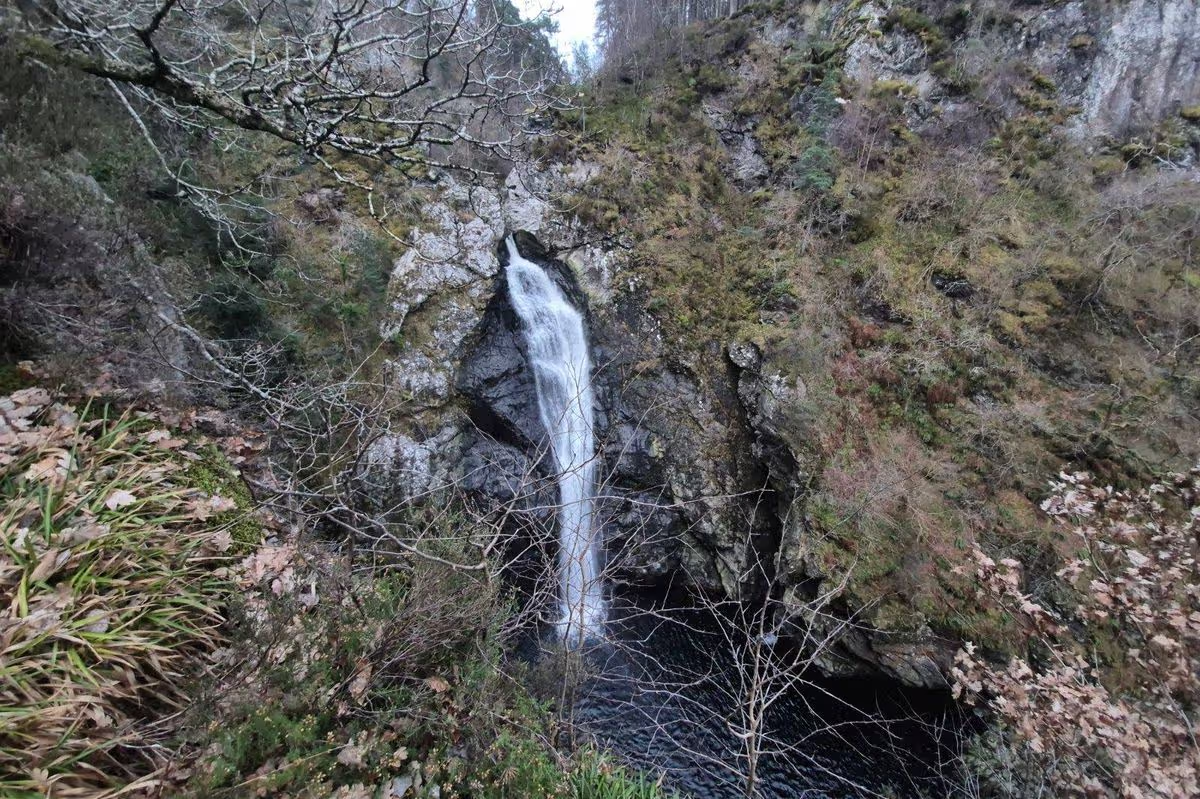
Our next stop was the Falls of Foyers, a spectacular 140ft waterfall nestled within a forest inhabited by elusive red squirrels. Tunnocks Teacakes and Irn Bru proved insufficient fuel for the challenging descent down steep steps, but thankfully the Waterfall Cafe offered sausage rolls and other snacks to revive us.
With daylight fading, we passed by Boleskine House (the former residence of Aleister Crowley and Led Zeppelin’s Jimmy Page), which was shut, though we went anyway simply to say we’d been, before heading off to find a man we’d discovered at The Loch Ness Centre.
Dusk – One final adventure
Steve Feltham is a renowned ‘Nessie Hunter’ who abandoned his family business, relationship and home to move from Dorset. Since 1991, he’s lived on the loch’s shores and has devoted himself to spotting ‘the monster’ ever since.
Yet his tale is really about leaving behind what doesn’t fulfil you and pursuing the life you desire. I desperately wanted to meet him before nightfall.
We reached his modest dwelling as the sky began transforming colours above Dores Beach. He wasn’t there, but after the dog-walkers departed, I chose to wait a whilst longer in case he returned.
The pebbled shoreline is magnificent, the surroundings breathtaking. I pondered whether Steve might welcome a new neighbour, though I knew Birmingham beckoned so I could pen this account.
Both Steve and Nessie remained beyond our grasp, only one possessing confirmed existence but both surrounded by legends I yearned to explore further. Returning to relinquish the rental car and hop back on what I’ll forever dub the ‘Loch Ness Express’, we bid farewell to it all, but only physically.
I was convinced that my spirit remained in Invermoriston, still on the hunt for red squirrels. I plan to retrieve her on the next available journey aboard the Caledonian Sleeper. This time around, I’ll be sure to pack sandwiches.