From breaking news to significant developments in politics, business, technology, entertainment, and more, we deliver the stories that shape our global landscape.
The Cuban government is pushing ahead with its plans to transition to renewable energy, amid a de facto oil blockade from the United States that has strangled the island’s economy.
In an interview with the Reuters news agency on Monday, Cuban Minister of Energy and Mines Vicente de la O Levy explained that the blockade has forced Cuba to explore domestic alternatives to foreign fuel imports.
Recommended Stories
list of 4 itemsend of list
“We are seeking our own alternative solutions, using our own resources, our sun, wind, tides, fuel, Cuban crude oil and the gas produced in our wells,” de la O Levy said.
He said 144 solar farms with a combined capacity of about 1,418 megawatts have been installed on the island in recent years.
China has been the largest supplier of solar panels to the island, and shipments have increased since the blockade began in early January.
At the time, US President Donald Trump halted all oil shipments from Venezuela, a close ally of the Cuban government.
Later that month, Trump also announced he would impose heavy tariffs on any country that exported oil to Cuba, justifying the threat by calling the island’s government a “national security” threat.
Since then, only a single oil tanker from Russia has reached Havana. The US has increased its shipments of oil to Cuba’s private sector, but it has largely barred fuel exports for nationalised industries on the communist-led island.
The government-run electrical grid, widely considered to be antiquated, relies heavily on fossil fuels. Only 40 percent of Cuba’s electricity comes from domestic oil production, according to the International Energy Agency.
As of 2023, only nine percent of the country’s energy consumption was covered by renewable sources.
De la O Levy admitted in his interview with Reuters that the country was facing difficulties. The blockade has caused shortages of medicine, water and fuel, pushing Cuba to the brink of a humanitarian crisis.
“We are surviving and moving forward, little by little, even if not at the pace we would like,” he said.
“We face long hours of blackouts and lack fuel for cooking and transportation. We lack fuel, but we are gradually making headway through our own solutions and our people.”
Cuba’s production of domestic crude oil remains stable, he added, but is almost entirely allocated to power plants.
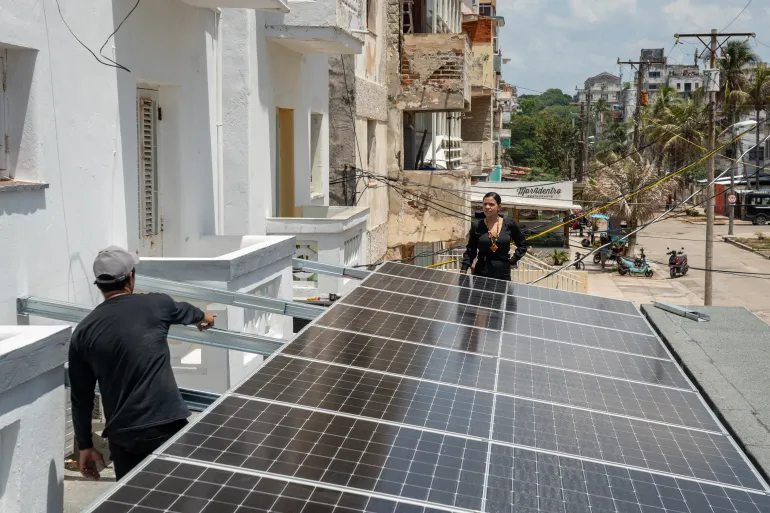
Aris Lopez Torres, owner of the Fuego Lento restaurant, speaks with technician Josecal Duarte during the installation of solar panels on the roof of her business along Havana’s waterfront [File: Lucien Migne/Al Jazeera]
The United Nations and human rights watchdogs have criticised the oil blockade as a violation of international law.
Cuban Foreign Minister Bruno Rodriguez Parrilla also condemned the oil blockade in his speech at the UN General Assembly last month.
“It is an unusual and unprecedented action,” Rodriguez said of the blockade.
“A superpower unilaterally deprives all states of their right to export the commodities that they wish to the country that they wish.”
The US has maintained an economic embargo on Cuba for more than 60 years, since the Cold War era.
But since taking office for a second term as president, Trump has sought to squeeze Cuba’s economy further, as part of a “maximum pressure” campaign. His administration has indicated that it wants to topple Cuba’s government.
On October 7, US authorities announced they had seized 90 biodiesel fuel shipments valued at over $2.8m destined for Cuba.
“These shipments were part of an attempt to unlawfully export fuel to Cuba in violation of federal export laws,” US Immigration and Customs Enforcement (ICE) said in a statement.
But in his interview with Reuters, de la O Levy denied the Cuban government had any link to the shipments.
“No Cuban state-owned company has managed to secure a fuel contract, whether for small or large quantities,” he said.
He added that any US oil shipments to private firms fall far short of the country’s requirements.
“I would venture to say that the amount entering the country doesn’t even cover 3 percent of its fuel needs,” de la O Levy said.
Renoir art heist suspects were planning ‘imminent’ second robbery, prosecutors say.
Published On 12 Oct 202612 Oct 2026
Two paintings by the impressionist master Renoir which were stolen from a French museum last month have been found damaged behind a false wall in a private home after police made several arrests ahead of what prosecutors say was an imminent second heist.
Marseille prosecutor Nicolas Bessone said six suspects were arrested on Wednesday after authorities discovered they were planning to target the Fondation Maeght in Saint-Paul-de-Vence, home to one of Europe’s largest collections of modern art.
Bessone said the arrests were prompted by the “very strong suspicion that another heist was imminent”.
“We were very clearly looking at the repetition of a criminal scheme”, said Eric Antonetti, the head of the Alpes-Maritimes judicial police.
On September 8, thieves used an electric saw to cut through a fence to enter the Renoir Museum in Cagnes-sur-Mer on the French Riviera, according to investigators.
An alarm sounded and police officers arrived four minutes later, a swift response that “apparently caused the perpetrators to panic,” Bessone said.
The stolen works, “Madame Colonna Romano” and “Young Woman at the Well” by impressionist painter Pierre-Auguste Renoir, were valued at about 4.2m euros ($4.7m), Bessone said.
The thieves also attempted to steal two other Renoir paintings, “Madame Pichon” and “Coco Reading”, which depicts Renoir’s young son Claude. They abandoned them in the museum gardens while fleeing police.
“As they fled, they were unable to take all four paintings and abandoned two of them, which were later found in a protective sleeve,” he said.
Police chiefs speak to reporters in Nanterre on Monday following recovery of the stolen paintings last week [Thomas Samson/AFP]
Damaged and torn
The paintings were found hidden behind a false wall in a house on Friday. Both works were damaged and will need restoration. One of the paintings, “Madame Colonna Romano”, had been torn.
“These two paintings are not simply works of art. They are part of our city’s history,” Bryan Masson, the mayor of Cagnes-sur-Mer, near Nice, said on Friday. “Knowing they have been recovered is an immense relief.”
The recovery came almost exactly one month after the theft, following an investigation that used DNA evidence, mobile phone geolocation data and surveillance video.
The two key suspects include a 29-year-old, who was charged after investigators recovered DNA from a bag left behind during the getaway.
They were charged with organised theft and other offences. A third man, accused of hiding the paintings, was charged with organised handling of stolen goods.
A fourth suspect, who investigators say was approached about buying the artworks, was charged with handling stolen goods and taking part in a criminal conspiracy.
Bessone said the suspects had denied planning a second museum raid, but he added that he did “not believe the principal suspect visited that museum simply out of a love of art”.
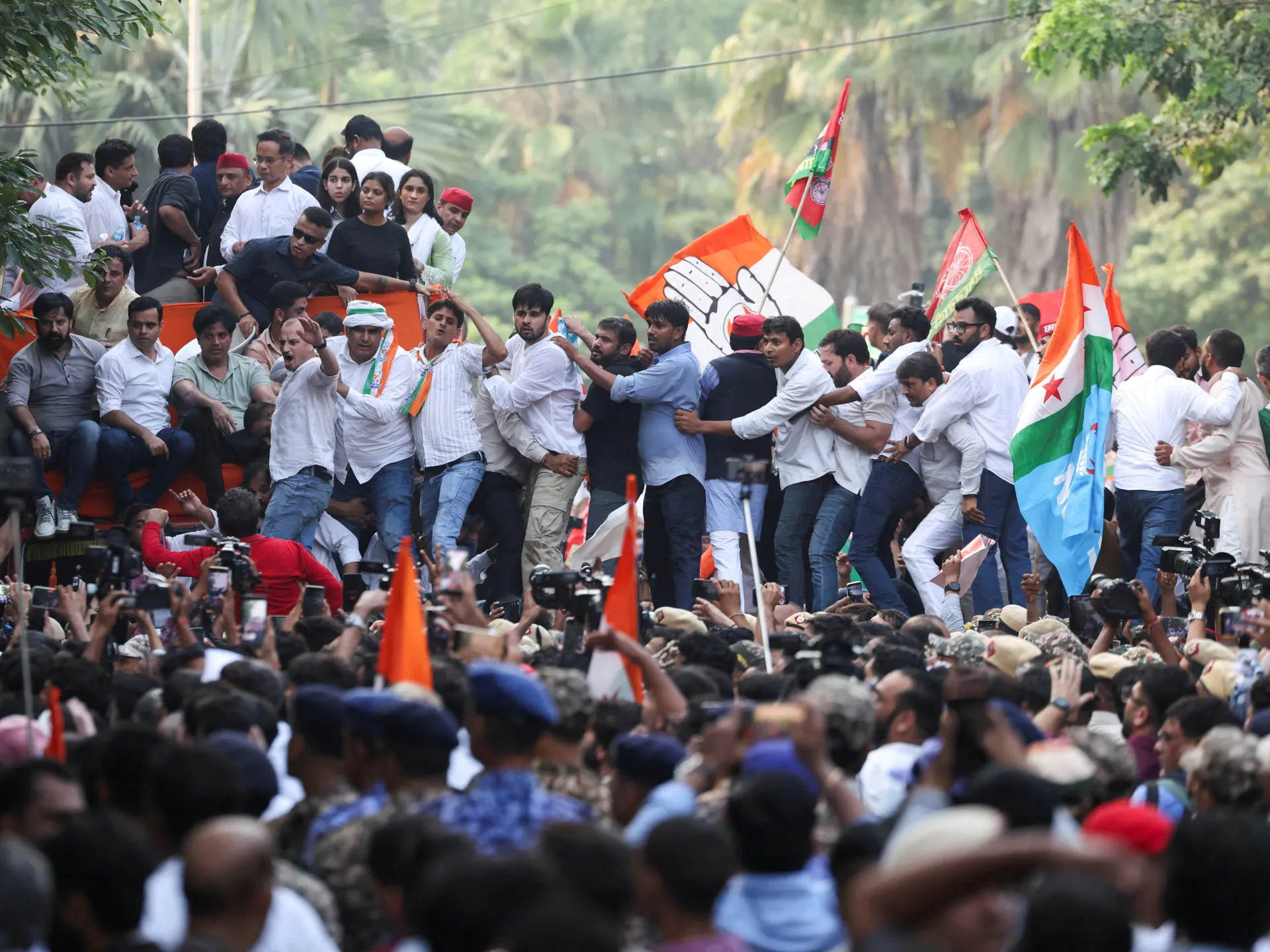
Thousands of protesters have marched in New Delhi, demanding the resignation of India’s top election official over alleged misconduct during a voter roll revision.
The demonstrations on Monday marked the latest confrontation with authorities in the heavily fortified capital.
Opposition parties and supporters of the youth-led Cockroach Janta Party protest movement have taken to the streets in recent days, defying a strict security clampdown to demand the government stop deleting voters from the rolls and calling for the resignation of Chief Election Commissioner Gyanesh Kumar.
More than 133 million names have been removed from voter lists since last year, according to media reports. About 969 million people were eligible to vote in India’s 2024 polls.
Critics say the large-scale revision of electoral rolls could benefit Prime Minister Narendra Modi’s ruling Hindu nationalist Bharatiya Janata Party (BJP).
The Election Commission of India, which oversees the voting process in the world’s most populous nation, has denied any wrongdoing.
Authorities deployed thousands of security personnel across central Delhi for a third straight day, erecting heavy metal barricades and closing key metro stations.
Public attention has also focused on the police response, after a weekend in which thousands of protesters, including organisers, were detained, according to local media reports.
Most of those detained, including three top leaders of the Cockroach movement, have since been released.
Several journalists covering the protests said they were detained despite clearly displaying their press cards.
The demonstrations have become a major political challenge for Modi, drawing together opposition parties, student groups and activists angered by the voter roll revision.
Critics say the measure has disproportionately affected minorities, particularly Muslims.
Election authorities say the move was intended to eliminate duplicate, deceased and fraudulent names.
UK Prime Minister Andy Burnham says renegotiating relationship with the EU could reverse some post-Brexit ‘damage’.
Published On 12 Oct 202612 Oct 2026
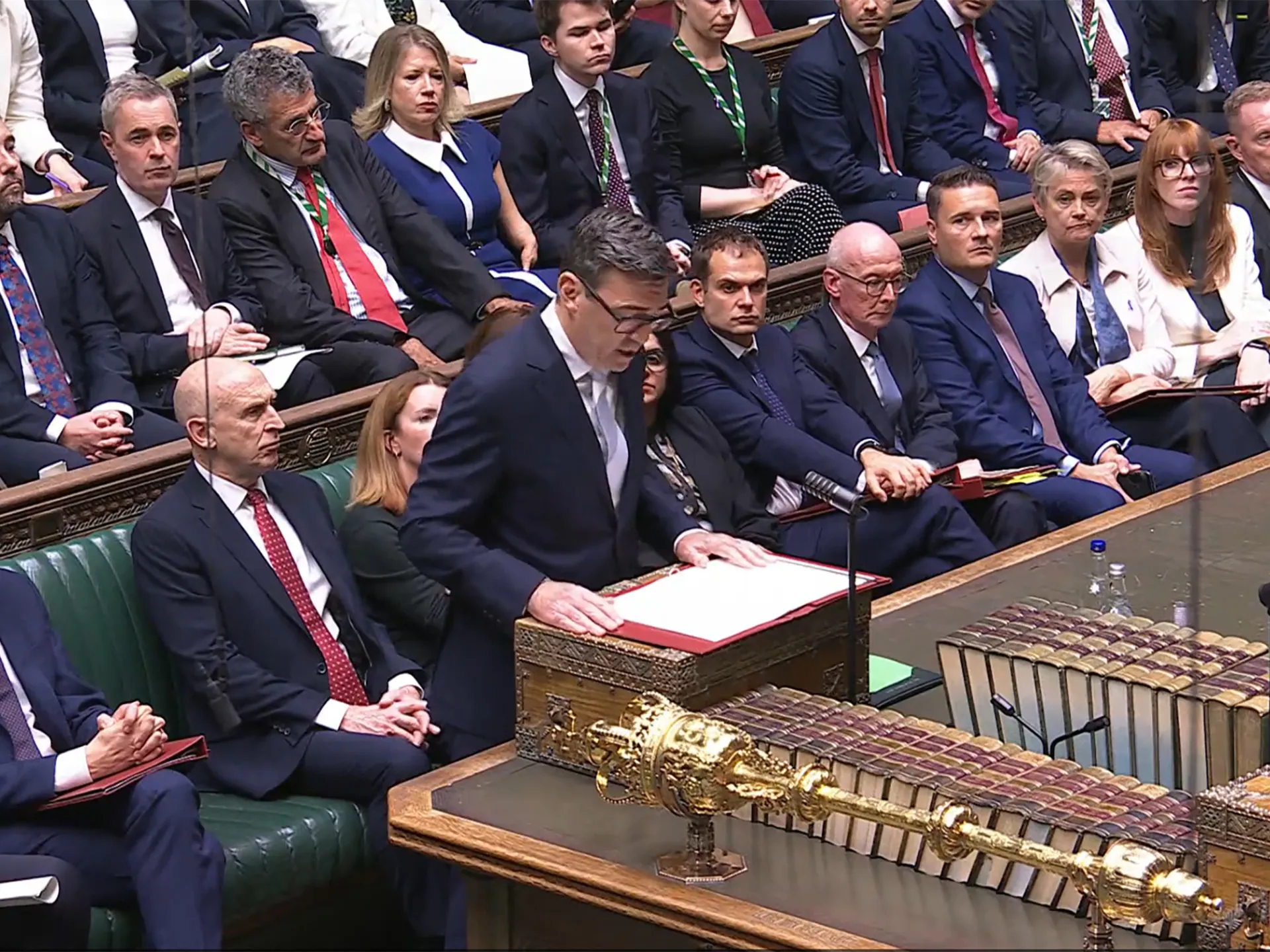
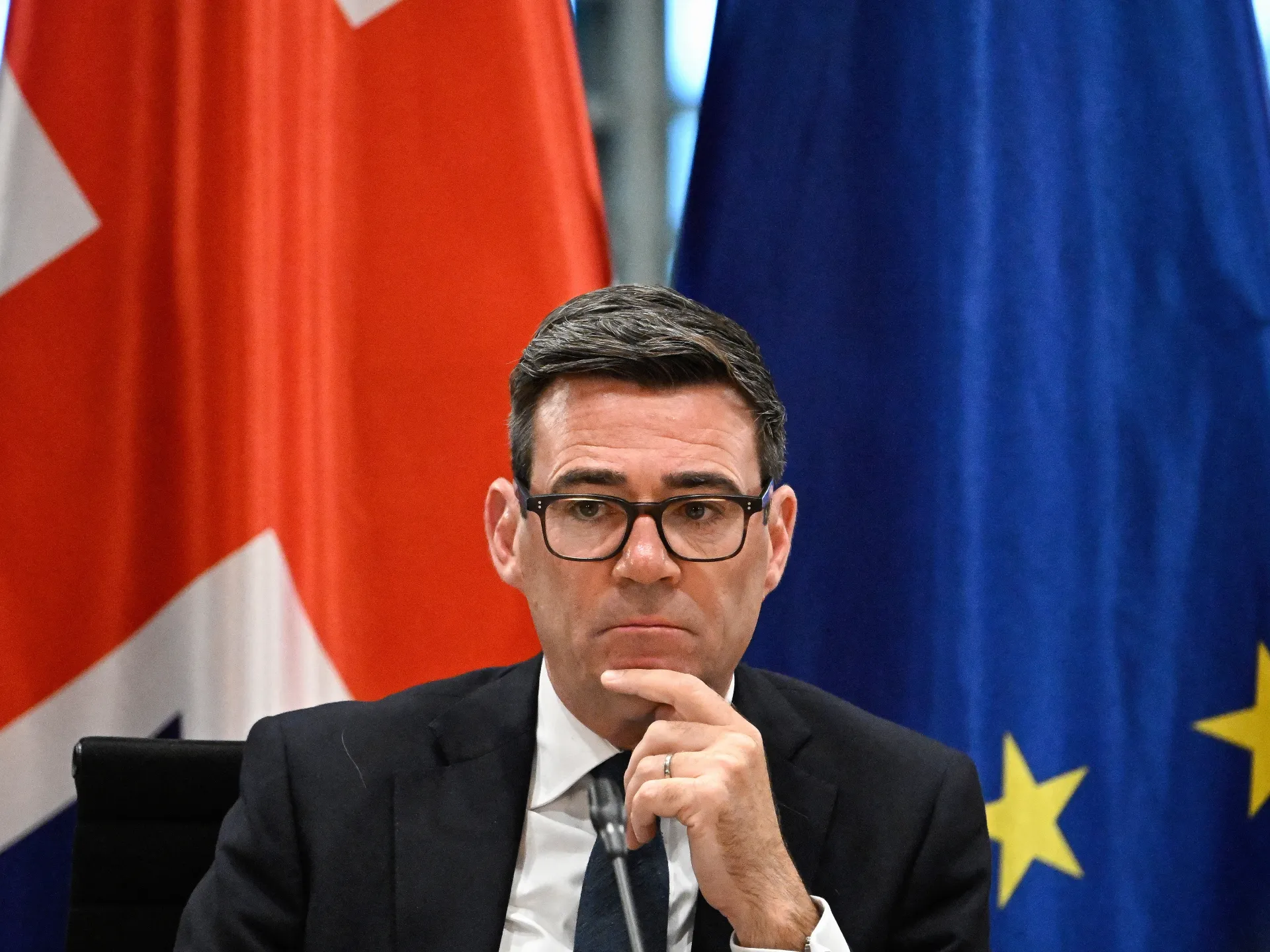
UK Prime Minister Andy Burnham has pledged to push for closer relations with the European Union, confirming he will attend a bilateral summit in Brussels next month.
Addressing parliament on Monday, Burnham said parts of the trade deal agreed with the EU after the UK voted to leave in 2016 would be renegotiated.
Recommended Stories
list of 3 itemsend of list
Burnham said that the British public would be “the boss” at every stage of renegotiating Britain’s relationship with the EU and that he wanted “serious dialogue” about long-term ties.
He told members of parliament that his focus at the summit would be boosting growth in the economy and controlling illegal immigration.
Among the topics of discussion at November’s summit are cutting bureaucracy for British food exports and emissions trading, as well as a “new youth experience scheme” and deeper cooperation on immigration.
The prime minister, who came into office in July, said the agreements could reverse some of the “damage” done to the post-Brexit British economy.
He told MPs that Britain needed to “take a calm, clear-eyed look at the world as it is today”.
“Sticking to the status quo is not good enough,” he said, adding that “public opinion currently supports a pragmatic approach like the one I am suggesting”.
After his address, the leader of the opposition, Kemi Badenoch, said Burnham would be unable to secure a better deal as the EU was ” tough negotiators” and warned that he had already “shown his hand”.
Tehran, Iran – Iranian authorities have signalled they intend to disrupt an Arab-operated and United States-assisted shuttle system that has enabled more energy exports through the Strait of Hormuz during the US-Israel war on Iran.
With the US naval blockade of Iran’s southern ports in place and sanctions tightening, Tehran has said it will pursue military and diplomatic efforts to put pressure on Washington to submit to its demands regarding reopening the Strait of Hormuz.
Recommended Stories
list of 3 itemsend of list
This strategic waterway, through which roughly a fifth of global oil and gas flowed before the war, has been largely closed to shipping following Iranian attacks since the US and Israel launched strikes on Iran on February 28.
But the US Navy has reportedly opened up a route so Gulf states can export oil and other commodities amid an energy crisis.
Iran’s security chief Mohsen Rezaei responded on Sunday night, saying the shuttle system is now an explicit target for Tehran.
Rezaei claimed that the US Central Command, with the assistance of the United Arab Emirates military, was using smaller vessels to transfer oil to larger tankers. He claimed Iran had been striking five or six participating vessels nightly for weeks.
“You are smuggling, but the strait is under Iran’s control, and we manage it,” he asserted.
This appeared to be a taunt aimed at US President Donald Trump, who has hailed energy exports at times reaching pre-war levels over recent weeks.
Rezaei appeared to give the impression that Iran wants to have lasting authority over Hormuz, and promised a harsh response if Iran’s energy and civilian infrastructure were attacked again.
His threats appeared aimed at Arab regional states, with a warning that digital infrastructure could be targeted. Rezaei threatened US-linked cables, data centres and artificial intelligence facilities in the UAE and around the Strait of Hormuz.
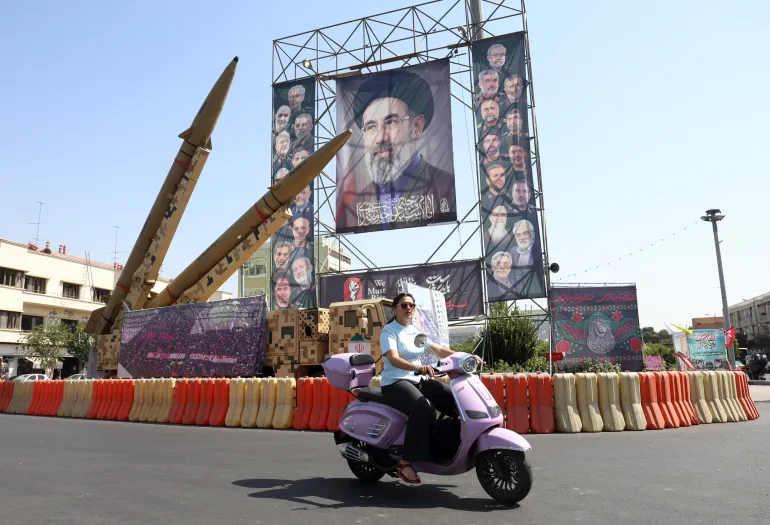
A woman rides her scooter past Iranian Zolfaghar missiles placed in front of a billboard of Iranian Supreme Leader Ayatollah Mojtaba Khamenei at Baharestan Square in downtown Tehran, Iran, September 28, 2026 [Abedin Taherkenareh/EPA]
Rezaei also accused Saudi Arabia of helping the US move oil around Iran’s restrictions. But he did not threaten a direct attack against Riyadh – which is currently being targeted by Yemen’s Tehran-aligned Houthis.
In early September, Iran’s Islamic Revolutionary Guard Corps (IRGC) threatened tankers at ports and anchorages in Kuwait and Bahrain, citing US attacks on Iranian tankers. It accused both countries of complicity through hosting US armed forces.
Iran has claimed the US accepted some of Tehran’s seven conditions for the full reopening of the Strait of Hormuz and ending the war. But Tehran insists that a deal will only materialise when all its demands are met.
Hamidreza Azizi, a senior Iran analyst at the Crisis Group, said this reflects Tehran’s apparent assessment that it is under no immediate pressure to reach an agreement with the US since its pressure in the Hormuz has a global impact.
“The question, however, is whether Tehran is overestimating its ability to sustain this pressure, given the growing economic costs of the confrontation for Iran itself,” Azizi wrote on X.
Transfer system
The system involves very large crude carriers (VLCCs) and smaller vessels coordinating with the US military to load crude oil at Arab ports and use southern corridors near the coast of Oman to exit the strait.
Vessels often switch off their transponders and travel at night to minimise the risk of being targeted by the Iranians. After ship-to-ship transfers in the Gulf of Oman, some of the shuttles come back to load more.
Multiple vessels were targeted overnight Sunday to Monday, including two outbound tankers and one in anchorage near Oman’s port city of Sohar, where ship-to-ship transfers are allegedly being conducted.
The IRGC has also increasingly driven a narrative that naval mines, believed to have been planted across the Strait of Hormuz since the start of the war, pose a serious threat to vessels attempting to navigate the waterway without coordinating with Iran’s Persian Gulf Strait Authority.
The IRGC said three tankers suffered major damage over the weekend after being struck by mines. It also released footage of one ship ablaze that is said to have been struck by a mine, although the footage did not appear to show a mine going off.
‘Cascading impact’
The shuttle system has provided Arab national oil companies with a way out of Hormuz via the southern corridor near Oman.
Michelle Wiese Bockmann, a London-based senior maritime intelligence analyst at Windward, said this system has proven highly effective.
“Under international maritime law, which underpins 11 billion tonnes of seaborne trade annually, vessels have what’s called the right of transit passage,” Bockmann told Al Jazeera. “So, what Oman has done is allow vessels to go through under international maritime law, but they have had US military assistance.”
Tehran says shipping will be disrupted so long as the US continues its choking naval blockade against Iran, which has also stepped up its efforts to counter efforts by Arab states to export oil. At least 15 ships are believed to have been targeted in October so far, according to Winward.
“The more effective the route has become in facilitating the transport of oil and gas, the less leverage Iran has over Hormuz, and more attacks we are seeing on vessels that are using that southern corridor,” Bockmann said.
Windward’s data shows 31 ships transited the Strait of Hormuz daily in the final week of September. This was considerably lower than the 138 before the war.
Eighty-seven percent of the 45 ships targeted by Iran during the third quarter of 2026 were tankers.
Around 47 percent belonged to Gulf Arab energy companies’ national shipping fleets, Windward noted, and 93 percent of the strikes took place in the Strait of Hormuz. Most attacks targeted vessels transiting the southern corridor with their transponders turned off.
These attacks have contributed to a massive increase in freight costs. Freight represented 25-30 percent of Gulf crude’s cost, versus just 1 to 3 percent before the war, according to Windward. National oil companies have resorted to offering discounts of up to $35 per barrel below official selling prices.
The main reason for the rise is a shortage of tankers willing to make the dangerous crossing. Between 15 and 20 percent of very large crude carriers (VLCCs) are tied up with an inefficient logistics system that relies on shuttle transfers, complicated by escalating attacks and exposure at loading ports and anchorages.
“This is having cascading impacts for all vessel classes on freight and values across the world,” Bockmann said.
Atletico vs Man United and Man City vs PSG headline the Champions League match day two action as the competition returns.
Published On 12 Oct 202612 Oct 2026
The UEFA Champions League (UCL) 2026-27 enters its second round of matches this week, with 36 teams in action across Europe as clubs return to the elite football competition.
After the first set of league fixtures, two-time title holders Paris Saint-Germain lead the points table with three points, followed by six-time champions Bayern Munich and five-time winners Barcelona, who also won their opening matches.
Recommended Stories
list of 4 itemsend of list
The competition’s league phase format, now in its third year, started in September and runs until January 2027. It will be followed by the knockout rounds, with the champions crowned in early June.
Here’s all you need to know about this year’s competition:
What is the Champions League?
The Champions League is an annual club competition that features the best teams from across Europe.
This season marks the third time that 36 teams will participate in the main round, an increase from 32 under the old format.
What is the 2026-27 Champions League format?
Since 2003, the UCL has featured 32 clubs split into eight groups of four, with the top two from each section advancing to the last 16.
That has changed radically in recent years.
From the 2024-25 season, the 36 clubs are pooled into a single league in a “Swiss system” more commonly associated with chess.
Earlier, participating teams played six games in the group stage, facing each opponent home and away. Now, each club plays eight games, one each against eight different opponents.
How does the Champions League knockout format work?
At the end of the league phase, the top eight qualify directly for the knockouts, while those between the ninth and 24th places have to compete in two-legged knockout-phase playoffs.
Teams ranked 25th and below are eliminated.
The UCL knockout format is straightforward – it begins with the round of 16, followed by the quarterfinals, semifinals and the final.
When are the league phase and knockout matches?
The league phase matches are scheduled for:
Match day 1: September 8-10
Match day 2: October 13 and 14
Match day 3: October 20 and 21
Match day 4: November 3 and 4
Match day 5: November 24 and 25
Match day 6: December 8 and 9
Match day 7: January 19 and 20
Match day 8: January 27
The knockout phase matches are scheduled for (all dates in 2027):
Playoffs: February 16, 17 and 23, 24
Round of 16: March 9, 10 and 16, 17
Quarterfinals: April 6, 7 and 13, 14
Semifinals: April 27, 28 and May 4, 5
Final: June 5
Which are the best Champions League matches to watch?
The key matches to follow on matchdays two and three are as follows:
Top five UCL matches to watch this week
Arsenal vs Lille, Tuesday 19:00 GMT
Atletico vs Manchester United, Tuesday 19:00 GMT
Galatasaray vs Barcelona, Tuesday 19:00 GMT
Manchester City vs PSG, Wednesday 19:00 GMT
AS Roma vs Real Madrid, Wednesday 19:00 GMT
Top five Champions League matches to watch next week:
PSG vs Barcelona, October 20, 19:00 GMT
Liverpool vs Villarreal, October 20, 19:00 GMT
Como vs Manchester United, October 21, 16:45 GMT
Bayern Munich vs Arsenal, October 21, 19:00 GMT
Real Madrid vs RB Leipzig, October 21, 19:00 GMT
What are the key UCL storylines to follow?
Man City’s home clash with PSG headlines the upcoming round of matches, marking the troubled Etihad club’s first Champions League match since an independent commission found them guilty of breaking more than 100 Premier League financial rules.
Elsewhere, City’s crosstown rivals, under-fire Man United, are also in action this week. They head to Madrid to face an in-form Atletico, hoping to register just their third win this season.
Meanwhile, manager Jose Mourinho will face his former club AS Roma when Real travel to the Italian capital.
Who are the top players to watch in the Champions League?
PSG’s Ferran Torres, who scored a hat-trick in the first UCL match, is a joint top scorer in this year’s UCL alongside Ermedin Demirovic of Stuttgart.
Also watch out for Man City’s Erling Haaland, Bayern Munich’s talented Michael Olise and PSG forward Ousmane Dembele, all of whom scored two goals in their respective UCL openers.
The Swedish academy says the academics’ models are ‘now used by central banks and governments around the world’.
Published On 12 Oct 202612 Oct 2026
The 2026 Nobel Prize in Economic Sciences has been awarded to US academics Robert Hall and Michael Woodford for their work on how monetary and fiscal policy can help stabilise fluctuations in the economy, according to the Royal Swedish Academy of Sciences.
The winners of the prestigious award, formally known as the Sveriges Riksbank Prize in Economic Sciences in Memory of Alfred Nobel and the final prize to be given out this year, were announced on Monday.
Recommended Stories
list of 4 itemsend of list
The two laureates developed new macroeconomic models that improve people’s ability to implement effective stabilisation policies, enabling fiscal and monetary policy measures that can reduce damaging swings in the economy.
“The laureates’ work has provided us with a stable theoretical foundation for the models that are now used by central banks and governments around the world,” John Hassler, chair of the Committee for the Prize in Economic Sciences, said in a statement.
“With them, we are better equipped to deal with shocks in the economy, such as energy crises or sudden changes in how much households consume.”
During the oil crises in the 1970s, the existing Keynesian models used to determine when and how measures should be implemented to tackle recessions or other economic fluctuations stopped working. Hall and Woodford then developed new tools to understand what policy responses could be the most effective.
“Rather than basing the models on statistical links between macroeconomic variables, such as inflation, production and consumption, they chose to build them on a microeconomic foundation,” the academy said. “This encompasses an understanding of how the total mass of individual households and businesses affect the economy through their actions.”
The economics prize, first awarded in 1969, is not part of the five original awards created in the 1895 will of industrialist and dynamite inventor Alfred Nobel, but was instead established by Sweden’s central bank.
The majority of previous laureates have been from the United States. Only three women have ever won, most recently Claudia Goldin in 2023 for her work on how gender has affected pay and employment over time in the US.
Last year’s winners – Joel Mokyr, Philippe Aghion and Peter Howitt – won for their work on “creative destruction” and how new technology and production methods can boost growth and living standards.
Like the other Nobel awards, the economics prize consists of a diploma, a gold medal, and a $1.2m cheque.
US President Donald Trump has announced an immediate “energy ceasefire” between Russia and Ukraine, days after easing sanctions on Russian fuel to tackle soaring domestic and global fuel prices.
The energy truce, announced on Sunday, marks another shift in Washington’s approach to Russian energy, as the Iran-US war and recent Ukrainian strikes on Russian energy facilities disrupted global oil supplies and pushed up fuel prices. Trump has even asked Ukraine not to attack Russian oil facilities, as Moscow remains a major exporter of diesel.
Recommended Stories
list of 3 itemsend of list
The spike in diesel prices in recent weeks has particularly put pressure on Trump’s Republican Party ahead of November’s midterm elections. Surveys show Americans hold the Trump administration responsible for the soaring fuel prices amid the unpopular US war on Iran.
“Attacks on refineries and energy facilities have taken capacity out of an already stretched global fuel market, pushing up costs for transport, agriculture and businesses, with the pain ultimately passed on to consumers,” Susannah Streeter, chief investment strategist at Wealth Club, told Al Jazeera, referring to the mutual attacks on energy sites by Ukraine and Russia.
“A genuine ceasefire could help protect supplies and ease some of that pressure, particularly as winter approaches.”
However, she warned it was too early to call it a “diplomatic breakthrough”, citing Ukrainian President Volodymyr Zelenskyy’s statement that the energy truce came as a surprise to him.
Trump’s decisions have drawn criticism from US politicians and European allies, who warn that allowing Russian fuel back into global markets could provide Moscow with new revenue to finance its war in Ukraine. In March, the Trump administration gave a sanctions waiver to Russian seaborne oil.
So, why has Trump repeatedly changed his position on Russian energy, and what is behind his latest decisions?
What is the ‘energy ceasefire’ Trump announced?
On Sunday, Trump said Russia and Ukraine had agreed to immediately stop attacking each other’s energy infrastructure.
“Both parties have agreed. Do not break it!” he wrote on Truth Social, without providing further details.
Ukrainian President Volodymyr Zelenskyy said he was not aware of the energy truce, saying the deal was “news to me” but welcomed the announcement nonetheless.
However, he said Russian drones continued targeting Ukrainian energy facilities, including a power plant in Kharkiv, after Trump’s statement.
“We are waiting for the details of the conditions between the Americans and Russians, and we are waiting to see one specific step the Americans are ready to take,” Zelenskyy said on Monday during a video address to a security conference in Warsaw.
“This energy ceasefire, it can work, and it can become a major step towards ending the war if the Americans truly step in now and make sure Russians respect it.”
(Al Jazeera)
Ukraine has repeatedly targeted Russian oil refineries, arguing that energy revenues help fund Moscow’s war. Russia, meanwhile, has attacked Ukraine’s electricity and heating infrastructure throughout the four-year conflict.
Academic Alexey Muriaev has urged caution over Trump’s announcement, questioning whether an agreement has actually been reached, and if so, what it entails.
“Is it about suspending attacks on oil refineries? And if that’s the case, then the situation would be inadequate, because Ukraine’s oil refineries have already been taken out by Russia’s strikes beforehand,” Muraviev, senior research fellow in Defence and Strategic Studies at Edith Cowan University, told Al Jazeera.
“So, in this sense, it would mean effectively Ukraine suspending unilateral action against Russia’s oil refinery facilities.”
Muriaev also linked the announcement to Trump’s diesel agreement with Russian President Vladimir Putin, suggesting it may be a signal to Zelenskyy.
“Attacking Russian oil refinery capability would probably be interpreted by Washington as an attack on US economic interests,” he said, referring to the agreement on diesel exports through April 2027.
What’s the state of global oil prices?
The ongoing conflicts in the Middle East and Ukraine have continued to keep global oil markets under pressure.
On Monday, Brent crude, the international benchmark, fell to about $103.04 a barrel following Trump’s ceasefire announcement and Russian diesel deal, while US West Texas Intermediate crude traded at about $90.96.
However, prices remain elevated because of the US-Israel war on Iran, which began on February 28, and disruptions in the Strait of Hormuz, a key waterway through which one-fifth of the world’s oil supplies flow.
Recent attacks on Saudi oil installations and airports by Yemen’s Houthis and the fighting around the Red Sea and Bab al-Mandeb Strait have put further pressure on oil prices.
Ukrainian attacks on Russian refineries have compounded diesel shortages, affecting a fuel essential for the agriculture and trucking industries.
The crisis prompted the Group of Seven nations last week to agree to release 100 million barrels of emergency oil and diesel reserves. The G7 decision came after pressure from Trump.
How has the Trump administration zig-zagged between punishing and embracing Russian energy?
Washington’s approach to Russian energy has shifted repeatedly since Moscow launched its full-scale invasion of Ukraine in February 2022.
Under President Joe Biden, the US banned Russian oil and energy imports in March 2022, seeking to cut off revenue used to finance Moscow’s war.
But Washington simultaneously supported a G7 price cap on Russian oil, designed to restrict Moscow’s earnings without removing too much supply from global markets.
Moreover, the Biden administration also accepted India’s continued purchases of Russian crude to prevent global prices from rising.
After returning to power last year, Trump initially intensified pressure on Moscow. In August 2025, his administration imposed additional tariffs on Indian goods over New Delhi’s purchases of Russian oil.
(Al Jazeera)
Two months later, Washington sanctioned Russian energy giants Rosneft and Lukoil, accusing Moscow of failing to seriously pursue peace negotiations to end the war in Ukraine.
However, Washington’s approach took a dramatic turn this year. On March 5, Washington issued a 30-day waiver allowing India to buy Russian oil stranded at sea, as disruptions to shipping through the Strait of Hormuz amid US attacks on Iran threatened global supplies.
A week later, the Trump administration expanded the exemption, allowing countries worldwide to buy sanctioned Russian oil and petroleum products already loaded onto tankers, with the waiver lasting until April 11.
In September, Trump urged Ukraine to stop attacking Russian refineries, blaming the strikes for global diesel shortages.
On October 9, he announced an agreement with Russian President Putin for Moscow to release more than 300,000 tonnes of diesel immediately, with another 1.5 million tonnes to follow.
Why has Trump changed his position on Russian oil frequently?
Trump’s shifting public position on Russian energy reflects ongoing, and often competing, political and economic pressures.
“Trump is caught between his geopolitical ambitions and the domestic political consequences of expensive energy,” Susannah Streeter of Wealth Club, told Al Jazeera.
She said Washington was trying to pressure Moscow over its war in Ukraine while simultaneously allowing Russian fuel sales that could generate additional revenue for the Kremlin.
“The shift may deliver a short-term political gain if supplies increase and prices ease, but it could come at a longer-term diplomatic cost,” she said, adding that the benefits appeared limited while the Middle East war continued.
US diesel prices reached a record $6.52 per gallon in September, placing Trump under pressure ahead of the November 3 midterm elections.
However, according to academic Muriev, the US president’s public rhetoric should be distinguished from his administration’s actions.
“I don’t really see inconsistency in Trump’s approach because, apart from his public rhetoric, apart from his frequent media posting, there’s been a more steady approach on behalf of his administration,” he told Al Jazeera.
He pointed to discussions between Russian and American officials in August and September, suggesting that negotiations over the latest diesel agreement may have begun well before Trump’s announcement last Friday.
Muriev suggested the timing of the announcement could be politically motivated, allowing Trump to claim a victory on energy prices before the midterms.
Moreover, Moscow also has an interest in helping Trump retain political influence because his administration appears more willing to negotiate with Russia than former President Biden was. Trump has been relatively more accepting of the Russian position on the Ukraine war and has even blamed Zelenskyy for failing to end the war.
“For Putin, it’s not just about scoring immediate economic benefit, but also achieving longer-term political and strategic goals,” Muriev said, referring to other issues such as Iran, cybersecurity, space cooperation and nuclear arms control.
The energy crisis has also created contrasting consequences for American businesses.
While higher oil prices can boost revenues for US energy producers, they increase operating costs for businesses dependent on fuel.
Susannah Streeter said cheaper diesel could provide relief to trucking companies, farmers and manufacturers, although the additional Russian supplies were unlikely to make a significant difference while disruptions in the Middle East continued.
She also warned that frequent changes to sanctions could create uncertainty for companies making long-term investment and supply-chain decisions.
“If sanctions are relaxed, reimposed or changed at short notice, companies face greater uncertainty over sourcing, compliance and the risk of being caught on the wrong side of a policy reversal,” she said.
The EU also announced that it officially added almost 1,600 new sanctions on Russia’s military industrial complex.
Published On 12 Oct 202612 Oct 2026
Ukraine’s Volodymyr Zelenskyy has accused Russia of violating the “energy ceasefire” that United States President Donald Trump unilaterally announced at the weekend and promised to respond if the attacks continue.
Speaking at the Warsaw Security Forum via videolink on Monday, the Ukrainian president urged the US to step in to ensure that Moscow abided by the truce, noting that there have already been “Russian violations of the energy ceasefire announced by President Trump.”
Recommended Stories
list of 4 itemsend of list
“We are waiting for the details of the conditions between the Americans and Russians, and we are waiting to see what specific steps the Americans are ready to take,” said Zelenskyy, who expressed surprise at the ceasefire deal.
“This energy ceasefire, it can work, and it can become a major step toward ending the war if the Americans truly step in now and make sure Russians respect it … If Russia does not agree to an energy ceasefire, we will respond,” Zelenskyy told the Warsaw Security Forum.
Trump’s announcement on Sunday that the two countries had agreed to an “energy ceasefire” caused confusion. It came two days after Trump declared a temporary easing of US sanctions on Russian diesel, prompting outrage from European allies and Kyiv, who said it would only embolden Russian President Vladimir Putin.
Both Ukraine and Russia have been launching mutual attacks on each other’s energy infrastructure for months, adding to upward pressure on global energy prices that have risen amid the US-Israeli war on Iran.
Trump has previously taken to his Truth Social account to announce truces or other arrangements before either Kyiv or Moscow confirmed them.
“An energy ceasefire and other steps to reduce escalation and guarantee security are truly needed here in reality, not just on Truth Social,” Zelenskyy added.
European leaders expressed encouragement at the proposed ceasefire, but agreed with Zelenskyy that it had not taken effect.
“I have not noted, over the last 48 hours, any energy ceasefire coming from the Russian side,” French President Emmanuel Macron told reporters at a Paris autoshow.
At the Warsaw Security Forum, Polish Prime Minister Donald Tusk said that “Russia is not interested in a ceasefire, de-escalation, or peace … that is why I will go to Brussels to urge all European partners to consider increasing sanctions.”
In Brussels, the European Union announced that it has officially added almost 1,600 new sanctions on Russia’s military industrial complex, including individuals and entities involved in its four-and-a-half-year war, in a bid to maintain pressure on Moscow.
“This is the single largest expansion of our sanctions list since Russia started its war,” EU foreign policy chief Kaja Kallas wrote online. “Europe is again showing a united front … We are making it significantly harder, slower and more expensive for Russia to produce the weapons it uses to kill Ukrainians,” she added.
Meanwhile, Russia attacked Ukrainian gas production facilities belonging to its state oil and gas company Naftogaz in the Kharkiv region overnight, which caused a fire, the company said on Monday.
“The attack damaged critical equipment. Our employees are doing everything possible to repair the damage as quickly as possible and prevent risks to the stable operation of the energy system,” Naftogaz acting CEO Sergii Fedorenko wrote on Telegram.
A day earlier, Zelenskyy had said that Ukraine was ready to halt attacks on Russian oil refineries if Moscow ceased its own attacks on Ukrainian energy infrastructure.
New Delhi, India — India’s main opposition leader Rahul Gandhi has returned to the streets of central New Delhi, leading dozens of members of parliament demanding the election chief’s resignation, as protests gather momentum.
Gandhi, heir to India’s most influential political dynasty, is seeking to turn a summer youth uprising into a broader challenge to Prime Minister Narendra Modi’s decade-long dominance of Indian politics, putting the Hindu nationalist government under growing pressure.
In a press briefing on Monday, Gandhi said the Modi government had put the capital city “in jail”.
The youth-led “Cockroach” movement that forced out the education minister in July has also threatened to protest on Tuesday if it is not allowed to rally at Jantar Mantar in central Delhi, which was the focus of summer demonstrations.
Joining Gandhi’s Congress party, other opposition forces and the Cockroach Janta Party (CJP) are thousands of students from left-wing organisations. As the government braces for further protests, security forces have been detaining thousands of students every day, with allegations of custodial violence casting a climate of fear over the capital.
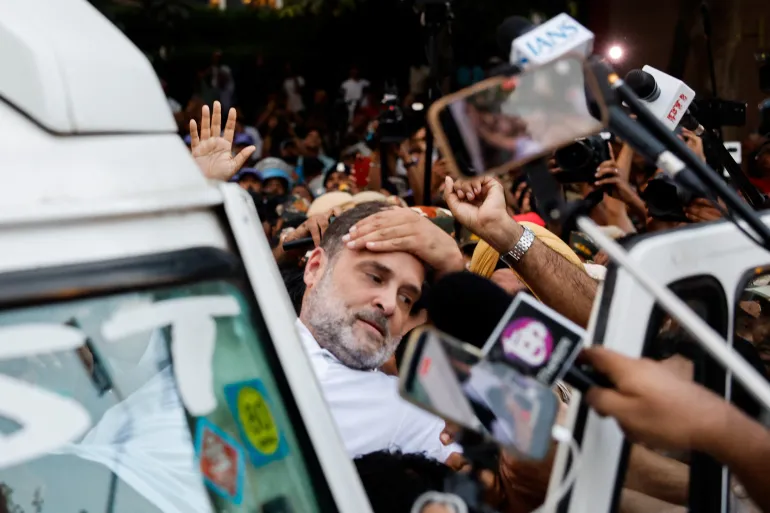
Indian opposition leader Rahul Gandhi is detained by police during a protest organised by opposition parties demanding the resignation of Chief Election Commissioner Gyanesh Kumar, in New Delhi, India, October 7, 2026 [Adnan Abidi/Reuters]
‘No constraints on Modi’
India’s Election Commission, a supposedly autonomous body tasked with overseeing the world’s largest electorate, has been criticised after revelations that its chief, Gyanesh Kumar, frequently overruled concerns raised by the other two election commissioners about the integrity of changes to the voter database.
For months, India’s opposition parties have argued that the election commission is compromised, sabotaging elections at the behest of Modi’s Hindu majoritarian Bharatiya Janata Party (BJP) for its electoral benefit. The BJP denies the allegations.
Since June last year, the commission has been revising and updating statewide voter lists. It has since removed more than 130 million names, which critics say has disproportionately deprived minorities and other vulnerable groups in India of the right to vote.
Gandhi has called for the Chief Election Commissioner to be tried for treason. “We will not spare you,” he said, referring to Kumar, at his Monday press briefing.
Opposition politicians allege that protest rallies by leaders including Gandhi have been met with violent and brutal force, as seen in videos showing them being detained.
“[The protesters] came with love in their hearts, not hatred or anger,” Gandhi said, referring to a protest on Saturday. “They were beaten, both by cops and BJP goons.”
“Narendra Modi … cannot silence India’s voice. These cowards cannot intimidate us. They will have to step aside,” he wrote on X, calling on people from all walks of life to join the protest on Monday.
Analysts say circumstances this time around are starkly different to the summer protests, when CJP-led demonstrators demanded the resignation of then-Education Minister Dharmendra Pradhan.
Asim Ali, a political analyst in New Delhi, told Al Jazeera that the mobilisation of the wider opposition would not stop, but the Modi government was unlikely to back down.
“The crackdown this time on students is making it apparent that it would be tougher for young protesters this time, and students can’t get beaten up and dragged violently daily,” he said. “Going forward, the opposition parties stand to be the front face of the protests, and they need to lead from the front.”
Since 1975, when then-Prime Minister Indira Gandhi imposed a state of national emergency suspending civil liberties, “India saw more civil politics grow into mainstream, where opposition parties were allowed space,” Ali said.
He added that after five decades, “those democratic gains have vanished – and there are no constraints on this government by independent institutions.”
Rasheed Kidwai, a political analyst, said he has seen New Delhi at the centre of “several big opposition political rallies, held in areas near the parliament, hosting hundreds of thousands of people,” when the police did not interfere, unlike the crackdowns this year.
Kidwai said that the violent detention of members of parliament, in particular, was worrying.
“We are seeing a big change from when politicians were more tolerant of dissent,” he added.
Neha Bora, National President of the All India Students’ Association (AISA), is detained by police during a protest demanding the resignation of Chief Election Commissioner Gyanesh Kumar in New Delhi, India, October 4, 2026 [Bhawika Chhabra/Reuters]
Cat-and-mouse chases
With an unprecedented security deployment in central New Delhi designed to prevent protest, youth leaders are turning to new tactics.
Neha Bora, the president of All India Students’ Association (AISA), a left-wing group affiliated with the Communist Party of India, has often tricked Delhi police in order to stage protests.
Bora, a post-doctoral student of theatre, came to national prominence for her fiery speeches in the July protests, becoming a leading face of the Gen Z movement challenging Modi’s Hindu nationalist politics.
Aditi Thakur, a 23-year-old student in the capital, has turned on notifications for all of Bora’s posts on social media. “A call to protest can come anytime, anywhere,” she told Al Jazeera.
Bora does not reveal when or where she is going to stage a protest until just 30 minutes before, to avoid detentions by the police. Her supporters are alerted via social media to join her at a given location in the capital.
On Sunday, she picked a congested street near central Delhi — and was able to jump several barricades to reach the heavily secured Parliament Street, before being chased down and dragged into a police van.
Even Thakur couldn’t catch her, she told Al Jazeera, laughing. “These are guerrilla times, but peacefully. If the government cracks down on us, we also need to adapt,” she said. “It is a fun cat-and-mouse chase every day. I’m hooked on it.”
The Gandhi-led Congress is also adopting similar measures, holding flash rallies at unannounced venues, then running away from police.
A man walks past members of the Rapid Action Force (RAF) standing guard ahead of a protest planned by the Cockroach Janta Party (CJP) seeking the resignation of India’s Chief Election Commissioner Gyanesh Kumar, in New Delhi, India, October 10, 2026 [Adnan Abidi/Reuters]
The mood is changing
A defining feature of the July protests – a watershed moment for wrestling concessions from the government – was Gen Z’s humour in the face of police brutality.
Now, protesters are prepared for a more serious confrontation, even if demonstrations remain peaceful, say analysts.
“We are seeing that humour changing more into anger this time,” Asim Ali said.
The biggest challenge for the government is disruption in central New Delhi, which, Ali said, the government cannot allow on a daily basis. The area is home to most federal government offices, as well as being a major business hub.
Protesters know that too, and that gives them leverage.
“We are seeing this movement grow into a bigger anti-government, anti-Modi movement,” Ali said.
Smith moves to 223 career catches, a record for fielders, as Australia bowl out South Africa for 284 in reply to 390.
Published On 12 Oct 202612 Oct 2026
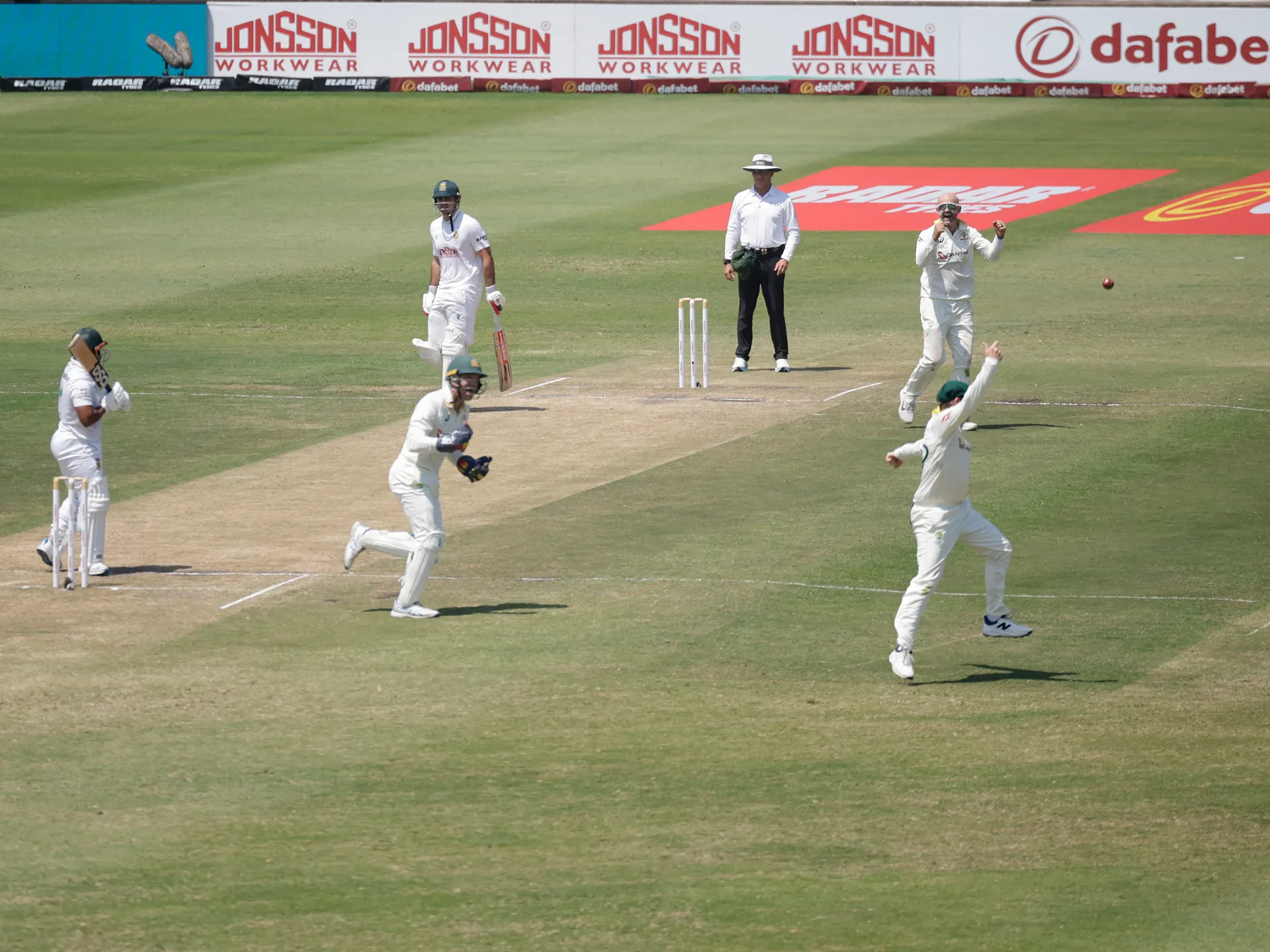
Steve Smith has broken the Test record for the most career catches by a fielder as Australia have played themselves into a strong position on the third day of the first Test against hosts South Africa.
Smith held four catches on Sunday, taking his total to 223, as South Africa were bowled out for 284 in reply to Australia’s first innings of 390 at Kingsmead Stadium in Durban.
Nic Maddinson (17 not out) and Travis Head (10 not out) added 33 runs off just 5.4 overs to stretch Australia’s overall lead to 139 before bad light ended play for the third day in a row.
Maddinson, who laboured to a 33-ball duck in the first innings, hit two fours off Marco Jansen in the first over of the second innings and added a six off Wiaan Mulder before play was called off.
Australia’s bowlers applied relentless pressure on an easy-paced pitch and a succession of South African batsmen contributed to their own dismissals by playing poor shots.
Six Protea batters reached 30, but David Bedingham’s 49 was the top score.
Australian captain Pat Cummins took three for 54, and Mitchell Starc, Josh Hazlewood and Nathan Lyon claimed two wickets each as Australia’s long-serving bowling quartet combined with customary efficiency.
Smith special in the slips
Smith started the day on 219 catches, one behind Joe Root of England.
He equalled the record when he caught Temba Bavuma. Smith, playing in his 126th Test, broke the record when he lunged to his left from second slip to hold a sharp edge from Bedingham off Cummins.
Smith was in the action again with a spectacular catch to dismiss Verreynne, again anticipating well at slip as the South African wicketkeeper made good contact with a reverse sweep that Smith held in an outstretched right hand.
His fourth catch was from an edge to slip by last man Anrich Nortje off the bowling of Beau Webster.
Smith’s career haul of 223 catches exceeds the total of all but 11 specialist wicketkeepers.
Mexican boxer tells Turki Al-Sheikh he ‘fears nothing’ and will face M’billi in Riyadh on October 31 ‘no matter what’.
Published On 12 Oct 202612 Oct 2026
The world title fight featuring Saul “Canelo” Alvarez and Christian M’billi will go ahead this month in Saudi Arabia despite attacks on the country’s airports, which have killed at least 14 people in Riyadh in two days, Saudi sports promoter Turki Al-Sheikh confirms.
Alvarez vs M’billi is scheduled for October 31 in the Saudi capital, which has repeatedly come under attack from Yemen’s Houthis, but Al-Sheikh sought to allay the doubts over the bout on Sunday.
One person was killed and 11 were injured on Sunday when a projectile struck King Khalid International Airport in Riyadh, according to Saudi Arabia’s General Authority of Civil Aviation (GACA).
A Houthi strike on the same airport on Saturday killed 13 people and injured more than 300, making it the deadliest attack on Saudi Arabia in more than a decade.
The Houthis claimed responsibility for all four strikes on Saudi airports before Sunday’s attack, which has yet to be claimed by any group.
Alvarez, who has held multiple world titles across several weight classes, will face WBC super-middleweight champion M’billi in a highly anticipated bout.
“Canelo reached out and told me he’ll still fight in Riyadh this October, no matter what happens,” Al-Sheikh, chairman of Saudi Arabia’s General Entertainment Authority, wrote in a social media post. “He [Alvarez] fears nothing.”
The Mexican boxer, a former two-time undisputed super-middleweight champion, has not fought since he was beaten by American Terence Crawford in September 2025.
US, Australia, Canada, Japan, South Korea and New Zealand among countries urging citizens to avoid travel to Kingdom.
Published On 12 Oct 202612 Oct 2026
Several countries have warned their citizens against travel to Saudi Arabia following a series of Houthi attacks on airports in the kingdom.
On Monday, Australia and New Zealand became the latest to issue advisories against travelling to the kingdom, following similar warnings from the United States, Canada, the UK, South Korea, and Japan.
Recommended Stories
list of 4 itemsend of list
Australia’s Department of Foreign Affairs and Trade said Australians should avoid King Khalid International Airport in Riyadh and “reconsider” travel to other Saudi airports.
New Zealand’s Ministry of Foreign Affairs and Trade urged citizens not to travel to the Saudi capital’s main gateway and the provinces of Najran, Jazan and Asir for any reason, and to avoid “non-essential” travel to Saudi Arabia as a whole.
The US embassy in Riyadh on Sunday advised US citizens to reconsider travel to the kingdom, citing the threat of attacks by Iran and the Iranian-backed Houthis.
Global Affairs Canada issued an advisory against non-essential travel to any part of Saudi Arabia.
South Korea’s Ministry of Foreign Affairs recommended that its citizens in Saudi Arabia leave unless they are on essential business and advised anyone planning to travel to the kingdom to cancel their trip.
The UK’s Foreign, Commonwealth and Development Office urged citizens to avoid travel to Jeddah and Dammam, and to all airports apart from Medina International Airport, except for essential reasons.
The warnings come as Saudi Arabia reels from five attacks on its airports in less than a week.
One person was killed and 11 others were injured on Sunday when a projectile struck King Khalid International Airport, according to Saudi Arabia’s General Authority of Civil Aviation (GACA).
A Houthi strike on the same airport on Saturday killed 13 people and injured more than 300 others, marking the deadliest attack on Saudi Arabia in more than a decade.
The Houthis claimed responsibility for all four strikes on Saudi airports before Sunday’s attack, which has yet to be claimed by any group.
King Khalid international airport and King Fahd international airport in Dammam remain closed following the attacks, causing significant disruption to aviation across the Middle East.
The attacks have also disrupted flights to and from King Abdulaziz International Airport in Jeddah.
More than 150 flights were cancelled and 374 flights were delayed at the Jeddah airport on Sunday, according to the flight tracking website Flightradar24.
Brendan Sobie, an independent analyst and consultant in Singapore, said it was too early to predict the ramifications of the attacks for aviation across the region and beyond.
“As has been the case with the Iran war and the impact from that crisis on the UAE, Kuwait and Bahrain, the impact of this latest crisis really depends on how long it lasts, how long Riyadh airport remains closed, and how long and to what extent are the restrictions once it reopens,” Sobie told Al Jazeera.
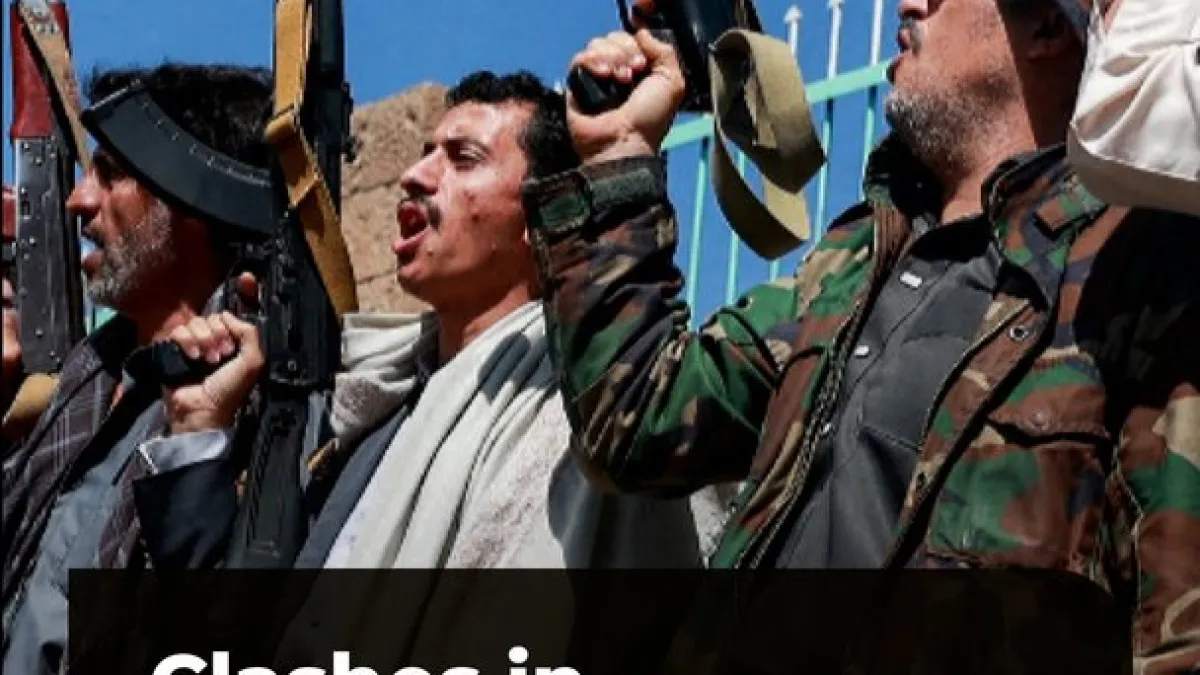
Heavy clashes have been reported between Houthi fighters and Yemeni- forces near the strategic southern city of Taiz, Al Jazeera’s Yousef Mawry reports from Sanaa on what losing the city could mean for Yemen’s internationally recognised government.
Ethiopian government forces entered Adigrat in northern Tigray after rebel fighters withdrew, heightening tensions with neighbouring Eritrea. The two neighbours cut off diplomatic ties last week. Al Jazeera’s Hamza Mohamed reports.
Latest missile launch appears to be a show of force since South Korea’s hypersonic missile test-fire, Seoul says.
Published On 12 Oct 202612 Oct 2026
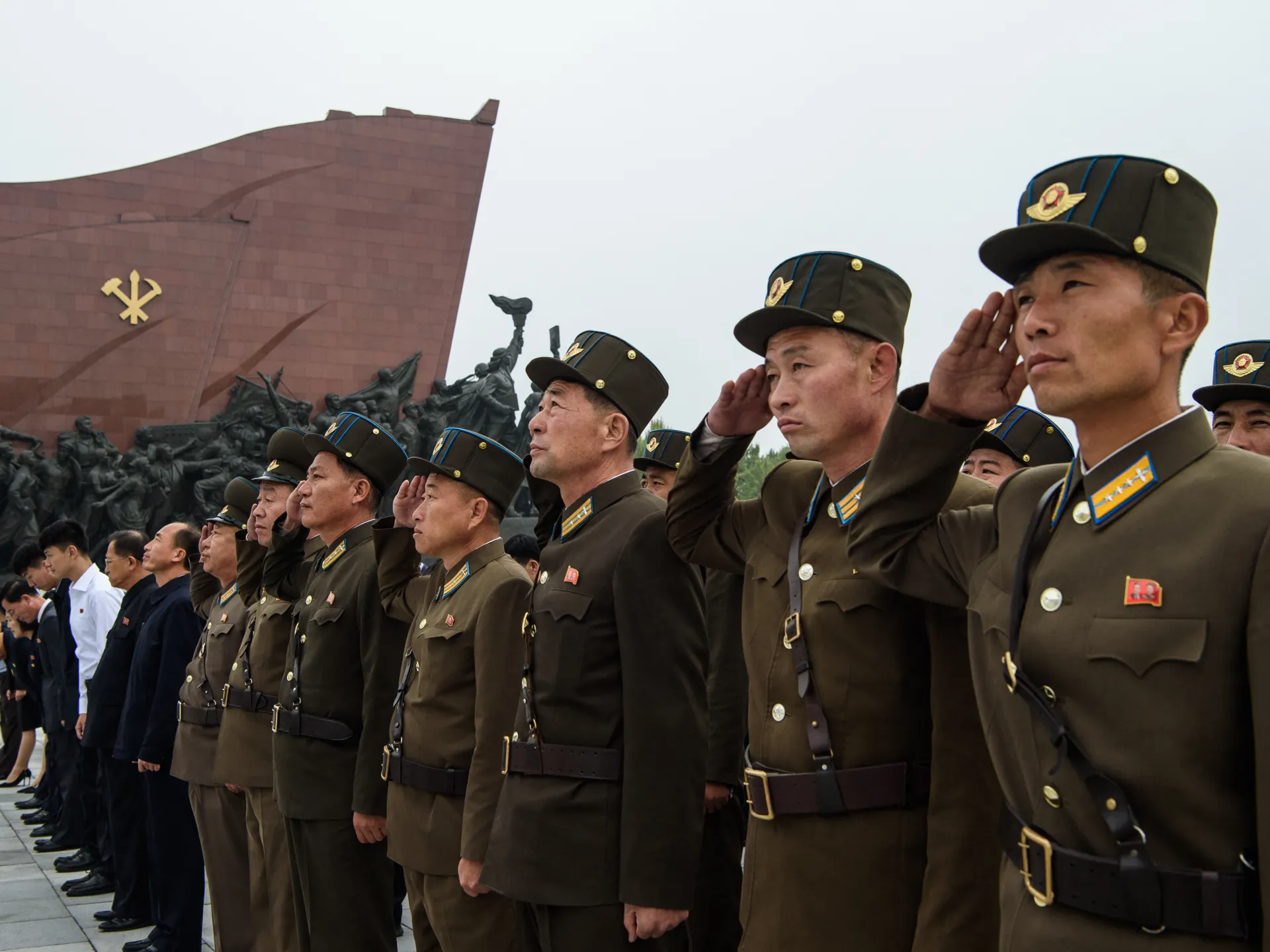
North Korea has fired multiple ballistic missiles towards the sea off its east coast, South Korea’s military says.
South Korea’s Joint Chiefs of Staff (JCS) said one of the missiles flew more than 900km (559 miles) from the Pyongyang area on Monday. The joint chiefs did not specify how many missiles were detected.
Recommended Stories
list of 3 itemsend of list
Japan’s coastguard said on Monday that North Korea had fired two unidentified projectiles, believed to be ballistic missiles, which appeared to have already fallen.
South Korea’s presidential office said that Pyongyang’s repeated missile launches violate United Nations Security Council resolutions, urging an immediate stop.
Monday’s missile launch adds to heightened tensions on the Korean Peninsula, as both countries have been conducting weapons tests.
Escalating tensions
JCS spokesperson Jang Do-young said the latest missile launch appears to be a show of force since South Korea’s hypersonic missile test-fire.
On Thursday, South Korean President Lee Jae Myung oversaw the country’s first test-firing of a hypersonic missile, a rare public showcasing of a missile test by a South Korean president.
Lee’s office said the hypersonic weapon, once fully developed, would enhance South Korea’s ability to strike key targets by surprise in the “Korean Peninsula theatre of operations”.
On October 3, North Korea also tested a hypersonic intermediate-range missile designed to evade missile defences in South Korea and Japan.
Last week, Seoul demanded an apology after a landmine blast wounded three soldiers in the Demilitarized Zone between South and North Korea. A joint South Korean-UN investigation concluded that two landmines were planted by North Korean forces about a year ago. Pyongyang dismissed the claim and accused South Korea of provocation.
Prior to the border mine blast, Seoul said it was conducting “preliminary coordination efforts” to facilitate dialogue between Pyongyang and Washington.
Lee pledged to reopen dialogue with North Korea in his first speech after taking office in 2025.
North Korean leader Kim Jong Un continues to flaunt his nuclear weapons programme, while rejecting US and South Korean offers to resume stalled diplomacy.
Talks between Kim and US President Donald Trump abruptly ended in 2019. Kim Jong Un’s government continues to demand that Washington abandon its “hostile” policy towards Pyongyang and drop demands for North Korea’s denuclearisation as a condition for talks.
The claim marks the first time a UK prime minister has publicly acknowledged Russia’s interference in the vote to leave the EU.
Published On 12 Oct 202612 Oct 2026
UK Prime Minister Andy Burnham has said it is “clear” that Russia interfered in the country’s 2016 Brexit vote, warning French and German voters of the same threat.
“I asked the question coming to Downing Street: Was there interference in the 2016 referendum from Russia? And I’ve had the clear answer that yes, there was,” Burnham said in an interview with The Rest Is Politics podcast released on Sunday.
Recommended Stories
list of 3 itemsend of list
Burnham’s comments mark the first time a UK prime minister has publicly acknowledged that Russia interfered in the UK’s vote to leave the European Union. Burnham did not provide evidence for or details on the claim.
He said that “these things are important now to put clearly on the record, and, I believe, help voters in Germany and France understand that some of this politics is instigated via our enemies, namely Russia.”
Burnham said he spoke with German Chancellor Friedrich Merz about possible links between Russia and the far-right Alternative for Germany party when the two leaders met last week in Berlin.
In his address to the United Nations General Assembly in September, Burnham also condemned Russia’s attempt to interfere in the UK’s 2019 general election.
According to a 2020 report by Parliament’s Intelligence and Security Committee, the UK government had failed to ask for a deep assessment of Russia’s interference in the 2016 referendum. The report did confirm that Russia had meddled in the 2014 Scottish independence referendum, however.
Russia has repeatedly denied meddling in Western democracies or interfering in another country’s elections or referendums, casting the UK as being gripped by “anti-Russian hysteria”.
UK reconsiders Brexit
Last month, Burnham argued that the UK should reconsider options for a future relationship with the EU, including rejoining the bloc, reigniting the decisive debate more than a decade after the historic vote.
He said that the UK’s departure from the bloc had failed to fulfil Brexit supporters’ pledge of “taking back control”, and instead has made the UK weaker economically and on immigration.
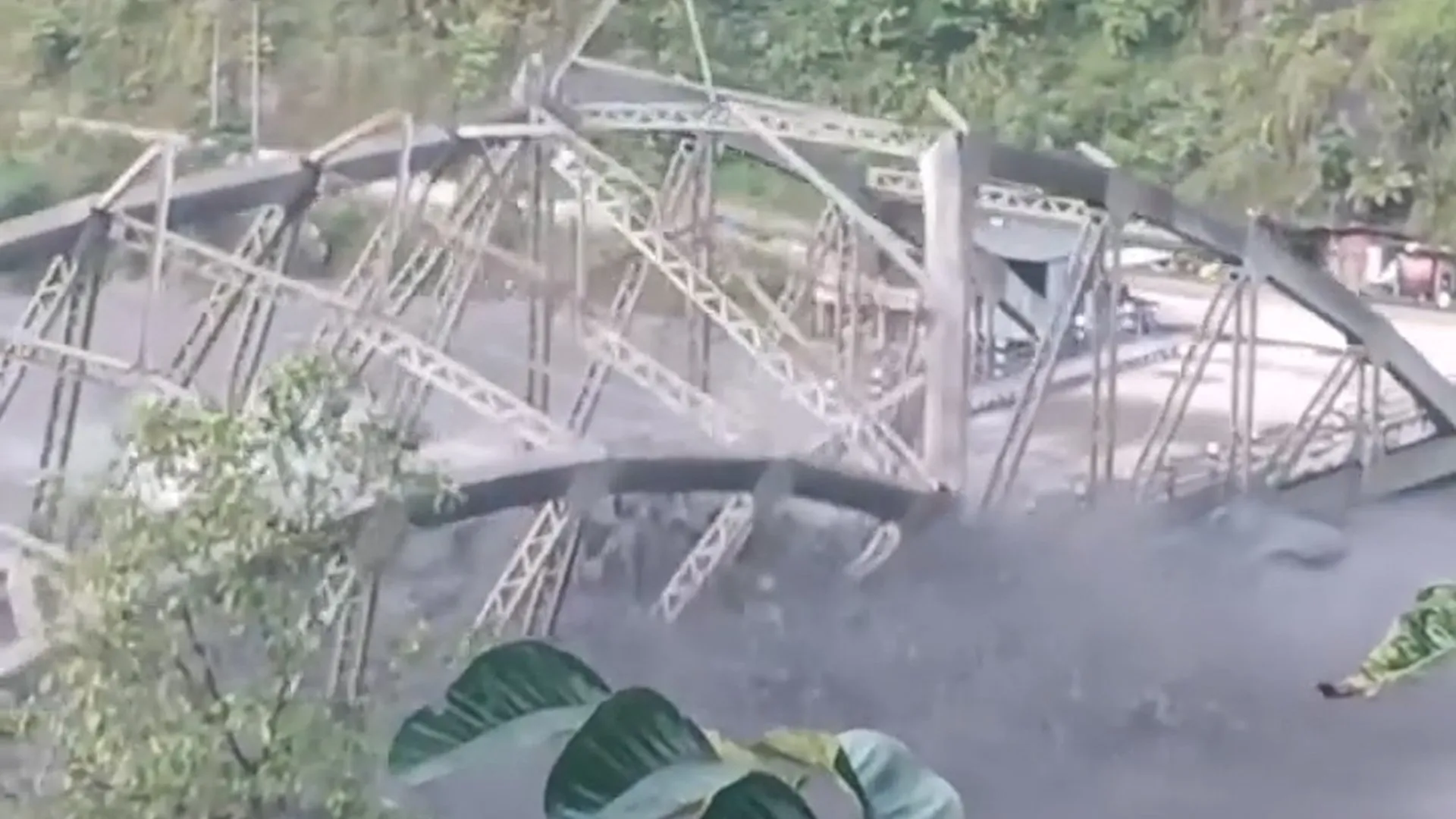
Flash floods along Nepal’s Budhi Gandaki River swept away homes and bridges, forcing residents to flee to higher ground. Five people are missing, and six have been rescued, authorities said.
Residents across the southeastern United States have begun cleanup efforts after Hurricane Isaias, the first Atlantic tropical cyclone of the 2026 season, slammed ashore near Destin, Florida, on Friday.
As of midafternoon Sunday, roughly 356,000 customers remain without power in southern Alabama and the northwestern region of Florida, according to data from PowerOutage.com, an independent tracking website.
At its peak, the storm knocked out power to nearly 800,000 homes and businesses across the Gulf Coast.
Sarah Gatewood, a spokesperson for the utility company Florida Power and Light (FPL), announced that workers from across Florida and more than two dozen other states had mobilised to restore power.
At least four deaths have been linked to Isais after it made landfall as a Category 2 storm on the five-tier Saffir-Simpson Hurricane Wind Scale.
The tempest churned northward into Alabama on Saturday with fierce tropical-storm-force winds before weakening into a post-tropical cyclone and tracking further north towards the Appalachians.
Though its power is waning, the storm continues to endanger the mid-Atlantic region with the potential for flash flooding.
According to the National Weather Service (NWS), surface observations indicate that Isaias now has maximum sustained winds of 160 km/h (100 mph) and an estimated minimum central pressure of 28.88 inches, or 978 millibars.
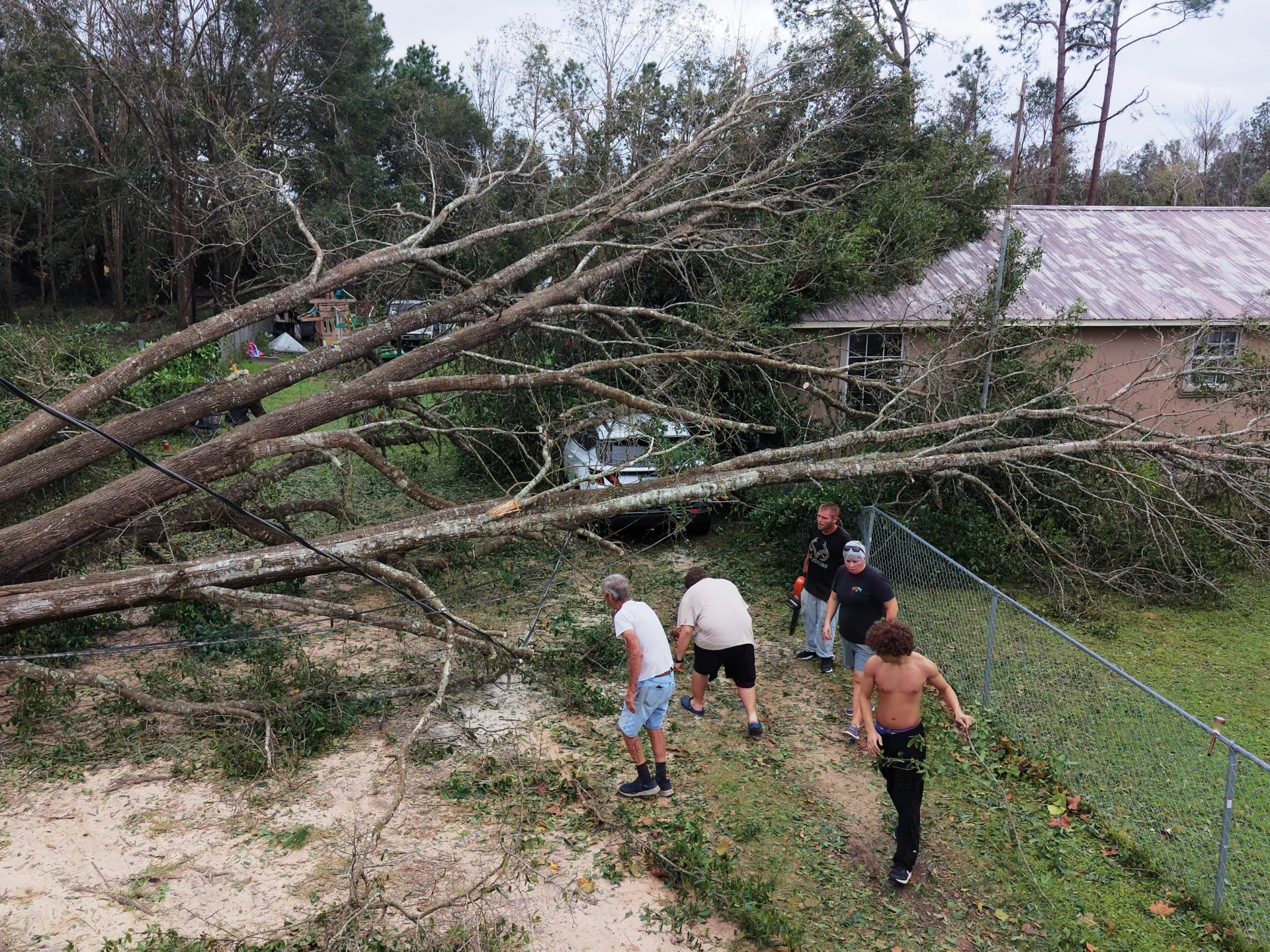
Across Florida and Alabama, residents have reported damage from the storm’s high-velocity winds.
A Rest and Relax Inn in the resort city of Pensacola, Florida, saw its roof sheared off during the hurricane, and a boathouse was flattened in Destin.
The immediate struggle for basic necessities was most stark in Pensacola, the westernmost part of the Florida Panhandle, where the storm downed power grids and caused widespread structural damage.
Hundreds of cars lined the block around a United Cajun Navy distribution site, a volunteer disaster relief organisation, on Saturday morning.
Pensacola’s Mayor DC Reeves warned of critical drinking water shortages following the storm, which affected drinking wells and water infrastructure. Residents, he said, remain under an advisory to boil tap water before use.
“We are winding down day three of storm response and recovery operations, and we remain focused on public safety, clearing debris, and restoring critical infrastructure and services,” Reeves said on social media.
Isaias also forced the indefinite closure of Pensacola International airport, Florida’s 10th-largest airfield, due to severe damage.
Fallen trees and power lines continue to make travel hazardous in Houston County, Alabama, which remains under an emergency flash flood warning, according to state emergency officials.
“Due to the impacts of Hurricane Isaias, all Houston County roads are closed until further notice,” the agency posted on X.
Despite a ceasefire agreement reached between Israel and Lebanon in June, Israeli attacks continue.
Published On 11 Oct 202611 Oct 2026
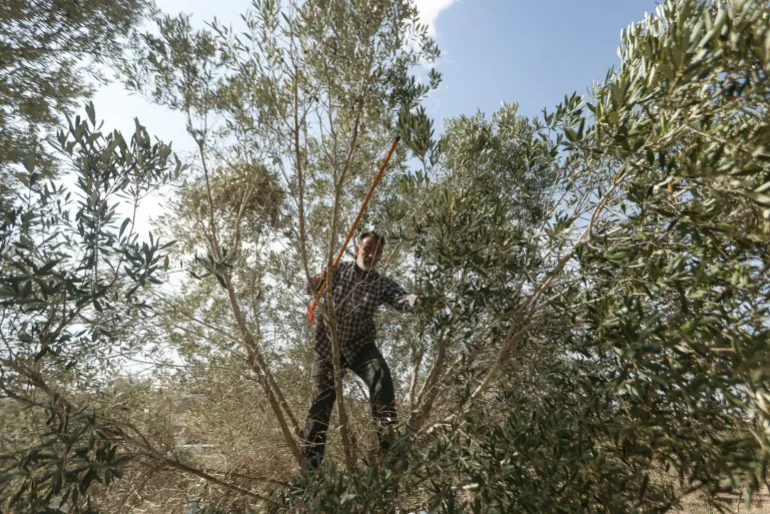
Two men have been killed in southern Lebanon’s Bint Jbeil district while taking part in an annual olive harvest, according to Lebanese state media and local authorities, as attacks by Israel continue.
One of the men died Sunday in the village of Froun from a munition left behind by recent fighting and the other in Yater as a result of Israeli shelling that “targeted the outskirts of the town while he was inspecting his land and olive harvest”, according to the official National News Agency (NNA).
Recommended Stories
list of 3 itemsend of list
The Lebanese army blamed Israeli tank fire and called the ongoing attacks “a flagrant breach of existing agreements”.
Afterwards, the Yater municipality urged residents “to avoid the outskirts of the town and refrain from crossing the earthen barrier separating some unsafe neighbourhoods” for fear of Israeli attacks.
In Froun, the NNA reported that “a foreign object” left over from previous Israeli operations exploded and killed the man, who was an engineer, as he and others tended their trees.
The engineer had come down from Beirut, where he lives, for the harvest, Froun mayor Hassan Bazzi told AFP.
The incident prompted local residents to call off the harvest and wait for “the Lebanese army to complete the decontamination of the village”, Bazzi said.
Displaced people
Since an agreement between Lebanon and Israel was struck in June, violence in the south has lessened, but not stopped.
Lebanon was pulled into conflict on March 2, when Hezbollah struck Israel in support of Tehran during the US-Israel war on Iran. Subsequently, Israel launched a bombing campaign and a ground invasion that authorities say have killed more than 4,300.
In August, Lebanon’s Prime Minister Nawaf Salam accused Israel of intentionally targeting homes and civilian infrastructure across the country. The International Organization for Migration (IOM) recorded nearly 350,000 internally displaced people in late August, a sign of the worsening displacement crisis.
One of the volunteers from Lebanon’s northernmost province of Akkar and the city of Sidon takes part in an olive-picking initiative in the southern Lebanese village of Jebchit near Nabatieh on October 11, 2026 [AFP]
Volunteers from the nearby town of Jebchit and locals came to help their southern neighbours with the harvest in an act of solidarity.
“From north to south, one people and one land,” said organiser Ahmad Chahhal.
CCTV footage released by Al Arabiya shows the moment of a Houthi strike on Riyadh’s international airport on Saturday. The attack killed at least 12 people and injured more than 300. A warning this video contains distressing images.
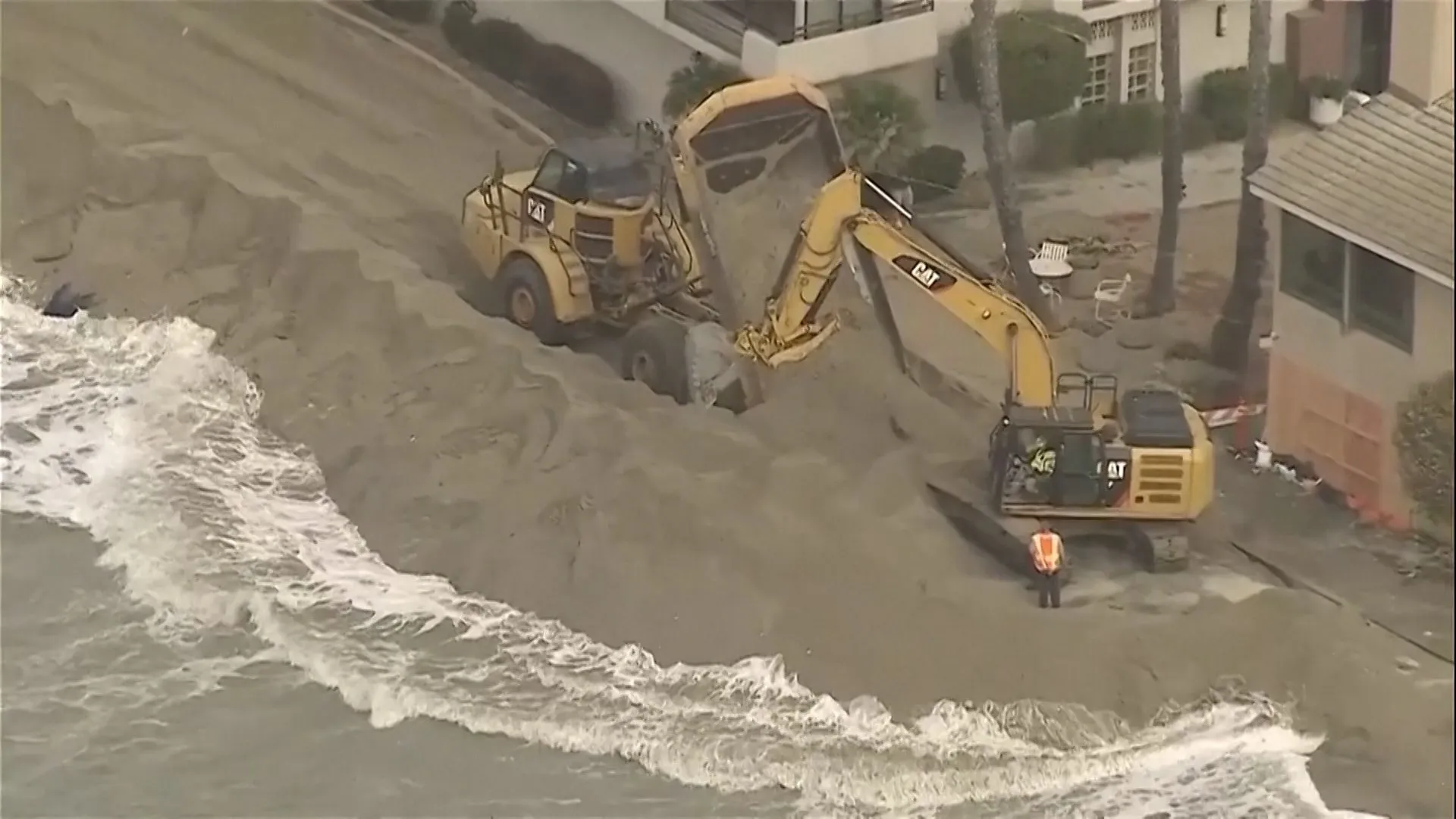
Waves crash into homes as excavators try to protect California properties
Construction crews were seen trying to block waves entering homes along California’s coast, after Tropical Storm Rachel brought flooding and power outages to the region.