TOP NEWS

From breaking news to significant developments in politics, business, technology, entertainment, and more, we deliver the stories that shape our global landscape.

DeepMind chief reunites with baduk champion 10 yrs after historic match

Demis Hassabis, the co-founder and chief executive officer of Google DeepMind (L), shakes hands with South Korea’s legendary Go player Lee Sedol at an event held in Seoul on Wednesday. Photo by Yonhap

Demis Hassabis, the co-founder of Google DeepMind, reunited Wednesday with South Korea’s legendary baduk player Lee Sedol, who went up against the company’s AlphaGo AI in a legendary human-versus-machine match 10 years ago.

“It’s great to be back here kind of the center of where it all started” Hassabis said at the event held by Google in central Seoul, saying that the historic five-game match “signaled the beginning of these incredible advances that happened in the last decade.”

When asked about the Lee-AlphaGo match in 2016, the Google executive pointed to the AI’s move 37 as the “most incredible moment” that demonstrated that AI can show creativity.

During game two of the 2016 match, AlphaGo made an unconventional shoulder hit on the fifth line for its 37th move, widely considered a pivotal move that secured its victory against Lee.

Such AI creativity can usher in a new “renaissance” of humans flourishing in science, he said, as it did in helping him solve the 50-year-old “protein folding problem,” which led to a Nobel prize in 2024.

“I think we could maybe even like solve all diseases in the next 10 to 20 years. We can use these technologies to help the environment and new energy sources,” he said.

The father of AlphaGo also mentioned South Korea’s potential to become one of the leaders in the AI sector.

“It’s amazing at manufacturing from chips to robotics, incredible strength in industry, fantastic universities and research institutes,” he said. “So I think it has all of the ingredients to be one of the world leaders in this technology.”

Hassabis, who has been in Seoul since Monday, has met with President Lee Jae Myung and signed a memorandum of understanding with the science ministry technology partnerships program.

The executive is also said to have held separate meetings with chiefs of local conglomerates, including LG Group and Hyundai Motor Group.

Copyright (c) Yonhap News Agency prohibits its content from being redistributed or reprinted without consent, and forbids the content from being learned and used by artificial intelligence systems.

Source link

Germany arrests Kazakhstan citizen accused of spying for Russia | Russia-Ukraine war News

Prosecutors say the man, identified only as ‘Sergej K’, has been in ‘continuous contact’ with Russian intelligence.

German authorities have arrested a Kazakh man in Berlin on suspicion of spying for Russia, according to the German Federal Prosecutor’s Office.

Identified only as Sergej K, the man had been “in continuous contact from Germany with a Russian intelligence service” since at least May last year, the office said in a statement on Wednesday, a day after the arrest.

Recommended Stories

list of 4 itemsend of list

Prosecutors said Sergej K provided his Russian handler with details about German military aid for Ukraine, including companies involved in developing drones and robotic systems. He also allegedly sent photos of NATO military convoys and public buildings in Berlin.

Other activities included offering to find other espionage agents in Germany, prosecutors added, but they did not make clear whether he had done so.

There was no immediate reaction from Kazakhstan or Russia.

Previous cases

The case is the latest in a string of Moscow-linked espionage and disinformation plots German authorities claim to have discovered since Russia’s full-scale invasion of Ukraine in 2022.

Two German-Russian dual nationals were arrested in 2024 on suspicion of plotting sabotage attacks on United States military sites in Germany to undermine Western military support for Ukraine.

German police have also arrested various alleged “disposable” agents, known to carry out sabotage and espionage without any formal training for Russia in exchange for small payments.

Earlier this month, Berlin summoned the Russian ambassador to condemn what it called “direct threats” against “targets in Germany”.

Berlin’s Federal Foreign Office said at the time that the threats were intended to undermine Germany’s support for Ukraine. “Our response is clear: we will not be intimidated. Such threats and all forms of espionage in Germany are completely unacceptable,” the Foreign Office said.

Germany has also accused “state-sponsored” Russian hackers of carrying out an “intolerable” 2023 cyberattack on members of the Social Democratic Party, a charge that Russia’s embassy in Germany “categorically rejected”.

Meanwhile, Russia has essentially banned Germany’s international broadcaster Deutsche Welle on the grounds that it produces “hostile anti-Russian propaganda”.

Moscow has repeatedly denied any involvement in Germany-based espionage schemes.

Source link

U.S. sanctions Iran shadow banking network as peace talks stall

April 29 (UPI) — The United States has sanctioned 35 entities and individuals accused of overseeing a shadow-banking network that moved tens of billions of dollars for Iran, as the Trump administration flexes Washington’s financial might amid a stalemate in peace negotiations with Tehran.

The sanctions announced Tuesday come as U.S.-Iran peace negotiations came to a halt last week after Tehran said it would not participate in talks until the United States lifted its blockade of sea-based trade to the Middle Eastern nation.

Those blacklisted by the Treasury include several private companies known as rahbars, which manage thousands of overseas companies used by Iranian banks cut off from the international financial system to execute payments for Iranian trade.

According to the Treasury, these rahbar companies coordinate with Iranian exchange houses and front companies to conduct international trade on behalf of the Islamic Revolutionary Guard Corps, Iran’s Armed Forces General Staff, the National Iranian Oil Company and other sanctioned entities.

“By dismantling these financial channels, we advance the administration’s policy in the conflict with Iran and underscore our commitment to imposing maximum pressure on Iran,” State Department spokesman Thomas Pigott said in a statement.

The punitive action was part of what the Treasury calls Operation Economic Fury, a branded escalation of President Donald Trump‘s broader maximum-pressure campaign against Iran.

Coinciding with the sanctions on Tuesday, the Treasury’s Office of Foreign Assets Control issued an alert to financial institutions over the risks they face for doing business with so-called teapot oil refineries in China, primarily in Shandong Province, that import and refine Iranian crude oil.

According to the alert, China is the largest purchaser of Iranian oil, and the Treasury has designated multiple small China-based refineries since March of last year.

“The United States will further disrupt illicit funding streams that finance Iran’s malign activities,” Pigott said.

“We will not relent in our efforts to deny Iran and its proxies the resources they use to threaten U.S. interests and regional stability.”

Trump first employed the maximum-pressure campaign strategy to coerce Iran into negotiations over its nuclear program in 2018 after unilaterally withdrawing the United States from a landmark multinational accord that sought to prevent Tehran from obtaining a nuclear weapon.

Iran then breached its commitments under the deal, enriching uranium up to 60%, far exceeding the accord’s 3.67% but below weapons-grade levels.

Trump restored the maximum-pressure campaign after returning to office in 2025, and the United States bombed three major Iranian nuclear facilities that June.

The United States and Israel have since escalated their pressure campaign, attacking Iran in strikes that triggered a war now halted by a fragile cease-fire to permit peace talks.

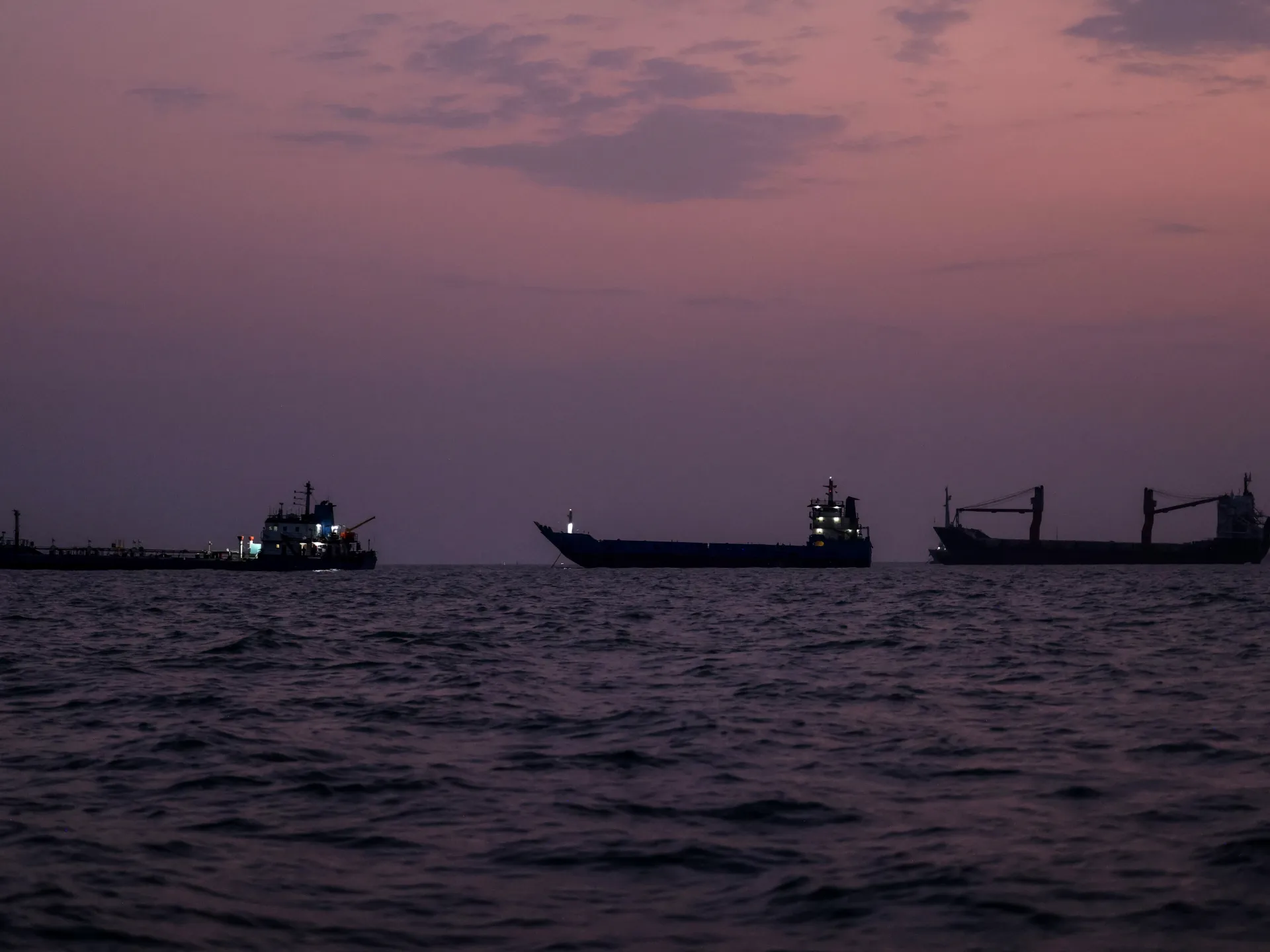
Iran has imposed restrictions on energy trade through the Strait of Hormuz, prompting the United States to impose a blockade of Iran’s ports in response to what it describes as Tehran holding a major share of the world’s energy supplies hostage.

Source link

Trump, King Charles praise U.S.-British alliance at state dinner

April 29 (UPI) — U.S. President Donald Trump and first lady Melania Trump hosted King Charles III and Queen Camilla at a state dinner at the White House on Tuesday, where both leaders praised the U.S.-British relationship and pledged to strengthen the alliance.

In the East Room of the White House, Trump described the king’s state visit to the White House as “historic,” occurring as they prepare to celebrate the United States’ 250th year of independence.

“It is only natural that Americans begin this by paying tribute to the transcendent bond we share with the nation that Thomas Jefferson himself called our mother country,” Trump said.

“Tonight, on the eve of our 250th year of cherished independence, we turn to the sovereign embodiment of our British heritage and say, sincerely, thank you to our friends, the United Kingdom, for the richest inheritance that any nation has ever given to another.”

He complimented the “fantastic speech” Charles had given only a few hours earlier before a joint meeting of Congress, joking that the king was able to garner a standing ovation from the Democrats.

“I’ve never been able to do that,” Trump said. “They like him more than they’ve ever liked any Republican or Democrat, actually.”

Charles echoed Trump in his own speech that followed, stating that he was glad for the opportunity to renew the “bonds of history and friendship” between their two nations and people.

“Ours is an unbreakable bond of history and heritage, culture and commerce, industry and invention, and we are determined to face the future together,” Charles said.

“Tonight, we are here to renew an indispensable alliance, which has long been a cornerstone of prosperity and security for both British and American citizens.”

Referring to the demolished East Wing where construction is underway on Trump’s $400 million ballroom, Charles joked that he couldn’t help but notice the “readjustments” to the White House followed the president’s visit to Windsor Castle in September.

In the same vein, he jokingly apologized for the British “attempt at real estate redevelopment of the White House in 1814,” when British forces set fire to the building during the War of 1812.

At the end of his speech, Charles presented Trump with the bell from the HMS Trump, a British submarine that the king said played a “critical role” during the Pacific War.

“May it stand as a testimony to our nation’s shared history and shining future,” he said. “And should you ever need to get a hold of us — well, just give us a ring.”

The pair spoke for about 25 minutes before more than 125 attendees, according to the guest list. They included six conservative U.S. Supreme Court justices, several members of Trump’s Cabinet and business leaders Jeff Bezos of Amazon, Tim Cook of Apple and Robert Kraft of the Kraft Group.

A statement from the first lady said the decor of the dinner was intended to reflect “a shared appreciation for gardens,” with guests greeted by cherry blossoms as they entered the Grand Foyer, towering trees and blooming garden boxes.

Tables were clothed in green pleated linens and set with more than 250 pieces of vermeil from the White House collection, the Office of the First Lady said.

The three-course meal included garden vegetable veloute, handcrafted spring herbed ravioli with ricotta cheese and morels, a Dover sole meuniere, potato pave, spring ramps, snow peas and parsley oil.

For dessert, the attendees were served a beehive-shaped chocolate gateau with a vanilla bean cremeux custard inside an almond joconde, all with a creme fraiche ice cream.

Source link

Can Russia serve as an economic lifeline for Iran amid the Hormuz blockade? | US-Israel war on Iran News

As Iran stares down the economic consequences of a prolonged blockade of the Strait of Hormuz, attention is shifting north.

With Gulf shipping lanes disrupted and oil exports constrained, Tehran may seek to depend less on the Gulf and more on a patchwork of railways, Caspian ports and sanctions-era trade networks linking it to Russia.

Recommended Stories

list of 4 itemsend of list

The importance of that relationship was underscored this week when Iranian Foreign Minister Abbas Araghchi travelled to St Petersburg for talks with Russia’s President Vladimir Putin, praising Moscow’s “firm and unshaken” support as the two sides discussed the war, sanctions and the future of the Strait of Hormuz.

But could Moscow really offer a lifeline for Iran’s beleaguered, war-torn economy, and would it even want to? We spoke to experts to find out.

Increasing but modest bilateral trade

Economic relations between Iran and Russia deepened after the US withdrew from a 2015 nuclear deal with Iran and other nations in 2018 and reimposed sweeping sanctions on Tehran.

Russia’s full-scale invasion of Ukraine in 2022 served to accelerate that trend as both countries found themselves increasingly cut off from the Western financial system. They turned to sanctions-evasion networks, alternative payment systems and non-Western trade corridors to keep goods, energy and money flowing.

Current trade is dominated by agricultural products – especially wheat, barley and corn – alongside machinery, metals, timber, fertilisers and industrial inputs. Tehran has also supplied Russia with low-cost Shahed drones, which Russia updated and has been using in its war on Ukraine.

“Trade turnover reached $4.8bn last year [2024], but we believe that the potential for our mutual trade is much greater,” Russian Energy Minister Sergey Tsivilyov told an intergovernmental commission on trade and economic cooperation between Moscow and Tehran in 2025.

Bilateral trade is reported to have increased by 16 percent during that period, driven largely by Russian exports of grain, metals, machinery and industrial goods.

But experts say that despite this increase, the overall trade relationship remains relatively modest compared with Iran’s trade with China or the Gulf countries.

Trade between the two is “not substantial, because both countries are producing almost similar products and the industries are similar”, Mahdi Ghodsi, an economist at the Vienna Institute for International Economic Studies, told Al Jazeera.

Russian President Vladimir Putin shakes hands with Iranian Foreign Minister Abbas Araqchi during a meeting at the Boris Yeltsin Presidential Library in Saint Petersburg, Russia April 27, 2026. Dmitri Lovetsky/Pool via REUTERS
Russian President Vladimir Putin shakes hands with Iranian Foreign Minister Abbas Araghchi during a meeting at the Boris Yeltsin Presidential Library in Saint Petersburg, Russia, April 27, 2026 [Dmitri Lovetsky/Pool via Reuters]

Alternatives to Hormuz

The backbone of Russia-Iran trade is the International North-South Transport Corridor (INSTC), a network of shipping lanes, railways, and roads linking Russia to Iran and onward to Asia, bypassing Western-controlled maritime routes.

Goods move from southern Russian ports, across the Caspian Sea to northern Iranian ports, including Bandar Anzali, before continuing by rail or truck.

The route has become increasingly important for Russian grain, machinery and industrial exports to Iran.

This route can serve as a “viable but partial lifeline”, Naeem Aslam, chief market analyst at London-based Think Markets, told Al Jazeera, adding that Russian ports in Astrakhan, on the Volga River delta near the Caspian Sea, and Makhachkala, on the Caspian Sea, are already “primed for a surge in grain, metals, timber and refined products”.

A western branch also runs through Azerbaijan, though a key missing rail link between Rasht and Astara in northern Iran remains unfinished.

In 2023, Moscow agreed to help finance the line, with Russia’s president calling the agreement a “great event” that “will help to significantly diversify global traffic flows”.

Easier in theory than in practice

Analysts say that, although these routes may provide a temporary solution, the Strait of Hormuz offers a scale and efficiency that rail and land corridors cannot easily replicate.

Although maritime trade has been highly volatile in recent weeks, “from a historical perspective it is simply the quickest and the most cost-effective way of transporting anything”, Adam Grimshaw, an economic historian at the University of Helsinki, told Al Jazeera.

“Roughly 90 percent of Iran’s international trade is maritime trade that goes through the Gulf, which can’t be quickly or immediately replaced through land access to Iran or through air transport to circumvent the American blockade”, Nader Hashemi, an associate professor at Georgetown University, told Al Jazeera.

Ghodsi said Russia might be able to offer a “lifeline” in the short term, as it did when it exported grain during Iran’s droughts, but in the long run, it simply “cannot substitute” the vast amounts of maritime trade.

Re-routing trade routes via land “takes time”, pushing up prices for consumers and creating more food waste as perishables rot en route.

Does Moscow want to help Iran?

Most analysts say throwing an economic lifeline to Iran is not in Russia’s interests.

“They’ve got their own economic problems,” John Lough, head of foreign policy at the New Eurasian Strategies Centre, told Al Jazeera, pointing to signs of stagnation inside Russia, pressure on reserves and growing frustration over the prolonged war in Ukraine.

While Moscow could offer symbolic support or limited humanitarian assistance, “now is not a good time” to invest in Iran, he said, referring to the US-Israel war on the country.

Replacing maritime trade with overland routes would be extremely difficult, despite years of discussion about alternative corridors linking the two nations, he said.

It also won’t necessarily help Iran’s economy, which needs all the export revenue it can get, experts say.

“Much of Iran’s economy revolves around the sale of oil, and with that blocked or prevented by the American blockade, Russia really can’t help in that regard”, Hashemi said.

Others are more optimistic, however.

“Propping [up] Iran locks in higher global oil prices that buoy Russia’s war economy, cements INSTC dominance for Asian trade, and keeps a key anti-Western ally alive – no downside for Moscow in a fragmented Gulf,” Aslaam said.

Source link

Court sentences Purdue Pharma to pay $5.5B, clearing settlement path

A federal court on Tuesday sentenced Purdue Pharma to pay more than $5.5 billion in criminal penalties. File Photo by Justin Lane/EPA-EFE

April 28 (UPI) — A federal judge on Tuesday sentenced Purdue Pharma to pay more than $5 billion in criminal penalties, clearing the way for the OxyContin maker to complete its bankruptcy settlement agreement and resolve thousands of opioid-related lawsuits filed against it by states, local governments, tribes and other plaintiffs.

The sentence, handed down by a federal court in Newark, N.J., comes after Purdue pleaded guilty in October 2020 to charges over its role in the opioid crisis.

Prosecutors said the Sackler family-owned company worsened the crisis that has killed hundreds of thousands across the United States by aggressively marketing its addictive drugs while downplaying the risks of overdose and addiction.

Thousands of lawsuits have been filed against the company over its role in the crisis, and Purdue filed for Chapter 11 bankruptcy in 2019 as part of an agreement to resolve them.

With Tuesday’s sentence, Purdue can be dissolved and replaced by the public benefit company Knoa Pharma, which will receive the assets and expertise of the old company to produce addiction treatments and overdose-reversal medications.

“Purdue Pharma put profits over patient health and safety,” Acting Attorney General Todd Blanche said in a statement announcing the sentence handed down by a federal court in Newark, N.J.

“The company willfully rejected the law and ignored the diversion of their highly addictive prescription drugs.”

About 806,000 people died from an opioid overdose from 1999 to 2023, according to the U.S. Centers for Disease Control and Prevention.

Court documents accused Purdue of illegally marketing its opioids from 2007 to 2017, generating billions in profit.

The penalties announced Tuesday include a $3.544 billion criminal fine and an additional $2 billion in criminal forfeiture, though the Justice Department said it will credit up to $1.775 billion against the forfeiture amount based on the value conferred to state, local and tribal governments through its bankruptcy.

“No penalty can undo the widespread devastation Purdue has inflicted, but today’s sentence serves long-overdue accountability for its reckless and unlawful conduct,” Inspector General T. March Bell of the U.S. Department of Health and Human Services said in a statement.

Source link

US, Latin America countries criticise China’s retaliation over Panama Canal | Shipping News

China has detained nearly 70 Panamanian-flagged ships after a Supreme Court ruling on the Panama Canal, US officials say.

Bolivia, Costa Rica, Guyana, Paraguay, Trinidad and Tobago, and the United States have released a joint statement in support of Panama, while criticising Chinese economic retaliation, after a Hong Kong-based conglomerate lost a legal dispute over the management of ports on the Panama Canal.

Panama’s Supreme Court in late January annulled contracts that had allowed a subsidiary of Hong Kong’s CK Hutchison to administer the Balboa and Cristobal port terminals on the Panama Canal after deeming the decades-old agreements unconstitutional.

Recommended Stories

list of 4 itemsend of list

In their joint statement on Tuesday, the six countries claimed that following the court ruling, China has retaliated against Panama with “targeted economic pressure” on Panamanian-flagged ships.

China detained nearly 70 Panamanian-flagged ships in March, according to the US Federal Maritime Commission, a number “far exceeding historical norms”.

“These actions – following the decision of Panama’s independent Supreme Court regarding the Balboa and Cristobal terminals – are a blatant attempt to politicise maritime trade and infringe on the sovereignty of the nations of our hemisphere,” the signatories said.

US Secretary of State Marco Rubio said separately on X that Washington was “deeply concerned” by China’s economic pressure on Panama.

“We stand in solidarity with Panama. Any attempts to undermine Panama’s sovereignty are a threat to us all,” he said.

China has previously accused the US of “bullying” and trying to smear its reputation in Latin America, while it described the Panamanian Supreme Court ruling as “absurd” and “shameful”.


US Federal Maritime Commission head Laura DiBella said last month that Beijing’s detention of Panamanian ships had repercussions for both Panama and the US.

“These intensified inspections were carried out under informal directives and appear intended to punish Panama after the transfer of Hutchison’s port assets,” DiBella said.

“Given that Panama‑flagged ships carry a meaningful share of US containerised trade, these actions could result in significant commercial and strategic consequences to US shipping,” she said.

‘States know how vulnerable shipping is’

Panama’s decision to invalidate the contracts held by CK Hutchison’s subsidiary Panama Ports Company was made at a time of heightened media attention around the Panama Canal amid threats by US President Donald Trump to seize the strategic waterway.

Trump had made the approximately 80km (49-mile) waterway a focus of his second administration, alleging in his inaugural address in January 2025 that China was “operating” the canal and pledging that the US would “take back” control.

US officials allege that, in addition to targeting Panama and its interests, China has also retaliated against shipping giants Maersk and the Mediterranean Shipping Company (MSC), whose subsidiaries were granted 18-month contracts to administer the Balboa and Cristobal terminals after CK Hutchison was removed.

Representatives of Maersk and MSC were both summoned by China’s Ministry of Transport for “high-level discussions”, the Federal Maritime Commission said in March, while Chinese shipping giant COSCO has suspended operations at the Balboa terminal.

CK Hutchison, through its Panama Ports Company subsidiary, is separately pursuing international arbitration against the government of Panama and seeking more than $2bn in damages.

David Smith, an associate professor at the University of Sydney’s US Studies Centre, said that the Panama Canal dispute and China’s retaliation were the latest example of how shipping has become a political target, from Latin America to the Strait of Hormuz and the Red Sea in the Middle East.

“We have taken for granted that the world runs on container ships just freely sailing around the world,” he told Al Jazeera.

“What we’re seeing now is that states know how vulnerable shipping is. They know they can cut shipping lanes off if necessary. It should not surprise us from now on if ships and shipping in general become pawns in international politics.”

Source link

UAE quits OPEC as oil cartel takes blow during war on Iran | Oil and Gas

NewsFeed

The UAE’s decision to quit OPEC to prioritise its ‘national interests’ deals a blow to the oil group already grappling with the challenge of shipping Gulf exports through the Strait of Hormuz. Here’s what we know about why it’s withdrawing and the impact it might have.

Source link

US appeals court rejects Trump’s immigration detention policy | Donald Trump News

In a 3-0 ruling, court says Trump administration misread a decades-old immigration law to justify mandatory detention.

A United States federal appeals court has rejected the Trump administration’s practice of subjecting most people arrested in its immigration crackdown to mandatory detention without the opportunity to seek release on bond.

In a 3-0 ruling on Tuesday, a panel of the New York-based US Court of Appeals for the Second Circuit said the administration relied on a novel but incorrect interpretation of a decades-old immigration law to justify the policy.

Recommended Stories

list of 4 itemsend of list

Writing for the panel, US Circuit Judge Joseph F Bianco, a Trump appointee, warned that the government’s reading “would send a seismic shock through our immigration detention system and society”, straining already overcrowded facilities, separating families and disrupting communities.

Lawyers for the Trump administration say the mandatory detention policy is legal under the Illegal Immigration Reform and Immigrant Responsibility Act, passed in 1996.

But Bianco said the government had made “an attempt to muddy” the law’s “textually clear waters”, arguing that the administration’s interpretation “defies the statute’s context, structure, history, and purpose” and contradicts “longstanding executive branch practice”.

Under the Trump administration policy, the Department of Homeland Security last year took the position that non-citizens already living in the US, not just those arriving at the border, qualify as “applicants for admission” and are subject to mandatory detention.

Under federal immigration law, “applicants for admission” to the US are detained while their cases proceed in immigration courts and are ineligible for bond hearings.

The Department of Homeland Security has been denying bond hearings to immigrants arrested across the country, including those who have been living in the US for years without any criminal history, the Associated Press (AP) news agency reports.

That is a departure from the practice under previous US administrations, when most non-citizens with no criminal record who were arrested away from the border were given the opportunity to request a bond while their cases moved through immigration court, according to AP.

In such cases, bonds were often granted to people who were deemed not to be flight risks, and mandatory detention was limited to those who had just entered the country.

Amy Belsher, director of immigrants rights’ litigation at the New York Civil Liberties Union, said the appeals court ruling affirmed “that the Trump administration’s policy of detaining immigrants without any process is unlawful and cannot stand”.

“The government cannot mandatorily detain millions of noncitizens, many of whom have lived here for decades, without an opportunity to seek release. It defies the Constitution, the Immigration and Nationality Act, and basic human decency,” Belsher said in a statement.

Conflicting rulings set stage for Supreme Court review

The New York court’s decision comes after two other appeals courts ruled in favour of the Trump administration’s policy.

Acknowledging the opposing rulings, Judge Bianco said the panel was parting ways with them and instead aligning with more than 370 lower-court judges nationwide who have rejected the administration’s position as a misreading of the law.

The split among the courts increases the likelihood that the US Supreme Court will weigh in.

The latest ruling also upheld an order by a New York judge that led to the release of Brazilian national Ricardo Aparecido Barbosa da Cunha, who was arrested by immigration officials last year while driving to work after living in the US for more than 20 years.

“The court was right to conclude the Trump administration can’t just ⁠reinterpret the law at its own whim,” Michael Tan, a lawyer for Barbosa at the American Civil Liberties Union, said in a statement.

The Department of Justice, which is defending the mandatory detention policy in court, did not respond to a request for comment.

Source link

Former Fauci aide charged with concealing pandemic emails

Dr. Anthony Fauci, then-director of the National Institute of Allergy and Infectious Diseases, testifies before a Senate committee hearing in 2022 in Washington, D.C. One of Fauci’s former aides has been charged with concealing emails, the Justice Department said Tuesday. Fauci is not implicated in the case. File Photo by Greg Nash/UPI | License Photo

April 28 (UPI) — A former aide to Anthony Fauci faces charges for allegedly concealing emails that involve the origins of the coronavirus pandemic, the U.S. Justice Department said Tuesday.

David M. Morens, 78, worked with Fauci from 2006 to 2022. Fauci, former director of the National Institute of Allergy and Infectious Diseases and chief medical adviser to the president from 2021 to 2022, is not accused of any wrongdoing in the case. Congressional Republicans have been investigating the U.S. coronavirus response, which started during President Donald Trump‘s first administration.

The indictment charges Morens with conspiracy against the United States and destruction and concealment of records in a federal investigation. Prosecutors say that he purposefully concealed emails he’d exchanged with the president of a nonprofit group. This group had worked with a Chinese lab that’s faced scrutiny over a perceived connection to the coronavirus, the Washington Post reported.

The indictment does not name the president or the group, but previous records have shown the former to be Peter Daszak, former president of EcoHealth Alliance, the Post reported. The group received a grant in 2014 to study bat coronaviruses.

Morens was released on his own recognizance after appearing Monday in federal court in Maryland. He has said he tried to keep some records off his government email in part to keep coronavirus misinformation from spreading and to discourage conspiracy theories.

Controversy over the origins of the virus has existed for as long as it’s been known. While many scientists say it jumped naturally from bats to humans through another animal, Trump and his administration have promoted other theories, including that the virus came from a Chinese lab.

Some Republicans hailed the charges against Morens as validation, including Rep. James Comer, R-Kentucky, chairman of the House Oversight Committee.

“I applaud the Trump Justice Department for taking action to hold his public official accountable for hiding information from the American people,” Comer said Tuesday.

Under Trump’s second administration, the White House’s covid.gov website has been changed to a site that promotes the “lab leak” theory, replacing information about vaccines, testing and health issues related to the virus.

Source link

Supreme Court mulls liability of tech firms in overseas rights abuses

A member of the Bulgarian Falun Dafa association attends a protest in front of the Chinese embassy in Sofia, Bulgaria, in July 2023. The protest marked the 24th anniversary of the start of a massive campaign against Falun Dafa in July 1999, when the Chinese Communist regime began the repression and persecution of Falun Gong and its followers in China. File Photo by Vassil Donev/EPA

WASHINGTON, April 28 (UPI) — Supreme Court justices appeared divided Tuesday morning about whether a U.S. tech company can be held liable for aiding the Chinese government’s alleged torture of a spiritual minority.

The case is centers on whether practitioners in China of the Falun Gong religion — also called Falun Dafa — can sue California-based tech company Cisco Systems for aiding and abetting violations of the 18th-century Alien Tort Statute and the Torture Victim Protection Act, which was enacted in 1992.

Cisco attorney Kannon Shanmugam called for barring aiding and abetting liability. He argued that allowing liability to be implied would harm the government’s separation of power.

Much of Tuesday’s debate hinged on whether the statute’s 200-year-old “law of nations” wording was applicable to the relatively more modern concept of human rights abuses, as well as whether the first Congress meant for the victim protection act to include second liability for aiding and abetting torture.

The case marks the latest attempt to define the scope of the statue, which for over two centuries has allowed foreigners to bring lawsuits in U.S. courts for serious violations of international law.

More than 20 years ago, Cisco developed and sold to the Chinese government a surveillance system, which the government used to find, interrogate and allegedly torture Falun Gong practitioners.

During arguments for Cisco Systems Inc. vs. Doe I, some justices emphasized Cisco’s awareness of their technology’s role in persecution, while others said that including liability for aiding torture in the alien tort statue contradicted with historical precedent and had foreign policy risks.

But no clear majority converged around either position in the conservative majority court.

“We’ve maybe misled Congress into thinking, ‘Oh, we don’t need to do anything about these human rights things, the courts are taking care of it,'” Justice Brett Kavanaugh said.

“I’m concerned at a separation of powers level that we’re not really allowing suits to go forward, but Congress thinks we are because of a lack of clarity in our case law.”

Justices Ketanji Brown Jackson and Sotomayor appeared more supportive of those who brought forward the original lawsuit — several Chinese nationals and one U.S. citizen.

Addressing the wording of the Torture Victim Protection Act, Sotomayor told Shanmugam: “I’m not sure how you get to your position that ‘subjects to’ can’t mean aiding and abetting because command liability doesn’t necessarily require subjecting someone to the torture.”

“It makes someone who’s in a command position who knows of the torture and permits it to happen … aiding and abetting. We’ve defined aiding and abetting as an active step in permitting and encouraging the substantive act.”

The Alien Tort Statute grants federal district courts original jurisdiction over any civil action in which an alien sues for a tort “committed in violation of the law of nations or of a treaty of the United States.”

“What’s the point of previous [Supreme Court] decisions that determined U.S. corporations could be defendants?” said Sophia Cope, senior staff attorney at Electronic Frontier Foundation, who helped write an amicus brief in support of the Falun Gong members.

“Excluding second liability from the ATS would be a huge loophole for companies to sell services which are used for human rights violations.”

By rejecting judicially created aiding and abetting liability, the court would close the last major loophole that the plaintiffs’ lawyers have “exploited” to keep cases with such claims under the ATS and TVPA alive, said Cory Andrews, vice-president of litigation at the Washington Legal Foundation. The foundation submitted a brief in support of Cisco in February.

“It would reaffirm that the ATS is a narrow 1789 statute, not a modern vehicle for global human-rights enforcement,” Andrews said.

The case had its origins 15 years ago. In 2011, the plaintiffs — 13 Chinese nationals and one U.S. citizen — filed the original suit in the District Court for the Northern District of California, claiming they were targeted using Cisco’s technology and then detained and tortured.

The district court dismissed the claims, but it was brought to the Supreme Court after a panel of federal judges on the U.S. Court of Appeals for the Ninth Circuit agreed in 2023 that the plaintiffs had met a legal threshold to continue with the lawsuit.

A decision is expected by the end of June.

Source link

U.S. gas prices hit new high as U.S.-Iran diplomatic deadlock continues

Gasoline prices per gallon are displayed at a BP service station on Sunday in Washington, D.C. Average gas prices throughout the United States hit a new high Tuesday, AAA numbers said. Photo by Pat Benic/UPI | License Photo

April 28 (UPI) — Average gas prices in the United States hit $4.18 on Tuesday, their highest level since the Iran conflict started, as peace talks between the country and Iran stalled again over proposals on reopening the Strait of Hormuz.

The price jump of 1.6% over Monday’s price was the highest increase in more than a month, The New York Times reported. AAA numbers show that the average price for a gallon of regular gas marks an increase from $4.11 on Monday and $3.98 a month ago.

The price is the highest since April 2022, soon after the Russia-Ukraine conflict started, and about a 40% increase for drivers since the Iran conflict began. Diesel prices are at $5.46, up about 45% in that time.

Meanwhile, officials from the United States and Iran appear at an impasse over reopening the strait and an Iranian proposal to postpone discussion of that country’s nuclear program, something that President Donald Trump has said he will not agree to, USA Today reported. The conflict, as of midday Tuesday, is in a ceasefire, but both countries continue to limit shipping in the region and face off over the Strait of Hormuz.

Trump on Tuesday posted on Truth Social in an apparent response to German Chancellor Friedrich Merz’s comments Monday criticizing the conflict. Merz said in comments to students that he hopes the conflict ends soon and that United States is being “humiliated” by Iranian leaders, USA Today reported.

“He doesn’t know what he’s talking about!” Trump wrote. “If Iran had a Nuclear Weapon, the whole World would be held hostage. I am doing something with Iran, right now, that other Nations, or Presidents, should have done long ago.”

A missile identified as “Khorramshahr-4” was on display during a public rally in Tehran’s Enghelab Square on April 21, 2026. Photo by Behnam Tofighi/UPI | License Photo

Source link

South Korea deploys 5 spy satellites, advances ‘kill chain’

April 28 (Asia Today) — South Korea has completed deployment of a five-satellite reconnaissance system designed to strengthen its preemptive strike capabilities against North Korea, marking a major milestone in its defense space program.

The project, known as the “425 program,” gives Seoul an independent ability to monitor North Korea with high-resolution imagery at roughly two-hour intervals, officials said.

The system combines one electro-optical and infrared satellite with four synthetic aperture radar satellites, allowing surveillance regardless of weather or time of day. Military officials say the network can track mobile missile launchers and other high-value targets, enhancing the country’s “kill chain” capability – a core element of its three-axis defense system.

The satellites were launched between late 2023 and late 2025, with the final unit successfully placed into orbit in November. U.S. space company SpaceX supported the launches, providing real-time global broadcasts that demonstrated the reliability of South Korea’s space assets.

The deployment marks a shift away from reliance on U.S. intelligence toward what officials describe as “independent surveillance,” enabling South Korea to observe targets at times of its choosing.

Despite the progress, military officials and analysts warn of a critical challenge: delays in real-time intelligence sharing with the United States.

Sources said that during the satellite deployment process, some U.S. intelligence inputs were delayed or limited, raising concerns about coordination between South Korea’s independent assets and allied systems.

The issue has implications for the effectiveness of the kill chain, which relies on rapid detection, identification and strike decisions within a narrow time window.

To address coordination gaps, U.S. Forces Korea has established a new unit known as J10, or Integrated Strategy Division, to support nuclear-conventional integration between the allies.

The unit is intended to act as a control hub linking U.S. nuclear deterrence capabilities with South Korea’s precision strike assets, enabling real-time operational coordination under the bilateral Nuclear Consultative Group framework.

Defense experts say the effort reflects growing complexity in integrating allied systems, particularly as both sides seek to align security protocols and data standards.

“The challenge is not just hardware, but digital synchronization,” one analyst said. “If delays persist, the kill chain could miss its critical response window.”

Another limitation is the system’s revisit rate. With North Korea believed to be able to prepare missile launches within 30 to 40 minutes, a two-hour surveillance cycle leaves potential gaps.

To address this, South Korea is accelerating plans to deploy constellations of small satellites in low Earth orbit, aiming to reduce revisit times to under 30 minutes.

Officials also emphasized the need for artificial intelligence-based analysis platforms capable of processing large volumes of satellite data in seconds to detect early warning signs.

Experts say the long-term success of the program will depend on software capabilities as much as hardware.

“When South Korea can produce intelligence as quickly and accurately as its allies, real-time data sharing will naturally deepen,” a defense expert said.

— Reported by Asia Today; translated by UPI

© Asia Today. Unauthorized reproduction or redistribution prohibited.

Original Korean report: https://www.asiatoday.co.kr/kn/view.php?key=20260428010008986

Source link

Trump approval dips to record low amid Iran war, inflation woes: Poll | Donald Trump News

Only 22 percent of US voters back the president’s performance on the cost of living, Reuters/Ipsos survey suggests.

United States President Donald Trump’s approval rating has dropped to its lowest point since he returned to the White House, sinking to 34 percent amid economic uncertainty and the US-Israel war on Iran, a Reuters/Ipsos poll suggests.

The poll, released on Tuesday, also showed that only 22 percent of respondents back Trump’s performance on the cost of living. Affordability has been a top issue for US voters.

Recommended Stories

list of 3 itemsend of list

The Iran war, which saw Tehran block most shipping through the Strait of Hormuz, has sent energy prices soaring across the world and fuelled inflation in the US.

The Reuters poll was conducted April 24-27, and it surveyed 1,014 US adults.

It comes months before the midterm elections in November when Trump’s Republican Party will have to contend with the US president’s abysmal job approval ratings as it tries to retain control of the Senate and House of Representatives.

Trump continues to enjoy near-unanimous support from Republicans in Congress despite growing criticism of the war on Iran by some right-wing commentators and podcasters.

The conflict has also been unpopular with US voters, including a sizeable Republican constituency.

A Marquette Law School survey released last week suggested that only 32 percent of voters approve of Trump’s handling of the war.

The number rose to 65 percent among Republican respondents, but it still showed significant dissent within the party on the issue.

A separate Associated Press-NORC poll last week reported similar findings – Trump’s overall approval rating at 33 percent, support for the war at 32 percent and his handling of the economy at 30 percent.

The US and Iran reached a two-week ceasefire on April 8 that Trump extended indefinitely, but tensions remain high in the region.

Duelling blockades in the Gulf – Iran shutting down the Strait of Hormuz and the US laying a naval siege on Iranian ports – have caused global energy supply issues to persist despite the truce.

In the US, the average price of 1 gallon (3.8 litres) of petrol is currently at $4.17, up from less than $3 before the war.

Still, Trump has suggested that he is comfortable with the status quo, claiming repeatedly that the Iranian economy is crumbling and that time is on his side.

“Iran has just informed us that they are in a ‘State of Collapse,’” the US president wrote in a social media post on Tuesday.

“They want us to ‘Open the Hormuz Strait,’ as soon as possible, as they try to figure out their leadership situation (Which I believe they will be able to do!)”

It’s not clear how or why Iran, which is currently refusing to hold direct negotiations with the US without it lifting the naval blockade, would inform Trump that its own economy is collapsing.

Source link

What are OPEC and OPEC +, and why has the UAE quit? | OPEC News

The Gulf state is the latest to quit the group, which was created to form a united ⁠front on oil pricing.

The United Arab Emirates has announced its withdrawal from OPEC and the wider OPEC+ framework, removing a core pillar of one of the most influential groups in the energy world.

The Gulf country, with a capacity of approximately 4.8 million barrels per day and significant room to increase output, announced on Tuesday that it would quit the organisation to focus on “national interests”.

Recommended Stories

list of 3 itemsend of list

The move comes as the US-Israel war on Iran has sparked ⁠an historic energy shock.

Here’s a look the at the organisation’s history and role in the global economy:

When was OPEC established and why?

The Organization of the Petroleum Exporting Countries (OPEC) is a permanent, intergovernmental organisation based in Vienna, Austria, that has the objective of coordinating and unifying petroleum policies among member states.

It was originally created at the Baghdad Conference in September 1960 by five oil-producing founding states, Iran, Iraq, Kuwait, Saudi Arabia and Venezuela.

At that time, global oil markets were dominated by a group of powerful Western oil companies, known as the “Seven Sisters,” which controlled production and set prices.

The broader aim of the founding countries was to assert sovereignty over their natural resources and secure fair and stable prices for petroleum producers, as well as regular supplies to consuming nations.

OPEC currently has 12 members, including, aside from the UAE: Algeria, Republic of the Congo, Equatorial Guinea, Gabon, Iran, Iraq, Kuwait, Libya, Nigeria, Saudi Arabia, and Venezuela.

According to a statement issued on Tuesday, the UAE’s withdrawal will be effective on May 1, marking the exit of a member that had contributed to the organisation since 1967.

The organisation pursues price stability by setting agreed production quotas for the membership, which together controls about 30 percent of global supply.

Since 2016, OPEC has also cooperated with Russia, Azerbaijan, Kazakhstan, Bahrain, Brunei, Malaysia, Mexico, Oman, South Sudan, and Sudan through its OPEC+ framework, bringing its output to about 41 percent of global supply.

Why did the UAE leave OPEC and OPEC+?

Alongside Saudi Arabia, the UAE is one of the few OPEC members with meaningful spare capacity, which allows the organisation to respond to supply shocks.

However, nations with spare capacity may decide to cash out their reserves rather than use them to adjust the market.

The UAE’s assertive foreign policy approach has progressively isolated it from fellow OPEC members, especially Saudi Arabia, which disagrees with its positions on Yemen and elsewhere.

Abu Dhabi, meanwhile, has been carving out its own sphere of influence across the Middle East and Africa, and has doubled down on relations with the United States and Israel, with which it opened ties in the 2020 Abraham Accords.

It views relations with Israel as a critical lever for regional influence and a unique channel to Washington, especially after coming under attack ⁠during the Iran war.

The UAE is not the first country to leave the organisation. Others to have withdrawn in recent years include Indonesia, Qatar, Ecuador, Angola and Gabon, mainly due to disagreements over output quotas.

Source link

Pentagon chief Hegseth posts Army helicopter ride with Kid Rock

1 of 2 | Kid Rock speaks during a Senate Committee on Commerce, Science, and Transportation subcommittee hearing in the Russell Senate Office Building near the U.S. Capitol in Washington, D.C., on January 28. On Monday, he wrote in a U.S. Army Apache helicopter with Defense Secretary Pete Hegseth. File Photo by Bonnie Cash/UPI | License Photo

April 28 (UPI) — Defense Secretary Pete Hegseth said he shared a ride in a U.S. Army helicopter with Kid Rock weeks after the military came under fire for carrying out an Apache flyby of the musician’s home in Nashville.

Hegseth posted photos of himself and Kid Rock with members of the military on Monday.

“Joined my friend @KidRock — and some of our great @USArmy Apache pilots — for a ride this morning. (More to come on that!)” Hegseth wrote.

“Kid Rock is a patriot and huge supporter of our troops. The War Department is wasting no time celebrating America’s 250th — home of the free because of the brave.”

Sean Parnell, a spokesman for the Pentagon, said Monday’s helicopter ride for Kid Rock was part of the government’s plans to celebrate the country’s 250th birthday, The New York Times reported. CNN reported that Parnell said Kid Rock filmed videos to mark Memorial Day, the 250th birthday and his own Freedom 250 concert tour.

“The visit today provided an opportunity for Kid Rock to thank service members, highlight the professionalism of the men and women supporting the mission, and recognize their continued sacrifice in honor of our nation. The department is grateful for Kid Rock’s long-time support of our troops.”

In late March, the U.S. Army said it was conducting an administrative review after Apache helicopters performed a flyby of Kid Rock’s home. Days later, Hegseth shut down the investigation.

“@USArmy pilots suspension LIFTED,” he wrote in a post on X.

“No punishment. No investigation. Carry on, patriots.”

On March 28, Kid Rock posted two videos showing two Apache helicopters flying by and hovering near his home, which he has dubbed “The Southern White House.” In one of the videos, the musician can be seem saluting one of the helicopters before raising his fist in the air.

The performer has made several appearances in support of President Donald Trump during his second term in office.

Maj. Jonathon Bless, a spokesman for the 101st Airborne Division, said the Army’s probe would verify the helicopters were in compliance with safety and airspace regulations.

“Army aviators must adhere to strict safety standards, professionalism and established flight regulations,” he said.

Britain’s King Charles III and Queen Camilla are greeted by President Donald Trump and first lady Melania Trump as they arrive at the White House on Monday. Photo by Allison Robbert/UPI | License Photo


Source link

How Massie’s Kentucky primary may test Trump’s hold on the Republican Party | US Midterm Elections 2026 News

‘The great puzzle’

While Massie has long dominated elections in Kentucky’s 4th district, polling this year shows a tighter race than expected.

A Quantus Insights survey conducted from April 6 to 7 showed Massie leading Gallrein 46.8 percent to 37.7 percent.

Another survey conducted by Big Data Poll in early April had Massie ahead with 52.4 percent to Gallrein’s 47.6 percent.

The relatively close primary could be a bellwether for Republican voting trends nationwide, according to Stephen Voss, a political science professor at the University of Kentucky.

“Massie is an early opportunity to see what Republican voters will do when their pro-Trump leanings clash with their conservative leanings,” Voss said. “That is the great puzzle of this race.”

This is not the first time Trump has turned against Massie, though. In 2020, another election year, Trump famously petitioned to “throw Massie out of the Republican Party”.

But by 2022, Trump had reversed course, endorsing Massie over a challenger who questioned the congressman’s commitment to the president.

Still, the past year has widened the rift between Trump and Massie, leading the president to make his most aggressive moves yet to unseat the congressman.

The two Republicans clashed on a range of issues in 2025. Massie, for example, opposed the president on his tax and spending measures, fearing increases to the national debt.

That meant voting against Trump’s signature piece of legislation, the One Big Beautiful Bill Act, last July.

The Kentucky Republican also denounced Trump’s campaign of foreign intervention. Last June, NBC News reported that it was after Massie criticised Trump’s strikes on Iran that the president’s allies began laying the groundwork for a primary challenge.

Massie also led the charge to compel the Department of Justice to release all the files related to the investigation into Jeffrey Epstein, the late financier and convicted child sex offender.

Shortly thereafter, Trump gave his stamp of approval to Gallrein, posting on his Truth Social site, “RUN, ED, RUN.”

By that point, Gallrein, a military veteran and fifth-generation farmer, had yet to enter the race. Four days later, on October 21, he launched his bid.

Critics argue Gallrein’s platform does not offer much of a distinction from Massie’s. His campaign website lists his priorities as cutting taxes, reducing government spending, protecting gun rights and opposing abortion — issues Massie also supports.

“I don’t think he’s offering any kind of alternative, except for being the selection of Donald Trump,” Kahne said. “I think that’s it. That’s the only thing he has to offer.”

But Gallrein has drawn heavily from Trump’s endorsement, using it as a badge of loyalty and authenticity.

“You deserve an authentic, true Republican conservative that stands shoulder to shoulder with our president and the Republican Party,” Gallrein declared at the Trump rally in March.

Trump, meanwhile, told the crowd he had grown so frustrated that he just wanted “somebody with a warm body to beat Massie”.

Source link