TOP NEWS

From breaking news to significant developments in politics, business, technology, entertainment, and more, we deliver the stories that shape our global landscape.

Delcy Rodriguez sworn in as Venezuela’s president after Maduro abduction | US-Venezuela Tensions News

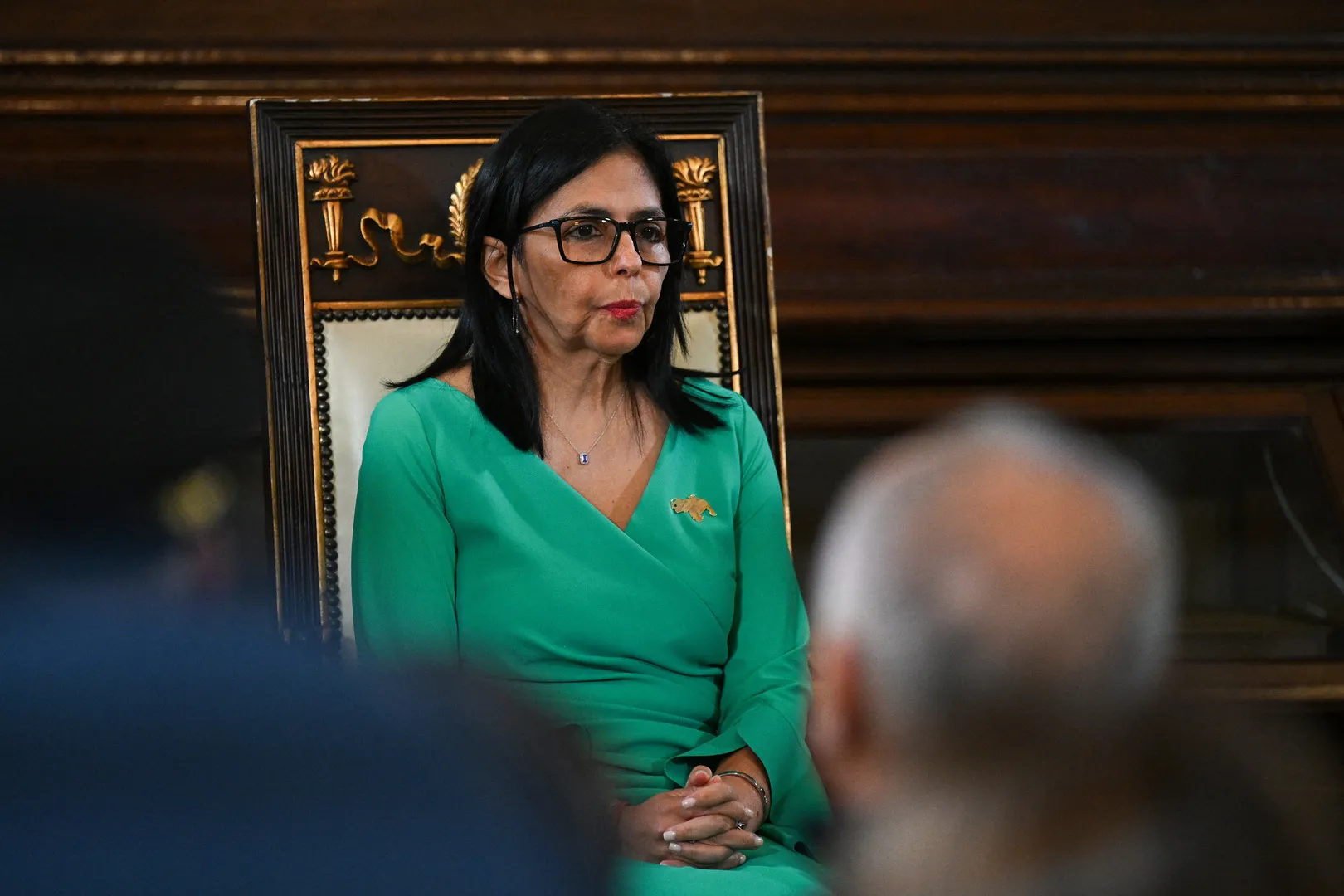
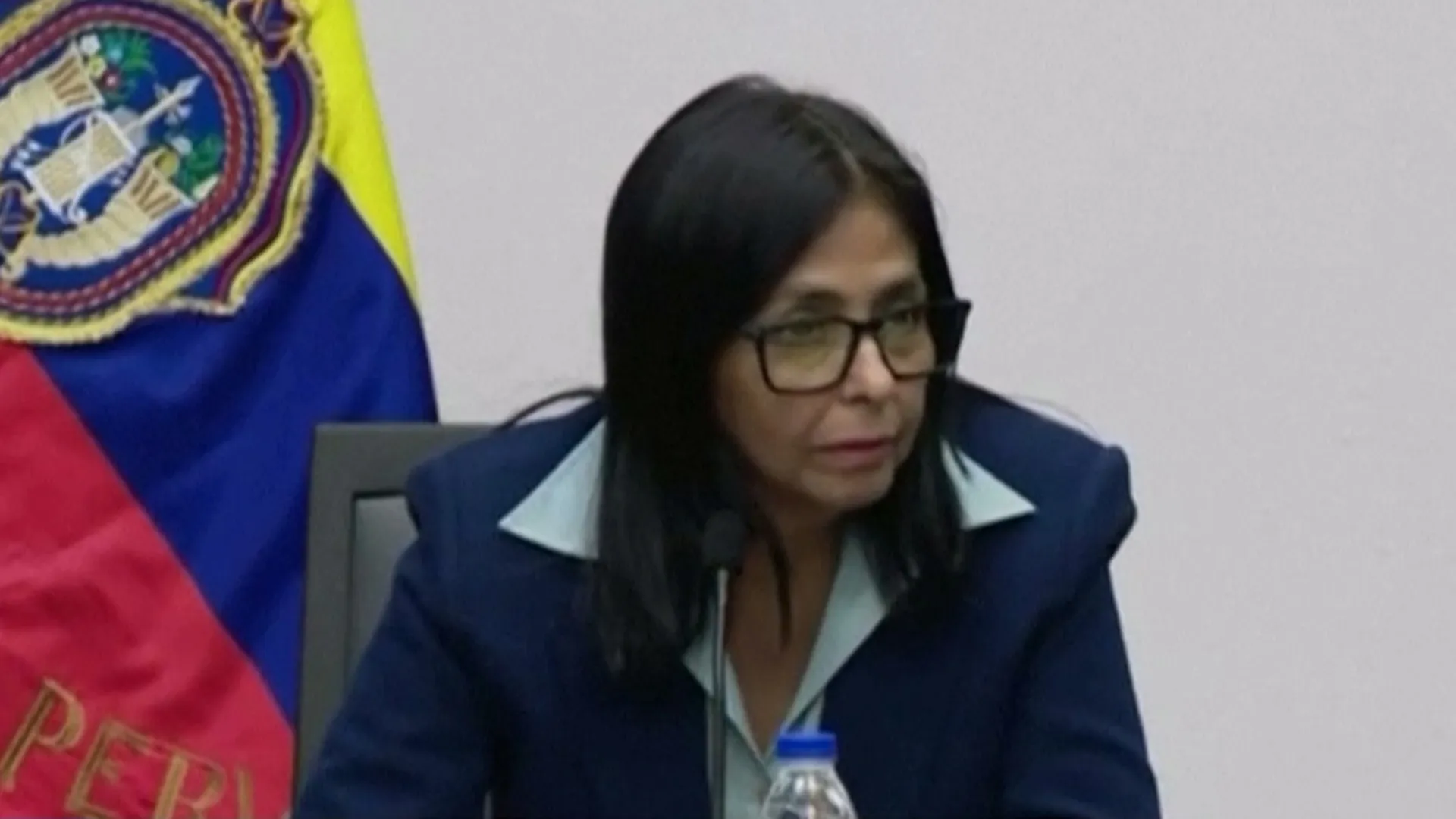
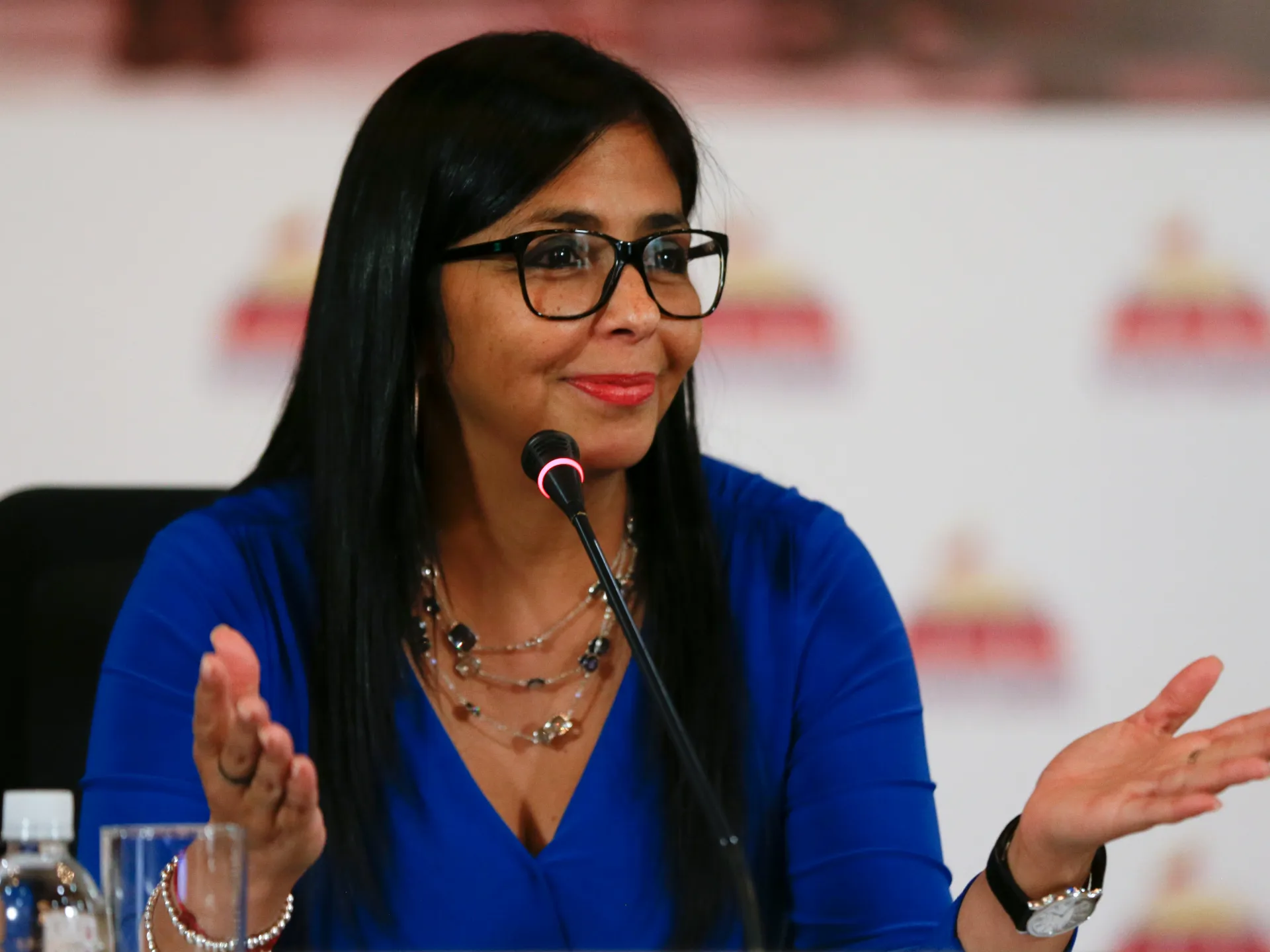
Delcy Rodriguez, formerly Venezuela’s vice president, has been formally sworn in to lead the South American country following the abduction of Nicolas Maduro in a United States military operation.

On Monday, Rodriguez appeared before Venezuela’s National Assembly to take her oath of office.

Recommended Stories

list of 3 itemsend of list

Speaking before the legislative body, composed largely of government loyalists, Rodriguez reaffirmed her opposition to the military attack that led to the capture and removal of Maduro and his wife, Cilia Flores.

“I come with pain over the kidnapping of two heroes who are being held hostage: President Nicolás Maduro and First Lady Cilia Flores,” Rodriguez, 56, told the assembly.

“I swear to work tirelessly to guarantee the peace, spiritual, economic and social tranquillity of our people.”

A former labour lawyer, Rodriguez has been serving as acting president since the early-morning attack that resulted in the abduction. Explosions were reported before dawn on Saturday in the capital, Caracas, as well as at nearby Venezuelan military bases and some civilian areas.

Monday’s swearing-in ceremony was overseen by Rodriguez’s brother – the president of the National Assembly, Jorge Rodriguez – and Maduro’s son, Nicolás Maduro Guerra, who held a copy of the Venezuelan Constitution.

Other members of Maduro’s inner circle, including Interior Minister Diosdado Cabello and Defence Minister Vladimir Padrino, were also in attendance.

The ceremony took place as Maduro, her predecessor and former boss, faced an arraignment proceeding in a New York City courthouse.

Federal prosecutors in the US have charged Maduro with four counts related to allegations he leveraged government powers to export thousands of tonnes of cocaine to North America.

The charges include narco-terrorism conspiracy, cocaine importation conspiracy, the illegal possession of machine guns and other destructive devices, and conspiracy to possess such guns and devices.

Maduro and his wife have pleaded not guilty to the charges, and their allies, including Rodriguez, have denounced the pair’s abduction as a violation of international law, as well as Venezuelan sovereignty.

In court on Monday, Maduro maintained he remained the rightful leader of Venezuela, saying, “I am still president.”

The administration of US President Donald Trump, however, has signalled that it plans to work with Rodriguez for the time being, though Trump himself warned that her tenure as president could be cut short, should she fail to abide by US demands.

“If she doesn’t do what’s right, she is going to pay a very big price, probably bigger than Maduro,” Trump told The Atlantic magazine in a Sunday morning interview.

A day earlier, in a televised address announcing the attack, Trump had said his administration plans “to run the country until such time as we can do a safe, proper, and judicious transition”.

On Air Force One on Sunday, as he flew back to Washington, DC, Trump doubled down on that statement.

“Don’t ask me who’s in charge, because I’ll give you an answer that will be very controversial. We’re in charge,” he told reporters.

He added that Rodriguez is “cooperating” and that, while he personally has not spoken to her, “we’re dealing with the people who just got sworn in”.

The Trump administration’s seeming willingness to allow Rodriguez, a former labour lawyer, to remain in charge has raised eyebrows.

Rodriguez, who served as vice president since 2018, is known to be a stalwart “chavista”: an adherent of the left-wing political movement founded by Maduro’s mentor, the late Hugo Chavez. She has held various ministerial roles under Maduro, including leading the Ministry of Foreign Affairs.

But Trump’s allies in the Republican Party have argued that keeping Rodriguez in place is simply a practical reality.

“We don’t recognise Delcy Rodriguez as the legitimate ruler of Venezuela. We didn’t recognise Nicolas Maduro as a legitimate ruler,” Republican Senator Tom Cotton told CNN on Sunday.

“It is a fact that she and other indicted and sanctioned officials are in Venezuela. They have control over the military and security services. We have to deal with that fact. That does not make them a legitimate leader.”

While on Air Force One, Trump largely avoided committing to new elections in Venezuela, indicating he would instead focus on “fixing” the country and allowing US oil companies access to its vast petroleum reserves.

One reporter on the aeroplane asked, “How soon can an election take place?”

“Well, I think we’re looking more at getting it fixed, getting it ready first, because it’s a mess. The country is a mess,” Trump replied. “It’s been horribly run. The oil is just flowing at a very low level.”

He later added, “We’re going to run everything. We’re going to run it, fix it. We’ll have elections at the right time. But the main thing you have to fix: It’s a broken country. There’s no money.”

Recent presidential elections in Venezuela have been widely denounced as fraudulent, with Maduro claiming victory in each one.

The contested 2018 election, for example, led to the US briefly recognising opposition leader Juan Guaido as president, instead of Maduro.

Later, Maduro also claimed victory for a third term in office during the 2024 presidential race, despite election regularities.

The official vote tally was not released, and the opposition published documents that appeared to show that Maduro’s rival, Edmundo Gonzalez, had won. Protests erupted on Venezuela’s streets, and the nonprofit Human Rights Watch reported that more than 2,000 protesters were unlawfully detained, with at least 25 dead in apparent extrajudicial killings.

The opposition has largely boycotted legislative elections in Venezuela, denouncing them as rigged in favour of “chavistas”.

Monday’s swearing-in ceremony included the 283 members of the National Assembly elected last May. Few opposition candidates were among them.
Source link

Analyst says Maduro capture could deepen Kim’s nuclear resolve

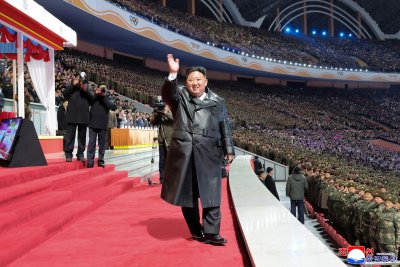
A photo released by the official North Korean Central News Agency (KCNA) shows North Korean leader Kim Jong Un waving during an art performance celebrating the New Year 2026 at the May Day Stadium in Pyongyang, North Korea, 01 January 2026. According to KCNA, the North Korean leader delivered a speech lauding the country’s successes in 2025 while calling for national unity ahead of the 9th Congress of the Workers’ Party of Korea. Photo by KCNA / EPA

Jan. 5 (Asia Today) — The U.S. military operation that captured Venezuelan President Nicolás Maduro could reinforce North Korean leader Kim Jong Un’s belief that nuclear weapons are essential for regime survival and make denuclearization talks harder, a South Korean scholar said.

Im Eul-chul, a professor at Kyungnam University’s Institute for Far Eastern Studies, said the U.S. strike and Maduro’s detention would send Pyongyang two messages: an “existential threat” and a perceived justification for clinging to nuclear arms, according to the analysis.

U.S. officials said Maduro and his wife, Cilia Flores, were taken into custody in a covert operation and transported to the United States to face criminal charges.

Im said North Korea has long cited the fates of leaders such as Saddam Hussein in Iraq and Moammar Gadhafi in Libya as warnings tied to its own survival calculus and that the Maduro case would likely deepen distrust of denuclearization negotiations inside North Korea.

He said seeing Washington’s precision strike capabilities could further fuel Pyongyang’s argument that only nuclear weapons can deter U.S. military power, adding that North Korea may accelerate steps such as expanding tactical nuclear deployment, improving second-strike capability and tightening internal control through fear-based politics.

North Korea, which has maintained ties with Venezuela since establishing diplomatic relations in 1974, condemned the U.S. strikes on Sunday as an infringement on sovereignty, according to state media.

Im also said North Korea’s ballistic missile launches Saturday could carry a message aimed at the United States, as the regime continues to emphasize self-reliance in defense amid regional and global tensions.

— Reported by Asia Today; translated by UPI

© Asia Today. Unauthorized reproduction or redistribution prohibited.

Source link

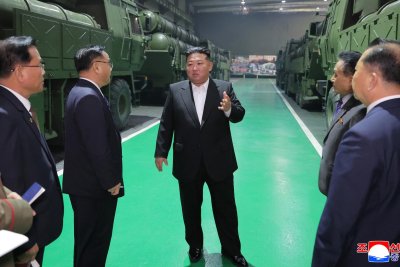
Kim orders 2.5-fold boost at arms plant in first 2026 field visit

A photo released by the official North Korean Central News Agency (KCNA) shows North Korean leader Kim Jong Un (C) visiting a major munitions industry enterprise to review the production of weapons and combat equipment at an undisclosed location in North Korea, 28 December 2025 (issued 30 December 2025). File. Photo by KCNA / EPA

Jan. 4 (Asia Today) — North Korean leader Kim Jong Un visited what state media called a key military factory on Friday, inspecting upgraded production lines and ordering a roughly 2.5-fold expansion in output as he signaled a push for mass production and deployment of tactical guided weapons.

The Korean Central News Agency said Kim toured a “technologically upgraded” production area and a “flexible automated production system,” then directed the plant to increase its current capacity.

KCNA said Kim reviewed a “multi-purpose precision-guided weapon” produced at the factory and said it would be systematically fielded to major units starting in the first half of the year. The report said he told the Defense Ministry and the General Staff to expand production to meet unit-level demand.

State media portrayed the visit as a move to shift tactical guided weapons from years of testing and demonstrations toward operational deployment. KCNA said Kim pointed to shortcomings in production line design, mass-production facilities and modernization of the assembly process.

Kim also called for advancing modernization work while keeping current production running, a directive KCNA described as aimed at minimizing production gaps during new equipment investments. The report said he ordered a comprehensive review of construction and modernization plans for 2026 and demanded revised proposals.

KCNA separately released photos and footage of Kim inspecting guided-weapon production, including what the report described as anti-tank systems, while emphasizing improvements in the quality of parts supplied by cooperating factories.

— Reported by Asia Today; translated by UPI

© Asia Today. Unauthorized reproduction or redistribution prohibited.

Source link

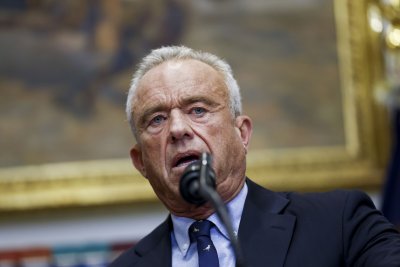
CDC changes childhood vaccine schedule to align with other nations

Jan. 5 (UPI) — The U.S. Centers for Disease Control and Prevention on Monday announced that it is changing its childhood vaccination schedule to align with other developed nations.

The change, which is based on the vaccine practices in 20 “peer, developed nations,” most specifically Denmark, is aimed at reducing the number of vaccines and vaccine doses that children in the United States receive based on what officials at the Department of Health and Human Services say is too high a count of shots.

“After an exhaustive review of the evidence, we are aligning the U.S. childhood vaccine schedule with international consensus while strengthening transparency and informed consent,” HHS Secretary Robert F. Kennedy Jr., said in a press release.

“This decision protects children, respects families and rebuilds trust in public health,” he said.

The change was met with concern by a range of professional healthcare societies, including the American Association of Pediatrics and the Infectious Diseases Society of America.

“Today’s announcement by federal health officials to arbitrarilly stop recommending numerous routine childhood immunizations is dangerous and unnecessary,” Andrew D. Racine, president of the AAP, said in a statement.

“The longstanding, evidence-based approach that has guided the U.S. immunization review and recommendation process remains the best way to keep children healthy and protect against health complications and hospitalizations,” Racine said.

Kennedy has long been associated with anti-vaccine sentiments, including the debunked claim that vaccines cause autism and doubts expressed about COVID-19 vaccines that disregard study and real-world data.

Although he told Congress during his confirmation hearing in January 2025 that he is not anti-vaccine, since taking over the HHS he has canceled several vaccine research programs at the CDC and Food and Drug Administration and fired a wide range of experts who have long worked on vaccines and vaccine policy amid what he has said is an effort to rebuild citizens’ trust in government health agencies and the advice they offer.

Among Kennedy’s actions was firing all 17 members of a committee that makes recommendations about vaccines to the CDC and replacing them with a hand-picked selection of vaccine skeptics.

Kennedy last February said he was going to make investigating the benefits of the childhood vaccine schedule a priority, noting that he would take an “open mind” to what many consider “settled science” for vaccines against measles, mumps, rubella, hepatitis B and other infectious diseases.

According to the HHS, the CDC will continue to recommend that all are children receive vaccines against diphtheria, tetanus, whooping cough, Haemophilus influenza B, pneumococcus, polio, measles, mumps, rubella, HPV and chickenpox.

Vaccines that the agency is recommending for high-risk groups are RSV, hepatitis A, hepatitis B, dengue and meningococcus.

And the CDC is now recommending that vaccines for rotavirus, COVID-19, influenza, meningococcal disease, hepatitis A and hepatitis B are given based on shared clinical decision-making.

The HHS and the CDC said the changes are based on the United States recommending more childhood vaccine doses than any other peer nation, and twice as many as some European nations, and that data is insufficient to suggest the formerly recommended shots are necessary.

The agencies also said that the new schedule allows for more flexibility and choice, with less coercion.

Experts have expressed doubt about the need or benefits for the changes, saying that there is not data to back up the changes and they will potentially lead to the spread of diseases that can be prevented.

Amesh Adalja, physician and senior scholar at the Johns Hopkins Center for Health Security, told UPI that the effect of the changes, which he called intentional, will be to decrease the uptake of certain vaccines in the United States and that there is no scientific justification for them.

“This will lead to predictable increases in illness, disruption, hospitalizations and — with certain infections — deaths,” Adalja said. “Individuals will be confused regarding what is actually recommended.”

He said that the burden on primary care doctors will increase as they not only help their patients navigate issues and decisions, but will likely increase the care that some people need.

“The decision was entirely arbitrary because some people ‘felt’ that the number of diseases vaccinated against was too high, akin to those who are afraid of the numbers 13 or 666,” Adalja said.

Source link

Osimhen double for Nigeria downs Mozambique to seal AFCON quarterfinal spot | Africa Cup of Nations News

Nigeria will face Algeria or DR Congo in the 2025 Africa Cup of Nations quarterfinal after a 4-0 win against Mozambique.

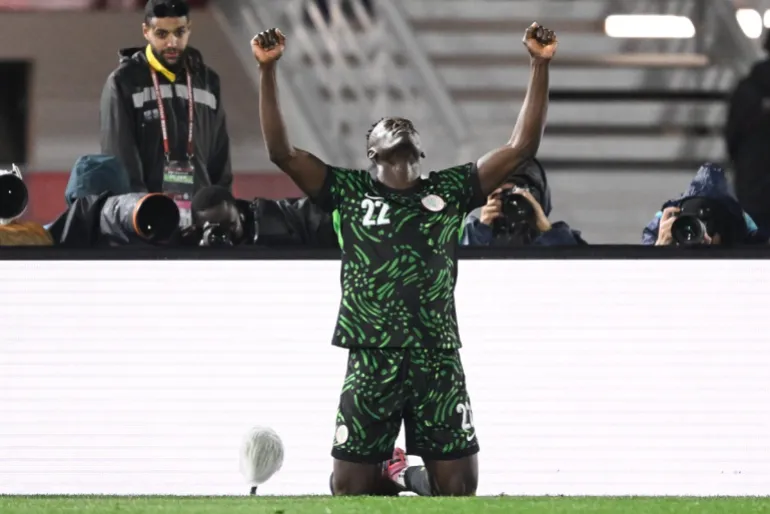
Victor Osimhen scored twice as Nigeria made short work of Mozambique at the Africa Cup of Nations, cruising into the quarterfinals with a comprehensive 4-0 victory in their last-16 tie.

Ademola Lookman, a former winner of the African footballer of the year award, like Osimhen, opened the scoring after 20 minutes in Fes on Monday and helped set up the other three goals on the night.

Recommended Stories

list of 4 itemsend of list

Osimhen had started the game without wearing his trademark mask, but restored the face covering before netting Nigeria’s second goal on 25 minutes. He then scored again just after half-time before Akor Adams sealed the win.

It is the biggest winning margin in an AFCON knockout tie since Egypt hammered Algeria 4-0 in the semifinals at the 2010 tournament in Angola.

Determined to make up for their failure to qualify for the World Cup, the Super Eagles march on to a last-eight tie on Saturday in Marrakesh against either Algeria or the Democratic Republic of the Congo (DRC).

The teams clash in the last 16 on Tuesday, and a victory in the game for the DRC would offer Nigeria a chance to avenge their defeat on penalties against the Leopards in a World Cup qualifying playoff in November.

Mozambique appeared in the knockout phase of an AFCON for the first time after advancing as one of the best third-placed sides in the group stage.

Nigeria's forward #22 Akor Adams celebrates scoring the team's fourth goal during the Africa Cup of Nations (CAN) round of 16 football match between Nigeria and Mozambique
Nigeria’s forward Akor Adams celebrates scoring the team’s fourth goal during the Africa Cup of Nations round of 16 match against Mozambique [Sebastien Bozon/AFP]

They were no match for a Nigerian team that was much-changed from their final group game, when coach Eric Chelle offered a chance to several fringe players for a 3-1 victory against Uganda.

Atalanta forward Lookman, who scored in the 3-2 win over Tunisia in the second group match, was among those brought back into the lineup, and Africa’s best player in 2024 gave his team the lead as the midway point in the first half approached.

Alex Iwobi’s through ball released Adams on the left side of the box, and his cutback was converted first-time by Lookman.

The 28-year-old then turned provider, with his cross from the left in the 25th minute being helped on by Adams, for Osimhen to poke the ball in from close range.

The Galatasaray striker emerged unscathed soon after that, despite going into a challenge with Witi, which saw the Mozambique player knee Osimhen in the stomach.

Lookman’s low ball across the face of goal from the left was finished off by Osimhen to make it 3-0 in the 47th minute and end any prospect of a Mozambique comeback.

The 2023 African player of the year had gone seven AFCON matches without scoring before netting against Tunisia in the group stage. He now has three to his name at the tournament in Morocco.

Lookman was not finished for the night as he supplied Adams inside the box with a quarter of an hour remaining, and the Sevilla forward rifled a shot high into the net.

Earlier in the day, Egypt needed extra time to overcome Benin 3-1 to book their place in the next round, where either Ivory Coast or Burkina Faso await.

Source link

French court: 10 guilty of cyberbullying Brigitte Macron

Ten people were convicted in Paris Monday for cyber-bullying France’s first lady Brigitte Macron. File Photo by Teresa Suarez/EPA

Jan. 5 (UPI) — A Paris court found 10 people guilty of cyberbullying France’s first lady Brigitte Macron, wife of President Emmanuel Macron.

They were accused of spreading false claims about her gender and making “malicious remarks” about the 24-year age gap between the Macrons.

The false claims are from a 2017 conspiracy theory that Brigitte Macron was a transgender woman. The allegation was amplified in the United States, pushed by right-wing media personality Candace Owens. The Macrons have also filed a lawsuit in the United States against Owens.

All but one of the defendants in France were given suspended sentences of up to eight months. The other person was jailed for not showing up to court. Some also had their social media accounts suspended.

The judge said the defendants acted with a clear desire to harm Brigitte Macron with comments that were degrading and insulting.

“The most important things are the prevention courses and the suspension of some of the accounts” of the perpetrators, Jean Ennochi, Brigitte Macron’s lawyer, said.

Two of the defendants had been found guilty of slander in 2024 for claiming that the first lady had never existed. Natacha Rey, a self-proclaimed journalist, and Amandine Roy, who claims to be a psychic, said Macron’s brother Jean-Michel Trogneux had changed gender and began using Brigitte Macron’s name.

Their convictions were overturned on appeal because claiming that she is transgender isn’t an “attack on her honor.”

The Macrons are appealing the ruling.

Brigitte Macron’s daughter Tiphaine Auzière, 41, told the court that the false claims had damaged her mother’s quality of life. She said Brigitte Macron worried every day about the clothes she wore and how she stood.

Auzière said the social media posts had caused a “deterioration of her health” and a “deterioration of her quality of life.”

“Not a day or week goes by when someone does not talk about this to her … What is very hard for her are the repercussions on her family … Her grandchildren hear what is being said: ‘Your grandmother is lying’ or ‘Your grandmother is your grandfather.’ This affects her a lot. She does not know how to stop it. … She’s not elected, she has not sought anything, and she is permanently subjected to these attacks. I — as a daughter, a woman and a mother — would not wish her life on anyone,” Auzière said.

Trogneux, 80, lives in Amiens, where he grew up with Brigitte Macron and their siblings.

Clouds turn shades of red and orange when the sun sets behind One World Trade Center and the Manhattan skyline in New York City on November 5, 2025. Photo by John Angelillo/UPI | License Photo

Source link

South American countries tighten migration controls after Venezuela crisis

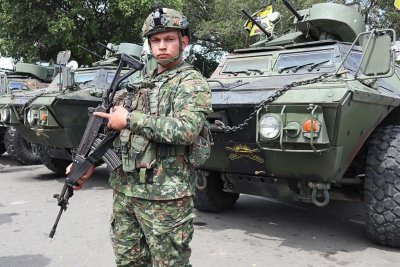
A member of the Colombian Army stands guard at the Simon Bolivar International Bridge in Cucuta, Colombia, on Sunday. The bridge is the main crossing point between Colombia and Venezuela, and it remains open after Venezuelan President Nicolas Maduro and his wife, Cilia Flores, were captured by the United States military action on Saturday and flown to New York to stand trial. Photo by Mario Caicedo/EPA

Jan. 5 (UPI) — Several South American countries announced new migration controls and border security measures in response to Venezuela’s political crisis following a United States operation that detained Venezuelan President Nicolás Maduro and his wife, Cilia Flores, and transferred them to New York to face drug-related charges.

While Colombia said it will keep its border crossings with Venezuela open and ruled out closures, Argentina, Peru, Ecuador and Paraguay announced restrictions on the entry of people linked to the Venezuelan government amid regional uncertainty and diplomatic coordination.

Colombian Vice Foreign Minister Mauricio Jaramillo said keeping the border open is strategic given cross-border migration and commercial flows along some 1,370 miles of shared frontier.

“Colombia has no interest in closing the border. It is essential that it remain open,” Jaramillo said, adding that Migration Colombia activated a permanent monitoring plan to oversee the situation without disrupting the regular movement of people and goods.

At the same time, President Gustavo Petro ordered tighter security along the border through the deployment of more than 30,000 public security personnel, including military and police forces, as a preventive measure against possible disturbances to public order.

Argentina, Peru, Ecuador and Paraguay separately announced new migration controls and entry restrictions targeting government officials, military personnel and others linked to the Venezuelan government.

In Ecuador, the Foreign Ministry said it will apply migration restrictions to public officials, members of the armed forces and security services, business figures, and other people associated with the government of Nicolás Maduro, citing national security concerns.

Authorities said asylum and refugee protections will not be misused and must comply with principles and procedures established under national and international law.

In Argentina, National Security Minister Alejandra Monteoliva said the National Migration Directorate will impose limits on the entry of people connected to the Venezuelan government, including officials, members of the armed forces, business figures and sanctioned individuals, to prevent what she described as regime collaborators from using the country as a refuge or protective platform.

“Argentina will not grant protection to collaborators of the Maduro regime,” the ministry said in a statement. President Javier Milei welcomed the fall of the Venezuelan leader and voiced support for a political transition process in Venezuela.

In Peru, the Interior Ministry announced the immediate implementation of migration controls through the National Superintendency of Migration, in coordination with the National Police.

The measures target Venezuelan citizens linked to the Caribbean nation’s government who appear on international sanctions lists, particularly those issued by the United States, to prevent Peru from being used to evade judicial proceedings.

“Notified. Those who oppressed their country for years are not welcome,” interim President Jose Jeri said in a post on social media platform X.

In Paraguay, the National Migration Directorate said it adopted control and restriction measures, with support from state security agencies, to block the entry of people linked to the Venezuelan government or with alleged ties to drug trafficking, narcoterrorism or pending criminal cases.

Authorities said they will evaluate international cooperation mechanisms and database cross-checks to verify individuals’ links to the Venezuelan government.

Source link

Venezuela’s abducted leader Nicolas Maduro, wife appear in NYC court | US-Venezuela Tensions News

Venezuelan President Nicolas Maduro – recently abducted with his wife by US commandos from his home – has appeared in a federal courtroom in New York City for a hearing on alleged “narco-terrorism” and other charges.

Maduro and his wife, Cilia Flores, were brought before US District Judge Alvin K Hellerstein at 12pm (17:00 GMT) on Monday for a brief legal proceeding that kicks off a long legal battle over whether they can face trial in the United States.

Recommended Stories

list of 4 itemsend of list

Handcuffed and wearing blue jail uniforms, Maduro and his wife were led into the court by officers, and both put on headsets to hear the English-language proceeding as it was translated into Spanish.

Maduro pleaded not guilty in the US court, telling the judge: “I was captured. I am innocent and a decent man, the president of my country.”

Across the street from the courthouse, the police separated a small but growing group of protesters from about a dozen pro-intervention demonstrators, including one man who pulled a Venezuelan flag away from those protesting the US abduction.

The left-wing leader, his wife, son and three others could face life in prison if convicted of allegedly working with drug cartels to facilitate the shipment of thousands of tons of cocaine into the country. Some observers say there is no evidence linking him to cartels.

Maduro’s lawyers said they’ll contest the legality of his arrest, arguing he is immune from prosecution as a sovereign head of a foreign state, though he is not recognised as Venezuela’s legitimate leader by the US and other nations around the world.

Flores also pleaded not guilty to US charges against her during the arraignment. Hellerstein ordered the Venezuelan leader to next appear in court for a hearing on March 17.

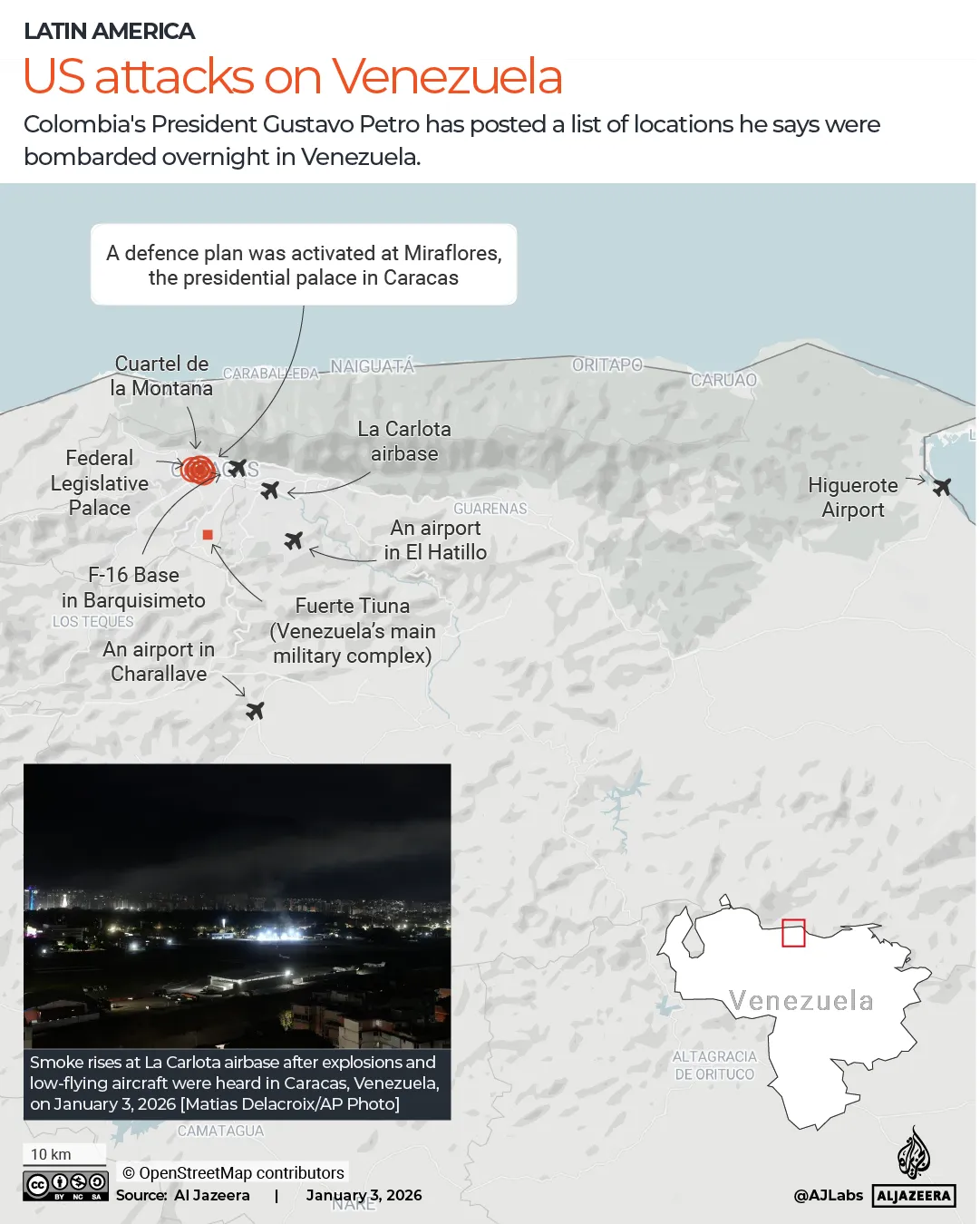
INTERACTIVE - US attacks on Venezuela map-1767437429

‘Attacks’ against US people

Near the end of the hearing, Maduro’s attorney Barry J Pollack said his client “is head of a sovereign state and entitled to the privilege” that the status ensures.

Pollack said there were “questions about the legality of his military abduction”, and there will be “voluminous” pretrial filings to address those legal challenges.

Earlier, images showed the pair being led handcuffed and under heavy guard from a helicopter en route from a detention facility to the courthouse, two days after they were forcibly removed from Caracas in a brazen US special forces operation.

“The United States arrested a narco-trafficker who is now going to stand trial in the United States,” US Ambassador to the United Nations Mike Waltz told an emergency UN Security Council meeting about the US attack on Venezuela on Saturday.

Waltz accused Maduro of being “responsible for attacks against the people of the United States, for destabilising the Western Hemisphere, and illegitimately repressing the people of Venezuela”.

Samuel Moncada, Venezuela’s ambassador to the UN, accused the US of carrying out an illegal armed attack against his country.

Venezuela was subjected to bombing, the destruction of civilian infrastructure, the loss of civilian and military lives, and the “kidnapping” of Maduro and his wife, Moncada said.

The abduction of a sitting head of state breached a core norm of international law, the personal immunity of leaders in office, he added, warning that such actions set a dangerous precedent for all countries.

Vast oil wealth

All eyes are on Venezuela’s response to the swiftly moving events after US President Donald Trump said late on Sunday that the US is “in charge” of the South American nation, which has the world’s largest proven oil reserves.

Interim President Delcy Rodriguez, who took the place of her ally Maduro, initially took a defiant stand against the seizure of the president in what some observers labelled a return to “US gunboat diplomacy”. But she has now offered “to collaborate” with Washington.

Venezuela’s opposition appreciates US intervention to remove Maduro from power, but is alarmed by Trump’s comments about US plans to “run” Venezuela, apparently with members of his government, one analyst said.

“Trump doesn’t recognise the decision of the Venezuelan people. We are not a colony of the US. We are an independent country,” Jose Manuel Puente, a professor at the Instituto de Estudios Superiores de Administracion, a private university in Caracas, told Al Jazeera.

“We want to initiate a transition to democracy, to rebuild the institutions, to rebuild the economy, to rebuild the oil sector. And we don’t see that from Trump until now.”

Rodriguez has served as Maduro’s vice president since 2018, overseeing much of Venezuela’s oil-dependent economy and its feared intelligence service, and was next in the presidential line of succession.

She’s part of a band of senior officials in Maduro’s administration who now appear to control Venezuela, even as Trump and other US officials say they’ll pressure the government to fall in line with their vision for the oil-rich nation.

On Sunday, some 2,000 Maduro supporters, including rifle-wielding men on motorcycles, rallied in Caracas with crowds shouting and waving Venezuelan flags. The Venezuelan military, loyal to Maduro, announced it recognised Rodriguez and urged calm.

The White House indicated on Sunday that it does not want regime change, only Maduro’s removal and a pliant new government that will enable US companies to exploit the country’s vast oil reserves – even if the government is filled with his former associates.

Source link

Israel bombs Lebanon saying it targeted Hezbollah and Hamas | Hezbollah News

DEVELOPING STORY,

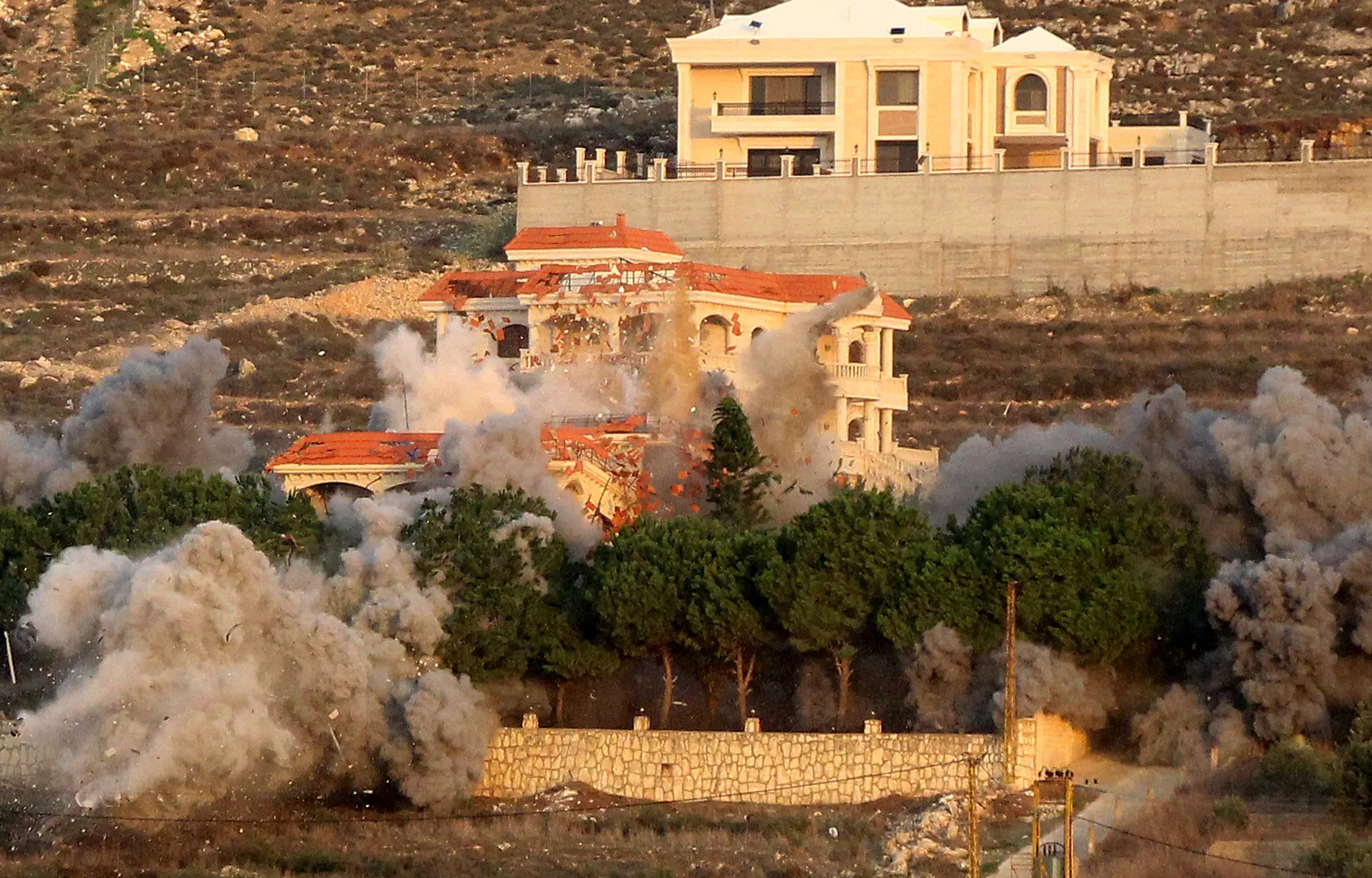
Israel’s military launched attacks on what it described as Hezbollah and Hamas “targets” in Lebanon after issuing ⁠evacuation orders for four villages in the ​country’s east and south.

An ‍Israeli army spokesperson said earlier it was planning air strikes on Hezbollah and ‍Hamas “military infrastructure” ⁠in the villages of Hammara and Ain el-Tineh in eastern Lebanon’s Bekaa Valley and Kfar Hatta and Aanan in the south.

Recommended Stories

list of 4 itemsend of list

An AFP news agency photographer in Kfar Hatta saw dozens of families flee the village after an Israeli warning was issued with drone activity in the area. Ambulances and fire trucks are on standby.

Israel and Lebanon agreed to a US-brokered ceasefire in 2024 ending ​more than a year ‌of heavy fighting between Israeli forces and Hezbollah. Israel has repeatedly violated the truce with bombardment and continues to occupy five areas in the country.

‌Lebanon ‌has faced growing pressure ⁠from the United States and Israel to disarm Hezbollah, and its leaders fear Israel could escalate strikes.

Lebanon’s army was expected to complete the disarmament south of the Litani River – 30km (12 miles) from the border with Israel – by the end of 2025. Israel’s Foreign Minister Gideon Saar on Sunday called the disarmament efforts “far from sufficient”.

Source link

Trial begins for Uvalde officer over failure to respond to school shooting

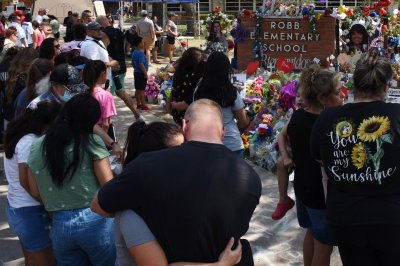
1 of 2 | Mourners gather at a memorial of flowers at Robb Elementary School in Uvalde, Texas, on May 30. A mass shooting days before left 19 children and two adults dead at the elementary school. File Photo by Jon Farina/UPI | License Photo

Jan. 5 (UPI) — The trial of former Uvalde school police officer Adrian Gonzales is underway Monday, four years after 19 students and two teachers were killed in a shooting at a Texas elementary school.

The jury selection process will begin the trial proceedings for Gonzales in Corpus Christi, Texas. He faces 29 felony charges, one for each of the 19 fourth-grade victims and 10 surviving students of the shooting on May 24, 2022.

Gonzales is accused of putting the children at Robb Elementary School in Uvalde, Texas, in “imminent danger” when he failed to respond to an active shooting. He was one of the first officers on the scene, the prosecution says.

It took the nearly 400 officers who responded in various capacities 77 minutes to engage the shooter, 18-year-old Salvador Rolando Ramos. Ramos was armed with an AR-15-style rifle.

State and federal investigators reviewed bodycam footage, 911 calls and eyewitness accounts before determining that a series of failures in the law enforcement response contributed to the incident.

The jury is expected to view bodycam footage and hear from investigators and survivors during Gonzales’ trial.

The site of the trial was moved by a judge in October after his attorneys argued it would be unlikely to fill an impartial jury in Uvalde.

Gonzales is one of two law enforcement officers facing criminal charges related to their response to the shooting. Pedro Arredondo, former police chief of the Uvalde Consolidated Independent School District Police Department, faces 10 counts of abandoning and endangering children.

Source link

Greenland PM to Trump: ‘Enough’ of ‘fantasies of annexation’

Greenland Prime Minister Jens-Frederik Nielsen speaks at the European Parliament in Strasbourg, France, in October. On Sunday, he told President Donald Trump to stop talking about annexing Greenland. File Photo by Christophe Petit Tesson/EPA

Jan. 5 (UPI) — Greenland Prime Minister Jens-Frederik Nielsen has said “enough” on Monday to President Donald Trump‘s threats to take the country and urged him to let go of his “fantasies of annexation.”

Nielsen posted on Facebook that Trump should stop his claims that the United States will annex his country, which is a territory of Denmark, a member of NATO and the European Union.

“Alliances are built on trust. And trust requires respect,” Nielsen said in his post. “Threats, pressure and talk of annexation do not belong anywhere between friends. That’s not how you talk to a people who have repeatedly shown responsibility, stability and loyalty.”

“This is enough.”

After the invasion of Venezuela on Saturday, Trump told The Atlantic on Sunday that the United States needs Greenland for national security. The operation in Venezuela also renewed fears that Trump may actually move to take Greenland.

“They are going to have to view it themselves. I really don’t know … But we do need Greenland, absolutely. We need it for defense,” Trump said when asked if the action in Venezuela should be interpreted by other nations as a signal that his administration might use military action to pursue more goals.

Nielsen’s post told Trump to let it go.

“No more pressure. No more hints. No more fantasies about annexation,” he said.

“We are open for dialogue. We are open to conversations. But it has to be through the right channels and with respect to international law. And the right channels are not random and disrespectful posts on social media. Greenland is our home and our territory. And that’s how it continues to be.”

The EU backs Nielsen and Denmark on the matter.

“The EU will continue to uphold the principles of national sovereignty, territorial integrity and the inviolability of borders,” EU foreign policy spokesperson Anitta Hipper told reporters. “These are universal principles, and we will not stop defending them, all the more so if the territorial integrity of a member state of the European Union is questioned.”

Denmark Prime Minister Mette Frederiksen said it made “absolutely no sense to talk about the U.S. needing to take over Greenland.” She said the United States has “no right to annex any of the three countries in the Danish kingdom.”

The Danish Kingdom also includes the Faroe Islands.

“The principle of the inviolability of borders is enshrined in international law and is not up for negotiation,” German Chancellor Friedrich Merz said in Berlin after a meeting with Frederiksen in June. “We stand firmly alongside our Danish friends on these issues and that will remain the case.”

On Air Force One, Trump told reporters he didn’t want to discuss Greenland saying he would talk about it “in 20 days.” He then mocked Greenland and Denmark.

“You know what Denmark did recently to boost security in Greenland? They added one more dog sled. It’s true. They thought that was a great move,” Trump said.

“Right now, Greenland is full of Chinese and Russian ships everywhere. We need Greenland for national security reasons. Denmark will not be able to handle the task.”

Sweden, Norway and Finland have all said they support Denmark.

“Only Denmark and Greenland have the right to decide on issues concerning Denmark and Greenland,” said Swedish Prime Minister Ulf Kristersson. “Sweden fully supports our neighboring country.”

Clouds turn shades of red and orange when the sun sets behind One World Trade Center and the Manhattan skyline in New York City on November 5, 2025. Photo by John Angelillo/UPI | License Photo

Source link

Venezuela: Delcy Rodriguez sworn in as president, Maduro due in court

Heavily armed federal law enforcement officers on guard Sunday outside the Metropolitan Detention Center in Brooklyn, where Venezuelan President Nicolas Maduro and first lady Cilia Flores are being held after being seized from the presidential palace in Caracas at the weekend. Photo by Olga Fedorova/EPA

Jan. 5 (UPI) — U.S. President Donald Trump issued a warning to Venezuela’s new president, Delcy Rodriguez, to “do what’s right,” or face a similar or worse fate than President Nicolas Maduro, who is in a U.S. prison after being seized by U.S. Special Forces over the weekend.

“If she doesn’t do what’s right, she is going to pay a very big price, probably bigger than Maduro,” Trump told The Atlantic, adding that regime change remained on the table, saying that it was preferable to the present state of affairs and the situation “can’t get any worse.”

Rodriguez, who was due to be sworn in as president in Caracas at 7 a.m. EST with the support of the country’s military and the supreme court, has said she is willing to cooperate with the United States after initially condemning the arrest of Maduro and his wife, Cilia Flores, and demanding their release.

“We invite the U.S. government to collaborate with us on an agenda of cooperation orientated towards shared development within the framework of international law,” she told her cabinet at her first meeting in charge on Sunday.

Trump said U.S. Secretary of State Marco Rubio had spoken with Rodriguez and that she was “essentially willing to do what we think is necessary to make Venezuela great again.”

Amid conflicting messaging, it was unclear if that was Trump’s meaning when he said in his news conference Saturday announcing the military operation that the United States was “going to run the country until such time as we can do a safe, proper and judicious transition.”

“We’re going to be running it with a group, and we’re going to make sure it’s run properly,” Trump said.

Rubio clarified Sunday that Trump was talking about exerting control from outside the country to bring about major policy shifts.

He said sanctions were one of the tools at the administration’s disposal to ensure the cooperation of the acting leadership, saying in an American broadcast TV interview that a blockade on Venezuela’s oil exports, being enforced by the U.S. military, would remain in place.

“We continue with that quarantine and we expect to see that there will be changes not just in the way the oil industry is run for the benefit of the people, but also so that they stop the drug trafficking, so that we no longer have these gang problems, so that they kick the [Columbian insurgent groups] FARC and the ELN out, and that they no longer cozy up to Hizballah and Iran in our own hemisphere,” Rubio said.

Meanwhile, Maduro was due to make his first appearance in Federal Court in New York later Monday, where he and Flores will be read a 25-page indictment accusing the pair of accumulating vast wealth from a narco-terrorism conspiracy.

They also face three related charges of cocaine importation conspiracy, possession of machine guns and destructive devices, and conspiracy to possess machine guns and destructive devices.

They are due to be transferred from the Metropolitan Detention Center in Brooklyn, which houses defendants accused of regular crimes, to the U.S. District Court for the Southern District of New York in White Plains, N.Y., to appear at 12 p.m. EST.

Clouds turn shades of red and orange when the sun sets behind One World Trade Center and the Manhattan skyline in New York City on November 5, 2025. Photo by John Angelillo/UPI | License Photo

Source link

Gaza PhD scholar is now baker to feed family, others amid Israel’s war | Israel-Palestine conflict News

‘It is my mission to teach Palestinian students, even if I must build a classroom, brick by brick,’ Bader Slaih says.

Bader Slaih is one of many Palestinian scholars from Gaza who had to put down his books amid Israel’s genocidal war on the enclave.

Slaih, who was displaced multiple times from Bureij in central Gaza with his family, started baking bread to feed them during the war, but he still has dreams to enrich the minds of students in Gaza, who have suffered deaths in their families, a loss of their homes and the decimation of their schools and education.

Recommended Stories

list of 4 itemsend of list

“The war was hard on everyone. We were tormented and humiliated,” he said.

“Out of a dire need, we built a brick oven to make bread for our children,” Slaih told Al Jazeera.

“We had to bake to feed our children and others,” he added.

Palestinian academic turns baker
Bader Slaih is pictured baking bread [Screengrab/Al Jazeera]

Palestinians have always been deeply committed to learning.

Before Israel’s war, the education sector in Gaza was thriving, and literacy rates were reported to be among the highest in the world.

According to the Palestinian Central Bureau of Statistics, the illiteracy rate stood at 2.1 percent among Palestinians aged 15 and older in 2023.

Slaih said he was always committed to his studies since early childhood into adolescence before he got his master’s and doctorate degrees in Egypt, and returned to Gaza to serve his homeland.

“[After I came back] I filed all my certificates with universities, hoping to start my teaching career,” he told Al Jazeera.

“But then disaster struck – the war began.”

Slaih’s wife and son left Gaza for medical reasons as he was left behind during the war.

“It was difficult for me. My son’s medical needs were more important, so I stayed behind with my other family members,” he said.

Educational system devastated

According to a UNICEF report released in November, Gaza’s education system “stands on the brink of collapse”, with more than 97 percent of schools damaged or destroyed.

The report said 91.8 percent of all education facilities require either full reconstruction or significant rehabilitation to become functional again.

All of Gaza’s 12 universities have been totally or partly destroyed and are in unusable condition, according to local reports.

Slaih said he was determined to pursue his career as there was a ceasefire in place in Gaza, adding: “Patience and resolve are part of our DNA.”

“I will serve as a teacher, even in a tent. It is my mission to teach Palestinian students, even if I must build a classroom, brick by brick,” he said.

“With my hopes still high, I am certain I will make my dream come true very soon.”

Palestinian academic turns baker
Slaih says he is determined to pursue his career [Screengrab/Al Jazeera]

Source link

Hyundai E&C, POSCO E&C to join new city project in Vietnam

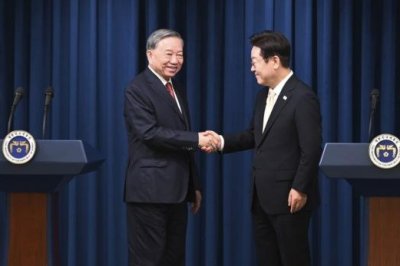
South Korean President Lee Jae Myung (R) shakes hands with General Secretary of the Communist Party of Vietnam To Lam during a press conference at the presidential office in Seoul in August. File Photo by Song Kyung-Seok/EPA/Pool

SEOUL, Jan. 5 (UPI) — Korea Land and Housing Corp. said the state-run company selected several private-sector enterprises as preferred bidders for a large-scale city development project in Vietnam.

Among them were the country’s leading contractors, Hyundai E&C and POSCO E&C, along with JR Asset Management. Public-sector involvement is also expected through the Korea Overseas Infrastructure and Urban Development Corp.

The Vietnamese government is seeking to attract investment to move forward with a multibillion-dollar project to construct a new city in the fast-growing Southeast Asian country.

The initiative is designed to transform a 2,000-acre site in Bac Ninh Province, about 12 miles northeast of Hanoi, into a self-sufficient urban center capable of accommodating more than 100,000 residents.

Midway through 2024, LH signed a memorandum of understanding with Bac Ninh Province to pursue the development. Last August, it asked the provincial government to issue an investment policy approval.

Once the approval is secured and related administrative procedures are completed, LH plans to establish a special purpose company with Vietnamese partners to implement the 50-year phased initiative, which is scheduled to conclude in 2076.

Early last year, LH estimated the project’s value at $4.1 billion, but the company noted that the figure would be subject to change depending on project scope and other factors.

The Seoul administration has expressed high hopes for the initiative. For example, President Lee Jae Myung cited it during a meeting with To Lam, general secretary of Vietnam’s Communist Party, in Seoul last August.

“We will provide full support to advance cooperation on the Bac Ninh new town development,” Lee said at the time.

Source link

Israel extends Gaza occupation beyond ‘yellow line’ in north, bombs south | Israel-Palestine conflict News

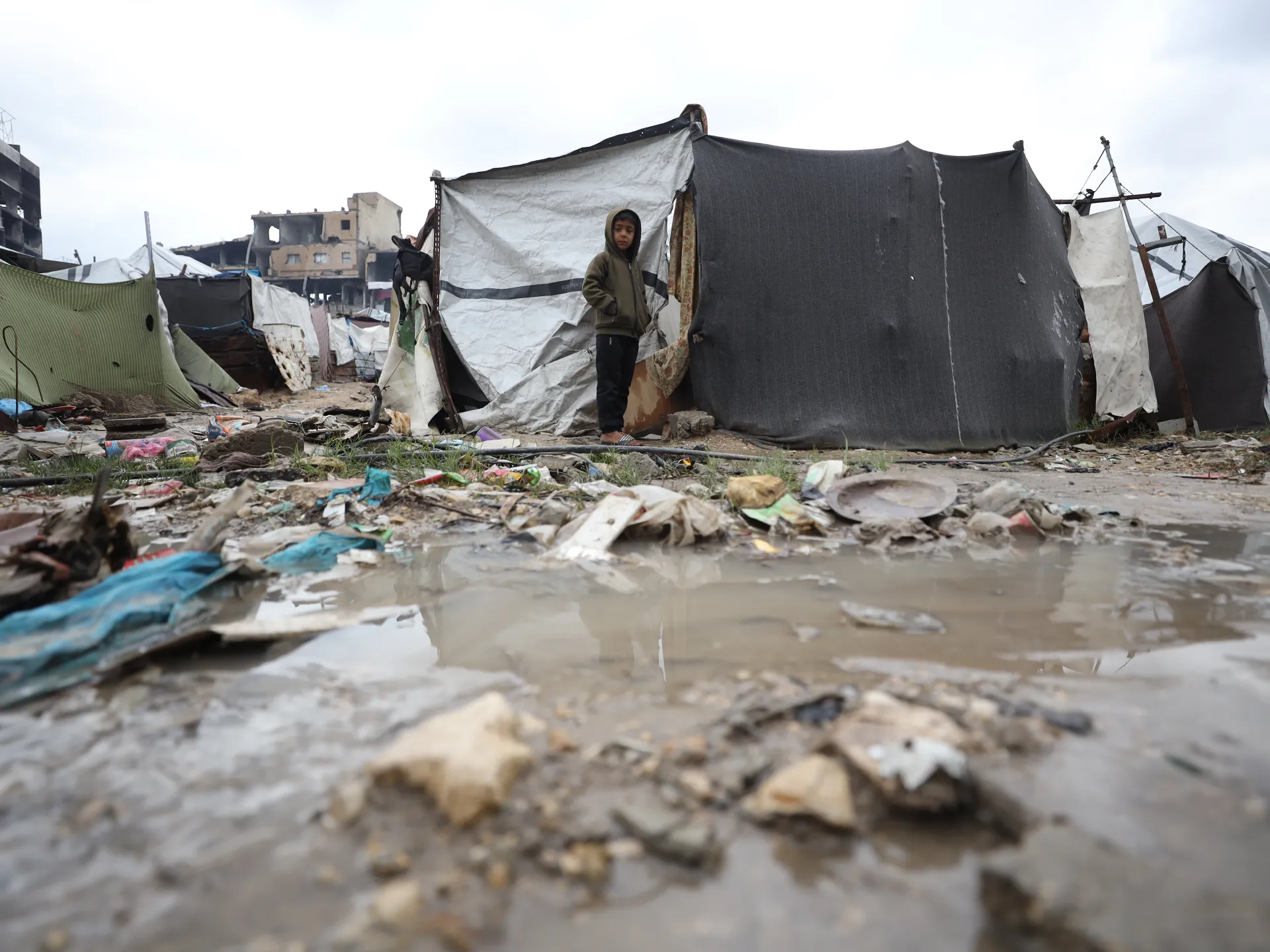
The Israeli military has spent the past 24 hours expanding the so-called “yellow line” in eastern Gaza, particularly in eastern Gaza City’s Tuffah, Shujayea, and Zeitoun neighbourhoods, according to Al Jazeera teams on the ground, squeezing Palestinians into ever smaller clusters of the enclave.

The Israeli army’s actions on Monday are also pushing it closer to the key artery of Salah al-Din Street, forcing displaced families sheltering near the area to flee as more of them come under intensive threat, as Israel’s genocidal war on Gaza shows no signs of abating.

Recommended Stories

list of 3 itemsend of list

Israel now physically occupies more than 50 percent of the Gaza Strip.

Since the ceasefire took effect, Israeli attacks have killed at least 414 Palestinians and injured 1,145 in daily truce violations despite the ceasefire deal mediated by the United States on October 10.

Al Jazeera’s Hani Mahmoud, reporting from Gaza City, said, “The ongoing Israeli attacks on the ground, the expansion of the ‘yellow line’ are meant to eat up more of the territory across the eastern part, really shrinking the total area where people are sheltering.”

“Everyone is cramped here. The population here not just doubled but tripled in many of the neighbourhoods, given the fact that none of these people is able to go back to their neighbourhoods. We’re talking about Zeitoun, Shujayea, as well as Tuffah,” he added.

“It was not until the past few minutes that the sounds of hums, the drones buzzing, faded away, but it had been going on for the past night and all of yesterday. Ongoing explosions that could be heard clearly from here,” Mahmoud said.

Intense artillery bombardment and helicopter fire also resumed on Monday in the areas south of the besieged enclave, north and east of the cities of Rafah and Khan Younis.

On Sunday, Israel launched more attacks into parts of Gaza outside its direct military control. At least three Palestinians were killed in separate Israeli attacks in Khan Younis, medical sources told Al Jazeera.

A five-storey building belonging to the al-Shana family in the Maghazi camp in central Gaza collapsed. It had been subjected to Israeli bombing at the end of 2023.

Civil Defence teams are searching for missing people under the rubble. The Wafa news agency reported that at least five people were injured.

Israeli push to make Rafah crossing ‘one-way exit’

Expectations have heightened around the possible reopening of the Rafah crossing, fuelling both desperate hope and deep fear.

For many in Gaza, there is some hope it could offer a lifeline, allowing the sick and wounded to access medical care, reuniting separated families, and giving some people a rare chance to move in or out of the Strip. Some also see it as a potential sign of easing restrictions.

But fears remain strong. Many worry the opening will be limited and temporary, benefitting only a few. Others fear it could become a one-way exit, raising concerns about permanent expulsion, effectively Israeli ethnic cleansing, and whether those who leave will be allowed to return.

“Until this moment, there’s nothing on the ground other than the headlines we’ve been reading over the past couple of days, the expectation now that within days the Rafah crossing is going to open and allow for movement in and out of Gaza. So far, we know the Israeli military is pushing for Rafah to be just a one-way exit,” Al Jazeera’s Mahmoud reported.

After months of uncertainty, people in Gaza who have suffered unimaginable loss and destruction are cautious. Even the possibility of relief comes with questions and little trust in what will happen next.

At least 71,386 Palestinians have been killed and 171,264 injured since the start of the war in October 2023, according to the latest figures from Gaza’s Ministry of Health. At least 420 people have been killed since the ceasefire was agreed upon three months ago.

The Israeli military continues to block a large amount of international humanitarian aid amassing at the Gaza crossings, while maintaining that there is no shortage of aid despite testimonies by the United Nations and others working on the ground.

Source link

Trump’s bid to commandeer Venezuela’s oil sector faces hurdles, experts say | Business and Economy

United States President Donald Trump has promised to “take back” Venezuela’s oil reserves and unleash them onto the global market after abducting Venezuelan President Nicolas Maduro.

But exploiting the Latin American country’s vast reserves would face a host of big hurdles, from decrepit infrastructure and legal obstacles to leadership uncertainty in Caracas and an excess supply of oil in the global market, experts say.

Recommended Stories

list of 4 itemsend of list

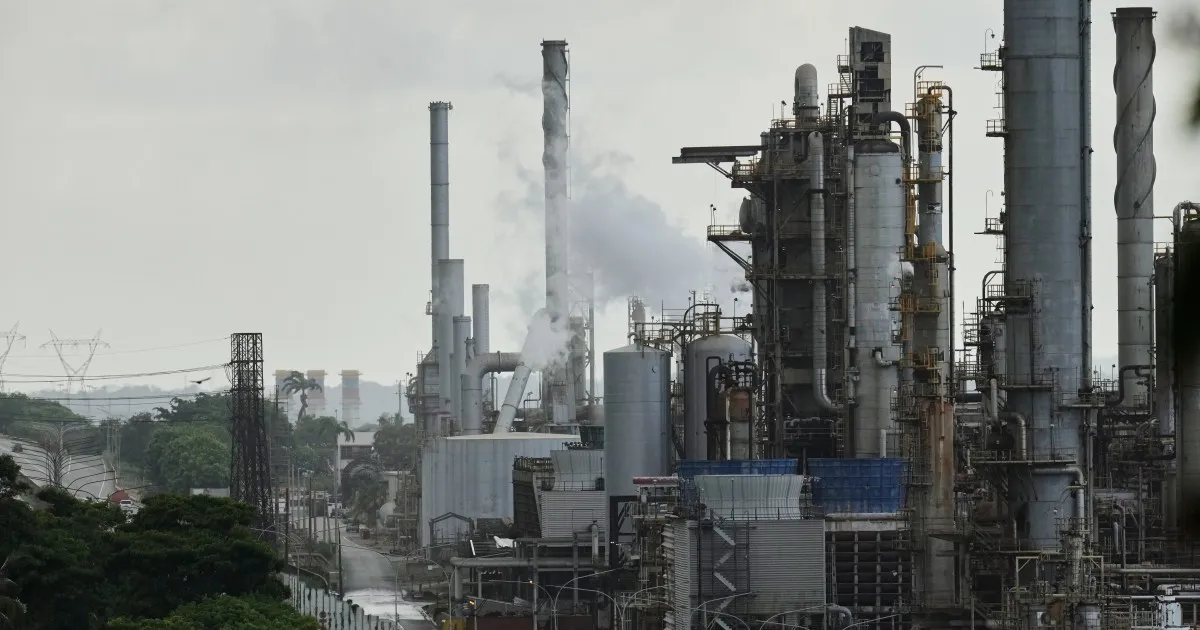
Venezuela possesses the world’s largest known oil reserves – estimated to be some 303 billion barrels – but currently produces only a tiny fraction of global output. Its estimated output was 860,000 barrels per day (bpd) in November, less than 1 percent of the world’s total, compared with 3.7 million bpd during peak production in 1970.

The oil sector’s decline has been blamed on the combined effects of US sanctions and years of underinvestment, mismanagement and corruption under Maduro and his left-wing predecessor, Hugo Chavez.

While the Trump administration could boost supply in the short term by lifting sanctions, restoring Venezuela’s output to anything near peak levels would require huge investment and likely take years, according to energy analysts.

‘Venezuela’s oil infrastructure is in poor shape’

Oil prices moved only slightly in trading on Monday amid market expectations that output would remain largely unchanged for the foreseeable future.

“Venezuela’s oil infrastructure is in poor shape overall, due to lack of maintenance for both equipment and oilfield wells,” Scott Montgomery, a global energy expert at the University of Washington, told Al Jazeera.

“The state oil company, PDVSA, is well known to suffer from corruption and lack of expertise – many well-trained people have left the country to work elsewhere – and has been unable to invest in the country’s petroleum sector,” Montgomery added.

Thomas O’Donnell, an energy and geopolitical analyst based in Berlin, Germany, estimated that Venezuela could return to peak production in five to seven years in the “absolute best” circumstances, including a peaceful transfer of power.

“Longer term, if things are sorted out, yes, Venezuela can become one of the world’s biggest producers of oil. As far as how long that takes, that has all to do with the transition and what is put in place to manage that – both the country’s security and also to manage the investments,” O’Donnell told Al Jazeera.

Mixed messaging from Trump administration

Trump’s administration has provided conflicting messages on Washington’s exact plans for Venezuela and its oil reserves.

On Saturday, Trump said the US would “run” Venezuela and that US oil companies were ready to invest billions of dollars to build up the country’s dilapidated infrastructure and “get the oil flowing”.

In interviews with US media on Sunday, US Secretary of State Marco Rubio sought to downplay Trump’s remarks about controlling the country, saying the president was referring to “running policy” and his plans related to spurring private investment, “not securing the oilfields”.

Trump later on Sunday said Washington was “in charge” of the country and was “dealing with” members of the acting administration without providing details.

Under international law, the US has no claim of ownership over Venezuela’s oil reserves, as sovereign states possess the right to control and use their natural resources under the United Nations-endorsed Principle of Permanent Sovereignty over Natural Resources.

Foreign investors, however, can claim compensation when authorities seize their assets.

ExxonMobil and ConocoPhillips were awarded $1.6bn and $8.7bn, respectively, in international arbitration following the Chavez government’s 2007 nationalisation of the oil sector. Caracas did not pay out in either case.

US oil giants, including Chevron, ExxonMobil, and ConocoPhillips, have not commented directly on Trump’s claims about planned investments in Venezuela.

Chevron is the only large US oil company currently operating in Venezuela, the result of an exemption to US sanctions first granted by the administration of former President Joe Biden.

Consultancy Rystad Energy, based in Oslo, Norway, has estimated that Venezuela’s oil sector would need about $110bn in capital investment to return to its mid-2010s output of about 2 million bpd.

Patrick De Haan, an analyst at energy price tracker GasBuddy, said companies may be reluctant to commit to large investments in the country when global oil prices are hovering around $60 a barrel due to a glut of supply.

“It will take a longer amount of time than many likely realise. Oil companies in a low-priced environment of today would likely be cautious investing billions with oil prices already low,” De Haan told Al Jazeera.

“In addition, Trump seizing Maduro could lead to loyalists sabotaging efforts to increase output. A lot would have to go right to yield the most optimistic timelines.”

US companies are likely to carefully weigh political developments in Venezuela following their experiences with the Chavez government’s expropriation of their assets.

“Oil companies are not likely to rush into a situation where the state is in turmoil, security is lacking, and no clear path forward for political stability exists,” the University of Washington’s Montgomery said.

Maduro due in court in New York

Interim President Delcy Rodriguez, who was Maduro’s deputy, is now leading the country following a ruling by Venezuela’s Supreme Court.

Maduro is scheduled to appear in a New York court on Monday to face charges related to alleged drug trafficking and working with criminal gangs.

Venezuela’s government has condemned the Trump administration over Saturday’s bombing and overthrow of Maduro, labelling his capture a “cowardly kidnapping”.

Russia, China, Iran and Brazil, among other countries, have accused Washington of violating international law, while nations including Israel, Argentina and Greece have welcomed Maduro’s forced removal.

OPEC, which sets limits on production for its 12 members, including Venezuela, is another factor in the Latin American country’s potential oil output.

“Venezuela is a member of OPEC, and like many countries, may become more actively subject to quotas if output climbs,” De Haan said.

Phil Flynn, a market analyst at the Price Futures Group, said reviving Venezuela’s oil production would face “significant challenges”, but he was more bullish about the near-term prospects than other analysts.

He said the market could conceivably see a couple of hundred thousand more barrels a day coming online in the coming months.

“We’ve not had a free Venezuela, and sometimes the US energy industry has the capability to do a lot more than people give them credit for,” Flynn told Al Jazeera.

Source link

South Korean Big 5 banks’ corporate loan growth rate halves in 2025

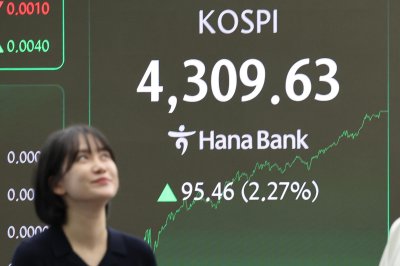
A financial data screen in the dealing room of Hana Bank shows the benchmark Korea Composite Stock Price Index, in Seoul, South Korea, 02 January 2026. South Korean stocks surged to close at an all-time high, led by strong gains in large-cap semiconductor shares, having gained 95.46 points, or 2.27 percent, to close at 4,309.63. Photo by YONHAP / EPA

Jan. 4 (Asia Today) — Corporate lending at South Korea’s five largest commercial banks grew at about half the pace of the previous year, despite government calls for “productive finance” aimed at steering money toward businesses, industry data showed.

Outstanding corporate loans at KB Kookmin Bank, Shinhan Bank, Hana Bank, Woori Bank and NH Nonghyup Bank totaled 844.7 trillion won (about $650 billion) at the end of December, up 2.94% from a year earlier, the data showed. The increase of 24.1 trillion won (about $18.5 billion) compared with 2024’s 6.95% rise, when balances increased 53.3 trillion won (about $41.0 billion).

The lending trend diverged between the first and second halves of the year. Corporate loan balances rose 9.1 trillion won (about $7.0 billion) in the first half as banks prioritized asset quality amid higher rates and more financially strained firms. Growth accelerated in the second half, rising 15.0 trillion won (about $11.5 billion), as the government that took office in June pushed banks to expand credit to companies and advanced industries while tightening household lending.

Even so, growth in loans to small and medium-sized firms slowed sharply. SME lending at the five banks increased 12.2 trillion won (about $9.4 billion) last year, down from 31.3 trillion won (about $24.1 billion) in 2024, the data showed. Loans to large companies rose 11.9 trillion won (about $9.2 billion), down from 22.0 trillion won (about $16.9 billion) the prior year, but large-company loan growth still outpaced SME growth, with rates of 7.52% and 1.84%, respectively.

Loans to the self-employed declined. Balances fell 1.2 trillion won (about $915 million) to 324.4 trillion won (about $249.6 billion) from 325.6 trillion won (about $250.5 billion) a year earlier, according to the data.

Bankers cited higher delinquency risks among SMEs and the self-employed and said lenders have leaned toward higher-quality corporate borrowers to protect capital, including common equity tier 1, or CET1, ratios.

Authorities are expected to intensify pressure this year to expand corporate credit. Banks have said they broadly agree with the policy direction but want regulatory relief, including lower risk weights on corporate loans, to increase supply while meeting capital rules.

In September, financial authorities said they would adjust capital regulations, including raising the minimum risk weight on mortgage loans and lowering risk weights on banks’ stock holdings. The move could expand corporate lending capacity by up to 73.5 trillion won (about $56.5 billion), the report said.

— Reported by Asia Today; translated by UPI

© Asia Today. Unauthorized reproduction or redistribution prohibited.

Source link

All 40 deceased victims of Swiss bar fire identified

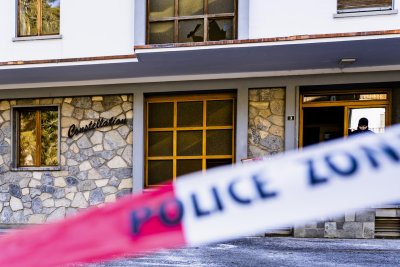
Authorities on Sunday said all 40 victims of the Le Constellation bar fire on New Year’s Eve have been identified. Photo by Jean-Christophe Bott/EPA

Jan. 5 (UPI) — All 40 victims of a Swiss bar fire that erupted New Year’s Eve have been identified, according to police, who continue to investigate the deadly blaze.

Forty people were killed and 119 were injured in the fire at the Le Constellation bar in Crans-Montana in the Swiss Alps early Thursday.

Valais Cantonal Police announced in a statement Sunday that an additional 16 victims of the fire have been identified, meaning all deceased have been named.

The victims identified Sunday range in age from 14 to 33, with the youngest being a boy from France.

Among the deceased were nine minors, including four aged 15, two girls from Switzerland, one girl from Italy and a boy with French, Israeli and British citizenship. Two 16-year-olds, both Italian, one boy and one girl; and two 17-year-olds, one Belgian girl and a French boy, were also identified Sunday.

The adults were from France, Switzerland and Portugal. One victim identified Sunday was a dual Swiss-French national.

Of all 40 victims, 20 were minors: two 14-year-olds, six 15-year-olds, nine 16-year-olds and three 17-year-olds.

The oldest adult victim was 39.

Police have opened a criminal investigation into the fire and have charged two managers of the bar with negligent homicide, negligent bodily harm and negligent arson.

The two suspects have not been detained as they do not pose a flight risk and there is no suspicion that they intend to evade the criminal proceedings, authorities said Sunday.

“The investigation is continuing in order to determine any other potential criminal liabilities,” Valais Cantonal Police said in a separate Sunday update on the investigation.

Preliminary evidence indicates that the fire was caused by pyrotechnic devices called “fountains” that produce sparks and flames. They are designed to be placed on the ground or held by hand.

Uncorroborated video of the fire published online shows fire spreading across the bar’s ceiling, apparently lit by the fountain devices that had been attached to the mouths of alcohol bottles that were being paraded around the facility as part of bottle service.

Witnesses told police that the fire spread rapidly, generating a lot of smoke and intense heat.

“Everything is said to have happened quickly,” Valais Cantonal Police said.

According to authorities, the next phase of the investigation will focus on whether the facility was in compliance with local laws and fire safety regulations over materials used in the building, the existence and condition of emergency exits and the presence of firefighting equipment.

Source link