TOP NEWS

From breaking news to significant developments in politics, business, technology, entertainment, and more, we deliver the stories that shape our global landscape.

Cuba to pardon more than 2,000 inmates

Cuba said Thursday that it will release more than 2,000 inmates. File Photo by Ernesto Mastroscusa/EPA-EFE

April 3 (UPI) — The Cuban government has announced it will pardon more than 2,000 prisoners, its second such release in less than a month.

The Embassy of Cuba in Washington announced Thursday in a statement that Havana had decided to grant pardons to 2,010 inmates on “humanitarian and sovereign grounds.”

The move was made to coincide with Holy Week celebrations, it said, adding that the gesture is “customary” in the criminal justice system of the Catholic-majority country.

Analysis of the nature of the offenses committed, conduct of the inmate while in prison, time served and their health were taken into consideration, with many of those to be pardoned being either young, women, adults over 60 years of age, foreign nationals and Cubans living abroad, it said.

Excluded were those inmates convicted of crimes such as sexual assault, murder, drug offenses, theft, robbery with violence, being repeat offenders and those who had previously received a pardon and then were convicted of committing new crimes.

Last month, Cuba announced it was to release 51 inmates who had served a significant portion of their sentences.

The move comes as Cuba is facing an energy crisis that began early this year when the Trump administration announced a de facto oil blockade of the island nation.

When it announced the release of inmates last month, Cuba said it followed talks with the Vatican, which has been trying to facilitate talks between Havana and Washington.

Source link

How war on Iran turned Pakistan’s LNG surplus into a looming shortage | US-Israel war on Iran News

Islamabad, Pakistan – At the start of this year, Pakistan had more imported liquefied natural gas (LNG) than it could use. Demand had been falling for three straight years, from a peak of 8.2 million tonnes in 2021 to 6.1 million tonnes by late 2025, as cheap solar panels flooded the market and factories cut back.

The government quietly sold excess gas shipments to other countries and shut down domestic gas wells to prevent pipelines from bursting under the pressure of oversupply. Gas that could not be diverted would be pushed into household networks at a financial loss, adding billions to an already crippling debt pile in the energy sector.

Recommended Stories

list of 4 itemsend of list

Then the war came. On February 28, the United States and Israel launched hundreds of strikes against Iran in an operation named Epic Fury. The strikes targeted Iranian missiles, air defences, military infrastructure and leadership. Supreme Leader Ali Khamenei was killed in the opening assault.

Iran retaliated by firing hundreds of missiles and drones across the region, and as a result, traffic passing the Strait of Hormuz, the narrow waterway through which roughly a fifth of the world’s oil and gas passes, almost came to a halt.

The energy consequences were immediate. As a part of its retaliation against US-Israeli attacks, on March 2, Iranian drones hit Qatar’s gas facilities at Ras Laffan Industrial City, the world’s largest LNG export complex.

Qatar, the world’s second-largest LNG exporter after the United States, halted all production and declared force majeure, a legal term meaning it was released from delivery obligations due to circumstances beyond its control.

The conflict escalated further on March 18, when Israel struck Iran’s South Pars gas field, the largest in the world, off Iran’s southern coast.

Gasfield

South Pars and Qatar’s North Field sit above the same underground reservoir, meaning the attack threatened both countries’ gas production simultaneously. Iran struck Ras Laffan again in retaliation.

QatarEnergy said that the hit had forced it to cut LNG production by 17 percent, with repairs expected to take up to five years.

Brent crude, the industry benchmark, was priced at more than $109 a barrel on Thursday,

Oil prices on Thursday climbed to $109 a barrel, while European gas prices jumped 6 percent in a single trading session.

For Pakistan, which secures nearly all its imported gas from Qatar and the United Arab Emirates, and holds no emergency reserves, the shift from surplus to shortage happened almost overnight.

A system built on imports

Pakistan meets its daily gas needs from three main sources. The bulk, about 2,700 million cubic feet per day, comes from domestic gas fields that have been in slow decline for years.

The rest comes from imported LNG, supplied by Qatar under long-term contracts, adding roughly 600 million cubic feet per day when shipments flow normally.

The third source is bottled LPG, used mainly by households in rural areas not connected to the pipeline network. Pakistan gets more than 60 percent of its LPG from Iran, a supply also disrupted by the conflict.

Pakistan began importing LNG in 2015 when domestic production could no longer meet demand. Today, imported LNG powers roughly a quarter of the country’s electricity, with the power sector its largest consumer.

Qatar and the UAE together account for 99 percent of Pakistan’s LNG imports, according to energy analytics firm Kpler.

Of that, Pakistan’s LNG supply is dominated by two long-term government-to-government agreements with Qatar, one spanning 15 years and the other 10. Together, they cover nine shipments a month.

QatarEnergy's liquefied natural gas (LNG) production facilities, amid the U.S.-Israeli conflict with Iran, in Ras Laffan Industrial City, Qatar March 2, 2026. REUTERS/Stringer TPX IMAGES OF THE DAY
QatarEnergy’s liquefied natural gas (LNG) production facilities, amid the US-Israeli conflict with Iran, in Ras Laffan Industrial City, Qatar March 2, 2026. [Stringer/Rueters]

From glut to scarcity

Monthly cargo data from Pakistan’s energy regulator, OGRA, reflects the impact of the war. The country received between eight and 12 LNG shipments a month through 2025 and into early 2026, with 12 arriving in January alone. In March, the month the war began, only two shipments arrived.

Prices have been affected too. According to data compiled by researcher Manzoor Ahmed of the Policy Research Institute for Equitable Development (PRIED), on February 13, state-owned entities Pakistan State Oil and Pakistan LNG Limited procured eight combined cargoes at an average cost of $10.47 per MMBtu, totalling $257.1m.

MMBtu is the standard international unit used to measure and price natural gas and LNG.

By March 12, the two cargoes that did arrive cost $12.49 per MMBtu, a 19 percent increase in a month, reflecting tightening global conditions even before the war’s full impact.

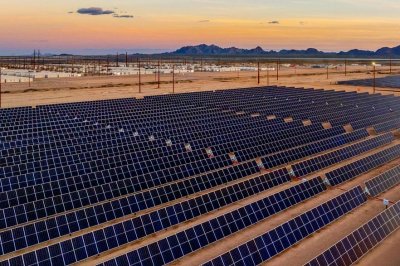
Pakistan had already been consuming less gas. Its share of Asian LNG markets fell from roughly 30 percent in 2020 to about 18 percent in 2025, driven largely by the rapid expansion of solar power. Millions of Pakistanis, frustrated by high electricity costs and frequent blackouts, have installed rooftop panels in recent years.

By 2025, the country had 34 gigawatts of solar capacity, with an estimated 25 gigawatts feeding into the national grid. Overall electricity demand from the grid fell nearly 11 percent between 2022 and 2025.

Gas-fired power plants built to run on imported LNG were left underutilised, especially during daylight hours.

“Of course, solarisation helps manage daytime demand, reducing the need for running thermal power plants,” said Haneea Isaad, an energy analyst at the Institute for Energy Economics and Financial Analysis (IEEFA), who has tracked Pakistan’s gas sector for years.

But the contracts with overseas gas suppliers still needed to be adhered to — so Pakistan kept buying and paying, she told Al Jazeera.

Ahmed of PRIED pointed to two compounding challenges. First, the nature of Pakistan’s gas supply contracts were such that the government had to “buy LNG even when demand collapsed,” he told Al Jazeera.

Second, “rapid solar growth and suppressed grid demand were underestimated, and their effect on overall planning was not accounted for,” the Islamabad-based analyst added.

LNG consumption dropped by 1.21 million tonnes in 2025 alone. With no large storage capacity, surplus gas was pushed into domestic pipelines at a loss.

The resulting circular debt in the gas sector now stands at 3.3 trillion rupees, approximately $11bn. By January, Islamabad was negotiating to offload 177 unwanted gas shipments projected through 2031, a liability of $5.6bn.

Isaad of IEEFA said the surplus was predictable.

“Pakistan’s energy planning has mostly been bound by long-term contracts with very little flexibility,” she said. Once considered necessary for energy security, these rigid contracts, she added, have become a financial albatross in a market increasingly prioritising flexibility and low-cost generation.

She described the government’s pre-war response, diverting excess cargoes, as “reactive crisis management” that prioritised short-term fixes over better forecasting and procurement flexibility.

Supply shock

Qatar’s LNG shipments to Pakistan have stopped almost completely since March 2. Of the eight shipments scheduled that month, only two arrived. The six expected in April are unlikely to reach the country.

At a public hearing of the National Electric Power Regulatory Authority, Central Power Purchasing Agency chief executive Rehan Akhtar said LNG supplies were under force majeure, though coal imports from South Africa and Indonesia remained unaffected.

Officials have warned of near-zero LNG availability in the coming months, even if the war ends quickly. LNG accounts for more than 21 percent of Pakistan’s power generation.

“With Pakistan’s LNG supply completely halted after Qatar’s declaration of force majeure, LNG plants are effectively out of the running order,” Isaad said.

The government has responded by restoring domestic gas production that had been deliberately curtailed during the surplus period.

Isaad said Pakistan had been holding back roughly 350 to 400 million cubic feet per day of domestic gas to accommodate LNG imports.

“There will also be the option to rely on other power generation sources such as imported coal and hydropower,” she added. But, she warned, “even with hydropower, imported coal and restored domestic gas production covering some of the gaps left by LNG, there might still be an energy shortage.”

For now, mild weather and increased solar output have provided temporary relief.

“So far, Pakistan has somehow miraculously survived any prolonged energy shortages in the power sector through a combination of mild weather and a pre-existing reduced reliance on imported LNG,” Isaad said. “But peak summer months may be a different story.”

Men load solar panels on a rickshaw (tuk tuk) at a market, in Karachi, Pakistan March 26, 2025. REUTERS/Akhtar Soomro
Men load solar panels on a rickshaw (tuk tuk) at a market, in Karachi, Pakistan March 26, 2025. [File photo: Akhtar Soomro/Reuters]

Summer pressure

With an energy crisis looming, Pakistan is bracing for a few hours of daily planned power cuts this summer, alongside other energy conservation measures and higher electricity costs.

According to the National Electric Power Regulatory Authority’s State of Industry Report 2025, peak electricity demand last summer exceeded 33,000 megawatts.

Winter demand currently stands at about 15,000 megawatts, partly because solar panels now generate between 9,000 and 10,000 megawatts daily, reducing reliance on the grid.

Furnace oil, the main backup fuel, now costs 35 rupees per unit, about $0.12, and its price has more than doubled since the Strait of Hormuz disruption.

Analysts say the burden will fall unevenly. Consumers reliant on grid electricity will face both higher bills and outages, while industries dependent on gas will see production disruptions. Those with rooftop solar and battery storage will be best insulated.

Isaad is blunt about the options before Pakistan. “Returning to the spot market might not be feasible, given the dire financial consequences,” she said. “Even if it does, competition with wealthier nations may once again price Pakistan out. Furnace oil could be another option, but that will be prohibitively expensive to run.

“The only option the government may be left with is load-shedding [planned power blackouts], probably around two to three hours daily.”

Source link

Burkina Faso military junta killed more than 1,800 civilians, report says

Burkina Faso’s president, Ibrahim Traore, pictured in 2025 in Moscow meeting Russian President Vladimir Putin, and his regime have killed more than 1,800 civilians — including dozens of children — since taking power in September 2022. File Photo by Russian Presidential Office/UPI | License Photo

April 2 (UPI) — More than 1,800 civilians have been killed since the military took power in Burkina Faso as it has gone after al-Qaeda-linked jihadist groups wreaking havoc in the region for years.

Roughly 1,837 civilians — including dozens of children — have been killed in 57 separate incidents since Ibrahim Traore and the military took over in a September 2022 coup, Human Rights Watch said in a report published Thursday.

The report covers events that occurred between January 2023 and August 2025 in 11 regions of the country that resulted in the deaths of 647 men, 171 women, 212 children, 162 adults whose gender is unknown and another 651 deaths the organization does not have data on.

“As part of widespread or systemic attacks on civilian populations, the murder and forcible displacement by all sides amount to crimes against humanity,” HRW wrote in the report.

“Government forces have also carried out the crimes against human of arbitrary imprisonment, torture, enforced disappearance and other inhuman acts,” it said.

Traore ousted former President Lt. Col. Paul-Henri Sandaogo Damiba in September 2022, who had taken power nine months earlier when he overthrew Burkina Faso’s democratically elected president, Roch Marc Christian Kabore.

Since taking power, Traore’s government has said that it is working to counter armed Islamist groups that have caused political instability in the country, but has suppressed “fundamental rights and freedoms” as it eliminates political opponents, journalists and other threats to its power, HRW wrote in the report.

HRW noted that although some figures are available through various databases, including one that suggests well over 10,000 civilians have been killed in Burkina Faso since 2016 but that “many incidents go unreported.”

“The grievous harm suffered by civilians in the conflict and the junta’s suppression of public dissent and criticism mean that Burkina Faso’s international partners … need to play a critical role to break the country’s long-standing cycles of abuses and impunity and promote accountability,” the organization said.

President Donald Trump delivers a prime-time address to the nation from the Cross Hall in the White House on Wednesday. President Trump used the address to update the public on the month-long war in Iran. Pool photo by Alex Brandon/UPI | License Photo

Source link

Rights groups, Milwaukee leaders slam ICE’s arrest of Palestinian advocate | Donald Trump News

Ten Muslim civil rights groups have issued a joint letter denouncing the arrest of a Palestinian American community leader in Wisconsin, Salah Sarsour.

The president of the Islamic Society of Milwaukee and a vocal Palestinian advocate, Sarsour was reportedly pulled over by 10 federal agents from Immigration and Customs Enforcement (ICE) while driving on March 30.

Recommended Stories

list of 3 itemsend of list

The joint letter explains that Sarsour was transferred to a detention facility in Illinois, then to Indiana, leaving his family “scrambling to determine his whereabouts”.

A lawful permanent resident, he had lived in the US for 32 years, according to the letter, and his wife and children are all US citizens. Sarsour has been in immigration detention ever since his arrest.

“We must be clear that Salah is being targeted on the basis of his Palestinian and Muslim background,” the letter, issued Thursday, said.

It was co-signed by organisations including the Council on American-Islamic Relations (CAIR), the Muslim Legal Fund of America, and the US Council of Muslim Organizations.

The groups noted that, under President Donald Trump, a number of immigrant activists, scholars and foreign students had been targeted for deportation based on their pro-Palestinian solidarity.

“His detention reflects a troubling trend we’ve seen with Mahmoud Khalil, Leqaa Kordia, Mohsen Mahdawi and other voices critical of Israeli oppression,” the groups wrote.

“This administration is weaponizing the U.S. justice system to advance the interests of a foreign state, Israel, at a time when it is carrying out a genocide in Gaza.”

The groups have launched an online campaign for Sarsour’s legal defence. By Thursday afternoon, it had earned over $35,500 in donations.

While the Trump administration has yet to issue a statement about Sarsour’s arrest, it has taken a hardline approach to pro-Palestinian activism.

When running for re-election in 2024, Trump pledged to crack down on protesters denouncing human rights abuses during Israel’s genocidal war on Gaza.

According to statements obtained by the Washington Post in May 2024, Trump reportedly called the protest movement a “radical revolution” and said that, if he were elected, he planned “to set that movement back 25 or 30 years”.

Within months of taking office in January 2025, Trump proceeded to take action.

Starting in March 2025, his administration moved to strip hundreds of millions of dollars in federal funds from universities that saw protests unfold on their campuses, citing claims of anti-Semitism.

Federal agents also arrested legal permanent residents like Mahmoud Khalil, a Palestinian student leader, stripping him of his green card.

One scholar, Rumeysa Ozturk of Turkiye, saw her student visa revoked for co-signing a pro-Palestinian opinion piece in her school’s student newspaper.

The arrests and subsequent efforts to rapidly deport the activists and scholars have prompted widespread condemnation as a violation of the Constitution’s First Amendment right to free speech and protest.

Officials in Wisconsin have been among the leaders to denounce Sarsour’s arrest as the latest in a series of efforts to stifle free speech. Two local alderpersons, JoCasta Zamarripa and Alex Bower, called the situation a “nightmare”.

“This is an illegal detention of a longtime permanent U.S. resident, as Mr Sarsour is a Milwaukeean who is lawfully present in our community,” they wrote in a joint statement on Thursday.

“The unacceptable activities by ICE — and especially illegally detaining citizens without due process — must stop immediately. How dare federal ICE agents come into our community and unlawfully detain a grandfather, a faith leader, a Wisconsinite!”

State Senator Chris Larson, meanwhile, underscored that the federal government has yet to offer any reasons publicly for Sarsour’s arrest.

“We have already seen numerous Muslim activists unfairly and unlawfully targeted by the Trump Administration for their beliefs and their speech,” Larson wrote.

“These Unconstitutional assaults on our freedoms should alarm all of us. When any individual or group is targeted by the government for their speech, all of our freedoms are threatened.”

Source link

Hegseth pushes out Army chief of staff

April 2 (UPI) — Secretary of Defense Pete Hegseth asked the Army chief of staff to step down from the position he has held for two years and retire immediately.

Gen. Randy George will be replaced by Gen. Christopher LaNeve, who is currently the Army’s vice chief of staff, as acting chief until an official replacement is confirmed by the Senate.

George, who had about one and a 1/2 years left in his four-year term as chief of staff, is the latest high ranking military leader to have been fired by Hegseth since his confirmation as Secretary of Defense.

The Army confirmed to CBS News and The Washington Post that Hegseth had asked George to retire immediately.

“General Randy A. George will be retiring from is position as the 41st Chief of Staff of the Army effective immediately,” Pentagon spokesperson Sean Parnell said in a statement posted on X.

“The Department of Defense is grateful for General George’s decades of service to our nation,” he said. “We wish him well in his retirement.”

George became the Army chief of staff in September 2023 after then-President Joe Biden nominated him for job, which usually carries a four-year term.

Last year, the chairman of the Joint Chiefs of staff, the head of the U.S. Navy, the commandant of the Coast Guard, the vice chief of staff for the Air Force, the head of the Defense Intelligence Agency and the Air Force chief of staff all were fired or told to retire.

The change at Army chief of staff comes days after Hegseth in a post on X lifted a suspension of the aircrew that flew an Apache helicopter past Kid Rock‘s estate last weekend.

“No punishment. No investigation. Carry on, patriots,” Hegseth said in the post.

The Apache crew was on a training mission, and the investigation was to look into why it was flown near Rock’s property and a nearby No Kings protest.

Rock, whose real name is Bob Ritchie, on Saturday posted a photo to his Instagram of the U.S. Army helicopter hovering near a pool as he waved to the pilots, which triggered the suspension and investigation.

President Donald Trump delivers a prime-time address to the nation from the Cross Hall in the White House on Wednesday. President Trump used the address to update the public on the month-long war in Iran. Pool photo by Alex Brandon/UPI | License Photo

Source link

Prosecutors exit outpace hires, hollowing mid-level ranks

A graphic shows the number of prosecutors hired and those who resigned in South Korea from 2021 to 2025, highlighting a growing gap as resignations outpaced recruitment. Data from Ministry of Justice, Supreme Prosecutors’ Office. Graphic by Asia Today and translated by UPI

April 1 (Asia Today) — More prosecutors have left South Korea’s prosecution service than have been hired over the past five years, deepening a shortage of experienced mid-level staff and slowing investigations, according to data compiled by Asia Today.

From 2021 through 2025, 569 prosecutors were newly appointed, but 677 resigned, resulting in a net loss of 108-roughly equivalent to the full staffing level of the Seoul Southern District Prosecutors’ Office.

Most vacancies have been filled by newly appointed prosecutors rather than experienced hires. During the same period, about 90% of new recruits were first-time appointees, while experienced hires remained limited. Analysts say the gap has left the organization unable to replace departing mid-level prosecutors with personnel who have comparable investigative experience.

As a result, junior prosecutors are increasingly assigned to handle cases without sufficient on-the-job training. Legal officials say this has contributed to delays in investigations and a growing backlog of cases.

A comparison of authorized staffing levels and actual personnel in January 2025 and January 2026 shows that prosecutor positions nationwide were understaffed by about 10%. Over the past two years, all but two of the country’s 60 local prosecutors’ offices reported staffing shortages.

The imbalance has been particularly evident in 2022, 2023 and 2025, when resignations exceeded new appointments. In 2022, 89 prosecutors were appointed while 146 resigned. In 2023, 95 were appointed and 145 resigned. In 2025, 139 were appointed while 175 left the service.

Observers link the exodus to a series of prosecutorial reforms, political transitions and personnel reshuffles that have reduced job stability and increased workload pressure. Concerns over reduced investigative authority also contributed to a surge in resignations in 2022.

The outflow has been compounded by the dispatch of prosecutors to multiple special investigations, further straining frontline resources.

The Ministry of Justice has responded by accelerating recruitment and expanding the number of new appointments. It is also recruiting experienced legal professionals with at least two years of practice, with new appointees expected to begin work in May.

However, officials within the prosecution service say new hiring alone is unlikely to resolve accumulated case delays and staffing shortages, particularly as a broader restructuring-including the planned abolition of the prosecution service in October-approaches.

A Justice Ministry official said new prosecutors will be assigned to priority areas such as trial work, reducing investigative delays, judicial oversight, human rights protection, recovery of criminal proceeds and support for crime victims.

— Reported by Asia Today; translated by UPI

© Asia Today. Unauthorized reproduction or redistribution prohibited.

Original Korean report: https://www.asiatoday.co.kr/kn/view.php?key=20260402010000446

Source link

Legal groups condemn arrival of a dozen deportees from US to Uganda | Donald Trump News

Legal groups in Uganda have announced that a dozen deportees from the United States are expected to land in the country, following a deal with President Donald Trump.

On Thursday, the Uganda Law Society and the East Africa Law Society announced they had gone to court to challenge the deportation, which they called “an undignified, harrowing and dehumanising process”.

Recommended Stories

list of 3 itemsend of list

“We have approached the Courts of Law in Uganda and the region, seeking bespoke reliefs designed to arrest this patent international illegality,” Asiimwe Anthony, the vice president of the Uganda Law Society, wrote in a statement.

“Our perspective of the matter is broader than a single act of deportation. We view it as but one gust from the ill winds of transnational repression that are blowing across our world.”

Thursday’s deportation marks the first confirmed instance of deportees being transferred from the US to Uganda.

The 12 people reportedly landed at the Entebbe International Airport, some 40 kilometres (25 miles) from Kampala, by private aircraft. No identifying information was provided about the deportees.

But the deportation is the latest example of Trump’s far-reaching efforts to offload immigrants to “third countries”, where they have no personal connections — and may not even know the language.

Scrutiny of third country deportations

So far, Trump has struck deals with a number of countries to accept deported foreigners. They include at least six African countries, among them Equatorial Guinea, Ghana, Rwanda, Eswatini and South Sudan.

The deal with Uganda came to light last August. The country’s Ministry of Foreign Affairs confirmed that the agreement was a “temporary arrangement” and that priority would be given to deportees from other African countries.

Unaccompanied children and people with criminal records would not be allowed under the deal, according to the ministry’s statement at the time.

It is unclear whether Uganda received payment for its decision to accept third-country deportations.

Other countries, though, have signed multimillion-dollar deals. El Salvador was given nearly $6m to imprison deportees from the US, Equatorial Guinea got $7.5m, and Eswatini nabbed $5.1m.

There is no official estimate about the total cost of these third-country deals, but Senate Democrats in the US have estimated that at least $40m in funding has been given as incentives for countries to accept deportations.

Most of those funds, the Democrats added, were disbursed in lump sums before any deportees arrived. They also note that those funds are separate from the additional costs of the deportation flights: US military aircraft can cost $32,000 per hour to operate.

“Through its third country deportation deals, the Trump Administration is putting millions of taxpayer dollars into the hands of foreign governments, while turning a blind eye to the human costs,” Democratic Senator Jeanne Shaheen said in a February statement.

“For an Administration that claims to be reigning in fraud, waste and abuse, this policy is the epitome of all three.”

Critics have also questioned whether the countries receiving US deportees are adequately safe.

In the past, the US has criticised Uganda for “significant human rights abuses”, citing reports of extrajudicial killings, life-threatening prison conditions, and torture and other degrading treatment from government agencies.

It also noted that Uganda had government restrictions against human rights and civil society organisations, and that consensual same-sex conduct was outlawed.

According to the United Nations, Uganda already plays host to nearly 1.7 million refugees and asylum seekers, as people flee violence in neighbouring countries like the Democratic Republic of Congo (DRC) and South Sudan.

An ‘authoritarian project’?

In his letter on Thursday, Anthony, the vice president of the Uganda Law Society, called the US deportations part of a “broader authoritarian project” that his group felt compelled to oppose.

“This development and the attendant illegalities that accompany it are reminiscent of a dark past that the global family of humanity supposedly put behind itself in the pursuit of the ideal that every human being is born equal,” Anthony wrote.

He added that US actions under Trump were paving the way for similar policies elsewhere.

“In the United States, the militarisation of society has given carte blanche to captured democracies in Africa to carry on with despotism unchecked,” he said.

Still, the Trump administration has defended the deportations as legal under the US Immigration and Nationality Act, which has loopholes for removals to “safe third countries”.

The Trump administration has also pointed to diplomatic assurances from the “third countries” in question that US deportees would not face persecution.

The “third-country” policy has, however, faced numerous legal challenges. While the US Supreme Court has largely let such removals proceed, a lower court once again ruled in February that the policy could infringe upon immigrants’ due process rights.

In the case of Salvadoran immigrant Kilmar Abrego Garcia, lawyers have even argued that his deportation to a country far from home was evidence of “vindictiveness” on the part of the Trump administration.

Uganda has been floated as one of the destinations for Garcia, who was wrongfully deported in March 2025 and then returned to the US in June, only to face deportation proceedings once more.

Trump has pushed an aggressive programme of mass deportation since returning to the White House for a second term in 2025.

At least 675,000 people have been removed under his administration as of January, according to US government statistics.

Source link

Children’s hospital in Tehran keeps hopes and smiles alive during war | Health News

Staff at the Children’s Medical Center organise activities to offer a joyful experience to children in hospital amid the ongoing US-Israeli war on Iran.

Tehran, Iran – Many Iranian families picnicked outdoors during daylight hours on Thursday for Sizdah Bedar, which marks Nature Day in the Persian calendar, despite the ongoing bombardment by the United States and Israel.

Thousands gathered at Pardisan Park, a sprawling complex northwest of Tehran, to spend time with loved ones as holidays for Nowruz, the Persian New Year, came to an end with politicians and commanders ordering more strikes and threatening to escalate attacks.

Recommended Stories

list of 3 itemsend of list

A short drive away near the downtown area of the capital, a group of doctors and healthcare providers tried to offer a joyful experience to children who could not go outside with their families due to illness.

Resident doctors and interns at the Children’s Medical Center, a hospital operating under the Tehran University of Medical Sciences, have been pooling their own money with some donations to organise activities for the children suffering from underlying health conditions.

The paediatric facility, and the adjacent Imam Khomeini Hospital, have not been impacted by strikes, unlike a number of other medical facilities in Tehran and across the country, some of which have had to suspend services.

But the bombs have rung out loud numerous times after hitting nearby areas since the start of the war over a month ago.

“The children and their families have been going through a lot of pressure and anxiety because they have to be in the hospital under these stressful conditions,” Dr Samaneh Kavousi, one of the organisers, told Al Jazeera.

Iranians celebrate Iranian Nature's Day, called 'Sizdah be Dar,' the 13th day of Nowruz (Persian New Year) in a park in Tehran, Iran on April 2, 2026.
Iranians celebrate Iranian Nature’s Day, called ‘Sizdah Bedar’ and marking the 13th day of Nowruz (Persian New Year), in a park in Tehran, Iran on April 2, 2026 [Abedin Taherkenareh/EPA]

“We’ve been trying to do what we can to relieve some of that anxiety,” she said.

During the Nowruz holidays that started on March 20, children were encouraged to draw and paint, and the artworks were on display on Thursday when their families came to celebrate at the hospital.

The main themes were the Haft Sin table and Sizdah Bedar, or the 13th day of the first month, which symbolises doing away with ill fortune.

Most of the children were very young, a few of them babies being held by fathers, mothers and siblings who came out to support them and keep spirits alive despite the hardships of caring for a sick family member amid the war.

Some danced together to children’s music, along with hospital staff wearing costumes of Toy Story’s Buzz Lightyear and characters from PAW Patrol, the popular animation series about brave puppies who work together to safeguard their community.

Others played with balls, had their faces painted, filled colouring books, or left palm prints on paper. The children also received a fun bag filled with toys and food.

Dr Zeynab Aalihaghi, another resident organiser of the event at the hospital, said that the facility is not tasked with treating children wounded during the war, but the number of its patients has declined compared to before the war.

She told Al Jazeera that up to about 400 children were being cared for in the hospital before the war, while less than 100 are now there. The doctor added that some parents have opted to take their children to paediatric facilities in other cities, which may be perceived as being safer at the time that the child needs treatment.

“But our emergency admissions have increased over the past two days, so it could mean that we might experience a new peak after the Nowruz holidays,” Aalihaghi said.

The doctor said she believes that, at its current state, the hospital is prepared to quickly bounce back to normal activity levels when the war ends.

Kavousi, the other doctor, said the facility faces no shortage of medicine at the moment, and hopes to be able to continue helping children and their families.

“Healthcare personnel are also under a lot of mental strain,” she said. “But we will continue to do our duty to serve our people and work to take away children’s pain.”

Source link

Appeals court tosses sentence of Colorado elections clerk Tina Peters

April 2 (UPI) — A Colorado appeals court on Thursday threw out the sentence of Tina Peters, a former elections clerk, who was convicted in an election data case.

Peters was sentenced to nine years in prison in August 2024 on seven of the 10 counts for which she was charged.

She allowed an unauthorized person to make copies of voting machine hard drives that included classified information. The data from those drives was then leaked online by conspiracy theorists who falsely said it proved President Donald Trump correct in his assertion that the 2020 election was “stolen.”

Trump later pardoned Peters, but Colorado officials said he has no power to do so because she was convicted by the state. He has since pressured Colorado Gov. Jared Polis to pardon her.

The judges of the Colorado Court of Appeals ruled that District Judge Matthew Barrett wrongfully used Peters’ beliefs and promotion of election fraud conspiracy theories in his sentencing.

“We reverse her sentence because it was based in part on improper consideration of her exercise of her right to free speech,” the court wrote, sending her case back to the trial judge. Now Barrett must re-sentence Peters without using her beliefs to make the decision, the appeals judges said.

At the sentencing, Barrett said Peters had no remorse and called her a “charlatan” who abused her position to “peddle snake oil.”

“I am convinced you would do it all over again if you could,” The Hill reported Barrett said. “You’re as defiant as any defendant this court has ever seen.”

In its decision, the appeals court said her beliefs shouldn’t color the sentencing.

“Her offense was not her belief, however misguided the trial court deemed it to be, in the existence of such election fraud; it was her deceitful actions in her attempt to gather evidence of such fraud. Indeed, under these circumstances, just as her purported beliefs underlying her motive for her actions were not relevant to her defense, the trial court should not have considered those beliefs relevant when imposing sentence.”

The appeals court did not overturn Peters’ conviction and formally said Trump doesn’t have the power to pardon a person for state law offenses.

“The crux of Peters’ argument is that the phrase ‘Offences against the United States’ includes an offense against any of the states in the union,” the court wrote. “We join what appears to us to be every other appellate court that has addressed the issue and reject such an expansive reading of the phrase.”

Peters served as a clerk in Mesa County, Colo., whose county seat is Grand Junction, in western Colorado.

She was convicted on three counts of attempting to influence a public servant and one count each of conspiracy to commit criminal impersonation, first-degree misconduct, violation of duty and failure to comply with the requirements of the secretary of state.

Source link

U.N. urges El Salvador to review life sentences for minors

The U.N. Office of the High Commissioner for Human Rights wants authorities in El Salvador to reconsider constitutional and legal changes that allow life sentences for minors as young as 12. File Photo by Rodrigo Sura/EPA

April 2 (UPI) — The United Nations Office of the High Commissioner for Human Rights urged authorities in El Salvador to reconsider recent constitutional and legal changes that allow life sentences for minors as young as 12.

The agency warned Wednesday that the measure contradicts international human rights standards and obligations.

El Salvador’s Legislative Assembly approved the reform March 26, amending the country’s juvenile criminal law to permit life imprisonment for minors linked to criminal groups.

The change is part of broader constitutional changes promoted by President Nayib Bukele, and it expands the use of life sentences, previously authorized for adults, to include adolescents.

The reform accompanying a constitutional amendment promoted by the government of Nayib Bukele alters the juvenile justice system by removing previous maximum detention limits for crimes such as terrorism and organized crime, digital outlet Lexis reported.

The move is part of a broader tightening of criminal policy after ratification of a constitutional reform that authorizes life sentences for adults and now extends them to adolescents, with the stated goal of combating criminal networks and gangs.

Until now, Salvadoran law established that in severe cases, minors under 12 could face up to 10 years in detention, while those older than 16 could receive sentences of up to 15 years.

The new legal framework establishes life imprisonment as the only possible sentence for crimes such as homicide, femicide, rape and gang membership for those between ages 12 and 18, representing a major shift in the country’s juvenile justice model, Infobae reported.

The proposed measure was ratified with 57 votes in favor, marking a significant shift in the Central American country’s criminal policy.

In response to the U.N. statement, Bukele pointed to historical precedents. He recalled the implementation of the Juvenile Offender Law in 1994, adopted following U.N. recommendations, which he said contributed to conditions that enabled the growth of gangs in the country.

In a message on X, Bukele said past decisions, along with processes such as the deportation of Salvadorans during the administration of Bill Clinton, helped strengthen criminal structures that shaped decades of violence in El Salvador.

“So, no, thank you very much. Take your social experiments to other countries that have not suffered what we have suffered; maybe they will believe you (hopefully not). We are not going back to the past,” Bukele wrote.

The office of high commissioner said the reform conflicts with the Convention on the Rights of the Child, which requires that children in conflict with the law be treated in a way that prioritizes rehabilitation and reintegration, and that detention be used only as a last resort and for the shortest possible time.

“Prolonged detention is deeply harmful to children, violates several of their rights and affects their development and well-being throughout life, reducing their chances of successful reintegration into society,” spokesperson Marta Hurtado said in a statement.

The agency added that improving prison conditions and ensuring full compliance with human rights standards for all detainees remain essential.

Salvadoran magistrates defended the reform, saying it is consistent with the Convention on the Rights of the Child because it does not impose a sentence without the possibility of release, the newspaper La Nación reported.

The government created a mechanism that allowed those sentenced to life imprisonment to seek a review of their sentence. Under certain criteria, this could allow them to regain their freedom in a controlled manner after 25 years in prison.

If a minor is convicted of more than one crime, the sentence review would take place after 35 years in prison. If the conviction involves an aggravated or extremely serious offense, the sentence may not be reviewed until 40 years have been served.

On March 27, El Salvador marked four years under a state of emergency aimed at combating gangs, which authorities blame for the majority of homicides in the country.


Source link

Artemis II astronauts complete first burn, head back to sleep

April 2 (UPI) — The Artemis II astronauts have completed their perigee raise burn as part of a planned orbital adjustment and are headed back into a four-hour rest period, NASA said.

After an earlier rest period, the astronauts were awakened at 7:06 a.m. EDT for the perigee burn. NASA played the song “Sleepyhead” by Young and Sick to wake them up.

In the perigee burn, the spacecraft lit its main engine for 43 seconds, which raised the lowest point of its orbit. This helps prevent the craft from re-entering the Earth’s atmosphere. It also refines the trajectory of the craft as it circles Earth. It put Orion into a stable high-Earth orbit, which aligns with its path to the moon.

The crew will now have another four-and-a-half-hour rest period, then they will be awakened to start their first full day in space.

Later today, the mission management team will have its first meeting of the mission to assess the spacecraft’s systems and will give its approval for the upcoming translunar injection burn. That burn will send astronauts out of Earth’s orbit and toward the Moon for the first time in 50 years. It will last just over six minutes and will speed the craft to escape Earth’s gravitational pull.

The launch on Wednesday evening began at 6:35 p.m. EDT from the Kennedy Space Center in Florida.

Soon after launch, Wiseman told operators on the ground, “We have a beautiful moonrise, we’re headed right at it.”

There was a small glitch in the craft’s space toilet, Space.com reported.

“The toilet fan is reported to be jammed,” NASA spokesperson Gary Jordan said during live mission commentary. “Now the ground teams are coming up with instructions on how to get into the fan and clear that area to revive the toilet for the mission.”

NASA Director of Flight Operations Norm Knight told reporters that the problem was a controller issue on the toilet in urine collection. The astronauts were able to use a backup system until the engineers fixed the problem before their first rest period.

About 9 minutes after the launch, the crew entered Earth’s orbit, traveling about 15,000 mph. They are expected to enter the moon’s orbit in about six days, travel around it and then return to Earth.

The four-person crew are: NASA’s Commander Reid Wiseman, Victor Glover and Christina Koch, and Canadian Space Agency’s Jeremy Hansen.

NASA’s Space Launch System rocket carrying the Artemis II crew is launched from Complex 39B at Kennedy Space Center in Florida on April 1, 2026. Photo by Joe Marino/UPI | License Photo

Source link

Pakistan to continue with Iran-US mediation despite ‘obstacles’ | US-Israel war on Iran News

Islamabad, Pakistan – Pakistan intends to continue to nudge the United States and Iran towards negotiations aimed at ending their war, but the Ministry of Foreign Affairs acknowledges “obstacles” in its efforts.

Foreign Office spokesperson Tahir Andrabi did not specify the roadblocks on the path to peace that he was referring to. But his comments, made during a weekly media briefing in Islamabad, came hours after US President Donald Trump threatened to bomb Iran “back to the Stone Ages” if it did not accept Washington’s terms for a peace deal.

Recommended Stories

list of 4 itemsend of list

Pakistan has been leading a multination effort to facilitate negotiations between the US and Iran.

“Despite challenges and obstacles, Pakistan will continue its efforts to promote facilitation and dialogue,” Andrabi said. He added that Islamabad was working to create conditions for “meaningful negotiations among relevant stakeholders”.

He said the US and Iran had confidence in Pakistan’s role as a neutral intermediary.

In a sign of that confidence, Iran has allowed 20 Pakistani-flagged vessels to transit the Strait of Hormuz. Andrabi called it “a harbinger of peace” and a positive step for regional stability.

He did not confirm whether any Pakistani ship had so far sailed through the strait.

The Hormuz route has been largely blocked since Iran began restricting oil and gas shipments following the outbreak of the US-Israel-Iran conflict on February 28. The disruption has driven up energy prices and triggered widespread economic strain.

Andrabi also pointed to sustained high-level contact between Islamabad and Tehran. He cited a March 28 call in which Iranian President Masoud Pezeshkian spoke with Prime Minister Shehbaz Sharif, stressing the need to “build trust in order to facilitate talks and mediation” and praising Pakistan for its “supportive role for peace”.

Regional diplomacy

The briefing came just a day after Deputy Prime Minister and Foreign Minister Ishaq Dar returned from Beijing, where he met China’s Foreign Minister Wang Yi.

This handout photograph taken on March 29, 2026 and released by Pakistan's Ministry of Foreign Affairs shows Pakistan's Foreign Minister Ishaq Dar (2R) poses for a photograph with his counterparts Turkey's Hakan Fidan (R), Saudi Arabia's Faisal bin Farhan (2L) and Egypt's Badr Abdelatty before their meeting at the Foreign Ministry office in Islamabad.
The foreign ministers of Pakistan, Egypt, Turkiye and Saudi Arabia in Islamabad on March 30, 2026 [Handout/Pakistan’s Ministry of Foreign Affairs via AFP]

The visit produced a joint five-point initiative calling for an immediate ceasefire, urgent diplomatic engagement to prevent further escalation, and the restoration of normal maritime traffic through the Strait of Hormuz.

Andrabi said the Chinese-Pakistani plan had since been shared with Iran, the US and other stakeholders, receiving appreciation “across the region and beyond”.

He added that the proposals were consistent with the outcome of the four-nation ministerial meeting held in Islamabad the previous weekend — the foreign ministers of Saudi Arabia, Turkiye and Egypt joined Dar for those talks.

Dar travelled to Beijing despite medical advice to rest after sustaining a hairline fracture during the Islamabad talks, a move Andrabi said reflected the importance Pakistan places on its ties with China. “The Chinese side expressed deep appreciation, conveying that China and Pakistan are strategic cooperative partners,” he said.

The Islamabad meeting between Pakistan, Saudi Arabia, Turkiye and Egypt was the second such gathering in a coordinated regional push to de-escalate tensions. The first was held in Riyadh on March 19.

Following those talks, Dar said Pakistan was prepared to host direct US-Iran negotiations “in the coming days”.

“Pakistan will be honoured to host and facilitate meaningful talks between the two sides for a comprehensive and lasting settlement,” he said on March 30.

At Thursday’s briefing, Andrabi reiterated that offer, confirming Pakistan had formally “offered to host and facilitate negotiations as part of its broader diplomatic outreach”.

He said the next phase of efforts would focus on securing “meaningful negotiations among relevant stakeholders”.

He appeared to acknowledge that Iran — which has so far denied any direct negotiations with the US and has insisted that the mediation is limited to messages being passed between Tehran and Washington by Islamabad — was not fully on board with the efforts to push the warring nations towards talks.

“Iran, as a sovereign country, determines its own policies,” Andrabi said.

Afghanistan breakthrough?

Separately, the Pakistani Foreign Ministry confirmed sending a delegation of senior officials to the northwestern Chinese city of Urumqi for talks with Afghanistan. It is the first substantive contact since Islamabad launched cross-border strikes in late February.

The Urumqi meeting on Wednesday focused on exchanging views on the current escalation, Andrabi said.

“Our participation is a reiteration of our core concerns,” he said. “The burden of real process, however, lies with Afghanistan, which must demonstrate visible and verifiable actions against terrorist groups using Afghan soil against Pakistan.”

Pakistan launched Operation Ghazab lil-Haq on the night of February 26, targeting what it described as sanctuaries of “terrorists” in Afghanistan, following what it called unprovoked fire from across the border by Afghan Taliban forces.

After a five-day pause from March 18 to 23 for Eid-ul-Fitr, partly in response to de-escalation requests from Saudi Arabia, Qatar and Turkiye, Andrabi confirmed the operation was continuing.

“There has been no change in Operation Ghazab lil-Haq, and operations are continuing,” he said.

Islamabad has repeatedly accused the Taliban administration in Kabul of enabling groups such as Pakistan Taliban, known by the acronym TTP, which have repeatedly launched deadly attacks inside Pakistan, to operate from Afghan soil. Kabul denies those allegations.

Islamabad says its concerns remain unaddressed, and violence has surged since the Taliban’s return to power in August 2021.

China has also played a role in facilitating engagement between Pakistan and Afghanistan, including meetings in Beijing in May and in Kabul in August.

Source link

5 killed, 11 injured in large-scale Russian strikes across Ukraine

Airborne attacks across large areas of Ukraine by Russian forces with drones and artillery killed at least five people, injured 11 others over the past 24 hours, inflicting widespread damage to infrastructure and in residential areas. File photo by Sergey Kozlov/EPA

April 2 (UPI) — At least five people were killed and 11 injured in large-scale Russian strikes across Ukraine involving more than 360 drones, Ukrainian authorities said.

One person was killed and two injured, one of them a 12-year-old boy, in the southeastern city of Synelnykove, after drone and artillery strikes across Dnipropetrovsk province overnight.

In an online post, Dnipropetrovsk Military Administration head Oleksandr Hanzha said that an administrative building and a shopping complex were set ablaze in Synelnykove as well as infrastructure, a dozen apartment buildings and private houses and buses in a series of strikes also targeting Pavlohrad and communities to the south in and around Nikopol.

Four people were killed and four injured on both banks of the Dnipro River in Cherkasy province, some 80 miles downstream from Kyiv, amid mass daytime attacks on Wednesday centered on central and western Ukraine.

The fatalities occurred in a blast in the Zolotoniskyi district after local residents gathered in an open area where a drone had crashed and the warhead detonated without warning.

Cherkasy Regional Prosecutor’s Office said in a Telegram post that it had launched a pre-trial investigation into the attack as a possible war crime and reiterated warnings to people to stay well away from downed drones, drone debris and other munitions.

“Law enforcement agencies and rescue services once again emphasize: any fragments of UAVs, missiles, or other explosive objects pose a mortal threat. WHAT EVERYONE NEEDS TO KNOW: It is strictly forbidden to: approach the crash site of a UAV; touch the debris; photograph or film them up close; carry any parts of the object,” the prosecutor’s office added.

Four civilians were injured in air attacks on Cherkasy district, three of them passengers on a bus that was struck by debris from a Russian drone, said the province’s governor, Ihor Taburets.

In Poltava, 125 miles to the east, four people, including a child, were injured when a drone hit a private holding and one person was injured in attacks targeting critical infrastructure facilities in the far west of Ukraine, close to the border with Romania in Zakarpattia province.

The Ukrainian Air Force reported hundreds of drones crossing into Ukraine from the southeast, headed toward western regions, including Ivano-Frankivsk and Chernivtsi with blasts heard in Lviv and Ternopil and damage reported in the cities of Lutsk, Khmelnytskyi and Khotyn in Volyn, Khmelnytskyi and Chernivtsi provinces.

Khotyn Mayor Andrii Dranchukon took to social media Thursday morning to call on residents to limit their electricity use to essential purposes, saying damage to power infrastructure from drones would take up to two weeks to repair and pledging assistance to people whose homes had sustained damage.

Children race to push colored eggs across the grass during the annual Easter Egg Roll event on the South Lawn of the White House in Washington on April 21, 2025. Easter this year takes place on April 5. Photo by Samuel Corum/UPI | License Photo

Source link

Mandelson tried to get Epstein’s ‘goddaughter’ access to 10 Downing Street | Politics News

British politician and peer Peter Mandelson tried to help convicted sex offender Jeffrey Epstein in arranging for a visit by his “goddaughter” to 10 Downing Street at a time when Epstein was in prison for procuring a minor for prostitution, emails released by the US Department of Justice reveal.

Mandelson was serving as business secretary in the government of Prime Minister Gordon Brown and sitting on the House of Lords frontbench at the time. Epstein, meanwhile, was a convicted sex offender and was serving an 18-month sentence in Florida.

Recommended Stories

list of 4 itemsend of list

In an email exchange, Epstein told Glenn Dubin, a hedge fund manager whose child he called his “goddaughter”, that he would “organize a trip to Number !O, and the House of Lords with Peter Mandelson for you guys”.

On the same day, Epstein wrote directly to Mandelson saying that “the most important person to me next to you of course) is my goddaughter that will be in London on Wednesday and Thursday of next week what can we do to make it a very special trip, I would really appreciate it”.

In the exchange, Mandelson asks, “how old?, to which Epstein replied “15”, adding that she will be with her parents. “House of lords, number 10, just for ten minutes, it would mean a lot to me”, he added.

Mandelson responds: “Fine on all”. Epstein responds: “Great”.

Days later, Mandelson replied that he was “trying my best to accommodate” the request and that “we are still on the case… [and] hope something will fall into place”. Epstein subsequently forwarded Mandelson’s response to Dubin.

‘Andrew had tea with the Dubin kids’

These emails are among thousands of messages in the latest tranche of the Epstein files that mention Mandelson – a central figure in modern British politics for decades, long noted for his ability to survive repeated scandals. The exchange offers a glimpse into how Epstein appeared to leverage his relationship with Mandelson while he was in the United Kingdom’s government. In turn, Mandelson appeared willing to open doors for Epstein while he was a convicted sex offender.

Al Jazeera has contacted Downing Street for comment.

Dubin later wrote to Epstein: “Grt time in buck palace…. ….andrew was great. Thx! G”

Fifteen minutes later, Epstein wrote to convicted child sex trafficker and former girlfriend Ghislaine Maxwell: “andrew had tea with the dubin kids and glenn.”

The emails appear to refer to Andrew Mountbatten-Windsor, ex-prince and brother of Britain’s King Charles. Mountbatten-Windsor was accused by Epstein victim Virginia Giuffre of sexual assault, specifically alleging he raped her on three occasions in 2001 when she was 17, as part of a sex-trafficking ring run by Epstein. These allegations led to a 2021 lawsuit for sexual assault and intentional infliction of emotional distress, which was later settled out of court.

Glenn Dubin’s daughter and Epstein’s so-called goddaughter is Celina Dubin. She is the daughter of Eva Andersson-Dubin, a former girlfriend of Epstein.

Email exchanges suggest that following this visit to London, Epstein stayed in contact with Glenn Dubin’s daughter — who the sex offender called his “goddaughter”.

Calls for UK prime minister to resign

The correspondence raises questions about why Peter Mandelson – who was aware of Epstein’s conviction for procuring a minor for prostitution – was prepared to facilitate an arrangement for Epstein and an underage girl while he was a UK government minister.

At the time of the 2009 exchange, Mandelson had returned to government, serving in a senior Labour role from 2008 to 2010. After leaving office, he built a lucrative global consulting career before re-entering public life, when Prime Minister Keir Starmer appointed him ambassador to the United States in 2024.

His relationship with Epstein, who died in prison in 2019 while awaiting trial on sex-trafficking charges, has since become a problem that will not go away for the UK government, and has even led to calls for Starmer to resign.

The release of some Epstein files by the US Department of Justice in September 2025 led to Mandelson stepping down as US ambassador. A second tranche, published on January 30, alleged that he had passed sensitive government information to Epstein on several occasions, according to the files. The claims prompted the British government to refer the matter to police for possible prosecution. Mandelson was briefly arrested in February before being released on bail, while investigations into allegations against him continue.

The political fallout, meanwhile, has since widened, forcing the resignation of two senior government aides. In an attempt to contain the crisis, the prime minister said all documents relating to Mandelson’s appointment would be made public, a move that has instead intensified scrutiny.

The initial release of what have become known as the “Mandelson files” showed that, ahead of his appointment to Washington, UK officials had explicitly warned that his long-standing ties to Epstein posed a “reputational risk” to the country.

Government documents indicate that during the vetting process in late 2024, Mandelson repeatedly denied key aspects of his relationship with Epstein, including whether he had stayed with the sex offender after his 2008 conviction. However, internal correspondence shows officials were aware of the relationship, discussed it as part of due diligence, and raised concerns with the prime minister’s chief of staff. The appointment nonetheless went ahead.

Starmer has since apologised for the decision. Further WhatsApp messages are expected to be released in the coming days, and could prompt fresh calls for Starmer’s resignation, raising questions about how much more damage the UK government can sustain.

‘Like the bad boy you are’

One of Mandelson’s first recorded interactions from the files is with Ghislaine Maxwell.

As far back as June 2002, the emails show him already in direct contact with her, stepping into a world that blurred intimacy and power.

“I love disgusting. That’s why I am wild and dangerous…” Mandelson wrote to Maxwell.

In the same exchange, the tone shifted to potential political and business advisory work in the United States, invoking contacts linked to former US Senator George Mitchell.

In the same exchange, Mandelson appears to have gate-crashed a lunch with Epstein, prompting a rebuke relayed through Maxwell: “You spoiled Jeffrey’s lunch. Pete, I have warned you about that before. Behave or you will be punished like the bad boy you are.”

At the time, Mandelson was in exile from political life. It was 2002, and he had already been forced to resign twice from government — first, after taking a loan of 373,000 pounds ($496,700) from fellow minister Geoffrey Robinson to help purchase a house, then after being accused of intervening in a passport application for the businessman Srichand Hinduja.

It was in this vacuum of political hiatus that Mandelson would cultivate his business and personal connections with Epstein.

These early messages set the pattern for what followed: Long, meandering exchanges between Mandelson and Epstein in which sexual innuendo sits alongside business.

By 2003, messages from Mandelson to Epstein were being preserved in a 50th birthday book compiled for Epstein. Several pages show photographs of the two men together, accompanied by handwritten notes in which Mandelson refers to Epstein as his “best pal”.

The book itself was gifted in 2003, but it remained out of public view until its release two decades later, in September last year.

Financial links also surface from this release of files. Bank statements from 2003 and June 2004 appear to show Epstein making several payments, worth $25,000 each, to accounts associated with Mandelson, as reported by the Financial Times.

Other emails also suggest Mandelson desired a life that domestic politics could not afford. Epstein offered Mandelson access to the seemingly limitless excess of the ultra-wealthy. “When are you going to the island at Xmas? I am having trouble getting air tickets to St Barts and was wondering about going via US, NY or Miami,” asked Mandelson in one exchange in 2005.

Epstein’s reply was characteristically transactional. “I can pay for your tickets if needed.” Whether the offer was accepted remains unclear. Another message from Maxwell to Epstein read: “Asked Mandelson how he is getting to the island – he sd I hope JE is sending the chopper…so I take it you want me to give him a ride on the plane”.

The messages suggest that Mandelson was impressed by the allure of Epstein’s island in the Caribbean – and his mansion in New York that he frequented repeatedly, according to the correspondence released by the Justice Department. Pictures that have since shown Mandelson in a dressing gown laughing with Epstein alongside Mountbatten-Windsor, who was then Prince Andrew — he was stripped of his royal titles in late 2025 because of the revelations of his close relationship with Epstein.

Another released photo shows Mandelson in his underwear speaking with an unidentified woman at what was reportedly Epstein’s residence.

In another email in 2002, Mandelson told Maxwell of a cancelled meeting in Paris and then asked her if he could “stay on for a few days to have complete peace”. It is unclear why he was seeking her permission to stay in Paris — and whether Maxwell and Epstein were covering his costs in the French capital.

Then, in 2008, Epstein was arrested on suspicion of soliciting a minor for prostitution. While many of his former contacts have said that they cut off ties with him around this time, the files reveal that Mandelson positioned himself as a kind of informal counsellor, coaching Epstein through the mounting allegations.

“You are fighting back so you need strategy,” he wrote. He pressed repeatedly for updates, for “developments”, and asked whether everything was being handled.

“Hope you are strategising,” he added, in another message.

Upon finding out about the conviction, Mandelson wrote: “I think the world of you and I feel hopeless and furious about what has happened … Your friends stay with you and love you.”

‘Special unpaid adviser’

Following Epstein’s conviction, the two did not cut off contact. The files suggest that Mandelson and Epstein were in more regular communication even as the financier was serving a prison sentence for soliciting prostitution with an underage girl.

This rate of emails again intensified in June 2009, when Mandelson was appointed first secretary of state, effectively the second most powerful figure in Gordon Brown’s government. Epstein appeared to take pride in the promotion. In one message, Epstein circulated a Guardian article about Mandelson’s new role to Maxwell and alleged sex trafficker and model scout Jean-Luc Brunel. In another email, he congratulated Epstein for his “comeback” and said his appointment made him “proud”. In another, he broadcast the news to his network of powerful associates, including senior figures at JPMorgan such as Jes Staley, writing to him: “For all intents and purposes Peter Mandelson is now deputy prime minister”.

At times, Epstein seemed to act as an intermediary between Mandelson and Staley – who, according to multiple documents in the Epstein files, is alleged to have sexually assaulted a woman, a claim he denies.

The files suggest Epstein passed messages between Mandelson and senior JPMorgan figures, facilitating introductions and discussions around financial and policy matters. Staley, for instance, asked Epstein to arrange meetings with Mandelson, which appeared to take place in December 2009, February 2010, and a call set up by Epstein in March 2010 – and another call with either Mandelson or then-Chancellor Alistair Darling in January 2010.

The tone of the correspondence oscillated between admiration and calculation. In one exchange, Epstein described Mandelson as “devious” after he lobbied a bank to underwrite a mining project backed by their mutual associate Nat Rothschild, as reported by the Guardian.

Epstein also began offering advice. He suggested Mandelson could leverage his new position, “in charge of all universities”, to establish a prize in “cyberwar artificial general intelligence”, an area in which Epstein himself held business interests. Mandelson’s reply was telling: “You can become my special unpaid adviser.”

Other messages reportedly suggest Mandelson may have tipped Epstein off about sensitive political developments, including Brown’s impending resignation in 2010 and a 500-billion-euro ($580bn) European Union bailout designed to stabilise the Greek debt crisis.

In a separate exchange, days after his appointment as first secretary of state, Mandelson forwarded Epstein a private email sent to Brown containing sensitive market information, including discussions of potential government asset sales, tax policy, and business expectations that the Conservatives would win the next election.

The forwarded “interesting note” was from Nick Butler, a special adviser, outlining “business issues” for the prime minister. Epstein, still in prison at the time, responded with policy advice of his own. The government, he wrote, should consider not only physical assets but “INTELLECTUAL assets, that are not being exploited”, effectively advising a sitting cabinet minister on economic strategy.

‘You are the only person that knows everything about me’

The weekend after this correspondence, Mandelson appeared to have stayed at Epstein’s residence. At the same time, the two continued a close personal relationship. In one exchange, Mandelson told Epstein: “Had a long dream about you last night.”

In another exchange, Epstein appeared to act as a confidant. Mandelson, writing from the Lords frontbench while seemingly engaged in parliamentary business, asked whether Epstein had spoken to a contact.

The correspondence then turned to a figure named Simone. “I am worried about Simone who is totally despairing,” Mandelson wrote. “I am not sure what else to do. Any ideas?”

Epstein advised him to travel to New York: “Yes, you should go to New York for a weekend… I have been consistent on this. Do not lose the opportunity. Coming across people you really enjoy is rare – don’t be lazy, get on a plane.”

“You are the only person who knows everything about me,” Mandelson later responded.

Weeks later, however, Epstein appeared to change his position. He wrote: “I’m rethinking the Simone issue with your new profile. I’m afraid it’s asking for serious trouble. It won’t be kept quiet. Rinalado will go ballistic. Fraught with danger.”

Financial links emerge again shortly after. It is widely reported that in September 2009, Mandelson’s husband, Reinaldo Avila da Silva, emailed Epstein requesting financial help to cover the costs of an osteopathy course, including fees, equipment and a laptop. Epstein agreed: “I will wire your loan amount immediately.”

A payment of 10,000 pounds ($13,310) followed. When da Silva sought clarification on whether the amount covered his school fees, Epstein confirmed it did. Mandelson, in turn, emailed Epstein with a note of caution: “Remind him that to avoid a gift-tax filing, it must be a loan.”

Days later, da Silva confirmed receipt of the funds: “Thank you for the money which arrived in my account this morning.”

The contact between Mandelson and Epstein did not end there. According to the files, the two remained in communication until 2016, while the UK government’s own due diligence report says the relationship continued until 2019.

In one of their final exchanges, Mandelson’s fascination with power appeared to endure. “By the way, as political practitioner, Donald is phenomenal,” he wrote, referring to US President Donald Trump. “The craft and tenacity are amazing.”

Source link

‘It all depends on the crop’: Gulf crisis hits South Asia farmers | Agriculture News

Gurdaspur, Punjab, India – Ramesh Kumar, 42, is anxiously doing the calculations for his crops this year.

Standing at the edge of his wheat field in northwest Punjab’s Gurdaspur, he runs through the numbers in his head, totting up fertiliser costs, expected yield, and market prices.

Then he shifts to more personal concerns: School fees, household expenses, loan repayments and the money he has been saving for his daughter Varsha’s wedding.

“I don’t know if we can afford it this year,” he says. “Everything depends on the crop.”

The uncertainty has crept in quietly.

Fertiliser, once a fairly predictable staple in farming, has become more expensive and harder to secure in time. For Kumar, it is not so much a question of cost as it is the difference between stability and strain.

“If prices go up more, we will have to cut somewhere,” he says. “Maybe delay the wedding. If things get worse … even children’s education becomes difficult.”

School fees for his eldest son, Amit, 12, are due in the coming weeks, and Kumar has been setting aside money for his younger daughter Varsha’s future wedding.

It’s never easily affordable, even in good times. “We somehow manage,” Kumar says. “But if the harvest is weak, then we have to think about what to prioritise, what to delay.”

For farmers like him across South Asia, the United States-Israel war on Iran – unfolding thousands of kilometres away – is not just a matter of distant geopolitics.

It is shaping decisions inside their homes.

SA farmers
A worker pours fertiliser into a sack at a storage facility in Srinagar, Indian-administered Kashmir [Sajad Hameed/Al Jazeera]

A distant crisis with local consequences

At the centre of the unfolding crisis is the Strait of Hormuz, a narrow shipping lane more than 2,000km (1,240 miles) from India’s northern plains. It lies between Iran and Oman, linking the Gulf and its oil producers to the open ocean and, from there, to global markets.

About one-fifth of the world’s oil and liquefied natural gas (LNG) supplies pass through this body of water, which Iran closed down shortly after the first US-Israeli strikes on Tehran on February 28.

Vast volumes of LNG, essential for manufacturing nitrogen-based fertilisers, are transported from Gulf producers to Asia via this route. Any disruption can delay shipments, push up freight and insurance costs and place a stranglehold on supply.

Interruptions to the supply of fertiliser can ripple quickly, reducing crop yields, increasing costs and raising food prices.

The risks are already being felt thousands of kilometres away.

South Asia, home to nearly two billion people, relies heavily on fertiliser-intensive farming to produce staple crops such as wheat and rice. Over the past few decades, the increasing use of fertilisers – which can hugely boost crop yields – has played a key role in agricultural productivity across the region.

The agriculture sector now employs about 46 percent of the workforce in India, about 38 percent in Pakistan, nearly 40 percent in Bangladesh, and more than 60 percent in Nepal.

SA farmers
A farmer spreads fertiliser around apple trees in an orchard in Baramulla, Indian-administered Kashmir, March 2026 [Sajad Hameed/Al Jazeera]

The degree to which countries in the region depend on the Strait of Hormuz varies, but all rely heavily on the trade in fertilisers that this shipping route facilitates.

In India, the agriculture sector is worth $400bn, according to Indian government and World Bank data, and supports the livelihoods of more than half the population, either directly or indirectly. More than 100 million farming families are directly dependent on the sector.

The country imports a substantial share of its fertiliser requirements and other key raw materials, particularly phosphates and potash, as well as natural gas used to manufacture fertiliser, with about 30–35 percent of these supplies moving through or originating from routes that pass via the Strait of Hormuz.

In Pakistan, the agriculture sector contributes close to 20 percent of gross domestic product (GDP), according to Pakistan government estimates, and employs millions. About 20-25 percent of Pakistan’s fertiliser imports, particularly DAP (diammonium phosphate), pass through the Strait of Hormuz at some point in transit. Additionally, the sector relies on domestic natural gas for the production of urea, a key nitrogen-based fertiliser and, with Gulf natural gas supplies held up in the Strait of Hormuz, the price of natural gas everywhere – even at home – is on the rise.

In Bangladesh, where millions of smallholder farmers rely heavily on imported fertilisers, the agricultural sector accounts for about 12-13 percent of GDP, according to government data. The country’s farming industry relies heavily on imported fertilisers to sustain crops, meaning farmers are highly exposed to international supply shocks and price swings.

Furthermore, roughly 25-30 percent of Bangladesh’s imported fertiliser is shipped via routes passing through the Strait of Hormuz.

Nepal, where agriculture contributes about 24 percent of GDP, imports nearly all of its fertiliser needs, with about 25-30 percent of arriving via India, via the Gulf and the Strait of Hormuz.

SA farmers
A worker handles granular fertiliser at a storage facility in Punjab, northern India, March 2026 [Sajad Hameed/Al Jazeera]

Livelihoods at stake

Overall, even minor disruption in the Gulf – let alone the complete closure of the critical Strait of Hormuz – can have dire consequences for hundreds of millions of people.

The Indian government has sought to reassure farmers that supplies remain secure – for now.

Prime Minister Narendra Modi told Parliament on March 23: “Adequate arrangements have been made for fertiliser supply for the summer sowing season…The government has diversified options for oil, gas and fertiliser imports… Domestic production of urea, DAP and NPK [nitrogen, phosphorus and potassium fertilisers] has been expanded… Farmers now have access to Made in India Nano Urea and are encouraged to adopt natural farming…”

He added: “Under the PM Kusum scheme, more than 22 lakh (2.2 million) solar pumps have been provided, reducing dependence on diesel… I am confident that through joint efforts, India will manage these challenges effectively and continue to support our farmers.”

On the ground, however, confidence is low. Farmers say uncertainty is already influencing decisions.

In Pampore, in the south of Indian-administered Kashmir, 53-year-old mustard farmer Ghulam Rasool says price signals travel faster than supply disruptions.

“We hear about war, about shipping problems,” he tells Al Jazeera. “Even before shortages happen, fertiliser becomes expensive.”

Rasool says farmers often respond early by cutting down on the amount of fertiliser they are using, even before actual shortages emerge.

“If we use less, production will fall,” he says. “But sometimes we have no choice.”

In Pakistan’s South Punjab, wheat farmer Muneer Ahmad, 45, is preparing for the next sowing cycle.

“If fertiliser becomes expensive, it will affect everyone here,” he says.

Government officials have expressed confidence in Pakistan’s fertiliser supply amid the Middle East conflict, and claim the government is fully prepared to ensure adequate supplies during the region’s peak sowing period, which typically begins between April and June, depending on the crop.

According to a statement by Pakistan’s federal secretary for agriculture to Al Jazeera, Federal Minister Rana Tanveer Hussain told a meeting on March 25 that the government has started proactive monitoring, is expanding domestic urea and DAP production and taking steps to ensure fertilisers reach farmers at affordable prices.

However, urea production requires supplies of natural gas, meaning global energy price shocks can still translate into rising production costs.

SA farmers
A farm worker spreads fertiliser across a field as part of routine crop management during the growing season in north India [Sajad Hameed/Al Jazeera]

For farmers, even small increases matter

“We already have loans and expenses,” Ahmad says. “If costs go up, we feel it immediately.”

In Rangpur, northwestern Bangladesh, farmer Mohammad Ibrahim, 41, says fertiliser supplies are already becoming unpredictable.

“Sometimes it is available, sometimes not,” he says. “And when it comes, the price is higher.”

Meanwhile, in Nepal’s Gulmi district, farmer Meghnath Aryal, 38, worries that crops will be reduced if a major supply problem does appear.

“If fertiliser does not arrive on time, the crop suffers,” he says. “If it becomes expensive, we reduce use.”

Bangladesh’s Agriculture Secretary Rafiqul Mohammad told Al Jazeera the government is “closely monitoring the situation” and officials have tried to reassure farmers that fertiliser supplies are sufficient for the coming months.

The government has finalised plans to import about 500,000 tonnes of urea in the near term, while also exploring alternative suppliers such as China and Morocco to secure additional supplies in the longer term.

There is no immediate shortage at present, the Agriculture Ministry says.

Ram Krishna Shrestha, joint secretary at Nepal’s Ministry of Agriculture and Livestock Development, told Al Jazeera that fertiliser distribution within the country remains largely stable for now, with supplies already secured for the upcoming rainy season, particularly for paddy crops such as rice.

However, he warned that there may be delays to contracted shipments as a result of the Middle East crisis.

“We have managed fertilisers for the upcoming season, but there could be challenges in timely supply because of the current situation,” he said, pointing to global price increases and logistical disruptions, including those caused by the closure of the Strait of Hormuz.

Shrestha added that as companies report shortages and rising prices in international markets, the government has asked suppliers to expedite deliveries.

“Authorities are also advising farmers to increase the use of traditional nutrient sources such as farmyard manure, compost, green manuring and azolla [a natural fertiliser] to offset any potential shortfall in chemical fertilisers,” he said.

No immediate new fertiliser subsidies have been announced, he said, though adjustments remain under discussion as the situation evolves.

SA farmers
Mustard farmer Ghulam Rasool scatters fertiliser by hand in a field in Pampore, Kashmir, India [Sajad Hameed/Al Jazeera]

Rising food prices on the horizon

The implications extend beyond individual farmers.

Across South Asia, fertiliser use has been central to maintaining crop yields – and keeping large populations fed. Any reduction in availability or increase in costs can quickly lower production. That, in turn, pushes up food prices, a sensitive issue in a region where households spend a large proportion of their income on food.

For governments, the challenge is complex.

In the past, subsidies have kept fertilisers affordable for farmers, but this becomes a fragile balancing act if global prices rise, placing additional pressure on public finances.

In India, Ramesh Kumar is already making adjustments – but he is walking a tightrope.

He has decided to use less fertiliser this season, even though he knows it could reduce yields.

“It is a risk,” he says. “But what choice do we have?”

Lower production will mean less income and harder decisions at home.

“School fees have to be paid,” he says. “Household expenses cannot stop.” He looks across his field.

“And the wedding… we will see.”

Ultimately, sacrifices will have to be made in his household.

Across borders, the same uncertainty is unfolding.

In Pakistan, Ahmad is worried about rising costs. In Bangladesh, Ibrahim is mostly concerned about the availability of fertiliser and, in Nepal, Aryal fears delays in supply.

For Ramesh Kumar, the stakes are clear.

“For others, this is about war,” he says. “For us, it is about whether we can take care of our family.”

Source link

How long will Artemis II take to reach the moon, and what happens next? | Science and Technology News

NASA has successfully launched the Artemis II mission, marking the first crewed mission to the moon’s vicinity since the Apollo programme ended in 1972.

The 322-foot Space Launch System (SLS) rocket lifted off at 6:35pm ET (22:35 GMT) on Wednesday from Cape Canaveral, Florida, sending the Orion crew capsule on a 10-day journey.

Recommended Stories

list of 3 itemsend of list

While Artemis II will not land on the moon, it will fly a “free-return” trajectory that swings around it to prove the spacecraft can sustain a crew on future missions.

The idea is to descend to the surface of the Earth’s only natural satellite again on Artemis IV in 2028.

“We have a beautiful moonrise,” said Reid Wiseman, the NASA astronaut serving as mission commander, about five minutes after the launch. “We’re heading right at it.”

Here is what we know:

What happened?

The Artemis II mission launched successfully from the Kennedy Space Center in Florida, sending four astronauts on a historic journey around the moon, the first crewed mission beyond low-Earth orbit in more than 50 years.

The launch followed a tense countdown, as engineers worked through several technical issues. Teams closely monitored the rocket during fuelling due to hydrogen leaks that had delayed the mission in the past, but no major leaks were detected on launch day.

Engineers also resolved last-minute problems involving battery sensors and the rocket’s flight termination system, a critical safety system used to destroy the rocket if it goes off course, before clearing the mission for liftoff.

The 32-storey rocket lifted off in the early evening in front of large crowds gathered near the launch site. The crew are now on a mission that will take them around the moon and back to Earth.

The launch had been planned for as early as February 6, and then March 6, until a hydrogen leak prompted NASA to ‌roll the ⁠rocket back to its vehicle assembly building for scrutiny.

It had earlier been scheduled for November 2024, but NASA announced a delay due to technical investigations, particularly into the Orion’s heat shield.

Who is part of the Artemis II mission?

All three NASA astronauts are veterans of Earth-orbit science expeditions to the International Space Station, while the lone Canadian joining them on a voyage around the moon and back is a spaceflight rookie.

  • Reid Wiseman, 50, commander: The NASA veteran and former International Space Station commander is leading the Artemis II mission. A test pilot-turned-astronaut, he has leadership and deep spaceflight experience.
  • Victor Glover, 49, pilot: The US Navy aviator is the first Black astronaut assigned to a lunar mission and flew on SpaceX Crew-1.
  • Christina Koch, 47, mission specialist: The record holder for the longest single spaceflight by a woman at 328 days is a veteran of multiple spacewalks and has scientific and deep-space mission expertise.
  • Jeremy Hansen, 50, mission specialist: The first Canadian set to travel to the moon is a former fighter pilot. His presence represents international collaboration in deep space exploration.
INTERACTIVE - Who is on board Artemis II-1774960222
(Al Jazeera)

When will the mission reach the moon?

If the mission goes as planned, the capsule is expected to reach the moon on about April 6, the sixth day of the mission.

The crewed Orion capsule will then fly around the moon, reaching its closest point before beginning the journey back to Earth, with splashdown expected on April 10, 2026.

Interactive_Artemis2_March30_2026-MISSION_MOON

What is the mission plan for the next 10 days?

The Artemis II mission is expected to last about 10 days and follows this general outline:

Days 1-2 high Earth orbit : The crew will spend their first one to two days in high Earth orbit conducting extensive checks on the spacecraft’s systems.

Once those checks are complete, Orion’s propulsion system will perform a “translunar injection”.

A translunar injection is a critical manoeuvre performed by the Orion spacecraft’s propulsion system. Occurring after the crew completes their initial systems checks in high Earth orbit, this manoeuvre propels the spacecraft out of Earth orbit and sets it onto a direct trajectory towards the moon.

Days 3-4 translunar transit: As they transit to the moon over the next several days, the astronauts will continue monitoring Orion’s systems.

The spacecraft will then pass behind the moon on a “free-return” trajectory, a strategic path that naturally swings the capsule back towards Earth without requiring any additional propulsion.

Day 5 lunar sphere of influence: Orion enters the moon’s gravitational pull, which becomes stronger than Earth’s.

The astronauts will spend the first several hours of the day testing their spacesuits, including practising how quickly they can put them on, pressurising them and strapping into their seats.

Day 6 lunar flyby: This is the day the crew fly by the moon.

The spacecraft reaches its closest approach, approximately 4,000-6,000 miles (6,450-9,650km) above the lunar surface.

Day 7-9 Return journey: Following the flyby, Orion remains on its free-return trajectory. The crew conducts deep-space science, including medical monitoring through programmes like ARCHER.

Day 10 Re-entry and splashdown: Orion separates from the service module and re-enters Earth’s atmosphere at roughly 25,000mph (40,230km/h). The mission concludes with a splashdown in the Pacific Ocean.

What’s NASA’s next mission?

Artemis III is the next mission and is currently planned for 2027.

It will involve the Orion spacecraft docking in Earth orbit with at least one of NASA’s lunar landers, either Blue Origin’s Blue Moon system or SpaceX’s Starship.

The docking manoeuvre is intended to demonstrate how the landers will collect astronauts in orbit before transporting them to the moon’s surface.

Source link

Packaging costs surge as shortages hit small businesses

Song Chi-young, chairman of small business association, left, and Small and Medium Business Minister Han Sung-sook pose for a photo at a meeting on the impact of the Middle East war in Seoul on Tuesday. Photo by Asia Today

April 1 (Asia Today) — South Korean small businesses are facing sharp increases in packaging costs and supply shortages, with some warning they are struggling to operate as disruptions linked to the Middle East conflict ripple into the domestic economy.

At a government meeting held in Seoul on Tuesday, business owners described severe difficulties securing basic materials, including packaging containers and even pay-as-you-throw garbage bags.

“I can’t even find trash bags, let alone packaging materials,” one participant said, describing the situation as a direct impact of global disruptions reaching local businesses.

Officials and industry representatives said prices for key materials have surged in recent days. The cost of plastic egg trays rose from 81 won to 131 won, a 61.7% increase, while plastic capsules for smaller packaging climbed 46.9%. Supplies of plastic wrap and binding materials have also dropped to about half of normal levels, creating what participants described as a “supply shock.”

The impact is spreading across sectors. A business owner operating both a factory and a restaurant said waste disposal has been disrupted due to shortages of garbage bags, raising hygiene concerns. An interior industry official warned that rising raw material costs could lead to monthly losses of about 10 million won (approximately $7,400) once existing contracts expire.

Song Chi-young, head of a small business group, said plastic bag prices have doubled within a week and called for stronger government action against hoarding and broader support measures.

In response, Small and Medium Business Minister Han Sung-sook said the government would strengthen emergency response systems and expand support for small businesses. Plans include prioritizing liquidity assistance in a supplementary budget and launching a nationwide consumption campaign beginning April 11.

Delivery platform companies were also urged to share the burden. Representatives from major food delivery firms said they are reviewing additional support measures, including expanding eco-friendly packaging initiatives and exploring ways to reduce plastic use.

Han said the crisis requires coordinated action across the economy, stressing that businesses and platforms must work together alongside the government to mitigate the impact of rising costs and supply disruptions.

The developments highlight how global geopolitical tensions are increasingly affecting everyday business operations, particularly for smaller firms with limited capacity to absorb sudden cost increases.

— Reported by Asia Today; translated by UPI

© Asia Today. Unauthorized reproduction or redistribution prohibited.

Original Korean report: https://www.asiatoday.co.kr/kn/view.php?key=20260129010013458

Source link

White House address: Trump says Iran war goals nearing completion

April 1 (UPI) — President Donald Trump told the nation Wednesday night that the U.S. military was close to achieving its goals in the war against Iran and would bomb the nation “back to the stone ages where they belong” over the next two weeks to finish the job.

In the nearly 20-minute, prime-time address to the nation, Trump repeated claims of military successes in the war, while offering little new information about the progress of Operation Epic Fury.

He said U.S. forces “have delivered swift, decisive, overwhelming victories on the battlefield” and “never in the history of warfare has an enemy suffered such clear and devastating large-scale losses in a matter of weeks.”

“Our enemies are losing and America, as it has been for the five years under my presidency, is winning and now winning bigger than ever before,” he said.

Trump offered no specifics on how or precisely when the war will end, while claiming the military objectives he announced shortly after the war began in late February were “nearing completion.”

“We’re going to finish the job. And we’re going to finish it very fast. We’re getting very close,” he said.

In his early Feb. 28 address, he said the military goals were to defend the American people by eliminating threats posed by Iran; ensure its proxy militias no longer destabilize the region and attack U.S. forces; destroy its missile capabilities, missile industry and navy; and ensure the Iranian regime does not obtain a nuclear weapon.

His first address notably encouraged regime change, urging Iranians to “take over your government.”

In his address Wednesday night, Trump claimed regime change had occurred, though there has been no clear indication Iran is under fundamentally different leadership.

Democrats were quick to criticize Trump over what they called shifting military objectives and for failing to lay out an exit plan.

“This war of impulse & illusion is plagued by confused, chaotic & contradictory objectives — none seem to have been achieved,” Sen. Richard Blumenthal of Connecticut said in a statement.

Trump also said the U.S. military was fighting the war to help its allies, while calling on those who receive oil that transits through the important Strait of Hormuz chokepoint to “take care of that passage.”

Iran has been maintaining a blockade of the important trade route through which 20% of global oil and liquefied natural gas flow by attacking tankers that attempt passage.

The near halt in energy deliveries through the route has drive up gas prices at pumps in the United States and across the world but also the price of oil on the markets to $106.05 a barrel for Brent crude, compared to about $72 before the war.

He instructed those nations reliant on the Hormuz Strait to seize it from Iran.

“They must cherish it. They must grab it and cherish it,” he said. “They can do it easily. We will be helpful, but they should take the lead in protecting the oil that they so desperately depend on.”

But even if they do not act, “when this conflict is over, the strait will open up naturally,” he said. “It’ll just open up naturally.”

While briefly touching on the economic effects of the war on Americans, he blamed Iran for attacking tankers and Persian Gulf countries while assuring them that the economic situation would have been worse if they hadn’t attacked Iran and allowed it to secure a nuclear weapon.

“This is yet more proof that Iran can never be trusted with nuclear weapons. They will use them and they will use them quickly,” he said. “It would lead to decades of extortion, economic pain and instability worse than you can ever imagine.”

Threats against Iran were also made. Despite ssaying the U.S. military will “hit them extremely hard over the next two weeks,” American forces will attack key oil and electric generating plants if Iran does not reach an agreement with the United States, seemingly to end the war.

Trump late last month offered Iran an ultimatum to reach an agreement with the United States to reopen the Strait of Hormuz or have its energy facilities obliterated. He gave them an April 6 deadline.

On Tuesday, the president told reporters that a deal with Iran was unnecessary.

In concluding his address Wednesday night, he referred to the war as “a true investment in your children and grandchildren’s future.”

“Tonight, every American can look forward to a day when we are finally free from the wickedness of Iranian aggression and the specter of nuclear blackmail,” he said.

Source link

Shoppers rush for half-price deals amid high inflation

1 of 2 | Shoppers crowd the cooking oil section at an E-Mart store in Seoul as daily necessities are sold at half price during the 2026 Landers Shopping Festa. Photo by Asia Today

April 1 (Asia Today) — Large crowds gathered at discount stores across Seoul on Tuesday as consumers rushed to take advantage of steep price cuts, highlighting growing pressure from persistent inflation.

At an E-Mart store in Seoul’s Yongsan district, shoppers lined up before opening, with many heading straight to discounted meat and fresh produce sections as doors opened.

“Prices are so high these days. If not for chances like this, when else would I buy?” said a woman in her 60s, who said she arrived 30 minutes early to secure discounted items.

E-Mart launched its largest discount event of the first half of the year, running through April 12, offering up to 50% discounts on groceries and household essentials. The campaign involves affiliates across Shinsegae Group, including department stores, online platforms and shopping malls.

Fresh food items drew the biggest crowds. Pork belly and pork shoulder were sold at 1,490 won ($1.10) per 100 grams with membership discounts, while whole watermelons were priced at 11,900 won (about $8.80) for the day. Discounted Korean beef also attracted heavy demand, with some shoppers buying multiple packages.

Store employees said traffic during promotional events can be more than triple normal levels, as customers stock up on essentials.

In contrast, snack aisles were relatively quiet, reflecting a shift in consumer behavior toward necessities such as eggs, cooking oil and other basic goods. Analysts say prolonged inflation has led households to prioritize essential spending over discretionary purchases.

The retailer said it prepared its largest-ever promotion focused on everyday items, including discounts on detergents, diapers, batteries and processed foods when purchased in bulk. A special promotion also offers select products for 1,000 won (about $0.70).

The event, first launched in 2021, has grown rapidly, surpassing 1.3 trillion won (about $960 million) in sales last year. Shinsegae Group aims to expand it into a major national shopping festival comparable to global events such as Black Friday in the United States and Singles’ Day in China.

Company officials said this year’s extended promotion period and expanded product lineup are expected to drive record sales.

The surge in turnout underscores how rising prices are reshaping consumer behavior, with discount events becoming key opportunities for households to manage everyday expenses.

— Reported by Asia Today; translated by UPI

© Asia Today. Unauthorized reproduction or redistribution prohibited.

Original Korean report: https://www.asiatoday.co.kr/kn/view.php?key=20260401010000280

Source link