From breaking news to significant developments in politics, business, technology, entertainment, and more, we deliver the stories that shape our global landscape.
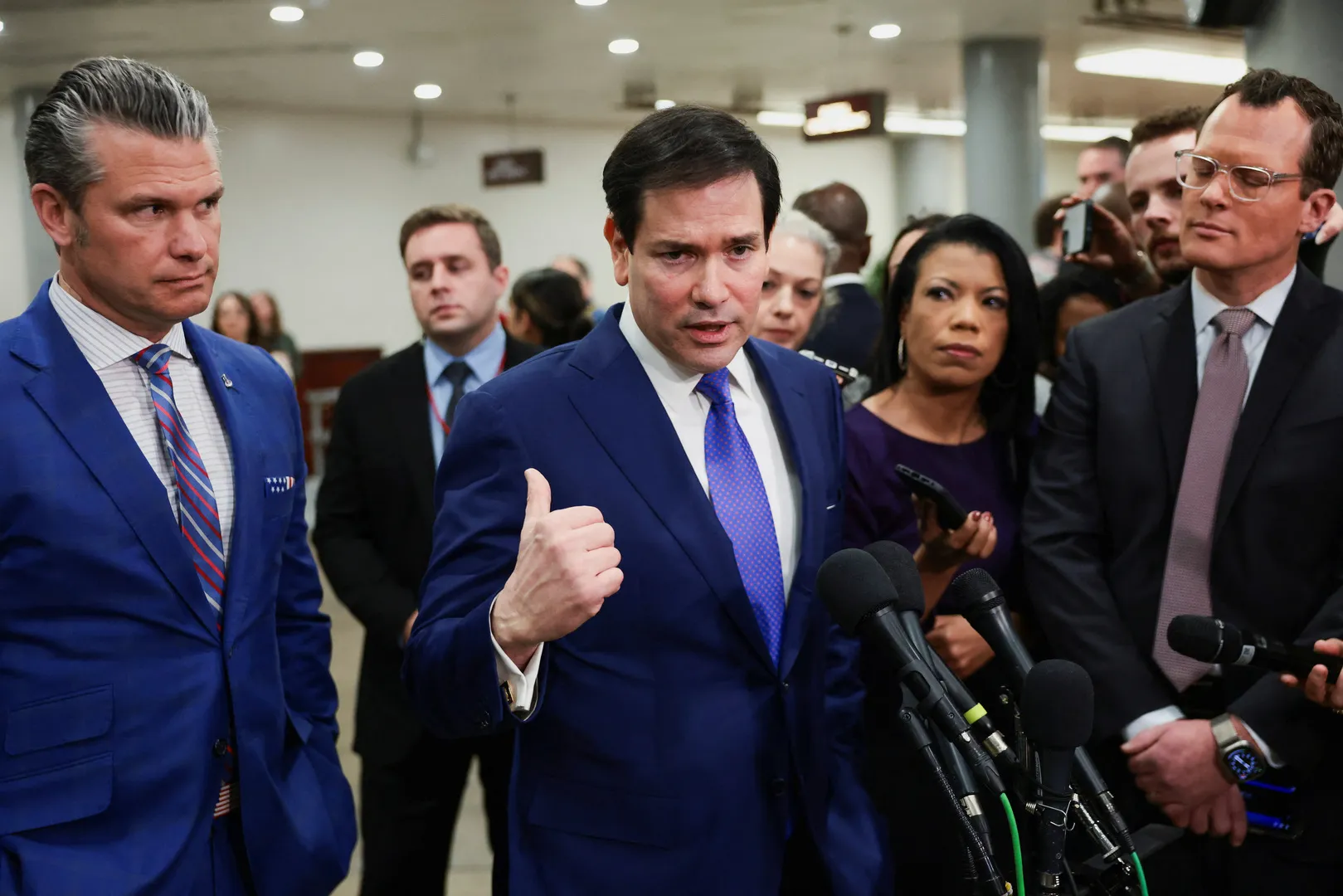
US Secretary of State Marco Rubio said he will meet Denmark next week as Donald Trump again raises the prospect of gaining control of Greenland. When pressed on NATO concerns, Rubio said the president can use force, but diplomacy is preferred.
Children play in the Royal Parc in Brussels, Belgium, Wednesday. Snowfall was expected to continue in the coming days, with cold temperatures forecast to persist across the region as winter Storm Goretti hits the Atlantic coast of Europe. Photo by Olivier Matthys/EPA
Jan. 7 (UPI) — Flights and train service were delayed or canceled and driving became treacherous in parts of Europe on Wednesday as a winter storm hit the Atlantic coast.
Storm Goretti is the first named storm of the year in Europe, and it brought heavy snow, ice and cold to the area. Flights and train service were canceled or suspended in parts of France and Belgium.
About 100 flights were canceled at Paris’ Charles de Gaulle airport and 40 more at the city’s Orly airport, France’s transportation minister said.
In parts of the United Kingdom, amber snow warnings were issued for “danger to life” conditions, The Independent reported. Wind gusts of up to 90 mph were expected Thursday night, bringing large waves and debris. About 12 inches of snow was expected in Wales and the Peak District in central England.
There were four yellow weather warnings for snow and ice in Scotland, Northern Ireland and the Midlands. There were two more in eastern England and Wales, and a wind warning in the southwest.
A bus in Kent slid into a ditch, and a school coach full of children crashed into a bus in Reading after hitting black ice.
“Crews are reminding everyone to use extra caution when driving in cold temperatures as there could be black ice on the roads, so avoid sudden breaking and leave plenty of space between you and the vehicle in front,” the Kent Fire District warned.
Some intercity trains told passengers to reschedule Thursday travel to Wednesday to avoid the worst of the weather.
Flights from Amsterdam’s Schiphol Airport were canceled and delayed for the past week due to inclement weather. About 700 flights were canceled Wednesday, and Dutch airline KLM has been hit the hardest for the past six days, The Independent reported. Flightradar24 said more than 3,200 flights were canceled over the past week.
“While Schiphol certainly can operate during winter weather, the airport’s de-icing infrastructure obviously isn’t designed to handle a barrage of snow for multiple days in a row,” Daniel Gustafsson of Flightradar24 wrote on the site. He said there was also a “critical shortage” of de-icing fluid.
More than 1,000 people spent the night at Schiphol, the airport told Euronews. It said it set up cots and offered breakfast to travellers who had to sleep there.
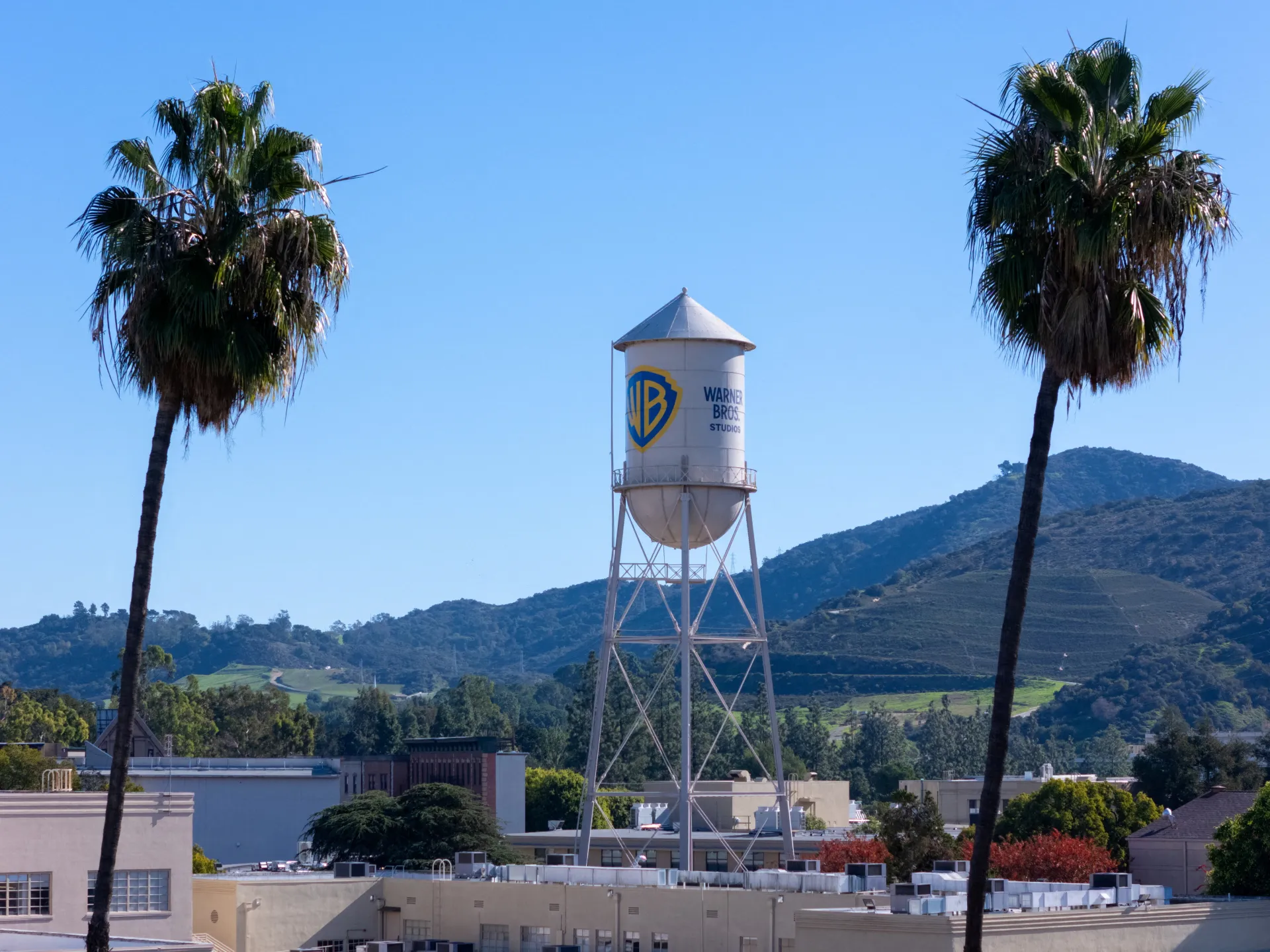
The board of Warner Bros Discovery (WBD) has unanimously turned down Paramount Skydance’s latest attempt to acquire the studio, saying its revised $108.4bn hostile bid amounted to a risky leveraged buyout that investors should reject.
In a letter to shareholders on Wednesday, the WBD board said Paramount’s offer hinges on “an extraordinary amount of debt financing” that heightens the risk of closing. It reaffirmed its commitment to streaming giant Netflix’s $82.7bn deal for the film and television studio and other assets.
Recommended Stories
list of 4 itemsend of list
Some investors, however, pushed back on Warner Bros. Pentwater Capital Management CEO Matthew Halbower said that the media giant’s board had “made an error” by not considering Paramount’s bid.
On CNBC on Wednesday, Halbower called the deal “economically superior”.
Paramount’s financing plan would saddle the smaller Hollywood studio with $87bn in debt once the acquisition closes, making it the largest leveraged buyout in history, the Warner Bros board told shareholders after voting against the $30-per-share cash offer on Tuesday. The letter accompanied a 67-page amended merger filing that laid out its case for rejecting Paramount’s offer.
Paramount deal ‘remains inadequate’
The revised Paramount offer “remains inadequate particularly given the insufficient value it would provide, the lack of certainty in Paramount Skydance ability to complete the offer, and the risks and costs borne by WBD shareholders should Paramount Skydance fail to complete the offer”, the Warner Bros board wrote.
Paramount, which has a market value of about $14bn, proposed to use $40bn in equity, which would be personally guaranteed by Oracle’s billionaire co-founder Larry Ellison, whose son David is Paramount’s CEO, and $54bn in debt to finance the deal.
Its financing plan would further weaken its credit rating, which S&P Global already rates at junk levels, and strain its cash flow – heightening the risk that the deal will not close, the Warner Bros board said. Netflix, which has offered $27.75 a share in cash and stock, has a $400bn market value and investment-grade credit rating.
The decision keeps Warner Bros on track to pursue the deal with Netflix, even after Paramount amended its bid on December 22 to address the earlier concerns about the lack of a personal guarantee from Ellison, who is Paramount’s controlling shareholder.
Paramount and Netflix have been vying to win control of Warner Bros, and with it, its prized film and television studios and its extensive content library. Its lucrative entertainment franchises include Harry Potter, Game of Thrones, Friends, and the DC Comics universe; as well as coveted classic films such as Casablanca and Citizen Kane.
Netflix applauds
Netflix co-CEOs Ted Sarandos and Greg Peters welcomed Warner Bros’ decision on Wednesday, saying it recognises the streaming giant’s deal “as the superior proposal that will deliver the greatest value to its stockholders, as well as consumers, creators and the broader entertainment industry”.
Warner Bros Chairman Samuel Di Piazza told CNBC that the company was not currently in talks with Paramount but remains open to a transaction with the Ellison-led firm, and both the deals have a path to regulatory approval.
“From our perspective, they’ve got to put something on the table that is compelling,” he said, referring to the Paramount offer.
Wednesday’s filing said Warner Bros’ board met on December 23 to review Paramount’s amended offer and noted some improvements, including Ellison’s personal guarantee and a higher reverse termination fee of $5.8bn, but found “significant costs” associated with Paramount’s bid compared with a Netflix deal.
Warner Bros would be obligated to pay the streaming service a $2.8bn termination fee for abandoning its merger agreement with Netflix, $1.5bn in fees to its lenders and about $350m in additional financing costs. Altogether, Warner Bros said it would incur about $4.7bn in additional costs to terminate its deal with Netflix, or $1.79 per share.
The board repeated some concerns it had laid out on December 17, such as that Paramount would impose operating restrictions on the studio that would harm its business and competitive position, including barring the planned spin-out of the company’s cable television networks into a separate public company, Discovery Global.
Paramount offered “insufficient compensation” for the damage done to the studio’s business, if the Paramount deal failed to close, Warner Bros said.
Paramount “repeatedly failed to submit the best proposal” to Warner Bros shareholders, the board wrote, “despite clear direction” on the deficiencies in its bid and potential solutions.
The jockeying for Warner Bros has become Hollywood’s most closely watched takeover battle, as studios race to scale up amid intensifying competition from streaming platforms and volatile theatrical revenues.
While Netflix’s offer has a lower headline value, analysts have said it presents a clearer financing structure and fewer execution risks than Paramount’s bid for the entire company, including its cable TV business.
“WBD does not want to sell to Paramount, so it will keep rejecting Paramount as long as it is able to,” said Ross Benes, an analyst at eMarketer.
“But this process is not over … Paramount will have opportunity to make further attempts.”
Harris Oakmark, Warner Bros’ fifth-largest investor, previously told Reuters that Paramount’s revised offer was not “sufficient”, noting it was not enough to cover the breakup fee.
Paramount has argued its bid would face fewer regulatory obstacles, but a combined Paramount-Warner Bros entity would create a formidable competitor to industry leader Disney and merge two major television operators and two streaming services.
The valuation of Warner Bros’ planned Discovery Global spin-off, which includes cable television networks CNN, TNT Sports and the Discovery+ streaming service, is seen as a major sticking point. Analysts peg the cable channels’ value at up to $4 per share, while Paramount has suggested just $1.
Lawmakers from both parties have raised concerns about further consolidation in the media industry, and US President Donald Trump has said he plans to weigh in on the landmark acquisition.
On Wall Street, Warner Bros Discovery is up 0.3 percent in midday trading amid the news of the rejected bid. Netflix is also up 0.3. Meanwhile, Paramount is down 0.1 percent.
1 of 2 | A member of the U.S. Coast Guard keeps watch on the Marinera, formerly known as the M/V Bella 1, in the North Atlantic. Photo courtesy of U.S. European Command
Jan. 7 (UPI) — The United States on Wednesday said that it seized two oil tankers — a Russian-flagged vessel in the North Atlantic and another in the Caribbean Sea.
U.S. Southern Command said, in coordination with the U.S. Department of Homeland Security, it “apprehended a stateless, sanctioned dark fleet motor tanker without incident.”
SOUTHCOM accused the vessel, the M/T Sophia, of carrying out “illicit activities” in international waters in the Caribbean Sea. In a post on X, the agency said the U.S. Coast Guard was escorting the vessel to the United States for “final disposal.”
U.S. European Command, meanwhile, announced it seized the Russian-flagged Mariners — formerly known as the M/V Bella 1 — a vessel it had been chasing across the Atlantic Ocean since December.
EUCOM, in a post on X, said it seized the tanker for violating U.S. sanctions and transporting Iranian oil.
“The vessel was seized in the North Atlantic pursuant to a warrant issued by a U.S. federal court after being tracked by USCGC Munro,” the agency said.
U.S. officials said Russia sent two naval ships and a submarine to escort the Marinera, which was between Iceland and Britain, heading northeast.
The United States deployed at least 10 special-ops military aircraft and transporter aircraft thought to be carrying helicopters to RAF bases in Britain in recent days, possibly in preparation for an interdiction.
The U.S. Coast Guard attempted to execute a warrant to seize the tanker in the Caribbean in December, when it was believed to be headed to Venezuela in contravention of a partial U.S. blockade.
The ship’s final destination was thought to be the Baltic Sea, or possibly the Russian port of Murmansk on the Barents Sea.
The Russian Foreign Ministry said it was monitoring the situation with “concern” and complained about what it said was unwarranted attention from the United States and its NATO allies.
The vessel refused to permit the Coast Guard to board on its first attempt Dec. 21 when it was en route from Iran to collect oil from Venezuela, changed course and headed back out into the Atlantic.
On the way, it painted a Russian flag on the hull, changed its name from Bella 1 to “Marinera” and listed on a Russian shipping registry, in a bid to shake off its U.S. pursuers.
The New York Times reported that Hyperion and at least three other vessels plying the Venezuela route, employed similar stealth tactics, swapping their original flags for Russian ones — exacerbating already tense relations strained over the U.S. attack on Venezuela which is backed by Moscow.
All the ships are suspected of being part of Russia’s so-called “shadow fleet,” moving Russian, Iranian and Venezuelan oil subject to sanctions imposed by the United States, European Union and other countries around the world.
The Russian Maritime Shipping Registry records show the ships, which are all sanctioned by the United States for transporting Iranian or Russian oil, changed their home ports to Sochi or Taganrog in southern Russia and switched flags.
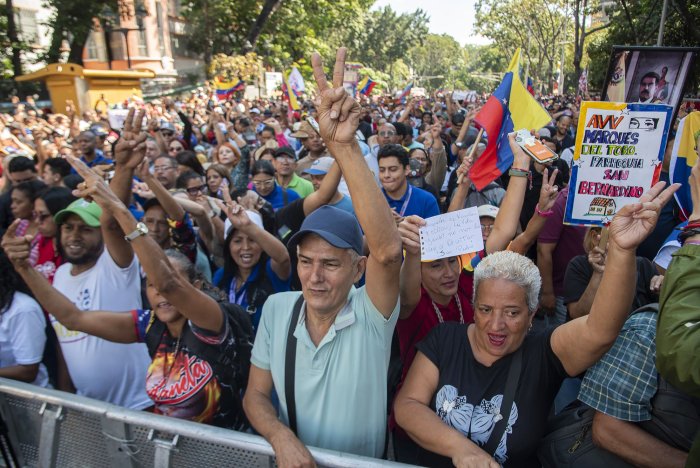
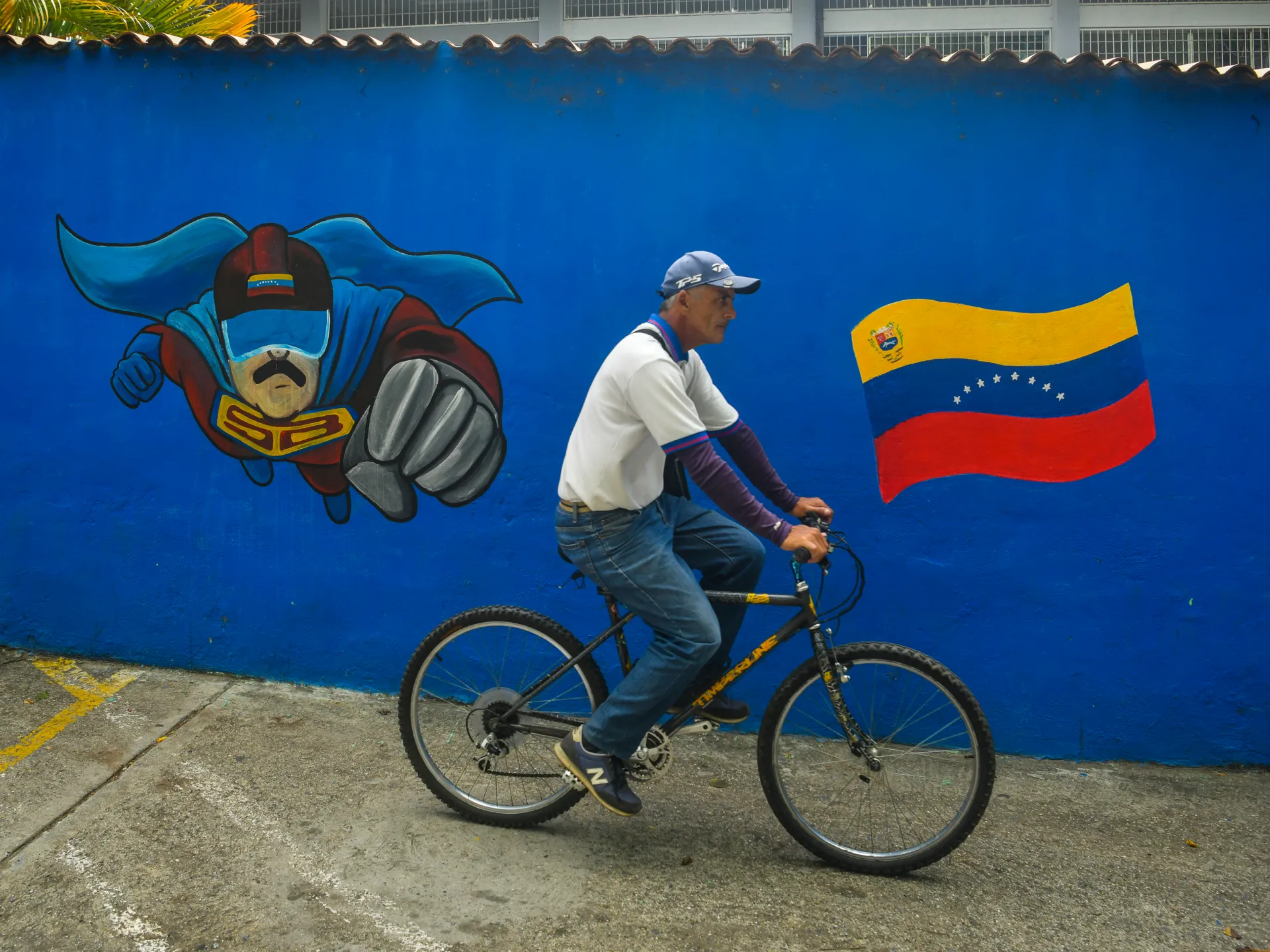
Supporters of ousted Venezuela’s President Nicolas Maduro carry his portrait during a rally outside the National Assembly in Caracas, Venezuela, on January 5, 2026. Photo by Jonathan Lanza/UPI | License Photo
U.S. District Judge David Novak ordered Lindsey Halligan to give an explanation of her continued use of the U.S. attorney title within seven days on Tuesday. File Photo by Al Drago/EPA
Jan. 7 (UPI) — President Donald Trump‘s first pick to serve as the U.S. attorney for the Eastern District of Virginia has been ordered to explain why she is still using the title despite her appointment being ruled unlawful.
U.S. District Judge David Novak ordered Lindsey Halligan to give an explanation of her continued use of the U.S. attorney title within seven days. Novak said her use of the title, including in court documents, may amount to false or misleading statements.
False and misleading statements in a court of law can result in punishment, including charges of perjury, fines and imprisonment.
Halligan, a Trump loyalist, was the president’s original pick to serve in the Eastern District of Virginia last year. A federal judge determined that the Department of Justice illegally appointed Halligan and barred her from assuming the role.
U.S. District Judge Cameron Currie ruled in November that Halligan was never eligible to hold the position of U.S. attorney for the Eastern District of Virginia. Her appointment had circumvented the standard appointment process, including a Senate confirmation. She also has no experience as a prosecutor.
Despite the ruling, the Justice Department has kept Halligan in office.
On Tuesday, Novak said that Halligan and the department cannot continue to ignore the ruling.
“It remains the binding precedent in this district and is not subject to being ignored,” Novak said in his order.
Erik Siebert, the acting U.S. attorney for the Eastern District of Virginia prior to Halligan’s appointment, resigned in September after refusing to prosecute New York Attorney General Letitia James.
After her appointment, Halligan filed charges against James and former FBI Director James Comey, who investigated Trump’s ties to Russia during Trump’s first term.
Both cases were dismissed when Currie ruled that Halligan was not qualified for the U.S. attorney role.
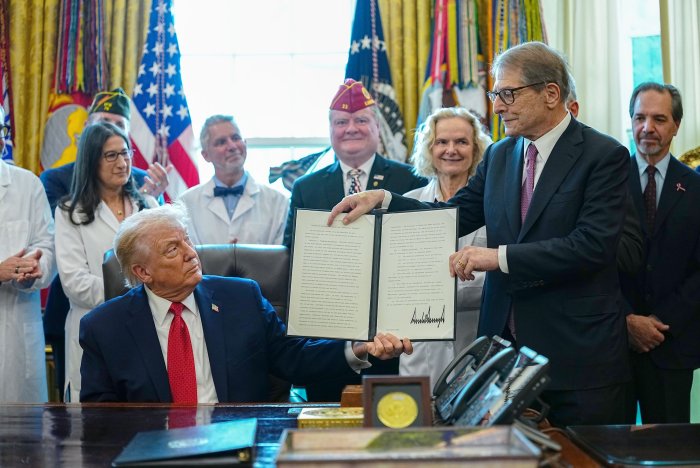
President Donald Trump holds a signed executive order reclassifying marijuana from a schedule I to a schedule III controlled substance in the Oval Office of the White House on Thursday. Photo by Aaron Schwartz/UPI | License Photo
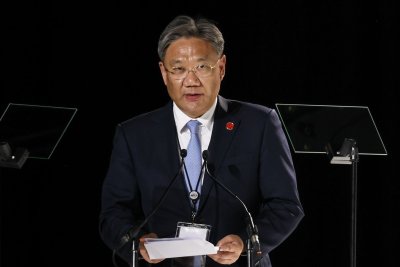
Wang Wentao, Minister of Commerce of the People’s Republic of China addresses attendees on behalf of Xi Jinping, President of China on day one of the BRICS summit at Sandton Convention Center in August 2023. China is opening an anti-dumping investigation into Japan over a key chemical used in manufacturing semiconductors, the Ministry of Commerce announced Wednesday. File Photo by Jemal Countess/UPI | License Photo
Jan. 7 (UPI) — China is opening an anti-dumping investigation into Japan over a key chemical used in manufacturing semiconductors, the Ministry of Commerce announced Wednesday.
The investigation is set to last a year as China probes whether Japan has been selling the chemical dichlorosilane at an unfairly low price — dumping — harming its domestic producers.
Dichlorosaline is commonly used to manufacture computer chips.
The investigation stems from a complaint by the Chinese company Sunfar that submitted evidence showing a 31% decrease in prices on the chemical from Japan despite an increase in imports between 2022 and 2024.
A review of the complaint found that it met the criteria for further investigation under Chinese laws and rules set out by the World Trade Organization.
“The investigating authority will conduct the investigation in accordance with the law, fully safeguard the rights of all interested parties and make an objective and impartial ruling based on the investigation results,” the Chinese Ministry of Commerce said in a statement.
The ensuing investigation will dig into dichlorosilane imports from Japan from July 1, 2024, through June 30, 2025.
Japan is home to the three leading producers of dichlorosilane, making it the top exporter of the chemical.
China’s top dichlorosilane producer has the fourth-largest market share of the chemical in the world. It relies heavily on imports from Japan, with Japanese products making up about 72% of China’s domestic market between 2022 and 2024.
On Tuesday, China banned the export of products to Japan’s military. Japan has warned China about pursuing control over Taiwan as China believes Taiwan to be part of its territory.
Wednesday’s announcement continues the escalating tension between the countries.
Jan. 7 (UPI) — The White House said military force was among a range of options it was looking at in an effort to “acquire” Greenland for the United States.
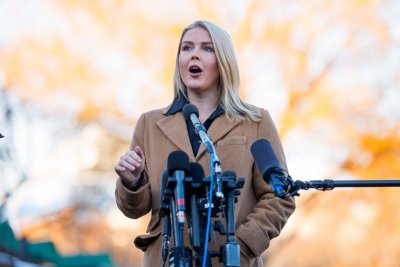
Doubling down on comments by the administration officials in the past few days that the United States has a stronger claim to the Arctic Island than Denmark, in a statement Tuesday carried by The Hill, ABC News and the BBC, White House Press Secretary Karoline Leavitt said using the military was “always an option.”
“President Trump has made it well known that acquiring Greenland is a national security priority of the United States, and it’s vital to deter our adversaries in the Arctic region. The president and his team are discussing a range of options to pursue this important foreign policy goal, and of course, utilizing the U.S. Military is always an option at the Commander-in-Chief’s disposal.”
The statement came hours after European leaders pushed back hard on the renewed claims emanating from the administration since the U.S. military action in Venezuela at the weekend that the United States needs Greenland for its security, and by extension NATO’s, and that Denmark was not up to the job of defending Greenland.
In a joint statement of solidarity with Denmark, the leaders of France, Germany, Britain, Italy, Poland and Spain said Greenland belonged to its people and that “it is for Denmark and Greenland, and them only, to decide on matters concerning Denmark and Greenland.”
They insisted that security in the Arctic was a priority and that they were taking steps to boost their military “presence, investments and activities,” but stressed that security could only be achieved collectively and “sovereignty, territorial integrity and the inviolability of borders,” had to be upheld.
“These are universal principles, and we will not stop defending them,” read the statement.
In a closed-briefing on Capitol Hill on Monday, Secretary of State Marco Rubio suggested to lawmakers that Trump’s talk of taking Greenland by force was just rhetoric to pressure Copenhagen to come to the table, and his actual goal was to buy Greenland from Denmark.
However, later Monday, White House Deputy Chief of Staff Stephen Miller reignited fears, telling CNN, military force was a non-question because America’s overwhelming military superiority meant “nobody is going to fight the United States militarily over Greenland.”
He also questioned the basis of Denmark’s territorial claim.
Greenland has been closely tied to Denmark since the 18th century, initially as a colony and then as an incorporated, semi-autonomous region with representation in the Danish Parliament.
Danish control of Greenland was recognized by the United States in 1916, as part of a deal for the purchase of what is now the U.S. Virgin Islands from Denmark.
Violence, designation of ‘closed military zones’ and evacuations of civilians follow collapse of talks aimed at ending standoff over absorption of semiautonomous Kurdish forces by state institutions.
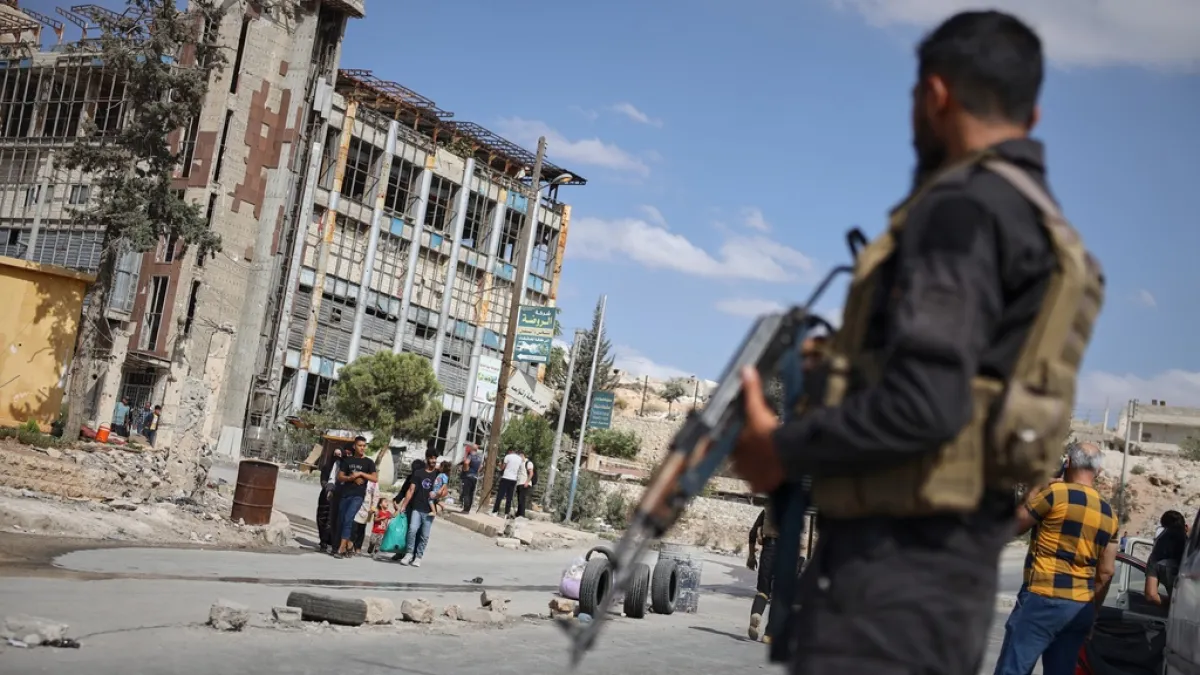
The Syrian army has declared Aleppo’s Kurdish areas “closed military zones” and ordered civilians to leave as clashes with the Syrian Democratic Forces (SDF) extended into a second day.
The Syrian Army Operations Command told Al Jazeera that all SDF military positions in Aleppo neighbourhoods are legitimate targets as sporadic fighting between the government forces and Kurdish-led SDF continued on Wednesday after violence flared the previous day.
Recommended Stories
list of 3 itemsend of list
The clashes, which killed nine people on Tuesday, according to officials, are the fiercest fighting since the two sides failed to implement a March deal to merge the United States-backed semiautonomous Kurdish administration and military force with Syria’s new government.
The Syrian army announced that two neighbourhoods in Aleppo would become “closed military zones” from 3pm (12:00 GMT). In the meantime, it said, it would operate “humanitarian corridors” to allow civilians to leave.
All “military sites of the SDF organisation within the Sheikh Maqsoud and Ashrafieh neighbourhoods of Aleppo are a legitimate military target for the Syrian Arab Army, following the organisation’s major escalation towards the neighbourhoods of Aleppo city and its perpetration of numerous massacres against civilians,” the Army Operations Authority said in a statement.
The SDF noted a large deployment of Syrian army vehicles near the Sheikh Maqsoud and Ashrafiyah neighborhoods, labelling it a “dangerous indicator that warns of escalation and the possibility of a major war”.
The army, meanwhile, said it “urges our civilian population in the Sheikh Maqsoud and Ashrafieh neighbourhoods of Aleppo to immediately stay away from the SDF positions”.
The state news agency SANA reported that the Syrian Civil Defence Forces and Syrian Arab Red Crescent are providing aid to people evacuating.
The Civil Defence said it had evacuated 850 civilians from Aleppo by about midday, citing deteriorating humanitarian conditions and shelling by the SDF.
A Syrian security source reported to Al Jazeera that prisoners have escaped from al-Shafiq prison, which is run by the SDF, to safe areas in Aleppo. He did not specify the number of prisoners that absconded.
Sectarian tensions
Both sides have blamed the other for sparking the violence, which broke out after talks this week between government officials and the main SDF commander stalled with “no tangible results” achieved, according to state media.
The incorporation of the SDF, which controls large chunks of Syria’s north and northeast, into state institutions has remained a subject of consternation since President Ahmed al-Sharaa took office a year ago.
The deal reached in March, in which the SDF agreed “all civil and military institutions in northeastern Syria” would be merged into “the Syrian state, including border crossings, the airport, and oil and gas fields”, has yet to be carried out.
Al-Sharaa’s efforts to amalgamate power and quell sectarian tensions among the numerous groups across Syria after the fall of longtime leader Bashar al-Assad have not been helped by Israel.
Prime Minister Benjamin Netanyahu’s government has carried out persistent raids and bombardments in a bid to demilitarise southern Syrian regions bordering Israel.
Over the past year, Israel has launched more than 600 air, drone and artillery attacks across Syria, averaging nearly two a day, according to a tally by the Armed Conflict Location and Event Data Project.
Marie Forestier, a nonresident senior fellow for the Atlantic Council’s Syria Project, told Al Jazeera that the distance between Syrian, Israeli and US goals is “very difficult”, especially given that “Israel is doing everything to destabilise Syria.”
Malam Fatori, Nigeria — It’s been more than 10 years since Isa Aji Mohammed lost four of his children in one night when Boko Haram fighters attacked their home in northeast Nigeria’s Borno State.
Maryam, who was 15 at the time, was killed alongside her brothers Mohammed, 22, and Zubairu, who was only 10. Yadoma, 25 and married with children, who had returned home to her parents’ house for a visit, also died in the attack.
Recommended Stories
list of 3 itemsend of list
“We ran with nothing,” said 65-year-old Isa, standing on the parched soil of his farm in the Lake Chad village of Malam Fatori, to which he recently returned. “For more than 10 years, we slept in relatives’ homes. I felt like a stranger in my own country.”
Before the deadly attack, Isa, a farmer, produced hundreds of bags of rice, maize and beans annually, enough to feed his family and sell in markets in neighbouring Niger.
After that night, he fled and spent the next decade in displacement camps across the border.
But last year, he joined thousands of other former residents who have relocated back to Malam Fatori and other towns as part of a resettlement programme initiated by the government.
The village sits on the edge of Nigeria’s northeastern frontier, close to the border with Niger, where the vast, flat landscape stretches into open farmland and seasonal wetlands.
A decade ago, homes there were intact and full, their courtyards echoing with children’s voices and the steady rhythm of daily life. Farms extended well beyond the town’s outskirts, producing grains and vegetables that sustained families and supported local trade.
Irrigation canals flowed regularly, and the surrounding area was known for its productivity, especially during the dry season. Markets were active, and movement between Malam Fatori and neighbouring communities was normal, not restricted by fear.
Today, the town carries the visible scars of conflict and neglect, with much of it lying in ruin.
Rows of mud-brick houses stand roofless or partially collapsed, their walls cracked by years of abandonment. Some homes have been hastily repaired with scrap wood and sheets of metal, signs of families slowly returning and rebuilding with whatever materials they can find.
The farms surrounding Malam Fatori are beginning to show faint signs of life again. Small plots of millet and sorghum are being cleared by hand, while irrigation channels – once choked with sand and weeds – are gradually being reopened.
Many fields, however, remain empty, overtaken by thorny bushes and dry grass after years without cultivation. Farmers move cautiously, working close to the town, wary of venturing too far into land that was once fertile but has long been unsafe.
For returnees like Isa, walking through these spaces means navigating both the present reality and memories of what once was. Each broken wall and abandoned field tells a story of loss, while every newly planted seed signals a quiet determination to restore a town that violence nearly erased.
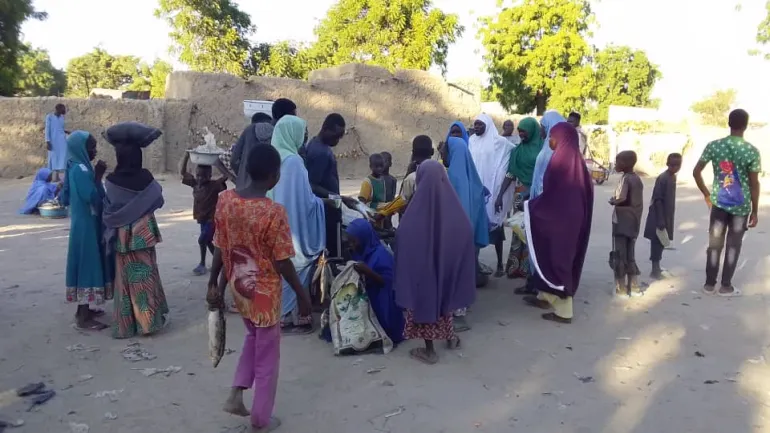
Residents of Malam Fatori buy fish at a local market in the town [Adamu Aliyu Ngulde/Al Jazeera]
Between ‘two pressures’: Boko Haram and the army
For the Borno State administration, the returns are a success. “There are 5,000 households of returnees in Malam Fatori, while the town’s total population now exceeds 20,000 people,” Usman Tar, Borno State commissioner for information and internal security, told Al Jazeera last year.
As we toured the town, the security presence was visible. Armed patrols, checkpoints and observation posts were stationed along major routes and near public spaces, reflecting ongoing efforts to deter attacks and reassure residents.
Families interviewed said they were subjected to frequent security checks and strict movement controls, measures they understand as necessary but which also disrupt daily routines and limit access to farms, markets and neighbouring communities.
Residents and local officials say the threat remains close. Fighters from Islamic State West Africa Province (ISWAP), another armed group active in the area, are believed to be operating from swampy areas approximately two kilometres from the town, using the difficult terrain as cover.
Although the town itself is under heavy military protection, surrounding areas continue to experience attacks, kidnappings and harassment, particularly along farming routes and access roads.
These persistent security incidents reinforce a climate of fear and uncertainty among returnees. While many families have chosen to remain and rebuild despite the risks, they say the proximity of armed groups and the ongoing violence in nearby communities make long-term recovery fragile.
“Here in Malam Fatori, we live under two pressures,” said resident Babagana Yarima. “Boko Haram dictates our safety, and the military dictates our movement. Both limit how we live every day.”
Farmers wait up to eight hours at military checkpoints when transporting produce. Curfews prevent evening farm work. Access to agricultural land beyond the town requires military permits or armed escorts.
“Insecurity and military restrictions limit access to farmlands, forcing farmers to cultivate smaller areas than before,” said Bashir Yunus, an agrarian expert at the University of Maiduguri who also farms in the region.
Fishing, previously a major food source and income generator from Lake Chad, has become dangerous and requires permits to leave the town boundaries.
“Movement beyond the town’s boundaries now requires military permits. Militant attacks in isolated areas continue,” said Issoufou.
The United Nations has raised concerns about the government’s resettlement programme, citing potential protection violations. Mohamed Malick, UN resident and humanitarian coordinator in Nigeria, said during an interview with journalists in Maiduguri that “any returns or relocations must be informed, voluntary, safe, dignified and sustainable”.
Malick added that the return of refugees to Malam Fatori and other insecure areas must be carefully evaluated against established safety and humanitarian standards, and must only take place if conditions allow for basic services and sustainable livelihoods.
A committee registers returnees from Niger in Malam Fatori [Adamu Aliyu Ngulde/Al Jazeera]
‘A man without land is a man without life’
Settled back on his land, Isa wakes before dawn each day, leaving his home in the quiet hours before the town stirs.
He walks to the fields that once yielded fertile harvests, now choked with weeds and debris. The land that once fed his family and supported their livelihood now demands relentless effort just to coax a small crop from the exhausted soil.
With each turn of the hoe and careful planting of seeds, he is determined to reclaim a fragment of the life that was disrupted by conflict.
He also participates in community farming initiatives, joining neighbours in collective efforts to restore agricultural production for the returning population and aid the town’s slow recovery.
However, the area he personally cultivates is far smaller than what he once managed, constrained by limited access to tools, seeds and water, as well as by the lingering insecurity in the region.
”A man without land is a man without life,” he said.
Most families in Malam Fatori now eat only twice a day, a sharp contrast to life before the conflict. Their meals typically consist of rice or millet, often eaten with little or no vegetables due to cost and limited availability.
Food prices have risen dramatically, placing further strain on households already struggling to recover. A kilogramme of rice now sells for about 1,200 naira (approximately $0.83), nearly double its previous price, making even basic staples increasingly unaffordable for many families.
Fish, once plentiful and affordable thanks to proximity to Lake Chad, have become scarce and expensive. Insecurity, restricted access to fishing areas, and disrupted supply chains have severely reduced local catches.
At the local market and at aid distribution points, women queue before dawn, hoping to secure small quantities of dried fish, groundnut oil or maize flour when supplies arrive.
Deliveries are irregular and unpredictable, often selling out within hours. Many women say they return home empty-handed after waiting for hours, compounding daily stress and uncertainty about how to feed their families.
Local health workers warn that malnutrition remains a serious concern, particularly among children under the age of five.
Basic services remain inadequate across town. Roads are poor, and schools and health clinics operate with minimal resources.
“Security risks and inaccessible routes through surrounding bushland continue to restrict humanitarian access, preventing aid agencies from reaching several communities. Basic services such as clean water, healthcare and quality education remain inadequate,” Kaka Ali, deputy director of local government primary healthcare, told Al Jazeera.
Returnee homes in Malam Fatori [Adamu Aliyu Ngulde/ Al Jazeera]
Despite ongoing challenges, residents of Malam Fatori are steadily working to rebuild their community and restore livelihoods disrupted by years of conflict.
Across the town, women have organised themselves into small cooperatives, producing handmade mats and processing groundnut oil for household use and local sale.
Fishermen, once central to the local economy, now operate cautiously in small groups in line with security regulations. Along riverbanks and storage areas, they repair damaged canoes and carefully mend fishing nets that were abandoned or destroyed during the conflict.
At the same time, teams of bricklayers are reconstructing homes destroyed during the violence, using locally sourced materials and shared labour to rebuild shelters for returning families.
The town’s clinic, staffed by six nurses, is overstretched. Vaccinations, malaria treatment and maternal health services are rationed. Power outages and equipment shortages compound the challenges. But it is a lifeline.
At Malam Fatori Central Primary School, children from the town and surrounding communities are being taught with the few resources available.
There are only 10 functional classrooms for hundreds of pupils, so some learn outdoors, under trees or in open spaces. There is a shortage of teachers, so some educators brave the conditions and travel long distances from the southern parts of Borno State.
In another, more unusual arrangement, soldiers stationed in the town occasionally step in to teach basic civic education and history lessons.
While not a replacement for trained teachers, community leaders say their involvement provides pupils with some continuity in education. The presence of soldiers in classrooms, they say, also reassures parents about security and underscores a shared effort to stabilise the town and rebuild essential services.
Primary school students in Malam Fatori [Adamu Aliyu Ngulde/Al Jazeera]
‘This land contains our future’
Amid all of the returning and rebuilding, security remains a dominant feature of daily life in Malam Fatori.
Soldiers remain stationed throughout the town, at markets and other public spaces to deter attacks.
Meanwhile, former Boko Haram members who have enrolled in a government-led deradicalisation and repentance programme also assist in protecting farmers working on the outskirts of the town, helping to rebuild trust between civilians and security structures.
Abu Fatimais a former Boko Haram fighter who joined the repentance programme. “Troop patrols are constant, curfews dictate daily life,” he said about the security arrangements in Malam Fatori.
Although residents welcome the security provided by the soldiers’ presence in the town, “many say they feel trapped – unable to fully rebuild the lives they had before Boko Haram, yet unwilling to abandon a homeland that defines them”, he said, echoing the tension felt by many returnees.
Bulama Shettima has also lived through the personal cost of the fighting that has devastated northeast Nigeria. Two of the 60-year-old’s sons joined ISWAP, a tragedy that left the family with deep emotional scars. After years of uncertainty and fear, one of his sons was later deradicalised through a government rehabilitation programme. This has allowed his family to heal and reconcile. Coming back to Malam Fatori is also part of that.
“Returning wasn’t about safety,” he said. “It was about belonging. This land contains our history. This land contains our grief. This land contains our future.”
Today, Bulama is focused on rebuilding his life and securing a different future for his children.
He works as a farmer, cultivating small plots of land under difficult conditions, while also running a modest business to supplement his income.
Despite his losses, Bulama places strong emphasis on educating his other children, saying that their schooling is a form of resistance against the cycle of violence that once tore his family apart. It will also allow them to grow up with choices, he says.
As many displaced families remain in Niger or live in limbo in Maiduguri, fearing a return to towns where armed men operate not far away, those now in Malam Fatori consider it a move worth making.
For Isa, the decision to return represents a calculated risk.
“We are caught between fear and order,” he said. “But still, we must live. Still, we must plant. Still, we must hope.”
This piece was published in collaboration with Egab.
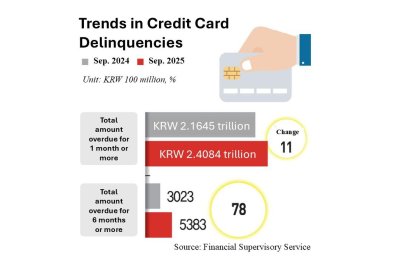
Trends in South Korea’s credit card delinquencies show rising overdue balances, with long-term arrears of six months or more jumping sharply between September 2024 and September 2025, according to the Financial Supervisory Service. Graphic by Asia Today and translated by UPI.
Jan. 6 (Asia Today) — South Korea’s credit card delinquencies have climbed to near 2.5 trillion won ($1.7 billion), with hard-to-collect arrears of six months or more jumping 78% from a year earlier, raising concerns about card issuers’ earnings and asset quality.
Data from the Financial Supervisory Service’s financial statistics system showed overdue payments of one month or more at eight major card companies totaled 2.4084 trillion won ($1.66 billion) as of the end of September 2025, up about 11% from a year earlier, the report said. The total peaked at 2.5845 trillion won ($1.79 billion) at the end of March 2025 before edging lower.
The sharper risk signal was in longer-term delinquencies. Overdue balances of six months or more totaled 538.3 billion won ($372 million), up 78% year-on-year, the report said. Such debts are often treated as effectively uncollectible, and analysts said a rapid increase can drive higher bad-debt costs and volatility in card companies’ performance.
Long-term delinquencies accounted for 22.3% of total delinquencies, up from about 11% at the start of 2025, the report said.
By issuer, Lotte Card posted the steepest increase in six-month-plus delinquencies, up 306% to 194.8 billion won ($135 million), the largest among the eight firms. The report attributed the rise to the reflection of delinquent debts linked to Homeplus entering corporate rehabilitation last March.
Other issuers’ six-month-plus delinquency balances were listed as BC Card at 41.7 billion won ($28.8 million), Shinhan Card at 98.5 billion won ($68.1 million), Hana Card at 77.7 billion won ($53.7 million), Hyundai Card at 27.5 billion won ($19.0 million), KB Kookmin Card at 30.1 billion won ($20.8 million), Samsung Card at 23.6 billion won ($16.3 million) and Woori Card at 40.9 billion won ($28.3 million), the report said.
Analysts linked the trend to heavier repayment burdens for vulnerable borrowers amid a slowing economy, high inflation and high interest rates. They also warned that rising card delinquencies can be an early risk indicator for household debt more broadly, since card loans and cash advances often serve as emergency funding for lower-income households.
An industry official said the rise suggests household finances have not fully recovered, but added that not all long-term overdue balances are uncollectible and that firms are managing receivables with recovery rates in mind.
Jan. 7 (UPI) — The Justice Department has sued Arizona and Connecticut for refusing to hand over their full voter registration lists, making them the 22nd and 23rd states to be targeted by the Trump administration in its litigious campaign over voter data ahead of the midterm elections.
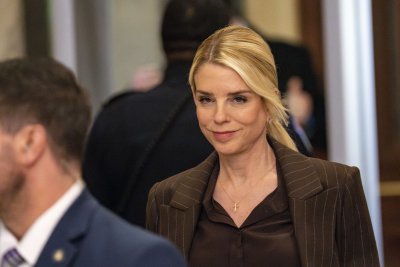
The lawsuits were filed Tuesday, with Attorney General Pam Bondi arguing she is charged by Congress to ensure that states have proper and effective voter registration and voter list maintenance programs.
She also threatened that she has the Civil Rights Act of 1960 to demand the statewide voter registration lists.
“Accurate voter rolls are the foundation of election integrity, and any state that fails to meet this basic obligation of transparency can expect to see us in court,” she said in a statement.
The Justice Department has sent demands for the voter registration rolls to at least 40 states and the District of Columbia, according to the Brennan Center for Justice.
All states except North Dakota require citizens to register with election officials, with the information forming voter registration rolls.
The demands for these rolls, which include private and sensitive information, have raised concerns among both voting-rights groups, who say the Trump administration may try to undermine elections, and immigration advocates worried the rolls could be shared with the Department of Homeland Security.
The Trump administration has argued that it needs the lists to ensure election integrity, including that non-citizens are not voting. President Donald Trump continues to falsely claim that the 2020 election, which he lost to Joe Biden, was stolen from him.
The lawsuits overwhelming target Democratic-led states, and the effort comes ahead of November’s midterm elections, which Trump has increasingly become involved with.
Jesus Osete, principal deputy assistant attorney general for civil rights, posted the lawsuit naming Arizona as a defendant on X, saying the Democratic-led state “didn’t respond” to the Justice Department requests for the voter rolls.
Arizona Secretary of State Adrian Fontes responded to Osete with a video statement, saying they have responded to every Justice Department request, and that he will not break state and federal law to share unredacted voter data with the federal government.
“I would recommend that Mr. Osete read those correspondence and we will see you apparently in court,” he said.
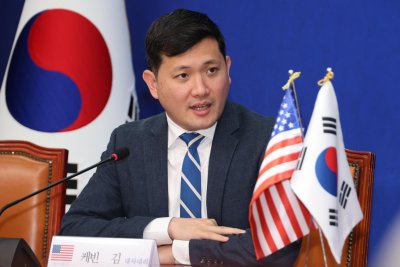
Acting U.S. Ambassador to South Korea Kevin Kim, seen here at the National Assembly in Seoul in December, has left his post and returned to the United States, the foreign ministry said Wednesday, File Photo by Yonhap
Acting U.S. Ambassador to South Korea Kevin Kim has left his post in Seoul and returned to the United States, the foreign ministry said Wednesday, amid speculation he may be assigned a new role in the Trump administration related to Korea issues.
Kim’s departure came just about two months after he took up the post as charge d’affaires at the U.S. Embassy in Seoul in October last year.
Kim succeeded then acting U.S. Ambassador Joseph Yun after the position had remained vacant since former U.S. Ambassador to Seoul Philip Goldberg left the post early last year following the launch of the second Trump administration.
Kim recently informed Seoul officials he returned to the U.S., according to the foreign ministry.
Jim Heller, deputy chief of mission at the U.S. Embassy in Seoul, is expected to serve as charge d’affaires until a new ambassador is appointed.
Sources say that Kim could be tapped for a new role handling Korea-related issues, possibly a position tasked with implementing the summit agreements reached between the allies on security and other matters, or dealing with North Korea issues.
Kim has likely been named a senior adviser to Allison Hooker, U.S. under secretary of state for political affairs, a diplomatic source said. Both Hooker and Kim were deeply involved in nuclear negotiations with North Korea during Trump’s first term, when denuclearization talks were in full swing.
Prior to his posting in Seoul, Kim served as U.S. deputy assistant secretary of state for China, Japan, Korea, Mongolia and Taiwan at the Bureau of East Asian and Pacific Affairs.
Kim’s departure leaves the ambassadorial post in Seoul vacant once again. Goldberg assumed the position more than a year after the Biden administration took office. It took about 18 months for Ambassador Harry Harris to take up the post under Trump’s first term.
South Korean President Lee Jae Myung proposes a halt to Pyongyang’s nuclear programme in exchange for ‘compensation’.
Published On 7 Jan 20267 Jan 2026
Share
South Korean President Lee Jae Myung has said he has asked his Chinese counterpart Xi Jinping to play a mediation role as his government seeks to improve relations with the North and restart talks over its nuclear programme.
Speaking in Shanghai on Wednesday, at the end of a four-day state visit to China, Lee proposed a freeze in Pyongyang’s nuclear programme in exchange for “compensation or some form of return”.
Recommended Stories
list of 4 itemsend of list
“Just stopping at the current level – no additional production of nuclear weapons, no transfer of nuclear materials abroad, and no further development of ICBMs – would already be a gain,” Lee told journalists following meetings with top Chinese officials, including his second meeting with Xi in two months.
“If that stage is achieved, then in the medium term we can move toward gradual reduction,” Lee added. “In the long term, we must not give up the goal of a nuclear-free Korean Peninsula.”
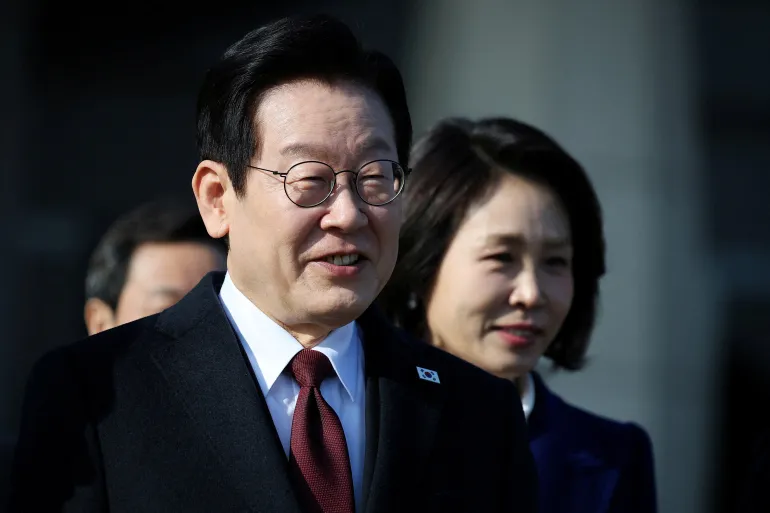
South Korean President Lee Jae Myung and his wife Kim Hye-kyung arrive at Seoul airbase as they leave for Beijing, in Seongnam, South Korea, on Sunday [Kim Hong-Ji/Reuters]
Lee was speaking to reporters on the final day of his trip, which was the first state visit by a South Korean leader to China in six years.
The visit aimed to reset relations between the countries following a rocky period in recent years due to a dispute over the deployment in South Korea of a United States missile defence system in 2017.
Lee told reporters that much progress had been made in restoring trust and that he had told Xi he would “like China to play a mediating role on issues related to the Korean Peninsula, including North Korea’s nuclear programme”.
“All our channels are completely blocked,” Lee said. “We hope China can serve as … a mediator for peace.”
Xi had urged Seoul to show “patience” in its dealings with Pyongyang, given how fraught ties between the two Koreas have become, Lee added.
“And they’re right. For quite a long period, we carried out military actions that North Korea would have perceived as threatening,” Lee said.
South Korea’s ousted former President Yoon Suk-yeol has been indicted for allegedly trying to provoke military aggression from North Korea in a bid to help him consolidate power.
On Monday, Pyongyang confirmed it had carried out test flights of hypersonic missiles, with leader Kim Jong Un saying it was important to “expand the … nuclear deterrent” in light of “the recent geopolitical crisis” – an apparent reference to Washington’s attacks on Venezuela and its abduction of Venezuelan President Nicolas Maduro.
From qualified teams to match schedule and top goalscorers – here’s what you need to know about the AFCON quarterfinals.
Published On 7 Jan 20267 Jan 2026
Share
Defending champions Ivory Coast became the last of the eight continental giants to set up a mouthwatering quarterfinal tie as the Africa Cup of Nations (AFCON) 2025 nears its end in Morocco.
The action in the round of 16 had a bit of everything – from last-gasp winners, to a penalty shootout and one-sided goal fests – but the teams will now be more closely matched as the cream of African football rises to the top.
Recommended Stories
list of 4 itemsend of list
Here’s everything you need to know about the quarterfinals:
Which teams have qualified for the AFCON 2025 quarterfinals?
Host nation Morocco are among the favourites for the title at AFCON 2025 [Sebastien Bozon/AFP]
What’s the schedule of the AFCON 2025 quarterfinals?
Two matches each will be played on Friday and Saturday:
January 9
⚽ Mali vs Senegal at 5pm (16:00 GMT) – Ibn Batouta Stadium, Tangier
⚽ Cameroon vs Morocco at 8pm (19:00 GMT) – Prince Moulay Abdellah Stadium, Rabat
January 10
⚽ Algeria vs Nigeria at 5pm (16:00 GMT) – Marrakesh Stadium, Marrakesh
⚽ Egypt vs Ivory Coast at 8pm (19:00 GMT) – Adrar Stadium, Agadir
Which teams are favourites to win the AFCON 2025?
While holders Ivory Coast and Arab champions Morocco began the tournament as frontrunners for the title, Nigeria have jostled to the front with near-faultless performances in all their fixtures thus far.
Algeria have impressed by being the only team other than Nigeria to win all their matches, while Mohamed Salah-led Egypt have also lived up to their reputation of being a top-four African side.
Mohamed Salah has led Egypt’s charge at the Africa Cup of Nations 2025 [Franck Fife/AFP]
Who are the top goal scorers at AFCON 2025?
At the end of the round of 16, Morocco’s Brahim Diaz leads the charts with four goals from as many games, while five other players have scored three each.
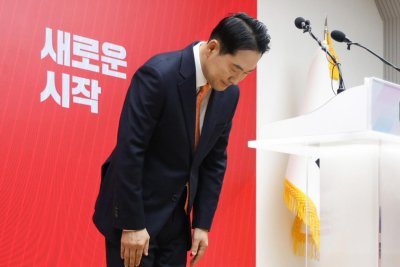
Rep. Jang Dong-hyeok, leader of the main opposition People Power Party, apologizes for the failed martial law attempt by ousted former President Yoon Suk Yeol during a press conference at its headquarters in Seoul on Wednesday. Pool photo by Yonhap
SEOUL, Jan. 7 (UPI) — The leader of South Korea’s main opposition People Power Party apologized Wednesday for former President Yoon Suk Yeol’s brief declaration of martial law last year, distancing the conservative party from the impeached ex-leader while pledging sweeping reforms aimed at broadening its political appeal ahead of upcoming local elections.
Rep. Jang Dong-hyeok, chairman of the People Power Party, delivered the apology during a press conference at party headquarters in Seoul, as Yoon awaits trial on insurrection charges stemming from the failed December 2024 move.
“The emergency martial law declared on December 3, 2024, was a wrongful measure that did not fit the situation,” Jang said. “It caused great confusion and inconvenience to our people and inflicted deep wounds on our party members who have defended the constitutional order of liberal democracy.”
Jang said the People Power Party bore a “heavy responsibility” for the episode, acknowledging that it failed to fulfill its role as a governing party. He was among 18 PPP lawmakers who rushed overnight to the National Assembly to vote down the decree, which was overturned within hours.
“I gravely acknowledge that responsibility and offer my deepest apology to the people,” he said.
Seeking to move beyond the fallout, Jang unveiled what he called a “Change to Win” initiative, outlining plans to rebuild the party around youth participation, expert-driven policymaking and expanded public outreach.
Proposed measures include mandatory youth nominations in upcoming local elections, new platforms to recruit outside policy experts and standing committees focused on labor, social welfare and generational issues.
The announcement comes less than five months before nationwide local elections scheduled for June 1, as the People Power Party looks to reassert itself as a viable alternative to the current administration of President Lee Jae Myung.
Jang also signaled a willingness to broaden the party’s political coalition, saying the PPP would work with other opposition parties to win future elections.
“If they agree with the values of liberal democracy and share the will to stop the dictatorship of the Lee Jae Myung regime, we will open our hearts and join forces with anyone,” he said.
Lee, a former opposition leader, won the presidency in June following Yoon’s removal from office, with his Democratic Party holding a commanding majority in parliament. Conservatives have accused Lee’s administration of overreach, arguing that the party’s legislative dominance has marginalized the opposition, while the government says its actions are necessary to ensure stability and advance voter-mandated reforms.
Jang said the PPP would press ahead with internal reforms, including stricter anti-corruption rules, centralized oversight of candidate nominations and a possible change of the party’s name.
Past political turmoil, including the martial law episode and Yoon’s impeachment, should be left to the courts and historians, Jang said, urging the party to focus instead on restoring public trust.
“We will cross the river of martial law and impeachment and move toward the future,” he said.
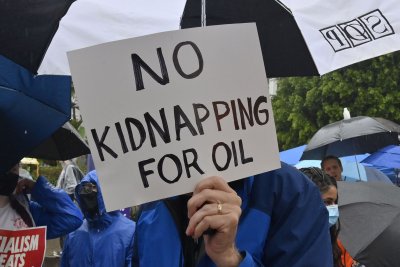
Activists denounce the U.S. military seizure of Venezuelan President Nicholas Maduro at Pershing Square in Los Angeles, Calif., on Saturday, January 3, 2026. President Donald Trump said Tuesday that Venezuela will give the United States upwards of 50 million barrels of oil. Photo by Jim Ruymen/UPI. | License Photo
Jan. 6 (UPI) — Venezuela will be turning over tens of millions of barrels of oil to the United States, President Donald Trump said Tuesday, days after the U.S. military seized the authoritarian president of the country, Nicolas Maduro.
Trump said Venezuela’s interim government, sworn in Monday, will be giving the United States between 30 million and 50 million barrels of “high quality, sanctioned oil.”
“This oil will be sold at its Market Price, and that money will be controlled by me, as President of the United States of America, to ensure it is used to benefit the people of Venezuela and the United States!” Trump said on his Truth Social platform.
It was unclear when the United States would receive the oil, but it will be brought to the United States aboard oil tankers.
Trump said Energy Secretary Chris Wright has been asked to “immediately” execute the plan.
The U.S. military seized Maduro from Venezuela in an early morning operation on Saturday following months of military buildup around the country and an escalating Trump administration pressure campaign. He and his wife, Cilia Flores, were brought to the United States to face narcotrafficking and other drug-related charges.
The Trump administration has been enforcing a naval blockade on Venezuelan oil since mid-December, with Trump arguing the South American country’s oil and assets of U.S. companies were “stolen from us,” referring to Caracas’ decades-old nationalization of its oil industry.
Delcy Rodriguez, former vice president under Maduro, was sworn in as president of Venezuela on Monday. However, Trump has said that the United States will be “running” the South American nation, though other administration officials, including Secretary of State Marco Rubio, have attempted to soften that stance.
Rodriguez is “essentially willing to do what we think is necessary to make Venezuela great again,” Rubio said Monday.
Jan. 6 (UPI) — President Donald Trump warned House Republicans on Tuesday that if they fail to hold on to the chamber in November’s midterm elections, the Democrats will impeach him.
“You got to win the midterms because if we don’t win the midterms, it’s just going to be, I mean — they’ll find a reason to impeach me. I’ll get impeached,” Trump told a few dozen GOP lawmakers in attendance at the Kennedy Center in Washington, D.C., for a House Republican policy retreat.
Trump has repeatedly expressed concern over the future of the GOP’s slim majority of the House ahead of next fall’s midterm elections, as the president’s party has historically suffered losses in the midterms and his first year back in office has been marked by divisive policies and rhetoric.
This summer, GOP-controlled Texas, under pressure from Trump, redrew its congressional district maps to secure more Republican seats in November — setting off gerrymander redistricting efforts by both parties in states they hold majorities.
Democrats and civil rights and voting advocacy groups have accused Trump of trying to undermine the election to hold on to the House, which the GOP currently maintains a 218-213 majority.
In his sprawling 90-minute speech, Trump attempted to project an image of confidence ahead of the election, stating the GOP House is among the most successful in history, while simultaneously expressing befuddlement that the electorate may vote to return the chamber to the Democrats.
“I wish you could explain to me what the hell’s going on with the mind of the public because we have the right policy. They don’t. They have horrible policy. They do stick together. They’re violent. They’re vicious, you know,” Trump said, referring to the Democrats. “They’re vicious people and they stick together like glue.”
Trump was twice impeached during his first term in office: In 2019, on accusations of threatening to withhold Congressionally approved military aid for Ukraine unless President Volodymyr Zelensky investigated the son of his political rival, Joe Biden; and in the wake of the Jan. 6, 2021, insurrection attempt of the Capitol.
He was acquitted both times.
Trump critics and Democrats have suggested since early in his second term that impeachment could be pursued over a range of presidential actions they say are unconstitutional, with some actions being questioned by legal experts and advocacy groups as violations of international law and potential war crimes.
Trump has attracted the most criticism over his immigration polices, which have seen migrants sent to a Salvadoran prison, as well as his anti-drug military actions that have seen more than 100 people killed in international waters. The United Nations high commissioner for human rights, Volker Turk, has said there is “no justification in international law” for the military strikes.
On Saturday, the U.S. military seized Venezuelan President Nicolas Maduro in what the Trump administration has called a law enforcement action, though it has raised questions domestically and internationally over the legality of the operation.
U.N. Secretary-General Antonio Guterres on Monday told the Security Council that he is “deeply concerned that the rules of international law have not been respected with regard to the 3 January military action.”
Trump has followed the operation by threatening to do the same to the leaders of Colombia and Cuba.
“The leaders who pay homage to him and show themselves to be servile to U.S. President Trump in an attempt to win his favor only humiliate themselves,” Chilean President Gabriel Boric Font said in a statement earlier Tuesday.
“Trump (and his administration) not only permanently violates International Law, but human dignity itself.”
The abduction of Maduro has amplified Democratic concerns and talk of impeachment.
“Today, many Democrats have understandably questioned whether impeachment is possible again under the current reality. I am reconsidering that view,” Rep. Maxine Waters, D-Calif., ranking member of the House Financial Services Committee, said in a statement on Saturday following the military operation.
“Even if Republicans refuse to act, Democrats cannot remain silent or passive in the face of actions this extreme from this administration.”
Waters continued: “What we are witnessing is an unprecedented escalation of an unlawful invasion, the detention of foreign leaders and a president openly asserting power far beyond what the Constitution allows. Democrats must take a firm stand against this abuse of authority. We cannot normalize it. We cannot excuse it.”
President Donald Trump holds a signed executive order reclassifying marijuana from a schedule I to a schedule III controlled substance in the Oval Office of the White House on Thursday. Photo by Aaron Schwartz/UPI | License Photo
Venezuela’s interim leader, Delcy Rodriguez, has said that “no foreign agent” is running Venezuela in the wake of Nicolas Maduro’s abduction by United States military forces.
Rodriguez, who had been Maduro’s vice president before his abduction, spoke during a televised event on Tuesday, a day after Maduro and his wife, Cilia Flores, pleaded not guilty in a New York court to drug-trafficking conspiracy charges.
Recommended Stories
list of 3 itemsend of list
“The government of Venezuela is in charge in our country, and no one else. There is no foreign agent governing Venezuela,” Rodriguez said.
Venezuela’s prosecutor general, meanwhile, called for the immediate release of Maduro and his wife.
“The military operation, without a declaration of war or a UN Security Council resolution, represents an illegal act of armed aggression of a terrorist nature,” Tarek William Saab said.
The statements come amid the continuing fallout from Saturday’s military operation, which left dozens of people in Venezuela dead. The offensive has been broadly condemned as a violation of international law.
Venezuela on Tuesday released a list of the 24 soldiers killed in the predawn assault. Cuba also announced that 32 members of its military had died. Rodriguez declared a seven-day period of mourning to commemorate the fallen military members.
Since seizing Maduro from his residence, the administration of US President Donald Trump has offered little clarity about its plans for Venezuela.
Trump said on Saturday that the US would “run” Venezuela, a statement US Secretary of State Marco Rubio walked back the next day.
The top diplomat instead said that US officials would guide the “direction” of how the country is run and use sanctions and an ongoing embargo to force more access to Venezuela’s oil industry.
Rubio, US Secretary of Defense Pete Hegseth and Chairman of the Joint Chiefs of Staff Dan Caine briefed a bipartisan group of Congress members on Monday about the Venezuela operation.
But several lawmakers said that the administration had offered scarce insight into its justification for conducting the strike without first seeking approval from Congress, much less its plans for Venezuela’s future.
“This briefing, while very extensive and long, posed far more questions than it ever answered,” Senate Minority Leader Chuck Schumer said afterwards.
On Tuesday, Senate Majority Leader John Thune, a Trump ally in the Republican Party, said the next few days would show Venezuela’s “government structure and how willing they are to work with the US”.
In a social media post, Thune called Rodriguez a “practical person, pragmatic person” who “will understand the importance of figuring out a path forward to where America’s national security priorities can be prioritized by Venezuela”.
Trump, meanwhile, offered few new details on the operation during a retreat with Republicans on Tuesday, beyond praising the abduction as an “amazing military feat” and “brilliant tactically”.
Speaking from exile in Miami, Florida, former Venezuelan opposition leader Juan Guaido said the country had a “wonderful and incredible opportunity”.
Guaido, who fled Venezuela in 2023, said that rebuilding the country’s democracy would allow millions of Venezuelans to return, and help “bring back to life the oil fields” and restore prosperity.
He condemned Rodriguez as “an acting dictator”, describing the current period as “a phase of transition” that will only be complete “once the rule of law has been reinstalled”.
Unease in Caracas
In Venezuela’s capital, Caracas, crowds gathered on Tuesday for a state-organised display of support for the government.
Some marchers flashed “V” victory signs. Hardline Minister of Interior Diosdado Cabello – who, like Maduro, has been indicted by the US Department of Justice – was seen wading through the gathering. He wore a blue cap emblazoned with the slogan, “To doubt is to betray.”
But Noris Argotte Soto, a Venezuelan reporter in Caracas, told Al Jazeera that the situation in the capital continues to be tense, with most residents staying inside their homes.
“In the peripheral areas of the city, everybody remains at home. The tension is rising; people are on edge. And people are very much afraid of going out into the streets, mostly because [of] the security forces that we see at the main points of the city,” she said.
Soto added that government-aligned paramilitaries have been working alongside the military in recent days to maintain security and crack down on potential dissent.
“They were working yesterday with the security forces,” she said.
“They were basically bullying people, intimidating people, searching their cars, even demanding their cell phones to check their messages, check their social media.”
Regional uncertainty
Anxiety was also felt across the region, as the Trump administration has upped its threats against Venezuela’s neighbour, Colombia, as well as the island of Greenland in the northern Atlantic.
In the aftermath of Saturday’s attack, Trump said he had not ruled out an attack on Colombia for allegedly failing to tamp down on the illegal drug trade.
He described the country’s president, Gustavo Petro, who has been a vocal critic of US operations in Venezuela, as a “sick man who likes making cocaine and selling it to the United States”.
On Tuesday, Colombia’s Foreign Affairs Minister Rosa Yolanda Villavicencio announced she will meet with the US Embassy’s charge d’affaires in Bogota to present a formal complaint over the recent US “threats”.
Villavicencio said she hopes to reassure the Trump administration “about all that we are doing in the fight against drug trafficking”.
Greenland and Denmark also called for an expedited meeting with Rubio on Tuesday to “discuss the significant statement made by the United States”, Greenland’s foreign minister, Vivian Motzfeldt, wrote on social media.
In the wake of Maduro’s abduction, Trump again floated taking control of Greenland, which is an autonomous territory of Denmark.
Trump aide Stephen Miller later said that Washington has a right to seize sovereign territories if it deems such moves to be in its national interest.
The statement was in line with a White House national security strategy released in December, which pledged to re-establish US “pre-eminence” in the Western Hemisphere.
The White House on Tuesday again said it was exploring options to seize Greenland, adding that “utilizing the US military is always an option”.
An array of European countries, as well as Canada, have rushed to support Greenland, noting that Denmark is a NATO member. Therefore, an attack on the island would constitute an attack on the entire bloc.
On Tuesday, the leaders of France, Germany, Italy, Poland, Spain and the United Kingdom joined with Denmark to issue a joint statement denouncing Trump’s remarks.
“Greenland belongs to its people. It is for Denmark and Greenland, and them only, to decide on matters concerning Denmark and Greenland,” the statement said.
The attack on Venezuela and the abduction of President Nicolas Maduro over the weekend have sent shockwaves across Latin America, where many countries fear a return to a period of overt United States interventionism.
Those fears are particularly prominent in Mexico, the US’s neighbour and longtime ally.
Recommended Stories
list of 3 itemsend of list
The country was one of several — along with Cuba and Colombia — that US President Donald Trump singled out in remarks after Saturday’s attack on Venezuela, which killed dozens of people and was widely condemned as a violation of international law.
Trump suggested that the US could carry out military strikes on Mexican territory in the name of combating drug traffickers.
“Something’s going to have to be done with Mexico,” Trump said in an interview with Fox News on Saturday morning, after the Venezuela strikes.
“She [President Claudia Sheinbaum] is very frightened of the cartels,” he added. “They’re running Mexico.”
‘We are free and sovereign’
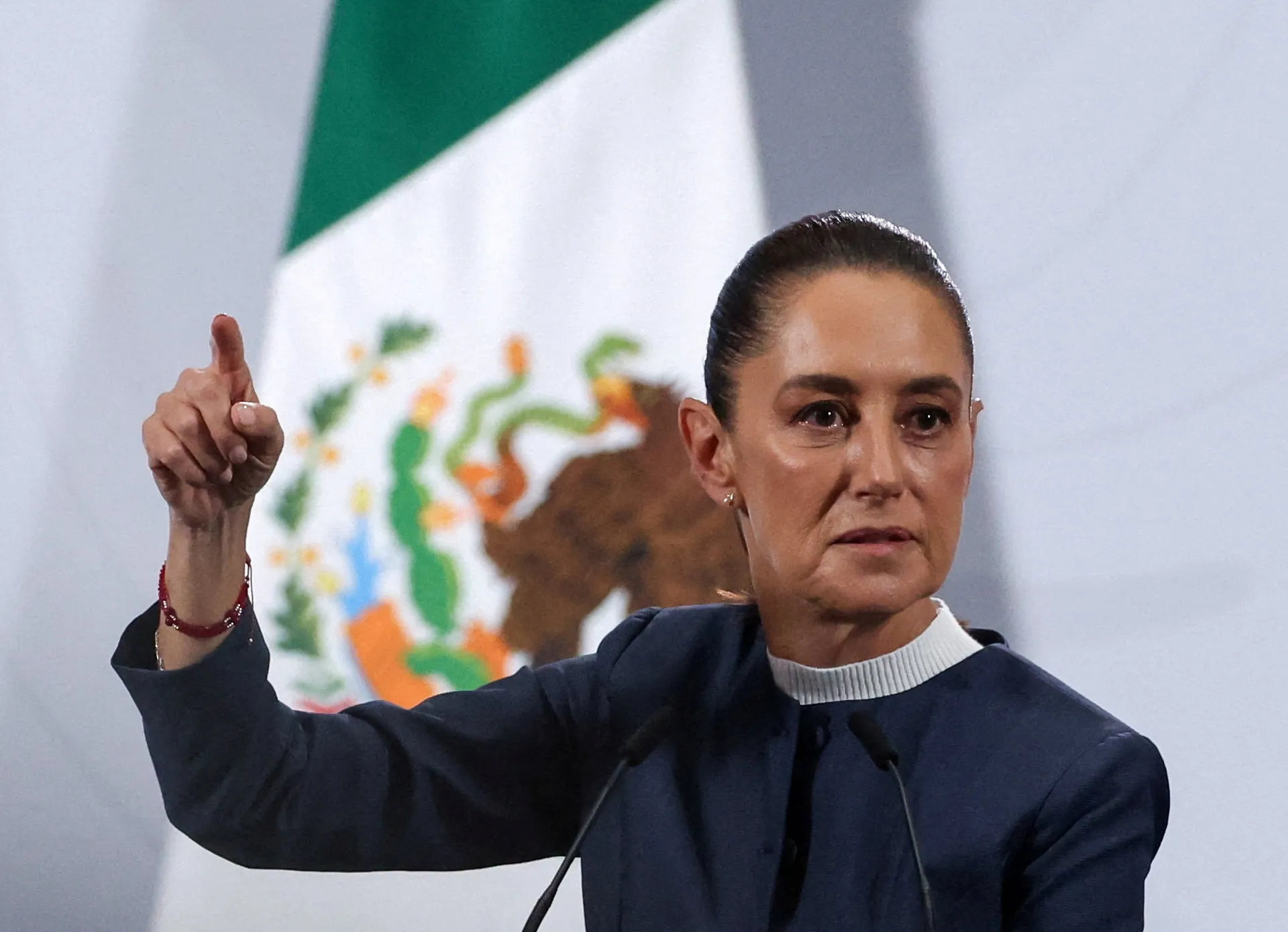
Sheinbaum has responded to Trump’s threats with a firm insistence on Mexican sovereignty.
“We categorically reject intervention in the internal matters of other countries,” Sheinbaum said in comments to the media on Monday.
“It is necessary to reaffirm that, in Mexico, the people rule and that we are a free and sovereign country,” she added. “Cooperation, yes; subordination and intervention, no.”
Even in good times, Mexican leaders have walked a line between seeking productive relations with their powerful northern neighbour and defending their interests from possible US encroachment.
That balancing act has become more difficult as the Trump administration employs rhetoric and policies that have drawn parallels to earlier eras of imperial intervention.
“Historically, there’s a record of US intervention that is part of the story of Mexican nationalism,” Pablo Piccato, a professor of Mexican history at Columbia University, told Al Jazeera.
Many of those instances loom large in the country’s national memory. The US launched a war against Mexico in 1846 that saw US troops occupy Mexico City and annex enormous swaths of territory, including modern-day California, Nevada, and New Mexico.
Later, during the Mexican Revolution, from 1910 to 1920, US Ambassador Henry Lane Wilson worked with conservative forces in Mexico to overthrow the country’s pro-reform president.
US forces also bombed the port city of Veracruz in 1914 and sent forces into northern Mexico to hunt down revolutionary leader Pancho Villa.
“These are seen as important moments in Mexican history,” said Piccato.
“There is a quote attributed to Mexican President Porfirio Diaz, ‘Poor Mexico. So far from God, so close to the United States.’”
In recent statements, Trump has linked the US’s history in the region to his present-day agenda. While announcing Saturday’s strike, he cited the Monroe Doctrine, a 19th-century policy that the US has used to assert primacy over the Western Hemisphere.
“The Monroe Doctrine is a big deal, but we’ve superseded it by a lot, by a real lot. They now call it the ‘Donroe Doctrine’,” Trump said.
On Monday, the US State Department also shared an image of Trump on social media with the caption: “This is OUR hemisphere.”
‘Balancing on a thin wire’
Sheinbaum’s insistence on Mexican sovereignty has not prevented her from offering concessions to Trump on key priorities, such as migration, security and commerce.
When faced with Trump’s threats of 25 percent tariffs last February, Sheinbaum agreed to deploy 10,000 Mexican National Guard troops to her country’s border with the US, to help limit irregular immigration and drug-trafficking.
Mexico has also maintained close security ties with the US and cooperated in its operations against criminal groups, including through the extradition of some drug traffickers.
In February, for instance, Sheinbaum’s government extradited 29 criminal suspects that the US accused of drug trafficking and other charges. In August, it sent another 26 suspects to the US, earning a statement of gratitude from the Trump administration.
Washington has historically pressured Mexico to take a hardline stance towards combating drugs, leading to policies that some Mexicans blame for increasing violence and insecurity in their country.
Still, while Sheinbaum has received praise for managing relations with Trump, she has consistently said that unilateral US military action on Mexican territory would be a red line.
Experts say Sheinbaum’s willingness to cooperate should be an incentive for the US government not to launch attacks on Mexican soil.
“Sheinbaum has gone out of her way to cooperate with the US,” said Stephanie Brewer, the director of the Mexico programme at the Washington Office on Latin America (WOLA), a US-based research group. “There would be no rational reason to break this bilateral relationship by crossing the one red line Mexico has set out.”
But the strikes on Venezuela have also underscored the Trump administration’s increasingly aggressive posture towards Latin America.
“I don’t think US strikes on Mexican territory are any more or less likely than they were before the attacks in Venezuela,” said Brewer. “But they do make it abundantly clear that the Trump administration’s threats need to be taken seriously, and that the US is willing to violate international law in its use of military force.”
“Sheinbaum is doing a balancing act on an increasingly thin wire,” she added.
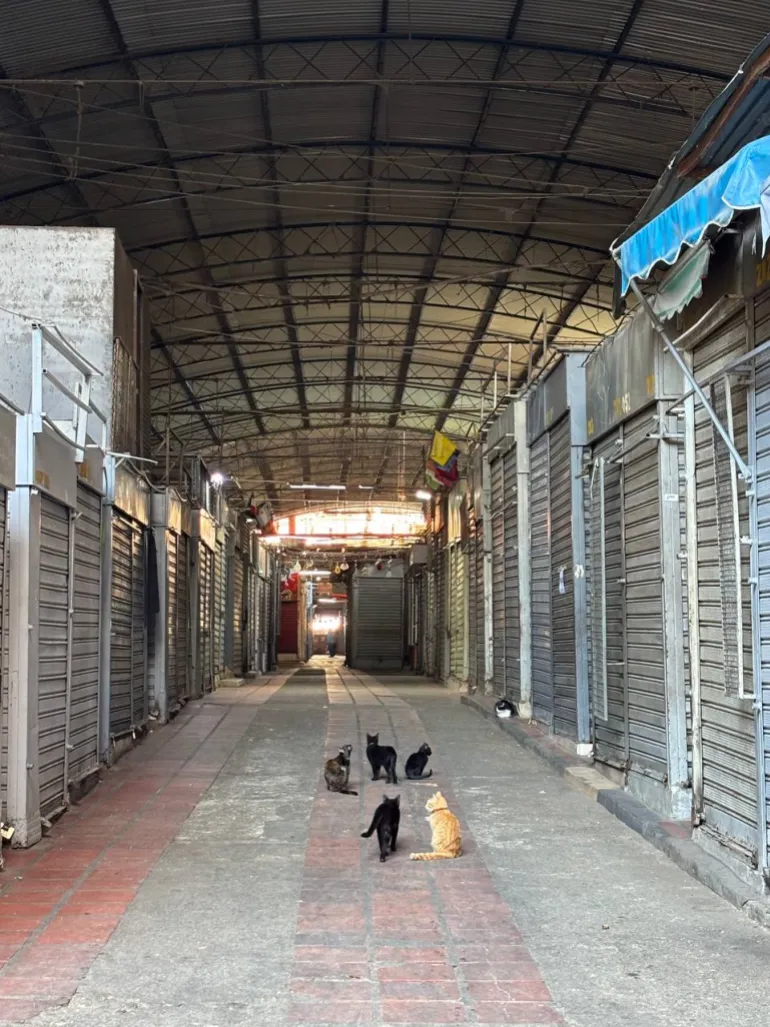
Caracas, Venezuela – The normally noisy capital of Caracas was eerily quiet on Monday, two days after the United States bombed the city and abducted Venezuela’s leader, Nicolas Maduro.
But many “caraqueños” nevertheless ventured out to buy food and other necessities, albeit at marked-up prices.
Recommended Stories
list of 3 itemsend of list
The tense atmosphere on Caracas’s streets was yet another sign of the uncertainty facing everyday Venezuelans, as they face the looming threat of further US intervention.
Local authorities have called for regular economic activity to continue in Venezuela. But some stores nevertheless remained closed, while households stocked up on basic supplies in case of shortages.
At Caracas’s central market, Quinta Crespo, many shopkeepers had shuttered their businesses for fear of unrest and looting.
Lines of 10 or more people often stretched outside the stores that remained open, despite the midday sun. Officers from the Bolivarian National Police patrolled outside to keep the queues calm.
Shoppers told Al Jazeera they were buying non-perishables, like corn flour, rice and canned goods, in case the security situation deteriorated in the capital.
“I’m looking for basic necessities, given the situation the country is going through,” said Carlos Godoy, 45, who lives in the western Caricuao district of Caracas. “We are waiting to see what happens. We are all in suspense, in uncertainty.”
Many stores in Caracas were shuttered in the aftermath of the US attack, for fear of further military action and looting [Julio Blanca/Al Jazeera]
Among the most expensive products Godoy saw on his shopping trip was powdered milk, which he said is selling for $16 per kilogram.
Another shopper, Betzerpa Ramírez, said she felt calm, despite the early-morning attack on Saturday. While she felt no need to hoard food items, she did note that prices for some goods have increased.
“Hygiene items are more expensive, even more than food,” she said.
Alexandra Arismendi, who works in a mobile phone shop at the Sambil mall in one of Caracas’s busiest shopping districts, expressed frustration with some of the recent price spikes.
The price of eggs, she said, was “exaggerated”.
“Prices are high,” she said. “A carton of eggs is selling for $10, which is beyond normal.”
Her colleague at the mobile shop, 23-year old María Gabriela, lamented the slump in sales, as shoppers stay indoors for fear of further unrest.
The normally bustling mall had largely emptied of its usual crowds. Gabriela herself was hesitant to show up for work. She travelled by taxi to avoid public transport.
“We thought people would be looking for chargers or power banks [for possible power failures], but they have been looking for other things,” Gabriela said.
“There has been no usual activity. It has been one of the strangest days in recent months.”
Venezuelans have become accustomed to volatile price increases and supply shortages over the past decade. Experts often blame government corruption, mismanagement and US sanctions for destabilising Venezuela’s economy.
During Maduro’s presidency, oil prices plummeted, sending Venezuela’s petroleum-heavy economy into free fall.
By 2018, inflation hit more than 130,000 percent, according to the country’s central bank. The COVID-19 pandemic also dealt the economy a wallop, leading to shortages of food and health supplies.
Maduro’s government has not published inflation statistics since he claimed victory in 2024’s disputed presidential election.
Some shoppers in Caracas stocked up on essential supplies, in case of continued unrest [Julio Blanca/Al Jazeera]
It remains unclear to what degree normalcy will return to Venezuela after the US attack on Saturday.
Early that morning, the administration of US President Donald Trump launched munitions against military installations in the states of Caracas, Aragua, Miranda and La Guaira.
At least 80 people died in the attack, according to an anonymous Venezuelan official quoted in The New York Times.
The US military offensive was over in a matter of hours. But Trump has warned he could authorise a “second wave” of attacks, should his demands for Venezuela not be fulfilled.
The Venezuelan government has also declared a state of emergency to “immediately begin the national search and capture of everyone involved in the promotion or support for the armed attack by the United States”.
It has maintained that Maduro remains the leader of Venezuela, despite his abduction to the US.
To Arismendi, the tension in Venezuela has not yet reached the level seen after the 2024 election, when thousands of protesters took to the streets.
“I feel that there was more tension around the elections,” said Arismendi. “Thank God we’re not at that level right now, but I feel like we’re not that far off either.”
William DeFoor, 26, damaged Vice President JD Vance’s family home in Cincinnati early Monday morning due to mental health issues and not politics, his attorney said. Photo Courtesy of the Hamilton County Sheriff’s Office
Jan. 6 (UPI) — The man accused of vandalizing Vice President JD Vance’s home in Cincinnati has a history of mental health issues, his defense attorney said in court Tuesday.
William DeFoor, 26, was arrested and is accused of vandalizing the Vance home at 12:15 a.m. EST on Monday while the vice president and second lady Usha Vance were in Washington, D.C.
DeFoor’s attorney, Paul Laufman, made the mental health claim during his client’s arraignment hearing in Hamilton County Municipal Court on Tuesday.
Laufman said the vandalism was not politically motivated, and Judge Janaya Trotter Bratton ordered DeFoor to post an $11,000 bond to be released from custody.
DeFoor writes “peaceful” prose in his poems, and his using a hammer to damage a vehicle driven by a federal agent watching Vance’s home and then several windows on the home were not intended as a political statement, Laufman told the court.
“I just don’t think there’s anything political going on,” Laufman said.
DeFoor is accused of felony damage, criminal trespass, criminal damage and obstructing official business.
He has a history of mental health-related cases heard by the Hamilton County Mental Health Court and has been arrested multiple times for vandalism.
When DeFoor arrived outside of Vance’s home, he tried to break the windows of a Secret Service vehicle that was blocking the driveway, according to a criminal complaint filed by FBI Assistant Special Agent Gavin Hartsell.
A Secret Service agent and Cincinnati police announced their presence and ordered DeFoor to “stop and drop the weapon” he was holding, Hartsell wrote.
“DeFoor ignored all commands and began to use a hammer to break glass windows,” located on the front of Vance’s home, he said.
Hartsell described the windows as “large, historic windows” that contained “enhanced security assets” owned by the federal government. He estimated the cost of damage at $28,000.
Vance on Monday said a “crazy person tried to break in by hammering the windows” on his family’s home and thanked the Secret Service and Cincinnati police for quickly responding to the matter in a social media post.
The ex-president’s wife says he fell out of his prison bed while sleeping and hit his head.
Published On 6 Jan 20266 Jan 2026
Share
Brazil’s jailed ex-president, Jair Bolsonaro, fell and struck his head in his prison cell, but his request to go to a hospital was denied by the country’s top judge.
The 70-year-old right-wing leader fell out of bed while sleeping and hit his head on a piece of furniture, his wife, Michelle Bolsonaro, wrote on Instagram on Tuesday.
Recommended Stories
list of 3 itemsend of list
“We are going to the hospital. My love will undergo exams,” Michelle Bolsonaro said.
However, Supreme Court Justice Alexandre de Moraes denied Bolsonaro’s request to immediately leave prison for tests at a hospital in Brasilia.
The federal police said in a statement that Bolsonaro received initial medical treatment in the morning, adding that a federal police doctor “found minor injuries” and saw no need for hospitalisation.
“Any referral to a hospital depends on authorisation from the Supreme Court,” it added.
Bolsonaro, who was stabbed in the abdomen during a 2018 campaign event, has a history of hospitalisations and surgeries related to the attack.
Citing the police report, de Moraes said in his decision that there is no need for Bolsonaro to be immediately taken to hospital. The judge said his legal team has the right to request exams for Bolsonaro, but lawyers must schedule them in advance and provide information justifying the procedures.
He was discharged from hospital on January 1 and taken back to the Federal Police Superintendency in Brasilia, where he is serving a 27-year sentence for plotting a coup after losing the 2022 presidential election.