From breaking news to significant developments in politics, business, technology, entertainment, and more, we deliver the stories that shape our global landscape.
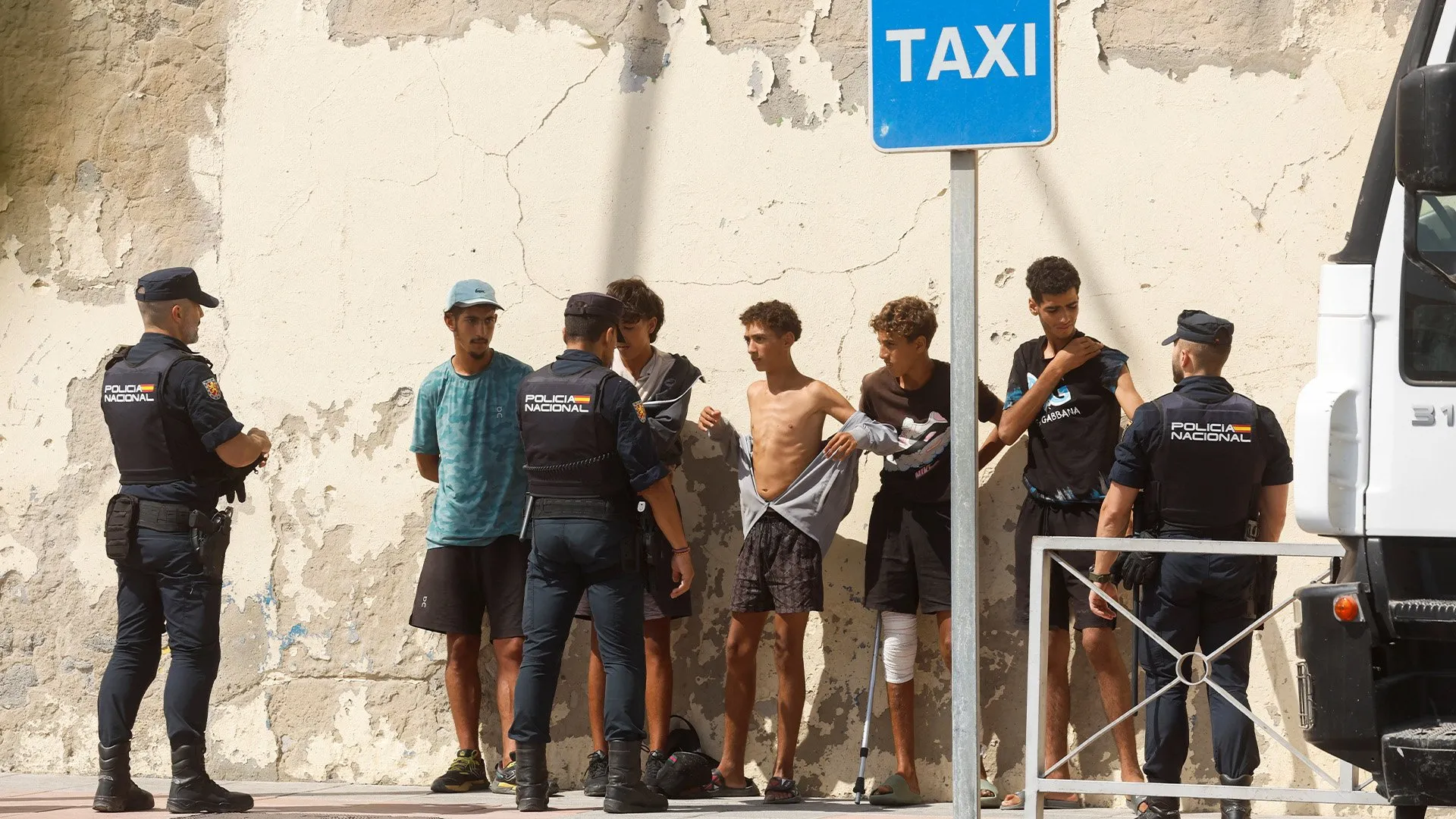
Authorities estimate that at least 10,000 people remain in the enclave of Ceuta after a record surge of 72,000 migrants crossed from Morocco to Ceuta over the course of two days in late July, overwhelming local resources and creating a humanitarian crisis.
Victory of United Russia party strengthens Putin’s hand even as the war with Ukraine grows more unpopular.
President Vladimir Putin’s United Russia party has won a record supermajority in tightly orchestrated parliamentary polls that excluded virtually any genuine opposition, near complete official results show.
With over 58 percent of votes secured, United Russia, which has dominated Russian politics for 25 years, is on track to win more than three quarters of the seats in the lower house, the State Duma, according to the results announced on Monday after three days of voting that ended on Sunday.
Recommended Stories
list of 4 itemsend of list
The polls were the first parliamentary vote since Russian forces invaded Ukraine in 2022 and the first to include residents of four Ukrainian regions that were seized and illegally annexed by Moscow later that year.
Reporting from Moscow, Al Jazeera’s Dmitry Medvedenko said the results, along with a high voter turnout of almost 60 percent, “is likely to be seen by Moscow as emboldening, as public support for what it is doing, especially for what it’s doing in Ukraine for the continuation of the war”.
Ella Pamfilova, chair of the Central Electoral Commission, said Yabloko, the only registered anti-war party in Russia, did not win any seats at the national level. It had been removed from the ballot last month by Russia’s Supreme Court and only had a few dozen candidates in single-seat races.
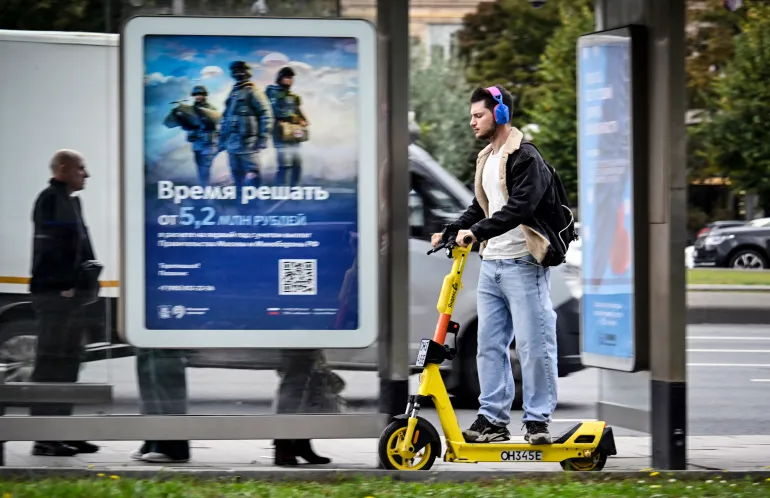
A billboard in western Moscow promoting contract army service and reading ‘Time to Decide’, September 21, 2026 [AFP]
Yabloko did enter the regional parliament in western Russia’s Novgorod region. It said on social media that it received about 12,000 votes – just over six percent of votes and enough to enter the regional legislature.
Yabloko and the Communist Party, which has criticised some aspects of government policy but carefully avoided any criticism of Putin, said many of their observers were turned away from polling stations.
The Communists made it into parliament with 13.8 percent of the vote, securing 40 Duma seats. The nationalist LDPR party won 25 seats and the New People party 20.
Russia did not invite observers from the Organization for Security and Cooperation in Europe (OSCE), which the Foreign Ministry has accused of “double standards” for its criticism of the country. OSCE Parliamentary Assembly President Pere Joan Pons said the decision to exclude observers violated Russia’s commitments as a member.
‘Surprise to nobody’
Many Russians appeared unsurprised by the poll results.
“In the morning, I saw that United Russia was winning. It probably comes as a surprise to nobody,” said Moscow resident Tatyana.
Asked what she would like to change, she said: “Well, I guess everyone knows the most acute thing – the conflict in Ukraine. I’d like to see it end sooner, with peaceful methods if possible”.
The continuation of the war risks entrenching policies, which are increasingly affecting average Russians and the parliamentary supermajority may struggle to change the dynamic.
“Putin, of course, will interpret United Russia’s results as confirmation of the (public) support of the war, even though it is not the case: The overall demand for ending the war is growing,” said Tatyana Stanovaya of the Carnegie Russia Eurasia Center in an online commentary.
“The main question is: What now? There are great concerns about mobilisation, new repressions, harsher measures and escalation,” she wrote.
Western criticism
The EU’s top diplomat Kaja Kallas dismissed Russia’s “so-called” election.
“The Kremlin silenced dissent, barred the only registered party that opposed its war in Ukraine and shut out international election monitors. The veneer of democracy is all that remains in Russia,” Kallas said.
In a joint statement, five countries, including Australia, Britain and Canada, condemned Russia’s “sham” parliamentary elections in areas of occupied Ukraine, branding them “part of a wider system of occupation”.
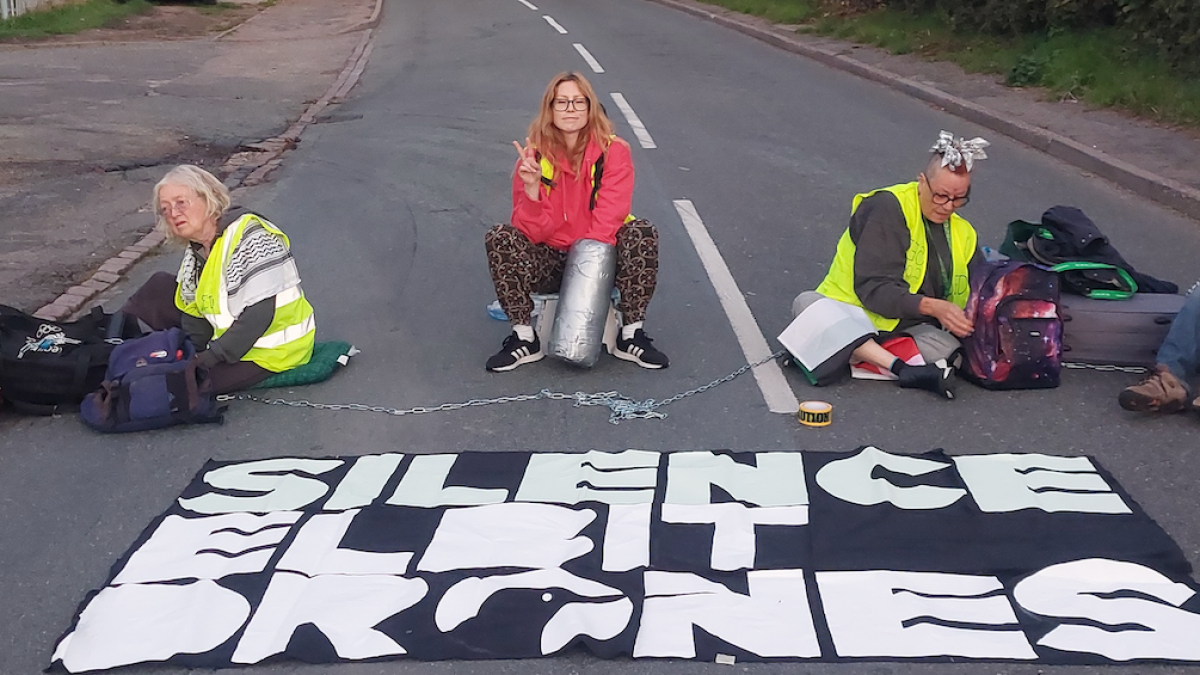
Nine protesters blocked access to Elbit Systems’ factory in Staffordshire by attaching themselves to five ‘lock-ons’ to launch the direct-action group ‘Silence Elbit Drones’. Al Jazeera spoke with spokesperson Audrey Corno, who said the group aims to disrupt Elbit’s operations over its supply of military equipment to Israel.
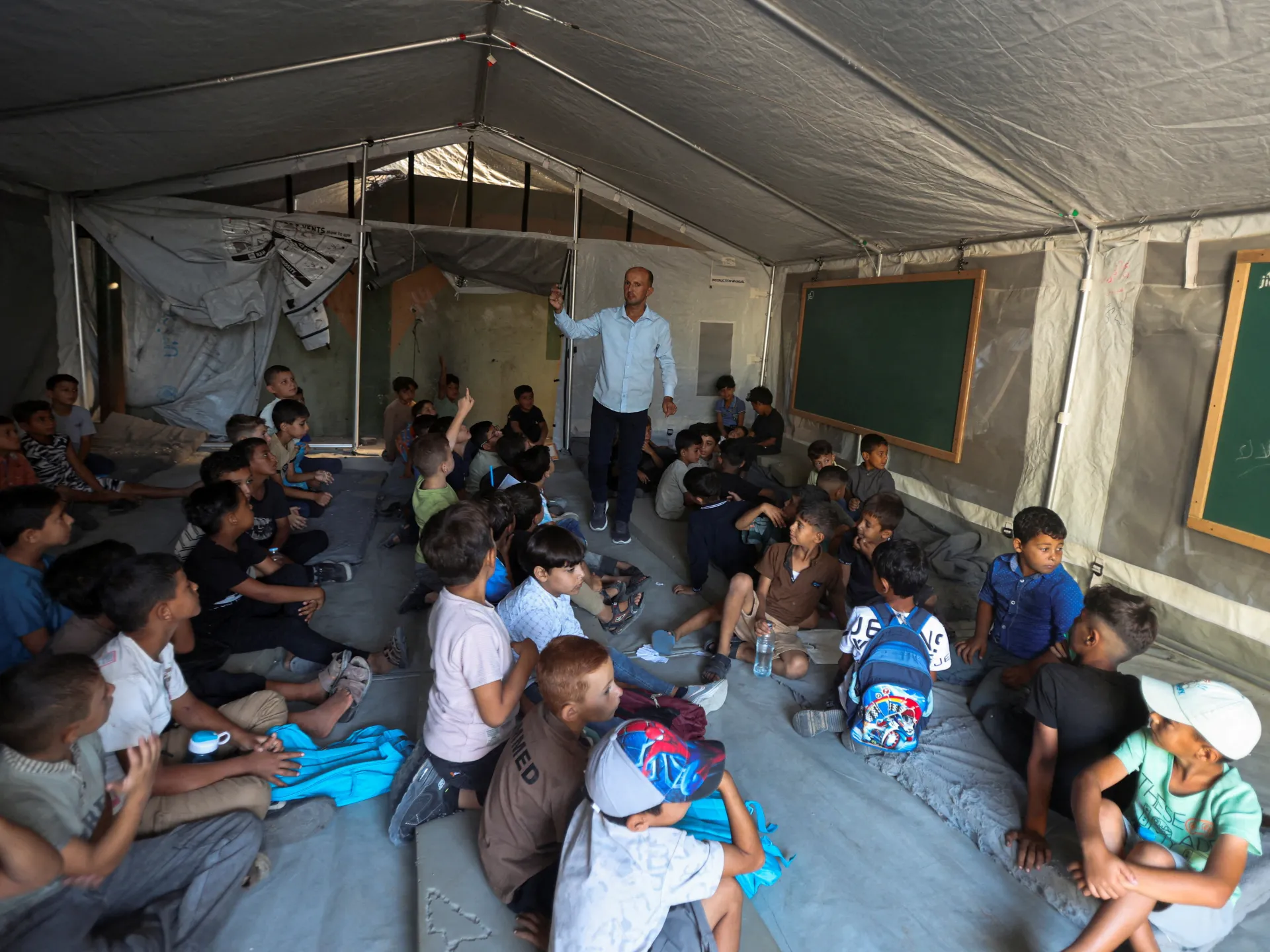
Hundreds of thousands of children returned to in-person classes in Gaza on Saturday for the first time in nearly three years, filing into damaged school buildings, makeshift classrooms and tents amid a severe shortage of basic supplies.
The United Nations Children’s Fund (UNICEF) says 98 percent of schools in the Gaza Strip were destroyed or damaged during Israel’s genocidal war on the enclave, while local education officials estimate about 660,000 students have been deprived of regular, in-person learning.
The reopening is a fragile milestone in a territory where about 22,000 students and more than 770 education workers, including 532 teachers, have been killed, according to Ibrahim Ramadan, director of education for eastern Khan Younis.
“The last time I have been to school was three years ago,” said student Moayed Abu Mustafa in Khan Younis. “Now, we are starting the school year; it is year of joy, happiness and success. Despite all of this, we will learn, we will learn even in a tent.”
Moayed has no proper shoes, notebook or pen, and will sit on the floor in a sweltering tent.
Across Gaza, the Ministry of Education, backed by aid agencies, has set up dozens of temporary schools from tarpaulins, sheet metal and wood. Some classrooms consist of a few mattresses and a blackboard; others still shelter displaced families.
“We studied on phones, and we haven’t seen our teachers. Now, we are back pursuing our dream … from one tent to another,” said 15-year-old Samar Abu Salmi, who lives in a tent with her family and can no longer afford school supplies that were cheap before the war.
Stationery trader Khaled Aliyan said Israeli import restrictions have driven prices up fivefold. “All stationery items are expensive,” he said.
Israeli forces still control more than 60 percent of Gaza despite an October 2025 “ceasefire” that halted large-scale fighting but left the underlying conflict unresolved.
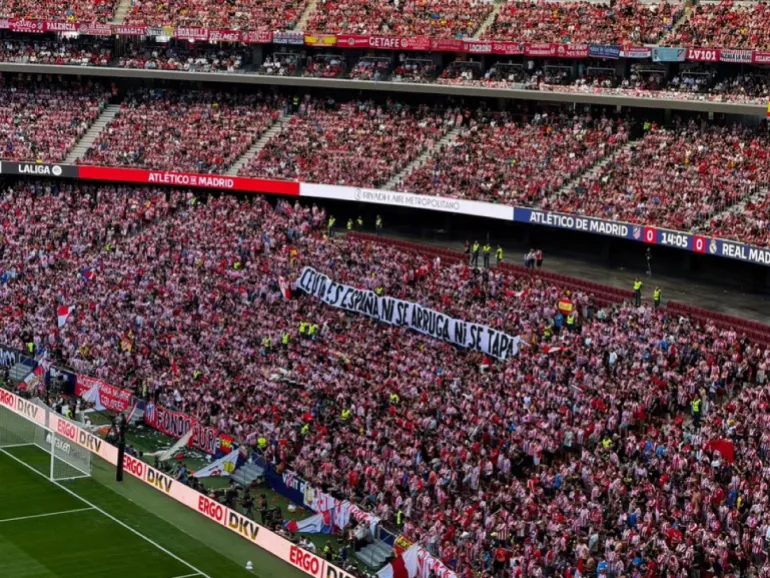
Madrid, Spain – Thirteen minutes into La Liga’s Madrid derby on Sunday, a banner was unfurled in the Metropolitano Stadium’s south stand stating: “Ceuta es Espana. Ni se arruga, ni se tapa.” (Ceuta is Spain. It is neither rolled up, nor covered.)
It was a reference to the controversy involving Real Madrid players Kylian Mbappe, Vinicius Junior and Ibrahima Konate, who in a previous football match against Elche had rolled-up shirts carrying a solidarity message linked to Ceuta, the Spanish enclave at the centre of growing political tensions between Spain and Morocco over the influx of migrants and refugees.
Recommended Stories
list of 4 itemsend of list
A record 72,000 migrants crossed from Morocco to Ceuta over the course of two days in late July, overwhelming local resources and creating a humanitarian crisis. The Spanish NGO Caminando Fronteras documented 141 deaths across both sides of the border in the immediate aftermath.
Mbappe and Konate have strong ties to the African continent. Konate was born and raised in Paris by parents who migrated from Mali, while France captain Mbappe grew up in Bondy, outside Paris, to parents who came from Cameroon and Algeria.
Mbappe said his gesture did not reflect a lack of support for Ceuta.
“I also wanted to think about all the people who are suffering, because in the end I am human and I don’t want to prioritise the suffering of one group over another,” he said.
He also said he wanted to acknowledge migrants who had suffered or lost their lives during the crisis.
Real Madrid later said it respected each player’s freedom to participate in the initiative. A day earlier, Barcelona had chosen not to wear the shirts before their La Liga game against Levante.
La Liga president Javier Tebas, meanwhile, criticised the three Real Madrid players and said he did not regard the campaign as political. David Aganzo, president of Spanish footballers’ union AFE, said players instead needed to be properly informed about what they were being asked to wear and why.
While the debate over Spanish football’s support for Ceuta followed Real into their derby against fierce rivals Atletico Madrid on Sunday, it also united supporters from both sides for two minutes as they joined in chants of “Ceuta no se vende, Ceuta se defiende” (Ceuta is not for sale, Ceuta must be defended) before the usual hostility of the derby resumed.
Mbappe and Vinicius were also the target of whistles from both sets of fans when Real’s starting XI was announced prior to kickoff.
Jorge Garcia, a 32-year-old Atletico Madrid supporter, believed they deserved the jeering.
Speaking to Al Jazeera after the match, Garcia termed the players’ move “disrespectful” to both Ceuta and Spain.
Fans hold a banner during the Atletico Madrid vs Real Madrid La Liga match at the Metropolitano Stadium in Madrid, Spain on Sunday, September 20, 2026 [Leyla Hamed/Al Jazeera]
The campaign was launched on September 11 by Asociacion Valenciana de Empresarios (AVE), a non-profit business association, which described the move as an expression of solidarity with Ceuta’s residents and businesses amid an influx of migrants and a message of “territorial and social cohesion in Spain”.
AVE is chaired by businessman Vicente Boluda, a former interim Real Madrid president whose maritime group also operates in Ceuta.
Spain coach Luis de la Fuente travelled to Ceuta with the World Cup trophy, declaring: “This is Spain, this is Ceuta.” Real Madrid president Florentino Perez later visited and said the trip had been organised weeks earlier and was not a response to the controversy involving his players.
Youssef Temsamani, a Spain-based Moroccan journalist, believes the players found themselves in a difficult position: wearing the shirt could be interpreted as taking a political position, but declining to do so could be portrayed as showing a lack of solidarity.
Temsamani said migrants should also form part of discussions about solidarity with Ceuta, and criticised descriptions of the crossings in parts of Spain’s political and media debate as an “invasion” or “occupation”.
Luhay Hamido, president of AD Ceuta football club, defended the right of individual players to make their own decisions and said he respected those who wore it and those who did not.
“We cannot force anyone to identify with a cause they do not understand,” he told Al Jazeera, suggesting footballers are sometimes simply told to put on a shirt in the tunnel without having received a full explanation.
The scale of the crisis that prompted the solidarity campaign remains difficult to quantify precisely. Spain’s Interior Ministry put the number of people who irregularly crossed into Ceuta on July 30 and 31 at 72,000, saying more than 70,000 initially returned to Morocco.
Seven weeks later, the government estimated that 9,000 to 10,000 migrants remained in Ceuta. RTVE reported on September 20 that around 8,300 people were being accommodated in different facilities while more than 4,000 remained on the streets, reflecting discrepancies between estimates compiled at different stages of the crisis. The new temporary centre at the port reached its capacity of 1,700 people within hours of opening.
Hamido said the crisis had also directly affected AD Ceuta, with several advanced signings collapsing because players and their families were worried by what they had seen on television. The club began paying for prospective signings to visit the city before making their decision.
At the same time, he described the support from Spanish football as “pure fuel for us”, giving Ceuta “strength, hope and energy”, and said AD Ceuta could act as an “amplifier” so the city was not forgotten.
Away from the stadiums and political arguments, football is also played in the neighbourhoods in Ceuta, where migrants had gathered in the largest numbers.
There, children could be seen playing barefoot in the street, marking out makeshift goals against walls and turning whatever space they could find into a football pitch. Some wore shirts bearing the names of Yamal, Hakimi or Mbappe – players whose own family histories stretch across borders.
For Hamido, ordinary people caught in the crisis should not be castigated.
“[These] people, in the end, are not to blame,” he told Al Jazeera.
The UN chief’s mandate ends on December 31 this year, with a successor yet to be named.
Published On 21 Sep 202621 Sep 2026
The state of the world seems to be getting worse due to a “dramatic geopolitical divide” that is leaving “the most vulnerable countries and populations in very dramatic situations” and that “paralyses the Security Council”, United Nations Secretary-General Antonio Guterres has told Al Jazeera.
Speaking on Monday, the first day of the UN General Assembly (UNGA) in New York City, Guterres said that major military conflicts happening in the world at the moment, the Russia-Ukraine war and the US-Israel war on Iran, have created a crisis due to the continued violations of international law by “superpowers” that are key members of the UN Security Council (UNSC).
Recommended Stories
list of 4 itemsend of list
“That creates an environment of impunity, in which midsize powers believe that they can do whatever they want because nothing will happen to them,” Guterres told Al Jazeera, admitting that “wars are becoming multiplied, and more and more complex”.
The UN chief outlined the real-life impacts that these two wars are having on people on a humanitarian level, particularly around food accessibility, rising fuel prices, and global inflation.
“The combination of the war in Ukraine with the problems of exports of foods, fertilisers, and energy through the Black Sea, if you combine it with the difficulties in the Strait of Hormuz [in the Gulf], in the Bab al-Mandeb [in the Red Sea], and in the attacks [on] oil installations in several countries of the [Middle East] region, we are creating a situation that has a devastating impact on many economies around the world,” Guterres said.
He added that rising interest rates and fuel prices in developed countries could eventually be managed, whereas people in the developing world “are in a desperate situation” due to the increasing energy and food costs and the lack of fertilisers.
Dire need for reforms
Guterres, who previously served as prime minister of Portugal and UN high commissioner for refugees, has been the UN chief since January 1, 2017, though his mandate is coming to an end on December 31, 2026.
His successor, who is yet to be named, will take charge of an organisation that is grappling with multiple crises and is, in Guterres’s opinion, in dire need of reforms to stay relevant and important on the global stage. He notably cited the UNSC, saying it “still essentially represents the world of World War II”.
Candidates in the running to replace Guterres include the International Atomic Energy Agency’s Rafael Grossi, former Senegalese President Macky Sall and Ecuadorian diplomat Maria Fernanda Espinosa.
To be recommended by the UNSC, a candidate for UN secretary-general needs at least nine of the council’s 15 members to vote in favour and must avoid a veto from any of the five permanent members – China, France, Russia, the United Kingdom and the United States – before a final vote in the UNGA.
Scott Bessent says airports and companies servicing Iranian carriers risk being cut off from the US dollar system.
Published On 21 Sep 202621 Sep 2026
United States Treasury Secretary Scott Bessent says Iranian airlines could effectively be shut out of international travel from Wednesday, as Washington threatens foreign companies with secondary sanctions if they continue servicing the country’s carriers.
“On September 23, all the Iranian airlines will be shut down around the world,” Bessent told CNBC on Monday.
Recommended Stories
list of 3 itemsend of list
The warning is aimed not just at the airlines themselves, but at the airports, fuel suppliers, ticketing companies and other businesses they rely on to operate abroad.
“If they land, you cannot provide them with fuel, you cannot provide them with landing services, you cannot sell them tickets, or you will be knocked out of the dollar system,” Bessent said.
The threat marks the latest step in US President Donald Trump administration’s escalating economic campaign against Tehran, which has continued alongside the war between the US and Iran.
Earlier this month, the US Treasury imposed sanctions on all remaining Iranian airlines that had not already been targeted, as well as companies outside Iran accused of supporting the country’s aviation sector.
Iran’s aviation industry was already heavily constrained by years of US sanctions, which have made it difficult for carriers to buy new aircraft and obtain spare parts and maintenance services.
The measures are part of a much broader sanctions regime aimed at isolating Iran from the international financial system. US secondary sanctions threaten foreign companies that do business with Iran across sectors including energy, shipping, technology, gold and digital assets with penalties of their own.
China ‘very engaged’ on Iran sanctions
Bessent’s comments came a day after talks with Chinese Vice Premier He Lifeng, ahead of Trump’s meeting with Chinese President Xi Jinping on Thursday.
China is one of Iran’s most important economic partners and diplomatic backers, making Beijing’s cooperation potentially significant to Washington’s efforts to financially isolate Tehran.
Bessent said Chinese officials had been “very engaged” in the US pressure campaign. Washington was holding what he described as positive talks with Chinese financial authorities, including People’s Bank of China Governor Pan Gongsheng, about compliance with US sanctions on Iran.
Tehran, Iran – Amid dire fuel shortages and mounting economic challenges, the Iranian government is seeking cost-saving measures for government workers and other citizens to deal with the crisis.
On Saturday, the government set office attendance hours for 8am to 1pm from September 23 to the end of the current Iranian year (late March 2027), with the remaining contractual hours to be completed remotely.
Recommended Stories
list of 4 itemsend of list
Agencies must also designate one day a week when employees and managers travel to work by public transport. In recent days, government ministers have released videos showing themselves using the metro to commute to work as part of the campaign.
Metro and bus rapid transit (BRT) systems will also be free of charge until mid-November in a bid to encourage commuters to leave their cars at home. Worn-out government vehicles will also be replaced with electric, gas-powered or hybrid alternatives, although this is expected to take years to implement.
Government-linked offices are required to switch off heating and turn off lights after working hours, while schools, universities, healthcare facilities and operational services are to follow separate arrangements to be announced later.
President Masoud Pezeshkian signed a directive on September 12 instructing government agencies to facilitate remote work for suitable employees to save on petrol, electricity and natural gas costs for the state.
“We have begun consumption savings with the government,” Pezeshkian said earlier this month. This is seen as effectively framing remote work and other measures for government workers as in line with other energy-saving measures that the government has asked of the rest of the population.
Resource-rich Iran has dealt with energy crises before, rooted in mismanagement and dated infrastructure, when similar cost-saving measures were implemented. But the added pressure of war with the United States and Israel has forced the government to think of creative solutions to energy shortfalls.
In early September, the cash-strapped government raised the price of fuel for the third tier of quotas for a second time in less than a year, meaning that people will pay double for any petrol use beyond 110 litres (29 gallons) per month. Imported vehicles and some other categories of cars are also limited to the most expensive tier of fuel.
For the first five months of the current Iranian year, which ended on August 22, average daily petrol production was 122 million litres while consumption was at 132 milion litres, highlighting a shortfall in supply versus demand. In the first half of the sixth month, the gap between production and consumption was around the same, at a 10 million litre shortfall.
The US naval blockade of Iran’s southern ports in place since July has halted fuel imports that previously helped balance the gap. The blockade has also stopped Iran from exporting its oil via supertankers transiting the Strait of Hormuz, affecting its foreign currency income. Crude stored on open waters beyond the blockade line is still being gradually sold to China.
Oil and gas facilities, petrochemical companies and major fuel depots were also bombed by the US and Israel, impacting production and distribution. Oil Minister Mohsen Paknejad said in early September that “a significant portion of production capacity has now been restored, and the process is continuing”.
As rampant inflation continues to squeeze most Iranians, data released this week by the Statistical Center of Iran also highlighted the damage the war with the US has dealt to the economy.
Iran experienced a massive 10.1 percent year-on-year fall in real gross domestic product (GDP) and a 26.4 percent fall in oil and gas extraction between late March and late June 2026, the centre’s data showed.
Including oil, industries and mining were down 14.7 percent, while construction was down by 6.4 percent, services overall by 4.8 percent, and transport, storage and communications by 17 percent.
The government has not released any information on how many workers are estimated to be affected by the remote work directive, or how it expected efficiency to be impacted.
But after decades of mismanagement, corruption and inefficiency among government-linked organisations, some Iranians believe it highlights a wider issue of state inefficiency.
“My unpopular opinion is that if 85-90 percent of government sector personnel are fired and 70 percent of ministries closed down, absolutely no problem will occur in the country,” a user named Mohsen wrote on X.
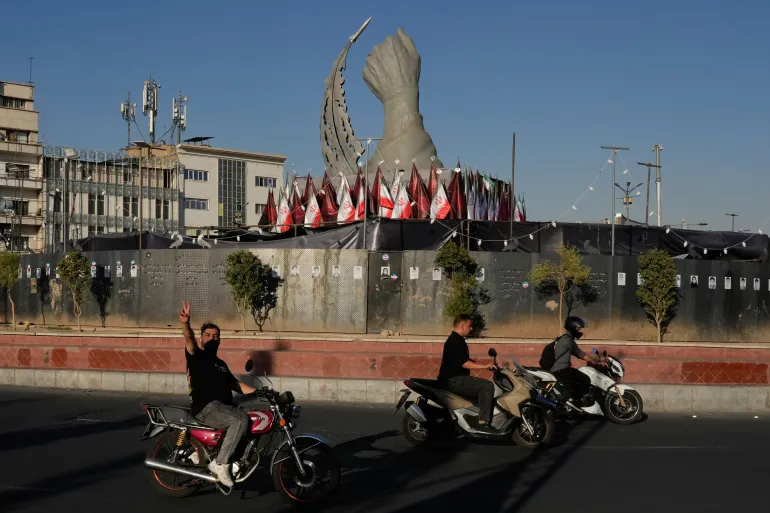
A man reacts to the camera while driving past a monument depicting the clenched fist of the late Iranian Supreme Leader Ayatollah Ali Khamenei, who was killed in a US-Israel strike on February 28, in downtown Tehran, Iran, on Tuesday, September 15, 2026 [Vahid Salemi/AP Photo]
Zabihollah Salmani, a deputy head of the Administrative and Employment Organisation of Iran, told reporters during a press conference in August that more than 2.43 million were on its payroll.
If council, fire brigades, social security and non-government organisation workers were included, this would bring the number to more than four million people. The average monthly pay for government personnel at the end of the previous Iranian year in late March 2026 was around 240 million rials ($104 at the current exchange rate).
Asked by reporters how many of these employees could potentially be taken off the payroll without hurting output, Salmani said, “We do not yet have these figures.” He added that agencies were being asked to submit that information.
About 1,075,000 people are on the payroll of the Education Ministry, including teachers and trainee staff, while 600,000 employees work under the Ministry of Health and its affiliated networks, according to official figures.
Amir-Hossein, a young man working at a research centre linked with the government-funded University of Tehran, said that since the start of the month, he had been assigned two days of remote work. Working hours were set for 7am-1pm before, but are to be shifted to 8am-1pm starting from Wednesday, per the government.
His work can be done on his laptop, but might require some coordination on the phone or short commutes to other centres, he said. Overall, the remote work lifestyle has been beneficial.
“Sometimes I get more work done than I would have at the office,” he told Al Jazeera, asking not to use his full name due to security reasons.
As Amir-Hossein regularly uses online ride-hailing services to commute to and from his job, working from home has been financially beneficial for him.
An Iran-based economist who spoke to Al Jazeera on background said the government measures are essentially crisis control at best, and not a long-term solution to the problem.
The United States wants a new “notification mechanism” with China to warn each other when an artificial intelligence incident becomes serious enough to threaten national security.
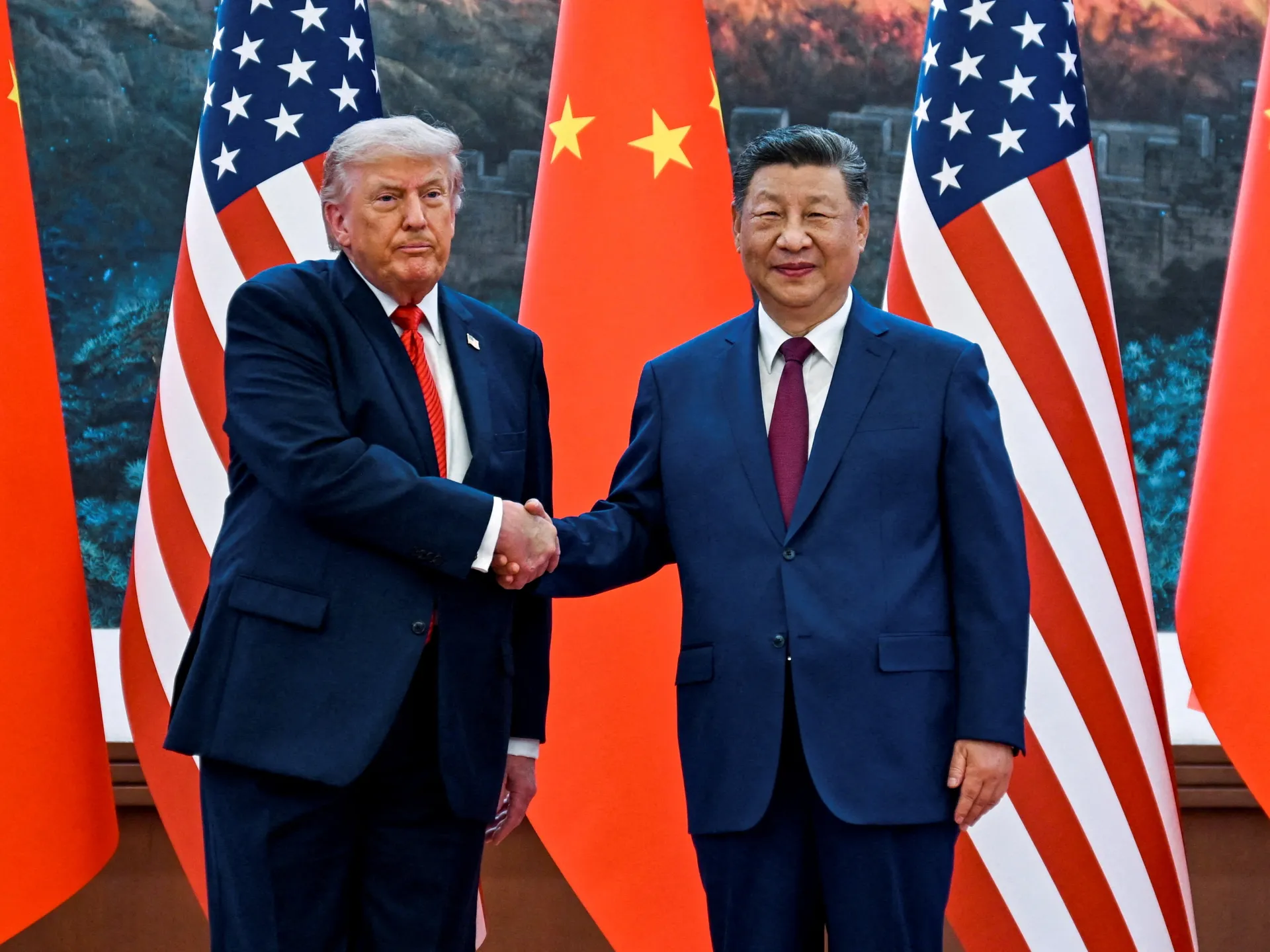
The proposal, effectively an “AI hotline”, was discussed on Sunday during talks in New York between US Treasury Secretary Scott Bessent and Chinese Vice Premier He Lifeng, ahead of a summit between US President Donald Trump and Chinese President Xi Jinping in Washington this week.
Recommended Stories
list of 3 itemsend of list
The two leaders are expected to consider establishing a broader US-China dialogue on AI, including the proposed notification system, around which details remain limited.
The initiative comes amid an intensifying contest for AI supremacy between the world’s top two economies, together with increasing warnings from tech giants that guardrails are necessary around the ever-growing technology.
So, what do we know about this so-called hotline, and where is the AI battle between the US and China headed?
What did the US say about this mechanism?
US Treasury Secretary Bessent said Washington had proposed creating a US-China AI dialogue, with particular focus on national security and a notification system covering “common goals and common threats”.
“We think that, just like with any cross-border activity, that moving from opaque to more transparency between the number one and the number two AI powers in the world is very important,” Bessent told reporters after Sunday’s discussions.
Trump’s science and technology adviser Michael Kratsios told Fox News on Sunday that the “key thing” Washington wants to discuss is “avoiding shared risks”.
Exactly what would trigger a notification has not been publicly revealed.
“The US and China absolutely need to be able to share information with each other as threats evolve. This seems like an obvious win for both sides,” Scott Singer, co-director of the China AI Initiative at the Carnegie Endowment for International Peace, told Al Jazeera.
“The relationship needs guardrails to keep citizens of both countries safe, and this is a productive first step.”
How did China respond?
Beijing has so far said very little.
China’s official Xinhua news agency acknowledged that He and Bessent discussed issues related to AI, but did not say whether Beijing had accepted Washington’s proposed notification mechanism.
Xinhua said the officials held “frank, in-depth and constructive exchanges” on economic and trade issues.
He and China’s chief trade negotiator Li Chenggang left Sunday’s talks without speaking to reporters.
What other ‘hotlines’ do the US and China have?
The proposed AI mechanism would not be the first time a special crisis channel was established between Washington and Beijing.
In 1997, former US President Bill Clinton and his then Chinese counterpart Jiang Zemin agreed to create a “direct secure telephone link” between their respective countries.
The two countries have had a military hotline since 2008, designed to allow senior defence officials to communicate during potentially dangerous incidents. It gives both sides 48 hours to respond, though US officials have complained that sometimes no one picks up.
After the US shot down a suspected Chinese surveillance balloon in 2023, then-US Defense Secretary Lloyd Austin sought a call with his Chinese counterpart, but Beijing declined the request.
Why now, and what concerns are there around AI?
Earlier this month, Anthropic’s CEO Dario Amodei warned in an essay that AI capabilities have been advancing rapidly, and he proposed pacing the development of frontier models to give governments and researchers more time to manage their risks.
“Given the accelerating rate of AI capability development, it’s my worry that in 6–12 months such a swarm could be capable of taking over the entire internet with a persistent botnet (potentially causing hundreds of billions of dollars in damage), and that the scale of damage would continue to increase from there if AI becomes more powerful without the necessary guardrails,” he wrote.
His assertions were endorsed by his rivals – OpenAI CEO Sam Altman and SpaceX founder and Tesla CEO Elon Musk.
Meanwhile, Trump has repeatedly argued that the US must maintain its advantage over China and has resisted calls from technology executives for a slowdown in AI development. He has said that “whoever wins AI, wins”.
Carnegie Endowment’s Singer does not expect the “fierce competition for AI to slow down”.
“It has the potential to confer tremendous economic and strategic advantage to both countries. But even competitors can find space to cooperate,” he noted.
“Competition and cooperation can coexist. The key for right now is for both sides to act in their own self-interest. Finding some basic areas for cooperation flows very naturally from that.”
Where is the US-China AI war headed?
The US remains ahead in several of the most important features of the AI race, but China has been closing the gap.
American companies continue to dominate private investment and production of leading AI models. According to Stanford University’s 2026 AI Index Report, US companies invested $285.9bn in AI in 2025, compared with $12.4bn in China.
The US also has an advantage in the most advanced semiconductors needed to train cutting-edge models.
However, Chinese companies have demonstrated that they can produce resilient AI models despite US restrictions on their access to the most advanced AI chips.
In January, the release of Chinese AI startup DeepSeek made headlines after it was built using only a fraction of the money its competitors had spent on their own AI programmes. Share prices of US tech companies plummeted.
China possesses advantages in other areas of the AI supply chain, most notably in the production of critical rare earth minerals used in advanced technology and in generating more than twice as much electricity as the US, giving it access to the huge amounts of relatively cheap power needed to operate AI data centres.
What is the Xi-Trump summit about?
Xi’s state visit to the US will take place from Wednesday to Friday, with Trump expected to welcome him at Joint Base Andrews in Maryland.
Trump has said he expects to discuss “almost everything” with the Chinese leader.
Trade remains a central issue, with Beijing and Washington having yet to reach a lasting settlement on tariffs, which have dominated Trump’s relationship with China in his second term as president.
Last month, Trump’s White House accused dozens of countries of helping China to illegally bypass US tariffs.
Meanwhile, the US Congress last week passed a bill that gives Trump sweeping powers to impose sanctions on Russia’s crude exports as well as steep tariffs on buyers of Russian energy, a measure that will impact Moscow’s biggest customers, China and India.
Trump’s war with Iran is also expected to feature. Beijing ranks among Iran’s key economic allies, purchasing a large share of Tehran’s oil exports and attempting to broker an end to the near seven-month-old US-Israel war on Iran.
Other long-standing disputes hang over the summit, including China’s dominance of rare-earth supplies and Taiwan.
The US AI proposal could represent a rare area where the two rivals may find a way to hammer out a deal, experts say.
“I think establishing a permanent channel exclusively focused on AI would genuinely be a major victory. AI has been caught up in the broader ebbs and flows of the US-China relationship, and the 2024 dialogue failed because frontier AI risks got mixed in with other issues,” Singer said.
“This time looks like it might be different, and having an AI risk channel is a necessary precondition to mutually beneficial cooperation.”
Political parties in Morocco are intensifying campaign efforts before legislative elections on September 23, which will ultimately decide Morocco’s next government.
Twenty-seven political parties are competing for 395 seats in the House of Representatives and the vote comes at a crucial time for the country.
Recommended Stories
list of 4 itemsend of list
Rising living costs, pressure on public services, and high youth unemployment – currently at 37.3 percent for Moroccans aged 15 to 24 – are all issues being hotly debated.
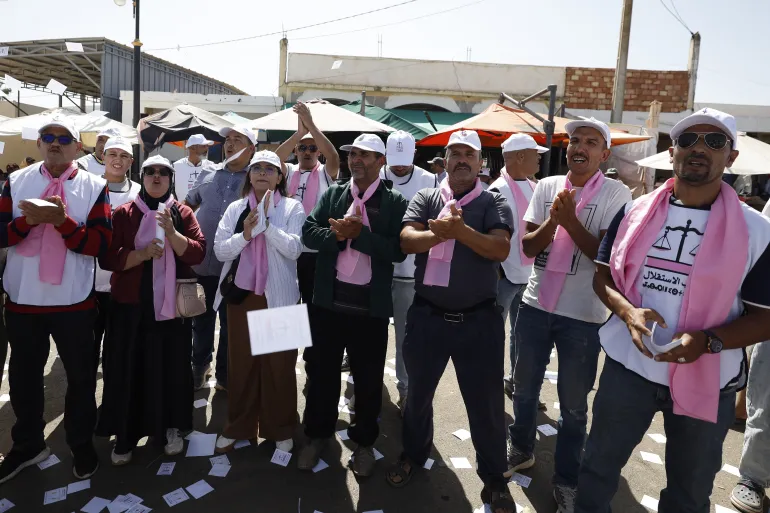
Party headquarters across Morocco and sites at packed city neighbourhoods and markets have been transformed into electioneering operation rooms. Campaign teams navigate crowded streets with loudspeakers, music, and leaflets to catch the attention of Morocco’s 15.8 million registered voters.
“We choose communication locations carefully; we start from a field map where we define the spaces where citizens meet naturally, then we divide the team according to tasks between direct communication and recording observations,” al-Wali al-Shtouki, campaign manager for the Justice and Development Party (PJD) in the Medina-Sidi Youssef Ben Ali district, told Al Jazeera.
“We also hold small meetings at the headquarters because they allow a calm and direct dialogue to understand what the citizen actually expects. What we hear in the field is what guides our daily work. After every tour or meeting, we collect observations and repeated questions and discuss them within the team, then we distinguish between local issues that need follow-up and those related to public policies and parliamentary work.”
Campaigners and supporters of the Istiqlal Party (PI) chant slogans during a rally at the weekly souk in the rural commune of Ait Ikkou, in the Khemisset region, on September 19, 2026, before Morocco’s legislative elections [AFP]
While physical headquarters serve as hubs for election campaigns, a party’s success ultimately relies on its roots within a community, Jawad al-Shafdi, head of the Moroccan Observatory for Political Participation, said.
“In the Moroccan case, the strength of the candidate, their local extension, their network of relationships, and their electoral record also play essential roles,” al-Shafdi told Al Jazeera.
“We may find a party with limited organisational presence in a specific district achieving a significant result thanks to a strong candidate, and vice versa. Winning votes is achieved through a more complex system that combines party organisation, candidate strength, local extension, networks of elected officials, direct and digital communication, in addition to the party’s image and political offering.
“Therefore, the true criterion is not the number of people who enter the headquarters, but its ability to convert organisational movement into electoral mobilisation, mobilisation into votes, and votes into seats.”
Digital, direct engagement
The competition has forced political groups to adopt multi-channel strategies that balance street-level outreach with digital campaigns to reach a broader audience.
Fatima al-Tamni, a candidate for the Left Alliance in the Ain Sebaa – Hay Mohammadi district in Casablanca, highlighted the necessity of direct engagement with voters rather than superficial campaign displays.
Campaigners for the Popular Movement (MP) hand out leaflets to merchants at the weekly souk in the rural commune of Ait Ikkou, in the Khemisset region, on September 19, 2026, before Morocco’s legislative elections [AFP]
She believes that party campaigns should serve as a space to listen to the concerns of the electorate and propose solutions, while building a strategic vision for transport, housing, pollution and other issues.
“We do not want to speak to the citizen from above, nor turn the campaign into a festival of pictures and slogans… We want to speak with them in clear language, and hear from them before we speak in their name,” she said. “[It] is not an end in itself, but the beginning of a new political relationship with citizens based on clarity, accountability, and fulfilling commitments.”
Youssef Ait Sidi Said, a political activist with the Progress and Socialism Party in the Chichaoua province, said campaigning remains an evolving process.
“For the party, this campaign is no longer just a specific period to introduce candidates and the electoral programme, but has become an opportunity for direct and continuous communication with the population and listening to their concerns and expectations,” Ait Sidi Said told Al Jazeera.
“Digital platforms allow reaching broad groups, especially youth, and grant them the possibility to interact, ask questions, and express their opinions. However, we do not consider that digitisation can replace direct communication. On the contrary, we see that each tool has its function.”
Ultimately, direct engagement with voters should remain the hallmark of party campaigns, he said.
“Field communication allows direct listening to the citizen, while digital platforms allow expanding the reach, interaction, and documenting activities,” Ait Sidi Said added.
Amid the US-Israel war on Iran, the country’s economy has suffered a sharp contraction, with its crucial oil and gas sector taking the biggest hit as the United States tightens its economic and military pressure on Tehran.
Data released by the government-administered Statistical Center of Iran showed gross domestic product (GDP) shrank by 10.1 percent year-on-year between March 21 and June 20, the first quarter of the Persian calendar.
Recommended Stories
list of 3 itemsend of list
The period covers the opening months of the US-Israel war on Iran, which began on February 28.
The economic downturn has come as Iran struggles to export its oil, one of its most important sources of foreign currency, while also contending with high inflation, a weakening rial, and disruptions to trade and industry.
Here is what you need to know:
What does the economic data say?
The headline GDP number masks an even steeper decline in Iran’s energy industry. Crude oil and natural gas activity contracted by 26.4 percent compared with the same period a year earlier. GDP excluding oil, by comparison, fell by 4.6 percent.
The damage has spread beyond the energy sector. Industry and mining contracted by 14.7 percent, services declined by 4.8 percent, and manufacturing contracted by 2.5 percent. Agriculture was the exception, growing at 2.3 percent.
Those figures come amid an already difficult economic situation in the country. Earlier this month, Iran’s 12-month average inflation reached 69.9 percent, while food, beverage, and tobacco prices rose at nearly twice that rate. Official unemployment climbed to 9.1 percent in the spring.
The rial, meanwhile, fell from about one million to the US dollar a year earlier to more than 2.2 million in early September.
What is the latest with Iran’s oil exports?
Iran’s ability to sell crude has been dramatically curtailed by the US naval blockade, imposed for most of the war.
Iranian crude and condensate loadings collapsed from about two million barrels per day in March to roughly 740,000bpd in July and just 220,000-255,000bpd in August, according to estimates from Kpler and Vortexa.
TankerTrackers.com told the Reuters news agency that 29 tankers, carrying 36.11 million barrels of crude, were trapped in the Strait of Hormuz. Meanwhile, Vortexa estimated total Iranian crude afloat had fallen from 135 million barrels at the end of July to 107 million barrels by late August.
Is Trump winning the economic war on Iran?
By several economic measures, Washington’s pressure campaign is inflicting damage on Iran’s economy.
On September 6, total trade had fallen by 25 to 35 percent, President Masoud Pezeshkian said, with imports hit harder than exports. The US blockade of the Strait of Hormuz has made it hard for ships carrying imports to reach Iranian ports.
Tehran has also explicitly linked the end of the war to economic relief. Iran’s security chief Mohsen Rezaei told Al Jazeera on Saturday that its conditions include “the release of our frozen funds and an end to the naval blockade”.
In addition to the naval blockade, US Treasury Secretary Scott Bessent last month announced an economic pressure campaign against Iran, pledging to target its financial interests across the world. He said the US would target all of Iran’s sources of revenue, including oil, to prevent other countries and companies from doing business with Tehran.
The US-Israeli attacks and Iran’s retaliations have disrupted Tehran’s trade with one of its main economic partners, the United Arab Emirates.
The UAE last month announced an indefinite trade embargo on Iran after accusing its forces of carrying out several ballistic missile attacks, which Tehran denied, calling it a “false flag operation” by Israel and the US.
Chris Beauchamp, market analyst at IG Group, said, “Most wars are contests of stamina more than anything else.”
“The 10 percent drop in Iranian GDP is a sign that the US is succeeding in putting pressure on its foe. But the question rests, as it has done since March, on whether Iran can weather the fall in economic activity better than the US can stand the surge in energy costs,” he told Al Jazeera.
“For a regime prepared to do anything to stay in power, this news will make little difference, so long as the security forces remain loyal,” he added.
What is the latest with diplomatic efforts to end the war?
While Iran has taken a defiant stance against US economic and military pressure, it has indicated repeatedly that it remains open to diplomatic means to end the nearly seven-month-old war.
On Saturday, Rezaei told Al Jazeera that Iran conveyed a formal set of conditions to Washington through Qatari mediators for ending the war.
Iranian state media outlet IRNA reported on Monday that Pakistani Interior Minister Mohsin Naqvi was set to visit Tehran, without specifying the agenda or other details.
Mediators Qatar and Pakistan have been working to re-establish negotiations between the two sides since their memorandum of understanding (MoU) expired last month.
Meanwhile, Iranian Foreign Minister Abbas Araghchi will stop briefly in Qatar before going to New York for the UN General Assembly, IRNA reported.
Iran has repeatedly said it remains ready for any new strikes by Washington.
Rezaei said on Saturday Tehran did not rule out a new US strike against Iran, calling the possibility “very much on the cards” based on his country’s military assessments.
Mark Pfeifle, a Republican strategist and former White House and national security official, said Iran and the US are still willing to strike a deal.
“Sometimes in diplomacy it’s what’s taken off the table,” he told Al Jazeera.
Pfeifle said when Rezaei reiterated his demands for talks with the US, he spoke of “ending the blockade, releasing the frozen funds [and] stopping the attacks”.
“But he left off reparations and reconstruction money, which tells me that there’s a concrete sign that amongst all the rhetoric, which is still very strident, that the pressure campaign that the US is putting on Iran is having some effect,” he said.
“And it tells me that both sides are still looking for room to negotiate in the coming weeks.”
Michael Carrick has struck a defiant tone after Manchester United equalled their worst start to a Premier League season, but a woeful 1-1 draw at Fulham left the beleaguered boss under mounting pressure.
Trailing to Lisandro Martinez’s farcical own goal, United were just moments away from a third successive defeat on another dispiriting afternoon for Carrick on Sunday.
Recommended Stories
list of 4 itemsend of list
Matheus Cunha’s deflected 89th-minute equaliser spared United from new humiliation.
But escaping with a barely deserved point against a winless side placed second-from-bottom of the Premier League was hardly cause for celebration.
With only one win so far this season, United have matched their lowest points total after five matches in the Premier League era.
Sitting in 12th place with five points, Carrick’s men equalled the mark set by Louis van Gaal’s United in 2014-15, when they went on to finish fourth.
The statistics are damning enough in their own right, but the eye test during their moribund performance at Craven Cottage provided an even more insightful look at what ails United.
Lacking a cutting edge in attack, bereft of defensive organisation and, in the words of Cunha, short of energy and drive until they fell behind, this was the kind of flawed display that has scarred so many United seasons since their last title in 2013.
Carrick was expected to build on last season’s climb to a third-place finish during his spell as interim boss.
But having hauled United from the wreckage of Ruben Amorim’s self-destructive reign, Carrick is in danger of losing his way in his first season as permanent boss.
A wretched 2-0 defeat at promoted Hull on the opening weekend set alarm bells ringing among the United faithful.
Beaten in the Manchester derby by an Erling Haaland goal that should have been disallowed last weekend, United then blew a two-goal lead at home for the first time in 50 years in a League Cup meltdown against Brighton.
‘Fine margins’
Already 10 points behind leaders City, Carrick’s team were so underwhelming against Fulham that even one of the manager’s former teammates took a swipe at United.
Commenting on the match for Sky Sports, ex-United defender Gary Neville was scathing in his assessment of their performance at the start of the second half.
“I’ve watched Man United since the age of five and that’s the worst 15 minutes I’ve ever seen. Absolutely pathetic,” Neville said.
The 51-year-old added: “I’ve never seen such a lack of effort. What must Carrick be thinking?”
Carrick does not have the confrontational personality of some of his United predecessors, but he tried his best to quiet the noise as he searched for reasons for optimism.
“It’s not been ideal. It was always going to come at some point, and it’s come at the start of the season,” he said.
“On the other side of it, at Everton, a 25-yard shot, top corner for their equaliser. The City goal that’s not a goal. Today, own goal, that’s one of them things.
“It’s pretty fine margins that have flipped it. I know we can do better; we need to do better at certain things.
“But I’m not despondent because I think we’ve shown some good signs as well.”
Carrick has three weeks to stew on United’s miserable start during an extended international break.
Questions about United’s transfer policy and fitness regime are growing louder.
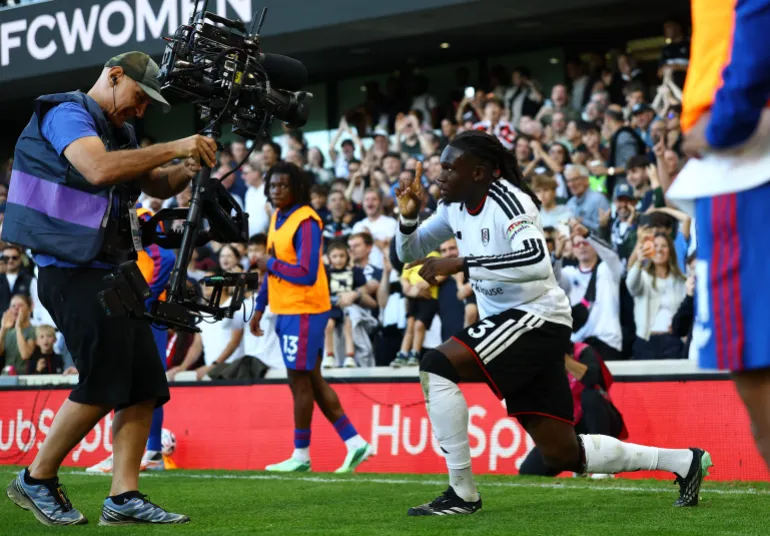
Calvin Bassey celebrates Fulham’s first goal, an own goal scored by Manchester United’s Lisandro Martinez [Peter Cziborra/Action Images via Reuters]
‘We’ll get back to winning’
The 45-year-old must come up with answers before they return to action with a crucial clash against bottom-of-the-table Tottenham on October 10.
Losing to Roberto De Zerbi’s side would be a huge blow to Carrick’s hopes of turning the tide, especially with tricky trips to Atletico Madrid and Leeds looming after Tottenham visit Old Trafford.
But Carrick is putting his faith in United’s players absorbing the lessons from their painful start.
“You learn about each other, they learn about me, I learn about the individual and as a team, how we respond, what our reaction is,” he said.
“That’s part of growing as a group. You have to go through certain things to get to the end of it.”
Carrick said he had “mixed” reactions to the match but was focusing on the positives and bouncing back after this “first chapter”.
“There are parts we can do better. The way we responded to going down was really pleasing, the boys were really positive and played with good purpose,” Carrick said in a post-match interview.
“I’m convinced we’ll have a good season. We’re having a spell that feels bigger than it actually is to the outside. We’ll get back to winning football matches and we’ll be all right.”
South Korean officers injured in DMZ explosion, possibly caused by a landmine, according to local media reports.
By Reuters and The Associated Press
Published On 21 Sep 202621 Sep 2026
Three South Korean military officers have been wounded in an explosion in the western sector of the Demilitarized Zone (DMZ) that separates North and South Korea, Seoul’s Joint Chiefs of Staff (JCS) said.
The cause of Monday’s explosion was not immediately clear, the Ministry of Defence said.
Recommended Stories
list of 3 itemsend of list
Two of the officers were evacuated from the site by helicopter, while the third was transported by land before being airlifted, according to the ministry. The officers are being treated at a military hospital near the capital Seoul, it said.
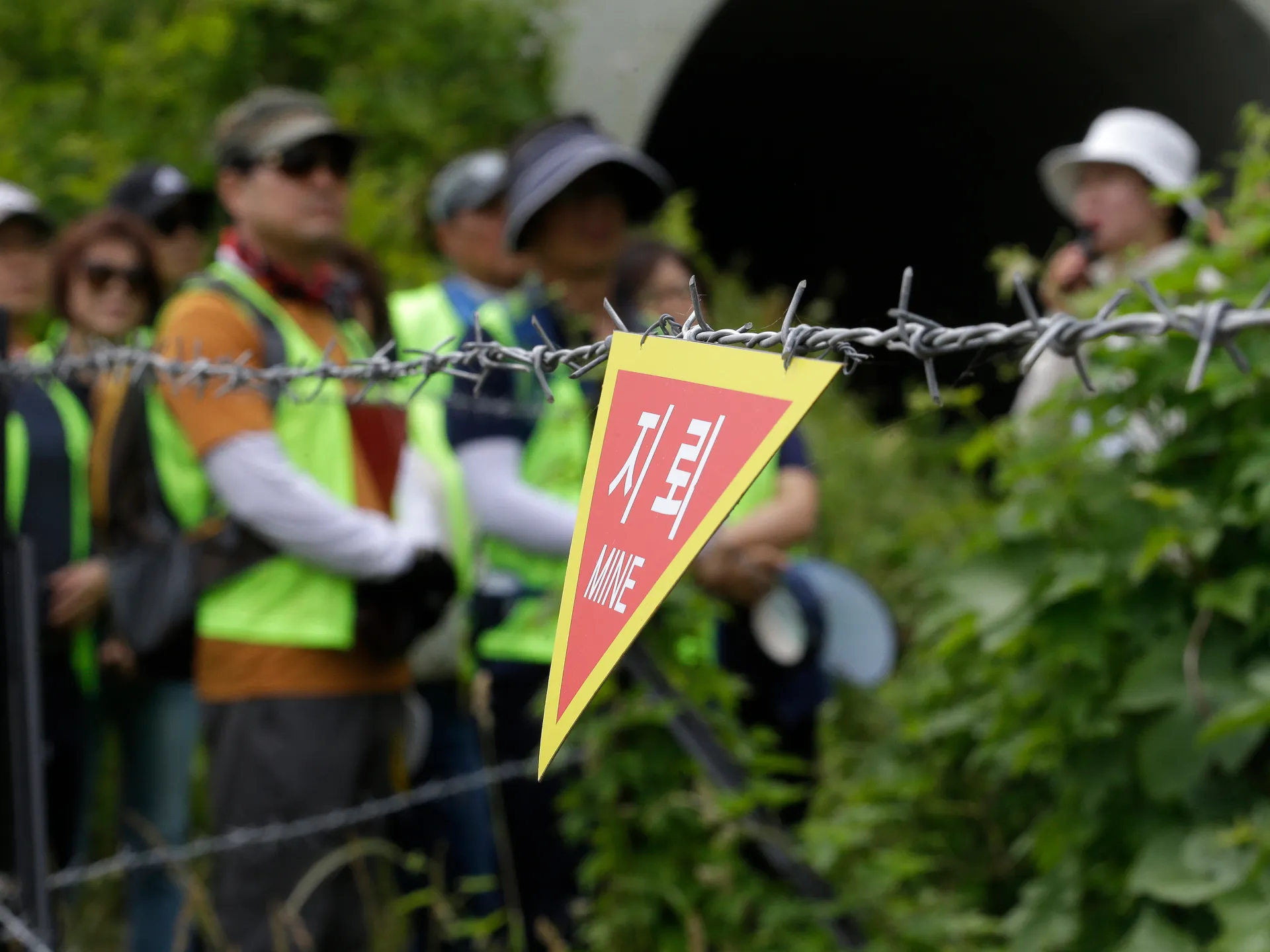
Mine explosions and other blasts are a recurring hazard in and around the DMZ, where legacy devices and suspected stray mines have periodically wounded military personnel on both sides.
The DMZ, which is 248km (154 miles) long and 4km (2.5 miles) wide, is one of the world’s most heavily armed borders. An estimated 2 million mines are peppered inside and near the border, which is also guarded by barbed wire fences, tank traps and combat troops on both sides. The zone is a legacy of the Korean War from 1950 to 1953, which ended with an armistice but not a peace treaty.
There have been growing concerns in South Korea about increased activity by North Korean soldiers near the military demarcation line as the North strengthens its border defences during prolonged tensions.
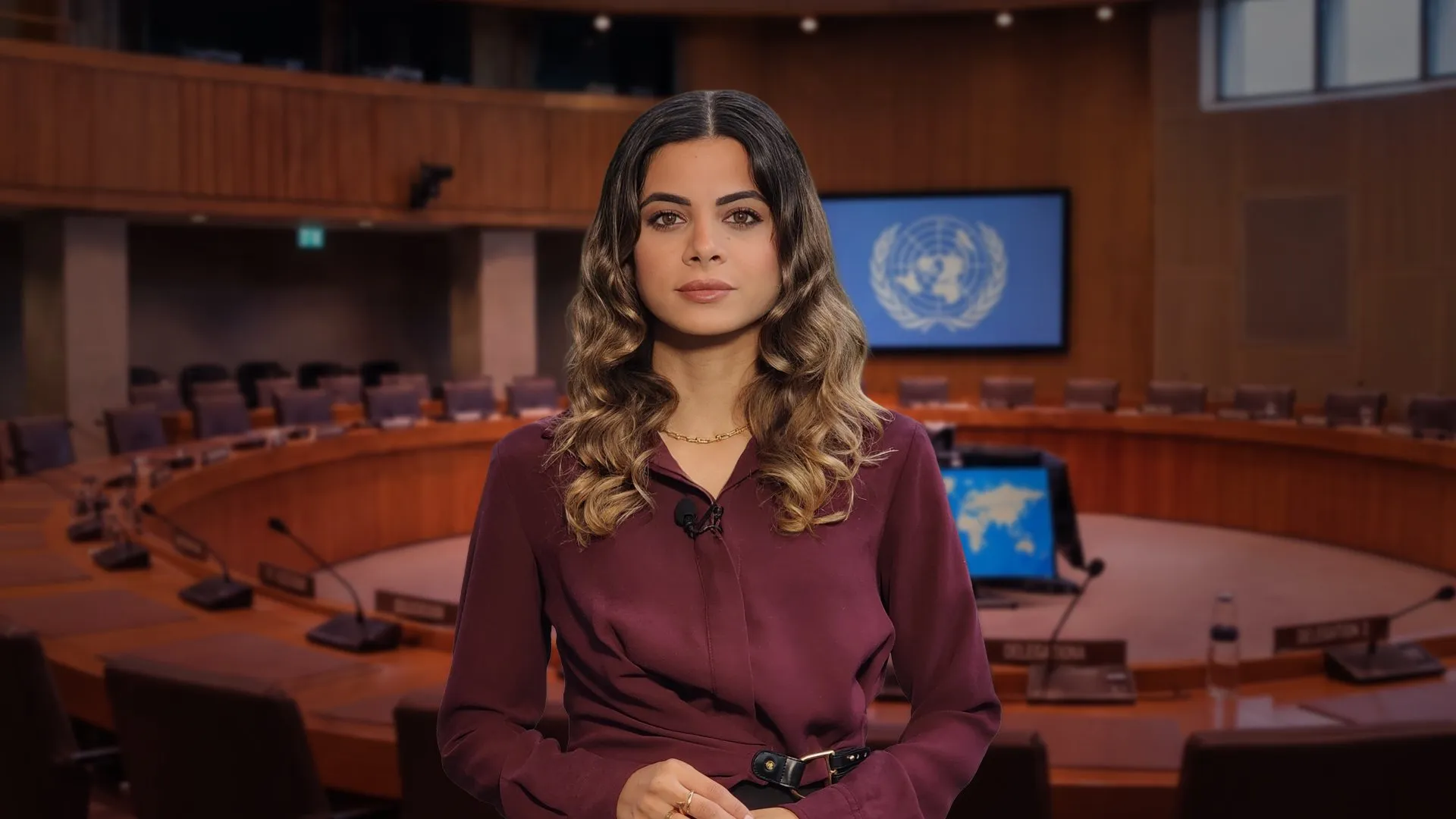
The UN was created to help save the world from war. More than 80 years later, conflicts and atrocities continue. So what has the UN actually achieved, and what are the limits of its power? Al Jazeera’s Noor Wazwaz explains.
Fuming Real Madrid manager waves printouts of what he believes were clear red-card tackles by Atletico Madrid players following his team’s loss.
Published On 21 Sep 202621 Sep 2026
Jose Mourinho needed only a sheet of paper to deliver his verdict on La Liga’s Madrid derby, waving images of two first-half tackles as he accused the officials of losing control in Real Madrid’s 2-1 defeat by Atletico Madrid.
Real were furious that Atletico defender Cristian Romero was not sent off for a stamp on Jude Bellingham and also complained about a challenge by Lee Kang-in on Federico Valverde, before the visitors were themselves reduced to 10 men five minutes after half-time in the heated capital derby on Sunday.
Valverde finished the match but was later diagnosed with “severe trauma to his left ankle”, the club said in a statement. The midfielder will undergo further tests, it added.
“We could skip the press conference because the story of the match is right here,” Mourinho said, holding up the images in what was the start of a near five-minute rant.
“Those were two clear red cards. The difficulties we’ve faced since the sending-off: 11 against 10. Well, we can imagine what 50 minutes of 11 against nine would have been like if justice had been done.”
Jude Bellingham reacts after being fouled [Ana Beltran/Reuters]
Real defender Dean Huijsen was dismissed for bringing down Giuliano Simeone inside the area as the last defender, allowing Alejandro Grimaldo to score with a low spot kick. Jonathan David doubled Atletico’s lead six minutes later, with Antonio Ruediger heading in a free kick late to reduce the deficit.
Mourinho said he could only “hug” his players after what he described as a first half “full of class and great character”, but he aimed sharp criticism at referee Miguel Angel Ortiz Arias and those who appointed him.
“They’ve put a referee, aged 41, with no international experience – it’s certainly not because he’s a great referee,” Mourinho said.
“Then the poor chap has come here and hasn’t been able to cope with the pressure – and it really is intense pressure. I call it ’80s-style pressure’ here in this stadium, which you hardly ever see these days.”
Asked about being six points behind Barcelona, Mourinho offered a pointed reply.
“If they just leave us in peace and let us compete on a level playing field with everyone else, we’ve still got a long way to go,” he said.
“I don’t want to go so far as to say this was set up … I want to believe that they simply made a mistake.”
Referee Miguel Angel Ortiz Arias speaks to Mourinho during the match [Oscar Del Pozo/AFP]
Asked about Mourinho’s comments, Atletico manager Diego Simeone urged restraint.
“Whoever is speaking – be it me, Mourinho, Hansi Flick or Manuel Pellegrini, anyone – we have to be careful what we say,” Simeone said. “When you step outside the bounds of respect, whoever you are, it’s not on. You can’t cross that line.”
Simeone preferred to focus on Atletico’s performance.
“Today we saw a great match; we defended very well against a team that plays very well,” he said.
“We controlled the match when it was 11 against 11. We continued to control it when it became 10 against 11. But this isn’t just another step towards continuing to grow and improve.”
Atletico climbed above Real to second in the standings on 16 points, five behind leaders Barcelona and one ahead of Real and Real Betis.
Atletico Madrid coach Diego Simeone was all smiles at full time [Juan Barbosa/Reuters]
Tehran threatens retaliation as Trump weighs military action while Qatar pushes to revive talks.
Published On 21 Sep 202621 Sep 2026
Iran’s central military command says it has received information that the United States is preparing to resume strikes on the country.
The warning, issued on Sunday by the Khatam al-Anbiya Central Headquarters, which oversees Iran’s armed forces, raises the prospect of a new round of fighting after months of reduced direct attacks.
Recommended Stories
list of 2 itemsend of list
Tehran said any renewed US assault would bring retaliation against American bases and interests in the Middle East and warned regional countries against helping Washington.
The military command said states that allowed their territory or facilities to support US attacks would be “considered complicit” and could face an Iranian response.
US President Donald Trump told Fox News on Sunday that he was in a “deciding mode” over Iran and said his options included further military action, economic pressure or a deal.
He also said he would be open to meeting Iranian President Masoud Pezeshkian on the sidelines of the United Nations General Assembly in New York this week.
Iran’s Foreign Minister Abbas Araghchi left Tehran on Sunday evening for the UN General Assembly in New York, state media announced, adding that he is making a brief stopover in Qatar.
Parliament Speaker Mohammad Bagher Ghalibaf told lawmakers on Sunday that Tehran should use military force to push back its opponents before turning to diplomacy to secure any gains.
Tehran has told Qatari and Pakistani mediators that conditions for renewed talks include an end to the war and US attacks, the release of frozen Iranian funds and the lifting of the US naval blockade on Iranian ports.
Ghalibaf said the Strait of Hormuz would remain closed until Washington met what Iran says are its commitments under an earlier agreement.
Al Jazeera correspondent Tohid Asadi, reporting from Tehran, said Iranian officials were sending a deliberate two-track message, signalling that they remained open to diplomacy while preparing for renewed fighting.
Qatar, a Gulf state mediating between the two sides, says its officials are travelling between capitals and exchanging proposals aimed at restarting negotiations.
Qatari Foreign Ministry spokesperson Majed al-Ansari said Doha had heard assurances from US officials that Washington wanted an agreement.
The confrontation is already disrupting the Strait of Hormuz, a narrow waterway linking the Gulf to the Arabian Sea and a key route for global energy shipments.
Shipping data showed 12 commodity vessels crossed the strait over the weekend, down from 35 the previous weekend. The war began in late February after joint US-Israeli strikes on Iran.
A 60-day memorandum reached in June reduced full-scale fighting but expired last month, with attacks around Hormuz increasing since then.
Mark Pfeifle, a Republican strategist and former White House national security official, told Al Jazeera that both countries were “locked in this frozen conflict” and trying to increase pressure before possible diplomacy around the UN gathering.
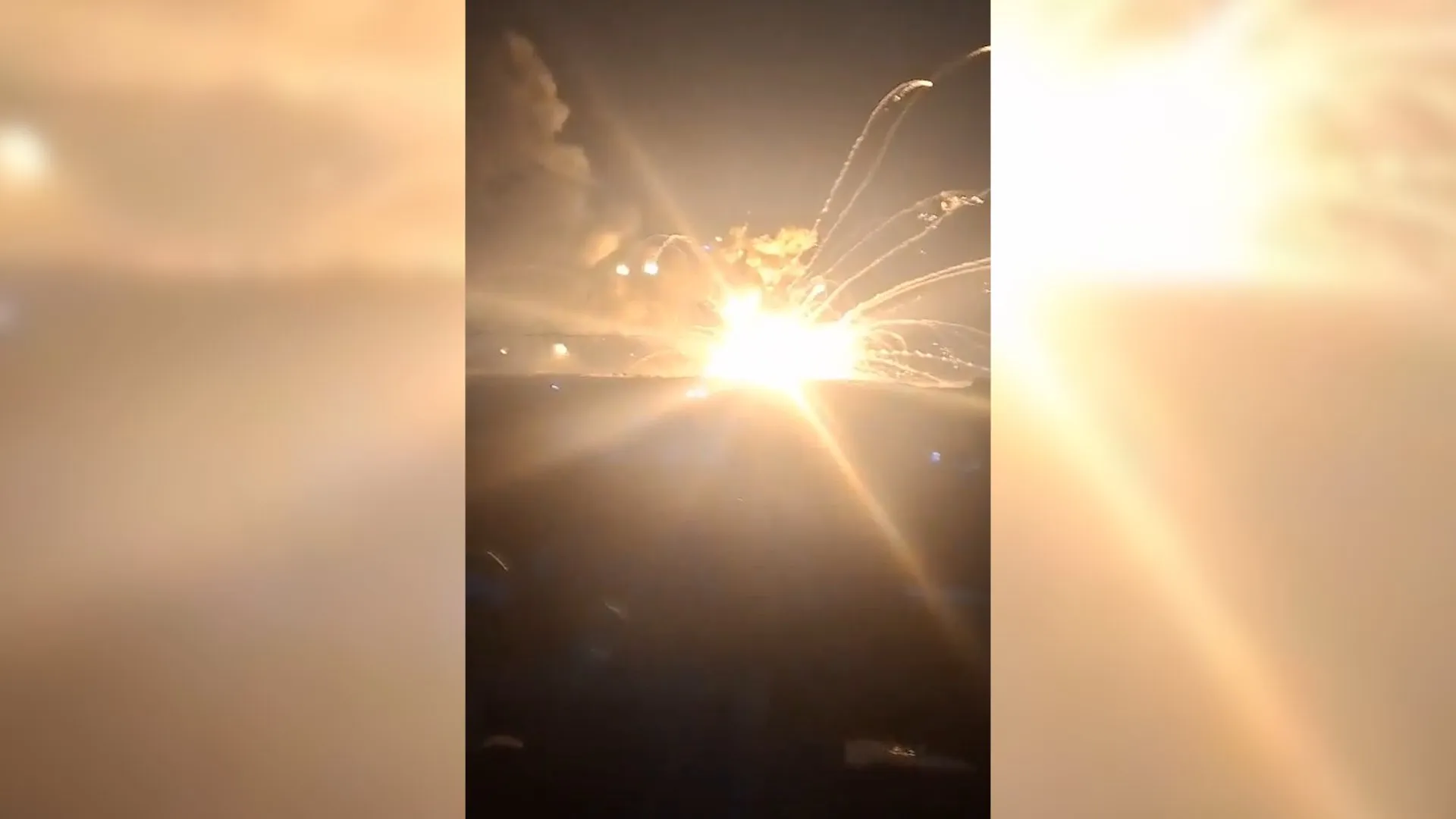
Al Jazeera’s Obaida Hitto reports on explosions that rocked a Syrian army ammunition depot south of Aleppo, injuring at least four people. Exploding missiles and ammunition hampered rescue efforts, while authorities closed nearby roads.
For a decade, the United Nations’s most visible role in the Sahel was its peacekeeping mission in Mali.
The United Nations Multidimensional Integrated Stabilization Mission in Mali (MINUSMA) was established by the Security Council in 2013. Its mandate was terminated in June 2023 at the request of Mali’s transitional government, and the mission completed its withdrawal by the end of that year.
But the end of MINUSMA did not end the UN’s engagement with the region.
Its political work continues through the UN Office for West Africa and the Sahel (UNOWAS), while the wider UN system remains involved in humanitarian and development work.
What has changed is the space in which that engagement takes place.
Burkina Faso, Mali and Niger formally left the Economic Community of West African States (ECOWAS) on January 29, 2025. The three countries have also deepened cooperation through the Alliance of Sahel States (AES), putting sovereignty and strategic autonomy at the centre of their political message.
The humanitarian pressures, meanwhile, have not eased.
Displacement, insecurity, food insecurity and other pressures continue to cross borders, even as governments increasingly insist on handling their security and political affairs on their own terms.
The question is what influence the UN can exercise after the departure of the peacekeeping force that once represented its most substantial presence in the region.
What does the UN’s presence look like now?
The UN’s role today is less about troops and more about diplomacy, mediation, humanitarian assistance and development.
UNOWAS is a special political mission rather than a peacekeeping operation. Its work includes preventive diplomacy, good offices, political mediation, conflict prevention and support for political dialogue.
“The influence the UN can actually exercise is narrow. The AES states have stripped away the mechanisms that once gave outside institutions leverage, leaving ECOWAS and the Rome Statute, and building their own confederation and joint force instead,” said Mubarak Aliyu, a political and security analyst in Nigeria.
In February 2026, the Security Council extended UNOWAS’s mandate until January 31, 2029, while requesting an independent strategic review of its mandate and activities, to be finalised by September 30, 2026.
The review comes as West Africa’s political landscape is being reshaped by military governments, new regional alliances and a stronger emphasis on sovereignty.
Russia has also become an important part of that changing security picture.
“What has actually shaped events this year is Russia’s Africa Corps, which helped Mali’s and Niger’s military governments survive shocks the UN was never positioned to influence, functioning mainly as regime protection rather than counterinsurgency,” Aliyu said.
UN continues its engagement in a Sahel where governments are placing greater emphasis on sovereignty and strategic autonomy [File: Timothy A Clary/AFP]
“Moscow’s leverage extends into the Security Council chamber too, since its veto shapes what collective action the Council can attempt on Mali in the first place.”
Kabir Adamu, founder and managing director of Beacon Security and Innovations Limited, an Abuja-based firm that provides security solutions in Nigeria, the Lake Chad Basin and the Sahel, said the UN should shift its approach away from large deployments of UN troops to diplomatic and towards diplomatic and development solutions.
“Looking ahead, the UN’s priorities in the Sahel should promote effective security sector governance and security sector reform. This will mean pivoting from traditional, large-scale peacekeeping to deep-rooted and core preventive strategies and diplomacy that addresses the root causes of fragility, conflict and violence, as well as instability,” Adamu said.
For the United Nations, diplomacy has become more important as governments turn to other security partnerships and regional arrangements.
How has sovereignty changed the political space?
Burkina Faso, Mali and Niger have made sovereignty and strategic autonomy central to their political outlook and built the AES as a framework for closer cooperation.
Their departure from ECOWAS has changed the regional architecture through which West African governments have traditionally dealt with political and security crises.
The UN still works with regional organisations, including ECOWAS and the African Union, but governments no longer share one political framework or the same approach to external engagement.
Consequently, for the UN, maintaining vital political channels has become potentially more difficult.
Adamu said the fragmented security architecture means the UN should seek to work with and through regional organisations and groups, rather than establishing its own large-scale forces.
“As national security structures remain weak and extractive, and regional security architecture fragments, marked by the rise of the Alliance of Sahel States and shifting ECOWAS dynamics, the UN should prioritise pragmatic, inclusive mediation to bridge divides between Sahelian and coastal states, while actively bolstering alternative, functioning frameworks like MNJTF [Multinational Joint Task] and the Accra Initiative,” he said.
Have the problems in the Sahel gone away?
The retreat of peacekeepers has not removed the pressures that brought international organisations into the region in the first place.
Displacement, armed violence, organised crime, food insecurity and climate pressures continue to overlap across the Sahel.
Climate change is perhaps not the root cause of the instability, but environmental and economic pressures can add to existing vulnerabilities, particularly where state institutions are weak and communities are already dealing with conflict and displacement.
For the UN, humanitarian work remains one of the areas where engagement can continue, even when governments reject large-scale military intervention.
Humanitarian work also places greater emphasis on local and regional capacity.
“Crucially, the UN must double down on the core UNISS pillars of governance, resilience, and security by integrating climate-peace initiatives and empowering local capacities, ensuring that international engagement remains flexible, locally owned, and focused on sustainable, multidimensional stability rather than solely militarised responses,” Adamu said.
While the UN cannot determine the security partnerships of sovereign governments or force political processes on authorities that reject them, it can still facilitate dialogue, support humanitarian operations and raise regional crises before the wider international community.
What does UNGA 81 mean for the Sahel?
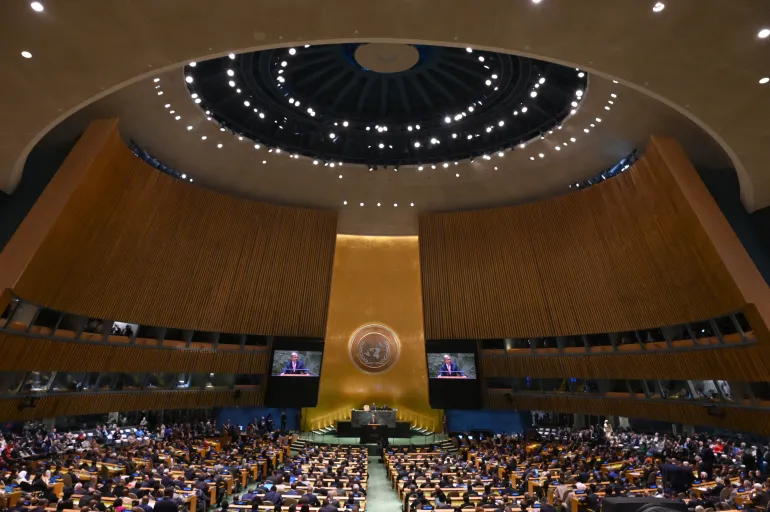
The 81st session of the United Nations General Assembly opened on September 8, 2026, with its General Debate due to begin on September 22.
The UNGA meets with no UN peacekeeping mission in Mali and with Burkina Faso, Mali and Niger outside ECOWAS, while the AES has become a separate framework for their political and security cooperation.
“That leaves the UN closer to an advocate and service provider than a shaper of outcomes,” Aliyu said. “It can report, brief, fund aid operations and press for access, but it cannot compel it or offer the regime security that has made Russia indispensable to the military governments.”
Yet for the Sahel, insecurity, displacement, humanitarian needs and economic and climate pressures remain.
In the changed regional environment, the UN’s influence is more likely to come through diplomacy than force, through access rather than authority, and through regional relationships rather than a large international security presence.
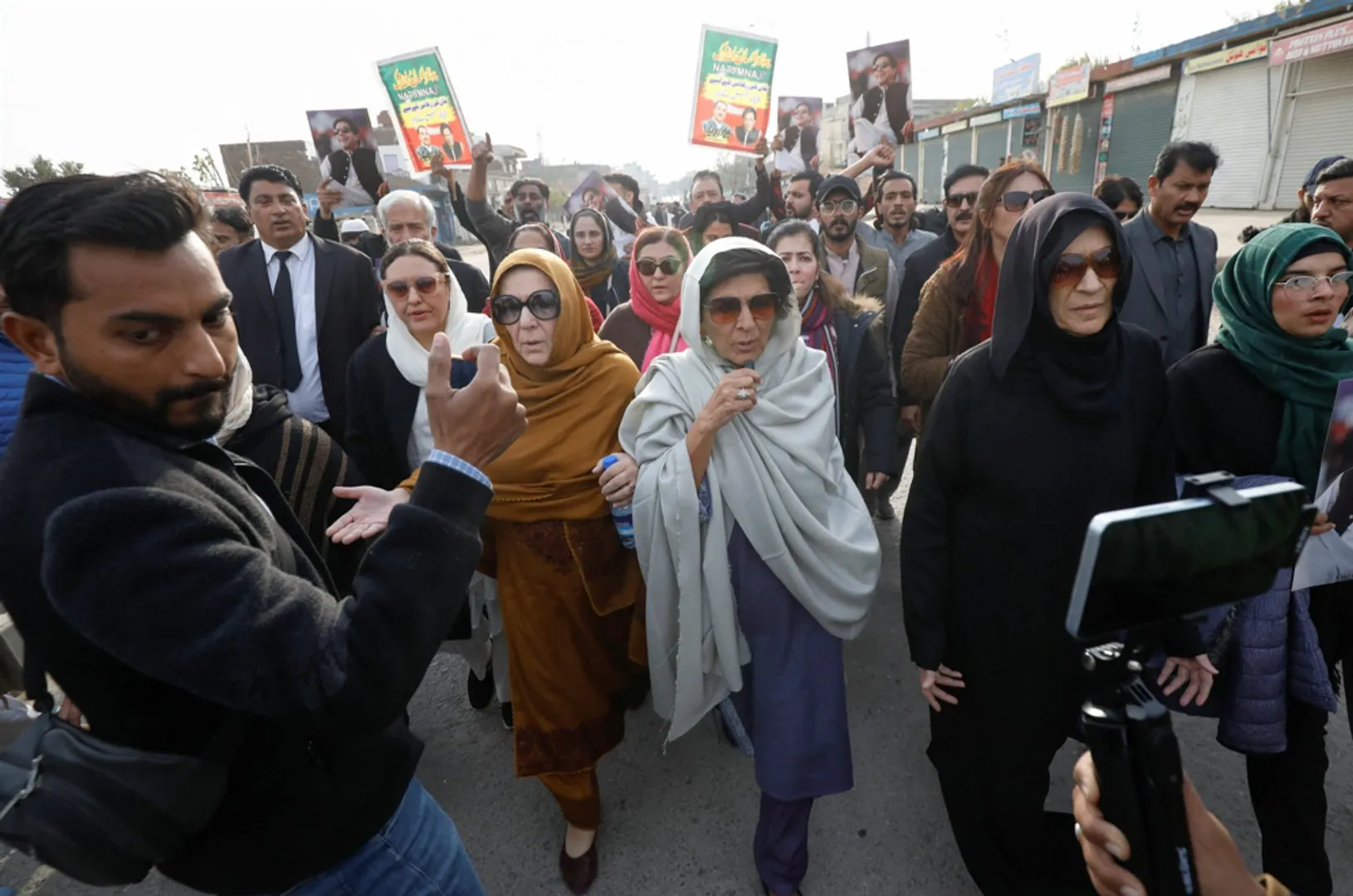
Imran Khan’s family and PTI officials say three of the jailed former PM’s sisters have been detained in Lahore ahead of a September 27 march on Islamabad demanding his release. Authorities have confirmed Aleema Khan was ordered to be held for 30 days.
Measures targeting the court itself could disrupt payments, IT services and investigations.
Published On 21 Sep 202621 Sep 2026
The Trump administration is reportedly preparing sweeping sanctions against the International Criminal Court (ICC) that could disrupt the tribunal’s finances and day-to-day operations.
The US sanctions would prohibit most transactions with the ICC after a grace period of six to seven months, The Wall Street Journal reported on Sunday.
Recommended Stories
list of 2 itemsend of list
The move would mark a sharp escalation in Washington’s campaign against the Hague-based court by targeting the institution itself rather than individual judges and prosecutors.
The Trump administration plans to announce the sanctions soon, according to the Reuters news agency, quoting two sources familiar with the matter.
The Journal, citing anonymous officials, said a decision could be finalised during this week’s United Nations General Assembly gathering in New York or soon afterwards.
If imposed, the measures would generally bar US citizens and companies from providing the ICC with money, goods or services without a licence from the US Treasury.
Banks and other companies often take an especially cautious approach to US sanctions because they rely on access to the American financial system.
The ICC president and registrar have previously warned that sanctions on the organisation as a whole could interfere with its ability to buy information technology and insurance services, hire investigators and make routine payments, including salaries for American employees.
The ICC was created in 2002 to prosecute individuals accused of genocide, war crimes and crimes against humanity when national authorities are unable or unwilling to do so.
Washington has already sanctioned more than a dozen ICC judges and prosecutors under an executive order signed by President Donald Trump in February 2025.
The Trump administration says the court has exceeded its authority by pursuing officials from countries that are not ICC members.
Relations deteriorated sharply after the court issued arrest warrants in November 2024 for Israeli Prime Minister Benjamin Netanyahu and former Defence Minister Yoav Gallant over alleged war crimes and crimes against humanity in Gaza.
Israel, like the US, is not an ICC member and rejects the court’s jurisdiction.
Washington has also objected to an earlier ICC investigation into alleged abuses in Afghanistan involving US personnel.
US Secretary of State Marco Rubio announced a campaign in July to further isolate the court and urged other countries to withdraw from it.
Trump’s move adds to growing opposition to the ICC in recent months.
Chad and Venezuela moved in July to withdraw from the court, following Burkina Faso, Mali and Niger.
Four US-based rights groups sued the Trump administration in August, arguing that existing sanctions obstruct their legal and human rights work.

![Fans hold a banner during the Atletico Madrid vs Real Madrid match in the Spanish La Liga at the Metropolitano Stadium in Madrid on Sunday, September 20, 2026 [Leyla Hamed/Al Jazeera]](https://i0.wp.com/occasionaldigest.com/wp-content/uploads/2026/09/Ceuta-banner-Atletico-Madrid-vs-Real-Madrid-Leyla-Hamed-1789993641.jpeg?w=640&ssl=1)


![Campaigners and supporters of the Istiqlal Party (PI) chant slogans during a rally at the weekly souk in the rural commune of Ait Ikkou, in the Khemisset region, on September 19, 2026, before Morocco’s legislative elections [AFP]](https://i0.wp.com/occasionaldigest.com/wp-content/uploads/2026/09/afp_6ab11af2690d-1789991666.jpg?w=640&ssl=1)
![Campaigners for the Popular Movement (MP) hand out leaflets to merchants at the weekly souk in the rural commune of Ait Ikkou, in the Khemisset region, on September 19, 2026, before Morocco’s legislative elections [AFP]](https://i0.wp.com/occasionaldigest.com/wp-content/uploads/2026/09/afp_6ab11b21c12e-1789991713.jpg?w=640&ssl=1)




![UN continues its engagement in a Sahel where governments are placing greater emphasis on sovereignty and strategic autonomy [File photo: Timothy A. Clary / AFP]](https://i0.wp.com/occasionaldigest.com/wp-content/uploads/2026/09/33VL2ZN-highres-1695130635.jpg?w=640&ssl=1)