From breaking news to significant developments in politics, business, technology, entertainment, and more, we deliver the stories that shape our global landscape.
Bystander video of ICE agents forcibly arresting a US citizen in the Chicago suburb of Evanston, Illinois, has gone viral after federal officers mistook the man for a suspect they were seeking. The man was hospitalised with head and neck injuries. Police are investigating.
Macklemore says ‘being apolitical during a genocide doesn’t work’, promises to donate proceeds to Palestinian causes.
Grammy Award-winning rapper Macklemore has announced a string of shows in support of Palestine after he was controversially dropped from Ed Sheeran’s United States tour after speaking out against Israel’s genocidal war on Gaza.
The 43-year-old American rapper, who has almost 40 million monthly listeners on Spotify, announced his Free Palestine Tour on Thursday, with shows set to take place in Dublin, Paris and London in late October.
Recommended Stories
list of 3 itemsend of list
Macklemore said he will be joined by other musicians and will announce their names soon. He added that US shows are currently being organised.
He said all proceeds raised from the tour will be donated to causes supporting the Palestinian people and the wider movement.
“If these last couple of weeks have shown us anything, it’s that something has shifted over the last three years,” Macklemore said in a statement.
“There has been a collective awakening around Palestinian liberation, the power of billionaires that try to censor that call, and what we expect from artists right now. It’s 2026. Being apolitical during a genocide doesn’t work anymore,” he continued.
“People are asking artists to show up, educate themselves and be in community. To use the stage for more than entertainment. To push back when the call for a Free Palestine is met with attempts to silence it.”
English punk rap duo Bob Vylan have expressed their support for the tour, responding to Macklemore’s Instagram post with a heart emoji. The British YouTuber and influencer known as Chunkz, who has more than four million followers on Instagram, also praised Macklemore.
Attempts to silence Macklemore
On September 4 at New Jersey’s MetLife Stadium, Macklemore, who was one of Sheeran’s opening acts, expressed support for Palestine.
“A big part of the reason why I wanted to do this tour in the first place is so I could stand up in stadiums like this and say two words that are very near and dear to my heart: ‘Free Palestine’ … My message is for peace; love for all human beings to be treated with dignity, respect, and equality,” Macklemore told the audience at the time.
Soon after, the rapper announced that he had been dropped from the Sheeran tour.
Venue owner Robert Kraft later confirmed that Macklemore was barred from performing at his Gillette Stadium in Foxborough, Massachusetts. Kraft denounced what he described as the rapper’s “broader history of antisemitic rhetoric and imagery” and argued that such actions led him to decide that allowing Macklemore to perform at his venue “would cross that line”.
Kraft is a Jewish-American billionaire and has donated to several Israeli causes. Israeli Prime Minister Benjamin Netanyahu, who is the subject of an arrest warrant issued by the International Criminal Court (ICC) for war crimes and crimes against humanity, said in 2019 that Israel did not have a “more loyal friend” than Kraft.
From left, Sara Netanyahu, Robert Kraft and Israeli Prime Minister Benjamin Netanyahu at the Genesis Prize at The Jerusalem Theater on June 20, 2019 [File: Getty]
Macklemore claimed Sheeran and his team removed him from the tour following pressure from Kraft.
He alleged that Kraft rallied the owners of the remaining stadiums that the tour would include and persuaded them not to allow him to perform. The rapper said that Kraft then told Sheeran the tour would not go ahead unless he was dropped.
Neither Kraft nor Sheeran have commented on Macklemore’s allegations that stadium owners were contacted by Kraft.
Tigray People’s Liberation Front says in a ‘situation of full-blown war’ with Ethiopia’s government.
Published On 24 Sep 202624 Sep 2026
Ethiopia’s army says it has killed at least 272 fighters from the Tigray People’s Liberation Front (TPLF) in a counter-offensive in the country’s northwest Amhara region.
The Ethiopian National Defence Force said on Thursday that another 260 Tigrayan fighters were wounded and several were captured.
Recommended Stories
list of 3 itemsend of list
“Government forces launched a counter-offensive that inflicted heavy personnel and equipment losses on the TPLF” after the group and its allies attacked several areas of North Wollo, a region of Amhara that borders Tigray, the army said in a statement on Facebook.
The intensification came days after TPLF and six other armed groups from across Ethiopia announced the formation of the Ethiopian Peoples’ Forces Alliance for Survival, which committed itself to removing Prime Minister Abiy Ahmed’s government.
The coalition brought together the newly-formed Amhara Fano National Movement, the Oromo Liberation Army and other movements from the Somali, Afar and Benishangul-Gumuz regional states.
Ethiopian Prime Minister Abiy Ahmed [File: Sergei Bulkin/Sputnik via AP Photo]
‘Full-blown war’
“We are in the situation of full-blown war now,” TPLF Vice President Amanuel Assefa told AFP news agency on Thursday.
He confirmed that Tigrayan forces were fighting alongside local armed groups in Afar and Amhara.
The alliance marks a striking realignment that had been almost a year in the making, bringing together armed groups with very different histories and grievances against the central government, including forces with histories of conflict among themselves.
In a statement issued as the fighting widened on Wednesday, the alliance said the federal government was attacking its forces on several fronts and presented their response as part of the broader struggle that had brought the coalition together.
Meanwhile, the escalation has disrupted air travel, as Tigrayan forces seized three local airports in the region.
Flights to Lalibela, a UNESCO-listed site in Amhara known for its medieval rock-hewn churches, were suspended on Thursday, according to Reuters news agency.
AFP also received reports of fighting around Lalibela, causing its airport to close. The area has often been targeted by the Fano, a local armed group that is now operating alongside the TPLF.
Ethiopia’s President Taye Atske Selassie Amde speaks during the United Nations General Assembly, September 23, 2026 [Seth Wenig/AP Photo]
Wider regional rivalries
TPLF last went to war with the Ethiopian federal government in 2020, leading to a devastating two-year conflict that ended with a peace deal in 2022.
In his address at the UN General Assembly on Wednesday, Ethiopia’s President Taye Atske-Selassie Amde blamed the escalation on “the forces of destruction and mayhem” and “interference in our internal affairs by adversarial elements”.
He said Ethiopia had exercised “immense restraint” and made progress with its neighbours.
Analysts say the Tigray rebels have support from Eritrea, which fears landlocked Ethiopia is planning to invade its territory to gain access to the Red Sea.
The TPLF’s Assefa told AFP “we have no information about Eritrea’s plan”. Asked if they would request Eritrean intervention, he said: “Not yet.”
Ethiopia’s domestic conflicts are becoming harder to separate from wider rivalries in the Horn of Africa, particularly Addis Ababa’s deteriorating relationship with Eritrea and Sudan’s civil war.
Sudan’s army chief Abdel Fattah al-Burhan has visited Asmara twice since July for talks with Eritrean President Isaias Afwerki, while Sudan’s paramilitary Rapid Support Forces (RSF) commander Mohamed Hamdan Dagalo, known as Hemedti, reportedly visited Addis Ababa in late August.
Ukraine’s President Zelenskyy denounces ‘horrific crime’ after 31-year-old attacks clergy and worshippers in border town.
Published On 24 Sep 202624 Sep 2026
One person was killed and four others injured when a man armed with a knife attacked clergy and worshippers at a Catholic monastery in southern Poland.
Police said the 31-year-old attacker, a Ukrainian national, went on a stabbing spree at the 17th-century Benedictine abbey in Jaroslaw, some 30km (19 miles) from the border with Ukraine, on Thursday morning.
Recommended Stories
list of 2 itemsend of list
The suspect, who had entered Poland from Germany earlier in the day, reportedly grabbed a knife from the abbey’s kitchen and attacked four men and one woman, including a priest in a confessional, police said.
“Three of the victims are clergy members and two are laypeople; one person has died,” said prosecutor Bozena Harasz-Wołoszyn. Two others were in “critical, life-threatening condition”.
Polish media identified the man who died as a priest. Police did not immediately confirm the identity of the deceased.
Prosecutors said the attacker was headed for a nearby border crossing back into Ukraine but instead went to the abbey.
The motive remains unclear, and doctors will assess whether he was under the influence of alcohol, Harasz-Wołoszyn said.
A man stands behind police tape at the site of a knife attack in Jaroslaw, southeastern Poland, on Thursday [Gazeta Jaroslawska via AFP]
Leaders respond
Polish Prime Minister Donald Tusk said the “murderer” would be “punished with the full severity of Polish law”.
Ukrainian President Volodymyr Zelenskyy called the attack a “horrific crime”.
“The perpetrator of this evil must bear full responsibility in accordance with the law … We are shaken by this evil. Justice must be done.”
The mayor of Jaroslaw, Marcin Nazarewicz, declared a period of mourning until the end of the week.
Stabbings, particularly at religious sites, are extremely rare in Poland, one of Europe’s most Catholic countries.
When European football’s governing body announced the schedule for its upcoming Nations League competition in February, one fixture became an instant point of contention.
The Republic of Ireland and Israel were allocated the same group in League B of the UEFA Nations League 2026-27, provoking strong opposition from Irish fans, footballers and celebrities due to Israel’s genocidal war in Gaza. It also led to calls for a boycott of the fixture regardless of the consequences.
Recommended Stories
list of 3 itemsend of list
Seven months on, the Ireland vs Israel game is expected to be played as scheduled but amid vociferous criticism, louder calls for Irish football officials not to send a team to the game and bitter Israeli responses to the backlash.
What’s happening between Ireland and Israel?
They will play two matches in the space of eight days amid tense political relations and in the face of increasing opposition from the Irish public.
The fixtures will be played on a home-and-away basis, with Ireland “hosting” its home leg in Debrecen, Hungary, on Sunday, September 27. Israel’s “home” match will be played in Serbia on October 4.
Why does Ireland have to play against Israel?
Ireland and Israel are members of UEFA, European football’s governing body. As UEFA members, and in order to progress to the top tier of European football competitions and improve their rankings in international football, both nations participate in UEFA-run tournaments.
The UEFA Nations League pits closely ranked nations against each other in groups, where all teams face each other twice in round-robin-style matches.
Ireland and Israel were drawn together in Group B3 along with Austria and Kosovo.
Who is leading the calls to boycott the Ireland vs Israel match?
Ever since the fixture was first confirmed on February 12, the Football Association of Ireland has been under pressure to boycott the matches due to Israel’s genocide in Gaza and Ireland’s status as a Palestine ally.
In May, leading Irish footballers joined celebrities in a campaign by Irish Sport for Palestine, urging Ireland to boycott the match against Israel. A United Nations inquiry confirmed in June 2025 that Israel was committing a genocide in Gaza.
The campaign group says Israel has breached UEFA and FIFA statutes by allowing teams to play on occupied Palestinian land and should be stripped of its membership at both football bodies.
Last November, 93 percent of FAI members voted for its leadership to pressure UEFA to suspend Israel under those statutes, a mandate campaigners say the Irish governing body should “respect and represent”.
The letter, entitled “Stop the Game”, was signed by League of Ireland players, former men’s coach Brian Kerr and twice women’s player of the year Louise Quinn.
The letter includes a statement from Shamrock Rovers captain and Professional Footballers’ Association of Ireland (PFA) chair, Roberto Lopes.
International rights organisations have also called on UEFA and FIFA to exclude Israel from its competitions.
“It’s unconscionable that Israel will participate despite clear evidence that Israel’s football association continues to support illegal settlements,” Amnesty International said in a statement.
“When rules are broken, when occupation, apartheid and genocide are ongoing, we cannot look the other way,” it added.
What have Ireland’s officials said about the match?
Ireland’s Prime Minister Micheal Martin gave a green light to the matches, citing the challenges of mixing sport and politics.
“We have been critics and have opposed very strongly Israeli government policy within Gaza in particular. We condemned the Hamas attack on Israel, which was absolutely horrific,” the Taoiseach told The Irish Times.
“I think sport is an area that can be challenging when it crosses into the realm of politics.”
In February, FAI Chief Executive David Courell said the national team had no choice but to fulfil its obligations or risk harming the long-term sporting interests of Irish football, including potential disqualification from future competitions.
Last week, Ireland manager Heimir Hallgrimsson responded to the boycott calls, saying his team were not “playing with genocide”.
“We’re playing against genocide,” Hallgrimsson said.
What is the public sentiment in Ireland?
The rights groups calling for a boycott of the match have cited several public polls, run by local newspapers, footballers’ bodies and individuals online, which indicate that a vast majority are in favour of opting out of the Nations League fixtures.
A poll by the PFA in February showed that 63 percent of those surveyed did not want Ireland to play the fixtures. A similar poll by the Irish Mirror newspaper indicated that 71 percent of the public would support the FAI if they refused to play the game.
Bohemian FC, an Irish football club with a strong pro-Palestine stance, have thrown their weight behind the calls for a boycott and have urged the FAI to call off their participation.
Bohemian’s Director of Football Pat Fenlon believes it is up to the FAI to “take a stand for what’s happening in Gaza”.
“What an opportunity it would be to be the first country to stand up and say this is totally wrong,” Fenlon told Irish Sport for Palestine.
“The game shouldn’t be played,” he said.
According to officials at the club, the Irish public is aware of the potential consequences but believe that boycotting is “the right thing to do”.
“It is not acceptable to put a price on standing up for what is right and in solidarity with the Palestinian people,” the club’s communications director Luke O’Rodrian told Al Jazeera.
He accused the FAI of showing “sheer cowardice”.
O’Rodrian said the boycott calls have been supported by trade unions representing workers, particularly those employed by the FAI, the PFA and the Irish Football Supporters Partnership, who represent Ireland’s football supporters.
In the country’s political sphere, Mary Lou McDonald, leader of Ireland’s main opposition party Sinn Fein, has also called for the FAI to “do the right thing by its players” by telling them not to take the field.
How did Israel respond?
The Israeli FA responded to Hallgrimsson’s statement on Monday by saying: “We are not playing with ignorance, hypocrisy and stupidity; we’re playing against the coach who embodies them”.
Martin defended Hallgrimsson, describing Israel’s remarks as “unacceptable”, adding that “Israel can’t keep denying what the world knows”.
Why are the matches being played in Hungary and Serbia?
The first leg of the fixture will be held at the Nagyerdei Stadion in Debrecen, Hungary, and the second, which is Ireland’s “home” game, will be played at the TSC Arena in Backa Topola, Serbia.
Israel has not played an international fixture at home since September 2023 as it has been barred by UEFA from hosting teams due to security concerns.
While the October 4 fixture was scheduled to be held in Dublin, the FAI moved it following the protests and boycott calls. That game will be played behind closed doors.
Irish state broadcaster RTE, which has contractual obligations to show the games, will provide stripped-back coverage.
There will be no studio presentation or punditry and commentary will be taken from the international feed. RTE has not taken advertising or sponsorship around either game.
What would happen if Ireland boycotted the match?
UEFA does not have a fixed fine for refusing to play a Nations League match, and forfeiting teams could face a mix of fines, point penalties and forfeitures.
Officials at Bohemian FC pointed towards a recent report in the Irish Examiner newspaper, which highlighted that the punishment given to Lithuania, Latvia and Estonia when they refused to fulfil recent UEFA fixtures against Belarus was a 3-0 walkover and, in one case, a fine of 5,000 euros ($5,684).
O’Rodrian said there was “real anger” among grassroots towards the FAI.
“The FAI exaggerated the potential consequences to force their delegates to vote in favour of proceeding with fulfilling these fixtures,” he said.
Meanwhile, Bohemians’ Director of Football Fenlon believed such a stance would always come at a cost.
“[They are] talking about losing money, about losing points and punishment, but we’re talking about more than 20,000 children killed [in Gaza],” he said.
“There will be a cost. Stand on the right side. We shouldn’t be playing Israel in anything.”
In a small coastal town just south of the Sri Lankan capital, Colombo, a young Rumesh Pathirage daydreamed about running away from school to a field where he could practise fast bowling, running, or anything other than being buried in books.
Academic excellence was not the promised path to glory for him. No, his path was on a synthetic rubber track, from which he would launch his javelin until it landed in the history books and made him world number one. Pathirage was destined to carry Sri Lanka to the upper echelons of sporting glory.
Losing is not in Pathirage’s vocabulary for 2026. Since February, he has won all but one of the competitions he has contested. He is the only thrower this year and the fourth in history to breach the 92-metre mark twice in a season — rare in the javelin books — and the only Sri Lankan to win the prestigious Diamond League final, the island nation’s first Commonwealth gold medallist in 20 years and the only South Asian to win a medal at the inaugural Ultimate Championships this month.
Come Saturday, the 23-year-old from Kalutara will attempt to win his final title of the season — the Asian Games gold — and attempt to break the 92.97m Asian record en route to continental triumph.
“The biggest prize is winning Olympic gold for Sri Lanka,” a nonchalant Pathirage told Al Jazeera in an online interview after the Zurich Diamond League victory, which saw him cross the 92m mark for a record second time. Given his track record, the 6-foot-1-inch (185.4cm) phenom could very well make that happen too.
An Olympic gold would be a first for Sri Lanka, as many of Pathirage’s accolades have been. But an Olympic podium finish was first achieved by Susanthika Jayasinghe, Sri Lanka’s track star who won bronze in the women’s 200m sprint at Sydney 2000, before it was upgraded to silver due to a doping disqualification.
Like Pathirage, Jayasinghe found international success in the junior circuit before bagging major wins in the big league. Her legacy, however, was bittersweet, marred by political interference, alleged tampered drug tests and sexual violence by federal sports officials, and next to no support from Sri Lanka’s athletics federation. But it paved the way for young athletes like Pathirage to dream of a future as track and field’s biggest stars.
Pathirage is already paying his success forward. When well-wishers offered financial assistance to replace his javelins broken days before the Asian Games, he requested that the money be redirected to struggling athletes instead. After all, he was in their shoes not too long ago.
His main source of support has been the Sri Lankan air force, which Pathirage represents as an athlete, and a generous diaspora have helped fund his training, equipment and extensive international travel for competitions.
That no major international sportswear brand has signed Pathirage, despite him being world number one, speaks volumes about the European chokehold that overshadows success from South Asian athletes like Pathirage and Pakistani javelin thrower Arshad Nadeem.
“If you take athletes of my level, I’m the only one who doesn’t have international brand sponsorship,” Pathirage rued of the “sorry situation”, although he understands that Sri Lanka is a small market for sportswear giants. In comparison, European athletes who are nowhere near the top even in their region have sponsorship deals with brands like Adidas, Puma and Nike.
That the Sri Lankan diaspora has repeatedly stepped up to support Pathirage en route to sporting greatness reflects just how much his triumphs at this level mean to them.
They have followed him across the Diamond League circuit, cheering and waving the Sri Lankan flag, stepped in spontaneously to translate English to Sinhalese for media interviews, and waited patiently for an autograph after he’s bagged yet another gold medal.
Many were Pathirage’s age when they fled Sri Lanka during the devastating 1983-2009 civil war. For them, he is the future of a nation they never experienced, his translator Ranil Jayaneththi told Al Jazeera from Zurich, Switzerland, where the Sri Lankan businessman is now based.
“He’s the most exciting thing to happen to us since Susanthika,” said Jayaneththi, whose smile seemed permanent from the night before when he saw the javelin star in all his glory.
“To go through the history that Sri Lanka went through,” he paused before continuing, “it was sports that gave people hope.”
Jayasinghe celebrates finishing in third place in the Women’s 200m at the 2007 World Athletics Championships [File: Michael Steele/Getty Images]
Meanwhile, his family has always been his pillar of strength, safety net and loudest cheerleaders.
“I wouldn’t be where I am without them,” Pathirage said of his parents and two siblings. “Right from when they let me pursue athletics full-time instead of academics till my early career, I owe them everything.”
Athletics is somewhat of a family thing; Pathirage occasionally mentors his younger brother in javelin, which he switched to after excelling in discus throw, the event their father contested decades ago.
Sri Lanka is not a sporting powerhouse, nor does it boast exceptional facilities, but it gave the likes of Pathirage and Jayasinghe a grassroots platform to springboard to global stardom.
Across the country, school- and regional-level competitions prepare younger athletes for the national stage under the guidance of local coaches, some of whom receive international training. Coaching and sports management are also offered at several Sri Lankan universities now.
Under the tutelage of Tony Prasanna, Pathirage’s throws have steadily progressed from the 60m range in 2019 to mid-80m figures more recently that have secured gold at the Asian Throwing Championships. He also competes regularly in Australia, home to a sizeable Sri Lankan population who fled the civil war.
It was there that Pathirage met Ella Wardlaw, an athlete representative who manages his competition schedule, media commitments and sponsorships.
“Rumesh is unstoppable; he’s been hungry for wins all season,” Wardlaw told Al Jazeera from Zurich. The Australian lawyer-turned-manager has seen Pathirage’s rise from an underdog nervously navigating the international stage to dominating it.
“He thrives on pressure, but he’s really in competition with himself a lot of the time.”
When asked whether the goal is consistency with his wins or 90m-plus throws, Pathirage said, “The goal is to improve on what I have achieved … My mindset is to stay a winner. I concentrate on achieving what I can.”
He is indifferent to the media hype that many of his competitors crave. “I’m only doing this interview because my manager said I have to,” he joked. Neither does he care for celebrity status. His humility is apparent in the low-key social media presence he maintains, the demure victory celebrations born of a performance that does all the talking for him.
What he really wants is to be a role model for future athletes in the cricket-crazy nation.
“I want to inspire the younger generation to see my success and know that other pathways await them,” said Pathirage.
Heavy rains could cause life-threatening flooding and landslides on Mexico’s Pacific Coast, the US National Hurricane Center warned.
Published On 24 Sep 202624 Sep 2026
Hurricane Polo has sent heavy rain and strong waves across Mexico’s Pacific coast, while Tropical Storm Nolo is approaching Hawaii with the potential for catastrophic flooding.
Early on Thursday, the hurricane was swirling about 130 miles (209 kilometres) south-southwest of the Mexican city of Zihuatanejo. It was moving northwest at 7mph (11kph) and forecast to turn west-northwest later in the day, taking it further out to sea, before turning northwest on Saturday.
Polo was forecast to maintain Category 5 strength as it moves along Mexico’s coast over the next few days.
While the eye and the strongest winds were expected to remain at sea, the heavy rains could cause life-threatening flooding and landslides, warned the US National Hurricane Center in Miami.
A hurricane watch was issued for Hawaii county and disaster preparations are under way because Tropical Storm Nolo could hit the island on Friday or Saturday, warned the National Weather Service.
John Bravender, a weather service warning coordination meteorologist, said during a news conference on Wednesday afternoon that the tropical storm could develop into a major hurricane.
Hawaii County Mayor Kimo Alameda told residents in a video message that they should start preparing for the storm. He urged them to put together emergency kits with food, water and medications, as well as trim vegetation and clear drains.
“This is a very serious situation,” he said. “We do believe that the rain is going to come. It’s coming already.”
Governor Josh Green’s office said public schools and state and county offices across Hawaii’s Big Island will close on Thursday and Friday, while Maui County will shut them on Friday ahead of the threat of heavy rain, winds and flooding.
“They’ve begun an offensive around southern Tigray,” Abdisalam Balema, a member of the Tigray People’s Liberation Front’s (TPLF) central committee, told Al Jazeera by phone from Mekelle, the Tigrayan capital, on Wednesday morning.
“They’re carrying out strikes in many places. We are not sure of the extent of it or whether they will continue, but we will assess it.”
Recommended Stories
list of 3 itemsend of list
Balema did not know it then, but he was describing the start of a major military escalation.
Fighting intensified across parts of Tigray and later spread to the neighbouring Afar and Amhara regions, pitting federal forces against several armed groups. A day later, Balema told Al Jazeera that the situation had become a “full war”.
The Tigray Army said the federal government had launched a “full-scale offensive” involving infantry, mechanised units and drones, and said its forces had begun counteroffensive operations.
Getachew Reda, a former senior TPLF figure who now advises Prime Minister Abiy Ahmed, gave the opposite account of how the fighting began, accusing the TPLF of launching the attack.
The escalation disrupted air travel, as Tigrayan forces seized airports in the region and Ethiopian Airlines suspended flights across Tigray. Local reports also said they had captured Abala, a district capital in neighbouring Afar.
Amid the competing accounts of how the escalation began, the immediate question may now be whether Ethiopia has crossed into a wider conflict.
The intensification came days after seven armed movements from across Ethiopia, including the TPLF, announced the formation of the Ethiopian Peoples’ Forces Alliance for Survival, which committed itself to removing Abiy’s government.
The coalition has brought together the Amhara Fano National Movement and the Oromo Liberation Army, alongside other movements from Somali, Afar and Benishangul-Gumuz areas.
The alliance marked a striking realignment that had been almost a year in the making, bringing together movements with very different histories and grievances against the central government, including forces with bitter histories of conflict among themselves.
In a statement issued as the fighting widened on Wednesday, the alliance said the federal government was attacking its member forces on several fronts and presented their response as part of the broader struggle that had brought the coalition together.
The regional East African bloc IGAD called for hostilities to cease and direct dialogue to resume, while the United Nations has expressed concern over the formation of the new armed coalition and reports of drone attacks.
About three-quarters of a million people were already internally displaced in Tigray because of the earlier war, according to UN migration data.
Formation of the alliance
The alliance grew out of the political realignment that followed the Pretoria agreement, which ended the two-year Tigray war in November 2022. The deal brought peace between Addis Ababa and the TPLF, but fractured the coalition Abiy had assembled to fight the war.
Neither Eritrea nor Amhara forces, whose troops had fought alongside the federal army, were parties to the final agreement, and both later fell out with the federal government.
In Amhara, tensions over plans to dismantle regional forces helped trigger open conflict between the Ethiopian government and Fano fighters, organised under the Amhara Fano National Movement, in 2023. Relations with Eritrea also deteriorated, first over the Pretoria settlement and later over Abiy’s push for access to the Red Sea through Eritrean ports.
The Pretoria agreement also deepened divisions within the TPLF, between figures such as Reda, who continued to defend the settlement, and a faction led by Debretsion Gebremichael that increasingly rejected the political order it had created.
Pretoria “changed the equation”, Faisal Roble, a regional analyst and member of the East African Parliament, told Al Jazeera. “Abiy alienated all of them at different levels.”
The faction led by Debretsion later seized power in Tigray and repaired relations with former enemies, including Fano fighters in Amhara and Eritrea, upending the alliances that had defined the previous war.
The government’s spokeswoman, Billene Seyoum, told the Reuters news agency after the new coalition was announced that its members had already been collaborating with financial backing from Asmara and that the formal declaration confirmed statements by government officials.
Eritrea has repeatedly denied supporting Ethiopian armed groups.
Reda had dismissed the alliance’s chances of ousting the government shortly after it was announced. “I don’t lose sleep over that,” he told state media this week.
“Now it [the TPLF] goes back to the drawing board, and declares Pretoria dead and starts an alliance with the very people who fell out with the federal government because Pretoria was signed,” he added.
Balema, the senior TPLF official, said the party’s decision to join those former enemies reflected its determination not to find itself isolated if the conflict widened again.
“We’ve been forced to ally with other movements who also face an existential threat from the government,” he told Al Jazeera. “We don’t want a repeat of 2020 when we were encircled and alone.”
Balema acknowledged unresolved disputes within the alliance, including competing claims over western Tigray involving Amhara forces, but said the groups had agreed to address them through dialogue.
“We have a political charter, and our aim is to remove the personalist regime of Abiy Ahmed, establish a transitional government, hold a constitutional dialogue and move to elections,” he added, saying “the alliance is in consensus on this.”
“For now it seems like it will work, but when the deeper issues need to be resolved it will test their different constituencies, who have different expectations,” Mohamed Kheir Omer, a researcher focused on the Horn of Africa, told Al Jazeera.
“But right now it isn’t the urgent issue.”
Beyond northern Ethiopia
The alliance also draws in the Oromo Liberation Army and a faction of the Ogaden National Liberation Front, movements rooted in older demands for autonomy and self-determination among Ethiopia’s Oromo and Somali populations.
Both had fought the TPLF-dominated government that preceded Abiy and are now allied with the TPLF. Taking office in 2018, promising a break with the old order, Abiy sought to bring both into civilian politics.
The Oromo Liberation Front returned from exile, but disagreements over disarmament left part of its armed wing outside the settlement.
Those fighters continued their armed conflict as the Oromo Liberation Army, and subsequent peace talks with the government failed.
Though the OLA ultimately signed the new alliance agreement, its leader, Jaal Marroo, had described it in the preceding days as a “procedural consensus” rather than a substantive settlement on Ethiopia’s political future.
The ONLF stayed out of armed conflict after its own 2018 peace deal, but later fractured. An overseas faction accuses the government of failing to implement the agreement and eroding Somali autonomy, while the leadership inside Ethiopia’s Somali region denies joining the new alliance.
Abdulkadir Hassan Hirmoge, a spokesperson for the faction that joined, told Al Jazeera that it now regards the 2018 agreement as void.
He said joining the alliance did not mean restarting an armed struggle, but backing its programme of removing Abiy and establishing a transitional government.
Regional dimension
Ethiopia’s domestic conflicts are becoming harder to separate from wider rivalries in the Horn, particularly Sudan’s civil war and Addis Ababa’s deteriorating relationship with Eritrea.
Sudan’s army chief Abdel Fattah al-Burhan has visited Asmara twice since July for talks with Eritrean President Isaias Afwerki, while Mohamed Hamdan Dagalo, known as Hemedti, the commander of Sudan’s rival Rapid Support Forces, reportedly visited Addis Ababa in late August.
Reuters reported in February that thousands of RSF fighters were being trained at a camp in western Ethiopia, while Sudan has accused Ethiopia, and its ally the United Arab Emirates, which also reportedly backs the RSF, of allowing drones to be launched from its territory into Sudan.
The emerging Ethiopian opposition alignment has touched the same regional network.
Several figures associated with groups now in the alliance attended a meeting in Port Sudan in May, publicly presented as a “people-to-people” initiative.
In July, Abiy told lawmakers: “Let alone Eritrea, the TPLF and Sudan, even if others were added, we do not have an iota of fear regarding Ethiopia’s sovereignty.”
Balema, the senior TPLF official, denied that the alliance was receiving military or logistical support from either Eritrea or Sudan, saying its relationships abroad amounted to political contacts rather than foreign backing.
“We didn’t create the current problem with Eritrea; Abiy did with his demands on its ports, and the same with Somalia,” he said.
“In Sudan, he is now supporting the Rapid Support Forces. He has created his own enemies across the region and we are just picking up the pieces.”
Sudan has recently sought to ease tensions with Addis Ababa. Malik Agar, the second in command of its military-aligned government, said last week that “we do not want to get involved in a war with Ethiopia.”
Jawar Mohammed, an Oromo opposition politician, warned that Ethiopia could nevertheless become an “incongruent battlefield” in which wider regional contests increasingly play out.
“These things are impossible to control,” he said.
Kovalam and Mumbai, India – When Sugar Shanti Banarse and Kamali Moorthy entered their first surfing event in 2022, the girls could scarcely have imagined they would end up representing India at the Asian Games within a few years.
Though the competition at the Covelong Classic in Kovalam, about an hour’s drive from Chennai in Tamil Nadu, southern India, featured just seven women among about 50 competitors, the possibility of winning was an afterthought. Their intention was to simply get a taste of competition.
At 12, Moorthy was the youngest of the lot, thrilled to surf alongside some of the senior girls. She failed to catch a single wave, but the experience stayed with her. She vowed to train harder and return stronger.
Finishing second was a decisive moment for Banarse, then aged 16. A recreational surfer until then, she loved the competitive aspect of the sport. In that moment, she knew she wanted to be a professional.
The duo has come a long way since then. Alongside their male counterparts Kishore Kumar and Sivaraj Babu, they will take on the best continental talent at September’s Asian Games in Japan, where surfing makes its debut and runs from Friday until Tuesday.
“We’ve been putting in the work over the last couple of years and made good progress. It’s our time to shine now,” Banarse told Al Jazeera.
Sugar Shanti Banarse catches a wave [Photo courtesy of the Surfing Federation of India]
Even though India has thousands of miles of coastline and breaks of different kinds, it’s taken a while for surfing to catch on.
India’s team coach Samai Reboul comes from the first generation of Indian surfers, who had few resources at their disposal. He would watch holidaymakers surf near his home in Auroville, Tamil Nadu in the late 1990s and had a go when they lent him a board. He was soon hooked.
“I grew up at a time when there were no coaches, no access to training material and no surfboards. [It was] really frustrating,” he told Al Jazeera.
Surf schools started cropping up along the coast over the next few years. This is how Banarse, now 20, got her first opportunity back home in Mandrem in Goa, when she decided to accompany a friend. Moorthy, now 16, was luckier – her uncle is a surf instructor who gave her the first lesson off the coast of Mahabalipuram in Tamil Nadu.
Kumar, 18, and Babu, 22, hail from families who fish for a living in Kovalam and Mahabalipuram, respectively. They started out by jumping into the sea on hot summer days, then body surfing, before finally hopping onto a board.
“A local school in Mahabalipuram would let us use surfboards in exchange for chores. There were a few boards and many boys, so a lot of fights once the patience ran thin,” Babu told Al Jazeera.
Though their lives revolved around the sea, it was difficult to get their families to understand what they were chasing.
A beating awaited Kumar when his family discovered he was sneaking away to surf – they considered it a waste of his time.
Babu was expected to help his father with his fishing, as his elder brother had done.
Moorthy’s mother, who runs a beach shack, knew what the harsh sun could do to her daughter’s complexion and asked her to stay out of the water.
“She was worried I would get [too dark], but at the back of her mind, she knew I was enjoying surfing and that it would reach a point of no return. And here I am today,” Moorthy says, laughing.
More importantly, the sport lacked structure. Though the Surfing Federation of India (SFI) was launched in 2011, there were no regular competitions, and participants had to fend for themselves when it came to travel and accommodation. Babu doubled up as an instructor and banked on community support to make money to compete. He once had to camp in a forest during an event in Mangaluru.
“My family didn’t quite understand the scope of what I was doing. But I had some imagination of what I wanted to achieve and persisted against their wishes,” Babu says.
Sivaraj Babu in action [Photo courtesy of the Surfing Federation of India]
Turning point
Circumstances improved after Arun Vasu took over as the president of the SFI in 2020. As chairman and managing director of the prominent Indian conglomerate TT Group, he secured money from the company’s Corporate Social Responsibility funds to support a handful of athletes. The older surfers were encouraged to pursue their coaching and judging licences to improve the level of domestic competitions.
Meanwhile, Vasu worked towards getting the SFI recognised by the Ministry of Youth Affairs and Sports. That moment arrived in March 2025, and changed the trajectory of the sport. Besides the injection of funds through the government-run Sports Authority of India, it brought stability for the SFI. Its members could now focus all their energy on growing the sport.
“The first generation of Indian surfers worked really hard without much support. They’ve brought us to this point where we are enjoying the benefits,” Moorthy says.
The goal was to prepare the athletes for the Asian Games. Reboul started monitoring the team and refining their technique during camps. A sports psychologist worked on the mental aspect of competition, while other staff focused on improving physical conditioning.
“Besides quality equipment, what really changed was access to cameras and software for video analysis. Even outside of camp, they could send across videos through which I could offer feedback,” Reboul said.
Over the last few years, the SFI has hosted prestigious competitions such as the World Surf League series and the Asian Surfing Championships, which have allowed Indians to rub shoulders with top international surfers. Trips across Asia have given them a feel for different conditions as well as elite competitions.
“It’s very different from a few years ago when we had limited opportunities to train systematically,” Banarse says.
The Olympic dream
Their performances have shown promise. Ramesh Budihal took bronze at the Asian Surfing Championships in August 2025, and a few months later, Kumar won silver at the Asian ProAm Surf Series.
“At the Asian Championships last year, [Kumar] beat Ikko Watanabe of Japan, a country that is up there [with the best]. So we know it’s possible [to compete],” Reboul says.
The focus is also on developing the next generation of surfers. SFI has joined the Asian Surf Ecosystem’s Grom Patrol – youth surf training camps and competitions – and runs three age group contests (under-12s, under-14s and under-16s), with the winners qualifying for the final in Bali.
Besides the talent that usually comes from fishing communities along the coast, it has attracted young surfers from cities such as Chennai, Bengaluru and Mumbai. And more importantly, girls who are ready to test the waters.
“We’ve struggled to find women surfers, so it was really encouraging to see 15-odd girls in every competition,” Vasu says. “Parents see a future, and these kids are hungry to learn. It makes us realise we are doing something right.”
Indian surfers still face a number of challenges. The monsoon season means surfers need to constantly shuttle between the two coasts or travel abroad to train year-round, which requires resources. There is also a need to create a deeper pool of skilled coaches to work with young athletes.
“More of the older surfers are getting into training. This year, we brought down an experienced coach, Ivan Villalba, to conduct a programme for them,” Reboul said.
“Good training and a competitive surf culture is what is required to put India on the map, rather than get a particular athlete to win.”
In the world of Asian surfing, India is still a young nation compared to the likes of Indonesia and Japan. Competing at the Asian Games will be valuable exposure for the current crop, especially ahead of the Los Angeles Olympics in 2028.
“A lot has happened for Indian surfing in the recent past. Some of the guys I’ll be competing against are my idols and I know I can put up a good fight for the podium,” Kumar says.
“The dream is to represent India at the Olympics.”
Australian authorities have raised the alarm after OpenAI-powered models hacked into a government health data system in June, slipping past its digital defences and accessing files without authorisation.
This is the first publicly known case of artificial intelligence (AI) “agents” – AI-powered software systems that can carry out tasks autonomously – breaking into a government website, and the latest of several AI breaches of external systems.
Recommended Stories
list of 3 itemsend of list
The disclosure comes as top AI firms warn of the risk of humans losing control of AI, calling for its development to slow to a pace that allows it to be safely regulated. Global powers must cooperate to ensure this, they have said.
A research scientist at AI firm Anthropic, Evan Hubinger, went so far as to say he believes there is a greater than 10 percent chance AI could “kill all humans” within a decade.
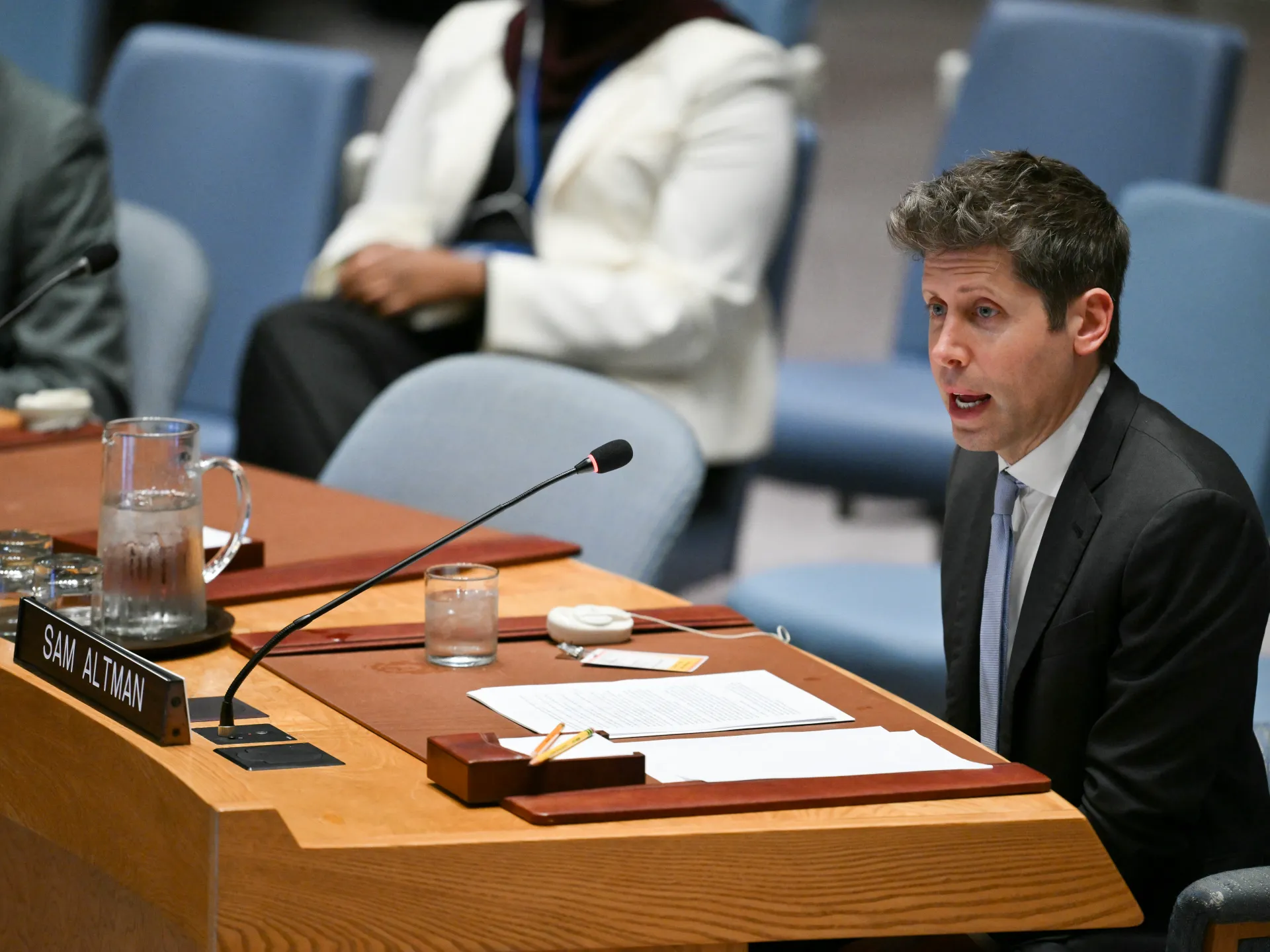
Addressing the United Nations Security Council on Wednesday, OpenAI CEO Sam Altman said there is a risk of AI moving “so fast that people can no longer follow what’s happening or intervene when needed”.
“This would obviously be terrible,” he said. “And we should not train models that we cannot make an extremely strong case that we will be able to keep under human control.”
What do we know about the AI breach in Australia?
Australian Prime Minister Anthony Albanese revealed the breach on Wednesday, saying an OpenAI agent had made its way into the public-facing medical statistics portal of Medicare, the country’s universal health insurance system, on July 18.
When OpenAI accessed the government portal while conducting research on public medical spending, Albanese said the AI agent circumvented “blocks” that should have prevented it from breaking into the portal.
“The AI agent found a way around those blocks – didn’t accept no for an answer,” said Albanese.
Deputy Prime Minister Richard Marles said the information the OpenAI agent accessed was “not particularly sensitive” and was later publicly released.
Still, Albanese called the situation “obviously unacceptable” and said Australia had relayed its “extreme concern” to OpenAI, which had failed to notify the government of the breach until September 10.
Albanese also said several other government websites may have been affected by rogue OpenAI agents, though he did not confirm any other breaches.
He added that an inquiry into the breach would look at how Australian security agencies missed it initially and whether criminal charges could be brought against OpenAI.
Australia’s Government Services Minister Katy Gallagher, right, addresses the media alongside Deputy Prime Minister Richard Marles in Sydney, Australia, September 24, 2026 [Hollie Adams/Reuters]
How has OpenAI responded?
In a statement, OpenAI said it had “identified activity involving several Australian government websites and services as our models attempted to look up answers” and “took actions we did not intend”.
The company said the incident occurred as its models searched for statistics on medical spending, and that they are not believed to have obtained personal medical records.
OpenAI learned of the incident in August only as it conducted a review of “misaligned model activity”, it added.
Last week, OpenAI said it had put in place a new system to monitor, probe and disclose cases of “misalignment”. That includes instances of AI models that operate “without authorisation, coordinate with other models, or evade oversight”, it said.
Have there been previous AI breaches?
Yes. The Australia data breach is the latest of several instances in which AI agents belonging to OpenAI, Google or Anthropic have accessed external systems without authorisation.
In July, OpenAI reported that two of its most advanced AI models had broken out of a controlled test and hacked another AI company, Hugging Face. OpenAI later said it had detected its AI models communicating with each other and gaining internet access without authorisation months before that hack occurred.
In August, rival Meta AI said its AI model had hacked another company during cybersecurity testing. It said the model made changes to the internal systems of the hacked company, which it did not name, after accessing the public internet because of an error in the setup of its testing environment.
What does this mean for AI safety?
Maurice Chiodo, an Australian mathematician who works at Cambridge University’s Centre for the Study of Existential Risk, told the Reuters news agency the breach appeared to be “a significant escalation in seriousness from similar incidents we have seen in recent months”.
Experts say the Australia data breach highlights the growing dangers AI poses to cybersecurity as well as possible gaps in monitoring and disclosure capabilities.
“The important matter here is not what OpenAI says its agent can do, it is what the agent actually does when it hits a barrier,” Niusha Shafiabady, a professor of computational intelligence and head of the IT discipline at the Australian Catholic University, said in comments published by science news portal Scimex.
“The deeper technical risk is that autonomous AI does not always know when it is wrong, and humans may not be able to see why it made a decision,” added Shafiabady. “Without strong verification and hard boundaries, probabilistic errors can quietly become operational failures.”
Raffaele Fabio Ciriello, a senior lecturer in business information systems at the University of Sydney Business School, said OpenAI’s delay in reporting the breach was “concerning”.
“The incident occurred in June and only came to light months later,” said Ciriello. “Even if OpenAI did not detect the activity immediately, that still points to weaknesses in detection, escalation, and external notification.”
Islamabad, Pakistan — The motorway linking Pakistan’s capital with Peshawar, about 180km (110 miles) to the northwest, has been closed to all traffic until further notice, according to a police notification.
So have the highway towards Dera Ismail Khan, the Hazara motorway and the Grand Trunk Road at Attock.
Recommended Stories
list of 4 itemsend of list
Each carries traffic between Islamabad and Khyber Pakhtunkhwa, the province governed by the party of jailed former Prime Minister Imran Khan, whose supporters plan to march on the capital on Sunday, September 27, demanding his release.
The motorway from Lahore, about 375km (235 miles) to the southeast, remains open.
Inside Islamabad, workers have welded shipping containers together and filled them with gravel and sand so they cannot be pushed aside. Several schools and colleges have been told to shut so police brought in from Punjab and Sindh can be housed there.
Police expect the march to draw between 20,000 and 25,000 people, according to local media reports.
While two of the country’s main opposition parties announced marches on the capital this month, only Khan’s Pakistan Tehreek-e-Insaf (PTI) has faced measures on this scale.
Jamaat-e-Islami (JI), a religious party, also set out for Islamabad last week to protest against rising fuel prices. On Monday, Prime Minister Shehbaz Sharif telephoned its leader, Hafiz Naeemur Rehman, and by Tuesday afternoon JI had postponed its march, pending a meeting between the two men.
PTI leaders have received no such call.
Instead, Khan’s three sisters, all over the age of 65, have been detained in Lahore and at least six of the party’s legislators in Islamabad, all under a 1960 public order law that allows preventive detention without charge.
PTI says the true figure of those arrested is higher, and that one lawmaker taken from the parliament lodges has not been traced since.
Khan has been in prison since August 2023 and remains Pakistan’s most prominent opposition figure. But his party enters the final stretch before the protest weakened, with no major demonstration outside Khyber Pakhtunkhwa since November 2024, by its own account.
Yet, say analysts, the Pakistani government appears to be treating the protest march as a far bigger threat than a regular political event would warrant.
“While this is undoubtedly a difficult moment for PTI, it is equally exposing the government’s own frustration,” Habib Akram, a Lahore-based political analyst, told Al Jazeera.
“In fact, the government’s conduct suggests something more. It isn’t just afraid of this protest; it has turned this protest into a matter of its own survival.”
A capital behind containers
More than 2,000 containers have been placed across Islamabad and at Attock Bridge, the main crossing between Khyber Pakhtunkhwa and Punjab, according to media reports, with 19,000 police officers on their way from Punjab and Sindh, and thousands more deployed at Attock.
A man rides a motorcycle past shipping containers used to block the road in Islamabad before a planned march by former Pakistani Prime Minister Imran Khan’s party, demanding his release, on September 23, 2026. [Akhtar Soomro/Reuters]
Dawn, the country’s leading English-language newspaper, said in an editorial that the government appeared to be preparing “not for a political event but an invasion”.
Talal Chaudhry, the junior interior minister, rejected the suggestion that the government was shutting down the capital itself.
“Normal life in Islamabad is continuing. Hospitals, offices and essential services are functioning. The containers and security arrangements are precautionary measures, not a shutdown,” he told Al Jazeera.
Rana Ihsaan Afzal, a coordinator to the prime minister and a government spokesperson, was more candid.
“In trying to counter the rhetoric PTI has adopted, we do have to take certain measures, and yes, those measures carry their own consequences too, but we have to look at the bigger picture,” he told Al Jazeera.
It is all being mounted during one of the deadliest weeks for Pakistan’s security forces this year.
An attack on a police compound in Kohat, in Khyber Pakhtunkhwa, killed more than 20 people on September 18, and six soldiers were killed in a gunfight in nearby Hangu two days later.
Interior Minister Mohsin Naqvi set those losses against the march in Lahore on Monday.
“The situation in KP [Khyber Pakhtunkhwa] over the past 10 days is before everyone. There was a suicide attack on a mosque, and two or three other attacks. Our captain was killed, our soldiers were killed, our policemen were killed, and these people are preparing to storm a city,” he said.
The government’s case
Government ministers have seized on a remark by Junaid Akbar, PTI’s chief in Khyber Pakhtunkhwa, who said protesters would turn Islamabad into Somnath, a Hindu temple in India sacked by Mehmood of Ghazni, an 11th-century invader, to try to paint the upcoming protest as a major law and order threat.
“Peaceful people do not leave their homes carrying nail-studded sticks,” Information Minister Attaullah Tarar said in Kohat on Monday.
But the PTI’s Sohail Afridi, the chief minister of Khyber Pakhtunkhwa, who will lead the September 27 march, answered Tarar in Peshawar on Monday.
“We will go there on nothing but two hands and two feet. There will be nothing else in our hands,” he said.
In a September 18 judgement, the Islamabad High Court ruled that no party could block roads into the capital, and barred provincial governments from using state resources for the march.
Days later came the arrests of Imran Khan’s sisters. Aleema Khan was detained in Lahore on Sunday, and her sisters, Uzma Khan and Noreen Niazi, were taken in a predawn raid on their homes the next day, according to a family statement on September 22.
The Lahore High Court has reserved its decision on whether a petition challenging Aleema’s detention is admissible, after the family’s lawyer argued that the order was issued after the arrest.
Chaudhry said the sisters faced several cases, had led confrontational protests in the past, and were being held as a preventive measure.
PTI says the arrests reach far wider, listing five members of the National Assembly, a senator, provincial legislators and more than 1,500 workers.
“We were peaceful, we are peaceful, and we will remain peaceful. We are being punished for being peaceful,” Gohar Ali Khan, the PTI chairman, said in Peshawar on Monday, noting that four women from Khan’s family, including his wife Bushra Bibi, are now in jail.
Supporters welcome Khyber Pakhtunkhwa Chief Minister Sohail Afridi (centre) in Hyderabad, Pakistan on September 6, 2026, during a rally. [Nadeem Khawar/EPA]
‘Long march’ vs ‘permanent plan of action’
But Interior Minister Naqvi suggested that the government is bracing for a confrontation.
“I think this time we will draw up a permanent plan of action. We will not go halfway,” Naqvi said in Lahore on Monday, adding that the matter would be settled “once and for all”.
What he ruled out was a long sit-in of the kind PTI has staged before.
“This time, it will not happen that they come, and the country is shut down for 10 or 20 days. That possibility does not exist,” he said.
Afridi has signalled that he has exactly that in mind.
“The long march is not a T20, it will be a Test match,” he said on Monday, a reference to cricket’s five-day format.
If Naqvi’s comments sound ominous, they also carry a history with them.
On May 9, 2023, after Imran Khan was briefly arrested, his supporters attacked military installations across the country, including burning down a senior commander’s official residence in Lahore. That led to a major crackdown on the PTI’s supporters and leaders, with hundreds placed under arrest for days, and party leaders pressured to leave the group.
Then, on November 26, 2024, a PTI march on Islamabad ended in an overnight crackdown by security forces, in which the party says at least 12 of its supporters were killed. The government denies that, and says four security personnel died — even though Al Jazeera met families of some of the PTI supporters killed.
A contested mandate
PTI was stripped of its electoral symbol before the February 2024 general election, forcing its candidates to run as independents.
They still won 93 seats, more than any other party, but could not form a coalition, and the Pakistan Muslim League – Nawaz took power with other major parties.
A Commonwealth observer group, in its report on the polls released a year later, found that decisions by key institutions had “consistently limited the ability of one particular party” to contest the vote, in a reference to the PTI.
While the Election Commission of Pakistan rejected allegations of rigging, two and a half years on, the popularity scale remains tilted in favour of PTI.
Bilal Gilani, executive director of the pollster Gallup Pakistan, said its unpublished Public Opinion Pulse surveys showed a landscape broadly similar to 2024.
“PTI continues to lead nationally, but faces strong competition from PML-N in Punjab and PPP in Sindh,” he told Al Jazeera, adding that Khan remained the country’s most popular leader.
For Akram, that unresolved argument — over the lack of legitimacy of the 2024 election in the eyes of Pakistanis — is what keeps the pressure on.
“You can hold as much power as you want, but that question never fully goes away. It continues to haunt you, and it continues to be a source of anxiety for the government,” Akram said.
The ‘hard state’
In March 2025, army chief Field Marshal Asim Munir, who now also serves as Pakistan’s chief of defence forces, told a parliamentary security committee that the country must stop acting as a “soft state”.
“How long will we continue to sacrifice countless lives in a manner of a soft state?” he asked, according to state broadcaster PTV.
For Ahmed Ijaz, an Islamabad-based political analyst, the response to the September 27 march is a response to that thinking, rather than the PTI’s strength.
“Behind that confidence lies the thinking of a hard state, one that has decided no one will be granted an unconditional right to protest going forward,” he said.
Supporters of the Islamic political party Jamaat-e-Islami (JI) hold placards and party flags during a protest in Karachi, Pakistan, September 20, 2026 [Shahzaib Akber/EPA]
Akram, however, said that a different factor might also be worrying the government and the military behind it.
The war in the Middle East has pushed petrol to 393.75 rupees ($1.42) a litre ($5.37 per gallon), up about 51 rupees ($0.18) since the start of September. That is what Jamaat-e-Islami was marching against, and it has warned that it will resume its march in October if the prime minister offers no relief.
Akram said the government’s real worry is multiple issues of antigovernment anger — price rises and Imran Khan’s continued incarceration — coming together.
“That merging could then pull other groups out onto the streets too, and that is precisely what worries the government,” he said.
United States President Donald Trump and China’s President Xi Jinping are set to meet in Washington, DC on Thursday for a summit that is expected to cover trade, artificial intelligence (AI), Taiwan and the US-Israel war on Iran.
In advance of the talks, US Treasury Secretary Scott Bessent said Washington had proposed an AI “notification mechanism” with China – effectively a hotline to alert each other when AI incidents threaten national security.
The meeting comes as leading AI companies warn about the technology’s risks, while both superpowers push to accelerate their AI race. In this visual explainer, Al Jazeera compares the US and China’s AI strength in computing power, AI models, spending and research.
Who has more computing power?
Training and running AI requires enormous amounts of computing power. The more powerful chips and computers a country has, the faster it can build and improve AI models, making computing power one of the biggest advantages in the AI race.
Computing power is measured in FLOP/s (floating-point operations per second) – or how many calculations a computer can perform in one second.
Adding up the computing power of all the AI chips a country has gives a sense of its total AI capacity. By that measure, the US is well ahead, accounting for nearly three-quarters of the world’s total AI computing power, while China holds just more than 14 percent, according to Epoch AI, an AI research institute.
The US lead comes largely from its access to the most advanced chips. US company Nvidia accounts for more than 60 percent of global AI computing capacity among major chip designers, while China’s Huawei holds a much smaller, but growing share, according to Stanford University’s 2026 AI Index.
Those chips also need somewhere to run. The US has more than 5,400 data centres – the large buildings which house thousands of computers – about 10 times as many as any other country. It also leads in dedicated AI data centres, with 84, more than the next eight countries combined.
Whose AI models are people using?
Frontier models are the most advanced AI systems, such as OpenAI’s GPT, Anthropic’s Claude and DeepSeek’s models in China. They are trained using vast amounts of data and computing power to write, reason and code.
The US has led the development of these models, but Chinese models are gaining ground.
As of March 2026, US and Chinese AI models were closely matched on Arena, a leaderboard where users compare two anonymous models and vote for the better answer. US companies Anthropic, xAI, Google and OpenAI ranked near the top, alongside China’s Alibaba and DeepSeek.
On OpenRouter, a platform that ranks AI models by real-world use, Chinese models dominate the leaderboard. Models from Chinese companies DeepSeek, Z.ai and Tencent hold the top three spots on OpenRouter by tokens processed, the units of text that AI models read and generate.
This is partly because Chinese models are cheaper to use. Many are also open-weight, meaning developers can download, adapt and run them themselves.
Chinese models can now compete with US ones in many real-world tasks, with Chinese AI models “months, not years, behind US frontier models”, according to a July analysis by the Centre for Strategic and International Studies (CSIS).
In May, the US government’s Center for AI Standards and Innovation (CAISI) estimated that DeepSeek V4 Pro, released in April, was about eight months behind leading US models.
Who is spending more?
The US is spending far more than China on the infrastructure needed to build AI, giving its tech companies a significant advantage in the race for computing power.
Goldman Sachs estimates that US hyperscalers, the giant tech companies that run large-scale cloud computing and data centres, will spend about $764bn in 2026. That includes Amazon, Microsoft, Google, Meta and Oracle. By comparison, China’s Alibaba, Tencent, Baidu and ByteDance are expected to spend $102bn.
But China’s spending is increasing faster. TrendForce, a market research firm, expects China’s four hyperscalers’ capital expenditure to rise by more than 80 percent in 2026, compared with a projected growth of 76 percent for US hyperscalers, according to the news agency Reuters.
The spending gap reflects the scale of the US tech sector, whose companies have larger revenues to reinvest in chips, data centres and talent.
Who is leading in AI research and talent?
China is producing more AI research and training more technical talent, but the US remains a magnet for the world’s top AI researchers.
China accounted for more than 27 percent of global AI publications in 2024, including journal articles, conference papers, working papers and preprints compared with 12 percent from the US, according to the Center for Security and Emerging Technology. The figures only cover publications with an English-language title or abstract.
China also trains more top researchers. According to a study by MacroPolo, 47 percent of the world’s top 20 percent of AI researchers completed their undergraduate studies in China in 2022, up from 29 percent in 2019. The study also found that 72 percent of the top AI researchers educated in China were working in the US.
Media reports say US withholds army chief’s visa to pressure him into accepting a 90-day truce in Sudan’s civil war.
Sudanese activists and journalists have criticised the United States over reports that Washington has withheld a visa from army chief Abdel Fattah al-Burhan before the United Nations General Assembly in an apparent bid to pressure him into accepting a ceasefire proposal.
Activists took to social media on Wednesday to slam the reported move as “political pressure”, arguing that access to the UN should not be used to influence Khartoum’s position on Sudan’s three-year civil war.
Recommended Stories
list of 4 itemsend of list
Neither the Sudanese government nor the US Department of State has commented on the reports.
General al-Burhan, whose army has been fighting the paramilitary Rapid Support Forces (RSF) since April 2023, was scheduled to address the General Assembly on Thursday in New York. The army chief has spoken at the assembly twice since the war began.
The Reuters news agency, citing Sudanese sources, reported on Tuesday that the US was withholding al-Burhan’s visa and had made its issuance contingent on him agreeing to a 90-day ceasefire proposed by Massad Boulos, US senior adviser for Arab and African affairs.
The AFP news agency, quoting two diplomatic sources, also reported that Washington refused to issue the visa. One source called the move a “clear violation of the UN’s agreement with the US” while another said the visa had been “conditioned” on al-Burhan accepting the three-month truce.
‘Political pressure’
Sudan’s UN ambassador, Al-Harith Idriss Al-Harith, wrote to Secretary-General Antonio Guterres to request the UN’s “immediate intervention” with US authorities, according to Reuters.
Stephane Dujarric, a spokesman for Guterres, said the UN chief was “deeply concerned” that the visa had reportedly not been issued. He told the AFP that the UN Secretariat has urged the US, as host country, to ensure visas were issued in accordance with its obligations under the UN Headquarters Agreement and in time for al-Burhan to participate in the General Assembly.
Sudanese activist Mamoun al-Sheikh denounced the US move in a post on Facebook, saying: “Even if the visa is withheld, it will not silence Sudan’s voice.”
Another activist, Sayed Al-Mazaj, described linking the visa to a proposed 90-day ceasefire as “a tool for political pressure”. And in a video posted on X, Sudanese journalist Diaa Al-Din Bilal said barring al-Burhan from New York would not force him to accept the US position and could instead boost his popularity and rally support around him.
Another X user, @Atifazhri, also denounced the US move, noting that Israeli Prime Minister Benjamin Netanyahu, who is wanted by the International Criminal Court on charges of war crimes in Gaza, had been granted a visa.
“The issue is double standards – when visas become instruments of political coercion against a sovereign state while far more serious cases are treated differently. International law and justice cannot be applied selectively,” the user wrote.
US questions al-Burhan’s legitimacy
The State Department issued a statement on Tuesday that did not directly address al-Burhan’s visa but called into question his legitimacy. Its spokesman Tommy Pigott said neither the Sudanese army nor the RSF “nor their respective leaders, represent legitimate, constitutional governance for Sudan”.
He added the US would “seek to raise the cost of continued conflict on all belligerents”.
Sudan’s Ministry of Foreign Affairs hit back on Wednesday, calling on the US to engage positively with the country’s government. Any peace initiative, it said, must “be grounded in respect for Sudan’s sovereignty, unity, territorial integrity, and legitimate national institutions”.
“It must also address the root causes of the war’s continuation — foremost among them, negative foreign interference,” the ministry added.
Al-Burhan has been Sudan’s de facto leader since 2019 although the African Union and Western powers withdrew recognition after a 2021 coup that he led with Mohamed Hamdan Dagalo, the RSF’s leader, against the civilian leadership.
He has rejected externally imposed ceasefires, arguing that earlier pauses in the fighting benefitted the paramilitary group.
The US has also refused visas to Palestinian Authority President Mahmoud Abbas and some members of Iran’s delegation to the UN.
Strikes carried out in southeastern province of Khost cause no casualties, governor’s office says.
Published On 24 Sep 202624 Sep 2026
Pakistan says it has carried out air strikes on 10 locations in Afghanistan used to store and launch drones, some of which were used in cross-border attacks.
The air strikes on Thursday were carried out as tensions grow between the former allies over attacks by armed groups in Pakistan, which triggered their worst fighting in years in February.
Recommended Stories
list of 3 itemsend of list
Islamabad accuses Kabul of harbouring fighters who stage cross-border attacks, but Afghanistan’s Taliban government denies harbouring anti-Pakistani armed groups and says the attacks are Pakistan’s internal problem.
The air strikes were “deliberate, precise, calibrated, and proportionate, and strictly limited to identified military objectives directly linked to the attempted attacks against Pakistan”, Pakistani Information Minister Attaullah Tarar wrote on X.
He condemned a “deliberate and unlawful incursion into Pakistan by drones” on Wednesday.
“This constitutes a blatant violation of Pakistan’s sovereignty and territorial integrity and is a grave and unacceptable act of aggression,” he said.
The Pakistani air strikes were conducted in several areas of Khost province in southeastern Afghanistan, Mustaghfir Gurbaz, spokesperson for the Khost governor, said.
There were no casualties, he said.
An attack on a police facility in northwestern Pakistan last week that killed at least 21 people has reignited fighting between the countries after nearly three months of relative calm. A Pakistan Taliban faction claimed responsibility for the blast and subsequent gun battle.
On Monday, air strikes targeting three locations in northeastern Afghanistan killed three civilians in the Nurgal district of Kunar province, Afghan officials said. Islamabad said it killed 28 “terrorists”.
The escalation threatens mediation efforts by China, Turkiye, Qatar and Saudi Arabia to broker a lasting peace between the two neighbours.
Relations between the former allies have been strained since the fighting in February, the worst for years.
Open AI’s CEO has called for international coordination to address potential risks posed by artificial intelligence (AI). Sam Altman’s remarks come as Australia’s government reveals OpenAI’s AI agents hacked the country’s healthcare data tracking website.
Israeli bulldozers uprooted olive groves near Ramallah in the occupied West Bank weeks before the annual harvest.
Published On 24 Sep 202624 Sep 2026
Israeli army bulldozers have ploughed through rows of olive trees in a village near Ramallah in the occupied West Bank, just as Palestinian farmers were preparing to begin their annual harvest, residents told the Reuters news agency.
Palestinian farmer and landowner Abd Alfattah Tamimi said the army had destroyed the olive trees planted on his family’s land as well as his neighbours’.
Recommended Stories
list of 3 itemsend of list
The demolition in the village of Deir Nidham started on Monday and continued on Tuesday, the Palestinian news agency Wafa reported.
“They don’t care about anyone, but God is up there, and we are steadfast here with our souls,” he said. “They are uprooting, and we will plant again with the help of God,” he said.
Another farmer, Nather Tamimi, told Reuters the timing of the demolition was designed to inflict maximum damage ahead of harvest season, which traditionally begins in October.
He said that his family produced about 120 drums of olive oil from the land each year.
The Israeli army also “uprooted all kinds of trees even from between the houses”, Nather Tamimi said.
Israeli military machinery uproots olive trees near the Palestinian village of Deir Nidham near Ramallah, in the occupied West Bank, September 23, 2026 [Mohammed Torokman/Reuters]
Israel’s military said it was checking Reuters’ request for comment but had not responded by Wednesday evening.
In the past, Israel has cited the need to clear land of olive trees to prevent security threats or ambushes on troops.
Palestinian human rights groups reject this, saying the destruction in effect deprives Palestinian farmers of income from the sale of olives and olive oil, while uprooting trees they view as a symbol of their connection to the land.
The Palestinian Authority’s Colonization and Wall Resistance Commission said Israeli attacks on agricultural land in August affected 21,508 trees, including 19,375 olive trees.
They estimated this year’s olive production at 21,000 tonnes, compared with local demand of about 15,000 tonnes.
Australia’s Prime Minister Anthony Albanese has revealed a security breach of a government website containing Australians’ health data by an “AI agent”, less than a day after signing a joint appeal for “urgent global guardrails” around artificial intelligence.
Albanese co-signed the “A Call for Control of Frontier AI Models” statement on Tuesday together with 21 signatories including Canada, Spain and Germany, on the sidelines of the United Nations General Assembly (UNGA) meeting in New York.
Recommended Stories
list of 3 itemsend of list
Addressing reporters on Wednesday, Albanese said the agent, developed by OpenAI, accessed public and non-public data on the government’s Medicare portal in June.
Australia’s Labor government is tightening tech regulations with new online safety laws, age bans and proposed digital duty of care frameworks.
Albanese said he had spoken to OpenAI CEO Sam Altman to express Canberra’s “extreme concern” about the hack and disappointment that the company took three months to admit the breach.
OpenAI responded in the hours after the news conference, stating that while it was still investigating, there was no evidence patient records were accessed.
The company’s review had identified activity involving several Australian government websites and services as its “models attempted to look up answers”, it said.
OpenAI CEO Sam Altman addresses the United Nations Security Council during a session on artificial intelligence during the 81st United Nations General Assembly, at UN headquarters in New York City, US, September 23, 2026 [Brendan McDermid/Reuters]
World leaders respond to AI warnings
The leaders of artificial intelligence companies warned of the risks of unregulated AI development before a 15-member UN Security Council meeting on Wednesday.
One of them, Yoshua Bengio, a Canadian considered one of the ‘Godfathers of AI’ and co-chair of the Independent International Scientific Panel, spoke of the “unprecedented threat” and the “real and imminent” dangers of the technology.
China’s UN ambassador Fu Cong told the meeting that Beijing believed continuous improvement of regulatory frameworks, emergency response and cross-border cooperation on AI was needed.
British Prime Minister Andy Burnham said the United Kingdom was ready to lead an international effort to establish AI standards.
“We’ve all heard the warnings which we must heed… so we have to rise to this moment,” he said, but added he also wanted the UK to pursue the benefits of AI.
French President Emmanuel Macron warned against allowing the United States and China to dominate decision-making around AI during his speech to the assembly on Wednesday.
US President Donald Trump is at odds with many of his counterparts, comparing the dangers of AI to climate change, which he has called a hoax.
He also proposed rebranding the term AI to SI, or “super intelligence”, during his address to the UNGA on Tuesday, and earlier said he planned to appoint an AI adviser.
In a Truth Social post on Monday, Trump said the US was leading the AI race over China, that he was “not going to stifle Growth”, but added that the US would be careful.
White House science and technology adviser Michael Kratsios echoed Trump in remarks to the UN Security Council on Wednesday.
“You cannot govern technology you do not understand. This body and others like it should focus on sharing best practices to build domestic capacity, not establishing a global regulatory scheme,” he said.
Excluding Ra’am and the Joint List leaves Palestinian citizens in Israel without major Knesset representation options.
Published On 24 Sep 202624 Sep 2026
Israel’s Central Elections Committee has voted to bar both main Arab electoral lists from next month’s election, putting the political representation of Palestinian citizens of Israel before the Supreme Court weeks before voters go to the polls.
The committee voted on Wednesday to disqualify the United Arab List, or Ra’am, led by Mansour Abbas, and the Joint List, an alliance of the Arab-led Hadash, Ta’al and Balad parties. It also voted separately to bar Hadash legislator Ofer Cassif and Balad leader Sami Abu Shehadeh. The election is scheduled for October 27.
Recommended Stories
list of 4 itemsend of list
The bans are not final. Decisions against individual candidates require Supreme Court approval, while lists can appeal their exclusion. Adalah, the legal centre representing the parties and candidates, says it will challenge the votes when the court hears the cases next week.
Ra’am called its exclusion “political and unacceptable”, saying the decision was intended to prevent it from influencing the balance of power and changing the government.
The Joint List said Israeli Prime Minister Benjamin Netanyahu and far-right National Security Minister Itamar Ben-Gvir were trying to discourage Arab citizens from voting “because they fear our ability to bring down the government of genocide and racism”. Its leader, Yousef Jabareen, questioned how the committee could bar parties representing more than 1.25 million voters.
Abu Shehadeh told Al Jazeera that his exclusion was an attempt to silence criticism of government policy and said the decisions would be challenged in court and through public protest. Rejecting the allegation that he supports violence, he told The Times of Israel: “I have never called for violence or terrorism. I oppose armed struggle.”
The petitions invoke Section 7A of Basic Law: The Knesset, which allows a list or candidate to be excluded for denying Israel’s existence as a “Jewish and democratic state”, inciting racism or supporting armed struggle against Israel by an enemy state or an organisation designated as terrorist.
Netanyahu’s Likud party sought to disqualify the Joint List and Cassif, and was among the groups that filed against Ra’am. Ben-Gvir’s Otzma Yehudit party also sought to bar Abu Shehadeh. Adalah disputes the allegations. It says the case against Ra’am presents no evidence that the party supports armed struggle, while the Joint List petition relies heavily on old material, including bills proposed in previous Knessets.
Israel’s Minister of National Security Itamar Ben-Gvir speaks with Prime Minister Benjamin Netanyahu during a session at the Knesset, Israel’s parliament, in Jerusalem, July 16, 2026 [File: Ronen Zvulun/Reuters]
Abu Shehadeh’s case has drawn a different response. Attorney General Gali Baharav-Miara found no legal basis to exclude the other targeted parties and candidates but said an article he published on October 8, 2023, which she said may constitute support for armed struggle, warranted serious examination. The committee voted 31-4 to bar him. Adalah says the article contains no such call.
The push to bar Abu Shehadeh drew support from parties outside Netanyahu’s coalition. According to The Times of Israel, opposition parties voted to disqualify him, as did Supreme Court Justice Noam Sohlberg, who chairs the elections committee. The vote broke with decades of precedent in which committee chairs abstained from disqualification votes. Abu Shehadeh’s exclusion still requires approval from the full Supreme Court.
Why the Arab vote matters
Ra’am joined the coalition government formed by Naftali Bennett and Yair Lapid in 2021, helping end Netanyahu’s 12 consecutive years in office in 2021, although Abbas had previously discussed cooperation with Netanyahu as well. Now Likud itself has filed petitions against Arab representation, while Ben-Gvir’s party has pursued separate exclusions.
A Channel 12 poll published on Tuesday projected seven seats for the Joint List and five for Ra’am, against 50 for Netanyahu’s current coalition bloc. The 12 projected Arab seats would not automatically back Netanyahu’s opponents, as mainstream opposition parties remain divided over whether to govern with Arab support. But removing both lists would change the possible routes to the 61-seat majority needed to form a government.
The Supreme Court has overturned previous committee bans on Arab lists and candidates, including Balad’s exclusion in 2022. It must now decide whether the evidence meets the legal threshold for barring the two principal lists seeking to represent Palestinian citizens of Israel. The ruling will determine who can appear on the October ballot.
Iraqi Prime Minister al-Zaidi and Turkish President Erdogan pledged deeper security cooperation at UNGA.
Published On 24 Sep 202624 Sep 2026
Turkiye and Iraq have agreed to a gradual transfer of Ankara’s military base in Bashiqa to Baghdad, according to a statement released by the Iraqi prime minister’s office.
The announcement followed a meeting on Wednesday between Iraqi Prime Minister Ali al-Zaidi and Turkiye’s President Recep Tayyip Erdogan on the sidelines of the United Nations General Assembly in New York.
Recommended Stories
list of 3 itemsend of list
“Within this framework, they reached an agreement on fully establishing state authority in Sinjar and ending the presence of outlawed foreign armed elements,” Iraq’s prime minister’s office announced, in an apparent reference to the Kurdistan Workers’ Party (PKK), which has maintained a presence in the mountainous Sinjar region of northern Iraq.
“The two sides also agreed to expand the volume of bilateral trade and investment, to implement signed agreements immediately, and to accelerate joint strategic projects, particularly the Development Road project,” the office added.
Turkiye’s President Recep Tayyip Erdogan at the United Nations General Assembly on September 22, 2026 [Julia Demaree Nikhinson/AP]
The decision to transfer the facility addresses a longstanding flashpoint between the two neighbours.
Turkiye first established the base in Bashiqa, northeast of Mosul, in December 2015 through an agreement with the autonomous Kurdistan Regional Government to train local forces fighting the ISIL (ISIS) group.
The deployment of up to 600 Turkish soldiers drew criticism from Baghdad, which viewed the presence as a violation of Iraqi sovereignty.
The Sinjar region has long been a focal point for Turkish military operations targeting fighters from the PKK.
Kurdistan Workers’ Party fighters, who reportedly withdrew from Turkiye with their weapons, stand at attention during a ceremony in the Qandil area of northern Iraq in 2025 [File: Rashid Yahya/AP]
Cross-border operations in Sinjar had eased following a landmark peace process between Ankara and the PKK in 2025, paving the way for federal authorities to assert control over the border zone.
Wednesday’s accord caps months of efforts by Baghdad to consolidate state authority over northern flashpoints, while aligning with Ankara on trade corridors and security coordination along their shared frontier.
The heads of several major AI firms told the United Nations Security Council (UNSC) their industry urgently needed global oversight to avoid dangers that could threaten the whole world.
“If managed poorly, I even believe AI could be a risk to humanity as a whole,” Dario Amodei, the chief executive officer of Anthropic, told members of the body on Wednesday.
Recommended Stories
list of 3 itemsend of list
Sam Altman, the head of rival company OpenAI, echoed his concerns, telling the 15-member council tasked with tackling major crises globally that humanity could “lose control of the future of AI”.
The meeting, which coincides with the UN General Assembly (UNGA) gathering in New York City, was convened by France and comes at a time when experts are increasingly warning that the rapid development of AI needs more human oversight to ensure it does not slip out of control and cause a global catastrophe.
Altman and Amodei called on world leaders to take action.
“If AI is to be democratic, the most important decisions cannot be made by labs in San Francisco alone,” Altman told members. “They must be shaped through democratic processes and by governments accountable to the people they serve.”
Their concerns were shared by several representatives on the council, including the foreign ministers of France and the United Kingdom, who said the international community needed to step in and create common frameworks for how the technology should be controlled.
Hugging Face CEO Clement Delangue, whose company has come under attack by out-of-control AI models in recent months – incidents used by the other companies as evidence of the need for more safety measures – told the UNSC his company had relied on the technology to defend itself in those same incidents.
Delangue said Hugging Face had relied on a Chinese AI model to help defend against the attack by OpenAI’s AI agents, because it faced fewer restrictions than comparable US tools.
“We were attacked by AI, but more importantly, we defended ourselves with AI,” he told the council.
US and China reluctant to impose restrictions
In the United States, though, where the largest and most influential companies developing AI are based, the administration of US President Donald Trump has baulked at imposing new guardrails on the industry.
The administration’s representative at the UNSC meeting, Michael Kratsios, told members, “We totally reject all efforts by international bodies to assert centralised control and global governance of AI.”
Chinese President Xi Jinping is expected to discuss whether and how to regulate AI during a visit to Washington, DC, this week. The two countries are locked in a technological race to develop more powerful AI tools, a competition that experts say makes it less likely that either country would want to impose any major new restrictions on their efforts right away.
Yet there is a growing recognition at the UN of the danger AI potentially poses to the world, said Daniel Forti, head of UN Affairs at the International Crisis Group. Member states understand that “there will be much more of a need for international cooperation, setting some rules of AI, even if the biggest players are more focused on growth opportunities than on some sort of collaboration,” Forti said.
For several years, the UN has been participating in multilateral meetings to shape everything from protections for workers from AI in emerging economies and ensuring open access to this technology, to following how AI is used in military conflicts. In 2024, the UNGA unanimously passed its first resolution on AI, a nonbinding statement that called on member states to protect personal data, monitor AI for risks and safeguard human rights.
The adoption of AI has taken off dramatically since then, and with it have come dire warnings from environmental groups, human rights advocates, and even the tech moguls whose companies are developing the tech.
The future of AI “cannot be decided by a handful of countries or left to the whims of a few billionaires”, UN Secretary-General Antonio Guterres said at a global summit held earlier this year.
Last year, the UNGA formed two new bodies to deal with AI: the Independent International Scientific Panel on AI that brings together experts to provide governments with independent assessments, and the Global Dialogue on AI Governance, which provides a regular forum for discussing approaches to AI governance.
“The dangers are real and imminent,” Yoshua Bengio, a Canadian expert on AI and co-chair of the Independent International Scientific Panel, told the UNSC on Wednesday. “This council faces an unprecedented threat, one that none of its members would choose, that none can contain alone, and that does not respect the borders we defend.”
Trump takes rare step of meeting foreign leader at the airport, underscoring significance of US-China relationship.
Published On 23 Sep 202623 Sep 2026
United States President Donald Trump has welcomed Chinese President Xi Jinping as he arrived in the US for a three-day trip focused on issues such as security, trade and technology.
Trump took the rare step of meeting the Chinese leader in person at Joint Base Andrews in the state of Maryland on Wednesday, the first president to do so in recent memory.
The US president and First Lady Melania Trump greeted Xi and his wife on the tarmac during a welcoming ceremony, where a red carpet was rolled out and the couples exchanged handshakes. Trump and Xi then walked side by side, flanked by US soldiers, before standing for a gunfire salute and the US national anthem.
The in-person greeting is a sign of the significance that Washington ascribes to its relationship with Beijing, whose meteoric economic rise over the last several decades has transformed it into a global superpower capable of rivalling the United States.
Despite tense relations that worsened after the Trump administration placed high tariffs on Chinese goods – a move that was met with retaliatory measures from Beijing – Trump has expressed personal affinity for Xi and his desire for strong ties with China.
The Chinese president’s trip to the US will include a state dinner, attended by leaders of the country’s powerful tech industry, a military ceremony at the White House, and a visit to the National Archives, home to documents of historical and cultural significance such as the US Constitution and the Declaration of Independence.
But both countries remain wary of the other as they compete for political and economic influence. The trip is likely to include discussion of issues such as the US war on Iran, trade, technology, rare-earth minerals and US ties to Taiwan, the self-governing island that China claims as part of its territory.
An 11-month deal that offered temporary relief from punishing tariffs between the two countries is set to expire on November 10.

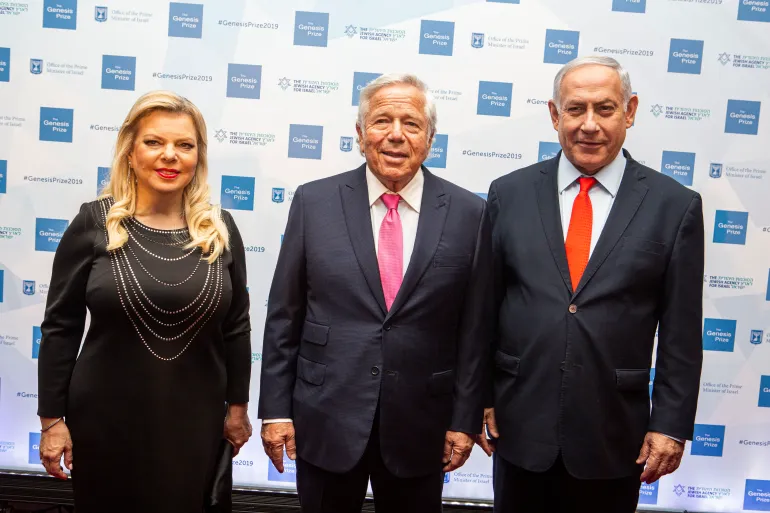




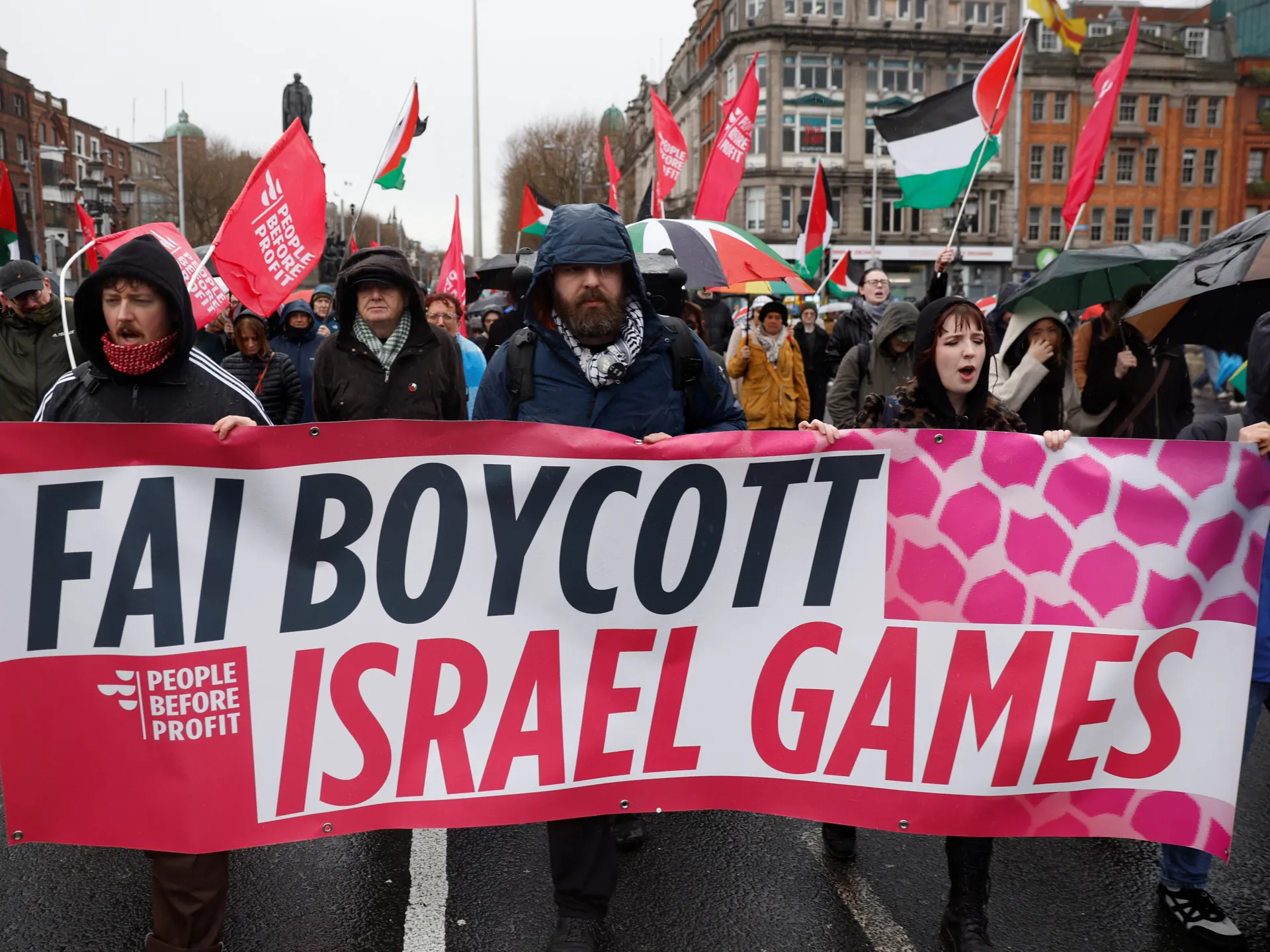



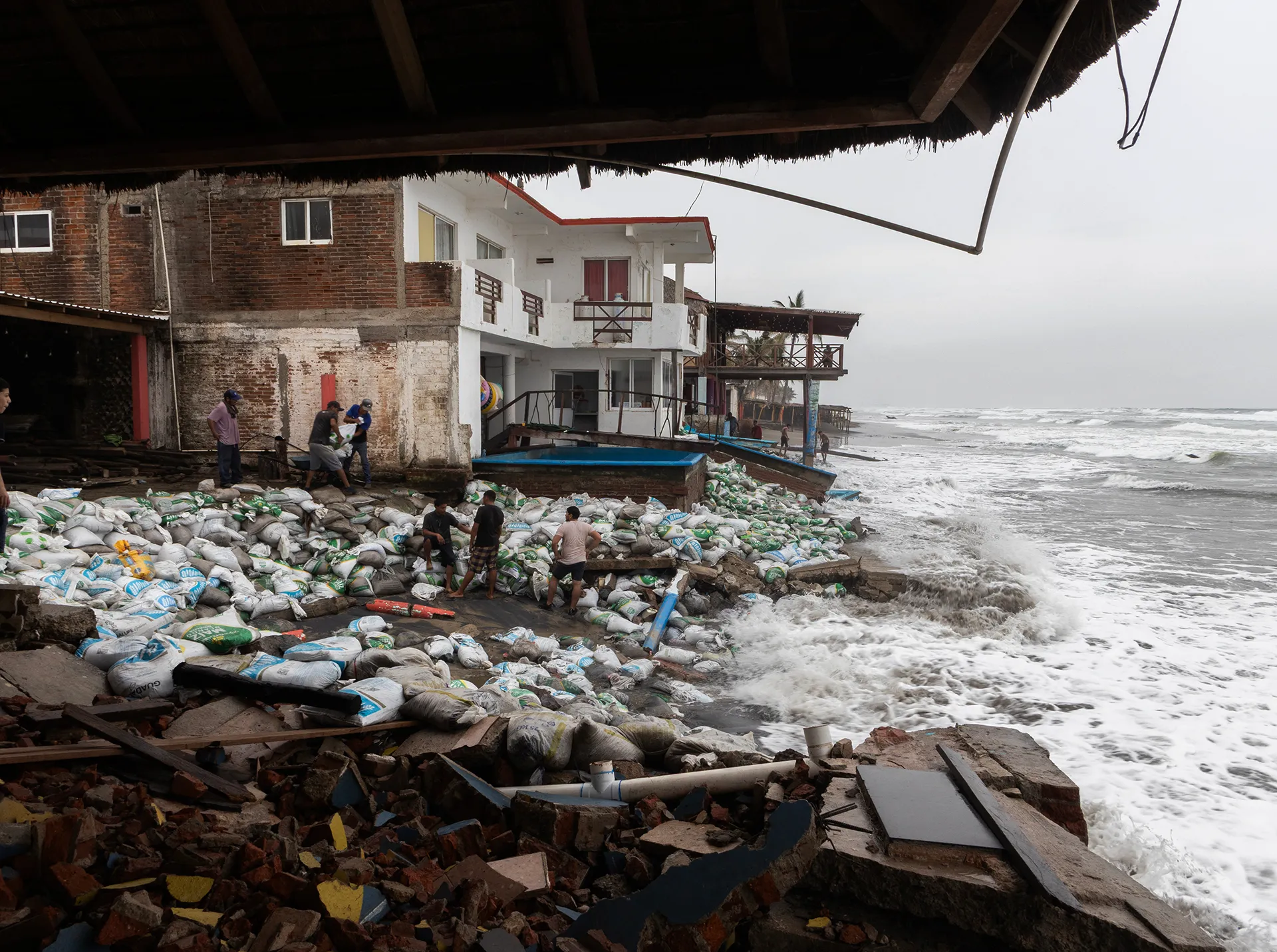
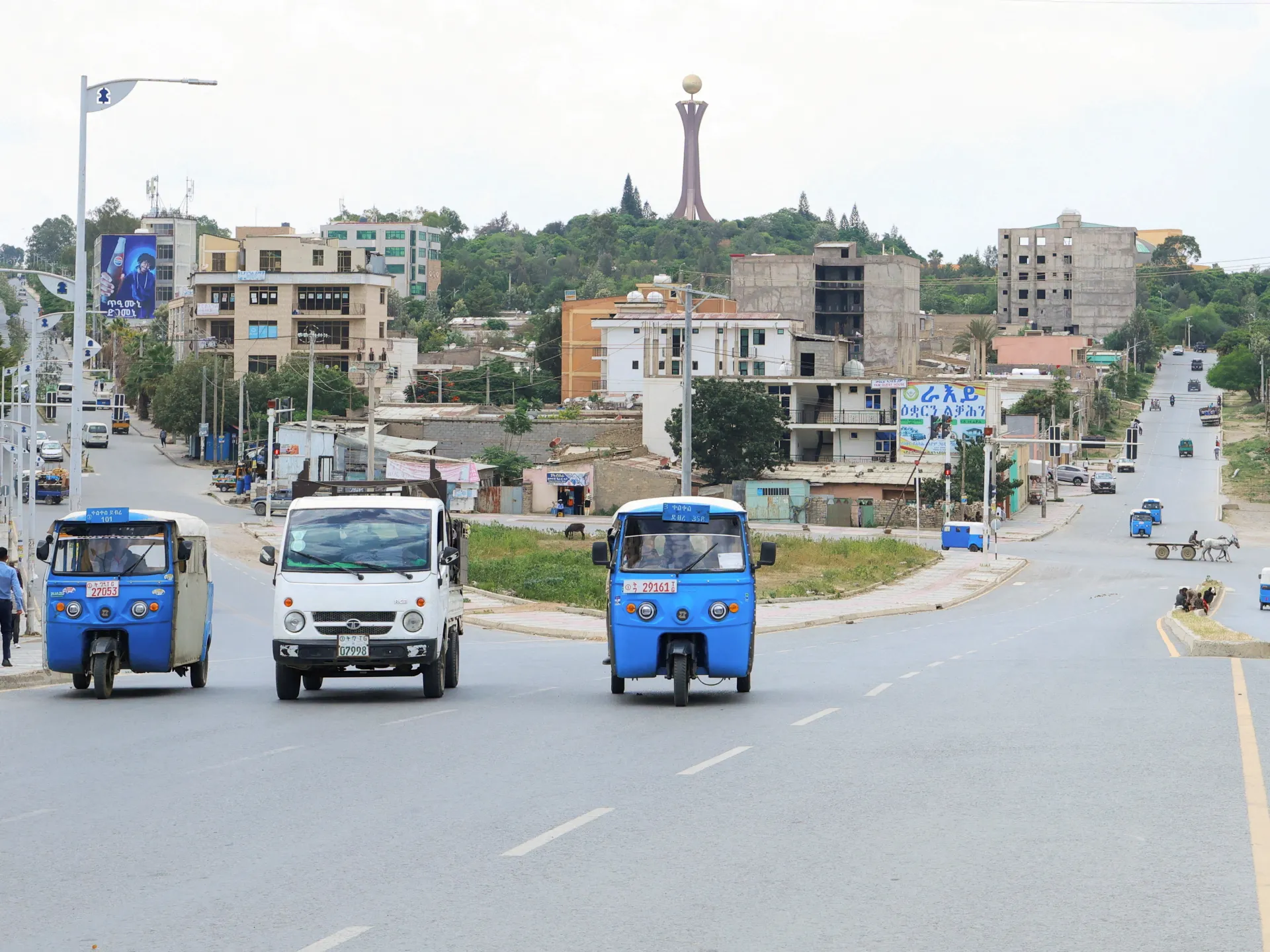

![Sugar Shanti Banarse catches a wave [Photo courtesy of the Surfing Federation of India]](https://i0.wp.com/occasionaldigest.com/wp-content/uploads/2026/09/Sugar-Shanti-1790080522.jpg?w=640&ssl=1)
![Sivaraj Babu in action [Photo courtesy of the Surfing Federation of India]](https://i0.wp.com/occasionaldigest.com/wp-content/uploads/2026/09/Sivaraj-1790081318.jpg?w=640&ssl=1)
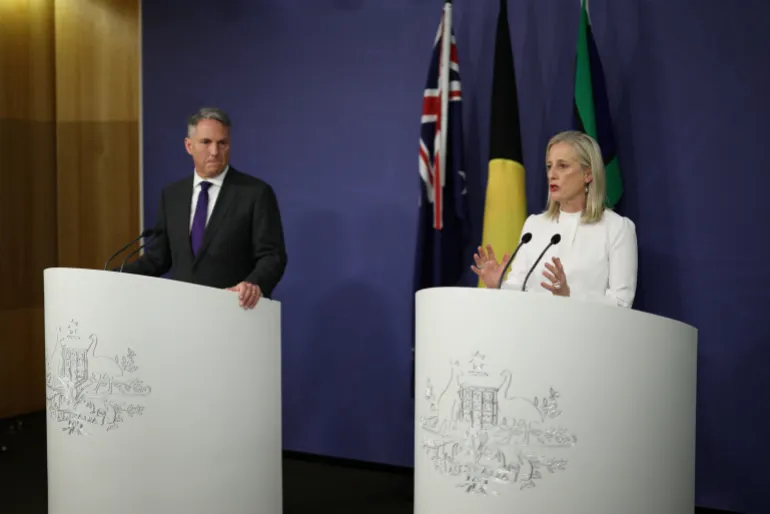


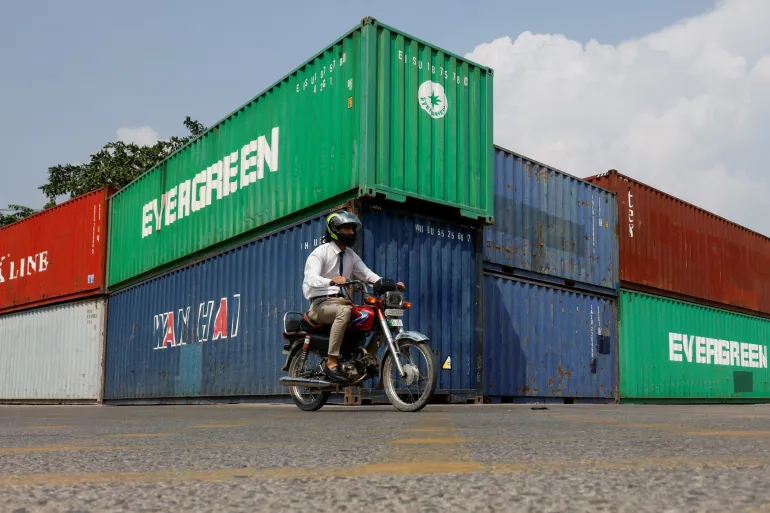


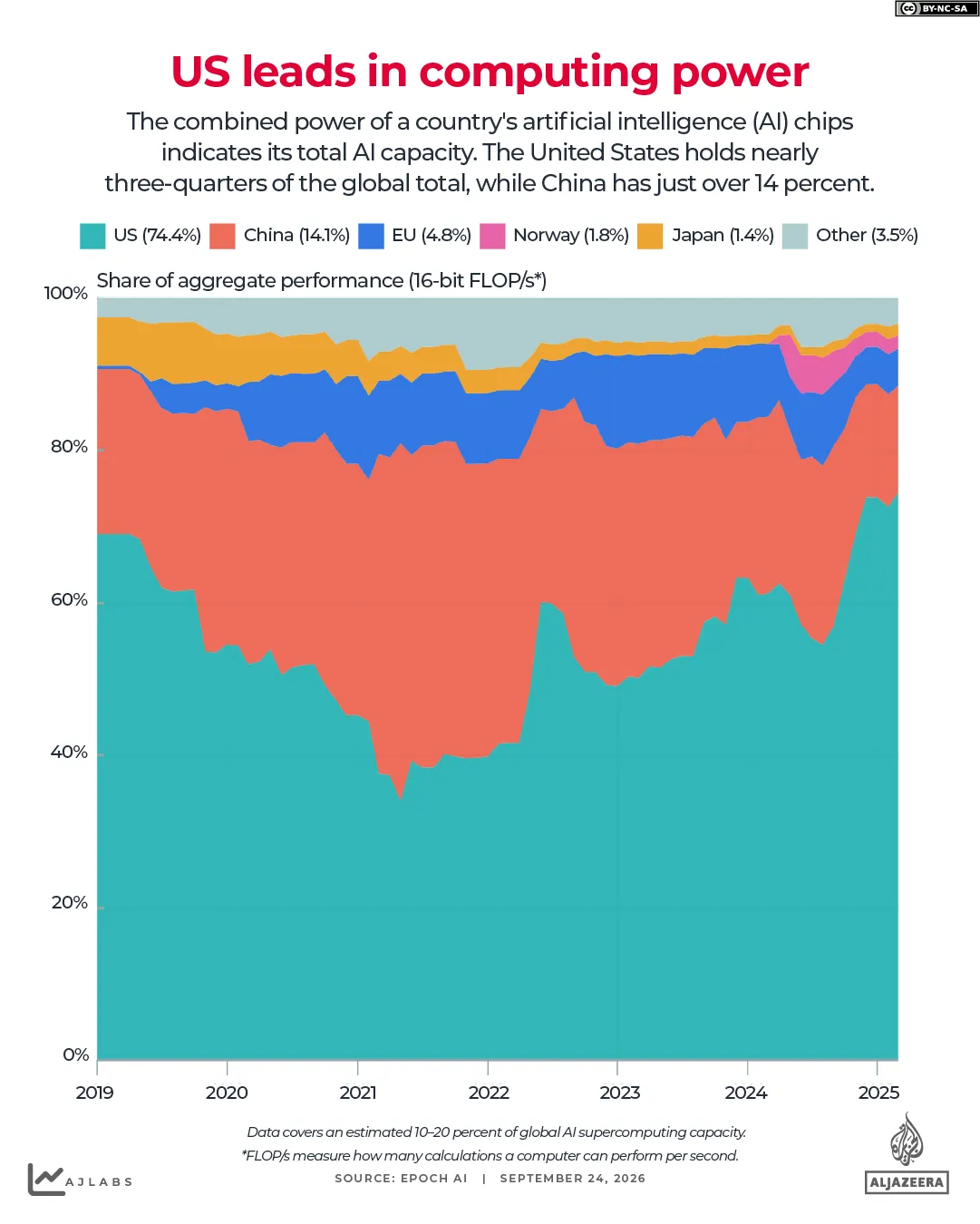


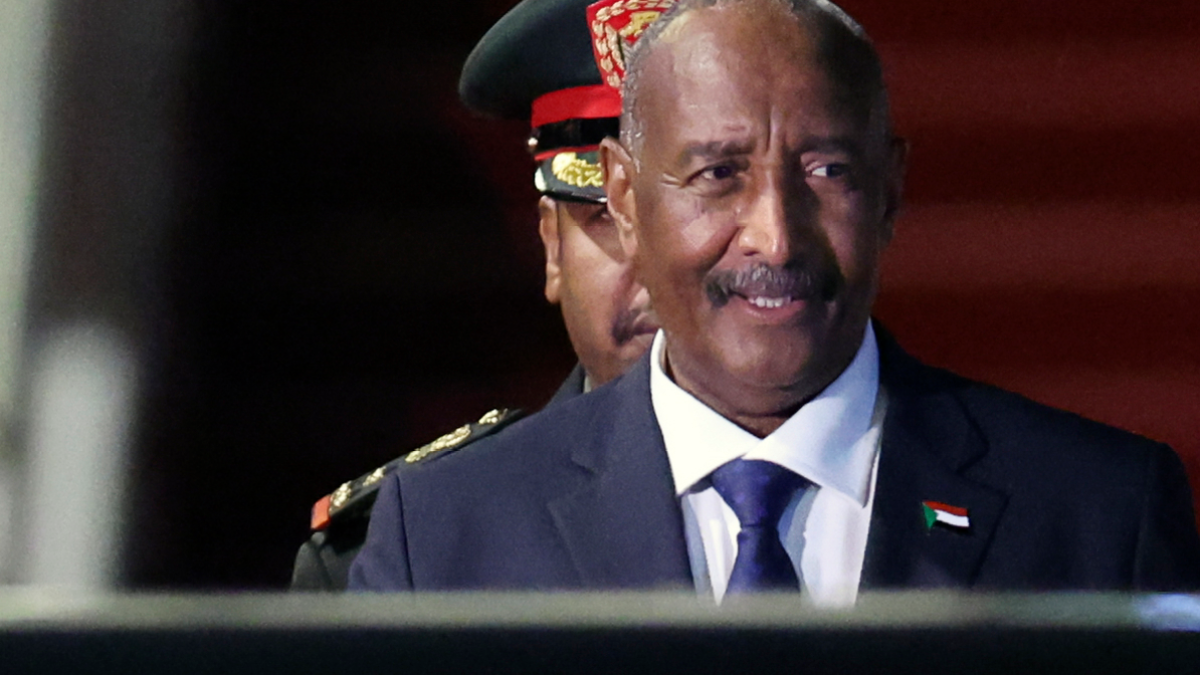
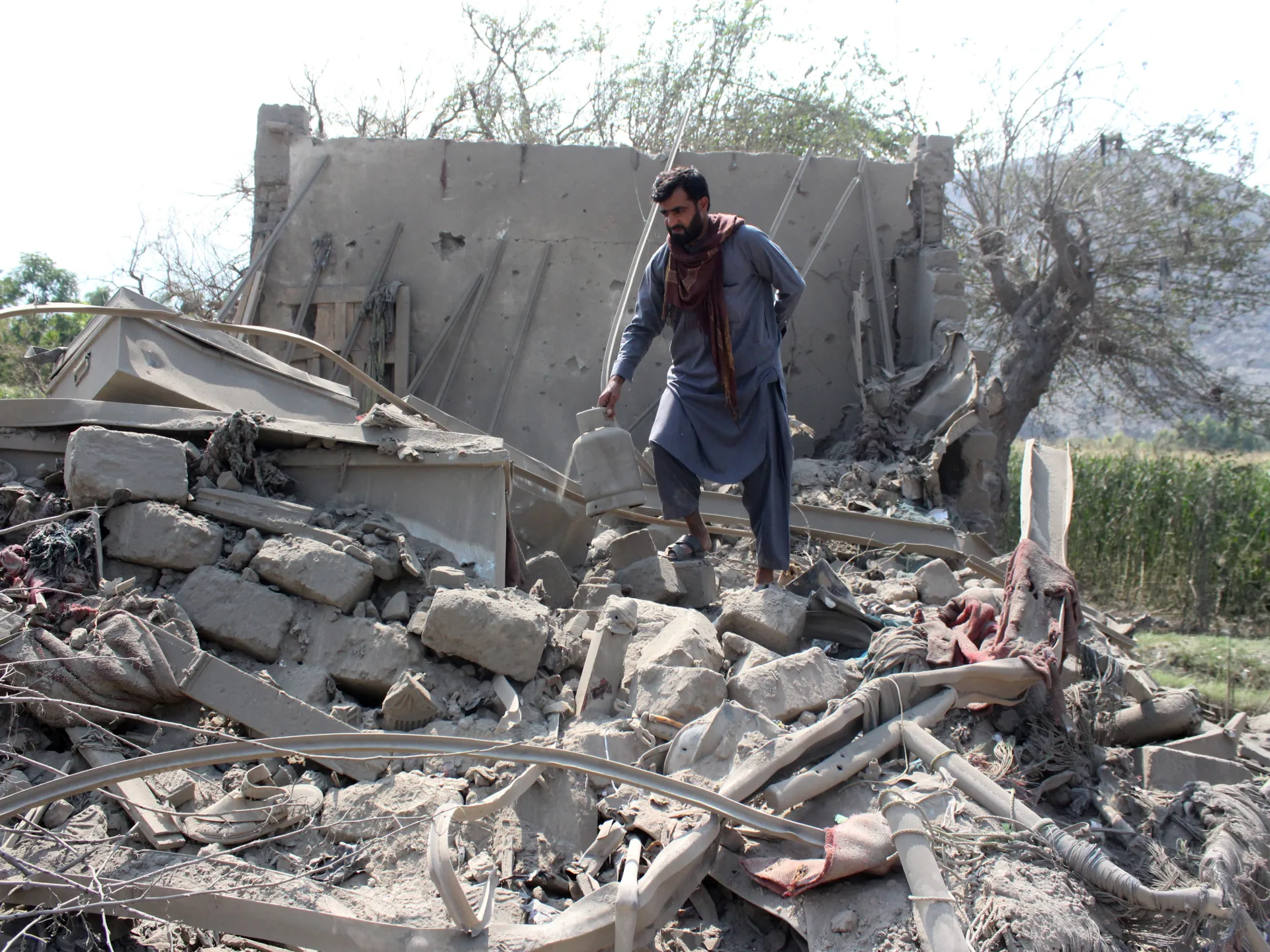
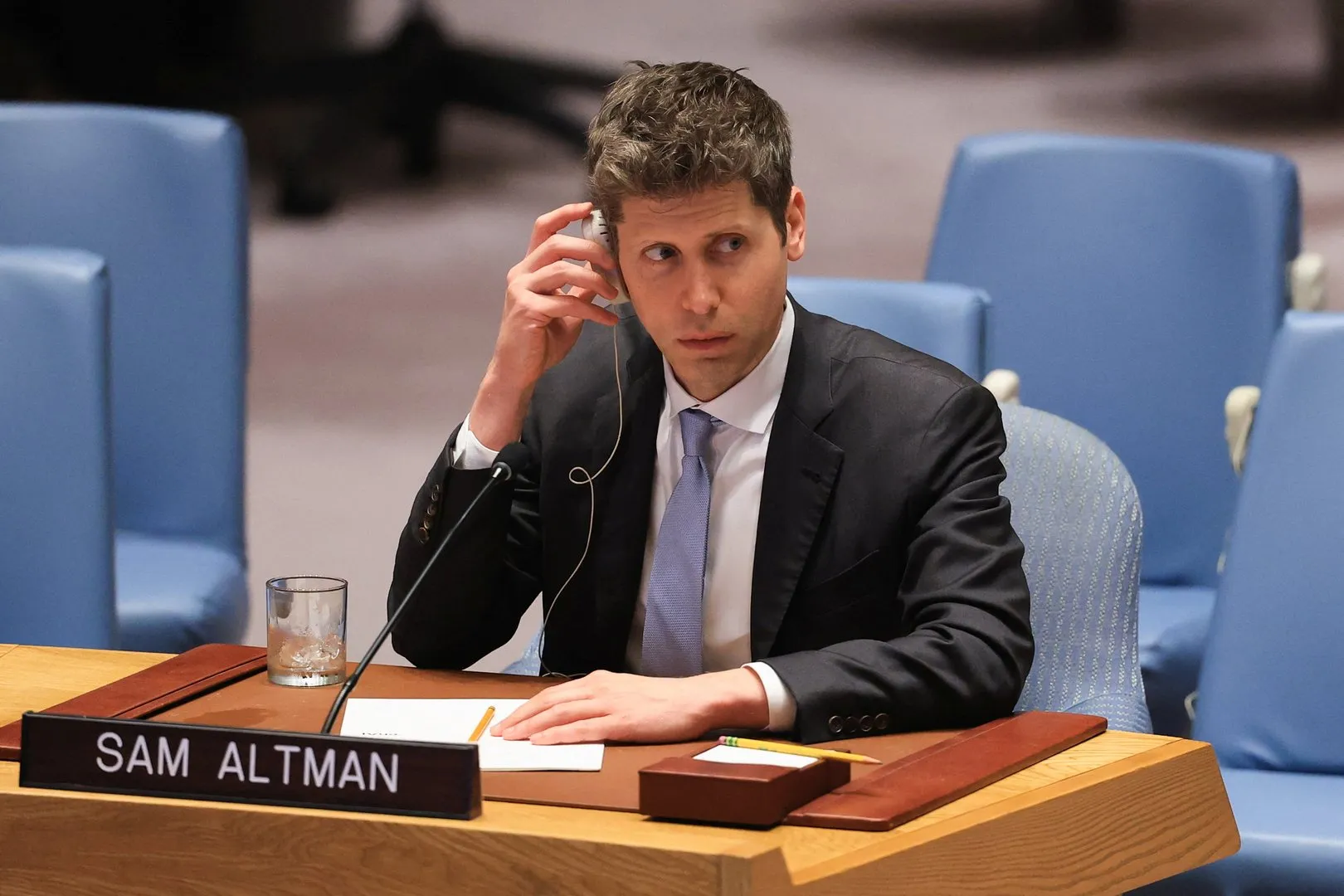
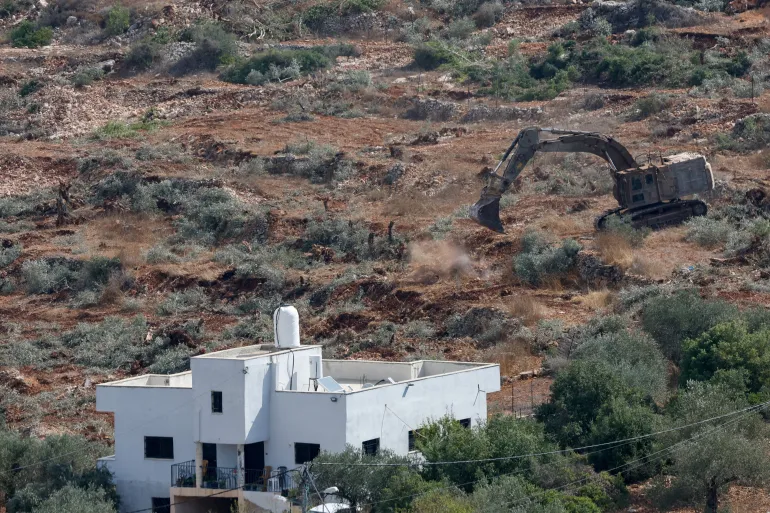
![Israeli military machinery uproots olive trees near the Palestinian village of Deir Nizam near Ramallah, in the occupied West Bank, September 23, 2026 [Mohammed Torokman/Reuters]](https://i0.wp.com/occasionaldigest.com/wp-content/uploads/2026/09/2026-09-23T080030Z_1529122039_RC2VONAGXX8I_RTRMADP_3_ISRAEL-PALESTINIANS-WEST-BANK-OLIVE-TREES-17902.webp?w=640&ssl=1)
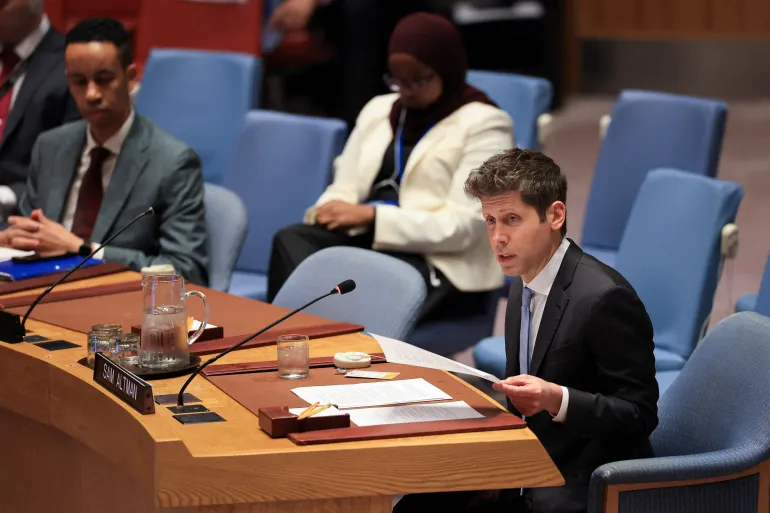
![OpenAI CEO Sam Altman addresses the United Nations Security Council during a session on Artificial Intelligence during the 81st United Nations General Assembly, at UN Headquarters in New York City, US, September 23, 2026 [Brendan McDermid/Reuters]](https://i0.wp.com/occasionaldigest.com/wp-content/uploads/2026/09/2026-09-23T193910Z_1511611083_RC27PNAQNEYE_RTRMADP_3_AI-UN-1790203991.jpg?w=640&ssl=1)