From breaking news to significant developments in politics, business, technology, entertainment, and more, we deliver the stories that shape our global landscape.
Video shows an explosion in the sky above Erbil, in the Kurdish region of northern Iraq, in a suspected drone interception following reports of an unidentified aircraft flying over the city. Earlier, Kuwait reported a drone attack. The IRGC insists Iran has not launched anything during the ceasefire.
Chinese Foreign Minister Wang Yi (R) shake hands with North Korean Foreign Minister Choe Son Hui in Beijing, China, 28 September 2025. Chinese Foreign Minister Wang Yi plans to visit North Korea, 9 April 2026. File. Photo by XINHUA / Yue Yuewei /EPA
April 9 (Asia Today) — North Korea’s continued missile provocations, combined with Chinese Foreign Minister Wang Yi’s visit to Pyongyang, are being interpreted as a coordinated signal aimed at asserting control over developments on the Korean Peninsula.
The move comes as global uncertainty rises amid the ongoing Middle East conflict, with analysts saying Pyongyang is attempting to leverage the situation to elevate its strategic presence.
On Wednesday, North Korea’s state media reported that the country conducted a series of weapons tests over three days from April 6 to 8, including electromagnetic weapon systems, carbon-fiber mock warhead dispersal tests, and combat capability verification of mobile short-range air defense systems.
It also said the cluster warhead of its tactical ballistic missile Hwasong-11A (KN-23) demonstrated the capability to devastate a target area of approximately 6.5 to 7 hectares.
The test is widely interpreted as an effort to enhance strike efficiency by equipping the KN-23 with a cluster-type warhead, which disperses hundreds of submunitions to maximize lethality.
South Korea’s Joint Chiefs of Staff said North Korea launched an unidentified projectile from the Pyongyang area on April 7, but it failed shortly after launch. The following day, Pyongyang fired short-range ballistic missiles twice from the Wonsan area on the country’s east coast.
Drawing a line against Seoul, reinforcing ‘two hostile states’ framework
Experts say the latest series of actions reflects North Korea’s dual-track strategy – outwardly engaging while simultaneously reinforcing military pressure.
Yang Moo-jin, a professor at the University of North Korean Studies, said the tests appear to be part of ongoing missile upgrades tied to the country’s five-year defense development plan announced at the 9th Party Congress.
“At the same time, it is a move to demonstrate control over the Korean Peninsula issue amid heightened global volatility, including the Middle East war,” Yang said.
He added that the actions also signal a clear rejection of what Pyongyang sees as Seoul’s “flexible response” following recent remarks by Kim Yo-jong, and an effort to maintain tensions under its “two hostile states” policy framework.
Im Eul-chul, a professor at Kyungnam University’s Institute for Far Eastern Studies, said North Korea is pursuing a strategy of reinforcing its political narrative through military means.
“While North Korea appears to be pragmatically acknowledging President Lee Jae-myung’s expression of regret, it is simultaneously advancing its physical strike capabilities,” Im said. “This is about asserting dominance through action and force, not words.”
China probes North Korea as Wang Yi returns after 6 years
At the same time, Wang Yi’s visit – his first to North Korea in more than six years – is drawing close attention.
North Korean state media said the visit will last two days beginning April 9, at the invitation of Pyongyang’s foreign ministry.
Yang said China’s move likely reflects an effort to gauge North Korea’s intentions while also positioning itself to manage potential escalation.
“China is trying to explore North Korea’s stance while taking preemptive steps to keep the situation under control,” he said.
He added that North Korea’s recent missile launches underline its continued hardline posture toward the United States, including its refusal to engage in denuclearization talks and its demand to be recognized as a nuclear-armed state.
As tensions persist, analysts say the combination of North Korea’s military signaling and China’s diplomatic engagement highlights a shifting balance of influence on the Korean Peninsula – one increasingly shaped by force, timing and geopolitical opportunity.
North Korean leader Kim Jong Un (2-L) inspecting what appears to be a large reconnaissance drone at an undisclosed location in North Korea. According to state media KCNA, Kim reviewed newly developed reconnaissance and suicide drones by the Unmanned Aeronautical Technology Complex and electronic warfare research group and oversaw their performance test on 25-26 March 2025. Photo by KCNA / EPA
April 9 (Asia Today) — Drones have emerged as a game changer that is reshaping modern warfare, from the Russia-Ukraine war to the U.S.-Israel conflict with Iran in the Middle East.
Scenes of suicide drones costing only a few thousand dollars knocking out tanks worth millions have sent shockwaves through defense officials around the world. As South Korea’s defense industry sweeps global markets with tanks and self-propelled howitzers, a pressing question is coming into focus: How competitive is the country’s drone technology, and is it ready for the next war?
South Korea strong in hardware, weak in software
According to defense experts and military officials, South Korea’s drone platform design capability has already reached a world-class level. Large unmanned aircraft developed by Hanwha Aerospace and Korean Air, including medium-altitude unmanned aerial vehicles, have demonstrated strong global competitiveness.
But the picture looks very different beneath the surface.
Among smaller drone manufacturers, the localization rate for flight controllers and core software – the brains of the drone – remains low. In many cases, companies still modify and use Chinese-made Pixhawk systems despite persistent security concerns. In the supply chain as well, South Korea has been slow to reduce dependence on China for critical parts such as motors, gearboxes and communication modules, raising red flags over supply chain security.
Industry officials say government regulation remains another major obstacle. Complaints that “the technology exists, but there is no market” continue to spread through the sector. Strict testing requirements and rigid procurement procedures have created bottlenecks that keep civilian innovation from quickly turning into military capability.
A defense industry expert said drones that are domestic in name only could remain fully exposed to data theft or remote disablement in wartime. The expert said the localization of core components directly tied to security must be the top priority for South Korea’s drone industry.
South Korea’s drone sector is often described as having a strong information technology foundation, but facing an urgent need to localize critical parts and secure battlefield readiness. Experts say the next decisive turning points will be whether the country can localize motors and transmission systems and take the lead in standards for artificial intelligence-based autonomous flight.
North Korea’s asymmetric drone threat evolves with AI and swarming
While South Korea struggles to close those gaps, North Korea’s drone threat is rapidly evolving beyond simple surveillance.
Analysts say the unmanned aircraft recently unveiled by Pyongyang are advancing toward suicide attack capabilities and AI-based autonomous flight. One military expert, speaking on condition of anonymity, warned that North Korea is trying to overcome its weakness in hardware through three forms of low-cost, high-volume drone warfare backed by AI technology.
The first is the suicide drone, or kamikaze drone, which poses a severe threat in cost-effectiveness because a cheap drone can destroy military assets worth vastly more. The second is the swarm drone tactic, in which dozens of drones attack at the same time to overload radar and air defense networks. The third is the AI-equipped autonomous drone, which can ignore GPS jamming, recognize terrain on its own and press toward its target.
North Korea has also unveiled drones modeled after U.S. systems such as the Global Hawk and Reaper, emerging as a new source of threat. In peacetime, such aircraft could be used for surveillance of the Seoul metropolitan area and frontline units near the Demilitarized Zone. In wartime, they could become a serious asymmetric threat capable of striking mechanized ground forces through low-altitude penetration, even if South Korea and the United States secure control of the skies.
Unhappily for South Korea, the military’s shield against such threats remains in its infancy. Laser-based air defense weapons are being fielded, but experts say they are still not enough to completely stop ultra-small, low-flying drones.
Defense specialists and drone manufacturers say that if South Korea wants to rise as a true drone power, it must now place its bet on AI-based manned-unmanned teaming systems and anti-drone technology.
Modern warfare, they say, is now an age of evolutionary acquisition. Rather than waiting for a weapon to become 100% perfect, militaries must field systems that are 80% ready, learn from feedback and build them into something stronger. If enemy drones are using AI overhead to choose targets while South Korea remains tied down by regulation and dependence on Chinese-made parts, the outcome could become painfully clear.
Experts say the government and military must recognize that drone sovereignty is survival. They argue that a fast track must be opened so civilian innovation can cross immediately into military service before the gap becomes a battlefield liability.
First Lady Melania Trump denied any relationship with convicted sex offender Jeffrey Epstein, calling the allegations “false” in a rare White House address. She said she only had casual contact with Ghislaine Maxwell and urged US Congress to hold public hearings for Epstein’s victims.
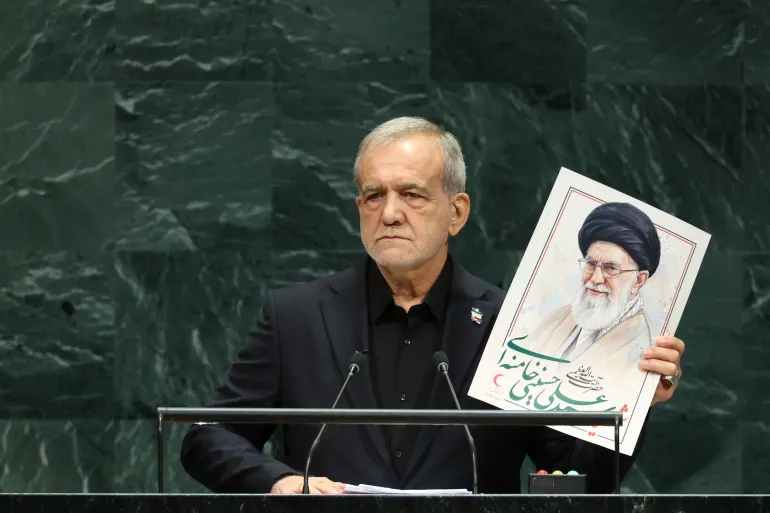
In a statement read out on television, Mojtaba Khamenei said Tehran will ‘demand compensation’ for damages due to the war.
Published On 9 Apr 20269 Apr 2026
Iran’s supreme leader, Mojtaba Khamenei, has claimed a “final victory” in the war with Israel and the United States, as a fragile ceasefire continues to be threatened by Israel’s continuing offensive on Lebanon.
Marking 40 days since his father, Ayatollah Ali Khamenei, was killed in a US-Israeli attack on the first day of the war, Khamenei said in a statement on Thursday that, over the course of the war, Iran had “astonished the world”.
Recommended Stories
list of 3 itemsend of list
Khamenei, 58, who has not been seen or heard from since the war began, said in a statement read out on television that Tehran was not seeking war but was fighting for its legitimate rights.
“We will certainly not leave the criminal aggressors who attacked our country unpunished,” he said, adding that Iran will “demand compensation for all damages, as well as the blood of the martyrs and the wounded”.
Regarding the Strait of Hormuz, which Iran has effectively blockaded since the war broke out on February 28 and has become a key sticking point in US-Iran proposals to end the war, Khamenei said that his country will move towards a “new phase” without elaborating.
On Wednesday, the US and Iran agreed to a two-week ceasefire in a deal mediated by Pakistan to allow for negotiations to take place, after attacks on Gulf nations and the near-closure of the Strait of Hormuz had caused fears of a longer conflict whose impact would be felt long after it ended.
As part of the ceasefire, Iran agreed to allow shipping to pass through the important waterway, with reports that Tehran would impose a toll on ships transiting the strait to fund the country’s reconstruction efforts.
Yet, Khamenei warned that Iran was ready to respond if attacks were to end the pause in hostilities.
“Our hands are on the trigger,” he said.
However, a devastating wave of Israeli air strikes across Lebanon on Wednesday killed more than 300 people, threatening the US-Iran truce amid disagreement on whether Beirut was part of the agreement.
While Iran and Pakistan state that Lebanon was part of the deal, the US and Israel have said that it was not. World leaders have also called for Lebanon to be part of the agreement, urging for peace in the region.
Still, Khamenei said that while they did not start the war, they will not “renounce our legitimate rights under any circumstances, and in this respect, we consider the entire resistance front as a whole,” an apparent reference to Lebanon.
On Saturday, delegations from Iran and the US are expected in Pakistan to hold talks on ending the war.
Washington, DC – Preliminary data from the Organisation for Economic Co-operation and Development (OECD) has found that international development aid from its members dropped by about 23 percent from 2024 to 2025.
Much of that decline was attributed to a major shortfall in funding from the United States.
Recommended Stories
list of 3 itemsend of list
The forum, which includes many of the the largest economies across Europe and the Americas, said on Thursday that the US saw a nearly 57 percent drop in foreign aid in 2025.
The OECD’s four other top contributors — Germany, the United Kingdom, Japan and France — also saw declines in their foreign aid assistance.
The report marked the first time foreign development assistance from all five of the OECD’s top donors simultaneously declined. The total assistance for 2025 totaled only $174.3bn, down from $214.6bn the year before, representing the largest annual drop since the OECD began recording the data.
OECD officials warned the dramatic decrease comes at a time when global economic and food security has been cast into doubt amid the stresses of the US-Israeli war with Iran.
“It’s deeply concerning to see this huge drop in [development funding] in 2025, due to dramatic cuts among the very top donors,” OECD official Carsten Staur said in a statement.
Thursday’s preliminary data shows that only eight member countries met or exceeded their funding from 2024.
“We are in a time of increasing humanitarian needs,” Staur added, citing growing global uncertainty and extreme poverty. “I can only plead that DAC donors reverse this negative trend and start to increase their [assistance].”
The data covers the 34 members of the OECD’s Development Assistance Committee (DAC), which provide the vast majority of global foreign assistance.
But the numbers offer an incomplete picture of global development aid, as it fails to include influential non-DAC members including Turkiye, the United Arab Emirates, Qatar and China.
The data tracked by the OECD distinguishes official development assistance from other forms of aid, including military funds.
US drives ‘three-quarters of the decline’
In its preliminary assessment, the OECD noted that the US “alone drove three-quarters of the decline” in 2025, the first year of President Donald Trump’s second term.
Trump has overseen widespread cuts to the US’s aid infrastructure, including dissolving the US Agency for International Development (USAID) as part of a wider effort to shrink government spending.
The US contributed about $63bn in official development assistance in 2024, which was cleaved to just short of $29bn in 2025, according to OECD.
Research this year from the University of Sydney has suggested that cuts to US funding over the past year have corresponded with an increase in armed conflict in Africa, as state resources grow more scarce.
Other experts have noted that the slashed assistance is likely to prompt upticks in cases of HIV-AIDS, malaria and polio.
Analysts at the Center for Global Development have projected that the US cuts were linked to between 500,000 and 1,000,000 deaths globally in 2025 alone. A recent article published in the medical journal The Lancet found that a “continuation of current downward trends” in development funding could lead to over 9.4 million new deaths by 2030.
The Trump administration, meanwhile, has maintained it is transforming, not eschewing, the US aid model.
In recent months, it has struck a handful of bilateral assistance agreements with African countries that it says are in line with its “America First” agenda.
But while the details of such deals have not been made public, critics note that some negotiations appear to have involved requests for African countries to share mineral access or health data.
‘Turning their backs’
Oxfam, a confederation of several non-governmental aid organisations, was among those calling on wealthy countries to change course following Thursday’s report.
“Wealthy governments are turning their backs on the lives of millions of women, men and children in the Global South with these severe aid cuts,” Oxfam’s Development Finance Lead Didier Jacobs said in a statement.
Jacobs added that governments are “cutting life-saving aid budgets while financing conflict and militarisation”.
As an example, he pointed to the US, where the Trump administration is expected to request between $80bn and $200bn for the US-Israeli war with Iran, which has currently been paused amid a tenuous ceasefire.
The administration has separately requested a historic $1.5 trillion for the US military for fiscal year 2027.
“Governments must restore their aid budgets and shore up the global humanitarian system that faces its most serious crisis in decades,” Jacobs said.
“Mexico must guarantee its sovereignty. And a fundamental part of sovereignty is energy sovereignty,” Mexican President Claudia Sheinbaum has reiterated. Photo by Isaac Esquivel/EPA
April 9 (UPI) — Mexican President Claudia Sheinbaum signaled a major shift in the country’s energy policy aimed at reducing its dependence on natural gas imports from the United States, including a possible reopening of hydraulic fracturing under stricter controls.
“Mexico must guarantee its sovereignty. And a fundamental part of sovereignty is energy sovereignty,” Sheinbaum said Thursday during a press conference.
The president said her administration is exploring new domestic production pathways, including using fracking, a technique she previously opposed due to environmental concerns.
Sheinbaum described the move as a “responsible decision” to be carried out under “strict scientific oversight” with the support of a specialized committee.
The proposal centers on creating a technical and scientific panel of experts from the National Autonomous University of Mexico and the National Polytechnic Institute.
The group will have two months to develop a protocol for extracting unconventional reserves, while minimizing environmental impact and prioritizing using treated or non-potable water.
The initiative marks a departure from the policy of former President Andrés Manuel López Obrador, who maintained a strict ban on fracking on environmental grounds.
Mexico currently imports about 75% of the natural gas it consumes, mostly from Texas, exposing the country to price volatility and geopolitical risks that could affect the National Electric System.
“We cannot achieve energy sovereignty if we depend on a valve that can be shut outside our borders,” Sheinbaum said.
Government projections estimate gas demand could rise by about 30% by the end of the administration, driven by new power plants, industrial expansion, petrochemicals and fertilizer production, according to local media reports.
Energy Secretary Luz Elena González Escobar outlined a plan Wednesday to strengthen energy security by increasing domestic gas production and reducing reliance on imports.
She also said the government will accelerate its energy transition plan, aiming for renewable sources to account for 38% of electricity generation by 2030 while reducing the share of fossil fuels.
The strategy envisions starting unconventional extraction by late 2027, with a goal of increasing production to more than 8 billion cubic feet per day by 2035 from about 2.3 billion cubic feet.
The administration has invited private sector participation in renewable energy projects and combined-cycle power plants under a mixed model in which the state, through the Federal Electricity Commission and Pemex, retains 54% of generation and strategic control, leaving 46% to private investment.
Officials say the model is designed to attract capital for storage and extraction infrastructure that the public sector cannot fully finance in the short term.
Energy analysts say the policy shift responds in part to nearshoring trends, as multinational companies relocating operations to Mexico require reliable and affordable electricity supply.
The proposal has drawn criticism from environmental groups, which called it a “green setback” and warned that fracking could threaten aquifers in regions already facing severe water stress.
People flee from areas the Israeli army has warned could come under attack in Beirut, Lebanon, on Wednesday. Photo by Wael Hamzeh/EPA
BEIRUT, Lebanon, April 9 (UPI) — Lebanese officials engaged Thursday in intensive diplomatic contacts to confirm the country’s inclusion in the Pakistan-mediated U.S.-Iran cease-fire and refusing to let Tehran negotiate on their behalf.
The initiative comes a day after Israel carried out large-scale air strikes on Beirut and across Lebanon.-
Prime Minister Nawaf Salam called on his Pakistani counterpart, Shehbaz Sharif, during a telephone call to emphasize that the cease-fire achieved between the United States and Iran on Wednesday “must include Lebanon to prevent a recurrence of the Israeli aggressions.”
Sharif condemned the recent Israeli attacks on Lebanon and affirmed that Pakistan “is working to ensure peace and stability” in the country.
Lebanese President Joseph Aoun urged Western and Arab officials he had contacted to give his country “an opportunity — just as was given to the United States and Iran — to reach a cease-fire and move toward negotiations.”
Speaking during a Cabinet meeting, Aoun, who last month proposed direct talks with Israel starting with a truce, also called for exerting the necessary pressure to ensure that “Lebanon becomes part of the cease-fire agreement, allowing us to proceed with negotiations.”
Israel has rejected the proposal for direct talks and inclusion of Lebanon in the two-week cease-fire, which is said to call for a cessation of hostilities across multiple fronts, Lebanon among them, while pledging to continue strikes against Hezbollah.
Aoun refused “anyone [who] negotiates on our behalf,” a clear reference to Iran, which threatened to withdraw from the temporary cease-fire with the United States if Israel continues to attack Lebanon.
“We have the ability and the means to negotiate ourselves, and therefore we do not want anyone to negotiate for us. This is something we do not accept,” Aoun said.
In separate comments, Aoun said the only solution is to achieve a cease-fire, followed by direct negotiations with Israel.
Ali Fayyad, A Hezbollah member in Parliament, called on the Lebanese government to “insist on a cease-fire as a prerequisite before moving to any subsequent step.”
Fayyad reiterated his group’s rejection of any direct negotiations with Israel, requesting Israeli withdrawal from south Lebanon, cessation of Israeli attacks and return of the displaced to their villages and towns.
Iranian President Masoud Pezeshkian said in a post on X that his country “will never abandon its Lebanese brothers and sisters” after Israel’s Wednesday strikes on residential areas in Beirut and other Lebanese areas killed more than 200 people and injured over 1,000.
Pezeshkian said the Israeli attacks “blatantly violate the initial cease-fire” and that “such actions signal deception and non-compliance, rendering negotiations meaningless. Our hands remain on the trigger.”
While Pakistan has confirmed that Lebanon is included in the cease-fire it mediated, Israel and the United States have claimed otherwise.
The Lebanese Cabinet decided to file an urgent complaint to the U.N. Security Council regarding the “dangerous escalation” of Israeli attacks that resulted in a large number of civilian casualties and came “in defiance of all international and regional efforts to halt the war in the region.”
It also called on the Army and security forces to immediately take action to strengthen the state’s full authority over Beirut, ensuring that weapons are restricted to legitimate forces and the laws are strictly enforced.
The measure specifically targets Hezbollah, which has refused to fully disarm after its war with Israel that began Oct. 8, 2023, in support of Gaza — a conflict that was supposed to end with the Nov. 27, 2024, cease-fire, which Israel ignored, continuing its strikes against the militant group.
It also came after Israel hit buildings, apartments and hotel rooms in Beirut where Hezbollah and Islamic Revolutionary Guards Corps allegedly were hiding, risking civilian lives.
While Hezbollah announced Thursday that it resumed firing missiles and rockets on settlements in northern Israel for its violation of the truce with Iran, Israeli Defense Minister Israel Katz said the group was “desperate for a cease-fire.”
Katz was quoted by Israeli English-language websites as saying that 200 Hezbollah members were killed in Wednesday’s attacks, bringing the number of “those eliminated” during the new round of fighting since last March to 1,400.
“Hezbollah is stunned by the scale of the blow,” he said.
The Israeli Army said that among those targeted Wednesday in an air strike on a residential building in Beirut was Ali Youssef Harshi, the personal secretary and nephew of Hezbollah Secretary-General Naim Qassem.
It said that Maher Qasem Hamdan, whom it described as the commander of the Hezbollah-affiliated “Lebanese Resistance Brigades,” and seven others also died in a strike on the port city of Sidon in southern Lebanon.
Meanwhile, Israel sparked a new wave of panic by issuing evacuation orders for residents in Beirut’s southern suburbs and surrounding areas, forcing thousands, including already displaced people, to flee in haste.
Early Thursday, rescue teams continued searching in two targeted buildings, one of which collapsed, while many families tried to locate loved ones who have been unaccounted for since Wednesday.
According to medical sources at the government-run Rafik Hariri University Hospital, about 95 bodies, some mutilated, were brought to the hospital and were awaiting identification by their families.
While the health ministry reported Wednesday night 112 killed and 837 injured, the General Directorate of Civil Defense said 254 people were killed and 1,165 wounded, adding that the toll in Beirut reached 92 dead and 742 injured.
April 9 (UPI) —Disney plans to lay off up to 1,000 employees and cut their positions, focusing largely on its marketing department.
The Wall Street Journal first reported Thursday, with CNBC and Variety also reporting that the mass layoffs will occur in the coming weeks. It is the first big move by the media giant under the leadership of new CEO Josh D’Amaro, who took the reins in March.
Disney’s marketing department was consolidated earlier this year under Asad Ayaz, its new chief marketing and brand officer. Ayaz, who was named to the role in January, oversees marketing for all of Disney.
Former CEO Bob Iger was still at the helm when Disney restructured its marketing department, bringing marketing for all its divisions together for the first time in the company’s history.
The last time Disney conducted mass layoffs was in 2023 when it cut about 7,000 employees.
Disney employs about 231,000 people, either full-time or part-time. About 172,000 of its employees are based in the United States.
Disney’s stock climbed to $99.18 per share on Wednesday, nearly a $3 increase over Tuesday. It is up about 3% over a week ago, though it slid down by about 0.25% for the day on Thursday morning.
Secretary of Defense Pete Hegseth speaks during a press briefing at the Pentagon on Wednesday. Yesterday, the United States and Iran agreed to a two-week ceasefire, with the U.S. suspending bombing in Iran for two weeks if the country reopens the Straight of Hormuz. Photo by Bonnie Cash/UPI | License Photo
Traders work on the floor of the New York Stock Exchange before the closing bell at the NYSE on Wall Street on March 3, in New York City. The U.S. Bureau of Economic Analysis revised the rate of economic growth for the fourth quarter of 2025 down Thursday due largely to slower-than-expected investment. Photo by John Angelillo/UPI | License Photo
April 9 (UPI) — The U.S. Bureau of Economic Analysis revised the rate of economic growth for the fourth quarter of 2025 down Thursday due largely to slower-than-expected investment.
The annual rate of growth for gross domestic product was revised downward from 0.7% to 0.5% to end 2025. The Commerce Department said the revision primarily reflects a downward revision to investment.
“Within investment, the downward revision was led by private inventory investment, particularly wholesale trade, based on updated U.S. Census Bureau inventory data,” Thursday’s GDP report said.
Thursday’s report is the third estimate of economic growth for the fourth quarter of 2025. It was slated to be published on March 27 but was delayed due to the government shutdown in October and November.
Gains in wholesale trade, information services and healthcare were offset by declines in the federal government and nondurable goods manufacturing. Private service-producing industries tallied a 2.3% gain in real value added to the GDP while the federal government’s contribution decreased by 7.8%.
Thirty-five states posted gains to GDP, led by North Dakota at 3.8%. The District of Columbia, where many federal employees are located, had a decrease of 8.3%.
North Dakota was also one of three states with a decrease in personal incomes, down 4%. Personal incomes also declined in South Dakota by 2% and Iowa by 1.5%.
Secretary of Defense Pete Hegseth speaks during a press briefing at the Pentagon on Wednesday. Yesterday, the United States and Iran agreed to a two-week ceasefire, with the U.S. suspending bombing in Iran for two weeks if the country reopens the Straight of Hormuz. Photo by Bonnie Cash/UPI | License Photo
The Strait of Hormuz, which links the Gulf to the Gulf of Oman, has held global attention since Israel and the US began their war on Iran in February.
Until fighting began, the narrow channel, through which 20 per cent of the world’s oil and liquefied natural gas (LNG) supplies are shipped from Gulf producers in peacetime, remained toll-free and safe for vessels. The strait is shared by Iran and Oman and does not fall into the category of international waters.
Recommended Stories
list of 4 itemsend of list
After the US and Israel began strikes, Iran retaliated by attacking “enemy” merchant ships in the strait, effectively halting passage for all, stranding shipping, and creating one of the worst-ever global energy distribution crises.
Tehran continued to refuse to re-open the strait to all traffic at the start of this week, despite US President Donald Trump’s threats to bomb Iran’s power plants and bridges if it did not relent. Trump backed away from his threat on Tuesday night when a two-week ceasefire, brokered by Pakistan, was declared.
That followed a 10-point peace proposal from Iran that Trump described as a “workable” basis on which to negotiate a permanent end to hostilities.
As part of the truce, Tehran has now issued official terms it says will guide its control of the Strait going forward. The US has not directly acknowledged the terms ahead of talks set to begin in Islamabad on Friday. However, analysts say Tehran’s continued control will be unpopular with Washington, as well as other countries.
During the crisis, only a few ships from specific countries deemed friendly to Iran and those which pay a toll have been granted safe passage. At least two tolls for ships are believed to have been paid in Chinese yuan, in what appears to be a strategy to weaken the US dollar, but also to avoid US sanctions. China, which buys 80 percent of Iran’s oil, already pays Tehran in yuan.
Here’s what we know about how shipments will work from now on:
(Al Jazeera)
Who is controlling the strait now?
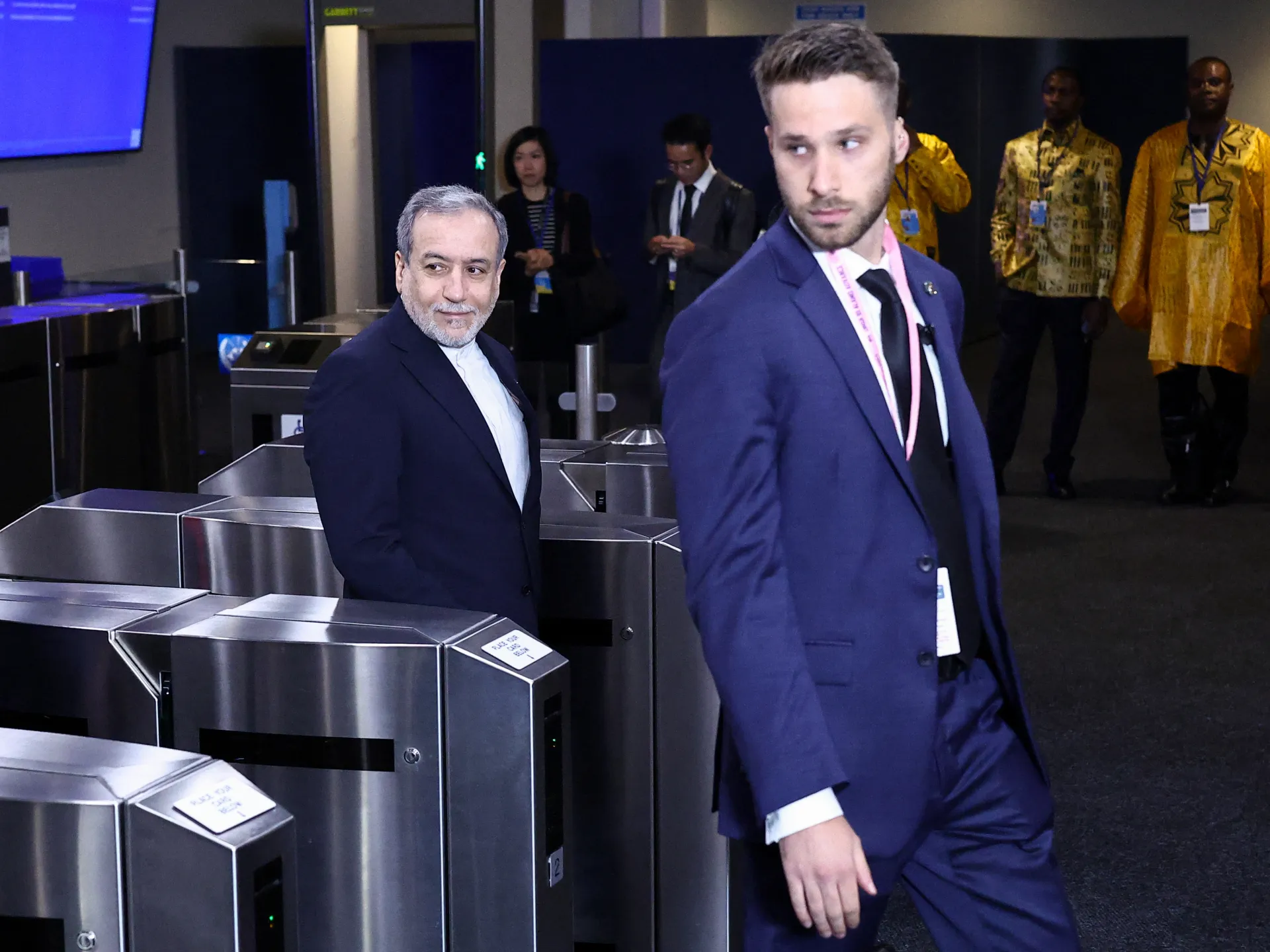
On Tuesday, Iran’s Foreign Minister Abbas Aragchi said Iran would grant safe passage through the strait during the ceasefire in “coordination with Iran’s Armed Forces and with due consideration of technical limitations”.
On Wednesday, the Islamic Revolutionary Guard Corps (IRGC) released a map of the strait showing a safe route for ships to follow. The map appears to direct ships further north towards the Iranian coast and away from the traditional route closer to the coast of Oman.
In a statement, the IRGC said all vessels must use the new map for navigation due to “the likelihood of the presence of various types of anti-ship mines in the main traffic zone”.
Alternative routes through the Strait of Hormuz have been announced by Iran’s Islamic Revolutionary Guard Corps (IRGC), providing new entry and exit pathways for maritime traffic [Screen grab/ Al Jazeera]
It is unclear whether Iran is collecting toll fees during the ceasefire period.
However, Trump said on Tuesday the US would be “helping with the traffic buildup” in the strait and that the US army would be “hanging around” as the negotiations go on.
The Strait will be “OPEN & SAFE” he posted on his Truth Social media site on Thursday, adding that US troops would not leave the area, and threatening to resume attacks if the talks don’t go well.
It’s not known to what extent US troops are directing what happens in the strait now.
Delhi-based maritime analyst C Uday Bhaskar told Al Jazeera that there is a lot of “uncertainty” about who can sail through the strait, and that only between three and five ships have transited since the war was paused.
How does Iran’s 10-point plan affect the Strait?
Among Tehran’s main demands listed on its 10-point plan are that the US and Israel permanently cease all attacks on Iran and its allies – particularly Lebanon – lift all sanctions, and allow Iran to retain control over Hormuz. The plan has not been fully published but is understood to be a starting point for talks.
Iranian media say Iran is considering a plan to charge up to $2m per vessel to be shared with Oman on the opposite side of the strait. Other reports suggest Iran could charge $1 per barrel of oil being shipped.
Revenues raised would be used to rebuild military and civilian infrastructure damaged by US-Israeli strikes, Tehran said.
Oman has rejected the idea. Transport minister Said Al-Maawali said on Wednesday that the Omanis previously “signed all international maritime transport agreements” which bar taking fees.
What does international law say about tolls on shipping?
Critics of Iran’s plan to charge tolls say it violates international law guiding safe maritime passage, and should not be part of a final ceasefire agreement.
The United Nations Convention on the Law of the Sea (UNCLOS) says levies cannot be charged on ships sailing through international straits or territorial seas.
The law allows coastal states to collect fees for services rendered, such as navigation assistance or port use, but not for passage itself.
Neither the US nor Iran has ratified that particular convention, however.
Even if they had, there could be ways to get around this law anyway. Analyst Bhaskar told Al Jazeera that if Iran instead charged fees to de-mine the strait and make it safe for passage again, that could be allowable under maritime laws.
There is no precedent in recent history of countries officially taxing passage through international straits or waterways.
In October 2024, a United Nations Security Council report alleged that the Iran-backed Houthis in Yemen were collecting “illegal fees” from shipping companies to allow vessels to pass through the Red Sea and the Bab-el-Mandeb strait, where it was targeting ships linked to Israel during the Gaza war.
Last week, a top adviser to Supreme Leader Mojtaba Khamenei suggested the Houthis could shut the Bab al-Mandeb shipping route again in light of the war on Iran.
(Al Jazeera)
How might countries react to a Hormuz toll?
Tolls for passage through the Strait of Hormuz would likely most affect oil and gas-producing countries in the Gulf, but ripple effects will spread to others as well, as the current supply shocks have shown.
Gulf countries, which issued statements calling for the reopening of the passage and praising the ceasefire on Wednesday, would also face a continuing degree of uncertainty, analysts say, as Iran could again disrupt flows in the future.
Before the ceasefire was announced, Bahrain had already proposed a resolution at the UN Security Council calling on member states to coordinate and jointly reopen the passage by “all necessary means”. It was backed by Qatar, the UAE, Saudi Arabia, Kuwait and Jordan. On April 7, 11 of 15 UNSC members voted in favour of that resolution.
But Russia and China vetoed the resolution, saying it was biased against Iran and did not address the initial strikes on Iran by the US and Israel.
Beyond the region, observers say the US is unlikely to accept indefinite toll demands by Iran as part of the negotiations expected to begin on Friday.
A toll to pass through the Strait of Hormuz “is not going to go down well with President Trump and his expectations that the strait should be open for everyone”, Amin Saikal, a professor at the Australian National University, said.
Other major powers have also voiced opposition. Ahead of the ceasefire, Britain had begun discussions with 40 other countries to find a way to reopen the strait.
Practical realities in the strait might see a different scenario play out with ship owners losing millions each day their vessels remain stranded seeking to get them out quickly and undamaged experts say. They are more likely to comply with Iran, at least for now.
“If I were the owner of a VLCC [very large crude carrier] which weighs about 300,000 tonnes, whose value could be a quarter billion dollars…I would believe the Iranians if they said we have laid mines,” Bhaskar said.
Fuel prices a gas station in Prague after the government of the Czech Republic responded to soaring oil prices with a cap on fuel distributors’ margins and a cut in diesel excise duty. A daily cap on maximum diesel and petrol prices which retailers must adhere to was due to follow. Photo by Martin Divisek/EPA
April 9 (UPI) — Oil prices were on the rise again on Thursday amid concerns a “fragile” cease-fire between the United States, Iran and Israel could unravel over continued fighting in Lebanon and few signs the Strait of Hormuz was about to reopen to shipping.
The Brent crude and West Texas Intermediate international benchmarks were both trading around 4% higher at $98.62 and $99.94 a barrel respectively in early afternoon trade on Thursday, after prices plunged Wednesday on the announcement of a two-week cessation of hostilities.
Share prices in Asia also fell overnight with the Nikkei 225 in Tokyo giving up some of the gains made on Wednesday with European stocks following suit when exchanges opened Thursday morning.
The market reacted to warnings from both sides that they were prepared to resume military action if the other did not adhere to truce terms neither party accepts are the same, with Tehran saying Israeli strikes on Lebanon were a “grave violation” and Washington saying Iran must comply with the “real” agreement.
There was also growing concern over the reopening of the Hormuz Strait, a key term of the agreement which must be implemented to ease the disruption to global oil supply that has sent prices soaring.
Iranian Deputy Foreign Minister Saeed Khatibzadeh told BBC Radio on Thursday that Iran would “provide security for safe passage” through the sea lane via which around a fifth of the world’s oil and gas is exported, but only “after the United States withdraws this aggression” — an apparent reference to the Israeli strikes in Lebanon.
He stressed that while the 21-mile wide strait had been “open for millennia” prior to the war, it was not international waters and that shipping only transited on the goodwill of Iran and Oman” — the sovereign countries on either side of the channel.
Khatibzadeh dodged questioning over how safe vessels would be and whether they would be required to pay tolls, saying Tehran wanted a “peaceful” arrangement, but that it would not permit “misuse” of the Gulf by warships.
However, London-headquartered shipping brokerage SSY Global said the Iranian navy had issued a warning to ships in the Persian Gulf that any vessels attempting to transit the Strait of Hormuz without permission “will be targeted and destroyed.”
Announcing the cease-fire on Tuesday, U.S. President Donald Trump said the deal hinged on the “complete, immediate, and safe opening” of the strait, a point pressed home on Wednesday by U.S. Vice President JD Vance, who said while there were signs the process was starting Iran was required to fully open the strait.
“The president is very, very clear the deal is a cease-fire, a negotiation. That’s what we give, and what they give is that straits are going to be reopened. If we don’t see that happening, the president is not going to abide by our terms if the Iranians are not abiding by their terms.”
The White House announced Wednesday that Vance would lead the U.S. negotiating team at talks due to get underway in Islamabad, Pakistan, on Saturday.
Khatibzadeh said Mohammad Bagher Ghalibaf, speaker of the Iranian parliament, would head up the Iranian side.
The talks will try to reconcile two very different visions of the way forward — a 15-point U.S. plan and a 10-point Iranian plan — with Iran’s nuclear program which the Americans want totally scrapped but Iran insists on retaining for civilian energy purposes — topping the agenda.
Secretary of Defense Pete Hegseth speaks during a press briefing at the Pentagon on Wednesday. Yesterday, the United States and Iran agreed to a two-week ceasefire, with the U.S. suspending bombing in Iran for two weeks if the country reopens the Straight of Hormuz. Photo by Bonnie Cash/UPI | License Photo
North Korea said Thursday it conducted a series of weapons tests this week, including missiles tipped with a cluster-bomb warhead and electronic warfare systems. This January file photo shows the North’s test-fire of a multiple-rocket launcher system. File Photo by KCNA/EPA
SEOUL, April 9 (UPI) — North Korea said Thursday that it carried out a series of weapons tests this week, including a tactical ballistic missile with a cluster-bomb warhead as well as electromagnetic and other electronic warfare systems.
The tests, conducted from Monday to Wednesday, were part of efforts to assess the performance and battlefield use of several new weapons systems, the North’s official Korean Central News Agency said.
KCNA said that its surface-to-surface Hwasong-11Ka missile was tested with a cluster-bomb payload capable of striking targets over a wide area, claiming it could “reduce to ashes” targets spanning roughly 16 to 17.2 acres.
The Hwasong-11 missile, also known as the KN-23, is a highly maneuverable short-range ballistic missile similar to Russia’s Iskander.
The report came one day after South Korea’s Joint Chiefs of Staff said it detected multiple missile launches on Wednesday from the coastal Wonsan area toward the East Sea. The military also reported the launch of an unidentified projectile from the Pyongyang area on Tuesday.
In addition to the missile tests, North Korea said it conducted trials of an electromagnetic weapon system and carbon-fiber bombs, as well as a mobile short-range anti-aircraft missile system.
The tests were overseen by Kim Jong Sik, a senior official involved in the North’s missile development programs.
Kim said the electromagnetic weapon and carbon-fiber bomb are “special assets of strategic nature” that can be combined with various military systems.
Carbon-fiber bombs — also known as graphite bombs— are designed to disable electrical grids by dispersing fine conductive filaments to short-circuit power infrastructure, causing widespread outages without physical destruction.
Electromagnetic weapons, meanwhile, emit high-energy pulses that can disrupt or damage electronic systems, including communications networks, radar and computing infrastructure.
KCNA also said engineers conducted a test to measure the “maximum workload” of a missile engine using low-cost materials.
The reported mix of electronic weapons systems and cost-efficient production methods points to ongoing efforts to modernize and expand the North’s hybrid warfare capabilities.
The tests came after South Korean President Lee Jae Myung on Monday expressed regret over unauthorized drone incursions into the North.
His remarks drew a rare response from Pyongyang, as Kim Yo Jong, the influential sister of leader Kim Jong Un, described Lee as “frank and broad-minded.”
Seoul’s Unification Ministry called the exchange a positive signal, saying it represented “meaningful progress toward peaceful coexistence on the Korean Peninsula.”
North Korea’s first vice foreign minister, Jang Kum Chol, later rejected that interpretation, calling it a “hope-filled dream reading” and insisting the South remains “the enemy state most hostile to the DPRK.”
The Democratic People’s Republic of Korea is the official name of North Korea.
A South Korean military official said the allies are continuing to track developments in the North’s weapons programs.
“We maintain the ability and readiness to overwhelmingly respond to any provocation under a solid South Korea-U.S. joint defense posture,” Jang Do-young, public affairs director of the Joint Chiefs of Staff, said at a press briefing Thursday.
Defense Minister Ahn Gyu-back, seen here in a plenary session at the National Assembly, said Thursday that his ministry plans to reduce the number of troops deployed to border units “gradually” by 2040. Photo by Yonhap
Defense Minister Ahn Gyu-back said Thursday that his ministry plans to reduce the number of troops deployed to border units “gradually” by 2040, dismissing concerns about a sharp cut in such personnel in a short period of time.
Earlier this week, Ahn told reporters that the defense ministry plans to cut the number of troops deployed at general posts near the inter-Korean border to some 6,000 from the current 22,000 by replacing them with surveillance systems equipped with artificial intelligence technology.
His remarks spawned concerns that the number of troops at border units could be sharply reduced in a short period of time, causing a possible vacuum in the military’s surveillance capabilities.
“(The planned reduction in troops) was a goal to be executed by the year 2040 after phased review,” Ahn wrote in a Facebook post.
“(The plan) should not be translated with the same alarm that suggests (our) troops are shrinking tomorrow,” he said.
The defense chief also said the efficient and scientific management of surveillance operations in border units is a “mandate, not a choice” in a time of sweeping demographic changes. South Korea braces for a drastic population decline, which signals a fall in military manpower resources, in a country where all able-bodied men are mandated to serve at least 18 months.
Ahn earlier stressed the need to revamp the structure of the armed forces, such as introducing a selective conscription system, as part of efforts to tackle the country’s demographic challenges.
Copyright (c) Yonhap News Agency prohibits its content from being redistributed or reprinted without consent, and forbids the content from being learned and used by artificial intelligence systems.
We are Iranians, witnessing the failure of a thuggish logic practised by the United States and Israel, which operates on a single, crude premise: that enough pain can bend any nation to their imperial designs.
The US-Israel axis has long believed that force and coercion would eventually compel Iranians to abandon their sovereignty and accept the leash. It has failed. By refusing to surrender, Iranians have turned a lonely struggle for survival into a universal symbol of resistance — a testament to the endurance of the human spirit.
For weeks, we have watched the predictable mechanics of an empire trying to drain a people’s will. We have seen the familiar script of demonisation followed by the machinery of industrial slaughter. Then, we saw America’s “commander-in-chief” issue a threat that defied decency and defiled statecraft.
US President Donald Trump did not just threaten a government or a military. He threatened to end “civilisation” in Iran.
It was a monstrous decree. It was also a transparent one. This was the desperate act of a desperate man. It was the foul howl of a leader who knew he had lost a war.
So, Trump resorted to the “madman theory” of diplomacy, hoping that by appearing unhinged and capable of infinite destruction, he could scare a proud country into capitulation.
He failed. The prospect of annihilation was meant to trigger a collapse. It was meant to prompt the surviving leadership in Tehran to flee and panicked Iranians to yield.
The American-Israeli axis has made a fatal miscalculation. It remains wedded to the discredited conceit that resolve is a commodity to be bought or broken.
Instead, Iran and Iranians stood fast. The “madman” in the White House was obliged to negotiate with an adversary he claimed had already been defeated.
The moving measure of Iran’s success is found in that defiance. The Iranian people could have wilted, succumbed under the burden of such military, economic and psychological terror.
But Iranians fought back. They proved that you cannot bomb a civilisation into oblivion, nor can you erase a history that spans five millennia with a venomous post on social media.
Iran is prevailing. It is winning a war of attrition militarily, strategically, politically and diplomatically. Iran is winning because it understood its enemies’ limits better than they understood themselves.
Iran is winning strategically since it refuses to fight the war its enemies prepared for. It does not try to match the axis ship for ship or jet for jet. Rather, it stretches the battlefield across borders, allies and time.
It absorbs blows and keeps moving. Its doctrine is simple: survive, retaliate, prolong. In doing so, it raises the price of every strike against it. The axis is now trapped in a reactive crouch — bogged down, bleeding money and credibility, while Iran moves its pieces with precision.
Analysts now warn that the war meant to weaken Tehran may leave it stronger. Iran is winning because it adapts. It uses drones, proxies and patience. It does not need air superiority to impose pressure. It needs endurance. Its “mosaic” strategy — layers of command and decentralised power — means leaders can be killed, but the system survives. It turns vulnerability into resilience. It turns time into a weapon.
Of course, Iran’s control over the Strait of Hormuz serves as a masterclass in “asymmetric leverage”. By sitting atop a chokepoint through which approximately one-fifth of the world’s liquid petroleum passes, Iran effectively holds a “kill switch” for the global economy.
This geographic reality transforms a narrow waterway into a powerful diplomatic shield. For Iran, “winning” isn’t necessarily about permanently closing the strait — which would hurt its own fragile economy — but about maintaining the credible capability to do so.
This creates a permanent state of strategic caution among Western powers and energy-dependent Asian economies, ensuring that Tehran continues to be an indispensable architect of Middle Eastern security.
Politically, the win is even more stark. The axis has not achieved its paramount goal: “regime change.” The war was launched to fracture the Iranian state. It did the opposite. It appears to have fused the people and the state together against an external existential threat. The American-Israeli axis is not viewed as a force of liberation. It is seen as a collection of would-be occupiers. That perception matters more than any missile.
While Washington is paralysed by chaos and tribalism and Israel is consumed by a descent into blatant, corrosive authoritarianism, Iran — although damaged — is sturdy and intact.
Diplomatically, the United States has never been more isolated. Trump’s ignorance, incoherence, bluster and erratic behaviour have alienated America’s closest allies. Europe, once a reliable partner in so-called “containment,” looks at the bizarre cacophony on display day after dizzying day in Washington and turns away.
Iran, meanwhile, has deepened its ties with the East. It secured its flank with China and Russia. It played the long game while Trump played for the next news cycle.
The world is moving towards Beijing and Brussels, while Washington shouts into the void of its own fading relevance. Iran has turned the “maximum pressure” campaign into a “maximum cost” reality for the West.
The axis can no longer move in the Middle East without accounting for Iranian influence. The hunter has become the hunted.
Still, we must be clear. Iran’s success is not a sterile “win” on a geopolitical scoreboard. It is not a triumph of flags and parades. Its survival is born of fire and bone. It is draped in black and soaked in grief.
The halting human costs and trauma of this war of choice will last for generations. We must remember the thousands who have been killed and maimed. We must remember the schoolchildren whose lives were extinguished by “precision” munitions. The axis failed to break Iran’s back, but it has broken Iranian hearts. That is the nature of war: the winners are merely those who inherit the ruins.
The views expressed in this article are the author’s own and do not necessarily reflect Al Jazeera’s editorial stance.
Around 3,000 worshippers entered Al-Aqsa for the morning prayer on Thursday, after Israel lifted restrictions.
Published On 9 Apr 20269 Apr 2026
The Al-Aqsa Mosque compound in occupied East Jerusalem has reopened to Palestinian worshippers after a 40-day closure by Israel.
Video verified by Al Jazeera showed Palestinians streaming through its gates early on Thursday morning. Around 3,000 worshippers attended morning prayers.
Recommended Stories
list of 4 itemsend of list
Access had been completely prohibited, or restricted to a few dozen faithful at Christian, Jewish and Muslim sites following the outbreak of the US-Israeli war on Iran on February 28. Israel often imposes restrictions, especially on Palestinian worshippers.
The Islamic Waqf Department in occupied Jerusalem confirmed that the doors of Al-Aqsa would be reopened to all worshippers from dawn. The Jordanian-affiliated religious authority responsible for managing the mosque did not provide further details.
Video from earlier showed volunteers and caretakers in courtyards and prayer areas preparing to receive worshippers and holding religious rites.
Israeli authorities announced the opening of the mosque and the Church of the Holy Sepulchre in occupied Jerusalem on Wednesday evening.
Israeli police attributed the opening of holy sites to what it called “updated instructions from the Israeli Home Front Command”.
The statement noted intensive security reinforcements, including hundreds of police officers and border guards in the alleys of the Old City of Jerusalem and roads leading to the holy sites, aimed at “securing visitors”.
Jerusalem and its holy sites have been subjected to strict security measures and frequent closures during the regional war of the past six weeks.
The restrictions subdued Lent, Passover and Ramadan celebrations for many in some of the holiest sites for Christianity, Islam and Judaism.
Authorities also prevented Eid al-Fitr prayers at Al-Aqsa this year – the first such restriction since Israel’s occupation of East Jerusalem in 1967.
But the bans have been lifted just in time for Orthodox Christians, who celebrate Easter on Sunday, a week after Catholic and Protestants.
No let up in raids in occupied West Bank
Israeli raids have continued across the occupied West Bank.
Israeli forces detained a woman and assaulted a man during an early Thursday raid in Nablus, the Palestinian news agency Wafa reported.
The Ramallah-based Palestinian health ministry separately said Israeli forces fatally shot a Palestinian man near the village of Tayasir in the northern West Bank on Wednesday night.
The ministry said 28-year-old Alaa Khaled Mohammed Sbeih “was shot and killed” by Israeli forces, while the Israeli military said an off-duty soldier fired at a stone-thrower.
Wafa said six young men were detained in a raid on the village of Tayasir, while in Ya’bad, south of Jenin, Israeli troops stormed several homes at dawn, destroying the contents of three houses. Forces also raided the villages of Qusra and Awarta, but no arrests were reported there.
Attacks by Israeli forces across Gaza and the occupied West Bank have continued, along with Israel’s wars on Iran and Lebanon.
The UN Office for the Coordination of Humanitarian Affairs (OCHA) says more than 1,100 Palestinians have been killed by Israeli forces and settlers in the occupied West Bank since 2023, with at least 10,000 forcibly displaced.
The Masters is one of the most prestigious events in sport. But the story behind The Masters Tournament is also tied to the history of segregation in golf. From the PGA’s “Caucasian-only clause” to the Black caddies who knew Augusta better than anyone. And why Tiger Woods’s victory in 1997 changed the image of the game forever. Al Jazeera’s Samantha Johnson looks at the tournament’s complicated past.
April 8 (UPI) — Authorities in the Bahamas detained a 59-year-old American man in connection with last weekend’s disappearance of an American woman while out at sea.
According to the Royal Bahamas Police Force, an unidentified man, reportedly her husband, Brian Hooker, 58, reported his wife missing at about 4 a.m. Sunday after arriving at the Marsh Harbor Boatyard by boat.
Police said the man informed officers that he and his wife had departed Hope Town at around 7:30 p.m. EDT Saturday for Elbow Cay aboard an 8-foot, hard-bottom dinghy.
During the journey, his wife fell overboard with the boat keys in her possession, causing the vessel’s engine to cut off, the man told officers, the Royal Bahamas Police Force said in an earlier statement.
Strong currents then allegedly carried the woman away. The man lost sight of her and then paddled the dinghy to shore, according to police, which said a search-and-rescue mission was launched for the missing woman.
The Royal Bahamas Police Force said in a statement that an American man, age 59, was taken into custody at about 7 p.m. Wednesday in Marsh Harbor, Abaco Island.
The suspect “is currently being questioned in connection with this matter,” the Royal Bahamas Police Force said.
The Royal Bahamas Defense Force announced Wednesday that the rescue effort has become a recovery operation.
Lynette Hooker’s daughter, Karli Aylesworth, told CBS News on Wednesday that she is urging police to thoroughly investigate the incident as she does not believe the reported sequence of events.
“I don’t understand how she got the key,” she said. “Brian’s always driving. So, he basically is in charge of the key. So, the fact that my mom had it doesn’t make any sense.”
US president meets NATO chief, expresses disappointment over member states failing to back war on Iran.
By AJ Staff, AFP and Reuters
Published On 9 Apr 20269 Apr 2026
United States President Donald Trump has lashed out at NATO over its reluctance to join Washington’s war on Iran, and appeared to revive threats over Greenland, following a meeting with the alliance’s secretary-general.
Writing on his TruthSocial platform on Wednesday, Trump said in capitalised letters that “NATO wasn’t there when we needed them, and they won’t be there if we need them again”.
Recommended Stories
list of 4 itemsend of list
The remarks came after a two hour meeting with NATO’s Mark Rutte at the White House, a day after the US and Iran agreed to a ceasefire.
Ahead of the meeting, White House spokesperson Karoline Leavitt said that member states had “turned their backs on the American people”, who fund their nations’ defence. She said Trump would have a “very frank and candid conversation” with the NATO chief and quoted the US president as saying: “They were tested, and they failed.”
The rhetoric has raised seats in the West that Trump could move to withdraw the US from the transatlantic alliance, which he has repeatedly called a “paper tiger”. Several NATO members refused to open their airspace to US military aircraft or send naval forces to help reopen the Strait of Hormuz, a vital energy route that Iran has effectively closed.
Trump – following his meeting with Rutte – also appeared to revive his threat to seize Greenland from NATO member Denmark – a move had roiled the alliance before he launched his war on Iran
“Remember Greenland, that big, poorly run, piece of ice!!!”, he wrote.
Rutte, known in Europe as the “Trump whisperer” for his skill in maintaining a productive relationship with the US president, told the CNN broadcaster that Trump was “clearly disappointed with many NATO allies”.
Rutte said he had “very frank” and “very open” discussions with Trump during the meeting, and that while he understood the US president’s frustrations, he had pushed back against some of the broader criticism.
“I was also able to point to the fact that the large majority of European nations have been helpful, with basing, with logistics, with overflights, with making sure that they live up to the commitments,” Rutte said.
“What the US did with Iran, they could do because so many European countries lived up to those commitments. Not all of them, and I totally understand his disappointment about that, but it is, therefore, a nuanced picture,” he added.
Rutte also rejected the notion that NATO members considered the war on Iran “illegal”, arguing that there was widespread support in Europe for degrading Iran’s nuclear and ballistic missile capabilities. He also said that prolonged diplomacy risked a “North Korean moment” – where talks drag on until a country acquires nuclear capacity and it becomes too late to act.
The NATO chief declined to answer directly when asked multiple times if Trump had said he would leave the alliance.
NATO, which includes European countries, the US and Canada, was formed in 1949 to counter the Soviet Union and has been the cornerstone of the West’s security ever since.
The alliance has only activated its mutual defence clause on one occasion, following the September 2001 attacks on the World Trade Center in the US.
It was not clear what role Trump had expected it to play in the Middle East.
The Wall Street Journal, meanwhile, reported that Trump was looking at punishing some NATO members he believed were unhelpful during the conflict by moving US troops out of their countries.
The plan, reported by the Wall Street Journal, would fall short of Trump’s hinted threats to pull the US out of NATO entirely – a move for which he would need the approval of the US Congress.
Rutte did not answer directly when asked about that report.
“The large majority, including France, of European nations, has been doing what they committed before they will do in a case like this,” he said instead.
“So Europe, as a platform of power projection for the United States, was in full play over the last six weeks.”
It’s not clear under what legal authority Trump can tack on this tariff, and analysts called it an ’empty threat’.
Published On 8 Apr 20268 Apr 2026
United States President Donald Trump has said imports from countries supplying Iran with military weapons will face immediate 50 percent tariffs with no exemptions, announcing the threatened duty in a social media post just hours after agreeing to a two-week ceasefire with Tehran.
Trump’s Truth Social post on Wednesday did not specify which legal authority he would invoke to impose such tariffs, as the Supreme Court in February struck down his use of the International Emergency Economic Powers Act [IEEPA] to impose broad global tariffs, prompting a lower court to order refunds of some $166bn collected over the course of a year.
Recommended Stories
list of 4 itemsend of list
The 1977 IEEPA law has been used extensively for decades to back financial sanctions against Iran, Russia and North Korea, but the court ruled that Trump overstepped his authority in using it to impose trade tariffs.
“A Country supplying Military Weapons to Iran will be immediately tariffed, on any and all goods sold to the United States of America, 50%, effective immediately. There will be no exclusions or exemptions! President DJT,” Trump wrote.
However, “it’s a lot more complicated to do that after IEEPA was struck down”, Rachel Ziemba, adjunct senior fellow at the Center for a New American Security, told Al Jazeera. “There’s no immediate policy lever and authorisation that is available for the US to do that. So they need either an act of Congress or need to adapt some other trade tool, and there isn’t really a national security-oriented trade tool.”
Trump did not name any countries that could face punitive tariffs. China and Russia have helped Iran build military capacity to counter US and Israeli pressure, supplying missiles, air defence systems and technology intended to bolster deterrence.
But that support appeared capped during the US-Israeli attacks on Iran. Both Beijing and Moscow have denied supplying any weapons recently, although allegations against Moscow have persisted.
The Reuters news agency has previously reported that Tehran was considering a purchase of supersonic antiship cruise missiles from China. In March, Reuters reported that China’s top semiconductor maker, SMIC, has sent chipmaking tools to Iran’s military, according to two senior Trump administration officials.
“This is a China-related threat, the way I read it. And China will read it that way,” said Josh Lipsky, vice president and chair of international economics at the Atlantic Council.
Although drone and missile parts routinely flow from Chinese entities to Iran, evading US sanctions, Lipsky said Trump was unlikely to follow through with new tariffs in the near term because that would derail his planned trip to Beijing to meet with Chinese President Xi Jinping in mid-May.
“US tariffs on Chinese products have gone down a lot since the court ruling,” said Ziemba, “and slapping on 50 percent tariffs now would be very expensive, especially for US importers and consumers.”
Moreover, with the Trump-Xi meeting looming, “this is kind of an empty threat, but shows that when push comes to shove, Trump comes back to tariffs”, Ziemba said.
Trump does have active “Section 301” unfair trade practices tariffs on Chinese goods from his first term, to which he may be able to add duties and similar pending cases related to excess industrial capacity and China’s compliance with a 2020 trade deal. But these would require a public notice period before they could take effect.
Trump also may be able to invoke Section 232 of the Cold War-era Trade Expansion Act of 1962, which allows sector-specific tariffs to protect strategic domestic industries on national security grounds, but using this law would require a new months-long investigation and public comments.
Russia has been another source of arms technology for Iran, but US imports of Russian goods have fallen sharply since the invasion of Ukraine in 2022 and the wave of financial sanctions imposed on Moscow as a result.
US imports from Russia, one of the only countries not subject to Trump’s now-cancelled “reciprocal” tariffs, jumped 26.1 percent to $3.8bn in 2025. These are dominated by palladium used in automotive catalytic converters, fertilisers and their ingredients, and enriched uranium for nuclear reactors. The US Department of Commerce is already moving to impose punitive tariffs on Russian palladium after an anti-dumping investigation.