From breaking news to significant developments in politics, business, technology, entertainment, and more, we deliver the stories that shape our global landscape.
Iran’s President Masoud Pezeshkian has apologised for attacking neighbouring countries, in a pre-recorded address released on state television. Within minutes of the statement’s release, an explosion was heard over Doha, as attacks on Gulf nations continue.
In 1876, Alexander Graham Bell was granted a patent for the telephone.
In 1918, Finland signed a peace treaty with Germany shortly after declaring independence from Russia.
In 1936, Adolf Hitler ordered Nazi troops into the Rhineland, violating the Treaty of Versailles.
In 1945, the U.S. 1st Army crossed the Rhine at Remagen, Germany after capturing the strategically important Ludendorff Bridge (also known as the Bridge at Remagen). World War II in Europe ended two months later.
In 1965, hundreds of civil rights marchers trying to cross the Edmund Pettus Bridge in Selma, Ala., were turned back by state troopers and sheriff’s deputies. Dozens of people were beaten and injured in what became known as “Bloody Sunday.” Marchers voluntarily turned around on a ceremonial walk to the bridge two days later and, on March 21, with protection by federal and National Guard troops, the main Selma-to-Montgomery march began.
In 1985, “We Are the World,” a song composed by Michael Jackson and Lionel Richie and recorded by a series of high-profile music stars was released worldwide with the goal of generating funds for the USA for Africa charity. The song and related promotions eventually raised about $63 million.
In 2010, Kathryn Bigelow became the first woman to win an Academy Award for Best Director for her film The Hurt Locker.
South Korean Unification Minister Chung Dong-young attends a National Assembly Foreign Affairs and Unification Committee meeting in Seoul on Thursday. Photo by Asia Today
March 6 (Asia Today) — South Korean Unification Minister Chung Dong-young said Thursday that North Korea is operating uranium enrichment facilities in Yongbyon, Kangson and Kusong, marking the first time a senior South Korean official has publicly identified Kusong as a third such site.
Chung made the remarks during a plenary session of the National Assembly’s Foreign Affairs and Unification Committee. Until now, South Korea’s government and the International Atomic Energy Agency had publicly identified Yongbyon and Kangson as North Korea’s main uranium enrichment locations.
Chung said halting North Korea’s advancing nuclear capabilities should be the priority. He cited recent remarks by Rafael Grossi, head of the U.N. nuclear watchdog, and said North Korea’s enrichment facilities were producing 90% highly enriched uranium, a weapons-grade level. He also said Grossi had reported that another enrichment-related facility was being added at Yongbyon.
Kusong, a city in North Pyongan Province, has at times been mentioned by researchers and outside analysts as a possible nuclear-related site, but Chung’s statement was unusual because it came in an official public setting.
Chung also estimated that North Korea may have extracted about 100 kilograms of plutonium over six processing cycles during the past 30 years, including 16 kilograms last year, which he said would be enough to build roughly 20 plutonium-based nuclear weapons.
Asked about the effect of the recent U.S. strike on Iran on prospects for a new summit between North Korea and the United States, Chung said uncertainty had increased and that the development was “not a positive influence.”
People’s Bank of China (PBC) Pan Gongsheng attends a press conference on the economy during the Fourth Session of the National People’s Congress (NPC) in Beijing, China, 06 March 2026. China holds two major annual political meetings, the National People’s Congress (NPC) and the Chinese People’s Political Consultative Conference (CPPCC), which run alongside each other and together are known as the ‘Lianghui’ or ‘Two Sessions’. Photo by WU HAO / EPA
March 6 (Asia Today) — China’s central bank governor said Thursday that Beijing has no intention of weakening the yuan to improve trade competitiveness, emphasizing confidence in the stability of the country’s currency.
Pan Gongsheng, governor of the People’s Bank of China, made the remarks during an economic press conference at the annual session of China’s National People’s Congress in Beijing.
Pan said recent movements in the yuan against the U.S. dollar were influenced by several factors, including China’s economic recovery, fluctuations in the U.S. dollar index and seasonal increases in corporate foreign exchange settlements.
“The current exchange rate of the yuan against the dollar remains within the mid-range seen in recent years,” Pan said. “China neither needs nor intends to gain trade competitiveness through currency depreciation.”
He added that the central bank plans to maintain an “appropriately accommodative” monetary policy in 2026, including the flexible use of tools such as reserve requirement ratio reductions and interest rate adjustments.
Demand for yuan-denominated financial instruments has continued to grow. The issuance of yuan-denominated bonds over the past 14 months reached about 1.365 trillion yuan ($200 billion), the highest level on record, according to financial market data.
Analysts say the increase reflects relatively low interest rates in China and the gradual expansion of yuan settlement in international transactions.
Offshore yuan bonds known as dim sum bonds have grown particularly quickly. About 103 billion yuan ($15 billion) worth have been issued so far this year, roughly double the amount recorded during the same period last year.
So-called panda bonds, which are yuan-denominated bonds issued in China by foreign companies, have also expanded, with 51.4 billion yuan ($7.5 billion) issued this year.
Overseas yuan lending reached 425 billion yuan ($62 billion) in 2025, the highest level on record.
Despite the growing use of the currency, analysts say the yuan still faces obstacles before it can rival the U.S. dollar as a major global reserve currency.
China’s leadership, including President Xi Jinping, has promoted the internationalization of the yuan as part of a broader effort to strengthen its role in global finance.
Islamabad, Pakistan – The reverberations of a war in which US-Israel attacks have killed more than a thousand people in Iran, including the country’s supreme leader Ali Khamenei, and Iranian missiles and drones have fallen on Israel in retaliation, are being felt deeply in Pakistan.
Six Gulf countries have also come under Iranian missile and drone attacks, putting Pakistan in a tough position.
Recommended Stories
list of 4 itemsend of list
The country shares a 900-kilometre (559 miles) border with Iran in its southwest, and millions of its workers are residents in Saudi Arabia and other Gulf nations.
Since September last year, Islamabad has also reinforced its decades-long ties with Riyadh by signing a formal mutual defence agreement that commits each side to treat aggression against the other as aggression against both.
As Iranian drones and ballistic missiles continue to target Gulf states, the question being asked with increasing urgency in Pakistan is what Islamabad will do next if it finds itself pulled into the war.
Islamabad’s answer so far has been to work the phones furiously, engaging regional leaders, including Iran and Saudi Arabia.
When US-Israeli strikes killed Supreme Leader Ayatollah Ali Khamenei on February 28, Pakistan condemned the attacks as “unwarranted”. Within hours, it also condemned Iran’s retaliatory strikes on Gulf states as “blatant violations of sovereignty”.
Deputy Prime Minister and Foreign Minister Ishaq Dar, who was attending an Organisation of Islamic Cooperation meeting in Riyadh when the conflict began last week, launched what he later described as “shuttle communication” between Tehran and Riyadh.
Speaking in the Senate on March 3, and at a news conference later the same day, Dar disclosed that he had personally reminded Iranian Foreign Minister Abbas Araghchi of Pakistan’s defence obligations to Saudi Arabia.
“We have a defence pact with Saudi Arabia, and the whole world knows about it,” Dar said. “I told the Iranian leadership to take care of our pact with Saudi Arabia.”
Araghchi, he said, asked for guarantees that Saudi soil would not be used to attack Iran. Dar said he obtained those assurances from Riyadh and credited the back-channel exchange with limiting the scale of Iranian strikes on the kingdom.
On March 5, Iran’s ambassador to Saudi Arabia, Alireza Enayati, said his country welcomed Saudi Arabia’s pledge not to allow its airspace or territory to be used during the ongoing war with the US and Israel.
“We appreciate what we have repeatedly heard from Saudi Arabia – that it does not allow its airspace, waters, or territory to be used against the Islamic Republic of Iran,” he said in an interview.
But only a day later, during early hours of March 6, Saudi Arabia’s defence ministry confirmed it intercepted three ballistic missiles targeting the kingdom’s Prince Sultan Air Base. And hours later, Pakistan’s Field Marshal Asim Munir was in Riyadh, meeting Saudi Defence Minister Prince Khalid bin Salman, where they “discussed Iranian attacks on the Kingdom and the measures needed to halt them within the framework” of their mutual defence pact, the Saudi minister said in a post on X.
As the war escalates, analysts say that Pakistan’s tightrope walk between two close partners could become harder and harder.
A defence pact under pressure
A month after Iranian president’s visit to Islamabad, Pakistani Prime Minister Shehbaz Sharif met Saudi Crown Prince Mohammed bin Salman in Riyadh in September 2025 to sign a defence agreement [File: Handout/Saudi Press Agency via Reuters]
The Strategic Mutual Defence Agreement, signed on September 17, 2025, in Riyadh by Crown Prince Mohammed bin Salman and Prime Minister Shehbaz Sharif alongside army chief Asim Munir, was the most significant formal defence commitment Pakistan had entered into in decades.
Its central clause states that any aggression against either country shall be considered aggression against both. The wording was modelled on collective defence principles similar to NATO’s Article 5, though analysts have cautioned against interpreting it as an automatic trigger for military intervention.
The agreement followed Israel’s September 2025 strikes on Hamas officials in Doha, an event that shook confidence in US security guarantees across the six Gulf Cooperation Council states: Bahrain, Kuwait, Oman, Qatar, Saudi Arabia and the United Arab Emirates.
Nuclear-armed Pakistan has maintained a military relationship with Saudi Arabia for decades, according to which an estimated 1,500 to 2,000 Pakistani troops remain stationed in the kingdom.
Now the pact is being tested under conditions neither side anticipated.
Umer Karim, an associate fellow at the Riyadh-based King Faisal Center for Research and Islamic Studies, called Pakistan’s current predicament the outcome of a miscalculation.
Islamabad, he argued, likely never expected to find itself caught between Tehran and Riyadh, particularly after the China-brokered rapprochement between Saudi Arabia and Iran in 2023.
“Pakistani leaders were always careful not to take an official plunge vis-a-vis Saudi defence. It was done for the first time by the current army chief, and though the potential dividends are big, so are the costs,” Karim told Al Jazeera.
“Perhaps this is the last time the Saudis will test Pakistan, and if Pakistan doesn’t fulfil its commitments now, the relationship will be irreversibly damaged,” he added.
In 2015, it declined a direct Saudi request to join the military coalition fighting in Yemen, following a parliamentary resolution that the country must remain neutral.
Aziz Alghashian, senior non-resident fellow at the Gulf International Forum in Riyadh, pointed to that episode. “The limitation of the Saudi-Pakistan treaty is clear. Treaties are only as strong as the political calculations and political will behind them,” Alghashian told Al Jazeera.
But Ilhan Niaz, a professor of history at Islamabad’s Quaid-e-Azam University, said that if Saudi Arabia feels sufficiently threatened by Iran to formally request Pakistani military assistance, “Pakistan will come to Saudi Arabia’s aid.”
“To do otherwise would undermine Pakistan’s credibility,” he told Al Jazeera.
The Iran constraint
The complicating factor for Pakistan is that it cannot afford to treat Iran simply as an adversary if Riyadh calls for military assistance.
The two countries share a long and porous border, maintain significant trade ties, and have recently stepped up diplomatic engagement. Iranian President Masoud Pezeshkian visited Islamabad in August 2025, and the two governments maintain a range of formal and backchannel contacts.
Niaz acknowledged that Tehran has also been “a difficult neighbour”, pointing to the January 2024 exchange of cross-border strikes initiated by Iran as evidence of the relationship’s unpredictability.
Even so, he said Pakistan had “vital national interests” in ensuring Iran’s stability and territorial integrity.
“The collapse of Iran into civil war, its fragmentation into warring states, and the extension of Israeli influence to Pakistan’s western borders are all developments that greatly, and rightly, worry Islamabad,” he said.
The domestic fallout from the US-Israel strikes and Iran’s response has already been immediate.
The army was deployed and a three-day curfew imposed in Gilgit-Baltistan after at least 23 people were killed in protests across Pakistan following Khamenei’s assassination. The protests were driven largely by Pakistan’s Shia community, estimated to make up between 15 and 20 percent of the 250 million population, which has historically mobilised around developments involving Iran.
Pakistan’s violent sectarian history adds another layer of risk.
The Zainabiyoun Brigade, a Pakistan-origin Shia militia trained, funded and commanded by Iran’s Islamic Revolutionary Guard Corps, has recruited thousands of fighters from Pakistan over the past decade. While many fought in Syria against ISIL (ISIS), many Syrians activists accuse them of committing sectarian violence.
Two years ago, Pakistan’s northwestern Kurram district, the Zainabiyoun’s primary recruitment ground, saw more than 130 people killed in sectarian clashes in the final weeks of 2024 alone.
Pakistan formally banned the group in 2024, but many believe the designation has done little to dismantle its networks.
Analysts warn that fighters hardened in Syria’s civil war could, if Iran’s conflict with Pakistan’s Gulf partners deepens, shift from a defensive to an offensive posture on Pakistani soil.
“Iran has significant influence over Shia organisations in Pakistan,” Islamabad-based security analyst Amir Rana, executive director of the Pak Institute of Peace Studies, told Al Jazeera. “And then you have Balochistan, which is already a highly volatile area. If there is any confrontation, the fallout for Pakistan would be severe.”
Pakistan’s Balochistan province borders Iran, and has been ground-zero for a decades-long separatist movement. “That reality cannot be ignored,” Muhammad Khatibi, a political analyst based in Tehran, said, pointing out that geography itself constrains Islamabad’s choices.
“Any perception that Islamabad is siding militarily against Tehran could inflame domestic sectarian divisions in ways that a full-scale regional war would make very difficult to contain,” Khatibi told Al Jazeera.
Violence erupted in Pakistan following news of US and Israeli strikes on Iran that killed Iran’s Supreme Leader Ayatollah Ali Khamenei on February 28. At least 23 people were killed in violence across the country, with at least 10 people killed in Karachi during a protest outside the US Consulate General [Akhtar Soomro/Reuters]
What are Pakistan’s options?
Analysts say direct offensive military action against Iran, such as deploying combat aircraft or conducting strikes on Iranian territory, is not a realistic option for Pakistan, given its domestic constraints.
Rana describes Islamabad’s current posture as an attempt to placate both sides.
“Iran’s primary threat is through air strikes using drones and missiles, and that is an area where Pakistan can help and provide assistance to Saudi Arabia. But that would mean Pakistan becoming a party to the war, and that is a major question mark,” he said.
He added that the most viable option for Pakistan could be to provide covert operational support to Saudi Arabia while maintaining diplomatic engagement with Iran.
Alghashian also agreed; he identified air defence cooperation as the most concrete role Pakistan could play — it would be both “militarily meaningful and politically defensible”
“They could help create more air defence capacity,” he said. “This is tangible, it is defensive, and it is in Pakistan’s interest that Saudi Arabia becomes more stable and prosperous.”
Karim, however, warned that the window for Pakistan’s balancing act may be closing faster than Islamabad realises.
“As the situation reaches a tipping point and as Saudi energy installations and infrastructure are hit, it is only a matter of time that Saudi Arabia will ask Pakistan to contribute towards its defence,” he said.
He added that if Pakistan deploys air defence assets to Saudi Arabia, doing so could leave its own air defences dangerously exposed, while deeper involvement could carry political costs at home.
For now, Islamabad’s strongest card remains diplomacy, using its access to both Riyadh and Tehran and the trust it has accumulated. Khatibi said Pakistan should protect that position “at all costs”.
“Pakistan’s most realistic positioning is as a mediator and leveraging its relationships with both sides. It is highly unlikely that Pakistan deploys forces into an anti-Iran coalition. The risks would outweigh the benefits,” he said.
The stakes for Pakistan
The scenario least favourable to Islamabad would be a collective Gulf Cooperation Council decision to enter the war directly, and the warning signs are mounting.
Saudi Arabia and the United Arab Emirates have both declared that Iranian attacks “crossed a red line”.
A joint statement issued on March 1 by the United States, Bahrain, Jordan, Kuwait, Qatar, Saudi Arabia and the UAE said they “reaffirm the right to self-defense in the face of these attacks.”
For Pakistan, such an escalation could carry serious consequences.
Economically, with millions of Pakistani workers living and earning their wages in Gulf states, remittances from the region provide crucial foreign exchange for an economy still recovering from a balance of payments crisis.
Khatibi said any prolonged regional war that disrupts Gulf economies would directly affect Pakistan’s financial position.
“Energy prices could also spike, adding further strain,” he said, noting Pakistan’s heavy dependence on Gulf states for its energy needs.
Pakistan is also simultaneously managing its own military confrontation with the Afghan Taliban which began two days before the US-Israel strikes.
Karim warned that deeper involvement in the regional conflict could trigger internal instability.
“Sectarian conflict,” he said, “can reignite, taking the country back to the bloody 1990s. The government already has lean political legitimacy, and such an occurrence will make it even more unpopular.”
Alghashian also highlighted Pakistan’s reluctance to be drawn into the conflict.
“Saudi Arabia does not want to be in this war and is getting dragged into it. Pakistan will also certainly not want to be dragged into somebody else’s war that they didn’t want to be dragged into. It just wouldn’t make any sense,” he says.
But Niaz said that if the crisis eventually forces Islamabad to choose, the calculus may become unavoidable.
“If Tehran forces Pakistan to choose between Iran and Saudi Arabia, the choice would unquestionably be in favour of the Saudis.”
Brent Crude oil was trading at about $93 Friday as prices continue to rise largely because of oil tanker disruption in the Strait of Hormuz. File Photo by Guillaume Horcajuelo/EPA
March 6 (UPI) — The military escalation in the Middle East has shaken global energy markets and put Latin America on alert. The rise in oil prices opens an uncertain scenario if the conflict drags on, but it also generates expectations among the region’s exporting countries.
In that context, Argentina is following the crisis with caution, but also with interest. A more expensive barrel of oil can translate into higher export revenues, which is important for an economy that seeks to increase foreign currency inflows and strengthen its fiscal accounts.
Attention is focused on Vaca Muerta, one of the world’s largest reserves of unconventional oil and gas. The field is in the Neuquén Basin in Argentine Patagonia, and has become the country’s main energy bet.
From there, companies and analysts are closely watching every signal coming from the Middle East. In the sector, a cautious attitude prevails, summed up in the logic of wait and see.
According to data from consulting firm Gas Energy Latin America, the price of a barrel rose from about $64 to nearly $76 after the escalation of the conflict. The jump of around $12 benefits countries that sell crude abroad. Brent Crude was trading at about $93 on Friday as prices continue to rise largely because of oil tanker disruption in the Strait of Hormuz.
Álvaro Ríos Roca, former hydrocarbons minister of Bolivia and director and founder of the firm, told UPI that many Latin American countries depend on selling raw materials such as oil, minerals or agricultural products.
He said these countries earn money mainly from those resources because they do not produce or export much science or technology.
For that reason, when the price of oil rises, countries that produce it earn more money and the state also receives more taxes. That money helps them maintain their public finances, which are often weak.
In this scenario, the analyst identified three clear beneficiaries: Brazil, Guyana and Argentina. All three export more oil than they import, so the price increase is directly reflected in their revenues.
Even so, Ríos Roca believes Argentina has an advantage within the region.
“Argentina has the best prospects in oil and gas. Its exports will continue growing because the international market is demanding more energy,” he said.
Part of that expectation is explained by energy projects already underway. One of them is a mid-scale liquefied natural gas initiative led by Pan American Energy that aims to begin exports in the second half of 2027.
In parallel, another larger project promoted by YPF plans to start large-scale sales between 2030 and 2031. Both projects aim to turn Argentina into a significant exporter of natural gas in the global market.
The situation is different in Brazil. The country exports large volumes of oil, but does not have the same capacity to export gas. Much of the gas it produces is reinjected into oil fields to maintain the pressure that allows crude extraction to continue. Another portion is used in the domestic market.
Argentina, by contrast, bases its production on a technique known as hydraulic fracturing, or fracking. This involves injecting water, sand and chemicals at high pressure to fracture deep rock and release oil and gas trapped underground. It is the same system that fueled the U.S. energy boom over the past decade.
For now, the analyst believes oil prices will continue to be shaped by developments in the Middle East conflict.
“I don’t think it will reach $100. On the other hand, if the crisis eases in the coming weeks, the price could stabilize near $70 per barrel,” Ríos Roca estimated.
Daniel Dreizzen, former secretary of energy planning of Argentina, agrees that rising prices benefit all producing countries.
“Export revenues could increase by about 20%, in line with the rise in oil,” he told UPI.
Deizzen also pointed to a key factor in Argentina’s case: The country’s refining capacity is practically at its limit. That means any additional oil produced will be destined for international markets.
“Argentina cannot refine much more. So the extra crude is exported,” he said.
That scenario also benefits oil companies, which sell the same product at a higher price. If the domestic market follows the so-called “export parity,” internal prices tend to align with international ones. That improves profitability and may encourage new investments in the energy sector.
While some countries gain from the new scenario, others face a more complex outlook. That is the case of Mexico.
According to Ríos Roca, Mexican production will continue declining due to a lack of investment. State-owned Petróleos Mexicanos, or Pemex, carries heavy debt with contractors and has little room to finance new exploration projects.
“Mexico had very strong production for decades, but it has been in decline for years. Even Venezuela now has better prospects,” he said. In Venezuela’s case, some analysts see a possible return of international investment, which could reactivate part of its energy industry.
In contrast, several Latin American countries would be on the losing side if high prices persist. Net energy importers such as Central American countries, as well as Bolivia, Paraguay, Uruguay and Chile, will have to pay more for the fuel they consume. The same applies to many Caribbean economies, where energy costs have a direct impact on inflation and growth.
Beyond the current situation, analysts agree on a global trend: demand for natural gas will continue growing.
“There is no decarbonization of the planet without natural gas,” Ríos Roca said. In that context, liquefied natural gas trade is expanding rapidly and opening opportunities for new exporters.
Argentina seeks to position itself in that market through LNG projects being developed around Vaca Muerta. The same trend could also emerge in Venezuela, where initiatives to export gas in the coming years are under evaluation.
However, the immediate direction of the energy market largely depends on what happens in the Middle East. Both analysts concurred that the key factor is not only the duration of the conflict, but also the damage that oil and transport facilities may suffer.
“Productive infrastructure is being destroyed amid the attacks,” Ríos Roca said. If those facilities are seriously damaged, the effects on the market could last much longer than the conflict itself. In that case, the impact on oil prices would be deeper and more prolonged.
The Gulf states have spent years trying to broker peace between Iran and the West: Qatar brokered nuclear talks, Oman provided back-channel diplomacy, and Saudi Arabia maintained direct dialogue with Iran through 2024 and into 2025. Iran attacked them anyway. The idea that the Gulf states have a responsibility, a moral one, to protect Iran from the consequences of its actions because of good neighbourliness is now grotesque in context. Iran did not return good neighbourliness. Iran returned ballistic missiles.
Iran’s position is based on three propositions. First, that Iran acted in lawful self-defence pursuant to Article 51 of the UN Charter; that host countries relinquished territorial sovereignty by allowing US military bases on their territory; and that the definition of aggression in Resolution 3314 justifies the attack on those bases as lawful military objectives. Each of these propositions is legally flawed, factually skewed, and tactically wrong. Collectively, they add up to a legal argument that, if accepted, would ensure that the Gulf is permanently destabilised, the basic principles of international law are destroyed, and, in a curious twist, the very security threats that Iran is reacting to are reinforced.
The self-defence claim does not meet the required legal threshold
The UN Charter, in Article 51, permits the use of force only in self-defence against an “armed attack”, and this term is not defined by reference to the state invoking it. The International Court of Justice, in cases such as Military and Paramilitary Activities in and against Nicaragua (Nicaragua v. United States) (1986) and Oil Platforms (Iran v. United States) (2003), has interpreted the requirement of an “armed attack” under Article 51 of the UN Charter restrictively. The Court distinguished between the most grave forms of the use of force, which qualify as armed attacks triggering the right of self-defence, and less grave uses of force that do not. Accordingly, not every use of force, such as minor incidents or limited military activities, amounts to an armed attack. In this light, the mere presence of foreign military bases in Gulf states, maintained for decades under defence agreements with host governments, would not in itself constitute an armed attack against Iran.
Necessity and proportionality are also part of customary international law, requiring that self-defence be necessary and proportional. Iran has not demonstrated either. Targeting the territory of other sovereign Arab states in response to the policy decisions of the United States is neither necessary, since diplomatic and United Nations avenues are still available, nor proportional, since it imposes military consequences on states that are not a party to any conflict with Iran.
Critically, Article 51 also has a mandatory procedural element, in that any state employing self-defence is immediately required to notify the Security Council. Iran has consistently evaded this requirement in each of its escalatory actions. While this may seem to be a minor element, it is in fact the means by which the international community is able to verify and check self-defence claims. A state that evades this requirement is not employing Article 51. It is exploiting the language of Article 51.
Iran’s reading of Resolution 3314 is a fundamental distortion
The provision of Article 3(f) of the Annex to United Nations General Assembly Resolution 3314 (XXIX) (1974) states that an act of aggression includes the “action of a State in allowing its territory, which it has placed at the disposal of another State, to be used by that other State for perpetrating an act of aggression against a third State”. Iran could rely on this provision to hold the Gulf states that host United States military bases liable for any act of aggression committed from their territories against Iran. Nevertheless, the mere presence of military bases is not sufficient to hold them to be lawful military objectives; this will depend on their actual contribution to military activities against Iran based on the rules of international humanitarian law.
Thus, such an Iranian reading would be wrong on three distinct legal grounds.
First, Resolution 3314 is definitional in nature. The resolution was adopted to assist the Security Council in determining when aggression has taken place, not to confer upon states the unilateral power to punish states deemed to have committed aggression through the use of force. The resolution itself, in Article 2, asserts the power of the Security Council to make the determination of what constitutes aggression. The self-application of Article 3(f) of the resolution is therefore bypassed altogether.
Second, Article 3(f) speaks of the active launching of an attack, not the passive hosting of a military base. The legal distinction is fundamental. A state, in signing a defence treaty with another and hosting the latter’s troops on its soil, is engaging in a measure of sovereignty. A state, actively launching, coordinating, or enabling military strikes against a third party, is engaged in a different matter altogether. Iran has not credibly shown this latter case. The presence of US troops or bases in the Gulf has been a fact for decades, and this has not constituted armed aggression against Iran under any legal standard.
Third, even if Article 3(f) were applicable, the appropriate course would be to bring the matter to the Security Council, not to launch unilateral military strikes. General Assembly resolutions do not override the Charter. Iran cannot rely upon a non-binding resolution defining terms to override the Chapter VII requirements for the use of force or the clear criteria of Article 51.
Sovereignty cannot be dictated by a neighbour’s strategic preferences
Iran, in invoking the principle of good neighbourliness, asks the Arab Gulf states to deny the United States basing rights. Good neighbourliness is a two-way principle, and it does not allow for interference in the internal affairs of other states, certainly not interference in the decisions of other states simply because they are deemed inconvenient to the interfering state. All UN states possess the inherent right to conclude defence treaties with whomever they choose, and this is so regardless of the opinion of their neighbours.
The asymmetry of Iran’s position is striking and self-disqualifying. Iran itself has active military relationships with Russia and China. Iran arms, finances, trains, and supports the activities of non-state military actors in Lebanon, Syria, Iraq, and Yemen. The Islamic Revolutionary Guard Corps Quds Force operates openly in various states, and this has been extensively documented in United Nations Panels of Experts reports, as well as other international monitoring reports. According to the standards that Iran applies to the Gulf states, any state that hosts the activities of the IRGC, the transfer of Iranian arms, or the coordination of Iranian proxies on its soil would be engaging in aggression against third parties. Iran will not accept this principle when it is applied to itself. A legal principle that is unacceptable to the party to whom it would be applied is not a legal principle at all; it is a political tool.
A doctrine that defeats Iran’s own strategic interests
From the perspective of international relations theory, Iran’s position follows the logic of offensive realism, which seeks to remove the external balancing architecture of regional neighbours by claiming it to be hostile in nature. However, this approach is empirically self-defeating.
Under balance of threat theory, states react to offensive capability, geographic proximity, and aggressive intentions. Iran’s doctrine, in asserting the right to strike any state that hosts forces it perceives as a threat, drives each and every threat variable to maximum levels for each and every state in the region. The obvious consequence, evident in the data, is that the states in the region and external powers are becoming more, rather than less, securely integrated. The Fifth Fleet’s permanent base in Bahrain, the UAE’s negotiations over F-35s, Saudi Arabia’s deployments of THAADs, and Qatar’s expansion of the Al Udeid base are reactions to Iran’s escalation, not causes of it.
From the perspective of constructivism, the legitimacy of a legal argument is also partly based on the normative credibility of the state that presents the argument. The record of Iran’s compliance with IAEA regulations, including the enrichment of uranium to a purity level of 60 percent or more in 2023–2024, interference with inspections, the removal of monitoring cameras, and the overall violation of the non-proliferation regime, has undermined the credibility of the state significantly. A state that is itself a violator of the legal regime cannot claim the role of a law-abiding state seeking protection under the norms of the legal regime.
Iran’s legal rationale was always theoretically wrong. What has occurred since February 28, 2026, has made Iran’s actions morally and politically wrong. Iran did not simply target US military assets. The reality of the situation is now documented and undeniable. Ballistic missiles and drones were launched against Gulf states in the opening days of the conflict. This marked the first time one actor had simultaneously attacked all six GCC states. Iran escalated its attacks in deliberate stages. Day 1: Iranian missiles were fired against military bases. Day 2: Iranian missiles were fired against civilian infrastructure and airports. Day 3: Iranian missiles were fired against the energy sector. Days 3 and 4: The US Embassy in Riyadh was attacked by Iran. International airports in Dubai, Abu Dhabi, and Kuwait were attacked by Iranian missiles, resulting in the suspension of flights throughout the region. Videos from Bahrain documented an Iranian Shahed drone attacking an apartment building. This is not self-defence. This is the collective punishment of sovereign nations that went to extraordinary lengths to avoid the conflict.
The rationale provided by Iran falls flat when one considers the actions Iran itself took. Its doctrine held that only targets involved in the preparation or launch of an attack against Iran were legitimate targets. Civilian airports are not military bases. Hotels in Palm Jumeirah are not military command centres. An apartment complex in Manama is not a weapons storage facility. By Iran’s own stated legal rationale, none of these targets was legitimate, yet they were attacked. This was not a legal doctrine at all; it was a pretext for coercion, and the conduct of war revealed this to be the case.
The views expressed in this article are the author’s own and do not necessarily reflect Al Jazeera’s editorial stance.
The FBI is investigating a breach into unclassified but significant networks that may have granted access to information about ongoing investigations and persons of interest. File Photo by Sascha Steinbach/EPA
March 6 (UPI) — The Federal Bureau of Investigation is investigating what it calls a “suspicious” breach of networks containing information of ongoing investigations, though details of them have not been revealed.
The cybersecurity incident on a network used for wiretaps and intelligence surveillance warrants was confirmed Thursday by CBS News, CNN and Politico.
Investigators declined to offer more information on who was behind the breach or what may have been accessed during what the FBI called “abnormal log information” in mid-February.
The Bureau alerted Congress about the breach this week.
“The FBI identified and addressed suspicious activities on FBI networks and we have leveraged all technical capabilities to respond,” the bureau said.
The FBI, in its alert to Congress, said that the breach included efforts at “leveraging a commercial Internet Service Provider vendor’s infrastructure” in order to access the bureau’s networks.
The White House, FBI, National Security Agency and Cybersecurity and Infrastructure Agency are investigating the breach, noting to lawmakers that the system accessed in the hack contains information on targets of law enforcement investigations and it appears to have been “sophisticated.”
There have been reports that China is allegedly behind the breach, however a request for comment from UPI on Friday night about the reports had not been responded to by publication time.
“The affected system is unclassified and contains law enforcement sensitive information, including returns from legal process, such as pen register and trap and surveillance service returns, and personally identifiable information pertaining to subjects of FBI investigations,” the notice to Congress reportedly reads.
The breach has been compared to the 2024 Salt Typhoon breach that nabbed communications records for millions of people in the United States, including those of top level federal officials.
Salt Typhoon, a Chinese hacking group that is believed to be sponsored by China’s government, that year accessed a wide range of U.S. communications companies and U.S. government systems.
Sen. Markwayne Mullin, R-Okla., speaks to the press outside the U.S. Capitol on Thursday. Earlier today, President Donald Trump announced Mullin would replace Kristi Noem as Secretary of the Department of Homeland Security. Photo by Bonnie Cash/UPI | License Photo
March 6 (UPI) — The Department of Justice released new FBI documents Thursday that describe several interviews with a woman who accused President Donald Trump of sexually abusing her when she was a young teen.
Officials said they were held back because they mistakenly believed they were duplicates.
The 16 pages of notes describe three interviews that the FBI conducted in 2019 with the woman, who said she was sexually abused by Epstein and Trump when she was between the ages of 13 years and 15 years in the 1980s.
There are also two pages from an intake form that document the initial call to the FBI from a friend who reported the woman’s claims.
Epstein died by suicide in jail in 2019.
The House Oversight Committee voted Wednesday to subpoena U.S. Attorney General Pam Bondi to testify on the Justice Department’s handling of the Epstein files, which are legally required to be released to the public.
The Justice Department posted on X that it identified about a dozen other documents that were “incorrectly coded as duplicative.”
Federal prosecutors in Florida also determined that five prosecution memos that had been labeled privileged could be redacted and released.
NPR reported that it conducted an investigation that found 53 pages that appeared to be missing from the public release database.
There are still 37 pages missing, NPR said, including notes from the interviews, a law enforcement report and license records.
Democrats on the House Oversight Committee said in a statement that they applauded the release of the interviews but still criticized the department for its handling.
“But let’s be clear — this White House cover-up is ongoing. Millions of pages still remain concealed from the public and our committee,” said Sara Guerrero, spokesperson for Oversight Democrats.
White House press secretary Karoline Leavitt said in a statement to NPR Friday that Trump has been “totally exonerated by the release of the Epstein files.”
“These are completely baseless accusations, backed by zero credible evidence, from a sadly disturbed woman who has an extensive criminal history,” Leavitt wrote to NPR.
“The total baselessness of these accusations is also supported by the obvious fact that Joe Biden‘s department of justice knew about them for four years and did nothing with them — because they knew President Trump did absolutely nothing wrong. As we have said countless times, President Trump has been totally exonerated by the release of the Epstein Files,” she wrote.
Sen. Markwayne Mullin, R-Okla., speaks to the press outside the U.S. Capitol on Thursday. Earlier today, President Donald Trump announced Mullin would replace Kristi Noem as Secretary of the Department of Homeland Security. Photo by Bonnie Cash/UPI | License Photo
March 6 (UPI) — Russia is helping Iran by giving it intelligence on American troops, ships and aircraft during the U.S. and Israeli assault on the Middle Eastern nation.
The intelligence Iran has received on potential U.S. targets in the region — naval vessels, military bases and the locations of other American assets — has largely been provided using Russia’s massive space-based surveillance apparatus, CNN reported.
It remains unclear exactly what or how much Russia has helped Iran with but The Washington Post, which was the first to report that one of the United States’ longest-running adversaries is assisting the Iranian regime, reported that one its sources said the assistance “does seem like it’s a pretty comprehensive effort.”
Additionally, sources told NBC News that the intelligence could potentially be used to help Iran locate American assets in the region, though there has been no indication that Russia has actually helped direct Iranian attacks against U.S. interests there.
One source that was briefed on the intelligence reported by all three news organizations told CNN that despite Russia’s appearance that it is staying out of the widening conflict in the Middle East, it “still likes Iran very much.”
Dara Massicot, expert on the Russian military at the Carnegie Endowment for International Peace, told The Post that Iran’s “very precise hits on early warning radars or over-the-horizon radars” indicated they were methodically targeting U.S. assets in an effort to undermine American command and control.
When asked by reporters on Friday, President Donald Trump replied that the U.S. is doing “very well” in its plans against Iran and said it was “a stupid question … to be asking at this time.”
“Somebody said, how would you score it from zero to 10?,” NBC News reported Trump said. “I’d give it a 12 to a 15. Their army is gone. … Their navy is gone. Their communications are gone. Their leaders are gone. Two sets of their leaders are gone. They’re down to their third set. Their air force is wiped out entirely. Think of it.”
U.S. intelligence also reportedly suggests that China is considering getting involved in the conflict, with financial assistance, spare parts and missile components potentially being on the table as it worries about access to Iranian oil that it heavily relies on.
Sen. Markwayne Mullin, R-Okla., speaks to the press outside the U.S. Capitol on Thursday. Earlier today, President Donald Trump announced Mullin would replace Kristi Noem as Secretary of the Department of Homeland Security. Photo by Bonnie Cash/UPI | License Photo
March 6 (UPI) — U.S. Rep. Tony Gonzales, R-Texas, announced on Friday that he is ending his campaign for re-election after acknowledging an extramarital affair that he had been denying for months.
House Republican leadership called for Gonzales to pull out of the race after the House Ethics Committee said it was investigating the three-term member of Congress over the affair and he then admitted to it on a radio show hours later.
After Tuesday’s primary, Gonzales was to face a runoff for the Republican nomination for his seat after he and YouTuber Brandon Herrera each failed to win more than 50% of the vote.
“After deep reflection and with the support of my loving family, I have decided not to seek re-election while serving out the rest of this Congress with the same commitment I’ve always had to my district,” Gonzales said in a post on X.
“Through the rest of my term, I will continue fighting for my constituents, for whom I am eternally grateful,” he said.
Gonzales has for months been denying he had an affair with his former staffer, Regina Santos-Aviles, 35, in 2024, who later died by suicide after lighting herself on fire.
Gonzales had denied the affair happened since texts were shared by her husband, Adrian, of him asking for a “sexy pic” and her favorite sex position, The Washington Post reported.
Wednesday, not long after the ethics committee announced its investigation, Gonzales said on a radio show that he took “full responsibility for those actions,” admitting to the affair, and said he has reconciled with his wife.
House GOP leadership on Thursday, including Speaker Mike Johnson, R.-La., publicly called for him to end his campaign after the admission.
Herrera’s campaign manager told NBC News in a statement that he appreciated Gonzales for “making the appropriate decision.”
“I look forward to being the voice of TX23 that our district deserves … It’s an honor to be chosen and together we will make Texas proud,” he said in the statement.
Sen. Markwayne Mullin, R-Okla., speaks to the press outside the U.S. Capitol on Thursday. Earlier today, President Donald Trump announced Mullin would replace Kristi Noem as Secretary of the Department of Homeland Security. Photo by Bonnie Cash/UPI | License Photo
The licence follows a push from US President Donald Trump to open Venezuela’s resource sector to international investment.
Published On 6 Mar 20266 Mar 2026
Share
The United States government has authorised a limited licence for the export of Venezuelan gold, following a high-level meeting to expand mining in the country.
On Friday, a notice appeared on the US Department of the Treasury’s website announcing the licence.
Recommended Stories
list of 3 itemsend of list
It allows Venezuela’s state-run mining company Minerven and its subsidiaries to export, transport and sell Venezuelan gold to the US, within the parameters set out under US law.
Under the licence, however, no Venezuelan gold will be permitted to be exchanged with Cuba, North Korea, Iran or Russia.
The licence also requires payments to sanctioned individuals to flow through Treasury accounts known as Foreign Government Deposit Funds, the same system that has been used to store the proceeds from Venezuelan oil sales.
Minerven and other state-owned industries have faced US sanctions for years, as a penalty for the push to nationalise Venezuela’s resources under former President Hugo Chavez.
But the US has been pushing for inroads into Venezuela’s oil and mining sectors since January 3, when it launched an operation to abduct and imprison the country’s then-president, Nicolas Maduro.
The January 3 military operation has been condemned as a violation of international law, and critics argue that US President Donald Trump has since sought to exploit Venezuela’s natural resources for his country’s gain.
Trump and his allies maintain that Venezuela’s oil resources were stolen from the US, citing the expropriation of assets from US businesses in 2007.
But international law guarantees that countries have permanent sovereignty over their own natural resources, which cannot be exploited by foreign powers without consent.
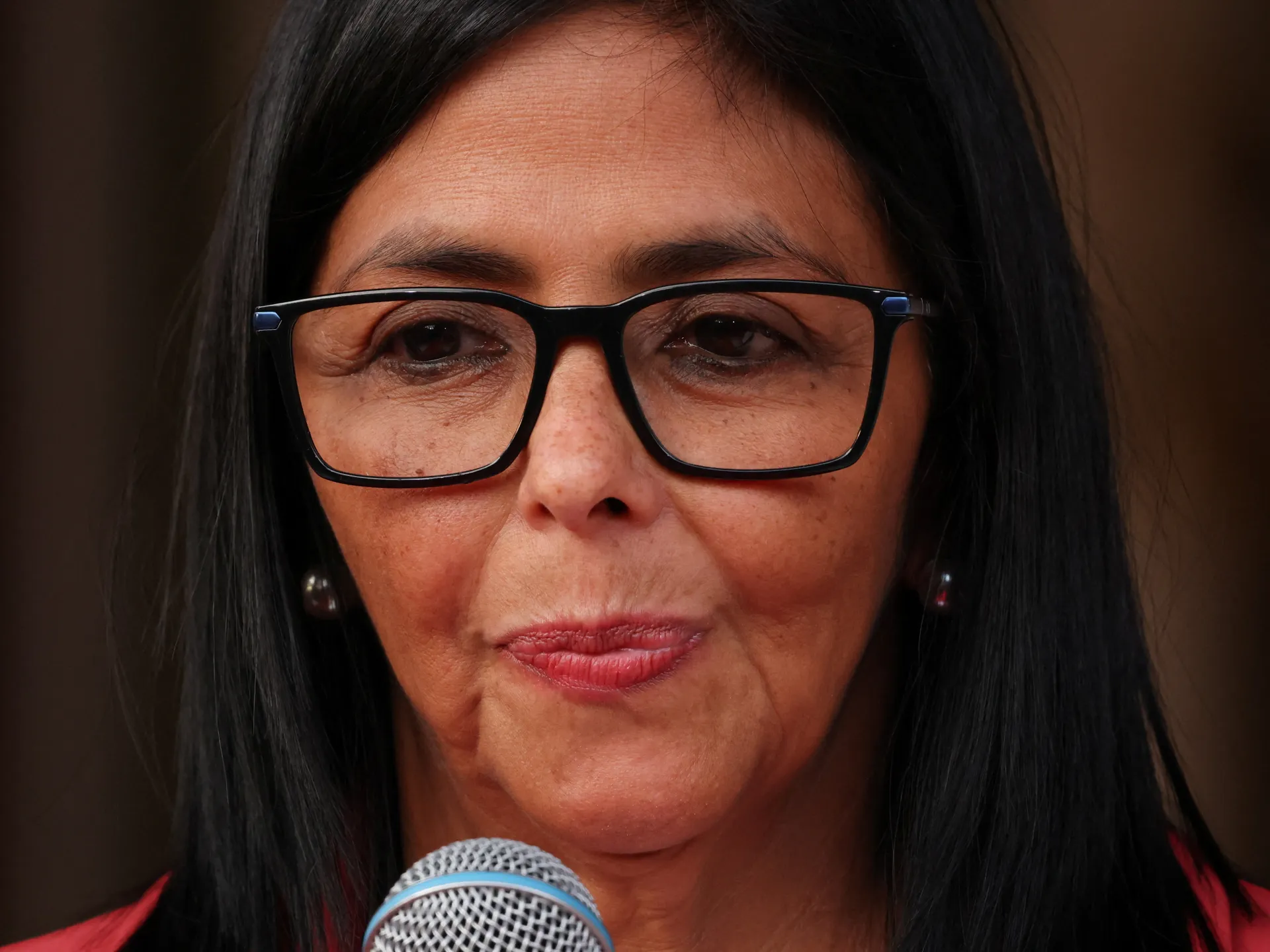
So far, the government of interim Venezuelan President Delcy Rodriguez has complied with Trump’s requests to surrender oil to the US and open the country’s oil and mining sectors to foreign investment.
Just this week, Rodriguez agreed to send a mining reform law to the country’s National Assembly, following a two-day visit from Trump’s Interior Secretary Doug Burgum.
And in late January, Rodriguez signed into law a separate reform that allowed for the expansion of private investment from abroad in Venezuela’s oil sector and lowered taxes on the industry.
Venezuela’s economy has struggled under tightening US sanctions and government mismanagement, forcing millions of citizens from the South American country to flee its borders over the last decade.
Proponents of the reforms say outside investment can help revive Venezuela’s ailing economy and fund upgrades to its outdated mining infrastructure.
On Friday, Venezuela’s central bank released its first inflation statistics since November 2024, showing that inflation skyrocketed to 475 percent in 2025, when the US placed an embargo on Venezuelan oil exports.
Gold production from Venezuela in 2025 amounted to nearly 9.5 tonnes, according to the government, and the country sits on some of the largest oil deposits in the world.
The US-Israeli war on Iran is exposing deep divisions among Iranians in the diaspora and in Iran.
From inside Iran to the diaspora, Iranians are deeply divided about their country’s future. With Ayatollah Ali Khamenei gone and Reza Pahlavi, the son of the former shah, waiting in the wings, what do conversations about regime change reveal about the spectrum of what Iranians really think?
In this episode:
Episode credits:
This episode was produced by Noor Wazwaz, Marcos Bartolomé, and Catherine Nouhan, with Spencer Cline, Tuleen Barakat, Maya Hamadeh, and our host, Malika Bilal. It was edited by Alexandra Locke.
Our sound designer is Alex Roldan. Our video editors are Hisham Abu Salah and Mohannad al-Melhem. Alexandra Locke is The Take’s executive producer.
Pall bearers carry the casket containing the body of the Rev. Jesse Jackson as it arrives for the public service at the House of Hope church in Chicago on Friday. The public service is for people to pay respects and honor Jackson. Jackson, a well known advocate for civil rights and for the poor, and two time presidential candidate, died Feb. 17 after suffering from progressive supranuclear palsy. Photo by Tannen Maury/UPI | License Photo
March 6 (UPI) — The public funeral for the Rev. Jesse Jackson began Friday morning, with state, religious and local dignitaries attending.
Musical guests scheduled are pop singer and actor Jennifer Hudson, and gospel singers Bebe Winans and Pastor Marvin Winans.
The event, called “The People’s Celebration,” is at House of Hope, a south side venue that can hold 10,000 people.
By 8 a.m. CT Friday, thousands were waiting outside the House of Hope to pay respects to Jackson, USA Today reported.
“This is an occasion for all of us – not only the African American community, but the rest of the world, to celebrate the accomplishments of a great man,” Eric Williams, a Chicago resident and member of the House of Hope church, told USA Today. “He will be greatly missed.”
Jackson died Feb. 16 at 84 of complications from progressive supranuclear palsy.
The civil rights activist lay in state in the Capitol Rotunda in Columbia, S.C., the state where he was born, and there were public and private services held in his honor there.
A service planned for Washington, D.C., has been postponed.
“The Jackson Family looks forward to honoring Rev. Jackson’s work and life in Washington, a city that held rich friendships and deep meaning for the Reverend,” Jackson’s family said in a press release.
Neil Sedaka
American singer/pianist Neil Sedaka performs at the “BBC Proms In The Park” in Hyde Park in London on September 11, 2010. Photo by Rune Hellestad/UPI | License Photo
Lindsey Halligan is under investigation by the Florida Bar Association for her efforts to prosecute President Donald Trump’s enemies. File Photo by Al Drago/EPA
March 6 (UPI) — Former Justice Department official Lindsey Halligan is under investigation by the Florida Bar Association for her time trying to prosecute President Donald Trump‘s enemies while acting as a U.S. attorney.
Halligan, Trump’s former personal attorney, brought cases against former FBI Director James Comey and New York Attorney General Letitia James, both of which failed. On Nov. 24, U.S. District Judge Cameron Currie in South Carolina dismissed both cases and ruled that Attorney General Pam Bondi‘s installation of Halligan as interim U.S. attorney was invalid. But Halligan continued to work as a U.S. attorney in the Justice Department.
In January, Halligan stepped down from the position after a U.S. District Judge David Novak ordered her to stop “masquerading as a U.S. attorney in Virginia.
The Florida bar, of which Halligan is a member, sent a letter to the nonprofit Campaign for Accountability acknowledging the investigation.
The Campaign for Accountability had requested disciplinary proceedings against Halligan over her conduct while acting as a U.S. attorney in the cases against Comey and James. It sent a similar request to the Virginia bar about Halligan, who worked as an insurance lawyer in Florida before Trump’s second administration.
“We already have an investigation pending,” the Florida bar said in its letter, which was also sent to Halligan, according to a copy reviewed by The Washington Post.
If the Florida bar determines that she acted improperly, she could be disbarred in the state.
The Department of Justice on Wednesday proposed a change to federal regulations for state bar investigations of its attorneys. The proposal was posted to the Federal Register and said, “Before a current or former Department lawyer may participate in any investigative steps initiated by the bar disciplinary authority … in response to allegations that a current or former Department attorney violated an ethics rule while engaging in that attorney’s federal duties, the Department will have the right to review the allegations in the first instance and shall request that the bar disciplinary authority suspend any parallel investigations until the completion of the Department’s review.”
The rule change is necessary because “over the past several years, political activists have weaponized the bar complaint and investigation process,” the memo said.
Halligan, who had no previous trial experience, was appointed to replace Erik Siebert, who resigned the position in September amid concerns he would be forced out for failing to prosecute James.
Interim U.S. attorneys can only stay in their positions for 120 days, and Siebert had already exceeded his time without confirmation.
Sen. Markwayne Mullin, R-Okla., speaks to the press outside the U.S. Capitol on Thursday. Earlier today, President Donald Trump announced Mullin would replace Kristi Noem as Secretary of the Department of Homeland Security. Photo by Bonnie Cash/UPI | License Photo
Over the past two decades, China has quietly eclipsed the United States as the dominant trading partner in parts of Latin America.
But since taking office for a second term, United States President Donald Trump has pushed to reverse Beijing’s advance.
Recommended Stories
list of 3 itemsend of list
That includes through aggressive manoeuvres directed at China’s allies in the region.
Already, the Trump administration has stripped officials in Costa Rica, Panama and Chile of their US visas, reportedly due to their ties to China.
It has also threatened to take back the Panama Canal over allegations that Chinese operatives are running the waterway. And after invading Venezuela and abducting President Nicolas Maduro, the US forced the country to halt oil exports to China.
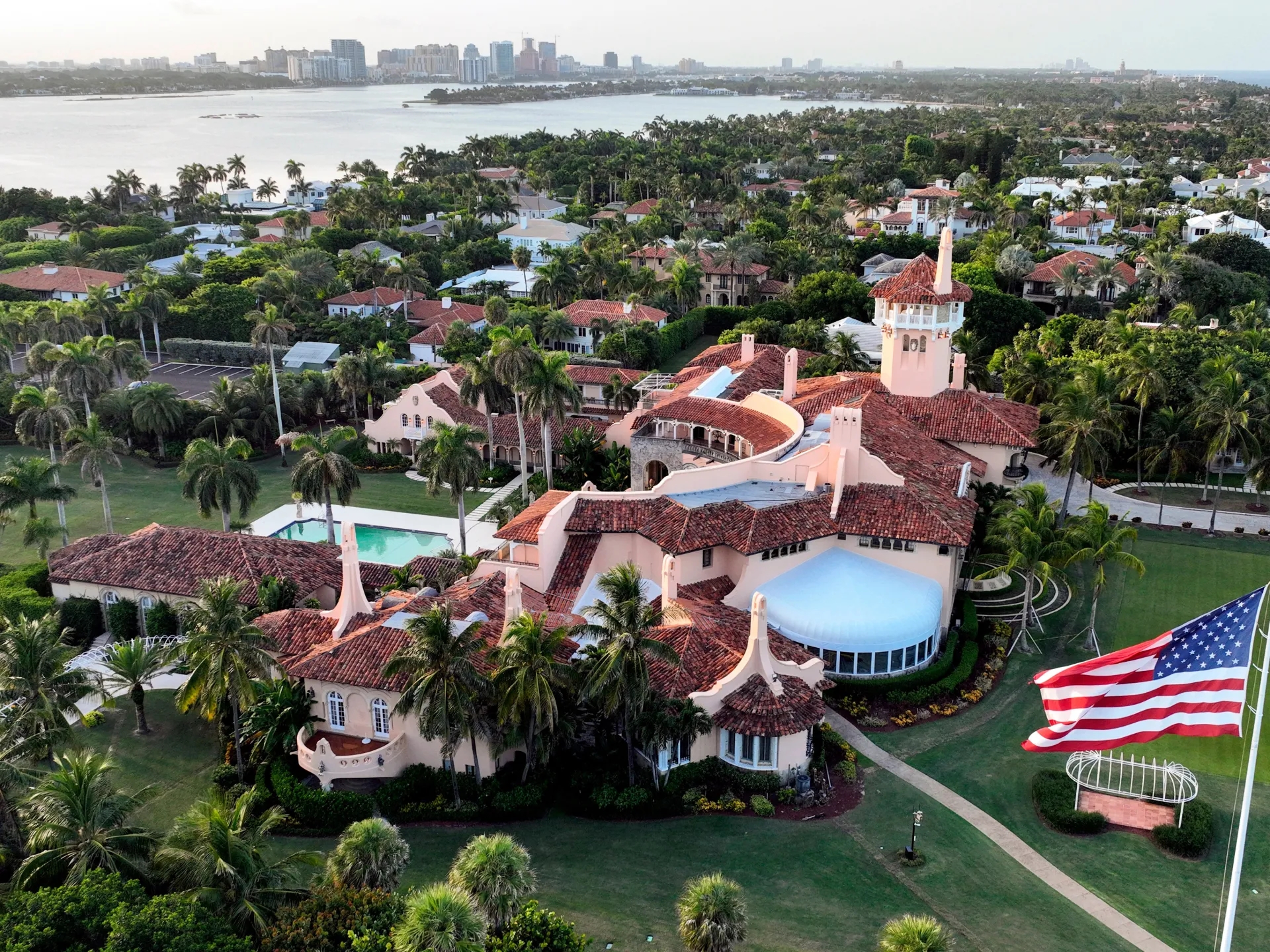
But on Saturday, Trump is taking a different approach, welcoming Latin American leaders to his Mar-a-Lago estate for an event dubbed the “Shield of the Americas” summit.
How he plans to persuade leaders to distance themselves from one of the region’s largest economic partners remains unclear.
But experts say the high-level meeting could signal that Washington is prepared to put concrete offers on the table.
Securing meaningful commitments from Latin American leaders will take more than a photo op and vague promises, according to Francisco Urdinez, an expert on regional relations with China at Chile’s Pontifical Catholic University.
Even among Trump’s allies, Urdinez believes significant economic incentives are required.
“What they’re really hoping is that Washington backs up the political alignment with tangible economic benefits,” he said.
‘Reinforcing the Donroe Doctrine’
Already, the White House has confirmed that nearly a dozen countries will be represented at the weekend summit.
They include conservative leaders from Argentina, Bolivia, Chile, Costa Rica, Ecuador, El Salvador, the Dominican Republic, Honduras, Panama, Paraguay, and Trinidad and Tobago.
Mexico and Brazil, the region’s largest economies, have been notably left out. Both are currently led by left-leaning governments.
In a post on social media, the Trump administration framed the event as a “historic meeting reinforcing the Donroe Doctrine”, the president’s plan for establishing US dominance over the Western Hemisphere.
Part of that strategy involves assembling a coalition of ideological allies in the region.
But rolling back Chinese influence in a region increasingly reliant on its economy will not be an easy feat, according to Gimena Sanchez, the Andes director at the Washington Office on Latin America (WOLA), a US-based research and advocacy group.
The US “is trying to get countries to agree that they’re not going to have China be one of their primary trading partners, and they really can’t at this point”, Sanchez said.
“For most countries, China is either their top, second or third trading partner.”
China, after all, has the second-largest economy in the world, and it has invested heavily in Latin America, including through infrastructure projects and massive loans.
The Asian giant has emerged as the top trading partner in South America in particular, with bilateral trade reaching $518bn in 2024, a record high for Beijing.
The US, however, remains the biggest outside trade force in Latin America and the Caribbean overall, due in large part to close relations with its neighbour, Mexico.
As of 2024, US imports from Latin America jumped to $661bn, and its exports were valued at $517bn.
Rather than choosing sides, though, many countries in the region are trying to strike a balance between the two powers, Sanchez explained.
Still, she added that the US cannot come empty-handed to this weekend’s negotiations.
“If the US is very boldly telling countries to cut off strengthening ties with China”, Sanchez emphasised that “the US is going to have to offer them something.”
What’s on the table?
Trump has already extended economic lifelines to Latin American governments politically aligned with his own.
In the case of Argentina, for instance, Trump announced in October a $20bn currency swap, meant to increase the value of the country’s peso.
He also increased the volume of Argentinian beef permitted to be imported into the US, shoring up the country’s agricultural sector, despite pushback from US cattle farmers.
Trump has largely tied those economic incentives to the continued leadership of political movements favourable to his own.
The $20bn swap, for instance, came ahead of a key election for Argentinian President Javier Milei’s right-wing party, which Trump supports.
Isolating China from resources in Latin America could also play to Trump’s advantage as he angles for better trade terms with Beijing.
A show of hemispheric solidarity could give Trump extra leverage as he travels to Beijing in early April to meet with Chinese President Xi Jinping, Urdinez pointed out.
Then there’s the regional security angle. The US has expressed particular concern about China’s control of strategic infrastructure in Latin America and the critical minerals it could exploit in the region to bolster its defence and technology capabilities.
Bolivia, Argentina and Chile, for instance, are believed to hold the world’s largest deposits of lithium, a metal necessary for energy storage and rechargeable batteries.
The Trump administration referenced such threats in its national security strategy, published in December.
“Some foreign influence will be hard to reverse,” the strategy document said, blaming the “political alignments between certain Latin American governments and certain foreign actors”.
But Trump’s security platform nevertheless asserted that Latin American leaders were actively seeking alternatives to China.
“Many governments are not ideologically aligned with foreign powers but are instead attracted to doing business with them for other reasons, including low costs and fewer regulatory hurdles,” the document said.
It argued that the US could combat Chinese influence by highlighting the “hidden costs” of close ties to Beijing, including “debt traps” and espionage.
‘More aspiration than reality’
Henrietta Levin, a senior fellow at the Center for Strategic and International Studies in Washington, believes that many Latin American countries would prefer to deepen economic engagement with the US over China.
But in many cases, that hasn’t been an option.
She pointed to Ecuador’s decision to sign a free trade agreement (FTA) with China in 2023 after it failed to negotiate a similar agreement with the US under President Joe Biden.
Some US politicians had opposed the deal as a threat to domestic industries. Others had encouraged Biden to reject it due to alleged corruption in Ecuador’s government.
Critics, though, said the resistance pushed Ecuador into closer relations with China.
“ When Ecuador signed their free trade agreement with China a couple years ago, their leader actually made quite clear that they had wanted an FTA with the US and would’ve preferred that,” said Levin.
“But the US didn’t want to negotiate such an agreement, and China did.”
As a result, Ecuador became the fifth country in Latin America to ink a free trade pact with China, after Chile, Peru, Costa Rica and Nicaragua.
For Levin, the question looming over this weekend’s summit is whether the Trump administration will step up and provide alternatives to the economic engagement China has already delivered.
Options could include trade agreements, financing for new development and investments with attractive terms.
But without such offers, Urdinez, the Chilean professor, warns that Trump will face limits to his ambitions of checking China’s growth in Latin America.
“Until Washington is willing to fill the economic space it’s asking countries to vacate, the rollback strategy will remain more aspiration than reality,” said Urdinez.
March 6 (UPI) —Ukraine‘s foreign minister accused Hungary of kidnapping seven Ukrainian state bank employees and stealing the cash and gold they were transporting, and Hungary announced it would expel the bank staff.
Ukraine’s Oschadbank said on Thursday that two vehicles with seven employees and about $75 million were stopped in Budapest Thursday, and Kyiv has lost contact with the personnel. The vehicles were transporting cash and gold from Austria to Ukraine.
Budapest announced Friday that the seven bank employees would be expelled from Hungary, and accused the seven people detained of money laundering.
On Wednesday, Hungarian Prime Minister Viktor Orbán and Ukrainian President Volodymyr Zelensky traded threats and accusations. Budapest blamed Kyiv for blocking a Russian oil pipeline into Hungary, but Kyiv said the pipeline was damaged by a Russian air strike in January, the BBC reported.
One month before the Hungarian elections, Orban is trailing in polling.
“Today in Budapest, Hungarian authorities took seven Ukrainian citizens hostage,” Ukrainian Foreign Minister Andrii Sybiha said Thursday on X. “The reasons are still unknown, as well as their current well-being, or the possibility of contacting them. … We will also address the European Union with the request to provide a clear qualification of Hungary’s unlawful actions, hostage-taking, and robbery.”
“Political statements from Hungarian officials this morning show that the detention of seven Ukrainian citizens in Budapest was part of Hungary’s blackmail and electoral campaign,” the post on X said. “Orban’s list of demands for Ukraine this morning was particularly telling. This is what typically happens after people are taken hostage: demands. We will not tolerate this state banditism.”
It said the employees “were unjustifiably detained in Hungary while carrying out a regular transport of foreign currency and bank metals between Raiffeisen Bank Austria and Oschadbank Ukraine. … Oschadbank demands the immediate release of its employees and property and their return to Ukraine.”
The bank said the vehicles carried $40 million in U.S. dollars, about $40.5 million in euros and about 20 pounds of gold. The transfer was part of an agreement with Raiffeisen Bank.
“The cargo was registered in accordance with international transportation rules and current European customs procedures,” Oschadbank said in the statement.
It’s not clear what has happened to the cash and gold, but the BBC reported that Polish Foreign Minister Radek Sikorski said, “they’ve stolen the money.”
Hungary alleges that the transport was part of a money laundering operation. The Hungarian National Tax and Customs Administration said that seven Ukrainian nationals were arrested, including a former Ukrainian intelligence general, with two armoured cash trucks also seized.
“This year alone, more than $900 million, $486 million (in euros), and 322 pounds of gold bars have been transported through the territory of Hungary to Ukraine,” the statement said.
Hungarian Foreign Minister Péter Szijjártó also posted on X: “The government demands immediate answers and explanations from Ukraine on the cash shipments through Hungary. The question arises whether this is the money from the Ukrainian war mafia,” Szijjártó said.
Ukraine has issued a travel warning for its people to avoid traveling through Hungary.
“The Ministry of Foreign Affairs recommends that Ukrainian citizens refrain from traveling to Hungary due to the lack of guarantees of their safety against the backdrop of arbitrary actions by the Hungarian authorities,” a statement said.
Founder of the Women’s Tennis Association and tennis great Billie Jean King (C) smiles with representatives after speaking during an annual Women’s History Month event in celebration of the 50th anniversary of Title IX in Statuary Hall at the U.S .Capitol in Washington on March 9, 2022. Women’s History Month is celebrated every March. Photo by Bonnie Cash/UPI | License Photo
The escalation of the Iran conflict forced Danish container shipping giant Maersk to halt two key trade routes linking markets in the Middle East with Europe and Asia. File Photo by Jerry Lampen/EPA-EFE
March 6 (UPI) — Global shipping giant Maersk announced Friday it was temporarily halting two key routes linking the Middle East and Gulf region with the Far East and destinations in Europe as a precautionary step due to what it described as “the escalating” Iran conflict.
The company said in a news advisory that following an assessment of the risks to shipping in the Gulf region and an operational review, it had taken the decision “as a precautionary measure to ensure the safety of our personnel and vessels while minimizing operational disruption across our wider network.”
“For the ME11 [Middle East-Europe] and FM1 [Middle East-Far East] final eastbound voyage, we are finalizing the timing and vessel details and will update you as soon as this information is confirmed,” it added.
Maersk also said that it was suspending shuttle services within the Gulf region until further notice and that its ME1 service connecting the Middle East with Northern Europe would temporarily bypass Dubai in both directions and only stop in Oman before going straight on to India on the eastbound leg and Morocco on the return leg.
The suspensions ensure Maersk’s vessels stay clear of the Strait of Hormuz amid threats by Tehran to “set fire” to anything that tries to pass in or out of the Persian Gulf.
Markets see the Danish company as a bellwether of global trade, with the move adding to escalating supply chain disruptions due to the conflict engulfing the region following strikes launched against Iran by the United States and Israel at the weekend.
Shipping via the Strait of Hormuz, through which 20% of the world’s oil and gas is shipped out from Iraq, Saudi Arabia, Kuwait, Bahrain, the United Arab Emirates and Qatar to the rest of world, is effectively at a total stop.
At least 147 container ships are stranded on the wrong side of the strait, taking refuge in the Persian Gulf.
Security fears have prompted major shipping lines, including Switzerland’s MSC and France’s CMA CGM, to ditch plans to resume using the Suez Canal route and continue diverting the long way round via the tip of southern Africa. MSC has temporarily halted all bookings for the Middle East.
The disruption has thrown schedules, caused congestion at ports and sent freight rates for everything higher.
Shares in Maersk were trading 0.6% higher on the NASDAQ Copenhagen Exchange on Friday afternoon at $2,637 a share.
Founder of the Women’s Tennis Association and tennis great Billie Jean King (C) smiles with representatives after speaking during an annual Women’s History Month event in celebration of the 50th anniversary of Title IX in Statuary Hall at the U.S .Capitol in Washington on March 9, 2022. Women’s History Month is celebrated every March. Photo by Bonnie Cash/UPI | License Photo
March 6 (UPI) — Counter-terrorism police in London arrested four Iranian men early Friday on suspicion of conducting surveillance for Iranian intelligence of individuals and locations linked to the Jewish community in the capital.
The suspects, one Iranian and three dual British-Iranian nationals aged between 22 and 55, were detained shortly after 1 a.m. local time in raids on addresses in north London and Watford, just north of the city, under the National Security Act, Metropolitan Police said in a news release.
Searches of at least three addresses in the north London borough of Barnet were still underway, said the Met.
Six other suspects, all males aged between 20 and 49, were arrested at one of the locations raided in London on suspicion of assisting an offender and assaulting police.
“Today’s arrests are part of a long-running investigation and part of our ongoing work to disrupt malign activity where we suspect it,” said Commander Helen Flanagan, Head of Counter Terrorism Policing for London.
“We understand the public may be concerned, in particular the Jewish community, and as always, I would ask them to remain vigilant and if they see or hear anything that concerns them, then to contact us,” she added.
The arrests come as the latest development in a long history of covert activity by the Iranian regime on British soil, mostly targeting dissidents, exiled Iranian news organizations providing independent coverage to people inside Iran and the Iranian diaspora, and groups opposing the regime.
“Iran is the biggest state sponsor of terrorism globally and sadly, that is in effect in our own society as well,” British Deputy Prime Minister David Lammy told ITV television on Friday morning.
“Our intelligence services and counter-terrorism police have thwarted lots of action over the last few years,” he added.
On Saturday, in his announcement that Britain was joining the U.S-Israeli offensive against Iran in a “defensive” role, Prime Minister Keir Starmer condemned Iranian aggression against Britain’s Middle East allies, saying the United Kingdom had long been a target.
“Even in the United Kingdom, the Iranian regime poses a direct threat to dissidents and to the Jewish community. Over the last year alone, they have backed more than 20 potentially lethal attacks on U.K. soil.”
In May, three Iranian men were charged over allegedly conducting surveillance and reconnaissance of U.K.-based journalists working for the Iran International news outlet to enable “serious violence” to be committed against them.
Mostafa Sepahvand, 39, Farhad Javadi Manesh, 44, and Shapoor Qalehali Khani Noori, 55, of London, are accused of “engaging in conduct likely to assist a foreign intelligence service” under the National Security Act.
A plea hearing is scheduled for Sept. 26 and a provisional trial date set for Oct. 5.
Iran International, a Persian-language satellite TV channel and multilingual digital news operation established in 2017, puts out highly critical coverage of the Iranian government which has banned it as a terrorist organization.
British media and U.S. academics have previously reported links between Iran International and backers at the most senior level in Saudi Arabia, which Iran International denies.
Founder of the Women’s Tennis Association and tennis great Billie Jean King (C) smiles with representatives after speaking during an annual Women’s History Month event in celebration of the 50th anniversary of Title IX in Statuary Hall at the U.S .Capitol in Washington on March 9, 2022. Women’s History Month is celebrated every March. Photo by Bonnie Cash/UPI | License Photo
A WOMAN preparing for a night out has entered the third day of applying and redoing her winged eyeliner.
Lauren, not her real name, began applying makeup to her eyelids three days ago, and has remained in an endless loop of carefully drawing on her eyeliner, wiping it away and trying again ever since.
She said: “I know from experience that putting on eyeliner can take a while, so I gave myself plenty of time. Unfortunately I’ve overrun by 71 hours.
“In theory it shouldn’t take too long. Once I’ve mapped out the wings with a couple of flicks, it’s simply a case of joining them together. As you can see from where I’ve punched the wall out of frustration though, the reality is more complicated.
“To get that perfect cat-eye look, you need the steady hands of a heart surgeon. But by day two I was getting cramp and losing my grip on the brush. Sure, I could ask my housemate to draw them on in seconds, but that would be admitting defeat.
“It’ll be worth the effort though once I’ve evened them out. We’re going to a dingy underground bar where nobody will be able to notice my eyeliner anyway. Can’t wait.”
Friend Hannah, not her real name, said: “Shit, sounds like Lauren’s nearly ready. I’m still plucking my eyebrows, but if I hurry I’ll only be fashionably late by 48 hours.”
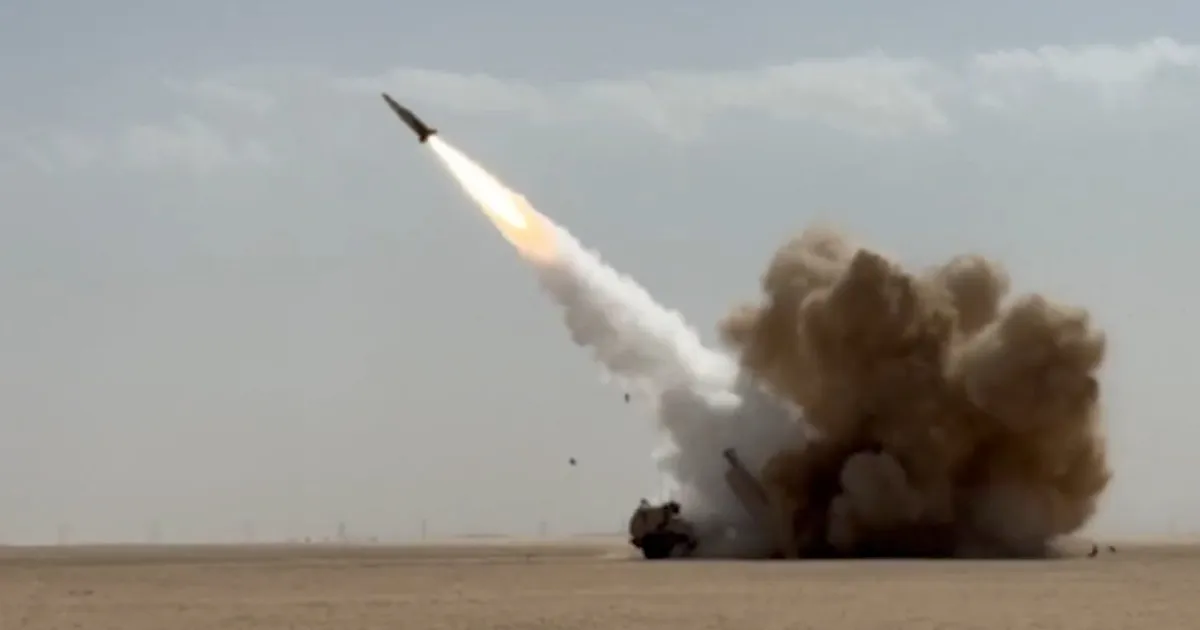
The United States used Precision Strike Missiles (PrSMs) for the first time during its ongoing war with Iran, US Central Command (CENTCOM) said on Wednesday.
The war entered its seventh day on Friday, with attacks continuing across Iran and other countries in the Middle East.
CENTCOM stated in an X post that PrSMs provide an “unrivaled deep strike capability”.
“I just could not be prouder of our men and women in uniform leveraging innovation to create dilemmas for the enemy,” the post quoted Admiral Brad Cooper, head of CENTCOM.
It is unclear where these PrSMs were launched from, or which specific targets they hit in Iran.
So what is the PrSM, and why is it significant that it has been used by the US for the first time?
What are Precision Strike Missiles?
PrSMs are described as long-range precision strike missiles by their developer, the Maryland, US-headquartered defence firm Lockheed Martin, which delivered the first PrSMs to the US Army in December 2023.
PrSMs can hit targets ranging from 60km (37 miles) to more than 499km (310 miles) away, according to Lockheed Martin.
The company’s website adds that PrSMs are compatible with the MLRS M270 and HIMARS family of launchers, both also developed by Lockheed and used by both the United Kingdom and US armies.
MLRS stands for multiple-launch rocket systems, used to launch missiles. The UK sent a number to Ukraine in 2022. HIMARS stands for High Mobility Artillery Rocket System. In 2022, the US sent a number to Ukraine, as well.
M-142 HIMARS is a high-tech, lightweight rocket launcher that is wheel-mounted, giving it more agility and manoeuvrability on the battlefield. Each unit can carry six GPS-guided rockets, or larger missiles like Army Tactical Missile Systems (ATACMs) and PrSMs, which can be reloaded in about a minute with only a small crew.
Lockheed Martin adds that PrSMs can be rapidly developed. “We are ready to produce and deliver to meet the US Army’s accelerated timeline for this long-range precision fires priority,” the website says.
PrSMs feature “open systems architecture”, which means that it is easier to plug in new components, upgrade parts, or work with equipment from other companies. Similarly, they are “modular and easily adaptable”, enabling components to be switched around.
They also feature “IM energetic payload”, or Insensitive Munitions energetic payload, which makes explosions safer, the producer says. This means the warhead is made from explosives that are less likely to blow up accidentally if hit by fire, shrapnel or by accident, but still explode properly when triggered as intended.
What is different about the PrSMs?
PrSMs will ultimately replace the ATACMs currently being fired from the HIMARS launchers, significantly increasing their range from 300km (186 miles) to more than 499km (310 miles), without changing the vehicle carrying the missile.
PrSMs also offer double the “missile load” of ATACMs. While a HIMARS launcher is able to carry one ATACMS missile in its pod, it can carry two PrSMs per pod.
Does the PrSM give the US a strategic advantage?
CENTCOM confirmed that PrSMs have been used in the US and Israel’s attacks on Iran, codenamed Operation Epic Fury and launched on February 28.
CENTCOM posted a video of the PrSMs being launched from M142 High Mobility Artillery Rocket Systems in an open desert terrain.
PrSMs do give the US military a boost for its pre-existing long-range capabilities.
Gulf countries such as Kuwait, Saudi Arabia, Bahrain, Qatar, the United Arab Emirates and Oman, specifically the Musandam Peninsula, which have military bases hosting US assets and troops, have at least some territory within 400km (250 miles) of Iran.
The US is using PrSMs in conjunction with other long-range missiles such as Low-Cost Unmanned Combat Attack System (LUCAS) one-way drones, MQ-9 Reaper drones, ATACMs and Tomahawk Cruise Missiles.
The range for LUCAS one-way drones is about 800km (500 miles), while the range for ATACMs is about 300km (186 miles) and the range for Tomahawk cruise missiles is about 1,600km (1,000 miles).
Why is the introduction of the PrSM significant?
The range of this missile is significant as it is likely that it would not have been permitted under the Intermediate-Range Nuclear Forces (INF) Treaty with Russia, which the Trump administration withdrew the US from in 2019. This is because it can exceed the maximum 500km (310-mile) range the treaty imposed on certain land-launched missiles.
The treaty was signed in 1987 by US and Soviet Union leaders Ronald Reagan and Mikhail Gorbachev. It sought to eliminate the presence of land-based nuclear missiles and medium-range arsenals between 500km and 5,500km (310 and 3500 miles) from Europe.
The US suspension of the treaty allowed Washington to resume development of its own medium-range, land-based arsenal.
Following the US suspension, Russia invited the US to reciprocate in a unilateral moratorium on the deployment of ground-launched intermediate-range missiles instead. While Washington initially rejected the offer, in 2022, it said it would be willing to discuss this.
In August last year, the Russian Ministry of Foreign Affairs announced Russia’s withdrawal from this moratorium, however, saying the US had “made significant progress” and “openly declared plans to deploy US ground-launched INF-range missiles in various regions”. INF stands for intermediate-range nuclear forces.
The statement added that such actions by Western countries posed a “direct threat” to Moscow’s security.
Nigeria’s Bola Tinubu was elected on promises to tackle the nation’s widespread violence and address two of its root causes: Poverty and corruption. But with the country going to the polls next year, has he delivered on his “Renewed Hope” agenda?
Mehdi Hasan goes head-to-head with Daniel Bwala, Tinubu’s once staunch critic-turned-Special Adviser on Media and Policy Communications, on the administration’s record in office and where he stands on his past accusations against his current boss.
Joining the discussion are: Ayisha Osori – Director, Open Society Foundations Ideas/Workshop Lab Aanu Adeoye – Journalist, Financial Times Tunde Doherty – UK chairman, All Progressives Congress
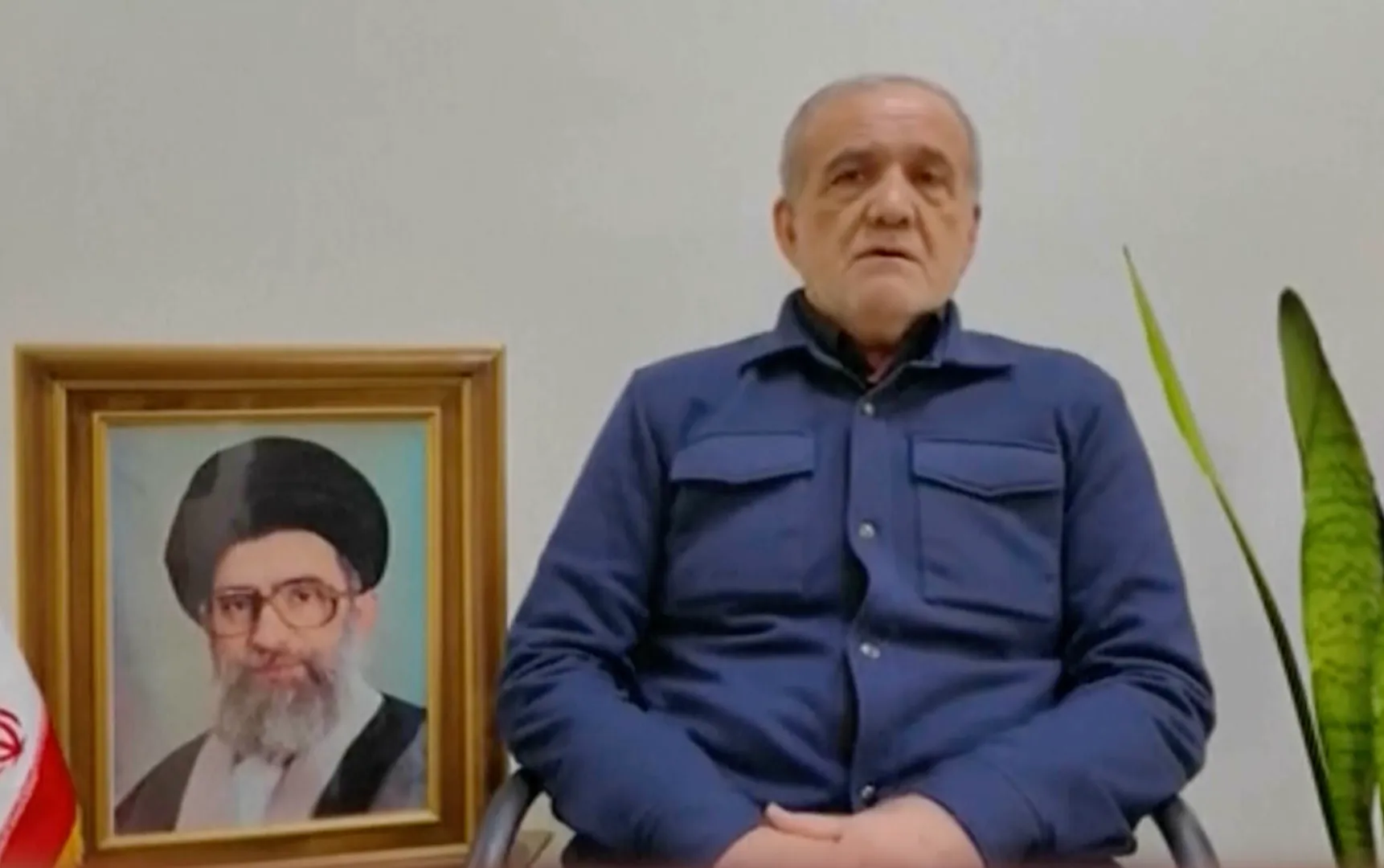
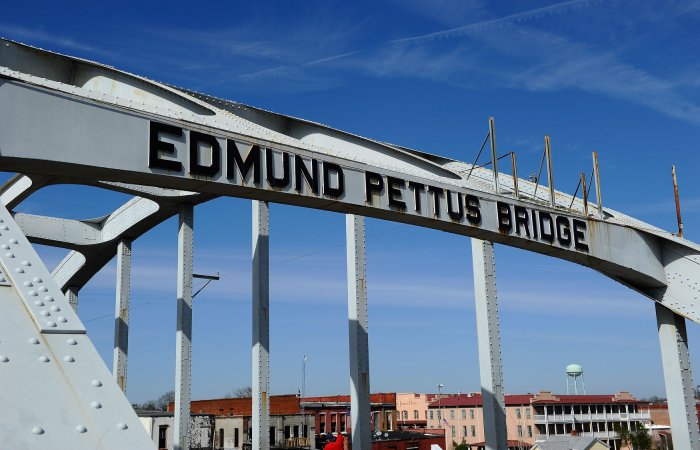


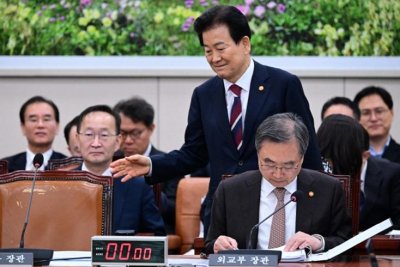

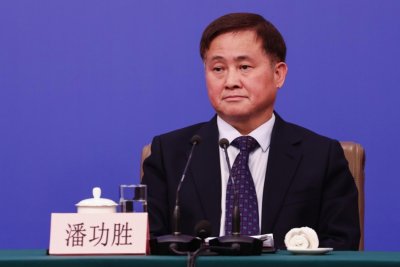

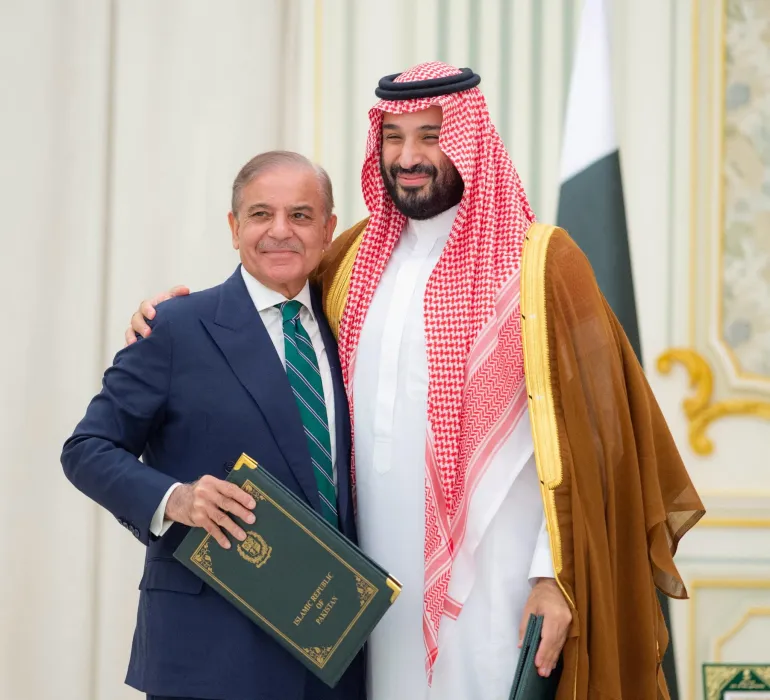
![A month after Iranian president's visit to Islamabad, Pakistani PM Shehbaz Sharif met Saudi Crown Prince Mohammed bin Salman in Riyadh in September 2025 to sign a defence agreement. [File: Handout/Saudi Press Agency via Reuters]](https://i0.wp.com/occasionaldigest.com/wp-content/uploads/2026/03/2025-09-17T193003Z_2033872192_RC2VTGAIIE3P_RTRMADP_3_SAUDI-PAKISTAN-DEFENCE-1772753571.jpg?w=640&ssl=1)
![Violence erupted in Pakistan following news of US and Israeli strikes on Iran that killed Iran's Supreme Leader Ayatollah Ali Khamenei on February 28. At least 23 people were killed in violence across country, with at least 10 people killed in Karachi during a protest outside the US Consulate General. [Akhtar Soomro/Reuters]](https://i0.wp.com/occasionaldigest.com/wp-content/uploads/2026/03/2026-03-01T152518Z_797272407_RC2NVJALJ3YW_RTRMADP_3_IRAN-CRISIS-PAKISTAN-PROTESTS-1772753695.jpg?w=640&ssl=1)